

Plant Profile & Key Characteristics
Overview: An evergreen shrub 20–80 cm tall, grown as an ornamental and medicinal plant for its near year-round yellow flowers. It suits warm, frost-free gardens in moist, well-drained soil.
Quick Specifications
| Specification | Attribute |
|---|---|
| Plant Type / Life Cycle | Perennial (evergreen shrub) |
| Foliage Type | Evergreen |
| Mature Size | 20–80 cm H (8–32 in) |
| Growth Rate | Moderate |
| Hardiness | USDA zone 9 and warmer |
Growth Form & Structure
- Height & Spread: Compact shrub 20–80 cm tall; grows well in planters and containers.
- Growth Habit & Form: Bushy, mounded evergreen sub-shrub.
- Lifespan & Maturity: Short-lived but fast to flower; readily renewed from seed or cuttings and often self-sows.
Anatomy & Physical Features
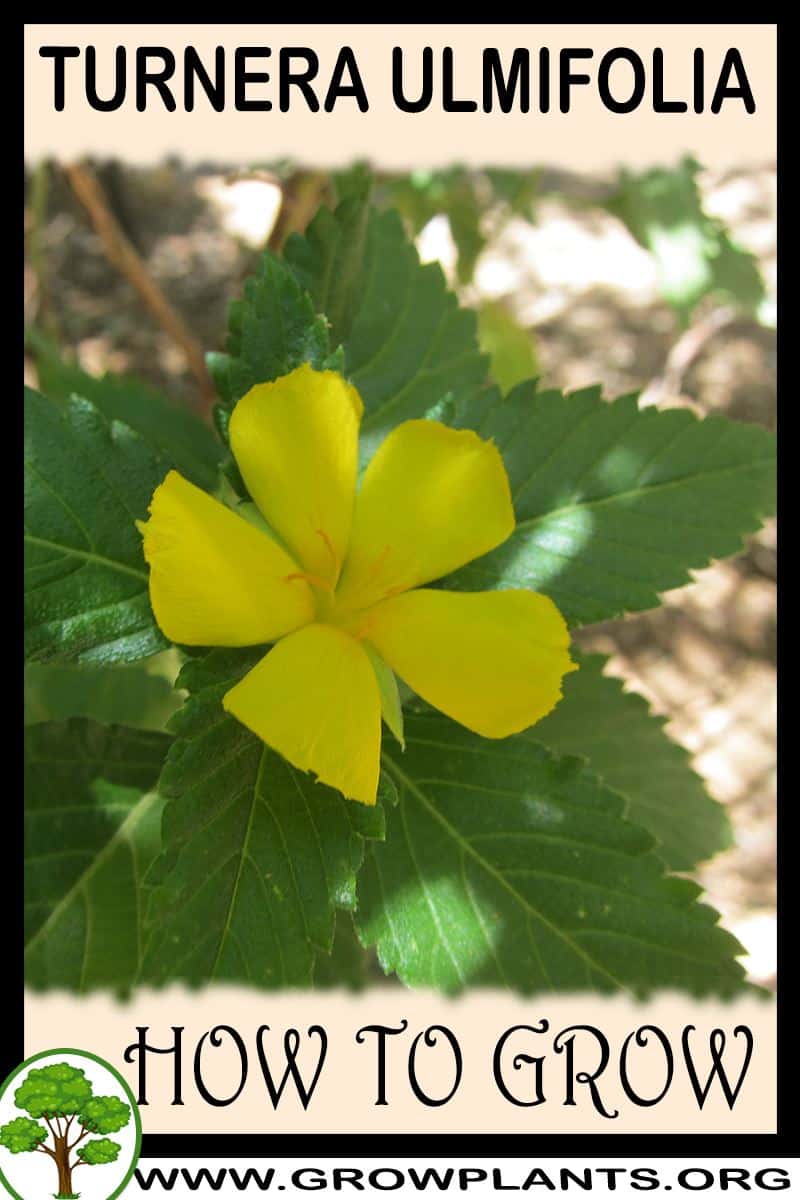
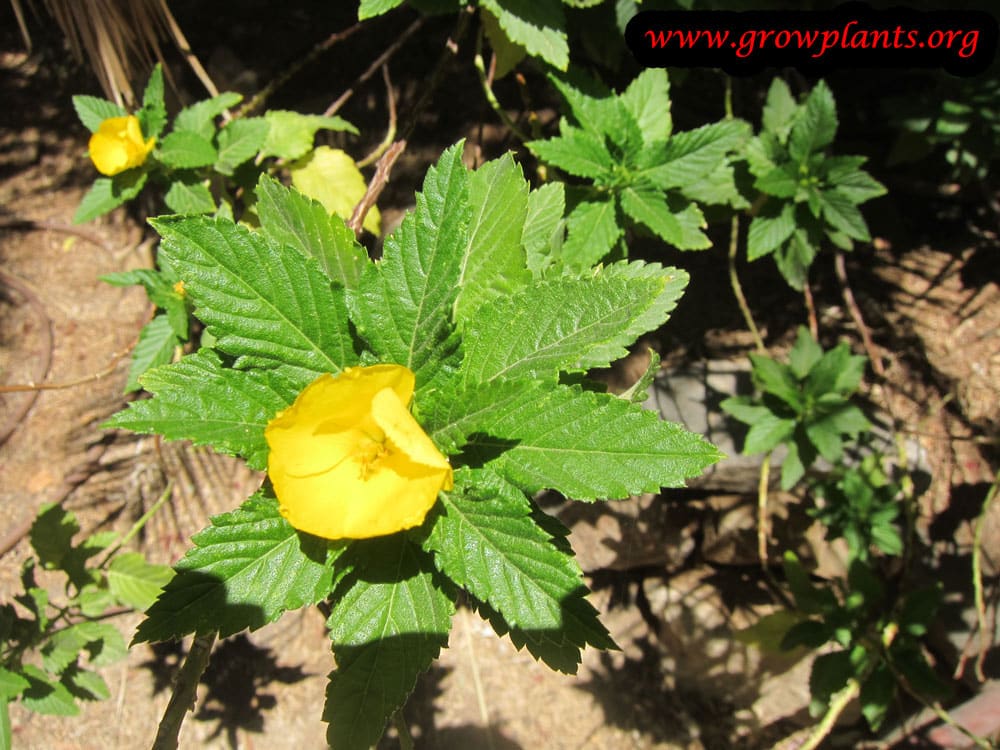
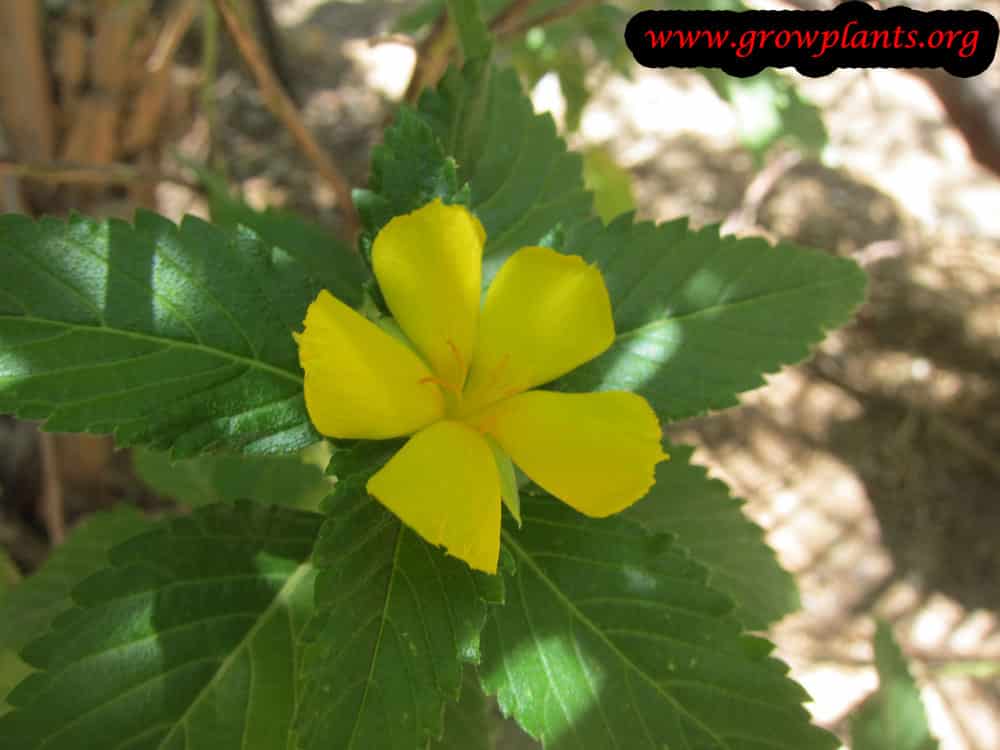
- Leaves & Foliage: Green, elliptic leaves with serrated margins.
- Flower Characteristics: Five-petalled yellow flowers borne at the stem tips; each lasts only part of a day but they appear over most of the year (full detail in the Bloom accordion).
Primary Uses & Landscape Value
- Functional & Ornamental Roles: Ornamental flowering shrub for beds and containers; also used medicinally.
Care Guide: Planting, Soil & Watering
Overview: Yellow alder is a warm-climate flowering shrub that grows in full sun and moist but well-drained soil. In frost-free areas it can be planted year-round and needs steady, moderate watering to keep it blooming.
Quick Care Requirements
| Requirement | Ideal Condition |
|---|---|
| Planting Season | Year-round in frost-free zones (9+); the warm season elsewhere |
| Growth Rate | Moderate |
| Soil Type | Moist, well-draining |
| Water Need | Moderate; keep lightly moist, not soggy |
Planting & Establishment
- Best Planting Season: Plant at any time of year in frost-free climates; where it gets cool, plant at the start of the warm season.
- How to Plant:
- Hole Preparation: Dig a hole about twice the width of the root ball.
- Soil Amendments: Blend in organic matter and make sure the site drains freely.
- Planting Depth: Set the root collar level with the surrounding soil; do not bury the stem.
- Growth Speed & Expectations: A moderate grower forming a bushy shrub around 20-80 cm (8-32 in) tall.
Soil, Watering & Drainage Care
- Soil Mix & Drainage Needs: Keep it in moist but well-draining soil; it also grows in a container with good drainage holes.
- Watering Schedule & Technique:
- Young / Newly Planted: Water regularly to establish the young shrub.
- Established: Provide steady, moderate moisture; let the surface dry slightly between waterings.
- Seasonal Adjustments: Water less in cool weather when growth slows.
Climate, Light & Hardiness
Turnera ulmifolia (yellow alder) is a warm-climate flowering shrub suited to tropical, Mediterranean, and subtropical conditions, growing best in full sun to half shade. It has only light frost tolerance and is best suited to mild-winter regions.
Quick Climate Specifications
| Climate Zones | Tropical, Mediterranean, Subtropics |
|---|---|
| USDA Hardiness Zones | 9+ |
| Frost Tolerance | Low |
| Light Conditions | Full Sun / Half Shade |
Sunlight & Light Exposure
Optimal Light Setup
Full sun to half shade both suit this shrub, with full sun typically giving the best flowering.
Temperature Extremes & Hardiness
USDA Hardiness & Regional Limits
Reliable as a perennial from zone 9 upward; it is not considered hardy in regions with regular hard freezes.
Frost Sensitivity
Only lightly frost tolerant – hard or prolonged frost is likely to damage or kill the plant, so mild-winter siting or protection is important near the cold edge of zone 9.
Wind, Humidity & Microclimate
Rainfall & Seasonal Moisture
Prefers climates or sites with reasonably consistent moisture, consistent with its moist, well-drained soil preference.
Growing in Pots, Balconies & Indoors
Yellow alder (Turnera ulmifolia) is a compact, tender flowering shrublet (20-80 cm) with cheerful yellow blooms. The grower says it is not a houseplant but can be grown in a container – a bright, sun-loving patio or balcony pot plant in warm climates.
Quick Details
- Container Size: A small-to-medium pot suits its compact habit
- Indoor Suitability: Not a houseplant – an outdoor container plant
- Best Spot: Full sun to half shade, outdoors
- Soil & Drainage: Free-draining mix
- Watering in Pots: Average amount – keep lightly moist, not waterlogged
Indoors & On the Windowsill
- Not a houseplant: The grower lists it as not a houseplant; grow it in outdoor pots.
- Windowsill: A very bright sill might hold it, but the grower favours outdoor pot culture in full light.
On a Balcony or Patio
- Light, wind & heat: Give it the brightest spot it will tolerate; walls and railings reflect heat and dry pots quickly, so check moisture often and shelter or stake exposed growth.
- Sun for flowers: Give it a warm, sunny, sheltered spot for the best flowering; it is frost-tender, so protect or bring under cover in cold spells.
Choosing the Pot, Soil & Long-Term Care
- Pot & drainage: A small-to-medium pot with strong drainage holes. Use strong drainage holes and skip a standing-water saucer to avoid root rot. Terracotta breathes and dries faster; glazed or plastic holds moisture longer.
- Potting mix: A well-aerated, organic-rich mix – potting soil or peat/coir with perlite or vermiculite for free drainage.
- Feeding: Potted plants use up their soil faster as nutrients leach out with watering – feed lightly and regularly through the growing season.
- Repotting: Refresh the mix and pot up about every two years; for perennials, lightly root- and top-prune the plant when you do.
Fertilizing & Feeding
A moderate feeder: this warm-climate evergreen shrub flowers nearly year-round in frost-free conditions, so it benefits from steady, repeat feeding through its long active season, easing off only during any cooler slowdown.
Quick Fertilizing Specs
| Feeding Level | Moderate feeder |
|---|---|
| Main Nutrient Priority | Balanced feeding with adequate nitrogen to sustain near-continuous flowering |
| Best Feeding Period | Through the warm-season active growth and extended bloom period |
| Organic Options | Compost or other organic matter worked into moist, well-drained soil |
| Reduce/Stop Feeding | Ease off during any cooler-season slowdown in growth |
| Micronutrients | Usually supplied by a complete fertilizer; correct only a diagnosed deficiency |
| Soil pH | Prefers moist, well-drained soil; tolerant of typical garden conditions |
Feeding by Growth Stage
Growth flush entering the warm season
Support fresh stem and leaf growth as this evergreen shrub ramps up into its long warm-season active period.
| Nutrient direction | A balanced, nitrogen-forward feeding builds the leafy framework that will carry an extended bloom season. |
|---|---|
| Timing | As active growth strengthens moving into the warm season. |
| Frequency | A light feeding as growth picks up, increasing gradually with warmer weather. |
| Fertilizer types | A balanced complete fertilizer with available nitrogen, Compost or other organic matter worked into the soil |
| Precautions | Build up feeding gradually with the season rather than all at once, to avoid pushing soft growth ahead of steady warmth. |
Near year-round repeat bloom
Sustain the bright yellow, five-petaled flowers this shrub produces almost continuously in frost-free, warm-climate conditions.
| Nutrient direction | Consistent, balanced feeding with adequate nitrogen keeps successive flushes of flowers coming through the long bloom window. |
|---|---|
| Timing | Through the extended, near year-round bloom period typical in warm climates. |
| Frequency | Regular light feedings support the repeat bloom cycle while the plant is actively growing. |
| Fertilizer types | A balanced complete fertilizer, An organic feed such as compost tea between applications |
| Precautions | Resist switching to a high-phosphorus product for more flowers; balanced feeding with adequate nitrogen is what sustains this shrub’s repeat bloom. |
Cooler-season slowdown
Let the shrub coast through any cooler or drier spell when growth and bloom naturally ease off.
| Nutrient direction | None – withhold fertilizer while growth has clearly slowed for the cooler season. |
|---|---|
| Timing | During any cooler-season or dry-season slowdown. |
| Frequency | No feeding at this stage; resume only once active growth clearly returns. |
| Fertilizer types | No feeding at this stage; hold off fertilizing until active growth resumes. |
| Precautions | Do not fertilize while growth has slowed; unused nutrients can build up as salts or leach away without benefit. |
Nutrient Deficiency Signs & Corrections
Older leaves fade to pale green or yellow and flowering thins out.
| Possible causes | low available soil nitrogen, nitrogen leached by heavy watering or rain, thin, low-organic-matter soil |
|---|---|
| Appears first on | older, lower leaves |
| What to check | recent feeding history, soil organic matter, watering and drainage |
| Possible correction | Apply a nitrogen-containing complete fertilizer and build soil organic matter, then water evenly. |
New leaves turn yellow while their veins stay green.
| Possible causes | high soil pH limiting iron availability, waterlogged or compacted soil restricting root uptake, naturally low soil iron |
|---|---|
| Appears first on | newest growth at the shoot tips |
| What to check | soil pH and drainage, root health and compaction, recent fertilizer history |
| Possible correction | Correct pH toward the plant’s preferred range and apply a chelated iron product per its label. |
Leaf margins scorch or brown and flower production weakens over a long bloom season.
| Possible causes | low soil potassium depleted by extended, near-continuous flowering, competing high-nitrogen feeding, leaching in light, sandy soils |
|---|---|
| Appears first on | older leaf margins |
| What to check | soil potassium status, recent fertilizer balance, soil texture and leaching |
| Possible correction | Apply a balanced or potassium-supportive fertilizer per its label and adjust the overall feeding mix. |
Pruning, Training & Seasonal Maintenance
Turnera ulmifolia (Yellow alder) is a fast-growing, soft-stemmed evergreen shrub that flowers almost continuously, so it tolerates and benefits from frequent light trimming rather than one heavy annual cut. The main objective is to keep the naturally lax, spreading growth compact and to remove the previous day’s spent blooms so energy goes into new flowering shoots. A light cutback in autumn or winter is the safest time for any reshaping, since the plant flowers on new growth produced right through the warm months and a hard cut then would waste a full flowering flush.
Quick Pruning & Maintenance Specs
| Pruning Tolerance | Moderate |
| Primary Pruning Window | Autumn / Winter (light shaping cutback) |
| Secondary Maintenance Window | Year-round light deadheading and tip-pinching |
| Typical Frequency | Light trim every few weeks; one shaping cut per year |
| Main Objective | Compact habit, continuous flowering, tidy spent blooms |
| Young Plant Priority | Pinch tips to build a bushy base |
| Mature Plant Priority | Prevent legginess; renew from the base if it thins out |
| Best Tool Type | Precision snips |
| Avoid Heavy Pruning During | Peak summer flowering flush |
Pruning by Plant Age & Size
Newly Established
Remove only damaged or frost-nipped growth in the first season; avoid cutting back hard while the root system is still establishing.
Young / Formative
Pinch growing tips two or three times in the first year to encourage branching low down – this species has no woody structural framework, so no leader/vase training applies.
Mature / Established
Once established, focus on an annual light cutback to prevent the stems from sprawling and going bare at the base, and on removing spent flowering stems as they fade.
Seasonal Pruning Schedule
- Autumn / Winter (main shaping window): objective is to tidy the shrub’s shape and remove leggy stems before the next flowering season; cut back by up to a third; do not remove all new basal shoots, since these will carry next season’s flowers; response is bushier, more floriferous regrowth; minimal flowering impact since bloom is heaviest in the warmer months.
- Ongoing Sanitary (most of the year, since bloom is near-continuous): snap or snip off individual spent flowers daily/weekly; do not remove healthy buds or unopened flowers; keeps the plant tidy and may extend flowering.
Structural Pruning & Training
No formal training system is needed. Just thin out any crossing or overly dense interior stems occasionally to keep air moving through the low canopy, and control overall height and spread with the autumn/winter cutback.
Special Growth to Remove
- Spent flower stems – remove daily/weekly as blooms fade to keep the plant tidy (each flower lasts only a day).
- Leggy, bare-based stems – cut back hard in the autumn/winter window to force fresh basal growth.
Container & Small-Space Pruning
In containers, pinch more frequently to keep the naturally sprawling habit compact, and trim lightly after each flowering flush rather than waiting for one big annual cut – container plants respond well to this little-and-often approach and stay more proportionate to the pot.
Tools
- Precision snips – for deadheading and tip-pinching soft stems.
- Bypass secateurs – for the annual shaping cutback on slightly thicker basal stems.
Tool Hygiene & Disease Risk
Routine care is sufficient – wipe blades clean between plants. This species has no major transmissible disease noted (aphids and spider mites are the reported pest issues, not pathogens spread by pruning cuts).
Cut Placement & Technique
Use light heading cuts just above a leaf node when shaping; deadhead by snipping the spent flower and its short stalk back to the nearest leaf pair or bud.
Heavy Pruning & Rejuvenation
Tolerates a fairly hard cutback (to within a few inches of the base) if it becomes very woody or sparse at the bottom, best done in late winter; expect a flush of soft new growth and a brief pause in flowering before it resumes.
Post-Pruning Care
Water normally after a light trim. After a hard rejuvenation cut, keep soil evenly moist (not soggy) to support regrowth and watch new shoots for aphids or spider mites.
Common Pruning Mistakes
- Letting the plant go untrimmed for a full year, which leads to a sprawling, bare-based shape.
- Deadheading too aggressively and removing unopened buds along with spent flowers.
When NOT to Prune
Avoid a hard structural cutback during the height of the summer flowering flush, since it removes the current wave of blooms; also hold off right after transplanting until the plant is rooted in.
Recommended Tools (by task)
- precision_snips – daily/weekly deadheading of individual spent flowers on soft stems.
- bypass_secateurs – the annual autumn/winter shaping cutback on slightly woodier basal growth.
Propagation Guide
Turnera ulmifolia is easiest from seed, which it produces freely and often self-sows around the parent plant in warm climates; stem cuttings are a reliable alternative when a specific plant is being multiplied. Both routes are straightforward, making this an Easy plant to propagate overall.
Quick Propagation Specs
| Best Propagation Method | Seed |
| Alternative Methods | Softwood/stem cuttings |
| Propagation Difficulty | Easy |
| Seed True-to-Type | Yes |
| Vegetative True-to-Type | Yes |
| Best Propagation Season | All year in warm climates, given the plant’s year-round planting season; spring and summer are most active for germination and rooting |
| Seed Germination Time | Generally germinates within a few weeks under warm conditions |
| Cutting Rooting Time | Typically roots within a few weeks under warm, humid conditions |
| Germination Temperature | Warm conditions, roughly 20–27°C (68–81°F) |
Growing from Seed
Sowing Season
Sow at any time in warm climates, consistent with the plant’s all-year planting season; a moist, well-drained mix suits germination.
Germination Conditions
Keep the sowing medium moist but not waterlogged; germination is generally reliable at warm temperatures without special treatment.
Seedling Care
Grow seedlings on in Full Sun to Half Shade with average watering once established; the species grows at a medium pace.
Stem Cuttings
Cutting Type
Softwood or semi-hardwood tip cuttings from non-flowering shoots.
Best Timing
Spring through summer, during active growth.
Rooting Setup
A moist, well-drained cutting mix with consistent humidity gives the best results.
Rooting Hormone
Optional – cuttings root readily without it, though a rooting hormone can improve consistency.
Rooting Time
Typically a few weeks under warm, humid conditions.
Bloom & Flower Guide
Quick Details
- Bloom Season: Most of the year in warm climates
- Time to First Bloom: In its first season – it flowers freely once established
- Flower Appearance: Bright yellow, five-petalled flowers at the stem tips; each flower opens in the morning and usually closes by midday
- Edibility: Not commonly eaten – grown as an ornamental (also used medicinally)
Detailed Blooming Overview
Yellow alder greets the day with cheerful yellow flowers that open in the morning and close by early afternoon – short-lived individually, but produced in a steady daily succession over most of the year.
Flower Characteristics
- Bright yellow flowers with five petals.
- Borne at the stem tips; each bloom lasts only a day, opening in the morning.
Bloom Care & Thinning
- Best display: Full sun brings the most flowers; expect a fresh flush each morning.
- Shaping: Trim to shape and it will keep on blooming; the flowers draw bees and butterflies.
Fruit & Uses
Turnera ulmifolia is grown mainly as an ornamental, but its leaves have a long tradition of use as a mild, caffeine-free herbal tea in South America and the West Indies. The leaves are dried and steeped rather than eaten fresh, and the plant is best thought of as a folk-tradition tea herb rather than a culinary crop.
Quick Edible Specs
| Edible Parts | Leaves (flowers sometimes added for aroma) |
| Main Use(s) | Herbal tea, traditional folk remedy |
| Eaten Raw or Cooked | Dried and steeped as tea; not eaten raw |
| Preparation Required | Dry the leaves, then steep in hot water |
| Harvest Season | Leaves can be picked whenever the plant is in active growth |
| Time to First Harvest | Leaves can be gathered once the plant is established and bushy |
| Storage | Dry leaves fully and keep in a sealed, airtight container out of light |
| Safety/Toxicity Caveat | Traditional folk-remedy tea only; not a validated food herb, use in moderation |
Leaves & Greens
The green, serrated-edge leaves are the part used. They are picked, air- or shade-dried, and then steeped in hot water as a mild, aromatic, caffeine-free tea substitute. Some regional preparations add a few flowers to the same infusion for extra aroma, though the flowers themselves add little flavor on their own. Fresh leaves are not generally eaten as a salad green.
Preparation, Uses & Safety
The only preparation needed is drying and steeping as tea; no cooking or detoxification step is required. Traditionally the tea has been used as a folk remedy for digestive, cold/flu and skin complaints in the West Indies and South America – this is a traditional-use note only, not a health claim, and the plant should not be relied on for any medicinal purpose. Because the edible use here is a minor folk tradition rather than a mainstream culinary herb, treat this section as informational and use the tea in moderation.
Pests, Diseases & Troubleshooting
Overview: Yellow alder is an easy, sun-loving tropical to subtropical shrublet that is largely pest-resistant outdoors but attracts the usual glasshouse sap-suckers under cover or in dry heat. Its real weaknesses are spider mites and aphids on stressed plants, and root rot where drainage is poor; give it warmth, sun and free-draining soil and it thrives with little bother.
Quick Troubleshooting Overview
| Issue / Pest | Main Symptom | Primary Solution |
|---|---|---|
| Aphids | Sticky, curled shoot tips | Water jet, insecticidal soap, beneficials |
| Spider mites | Fine stippling and webbing in dry heat | Raise humidity, spray undersides, oil |
| Whiteflies | White flies rising when disturbed | Sticky traps, insecticidal soap |
| Mealybugs / scale | White tufts or brown bumps on stems | Alcohol dab, horticultural oil |
| Root rot | Yellowing, wilting, soft base | Improve drainage, ease off watering |
Common Pests & Management
- Aphids (Aphidoidea):
- Symptoms: Green or black soft-bodied insects on tender shoot tips and flower buds, with honeydew, sooty mould and curled new growth.
- Prevention & Control: Rinse off with water, encourage lady beetles and lacewings, and use insecticidal soap or neem on undersides for persistent colonies.
- Spider mites (Tetranychus urticae):
- Symptoms: Fine pale stippling and delicate webbing on leaf undersides in hot, dry conditions, with dull, bronzed foliage; the most likely pest indoors or in drought.
- Prevention & Control: Raise humidity, keep plants watered, and rinse foliage undersides; treat active mites with insecticidal soap or horticultural oil and avoid drought stress.
- Whiteflies (Trialeurodes vaporariorum / Bemisia tabaci):
- Symptoms: Tiny white flies lifting in clouds when the plant is disturbed, with honeydew, sooty mould and yellowing, mainly under protection.
- Prevention & Control: Hang yellow sticky traps, encourage Encarsia parasitic wasps, and spray insecticidal soap or neem, repeating to catch nymphs.
- Mealybugs and scale (Pseudococcidae / Coccidae):
- Symptoms: White cottony tufts in leaf axils (mealybugs) or brown limpet-like bumps on stems (scale), both producing honeydew and weakening growth.
- Prevention & Control: Dab mealybugs with alcohol, scrub off scale, spray horticultural oil or insecticidal soap to smother both, and repeat for crawlers while encouraging natural predators.
Diseases & Fungal Issues
- Fungal leaf spot (Cercospora / Alternaria spp.):
- Symptoms: Brown or tan spots on leaves, sometimes with yellow haloes, in prolonged wet, crowded or poorly ventilated conditions.
- Treatment & Management: Remove affected leaves, water at the base to keep foliage dry, improve airflow and spacing, and apply a copper fungicide if spotting persists.
- Root and stem rot (Phytophthora / Pythium / Rhizoctonia spp.):
- Symptoms: Yellowing, wilting and a soft, darkened stem base or rotted roots in overwatered or poorly drained soil.
- Treatment & Management: Grow in free-draining soil, let the surface dry between waterings, avoid waterlogging, and remove severely affected plants; improve drainage before replanting.
- Powdery mildew (Erysiphe spp.):
- Symptoms: White powdery patches on leaves in humid, crowded conditions with poor airflow, causing yellowing.
- Treatment & Management: Improve air movement and spacing, avoid overhead watering, and apply sulphur or potassium bicarbonate if it becomes troublesome.
Growing Difficulties & Abiotic Problems
- Overwatering and cold sensitivity:
- Cause & Symptoms: This tropical resents wet feet and cold; soggy soil rots the roots while chilling below about 10C causes leaf drop and dieback.
- Correction Strategy: Use free-draining soil, water only when the surface dries, and protect from cold – grow under cover or bring indoors where frost occurs.
- Leggy growth and shy flowering:
- Cause & Symptoms: Too little light gives sparse, floppy stems and few of its cheerful yellow flowers.
- Correction Strategy: Give full sun to bright light, pinch to encourage bushiness, and feed lightly during active growth.
What Helps – Products & Tools
For yellow alder keep insecticidal soap or neem for aphids, whiteflies and mealybugs, horticultural oil for spider mites and scale, and yellow sticky traps under cover. Free-draining soil and careful watering prevent root rot; a copper fungicide or sulphur covers the occasional leaf spot or mildew.