Plant Profile & Key Characteristics
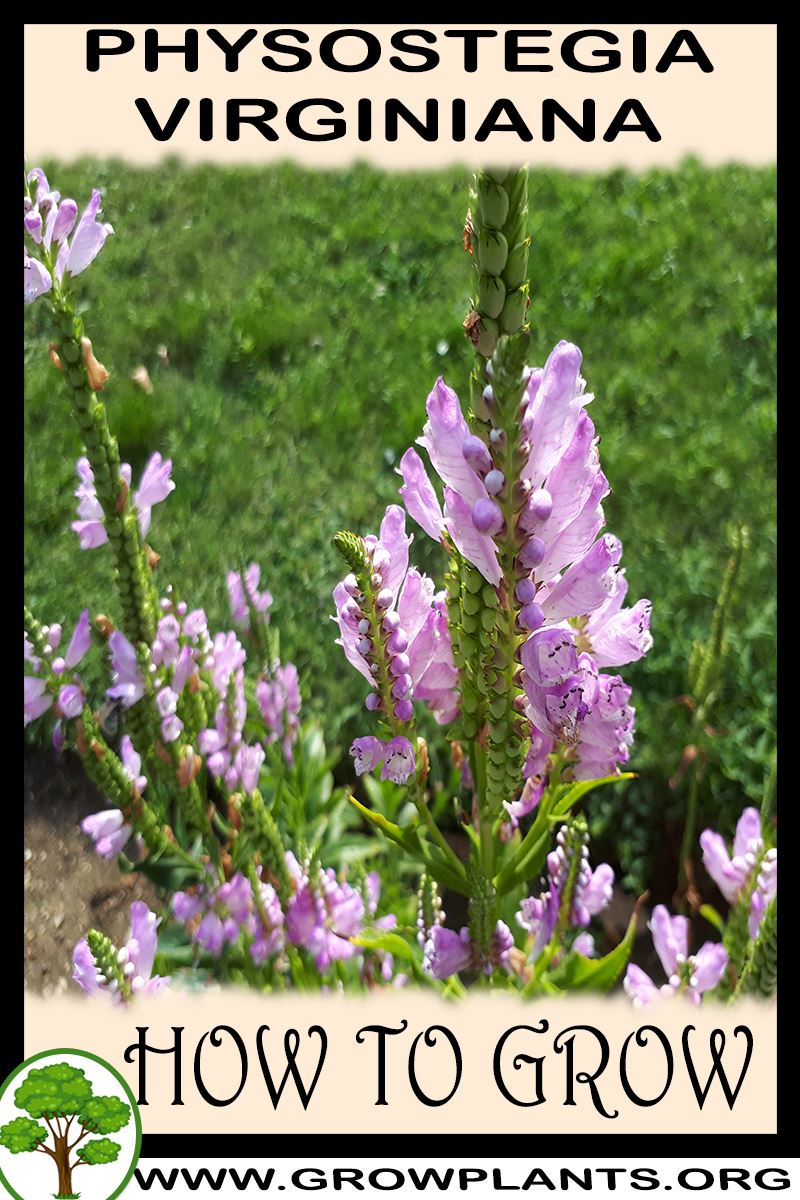
Overview: A herbaceous rhizomatous perennial 30-90 cm (1-3 ft) tall, grown for its upright spikes of hooded, dragon-head flowers. Known as the obedient plant, it is an ornamental border and cut-flower plant that spreads by rhizomes.
Quick Specifications
| Specification | Attribute |
|---|---|
| Plant Type / Life Cycle | Herbaceous perennial (rhizomatous geophyte) |
| Foliage Type | Herbaceous — dies back in winter |
| Mature Size | 30-90 cm (1-3 ft) tall |
| Growth Rate | Fast to moderate |
| Root System | Rhizomatous (spreads and can be aggressive) |
| Toxicity | Non-toxic |
| Hardiness | USDA zones 3-10 |
Growth Form & Structure
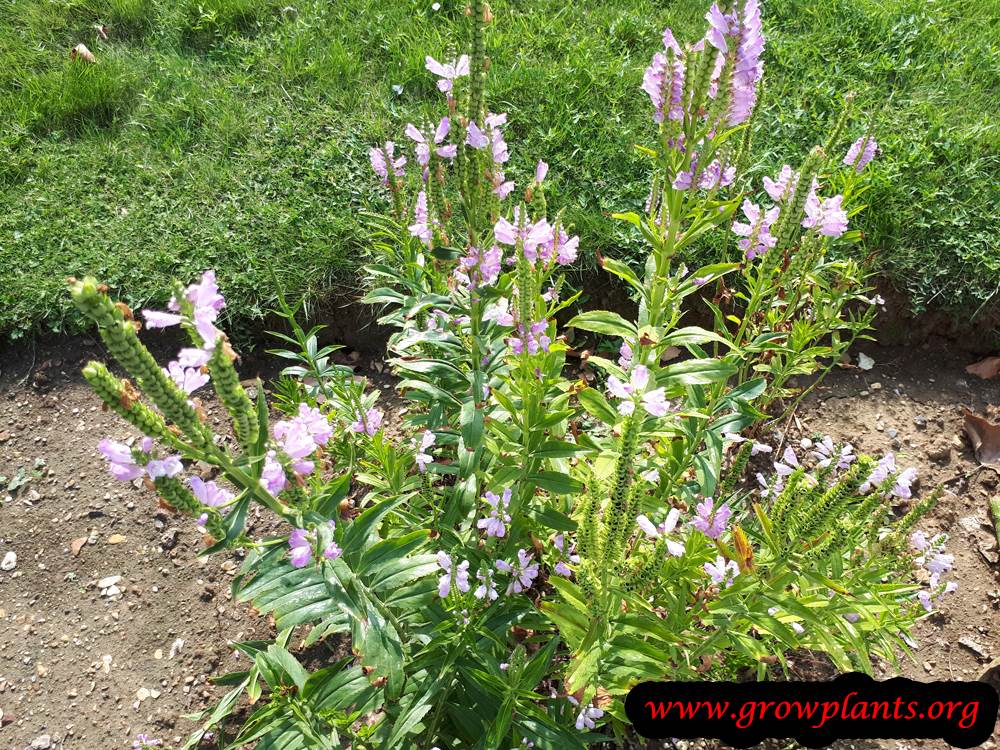
- Height & Spread: Upright leafy stems 30-90 cm (1-3 ft) tall spreading by rhizome into a colony; grows in the ground or in containers and is easily divided to control its spread.
- Growth Habit & Form: Erect, clump-then-colony perennial; stiff square stems rise from creeping rhizomes and can spread vigorously.
- Lifespan & Maturity: A long-lived perennial that dies back each winter and returns and widens from the rhizomes.
Anatomy & Physical Features
- Leaves & Foliage: Green (or green-and-white variegated) lance-shaped leaves with toothed margins on upright stems.
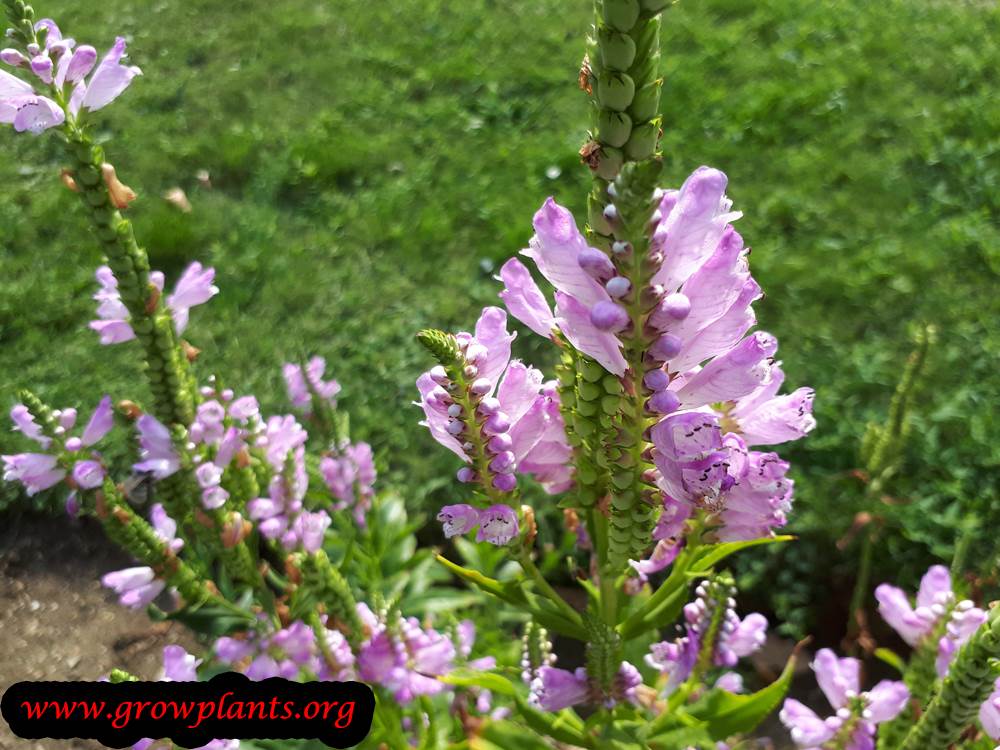
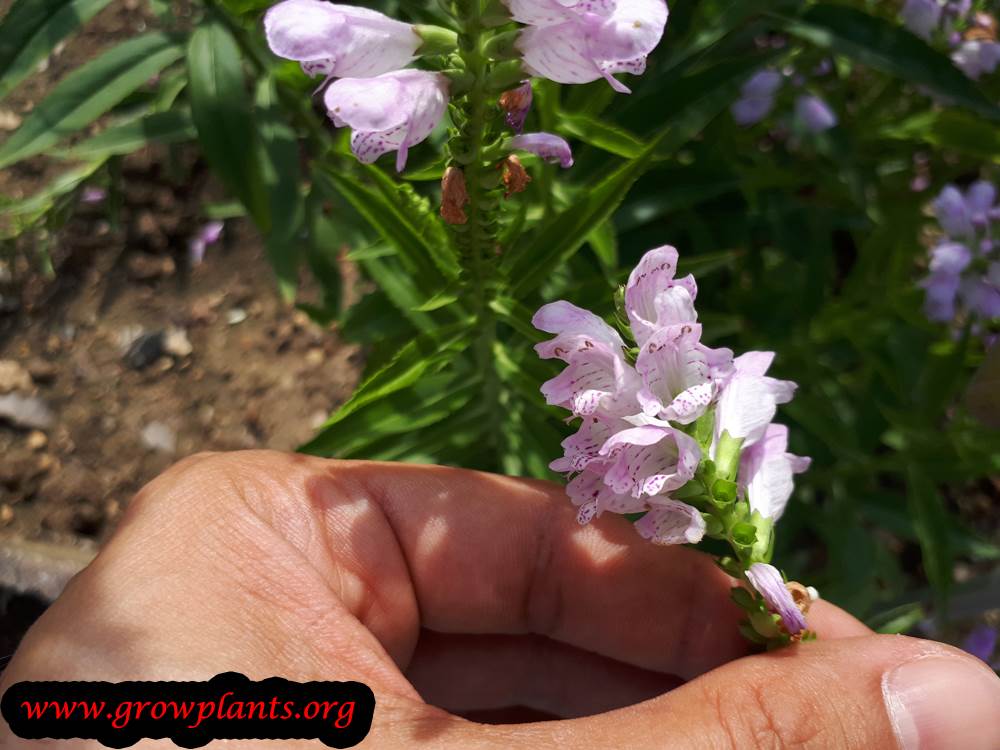
- Flower Characteristics: Hooded, snapdragon-like flowers in pink, white or purple, packed on tall spikes; individual blooms stay where they are pushed, giving the ‘obedient plant’ name.
Primary Uses & Landscape Value
- Functional & Ornamental Roles: A late-season ornamental for borders and wildlife gardens and a good cut flower, drawing bees and butterflies; best sited where its rhizomes can spread or be contained.
Care Guide: Planting, Soil & Watering
Overview: Obedient plant is a moisture-loving perennial that grows in full sun to part shade in rich, consistently moist soil. It thrives with plenty of water and spreads by underground rhizomes to form expanding clumps.
Quick Care Requirements
| Requirement | Ideal Condition |
|---|---|
| Planting Season | Spring, summer or autumn in the growing season |
| Growth Rate | Fast to moderate |
| Soil Type | Rich, moisture-retentive |
| Water Need | Moderate to high — keep the soil consistently moist |
Planting & Establishment
- Best Planting Season: Plant in spring, summer or autumn during the growing season.
- How to Plant:
- Hole Preparation: Dig a hole as deep as and a little wider than the root ball; to limit its spread, plant within a buried barrier.
- Soil Amendments: Enrich the soil with compost or organic matter to build a fertile, moisture-retentive bed.
- Planting Depth: Set the crown at soil level with the root ball top flush to the surface.
- Growth Speed & Expectations: Expect fast-to-moderate growth to an upright clump 30–90 cm tall that spreads outward each year.
Soil, Watering & Drainage Care
- Soil Mix & Drainage Needs: Rich, moisture-retentive soil suits it best; it tolerates damp ground and even brief flooding. In a container use a fertile mix and water often.
- Watering Schedule & Technique:
- Young / Newly Planted: Keep the soil consistently moist while young plants establish.
- Established: Water regularly and generously to keep the root zone moist; it dislikes drying out.
- Seasonal Adjustments: Water most in summer heat and reduce it in autumn and winter as top growth dies back.
Climate, Light & Hardiness
Physostegia virginiana (false dragonhead) is a cold-hardy herbaceous perennial well suited to temperate, subtropical, and Mediterranean climates. It grows well in full sun to half shade and tolerates cold winters across a wide zone range.
Quick Climate Specifications
| Climate Zones | Temperate, Subtropical, Mediterranean |
|---|---|
| USDA Hardiness Zones | 3–10 |
| Frost Tolerance | High |
| Light Conditions | Full Sun / Half Shade |
Sunlight & Light Exposure
Optimal Light Setup
Full sun to half shade both work well; full sun typically produces the sturdiest flower stems.
Temperature Extremes & Hardiness
USDA Hardiness & Regional Limits
Very broadly adapted, hardy from zone 3 through zone 10 – among the more cold-tolerant perennials in this dataset.
Cold Damage & Winter Protection
Top growth dies back with hard frost in colder zones, which is normal winter dieback rather than plant loss; the rhizomatous root system survives winter cold within its hardiness range.
Frost Sensitivity
Foliage is frost tender and dies back after freezing weather, but the plant reliably resprouts from the root each spring within zones 3–10.
Wind, Humidity & Microclimate
Rainfall & Seasonal Moisture
Prefers climates with reasonably consistent moisture, consistent with its rich, moist-soil preference noted in the source data.
Growing in Pots, Balconies & Indoors
Obedient plant (Physostegia virginiana) is an upright, spreading herbaceous perennial (30-90 cm) with spikes of pink or white flowers. The grower says it is not a houseplant but can be grown in a container – it makes a good moisture-loving patio or balcony plant outdoors.
Quick Details
- Container Size: A medium-to-large, deep pot – it spreads by runners
- Indoor Suitability: Not a houseplant – an outdoor perennial
- Best Spot: Full sun to half shade, outdoors
- Soil & Drainage: Rich, moisture-retentive mix with drainage
- Watering in Pots: Average to big amount – it likes steady moisture, never bone-dry
Indoors & On the Windowsill
- Not a houseplant: The grower confirms it will not grow indoors; it is a hardy outdoor perennial.
- Windowsill: Not suited to a sill – it wants open-air light and room to run.
On a Balcony or Patio
- Light, wind & heat: Give it the brightest spot it will tolerate; walls and railings reflect heat and dry pots quickly, so check moisture often and shelter or stake exposed growth.
- Moisture & spread: It likes steady moisture, so watch fast-drying pots; being spreading, a deep, roomy pot keeps it happy.
Choosing the Pot, Soil & Long-Term Care
- Pot & drainage: A medium-to-large, deep pot; it spreads, so give it room. Use strong drainage holes and skip a standing-water saucer to avoid root rot. Terracotta breathes and dries faster; glazed or plastic holds moisture longer.
- Potting mix: A well-aerated, organic-rich mix – potting soil or peat/coir with perlite or vermiculite for free drainage.
- Feeding: Potted plants use up their soil faster as nutrients leach out with watering – feed lightly and regularly through the growing season.
- Repotting: Refresh the mix and pot up about every two years; for perennials, lightly root- and top-prune the plant when you do.
Fertilizing & Feeding
A moderate feeder in rich, consistently moist soil: balanced feeding through spring and summer supports strong stems and the dragonhead-shaped flower spikes prized for cutting, with feeding stopped once the plant dies back for winter.
Quick Fertilizing Specs
| Feeding Level | Moderate feeder |
|---|---|
| Main Nutrient Priority | Balanced feeding with adequate nitrogen for sturdy stems and steady bloom |
| Best Feeding Period | Spring through summer while stems and flower spikes are developing |
| Organic Options | Compost or organic matter worked into rich, moisture-retentive soil |
| Reduce/Stop Feeding | Stop feeding as the plant dies back going into winter |
| Micronutrients | Usually met by a complete fertilizer in fertile, well-managed soil |
| Soil pH | Tolerates a wide range in rich, moist soil |
Feeding by Growth Stage
Spring growth
Build the sturdy, upright stems this plant needs to carry its flower spikes and to hold up as a cut flower.
| Nutrient direction | A balanced fertilizer with adequate nitrogen supports strong stem and foliage development as new shoots emerge from the rhizomes. |
|---|---|
| Timing | As new shoots emerge in spring. |
| Frequency | A light feeding at the start of spring growth, in step with rich, moist soil. |
| Fertilizer types | A balanced complete fertilizer, Compost worked into the soil around the clump |
| Precautions | Keep soil consistently moist alongside feeding, since dry spells can stress stems that are also expected to carry heavy flower spikes. |
Summer bloom
Support the pink, white, or purple dragonhead-shaped flower spikes through their bloom period, whether left in the garden or cut for arrangements.
| Nutrient direction | Continued balanced feeding sustains bloom quality; extra phosphorus is not needed to drive flowering. |
|---|---|
| Timing | Through summer as flower spikes develop and open. |
| Frequency | An occasional light feeding through the bloom period. |
| Fertilizer types | A balanced complete fertilizer, Organic matter to help retain soil moisture |
| Precautions | Avoid heavy nitrogen late in bloom, which can soften stems right when they need to stay upright for cutting. |
Autumn dieback and winter dormancy
Let the top growth die back naturally after the winter pruning of spent bloom stems and foliage, without pushing new growth into cold weather.
| Nutrient direction | None – the plant is dying back to its rhizomes and does not need feeding. |
|---|---|
| Timing | Autumn into winter. |
| Frequency | No feeding through dieback and dormancy; resume once new spring shoots appear. |
| Fertilizer types | No feeding at this stage – the plant is dormant below ground. |
| Precautions | Do not fertilize dormant rhizomes over winter; wait for active spring shoots before feeding again. |
Nutrient Deficiency Signs & Corrections
Pale green foliage and thinner-than-usual stems, most visible on older leaves lower on the plant.
| Possible causes | low available soil nitrogen, nitrogen leaching from moist or heavily watered soil, a crowded, overdue-for-division clump competing for nutrients |
|---|---|
| Appears first on | older, lower leaves |
| What to check | recent feeding history, watering and drainage, how long since the clump was last divided |
| Possible correction | Apply a balanced fertilizer with adequate nitrogen and divide an overcrowded clump if that’s limiting nutrient access. |
New leaves emerge yellow while the veins stay green.
| Possible causes | high soil pH limiting iron availability, waterlogged soil from overwatering, compacted or poorly aerated soil |
|---|---|
| Appears first on | newest leaves |
| What to check | soil drainage and pH, how saturated the soil stays, recent transplant or division stress |
| Possible correction | Improve drainage first, then apply a chelated iron product per its label if yellowing persists. |
Stems flop over or bend under the weight of flower spikes even without wind or rain.
| Possible causes | excess nitrogen producing soft growth, too much shade reducing stem strength, an overcrowded clump competing for light and nutrients |
|---|---|
| Appears first on | whole-plant growth habit rather than a single leaf symptom |
| What to check | recent nitrogen levels in feeding, hours of direct sun the planting receives, clump density and time since last division |
| Possible correction | Moderate nitrogen, confirm adequate sun, and divide a crowded clump to restore stronger stem growth. |
Pruning, Training & Seasonal Maintenance
False dragonhead is an herbaceous, rhizome-spreading perennial grown both as a garden plant and as a cut flower – pruning here means deadheading spent bloom spikes, cutting the whole plant back to the ground once it dies down for winter, and periodically dividing the rhizomatous clump. There is no persistent wood to manage; the main technique-level decision is timing the winter cutback after foliage has died back and, optionally, giving the clump a late-spring trim to keep tall spikes from flopping.
Quick Pruning & Maintenance Specs
| Pruning Tolerance | High |
| Primary Pruning Window | Winter (cut back dead bloom stems and foliage) |
| Secondary Maintenance Window | Ongoing deadheading through Spring–Summer bloom; optional late-spring cutback for height control |
| Typical Frequency | Deadhead through bloom; one winter cutback; divide clumps every 2–3 years |
| Main Objective | Extend bloom via deadheading; tidy dead top growth; control rhizome spread and flopping |
| Young Plant Priority | None beyond removing damaged growth – let the clump establish |
| Mature Plant Priority | Regular deadheading, winter cutback, and periodic division of congested rhizomes |
| Best Tool Type | Precision snips/bypass secateurs for stems; a spade for dividing rhizomes |
| Avoid Heavy Pruning During | Peak bloom (beyond routine deadheading) and while cutting stems for arrangements is the priority |
Pruning by Plant Age & Size
Newly Established
No pruning beyond removing damaged growth; let a newly planted clump establish for a season before dividing or cutting back hard.
Young / Formative
No formal training system – this is an herbaceous spike-forming perennial, not a plant with a trained framework. If flopping is a concern in a windy or rich, fast-growing site, an optional late-spring cutback (reducing stems by about a third before flower buds form) will produce shorter, sturdier, self-supporting spikes without staking.
Mature / Established
Deadhead spent spikes through the bloom season, cut the whole clump back to the ground once it dies down for winter, and lift and divide the clump every 2–3 years as its spreading rhizomes become congested.
Seasonal Pruning Schedule
Dormant/Winter
Objective: tidy the plant once top growth has died back. Remove: dead bloom stems and foliage, cut close to ground level. Do not remove: the underground rhizomes – new shoots emerge from them each spring. Expected response: a fresh flush of foliage the following spring.
Post-Flowering (old-wood bloomers)
Not applicable in the woody sense, but functionally similar: promptly deadheading spent dragonhead-shaped spikes through Spring–Summer often encourages a secondary flush of bloom later in the season, rather than the plant putting energy into seed production.
Structural Pruning & Training
The structural concerns are height/flop control and rhizome spread, not framework. An optional late-spring cutback keeps spikes shorter and sturdier; regular division (every 2–3 years) is the main tool for renewing a clump that has become congested from its spreading rhizomes and would otherwise bloom less and flop more.
Special Growth to Remove
Deadhead spent flower stems regularly – cutting stems for indoor arrangements serves the same purpose. Because this species spreads by rhizomes and can be assertive in a bed, remove or thin runners emerging beyond the intended planting area, and divide the clump periodically rather than letting it spread unchecked.
Container & Small-Space Pruning
Growing in a container is an effective way to contain this rhizome-spreading species; the same deadheading and winter cutback apply, and root/rhizome congestion in a pot will show up faster than in open ground, so plan to divide and repot slightly more often than an in-ground clump.
Tools
Precision snips or bypass secateurs for deadheading and cutting flowers for arrangements; a garden spade for lifting and dividing congested rhizome clumps.
Tool Hygiene & Disease Risk
Routine – clean, sharp tools are sufficient; no transmissible disease risk is noted for this species that would require disinfection between cuts.
Cut Placement & Technique
Deadhead just above the next leaf pair or side bud below the spent spike, which is also where secondary bloom is most likely to form. For the winter cutback, cut stems close to ground level. When dividing, cut or pull rhizome sections apart cleanly, keeping healthy shoots/roots on each division.
Heavy Pruning & Rejuvenation
Well tolerated – cutting the entire clump to the ground each winter is standard, not a special measure, and the plant regrows vigorously from its rhizomes each spring. If a clump has become overcrowded and weak-flowering, division (rather than just cutting back) is the real rejuvenation technique.
Post-Pruning Care
Water newly divided sections well until re-established; no extra feeding is needed after the routine winter cutback, since this is a vigorous, easily spreading perennial.
Common Pruning Mistakes
Never deadheading, which shortens the bloom season and lets the plant put energy into seed instead of a secondary flush; letting the clump go many years without division, leading to congestion, reduced flowering, and flopping; skipping the optional late-spring cutback in a site where the plant is prone to lodging and then relying on stakes instead.
When NOT to Prune
Avoid a late-spring height-control cutback once flower buds have already formed, since it would remove the coming bloom; otherwise this species has no strong pruning-timing restriction beyond waiting for foliage to die back before the winter cutback.
Recommended Tools (by task)
- precision_snips – deadheading spent spikes and cutting stems for arrangements.
- garden_spade – lifting and dividing congested rhizome clumps every 2–3 years.
Propagation Guide
False dragonhead is most easily propagated by dividing its spreading rhizomes, which the site names directly as a starting method alongside seed; grafting is not needed. As a straight species it is also easy from seed, so overall propagation difficulty is Easy.
Quick Propagation Specs
| Best Propagation Method | Rhizome Division |
| Alternative Methods | Seed |
| Propagation Difficulty | Easy |
| Seed True-to-Type | Usually true-to-type (species) |
| Vegetative True-to-Type | Yes |
| Best Propagation Season | Divide in early spring as new growth emerges, or in autumn; sow seed in spring |
Growing from Seed
Sow seed in spring; as with many members of the mint family (Lamiaceae), to which this plant belongs, seed generally germinates without any special pre-treatment, though light can aid germination for such fine seed, so avoid sowing too deeply.
Rhizomes, Tubers, Bulbs & Corms
False dragonhead spreads naturally by rhizomes, and dividing an established clump is the quickest, most reliable way to propagate it true-to-type. Lift and divide in early spring, just as new shoots emerge, or in autumn; each division should include several healthy rhizome buds/shoots with roots attached. Replant promptly and keep the soil moist until the new divisions are established – the plant’s naturally vigorous rhizomatous habit means it establishes and spreads readily once replanted.
Bloom & Flower Guide
Quick Details
- Bloom Season: Summer into autumn
- Time to First Bloom: Usually in its first or second year
- Flower Appearance: Snapdragon-like, tubular flowers in pink, white or purple, packed along upright spikes
- Edibility: Not commonly eaten – grown as an ornamental and cut flower
Detailed Blooming Overview
Known as the obedient plant because each flower can be nudged around its square stem and will stay put, Physostegia sends up spikes of dragonhead-shaped blooms that are excellent for cutting and much loved by bees and hummingbirds.
Flower Characteristics
- Pink, white or purple flowers in a hooded dragonhead shape.
- Held in dense spikes on upright, square stems.
Bloom Care & Thinning
- Prolonging bloom: Deadhead spent spikes to encourage more flowers.
- Keeping it in bounds: It spreads by rhizome, so divide clumps every few years to control its spread.
Pests, Diseases & Troubleshooting
Overview: Obedient plant is a tough, adaptable North American native perennial that is remarkably free of serious pests and diseases – its real reputation is for spreading aggressively by rhizome and for flopping in rich soil or shade. When trouble appears it is minor: aphids on soft growth, slugs on new shoots, and occasional rust or powdery mildew in humid, crowded plantings. Containment and support matter more than any spray.
Quick Troubleshooting Overview
| Issue / Pest | Main Symptom | Primary Solution |
|---|---|---|
| Aggressive spreading | Clump overrunning its neighbours | Divide often, root barrier, or contain in a bed |
| Flopping | Tall stems splaying open, especially in shade | Full sun, lean soil, pinch or support early |
| Rust | Orange pustules on leaf undersides | Airflow, remove affected leaves and debris |
| Powdery mildew | White coating in humid crowding | Divide for airflow, base watering |
| Aphids | Sticky curled shoot tips | Water jet, insecticidal soap |
| Slugs & snails | Grazed new shoots in spring | Hand-pick, iron-phosphate pellets |
Common Pests & Management
- Aphids (Aphidoidea spp.):
- Symptoms: Small soft-bodied green, black or grey insects clustered on soft shoot tips and flower spikes; causes curled, distorted foliage, sticky honeydew and sooty mould. Look-alikes: whitefly (which flies up when disturbed).
- Prevention & Control: Encourage ladybirds, lacewings and parasitic wasps; blast colonies off with a firm jet of water; remove badly infested tips. Persistent outbreaks respond to insecticidal soap or a light horticultural oil applied to leaf undersides in the cool of the evening to protect pollinators.
- Slugs & snails (Gastropoda spp.):
- Symptoms: Irregular ragged holes in leaves and soft new shoots, worst in damp shady conditions, with tell-tale slime trails at night.
- Prevention & Control: Hand-pick after dark; remove damp hiding places; set beer traps or copper barriers; encourage frogs and ground beetles. Scatter iron-phosphate pellets, which are safe around pets and wildlife, only where needed.
- Two-spotted spider mite (Tetranychus urticae):
- Symptoms: Fine pale stippling on leaves, faint webbing on undersides and leaf axils, and a dusty bronzed look in warm dry conditions. Tiny moving specks visible with a hand lens.
- Prevention & Control: Raise humidity and hose foliage regularly, as mites thrive in hot dry air; introduce predatory mites (Phytoseiulus persimilis) under cover. Treat hotspots with insecticidal soap or horticultural oil, ensuring thorough coverage of leaf undersides.
- Leafhoppers (Cicadellidae spp.):
- Symptoms: Pale stippling and flecking on leaves and small wedge-shaped insects that hop away when disturbed; minor on this robust native.
- Prevention & Control: Rarely needs action – encourage predators and tolerate light feeding; a jet of water or insecticidal soap clears any heavy patch.
Diseases & Fungal Issues
- Rust (Puccinia physostegiae):
- Symptoms: Orange to brown powdery pustules, mainly on leaf undersides, yellowing foliage in humid, crowded stands.
- Treatment & Management: Divide and space clumps for airflow, remove affected leaves and clear debris in autumn; resistant vigorous clumps rarely need more than good hygiene.
- Powdery mildew (Erysiphe / Golovinomyces spp.):
- Symptoms: White powdery film on leaves in humid, shaded, crowded conditions.
- Treatment & Management: Grow in sun with airflow, divide congested clumps, and water at the base; sulfur or potassium bicarbonate only if persistent.
- Fungal leaf spots (Septoria / Cercospora spp.):
- Symptoms: Brown or dark spots on leaves in wet seasons, largely cosmetic.
- Treatment & Management: Remove affected leaves and debris and improve airflow; treatment is seldom warranted.
Growing Difficulties & Abiotic Problems
- Aggressive rhizome spread:
- Cause & Symptoms: Fast-creeping rhizomes let obedient plant colonise a border and swamp less vigorous neighbours.
- Correction Strategy: Divide every year or two, grow behind a root barrier or in a container, and pull up escaping runners; site it where it can spread freely, or with equally robust companions.
- Flopping / splaying:
- Cause & Symptoms: Rich soil, over-feeding or shade produces tall, soft stems that splay open, especially after rain.
- Correction Strategy: Grow in full sun on lean-to-average soil, avoid high-nitrogen feeding, and pinch stems early or give ring support; cut back by a third in early growth for sturdier, self-supporting plants.
- Scorch in drought:
- Cause & Symptoms: In hot, dry sites leaf edges brown and flowering is cut short.
- Correction Strategy: Keep evenly moist in dry spells and mulch; it performs best with reliable summer moisture in full sun.
What Helps – Products & Tools
Obedient plant essentially manages itself; the tools that matter are a spade for regular division and a root barrier to contain its spread, plus supports for floppy stems. For the rare pest, insecticidal soap covers aphids and leafhoppers, iron-phosphate pellets the slugs, and horticultural oil the odd mite; sulfur or potassium bicarbonate is enough for occasional rust or mildew.