

Plant Profile & Key Characteristics
Overview: Jabuticaba (Brazilian grape tree) is an evergreen tree – often grown as a multi-stemmed shrub – that reaches about 3-6 m (10-20 ft) and occasionally 8 m (24 ft). This slow-growing perennial is prized for its edible trunk-borne fruit and is also used as an ornamental or bonsai subject.
Quick Specifications
| Specification | Attribute |
|---|---|
| Plant Type / Life Cycle | Perennial (evergreen tree/shrub) |
| Foliage Type | Evergreen |
| Mature Size | 3-6 m tall (10-20 ft), occasionally to 8 m (24 ft) |
| Growth Rate | Slow |
| Toxicity | Non-toxic; grown for edible fruit |
| Hardiness | USDA zone 10b+ |
Growth Form & Structure
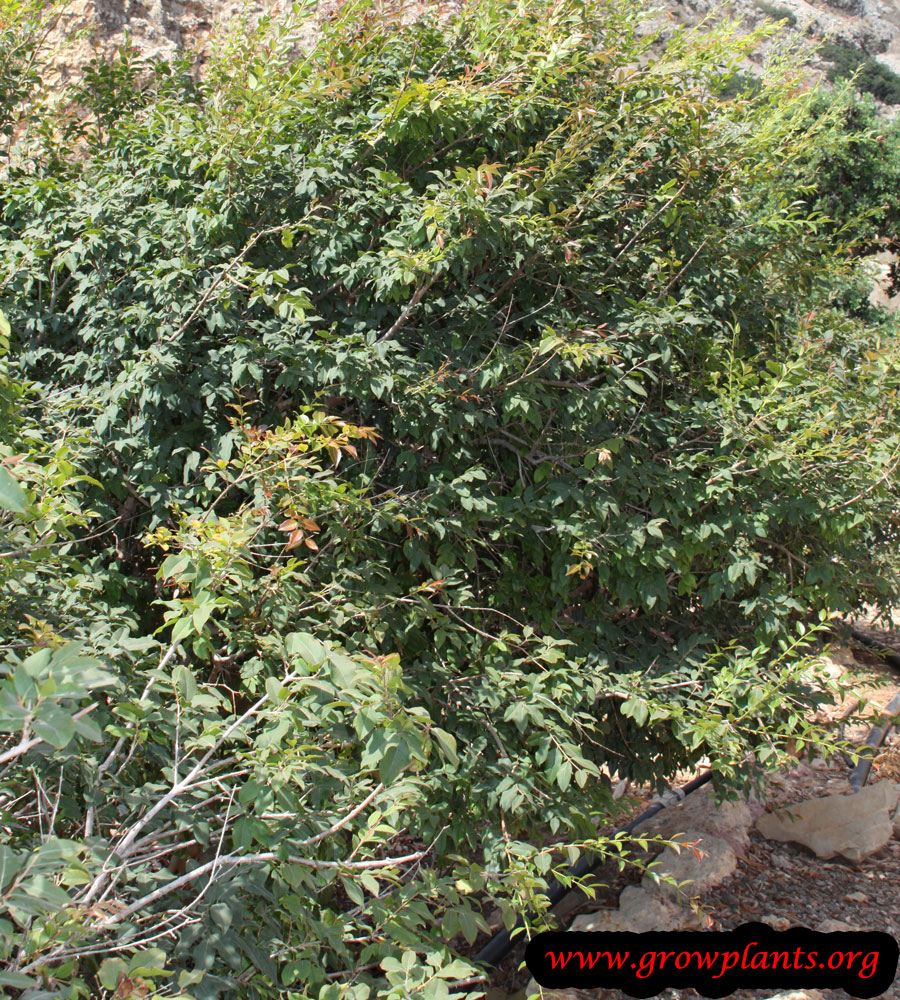
- Height & Spread: A dense, rounded tree of 3-6 m (10-20 ft) in the ground; stays much smaller and can be kept as a container or bonsai specimen.
- Growth Habit & Form: Slow, bushy tree or large shrub with a smooth trunk and fine, dense branching.
- Lifespan & Maturity: Very long-lived but notably slow; typically takes many years (often 5-20 years or more) to begin bearing fruit.
Anatomy & Physical Features
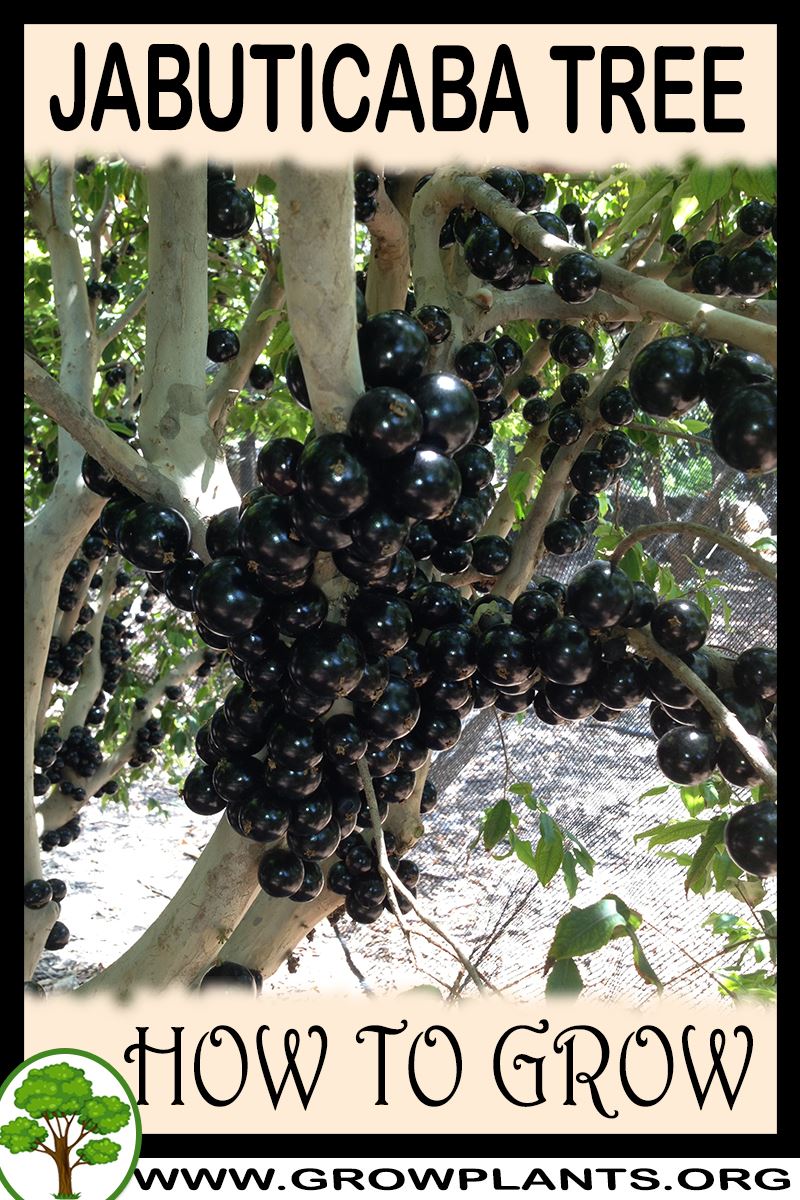
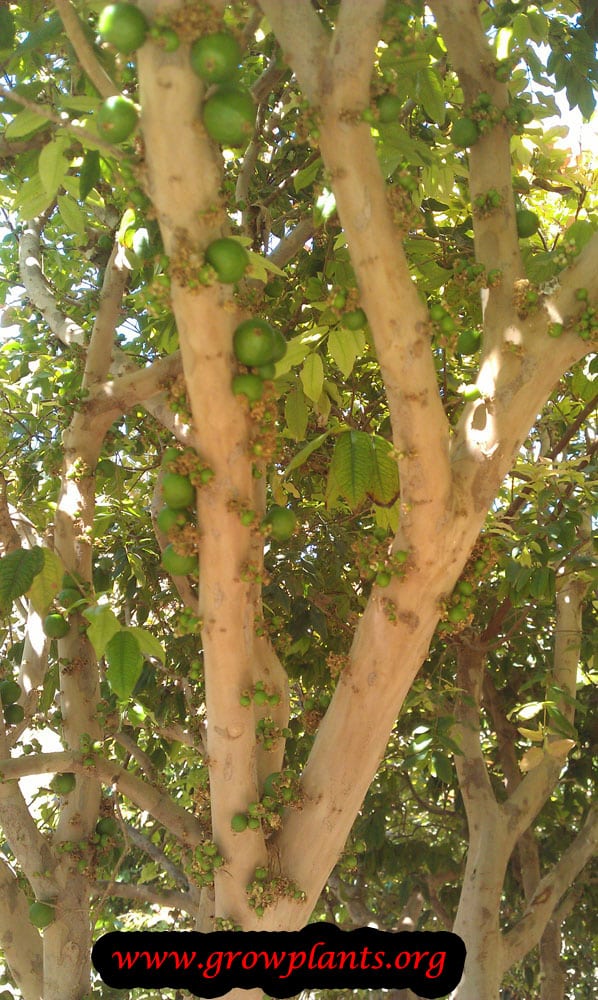
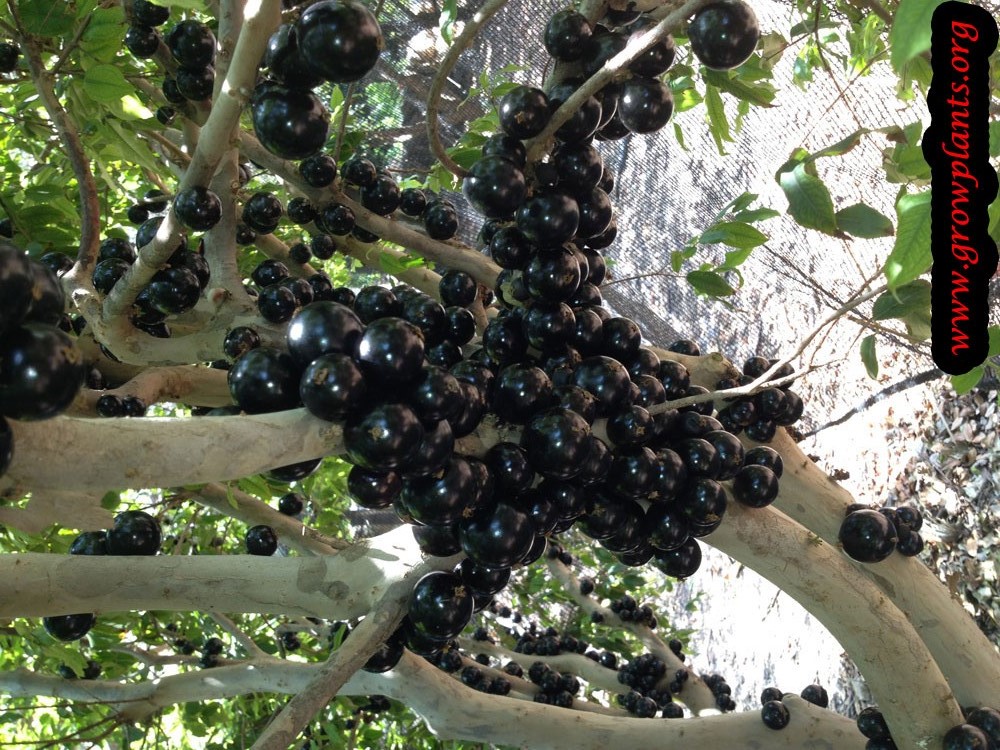
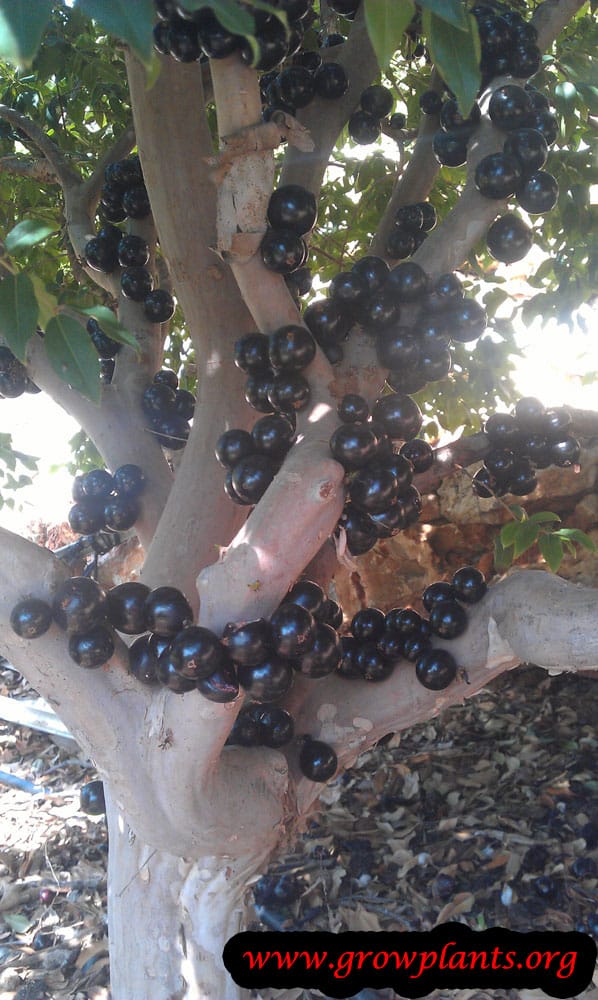
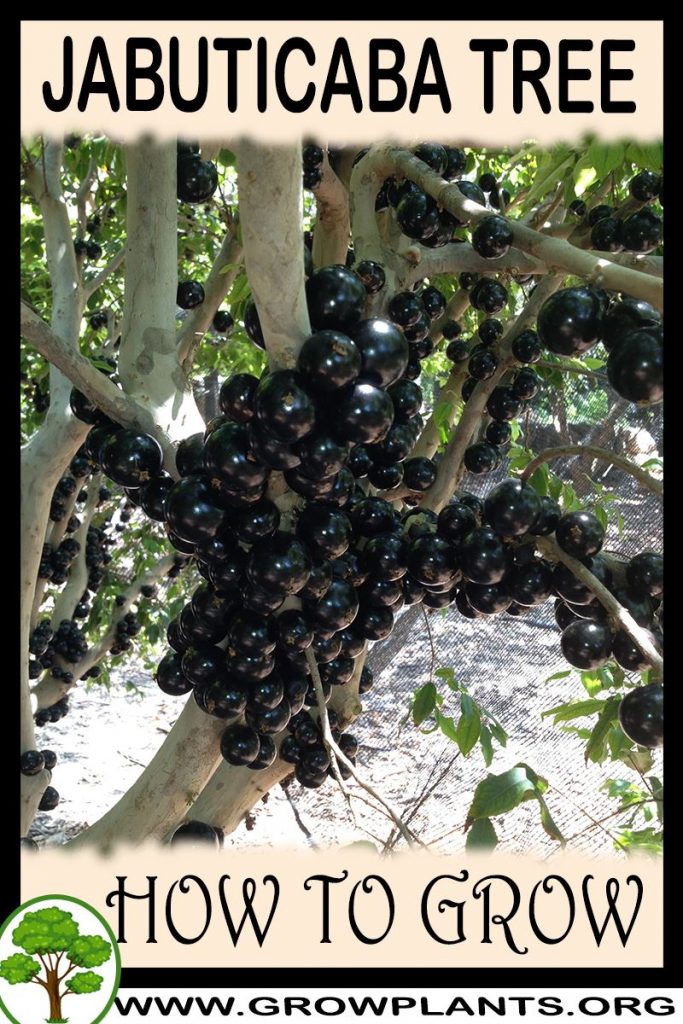
- Trunk & Bark: Smooth, mottled trunk that flushes and peels; flowers and fruit are borne directly on it (cauliflory).
- Leaves & Foliage: Oval leaves in light to medium green, emerging red on new growth.
- Flower Characteristics: Small white flowers with showy stamens, in clusters of 2-5 directly on the trunk and branches.
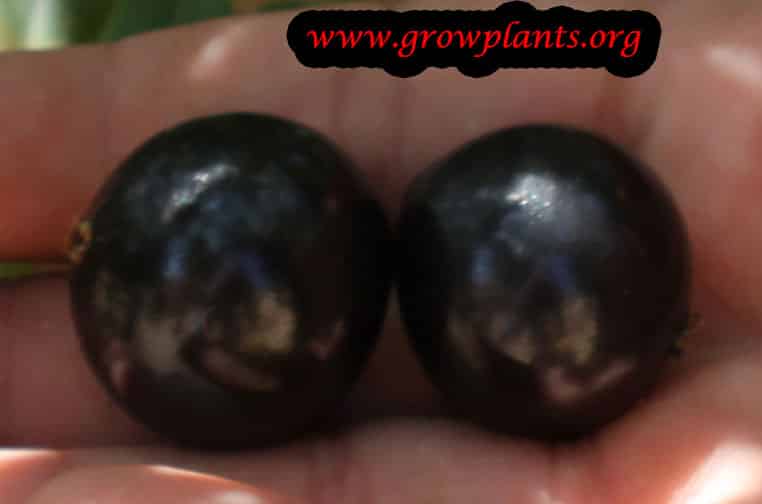
- Fruit Profile: Round 2-4 cm purple-black berries with thick white flesh, eaten fresh with a sweet grape-like flavour.
Primary Uses & Landscape Value
- Edible Uses: Fruit eaten fresh off the tree and made into jam and juice.
- Functional & Ornamental Roles: Ornamental fruiting specimen tree, container plant and popular bonsai subject.
Care Guide: Planting, Soil & Watering
Overview: Jabuticaba (Plinia cauliflora) is a slow-growing evergreen fruit tree (hardiness zone 10b and warmer) that needs a frost-free position and consistently moist, rich, slightly acidic soil. It is prone to iron deficiency on alkaline ground and rewards patience, as it is slow to establish and fruit.
Quick Care Requirements
| Requirement | Ideal Condition |
|---|---|
| Planting Season | In spring, summer or autumn (and in the tropics also in winter) |
| Growth Rate | Slow |
| Soil Type | Rich, moisture-retentive, free-draining soil high in organic matter |
| Soil pH | Slightly acidic (about 5.5-6.5) |
| Water Need | Moderate to high – keep the soil consistently moist, never letting it dry out |
Planting & Establishment
- Best Planting Season: Plant in spring, summer or autumn; in the tropics it can also be planted in winter, always in a frost-free spot.
- How to Plant:
- Hole Preparation: Dig a hole twice as wide as the root ball in rich, loosened, free-draining soil.
- Soil Amendments: Work in generous compost and organic matter to keep the soil rich, moist and slightly acidic, adding chelated iron if the soil is alkaline.
- Planting Depth: Set the root collar level with the soil surface and mulch well, keeping the trunk base clear.
- Growth Speed & Expectations: Growth is slow; trees reach about 3-6 m (10-20 ft), occasionally 8 m, and take years to begin fruiting, so patience is essential.
Soil, Watering & Drainage Care
- Soil Mix & Drainage Needs: Provide rich, moisture-retentive but free-draining, slightly acidic soil; good drainage prevents rot while consistent moisture and iron keep the foliage healthy.
- Watering Schedule & Technique:
- Young / Newly Planted: Keep young trees constantly moist, never allowing the soil to dry out.
- Established: Water regularly and deeply to maintain even soil moisture at all times.
- Seasonal Adjustments: Water more in hot, dry weather and reduce slightly in cool spells, but never let the root zone dry completely.
Climate, Light & Hardiness
Jabuticaba is a tropical, mediterranean, and subtropical fruit tree that requires frost-free conditions and consistent moisture. It needs nearly full sun and is only suited to warm-winter climates.
Quick Climate Specifications
| Climate Zones | Tropical, Mediterranean, subtropical |
|---|---|
| USDA Hardiness Zones | Approximately 10b and warmer |
| Frost Tolerance | None |
| Light Conditions | Full Sun to almost full sun |
Sunlight & Light Exposure
Optimal Light Setup
Needs full sun or nearly full sun; too little light slows an already slow-growing tree further.
Temperature Extremes & Hardiness
USDA Hardiness & Regional Limits
Grown outdoors from roughly USDA zone 10b upward; bloom timing shifts with climate - year-round in the tropics, spring only in mediterranean and subtropical zones.
Frost Sensitivity
Site data specifies frost-free conditions are required for this species.
Growing in Pots, Balconies & Indoors
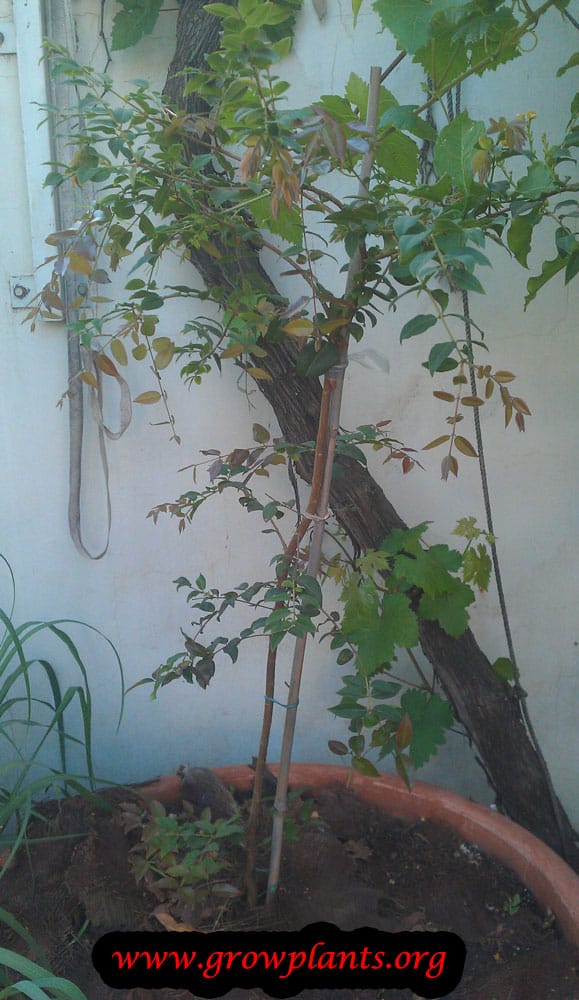
Jabuticaba is a slow-growing tree of 3-6 m (10-20 ft), occasionally 8 m. The grower says it isn’t a houseplant but grows well in a container – and its slow habit and famous trunk-borne fruit make it a rewarding patio or bonsai subject.
Quick Details
- Container Size: A large, deep container; its slow growth suits pot life
- Indoor Suitability: Not a houseplant; an excellent patio container tree
- Best Spot: Full sun to almost full sun
- Soil & Drainage: Aerated, organic-rich mix that drains freely
- Watering in Pots: Keep the mix lightly moist – pots dry faster than open ground; water once the surface starts to dry.
Indoors & On the Windowsill
- Houseplant limits: Not a houseplant – it needs strong sun that indoor light can’t match.
- Windowsill growing: Too large for a sill; grow it in a pot outdoors, or train it as a bonsai for a bright spot.
- Overwintering: Frost-tender, so in cold areas keep it potted and shelter it frost-free over winter.
On a Balcony or Patio
- Light & wind: Give it the sunniest spot on the balcony or patio. Walls and paving reflect heat and pots dry quickly, so check moisture often; shelter and stake exposed plants against wind.
Choosing the Pot, Soil & Long-Term Care
- Pot & drainage: A deep pot with strong drainage holes; skip a standing-water saucer to avoid root rot. Terracotta breathes and dries faster, while glazed or plastic hold moisture longer.
- Potting mix: Well-aerated, organic-rich mix – peat or coir with perlite and a little organic matter; it must drain freely.
- Feeding: Potted plants use up their food faster because nutrients leach out with each watering, so feed a little more often than plants in open ground.
- Repotting: Refresh part of the mix and pot up every couple of years; for established plants, lightly prune the root ball and top growth when you repot.
Fertilizing & Feeding
Jabuticaba is a slow-growing, acid-soil-loving tree that flowers and fruits directly on its trunk; it needs patient, steady balanced feeding and consistently moist, slightly acidic soil to grow and fruit well, with iron often a particular focus.
Quick Fertilizing Specs
| Feeding Level | Moderate |
|---|---|
| Main Nutrient Priority | Balanced nutrition with attention to iron availability, given this tree’s preference for slightly acidic soil. |
| Best Feeding Period | Through the warm growing season. |
| Organic Options | Compost, humus and acidic mulch worked into the soil regularly. |
| Soil pH | Prefers slightly acidic, consistently moist soil; strongly alkaline or dry soil slows growth significantly. |
| Reduce/Stop Feeding | Ease off feeding where growth naturally slows outside the main growing season. |
Feeding by Growth Stage
Newly planted
Help a newly planted Jabuticaba establish roots in consistently moist, slightly acidic soil; this species needs patience and can be very slow to start.
| Nutrient direction | Go easy at planting; rely on organic matter and a light balanced feed once new growth begins. |
|---|---|
| Timing | At and just after planting. |
| Frequency | Minimal feeding at first; let the roots establish before feeding more. |
| Fertilizer types | Organic matter, humus or acidic mulch mixed into the planting area, A light balanced complete fertilizer once new growth begins |
| Precautions | Keep soil consistently moist and avoid letting it dry out or turn alkaline, both of which slow this tree noticeably. |
Young, slow-establishing tree
Support slow early growth as the young tree builds its framework; growth stays very slow if the tree’s soil and moisture needs are not met.
| Nutrient direction | Balanced feeding with a nitrogen lean, alongside consistent moisture and acidic organic mulch, supports steady growth. |
|---|---|
| Timing | Through the active growing season while the tree is young. |
| Frequency | Light, regular feeding across the growing season. |
| Fertilizer types | A balanced fruit-tree fertilizer with a nitrogen lean, Acidic organic mulch and compost worked in periodically |
| Routine trace nutrients | iron |
| Precautions | Watch for pale new growth, since this acid-loving tree is prone to iron shortages if soil drifts away from slightly acidic. |
Established tree approaching bearing
Keep the maturing tree in steady health as it slowly approaches its unusual trunk-borne flowering and fruiting.
| Nutrient direction | A balanced complete fertilizer with attention to iron, given this tree’s acid-soil preference. |
|---|---|
| Timing | During the active growing season. |
| Frequency | Steady, moderate feeding through the season. |
| Fertilizer types | A balanced complete fertilizer suited to acid-loving plants, Acidic organic mulch and compost |
| Routine trace nutrients | iron, manganese |
| Precautions | Continue reinforcing soil acidity; alkaline drift is a common cause of poor performance in this species. |
Mature, fruit-bearing tree
Support the tree’s distinctive flowering and fruiting directly on the trunk and older branches.
| Nutrient direction | A balanced fertilizer leaning toward potassium as fruit develops; a settled mature tree needs only light feeding. |
|---|---|
| Timing | From flowering through fruit development. |
| Frequency | Light, well-timed feeding around the fruiting period. |
| Fertilizer types | A balanced complete fertilizer with adequate potassium, Acidic organic mulch and compost |
| Routine trace nutrients | iron, manganese |
| Precautions | Excess nitrogen at this stage favors leaves over the trunk-borne flowers and fruit; keep feeding light and balanced. |
Nutrient Deficiency Signs & Corrections
New leaves are pale or yellow between green veins while the veins stay green.
| Possible causes | Soil pH drifting away from the slightly acidic range this tree needs, reducing iron availability, Waterlogged or poorly drained soil limiting root uptake, A genuine iron shortage in the soil |
|---|---|
| Appears first on | Youngest leaves at the shoot tips. |
| What to check | Soil pH and whether acidic mulch has been maintained, Drainage and whether roots sit wet, Whether only new growth is affected |
| Possible correction | Reinforce soil acidity with organic, acidic mulch, improve drainage, and apply a chelated iron product per its label if symptoms persist. |
Growth stays extremely slow well beyond what is typical even for this naturally slow-growing species.
| Possible causes | Soil that is too dry or lets moisture fluctuate too much, Soil pH too alkaline for this acid-loving tree, General nutrient shortage in poor soil |
|---|---|
| Appears first on | New shoots across the tree. |
| What to check | Soil moisture consistency, Soil pH, Feeding history |
| Possible correction | Keep soil consistently moist, reinforce acidity with organic mulch, and apply a balanced fertilizer at a moderate rate; be patient, since this species is inherently slow-growing. |
The tree flowers directly on the trunk but sets little fruit.
| Possible causes | Seed-grown, non-grafted tree not yet at full fruiting maturity, Excess nitrogen favoring leaf growth over fruiting, Poor pollinator activity during bloom |
|---|---|
| Appears first on | Flowering and fruit set on the trunk and older branches. |
| What to check | Whether the tree is grafted or seed-grown, and its age, Recent nitrogen-heavy feeding, Pollinator activity during bloom |
| Possible correction | Favor grafted planting stock for earlier, more reliable fruiting, ease back on nitrogen, and be patient with a young or seed-grown tree. |
Pruning, Training & Seasonal Maintenance
Jabuticaba is not recommended for pruning. Its flowers and fruit form directly on the bark of the trunk and older branches (cauliflory) rather than on new shoot tips, and those specialised flowering sites take years to develop on a tree that is already very slow-growing and typically needs 5–20 years or more before it first bears fruit. Removing trunk or branch wood removes those flowering sites outright and can set the tree back for years, so pruning tolerance here is essentially limited to clearing dead or diseased material.
Quick Pruning & Maintenance Specs
| Pruning Tolerance | Low – not recommended beyond sanitation |
| Primary Pruning Window | Any time, but only for dead/diseased wood (pruning season is all year, per the plant’s own guidance, but only for this limited purpose) |
| Typical Frequency | As needed only, for damage – not a routine practice |
| Main Objective | Preserve the trunk and branch bark that carries the flowering/fruiting sites |
| Young Plant Priority | Leave the tree essentially unpruned to build up trunk and branch surface for future cauliflorous flowering |
| Mature Plant Priority | Same – remove only clearly dead or diseased wood |
| Best Tool Type | Bypass secateurs, for the rare sanitation cut only |
| Avoid Heavy Pruning During | Always – heavy or structural pruning is not appropriate for this species at any time |
Pruning by Plant Age & Size
Newly Established
Do not prune beyond removing any damaged growth from transplanting – the tree needs to build up trunk and branch surface, not lose it.
Young / Formative
No formative training system is used or needed; the tree develops its natural form on its own, and any premature structural cutting only delays the trunk and branch surface that will eventually flower.
Mature / Established
Leave the tree alone except for clearly dead or diseased wood – there is no ongoing maintenance-pruning regime for this species.
Seasonal Pruning Schedule
| Stage | Objective | Remove | Do Not Remove | Expected Response | Flowering/Fruiting Impact |
| Ongoing Sanitary (any time of year) | Remove only dead or diseased wood, as needed | Clearly dead or diseased branches | All healthy trunk and branch bark, including any bare-looking sections – they may carry future flowering sites | Minimal disruption to the tree | None if limited strictly to dead/diseased material |
Flowering & Fruiting Wood
Jabuticaba flowers and fruits directly on the trunk and older branches (cauliflory), not on new seasonal growth. This makes the trunk and branch bark itself the tree’s “fruiting wood,” and those flowering sites accumulate and mature over many years. Any pruning that removes trunk or branch bark permanently removes flowering potential from that section and, on a species that is already very slow to first bear, represents a real, lasting setback rather than a routine renewal cut.
Special Growth to Remove
Only clearly dead or diseased wood. No suckers, watersprouts or other unwanted growth are noted for this species, and there is no reason to remove healthy growth of any kind.
Container & Small-Space Pruning
The species can be grown in a container, but the same no-pruning principle applies – manage size through pot selection and root management rather than by cutting back the trunk or branches, since doing so would sacrifice future flowering sites just as it would in the ground.
Tools
Bypass secateurs are sufficient for the rare cut this species actually needs – removing a clearly dead or diseased branch. No loppers, saw, or hedge shears are warranted.
Tool Hygiene & Disease Risk
Increased – because any wound falls on valuable trunk or branch bark that may carry future flowering sites, use clean tools for the rare sanitation cut to avoid introducing infection near that tissue, and avoid creating any unnecessary wound elsewhere on the trunk.
Cut Placement & Technique
Only cut clearly dead or diseased tissue, back to clean healthy wood; avoid any incidental wounding of surrounding healthy trunk or branch bark while making the cut.
Heavy Pruning & Rejuvenation
Not tolerated. This species does not benefit from hard rejuvenation or structural cutting – doing so removes cauliflorous flowering sites that took years to develop, on a tree that already takes 5–20 years or more to bear its first fruit.
Post-Pruning Care
After the rare sanitation cut, water normally and simply monitor the wound – no other special aftercare is required.
Common Pruning Mistakes
- Pruning the tree like a conventional fruit tree and removing trunk or branch bark, which permanently loses years of developing cauliflorous flowering sites.
- Expecting quick regrowth after any cut, given how slowly this species grows.
- Removing bare-looking older wood assuming it is unproductive, when it may in fact be developing future flowering sites.
When NOT to Prune
Do not prune this species at all except to remove clearly dead or diseased wood – there is no season or growth stage where structural or size-reduction pruning is appropriate.
Recommended Tools (by task)
- bypass_secateurs – the only tool this species genuinely needs, for the rare removal of dead or diseased wood.
Pruning Troubleshooting
| Problem | Possible Cause | What to Check | Corrective Action |
| Reduced flowering/fruiting for years after a cut | Trunk or branch bark (the cauliflorous flowering surface) was removed by unnecessary pruning | History of any structural cuts to the trunk or major limbs | Avoid future non-essential pruning; only remove clearly dead or diseased wood |
Propagation Guide
Jabuticaba is usually started by buying a young plant or by vegetative propagation, which the growing notes recommend specifically because it brings the tree into bearing faster than a seedling; seed is biologically possible but seed-grown trees are notably slow to establish and fruit. Vegetative propagation is Moderate to Difficult given the tree’s naturally slow growth, while seed is easy to sow but very slow to reward.
Quick Propagation Specs
| Best Propagation Method | Vegetative propagation (grafting/budding, or air layering) for faster, reliable fruiting |
| Alternative Methods | Seed (slow to fruit, more variable) |
| Propagation Difficulty | Easy (seed, but very slow) – Moderate to Difficult (grafting) |
| Seed True-to-Type | Variable – seedling fruiting can be markedly slower and less predictable than the parent |
| Vegetative True-to-Type | Yes |
| Best Propagation Season | Spring through autumn (also possible in winter in tropical climates), matching the site’s planting season |
Growing from Seed
The site does not give detailed sowing instructions for this species. As general guidance: sow cleaned, fresh seed (Myrtaceae seed of this kind is not usually long-lived once fully dried) in a moist, well-drained mix in warm, humid conditions typical of the plant’s tropical-to-subtropical range. Seedlings are consistent with the site’s own note that this is a slow-growing tree, and vegetative propagation is preferred specifically to shorten the long wait to fruiting that seed-grown trees involve.
Grafting & Budding
Why Grafting Is Used
To reproduce a known, reliably fruiting tree true-to-type and bring it into bearing sooner than a seedling – the site states vegetative reproduction is recommended for exactly this reason.
Preferred Grafting Methods
Not specified by the site; cleft, whip, or side-veneer grafting and chip or patch budding are the general techniques used for this kind of slow-growing, dense-wooded fruit tree, though success can be inconsistent and it is considered a specialist skill for this species.
Rootstock
Seedling jabuticaba rootstock is the typical choice.
Scion Selection
Healthy, disease-free wood taken from a mature tree with a known good fruiting record.
Best Grafting Season
During the plant’s active growing period, spring through autumn (per the site’s planting season).
Graft Aftercare
Protect the union from drying out until it has knit, and remove any rootstock growth below the graft.
Air & Ground Layering
Air layering is also used as an alternative vegetative method on woody fruit trees of this type: wound or girdle a healthy branch, pack the wound with moist sphagnum moss wrapped in plastic, and keep it consistently humid through the growing season; given the plant’s slow growth, rooting can take longer than on faster-growing species. Sever and pot up once a solid root mass has formed, then keep shaded and humid until established.
Bloom & Flower Guide
Quick Details
- Bloom Season: Year-round in the tropics; spring in mild and subtropical climates
- Flower Appearance: Small white flowers with fluffy stamens, borne right on the trunk and branches
- Edibility: The flowers are not eaten
Detailed Blooming Overview
Jabuticaba has one of the most remarkable blooms of any fruit tree: the flowers appear cauliflorously, sprouting directly from the bark of the trunk and main branches rather than at the shoot tips. Clothed in white, fuzzy-stamened flowers, a blooming tree looks almost frosted. In the tropics it can flower repeatedly through the year; in cooler climates it flowers mainly in spring.
Flower Characteristics
- Small and white with prominent stamens, appearing in little groups of two to five.
- Held directly against the trunk and branches, which is the plant’s signature feature.
Bloom Care & Thinning
- Thinning the bloom: Thin the flowers if the plant is short on iron, so its energy goes to healthy growth.
- Pollination: The flowers are pollinated by bees and flies.
- Light and soil: Full or near-full sun with moist, slightly acidic soil supports flowering.
Fruit & Uses
Jabuticaba is grown for its grape-like fruit, which forms in dense clusters directly on the trunk and older branches (a habit called cauliflory). The fruit is eaten fresh out of hand and is also commonly turned into jam, jelly, and juice.
Quick Edible Specs
| Edible Parts | Fruit |
|---|---|
| Main Use(s) | Culinary – fresh eating, jam, juice |
| Eaten Raw or Cooked | Raw; also cooked down for jam and juice |
| Preparation Required | None to eat fresh; the thick, slightly tannic skin is often strained out when making jam or juice |
| Harvest Season | Tropical climates: year–round; Mediterranean/subtropical climates: summer |
| Time to First Harvest | A notably slow–bearing tree, especially if its growing needs are not fully met (see Propagation for ways to speed this up) |
| Storage | Best eaten fresh; the fruit does not keep well for long once picked |
| Safety/Toxicity Caveat | None known; the skin is astringent and is usually not eaten on its own |
Fruit
The fruit is a round berry, 2–4 cm across, with a thick purple–black peel and a soft, juicy white pulp inside. It is ready to pick once the peel has coloured fully purple–black; because it grows straight off the bark, it is simply hand–picked from the trunk and branches. Fruit set tends to be heavier where more trees are grown nearby. The pulp is eaten fresh, or the whole berries are cooked down into jam, jelly, or juice; the thick skin itself is tannic and is not usually eaten raw.
Harvesting
Harvest is by hand as fruit ripens on the trunk, and in warm climates the tree can produce more than one flush a year. Birds are strongly drawn to the ripe fruit, so netting the tree is worthwhile if birds are taking the crop before it can be picked.
Preparation, Uses & Safety
Fresh jabuticaba is eaten out of hand by squeezing the pulp from the skin, and larger harvests are commonly made into jam, jelly, or juice. No toxicity is associated with the fruit; the thick skin is simply astringent and is generally discarded or cooked rather than eaten raw.
Pests, Diseases & Troubleshooting
Overview: Plinia cauliflora (jabuticaba) is a slow, generally resilient Myrtaceae fruit tree, but as a myrtle it is vulnerable to myrtle rust and, being cauliflorous, its trunk-borne fruit attract fruit flies and birds. Its most persistent day-to-day struggle, however, is iron/manganese chlorosis on alkaline soil, since it demands an acidic, well-drained root run. Keep it healthy with acidic soil, mulch and steady moisture; treat pests organically first.
Quick Troubleshooting Overview
| Issue / Pest | Main Symptom | Primary Solution |
|---|---|---|
| Iron/manganese chlorosis | Yellow leaves with green veins on new growth | Acidify soil, chelated iron, mulch |
| Myrtle rust | Bright yellow-orange powdery pustules on new leaves/shoots | Prune out, improve airflow, protectant fungicide |
| Fruit flies | Maggots and premature drop of trunk-borne fruit | Bait/lure traps, prompt harvest, sanitation |
| Aphids & scale | Curled shoot tips, honeydew, sooty mold | Blast off, horticultural oil, encourage predators |
| Birds | Pecked and stripped ripe fruit on the trunk | Netting, timely harvest |
Common Pests & Management
- Aphids (Aphis and Toxoptera spp.):
- Symptoms: Clusters on soft new shoots and flower flushes causing curling and distortion, with sticky honeydew and following sooty mold and ants.
- Prevention & Control: Hose off colonies, pinch badly infested tips, and protect ladybirds, lacewings and hoverflies; use insecticidal soap or a light horticultural oil only if predators cannot keep pace.
- Scale & mealybugs (Coccidae and Pseudococcus spp.):
- Symptoms: Brown or waxy bumps and white cottony masses on stems, leaf undersides and in bark crevices, with honeydew and sooty mold.
- Prevention & Control: Wipe or scrape light infestations, prune heavily encrusted wood, and spray horticultural oil for thorough smothering coverage; control ants that farm and protect them.
- Fruit flies (Anastrepha fraterculus, Ceratitis capitata):
- Symptoms: Females sting the ripening trunk-borne fruit; larvae tunnel the pulp, causing softening, ooze and premature drop.
- Prevention & Control: Hang protein-bait or pheromone lure traps before ripening, harvest promptly, and collect and destroy all fallen or infested fruit to break the cycle; bagging small crops is very effective.
- Thrips (Thysanoptera):
- Symptoms: Silvery flecking and scarring on young leaves and flowers with tiny black frass specks, distorting the new flush.
- Prevention & Control: Encourage predatory mites and lacewings, use blue sticky traps to monitor, and treat persistent outbreaks with spinosad or insecticidal soap in the evening to spare pollinators.
- Birds ((vertebrate)):
- Symptoms: Ripe fruit clinging to the trunk and main branches is pecked, opened or stripped just as it colors.
- Prevention & Control: Net the trunk zone as fruit ripens, harvest frequently at peak color, and consider reflective deterrents; the cauliflorous fruiting habit makes physical exclusion easiest.
Diseases & Fungal Issues
- Myrtle rust (Austropuccinia psidii):
- Symptoms: Bright yellow to orange powdery pustules on young leaves, shoots and flower parts, followed by distortion, dieback and defoliation of the tender flush; a serious pathogen across the myrtle family.
- Treatment & Management: Improve airflow, avoid overhead watering, and prune out infected flushes into sealed bags; apply a protectant fungicide (myclobutanil or a copper/mancozeb type) to new growth in wet conditions, rotating actives, and choose resistant stock where available.
- Anthracnose & fruit rot (Colletotrichum gloeosporioides):
- Symptoms: Dark sunken spots on leaves and, on fruit, soft rotting lesions in warm, humid, wet weather.
- Treatment & Management: Prune for an open canopy, remove mummified fruit and litter, and apply a copper fungicide preventively during prolonged wet spells; harvest cleanly and store cool.
- Algal leaf spot (Cephaleuros virescens):
- Symptoms: Raised orange-brown velvety blotches on older leaves in humid, still, shaded conditions; largely cosmetic but weakening if severe.
- Treatment & Management: Open up the canopy for light and airflow, thin surrounding vegetation, and apply copper if it becomes heavy.
Growing Difficulties & Abiotic Problems
- Iron / manganese chlorosis:
- Cause & Symptoms: On alkaline or poorly drained soil the tree cannot take up iron and manganese; new leaves yellow between green veins and growth stalls.
- Correction Strategy: Grow in acidic, humus-rich, free-draining soil (target pH ~5.5–6.5), mulch generously, and correct deficiency with chelated iron and acidifying feeds such as elemental sulfur; avoid lime and hard alkaline water.
- Slow growth & stress:
- Cause & Symptoms: Jabuticaba is naturally very slow; drought, compaction or cold check it further and delay the many years to first fruiting.
- Correction Strategy: Provide consistent moisture without waterlogging, a deep organic mulch, and shelter from cold and drying wind; patience and steady care outperform heavy feeding.
- Salt & frost sensitivity:
- Cause & Symptoms: Salty soil or spray scorches leaf margins; frost damages tender new growth and young trees.
- Correction Strategy: Flush salts with clean deep watering, avoid saline water, and protect young trees from frost with cover or a warm microclimate.
- Sunburn on young plants:
- Cause & Symptoms: Sudden full sun bleaches and scorches leaves of young or shade-grown trees.
- Correction Strategy: Acclimate gradually and give young plants light afternoon shade in hot climates until established.
What Helps – Products & Tools
Anchor management in acidic soil, mulch and steady moisture. Helpful inputs include chelated iron and elemental sulfur for chlorosis, horticultural oil and insecticidal soap for aphids, scale and thrips, fruit-fly bait/lure traps and fruit-protection bags/netting, and copper or myclobutanil-type fungicide for myrtle rust and anthracnose in wet weather.