Plant Profile & Key Characteristics
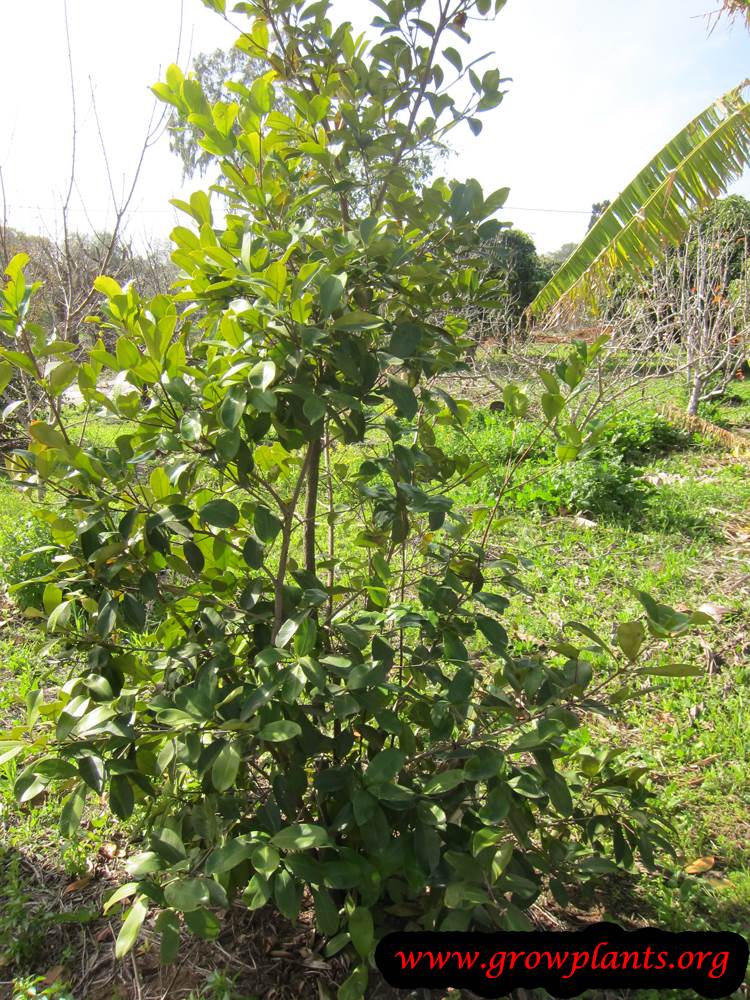
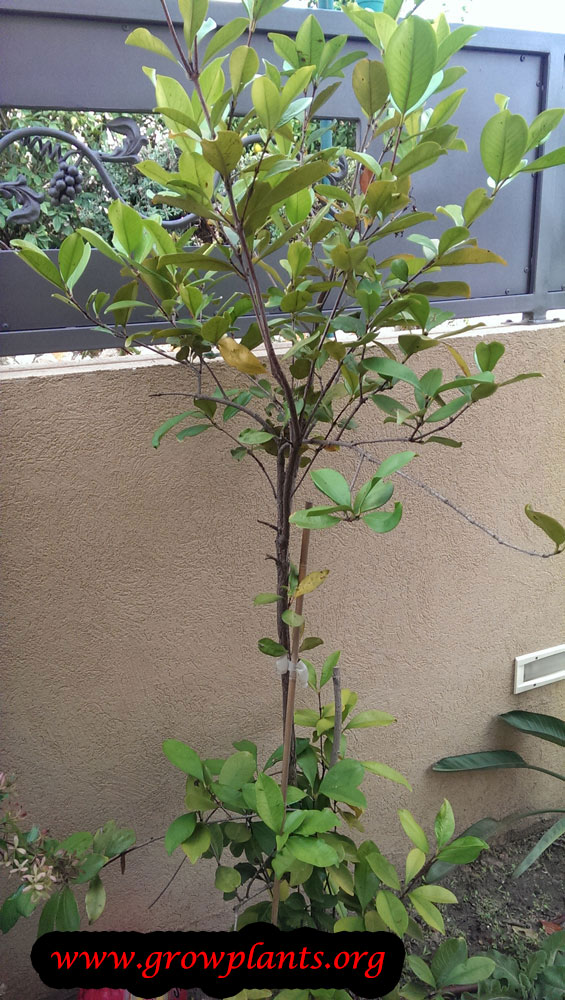
Overview: A slow-growing evergreen shrub to small tree reaching 2-15 m, grown for its cherry-like purple-black (sometimes yellow) fruits. It is also an attractive ornamental with glossy foliage and white flowers.
Quick Specifications
| Specification | Attribute |
|---|---|
| Plant Type / Life Cycle | Perennial (shrub to small tree) |
| Foliage Type | Evergreen |
| Mature Size | 2-15 m (6-45 ft) tall |
| Growth Rate | Slow |
| Toxicity | Non-toxic (edible fruit) |
| Hardiness | USDA zone 10b+ |
Growth Form & Structure
- Height & Spread: 2-15 m (6-45 ft), usually much smaller in cultivation; can be grown in containers and as a houseplant.
- Growth Habit & Form: Dense evergreen shrub to small tree.
- Lifespan & Maturity: Slow-growing; bears fruit in about 3-7 years.
Anatomy & Physical Features
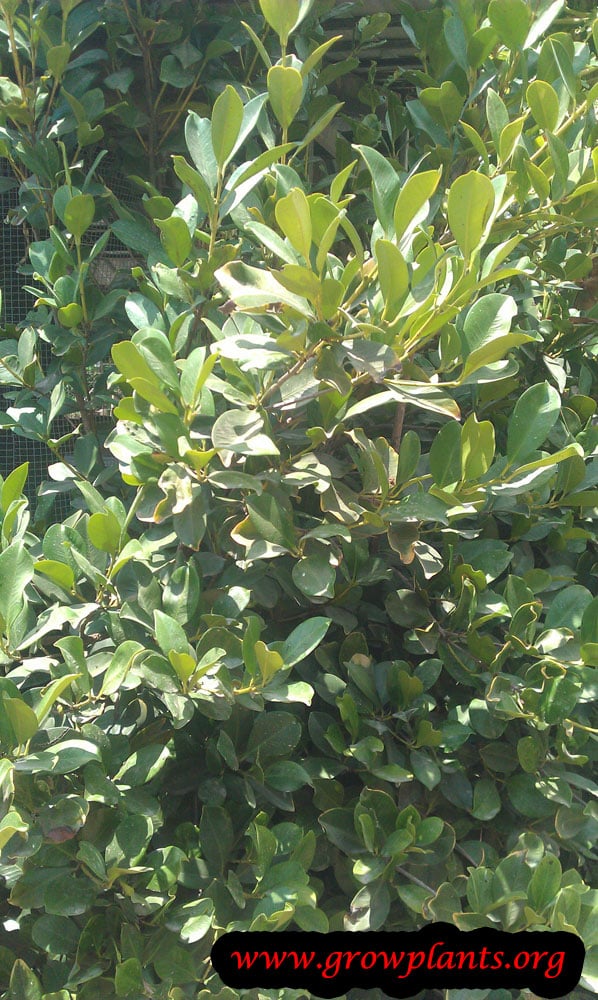
- Leaves & Foliage: Glossy green leaves, reddish when young.
- Flower Characteristics: White flowers 1-3 cm across in clusters of 2-10, bee-pollinated, in spring.
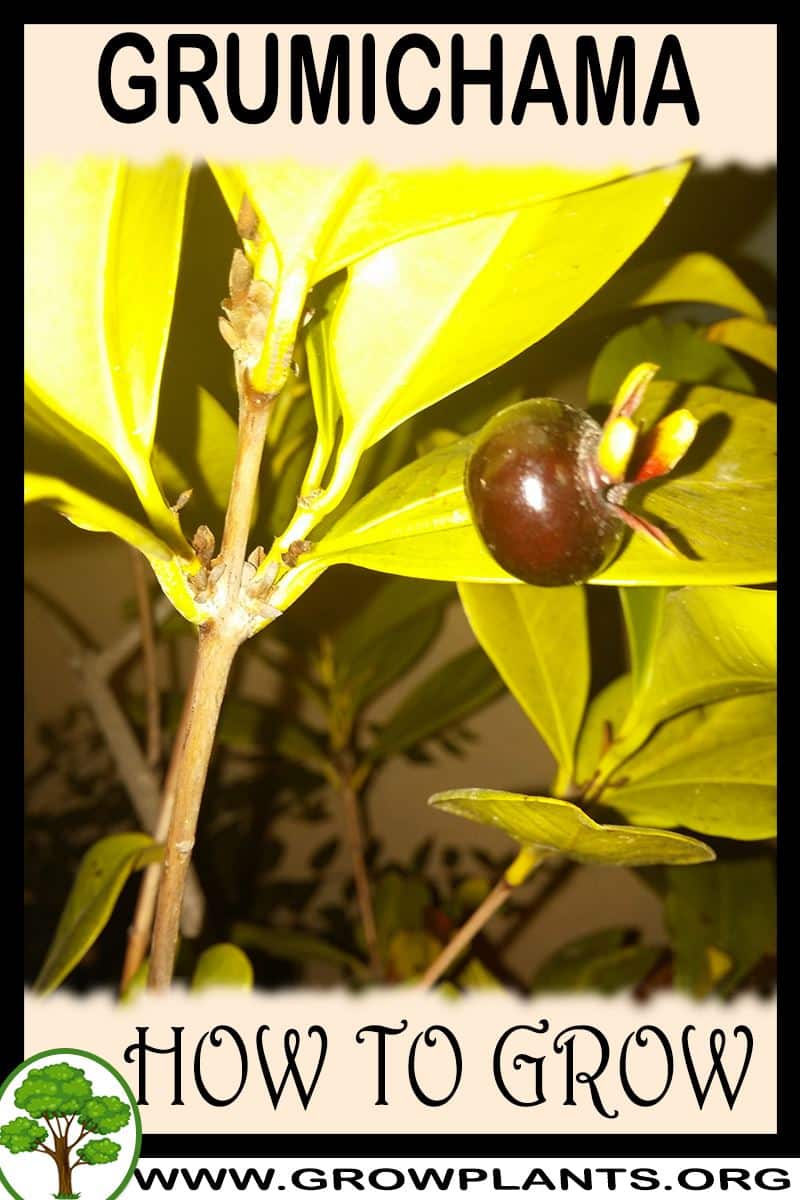
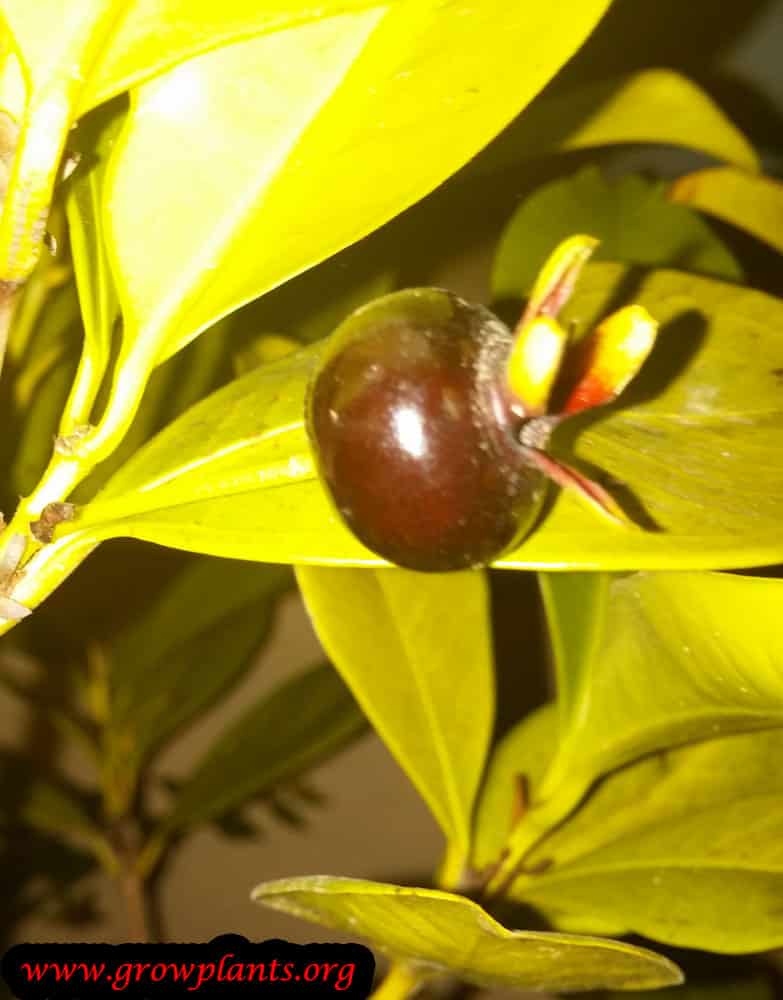
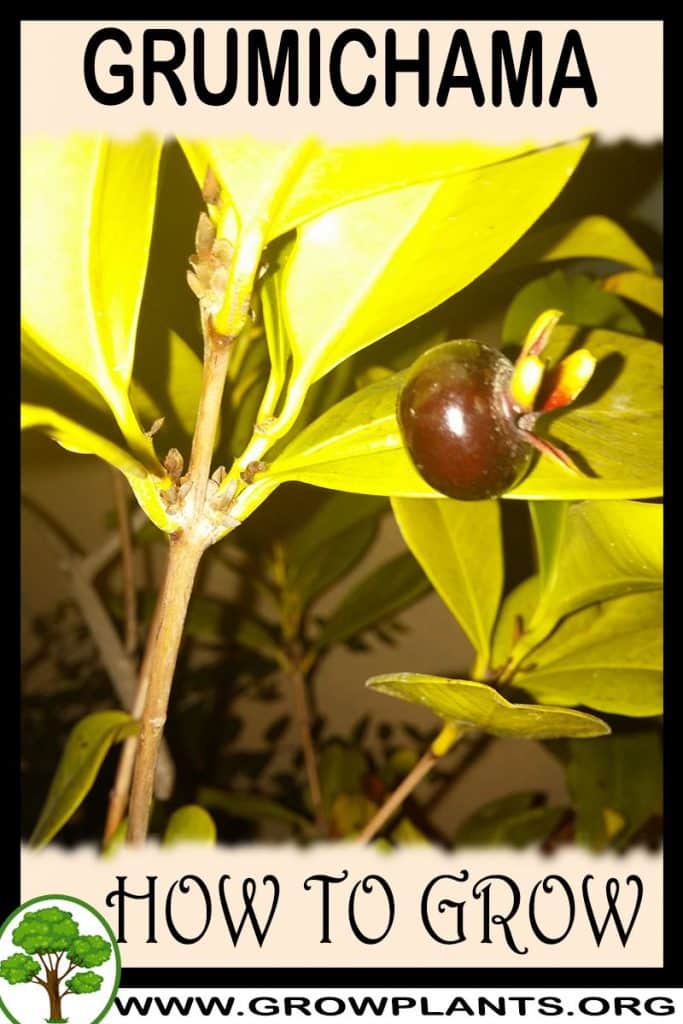
- Fruit Profile: Crowned purple-black (or yellow) cherry-like fruit, eaten fresh or made into juice, cake and jam.
Primary Uses & Landscape Value
- Edible Uses: Fruit eaten fresh or made into juice, cakes and jams.
- Functional & Ornamental Roles: Ornamental fruiting shrub or small tree; can be grown in containers.
Care Guide: Planting, Soil & Watering
Overview: Grumichama is a slow-growing subtropical Eugenia that needs acidic, rich, moisture-retentive but well-drained soil. It appreciates warmth and steady moisture and is best kept frost-free.
Quick Care Requirements
| Requirement | Ideal Condition |
|---|---|
| Planting Season | Spring |
| Growth Rate | Slow |
| Soil Type | Rich, acidic, well-drained |
| Soil pH | Acidic |
| Water Need | Moderate to High |
Planting & Establishment
- Best Planting Season: Plant in spring, in a frost-free position (roughly zone 10b and warmer).
- How to Plant:
- Hole Preparation: Dig a hole about twice the width of the root ball.
- Soil Amendments: Enrich with compost and organic matter to build an acidic, humus-rich root zone.
- Planting Depth: Set the root collar at soil level.
- Growth Speed & Expectations: Slow – be patient; grafted or vegetatively propagated plants establish and fruit sooner.
Soil, Watering & Drainage Care
- Soil Mix & Drainage Needs: Rich, acidic, free-draining soil; benefits from mulch, and grows in large containers with drainage holes.
- Watering Schedule & Technique:
- Young / Newly Planted: Keep the soil consistently moist while the plant establishes.
- Established: Water regularly to keep the soil lightly moist; do not let it dry out for long stretches.
- Seasonal Adjustments: More in summer, less in cool weather.
Climate, Light & Hardiness
Grumichama is a tropical-to-subtropical shrub or small tree for tropical, Mediterranean, and subtropical climates, generally happiest in full shade except during flowering, when it needs full sun to set fruit well. Cold tolerance is limited, at roughly zone 10b and warmer.
Quick Climate Specifications
| Climate Zones | Tropical, Mediterranean, Subtropical |
|---|---|
| USDA Hardiness Zones | 10b+ |
| Approx. Survival Minimum | approximately 1.7°C (35°F) at the zone 10b boundary, briefly, for an established plant |
| Frost Tolerance | Low |
| Light Conditions | Full Shade (needs full sun specifically during the flowering season) |
Sunlight & Light Exposure
Optimal Light Setup
Full shade suits general growth, but the plant needs full sun specifically while flowering to set fruit reliably – an unusual, season-dependent light need worth planning around.
Direct Sun Requirement
Only during flowering; direct sun is not required the rest of the year.
Shade & Heat Management
Tolerates shade well outside the bloom period.
Best Exposure / Orientation
A site that gets full sun access during the local flowering season, with shade tolerated at other times.
Temperature Extremes & Hardiness
USDA Hardiness & Regional Limits
Zone 10b+ is typical of this batch's more cold-tender subtropical fruiting shrubs.
Cold Damage & Winter Protection
Site in a warm, sheltered spot; protect young plants near the cold edge of the range.
Frost Sensitivity
Low frost tolerance.
Extreme Heat Tolerance
Good in genuinely warm climates.
Wind, Humidity & Microclimate
Rainfall & Seasonal Moisture
Suited to tropical, Mediterranean, and subtropical rainfall patterns.
Microclimate Recommendations
Plan the planting site around sun access during the local bloom season for best fruiting, even though the plant otherwise tolerates shade.
Growing in Pots, Balconies & Indoors
Grumichama (Eugenia brasiliensis) can reach 2-15 m (6-45 ft) in the ground but stays much smaller in a pot, and the grower confirms it can be grown both indoors and in containers. It tolerates shade for foliage, though it flowers and fruits best with a spell of full sun.
Quick Details
- Container Size: Start around 20-40 L (5-10 gal) and pot up as it grows
- Indoor Suitability: Grows indoors as a foliage houseplant; needs a sunny spell to flower and fruit
- Best Spot: Shade-tolerant for growth, but full sun before and during bloom
- Soil & Drainage: Rich, slightly acidic, free-draining mix
- Watering in Pots: Average to generous – keep evenly moist, never waterlogged
Indoors & On the Windowsill
- A houseplant for foliage: The grower confirms it can be grown indoors, and it tolerates shade – a bright room suits it as a foliage plant.
- For flowers and fruit: To bloom and set fruit it wants a spell of full sun, so a very sunny windowsill or a move outdoors in the warm season helps it crop.
- Overwintering: A potted plant can be kept in a bright, frost-free spot for the cool season in cold climates.
On a Balcony or Patio
- Light & exposure: Give it a bright to sunny position, especially as it comes into bloom. Pots dry fast in sun, so check moisture regularly.
Choosing the Pot, Soil & Long-Term Care
- Pot & drainage: Use a pot with plenty of drainage holes; skip a standing water saucer to avoid root rot. Terracotta breathes and dries faster, while glazed or plastic pots hold moisture longer.
- Potting mix: A well-aerated, organic-rich mix – peat or coir with perlite or vermiculite; this plant prefers a slightly acidic, humus-rich soil.
- Feeding: Potted plants need feeding more often than those in the ground, as nutrients leach out with each watering – feed lightly through the active growing season.
- Repotting: Refresh the mix or pot up about every two years; for an established specimen, replace part of the soil and lightly prune the roots and top growth.
Fertilizing & Feeding
Grumichama naturally prefers acidic soil and tolerates shade for most of the year, though it wants fuller sun around bloom time; feeding stays moderate and steady, with soil acidity and sun timing mattering as much as the fertilizer itself for a good crop of purple-black or yellow fruit.
Quick Fertilizing Specs
| Feeding Level | Moderate; this plant is naturally slow-growing and doesn’t need heavy feeding. |
|---|---|
| Main Nutrient Priority | Balanced nutrition on acidic soil, shifting toward potassium as fruit develops. |
| Best Feeding Period | Through the growing season, with extra attention to sun exposure around the spring bloom. |
| Organic Options | Compost or acidic organic mulch, such as pine needles or leaf mold, helps maintain the acidic soil this plant favors. |
| Reduce/Stop Feeding | Ease off as growth slows in cooler weather or in heavier shade. |
| Soil pH | Prefers distinctly acidic soil, more so than many of its Eugenia relatives. |
Feeding by Growth Stage
Newly planted
Root a young Grumichama into acidic soil, amended if needed to suit this plant’s preference.
| Nutrient direction | Light, balanced nutrition focused on establishing roots in acidic soil. |
|---|---|
| Timing | In spring, at planting. |
| Frequency | A light feeding at planting is usually enough while the plant establishes. |
| Fertilizer types | A balanced complete fertilizer used lightly, Compost or acidic organic matter worked into the planting hole |
| Precautions | Avoid amendments that push soil pH upward, since this plant is naturally suited to acidic ground. |
Young plant, building structure
Support slow, steady branching and canopy growth, giving the plant full sun while it’s young to establish well.
| Nutrient direction | A nitrogen-leaning balanced feed suited to this plant’s naturally slow growth habit. |
|---|---|
| Timing | Through the growing season, with the plant in full sun while young. |
| Frequency | Regular light feedings through the growing season suit this slow grower better than infrequent heavy ones. |
| Fertilizer types | A balanced, nitrogen-forward complete fertilizer suited to acidic soil, A diluted liquid feed for container-grown or indoor plants |
| Routine trace nutrients | iron, manganese, zinc |
| Precautions | Keep an eye on soil pH over time; acidic-soil plants like this one are quicker to show trouble if the ground drifts toward alkaline. |
Established, approaching first bloom
Carry the plant from its white flower clusters toward its first crop of crowned fruit, giving it fuller sun as bloom approaches even if it’s otherwise grown in shade.
| Nutrient direction | Balanced nutrition supporting both the shift to more sun around bloom and the coming fruit set. |
|---|---|
| Timing | As the plant nears its spring flowering, when more sun exposure is especially important. |
| Frequency | Steady, moderate feeding through this period supports flowering, but insufficient sun at bloom time can thin the flower set regardless of feeding. |
| Fertilizer types | A balanced complete fertilizer with routine trace elements, suited to acidic soil |
| Routine trace nutrients | iron, manganese, zinc |
| Precautions | This plant tolerates shade for most of the year but flowers more reliably with fuller sun leading up to bloom. |
Mature and bearing
Support an established plant through its purple-black or yellow fruit crop, which follows on from a full-sun spring bloom.
| Nutrient direction | Balanced feeding shifting toward potassium as fruit ripens. |
|---|---|
| Timing | Across the bloom-to-harvest cycle during the growing season. |
| Frequency | Moderate, evenly spaced feedings through fruit development suit this plant better than one heavy dose. |
| Fertilizer types | A balanced to potassium-leaning complete fruiting fertilizer, suited to acidic soil |
| Routine trace nutrients | iron, manganese, zinc |
| Precautions | Bird and fruit fly pressure on ripe fruit is best managed with netting, separate from feeding. |
Nutrient Deficiency Signs & Corrections
Leaves yellow between the veins while the veins stay green.
| Possible causes | Soil pH drifting toward alkaline, which this acid-soil plant tolerates poorly, Waterlogged or compacted soil limiting uptake, A genuine iron or manganese shortage |
|---|---|
| Appears first on | New growth toward the shoot tips. |
| What to check | Soil pH, Drainage, Whether only new leaves are affected |
| Possible correction | Correct soil pH back toward acidic first, then apply a chelated iron or manganese product per its label if yellowing continues. |
The plant produces few flowers despite otherwise healthy growth.
| Possible causes | Insufficient sun leading up to bloom, since this plant flowers best with fuller sun even though it tolerates shade the rest of the year, A boron shortage affecting bud and flower development, Excess nitrogen favoring foliage over flowering |
|---|---|
| Appears first on | The spring flowering flush. |
| What to check | Sun exposure in the weeks before bloom, Recent nitrogen-heavy feeding, Overall shade level at the site |
| Possible correction | Increase sun exposure ahead of bloom where possible, ease back on nitrogen, and consider a boron-containing product per its label if thin flowering persists. |
Growth is noticeably slower than expected, beyond this plant’s naturally unhurried pace.
| Possible causes | A general nutrient shortfall on poor soil, Soil pH out of this plant’s preferred acidic range, Heavy shade limiting overall vigor |
|---|---|
| Appears first on | New growth across the plant. |
| What to check | Soil pH, Feeding history, Light levels at the site |
| Possible correction | Check soil pH and light levels first, then resume steady balanced feeding suited to acidic soil. |
Pruning, Training & Seasonal Maintenance
Grumichama is a low-pruning-tolerance species – its own guidance is explicitly not to prune it, and this is consistent with it being slow-growing (so wood is slow to replace and wounds heal slowly) and needing an intact, sun-exposed canopy to flower well. The only pruning this plant should receive is the removal of genuinely dead or damaged wood, ideally at the end of summer, well clear of the spring bloom that depends on full sun exposure.
Quick Pruning & Maintenance Specs
| Pruning Tolerance | Low (routine structural pruning not recommended) |
| Primary Pruning Window | End of summer, if any cut is genuinely needed |
| Typical Frequency | As needed only – not a routine annual task |
| Main Objective | Remove dead/damaged wood only; otherwise leave the canopy intact |
| Young Plant Priority | Let the plant develop its natural form undisturbed |
| Mature Plant Priority | Sanitation only |
| Best Tool Type | Bypass secateurs or pruning saw, sized to the dead wood being removed |
| Avoid Heavy Pruning During | All of active growth and bloom – heavy pruning is not recommended at any time |
Pruning by Plant Age & Size
Newly Established
No pruning beyond removing any damaged growth from transplanting; let the plant establish its own form.
Young / Formative
No structural training system applies – this species is not trained to a framework and should be left to develop naturally.
Mature / Established
Sanitation only: remove dead or clearly diseased wood as it appears. This species can eventually reach 2–15 m, and its size is managed by siting choice, not by pruning it down.
Seasonal Pruning Schedule
Ongoing Sanitary
Objective: remove only wood that is clearly dead or damaged. Remove: dead/damaged material, ideally at the end of summer. Do not remove: any living wood, since flowering the following spring depends on a full, sun-exposed canopy and this species does not respond well to cutting. Expected response: minimal, as cuts should be rare and small. Flowering/fruiting impact: avoiding pruning protects next spring’s bloom.
Container & Small-Space Pruning
Can be grown indoors or in a container. Because routine pruning is not recommended, size control in a container is achieved mainly through pot sizing and root management rather than canopy cutting.
Tools
Bypass secateurs for small dead twigs, or a pruning saw only for larger dead limbs – sized to whatever genuinely dead wood needs removing, not to any routine shaping cut.
Tool Hygiene & Disease Risk
Routine risk from tools, but increased care is warranted when removing dead wood specifically, since it can be a point of fungal entry on a slow-healing species; use clean, sharp tools and avoid leaving stubs.
Cut Placement & Technique
Cut dead wood back to clean, healthy tissue just outside the collar; avoid flush cuts, which are especially slow to close on a slow-growing species like this one.
Heavy Pruning & Rejuvenation
Not tolerated. This species’ own guidance is explicitly against pruning, and its slow growth rate means it would recover very poorly from any hard cut-back – do not attempt rejuvenation pruning on Grumichama.
Post-Pruning Care
After removing any dead wood, simply monitor the cut for clean healing; water at the plant’s normal to generous rate and avoid fertilizing to force a flush, since none is wanted.
Common Pruning Mistakes
- Pruning routinely ‘for shape’ or ‘for airflow’ on a species that specifically should not be pruned that way.
- Shading out the canopy (or over-thinning it) right before bloom, when this species needs full sun to flower well.
- Cutting living wood on a slow-growing plant that cannot quickly replace it.
When NOT to Prune
As a general rule, do not prune this species beyond removing genuinely dead or damaged wood; avoid any cutting during the bloom period, and avoid shading or disturbing the canopy right before bloom when full sun exposure is required for flowering.
Recommended Tools (by task)
- bypass_secateurs – for occasional small dead-wood removal.
- pruning_saw – only if a larger dead limb needs removing.
Pruning Troubleshooting
| Problem | Possible Cause | What to Check | Corrective Action |
| Poor or no flowering | Insufficient full sun before bloom (not a pruning issue) | Canopy shading and site exposure ahead of the bloom period | Improve light access rather than pruning the plant |
| Slow-healing wound or dieback after a cut | Living wood was cut on this slow-growing, cut-sensitive species | Whether recent cuts removed anything beyond clearly dead wood | Stop further cutting; let the wound close undisturbed and avoid future non-essential pruning |
Propagation Guide
Grumichama is best started vegetatively – by cuttings or grafting – which the site recommends mainly because it brings the plant into fruit production faster than growing from seed, even though grafting is not strictly necessary. Seed remains a biologically possible but slower, less emphasized route for this species. Propagation is Easy to Moderate.
Quick Propagation Specs
| Best Propagation Method | Cuttings or grafting |
| Alternative Methods | Seed |
| Propagation Difficulty | Easy to Moderate |
| Seed True-to-Type | Variable |
| Vegetative True-to-Type | Yes |
| Best Propagation Season | Spring, matching the site’s planting season |
Growing from Seed
The site does not detail seed handling for this species and does not list seed among its recommended ways to start the plant; seedlings are a slower route to fruiting than vegetative propagation. As with related Eugenia species, seed is likely best sown fresh in warm, moist conditions.
Stem Cuttings
Cutting Type
Semi-hardwood cuttings from healthy current-season growth.
Best Timing
Spring, during active growth.
Rooting Setup
A free-draining rooting mix kept warm and humid.
Rooting Hormone
Beneficial for improving rooting consistency.
Rooting Time
Not documented for this species; often several weeks to a couple of months for semi-hardwood Eugenia cuttings.
Grafting & Budding
Why Grafting Is Used
Not required, but the site notes grafted or vegetatively propagated plants come into fruit production faster than seedlings.
Preferred Grafting Methods
Side-veneer or cleft grafting onto seedling rootstock, as typically used for related fruiting Eugenia shrubs.
Rootstock
Seedling rootstock of the species.
Scion Selection
Wood from a healthy, established plant.
Best Grafting Season
Spring.
Graft Aftercare
Keep the graft union protected and humid until it has visibly taken.
Bloom & Flower Guide
Quick Details
- Bloom Season: Spring
- Flower Appearance: White flowers, 1-3 cm, with many stamens, in small groups of two to ten
- Edibility: The flower is not eaten; the plant is grown for its cherry-like edible fruit
Detailed Blooming Overview
Grumichama flowers in spring, carrying pretty white blooms with a central brush of stamens in small groups. Good light supports the fullest flowering.
Flower Characteristics
- White flowers, 1-3 cm, with prominent stamens.
- Borne in small groups of two to ten.
Bloom Care & Thinning
- Pollination: Mainly bees.
- Thinning: Too little sun can lead to weaker, sparser bloom – a bright position helps.
Fruit & Uses
Grumichama (Brazilian cherry) is grown for its purple-black or yellow fruit — colour depends on the variety — crowned like other Eugenia cherries; this fruit is the plant’s only edible part. Ripe fruit is eaten fresh, baked into cakes, or made into juice and jam.
Quick Edible Specs
| Edible Parts | Fruit |
| Main Use(s) | Culinary – fresh eating, baking, juice, jam |
| Eaten Raw or Cooked | Raw (also baked or juiced) |
| Preparation Required | None |
| Harvest Season | Spring, summer (ripens roughly a month after flowering) |
| Time to First Harvest | Several years for young plants; see Propagation for details |
| Safety/Toxicity Caveat | None noted |
Fruit
Fruit colours to purple-black or yellow depending on the cultivar, with a small crown remaining at the top, and ripens roughly a month after flowering. It is hand-picked through spring and summer as it colours and softens, then eaten fresh or used in cakes, jam and juice; netting protects the ripening crop from birds and fruit flies.
Preparation, Uses & Safety
Fruit needs no preparation to eat fresh, and is also commonly cooked into cakes, jam and juice. No toxic parts or safety cautions are noted.
Pests, Diseases & Troubleshooting
Overview: Grumichama (Eugenia brasiliensis) is a myrtle-family fruit tree whose main pests are fruit flies stinging the ripening berries and sap-suckers – scale, psyllids, aphids and thrips – on the foliage; the disease to watch above all is myrtle (guava) rust, an aggressive pathogen of the whole Myrtaceae family. Lead with fruit protection, sanitation and airflow, and stay alert for rust on soft new growth. Grumichama, a Brazilian cherry, follows the standard Myrtaceae profile.
Quick Troubleshooting Overview
| Issue / Pest | Main Symptom | Primary Solution |
|---|---|---|
| Fruit flies | Stung, maggoty fruit that softens and drops early | Bag fruit, hang bait traps, collect and destroy drops |
| Myrtle / guava rust | Bright yellow powdery pustules on new leaves and shoots | Remove infected tips, improve airflow, fungicide, resistant stock |
| Scale / psyllids | Bumps or leaf pit-galls with sooty mould | Horticultural oil, prune, biocontrol |
| Aphids / thrips | Curled new leaves with honeydew, or silvery flecking | Hose off, soap or oil, encourage beneficials |
| Anthracnose / leaf spot | Dark leaf and fruit lesions | Airflow, sanitation, copper if persistent |
| Iron chlorosis | Yellow leaves with green veins on alkaline soil | Acidify soil, apply chelated iron |
Common Pests & Management
- Fruit flies (Anastrepha suspensa / Ceratitis capitata):
- Symptoms: Adult flies sting the colouring fruit and lay eggs; maggots tunnel the sweet flesh, which browns, softens and drops early, often with a puncture and secondary rot – a classic and serious problem on Eugenia berries.
- Prevention & Control: Bag fruit clusters, hang protein-bait and lure traps as fruit begins to colour, and rigorously collect and destroy every fallen and over-ripe fruit to break the breeding cycle; harvest promptly at ripeness.
- Eugenia psyllid (Trioza eugeniae):
- Symptoms: Nymphs feed on flushing leaves and induce distinctive purple-red pit-galls and puckering on the new growth, disfiguring the foliage; most damaging on ornamental Eugenia/Syzygium hedges but seen on related species.
- Prevention & Control: Prune to synchronise and remove galled flushes, encourage the parasitic wasp Tamarixia and other natural enemies, and treat heavy infestations with horticultural oil or a systemic where warranted; well-grown trees tolerate light galling.
- Scale insects & mealybugs (Coccoidea / Pseudococcidae):
- Symptoms: Immobile bumps or cottony masses on stems and leaf undersides sap the tree and drip honeydew that blackens with sooty mould, dulling the glossy foliage; ants often attend them.
- Prevention & Control: Prune out heavily infested wood, apply horticultural oil to smother crawlers, control ants, and conserve the ladybirds and parasitic wasps that regulate scale; oil also cleans up sooty mould over time.
- Aphids (Aphididae):
- Symptoms: Colonies on tender new shoots curl and distort the flush and leave honeydew and sooty mould.
- Prevention & Control: Hose off, encourage natural enemies, and use insecticidal soap or horticultural oil on stubborn colonies; avoid over-feeding with nitrogen that drives soft, aphid-prone growth.
- Thrips (Thysanoptera):
- Symptoms: Silvery streaking, flecking and some leaf and flower distortion, with tiny slender insects and dark frass on close inspection.
- Prevention & Control: Encourage predatory mites and lacewings, use sticky traps and insecticidal soap or spinosad, and keep plants clean; damage is usually cosmetic on established trees.
Diseases & Fungal Issues
- Myrtle rust / guava rust (Austropuccinia psidii):
- Symptoms: The signature Myrtaceae disease: bright yellow-orange powdery pustules erupt on young leaves, shoots, flower buds and fruit, distorting and killing new growth; repeated attacks can defoliate and seriously weaken or kill susceptible trees.
- Treatment & Management: Inspect every new flush, prune out and bag infected growth (don’t shake spores about), improve airflow, avoid overhead watering, and apply a protectant fungicide on flushes where the disease is active; choose more resistant species/provenances, as susceptibility varies widely.
- Anthracnose & fruit rot (Colletotrichum gloeosporioides):
- Symptoms: Dark sunken spots on leaves, shoots and especially fruit, enlarging to rots with pink-orange spore masses in wet weather; causes twig dieback and post-harvest fruit rot.
- Treatment & Management: Rake up fallen leaves and fruit, prune for an open airy canopy, avoid wetting foliage, apply copper preventively in prolonged wet spells, and cool fruit promptly after a gentle harvest.
- Leaf spot (Cercospora / Pseudocercospora):
- Symptoms: Small brown to grey leaf spots, sometimes with a darker margin or yellow halo, coalescing and causing leaf drop in humid conditions.
- Treatment & Management: Improve airflow, remove fallen leaves, avoid overhead watering, and use copper if it becomes severe; vigorous, well-fed trees shrug off light infection.
- Root rot (Phytophthora spp.):
- Symptoms: Decline, yellowing and dieback with dark rotted roots in waterlogged or poorly drained soil.
- Treatment & Management: Plant in free-draining soil (or a raised mound), avoid overwatering and soil against the trunk, and improve drainage; remove severely affected trees.
Growing Difficulties & Abiotic Problems
- Iron / manganese chlorosis:
- Cause & Symptoms: New leaves yellow between green veins on alkaline or waterlogged soils where these micronutrients are locked up; Eugenia prefer slightly acidic soil.
- Correction Strategy: Improve drainage and organic matter, acidify soil where feasible (sulfur, acidic mulch), and apply chelated iron and manganese as a corrective.
- Fruit drop & sunburn:
- Cause & Symptoms: Erratic watering and heat cause premature fruit drop, and exposed fruit and thin bark can sunburn on the sunny side.
- Correction Strategy: Keep soil moisture even with mulch and regular deep watering, retain some canopy shade over fruit, and avoid drought-then-flood cycles that trigger drop and splitting.
- Cold sensitivity of young growth:
- Cause & Symptoms: Tender new flushes and young trees are damaged by cold snaps and frost in marginal climates, browning and dying back.
- Correction Strategy: Site in a warm, sheltered spot, protect young trees over cold nights, and prune out cold-damaged wood once the danger has passed.
What Helps – Products & Tools
Eugenia tools include protein-bait and lure fruit-fly traps and fruit bags/netting (fruit flies, birds), horticultural oil and insecticidal soap (scale, psyllid, aphids, thrips), copper for anthracnose and leaf spot, a protectant fungicide for myrtle rust on flushes, and chelated iron for chlorosis. Sanitation of fallen fruit and leaves, plus vigilant rust monitoring, does most of the work.