Plant Profile & Key Characteristics
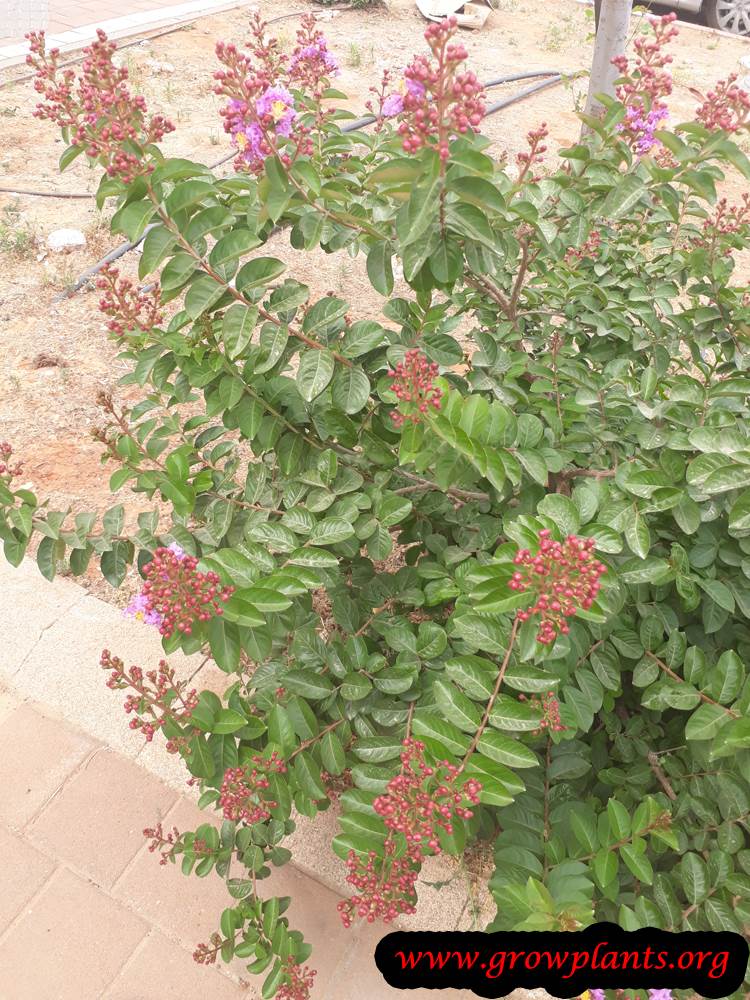
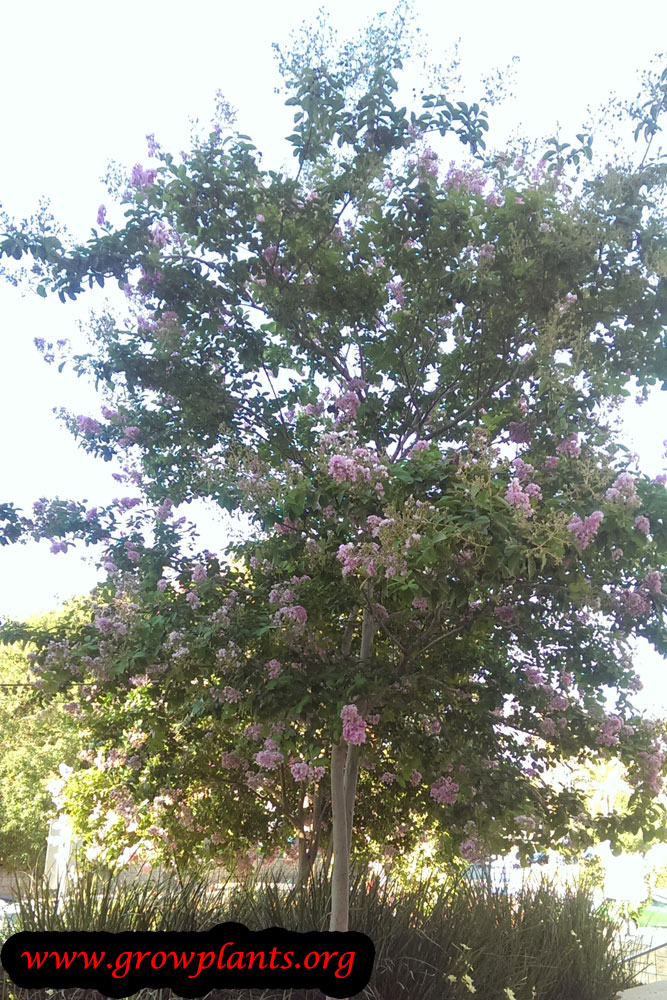
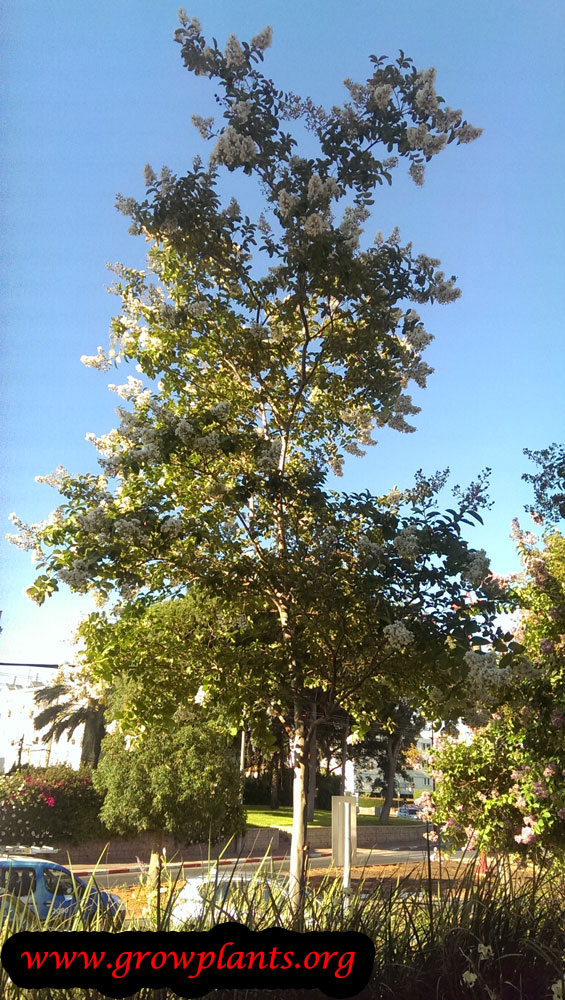
Overview: Crepe myrtle is a deciduous large shrub or small tree reaching 3-6 m, grown as an ornamental for its long summer display of crinkled, crepe-like flowers. Moderately fast-growing, it also offers attractive smooth, mottled bark for year-round interest.
Quick Specifications
| Specification | Attribute |
|---|---|
| Plant Type / Life Cycle | Perennial |
| Foliage Type | Deciduous |
| Mature Size | 3-6 m (10-20 ft) tall |
| Growth Rate | Moderate |
| Toxicity | Non-toxic |
| Hardiness | USDA zones 5-10 |
Growth Form & Structure
- Height & Spread: 3-6 m (10-20 ft) tall; can also be grown in large containers.
- Growth Habit & Form: multi-stemmed large shrub or small tree with an upright, vase-shaped habit.
- Lifespan & Maturity: long-lived; reaches flowering size within a few years.
Anatomy & Physical Features
- Trunk & Bark: smooth, mottled bark that exfoliates to reveal cinnamon and grey tones – a key ornamental feature.
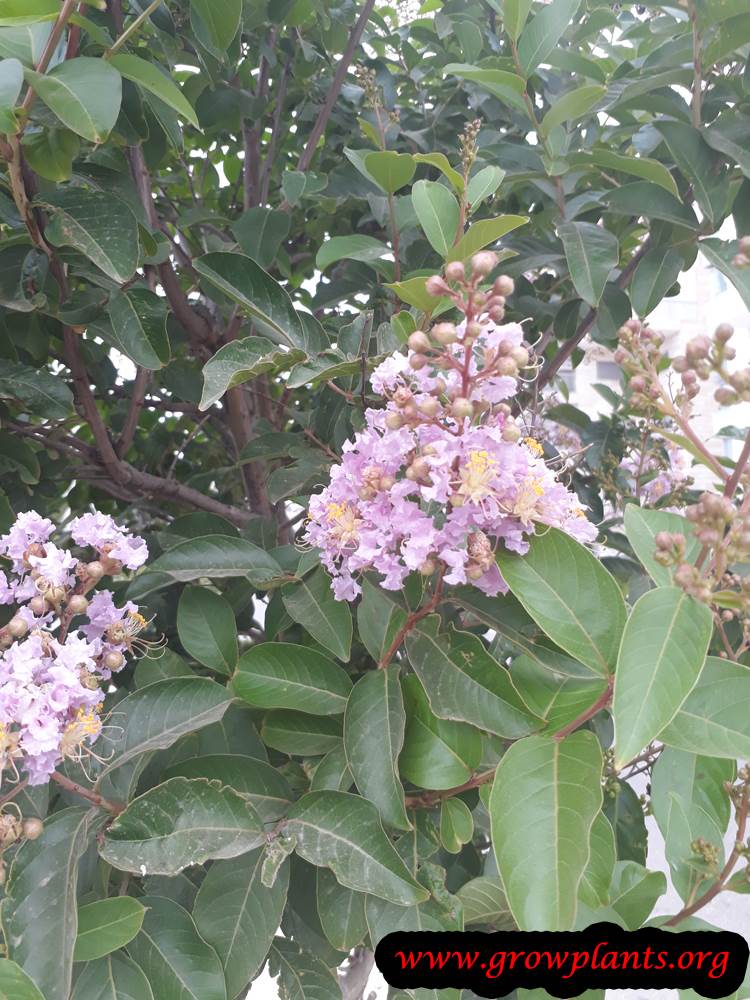
- Leaves & Foliage: green, elliptic leaves, often colouring well in autumn.
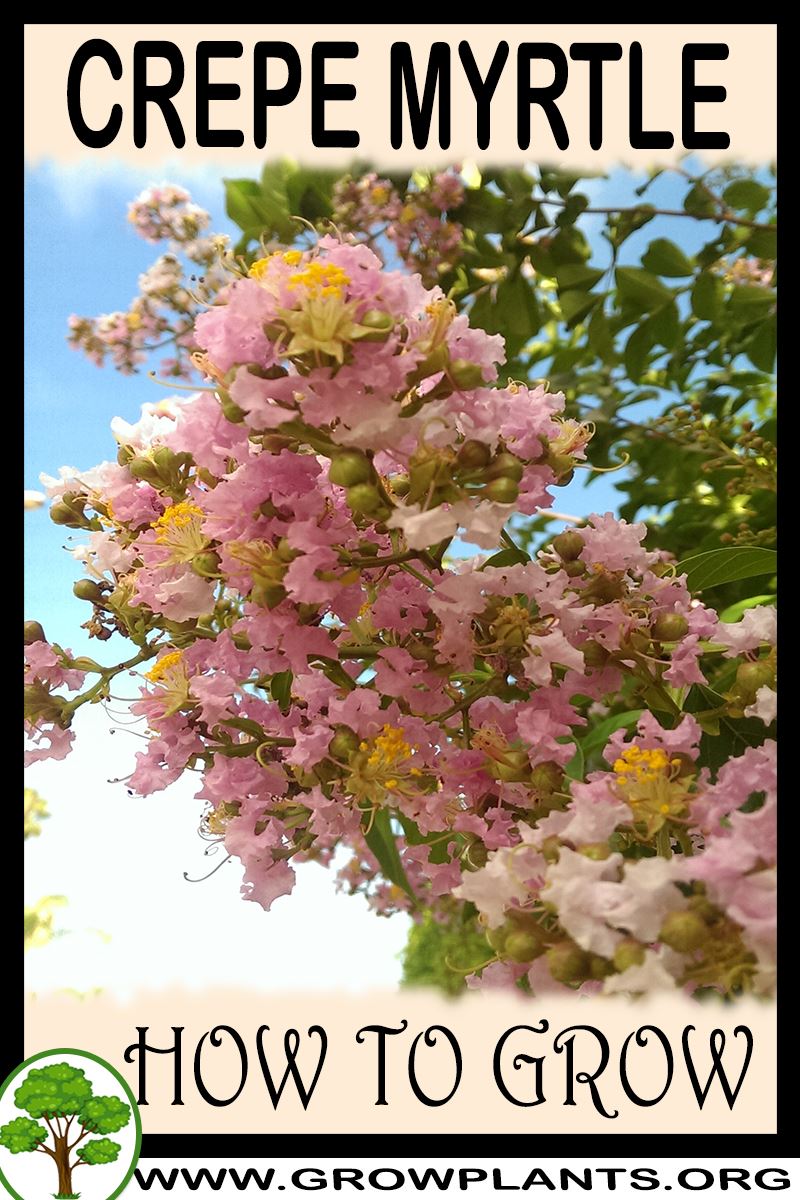
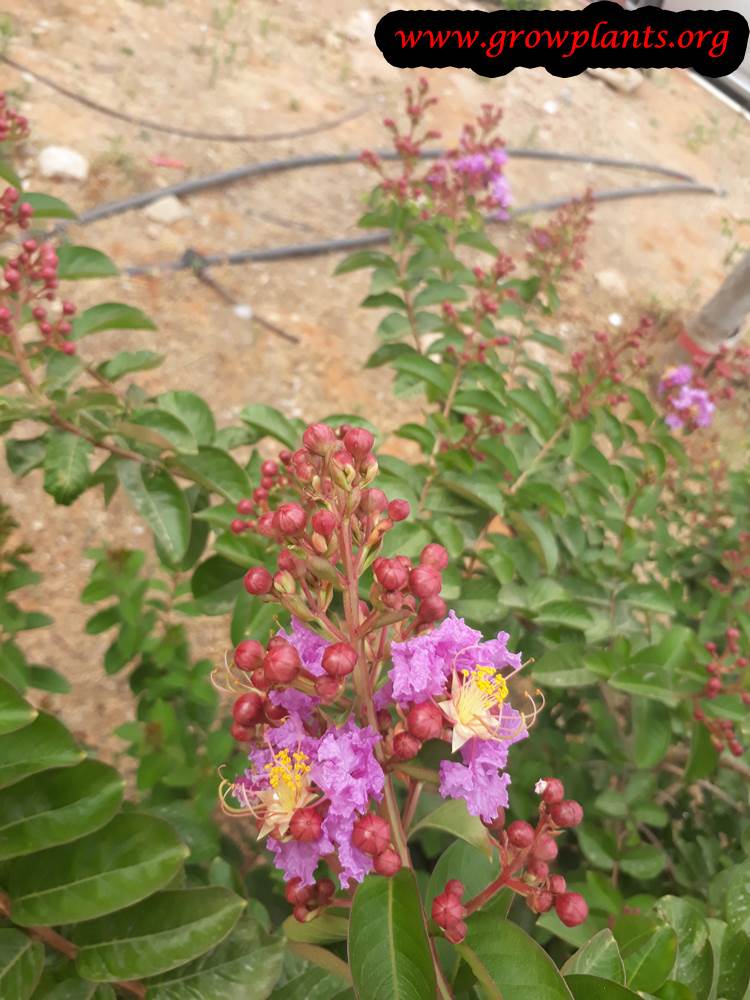
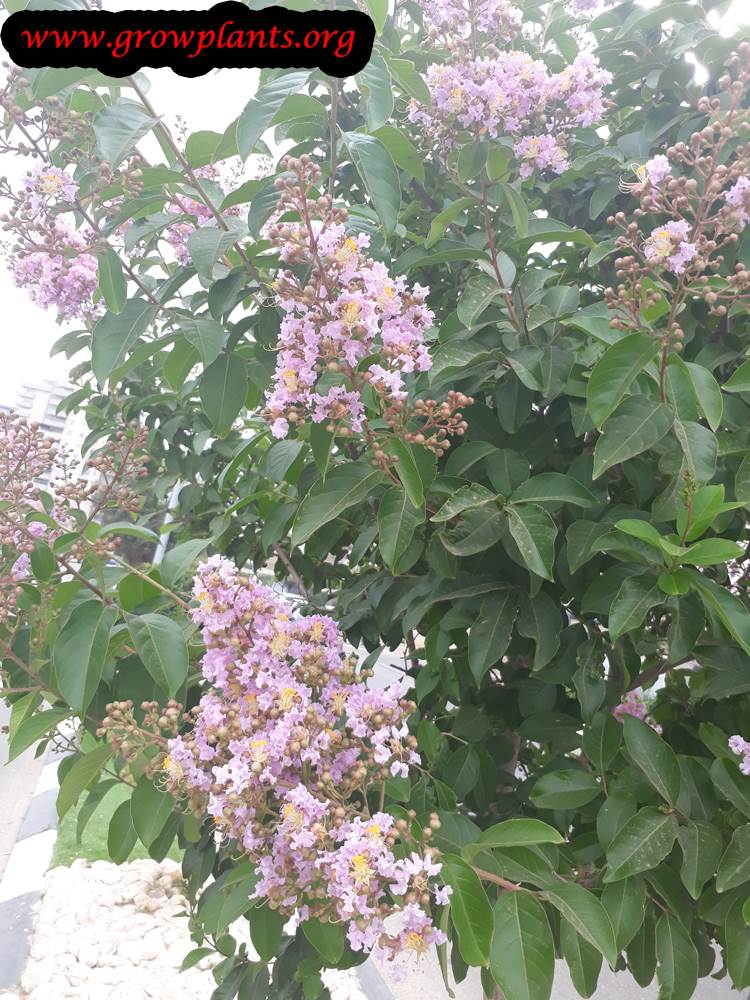
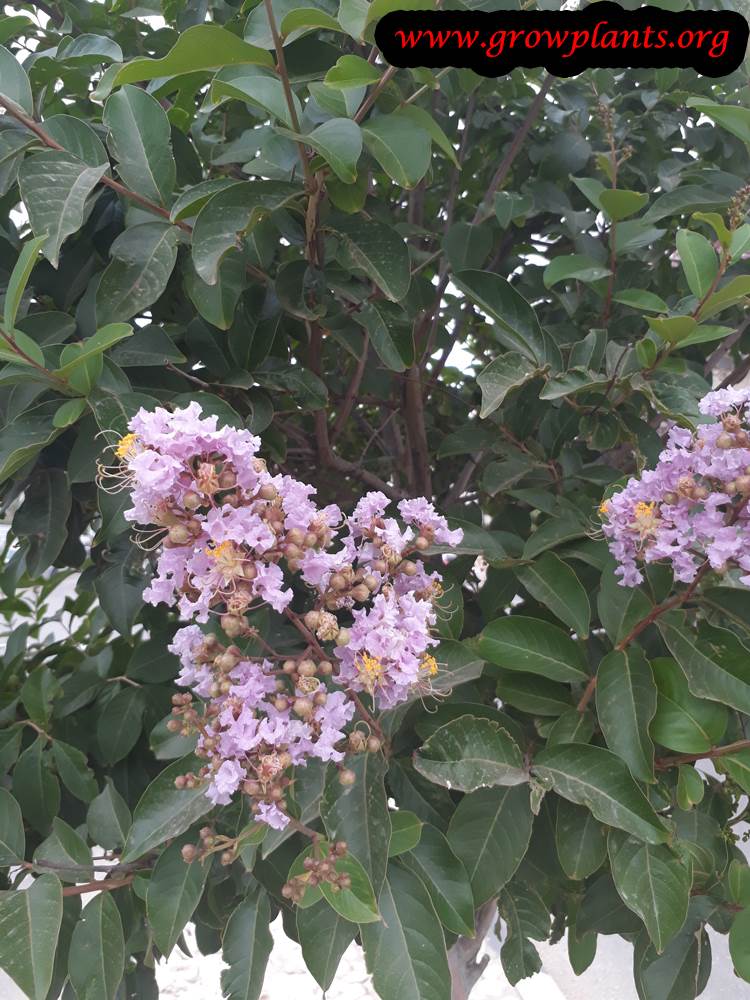
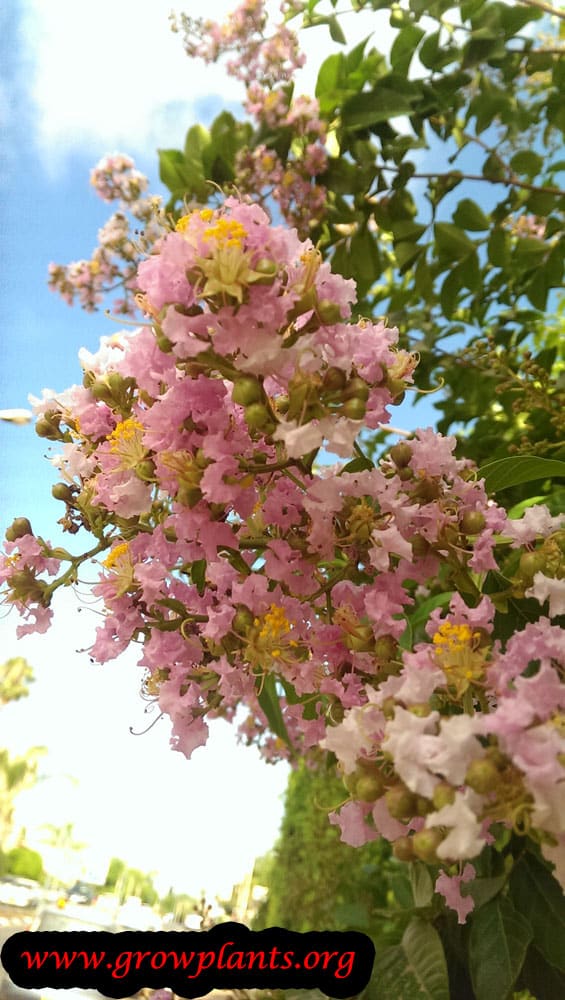
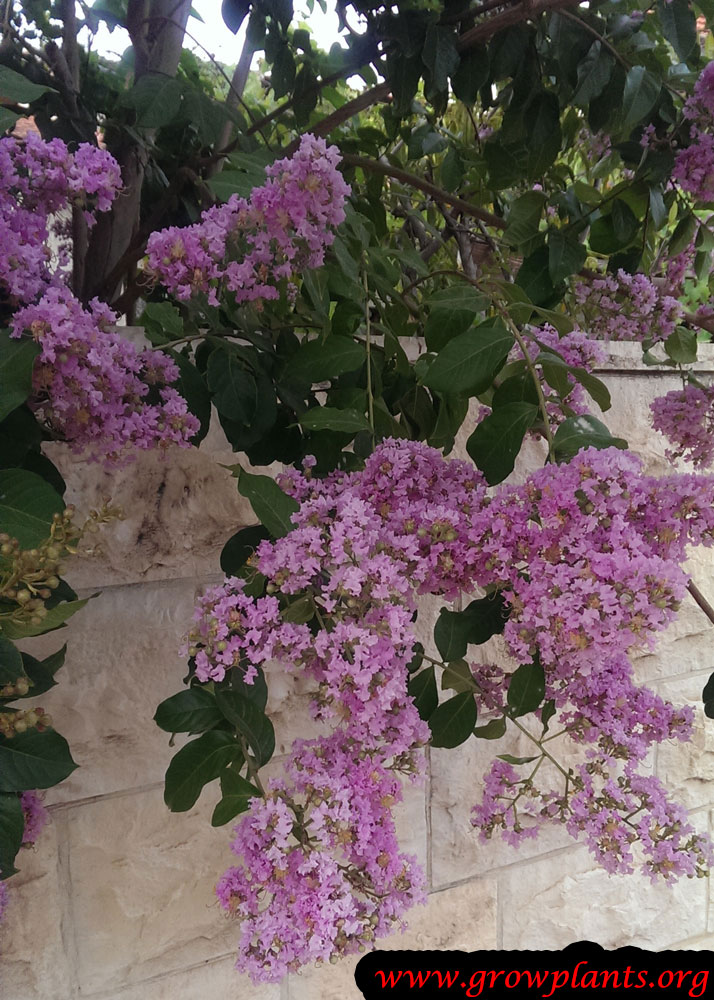
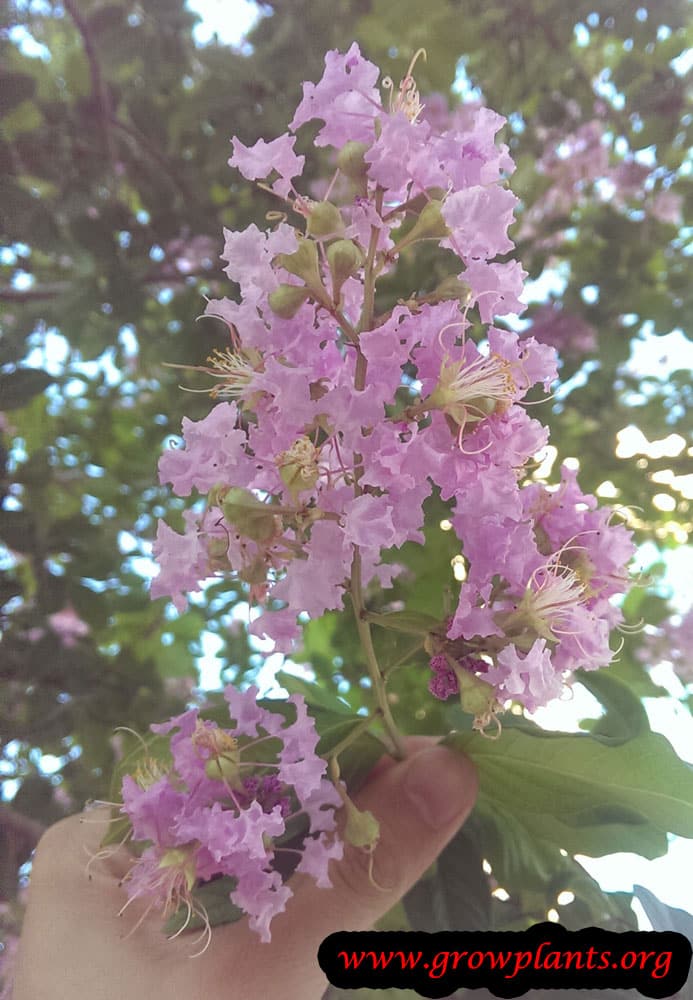
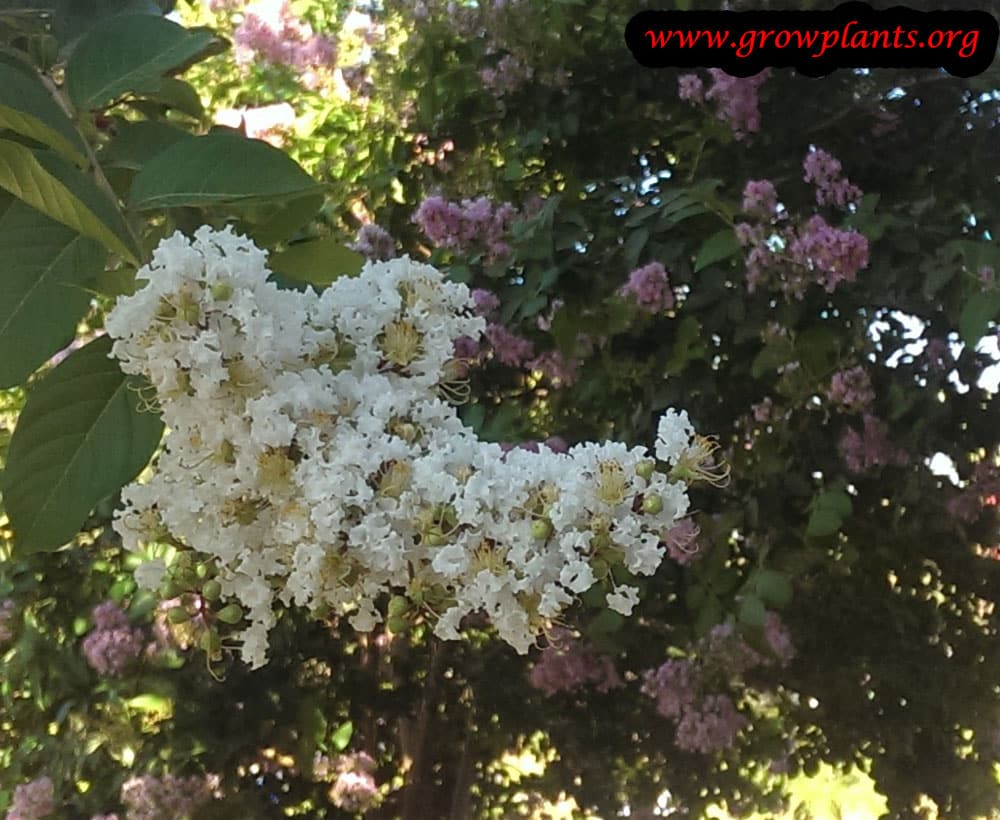
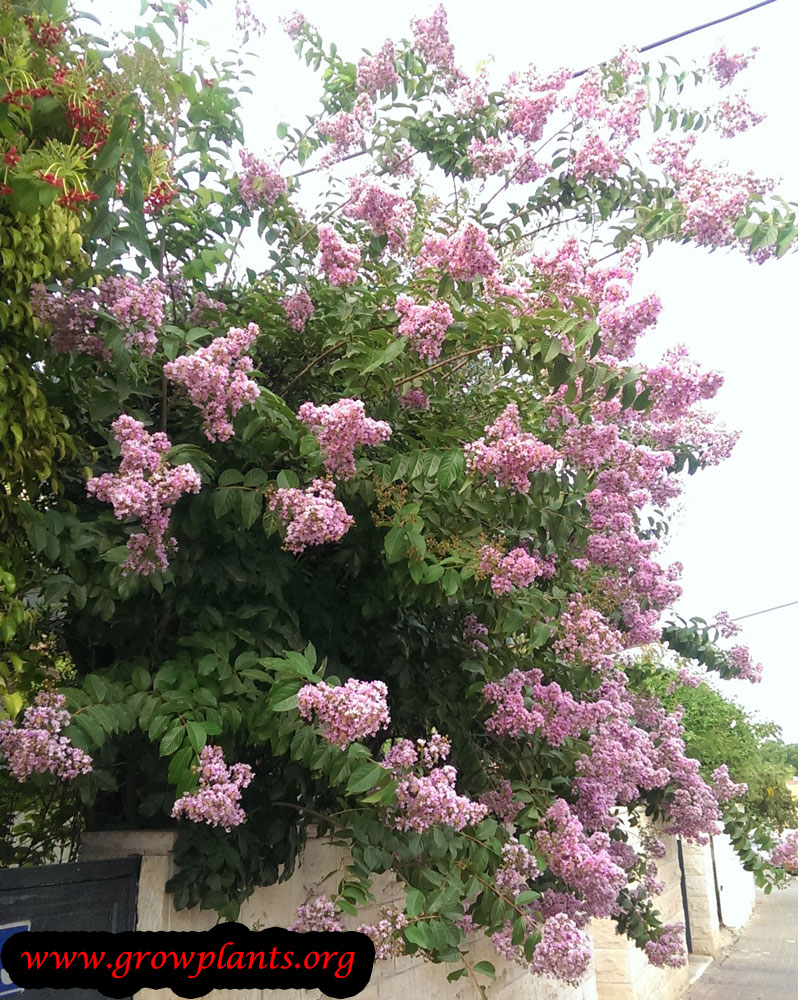
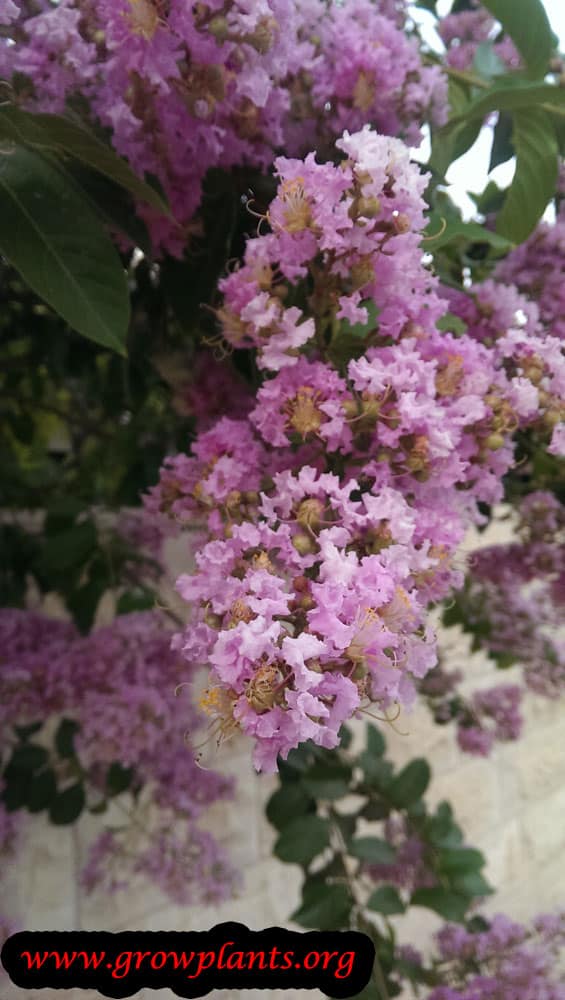
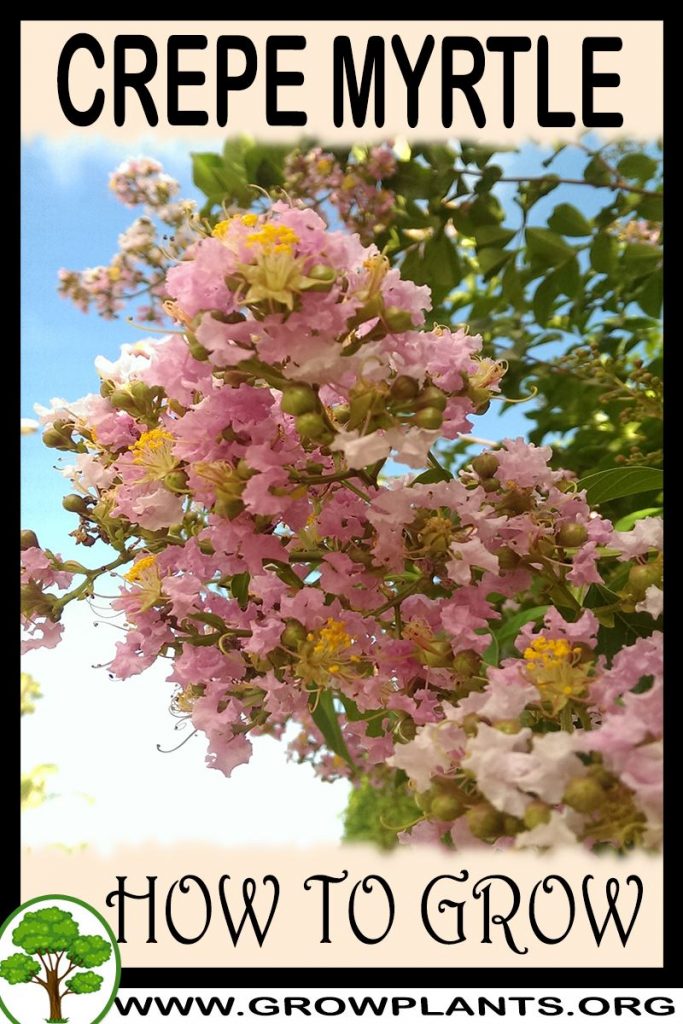
- Flower Characteristics: fragrant, crinkled crepe-like flowers in white, pink, red or purple, in large terminal clusters (summer to autumn).
Primary Uses & Landscape Value
- Functional & Ornamental Roles: flowering specimen and street tree, container plant and summer-colour shrub.
Care Guide: Planting, Soil & Watering
Overview: Crepe myrtle is a sun-loving deciduous tree that flowers best in full sun and warm summers and is fairly drought tolerant once established. It grows best in fertile, well-draining, slightly acidic soil.
Quick Care Requirements
| Requirement | Ideal Condition |
|---|---|
| Planting Season | In the cooler months from winter to spring, or in summer in mild areas |
| Growth Rate | Moderate |
| Soil Type | Fertile, well-draining soil |
| Soil pH | Slightly acidic (about 5.0-6.5) |
| Water Need | Moderate – water when the top few centimetres dry; drought tolerant once established |
Planting & Establishment
- Best Planting Season: Plant from winter through spring while the tree is dormant or just breaking bud, or in summer in milder climates; avoid planting into hard frost.
- How to Plant:
- Hole Preparation: Dig a hole about twice as wide as the root ball and no deeper, loosening the surrounding soil so roots can spread.
- Soil Amendments: Mix some compost or organic matter into the backfill of poor soils to improve fertility and structure.
- Planting Depth: Set the tree so the root collar sits level with the surrounding soil; do not bury the trunk.
- Growth Speed & Expectations: A moderate grower that in good conditions reaches roughly 3-6 m, forming a small multi-stemmed tree.
Soil, Watering & Drainage Care
- Soil Mix & Drainage Needs: Give it fertile, freely draining soil that stays slightly acidic; good drainage prevents root rot, and a mulch keeps the roots cool and evenly moist.
- Watering Schedule & Technique:
- Young / Newly Planted: Water deeply and regularly through the first one or two seasons to establish a strong root system.
- Established: Once established it is fairly drought tolerant; water when the top few centimetres of soil dry, applying water deeply.
- Seasonal Adjustments: Water more in summer heat and through the flowering flush, and much less over winter dormancy.
Climate, Light & Hardiness
Crepe myrtle is a heat-loving flowering tree for subtropical, Mediterranean, temperate, tropical, and desert climates that needs full sun and tolerates a fairly wide cold range from about zone 5.
Quick Climate Specifications
| Climate Zones | Subtropics, Mediterranean, temperate, tropics, desert |
|---|---|
| USDA Hardiness Zones | 5–10 |
| Frost Tolerance | High (deciduous, dormant in winter) |
| Light Conditions | Full Sun |
Sunlight & Light Exposure
Optimal Light Setup
Full sun is essentially required for good flowering; this species does not perform well in shade.
Direct Sun Requirement
Yes, genuinely needed for abundant bloom, not merely tolerated.
Temperature Extremes & Hardiness
USDA Hardiness & Regional Limits
Zone 5–10 spans cold-winter temperate climates through hot desert and tropical heat.
Cold Damage & Winter Protection
As a deciduous tree it tolerates winter cold well within its rated range; at the cold edge (zone 5–6) some dieback of younger wood can occur in severe winters, though the root system typically survives.
Extreme Heat Tolerance
Excellent; it thrives in hot desert and subtropical summers.
Wind, Humidity & Microclimate
Rainfall & Seasonal Moisture
Adaptable across a wide range of rainfall patterns given its broad climate range, though it appreciates evenly moist, slightly acidic soil per its own care notes.
Growing in Pots, Balconies & Indoors
Crepe myrtle is a summer-flowering small tree that the grower rates for containers but not for indoor growing. Compact and dwarf selections make superb patio or balcony specimens in a large tub; full-size types will outgrow a pot in time.
Quick Details
- Container Size: A large tub, 40 L (10 gal) or more; choose a compact/dwarf type for pots and pot up as it grows
- Indoor Suitability: Not a houseplant (grower); a sun-loving patio tree, best as a dwarf type in pots
- Best Spot: Full sun and plenty of it – the more direct light, the better.
- Soil & Drainage: Aerated, organic-rich mix (quality potting mix, or peat/coir with perlite or vermiculite); it must drain freely.
- Watering in Pots: Keep the mix evenly moist, letting the surface dry slightly between waterings; pots dry faster than open ground.
Indoors & On the Windowsill
- Not a houseplant: The grower marks it unsuitable indoors – it demands full sun to flower and is a deciduous tree that needs a winter rest, neither of which a room provides.
- Choose compact types: For long-term pot life pick a dwarf or semi-dwarf cultivar; full-size trees are only container-friendly while young.
On a Balcony or Patio
- Light & heat: Give it the hottest, sunniest spot you have – it thrives on reflected wall heat and rewards it with masses of crepe-textured bloom. Keep the pot watered through flowering.
- Practicalities: A large tub is heavy; place it in its final position, and expect to water daily in peak summer heat. A drip irrigation kit with a timer can take over that watering check automatically.
Choosing the Pot, Soil & Long-Term Care
- Pot & drainage: A large tub with strong drainage holes; skip a standing-water saucer. Terracotta breathes well but dries fast in heat – glazed or plastic holds moisture better on a hot balcony.
- Potting mix: Use a well-aerated, organic-rich mix – quality potting mix, or peat/coir blended with perlite or vermiculite.
- Feeding: Feed through spring and summer for strong flowering; potted trees deplete their mix quickly.
- Repotting: Pot up as it grows; once in its final tub, root-prune and refresh the mix every couple of years and prune the top to keep it compact.
Fertilizing & Feeding
Crepe myrtle is grown for its long, colorful summer flower display and is a moderate feeder – balanced feeding with adequate nitrogen in spring supports strong new growth, which is what carries the flowers, since blooms form on new wood. Overfeeding, especially with too much nitrogen late in the season, tends to push leafy growth at the expense of flowering.
Quick Fertilizing Specs
| Feeding Level | Moderate |
|---|---|
| Main Nutrient Priority | Balanced feeding with adequate nitrogen in spring supports the new growth that carries flowers; there is no need for a special high-phosphorus ‘bloom booster’ |
| Best Feeding Period | Spring as new growth resumes, before and during the start of the flowering season |
| Soil pH | Prefers slightly acidic, well-drained soil; performs best where soil is not strongly alkaline |
| Reduce/Stop Feeding | Stop feeding by mid-summer so new growth can mature and harden off before autumn and winter |
| Organic Options | Mulching over the root zone conserves moisture and supplies gentle background nutrition as it breaks down |
Feeding by Growth Stage
Spring growth flush
Build the vigorous new growth that will carry the summer flower display, since crepe myrtle blooms on new wood
| Nutrient direction | Balanced feeding with adequate nitrogen supports a strong spring growth flush; an established, healthy tree growing well on its own often needs only light supplemental feeding |
|---|---|
| Timing | Early to mid spring as new growth resumes after the last frost |
| Frequency | A single balanced feeding as growth resumes in spring is usually enough for an established tree |
| Fertilizer types | A balanced, complete fertilizer suited to flowering trees and shrubs, A slow-release balanced fertilizer applied once as spring growth begins |
| Precautions | Avoid heavy nitrogen feeding, since excess vigor pushes leafy growth and can reduce flowering; keep fertilizer away from the base of the trunk |
Bloom and repeat bloom
Support the extended summer flowering display, including the repeat flushes crepe myrtle is known for after spent blooms are removed
| Nutrient direction | Light, balanced feeding is usually enough through bloom; deadheading spent flower clusters, rather than extra feeding, is the main driver of additional bloom flushes |
|---|---|
| Timing | Summer through early autumn while the tree is in flower and producing repeat bloom flushes |
| Frequency | Feeding is minimal through this period for a tree that was fed in spring; an optional light feeding can support growth if the tree looks weak |
| Fertilizer types | An optional light application of a balanced fertilizer only if growth or flowering looks weak |
| Precautions | Avoid feeding heavily during bloom, and stop feeding by mid-summer so any new growth has time to harden off before cooler weather |
Dormant season
Let the tree rest through winter dormancy after leaf drop
| Nutrient direction | None – withhold fertilizer through dormancy |
|---|---|
| Timing | Late autumn through winter while the tree is leafless and dormant |
| Frequency | No feeding at this stage |
| Fertilizer types | No feeding at this stage; resume feeding once new growth appears in spring |
| Precautions | Do not fertilize a dormant tree, since feeding now offers no benefit and can encourage tender growth vulnerable to cold damage |
Nutrient Deficiency Signs & Corrections
Fewer flowers than expected along with pale or slow spring growth
| Possible causes | Nitrogen deficiency limiting the new growth that carries flowers, Too much shade, since crepe myrtle flowers best in full sun regardless of feeding, Overly heavy pruning removing the wood that would have flowered, Root stress from poorly drained or compacted soil limiting nutrient uptake |
|---|---|
| Appears first on | New spring growth and the following bloom |
| What to check | Recent feeding history through the growing season, Sun exposure at the planting site, Pruning history and timing, Soil drainage around the root zone |
| Possible correction | Resume a light to moderate spring feeding if the tree has been underfed, and confirm the site gets adequate sun, since shade limits flowering more than a nutrient shortage does |
New leaves yellow between the veins while the veins stay green
| Possible causes | Iron deficiency associated with alkaline or waterlogged soil that limits iron uptake, Poorly drained or compacted soil restricting root function generally, Cool, wet spring soil temporarily slowing nutrient uptake |
|---|---|
| Appears first on | Newest leaves |
| What to check | Soil pH and drainage around the root zone, Whether yellowing is confined to new growth, which points toward iron, Recent watering pattern and soil temperature |
| Possible correction | Improve drainage and correct soil pH first; if chlorosis persists in an otherwise healthy, adequately fed tree, a chelated iron product applied per its label can help |
Sticky residue on leaves with a black sooty coating, alongside generally weak growth
| Possible causes | Aphid infestation producing honeydew that leads to sooty mold, unrelated to a nutrient shortage, Underlying nutrient deficiency making the tree more prone to weak, pest-susceptible growth, Root stress from drought or poor drainage reducing overall vigor |
|---|---|
| Appears first on | Leaves and stems where honeydew accumulates |
| What to check | Visible aphids on new shoots and the undersides of leaves, Recent feeding and watering history, Soil drainage around the root zone |
| Possible correction | Treat the aphid infestation directly, since sooty mold will not clear until the honeydew source is controlled; only add light balanced feeding if the tree remains weak once pests are managed |
Pruning, Training & Seasonal Maintenance
Crepe myrtle is a deciduous flowering tree/large shrub prized for its summer flower clusters, attractive exfoliating multi-trunk bark, and, in some cultivars, autumn leaf color. Pruning mainly affects flower size and quantity as well as overall form, since it blooms on new growth produced after the late-winter pruning window; the safest and most effective period is late winter or early spring, before bud break. Light structural pruning – not the severe annual stub-cutting sometimes called ‘crape murder’ – preserves the tree’s natural vase form and bark interest while still encouraging a strong bloom.
Quick Pruning & Maintenance Specs
| Pruning Tolerance | Moderate–High (survives hard cutting, but severe topping causes real long-term structural harm) |
| Primary Pruning Window | Late winter/early spring, before bud break |
| Secondary Maintenance Window | After each bloom flush, deadhead spent clusters to encourage rebloom on younger plants |
| Typical Frequency | Light structural prune once a year; deadheading through summer as needed |
| Main Objective | Open, airy multi-trunk vase form and bark display – not size reduction by topping |
| Young Plant Priority | Select 3–7 well-spaced main trunks/scaffold branches |
| Mature Plant Priority | Remove crossing/rubbing/inward growth, thin congested twiggy tips, skirt up lower growth to show bark |
| Best Tool Type | Bypass secateurs/loppers for framework; pruning saw for old trunks; pole pruner on mature specimens |
| Avoid Heavy Pruning During | Mid-to-late summer bloom period; never as an annual severe stub-topping regardless of season |
Pruning by Plant Age & Size
Newly Established
Remove only damaged growth in the first year; let the young plant establish before selecting permanent structure.
Young / Formative
Multi-leader/open-vase training: select 3 to 7 strong, well-spaced trunks or main scaffold branches and remove competing weak stems. This single formative decision is the most important step in the plant’s whole pruning life and is far easier to get right early than to correct later.
Mature / Established
Maintain the open vase form: remove crossing and inward-growing branches, thin dense twiggy growth at branch tips, and skirt up lower limbs to show off the bark. Do not cut main trunks back to stubs.
Seasonal Pruning Schedule
Pre-Growth/Early-Spring: objective is light structural refinement before bud break; remove dead/damaged/crossing wood and any unwanted trunks or suckers; do not remove all of last year’s growth back to stubs; expected response is vigorous new shoots bearing this season’s flower clusters; because bloom forms on new wood, this timing supports a full bloom season without sacrificing shape.
Post-Flowering/Ongoing: deadhead spent flower clusters, cutting just below the seed head to a healthy leaf or bud, through summer on younger or smaller specimens to encourage a second, smaller bloom flush; on large mature trees this is often impractical and can be skipped.
Ongoing Sanitary: remove suckers and damaged wood as seen through the growing season.
Flowering & Fruiting Wood
Crepe myrtle blooms on current-season (new) growth that emerges after the late-winter framework is set, not on old wood. This is exactly why some gardeners assume harder cutting always means bigger blooms, and severe topping does often produce a handful of oversized flower trusses. Extension horticulturists advise against relying on this, though, since the resulting whip-like new shoots are often too weak to hold the heavy flower heads upright (they arch over and flop), and repeated stub cuts create swollen ‘knuckle’ scars and disease/decay entry points over years. Light-to-moderate structural thinning gives a fuller, better-supported bloom display without those costs.
Structural Pruning & Training
The defining task is establishing and maintaining the open, multi-trunk vase form (3–7 trunks) that shows off the smooth, exfoliating, often multicolored bark, which is as much a feature of this plant as its flowers. Remove crossing/rubbing/inward branches and thin overly twiggy branch tips (which otherwise get congested and produce smaller, weaker blooms). Control height by removing whole branches back to a lateral or the trunk rather than shearing or topping the canopy.
Special Growth to Remove
- Root suckers from the base – common, and best removed regularly to keep the trunk display clean, unless a dense multi-stem thicket is deliberately wanted.
- Watersprouts – vigorous vertical shoots, especially common on trees that have been topped in the past; thin these out, since they’re weak-wooded and crowd the canopy.
- Spent flower clusters/seed heads (see Post-Flowering above).
Container & Small-Space Pruning
Smaller/dwarf cultivars are often grown in large containers or tight spaces. For these, favor choosing an appropriately sized cultivar over hard annual pruning to control size. Where space is genuinely limited, prune lightly and selectively each year rather than topping; expect a somewhat smaller but still natural-looking canopy. Root restriction in a container naturally moderates vigor.
Tools
Bypass secateurs for young wood and deadheading; loppers for the finger-to-thumb-thick framework branches typical of formative training; a pruning saw for any older, thicker trunk removal; a pole pruner is genuinely useful on established trees (3–6m mature height) for high interior or crossing branches without a ladder.
Tool Hygiene & Disease Risk
Routine to Increased – crepe myrtle can be affected by powdery mildew and, in some regions, crapemyrtle bark scale and Cercospora leaf spot. Clean tools are sufficient for routine structural cuts, but disinfect between plants when removing visibly diseased or scale-infested wood to avoid spreading it to healthy specimens nearby.
Cut Placement & Technique
Use thinning cuts (removing a branch back to its point of origin or a lateral) rather than heading cuts that leave stubs; cut just outside the branch collar on larger limbs; for framework selection, remove unwanted trunks flush at ground level; never cut mature trunks or main branches down to bare stubs.
Heavy Pruning & Rejuvenation
The tree tolerates hard cutting and resprouts vigorously – exactly why topping is so tempting and so overused. Rejuvenation should mean removing entire unwanted trunks or branches back to their point of origin to restore the vase form, not stub-cutting all branches to the same height. A tree that has previously been topped and developed ugly knuckles can be gradually corrected over 2–3 years by selecting and training one strong new shoot per knuckle upward while removing the rest, rather than continuing the annual stub-cut cycle.
Post-Pruning Care
Water during establishment of new growth if pruning coincides with a dry spring. Avoid heavy nitrogen feeding right after pruning – combined with hard cutting, it encourages exactly the weak, floppy watersprout growth that causes bloom-drooping problems. Watch new soft growth for aphids and early powdery mildew.
Common Pruning Mistakes
- Severe annual topping/stub-cutting (‘crape murder’), producing weak whippy growth, floppy oversized bloom trusses, and swollen knuckle scars over time.
- Choosing a cultivar too large for the space and fighting it every year with hard pruning instead of selecting an appropriately sized variety.
- Shearing the canopy into a rounded ball, hiding the bark and ruining the natural form.
- Leaving root suckers unchecked, cluttering the trunk display.
When NOT to Prune
Avoid pruning during the summer bloom period, which removes the current flower display and can stimulate a late flush of tender growth going into cooler weather; avoid hard structural cutting once flower buds have already set for the season; never routinely top the canopy regardless of season.
Recommended Tools (by task)
- bypass_secateurs – deadheading, sucker removal, young-wood shaping.
- loppers – formative scaffold selection and mid-size framework cuts.
- pruning_saw – removing old, thick unwanted trunks or correcting a previously topped tree.
- pole_pruner – high interior work on mature 3–6m trees.
Pruning Troubleshooting
| Problem | Possible Cause | What to Check | Corrective Action |
| Flowers flopping over/branches drooping under bloom weight | Previous topping produced weak, overlong new shoots too thin to support heavy flower trusses | Shoot diameter versus flower cluster size; history of hard annual cutback | Stop topping; switch to selective thinning cuts and let a stronger framework rebuild over a few seasons |
| Swollen ‘knuckle’ scars at branch ends | Repeated stub cuts at the same point every year | Lumpy, callused cut points | Select one strong new shoot per knuckle and remove the rest, training a natural branch back out over 2–3 years |
| Reduced or delayed bloom | Pruned too late (after buds broke) or too hard right before the season | Timing of the last cut versus local bud-break date | Shift pruning earlier, to just before bud break, and keep cuts selective rather than removing the whole canopy |
| White powdery coating or sooty mold on leaves | Powdery mildew or aphid honeydew/sooty mold, worse in dense, poorly thinned canopies | Canopy airflow and aphid presence | Thin congested interior growth to improve airflow; treat aphids as needed |
Propagation Guide
Crepe myrtle can be grown from seed, but named flower-color cultivars are best kept true by softwood or semi-hardwood stem cuttings, since open-pollinated seed produces variable flower colors. Rooting from cuttings is moderately easy with warmth and humidity, while seed germinates readily but the resulting plants are unpredictable in color.
Quick Propagation Specs
| Best Propagation Method | Softwood or semi-hardwood stem cuttings |
| Alternative Methods | Seed |
| Propagation Difficulty | Moderate |
| Seed True-to-Type | Hybrid offspring vary — named cultivars do not come true from seed |
| Vegetative True-to-Type | Yes |
| Best Propagation Season | Summer (softwood/semi-hardwood cuttings); spring for sowing seed |
| Seed Germination Time | Typically a few weeks |
| Cutting Rooting Time | Typically several weeks under warm, humid conditions |
Growing from Seed
Sowing Season
Sow in spring.
Germination Conditions
Sow in full sun with a slightly acidic, well-drained mix; keep consistently moist and warm.
Seedling Care
Grow seedlings on before planting out; expect variable flower color among seed-raised plants.
Stem Cuttings
Cutting Type
Softwood cuttings in late spring/early summer, or semi-hardwood cuttings later in summer.
Best Timing
Summer, during active growth.
Cutting Preparation
Take a cutting with several nodes, remove lower leaves, and trim just below a node.
Rooting Setup
Insert into a free-draining, slightly acidic cutting mix and keep humid until roots form.
Rooting Hormone
Can be beneficial for improving rooting success, though not strictly required.
Rooting Time
Generally several weeks under warm, humid conditions.
Division, Offsets, Pups & Suckers
Own-root plants may produce root suckers at the base; a sucker with its own roots attached can sometimes be separated and replanted, though not all suckers will have enough root to survive on their own, so this remains a secondary method rather than the standard approach.
Bloom & Flower Guide
Quick Details
- Bloom Season: Summer into autumn, a long display
- Flower Appearance: Crinkled, crepe-paper-textured flowers in white, pink, red or purple, in large clusters
- Edibility: Ornamental only – grown for its long summer bloom, not eaten
Detailed Blooming Overview
Crepe myrtle is grown for its long, showy bloom through summer and into autumn. The flowers have a distinctive crinkled, crepe-paper texture – the source of the name – and are massed into large clusters in white, pink, red or purple. Few small trees flower so heavily, or for so long, in the heat.
Flower Characteristics
- Crinkled, crepe-paper-textured petals.
- Colours white, pink, red or purple; lightly fragrant; in large clusters.
- Very long bloom across summer and autumn.
Bloom Care & Thinning
- Managing the bloom: Removing spent flower clusters can encourage a fresh flush; prune in the dormant season.
Bloom Health & Protection
- Powdery mildew: In humid, still air a white film can coat buds and new growth; better airflow helps, and neem oil or a suitable fungicide can be used if it takes hold.
- Aphids and sooty mould: Aphids feeding near the flowers leave a sticky honeydew that dark sooty mould grows on; rinsing off the pests or an insecticidal soap or neem-oil treatment keeps it in check.
Pests, Diseases & Troubleshooting
Overview: Crepe myrtle is a resilient flowering tree with a small, well-known set of pests dominated by its own specialist aphid and, increasingly, crepe myrtle bark scale. Its historic weakness is powdery mildew, now largely solved by resistant cultivars. Most damage is cosmetic, mediated through the sooty mould that follows sap-suckers; airflow, cultivar choice and horticultural oil keep it healthy.
Quick Troubleshooting Overview
| Issue / Pest | Main Symptom | Primary Solution |
|---|---|---|
| Crepe myrtle aphid | Sticky leaves, black sooty mould, yellowing | Beneficials, water jet, horticultural oil |
| Crepe myrtle bark scale | White felty scale on bark, black trunks | Scrub & wash; dormant oil; systemic if severe |
| Japanese beetles | Skeletonised leaves and chewed flowers | Hand-pick; netting; avoid lure traps |
| Powdery mildew | White coating on new leaves/buds | Resistant cultivars; airflow; sulfur |
| Cercospora leaf spot | Dark spots, yellowing, early leaf drop | Airflow, sanitation, resistant types |
| Sooty mould | Black film over leaves and stems | Control the sap-sucker producing honeydew |
Common Pests & Management
- Crepe myrtle aphid (Tinocallis kahawaluokalani):
- Symptoms: This host-specific pale-yellow aphid colonises leaf undersides in summer, coating foliage and everything below in sticky honeydew that turns black with sooty mould; leaves yellow and may drop.
- Prevention & Control: Encourage the strong natural enemy complex (ladybirds, lacewings, parasitic wasps) by avoiding broad-spectrum sprays, and hose off colonies with water. A light horticultural oil or insecticidal soap on leaf undersides controls heavy infestations; managing the aphid also prevents the sooty mould.
- Crepe myrtle bark scale (Acanthococcus (Eriococcus) lagerstroemiae):
- Symptoms: White to grey felty encrustations on twigs, branches and the trunk, especially in branch crotches, which bleed pink when crushed. Heavy honeydew blackens the bark with sooty mould and reduces flowering.
- Prevention & Control: Scrub and wash the bark with a soft brush and mild soapy water to remove scale and sooty mould, and apply horticultural oil during the dormant season to smother overwintering scale, targeting crawlers in the growing season. For severe infestations a systemic insecticide applied outside bloom (to protect pollinators) may be justified.
- Japanese beetles (Popillia japonica):
- Symptoms: Metallic beetles skeletonising leaves and chewing flowers in warm weather, sometimes in large aggregations on the canopy.
- Prevention & Control: Hand-pick beetles into soapy water in the cool morning and net small or prized trees during peak flights. Avoid scented lure traps near the plant, as they attract more beetles than they remove.
- Scale insects (Coccoidea):
- Symptoms: Small, immobile brown, tan or waxy bumps along stems, twigs and leaf veins that scrape off to reveal a soft body. They drain sap, causing yellowing, poor growth, dieback and copious honeydew with sooty mould.
- Prevention & Control: Prune out heavily encrusted twigs and rub off light infestations. Encourage parasitic wasps and predatory beetles by avoiding routine broad-spectrum sprays. Smother the crawler stage and settled adults with horticultural oil, applied thoroughly and repeated, as the waxy coat protects mature scale from contact sprays.
Diseases & Fungal Issues
- Powdery mildew (Erysiphe (Uncinula) lagerstroemiae):
- Symptoms: A white powdery coating on new leaves, shoot tips and flower buds, distorting growth and preventing buds from opening, worst in humid conditions with poor airflow.
- Treatment & Management: The lasting solution is planting mildew-resistant cultivars (many named selections are highly resistant). Site in full sun with good air movement, prune to open the canopy, and remove infected shoots. Sulfur, potassium bicarbonate or neem oil check active outbreaks on susceptible plants.
- Cercospora leaf spot (Cercospora lythracearum):
- Symptoms: Brown-to-dark spots on leaves from midseason, with surrounding yellowing and often heavy early leaf drop from the lower and inner canopy in warm wet weather.
- Treatment & Management: Improve airflow with proper spacing and canopy pruning, water at the base rather than overhead, and rake up and destroy fallen infected leaves to reduce carry-over. Choose resistant cultivars; fungicides are rarely needed and mainly protect appearance.
- Sooty mould (Capnodium spp.):
- Symptoms: A superficial black film coating leaves, stems and anything beneath the tree, growing on the honeydew excreted by aphids and bark scale rather than attacking the plant directly.
- Treatment & Management: Control the underlying aphids or bark scale and the honeydew supply stops; existing mould then weathers away or can be washed off with soapy water. It does not infect the plant, so treating the sap-sucker is the real remedy.
Growing Difficulties & Abiotic Problems
- Root rot in wet soil (abiotic / Phytophthora):
- Cause & Symptoms: Sparse, yellowing canopy and dieback where crepe myrtles sit in heavy, poorly drained or constantly wet soil, to which they are intolerant.
- Correction Strategy: Plant in full sun on well-drained ground, avoid overwatering established trees (they are drought-tolerant once settled), and never mulch against the trunk. Improve drainage on heavy sites or plant on a slight mound.
- Poor flowering (abiotic / siting):
- Cause & Symptoms: Few blooms, usually from too much shade, over-feeding with nitrogen, or improper hard pruning (‘crepe murder’) that removes flowering wood and forces weak whippy regrowth.
- Correction Strategy: Grow in full sun, feed only lightly, and prune sparingly to shape rather than topping. Remove spent flower clusters to encourage a second flush, and let the tree develop its natural form with attractive exfoliating bark.
- Frost & cold dieback (abiotic):
- Cause & Symptoms: Blackened shoot tips or dieback of young wood after hard frost, as crepe myrtle is only moderately cold-hardy.
- Correction Strategy: In marginal climates plant in a warm sheltered spot, avoid late feeding that pushes tender growth, and simply prune out cold-killed wood in spring, as plants usually reshoot strongly from the base.
What Helps — Products & Tools
Crepe myrtle needs little more than horticultural (dormant and summer) oil and insecticidal soap for its aphid and bark scale, a stiff brush and soapy water to clean encrusted bark, and sulfur or potassium bicarbonate for mildew on older varieties. The single most powerful ‘tool’ is choosing mildew- and leaf-spot-resistant cultivars.