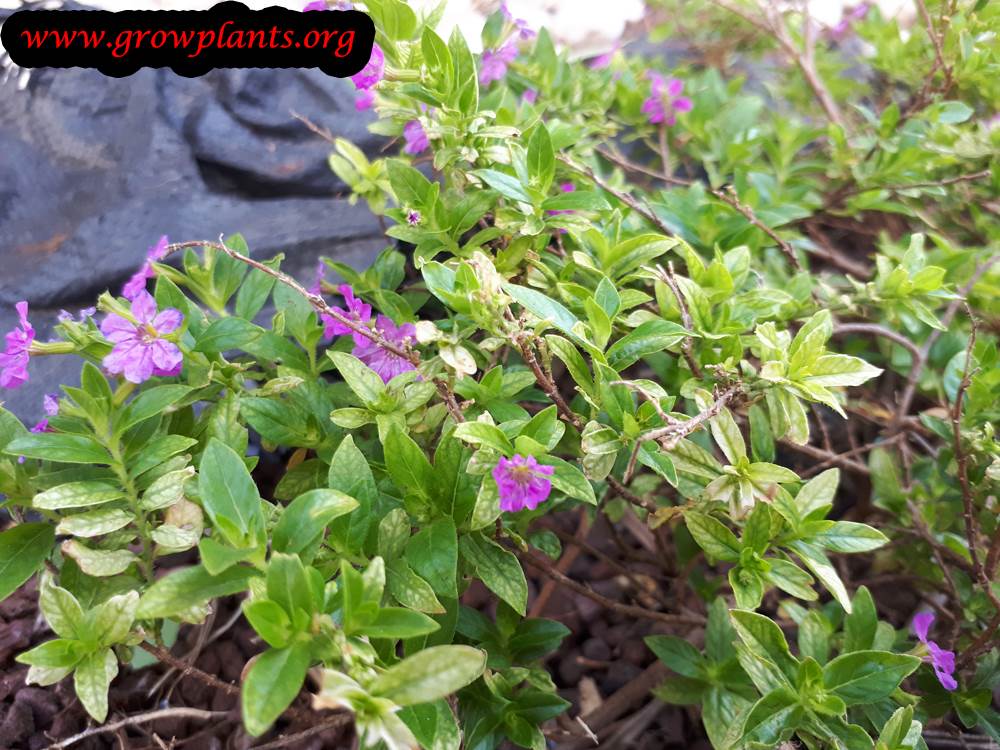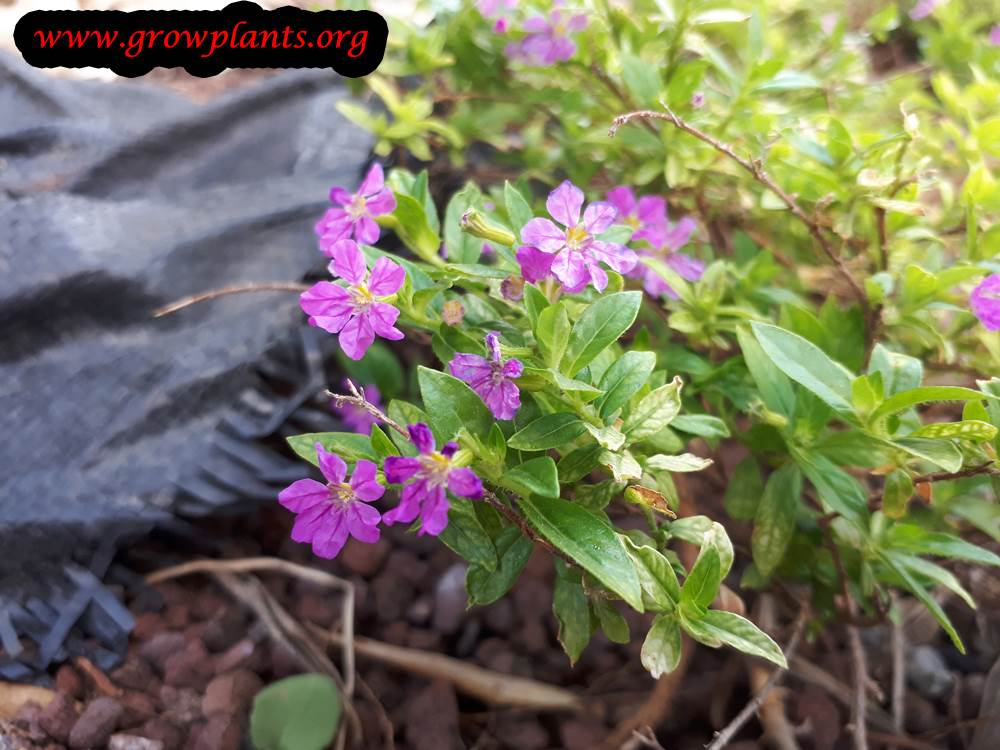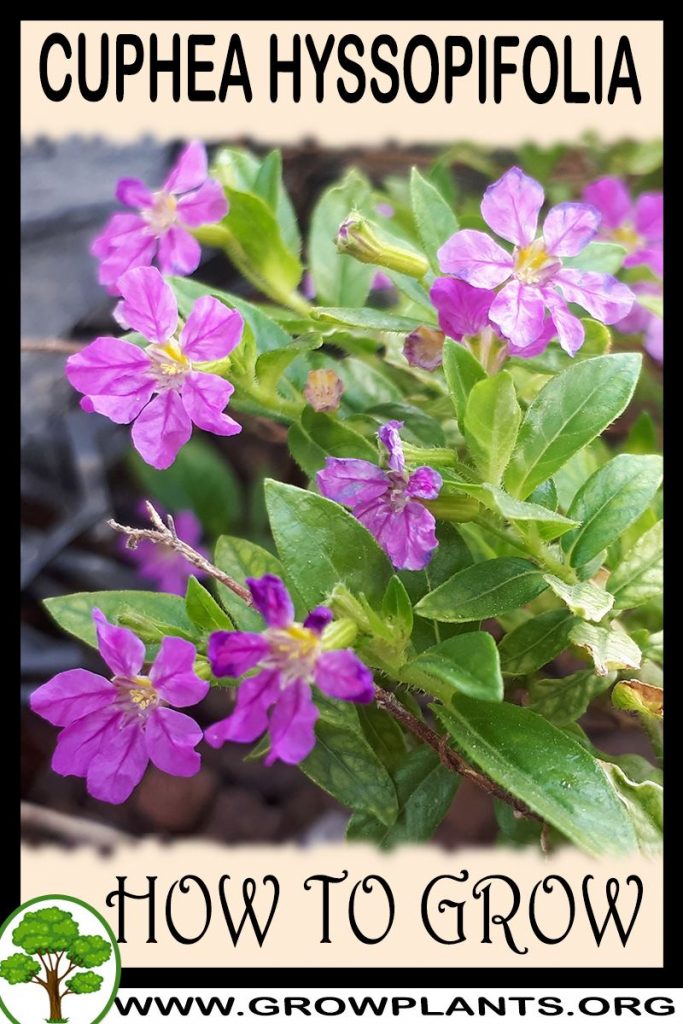
Plant Profile & Key Characteristics
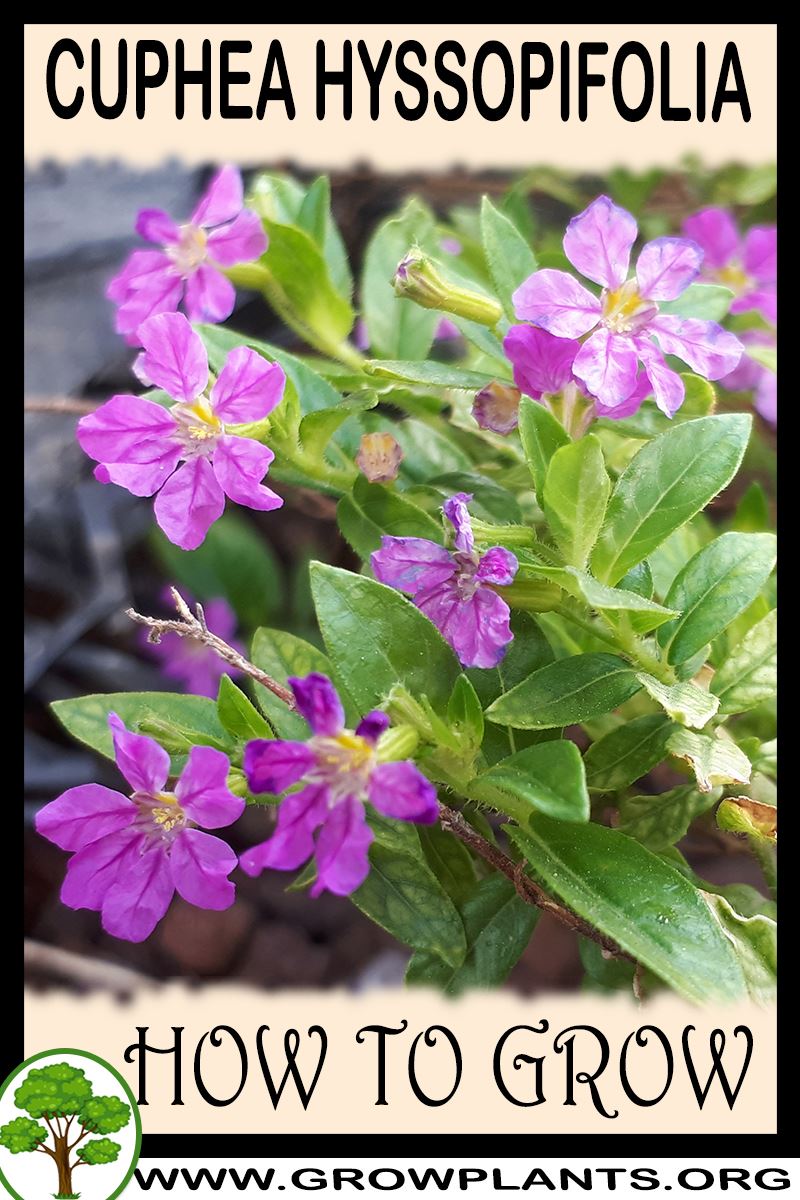
Overview: Cuphea hyssopifolia (false or Mexican heather) is a small evergreen shrub about 60-90 cm (2-3 ft), grown as a perennial in mild climates and as an annual where cold. It is a compact ornamental valued for its tiny, near-continuous flowers.
Quick Specifications
| Specification | Attribute |
|---|---|
| Plant Type / Life Cycle | Perennial (evergreen shrub; grown as an annual where cold) |
| Foliage Type | Evergreen |
| Mature Size | 60-90 cm (2-3 ft) tall |
| Growth Rate | Fast to moderate |
| Toxicity | Non-toxic |
| Hardiness | USDA zone 10+ as perennial (4-10 as annual) |
Growth Form & Structure
- Height & Spread: A compact, mounded shrub about 60-90 cm (2-3 ft); grown in the ground or in containers.
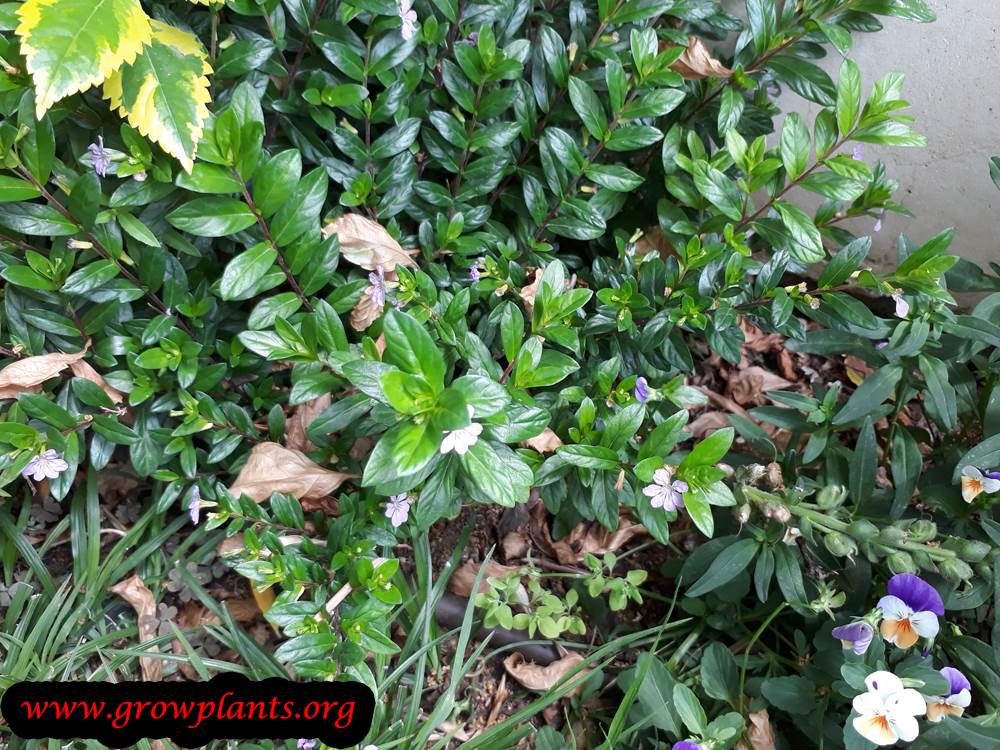
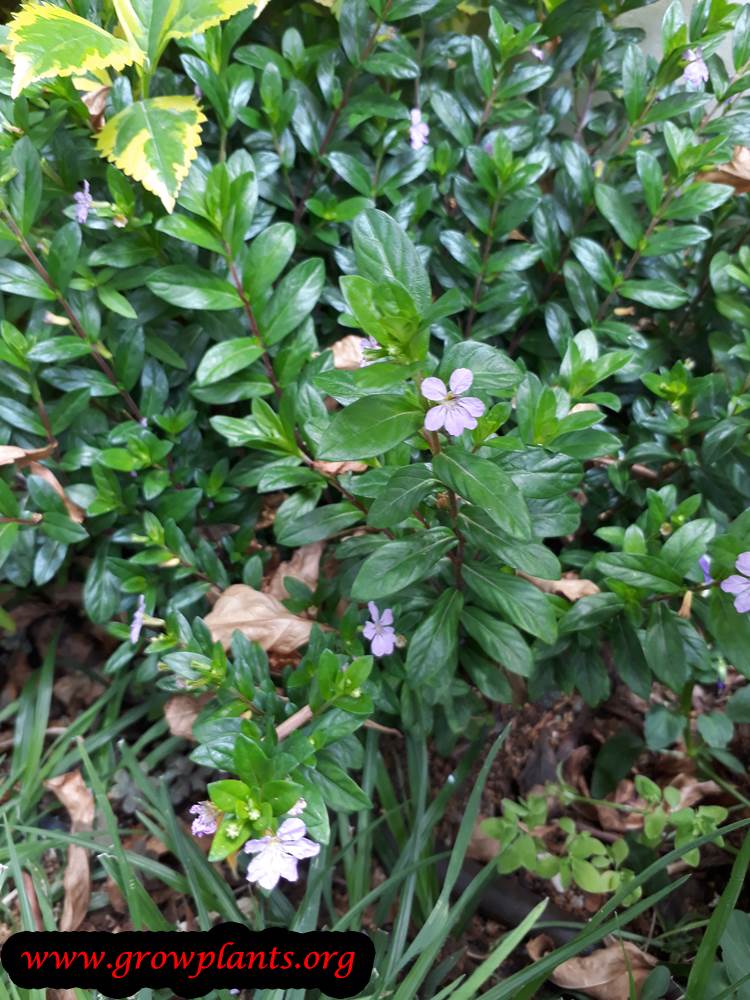
- Growth Habit & Form: A dense, twiggy, spreading evergreen shrublet; can spread vigorously in favourable climates.
- Lifespan & Maturity: A fast-growing perennial that reaches flowering size within a season or two.
Anatomy & Physical Features
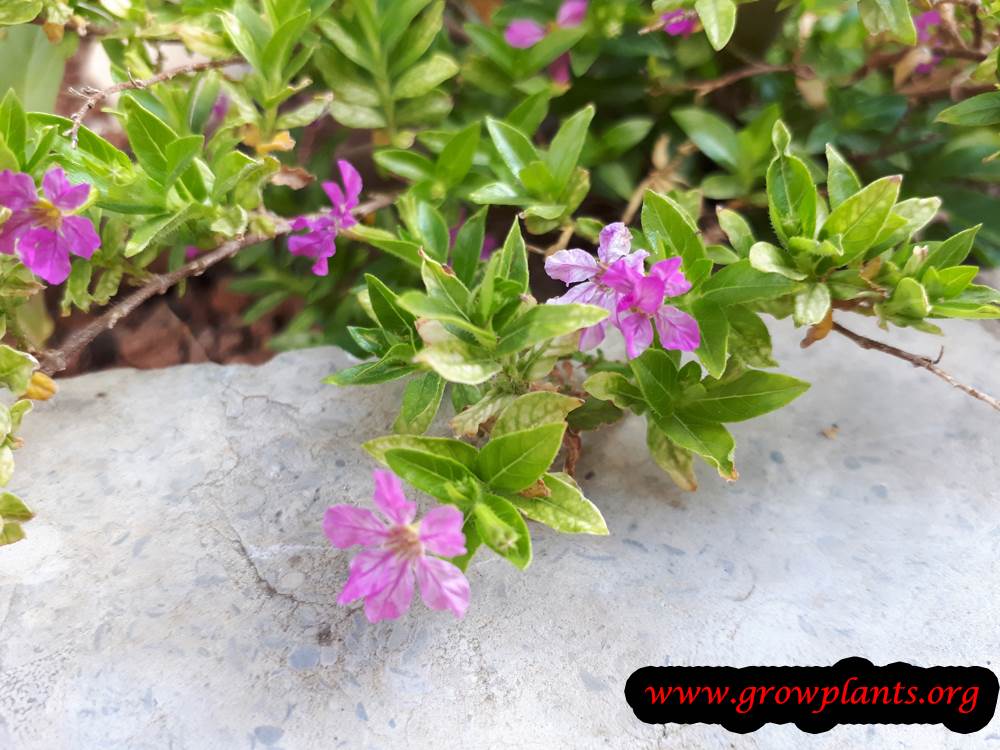
- Leaves & Foliage: Small, dark-green, elliptic leaves densely set on fine stems.
- Flower Characteristics: Tiny, six-petalled, star-shaped flowers in white, pink or purple over a long season.
Primary Uses & Landscape Value
- Functional & Ornamental Roles: Ornamental for low edging, informal hedging, groundcover, containers and pollinator plantings.
Care Guide: Planting, Soil & Watering
Overview: Cuphea hyssopifolia (false / Mexican heather) is an easy, fast-growing flowering shrub for full sun to part shade in a fertile, well-draining soil. It likes regular, moderate to generous watering and flowers freely through the warm months.
Quick Care Requirements
| Requirement | Ideal Condition |
|---|---|
| Planting Season | In spring or summer after frost (perennial in frost-free zones ~10+, grown as an annual in cooler zones) |
| Growth Rate | Moderate to fast |
| Soil Type | Fertile and well-draining |
| Water Need | Moderate to high – keep the root zone reliably moist |
Planting & Establishment
- Best Planting Season: Plant in spring or summer once frost has passed; where winters are frost-free it can go in through the warm season.
- How to Plant:
- Hole Preparation: Dig a hole roughly twice the width of the root ball and the same depth.
- Soil Amendments: Mix compost or organic matter into the backfill to boost fertility and drainage.
- Planting Depth: Set the plant with the top of the root ball level with the surrounding soil; do not bury the stem.
- Growth Speed & Expectations: Moderate to fast; quickly forms a bushy, free-flowering mound 60-90 cm (2-3 ft).
Soil, Watering & Drainage Care
- Soil Mix & Drainage Needs: Any fertile, free-draining soil suits it; in pots use a good potting mix with drainage holes so the roots never sit wet.
- Watering Schedule & Technique:
- Young / Newly Planted: Water regularly to keep the root zone moist while it establishes.
- Established: Water when the top few cm of soil dry out; it likes steady moisture but not waterlogging.
- Seasonal Adjustments: More in summer heat, less in cool or wet weather.
Climate, Light & Hardiness
Mexican heather is a tender, warm-climate ornamental shrublet that flowers almost non-stop in subtropical, tropical and warm-temperate gardens. It grows in full sun to half shade and, being frost-sensitive, is reliably perennial only in warm zones, grown as a summer annual where winters freeze.
Quick Climate Specifications
| Climate Zones | Subtropical, tropical and warm temperate |
| USDA Hardiness Zones | Site lists zone 10+ as a perennial; grown as an annual in cooler zones (about 4–10) |
| Optimal Temp Range | Warm conditions of roughly 18–28 °C (64–82 °F) |
| Cold Damage Begins | Foliage is burned by light frost, generally at or just below 0 °C (32 °F) |
| Approx. Survival Minimum | Established plants may resprout from the base after brief dips to around −3 to −4 °C (25–27 °F); varies with maturity and conditions |
| Frost Tolerance | Low |
| Light Conditions | Full sun to half shade |
| Wind Tolerance | Moderate – low, dense, wiry habit |
Sunlight & Light Exposure
Optimal Light Setup
Full sun gives the densest habit and heaviest flowering; half shade is accepted and helps in very hot, bright climates.
Shade & Heat Management
Under intense heat some afternoon shade keeps foliage fresh, though flowering is strongest in bright light.
Best Exposure / Orientation
A warm, sunny bed suits it; a sheltered, sun-facing spot helps it persist in marginal-cold areas.
Temperature Extremes & Hardiness
USDA Hardiness & Regional Limits
It is a permanent shrublet only where winters stay essentially frost-free (about zone 10 and warmer); in colder regions it is used as a warm-season bedding annual or container plant. Growing it as an annual does not change its cold limit - frost is simply what forces the annual habit.
Cold Damage & Winter Protection
Frost scorches the foliage; a mature plant may resprout from the roots after a light freeze, but young plants are more easily lost. Cold tolerance varies with plant age, exposure duration and conditions.
Frost Sensitivity
Treat it as frost-sensitive and protect or move container specimens before the first frost.
Extreme Heat Tolerance
It thrives in heat, flowering through hot subtropical and tropical summers with adequate moisture.
Wind, Humidity & Microclimate
Wind Tolerance
The low, twiggy, dense form shrugs off ordinary wind well.
Microclimate Recommendations
In cool-winter areas grow it in a warm, sheltered pocket or a pot that can be brought under cover; container roots chill and freeze faster than those in open ground.
Growing in Pots, Balconies & Indoors
False heather is a neat, ever-blooming little shrub that is a superb pot plant for a sunny balcony or patio – and a bright, sunny window can keep it going indoors. The grower notes it is not a true room houseplant, but it is more indoor-tolerant than most in this group and overwinters well under cover.
Quick Details
- Container Size: About 10-20 L (3-5 gal) for a mature little shrub
- Indoor Suitability: Not a deep-room houseplant, but happy on a bright, sunny sill; a good tender plant to overwinter indoors
- Best Spot: Full sun to light shade; the brightest spot keeps it flowering
- Soil & Drainage: Keep the mix evenly moist through the growing season; it likes steady moisture but must drain freely
- Watering in Pots: Houseplant limits: Not a true room houseplant, but more forgiving than most here – it flowers on a very bright, sunny sill. Windowsill growing: A sunny window keeps this compact shrub blooming; give it the brightest light you can indoors. Overwintering indoors: Being tender, it is well suited to a pot – move it into a bright, frost-free room over winter and back out once frost has passed.
Indoors & On the Windowsill
- Light, heat & wind: Give it the sunniest spot you can. Walls, railings and paving reflect heat, so pots dry quickly – check moisture daily in warm weather, and shelter tall growth from wind.
On a Balcony or Patio
- Pot & drainage: A 10-20 L pot with strong drainage holes; skip a standing water saucer to avoid root rot. Terracotta breathes and dries fast; glazed or plastic holds moisture longer.
- Potting mix: Use a well-aerated, organic-rich mix – peat or coir blended with perlite or vermiculite for free drainage.
- Feeding: Potted plants lose nutrients as watering leaches them from the mix, so feed more often than in open ground – a balanced liquid feed through the growing season.
- Repotting: Refresh the mix or pot up about every two years; a light trim keeps it neat and free-flowering.
Choosing the Pot, Soil & Long-Term Care
Growing this plant in a greenhouse
A greenhouse can give cuphea hyssopifolia frost protection, cold protection, humidity control and extra warmth. In the right climate it may also be kept growing through winter, depending on how much warmth and light are provided.
Greenhouse at a glance
| Greenhouse suitability | Conditional - depends on your climate |
|---|---|
| Main benefits | frost protection, cold protection, humidity control, extra warmth |
| Season extension | earlier spring & later autumn |
| Outdoor protection advisable below | about 0°C |
| Suitable types | unheated greenhouse, polycarbonate greenhouse, lean-to |
| Heating | Heating is optional - useful mainly for winter growing in cold areas. |
Related greenhouse guides
- Greenhouses: How to Choose the Right Greenhouse
- Best Lean-To Greenhouses
- Polycarbonate Greenhouses: What to Look for Before Buying
Fertilizing & Feeding
A moderate, undemanding feeder: Cuphea hyssopifolia flowers well on balanced, light feeding and does not need high-phosphorus ‘bloom’ fertilizers.
Quick Fertilizing Specs
| Feeding Level | Moderate; flowers well on balanced feeding. |
|---|---|
| Main Nutrient Priority | Balanced nutrition; adequate nitrogen and balanced nutrients drive flowering. |
| Best Feeding Period | During active growth and through the bloom season. |
| Organic Options | Compost and other organic matter provide steady, gentle nutrition. |
| Soil pH | Tolerates a wide range; slightly acidic to near-neutral soil is ideal. |
| Reduce/Stop Feeding | Ease off feeding as flowering ends and the plant rests. |
Feeding by Growth Stage
Early growth
Establish Cuphea hyssopifolia and build a healthy framework of stems and leaves ahead of flowering.
| Nutrient direction | Balanced nutrition to build healthy stems and foliage as growth resumes and the plant fills out. |
|---|---|
| Timing | As new growth begins in the warm growing season. |
| Frequency | A light feeding as growth begins is usually enough. |
| Fertilizer types | A balanced complete fertilizer used lightly, Compost or other organic matter |
| Precautions | Avoid overfeeding with nitrogen, which favors leaves at the expense of flowers. |
Blooming
Sustain steady, colorful flowering through the bloom season.
| Nutrient direction | Steady, balanced nutrition through the bloom season; adequate nitrogen and balanced nutrients drive flowering, so ordinary complete fertilizer is what supports bloom. |
|---|---|
| Timing | Through the flowering season. |
| Frequency | Light feedings spread through the flowering season keep bloom going. |
| Fertilizer types | A balanced complete fertilizer used lightly through bloom |
| Precautions | Skip high-phosphorus ‘bloom booster’ products; excess phosphorus provides no real flowering advantage and can harm soil life. |
Dormancy or cool-season rest
Through the cool season the plant rests and takes up little in the way of nutrients.
| Nutrient direction | None – withhold fertilizer while the plant is resting. |
|---|---|
| Timing | During winter dormancy or the cool-season slowdown. |
| Frequency | No feeding at this stage. |
| Fertilizer types | No feeding at this stage – the plant is resting and not actively taking up nutrients. |
| Precautions | Do not fertilize until active growth resumes in the warm season. |
Nutrient Deficiency Signs & Corrections
Older, lower leaves turn pale and growth becomes thin and slow.
| Possible causes | Low available nitrogen in the soil, Cold or waterlogged roots limiting nutrient uptake, Leaching of nutrients from a light or sandy soil |
|---|---|
| Appears first on | Older, lower leaves. |
| What to check | Soil drainage and how wet the roots stay, Recent feeding history and soil richness, Whether the fading starts on the oldest leaves |
| Possible correction | Improve drainage, and apply a light balanced feeding to restore steady, moderate growth. |
The newest leaves yellow between the veins while the veins stay green.
| Possible causes | High soil pH reducing iron or manganese availability, Waterlogged or cold roots that cannot take micronutrients up, A genuine iron or manganese shortage |
|---|---|
| Appears first on | New, upper leaves. |
| What to check | Soil pH, Drainage and root health, Whether only the newest growth is affected |
| Possible correction | Correct soil pH and drainage; if it persists, apply a chelated iron or manganese product according to its label. |
The plant grows plenty of leaves but produces few flowers.
| Possible causes | Excess nitrogen favoring foliage over flowering, Too little light for good bud formation, Heat or drought stress during the bloom period |
|---|---|
| Appears first on | Flowering shoots and buds. |
| What to check | Recent nitrogen inputs and overall soil richness, How much direct light the plant receives, Watering steadiness through the bloom season |
| Possible correction | Ease off nitrogen, give the plant adequate light, and rely on balanced nutrition rather than high-phosphorus bloom products, which offer no real flowering advantage. |
Pruning, Training & Seasonal Maintenance
False heather (Cuphea hyssopifolia), also called Mexican heather, is a tender evergreen mounding subshrub of 60–90 cm with fine, dense, small-leaved growth and a near-continuous scatter of little star-shaped flowers. Unusually for the fine-textured plants in this group, its neat mound genuinely responds to light shearing: because it flowers on new growth, a light trim to shape it also drives the fresh shoots that carry more bloom. The main jobs are tip-pinching young plants for density, a light shaping trim, and — where an old plant has gone leggy — a harder renewal cut in spring.
Timing matters because the plant is frost-tender: the safest time for anything more than a light tidy is early spring as growth resumes, so a cut-back is followed by warm weather rather than cold.
Quick Pruning & Maintenance Specs
| Pruning Tolerance | High (blooms on new growth; accepts shearing and spring renewal) |
| Primary Pruning Window | Early spring, as growth resumes |
| Secondary Maintenance Window | Light shaping trims through the growing season |
| Typical Frequency | One main spring shape, plus occasional light trims |
| Main Objective | Keep a dense compact mound and drive free-flowering new growth |
| Young Plant Priority | Pinch tips to build a bushy, dense habit |
| Mature Plant Priority | Light shear to shape; renew leggy plants in spring |
| Best Tool Type | Bypass secateurs / precision snips; light shears for the mound |
| Avoid Heavy Pruning During | Autumn / before frost (tender new growth) |
Pruning by Plant Age & Size
Newly Established
Remove only damaged growth in the first season and let the plant settle; a young plant can be tip-pinched lightly to start a dense, well-branched mound.
Young / Formative
Pinch the shoot tips a few times to build a compact, twiggy mound rather than an open plant. No single-leader or framework training applies — the aim is an even dome of fine growth.
Mature / Established
Shape the mound with a light shear to keep it neat and dense, and each spring cut back harder if the plant has grown leggy or bare at the base. Because bloom is on new growth, this trimming increases rather than reduces flowering.
Seasonal Pruning Schedule
Early spring (primary): objective is renewal and shape — cut the plant back to remove tired or leggy growth and any winter damage; do not leave bare, exhausted stems; expect a dense new flush that flowers through the season. Growing season (ongoing): light shaping trims keep the mound tidy and encourage continuous bloom on the resulting new shoots. Do not shear in autumn, which pushes tender growth into frost.
Flowering & Fruiting Wood
The plant flowers on current-season growth, so it blooms on new wood. This is why shearing and spring cut-back promote flowering: they generate the fresh shoots that carry the small star flowers. Trimming lightly and often keeps a steady supply of flowering new growth, whereas leaving the plant unpruned lets it become woody and sparse-blooming at the base.
Structural Pruning & Training
The “structure” is simply a dense dome. Maintain it by shearing to shape and by spring renewal; remove any dead or winter-scorched twigs. There is no branch-selection framework as on a larger shrub.
Container & Small-Space Pruning
It is often grown in pots and as low edging; pinch and lightly shear more frequently to hold a tight cushion, and refresh with a spring cut-back when a container plant goes woody. A confined root run makes regular light trimming, rather than one hard cut, the better approach.
Tools
Individual cuts are twiggy, so bypass secateurs or precision snips handle shaping and renewal; light hedge shears are legitimate for trimming the fine, dense mound as a mass. No loppers or saw are needed on this small subshrub.
Tool Hygiene & Disease Risk
Routine. Aphids are the main recorded pest, not a tool-borne disease, so clean, sharp blades are enough; disinfect only if cutting out material you suspect is diseased.
Cut Placement & Technique
When shearing the mound, trim evenly over the surface to keep the dome shape and dense flowering skin. For renewal, cut leggy stems back to lower live growth; the plant breaks readily from the resulting fresh wood. Pinch young tips above a node to build density.
Heavy Pruning & Rejuvenation
Tolerated. A leggy or woody-based plant can be cut back hard in early spring and will regenerate into a fresh, dense mound that flowers on the new growth. Do this as growth resumes, not before frost.
Post-Pruning Care
After a spring cut-back, water to support the new flush and keep it in its warm, well-drained conditions; no feeding is needed simply because it was trimmed. Watch fresh growth for aphids.
Common Pruning Mistakes
- Shearing in autumn, so tender new growth is caught by frost on this cold-sensitive plant.
- Never renewing it, letting the mound go woody and bare at the base with fewer flowers.
- Cutting into old bare wood too hard at the wrong time instead of a measured spring renewal into live growth.
When NOT to Prune
Do not prune in autumn or before frost, and avoid hard cutting on a newly planted specimen in its first season. Keep heavier renewal for early spring as growth resumes.
Recommended Tools (by task)
- precision_snips — for pinching young tips and detailed shaping of the fine growth.
- bypass_secateurs — for the spring renewal cut back into live wood on leggy plants.
- hedge_shears — for lightly shearing the dense mound as a mass to keep its compact dome form.
Pruning Troubleshooting
| Problem | Possible Cause | What to Check | Corrective Action |
| Leggy, woody, sparse bloom | Never sheared or renewed; flowering wood is old | Whether a spring cut-back has been done | Cut back in early spring into live growth to force a dense, free-flowering flush |
| New growth frost-damaged | Sheared too late in autumn on a tender plant | Timing of the last trim relative to cold | Move renewal to early spring; leave top growth over winter as protection |
Propagation Guide
False heather is easy to raise either from softwood stem cuttings, which root quickly and reproduce the parent exactly, or from its fine seed. Cuttings are the more dependable route for keeping a particular plant, while seed of the species gives fairly uniform plants; grafting is never used.
Quick Propagation Specs
| Best Propagation Method | Softwood stem (tip) cuttings |
| Alternative Methods | Seed |
| Propagation Difficulty | Easy |
| Seed True-to-Type | Species is fairly uniform; take cuttings to keep a specific form |
| Vegetative True-to-Type | Yes — a cutting reproduces the parent |
| Best Propagation Season | Spring to summer |
| Cutting Rooting Time | Usually a few weeks under warm, humid conditions |
Growing from Seed
Seed Handling & Sowing
The seed is small; surface-sow or barely cover it on a moist, well-drained mix and keep it warm and humid. Germination can be uneven, so sow generously.
Stem Cuttings
Cutting Type & Timing
Take short softwood tip cuttings from healthy, non-flowering shoots in spring or summer.
Rooting Setup
Insert into a moist, well-drained mix and keep warm with high humidity around the cuttings.
Rooting Hormone & Time
Rooting hormone is optional — the soft shoots root easily on their own — and roots usually form within a few weeks in warm, humid conditions.
Bloom & Flower Guide
Quick Details
- Bloom Season: Spring through autumn, and nearly year-round in frost-free climates
- Time to First Bloom: Blooms young, often within its first season
- Flower Appearance: Tiny six-petalled, star-shaped flowers in white, pink or purple
- Edibility: Grown as an ornamental; not eaten
Detailed Blooming Overview
False heather (also called Mexican heather, Cuphea hyssopifolia) is a compact evergreen shrub that stays smothered in tiny flowers over a very long season. Its dainty blooms are a magnet for small pollinators.
Flower Characteristics
- Small six-petalled flowers in a star shape, in white, pink or lavender-purple.
- Produced continuously and profusely along the fine, wiry stems.
Bloom Care & Thinning
- Encouraging bloom: Full sun to light shade and light, regular feeding keep it flowering; a gentle shear tidies the plant and renews the display.
- Pollination: The flowers attract bees and other small pollinators.
Pests, Diseases & Troubleshooting
Overview: Cuphea (Cuphea hyssopifolia) are tough, floriferous warm-climate subshrubs with few serious enemies. Their real vulnerability is not insects but overwatering — root and stem rot in soggy soil — with aphids, whitefly and spider mites (mostly under cover or in dry heat) as occasional, easily managed pests. Grow them in full sun and free-draining soil, water moderately, and you will rarely need to reach past organic controls.
Quick Troubleshooting Overview
| Issue / Pest | Main Symptom | Primary Solution |
|---|---|---|
| Aphids | Sticky honeydew and curling on new growth | Water jet, beneficials, soap/neem if needed |
| Whitefly | White flies rise when brushed; sooty mould | Sticky traps, airflow, soap/neem on undersides |
| Spider mites | Stippled, dusty leaves in hot/dry or indoor air | Raise humidity, hose down, horticultural oil |
| Root/stem rot | Wilting in wet soil, black mushy base | Well-drained soil, water only when surface dries |
| Botrytis | Grey mould on spent flowers in damp weather | Deadhead, improve airflow |
| Frost damage | Blackened growth after cold | Protect or overwinter; tender to frost |
Common Pests & Management
- Aphids (Aphis spp. / Myzus persicae):
- Symptoms: Small green, black or grey soft-bodied insects clustered on tender new shoots and flower buds, causing sticky honeydew, sooty mould and some leaf curl; the most likely pest, usually on soft spring growth.
- Prevention & Control: Rinse colonies off with water, encourage ladybirds and lacewings, and avoid over-feeding with nitrogen. Insecticidal soap or a light neem spray clears stubborn outbreaks; rarely needed outdoors on a healthy plant.
- Whitefly (Trialeurodes vaporariorum / Bemisia tabaci):
- Symptoms: Tiny white flies rising in a cloud when the plant is brushed, with pale nymphs on leaf undersides; honeydew and sooty mould follow. Mainly a greenhouse or sheltered-planting nuisance.
- Prevention & Control: Hang yellow sticky traps, keep airflow good, and remove badly infested leaves. Encourage parasitic wasps; treat undersides with insecticidal soap, neem or horticultural oil, repeating for new hatches.
- Spider Mites (Tetranychus urticae):
- Symptoms: Fine pale stippling and a dull, dusty look on leaves, with faint webbing in hot, dry conditions or indoors; heavy feeding bronzes and drops foliage.
- Prevention & Control: Raise humidity, hose down foliage and avoid drought stress, especially on container or indoor plants. Insecticidal soap or horticultural oil on the undersides controls outbreaks; predatory mites help under cover.
- Fungus Gnats (Bradysia spp.):
- Symptoms: Small dark flies running over the soil surface of pots, with larvae in constantly wet potting mix that can nibble seedling roots; a symptom of overwatering rather than a serious pest.
- Prevention & Control: Let the top of the mix dry between waterings, improve drainage, and use yellow sticky traps and a Bt israelensis drench or sand topdressing if larvae persist.
Diseases & Fungal Issues
- Root & Stem Rot (Pythium / Phytophthora / Rhizoctonia spp.):
- Symptoms: Wilting despite wet soil, blackened mushy stem base and roots, and collapse — the commonest way Cuphea is killed, driven by overwatering, heavy soil or poor drainage.
- Treatment & Management: Plant in free-draining soil or mix, water only when the surface dries, and never let pots sit in water. Remove and destroy collapsed plants; a healthy, unstressed root zone is the whole cure — fungicides can’t fix waterlogging.
- Botrytis (Grey Mould) (Botrytis cinerea):
- Symptoms: Fuzzy grey mould on faded flowers, buds and soft growth in cool, damp, still conditions, causing brown rot and dieback of the affected parts.
- Treatment & Management: Improve airflow and spacing, remove spent flowers and dead material, and avoid wetting foliage in the evening. Rarely needs more than sanitation and better ventilation.
- Fungal Leaf Spot (Cercospora / Alternaria spp.):
- Symptoms: Occasional small brown or purplish spots on leaves in prolonged wet weather; usually cosmetic and minor on a vigorous plant.
- Treatment & Management: Water at the base, keep foliage dry and airy, and remove spotted leaves. Copper or a general garden fungicide is only warranted in persistent wet spells.
Growing Difficulties & Abiotic Problems
- Overwatering & Poor Drainage:
- Cause & Symptoms: Yellowing, wilting and root rot in soggy soil — Cuphea likes moisture but hates wet feet, and container plants rot fastest.
- Correction Strategy: Use well-drained soil, water when the top of the soil dries, and ensure pots drain freely. This single factor prevents most Cuphea losses.
- Frost & Cold Damage:
- Cause & Symptoms: Blackened, wilted growth after cold; these are tender, warm-climate subshrubs that are damaged or killed by frost.
- Correction Strategy: Grow as a warm-season plant, shelter or bring containers indoors before frost, and mulch roots where lightly frosted. Prune out cold-damaged growth once warmth returns.
- Leggy Growth & Poor Flowering:
- Cause & Symptoms: Sparse bloom and open, floppy stems in too much shade or after a flush fades; also from lack of trimming.
- Correction Strategy: Site in full sun to light shade, feed lightly during growth, and shear or pinch periodically to keep the plant bushy and flowering.
- Chlorosis (Iron/Nutrient):
- Cause & Symptoms: Interveinal yellowing of new leaves on alkaline or waterlogged soil; overall paleness when underfed.
- Correction Strategy: Maintain slightly acidic to neutral, well-drained soil, feed lightly, and correct persistent interveinal yellowing with chelated iron.
What Helps – Products & Tools
Cuphea is genuinely tough and rarely needs spraying: keep insecticidal soap and neem or horticultural oil on hand for aphids, whitefly and mites, yellow sticky traps for monitoring, and a Bt israelensis drench for fungus gnats in overwatered pots. On disease, the fixes are cultural — free-draining soil, careful watering and airflow — with copper fungicide only for stubborn leaf spot in wet spells.