Plant Profile & Key Characteristics
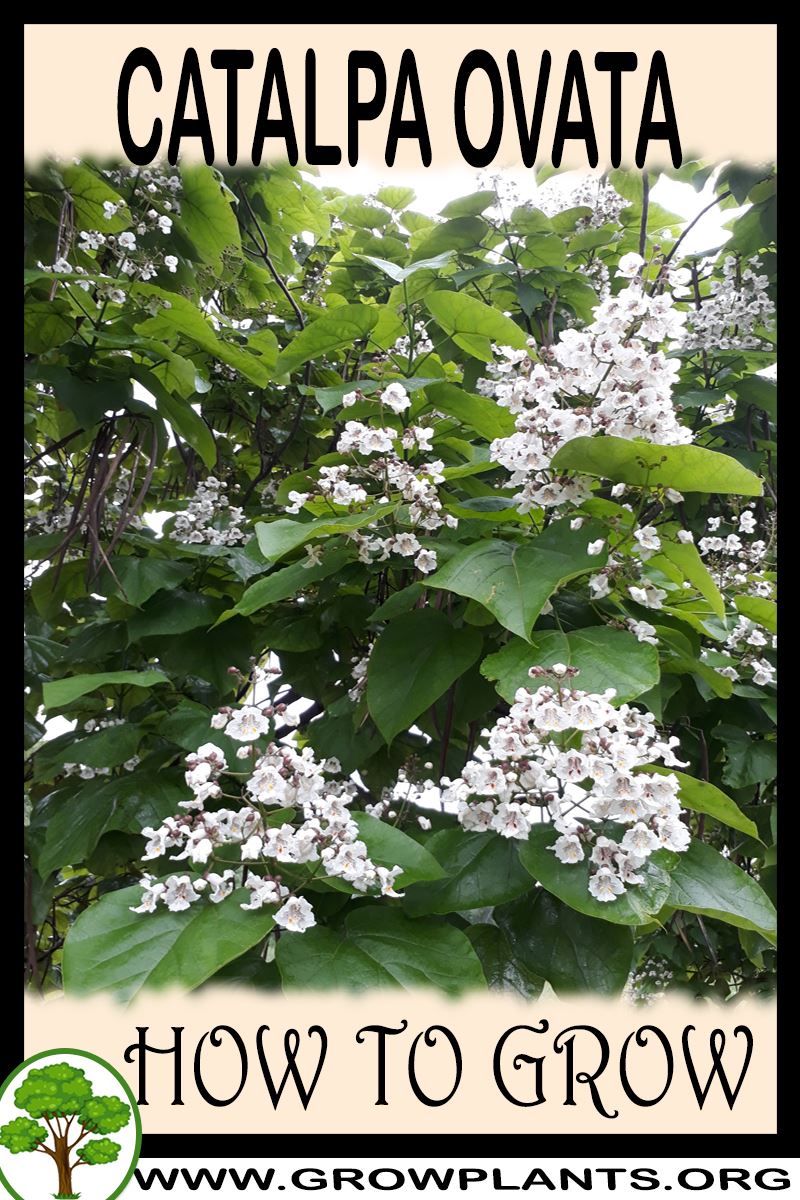
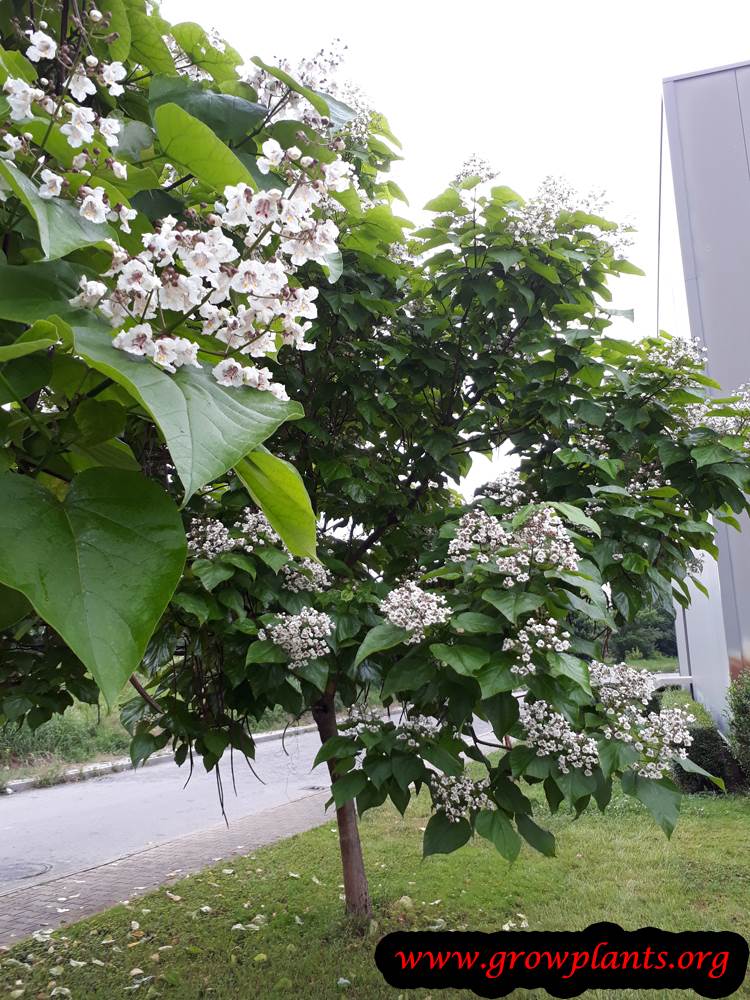
Overview: Catalpa ovata (Chinese catalpa) is a fast-growing deciduous ornamental tree reaching about 6-10 m (20-33 ft) with a broad, spreading canopy. This hardy perennial is grown mainly as a shade and specimen tree for its large heart-shaped leaves and showy summer flower clusters.
Quick Specifications
| Specification | Attribute |
|---|---|
| Plant Type / Life Cycle | Perennial tree |
| Foliage Type | Deciduous |
| Mature Size | 6-10 m tall (20-33 ft) |
| Growth Rate | Fast to moderate |
| Hardiness | USDA zones 5-9 |
Growth Form & Structure
- Height & Spread: 6-10 m (20-33 ft) tall in the ground with a wide rounded crown; smaller and containable if grown in a large container.
- Growth Habit & Form: Deciduous tree with a single trunk and a broad, spreading canopy of large leaves.
- Lifespan & Maturity: Long-lived perennial that puts on height quickly in its early years under full sun and moist soil.
Anatomy & Physical Features
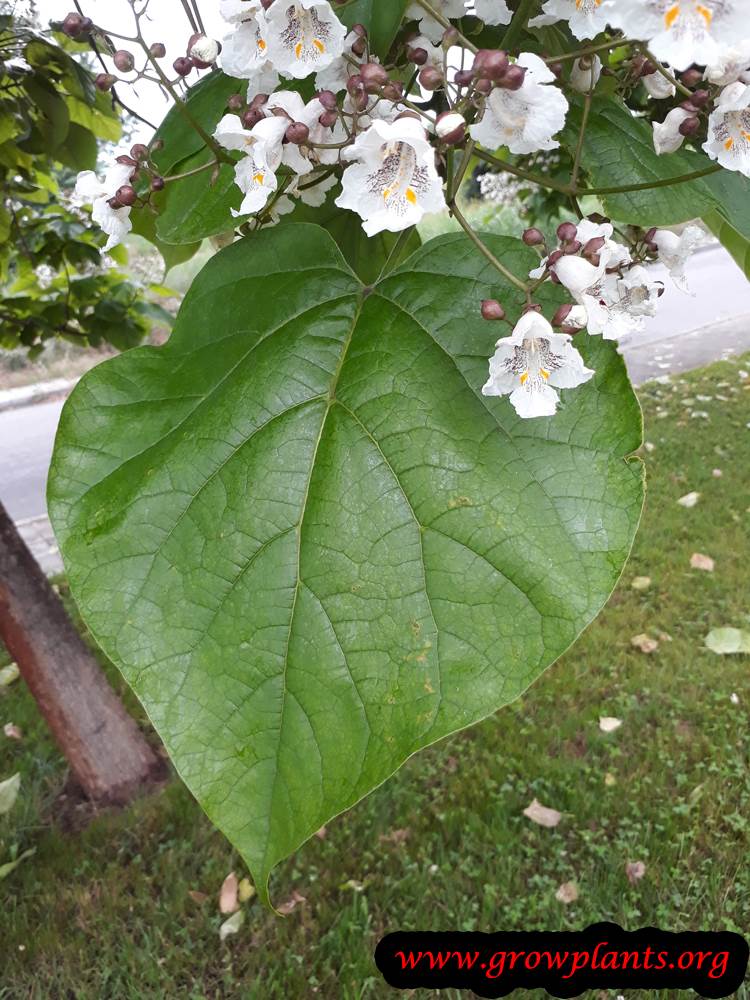
- Leaves & Foliage: Large green leaves in a heart to deltoid (triangular) shape; deciduous, dropping in autumn.
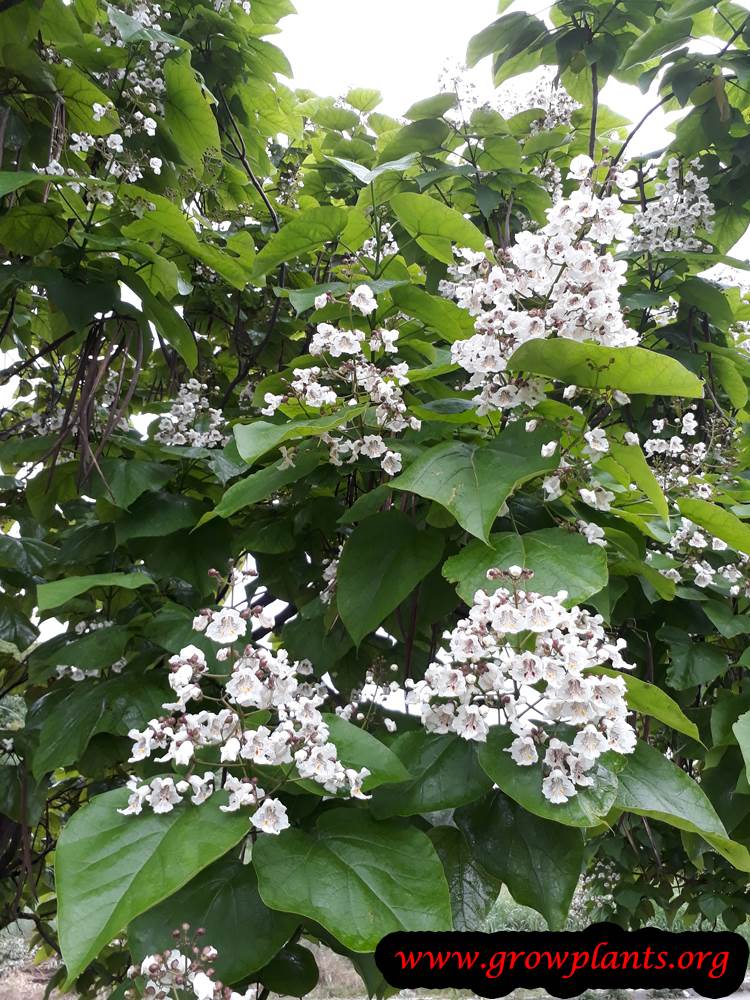
- Flower Characteristics: White or yellow tubular, two-lipped (mouth-shaped) flowers spotted with yellow and purple, borne in showy clusters in late spring to early summer.
Primary Uses & Landscape Value
- Functional & Ornamental Roles: Grown as an ornamental shade and specimen tree; valued for its bold foliage and flower display in temperate and subtropical gardens.
Care Guide: Planting, Soil & Watering
Overview: Chinese catalpa is a fast-growing deciduous tree for temperate to subtropical climates (hardiness zone 5-9), thriving in full sun to part shade. It prefers a deep, moist but well-drained soil and appreciates steady moisture through the growing season.
Quick Care Requirements
| Requirement | Ideal Condition |
|---|---|
| Planting Season | In late winter to spring while dormant, before growth resumes |
| Growth Rate | Moderate to fast |
| Soil Type | Deep, moist, well-drained soil |
| Water Need | Moderate – keep the soil evenly moist, especially when young |
Planting & Establishment
- Best Planting Season: Plant while dormant in late winter or early spring, before the tree leafs out.
- How to Plant:
- Hole Preparation: Dig a hole two to three times the width of the root ball and no deeper than it, loosening the surrounding soil.
- Soil Amendments: Fork in compost or organic matter to improve fertility and moisture retention on poor ground.
- Planting Depth: Set the tree with the root collar level with the surrounding soil; do not bury the trunk base.
- Growth Speed & Expectations: A vigorous, moderate-to-fast grower that can reach 6-10 m (20-30 ft), so allow plenty of space.
Soil, Watering & Drainage Care
- Soil Mix & Drainage Needs: A deep, moisture-retentive but free-draining soil is ideal; in containers use a rich, free-draining loam-based mix.
- Watering Schedule & Technique:
- Young / Newly Planted: Water regularly to keep the root zone moist while the tree establishes in its first seasons.
- Established: Water deeply but less often once established, letting the top few cm dry between waterings.
- Seasonal Adjustments: More water in summer heat and dry spells; little to none over the dormant winter.
Climate, Light & Hardiness
Catalpa Ovata is a cold-hardy deciduous shade tree for temperate and subtropical climates, growing well in full sun to half shade across USDA zone 5–9.
Quick Climate Specifications
| Climate Zones | Temperate, subtropical |
|---|---|
| USDA Hardiness Zones | 5–9 |
| Frost Tolerance | High (deciduous, dormant in winter) |
| Light Conditions | Full Sun to Half Shade |
Sunlight & Light Exposure
Optimal Light Setup
Full sun gives the best flowering and form.
Temperature Extremes & Hardiness
USDA Hardiness & Regional Limits
Zone 5–9 spans cold-winter temperate climates through warm subtropics.
Cold Damage & Winter Protection
As a deciduous tree it sheds leaves and tolerates winter cold well within its rated zones; young trees can be somewhat more tender their first winter or two.
Extreme Heat Tolerance
Tolerates subtropical summer heat at the warm end of its range with adequate moisture.
Wind, Humidity & Microclimate
Rainfall & Seasonal Moisture
Prefers consistently moist soil, so it is best suited to climates without prolonged summer drought.
Growing in Pots, Balconies & Indoors
Yellow Catalpa (Catalpa ovata) is not a houseplant – the grower confirms – and it grows into a spreading shade tree of 6-10 m, so a container suits it only while young or as a hard-pruned patio specimen. In a large tub it can be grown for its bold foliage before it needs the open ground.
Quick Details
- Container Size: A large, deep tub while young; it will eventually outgrow any pot
- Indoor Suitability: Not a houseplant; a full-size tree unsuited to indoor life
- Best Spot: Full sun to part shade
- Soil & Drainage: Moist, well-drained soil
- Watering in Pots: Average – keep evenly moist; a leafy tree in a pot drinks steadily
Indoors & On the Windowsill
- Why not indoors: The grower does not treat it as a houseplant – it is a large deciduous tree that needs full outdoor conditions and a winter rest, far beyond any room.
- While young: In a big tub it can be grown for a few years, or coppiced hard for large ornamental leaves, but plan to plant it out as it gains size.
On a Balcony or Patio
- Light & wind: Give a young tree sun or part shade and shelter from strong wind; keep the large-leaved plant evenly watered as pots dry fast in summer.
- Practicalities: Use a heavy tub for stability; being deciduous, it rests leafless in winter and needs less water then.
Choosing the Pot, Soil & Long-Term Care
- Pot & drainage: Use a large, deep pot with strong drainage holes; skip a standing-water saucer to avoid root rot. Terracotta breathes and dries faster, while glazed or plastic pots hold moisture longer, useful for a thirsty leafy tree.
- Potting mix: A rich, well-aerated organic mix – peat or coir with plenty of compost or organic matter, lightened with perlite or vermiculite for drainage.
- Feeding: Potted plants exhaust their soil quickly as nutrients leach out – feed lightly but regularly through the growing season.
- Repotting: Refresh the mix or pot up about every two years; for clumping perennials, lift and divide, trimming the roots and old top growth as you go.
Fertilizing & Feeding
A moderate feeder as a landscape tree: steady feeding while young supports canopy establishment, tapering to occasional feeding once the tree matures in reliably moist soil.
Quick Fertilizing Specs
| Feeding Level | Moderate feeder |
|---|---|
| Main Nutrient Priority | Balanced feeding with adequate nitrogen to build canopy, especially while young |
| Best Feeding Period | Spring as new growth begins, ahead of the flower flush |
| Organic Options | Compost or well-rotted organic matter worked into the root zone |
| Reduce/Stop Feeding | Taper feeding as the tree matures and canopy fills in |
| Micronutrients | Usually adequate from a complete tree fertilizer; correct only a diagnosed issue |
| Soil pH | Prefers consistently moist soil; tolerates a range of soil pH |
Feeding by Growth Stage
Spring canopy growth
Support fresh leaf and shoot growth as the tree breaks dormancy.
| Nutrient direction | A balanced fertilizer with adequate nitrogen fuels healthy canopy development, especially in younger trees. |
|---|---|
| Timing | In spring as new growth begins. |
| Frequency | A single feeding as growth resumes is usually sufficient for the season. |
| Fertilizer types | A balanced complete tree fertilizer, Compost or organic matter worked into the root zone |
| Precautions | Keep fertilizer away from the trunk and water it in well, especially on younger trees. |
Late spring to early summer bloom
Support the show of white or yellow, purple-flecked, trumpet-shaped flowers.
| Nutrient direction | Continued balanced feeding supports flowering without the need for extra phosphorus. |
|---|---|
| Timing | As flower clusters form in late spring into early summer. |
| Frequency | Feeding needs are modest once spring feeding has been done; established trees rarely need more. |
| Fertilizer types | A balanced complete fertilizer only if growth looks weak |
| Precautions | Avoid high-phosphorus products marketed for bloom; a balanced fertilizer with enough nitrogen already supports flowering. |
Winter dormancy
Let the deciduous tree rest through the dormant season without pushing new growth.
| Nutrient direction | No supplemental feeding is needed while the tree is leafless and dormant. |
|---|---|
| Timing | Through autumn leaf drop and the winter dormant season. |
| Frequency | No feeding until the tree breaks dormancy again. |
| Fertilizer types | No feeding at this stage; a dormant deciduous tree has no active growth to support. |
| Precautions | Do not fertilize a dormant tree; late-season feeding can also delay hardening off before cold weather. |
Nutrient Deficiency Signs & Corrections
Leaves are smaller than usual and pale green, with overall reduced shoot growth.
| Possible causes | low soil nitrogen, competition from turf or other plants over the root zone, compacted soil limiting root spread |
|---|---|
| Appears first on | leaves throughout the canopy, older leaves first |
| What to check | feeding history, soil compaction and turf competition over the root zone, recent growth rate compared to prior seasons |
| Possible correction | Apply a balanced tree fertilizer in spring and reduce turf competition over the root zone. |
New leaves are yellow with green veins, most visible on outer canopy growth.
| Possible causes | high soil pH limiting iron availability, compacted or waterlogged soil restricting roots, root stress from construction or grade changes |
|---|---|
| Appears first on | newest leaves on outer branches |
| What to check | soil pH near the root zone, drainage and compaction, any recent soil disturbance |
| Possible correction | Improve soil drainage and pH balance; apply a chelated iron product per its label if chlorosis persists. |
Older leaves show yellowing between the veins while veins stay green.
| Possible causes | low soil magnesium, leaching in sandy or heavily irrigated soil, high potassium feeding competing with magnesium uptake |
|---|---|
| Appears first on | older, lower canopy leaves |
| What to check | soil magnesium levels, soil texture and irrigation habits, recent fertilizer composition |
| Possible correction | Apply a labeled magnesium source such as a dolomitic amendment and rebalance overall feeding. |
Pruning, Training & Seasonal Maintenance
Catalpa ovata is a fast-to-medium growing deciduous shade tree that tolerates structural pruning well; the safest and most effective time to prune is winter dormancy after leaf drop, when the branch structure is visible and cuts heal before spring growth resumes. Because it flowers on the current season’s new growth in late spring/early summer, dormant winter pruning does not remove next season’s flower buds – it can even encourage a fuller flush of new flowering shoots.
Quick Pruning & Maintenance Specs
| Pruning Tolerance | Moderate–High |
| Primary Pruning Window | Winter dormancy (after leaf drop, before bud break) |
| Secondary Maintenance Window | Light removal of damaged/crossing growth any time in summer if needed |
| Typical Frequency | Annual structural check while young; light maintenance every 1–2 years once mature |
| Main Objective | Build a strong central-leader framework, control size, remove structural weaknesses |
| Young Plant Priority | Establish a central leader with well-spaced scaffold branches |
| Mature Plant Priority | Maintain structure; remove deadwood and crossing/rubbing limbs |
| Best Tool Type | Bypass secateurs (small growth), loppers (medium branches), pruning saw (larger limbs) |
| Avoid Heavy Pruning During | Full leaf-out/active summer growth; right after transplanting |
Pruning by Plant Age & Size
Newly Established
Minimal – remove only damaged or broken growth from planting/transport; avoid structural cuts the first dormant season while roots establish.
Young / Formative
Central-leader training: select and keep one dominant leader, choose well-spaced scaffold branches with wide crotch angles, and remove competing co-dominant stems while the wood is still small.
Mature / Established
Maintenance pruning: remove deadwood, crossing/rubbing branches, and low limbs if canopy clearance is wanted. Avoid removing large amounts of live wood at once.
Seasonal Pruning Schedule
Dormant / Winter (primary)
Objective: structural work while the framework is visible. Remove: deadwood, crossing/rubbing branches, competing leaders. Expected response: strong new-growth flush and more flowering shoots. Flowering impact: none – blooms form on the new growth that follows.
Ongoing Sanitary
Remove dead, damaged, or diseased wood whenever seen, regardless of season.
Flowering & Fruiting Wood
Catalpa ovata blooms in showy terminal clusters on the current season’s new growth, not on old wood, so dormant winter pruning – even fairly structural pruning – does not sacrifice the coming season’s flowers; removing some older wood in winter tends to push a stronger new-growth flush and more flowering shoots the following season.
Structural Pruning & Training
Central-leader framework for a tree form; remove crossing/rubbing branches and weak, narrow-angled co-dominant stems while young to prevent future structural failure. Height/spread control is easier the earlier it’s done, since older wood makes larger, harder-to-heal cuts.
Special Growth to Remove
- Watersprouts – vigorous upright shoots, especially common after heavy pruning or stress; remove as they’re weakly attached and clutter the canopy.
- Root suckers at the base if they appear, especially on stressed or damaged trees. This species is not commonly grafted, so rootstock suckers aren’t typically a concern.
Container & Small-Space Pruning
Rarely container-grown at maturity given its 6–10m size, but young nursery-stage plants should still follow central-leader training early, before size makes structural correction difficult.
Tools
Bypass secateurs for pencil-thick shoots and watersprouts; loppers for branches up to a few centimeters; pruning saw for anything larger, always cutting outside the branch collar.
Tool Hygiene & Disease Risk
Routine – clean, sharp tools; no unusual disease-spread risk documented for this species beyond general good practice (avoid pruning in wet weather where possible to reduce fungal entry on fresh cuts).
Cut Placement & Technique
Use thinning cuts (removing a branch back to its point of origin) in preference to heading cuts, to preserve natural form. Cut just outside the branch collar, not flush and not leaving long stubs. Make bud-facing cuts on young whips being trained to a leader.
Heavy Pruning & Rejuvenation
Tolerates moderate structural pruning well, but avoid removing more than about a quarter to a third of the live canopy in one dormant season on a mature tree – stage larger corrections over 2–3 winters. Heavy pruning pushes vigorous watersprout regrowth that then needs thinning.
Post-Pruning Care
No extra feeding needed after routine dormant pruning. After a heavier structural correction, watch newly exposed bark for sunscald and monitor for watersprout regrowth to thin the following season. Water normally through the next growing season.
Common Pruning Mistakes
- Heading back branches instead of thinning, creating dense watersprout clusters and a shorn, unnatural look.
- Leaving co-dominant leaders uncorrected while young, leading to weak, splitting unions later.
- Flush-cutting instead of cutting outside the branch collar, which slows wound closure.
When NOT to Prune
Avoid major structural pruning during full leaf-out/active summer growth (slower wound response, more energy loss) and right after transplanting, until the root system re-establishes.
Recommended Tools (by task)
- bypass_secateurs – small shoots, watersprouts, and formative training cuts on young wood.
- loppers – medium scaffold-branch removal beyond secateur capacity.
- pruning_saw – larger structural limbs on a maturing tree.
Pruning Troubleshooting
| Problem | Possible Cause | What to Check | Corrective Action |
| Excess upright watersprout growth | Heavy pruning or stress pushed vigorous regrowth | Dense vertical shoots below recent cuts | Thin watersprouts (don’t head them); avoid over-pruning in future seasons |
| Weak, splitting branch union | Co-dominant leaders not corrected when young | Narrow, included-bark crotch angles | Remove or subordinate one leader while wood is small; get established unions professionally assessed |
| Dieback after pruning | Cuts made in active summer growth/heat, or flush cuts slow to heal | Cut placement and timing | Reschedule major cuts for winter dormancy; cut outside the branch collar |
| Sparse flowering | Excess shade or an over-thinned canopy | Canopy density and light exposure | Moderate pruning intensity; avoid removing more than 25% of canopy per season |
Propagation Guide
Catalpa Ovata is most easily raised from seed, which germinates readily and produces seedlings true to the species; root cuttings offer a vegetative alternative when a specific individual tree needs to be preserved, though the site notes this is not required for ordinary propagation. Overall this is an easy tree to propagate.
Quick Propagation Specs
| Best Propagation Method | Seed |
| Alternative Methods | Root cuttings |
| Propagation Difficulty | Easy |
| Seed True-to-Type | Yes (species) |
| Vegetative True-to-Type | Yes |
| Best Propagation Season | Winter to spring, matching the site’s planting season |
| Seed Germination Time | Typically a few weeks once conditions warm in spring |
| Germination Temperature | Around 18–24°C (64–75°F) |
| Seed Sowing Depth | Shallow, just covering the seed |
Growing from Seed
Dormancy & Pre-Sowing Treatment
Seed generally benefits from a period of cold stratification over winter, mirroring the site’s own Winter/Spring planting-season timing; sow in late winter or early spring after natural or refrigerated chilling.
Sowing Season
Winter to spring, matching the site’s planting season.
Sowing Depth & Orientation
Shallow, just covering the seed.
Germination Conditions
Moderate warmth and consistently moist soil in a sunny to partly shaded spot.
Germination Time
Usually a few weeks once conditions warm up in spring.
Seedling Care
Given the fast-to-medium seedling growth noted on the site, grow young plants on in a nursery bed or pots before planting out, bearing in mind the eventual mature size of about 6–10m (20–30 feet).
Leaf & Root Cuttings
Catalpa can also be increased from root cuttings taken while the tree is dormant in winter: lift sections of pencil-thick root, cut them into short lengths, and bury them horizontally, or with the upper end just at the surface, in a free-draining rooting medium kept moist. New shoots typically emerge from the root sections the following spring. This vegetative route reproduces an individual tree true to type when that matters, complementing the site’s note that grafting or vegetative propagation, while not required, remains an option.
Bloom & Flower Guide
Quick Details
- Bloom Season: Spring into early summer
- Flower Appearance: Bell-shaped, open-mouthed flowers in white to yellow, the throat freckled with yellow and purple
- Edibility: Ornamental only – grown as a flowering shade tree, not eaten
Detailed Blooming Overview
Chinese catalpa flowers in late spring into early summer, carrying upright clusters of bell-shaped, open-mouthed blooms. They are creamy white to soft yellow, with a throat freckled in yellow and purple that guides pollinators in. Set against the big heart-shaped leaves, the flower clusters are a fine early-summer feature.
Flower Characteristics
- Bell / open-mouthed flowers, white to yellow.
- Throat spotted yellow and purple to lead in pollinators.
- Carried in upright clusters above the foliage.
Bloom Care & Thinning
- Managing the bloom: Little is needed; prune for shape in the dormant season, after flowering.
Pests, Diseases & Troubleshooting
Catalpa is a tough, fast-growing ornamental tree with few life-threatening pests; its signature insect is the catalpa sphinx caterpillar, which can defoliate trees but rarely kills them. The main concerns are soil-borne Verticillium wilt and cosmetic leaf diseases in humid weather, so management centres on siting, airflow and tolerating minor damage on an otherwise resilient tree.
Quick Troubleshooting Overview
| Issue / Pest | Main Symptom | Primary Solution |
|---|---|---|
| Catalpa sphinx caterpillar | Sudden heavy defoliation by large caterpillars, frass under canopy | Tolerate on healthy trees; hand-pick or spot-treat young larvae with Btk |
| Verticillium wilt | Branches wilt/die one-sided; dark streaking in the wood | No cure; prune out, feed and water, avoid replanting susceptible species |
| Powdery mildew | White coating on leaves in late summer | Improve airflow; sulphur or bicarbonate if severe |
| Leaf spot | Brown/black blotches, some early leaf drop in wet years | Rake and destroy fallen leaves; usually cosmetic |
| Aphids | Sticky honeydew, sooty mould, curled shoot tips | Encourage predators; wash off or use insecticidal soap |
Common Pests & Management
- Catalpa sphinx caterpillar (Ceratomia catalpae):
- Symptoms: Large yellow-and-black caterpillars (with a tail horn) feed in groups and can strip whole branches quickly; heavy frass collects beneath the canopy. Outbreaks are episodic and Catalpa is their near-exclusive host.
- Prevention & Control: Healthy trees tolerate and re-leaf after defoliation, so tolerate light damage; hand-pick or knock caterpillars into soapy water; encourage parasitic wasps and birds; apply Bacillus thuringiensis (Btk) to young larvae only where defoliation is severe or on small trees.
- Catalpa / bean aphids (Aphis spp.):
- Symptoms: Colonies on shoot tips and leaf undersides suck sap, curling young leaves and coating foliage with sticky honeydew that blackens with sooty mould; ants often tend them.
- Prevention & Control: Encourage ladybirds and lacewings; dislodge colonies with a water jet; treat persistent infestations with insecticidal soap or horticultural oil in the cool of evening; control ants that farm the aphids.
- Mealybugs and soft scale (Pseudococcus / Parthenolecanium spp.):
- Symptoms: White cottony masses (mealybugs) or brown bumps (scale) along twigs and leaf veins, with honeydew and sooty mould; usually minor and cosmetic.
- Prevention & Control: Prune out heavily infested twigs; dab small colonies with alcohol; horticultural oil smothers overwintering scale; protect natural enemies by avoiding broad-spectrum insecticides.
- Comstock and other leaf-feeders (Popillia / Lygus spp.):
- Symptoms: Chewed or ragged leaf margins and stippling from beetles and plant bugs; damage is seasonal and generally superficial on a vigorous tree.
- Prevention & Control: Tolerate light feeding; hand-pick beetles in the morning; avoid drought stress that concentrates damage; targeted treatment is rarely warranted.
Diseases & Fungal Issues
- Verticillium wilt (Verticillium dahliae):
- Symptoms: A soil-borne fungus that plugs the water-conducting vessels: individual branches or one side of the crown suddenly wilt, yellow and die back, often with dark green-brown streaking visible in the sapwood of affected limbs.
- Treatment & Management: There is no chemical cure. Prune out dead wood well below symptoms and sterilise tools; keep the tree vigorous with balanced feeding and deep watering to help it wall off the fungus; do not replant Catalpa or other susceptible species in known-infected soil; choose resistant species for that spot.
- Powdery mildew (Erysiphe / Microsphaera spp.):
- Symptoms: A white powdery film on upper leaf surfaces, mainly in late summer; heavy infection dulls foliage and causes some early leaf drop but rarely harms the tree.
- Treatment & Management: Site in sun with good air movement; avoid heavy nitrogen and overhead wetting; rake fallen leaves; sulphur, potassium-bicarbonate or a light horticultural-oil spray controls it on smaller trees if needed.
- Leaf spot (Cercospora / Alternaria spp.):
- Symptoms: Brown to black spots and blotches on leaves in warm wet weather, sometimes coalescing and triggering premature leaf fall; largely cosmetic.
- Treatment & Management: Improve airflow and avoid overhead irrigation; rake and destroy fallen leaves to reduce overwintering spores; copper fungicide only for repeated severe infections on young trees.
- Twig blight and canker (Botryosphaeria spp.):
- Symptoms: Dieback of scattered twigs with small sunken cankers, usually following drought or winter stress.
- Treatment & Management: Prune out dead and cankered wood into healthy tissue, sterilising tools; reduce stress through mulching and appropriate watering; keep wounds to a minimum.
Growing Difficulties & Abiotic Problems
- Brittle wood and storm breakage:
- Cause & Symptoms: Catalpa grows fast with weak, brittle wood; large limbs and the seed-pod-laden canopy can split or break in wind, snow or storms.
- Correction Strategy: Prune young trees for strong branch structure with wide crotch angles; remove co-dominant leaders; thin the canopy to reduce wind resistance; site away from targets.
- Leaf scorch in heat and wind:
- Cause & Symptoms: Large soft leaves lose water fast; drought, hot dry wind or root restriction cause brown, crisp leaf margins and early leaf drop.
- Correction Strategy: Mulch and water deeply during dry spells, especially for young trees; shelter from desiccating wind; avoid compacted or shallow root zones.
- Messy litter and self-seeding:
- Cause & Symptoms: Falling flowers, large leaves and long seed pods create litter, and seedlings can appear around the tree-a nuisance rather than a health problem.
- Correction Strategy: Site away from paths, pools and patios; sweep up litter; remove pods before they shed if seedlings are unwanted.
What Helps — Products & Tools
Most needs here are cultural: structural pruning, sanitation of fallen leaves and pods, and deep mulched watering. For pests, Bacillus thuringiensis (Btk) targets sphinx caterpillars, while insecticidal soap or horticultural oil handles aphids, mealybugs and scale. Sulphur or potassium-bicarbonate controls powdery mildew and copper fungicide leaf spot on small trees; Verticillium wilt has no spray cure and is managed by pruning and vigour.