
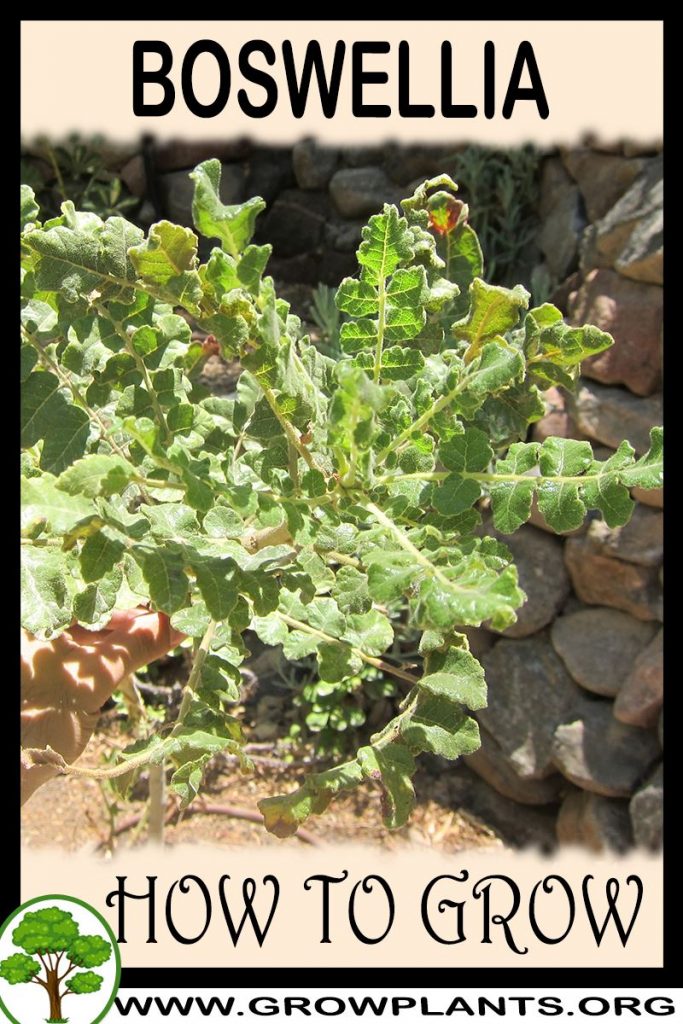
Plant Profile & Key Characteristics
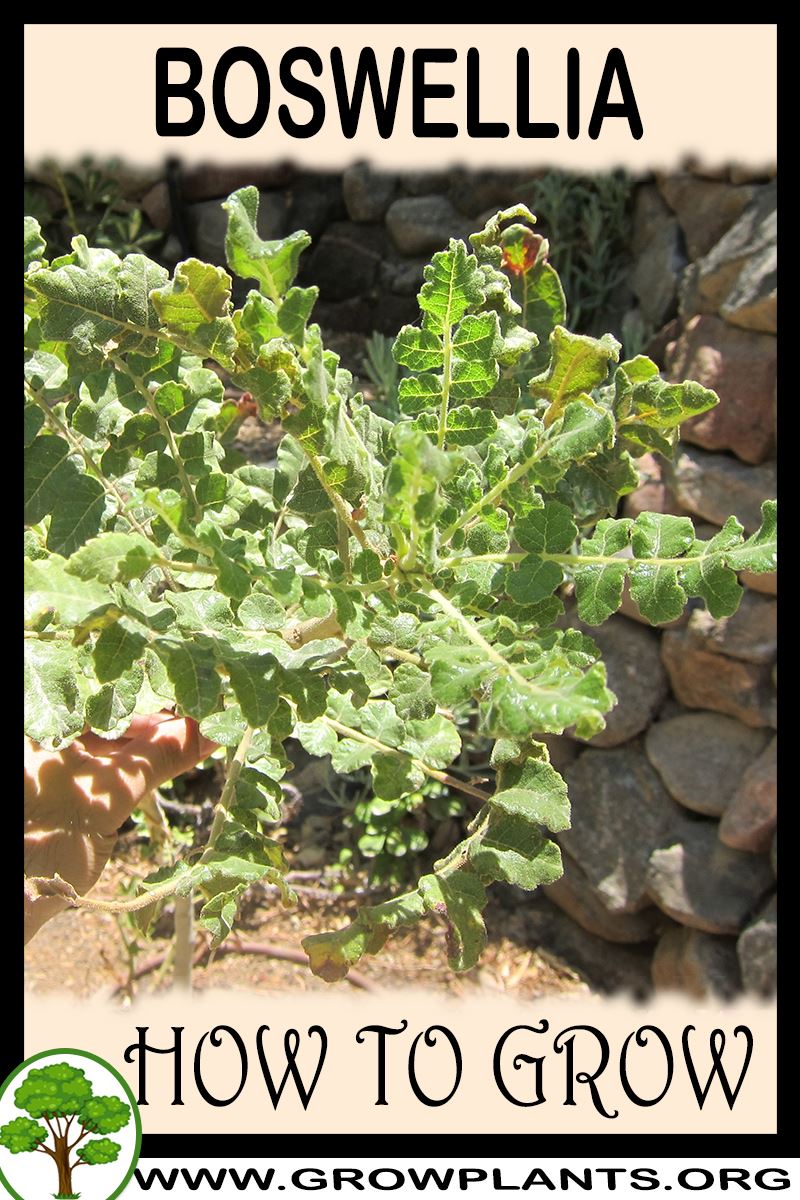
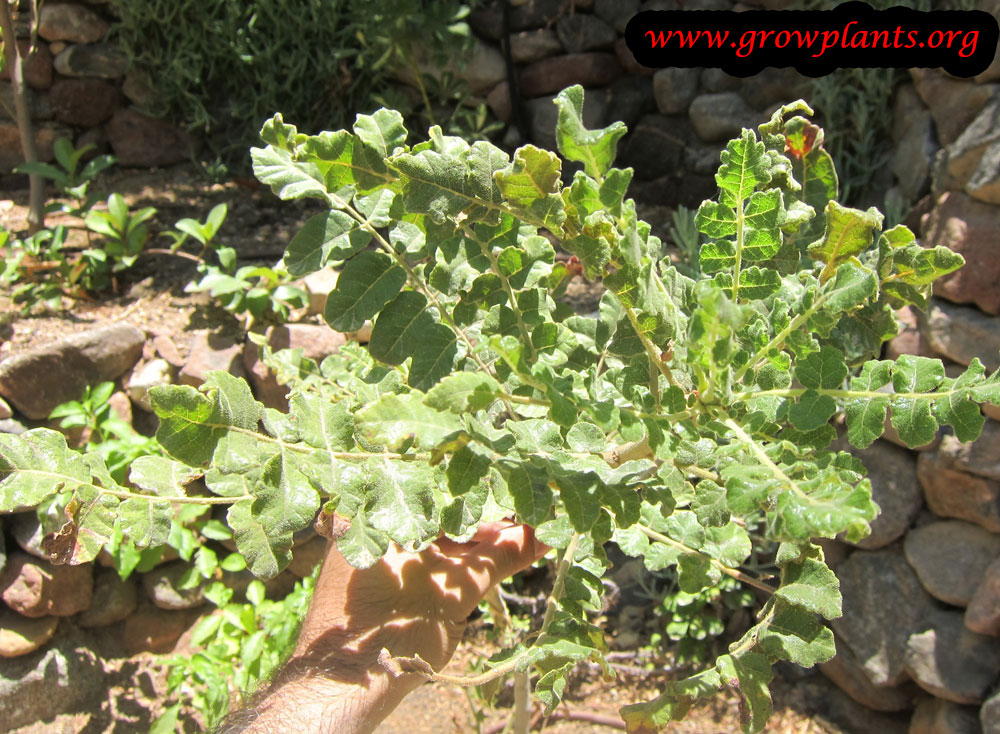
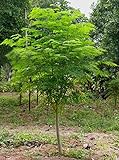
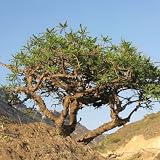
Overview: Boswellia (frankincense tree) is a perennial shrub to small tree, evergreen or deciduous, growing about 2-7 m in tropical, subtropical, mediterranean and warm-desert climates. It is grown as a fragrant ornamental and for its aromatic resin and essential oil.
Quick Specifications
| Specification | Attribute |
|---|---|
| Plant Type / Life Cycle | Perennial (shrub to small tree) |
| Foliage Type | Evergreen or deciduous |
| Mature Size | 2-7 m tall (6-21 ft) |
| Growth Rate | Slow to moderate |
| Hardiness | USDA zone 10+ |
Growth Form & Structure
- Height & Spread: 2-7 m (6-21 ft) in the ground; can be kept much smaller in a container.
- Growth Habit & Form: Shrub to small tree, often with a thickened base and spreading, resinous branches.
- Lifespan & Maturity: A long-lived perennial; slow growth means it takes many years to reach full size.
Anatomy & Physical Features
- Trunk & Bark: Bark yields a fragrant resin (frankincense) when cut; older bark is often papery and peeling.
- Leaves & Foliage: Green, elliptic leaflets arranged in a pinnate (feather-like) structure.
- Flower Characteristics: Small five-petalled flowers in white, green, cream, yellow or red, borne in inflorescences; dioecious, with male and female flowers on separate trees (summary only – see the Bloom guide).
Primary Uses & Landscape Value
- Functional & Ornamental Roles: Fragrant ornamental and specimen tree; tapped for aromatic resin and essential oil, and used medicinally.
Care Guide: Planting, Soil & Watering
Overview: Boswellia is a heat-loving shrub-to-small-tree of hot, dry regions, needing full sun and warmth (kept above about 5 C) to thrive. It grows best in sharply drained, gritty or rocky soil and, once established, is highly drought-tolerant, needing only occasional deep watering.
Quick Care Requirements
| Requirement | Ideal Condition |
|---|---|
| Planting Season | Warm season – spring through autumn |
| Growth Rate | Slow to moderate |
| Soil Type | Sharply drained, gritty or rocky soil |
| Water Need | Low to moderate – allow to dry well between waterings |
Planting & Establishment
- Best Planting Season: Plant in the warm season, spring to autumn, once the soil has warmed and frost risk has passed.
- How to Plant:
- Hole Preparation: Dig a hole the depth of the rootball and about twice as wide, breaking up any compacted or heavy ground beneath for drainage.
- Soil Amendments: Mix coarse sand, grit or fine gravel through the backfill; this plant prefers lean, fast-draining soil over rich ground.
- Planting Depth: Set the root collar at or slightly above soil level so water drains away from the trunk base.
- Growth Speed & Expectations: Slow to moderate; patience is rewarded with a characterful, resin-scented small tree.
Soil, Watering & Drainage Care
- Soil Mix & Drainage Needs: Prioritise drainage above all – in containers use a free-draining cactus or succulent-type mix; standing water quickly rots the roots.
- Watering Schedule & Technique:
- Young / Newly Planted: Water moderately but regularly through the first season to settle the roots, letting the surface dry between waterings.
- Established: Water deeply but infrequently; the plant stores reserves and copes well with dry spells.
- Seasonal Adjustments: More in summer heat, and keep it on the dry side through cool winter months when growth slows.
Climate, Light & Hardiness
Boswellia (frankincense tree) is a tropical to subtropical species suited to Mediterranean and warm-winter desert climates, needing full sun and consistently warm conditions. It has limited cold tolerance, generally preferring temperatures above approximately 5°C (41°F).
Quick Climate Specifications
| Climate Zones | Tropical, Subtropical, Mediterranean, Warm-Winter Desert |
|---|---|
| USDA Hardiness Zones | 10+ |
| Optimal Temp Range | Above approximately 5°C (41°F) |
| Frost Tolerance | Low |
| Light Conditions | Full Sun |
Sunlight & Light Exposure
Optimal Light Setup
Needs full sun for healthy growth.
Temperature Extremes & Hardiness
USDA Hardiness & Regional Limits
Suited to USDA zone 10 and warmer, reflecting a tropical-to-warm-desert origin with only modest cold tolerance.
Cold Damage & Winter Protection
Generally prefers conditions that stay above approximately 5°C (41°F); cooler temperatures can cause stress even without a hard freeze, so a sheltered, warm microclimate helps at the cooler edge of its range.
Frost Sensitivity
Frost tolerance is limited; hard freezes are likely to cause significant damage, particularly to younger trees.
Extreme Heat Tolerance
Well adapted to hot desert and tropical conditions, consistent with its native range.
Wind, Humidity & Microclimate
Rainfall & Seasonal Moisture
Tolerates small to average water in well-drained, moist-but-not-waterlogged soil, reflecting adaptability across arid desert and more humid tropical climates.
Growing in Pots, Balconies & Indoors
The frankincense tree (Boswellia) is not a houseplant – the grower confirms – and it ultimately becomes a small tree (2-7 m), so a container suits it only while young or kept as a specimen. Its great advantage in a pot is that it can be moved to shelter, as it needs warmth (above about 5 C) and full sun.
Quick Details
- Container Size: Deep pot while young; it will eventually want a large tub or the open ground
- Indoor Suitability: Not a houseplant; a full-sun tree that resents low light
- Best Spot: Full sun – the brightest position available
- Soil & Drainage: Very well-drained, gritty soil; keep it on the dry side, especially when cool
- Watering in Pots: Low to average – let it dry between waterings and keep nearly dry in cool spells
Indoors & On the Windowsill
- Why not indoors: The grower does not treat it as a houseplant – it demands full sun and a dry, airy position no ordinary room provides, and it grows into a tree.
- Under cover: Where winters drop near or below about 5 C, keep the pot in a bright, frost-free spot and water sparingly until warmth returns.
On a Balcony or Patio
- Light & wind: Give it the hottest, sunniest, most open spot; it thrives on heat and sharp drainage. Water carefully – far more Boswellia are killed by wet, cold roots than by drought.
- Practicalities: A gritty mix in a heavy pot keeps a young tree stable; ensure runoff drains away freely.
Choosing the Pot, Soil & Long-Term Care
- Pot & drainage: Use a deep pot with generous drainage holes and no standing-water saucer – this plant hates wet feet. Terracotta is ideal because it breathes and dries out fast.
- Potting mix: A gritty, free-draining mix – loam or potting soil cut with coarse sand, perlite or grit; avoid heavy, water-holding composts.
- Feeding: Feed only lightly through the growing season; container plants lose nutrients to leaching, but this one prefers lean conditions to soft, overfed growth.
- Repotting: Pot up or refresh the mix every couple of years once roots fill the pot; take the chance to check drainage and trim any dead roots.
Fertilizing & Feeding
A light feeder by nature: this slow-to-medium growing, drought-tolerant resin tree thrives in lean, well-drained soil and needs only modest feeding to support new growth.
Quick Fertilizing Specs
| Feeding Level | Light feeder |
|---|---|
| Main Nutrient Priority | Balanced feeding that favors steady, well-anchored growth over rapid soft growth |
| Best Feeding Period | Spring through the warm active growing season |
| Organic Options | A light compost or well-rotted organic matter worked into well-drained soil |
| Reduce/Stop Feeding | Hold off feeding once cooler weather slows growth |
| Micronutrients | Usually adequate from a complete fertilizer in well-drained soil |
| Soil pH | Tolerates a range of well-drained soils |
Feeding by Growth Stage
Newly planted establishment
Help a young tree or shrub settle in and build its root system in well-drained, moisture-retentive soil.
| Nutrient direction | A light, balanced complete fertilizer supports steady root and branch establishment without forcing soft growth. |
|---|---|
| Timing | Through the first growing season after planting. |
| Frequency | A light feeding as new growth appears, without frequent repeat applications. |
| Fertilizer types | A balanced complete fertilizer at a light rate, Compost or organic matter worked into the planting area |
| Precautions | Avoid overfeeding a newly planted specimen; this slow-growing tree is adapted to lean soils and excess fertilizer can do more harm than good. |
Established active growth
Support steady branch and foliage growth once the plant is established in the garden or a container.
| Nutrient direction | Light, balanced feeding is usually enough; this species does not demand heavy nutrition. |
|---|---|
| Timing | During the warm active growing season. |
| Frequency | An occasional light feeding is usually sufficient once the plant is settled in. |
| Fertilizer types | A balanced complete fertilizer at a light rate, A light organic top-dressing |
| Precautions | Keep feeding light; this drought-adapted species is sensitive to over-rich soil and overwatering combined with heavy feeding. |
Cool-season slowdown
Let growth slow naturally where temperatures drop, protecting this frost-sensitive species from being pushed into soft new growth.
| Nutrient direction | None – withhold fertilizer while growth is slow in cooler conditions. |
|---|---|
| Timing | Through cooler weather when growth naturally slows. |
| Frequency | No feeding at this stage. |
| Fertilizer types | No feeding at this stage; do not fertilize until active growth resumes in warm weather. |
| Precautions | Withhold fertilizer during the cool-season slowdown; new soft growth forced now is more vulnerable to cold. |
Nutrient Deficiency Signs & Corrections
Older leaves pale to yellow-green and branch growth slows.
| Possible causes | low available soil nitrogen, very lean, sandy soil with little organic matter, root stress from overwatering |
|---|---|
| Appears first on | older, lower leaves |
| What to check | recent feeding history, soil organic matter, watering and drainage |
| Possible correction | Apply a light, balanced complete fertilizer and improve soil organic matter modestly. |
New leaves show interveinal yellowing while veins stay green.
| Possible causes | high soil pH tying up iron, waterlogged or poorly drained soil, root stress limiting uptake |
|---|---|
| Appears first on | newest leaves |
| What to check | soil drainage, soil pH if known, recent watering habits |
| Possible correction | Improve drainage and apply a chelated iron product per its label if the pattern continues. |
Wilting or leaf drop occurs despite moist soil, with branch dieback in severe cases.
| Possible causes | waterlogged, poorly drained soil, overwatering of a drought-adapted species, root disease from excess moisture |
|---|---|
| Appears first on | whole-plant wilting and lower branches |
| What to check | soil drainage and moisture, watering frequency, container drainage holes if potted |
| Possible correction | Improve drainage, reduce watering frequency, and avoid feeding until the plant recovers active growth. |
Pruning, Training & Seasonal Maintenance
Boswellia (frankincense tree) is a slow-to-medium-growing, naturally sparse-branching shrub-to-small-tree that resents heavy interference – it is not a plant to shape aggressively. Pruning tolerance is low to moderate: the safest period is winter, aligning with its dry-season rest, and the main objective is corrective (removing dead, damaged or crossing growth) rather than reshaping the tree, since its naturally irregular, sometimes multi-stemmed form is part of its character.
Quick Pruning & Maintenance Specs
| Pruning Tolerance | Low to Moderate |
| Primary Pruning Window | Winter (dormant/dry-season rest) |
| Typical Frequency | Infrequent – light corrective work only |
| Main Objective | Remove dead/damaged wood; light shaping only |
| Young Plant Priority | Establish a workable framework without forcing a single-leader form on a naturally multi-stemmed tree |
| Mature Plant Priority | Deadwood removal and minor thinning of crossing branches |
| Best Tool Type | Bypass secateurs and loppers; a pruning saw only for larger deadwood |
| Avoid Heavy Pruning During | Active growth flush and cold snaps (it wants above about 5°C, and fresh wounds add stress) |
Pruning by Plant Age & Size
Newly Established
Limit cuts to removing damage from transplant; do not attempt structural shaping on a young, still-establishing tree.
Young / Formative
Boswellia is naturally a multi-leader, irregularly-branched small tree. Rather than forcing a central-leader form, formative work is limited to removing weak, crossing, or awkwardly low growth and letting the natural multi-stemmed habit develop.
Mature / Established
Remove dead or storm-damaged wood and any branches rubbing against each other; because growth is slow, avoid routine “maintenance” cutting that isn’t addressing an actual problem.
Structural Pruning & Training
Given its slow growth and naturally open, sparse canopy, thinning for airflow is rarely needed and can do more harm than good by removing scarce foliage. Structural work should stay limited to crossing/rubbing branches and restoring a safe, balanced framework after damage.
Tools
- bypass_secateurs – small deadwood and twiggy growth
- loppers – medium branches
- pruning_saw – larger deadwood only, used sparingly
Tool Hygiene & Disease Risk
Routine: clean, sharp tools are enough for general cuts. Boswellia exudes an aromatic resin from wounds, so minimizing the number and size of cuts reduces sap loss and stress on a slow-growing tree; aphids and spider mites are its recorded pest issues rather than a specific pruning-transmitted pathogen, so blade disinfection between cuts is not a priority here.
Cut Placement & Technique
Make clean cuts just outside the branch collar; avoid flush cuts and avoid leaving stubs. Because cuts will exude resin, avoid unnecessarily large or numerous wounds on a single specimen at one time.
Heavy Pruning & Rejuvenation
Not recommended. As a slow-growing tree with an already-sparse canopy, Boswellia does not tolerate hard rejuvenation cutting well and can take years to recover lost structure; stick to corrective, as-needed pruning.
Post-Pruning Care
Keep the tree on its normal watering (it prefers on the drier side); protect fresh wounds from frost if pruning is done at the cool edge of winter, and watch for aphids/spider mites colonizing new cut sites or the resulting flush of soft growth.
Common Pruning Mistakes
- Trying to force a tidy, single-trunk shape onto a tree that is naturally multi-stemmed and irregular.
- Over-pruning a slow grower on a “routine annual” schedule it doesn’t need.
- Making large cuts that lead to excessive resin loss and stress.
When NOT to Prune
Avoid pruning during cold weather (this species wants temperatures above about 5°C and is frost-sensitive) and during its active new-growth flush, when wounds are slower to seal and more vulnerable to pest colonization.
Recommended Tools (by task)
- Small deadwood/twiggy growth – bypass_secateurs: clean precise cuts for light corrective work.
- Medium crossing/rubbing branches – loppers: reach and leverage for branches too thick for secateurs.
- Larger deadwood on a mature specimen – pruning_saw: used only when a cut genuinely exceeds lopper capacity, since heavy cutting isn’t otherwise warranted.
Pruning Troubleshooting
| Problem | Possible Cause | What to Check | Corrective Action |
| Slow or no recovery after a cut | Boswellia’s naturally slow growth rate, not necessarily a pruning error | Cut size, season it was made, overall plant vigor | Avoid further cutting; give the tree a full growing season before reassessing |
| Sticky resin buildup / sap loss at cuts | Cuts made too large or too many at once | Number and size of recent wounds | Space out future pruning into smaller sessions rather than one large session |
| Aphid or spider mite buildup on new growth after pruning | Soft regrowth flush following cuts attracts pests | Undersides of new leaves near cut sites | Monitor and treat per the plant’s normal pest protocol; avoid stimulating unnecessary flushes with over-pruning |
Propagation Guide
Boswellia (frankincense tree) is most commonly grown from seed, and the site confirms grafting or vegetative propagation isn’t necessary to reproduce the species true-to-type. In its native range, and among specialist growers, large woody stem cuttings are also used as an alternative where seed is scarce or slow to germinate; either way, this slow-to-medium growing tree is a patient, moderate-difficulty subject to propagate.
Quick Propagation Specs
| Best Propagation Method | Seed |
| Alternative Methods | Large woody stem cuttings (“truncheons”) |
| Propagation Difficulty | Moderate |
| Seed True-to-Type | Yes – site confirms grafting/vegetative reproduction is not necessary |
| Best Propagation Season | Spring to summer (site planting season: spring, summer, autumn) |
| Germination Temperature | Warm, roughly 20–27°C (68–81°F) |
| Seed Sowing Depth | Shallow – just covering the seed |
Growing from Seed
Seed Handling & Viability
No site-specific storage data is available; as a general precaution, sow reasonably fresh seed, since germination in this genus is often reported as slow and uneven.
Germination Conditions & Time
Provide warmth and good drainage; germination can be slow and irregular, and overall seedling establishment is unhurried, matching this tree’s medium-to-slow growth rate.
Seedling Care
Grow seedlings in free-draining, gritty soil and protect from cold, as the site notes this species needs temperatures above about 5°C (41°F).
Stem Cuttings
Cutting Type
Large, semi-hardwood to hardwood branch or stem sections.
Best Timing
Warm growing season.
Cutting Preparation
Allow the cut end to callus/dry for a period before planting, a common precaution with resinous, succulent-wooded trees to reduce rot risk.
Rooting Setup
Plant in very free-draining, gritty soil; water sparingly until roots form.
Rooting Hormone
Not established as necessary; may be used but isn’t required.
Rooting Time
Slow, often taking a couple of months or more, consistent with the tree’s naturally unhurried growth.
Bloom & Flower Guide
Quick Details
- Bloom Season: Spring
- Flower Appearance: Small five-petalled flowers – white, green, cream, yellow or red – carried in loose sprays
- Edibility: Ornamental only – the frankincense tree is grown for its aromatic resin and form, not for eating the flowers
Detailed Blooming Overview
In spring the frankincense tree carries small, five-petalled flowers gathered into loose sprays, in shades of white, green, cream, yellow or red. Plants are dioecious – male and female flowers are borne on separate trees – so a mix of trees is needed for seed. The bloom is modest next to the tree’s prized aromatic resin, but it is a quiet, pretty feature on the pinnate foliage.
Flower Characteristics
- Small flowers with five petals, in white, green, cream, yellow or red.
- Carried in inflorescences (loose sprays).
- Dioecious – male and female flowers grow on separate trees.
Bloom Care & Thinning
- Managing the bloom: Little is needed; any shaping is best done in winter, and full sun gives the strongest flowering.
Fruit & Uses
Boswellia is grown mainly for its aromatic resin (frankincense), tapped from cuts made in the bark. In parts of the Arabian Peninsula and the Horn of Africa, this hardened resin is traditionally chewed like gum and sometimes steeped in water to flavour it, rather than being used as a conventional food.
Quick Edible Specs
| Edible Parts | Resin (sap/gum) tapped from the bark |
|---|---|
| Main Use(s) | Traditional chewing gum; resin steeped in water as a flavouring/aromatic drink; also burned as incense and used in traditional medicine (no health claims made here) |
| Eaten Raw or Cooked | Chewed as-is once the resin has hardened and dried; not cooked |
| Preparation Required | Resin must be dried/hardened (cured) before chewing; for water flavouring, resin pieces are simply steeped |
| Harvest Season | Resin is tapped from incisions in the bark during the tree’s active growing season, then left to harden before use |
| Storage | Dried resin “tears” store well long-term if kept dry |
| Safety/Toxicity Caveat | Only resin from species/grades traditionally used for chewing (e.g. higher-grade Boswellia frereana) is considered suitable for consumption – resin sold mainly for burning as incense is not necessarily intended to be eaten; treat any Boswellia resin as a traditional/occasional chew, not a food, and avoid large amounts |
Pseudostem / Cane / Sap
The resin exuded from bark incisions hardens into brittle amber-coloured “tears.” Once cured, pieces soften with body heat when chewed, similar to a natural chewing gum, and are valued in some cultures for their aromatic, slightly bitter-resinous taste. Whole or crushed resin pieces are also steeped in drinking water as a traditional aromatic flavouring.
Preparation, Uses & Safety
Resin intended for chewing is used only after it has fully dried and hardened; freshly tapped, sticky resin is not chewed. This is a traditional, culturally specific use rather than a mainstream food, and quality/species varies considerably – not all commercially sold frankincense is graded for oral use. Boswellia resin is also traditionally used in folk medicine, but no medical or dosing claims are made here.
Pests, Diseases & Troubleshooting
Overview: Boswellia (frankincense trees) are caudiciform, drought-adapted desert trees that are naturally deciduous in the dry season and remarkably free of pests when grown correctly. Their overwhelming vulnerability is root and stem rot from overwatering or cold, wet soil; sap-suckers such as scale, mealybug and spider mites are the only common insect pests, mostly on indoor or greenhouse specimens. Management is almost entirely about a gritty, sharp-draining mix, sparing water, warmth and bright light.
Quick Troubleshooting Overview
| Issue / Pest | Main Symptom | Primary Solution |
|---|---|---|
| Root / stem rot | Soft, blackening base; collapse after overwatering | Sharp drainage; keep dry, especially when leafless |
| Scale insects | Brown bumps on stems; sticky honeydew | Horticultural oil; scrape off |
| Mealybugs | White cottony tufts on stems and leaf joints | Alcohol swab; insecticidal soap |
| Spider mites | Fine stippling and webbing in hot, dry, indoor air | Raise humidity, hose; miticidal oil |
| Leaf drop | Sudden loss of leaves | Usually natural dry-season dormancy – reduce water |
| Edema / soft growth | Corky bumps or blisters on stems from overwatering | Water less; more light and airflow |
Common Pests & Management
- Scale insects (Coccidae / Diaspididae):
- Symptoms: Small brown, grey or white immobile bumps along the woody stems and branch joints, sometimes with sticky honeydew and sooty mould. The main insect pest of potted frankincense.
- Prevention & Control: Scrape off with a fingernail or soft brush and dab with an alcohol swab. Apply horticultural oil to smother scale and their crawlers, repeating to catch new generations. Keep plants in bright, airy conditions where infestations rarely take hold.
- Mealybugs (Planococcus / Pseudococcus spp.):
- Symptoms: White cottony, waxy tufts hidden in leaf axils, growth points and among the branches, causing stickiness, sooty mould and stunted, distorted growth – especially indoors.
- Prevention & Control: Dab clusters with an alcohol-moistened cotton bud, hose off where practical, and spray insecticidal soap or horticultural oil into the crevices. Repeat weekly until clear; isolate infested plants from other succulents and caudiciforms.
- Spider mites (Tetranychus urticae):
- Symptoms: Fine pale stippling, a dull bronzed cast and delicate webbing on stem tips and leaf undersides, appearing in hot, dry, still indoor air – a classic winter-windowsill problem.
- Prevention & Control: Increase humidity and periodically rinse the plant to knock mites back and remove dust. Improve air movement. For established outbreaks use a miticidal horticultural oil or insecticidal soap, but avoid leaving the caudex sitting wet afterwards.
- Whitefly / aphids on soft growth (Aleyrodidae / Aphididae):
- Symptoms: Occasional soft-bodied sap-suckers on the flush of tender new leaves – tiny white flies rising in clouds when disturbed, or small aphids on shoot tips – causing minor honeydew and distortion. Uncommon and usually transient.
- Prevention & Control: Rinse foliage and use yellow sticky traps for whitefly. Treat only persistent colonies with insecticidal soap on the affected growth; these are minor, opportunistic pests on an otherwise tough plant.
Diseases & Fungal Issues
- Root & stem (caudex) rot (Fusarium / Pythium / Phytophthora):
- Symptoms: The great killer of Boswellia. Overwatering – especially in cool weather or while the tree is naturally leafless – causes the caudex and roots to soften, darken and turn mushy, often with a foul smell, leading to sudden collapse.
- Treatment & Management: Grow in a very gritty, sharp-draining mineral mix in a pot with ample drainage; water only when the soil is bone dry and keep almost completely dry through the leafless dormant period and any cold spell. Provide warmth and bright light. If rot is caught early, cut back to clean firm tissue, dust with fungicide and re-root; advanced rot is fatal.
- Fungal leaf spot (various fungi):
- Symptoms: Brown or black spots on leaves in overly humid, poorly ventilated conditions, sometimes with early leaf drop. Minor and cultural rather than a serious disease.
- Treatment & Management: Improve airflow and light, avoid wetting foliage, and remove affected leaves. Correcting the humid, stagnant conditions usually resolves it without fungicide.
- Sooty mould (Capnodium spp.):
- Symptoms: Black film on stems and leaves growing on honeydew from scale, mealybug or whitefly, not a direct infection.
- Treatment & Management: Control the underlying sap-sucker and wipe residual film from the smooth bark; it clears once the insects are gone.
Growing Difficulties & Abiotic Problems
- Overwatering & cold-wet root rot:
- Cause & Symptoms: Frankincense evolved for arid heat and stores water in its trunk. Standard potting mixes, frequent watering, or cold damp roots quickly cause rot and collapse – the single most common way these plants are lost.
- Correction Strategy: Use a mineral, fast-draining mix, water sparingly and only when dry, and keep dry and warm in winter and while dormant. When in doubt, do not water.
- Natural (dry-season) leaf drop:
- Cause & Symptoms: Boswellia is drought-deciduous and sheds its leaves as a normal response to dry or cool conditions; growers often mistake this for illness and water more, causing rot.
- Correction Strategy: Recognise dormancy: when leaves yellow and drop, reduce watering to almost nothing and let the plant rest. It re-leafs when warmth and its growth season return.
- Edema from overwatering:
- Cause & Symptoms: Corky bumps, blisters or rough patches on stems when the plant takes up water faster than it can transpire, typically in damp, low-light, cool conditions.
- Correction Strategy: Reduce watering frequency, increase light and air movement, and let the mix dry more between drinks. Existing marks are cosmetic and stop spreading once conditions improve.
- Cold & sunburn stress on juveniles:
- Cause & Symptoms: These tropical/subtropical desert trees are frost-tender; cold causes blackening and dieback, while abrupt exposure of soft juveniles to fierce sun can scorch stems.
- Correction Strategy: Keep above about 10 °C and never frost, and acclimatise young plants gradually to full sun. Mature plants relish heat and intense light once hardened.
What Helps – Products & Tools
For frankincense the priorities are cultural: a gritty, sharp-draining mineral mix, restrained watering and warmth prevent almost all problems. For the occasional pest, keep horticultural / neem oil and insecticidal soap for scale, mealybug and mites, plus isopropyl alcohol swabs and yellow sticky traps for whitefly. A fungicide drench may help if root rot is caught very early, but prevention through drainage is far more reliable. Spray oils in the evening to protect pollinators.