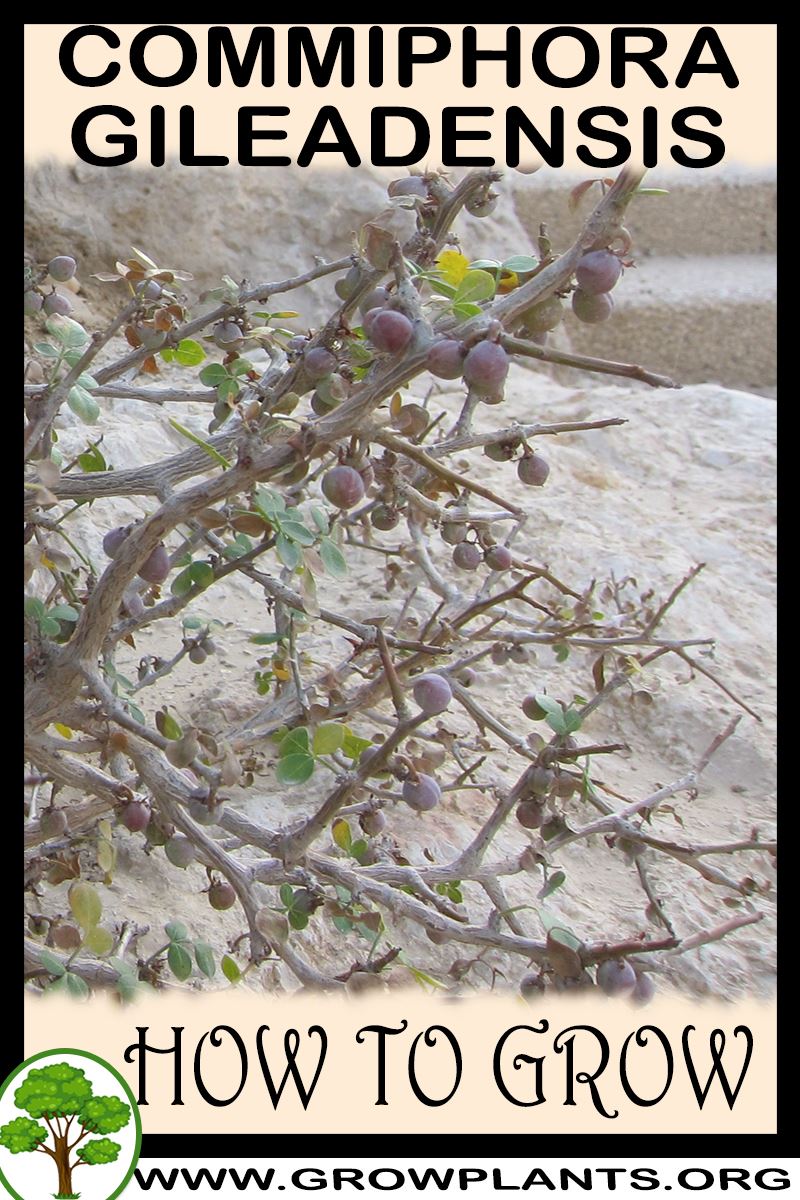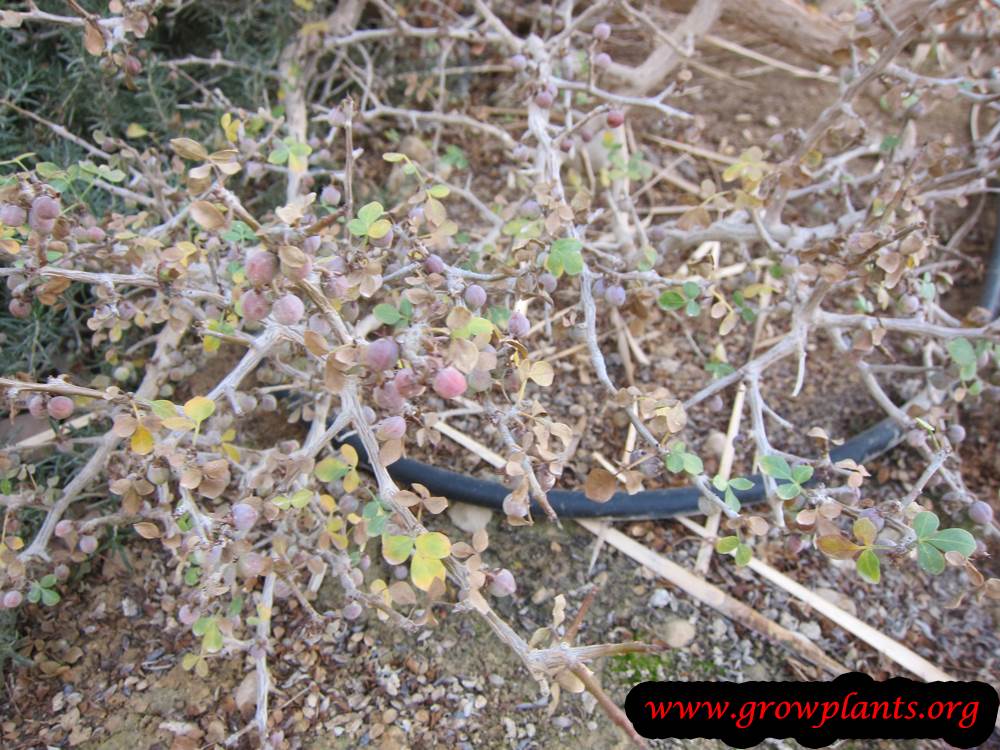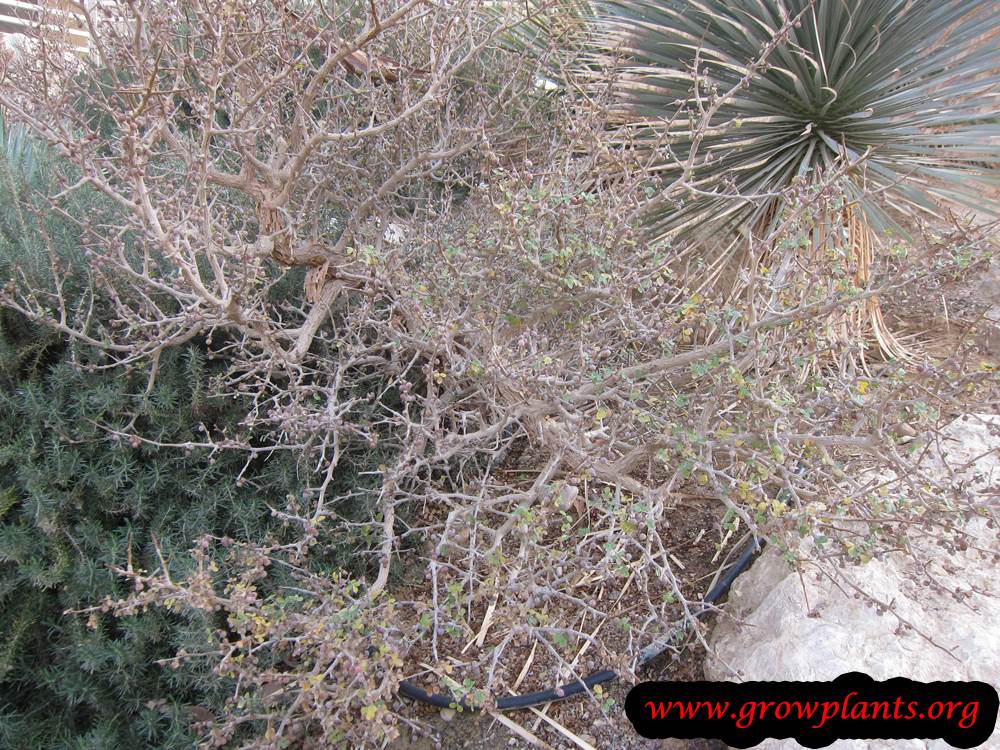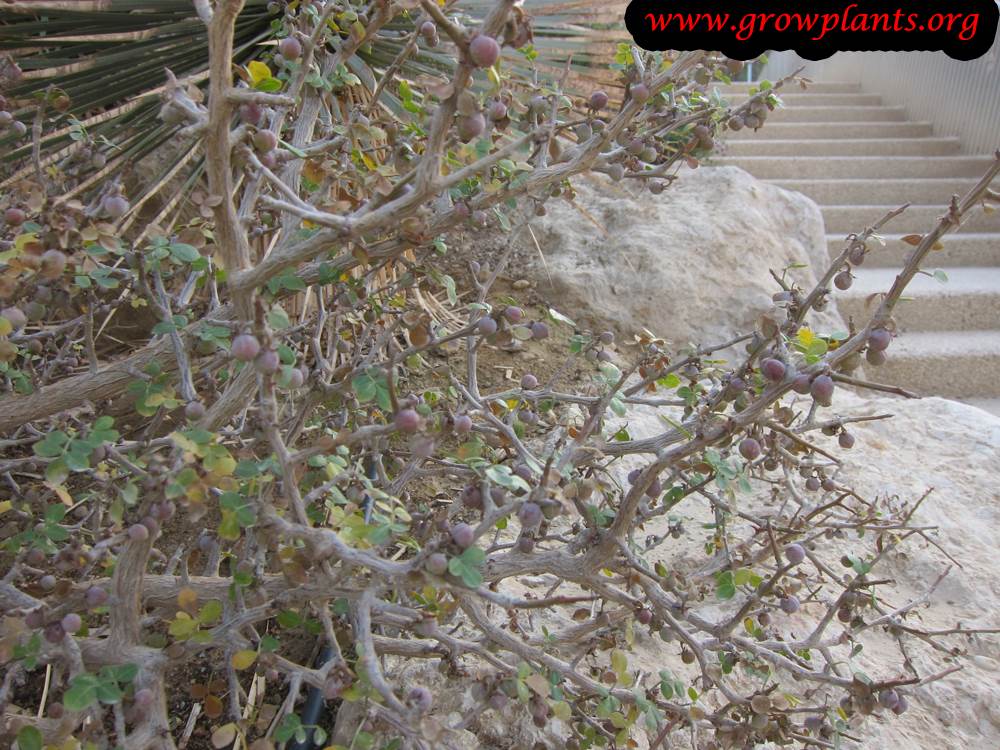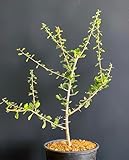


Plant Profile & Key Characteristics
Also known as: Balsam of Gilead, Balsam of Mecca, Mecca Myrrh
Overview: Commiphora gileadensis (Arabian balsam tree) is a deciduous desert shrub or small tree growing to 2-3 m (6-10 ft). It is a slow-growing perennial cultivated as an ornamental and, historically, as the source of the aromatic ‘Balsam of Gilead’ resin.
Quick Specifications
| Specification | Attribute |
|---|---|
| Plant Type / Life Cycle | Perennial |
| Foliage Type | Deciduous |
| Mature Size | 2-3 m (6-10 ft) |
| Growth Rate | Slow |
| Hardiness | USDA zones 10-11 |
Growth Form & Structure
- Height & Spread: A compact shrub to small tree of 2-3 m (6-10 ft); can also be container-grown but is not suited to indoor culture.
- Growth Habit & Form: Multi-stemmed, thorny shrub or small tree with an open, sparse crown adapted to hot, arid conditions.
- Lifespan & Maturity: Slow-growing and long-lived, taking several years to develop a woody framework.
Anatomy & Physical Features
- Trunk & Bark: Bark and wounded stems exude a fragrant resin (the balsam), a defining feature of the genus Commiphora.
- Leaves & Foliage: Green, oval leaves borne in groups of three.
- Flower Characteristics: Small triangular flowers with three petals in shades of yellow to orange.
Primary Uses & Landscape Value
- Functional & Ornamental Roles: Grown as an ornamental and medicinal plant, and tapped for its aromatic resin used in perfumery and traditional medicine.
Care Guide: Planting, Soil & Watering
Overview: A desert shrub or small tree that thrives in full sun and heat in frost-free zones (10-11). It needs sharply well-drained soil and only light, careful watering, as it resents wet feet.
Quick Care Requirements
| Requirement | Ideal Condition |
|---|---|
| Planting Season | In the warm season – spring, autumn or mild winter in frost-free zones |
| Growth Rate | Slow |
| Soil Type | Well-draining, sandy or gritty |
| Water Need | Low to Moderate – let the soil dry between waterings and avoid overwatering |
Planting & Establishment
- Best Planting Season: Plant in spring, autumn or mild winter where frost is absent; avoid establishing during peak summer heat.
- How to Plant:
- Hole Preparation: Dig a hole roughly twice the width of the root ball and just as deep.
- Soil Amendments: Mix in coarse sand or grit to sharpen drainage; heavy organic amendment is not needed for this drought-adapted species.
- Planting Depth: Set the root collar level with the surrounding soil and do not bury the stem.
- Growth Speed & Expectations: Slow-growing even in optimal conditions; expect patient, gradual development.
Soil, Watering & Drainage Care
- Soil Mix & Drainage Needs: Requires free-draining soil; in containers use a gritty, cactus-style mix in a pot with drainage holes. Standing water causes rot, so drainage is essential.
- Watering Schedule & Technique:
- Young / Newly Planted: Water lightly but regularly to help it establish.
- Established: Water sparingly and deeply, letting the soil dry well between waterings.
- Seasonal Adjustments: Reduce watering to a minimum in winter; give a little more during extreme summer heat.
Climate, Light & Hardiness
This true desert shrub or small tree needs full sun and hot, arid conditions, and is reliably hardy only in essentially frost-free desert and warm subtropical zones.
Quick Climate Specifications
| Climate Zones | Desert |
|---|---|
| USDA Hardiness Zones | 10–11 |
| Frost Tolerance | Low |
| Light Conditions | Full Sun |
Sunlight & Light Exposure
Optimal Light Setup
Needs full, intense sun typical of its native desert habitat.
Direct Sun Requirement
Essential; this is an arid-adapted species with no shade requirement.
Best Exposure / Orientation
Open, hot, sun-baked sites mimicking desert conditions.
Temperature Extremes & Hardiness
USDA Hardiness & Regional Limits
Hardy only in essentially frost-free desert zones 10–11; strictly a desert-climate plant.
Cold Damage & Winter Protection
Frost sensitive; protect from any cold snaps in marginal areas.
Frost Sensitivity
Sensitive; even light frost is likely to cause damage.
Extreme Heat Tolerance
Outstanding - adapted to some of the hottest, driest climates on earth.
Wind, Humidity & Microclimate
Humidity Preferences
Prefers very low humidity, true desert air.
Dry-Air Tolerance
Excellent.
Rainfall & Seasonal Moisture
Needs minimal rainfall or irrigation and excellent drainage; site data specifically cautions against overwatering.
Growing in Pots, Balconies & Indoors
Commiphora gileadensis (balm of Gilead / myrrh relative) is a small desert shrub-tree. The grower marks it as not a houseplant, but it grows well in a container on a hot, sunny patio and is often kept as a potted caudex specimen.
Quick Details
- Container Size: A free-draining pot for a 2-3 m (6-10 ft) shrub-tree
- Indoor Suitability: Not a houseplant – it needs intense sun and very sharp drainage
- Best Spot: Full sun
- Soil & Drainage: Very free-draining, gritty, lean mix
- Watering in Pots: Small to average – let it dry fully between waterings; never overwater
Indoors & On the Windowsill
- Houseplant limits: Not an indoor plant; it demands blazing direct sun that rooms cannot provide and rots in damp, dim conditions.
- Overwintering: Being tender, a potted plant can be kept dry and frost-free in a bright spot over a cold winter.
On a Balcony or Patio
- Light & heat: Give it the hottest, sunniest spot and reflected wall heat, which it loves; the key is sharp drainage and keeping it on the dry side. Shelter from cold rain.
- Practicalities: Use a gritty mix and a pot that dries fast, such as terracotta.
Choosing the Pot, Soil & Long-Term Care
- Pot & drainage: A pot with strong drainage holes and no saucer; keep it on the dry side.
- Potting mix: A gritty, sharp-draining mix – cactus/succulent compost, or sandy soil with perlite and a layer of gravel or lava grit; never anything that stays soggy.
- Feeding: Feed sparingly – a diluted low-strength feed once or twice in the growing season is plenty; too much causes soft, weak growth.
- Repotting: Refresh the top of the mix each year and pot up about every two years; for perennials, lightly prune the root ball and top growth when you do.
Fertilizing & Feeding
A light feeder in keeping with its slow-growing, desert-adapted habit: modest feeding during active growth is enough, with a strong emphasis on avoiding overfeeding and waterlogging.
Quick Fertilizing Specs
| Feeding Level | Light feeder |
|---|---|
| Main Nutrient Priority | Balanced feeding kept light, favoring root and structural growth over rapid top growth |
| Best Feeding Period | During the active warm-season growth period |
| Organic Options | A light top-dressing of compost worked into fast-draining soil |
| Micronutrients | Usually supplied by a complete fertilizer; correct specific issues only when diagnosed |
| Soil pH | Prefers well-drained soil and tolerates a range of soil conditions typical of desert plantings |
| Reduce/Stop Feeding | Taper off feeding as growth slows going into cooler, less active months |
Feeding by Growth Stage
Establishment after planting
Support root development while the slow-growing shrub or small tree settles in.
| Nutrient direction | A balanced complete fertilizer applied lightly to encourage steady root establishment. |
|---|---|
| Timing | Through the first active growing season after planting. |
| Frequency | Light, infrequent feeding is usually enough for this slow grower. |
| Fertilizer types | A balanced complete fertilizer, applied sparingly, A light top-dressing of compost |
| Precautions | Keep soil well drained; this desert-adapted plant is sensitive to overwatering and overfeeding, both of which raise the risk of root problems. |
Warm-season active growth
Support steady structural growth and healthy foliage during the main growing period.
| Nutrient direction | A balanced, light feed since this slow-growing desert species rarely needs heavy nutrition. |
|---|---|
| Timing | During the warm, active growing months. |
| Frequency | Minimal feeding is usually enough to maintain steady, healthy growth. |
| Fertilizer types | A balanced complete fertilizer, applied lightly |
| Precautions | Avoid heavy or frequent feeding, which outpaces this slow grower’s natural needs and risks salt buildup in fast-draining desert soils. |
Cooler-season slowdown
Let growth rest naturally through the cooler part of the year.
| Nutrient direction | None – withhold fertilizer while growth is slow through the cooler months. |
|---|---|
| Timing | Through the cooler, less active months. |
| Frequency | No feeding at this stage. |
| Fertilizer types | No feeding at this stage – allow the plant to rest undisturbed |
| Precautions | Do not fertilize during the slow-growth rest period; unused nutrients can build up as salts in fast-draining soil. |
Nutrient Deficiency Signs & Corrections
New leaves emerge pale yellow while the veins remain green.
| Possible causes | high soil pH limiting iron availability, poorly drained or overly wet soil, low soil iron in alkaline desert soils |
|---|---|
| Appears first on | newest growth |
| What to check | soil drainage and structure, soil pH conditions, recent watering pattern |
| Possible correction | Improve drainage and correct soil conditions; apply a chelated iron product per its label if chlorosis persists. |
Dieback or poor vigor despite consistently moist soil, with soft or discolored roots.
| Possible causes | poorly drained or waterlogged soil, overwatering for a desert-adapted species, fungal root pathogens favored by soggy conditions |
|---|---|
| Appears first on | roots and lower stems |
| What to check | soil drainage, recent watering frequency, root condition below the soil line |
| Possible correction | Improve drainage, reduce watering frequency, and hold off on feeding until the plant recovers. |
Weak, leggy growth or leaf-tip burn despite otherwise favorable conditions.
| Possible causes | excess or overly frequent feeding relative to this slow grower’s needs, salt buildup in fast-draining desert soil, root stress limiting nutrient uptake |
|---|---|
| Appears first on | leaf tips and margins |
| What to check | recent feeding history, soil salt buildup, root health |
| Possible correction | Reduce feeding frequency and amount, and flush soil with plain water if salt buildup is suspected. |
Pruning, Training & Seasonal Maintenance
Commiphora gileadensis is a slow-growing, deciduous desert shrub or small tree that tolerates only light, infrequent pruning – it is not a plant that responds well to hard cutting back. The main objective is shaping and containing size within its 2–3m mature height, not stimulating regrowth. The safest window is early winter, once the plant has dropped its leaves and gone dormant; because next season’s flowers form on the new growth that follows the spring flush, dormant-season cuts do not remove the summer bloom.
Quick Pruning & Maintenance Specs
| Pruning Tolerance | Low–Moderate |
| Primary Pruning Window | Early winter (leafless/dormant) |
| Typical Frequency | Once yearly at most; light touch-ups only |
| Main Objective | Shape and size control, not regrowth stimulation |
| Young Plant Priority | Establish a single leader or a small number of well-spaced main stems |
| Mature Plant Priority | Remove dead/crossing wood; keep silhouette open and balanced |
| Best Tool Type | Bypass secateurs / small loppers |
| Avoid Heavy Pruning During | Active summer heat and drought stress |
Pruning by Plant Age & Size
Newly Established
Remove only damaged or dead tips from transplant stress. Do not shape-prune until the plant is rooted in and actively growing, given its inherently slow pace.
Young / Formative
Select and retain 1–3 well-spaced main stems as a light multi-leader framework; remove weak, crossing or inward-growing shoots early while cuts are small.
Mature / Established
Maintenance is limited to removing dead, damaged or crossing wood and trimming for silhouette; the plant is not vigorous enough to justify routine renewal pruning.
Seasonal Pruning Schedule
Dormant/Winter
Objective: structural shaping and sanitary cleanup. Remove: dead, damaged or crossing branches; light tip shaping. Do not remove: large amounts of live wood – slow growth means regrowth is limited. Expected response: minimal regrowth until the spring flush. Flowering impact: none – flowers form later on new spring/summer growth.
Ongoing Sanitary
Snap off any dead or storm-damaged twigs as noticed, any time of year.
Structural Pruning & Training
- Correct crossing or rubbing branches while young, when cuts are small and heal quickly.
- Height and spread control is rarely needed given the 2–3m mature size and slow growth rate; only trim to keep the desired form.
Special Growth to Remove
Desert shrubs in this genus can push basal shoots from the root crown; remove these if a single/multi-trunk tree form is wanted, or thin and select a few if a fuller shrub habit is preferred.
Container & Small-Space Pruning
Grows well in containers. Keep pruning light and infrequent to match the naturally slow growth rate; avoid hard cutbacks, which the plant recovers from very slowly in a pot. Favor pinching soft new tips over cutting older wood to keep a compact shape.
Tools
- Precision snips – pinching soft new growth tips.
- Bypass secateurs – stems up to about 2cm.
- Small loppers – thicker basal shoots or old wood at the base.
Tool Hygiene & Disease Risk
Routine risk – clean, sharp tools are sufficient. No specific transmissible disease is documented for this species; the aromatic resin the cuts exude has some natural antimicrobial character.
Cut Placement & Technique
Use thinning cuts back to a healthy junction rather than heading cuts, which can spoil the natural form. Expect cut surfaces to weep an aromatic resin (the same balsam the plant is known for) – this is normal; avoid unnecessarily large wounds, and let the sap seal on its own rather than dressing the cut.
Heavy Pruning & Rejuvenation
Not recommended. Given the slow growth rate, hard rejuvenation pruning is poorly tolerated and can leave the plant sparse and unbalanced for years; stick to light, incremental shaping.
Post-Pruning Care
Keep watering on the plant’s normal restrained schedule – do not increase water after cutting. Do not fertilize to “push” regrowth. Check that resin seepage from larger cuts tapers off within a few days.
Common Pruning Mistakes
- Cutting hard and expecting fast regrowth, then being left with a bare, unbalanced plant for years.
- Pruning during summer heat/drought stress instead of the dormant early-winter window.
- Removing too much basal growth at once rather than selecting gradually.
When NOT to Prune
Avoid pruning during summer heat or drought stress, and avoid pruning a newly transplanted specimen until it is established.
Recommended Tools (by task)
- precision_snips – pinching soft new tip growth on young plants to encourage a fuller form.
- bypass_secateurs – the main tool for shaping cuts and removing dead/crossing wood up to ~2cm.
- loppers – occasional thicker basal shoots at the root crown.
Pruning Troubleshooting
| Problem | Possible Cause | What to Check | Corrective Action |
| Very slow or no regrowth after cutting | Naturally slow-growing species; pruning cut too much live wood | Size and number of cuts made, season of pruning | Reduce future pruning severity; only prune in early winter |
| Heavy resin/sap weeping from a cut | Normal Burseraceae wound response, or an oversized cut | Cut diameter, tool sharpness | Use clean, sharp tools and smaller cuts; no dressing needed, seepage should slow within days |
| Sparse, leggy growth | Insufficient sun | Light exposure (needs full sun) | Relocate container or address shading rather than over-pruning to compensate |
Propagation Guide
Commiphora gileadensis is most reliably propagated from large woody stem cuttings, a technique well suited to this resin-bearing shrub or small tree and typically faster and more dependable than seed; seed remains a viable option where available. Propagation is generally easy once cutting material is on hand, though this plant’s naturally slow growth means new plants take time to size up.
Quick Propagation Specs
| Best Propagation Method | Stem cuttings (large hardwood cuttings) |
| Alternative Methods | Seed |
| Propagation Difficulty | Easy (cuttings); Moderate (seed – dormancy and availability can vary) |
| Seed True-to-Type | Yes (species) |
| Vegetative True-to-Type | Yes |
| Best Propagation Season | Spring, ahead of active growth |
| Seed Germination Time | Several weeks, can be irregular |
| Cutting Rooting Time | Several weeks to a couple of months |
| Germination Temperature | 21–27°C (70–80°F) |
| Seed Sowing Depth | Shallow, just covering the seed |
Growing from Seed
Seed Handling & Viability
Seed of resin-producing Commiphora species is generally best sown while reasonably fresh, as viability can decline in storage.
Sowing Season
Spring, in line with the site’s warm-season planting preference.
Sowing Depth & Orientation
Sow shallowly, lightly covered.
Germination Conditions
Warm temperatures and well-drained soil, matching this plant’s well-drained soil requirement; avoid overwatering, consistent with its ‘do not over water’ guidance.
Germination Time
Several weeks; germination can be uneven.
Stem Cuttings
Cutting Type
Large, semi-hardwood to hardwood stem sections (‘truncheon’ cuttings), a propagation style typical of this genus.
Best Timing
Spring, before the onset of active growth.
Cutting Preparation
Take substantial stem sections and allow the cut end to callus (dry) for several days to a week before inserting into the rooting medium, which helps prevent rot in this drought-adapted plant.
Rooting Setup
Well-drained, gritty soil kept only lightly moist, matching the plant’s preference for well-drained soil and minimal water.
Rooting Hormone
Optional – this genus is known to root readily from cuttings without it, though a dip can help with thinner material.
Rooting Time
Several weeks to a couple of months, in keeping with the plant’s naturally slow growth.
Bloom & Flower Guide
Quick Details
- Bloom Season: Summer.
- Flower Appearance: Small three-petalled flowers of triangular outline, in yellow to orange shades.
- Edibility: Ornamental only – the flowers are not eaten (the plant is valued for its aromatic resin).
Detailed Blooming Overview
The Arabian balsam is a desert shrub grown for its fragrant resin and airy habit, and it flowers quietly in summer. The blooms are small and simple – three petals forming a little triangular flower in warm yellow to orange tones.
Flower Characteristics
- Small flowers with three petals.
- Triangular outline, yellow to orange.
- Modest and well suited to a harsh, dry climate.
Bloom Care & Thinning
- Encouraging bloom: Full sun, heat and sharp drainage suit this desert shrub and support summer flowering.
Pests, Diseases & Troubleshooting
Overview: Commiphora (the myrrh group) are slow, drought-adapted caudiciform trees and shrubs that store water in a swollen trunk and are among the toughest, most pest-resistant plants you can grow. Their aromatic resins deter most insects, so the only regular pests are scale and mealybugs on stressed or indoor plants, plus occasional spider mites. By far the biggest killer is not a pest at all but root and caudex rot from overwatering – treat it as a succulent and it rarely fails.
Quick Troubleshooting Overview
| Issue / Pest | Main Symptom | Primary Solution |
|---|---|---|
| Overwatering / root rot | Soft, blackening caudex; sudden collapse | Fast-draining mix, water only when dry, dry season rest |
| Mealybugs | Cottony tufts in crevices and on roots | Alcohol swab, horticultural oil, inspect roots |
| Scale | Waxy bumps on stems; slow decline | Scrape off, horticultural oil |
| Spider mites | Fine stippling and webbing when hot and dry indoors | Hose/wipe, horticultural oil |
| Edema / corky spots | Corky bumps from erratic watering | Even watering, more light and airflow |
| Sunburn | Bleached or scorched bark on unacclimatized plants | Acclimatize gradually to full sun |
Common Pests & Management
- Mealybugs (Planococcus/Pseudococcus spp.), incl. root mealybug:
- Symptoms: Cottony white tufts tucked into bark fissures, branch crotches and leaf axils; a root-dwelling form makes white waxy deposits on the roots and inner pot wall, causing unexplained decline.
- Prevention & Control: Dab foliar colonies with an alcohol swab and treat with horticultural oil or insecticidal soap. For root mealybug, bare-root the plant, wash the roots, discard old mix, and repot into fresh gritty mix; a systemic drench is the last resort for heavy cases.
- Scale insects (armored & soft scales):
- Symptoms: Immobile brown, tan or waxy bumps along stems and thin branches; soft scales add honeydew and sooty mold, and heavy encrustation slowly weakens the plant.
- Prevention & Control: Scrape off small numbers with a fingernail or brush and smother crawlers with horticultural oil, repeating every couple of weeks; prune out badly infested twigs.
- Spider mites (Tetranychus spp.):
- Symptoms: Fine stippling, dulling and faint webbing on the small leaves during hot, dry indoor spells or in a stuffy greenhouse.
- Prevention & Control: Improve airflow, wipe or gently hose the foliage, and apply horticultural oil or insecticidal soap if needed; keep the plant unstressed.
- Aphids (occasional, Aphis spp.):
- Symptoms: Small clusters on the flush of soft new leaves in spring, with sticky honeydew; uncommon and usually minor.
- Prevention & Control: Rinse off with water or wipe away; insecticidal soap is more than enough for the rare outbreak.
Diseases & Fungal Issues
- Root & caudex rot (Phytophthora/Pythium/Fusarium spp.) – the main threat:
- Symptoms: The swollen caudex or roots turn soft, brown-black and foul; branches shrivel and the plant may collapse suddenly, almost always after overwatering, a cold wet spell, or a heavy, water-retentive mix.
- Treatment & Management: Prevention is the cure: use a very fast-draining mineral mix, water only when the soil is fully dry, and keep it dry and warm during winter dormancy. If rot appears, cut back to clean firm tissue, dust with sulfur or cinnamon, let it callus, and re-root in barely-moist gritty mix.
- Fungal leaf/stem spot (minor):
- Symptoms: Occasional dark spots on leaves or twigs in overly humid, stagnant, wet conditions.
- Treatment & Management: Increase airflow and light, avoid wetting the foliage, and remove affected parts; rarely needs fungicide if culture is corrected.
- Sooty mold (secondary):
- Symptoms: Black film on stems where scale or mealybug honeydew has accumulated.
- Treatment & Management: Not a true pathogen – control the insects producing honeydew and wipe the black film off; it clears once the pests are gone.
Growing Difficulties & Abiotic Problems
- Overwatering & rot (the killer)
- Cause & Symptoms: The single most common cause of death: soft trunk, dropped leaves and collapse from too-frequent water, cold wet soil, or a peaty mix.
- Correction Strategy: Treat strictly as a caudiciform succulent – gritty mineral mix, thorough but infrequent watering only when dry, and a dry winter rest.
- Edema / corky patches
- Cause & Symptoms: Rough corky spots or bumps when the plant takes up water faster than it transpires, typically after erratic watering in low light.
- Correction Strategy: Water evenly, give more light and airflow, and avoid sudden swings from dry to wet.
- Sunburn
- Cause & Symptoms: Bleached or scorched bark and leaf edges when a shaded or newly bought plant is put straight into fierce sun.
- Correction Strategy: Acclimatize gradually over one to two weeks; provide light shade in the most intense midday sun.
- Cold damage / leaf drop
- Cause & Symptoms: Chilling causes leaf drop and, if wet, rot; many Commiphora are winter-deciduous anyway.
- Correction Strategy: Keep frost-free and dry in winter; leaf drop in the cool, dry season is normal and not a problem.
What Helps – Products & Tools
This is a plant you fix mainly with culture, not chemicals: a gritty, fast-draining mix and disciplined watering prevent the rot that kills most specimens. For the occasional scale or mealybug, use horticultural oil or insecticidal soap (and fresh gritty mix plus root washing for root mealybug); dust cut rot surfaces with sulfur or cinnamon. Follow the label and protect pollinators when spraying.