
Plant Profile & Key Characteristics
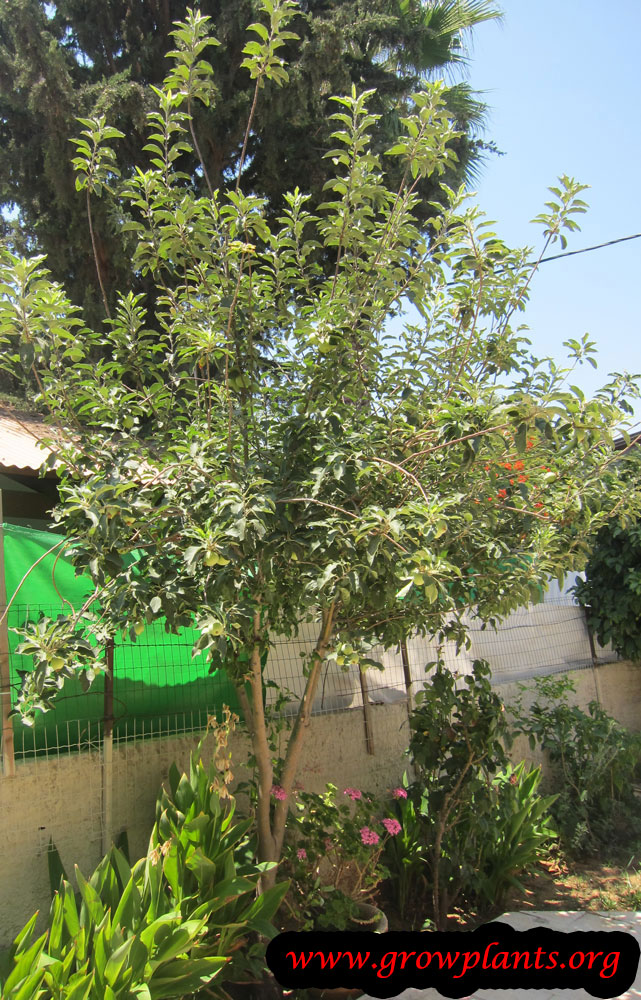
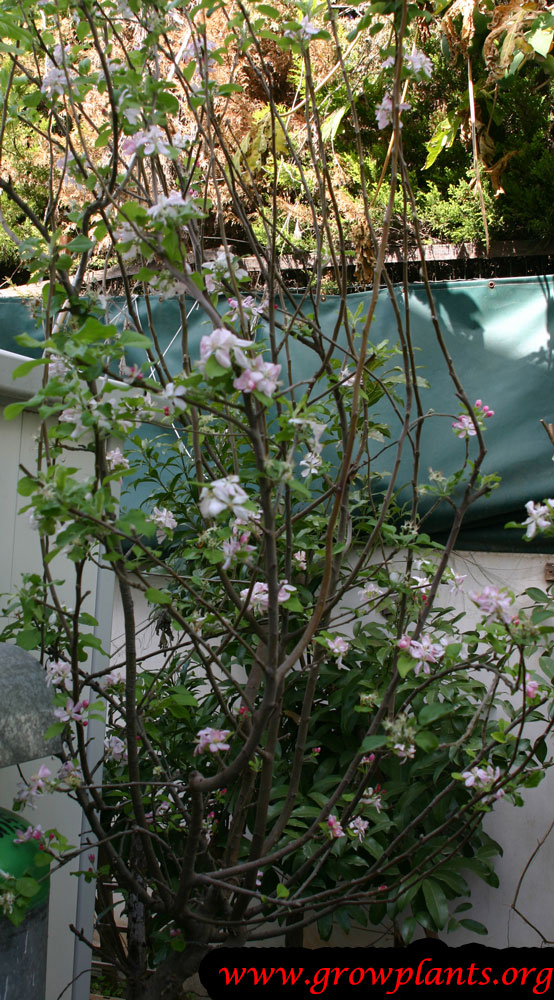
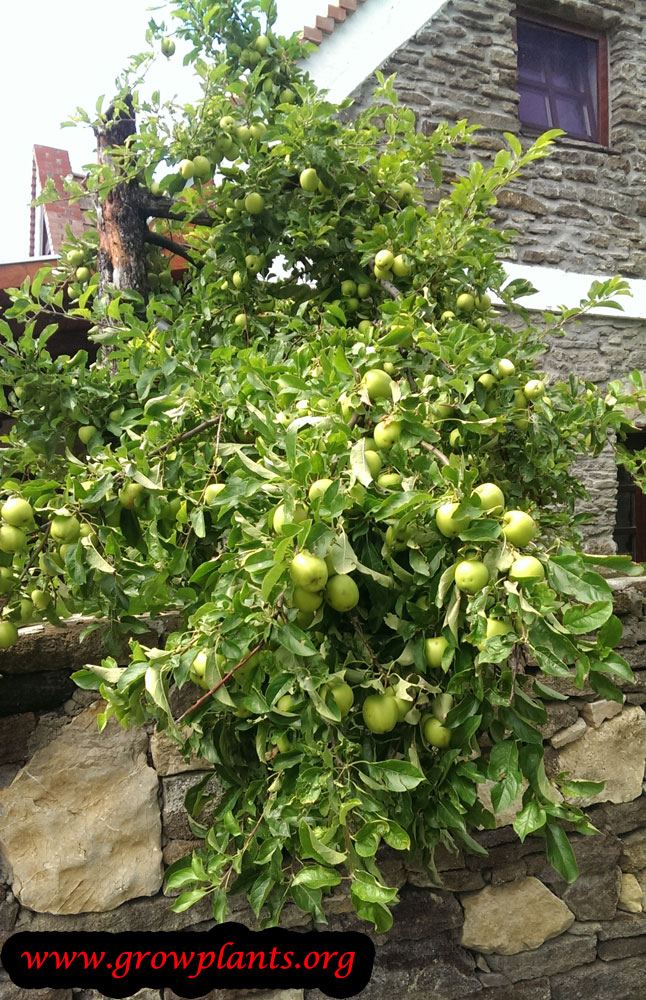
Overview: Deciduous apple tree reaching 2-8 m, grown for its edible fruit or trained as bonsai. Bears pink-and-white spring blossom before fruiting.
Quick Specifications
| Specification | Attribute |
|---|---|
| Plant Type / Life Cycle | Perennial (deciduous tree) |
| Foliage Type | Deciduous |
| Mature Size | 2-8 m (6-24 ft) |
| Growth Rate | Moderate |
| Toxicity | Fruit edible; seeds contain cyanogenic compounds (do not eat in quantity) |
| Hardiness | USDA zones 4-10b (some cultivars to 10b-11) |
Growth Form & Structure
- Height & Spread: 2-8 m in the ground; can be kept small in a container or as bonsai.
- Growth Habit & Form: Rounded deciduous fruit tree, usually grafted.
- Lifespan & Maturity: Long-lived; begins bearing in about 3-4 years.
Anatomy & Physical Features
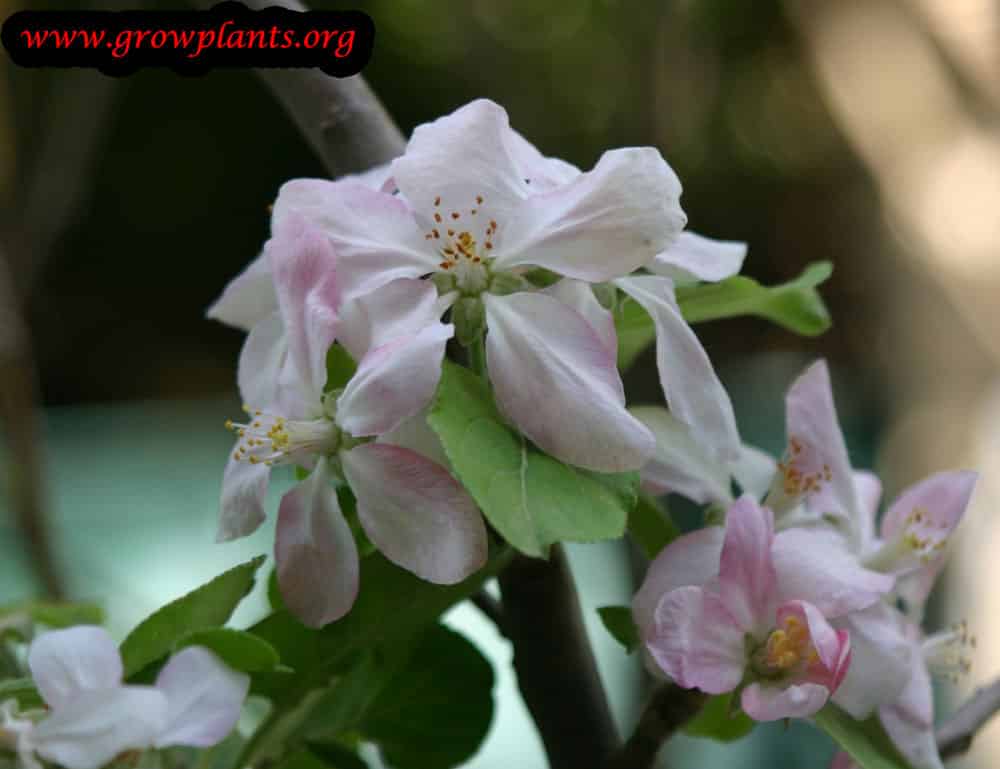
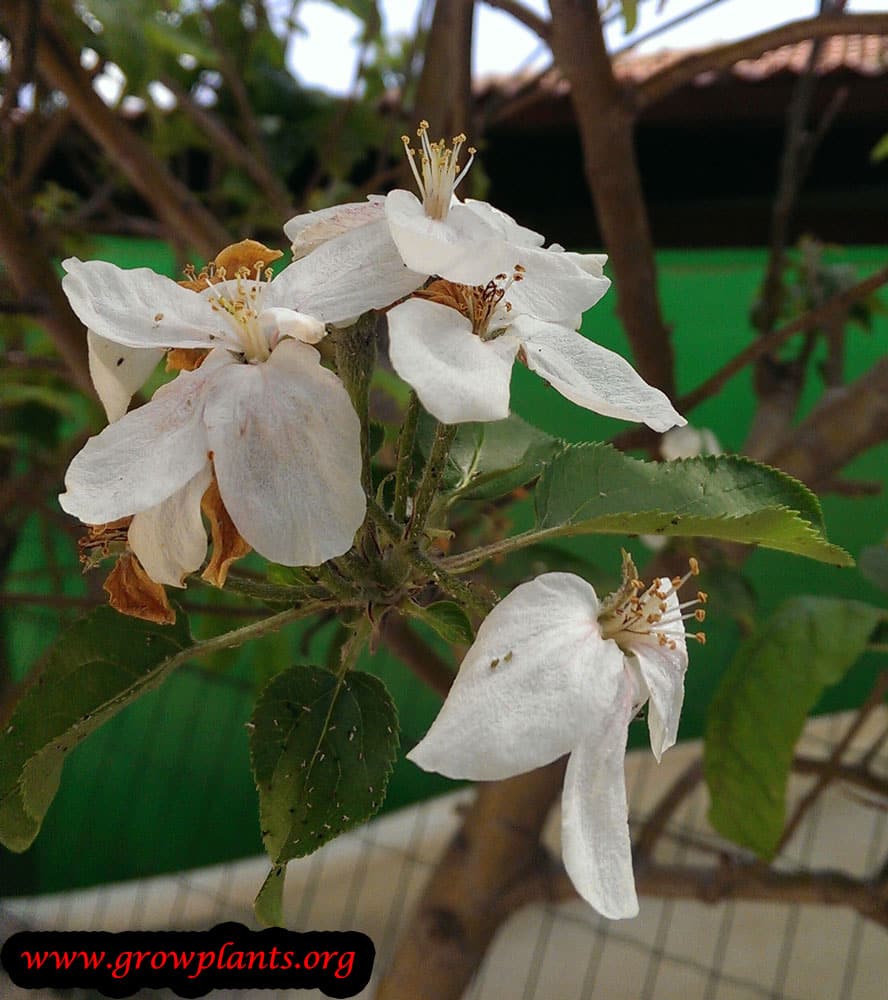
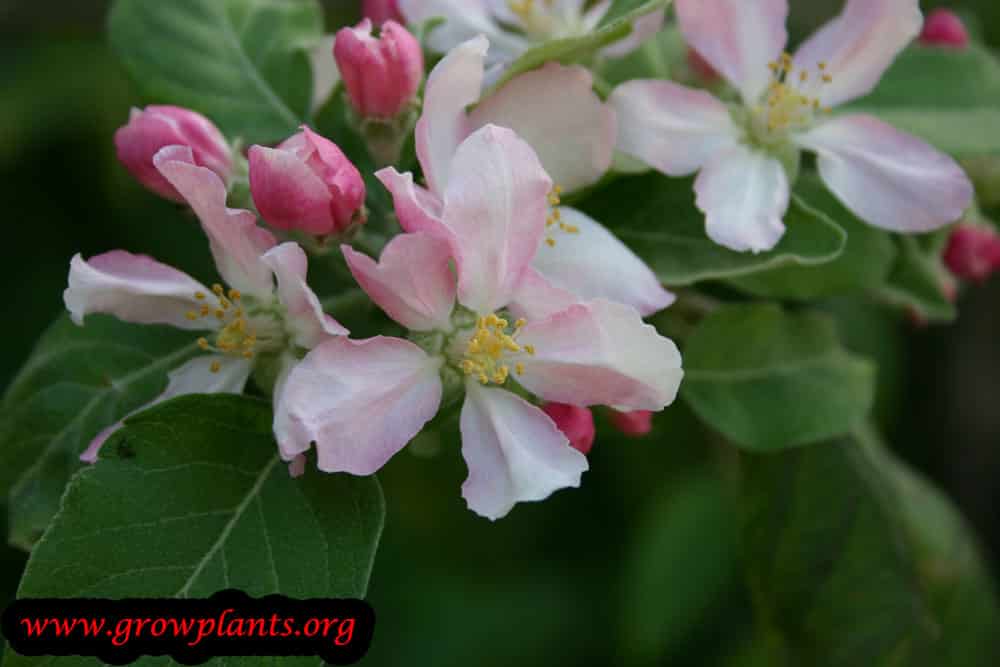
- Flower Characteristics: Pink, white, or pink-and-white five-petalled blossom, 3-4 cm.
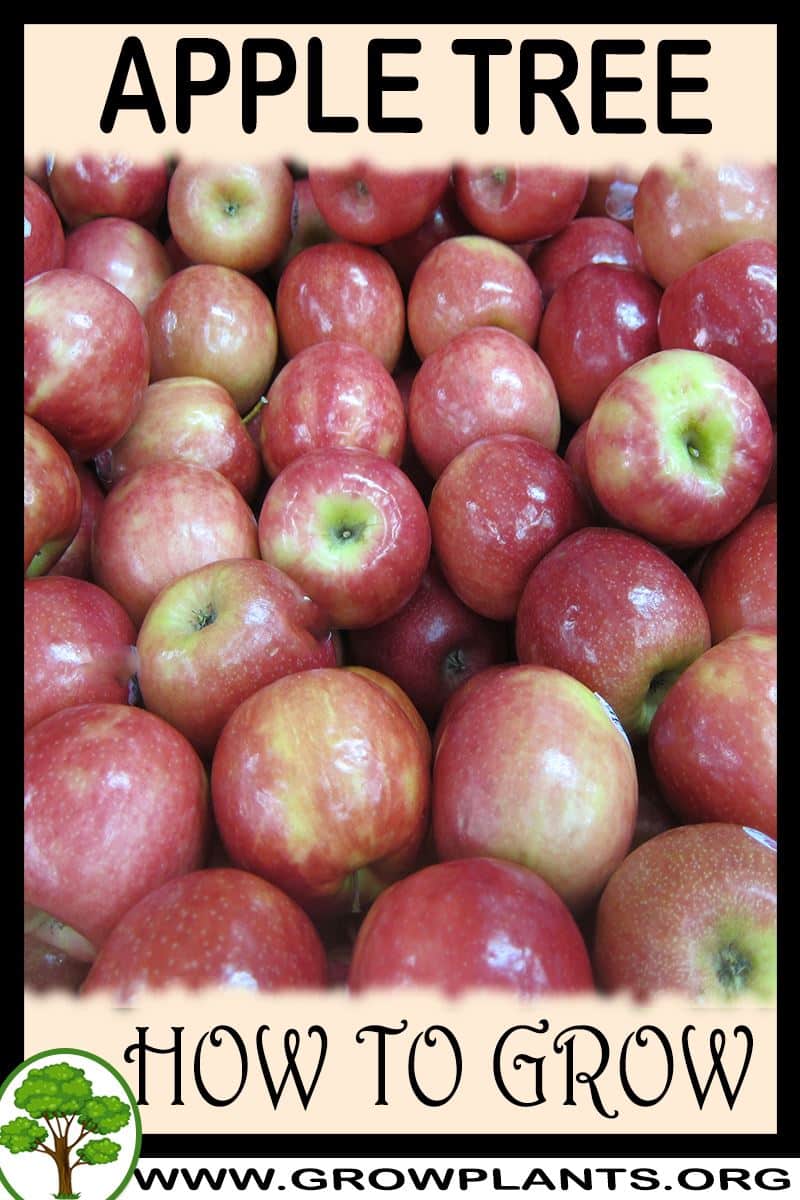
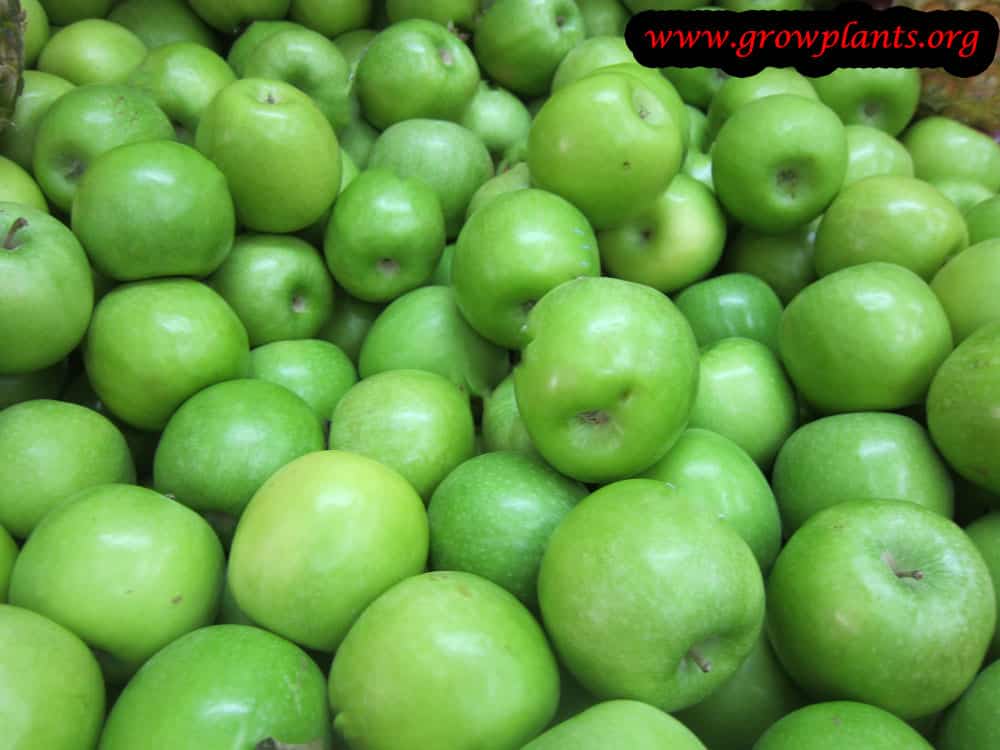
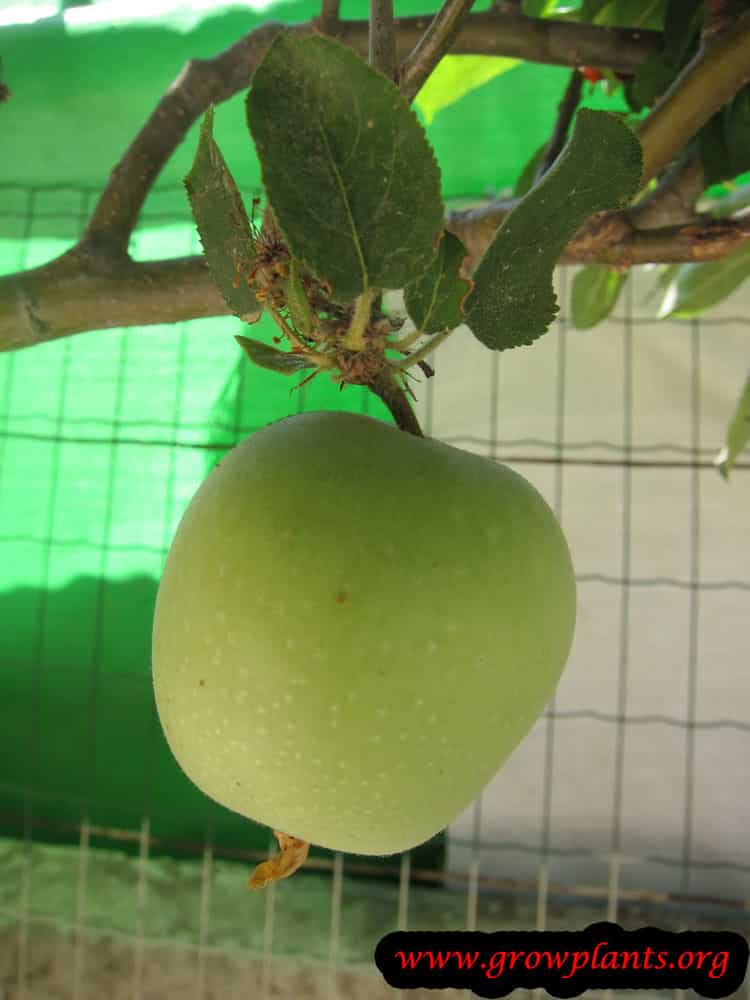
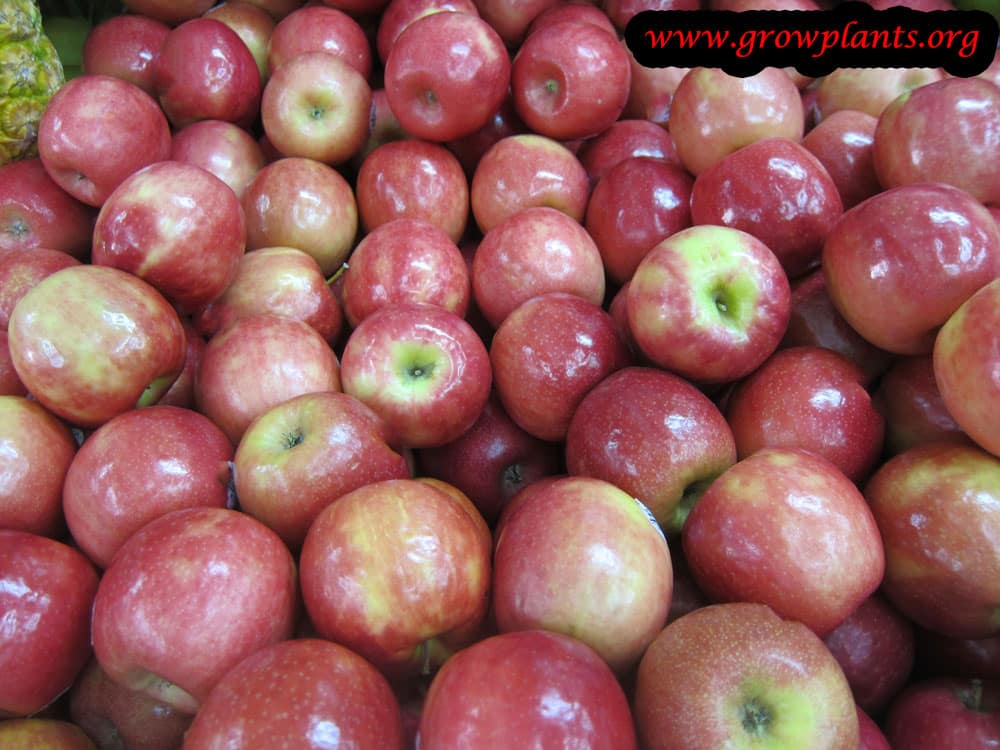
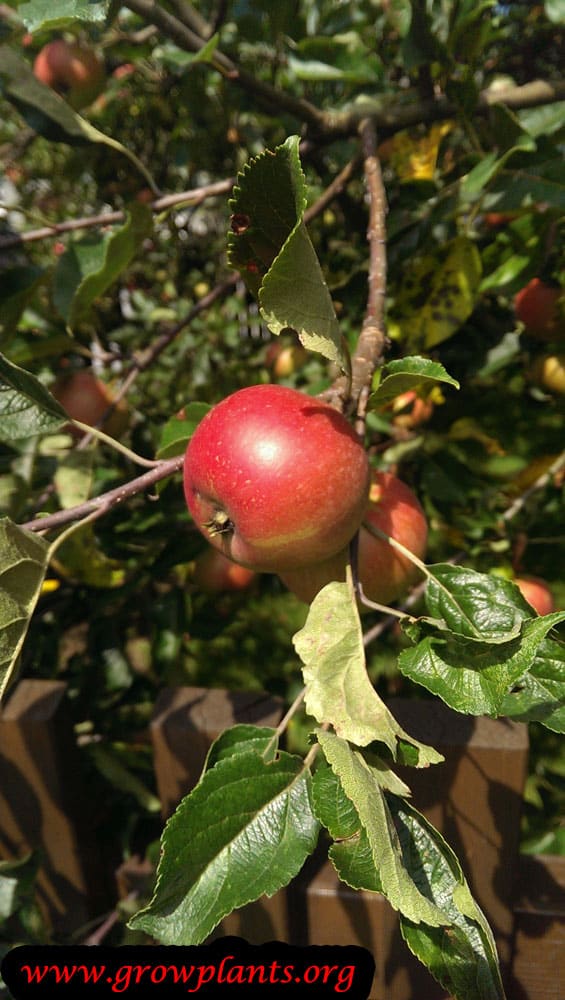
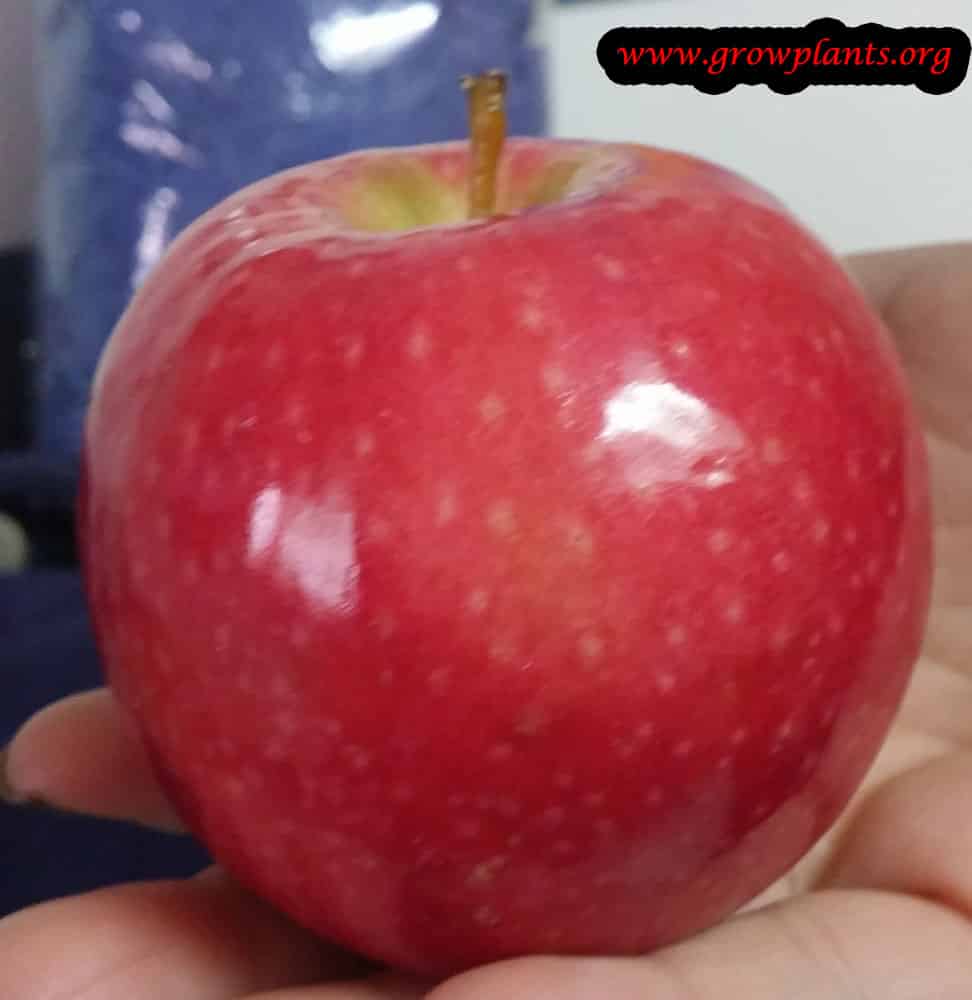
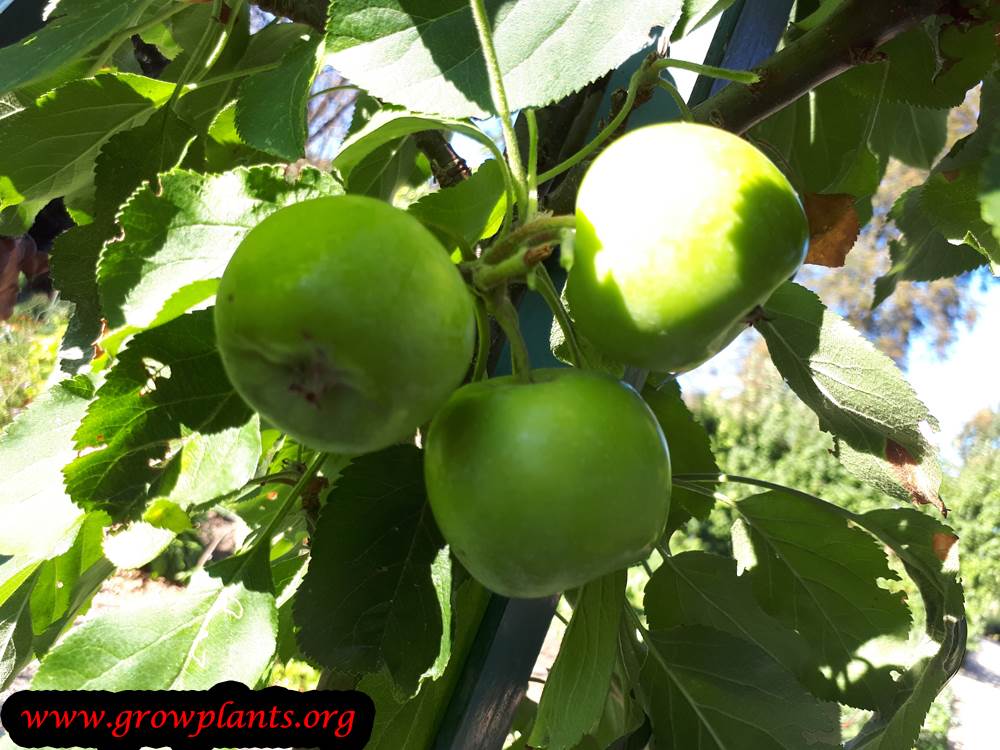
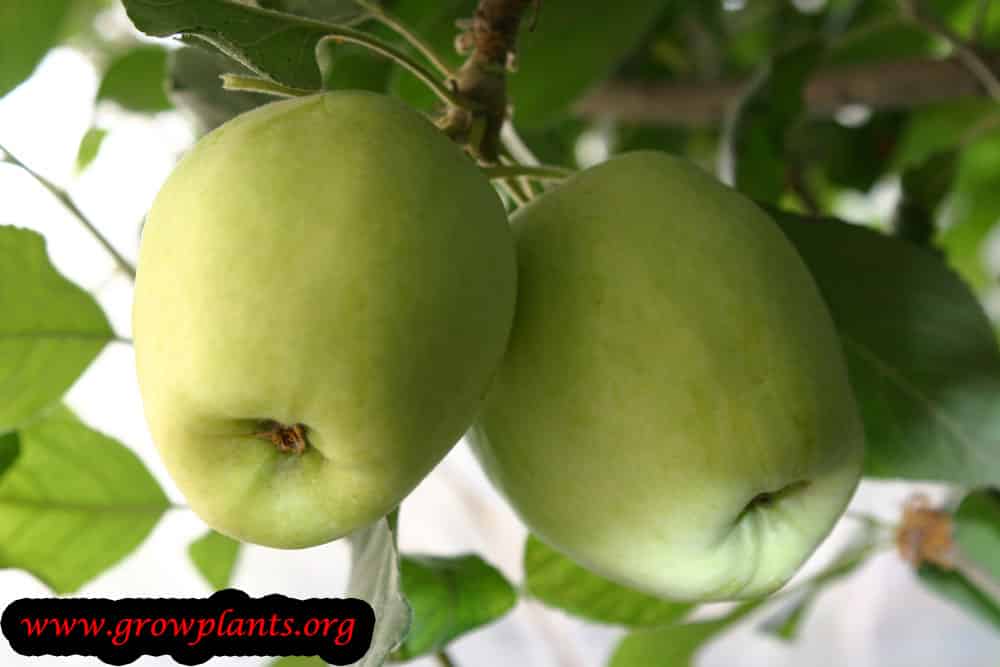
- Fruit Profile: Apple with white-green flesh and green, yellow, orange, pink, brown or red skin.
Primary Uses & Landscape Value
- Edible Uses: Fruit eaten raw, baked, in cakes or juiced.
- Functional & Ornamental Roles: Fruit tree, also grown ornamentally and as bonsai.
Care Guide: Planting, Soil & Watering
Overview: Apple (Malus domestica) is a moderate-growing deciduous fruit tree (zones 4–10b) for full sun to part shade that needs winter chill to crop well. It grows best in a deep, fertile, well-drained loam with moderate to generous watering.
Quick Care Requirements
| Requirement | Ideal Condition |
|---|---|
| Planting Season | Winter to early spring |
| Growth Rate | Moderate |
| Soil Type | Deep, fertile, well-drained loam |
| Water Need | Moderate to high |
Planting & Establishment
- Best Planting Season: From winter to early spring (summer planting is possible but less advised); plant bare-root trees during winter to early spring, as later planting risks loss.
- How to Plant:
- Hole Preparation: Dig a hole about the depth of the root ball and twice as wide, loosening the sides so the roots can spread.
- Soil Amendments: Work compost, humus and organic matter through the backfill to build a fertile, free-draining root zone.
- Planting Depth: Set the tree with the graft union clearly above soil level and the root collar level with the surface.
- Growth Speed & Expectations: A moderate grower that typically comes into fruit about 3–4 years after planting.
Soil, Watering & Drainage Care
- Soil Mix & Drainage Needs: A deep, fertile, free-draining loam is ideal; avoid waterlogging. In containers keep the tree small, use a free-draining peat-based mix with drainage material in the base, and drain away collected water the same day.
- Watering Schedule & Technique:
- Young / Newly Planted: Keep the soil consistently moist while the plant establishes, watering whenever the surface begins to dry.
- Established: Water deeply and regularly, keeping the soil evenly moist through fruiting; allow the surface to dry a little between waterings.
- Seasonal Adjustments: Reduce watering in winter and increase noticeably through summer heat and fruit set.
Climate, Light & Hardiness
The apple is a cold-hardy, deciduous temperate fruit tree that needs full sun and a genuine cool winter to fruit well. It is broadly grown across USDA zones 4–10b, with certain low-chill cultivars or careful management extending it into warmer subtropical areas (roughly zone 10b–11), and its winter chilling need is one of the most important climatic factors.
Quick Climate Specifications
| Climate Zones | Temperate, cool Mediterranean, and cool subtropical |
|---|---|
| USDA Hardiness Zones | Approximately 4–10b (some cultivars or with care 10b–11) |
| Optimal Temp Range | Cool to mild temperate growing conditions |
| Cold Damage Begins | Dormant wood is very hardy; open spring blossom is damaged by late frost near 0 °C (32 °F) |
| Frost Tolerance | High when dormant; blossoms are frost-sensitive |
| Light Conditions | Full sun to half shade |
| Wind Tolerance | Moderate |
Sunlight & Light Exposure
Optimal Light Setup
Apples fruit best in full sun; abundant light drives good flowering, fruit set, ripening, and sugar development. They tolerate a degree of half shade but crop more lightly and ripen less well there.
Direct Sun Requirement
Direct sun for most of the day is important, and pruning to open the canopy so light reaches all the fruit both improves quality and reduces disease.
Best Exposure / Orientation
An open, sunny position with good air movement is ideal; in frost-prone areas avoid low hollows where cold air pools and threatens spring blossom.
Temperature Extremes & Hardiness
USDA Hardiness & Regional Limits
Apples are grown across a wide temperate range, roughly zones 4–10b, and are among the more cold-hardy fruit trees when dormant. In the warmest zones the limiting factor is usually insufficient winter chill rather than cold damage, which is where low-chill cultivars become essential.
Cold Damage & Winter Protection
The dormant, leafless tree withstands hard winter cold well down into cold-temperate zones. The main cold risk is to spring growth: once buds break, late frosts can injure or destroy the open blossom and reduce the crop.
Frost Sensitivity
Frost tolerance is high in the dormant tree but the flowers are frost-sensitive, so a late spring freeze during bloom is the critical hazard. Cold tolerance and bloom timing vary by cultivar, so local frost patterns matter.
Extreme Heat Tolerance
Apples are adapted to cool and mild conditions; sustained extreme heat is not their preference and, combined with mild winters, can leave chilling needs unmet and impair flowering and fruit set.
Chilling Requirement
A winter chilling period is central: apples need a cool winter to break dormancy and flower properly, and the amount required varies markedly by cultivar. Inadequate winter chill leads to delayed, erratic, or poor bud break, weak flowering, and reduced fruit set - which is why warm-climate growers must choose suitably low-chill cultivars. Precise chill-hour figures depend on cultivar and are not stated here.
Wind, Humidity & Microclimate
Humidity Preferences
Adaptable to a range of humidity, though prolonged warm, humid, still conditions can raise disease pressure, so airflow through the canopy is beneficial.
Wind Tolerance
Moderate. Sheltering from strong wind protects blossom and developing fruit and aids pollination, but some air movement helps keep foliage dry and healthy.
Microclimate Recommendations
Favor a site that avoids frost pockets, offers full sun, and provides light wind shelter during bloom; in mild-winter regions, pairing the right cultivar to the local chill is the key climatic decision.
Growing in Pots, Balconies & Indoors
Apple is a full-size deciduous fruit tree, not a houseplant – indoors it never gets the light or the winter chill it needs. It does, however, grow well in a large pot on a patio or balcony as long as it is kept small and potted up in stages.
Quick Details
- Container Size: Start about 20-50%% larger than the root ball and pot up in stages (see the grower’s tip)
- Indoor Suitability: Not a houseplant; grow it outdoors and keep it small in a pot
- Best Spot: Full sun to half shade – a bright, open balcony or patio
- Soil & Drainage: Free-draining peat-based mix with plenty of drainage holes and coarse grit at the base
- Watering in Pots: Average to generous; pots dry fast, so check often, but never leave it standing in water
Indoors & On the Windowsill
- Not a houseplant: The grower does not grow Apple indoors – it needs full outdoor light and, being deciduous, a cold winter dormancy to fruit well.
- Cold is a friend, not an enemy: Unlike tender plants, this one does not need bringing inside for winter; the pot simply stays outdoors through its dormant, leafless season.
- Windowsill reality: Even the sunniest sill is too dim and too warm to crop this tree, so treat it strictly as an outdoor container plant.
On a Balcony or Patio
- Light & wind: Give it the sunniest, most open spot. On an exposed balcony, stake the young stem and shelter it from strong wind while it establishes.
- Reflected heat & drying: Walls and paving throw back heat, so pots dry quickly in warm weather – check moisture daily and water before the mix dries out. A drip irrigation kit with a timer can take over that watering check automatically.
- Weight & runoff: A large soil-filled pot is heavy and sheds water when watered, so set it where drainage runoff will not be a nuisance.
Choosing the Pot, Soil & Long-Term Care
- Pot & drainage: A pot with strong drainage holes is essential; skip a permanently full water saucer to avoid root rot, and empty any tray the same day it collects water. The grower adds a layer of lava grit or similar coarse material at the base for extra drainage.
- Potting mix: A free-draining peat-based mix; use a free-draining, aerated mix – peat or coir with perlite or vermiculite and some organic matter.
- Feeding: Potted plants exhaust their soil faster than those in the ground, so feed a little more often as nutrients leach out with watering.
- Refreshing the soil: Once the tree is large, do not repot into ever-bigger pots – instead swap out part of the tired soil every couple of years and lightly trim the roots to keep it healthy.
Grower’s Container Tip
- Grow the pot up with the tree: Start in a container only about 20-50%% larger than the root ball (the bigger the plant, the smaller that margin). Each time the roots fill it, move up one size, and repeat until it reaches the size you want. The grower prefers this staged method because it keeps the soil fresh and healthy and makes feeding and watering more efficient than starting a small tree in a huge pot.
- Keep it small: A grafted dwarf cultivar makes the whole staged-pot method far easier to manage.
Growing this plant in a greenhouse
A greenhouse can give apple tree protection from rain.
Important: this plant needs a genuine winter chill and dormancy. Avoid maintaining excessively warm winter greenhouse conditions when the cultivar requires winter chilling for normal dormancy and flowering.
Greenhouse at a glance
| Greenhouse suitability | Conditional - depends on your climate |
|---|---|
| Main benefits | protection from rain |
| Season extension | earlier spring & later autumn |
| Outdoor protection advisable below | about 0°C |
| Suitable types | heated greenhouse, glass greenhouse, polycarbonate greenhouse |
| Heating | No added heat is normally needed. |
Related greenhouse guides
- Greenhouses: How to Choose the Right Greenhouse
- Best Greenhouse Heaters
- Greenhouse Climate Control: Temperature, Ventilation and Humidity
- Polycarbonate Greenhouses: What to Look for Before Buying
Fertilizing & Feeding
A standard chilling-hours apple follows the same overall pattern whether grown as a full-size orchard tree or trained smaller as a container or bonsai specimen: nitrogen-forward growth years, then a balanced feed once cropping begins.
Quick Fertilizing Specs
| Feeding Level | Moderate feeder |
|---|---|
| Main Nutrient Priority | Nitrogen while the scaffold branches are forming, then a balanced feed that leans toward potassium once the tree carries a crop |
| Best Feeding Period | Spring through the active growing season, before growth slows for the year |
| Organic Options | Compost or aged manure worked into the root zone, plus a standing mulch layer renewed annually |
| Soil pH | Adaptable to many soils but grows best where it is slightly acidic to near neutral |
| Reduce/Stop Feeding | Stop feeding well before the tree drops its leaves for winter so growth has time to harden off |
Feeding by Growth Stage
Newly Planted Tree
Get a bare-root or containerized apple tree rooted into its new site with minimal fertilizer stress.
| Nutrient direction | Hold off on concentrated fertilizer and lean on organic matter worked into the planting hole instead, letting the tree focus energy on root establishment. |
|---|---|
| Timing | The first growing season after planting, particularly for bare-root trees set out while dormant. |
| Frequency | A newly planted tree rarely needs feeding in its first season beyond what’s mixed in at planting time. |
| Fertilizer types | Compost, aged manure, or leaf mold worked into the backfill soil, A diluted balanced feed only if native soil is poor |
| Precautions | Avoid placing fertilizer in direct contact with bare roots or a graft union, which are vulnerable while the tree is still settling in. |
Young Tree Building Structure
Encourage the vegetative growth needed to form strong scaffold branches before the tree is asked to bear fruit.
| Nutrient direction | Lean nitrogen-forward with a complete fruit-tree fertilizer to fuel the leafy growth that builds the tree’s permanent framework. |
|---|---|
| Timing | Spring into summer during the tree’s early, non-bearing years. |
| Frequency | Light, repeated feedings across the growing season work better for a young tree than a single heavy dose. |
| Fertilizer types | A nitrogen-forward complete fruit-tree fertilizer, Compost as a lighter, organic alternative or supplement |
| Routine trace nutrients | iron, manganese, zinc |
| Precautions | Keep granular fertilizer away from the trunk, and reduce feeding by late summer so new shoots harden before frost. |
Established Tree Nearing First Crops
Bridge the tree from purely structural growth into its first real fruiting years.
| Nutrient direction | A balanced, complete fruit-tree fertilizer fits a tree that has outgrown pure nitrogen-forward feeding but hasn’t yet become a heavy bearer. |
|---|---|
| Timing | Spring through early summer as the tree approaches bearing age. |
| Frequency | Moderate feeding on a regular seasonal rhythm suits this transitional stage. |
| Fertilizer types | A balanced complete fruit-tree fertilizer, Renewed compost or mulch around the root zone |
| Routine trace nutrients | iron, manganese, zinc |
| Precautions | Watch for excess vegetative growth at the expense of flower buds, and dial back nitrogen if the tree is all leaves and no blossom. |
Mature, Cropping Tree
Support reliable flowering and well-developed fruit on a tree that bears an annual crop.
| Nutrient direction | A balanced fertilizer that leans toward potassium as fruit develops supports fruit quality better than pushing more nitrogen. |
|---|---|
| Timing | From bloom through fruit development, easing off as fruit nears harvest. |
| Frequency | Feeding timed around bloom and early fruit set, kept moderate rather than heavy, suits a bearing tree well. |
| Fertilizer types | A balanced to potassium-leaning complete fruit-tree fertilizer, An annual refresh of compost or mulch at the drip line |
| Routine trace nutrients | iron, manganese, zinc |
| Precautions | Protect ripening fruit against fruit fly and birds rather than over-fertilizing to compensate, and avoid heavy nitrogen close to harvest. |
Nutrient Deficiency Signs & Corrections
Younger leaves develop a yellow, netted pattern while the veins stay green.
| Possible causes | Iron chlorosis in alkaline or heavily compacted soil, Root stress from waterlogged soil, General nutrient shortage in poor soil, Recent root disturbance from planting or cultivation |
|---|---|
| Appears first on | Newest leaves first |
| What to check | Soil pH and drainage, How recently the tree was watered or if soil stays wet, Whether the yellowing spreads to older leaves over time, Recent root disturbance |
| Possible correction | Correct drainage and soil pH where alkalinity is the driver, and use a chelated iron product per label directions if chlorosis persists. |
Leaves are uniformly pale and shoot growth slows across the whole tree.
| Possible causes | General nitrogen shortage in lean soil, Grass or weed competition around the root zone, Compacted or poorly aerated soil, A feeding program that has lapsed |
|---|---|
| Appears first on | Older leaves first, then the newer growth if it continues |
| What to check | When the tree was last fed, Competing vegetation at the base, Soil compaction, This year’s shoot growth versus prior years |
| Possible correction | Remove competing vegetation from the root zone and restart seasonal feeding suited to the tree’s age and bearing stage. |
New shoots produce small, narrow, tightly clustered leaves instead of normal-sized foliage.
| Possible causes | Zinc deficiency, more common in alkaline or sandy soils, General nutrient imbalance from irregular feeding, Root stress limiting nutrient uptake |
|---|---|
| Appears first on | New spring shoots |
| What to check | Leaf size and spacing on new growth compared with older wood, Soil pH and texture, Feeding history for the current and prior seasons |
| Possible correction | Apply a complete fruit-tree fertilizer that supplies zinc as part of its routine trace nutrients, and correct soil pH if it runs high. |
Fruit set is disappointing, or apples develop corky, brown internal or surface spotting.
| Possible causes | Boron deficiency limiting pollen-tube growth and fruit tissue development, Cool or wet weather during bloom limiting pollination, General nutrient imbalance during fruit development, Uneven watering during fruit sizing |
|---|---|
| Appears first on | Developing fruit, with subtler effects at bloom |
| What to check | Fruit for internal or surface corkiness, Weather and pollinator activity during bloom, Consistency of watering through fruit development |
| Possible correction | Confirm boron deficiency before applying anything, since boron’s safe range is narrow, and follow product-label rates exactly if it’s confirmed. |
Pruning, Training & Seasonal Maintenance
Apple tree (Malus domestica) is a deciduous fruit tree grown for its crop, and it responds strongly to structural pruning: annual dormant-season cuts shape a productive framework, keep the canopy open for light and fruit color, and directly influence fruit size the following season by controlling how much fruiting wood the tree carries. The safest and most effective window is the dormant season, ideally toward late winter just before bud break, rather than immediately after leaf fall – cuts made very early in dormancy sit exposed through the coldest part of winter, increasing frost-dieback risk at the wound.
Quick Pruning & Maintenance Specs
| Pruning Tolerance | High |
| Primary Pruning Window | Late dormant season, before bud break (or after harvest in a light-crop year) |
| Secondary Maintenance Window | Summer – watersprout and vigorous-growth control |
| Typical Frequency | Annual |
| Main Objective | Build/maintain a productive framework; open canopy for light and fruit size |
| Young Plant Priority | Establish a central-leader or modified-leader scaffold |
| Mature Plant Priority | Renew spurs, manage height/spread, thin for light penetration |
| Best Tool Type | Bypass secateurs, loppers, pruning saw by cut size |
| Avoid Heavy Pruning During | Deep winter freezes; bloom/fruit set; late summer (stimulates late soft growth) |
Pruning by Plant Age & Size
Newly Established
Remove only damaged roots/branches at planting and head back lightly to balance the reduced root system; avoid heavy formative cuts in year one.
Young / Formative
Central-leader or modified-leader training: select well-spaced scaffold branches around a dominant leader, choosing wide crotch angles for strength; on grafted dwarfing rootstock, keep the framework compact and low for easier future management.
Mature / Established
Renew fruiting spurs, remove upright watersprouts and crossing wood, and thin crowded branches so all fruit gets adequate light – the source data specifically notes reducing branch/bud numbers to get bigger fruit.
Seasonal Pruning Schedule
| Stage | Objective | Remove | Do Not Remove | Response / Flowering Impact |
| Dormant/Winter | Structural framework and spur renewal | Weak, dead and crossing branches; excess old spur wood; some buds to size up remaining fruit | Well-placed young spur wood needed for next crop | Stimulates vigorous spring regrowth; concentrates the crop onto fewer, larger fruit |
| Summer Canopy Management | Control vigor; improve light to ripening fruit | Upright watersprouts, overly vigorous new shoots shading the canopy | Fruiting spurs and moderate leafy growth needed to feed the crop | Redirects energy from vegetative growth into fruit; little effect on next year’s flower buds if done lightly |
| Post-Harvest | Sanitary and light corrective work if the crop was light | Diseased or damaged wood, especially any infected material near the ground (per source: collect fallen leaves/fruit and cut infected branches if the tree was attacked early in winter) | Healthy spur wood | Reduces overwintering disease pressure |
Flowering & Fruiting Wood
Apples fruit on spurs that develop on two-year-old and older wood, with spurs remaining productive for several years if renewed. Heavy dormant pruning that removes too much old spur wood delays cropping and can push the tree into vegetative regrowth (watersprouts) at the expense of fruit; conversely, never renewing spurs leads to overcrowded, undersized fruit.
Structural Pruning & Training
Central/modified-leader framework with well-angled scaffolds; remove crossing and inward-growing branches; thin canopy density enough to let light reach fruiting spurs without stripping the leaf area the crop depends on; renew the oldest, least productive spurs on a rotating basis.
Special Growth to Remove
Grafted (fact confirms grafting is standard for apple) – remove rootstock suckers arising below the graft union. Remove watersprouts (vigorous vertical shoots, typically a response to hard pruning or high vigor) unless one is deliberately being trained to replace a scaffold.
Container & Small-Space Pruning
Container growing is supported for apple, especially on dwarfing rootstock; keep the framework compact with more frequent light heading cuts rather than in-ground-scale structural pruning, and repot/root-manage as the tree fills the container per the source’s staged-upsizing guidance.
Tools
- Bypass secateurs – spur thinning and small wood
- Loppers – medium scaffold and watersprout removal
- Pruning saw – larger structural or renewal cuts
- Pole pruner – upper canopy on a mature tree up to 8m
Tool Hygiene & Disease Risk
Increased: apple is noted as very sensitive to pests and disease (aphids, borer, mite); disinfect tools when removing visibly diseased or pest-damaged wood, and always remove and dispose of infected prunings rather than leaving them in the canopy or on the ground.
Cut Placement & Technique
Use thinning cuts (removing a branch to its point of origin) in preference to heading cuts for structural work; cut just outside the branch collar; angle cuts away from remaining buds; stage-remove large limbs to avoid bark tear.
Heavy Pruning & Rejuvenation
Tolerated but should be staged: an overgrown or neglected tree can be rejuvenated over two to three dormant seasons rather than all at once, since removing too much wood in a single year triggers excessive watersprout regrowth and sacrifices multiple years of cropping.
Post-Pruning Care
Monitor cuts for borer entry (a noted pest); protect any exposed, newly sun-lit bark after significant canopy opening; do not routinely fertilize immediately after dormant pruning, since the cuts themselves already stimulate vigorous regrowth.
Common Pruning Mistakes
- Removing too much wood in one season, triggering a flush of unproductive watersprouts
- Leaving old spur wood unrenewed, producing crowded, undersized fruit
- Cutting in deep winter freeze conditions instead of late dormancy
- Ignoring rootstock suckers on grafted trees
When NOT to Prune
Avoid pruning during hard winter freezes, during bloom/fruit set, and in late summer when new growth won’t harden off before cold weather.
Recommended Tools (by task)
| Task | Tool Category | Why |
| Spur thinning and small fruiting-wood cuts | bypass_secateurs | Precise cuts needed for spur renewal without crushing adjacent buds |
| Scaffold shaping and watersprout removal | loppers | Handles medium-diameter wood beyond secateur capacity |
| Structural renewal and larger limb removal | pruning_saw | Required for older scaffold or spur wood too thick for loppers |
| Upper canopy work on a mature tree | pole_pruner | Apple trees reach up to 8m; genuinely tall enough to warrant reach without a ladder |
| Between-cut hygiene on diseased wood | blade_disinfectant | Species noted as very sensitive to pests and disease |
Pruning Troubleshooting
| Problem | Possible Cause | What to Check | Corrective Action |
| Excess upright regrowth after pruning | Too much wood removed in one season | Volume removed relative to canopy size | Stage remaining rejuvenation over further seasons; remove watersprouts as they appear |
| Poor fruiting despite regular pruning | Spur wood too old and unrenewed, or over-thinned buds | Age and density of spur wood | Renew a portion of oldest spurs each year rather than all at once |
| Dense, shaded canopy interior | Insufficient thinning cuts, too many heading cuts | Light penetration to interior spurs | Shift toward thinning cuts that open the canopy structurally |
| Dieback after pruning | Borer entry at a cut, or freeze damage from too-early dormant pruning | Cut timing and wound condition | Prune closer to bud break in future; remove and destroy affected wood |
Propagation Guide
Named apple cultivars are propagated by grafting or budding onto a rootstock, since apple seedlings are highly variable and will not come true to the parent; the site also documents a hardwood-cutting method as a possible alternative, though rooting success with apple cuttings is generally inconsistent and cultivar-dependent. Grafting is the standard, Moderate-difficulty route for a home grower with some practice; growing a true fruiting tree from seed is not recommended.
Quick Propagation Specs
| Best Propagation Method | Grafting or budding onto a rootstock |
| Alternative Methods | Hardwood cuttings (site-documented, variable success); seed (for rootstock seedlings or breeding only, not true-to-type) |
| Propagation Difficulty | Moderate |
| Seed True-to-Type | No |
| Vegetative True-to-Type | Yes |
| Best Propagation Season | End of winter into early spring, before growth starts (site, for cuttings); late winter for dormant grafting; summer for budding |
| Seed Germination Time | Typically a few weeks after cold stratification; timing varies |
| Cutting Rooting Time | Several weeks to a few months; success and speed vary considerably by cultivar |
| Germination Temperature | Cold stratification near 1–5°C (34–41°F) for roughly two to three months, then germination as conditions warm to around 15–20°C (59–68°F) |
| Seed Sowing Depth | Roughly 1–2 cm (0.5–0.75 in) |
Growing from Seed
Seed Handling & Viability
Use clean seed from ripe fruit; keep it cool and slightly moist rather than fully drying it out before stratifying.
Dormancy & Pre-Sowing Treatment
Apple seed needs a period of cold-moist stratification to break dormancy before it will germinate reliably.
Sowing Season
Stratify over winter and sow in early spring, or sow fresh outdoors in autumn to stratify naturally.
Germination Conditions & Time
Keep consistently moist; germination can be staggered. Seedlings are extremely variable and are grown on mainly as rootstock or for breeding, not as named fruiting trees.
Seedling Care
Transplant once true leaves have formed and grow on before grafting a named cultivar onto them if desired.
Stem Cuttings
Cutting Type
Hardwood cuttings, taken while the tree is still dormant.
Best Timing
End of winter, possibly into early spring, before the tree begins new growth.
Cutting Preparation
Take sections of healthy dormant wood, cutting with a sterile knife.
Rooting Setup
Insert into moist soil or a moist rooting medium and maintain humidity around the cutting.
Rooting Hormone
Used in this method – a rooting hormone is applied to help the cutting strike. Even so, apple hardwood cuttings can be slow and inconsistent to root, and success varies considerably by cultivar, which is why grafting onto rootstock remains the standard way to propagate named apple trees.
Rooting Time
Rooting can take several weeks to a few months where it succeeds.
Grafting & Budding
Why Grafting Is Used
The site confirms grafting is necessary for apple trees, since it is the only reliable way to reproduce a specific named cultivar – apple seedlings are notably variable and rarely resemble the parent tree.
Preferred Grafting Methods
Whip-and-tongue, cleft, or bench grafting while the rootstock is dormant; chip- or T-budding onto actively growing rootstock in summer.
Rootstock
Commonly grafted onto size-controlling apple rootstocks, from dwarfing to semi-vigorous types; the specific rootstock chosen affects eventual tree size and is selected by region and grower needs.
Scion Selection
Healthy, dormant one-year-old wood taken from a known, true-to-type tree of the desired cultivar.
Best Grafting Season
Late winter to early spring for dormant grafting; mid-to-late summer for budding.
Graft Aftercare
Protect the union until healed and remove any growth that arises from the rootstock below the graft.
Bloom & Flower Guide
Quick Details
- Bloom Season: Spring
- Time to First Bloom: Grafted trees typically begin flowering within a few years of planting
- Flower Appearance: Five-petalled flowers about 3-4 cm, in pink, white, or pink-and-white
- Edibility: Grown for its fruit; the blossoms are ornamental and not eaten
Detailed Blooming Overview
The apple opens its familiar blossom in spring – pink in bud, softening to white or pink-and-white as it opens. The flowers appear in clusters and are heavily worked by bees, and most apples set best with a second, compatible variety flowering nearby.
Flower Characteristics
- Five-petalled flowers, about 3-4 cm across
- Colors range through pink, white, and pink-and-white
- Borne in clusters, opening in spring
Bloom Care & Thinning
- Thinning: in the first couple of years, thinning the bloom helps the young tree build a strong framework.
- Pollination: pollinated by bees; a compatible apple flowering nearby improves fruit set.
Bloom Health & Protection
- Fire blight (Erwinia amylovora): in warm, wet weather it can enter through the open blossoms and wilt flowers and shoots into a shepherd’s-crook shape. A copper-based spray around bloom and promptly pruning out infected wood well below the damage help.
Fruit & Uses
The fruit is the edible part of the apple tree, eaten fresh out of hand or used in a wide range of cooked and processed forms. It needs no special preparation to eat raw, though it is very commonly baked, cooked or pressed.
Quick Edible Specs
| Edible Parts | Fruit |
|---|---|
| Main Use(s) | Culinary – eaten raw, baked, in cakes, juiced, and more |
| Eaten Raw or Cooked | Both |
| Preparation Required | None for raw eating; core/seeds are usually discarded; peel or cook as desired |
| Harvest Season | Summer / Autumn |
| Time to First Harvest | A young tree takes a few years before it begins bearing fruit (see Propagation for grafting details) |
| Storage | Many cultivars store well for weeks to months in cool conditions |
| Safety/Toxicity Caveat | Seeds contain small amounts of cyanogenic compounds; not a concern from swallowing a few incidentally, but avoid eating crushed seeds or cores in quantity |
Fruit
Fruit color ranges from white-green flesh with a peel that can be green, yellow, orange, pink, brown or red, sometimes combining more than one color on the same fruit. Apples are picked once they reach full color and flavor for the cultivar and typically detach from the spur with a gentle upward twist; because harvest isn’t all at once, trees are often picked over more than one pass. Covering the tree with netting or otherwise protecting the fruit against fruit fly is recommended while it ripens. The harvest is eaten raw, baked, made into cakes, pressed for juice, and used in many other kitchen preparations.
Harvesting
Harvest runs through summer into autumn depending on cultivar; ripe fruit is picked by hand as it colors up rather than all in a single pass, and birds, mites and fruit fly are the main pressures to guard against while fruit is on the tree.
Preparation, Uses & Safety
Most apples are eaten raw, skin and all, with the core and seeds discarded. They are also very commonly baked, cooked into cakes and desserts, pressed into juice or cider, dried, or made into sauce and preserves. The seeds contain small amounts of cyanogenic compounds, so while accidentally swallowing a few is not a concern, they should not be deliberately eaten in quantity.
Pests, Diseases & Troubleshooting
Overview: Apples are Rosaceae fruit trees with a well-known pest and disease complex: codling moth and aphids attack the fruit and shoots, while apple scab, powdery mildew and fire blight are the major diseases, backed by fruit-set and calcium disorders like bitter pit. An integrated, sanitation-first programme – resistant varieties, clean-up of fallen leaves and fruit, and well-timed dormant oil – keeps trees productive with minimal spraying.
Quick Troubleshooting Overview
| Issue / Pest | Main Symptom | Primary Solution |
|---|---|---|
| Codling moth | ‘Worm’ tunnels and frass in fruit; early drop | Sanitation; pheromone traps; trunk bands; bagging |
| Aphids (incl. woolly) | Curled shoots / white cottony wood galls | Dormant oil; predators; prune out woolly colonies |
| Spider mites | Stippling, bronzing, webbing in heat | Conserve predators; hose; horticultural oil |
| Apple scab | Olive-black leaf spots; scabby cracked fruit | Resistant cultivars; rake leaves; protectant fungicide |
| Fire blight | Blackened ‘shepherd’s-crook’ shoots; cankers | Resistant cultivars; prune out; copper at bloom |
| Powdery mildew / rust | White coating or orange rust spots | Prune tips; resistant cultivars; sulfur |
Common Pests & Management
- Codling moth (Cydia pomonella):
- Symptoms: The classic ‘worm in the apple’: larvae bore into the fruit from the calyx or side, tunnelling to the core and leaving frass-filled exit holes, causing premature drop and inedible fruit.
- Prevention & Control: Sanitation is key – remove fallen and infested fruit promptly to break the cycle, monitor and time controls with pheromone traps, use cardboard trunk bands and fruit bagging, encourage predators and parasitic wasps, and consider mating-disruption or codling-moth granulovirus where pressure is high.
- Aphids (incl. woolly apple aphid) (Aphis pomi / Eriosoma lanigerum):
- Symptoms: Green apple aphids curl and distort new shoots with honeydew, while woolly apple aphid forms white cottony masses on wood, wounds and roots, causing galls and weakening the tree.
- Prevention & Control: Hose off green aphids and encourage ladybirds, lacewings, hoverflies and the parasitoid Aphelinus for the woolly form; prune out infested wood, apply dormant oil for overwintering eggs, and use insecticidal soap only where needed.
- Spider mites (Panonychus ulmi / Tetranychus urticae):
- Symptoms: Fine stippling, bronzing and webbing on leaves in hot, dry, dusty conditions, reducing vigour and fruit quality.
- Prevention & Control: Conserve predatory mites (avoid broad-spectrum sprays), hose foliage, keep trees watered, and use horticultural oil and dormant oil for eggs; miticides only as a last resort.
- Apple maggot / fruit flies (Rhagoletis pomonella / Ceratitis capitata):
- Symptoms: Flies sting the fruit to lay eggs and maggots tunnel the flesh, leaving dimpled, pitted, prematurely rotting fruit.
- Prevention & Control: Hang red sphere or bait traps, collect and destroy dropped fruit, bag fruit where practical, and harvest promptly; sanitation is the backbone of control.
- Scale insects (San Jose scale) (Diaspidiotus perniciosus):
- Symptoms: Grey, encrusting scale on bark and fruit with red-haloed spots on fruit, weakening branches and downgrading fruit.
- Prevention & Control: Apply dormant/horticultural oil to smother overwintering scale, prune out heavily encrusted wood, and conserve parasitoid wasps and predatory beetles.
Diseases & Fungal Issues
- Apple scab (Venturia inaequalis):
- Symptoms: The number-one apple disease: olive-green to black velvety spots on leaves and scabby, cracked, corky lesions on fruit in cool, wet spring conditions, causing leaf drop and blemished fruit.
- Treatment & Management: Choose scab-resistant cultivars, rake up and destroy fallen leaves to remove the overwintering source, prune for an open airy canopy, avoid overhead watering, and apply protectant fungicide (sulfur or suitable products) from bud-break during wet weather where susceptible.
- Powdery mildew (Podosphaera leucotricha):
- Symptoms: White powdery coating on shoots, leaves and blossoms that stunts and distorts growth and russets fruit, favoured by warm humid conditions.
- Treatment & Management: Prune out silvered mildewed shoot tips in the dormant season, choose resistant cultivars, improve airflow, and apply sulfur or potassium-bicarbonate at first sign during the growing season.
- Fire blight (Erwinia amylovora):
- Symptoms: A serious bacterial disease: blossoms and shoot tips suddenly wilt, blacken and curl into a ‘shepherd’s crook’ as if scorched, with oozing cankers on wood; it can kill branches or whole trees.
- Treatment & Management: Choose resistant cultivars, avoid excess nitrogen and heavy summer pruning that force susceptible soft growth, prune out infected wood well below the canker in dry weather with sterilised tools, and use copper or approved bactericide at bloom where the disease is active.
- Cedar-apple & hawthorn rusts (Gymnosporangium spp.):
- Symptoms: Bright orange-yellow spots on leaves and fruit, sometimes with tube-like structures beneath, needing nearby juniper/cedar hosts to complete the cycle.
- Treatment & Management: Remove nearby alternate juniper hosts where feasible, choose resistant cultivars, rake up debris, and apply protectant fungicide in spring where the disease is a known problem.
- Canker & rots (Neonectria, Botryosphaeria, bitter rot):
- Symptoms: Sunken, cracked cankers on branches and dark rotting lesions on fruit, entering through wounds and pruning cuts.
- Treatment & Management: Prune out cankered wood well below the lesion with sterilised tools in dry weather, seal large cuts, remove mummified fruit, and keep trees vigorous and unstressed.
Growing Difficulties & Abiotic Problems
- Bitter pit (calcium disorder):
- Cause & Symptoms: Small sunken brown-flecked spots in the flesh and skin of the fruit, worst on large fruit from vigorous trees, caused by disrupted calcium uptake rather than any pest.
- Correction Strategy: Keep watering even (mulch to buffer moisture), avoid heavy nitrogen and over-pruning that push vigour, thin the crop, and apply calcium sprays through the growing season on prone varieties.
- Poor fruit set / June drop / biennial bearing:
- Cause & Symptoms: Blossom drops or a natural early fruit drop thins the crop, and heavy years alternate with light ones.
- Correction Strategy: Ensure a compatible pollinator variety nearby and protect pollinators and blossom from frost, thin fruit in heavy years to encourage regular annual bearing, and feed and water evenly.
- Sunscald & frost/split:
- Cause & Symptoms: Bark scald on exposed south-west trunks, frost damage to blossom, and fruit splitting after rain follows drought.
- Correction Strategy: Whitewash or shade young trunks against sunscald, site out of frost pockets, and water evenly to prevent the drought-then-flood cycle that splits fruit.
- Chlorosis on alkaline soil:
- Cause & Symptoms: Interveinal yellowing of leaves where high pH locks up iron.
- Correction Strategy: Test and adjust soil pH with organic matter and sulfur, and correct quickly with chelated iron.
What Helps – Products & Tools
An integrated toolkit works best: dormant/horticultural oil for overwintering aphids, mites and scale; pheromone and bait traps for codling moth and apple maggot; sulfur, potassium-bicarbonate or copper fungicides for scab, mildew and fire blight; and calcium sprays for bitter pit. Resistant varieties and diligent sanitation cut spraying dramatically.
Varieties and cultivars
Apple selections vary mainly in chilling-hour requirements, fruit size and sweetness. GrowPlants documents two specific selections separately.
Quick Variety Comparison
| Selection | Type | Chill Need | Best For |
|---|---|---|---|
| Anna Apple | Cultivar | Low-chill, suited to warm winters | Warm-climate gardens |
| Crabapple | Selection/type | Same species, standard chill range | Ornamental use, small yards |
Learn how to grow Anna Apple · Buy Anna Apple
Frequently Asked Questions
How do you plant and care for an apple tree?
Plant an apple tree from winter to early spring; bare-root trees especially should go in during this window, as later planting risks loss. Dig a hole about the depth of the root ball and twice as wide, work compost, humus and organic matter into the backfill, and set the tree with the graft union clearly above soil level and the root collar level with the surface. Grow it in full sun to part shade in a deep, fertile, well-drained loam, watering moderately to generously: keep the soil consistently moist while it establishes, then water deeply and regularly through fruiting, easing off in winter and increasing again through summer heat and fruit set. It also needs winter chill to crop well.
When and how should you prune an apple tree?
Prune during the dormant season, ideally toward late winter just before bud break, rather than right after leaf fall – cuts made very early in dormancy sit exposed through the coldest part of winter, raising the risk of frost dieback at the wound. Annual dormant-season pruning shapes a productive framework, keeps the canopy open for light and fruit color, and directly influences next season’s fruit size by controlling how much fruiting wood the tree carries. Remove weak, dead and crossing branches along with some excess old spur wood, which concentrates the crop onto fewer, larger fruit.
Can you grow an apple tree from seed?
Not for a true fruiting tree: apple seedlings are highly variable and won’t come true to the parent, so growing a true fruiting tree from seed is not recommended. Named apple cultivars are instead propagated by grafting or budding onto a rootstock, the standard, moderately-difficult route for a home grower with some practice.