Plant Profile & Key Characteristics
Overview: New York aster (Symphyotrichum novi-belgii) is a clump-forming herbaceous perennial 0.6-1.2 m tall, grown for its daisy-form late-season flowers. It is a drought-tolerant, pollinator-friendly cut flower for temperate to subtropical gardens.
Quick Specifications
| Specification | Attribute |
|---|---|
| Plant Type / Life Cycle | Perennial (some grown as annual) |
| Foliage Type | Semi-evergreen (herbaceous; evergreen in mild climates) |
| Mature Size | 0.6-1.2 m (24-48 in) |
| Growth Rate | Moderate to fast |
| Toxicity | Non-toxic |
| Hardiness | USDA zones 3-9 |
Growth Form & Structure
- Height & Spread: 0.6-1.2 m (24-48 in); grows well in a container.
- Growth Habit & Form: Clump-forming herbaceous perennial that can spread and become invasive.
- Lifespan & Maturity: Fast to establish; spreads over time and is long-lived.
Anatomy & Physical Features
- Leaves & Foliage: Green linear leaves.
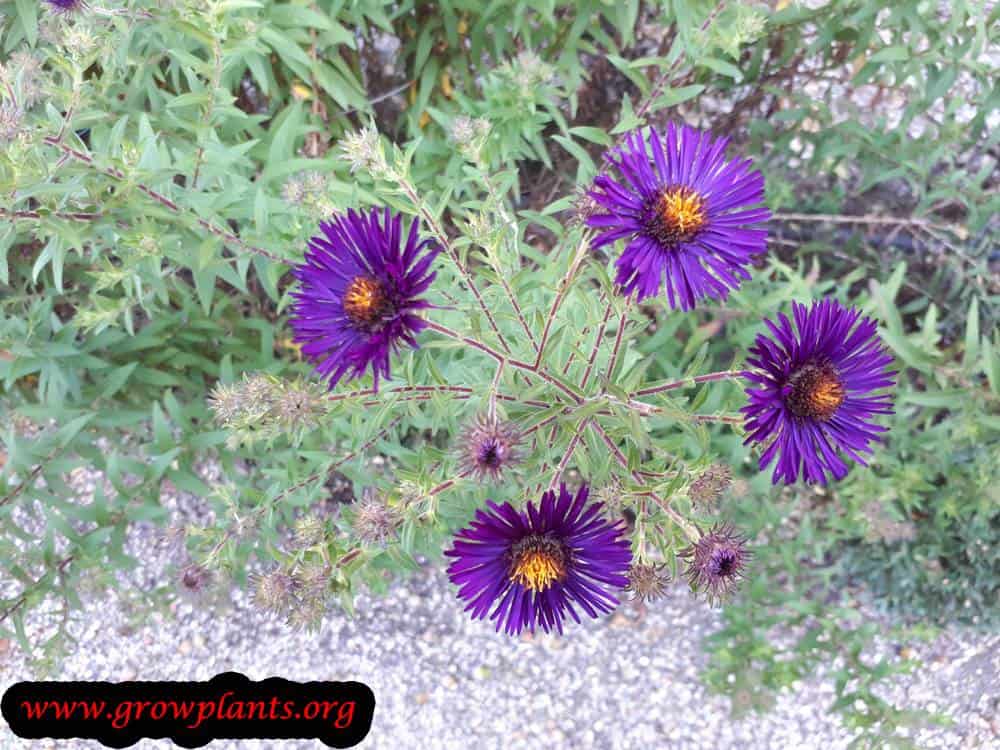
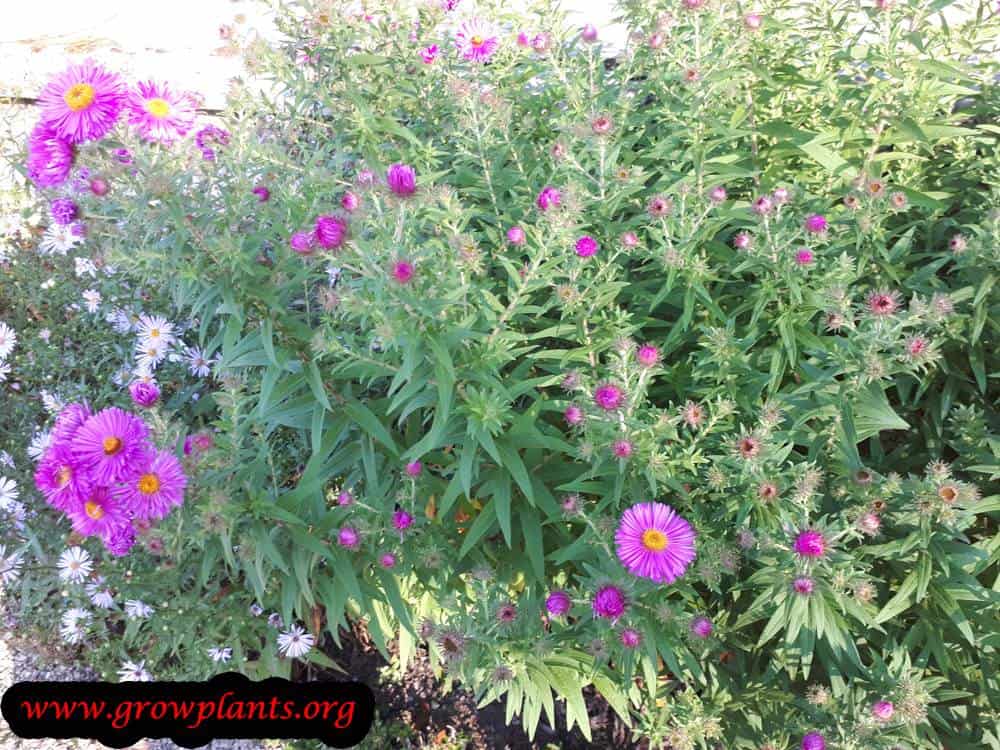
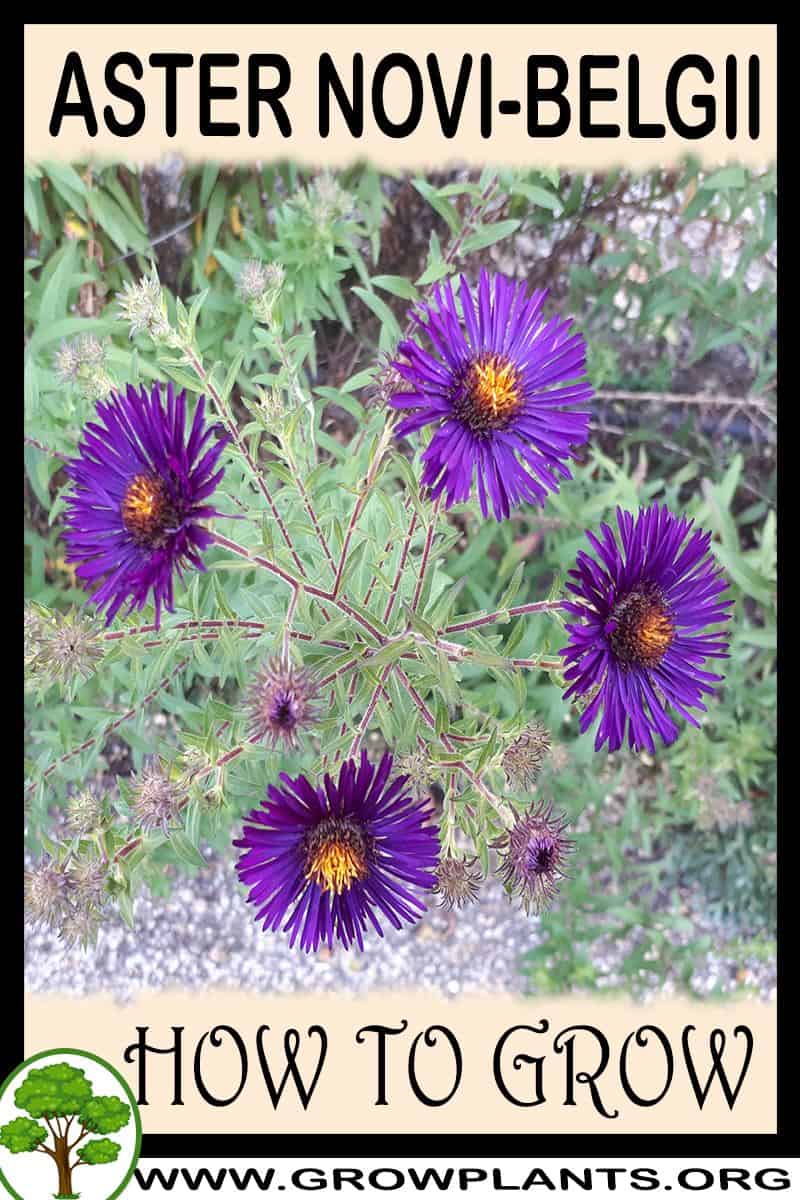
- Flower Characteristics: Daisy-form flowers in purple, pink or magenta with yellow, orange or pink centres, late in the season (full detail in the Bloom guide).
Primary Uses & Landscape Value
- Functional & Ornamental Roles: Ornamental border and cut flower; drought tolerant and attracts pollinators.
Care Guide: Planting, Soil & Watering
Overview: New York aster (Aster novi-belgii) is a fast- to moderate-growing perennial that thrives in full sun to light shade with moist yet well-draining soil. It is drought-tolerant once established but flowers best with steady, moderate watering, and it dislikes soggy ground.
Quick Care Requirements
| Requirement | Ideal Condition |
|---|---|
| Planting Season | Spring to summer |
| Growth Rate | Fast to moderate |
| Soil Type | Moist, fertile, well-draining soil |
| Water Need | Low to moderate – keep evenly moist in growth, drought-tolerant once settled |
Planting & Establishment
- Best Planting Season: Plant in spring or summer once the soil has warmed; suited to hardiness zones 3–9, it establishes readily during the growing season.
- How to Plant:
- Hole Preparation: Dig a hole about twice the width of the root ball and the same depth, loosening the surrounding soil.
- Soil Amendments: Work compost or well-rotted organic matter into the backfill to enrich the soil and help it hold moisture while draining freely.
- Planting Depth: Set the plant at the same level it grew in its pot, keeping the crown at the surface; do not bury the stems.
- Growth Speed & Expectations: Growth is fast to moderate, and clumps spread readily – lift and divide every few years to keep them vigorous, as they can be invasive.
Soil, Watering & Drainage Care
- Soil Mix & Drainage Needs: Provide fertile, moisture-retentive but well-draining soil; in containers use a good potting mix with free drainage so the roots stay moist but never waterlogged.
- Watering Schedule & Technique:
- Young / Newly Planted: Water regularly after planting to keep the soil evenly moist while the clump establishes.
- Established: Water moderately, letting the surface dry between waterings; established plants tolerate short dry spells.
- Seasonal Adjustments: Water more in hot, dry weather, especially around flowering; reduce watering as growth dies back in autumn and winter.
Climate, Light & Hardiness
Aster novi-belgii is a cold-hardy, drought-tolerant fall-blooming perennial for temperate, Mediterranean, and subtropical gardens, grown in full sun to half shade. It tolerates a wide range of winter cold without special protection.
Quick Climate Specifications
| Climate Zones | Temperate, Mediterranean, subtropical |
|---|---|
| USDA Hardiness Zones | Zones 3–9 |
| Frost Tolerance | High |
| Light Conditions | Full sun / half shade |
Sunlight & Light Exposure
Optimal Light Setup
Full sun gives the sturdiest stems and heaviest bloom; half shade is tolerated with somewhat looser growth.
Temperature Extremes & Hardiness
USDA Hardiness & Regional Limits
Reliably hardy through zones 3–9; top growth dies back with autumn frost as part of its normal cycle and the crown resprouts each spring.
Growing in Pots, Balconies & Indoors
New York aster (Symphyotrichum novi-belgii) is a classic tall Michaelmas daisy, smothered in autumn blooms – a border and large-container perennial rather than a houseplant, needing full sun and a winter rest outdoors.
Quick Details
- Container Size: A roomy pot, about 20-35 L (5-9 gal), for a clump of 0.6-1.2 m (24-48 in)
- Indoor Suitability: Not a houseplant (the grower marks it “No”) – a full-sun hardy perennial
- Best Spot: Full sun to half shade; full sun gives the best, most mildew-resistant growth
- Soil & Drainage: Rich, free-draining mix that stays evenly moist
- Watering in Pots: Moderate – keep evenly moist; drought stress worsens mildew and drops the lower leaves
Indoors & On the Windowsill
- Houseplant limits: The grower marks it as not suitable indoors. A tall hardy perennial, it needs full outdoor light and a cold winter dormancy, so a windowsill will not sustain it.
- Overwintering: Hardy – it dies back and reshoots each spring; the pot overwinters outdoors, sheltered in hard frost.
On a Balcony or Patio
- Light & wind: A magnificent autumn display for a big, sunny balcony pot; tall stems flop in shade or wind, so give full sun with shelter or support. Keep the pot from drying out, which brings on mildew.
- Practicalities: A larger, heavier pot keeps it steady; ensure good drainage and air movement around the foliage.
Choosing the Pot, Soil & Long-Term Care
- Pot & drainage: A 20-35 L pot with strong drainage holes; skip a standing water saucer to avoid root rot.
- Potting mix: A rich, moisture-retentive but free-draining organic mix.
- Feeding: Feed through the growing season, as potted perennials leach nutrients with watering.
- Repotting: Refresh the mix and divide the clump every year or two – regular division keeps it vigorous and reduces mildew.
Fertilizing & Feeding
A popular cut-flower perennial that stays a light to moderate feeder: give it a balanced start in spring, keep feeding light through its late bloom, and stop altogether once it dies back for winter.
Quick Fertilizing Specs
| Feeding Level | Light to moderate feeder |
|---|---|
| Main Nutrient Priority | Balanced feeding with adequate nitrogen for strong stems; no need for extra phosphorus to get flowers |
| Best Feeding Period | Spring through the late-summer and autumn bloom |
| Organic Options | Compost or aged organic matter worked into the planting bed |
| Reduce/Stop Feeding | Stop feeding once flowering ends and the plant enters dormancy |
| Micronutrients | Rarely an issue in average garden soil; correct only if diagnosed |
| Soil pH | Tolerates a wide range but grows best in evenly moist, well-drained soil |
Feeding by Growth Stage
Spring shoot growth
Encourage bushy, well-branched new shoots that will carry the season’s flower display.
| Nutrient direction | A balanced, complete fertilizer with moderate nitrogen supports full, well-branched growth. |
|---|---|
| Timing | As new shoots push up from the crown in spring. |
| Frequency | A single light feeding at the start of spring growth is generally sufficient. |
| Fertilizer types | A balanced complete fertilizer, Compost or aged organic matter worked into the bed |
| Precautions | Too much nitrogen now produces tall, weak stems that need staking and flop under the weight of flowers later. |
Bud set and late-season bloom
Carry the plant through bud formation into its signature late-summer and autumn flower show.
| Nutrient direction | A light, balanced feeding is enough; the notion that extra phosphorus produces more flowers is not supported – steady balanced nutrition is what matters. |
|---|---|
| Timing | As flower buds form and through the bloom period. |
| Frequency | Light, infrequent feeding through this stage is enough. |
| Fertilizer types | A balanced complete fertilizer used sparingly |
| Precautions | Keep nitrogen modest through bud set; sturdy stems matter more than lush foliage at this point. |
Winter dieback and dormancy
Let top growth die back naturally and the crown rest through winter.
| Nutrient direction | None – withhold fertilizer once flowering ends and stems die back. |
|---|---|
| Timing | After bloom finishes in autumn and through winter dormancy. |
| Frequency | No feeding at this stage; resume only when new shoots appear in spring. |
| Fertilizer types | No feeding at this stage; hold off fertilizing until spring shoots appear. |
| Precautions | Do not fertilize a dormant crown; cut back dead stems instead of feeding. |
Nutrient Deficiency Signs & Corrections
Overall pale coloring on older foliage and stunted, thin new shoots.
| Possible causes | low available soil nitrogen, nitrogen leaching from consistently moist soil, competition from dense surrounding plantings |
|---|---|
| Appears first on | older, lower leaves |
| What to check | recent feeding history, soil organic matter, how crowded the planting is |
| Possible correction | Apply a balanced fertilizer with nitrogen and thin crowded clumps to reduce competition. |
New leaves emerge pale yellow while the veins remain distinctly green.
| Possible causes | high soil pH limiting iron availability, waterlogged or compacted soil restricting root function, naturally iron-poor soil |
|---|---|
| Appears first on | newest leaves |
| What to check | soil pH, drainage and recent watering, root health |
| Possible correction | Correct soil pH or drainage first, then apply a chelated iron product per its label if new growth stays pale. |
Weak stems that flop under the weight of flowers, with browning along older leaf edges.
| Possible causes | low soil potassium, potassium leaching from moist, well-drained soil, a feeding routine skewed heavily toward nitrogen |
|---|---|
| Appears first on | margins of older leaves |
| What to check | recent fertilizer balance, soil texture and drainage, overall stem strength |
| Possible correction | Move to a more balanced fertilizer rather than a nitrogen-heavy one. |
Pruning, Training & Seasonal Maintenance
New York aster is a herbaceous perennial that resprouts freely from its crown, so it takes a hard annual cutback without any lasting harm, and since it flowers on current-season growth, the autumn/winter cutback after bloom (summer/autumn) doesn’t cost next year’s flowers. Unlike a generic aster, this species is well known for powdery mildew in humid or crowded conditions, so pruning here has a second real job beyond shape: opening up the clump for airflow, not just tidying it.
Quick Pruning & Maintenance Specs
| Pruning Tolerance | High – resprouts freely from the crown |
| Primary Pruning Window | Autumn/Winter, after bloom finishes and top growth browns |
| Secondary Maintenance Window | Mid-spring thinning + late spring/early summer pinching |
| Typical Frequency | One full cutback per year, plus a spring interior-thinning pass |
| Main Objective | Remove spent growth, improve air circulation to reduce mildew, limit spread |
| Young Plant Priority | Pinch stem tips in late spring for a bushier, sturdier clump |
| Mature Plant Priority | Thin crowded interior stems in spring; divide every 2 years (spreads readily) |
| Best Tool Type | Hand snips or light bypass secateurs |
| Avoid Heavy Pruning During | Active budding and bloom (summer/autumn) |
Pruning by Plant Age & Size
Newly Established
In the first season just remove damaged stems and let the crown establish; don’t pinch or divide yet.
Young / Formative
From the second year, pinch stem tips once or twice in late spring/early summer for a bushier habit, and thin out a portion of the emerging shoots in a dense clump so the remaining stems aren’t packed tightly together – crowding is the main driver of mildew in this species.
Mature / Established
In spring, thin congested interior growth before it thickens up. After bloom, cut the clump back near the crown. Because New York asters spread by rhizome faster than many other asters, plan to lift and divide every 2 years rather than every 3, both to renew vigour and to keep the clump from becoming the dense, poorly-ventilated mat that favours mildew.
Seasonal Pruning Schedule
Mid-Spring: objective is airflow; thin a portion of the new shoots where growth is congested; don’t remove more than roughly a third of the stems; response is a more open clump with lower mildew pressure through summer.
Late Spring – Early Summer: objective is compact form; pinch stem tips once or twice; response is more, shorter flowering stems with no loss of bloom.
Autumn/Winter (post-bloom): objective is seasonal clean-up; once foliage browns, cut top growth back near the crown; don’t disturb the crown; no impact on next year’s flowering since bloom is on new growth.
Special Growth to Remove
Crowded interior stems (thinned in spring for airflow, distinct from a generic aster’s purely cosmetic thinning), spent flower stems (deadhead to tidy and limit self-seeding, since this species is flagged aggressive/invasive here), and any powdery-mildew-affected foliage removed promptly rather than left in the clump.
Container & Small-Space Pruning
Airflow matters even more in a container, where stems sit closer together; thin more assertively than an in-ground clump and space divisions out rather than letting one pot get crowded. Refresh potting mix at the autumn cutback if the container is full.
Tools
Precision snips or light bypass secateurs for pinching, thinning and deadheading; bypass secateurs for the coarser autumn base cutback.
Tool Hygiene & Disease Risk
Increased – this species’ well-documented susceptibility to powdery mildew means any obviously mildew-coated stems should be cut with a tool wiped clean before moving on to healthy growth, and removed from the bed rather than composted nearby.
Cut Placement & Technique
Thin by removing whole stems at the base rather than heading them mid-stem, which keeps the clump genuinely more open rather than just shorter. Pinch just above a leaf node. Deadhead back to the next leaf or bud.
Heavy Pruning & Rejuvenation
The annual autumn/winter cutback is the routine hard prune here and the plant resprouts fully from the crown; a thin, bare-centred clump calls for division rather than a harder cutback.
Post-Pruning Care
No feeding is needed after the autumn cutback. Through the growing season, watch new growth for both aphids and early mildew symptoms (a real risk for this species), since good airflow from spring thinning reduces but doesn’t eliminate it.
Common Pruning Mistakes
Skipping the spring thinning pass and letting the clump stay dense into summer, which is the single biggest driver of mildew in this species; pinching too late and removing the current year’s bloom; leaving mildewed stems in place rather than cutting them out.
When NOT to Prune
Avoid a hard cutback while actively budding or in bloom (summer–autumn); avoid heavy thinning in prolonged wet weather, which favours the mildew this species is prone to.
Recommended Tools (by task)
- Spring thinning of congested stems / pinching: precision_snips – clean base cuts that don’t crush soft stems.
- Deadheading and the autumn cutback: bypass_secateurs – handles both soft flower stems and the coarser season-end material.
- Cutting out mildew-affected stems: blade_disinfectant – wipe the blade before returning to healthy growth to avoid spreading spores on the tool.
Propagation Guide
New York asters (Symphyotrichum novi-belgii) are most easily and reliably propagated by dividing the clump in spring, which is also the surest way to keep a named cultivar’s exact flower color and habit; seed is fertile, but plants raised from it – especially from named garden forms – can vary from the parent. Propagation is easy by any of these methods.
Quick Propagation Specs
| Best Propagation Method | Division of the clump |
| Alternative Methods | Softwood basal cuttings; seed (species or open-pollinated types) |
| Propagation Difficulty | Easy |
| Seed True-to-Type | Variable – named cultivars do not come true from seed; open-pollinated species seed is more consistent |
| Vegetative True-to-Type | Yes |
| Best Propagation Season | Spring for division and cuttings; spring or autumn for sowing |
| Seed Germination Time | Usually a few weeks at room temperature; germination is often improved by about a month of cold, moist stratification |
| Cutting Rooting Time | Typically a few weeks under warm, humid conditions |
| Germination Temperature | Around 18–21°C (65–70°F) |
| Seed Sowing Depth | Surface-sow or barely cover |
Growing from Seed
Seed Handling & Viability
Seed is fine and lightweight; store cool and dry until sowing.
Dormancy & Pre-Sowing Treatment
A period of cold, moist stratification (roughly a month) is commonly used to improve and even out germination, particularly from seed that was dried and stored.
Sowing Season
Sow in spring after stratification, or sow outdoors in autumn to let winter cold do the stratifying.
Sowing Depth & Orientation
Surface-sow or cover only lightly.
Germination Conditions
Keep consistently moist at cool room temperature; expect uneven germination timing within a batch.
Seedling Care
Grow on in good light and pot up once seedlings have a couple of true leaves; flower color will vary from any given cultivar parent.
Stem Cuttings
Cutting Type
Young basal shoots taken from the base of the clump in spring, before they toughen or show flower buds.
Best Timing
Early to mid spring, as fresh shoots emerge from the crown.
Cutting Preparation
Take shoots about 7–10 cm (3–4 inches) long, remove the lowest leaves, and trim just below a node.
Rooting Setup
Root in a moist, free-draining cutting mix under high humidity.
Rooting Hormone
Not required, but can improve rooting speed and consistency.
Rooting Time
Usually within a few weeks.
Division, Offsets, Pups & Suckers
New York asters spread quickly by shallow roots and the centers of the clump decline within a season or two, so lifting and dividing every one to two years in spring is standard practice. Replant vigorous, well-rooted outer sections and discard the old center; this is also the only way to guarantee a named cultivar’s exact flower color.
Bloom & Flower Guide
Quick Details
- Bloom Season: Summer into autumn
- Time to First Bloom: Usually blooms in its first season, bulking up in later years
- Flower Appearance: Daisy-form heads with purple, pink or magenta rays around a yellow, orange or pink centre
- Edibility: Ornamental only – not eaten
Detailed Blooming Overview
The New York aster is one of the classic Michaelmas daisies, valued for a long, generous show of flowers from late summer into autumn. Each head sets rich purple, pink or magenta rays around a bright central disc, and mature clumps can be almost solid with bloom. Coming so late in the year, they are a lifeline for foraging bees and butterflies.
Flower Characteristics
- Daisy heads with rays in purple, pink or magenta.
- Central disc in yellow, orange or pink.
- Carried in dense sprays on upright, branching stems.
Bloom Care & Thinning
- More and better bloom: Pinch back in early summer for a bushier, more heavily flowered plant.
- Upkeep: Deadhead and lift and divide the clumps every couple of years to keep bloom strong and stems healthy.
- Pollination: Strongly attractive to late-season bees and butterflies.
Bloom Health & Protection
- Powdery mildew: This aster is especially prone to a white mildew film on leaves and stems; airy spacing, dividing crowded clumps, or a sulfur-based fungicide all help.
- Aphids on buds: Can gather on developing flower buds; a water jet or an insecticidal soap or neem oil manages them.
Pests, Diseases & Troubleshooting
Overview: Asters (Symphyotrichum) are hardy daisy-family perennials whose defining problems are foliar – powdery mildew above all – together with sap-sucking aphids and mites and the leafhoppers that spread aster yellows. Good spacing, airflow, division and mildew-resistant selections prevent most trouble, keeping sprays to a minimum on these pollinator-friendly plants.
Quick Troubleshooting Overview
| Issue / Pest | Main Symptom | Primary Solution |
|---|---|---|
| Powdery mildew | White powdery film on leaves, lower-leaf drop | Resistant cultivars, airflow, thin and divide clumps |
| Aphids | Curled sticky new growth, clustered insects | Water blast, insecticidal soap, encourage beneficials |
| Spider mites | Fine stippling and webbing in hot dry spells | Rinse, avoid drought stress, miticidal soap |
| Lace bugs | Pale stippled leaves, dark specks beneath | Insecticidal soap on undersides, tolerate light damage |
| Aster yellows | Yellowed, distorted, greened deformed flowers | Rogue infected plants, control leafhoppers, weed |
| Flopping / legginess | Tall stems splay open, bare bases | Pinch early, divide, site in full sun, avoid excess N |
Common Pests & Management
- Aphids (Macrosiphoniella, Uroleucon, Myzus spp.):
- Symptoms: Dense clusters of soft green, brown or blackish insects on shoot tips, flower buds and leaf undersides; growth curls, becomes sticky with honeydew, and sooty mould follows.
- Prevention & Control: Dislodge with a firm water spray, conserve lady beetles, lacewings, hoverflies and parasitic wasps, and use insecticidal soap on heavy colonies. Avoid excess nitrogen and broad-spectrum sprays that harm the pollinators asters are grown to support.
- Spider mites (Tetranychus urticae):
- Symptoms: Fine pale stippling and a dull bronzed look with fine webbing on leaf undersides, worst in hot, dry, drought-stressed conditions; leaves yellow and drop from the bottom up.
- Prevention & Control: Keep plants watered and mulched to avoid drought stress, hose down foliage to knock off mites, and treat outbreaks with miticidal soap or light horticultural oil on the undersides; conserve predatory mites.
- Lace bugs (Corythucha spp.):
- Symptoms: Pale, finely stippled and bleached upper-leaf surfaces with tiny dark shiny faecal specks and cast skins on the undersides, where the lacy-winged adults and spiny nymphs feed.
- Prevention & Control: Tolerate light damage on this vigorous perennial, encourage predators, and spray insecticidal soap or neem oil onto the leaf undersides where the insects actually feed, repeating as needed.
- Leafhoppers (Macrosteles and others) – aster yellows vector:
- Symptoms: Small wedge-shaped insects that hop and fly readily; their feeding is minor, but they transmit the aster yellows phytoplasma that deforms the plant (see diseases).
- Prevention & Control: Manage weeds that host both leafhopper and pathogen, use floating row cover on valued plantings during peak leafhopper activity, and remove infected plants promptly; controlling the vector is more about limiting disease spread than the feeding itself.
- Slugs and snails:
- Symptoms: Ragged holes and slime trails on young shoots and lower leaves in mild, damp conditions, especially on spring growth.
- Prevention & Control: Use iron-phosphate bait, remove hiding places and debris, and hand-collect after dark; protect emerging shoots, which are most vulnerable.
Diseases & Fungal Issues
- Powdery mildew (Golovinomyces / Erysiphe cichoracearum):
- Symptoms: A white to grey powdery coating spreading over leaves and stems, causing yellowing, browning and early drop of the lower foliage – the signature and most damaging aster disease, worst in crowded, humid, still conditions.
- Treatment & Management: Choose mildew-resistant cultivars, space and divide clumps for airflow, site in full sun, and avoid overhead watering and drought stress. Cut back and destroy infected foliage; a sulphur, potassium-bicarbonate or neem fungicide gives preventive control on susceptible plants.
- Aster yellows (phytoplasma):
- Symptoms: Yellowed, stunted, distorted growth with witches’-brooms and deformed, greenish, sterile flowers that never colour properly; spread by leafhoppers.
- Treatment & Management: There is no cure – dig up and destroy affected plants immediately to stop spread, control the leafhopper vector, and manage broadleaf weeds that harbour the phytoplasma; use row cover on prized plantings.
- Rust (Coleosporium asterum):
- Symptoms: Orange to reddish-brown powdery pustules on leaf undersides with yellow spots above, in humid conditions.
- Treatment & Management: Remove affected leaves and improve spacing and airflow, avoid wetting foliage, and clear debris in autumn; a sulphur fungicide helps where rust is chronic.
- Leaf spots & wilts (Septoria, Alternaria, Fusarium, Verticillium):
- Symptoms: Brown to black leaf spots (Septoria/Alternaria) or yellowing, wilting and vascular browning that kills stems (wilts), often on stressed or overcrowded plants.
- Treatment & Management: Remove spotted leaves and improve airflow for leaf spots; for the soil-borne wilts, rogue affected plants, avoid replanting asters in the same spot, and keep plants vigorous, as there is no cure.
- Grey mould (Botrytis):
- Symptoms: Fuzzy grey mould on flowers and soft tissue in cool, damp, crowded conditions.
- Treatment & Management: Deadhead and remove faded flowers and dead material, improve airflow, and avoid overhead watering late in the day.
Growing Difficulties & Abiotic Problems
- Flopping / legginess:
- Cause & Symptoms: Tall stems splay open and the plant goes bare at the base, especially in rich soil, shade or after a dry spell.
- Correction Strategy: Pinch or cut back the stems by about a third in early growth to promote bushier, self-supporting plants, grow in full sun, divide clumps every few years, and avoid excess nitrogen; stake tall selections if needed.
- Lower-leaf browning / drop:
- Cause & Symptoms: Bare, browned lower stems from drought stress or mildew.
- Correction Strategy: Water evenly and mulch to prevent drought stress, keep air moving, and address mildew early; some lower-leaf loss is normal late in the season.
- Poor flowering:
- Cause & Symptoms: Few blooms in too much shade or over-rich soil.
- Correction Strategy: Grow in full sun in moderate soil, divide overcrowded clumps to restore vigour, and avoid heavy nitrogen that favours leaves over flowers.
- Crown rot in wet winters:
- Cause & Symptoms: Crowns rot and plants fail to return where soil stays wet and cold over winter.
- Correction Strategy: Plant in well-drained soil, avoid waterlogged sites, and divide periodically to keep crowns healthy and vigorous.
What Helps – Products & Tools
Asters are managed mostly by good culture plus soft products: insecticidal soap and light horticultural oil for aphids, mites and lace bugs, iron-phosphate slug bait, and a sulphur, potassium-bicarbonate or neem fungicide for powdery mildew and rust. Row cover limits leafhopper-spread aster yellows. The best ‘products’ are mildew-resistant cultivars, division and spacing.