

Plant Profile & Key Characteristics
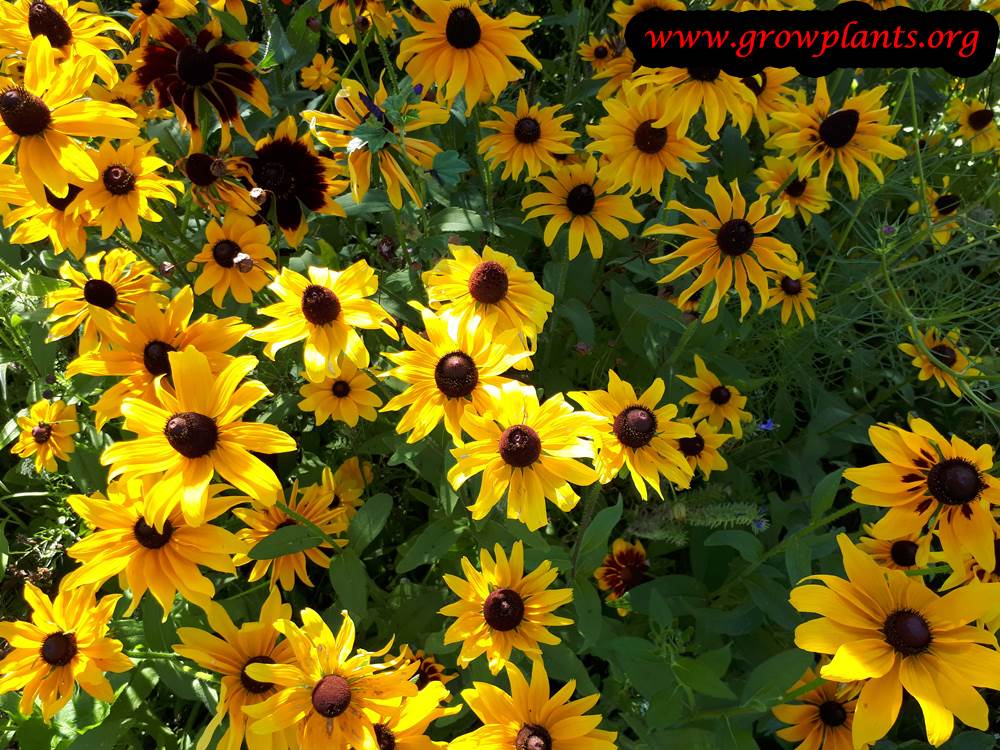
Overview: A cheerful herbaceous daisy 30-100 cm (12-40 in) tall, grown as a short-lived perennial or annual for its golden black-centred flowers. It is a classic pollinator plant and long-lasting cut flower.
Quick Specifications
| Specification | Attribute |
|---|---|
| Plant Type / Life Cycle | Herbaceous perennial or annual |
| Foliage Type | Deciduous (evergreen basal rosette in mild areas) |
| Mature Size | 30-100 cm (12-40 in) tall |
| Growth Rate | Moderate to fast |
| Root System | Fibrous |
| Toxicity | Non-toxic |
| Hardiness | USDA zones 4-10a as a perennial; grown as an annual in zones 2-3 and 10b-11 |
Growth Form & Structure
- Height & Spread: Upright clumps 30-100 cm (12-40 in) tall; grows well in a 5-15 L container refreshed every couple of years when kept as a perennial.
- Growth Habit & Form: Clump-forming herbaceous plant with erect, branching flower stems above a leafy base.
- Lifespan & Maturity: Flowers in its first season; a short-lived perennial that self-seeds freely (can be aggressive).
Anatomy & Physical Features
- Leaves & Foliage: Green, elliptic to spoon-shaped leaves, roughly hairy.
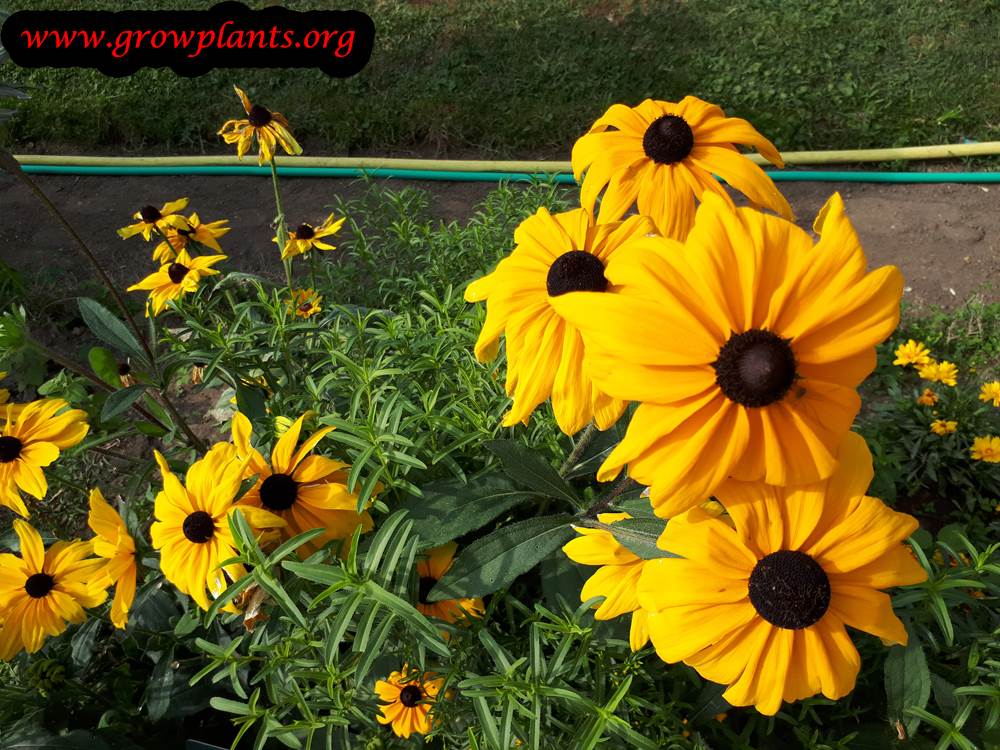
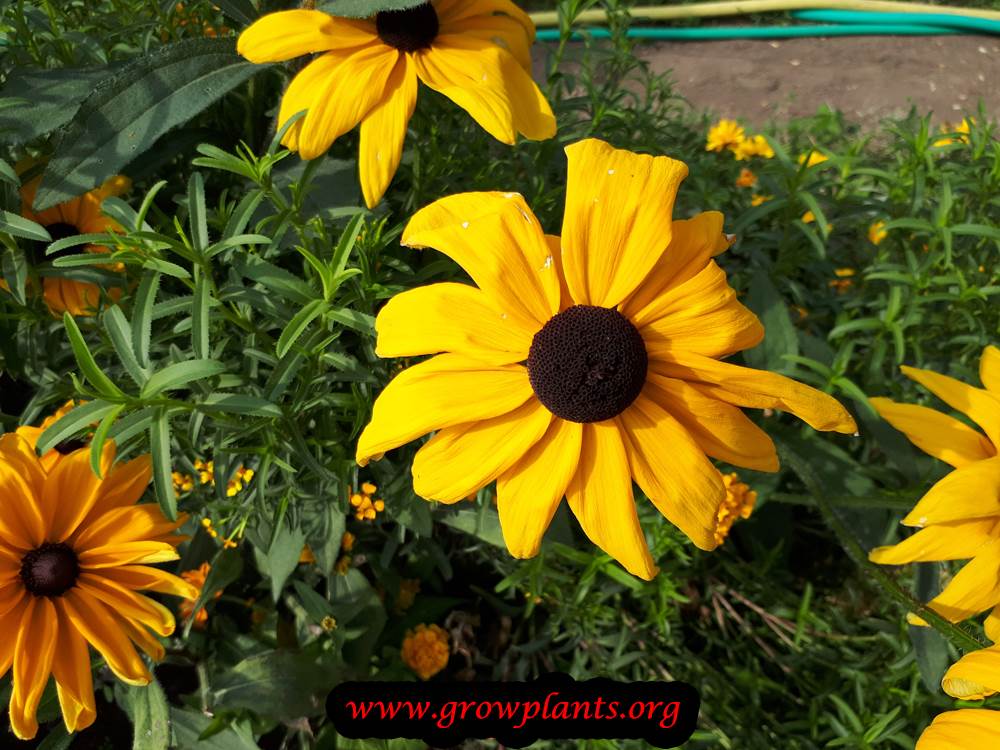
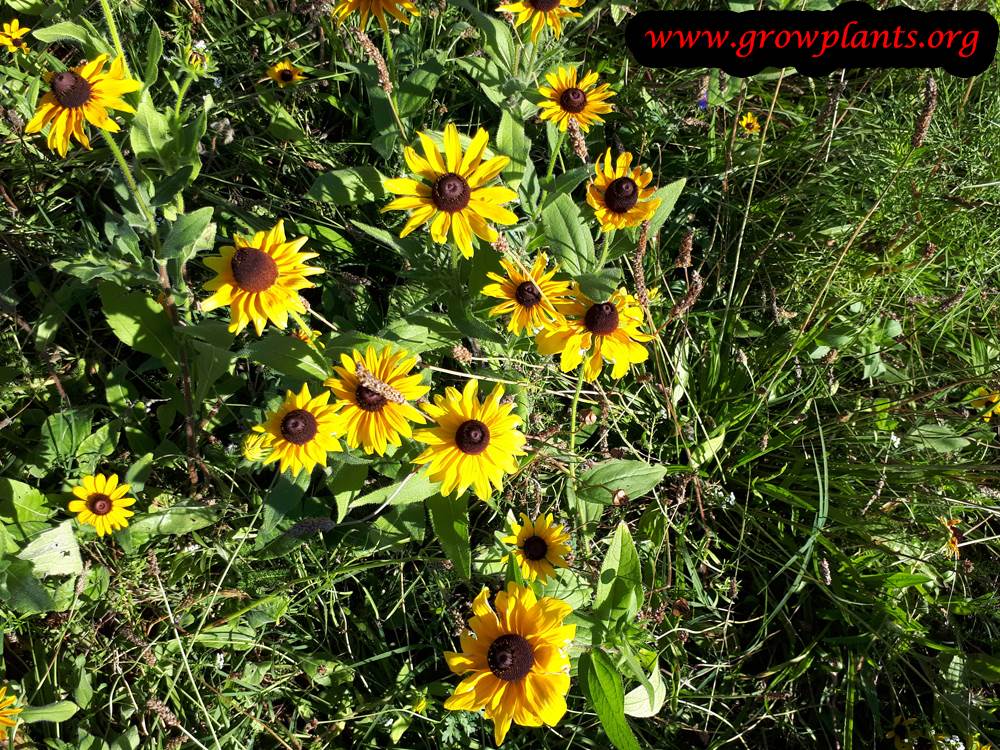
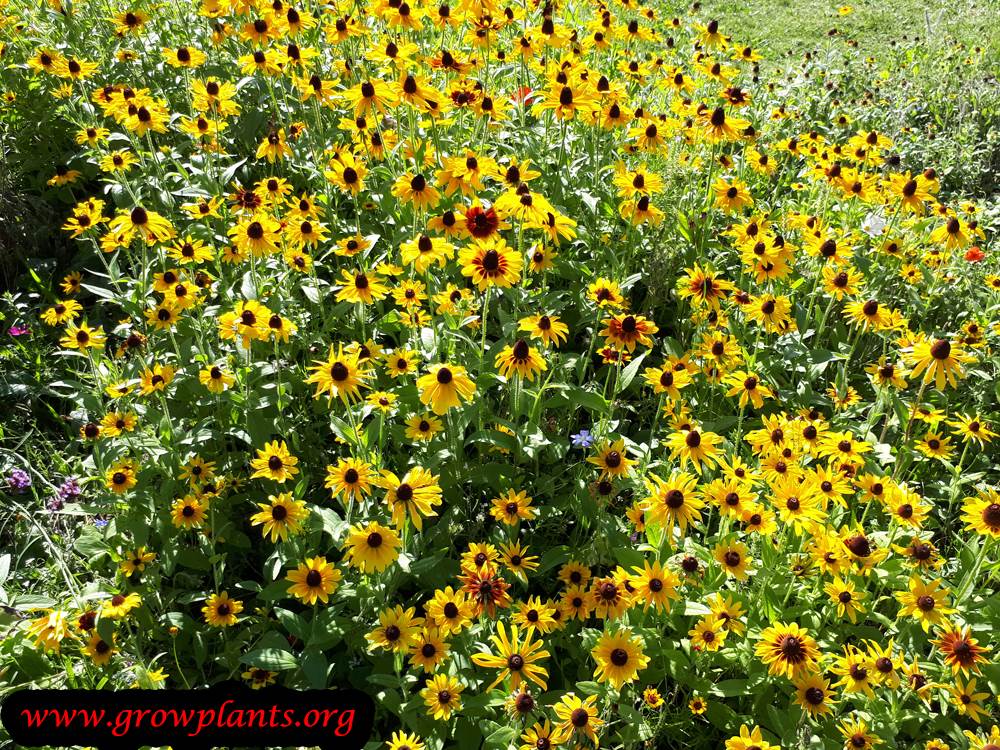
- Flower Characteristics: Daisy flowers with orange, yellow or red rays around a dark brown-black central cone.
Primary Uses & Landscape Value
- Functional & Ornamental Roles: Border and prairie-style ornamental that attracts pollinators, an excellent cut flower and container plant, and used medicinally.
Care Guide: Planting, Soil & Watering
Overview: Rudbeckia hirta (Rudbeckia hirta), the Black-eyed Susan, is an easy, sun-loving daisy grown as a perennial or annual for its bright, pollinator-friendly blooms. It performs best in full sun in rich, well-draining soil with steady moisture, and tolerates a range of conditions once established.
Quick Care Requirements
| Requirement | Ideal Condition |
|---|---|
| Planting Season | Warm season – spring after the last frost through summer; autumn to spring in frost-free zones |
| Growth Rate | Moderate to Fast |
| Soil Type | Rich, well-draining; mulched while young |
| Water Need | Moderate to high; keep the soil evenly moist |
Planting & Establishment
- Best Planting Season: Set plants out in spring once the frost has passed and through summer in cooler zones; in warm, frost-free zones plant from autumn through spring. Grown as a perennial in zones 4-10a and as an annual in colder or hotter zones.
- How to Plant:
- Hole Preparation: Dig a hole a little wider than the root ball and loosen the surrounding soil so the roots can spread.
- Soil Amendments: Enrich the backfill with compost and organic matter, and lay a light mulch over the root zone to hold moisture while the young plant establishes.
- Planting Depth: Set the plant at the depth it grew in its pot, keeping the crown level with the soil surface.
- Growth Speed & Expectations: A moderate to fast grower reaching about 30-100 cm; it fills out quickly in rich soil and flowers freely in its first or second season, and can spread vigorously.
Soil, Watering & Drainage Care
- Soil Mix & Drainage Needs: Give it rich, well-ventilated soil with good drainage so the roots never sit wet. In containers use a potting mix or peat soil with perlite or vermiculite in a 5-15 litre pot, and let excess water drain freely.
- Watering Schedule & Technique:
- Young / Newly Planted: Keep the soil evenly moist while seedlings and new plants establish, watering often enough that they never dry out.
- Established: Once established the plants are fairly tough but flower best with regular deep watering that keeps the soil moist but not soggy.
- Seasonal Adjustments: Water more generously through summer heat and blooming, and reduce watering in cool weather and over the dormant winter period.
Climate, Light & Hardiness
Rudbeckia hirta thrives in temperate, Mediterranean, and subtropical climates with a strong preference for full sun. It is a genuinely cold-hardy perennial in cooler zones and shifts to an annual life cycle where winters are very mild or very cold.
Quick Climate Specifications
| Climate Zones | Temperate, Mediterranean, subtropical |
|---|---|
| USDA Hardiness Zones | Perennial in zones 4–10a; grown as an annual in zones 2–3 and 10b–11 (with attentive care it can persist as a perennial in zone 10a) |
| Optimal Temp Range | Warm-season growth; approximately 15–27°C (59–80°F) |
| Cold Damage Begins | Foliage and flowering decline as temperatures approach freezing |
| Approx. Survival Minimum | Established roots in zone 4 areas typically tolerate briefly down to approximately −29 to −34°C (−20 to −30°F) while dormant |
| Frost Tolerance | Moderate (roots/crown in hardy zones; top growth is frost-tender) |
| Light Conditions | Full sun to half shade |
Sunlight & Light Exposure
Optimal Light Setup
Best sited in full sun, which produces the strongest bloom; light afternoon shade is tolerated but reduces flower count.
Best Exposure / Orientation
An open, unobstructed sunny bed or border gives the most reliable flowering.
Temperature Extremes & Hardiness
USDA Hardiness & Regional Limits
Where winters stay above roughly zone 10a, plants are commonly grown as short-lived annuals since summer heat and mild winters shorten the perennial cycle; in zones 4–10a the crown survives winter cold and resprouts.
Cold Damage & Winter Protection
Top growth is killed back by hard frost; mulching the crown in the coldest part of its perennial range helps it return in spring.
Frost Sensitivity
Seedlings and young plants are more frost-sensitive than established, rooted-in perennials.
Wind, Humidity & Microclimate
Humidity Preferences
Adapts to average garden humidity; good air movement around foliage helps limit fungal issues in humid climates.
Growing in Pots, Balconies & Indoors
Black-eyed Susan (Rudbeckia hirta) is a sunny, easy daisy – not a houseplant, but a first-rate container plant for a bright patio or balcony. The grower gives clear pot instructions, including a size range and a two-year refresh for plants kept as perennials.
Quick Details
- Container Size: 5-15 L (1.5-4 gal) depending on cultivar, per the grower
- Indoor Suitability: Not a houseplant – a full-sun daisy that won’t flower indoors
- Best Spot: Full sun (tolerates light shade, but blooms best in full sun)
- Soil & Drainage: Well-ventilated, free-draining mix rich in organic matter – potting mix or peat with perlite or vermiculite (the grower’s spec)
- Watering in Pots: Average watering – keep the soil moist and let excess drain away freely
Indoors & On the Windowsill
- Houseplant limits: It needs full sun to bloom, so it won’t work as a room plant.
- Windowsill growing: Even a sunny sill is too dim for good flowering – keep it outdoors.
- As a perennial: Where grown on year to year, a potted plant benefits from a sheltered spot in a hard winter.
On a Balcony or Patio
- Light & wind: Give it the sunniest position for the most flowers; stake taller stems in exposed, windy pots, and check moisture often as pots dry in reflected heat.
- Practicalities: Allow for the pot’s weight and keep drainage water off the balcony floor.
Choosing the Pot, Soil & Long-Term Care
- Pot & drainage: A 5-15 L pot (the grower’s range) with strong drainage holes. The grower prefers not to sit the pot on a tray, so water drains right through – which also guards against root rot. Terracotta breathes and dries quickly, which suits these sun-lovers; glazed or plastic pots hold moisture longer if you can’t water often.
- Potting mix: Well-ventilated and free-draining, rich in organic matter – potting mix or peat soil with perlite or vermiculite.
- Feeding: Potted plants use up their food faster because watering leaches nutrients away, so feed a little more often through the growing season than you would in open ground.
Grower’s Container Tip
- Water through, no tray: The grower keeps the soil moist but lets water run right out of the pot, and prefers not to sit the pot on a saucer.
- Two-year refresh for perennial plants: When grown on as a perennial, every two years he switches out the soil and prunes back part of the roots and the plant to keep it vigorous.
Fertilizing & Feeding
A light feeder: this widely grown wildflower and bedding daisy performs reliably in average soil, whether raised from seed, cuttings, or set out as a young plant, and rarely needs more than light, balanced feeding.
Quick Fertilizing Specs
| Feeding Level | Light feeder |
|---|---|
| Main Nutrient Priority | Balanced, light feeding; this species performs reliably in average soil without heavy inputs |
| Best Feeding Period | Spring growth through summer into autumn bloom |
| Organic Options | Compost or aged organic matter mixed into the bed or container mix |
| Micronutrients | Usually supplied by a complete fertilizer; correct specific issues only when diagnosed |
| Soil pH | Adaptable to a range of soils; tolerates average to poor fertility |
Feeding by Growth Stage
Establishment and early growth
Help young plants, whether from seed, cuttings, or transplants, root in and build sturdy foliage.
| Nutrient direction | A balanced, general-purpose fertilizer applied lightly. |
|---|---|
| Timing | At planting and through early spring growth. |
| Frequency | A light feeding at planting, with a follow-up only if growth looks slow, is generally enough. |
| Fertilizer types | A balanced, general-purpose garden fertilizer, Compost or aged organic matter mixed into the soil |
| Precautions | Keep feeding light – this species is naturally vigorous and self-seeds freely; rich feeding mostly adds leafy bulk rather than better blooms. |
Summer into autumn flowering
Sustain the long-running daisy flower display used for beds, cutting, and pollinator gardens.
| Nutrient direction | Continue light, balanced feeding only if flowering slows or foliage looks pale. |
|---|---|
| Timing | Summer through autumn while flower buds form and open (spring as well in warm climates). |
| Frequency | An occasional light feeding during active bloom is usually sufficient. |
| Fertilizer types | A balanced fertilizer used sparingly through the bloom season |
| Precautions | Avoid heavy nitrogen, which can push leafy growth and weak stems at the expense of flowers. |
Winter dieback or end of the growing cycle
Let perennial plantings die back to the crown and rest through winter; where grown as an annual, the spent plant is removed instead.
| Nutrient direction | None – withhold fertilizer while the plant is dormant or finishing its cycle. |
|---|---|
| Timing | After bloom fades through winter, once foliage dies back or frost ends annual plantings. |
| Frequency | No feeding at this stage. |
| Fertilizer types | No feeding at this stage; resume light feeding on perennial plantings when new spring growth appears. |
| Precautions | Do not fertilize dormant, dying-back, or frost-finished growth. |
Nutrient Deficiency Signs & Corrections
Older leaves pale or yellow, with reduced vigor and sparse flowering.
| Possible causes | low soil nitrogen, thin or heavily leached soil, an extended period without feeding |
|---|---|
| Appears first on | older, lower leaves |
| What to check | feeding history, soil quality, overall plant vigor |
| Possible correction | Apply a balanced, general-purpose fertilizer at a light rate. |
Interveinal yellowing on older leaves while the veins stay green.
| Possible causes | low soil magnesium, potassium-heavy feeding competing with magnesium uptake, leaching in light or sandy soils |
|---|---|
| Appears first on | older, lower leaves |
| What to check | soil magnesium status, recent fertilizer balance, soil texture and drainage |
| Possible correction | Apply a labeled magnesium source such as Epsom salt and rebalance feeding toward a more balanced product. |
Marginal browning or scorch on older leaves, with weaker stems.
| Possible causes | low soil potassium, drought stress reducing nutrient uptake, sandy or heavily leached soil |
|---|---|
| Appears first on | margins of older leaves |
| What to check | soil potassium levels, recent watering consistency, soil type |
| Possible correction | Apply a balanced or potassium-containing fertilizer per its label and maintain even watering. |
Pruning, Training & Seasonal Maintenance
Rudbeckia hirta, the true Black-eyed Susan, is a herbaceous perennial (often grown as a biennial or annual outside its core hardiness range) that regrows readily from a basal crown, so it tolerates a full seasonal cutback without harm. It is noted as an aggressive self-seeder, so deadheading through its summer/autumn bloom is the main ongoing task; the last flush of seed heads is commonly left standing into autumn/winter for garden structure and as bird forage, and old growth is then cut back once dormant.
Quick Pruning & Maintenance Specs
| Pruning Tolerance | High – cutting to the base does not harm the crown |
| Primary Pruning Window | Autumn/winter, once bloom has finished |
| Secondary Maintenance Window | Ongoing deadheading through summer/autumn bloom |
| Typical Frequency | Deadhead through bloom; one seasonal cutback; root/crown pruning at the two-year soil refresh in containers |
| Main Objective | Limit aggressive self-seeding; clear old growth |
| Young Plant Priority | None beyond removing damaged leaves while establishing |
| Mature Plant Priority | Deadhead + seasonal cutback; divide congested clumps |
| Best Tool Type | Hand snips or bypass secateurs |
| Avoid Heavy Pruning During | Active summer bloom, except for routine deadheading |
Pruning by Plant Age & Size
Newly Established
Remove only damaged foliage; let the plant establish its root system before any cutting back.
Young / Formative
No structural training applies to this basal-rosette forb; plants in full sun bloom more heavily than those in half shade, so full-sun plantings will need more frequent deadheading through the season.
Mature / Established
Deadhead selectively through bloom to slow self-seeding, leaving the final flush into autumn/winter for seed-head interest, then remove dead leaves and spent bloom stems once dormant.
Seasonal Pruning Schedule
| Ongoing Sanitary (Summer/Autumn bloom) | Limit aggressive self-seeding | Spent flower heads as they fade | The final flush, if seed-head interest/bird forage is wanted | Some repeat flowering from side buds | Fewer volunteer seedlings |
| Dormant/Autumn–Winter | Clear old growth | Dead leaves and bloom stems, cut to the base | The crown | Fresh basal growth next season | None – fully dormant |
Special Growth to Remove
- Spent bloom stems, removed on a rolling basis to curb self-seeding
- Dead leaves, cleared with the seasonal cutback
Container & Small-Space Pruning
This species’ own container guidance calls for switching the potting soil roughly every two years and, at that point, pruning back part of the roots as well as the top growth – effectively a combined root-and-crown renewal that keeps perennial container plants from becoming pot-bound. Deadhead more diligently in pots than in open ground given this plant’s aggressive seeding habit.
Tools
Hand snips or bypass secateurs for the fibrous bloom stems; no loppers or saw needed.
Tool Hygiene & Disease Risk
Routine: clean, sharp tools are sufficient. Aphids and slugs are the pests noted, with no major transmissible disease risk requiring disinfection.
Cut Placement & Technique
Deadhead just above the next leaf or side bud; make the seasonal cutback close to the basal foliage; when root-pruning at repotting, trim back only the outer, congested roots rather than cutting into the main crown.
Heavy Pruning & Rejuvenation
Tolerates a full seasonal cutback of dead leaves and bloom stems without harming the crown, since regrowth comes from the base each year; container plants additionally tolerate the periodic root pruning noted above.
Post-Pruning Care
No extra feeding needed after the seasonal cutback; resume normal watering after deadheading, and water in well after any root pruning at repotting.
Common Pruning Mistakes
- Letting all spent blooms go to seed given the plant’s aggressive self-seeding habit
- Cutting back while stems are still green and actively feeding the crown
- Skipping the periodic container root/crown renewal, leading to a pot-bound plant
When NOT to Prune
Avoid cutting back green, actively growing stems outside of routine deadheading.
Recommended Tools (by task)
- bypass_secateurs – the seasonal cutback of dead leaves and bloom stems
- precision_snips – routine deadheading of individual spent blooms
Propagation Guide
Rudbeckia hirta is most often grown from seed, which comes true to type for this wild species, but it also roots easily from stem cuttings when a specific plant needs to be duplicated exactly – the site confirms grafting is never required. Both methods are easy for a home gardener.
Quick Propagation Specs
| Best Propagation Method | Seed |
| Alternative Methods | Stem cuttings (non-flowering stems) |
| Propagation Difficulty | Easy |
| Seed True-to-Type | Yes (wild species; named cultivars may vary) |
| Vegetative True-to-Type | Yes |
| Best Propagation Season | Spring (for both sowing and cuttings; see seasonal notes below) |
| Seed Germination Time | 1-3 weeks |
| Germination Temperature | 20-26°C (68-80°F), best around 25°C (77°F) |
| Seed Sowing Depth | 0.5-1cm (0.25-0.5 inch) |
Growing from Seed
Seed Handling & Viability
Store seed dry, in a dark place at room temperature.
Sowing Season
Sow in spring after the last frost through summer in hardiness zones 3-10a (better started indoors at the end of winter); autumn through spring in zones 10b-11a; all year in zone 11b and warmer.
Sowing Depth & Orientation
Sow at 0.5-1cm (0.25-0.5 inch) deep. If growing on in rows or cells, space plants at roughly 15x20cm (6×8 inches).
Germination Conditions
Keep the soil moist in full sun; best germination occurs at 20-26°C (68-80°F), ideally around 25°C (77°F).
Germination Time
Germination typically takes 1-3 weeks.
Seedling Care
Grow seedlings on in moist soil and full sun, ideally above 20°C (68°F), with average to generous watering.
Stem Cuttings
Cutting Type
Non-flowering stem cuttings root best.
Best Timing
Spring is the best time to take cuttings.
Rooting Setup
The site describes two options: stand the cutting in water, changing the water every few days until roots form, or insert the stem into soil (ideally peat-based). Both approaches work best in the warm season with high humidity.
Rooting Hormone
Beneficial – the site recommends using a root growth hormone when rooting cuttings in soil.
Bloom & Flower Guide
Quick Details
- Bloom Season: Summer and autumn (earlier, into spring, in warm climates)
- Time to First Bloom: Frequently flowers the first year from an early sowing; as a short-lived perennial it blooms again in following summers
- Flower Appearance: Daisy-form flowers in orange, yellow or red with a dark brown-black central cone
- Edibility: Grown as an ornamental and cut flower; not an edible flower, and the sap can irritate sensitive skin
Detailed Blooming Overview
The classic Black-eyed Susan blooms tirelessly through summer and autumn, its dark-centered golden daisies feeding bees and butterflies. It is one of the easiest, most rewarding cut flowers for a sunny border.
Flower Characteristics
- Warm yellow to orange-red rays surrounding a domed, near-black central cone.
Bloom Care & Thinning
- Managing the bloom: Deadhead for a longer display and to curb self-seeding; leave a few late cones for the birds.
- Pollination: Pollinated by bees and butterflies.
Bloom Health & Protection
- Powdery mildew: Likely in humid, crowded conditions; better spacing and airflow plus a sulfur-based or neem-oil treatment helps.
- Aster yellows: Causes distorted, greenish flower heads with no cure; remove affected plants and control the leafhoppers that carry it.
Pests, Diseases & Troubleshooting
Overview: Black-eyed Susan (Rudbeckia hirta) is a tough, largely trouble-free perennial daisy whose main weaknesses are foliar fungal diseases in humid, crowded plantings rather than insects; sap-feeding pests and leaf-chewers are usually minor. This species is especially prone to Septoria leaf spot and is often short-lived. Grow it in full sun with good spacing and airflow, water at the base, and clear old foliage each dormant season – cultural hygiene prevents most problems before any spray is needed.
Quick Troubleshooting Overview
| Issue / Pest | Main Symptom | Primary Solution |
|---|---|---|
| Aphids | Sticky, curled shoot tips and buds | Water jet, beneficial insects, insecticidal soap |
| Slugs & snails | Ragged holes in seedlings and low leaves | Hand-pick at night, traps, grit/iron-phosphate baits |
| Powdery mildew | White powdery film on leaves | Space plants, improve airflow, sulphur if needed |
| Septoria / angular leaf spot | Dark brown-black spots spreading up the plant | Remove infected leaves, avoid overhead water |
| Rust | Orange-brown pustules on leaf undersides | Remove infected foliage, sanitation |
| Aster yellows | Green, deformed, tufted flowers | Remove and destroy whole affected plants |
Common Pests & Management
- Aphids (Aphis / Myzus spp.):
- Symptoms: Small green, black or yellow insects massing on tender shoot tips, buds and flower stems, causing distorted growth, sticky honeydew and sooty mould; they can also spread viruses.
- Prevention & Control: Dislodge with a water jet and support lady beetles, lacewings and hoverflies; avoid excess nitrogen that fuels soft growth. Treat stubborn colonies with insecticidal soap or a light horticultural oil on affected tips.
- Slugs and snails (Deroceras / Cornu spp.):
- Symptoms: Irregular ragged holes chewed in seedlings, basal leaves and flower stems, with slime trails visible in the morning; young plants can be stripped overnight.
- Prevention & Control: Hand-pick after dark, remove hiding places such as debris and boards, and set beer or shelter traps. A ring of grit, or iron-phosphate slug bait, protects vulnerable young plants; encourage ground beetles, frogs and birds.
- Leafminers (Liriomyza / Nemorimyza posticata):
- Symptoms: Pale, winding or blotchy tunnels within the leaf where larvae mine between the surfaces; heavy mining reduces vigour and looks unsightly but rarely kills established plants.
- Prevention & Control: Pick off and destroy mined leaves as they appear, keep plants vigorous, and conserve the tiny parasitic wasps that control miners by avoiding broad-spectrum insecticides. Floating row cover on young plants excludes egg-laying flies.
- Cucumber beetles / chewing beetles (Diabrotica / Acalymma spp.):
- Symptoms: Adults chew ragged holes in leaves and petals and may scar flowers; spotted and striped beetles are the usual culprits on late-summer blooms.
- Prevention & Control: Hand-pick beetles into soapy water in the cool of the day and use yellow sticky traps to monitor. Healthy, well-grown plants tolerate light feeding; reserve an approved botanical spray for heavy infestations and apply in the evening to spare pollinators.
- Sawfly larvae (Tenthredinidae):
- Symptoms: Caterpillar-like larvae feed in groups on leaf margins, chewing tissue back to the veins and skeletonising foliage in patches.
- Prevention & Control: Hand-pick larvae or dislodge with a water jet, and encourage birds and predatory insects. Spot-treat serious outbreaks with insecticidal soap; the caterpillar-specific Bt does not work on sawflies, which are not true caterpillars.
Diseases & Fungal Issues
- Powdery mildew (Golovinomyces / Erysiphe spp.):
- Symptoms: A white to grey powdery coating on upper leaf surfaces and stems, worst in late season, crowded plantings and damp nights with dry days; leaves may yellow and die back.
- Treatment & Management: Space and thin plants for airflow, site in full sun, and avoid overhead watering; remove badly affected leaves. Where needed, apply sulphur, potassium bicarbonate or a light horticultural oil, and choose mildew-tolerant selections.
- Septoria / angular leaf spot (Septoria rudbeckiae):
- Symptoms: Numerous small dark brown to black angular spots begin on lower leaves and spread upward in warm wet weather, causing leaves to yellow, brown and drop – a very common blemish on black-eyed Susan.
- Treatment & Management: Remove and destroy spotted leaves and all debris at season’s end, water at the base only, and mulch to stop soil splash. Improve spacing; a copper or approved fungicide protects new growth in wet climates but sanitation is the main tool.
- Rust (Coleosporium / Puccinia spp.):
- Symptoms: Orange to reddish-brown powdery pustules erupt on leaf undersides with yellow flecks above; heavy rust yellows and withers foliage.
- Treatment & Management: Pick off and destroy infected leaves promptly, avoid wetting foliage, and open up crowded clumps. Sulphur or an approved fungicide gives partial protection where rust is a recurring problem.
- Downy mildew (Plasmopara / Peronospora spp.):
- Symptoms: Pale yellow blotches on upper leaves with a grey-purple fuzzy growth on the undersides in cool, wet conditions; differs from powdery mildew, which coats the upper surface.
- Treatment & Management: Improve drainage and airflow, avoid overhead irrigation, and remove affected leaves. Copper-based products help in persistently wet weather; resistant plants and good spacing are the durable fix.
- Aster yellows (phytoplasma (vectored by leafhoppers)):
- Symptoms: Flowers turn green, deformed and tufted, growth is stunted and yellowed, and blooms fail – an incurable phytoplasma spread by leafhoppers.
- Treatment & Management: There is no cure: dig out and destroy affected plants promptly to stop spread, control leafhoppers, and remove weedy reservoirs such as wild asters and plantain around the bed.
- Botrytis grey mould (Botrytis cinerea):
- Symptoms: Fuzzy grey-brown rot on faded flowers, buds and soft stems in cool, wet, crowded conditions; spreads from dying tissue into healthy growth.
- Treatment & Management: Deadhead and remove faded flowers and debris, improve airflow and avoid overhead watering. Good hygiene usually suffices; a protectant fungicide is rarely needed outdoors.
Growing Difficulties & Abiotic Problems
- Root and crown rot from wet soil:
- Cause & Symptoms: Plants wilt, blacken at the base and collapse in heavy, poorly drained or overwatered soil where crown and root fungi thrive.
- Correction Strategy: Plant in free-draining soil or raised beds, water deeply but let the surface dry between waterings, and avoid mulch piled against the crown. Divide congested clumps to renew vigour.
- Flopping / leggy stems:
- Cause & Symptoms: Tall stems flop and flowering is sparse in too much shade, over-rich soil or excess nitrogen.
- Correction Strategy: Grow in full sun, keep feeding modest, and pinch or cut back early for a bushier, self-supporting habit; stake tall cultivars if needed.
- Leaf scorch and wilting in heat/drought:
- Cause & Symptoms: Leaf edges brown and flowers fade quickly during prolonged heat and dry soil.
- Correction Strategy: Mulch to conserve moisture and water deeply during dry spells; deadhead to prolong bloom and reduce stress.
- Short-lived clumps / self-sown spread:
- Cause & Symptoms: Some black-eyed Susans are short-lived perennials or biennials and either fade out or self-seed aggressively after a few years.
- Correction Strategy: Divide every two to three years to renew clumps, deadhead to limit self-seeding where unwanted, and leave a few seed heads for birds and re-sowing where more plants are welcome.
What Helps – Products & Tools
Useful helpers here are insecticidal soap or light horticultural/neem oil for aphids, mites and beetles; iron-phosphate slug bait and grit for slugs and snails; yellow sticky traps for monitoring; and fungicides – sulphur or potassium bicarbonate for powdery mildew and rust, copper for leaf spot and downy mildew – used only when hygiene and spacing are not enough. Apply oils and sprays in the evening to protect pollinators.