

Plant Profile & Key Characteristics
Overview: A cheerful, fast-growing member of the daisy family, 30-100 cm (12-40 in) tall and usually short-lived, grown as an annual, biennial or short-lived perennial. It is valued as an ornamental, pollinator magnet, cut flower and traditional medicinal plant.
Quick Specifications
| Specification | Attribute |
|---|---|
| Plant Type / Life Cycle | Short-lived perennial, often grown as an annual or biennial |
| Foliage Type | Evergreen in mild climates; herbaceous and dying back in cold winters |
| Mature Size | 30-100 cm (12-40 in) tall |
| Growth Rate | Fast to moderate |
| Hardiness | USDA zones 3-9 |
Growth Form & Structure
- Height & Spread: An upright, branching plant 30-100 cm (12-40 in) tall, well suited to borders and equally good in large containers.
- Growth Habit & Form: Erect, clump-forming herbaceous plant with hairy, branching flower stems.
- Lifespan & Maturity: Fast to flower — often blooming in its first year from seed — but typically short-lived, self-seeding to persist in the garden.
Anatomy & Physical Features
- Leaves & Foliage: Green, elliptic to spoon-shaped leaves with a rough, hairy texture.
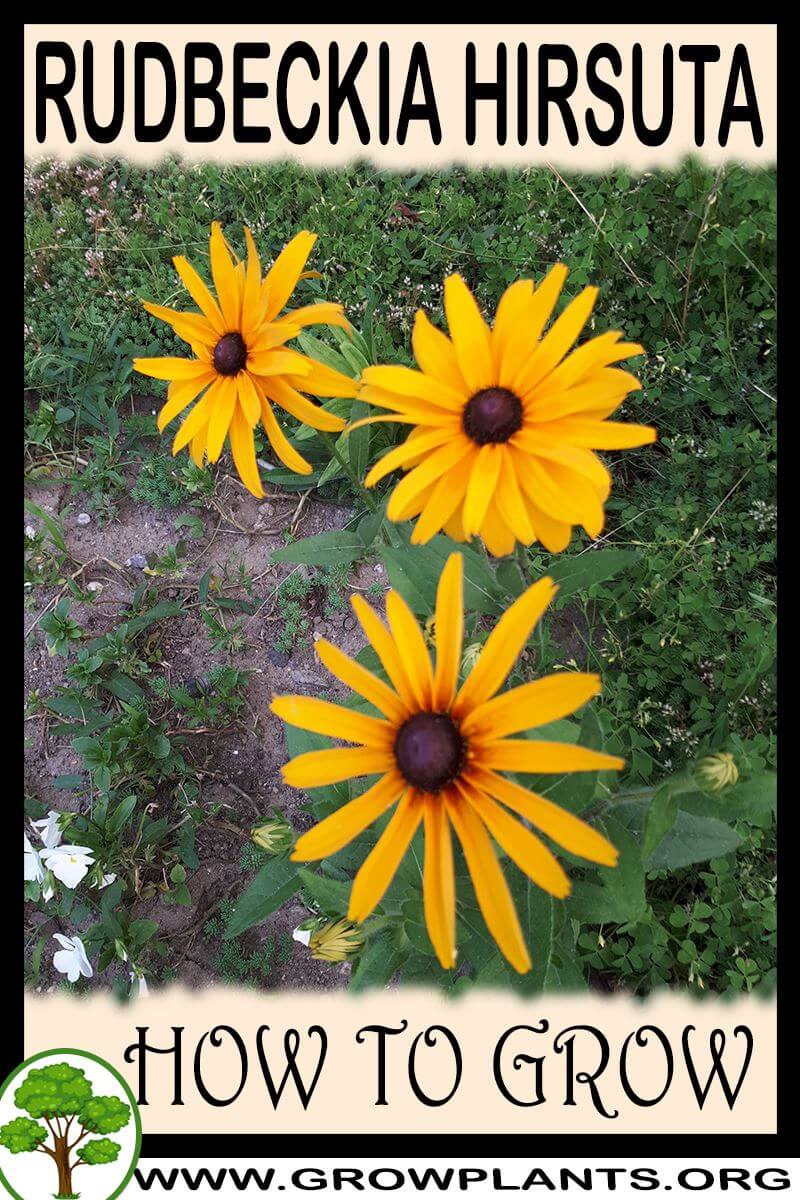
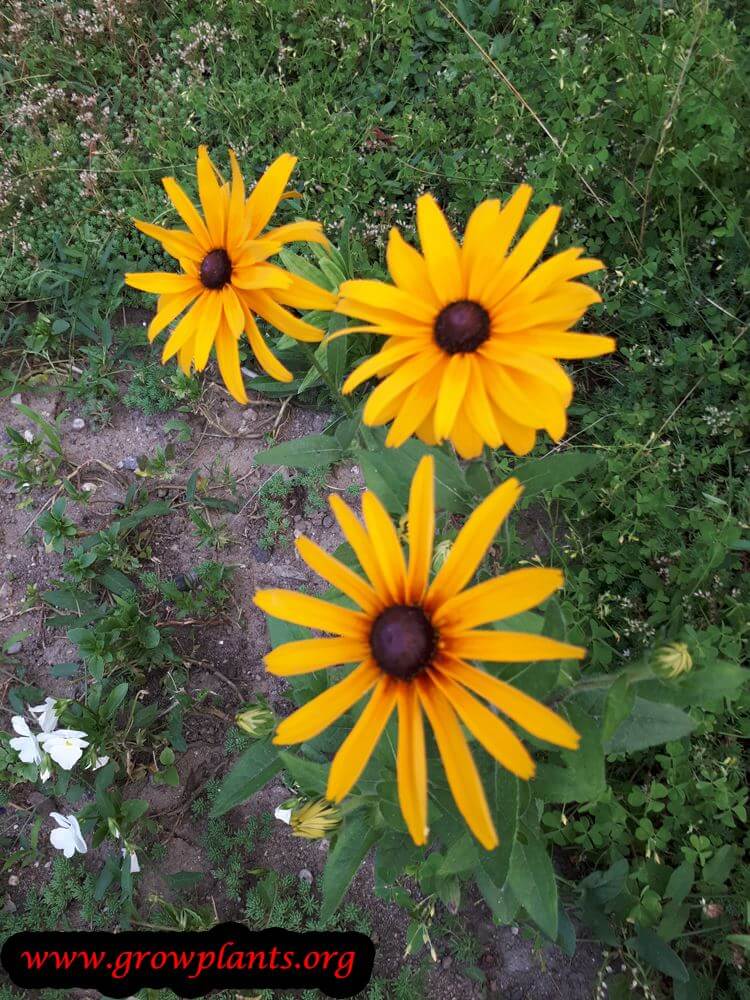
- Flower Characteristics: Daisy-form heads with orange, yellow or occasionally red rays around a dark brown-black cone; nectar-rich and very attractive to bees and butterflies.
Primary Uses & Landscape Value
- Functional & Ornamental Roles: Border and meadow ornamental, pollinator and butterfly plant, long-lasting cut flower and a traditional medicinal herb.
Care Guide: Planting, Soil & Watering
Overview: This black-eyed Susan is an easy, sun-loving daisy that grows best in full sun to half shade in rich, well-drained soil. It likes steady moisture through the growing season and rewards you with a long display, though it can self-seed freely.
Quick Care Requirements
| Requirement | Ideal Condition |
|---|---|
| Planting Season | Spring to autumn (autumn in warmer areas) |
| Growth Rate | Moderate to fast |
| Soil Type | Rich, well-draining |
| Water Need | Moderate to high; keep evenly moist |
Planting & Establishment
- Best Planting Season: Plant from spring through autumn, choosing autumn in warmer regions and spring where winters are cold.
- How to Plant:
- Hole Preparation: Dig a hole as wide as the root ball in an open, sunny spot.
- Soil Amendments: Work in compost or organic matter to enrich the soil and improve moisture retention with good drainage.
- Planting Depth: Set the crown level with the soil surface and firm in.
- Growth Speed & Expectations: Grows quickly to 30-100 cm and flowers generously; expect it to seed around and form spreading clumps.
Soil, Watering & Drainage Care
- Soil Mix & Drainage Needs: Prefers a rich, moisture-retentive but well-drained soil; avoid ground that stays waterlogged.
- Watering Schedule & Technique:
- Young / Newly Planted: Keep the soil consistently moist while plants establish.
- Established: Water regularly and fairly deeply, especially in dry spells, to keep flowering going.
- Seasonal Adjustments: More water in summer heat; little needed in winter as the plant rests.
Climate, Light & Hardiness
Rudbeckia hirsuta (a Black-eyed Susan type) is a full-sun-to-half-shade herbaceous plant, grown as a perennial or annual, that thrives in temperate, mediterranean, and subtropical climates. It is broadly cold-hardy, planted in spring in cooler zones (3–9) and in autumn in warmer zones (9–11).
Quick Climate Specifications
| Climate Zones | Temperate, mediterranean, subtropical |
| USDA Hardiness Zones | 3–9 (spring planting); 9–11 (autumn planting) |
| Optimal Temp Range | Approximately 15–27°C (59–81°F) during active growth and bloom |
| Approx. Survival Minimum | Established plants in its coldest hardy zone may briefly withstand winter minimums around −40°C to −34°C (−40°F to −30°F) |
| Frost Tolerance | High |
| Light Conditions | Full sun to half shade |
| Wind Tolerance | Moderate |
Sunlight & Light Exposure
Optimal Light Setup
Full sun gives the strongest stems and heaviest bloom, though half shade is well tolerated.
Direct Sun Requirement
Direct sun supports the best flowering; in half shade, growth is generally still good with a somewhat lighter bloom.
Best Exposure / Orientation
An open, sunny to lightly shaded border or meadow-style planting suits this pollinator-friendly plant well.
Temperature Extremes & Hardiness
USDA Hardiness & Regional Limits
Reliably hardy outdoors from zone 3 through 9 with spring planting, and can also be grown in the warmer zone 9–11 range with an autumn planting timed to its climate.
Cold Damage & Winter Protection
As a herbaceous perennial (or self-seeding annual) it dies back in cold winters and regrows from the roots or reseeds; established plantings need no special winter protection within their hardy range.
Frost Sensitivity
Mature foliage and flowers are cut back by hard frost at the end of the season; young seedlings are more cold-sensitive than established plants.
Extreme Heat Tolerance
Good heat tolerance in warm temperate and subtropical summers, provided adequate soil moisture is available.
Wind, Humidity & Microclimate
Humidity Preferences
Adapts to a range of humidity levels typical of temperate and subtropical gardens.
Dry-Air Tolerance
Reasonably tolerant of dry air, though it performs best with consistent soil moisture.
Wind Tolerance
Moderate wind tolerance; taller stems may benefit from some shelter or support in exposed, windy sites.
Rainfall & Seasonal Moisture
Prefers evenly moist, well-drained, rich soil and responds well to regular seasonal rainfall or irrigation.
Microclimate Recommendations
An open, sunny to lightly shaded bed with fertile, well-drained soil supports vigorous growth and long summer-to-autumn bloom.
Growing in Pots, Balconies & Indoors
Rudbeckia hirsuta is a cheerful, black-eyed-Susan-type daisy for full sun to light shade. It is not a houseplant, but it flowers generously in a good-sized pot on a sunny patio or balcony.
Quick Details
- Container Size: A medium pot, roughly 8-15 L (2-4 gal), sized to the plant
- Indoor Suitability: Not a houseplant – a full-sun daisy for pots and borders
- Best Spot: Full sun to light shade (best bloom in full sun)
- Soil & Drainage: Free-draining potting mix enriched with organic matter; add perlite for aeration.
- Watering in Pots: Keep the mix evenly moist – it likes more water than many daisies and sulks if a pot dries out.
Indoors & On the Windowsill
- Houseplant limits: It needs strong light to bloom; indoors it grows leggy and flowers poorly.
- Windowsill growing: Only the sunniest sill would do, and it is far better grown outdoors – treat it as a patio plant.
On a Balcony or Patio
- Light & wind: Give it full sun for the most flowers (it tolerates a little shade). Keep taller stems staked in windy, exposed pots.
- Practicalities: Water the pot in – allow for its weight on a balcony, and set it where drainage runoff won’t be a nuisance.
Choosing the Pot, Soil & Long-Term Care
- Pot & drainage: Choose a pot with strong drainage holes and skip a standing-water saucer, which invites root rot. Terracotta breathes and dries quickly, which suits these sun-lovers; glazed or plastic pots hold moisture longer if you can’t water often.
- Potting mix: Free-draining potting mix enriched with organic matter; add perlite for aeration.
- Feeding: Potted plants use up their food faster because watering leaches nutrients away, so feed a little more often through the growing season than you would in open ground.
- Repotting: Every couple of years, refresh the mix; on perennial clumps, lightly trim the roots and cut back the top growth at the same time.
Fertilizing & Feeding
A light feeder: this adaptable, spreading native prairie perennial flowers reliably in average soil, and light, balanced feeding is usually all it needs – rich feeding mostly encourages weedier spread rather than better bloom.
Quick Fertilizing Specs
| Feeding Level | Light feeder |
|---|---|
| Main Nutrient Priority | Balanced feeding kept light; supports steady growth and reliable bloom without pushing lush, floppy foliage |
| Best Feeding Period | Spring as new growth emerges through summer bud set |
| Organic Options | Compost or aged organic matter worked into the bed |
| Micronutrients | Usually supplied by a complete fertilizer; correct specific issues only when diagnosed |
| Soil pH | Adaptable to a wide range of soils; tolerates average to poor fertility |
Feeding by Growth Stage
Spring emergence and clump growth
Support fresh basal foliage and upright stem growth as the clump breaks dormancy.
| Nutrient direction | A balanced, general-purpose fertilizer applied lightly. |
|---|---|
| Timing | As new growth emerges in spring. |
| Frequency | A single light feeding as growth resumes is usually enough for this adaptable native perennial. |
| Fertilizer types | A balanced, general-purpose garden fertilizer, Compost or aged organic matter worked into the bed |
| Precautions | Keep feeding light – this species spreads readily and grows well in average soil, and rich feeding mainly fuels weedy spread rather than better flowering. |
Summer into autumn flowering
Sustain the daisy-form, black-centered flower display that draws pollinators through summer and into autumn.
| Nutrient direction | Continue only light, balanced feeding if growth looks thin; established clumps often flower well unfed. |
|---|---|
| Timing | Summer through autumn while flower buds form and open. |
| Frequency | An occasional light feeding during active bloom is usually sufficient. |
| Fertilizer types | A balanced fertilizer used sparingly on established clumps |
| Precautions | Avoid heavy nitrogen, which can push leafy growth and floppy stems at the expense of flowers. |
Winter dieback and dormancy
Allow the clump to die back to the crown and rest through winter before spring regrowth.
| Nutrient direction | None – withhold fertilizer while the plant is dormant. |
|---|---|
| Timing | After bloom fades through winter, once foliage dies back. |
| Frequency | No feeding at this stage. |
| Fertilizer types | No feeding at this stage; resume light feeding when new spring growth appears. |
| Precautions | Do not fertilize dormant or dying-back growth. |
Nutrient Deficiency Signs & Corrections
Older leaves pale or yellow, with reduced vigor and sparse flowering.
| Possible causes | low soil nitrogen, thin or heavily leached soil, an extended period without feeding |
|---|---|
| Appears first on | older, lower leaves |
| What to check | feeding history, soil quality, overall clump vigor |
| Possible correction | Apply a balanced, general-purpose fertilizer at a light rate. |
New leaves turn yellow between veins that stay green.
| Possible causes | high soil pH limiting iron availability, waterlogged or compacted soil restricting root uptake, naturally alkaline or heavily limed soil |
|---|---|
| Appears first on | newest leaves |
| What to check | soil pH, drainage, recent liming or amendment history |
| Possible correction | Correct soil pH toward neutral and, if confirmed, apply a chelated iron product per its label. |
Tall, weak stems that flop or need staking, with lush leaves but fewer flowers.
| Possible causes | excess nitrogen from overfeeding, too-rich soil, insufficient sun encouraging soft, stretchy growth |
|---|---|
| Appears first on | overall stem and plant habit |
| What to check | recent feeding rate, soil richness, sun exposure |
| Possible correction | Reduce feeding, avoid nitrogen-heavy products, and ensure full sun exposure to promote sturdier growth. |
Pruning, Training & Seasonal Maintenance
This Black-eyed-Susan-type Rudbeckia is a herbaceous perennial (behaving as an annual in the coldest zones) that regrows from a basal crown, so it tolerates a full seasonal cutback without harm. The plant’s own notes flag it as aggressive/self-seeding, so deadheading through the summer/autumn bloom is the main ongoing task to keep it in bounds; the last flush of daisy-form seed heads is usually left standing into autumn/winter for garden interest and bird forage, then the whole clump is cut back once dormant.
Quick Pruning & Maintenance Specs
| Pruning Tolerance | High – cutting to the base does not harm the crown |
| Primary Pruning Window | Autumn/winter, once bloom has finished |
| Secondary Maintenance Window | Ongoing deadheading through summer/autumn bloom |
| Typical Frequency | Deadhead through bloom; one seasonal cutback |
| Main Objective | Limit aggressive self-seeding; clear old growth |
| Young Plant Priority | None beyond removing damaged leaves while establishing |
| Mature Plant Priority | Deadhead + seasonal cutback of dead leaves and bloom stems |
| Best Tool Type | Hand snips or bypass secateurs |
| Avoid Heavy Pruning During | Active summer bloom, except for routine deadheading |
Pruning by Plant Age & Size
Newly Established
Remove only damaged foliage; let the plant establish its root system before any cutting back.
Young / Formative
No structural training applies to this basal-rosette forb.
Mature / Established
Deadhead selectively through bloom to slow self-seeding, leaving a last flush of seed heads into autumn/winter, then remove dead leaves and spent bloom stems once the plant is dormant.
Seasonal Pruning Schedule
| Ongoing Sanitary (Summer/Autumn bloom) | Limit aggressive self-seeding | Spent flower heads as they fade | The final flush, if seed-head interest/bird forage is wanted | Some repeat flowering from side buds | Fewer volunteer seedlings |
| Dormant/Autumn–Winter | Clear old growth | Dead leaves and bloom stems, cut to the base | The crown | Fresh basal growth next season | None – fully dormant |
Special Growth to Remove
- Spent bloom stems, removed on a rolling basis to curb self-seeding
- Dead leaves, cleared with the seasonal cutback
Container & Small-Space Pruning
Suits containers; deadhead more diligently than in open ground given this plant’s noted aggressive seeding tendency, since pots offer no room for volunteer seedlings to be absorbed.
Tools
Hand snips or bypass secateurs for the fibrous bloom stems; no loppers or saw needed.
Tool Hygiene & Disease Risk
Routine: clean, sharp tools are sufficient. Aphids and slugs are the pests noted, with no major transmissible disease risk requiring disinfection.
Cut Placement & Technique
Deadhead just above the next leaf or side bud; make the seasonal cutback close to the basal foliage.
Heavy Pruning & Rejuvenation
Tolerates a full seasonal cutback of dead leaves and bloom stems without harming the crown, since regrowth comes from the base each year.
Post-Pruning Care
No extra feeding needed after the seasonal cutback; resume normal watering after deadheading.
Common Pruning Mistakes
- Letting all spent blooms go to seed given the plant’s aggressive self-seeding habit
- Cutting back while stems are still green and actively feeding the crown
When NOT to Prune
Avoid cutting back green, actively growing stems outside of routine deadheading.
Recommended Tools (by task)
- bypass_secateurs – the seasonal cutback of dead leaves and bloom stems
- precision_snips – routine deadheading of individual spent blooms
Bloom & Flower Guide
Quick Details
- Bloom Season: Summer and autumn (earlier, into spring, in warm climates)
- Time to First Bloom: Often flowers the first year from an early spring sowing; as a short-lived perennial it returns to bloom in following summers
- Flower Appearance: Daisy-form flowers in orange, yellow or red with a dark brown-black central cone
- Edibility: Grown as an ornamental and cut flower; not an edible flower, and the sap can irritate sensitive skin
Detailed Blooming Overview
Black-eyed Susans are among the most dependable warm-season daisies, throwing out golden, dark-eyed blooms for weeks and drawing in bees and butterflies. They make an excellent cut flower and self-sow gently where happy.
Flower Characteristics
- Golden to orange-red rays around a prominent dark central cone.
Bloom Care & Thinning
- Managing the bloom: Deadhead to prolong flowering and to limit self-seeding; leave the last cones standing for birds.
- Pollination: Pollinated by bees and butterflies.
Bloom Health & Protection
- Powdery mildew: Common in humid, crowded plantings; spacing plants for airflow and applying a sulfur-based or neem-oil treatment helps.
- Aster yellows: This phytoplasma can deform and green the flower heads; there is no cure, so remove affected plants and manage the leafhoppers that spread it.
Pests, Diseases & Troubleshooting
Overview: Rudbeckia (black-eyed Susan) are easygoing daisies whose main enemies are foliar fungal diseases in humid, crowded plantings – angular leaf spot above all – plus slugs on seedlings. Give them room, water at the base and clear old debris, and insects stay a minor concern.
Quick Troubleshooting Overview
| Issue / Pest | Main Symptom | Primary Solution |
|---|---|---|
| Angular leaf spot | Angular brown-black blotches bounded by leaf veins, spreading upward | Remove affected leaves, base-water, space plants, copper fungicide |
| Powdery mildew | White powdery film on leaves late in the season | Improve airflow, sulfur or bicarbonate spray |
| Slugs & snails | Grazed seedlings and shredded young leaves; slime trails | Iron-phosphate bait, hand-pick, grit barrier |
| Aphids | Clusters on buds and shoots; distortion and honeydew | Hose off, encourage predators, insecticidal soap |
| Rust / downy mildew | Orange pustules or grey mold beneath leaves | Remove debris, airflow, appropriate fungicide |
| Crown rot | Wilting and collapse in wet, heavy soil | Improve drainage, avoid winter wet |
Common Pests & Management
- Aphids (Myzus / Aphis spp.):
- Symptoms: Soft green or black insects clustered on buds and new shoots, causing distortion, honeydew and sooty mold, and occasionally spreading aster yellows.
- Prevention & Control: Hose off or squash small colonies and encourage ladybirds, hoverflies and lacewings; insecticidal soap or neem handles heavier outbreaks. Avoid excess nitrogen.
- Slugs and snails (Gastropoda):
- Symptoms: Seedlings and young leaves grazed to ribbons overnight, with slime trails; most damaging in damp weather and on emerging spring growth.
- Prevention & Control: Hand-pick after dark, clear damp hiding spots, and protect plants with iron-phosphate bait or a grit/copper barrier.
- Leaf miners (Agromyzidae larvae):
- Symptoms: Pale winding or blotchy tunnels within the leaf tissue; largely cosmetic.
- Prevention & Control: Pick off and destroy mined leaves and remove debris; predators usually keep them in check without spraying.
- Four-lined plant bug (Poecilocapsus lineatus):
- Symptoms: Small sunken dark spots on leaves from feeding, which can look like a disease; the greenish, striped bugs drop quickly when disturbed.
- Prevention & Control: Tolerate light damage, remove weedy hosts nearby, and treat only heavy infestations with insecticidal soap early in the season.
Diseases & Fungal Issues
- Angular leaf spot (Septoria rudbeckiae / Cercospora spp.):
- Symptoms: The classic rudbeckia disease – angular brown to black spots bounded by leaf veins, starting on lower leaves and moving up until foliage browns and dies, especially in warm, wet, crowded conditions.
- Treatment & Management: Space plants for airflow, water at the base and never overhead, and clear fallen leaves that harbor spores. Remove affected foliage promptly; a copper fungicide can slow spread on valued plantings, and resistant selections help.
- Powdery mildew (Golovinomyces / Erysiphe spp.):
- Symptoms: White powdery coating on leaves, common late in the season and in crowded, shaded, still conditions.
- Treatment & Management: Improve airflow and light, thin dense clumps, and treat with sulfur or potassium bicarbonate at first signs.
- Rust and downy mildew (Puccinia / Plasmopara spp.):
- Symptoms: Orange-brown pustules (rust) or greyish downy growth on leaf undersides with yellow blotches above (downy mildew), in wet weather.
- Treatment & Management: Remove affected leaves and debris, improve airflow, and avoid wetting foliage; apply an appropriate fungicide only if it persists.
- Aster yellows (phytoplasma):
- Symptoms: Distorted, greenish, deformed flowers and stunted yellowed growth; incurable and spread by leafhoppers.
- Treatment & Management: Remove and destroy affected plants immediately, control leafhoppers and weedy reservoirs; there is no chemical cure.
Growing Difficulties & Abiotic Problems
- Crown and root rot:
- Cause & Symptoms: Wilting and collapse when plants sit in wet, heavy or poorly drained soil, especially over winter.
- Correction Strategy: Improve drainage, avoid winter waterlogging, and don’t mulch against the crown; divide congested clumps to keep them vigorous.
- Drought scorch:
- Cause & Symptoms: Leaf edges browning and wilting in prolonged dry heat, particularly on young plants.
- Correction Strategy: Water deeply and mulch to conserve moisture during establishment; mature plants are fairly drought-tolerant.
- Legginess / flopping:
- Cause & Symptoms: Stretched, floppy stems in too much shade or over-rich soil.
- Correction Strategy: Grow in full sun on moderate soil; support or pinch tall types, and divide crowded clumps.
What Helps – Products & Tools
For rudbeckia keep a copper or sulfur fungicide for the leaf-spot and mildew that are its main problems, iron-phosphate bait for slugs, and insecticidal soap for aphids and plant bugs. Most of the battle is cultural – spacing, base watering and sanitation. Apply sprays in the cool of evening to protect pollinators and follow the label.