
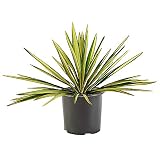


Plant Profile & Key Characteristics
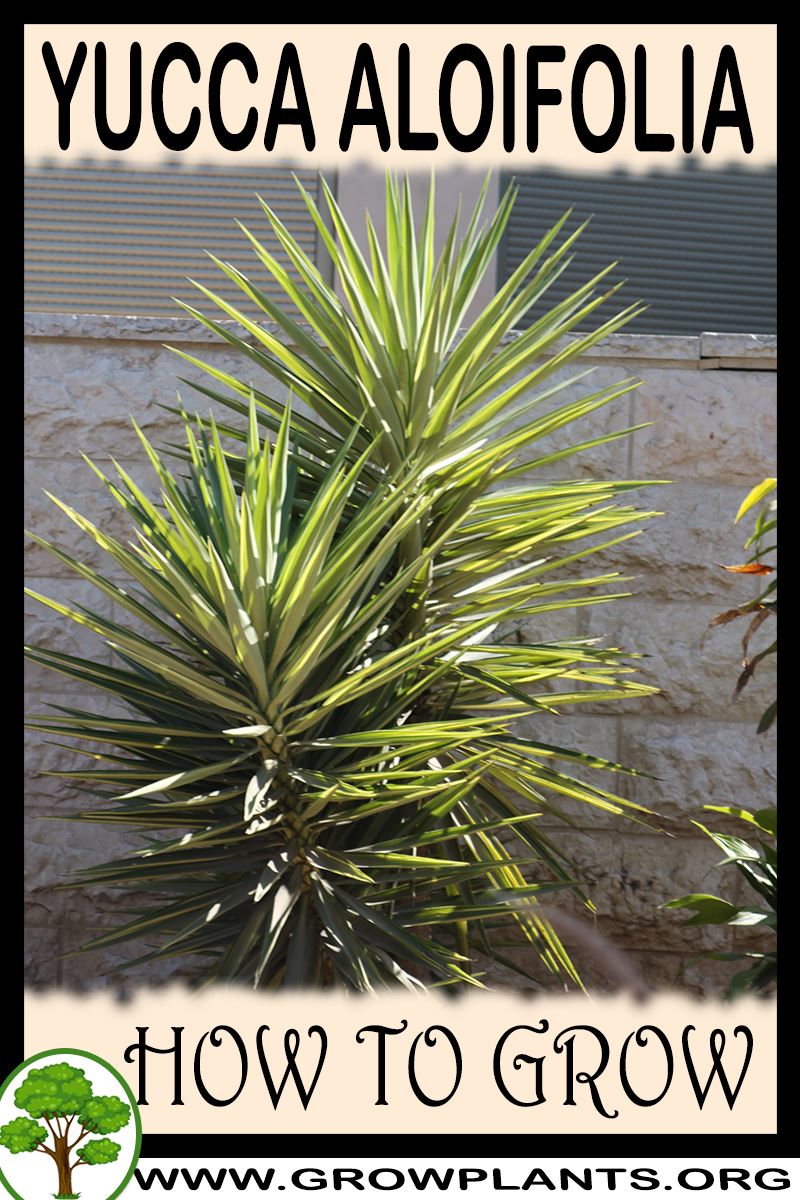
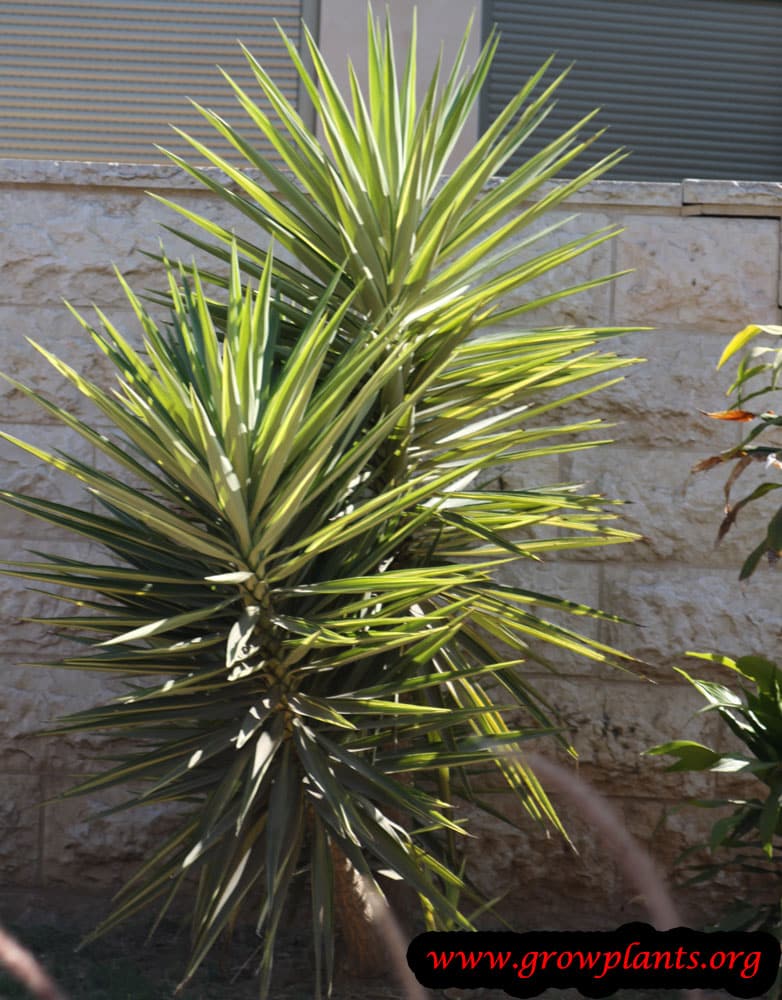
Overview: Yucca aloifolia (Spanish bayonet) is an evergreen perennial succulent, ranging from a shrub to a small tree 1–7 m (3–21 ft) tall. It is grown as a sculptural drought-tolerant ornamental with rosettes of stiff sword-shaped leaves.
Quick Specifications
| Specification | Attribute |
|---|---|
| Plant Type / Life Cycle | Perennial |
| Foliage Type | Evergreen |
| Mature Size | 1–7 m (3–21 ft) tall |
| Growth Rate | Slow |
| Root System | Fibrous, spreading; produces basal offsets |
| Toxicity | Mildly toxic if ingested (saponins); leaf tips are sharp |
| Hardiness | USDA zones 7–11 |
Growth Form & Structure
- Height & Spread: Reaches 1–7 m (3–21 ft) in the ground; grown outdoors rather than as an indoor plant, though it also suits large pots.
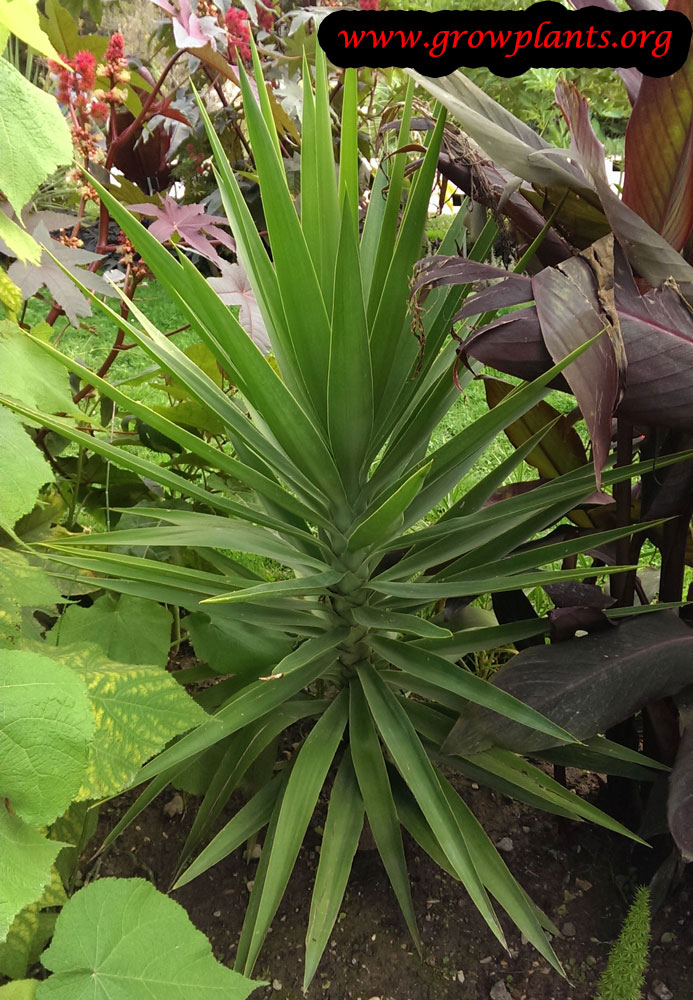
- Growth Habit & Form: Succulent rosette borne on a thickening woody trunk or stem, developing into a shrub or small tree with age.
- Lifespan & Maturity: Long-lived; slow-growing, taking years to build a trunk and flower.
Anatomy & Physical Features
- Leaves & Foliage: Green (or green-and-yellow variegated) fleshy leaves in rosettes, each drawn out into a sharp spear-like point.
- Flower Characteristics: White to cream-yellow flowers borne in umbel-like clusters on an upright stalk.
Primary Uses & Landscape Value
- Functional & Ornamental Roles: Architectural drought-tolerant accent for beds, xeriscapes and containers. Site away from walkways because of the dangerously spiny leaf tips.
Care Guide: Planting, Soil & Watering
Overview: Yucca is a tough, architectural succulent that thrives in full sun and sharply drained, sandy soil. It is highly drought tolerant, storing water in its fleshy leaves, and needs only sparing watering with excellent drainage to prevent rot.
Quick Care Requirements
| Requirement | Ideal Condition |
|---|---|
| Planting Season | Spring or autumn, in the milder parts of the growing season |
| Growth Rate | Slow |
| Soil Type | Sandy, gritty, sharply draining soil |
| Water Need | Low — water sparingly and let the soil dry out fully between waterings |
Planting & Establishment
- Best Planting Season: Plant in spring or autumn when temperatures are mild; avoid setting it into cold, wet soil.
- How to Plant:
- Hole Preparation: Dig a hole as deep as and a little wider than the root ball in a sunny, freely draining spot; work grit into heavy ground first.
- Soil Amendments: Add coarse sand or grit rather than rich organic matter — yucca prefers lean, fast-draining soil and rots in soggy ground.
- Planting Depth: Set the plant at the same depth it grew previously, keeping the crown at or just above soil level to avoid rot.
- Growth Speed & Expectations: Growth is slow but steady; over years it forms a bold, trunked rosette (ultimately 1–7 m depending on conditions).
Soil, Watering & Drainage Care
- Soil Mix & Drainage Needs: Sharp drainage is essential — use a sandy, gritty mix (or cactus/succulent compost in pots) so water never lingers around the roots.
- Watering Schedule & Technique:
- Young / Newly Planted: Water lightly after planting to settle the roots, then only occasionally while the plant establishes.
- Established: Water deeply but infrequently, allowing the soil to dry completely between waterings; established plants shrug off long dry spells.
- Seasonal Adjustments: Water a little during prolonged summer heat and keep almost dry through cool, wet winters.
Climate, Light & Hardiness
Yucca aloifolia (Spanish Bayonet) is a woody succulent shrub to small tree for desert, Mediterranean, subtropical, and temperate climates, growing best in full sun to half shade. It is a genuinely cold-hardy yucca, tolerating winter freezes within its zone 7–11 range.
Quick Climate Specifications
| Climate Zones | Desert, Mediterranean, Subtropical, Temperate |
| USDA Hardiness Zones | Approximately 7–11 |
| Optimal Temp Range | Approximately 18–29°C (65–85°F) |
| Approx. Survival Minimum | In zone-7 locations, established plants can withstand typical zone-7 winter lows near −17°C to −12°C (0°F to 10°F) |
| Frost Tolerance | High |
| Light Conditions | Full Sun / Half Shade |
| Wind Tolerance | High |
Sunlight & Light Exposure
Optimal Light Setup
Full sun is ideal for compact, well-colored growth; half shade is also tolerated.
Direct Sun Requirement
Yes - it is a full-sun-adapted plant that performs best with strong, direct light.
Shade & Heat Management
No special heat management is needed; it is well adapted to hot, sunny sites.
Best Exposure/Orientation
An open, south- or west-facing bed with no overhead canopy; keep it well away from foot traffic and children's play areas given its sharply pointed leaves.
Temperature Extremes & Hardiness
USDA Hardiness & Regional Limits
The site places it in hardiness zone 7–11, making it one of the more broadly cold-tolerant yuccas, suitable well beyond purely frost-free climates.
Cold Damage & Winter Protection
Young, newly planted specimens are more cold-sensitive than established plants; in the coldest part of its range, well-drained soil is important since cold, waterlogged roots are more damaging than cold air alone.
Frost Sensitivity
Low - established plants tolerate hard frost and freezing well.
Extreme Heat Tolerance
Excellent - as a drought-tolerant, desert-adapted succulent it handles prolonged summer heat easily.
Wind, Humidity & Microclimate
Humidity Preferences
Prefers dry to moderate air; not suited to constantly humid, muggy conditions.
Dry-Air Tolerance
Very high - thrives in arid climates.
Wind Tolerance
High; its stiff, rigid leaves and woody structure handle open, windy sites well.
Rainfall & Seasonal Moisture
Best suited to climates with a dry season and sandy, well-drained soil; in wetter climates, sharp drainage is essential to prevent root rot.
Microclimate Recommendations
An open, sunny bed with excellent drainage suits it best; avoid low spots where cold air or water collects.
Growing in Pots, Balconies & Indoors
Yucca aloifolia (Spanish bayonet) is a bold, sun-loving yucca that really belongs outdoors – it grows large and wants full sun and open conditions, so keep it in a container only while young or run it as a patio or landscape specimen. In a pot it makes a striking, architectural feature with sharp-tipped leaves.
Quick Details
- Container Size: A large, heavy, wide-based pot for stability; size up as the plant grows
- Indoor Suitability: Container only while young; really an outdoor/patio plant
- Best Spot: Full sun (very bright light if potted young)
- Soil & Drainage: Free-draining, gritty cactus-type mix – never wet
- Watering in Pots: Water only when the top of the mix dries; drought-tolerant and hates soggy roots
Indoors & On the Windowsill
- As a houseplant: Not really – it grows too large and wants far more direct sun than a room offers. A young plant can spend a season in a bright pot, but it soon outgrows a windowsill.
- Best kept outdoors: Give it full sun on a patio or in the ground; a container simply limits its size for a while.
- Overwintering: Where it is not hardy, a pot lets you move it to a bright, cool, frost-free spot for winter.
- Keep it safe: The leaf tips are sharp and the foliage is mildly toxic to cats and dogs – site it away from small children and pets.
On a Balcony or Patio
- Sun, wind & weight: A yucca loves full sun and shrugs off wind and reflected heat, but a tall potted specimen is heavy and top-heavy – use a wide, weighted pot and stand it where gusts will not topple it. Pots dry fast in sun, so check the mix in hot spells.
- Sharp leaves: Keep the spiny tips away from walkways, seating and where children play.
Choosing the Pot, Soil & Long-Term Care
- Pot & drainage: Choose a heavy, wide-based pot – a mature yucca is top-heavy and tips easily – with strong drainage holes and no standing saucer. A weighty terracotta or glazed pot beats lightweight plastic for stability.
- Potting mix: Free-draining and gritty – a cactus mix, or a standard mix opened up with plenty of coarse sand, perlite or pumice. A ready-made cactus and succulent soil mix provides that structure without mixing it yourself.
- Feeding: Feed lightly a couple of times through the growing season; potted plants lose nutrients to leaching, but yuccas are not hungry.
- Repotting: Slow-growing – pot up or refresh the mix every two to three years, and take care, the leaf tips are sharp.
Fertilizing & Feeding
A very light feeder once established: this slow-growing, drought-tolerant yucca is built for lean, sandy soil and needs little supplemental fertilizer.
Quick Fertilizing Specs
| Feeding Level | Light feeder |
|---|---|
| Main Nutrient Priority | Low-nitrogen feeding that favors slow, sturdy growth over soft new leaves |
| Best Feeding Period | During the warm active growing season |
| Organic Options | Compost worked into the sandy, well-drained planting site |
| Reduce/Stop Feeding | Hold off feeding once growth slows in cooler weather |
| Micronutrients | Rarely needed in well-drained soil; treat only a diagnosed issue |
| Soil pH | Tolerates a wide range; well-drained sandy soil matters more than exact pH |
Feeding by Growth Stage
Active growing season
Support slow, sturdy new growth of the rosette and trunk without forcing lush, weak leaves.
| Nutrient direction | A light, low-nitrogen feeding is enough; this plant is built for lean soil, not rich feeding. |
|---|---|
| Timing | During the warm active growing season, spring through summer. |
| Frequency | Light, infrequent feeding suits this slow grower. |
| Fertilizer types | A diluted low-nitrogen or general landscape fertilizer, used lightly, Compost worked into the sandy, well-drained soil |
| Precautions | Avoid heavy or frequent feeding; overfeeding produces soft, floppy leaf growth and can worsen rot risk in slow-draining soil. Handle the sharp-tipped leaves with care while working around the base. |
Dormant or cool-season rest
Let the plant rest through its slow season without pushing new growth.
| Nutrient direction | None – withhold fertilizer while growth has slowed for the year. |
|---|---|
| Timing | Through the cooler months or whenever growth clearly slows. |
| Frequency | No feeding at this stage. |
| Fertilizer types | No feeding at this stage; do not fertilize until active growth resumes. |
| Precautions | Do not fertilize while the plant is dormant or slow-growing; unused nutrients simply accumulate as salts. |
Nutrient Deficiency Signs & Corrections
Older leaves fade to pale green and overall growth becomes even slower than usual.
| Possible causes | low available nitrogen in very lean, sandy soil, nutrients leaching away in fast-draining sandy soil, root stress limiting nutrient uptake |
|---|---|
| Appears first on | older, lower leaves |
| What to check | feeding history, soil texture and drainage, root and base condition |
| Possible correction | Give a light, diluted low-nitrogen feeding during active growth rather than a strong dose. |
New leaves emerge pale yellow while the veins stay green.
| Possible causes | high soil pH tying up available iron, compacted or waterlogged soil limiting root uptake, overly rich soil that does not suit this lean-soil plant |
|---|---|
| Appears first on | newest growth |
| What to check | soil pH and drainage, root health, recent soil amendments |
| Possible correction | Improve drainage and soil pH first; apply a chelated iron product per its label only if the pattern persists. |
Leaf tips brown and dry back even though watering has been consistent.
| Possible causes | fertilizer salts building up from feeding this lean-soil plant too often, poor drainage concentrating salts around the roots, underwatering that concentrates existing soil salts |
|---|---|
| Appears first on | leaf tips |
| What to check | recent feeding frequency and strength, drainage of the planting site, watering consistency |
| Possible correction | Stop feeding, water thoroughly to help move salts through the soil, and resume only light feeding once new growth shows. |
Pruning, Training & Seasonal Maintenance
Yucca aloifolia (Spanish bayonet) grows as one or more rosette ‘heads’ of rigid, sharply spine-tipped leaves atop a slowly thickening trunk that can reach 1–7m over many years. Like a palm, each head has a single growing point, so it tolerates no routine structural pruning of live leaves and no shaping cuts — the only regular work is removing fully dead, browned leaves and managing the sharp spine hazard where the plant meets pathways or play areas. The plant’s own facts flag pruning as an all-year task focused on dead leaves/stems and design, and separately flag the spines as a real safety concern around children.
Quick Pruning & Maintenance Specs
| Pruning Tolerance | Low (for live leaf/head removal); Moderate (for dead-leaf grooming and basal offset control) |
| Primary Pruning Window | Spring, if any structural work (topping, offset removal) is planned, so regrowth has a full season |
| Secondary Maintenance Window | Any time, for fully dead/browned leaf removal |
| Typical Frequency | Ongoing dead-leaf removal as needed; structural work (topping/offset removal) only occasionally, years apart |
| Main Objective | Remove dead leaves for tidiness and spine-hazard control; manage basal offsets; control height/head count only when truly necessary |
| Young Plant Priority | Leave the single growing point undisturbed; only remove damaged leaves |
| Mature Plant Priority | Remove the dead lower ‘skirt’ of leaves; decide whether to keep or remove basal offsets; only top an overly tall trunk if height genuinely needs controlling |
| Best Tool Type | Bypass secateurs or loppers for leaf bases; pruning saw for a trunk/head; pole pruner for leaves or heads out of safe reach on a mature specimen |
| Avoid Heavy Pruning During | Cold-season dormancy at the cooler edge of its zone 7–11 range; never cut the sole growing point of a single-headed plant unless prepared to lose that head |
Pruning by Plant Age & Size
Newly Established
No pruning of the growing point. Remove only clearly damaged or broken leaves; the single head needs to be left intact to establish.
Young / Formative
No structural training in the branching-shrub sense. If the plant produces basal offsets (suckers) early, decide now whether a single-trunk specimen or a multi-headed clump is wanted for the space, and remove or leave offsets accordingly — it’s easier to redirect this while the plant is small.
Mature / Established
Periodically remove the lowest ring of fully dead, browned leaves as the trunk lengthens and the plant naturally sheds older foliage slowly from below. If a trunk has become too tall or leggy for the space, it can be topped (cut through the trunk) to force new heads to sprout from below the cut — a significant, infrequent intervention, not routine maintenance.
Structural Pruning & Training
The only structural decisions are: (1) single-trunk vs. multi-headed clump, controlled by keeping or removing basal offsets, and (2) height control via topping a trunk that has outgrown its space, which converts that trunk into a multi-headed form as new growth resprouts below the cut. Routine canopy thinning doesn’t apply — there is no canopy, just the leaf rosette at each head.
Special Growth to Remove
- Fully dead, browned leaves in the lower ‘skirt’ — remove for appearance and, importantly, to reduce the spine hazard near paths, seating, or anywhere children play.
- Basal offsets/suckers — remove at the base if a single clean trunk is wanted (they can also be left to form a multi-trunk clump, or removed and replanted as new plants).
Container & Small-Space Pruning
Not typically grown as an indoor houseplant (per the plant’s own facts), but young specimens are grown in large outdoor planters/patio containers. In a container, the main leverage on size is root restriction and repotting frequency rather than top pruning — the growing point still shouldn’t be cut for size control.
Tools
Bypass secateurs or loppers for cutting individual leaves at their base (leaf bases can be thick and fibrous); a pruning saw for removing an offset at ground level or topping a trunk; a pole pruner for reaching leaves or a head on a tall, mature specimen without a ladder, given this species can reach up to 7m.
Tool Hygiene & Disease Risk
Increased. This species and its relatives are documented to get fungal leaf-spot disease (consistent with the ‘black spots’ noted among this plant’s own pest/disease facts); clean the blade between plants, and between cuts if visibly spotted or diseased leaf tissue is being removed, to avoid spreading it.
Cut Placement & Technique
Cut dead leaves at their base close to the trunk without gouging into the trunk tissue itself. If topping a trunk, make one clean, level cut through the trunk; expect new heads to emerge from dormant points below the cut rather than from the cut surface itself. Handle cut leaves by the base, away from the spine tip, and dispose of them carefully given the hazard.
Heavy Pruning & Rejuvenation
Tolerated but infrequent: topping an overly tall or leggy trunk is the rejuvenation option for this species, typically producing multiple new heads from below the cut over the following growing season(s). Expect a bare trunk section and a pause in the plant’s overall height gain while new heads establish; spring cuts recover fastest.
Post-Pruning Care
After removing a significant amount of the leaf skirt or after topping, watch the newly exposed trunk for sunburn/scorch if the plant has been shaded by its own foliage until now — introduce sun exposure gradually if the specimen was previously heavily leaved. Monitor a fresh topping cut for rot in wet weather; avoid feeding immediately after a hard cut.
Common Pruning Mistakes
- Cutting the sole growing point on a single-headed plant expecting it to regrow from that same tip — it won’t; only offsets/dormant buds lower down can replace it.
- Stripping too many green, healthy leaves at once for a ‘tidier’ look, which stresses the plant and exposes the trunk to sunburn.
- Handling cut leaves without care for the spine tips.
When Not to Prune
Avoid major structural cuts (topping, offset removal) during cold-season dormancy at the cooler end of its hardiness range, and avoid removing large amounts of leaf cover right before a heat wave, which leaves the trunk suddenly exposed to sunburn.
Recommended Tools (by task)
| Task | Tool Category | Why |
| Removing dead leaves at the base, young to mature plant | bypass_secateurs | Clean cuts on fibrous leaf bases close to the trunk |
| Removing a basal offset or topping a mature trunk | pruning_saw | Trunk and offset bases are too thick for secateurs or loppers |
| Reaching leaves/heads on a tall, mature specimen (up to 7m) | pole_pruner | Avoids working from a ladder near sharp spine-tipped foliage at height |
Pruning Troubleshooting
| Problem | Possible Cause | What to Check | Corrective Action |
| A head stops growing after a cut | The single growing point of that head was cut | Whether the cut removed the actual apical growing tip, not just leaves | Wait to see if dormant buds lower on that trunk sprout new heads; otherwise that trunk section will not regrow from the cut itself |
| Sunburned/scorched patches on trunk after leaf removal | Too much leaf skirt removed at once, exposing previously shaded trunk | How much foliage was removed and how suddenly | Remove dead leaves gradually over more than one session in future; for now, monitor the exposed area and avoid further stripping until the trunk acclimates |
| Black spotting on leaves near pruning cuts | Fungal leaf-spot disease, spread via tools or wet conditions | Whether other unpruned leaves also show spotting, and recent tool hygiene | Remove affected leaves, clean blades between cuts, and avoid pruning in prolonged wet weather |
Propagation Guide
Yucca aloifolia (Spanish Bayonet) can be grown from seed, but the most practical route for a home grower is vegetative: rooting basal offsets or sections of the bare trunk (‘cane cuttings’), which is also the only reliable way to keep a variegated selection true, as site data notes. Difficulty is moderate – the methods themselves are simple, but establishment is slow and the sharp-tipped leaves need careful handling.
Quick Propagation Specs
| Best Propagation Method | Basal offsets (‘pups’) or rooted trunk/cane cuttings |
| Alternative Methods | Seed (plain species only, not variegated forms) |
| Propagation Difficulty | Moderate |
| Seed True-to-Type | Usually true-to-type for the plain species; variegated selections do not come true from seed |
| Vegetative True-to-Type | Yes, including for variegated forms |
| Best Propagation Season | Spring, in line with the site’s recorded spring/autumn planting season |
| Seed Germination Time | Typically several weeks, and can be uneven |
| Cutting Rooting Time | Often several weeks to a few months for new roots and shoots to form |
| Germination Temperature | Warm conditions, roughly 21–27°C / 70–80°F |
| Seed Sowing Depth | Shallow, roughly 1–2cm (0.5–1in) |
Growing from Seed
Seed Handling & Viability
Use fresh, plump seed where possible; viability declines with prolonged storage.
Sowing Season
Spring, matching the site’s recorded planting season.
Sowing Depth & Orientation
Sow shallowly, roughly 1–2cm (0.5–1in) deep, in a well-drained, sandy mix.
Germination Conditions
Warm conditions of roughly 21–27°C / 70–80°F suit this desert- and subtropics-adapted species; keep the mix barely moist, never waterlogged.
Germination Time
Typically several weeks, and can be uneven – do not discard trays too early.
Seedling Care
Grow on in bright light with sharp drainage; seedlings are slow-growing at first, in keeping with this species’ generally slow growth rate.
Stem Cuttings
Cutting Type
Leafless sections of the trunk (‘cane cuttings’), taken once a plant has developed enough woody stem.
Best Timing
Spring, at the start of the growing season.
Cutting Preparation
Cut a firm section of trunk cleanly; wear gloves and keep the sharp, spine-tipped leaves of the parent plant well clear of the face and eyes while working, as site data specifically flags the spines as hazardous. Let the cut ends callus for a few days in a dry, shaded spot before setting the cane in a rooting medium.
Rooting Setup
Set the cane upright or on its side, partly buried, in a well-drained, sandy mix; keep just barely moist rather than wet.
Rooting Hormone
Optional – can help but is not required for canes to root and sprout.
Rooting Time
Often several weeks to a few months before new roots and shoots appear.
Division, Offsets, Pups & Suckers
Established plants produce basal offsets (pups) at the base of the trunk. Remove a pup with some roots attached where possible, using gloves given the spiny foliage; pot it into a well-drained mix and keep lightly moist until it is growing independently. Offsets and cane cuttings are the only ways to guarantee a variegated plant stays variegated, as site data notes.
Bloom & Edible Flower Guide
Quick Details
- Bloom Season: Spring
- Time to First Bloom: On established plants, after a few years of growth
- Flower Appearance: A large upright cluster (panicle) of creamy white to yellowish bell-like flowers on a tall stalk
- Edibility: The petals are edible – traditionally eaten cooked (fried or in eggs) once the bitter central parts are removed; note the rest of the plant contains saponins, is not for eating and is best kept from pets
Detailed Blooming Overview
In spring an established Spanish bayonet sends up a tall stalk crowded with creamy, bell-shaped flowers. Beyond the display, the petals are a genuine edible flower, long used in Central American kitchens where they are cooked after the bitter reproductive parts are taken out. The bloom is also famous botanically: yuccas are pollinated by the yucca moth, which deliberately carries pollen between flowers and lays its eggs inside – a textbook partnership in which neither can reproduce without the other.
Flower Characteristics
- Creamy white to yellowish, bell-shaped flowers.
- Carried in a large, upright panicle on a tall stalk.
- The petals are the edible part; use them cooked, not the green centre.
Bloom Care & Thinning
- Encouraging bloom: Full sun and a mature, established plant give the spring flower stalk.
- Pollination: By the yucca moth, its dedicated partner – without the moth, garden plants set little or no seed.
- Safety: Only the petals are eaten; leaves, roots and stems contain saponins and should not be eaten, and are best kept from pets.
Fruit & Uses
The showy flower petals of Yucca aloifolia are the plant’s best-documented edible part, traditionally eaten where this species grows wild, usually lightly cooked to remove their bitterness. The fleshy fruit has a more limited, regional history of food use and should only be tried well-cooked and in small amounts; the leaves and root are not food (see Safety below).
Quick Edible Specs
| Edible Parts | Flower petals (main use); fruit (minor/regional, less certain – see caution below) |
|---|---|
| Main Use(s) | Culinary – flower petals cooked into eggs, soups or stews |
| Eaten Raw or Cooked | Petals: raw in small amounts or lightly cooked/blanched; fruit: cooked only |
| Preparation Required | Remove the bitter central ovary/pistil from each flower before eating; blanch or parboil petals to soften bitterness; cook fruit fully |
| Harvest Season | Spring, during the bloom period (see Blooming) |
| Time to First Harvest | Only once the plant is mature enough to flower – young plants will not yet bloom |
| Storage | Flowers are best used fresh, the same day as picking |
| Safety/Toxicity Caveat | The leaves are stiffly spine-tipped (the site notes this as a hazard to children’s eyes) and are not eaten. The root is rich in soapy saponins, traditionally used to make soap/shampoo rather than food; do not confuse this ornamental Yucca with the unrelated edible root vegetable "yuca" (cassava, Manihot esculenta), which is a different plant despite the similar name. |
Flowers & Flower Buds
The white-yellowish flowers, borne in an upright cluster on a tall stalk in spring, are harvested once open. Only the white petals are eaten; the central greenish ovary/pistil at the base of each flower is bitter and is pulled out and discarded before cooking. The petals are usually parboiled briefly to soften their bitterness, then used like a vegetable – scrambled with eggs, added to soups, or sauteed – rather than eaten raw in quantity.
Fruit
The fleshy fruit that follows flowering has a history of food use in some regions, cooked or roasted, but this is far less consistently documented for Yucca aloifolia than for the flowers, and the fruit is smaller and less pulpy than the well-known edible fruit of banana yucca (Yucca baccata). If tried at all, use only fully ripe fruit, cook it thoroughly, and treat it as a minor, occasional food rather than a reliable crop.
Preparation, Uses & Safety
The plant’s main established food use is the flower petals, prepared by removing the bitter pistil and blanching before cooking into egg or soup dishes. Do not eat the leaves or root: the leaves are stiff and sharply spine-tipped (a physical hazard as well as inedible), and the root contains saponins traditionally processed into soap rather than food. This is an unrelated plant to edible "yuca" (cassava); the similar common name is a frequent source of confusion, not a sign of interchangeable edibility.
Pests, Diseases & Troubleshooting
Overview: Yuccas are tough, drought-adapted plants whose greatest threat is not a pest but overwatering: soggy soil rots the roots and crown far more often than any insect kills them. Spanish bayonet’s stiff, sharp-tipped leaves show scale and leaf spot clearly and, being often grown in containers, it is especially prone to rot if overwatered. Their real pests are the yucca-specific plant bug and weevil plus scale and mites, while most disease is fungal leaf spotting on older leaves. Sharp drainage, restrained watering, and full sun keep them clean.
Quick Troubleshooting Overview
| Issue / Pest | Main Symptom | Primary Solution |
|---|---|---|
| Root / crown rot | Soft, yellowing base; mushy roots | Sharp drainage; water sparingly; discard rotted crowns |
| Yucca plant bug | Fine yellow-white stippling on leaves | Hose off; insecticidal soap; tidy debris |
| Agave / yucca weevil | Wilting, collapsing crown; grubs at base | Remove infested plants; keep vigorous; targeted control |
| Scale insects | White/brown crusts on leaves | Scrape; horticultural oil |
| Fungal leaf spot | Brown/grey spots on older leaves | Remove affected leaves; avoid wetting foliage |
Common Pests & Management
- Yucca plant bug (Halticotoma valida):
- Symptoms: Clusters of reddish nymphs and dark adults feed on the leaves, causing dense fine yellow-white stippling that gives the foliage a mottled, faded look, with black frass specks on the surface.
- Prevention & Control: Hose the bugs off with a firm jet of water, clear leaf litter and debris where they shelter, and encourage predators. Insecticidal soap controls heavy populations, sprayed to cover both leaf surfaces.
- Agave / yucca snout weevil (Scyphophorus acupunctatus):
- Symptoms: Adults bore into the crown to lay eggs and grubs tunnel through the base and stem, so the plant suddenly wilts, the leaves loosen, and the crown collapses, often with a rotten smell; a serious, sometimes fatal pest.
- Prevention & Control: Keep plants vigorous and avoid wounding, and remove and destroy infested plants to stop the weevil breeding. Inspect the crown of new plants; where the weevil is established, targeted soil treatments protect valuable specimens – act before the crown is hollowed.
- Scale insects (Diaspididae (e.g. yucca / oleander scale)):
- Symptoms: Small white, grey, or brown crusty bumps scattered along the leaves and leaf bases; heavy infestations yellow the foliage and sap the plant’s vigor.
- Prevention & Control: Scrape or wipe off light infestations, remove badly encrusted leaves, and smother the rest with horticultural oil, covering both surfaces. Control the ants that protect them.
- Mealybugs (Pseudococcus / Planococcus spp.):
- Symptoms: White, cottony clusters in leaf axils and the crown, and sometimes root mealybugs at the base, with weakened growth and honeydew.
- Prevention & Control: Dab colonies with an alcohol-dipped swab, control ants, and repeat treatments as they hide in the crown. Insecticidal soap or light horticultural oil helps with wider infestations.
- Spider mites (Tetranychus urticae):
- Symptoms: Fine pale stippling and a dull, dusty look with light webbing, mainly on indoor or greenhouse plants in dry heat.
- Prevention & Control: Raise humidity, wipe and rinse the leaves, and keep the plant unstressed. Insecticidal soap or horticultural oil treats persistent colonies.
Diseases & Fungal Issues
- Brown / gray leaf spot (Coniothyrium concentricum / Cytosporina / Cercospora):
- Symptoms: Circular brown or grey spots, sometimes with concentric rings and a yellow halo, on older and lower leaves, spreading in humid conditions or where foliage stays wet.
- Treatment & Management: Remove and destroy badly spotted leaves, improve air movement, and water at the base rather than overhead. Copper fungicide checks chronic spotting; keep plants uncrowded and dry-leaved.
- Root & crown rot (Phytophthora / Pythium / Fusarium / Sclerotium spp.):
- Symptoms: Yellowing, softening, and collapse of the base and lower leaves, with dark, mushy roots; the number-one killer of yuccas, caused by overwatering and poor drainage.
- Treatment & Management: Grow in fast-draining, gritty soil, water sparingly and only when dry, and never let the plant stand in water. Remove rotted tissue or discard badly affected plants; prevention through drainage and restraint is essential.
- Southern blight (Sclerotium rolfsii):
- Symptoms: Sudden wilting with white fungal threads and small tan resting bodies at the soil line in warm, humid, wet conditions.
- Treatment & Management: Improve drainage and airflow, remove infected plants with surrounding soil, and avoid burying the crown or mulching against the base. Rotate or replace soil where it recurs.
Growing Difficulties & Abiotic Problems
- Overwatering & root rot:
- Cause & Symptoms: Yellowing lower leaves, a soft trunk or crown, and general decline from too-frequent watering or heavy, wet soil – the commonest yucca problem.
- Correction Strategy: Plant in gritty, free-draining soil, water deeply but infrequently and only when the soil has dried, and use pots with drainage. Err on the side of dryness; yuccas tolerate drought far better than wet feet.
- Leaf tip browning / underwatering & salts:
- Cause & Symptoms: Brown, crispy leaf tips and edges from drought, fluoride or salt buildup in containers, or dry indoor air.
- Correction Strategy: Water thoroughly when dry and flush container soil periodically to remove salts; trim dead tips cosmetically. Use rainwater or filtered water for sensitive indoor plants.
- Cold damage:
- Cause & Symptoms: Browning, mushy, or collapsed leaves after frost on tender species; hardiness varies widely across yuccas.
- Correction Strategy: Match the species to your climate, protect tender types from hard frost, and keep plants on the dry side going into cold, since wet-cold together causes the most damage.
What Helps – Products & Tools
For yuccas the best insurance is cultural: gritty, sharply drained soil and restrained watering prevent the root and crown rot that does most of the killing. Beyond that, insecticidal soap and horticultural oil handle the yucca plant bug, scale, mealybugs, and mites; a copper fungicide addresses persistent leaf spot; and prompt removal of weevil-infested plants breaks that cycle. Apply oils in the evening to protect pollinators and follow the label.