Plant Profile & Key Characteristics
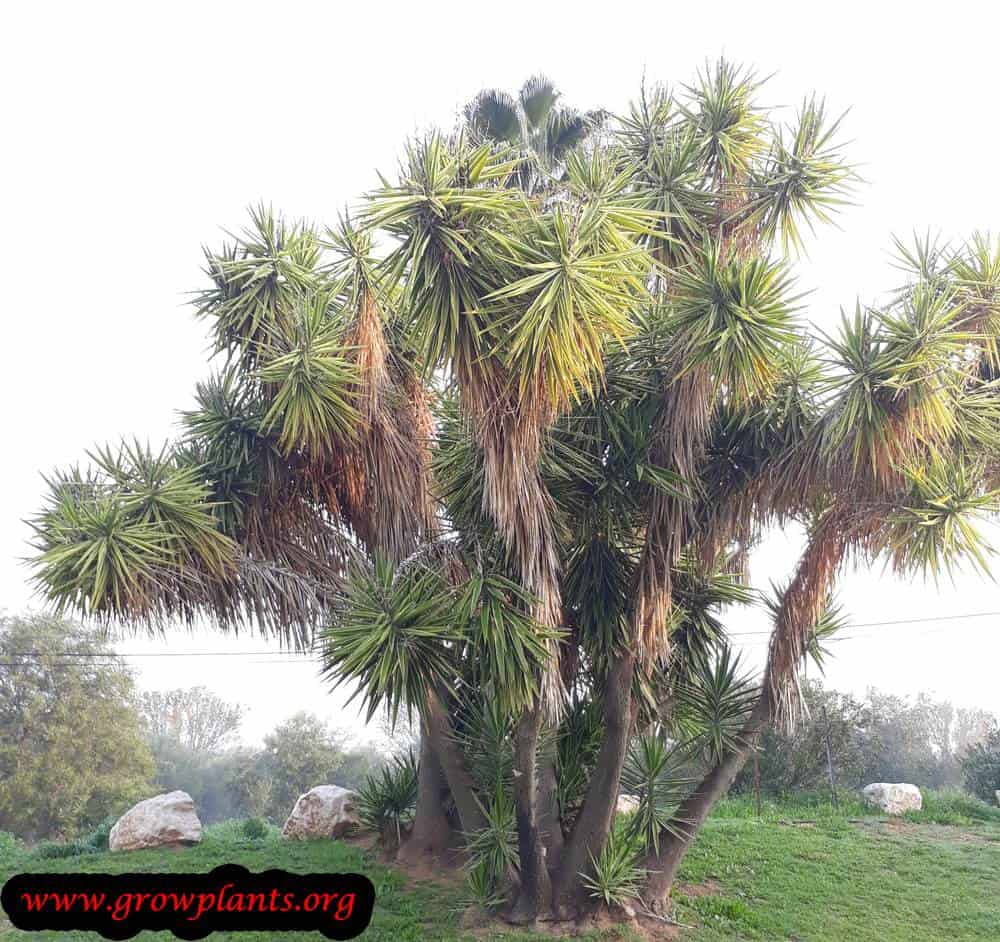
Overview: Yucca elephantipes (spineless yucca) is an evergreen perennial succulent, ranging from a shrub to a small tree 1–5 m (3–15 ft) tall. It is grown as a sculptural drought-tolerant ornamental with rosettes of stiff sword-shaped leaves.
Quick Specifications
| Specification | Attribute |
|---|---|
| Plant Type / Life Cycle | Perennial |
| Foliage Type | Evergreen |
| Mature Size | 1–5 m (3–15 ft) tall |
| Growth Rate | Slow |
| Root System | Fibrous, spreading; produces basal offsets |
| Toxicity | Mildly toxic if ingested (saponins); leaf tips are sharp |
| Hardiness | USDA zones 6+ |
Growth Form & Structure
- Height & Spread: Reaches 1–5 m (3–15 ft) in the ground; can be grown indoors as a houseplant with plenty of light, or in large containers.
- Growth Habit & Form: Succulent rosette borne on a thickening woody trunk or stem, developing into a shrub or small tree with age.
- Lifespan & Maturity: Long-lived; slow-growing, taking years to build a trunk and flower.
Anatomy & Physical Features
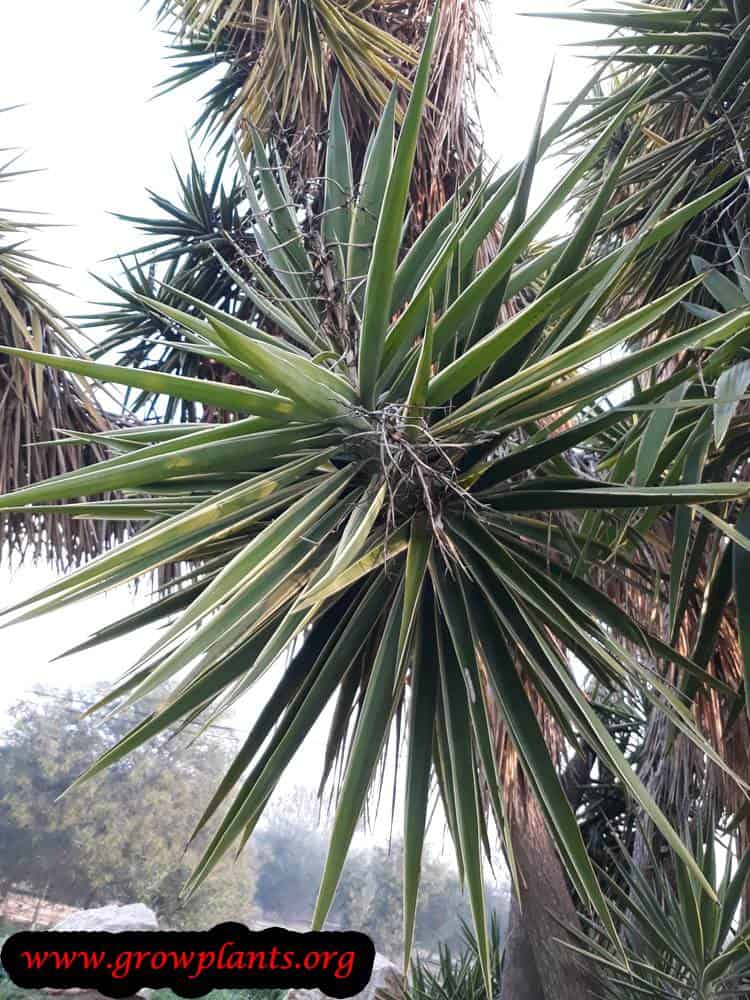
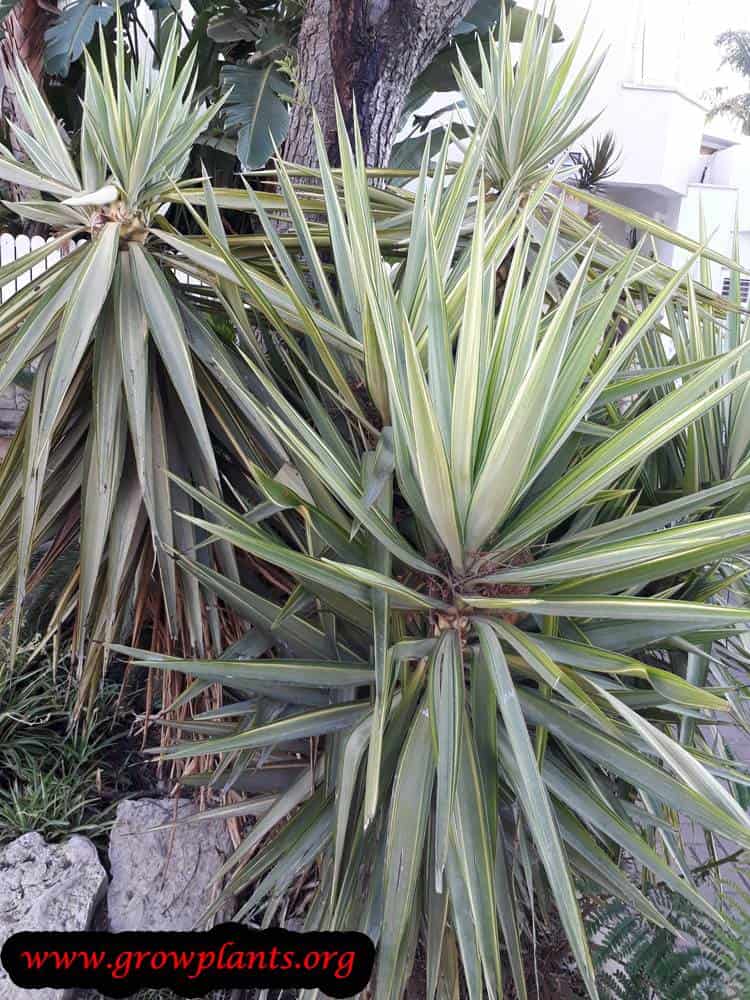
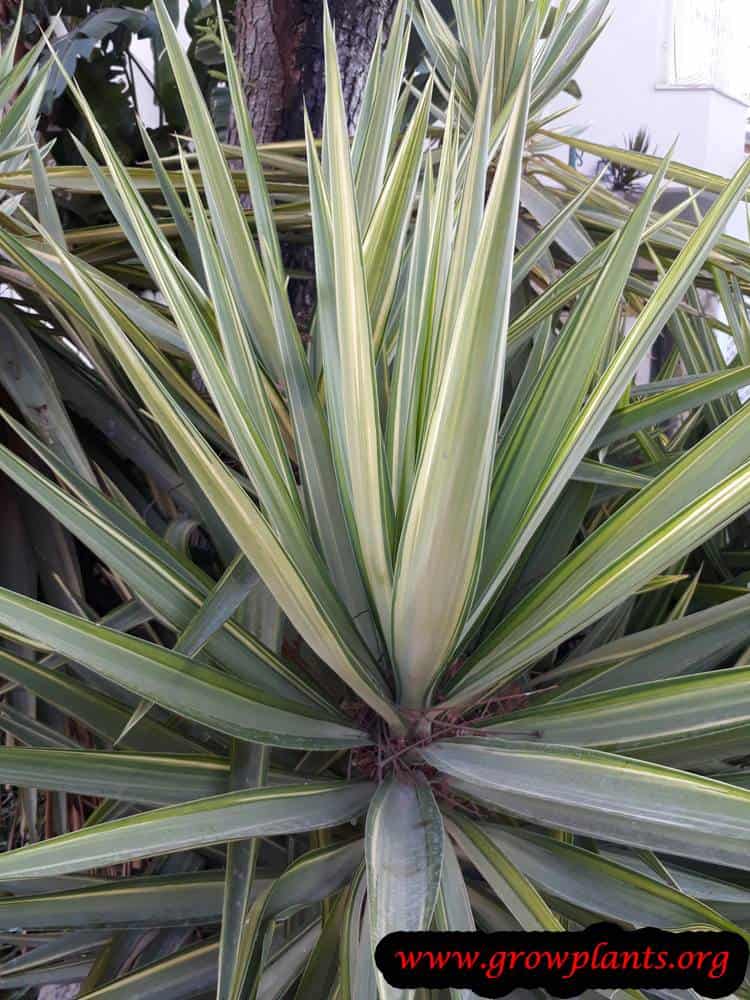
- Leaves & Foliage: Green (or green-and-yellow variegated) fleshy leaves in rosettes, spear-shaped but soft-tipped and largely spineless.
- Flower Characteristics: Bell-shaped white to cream-yellow flowers in umbel-like clusters on a stalk.
Primary Uses & Landscape Value
- Functional & Ornamental Roles: Architectural drought-tolerant accent for beds, xeriscapes and containers.
Care Guide: Planting, Soil & Watering
Overview: Yucca is a tough, architectural succulent that thrives in full sun and sharply drained, sandy soil. It is highly drought tolerant, storing water in its fleshy leaves, and needs only sparing watering with excellent drainage to prevent rot.
Quick Care Requirements
| Requirement | Ideal Condition |
|---|---|
| Planting Season | Spring or autumn, in the milder parts of the growing season |
| Growth Rate | Slow |
| Soil Type | Sandy, gritty, sharply draining soil |
| Water Need | Low — water sparingly and let the soil dry out fully between waterings |
Planting & Establishment
- Best Planting Season: Plant in spring or autumn when temperatures are mild; avoid setting it into cold, wet soil.
- How to Plant:
- Hole Preparation: Dig a hole as deep as and a little wider than the root ball in a sunny, freely draining spot; work grit into heavy ground first.
- Soil Amendments: Add coarse sand or grit rather than rich organic matter — yucca prefers lean, fast-draining soil and rots in soggy ground.
- Planting Depth: Set the plant at the same depth it grew previously, keeping the crown at or just above soil level to avoid rot.
- Growth Speed & Expectations: Growth is slow but steady; over years it forms a bold, trunked rosette (ultimately 1–5 m depending on conditions).
Soil, Watering & Drainage Care
- Soil Mix & Drainage Needs: Sharp drainage is essential — use a sandy, gritty mix (or cactus/succulent compost in pots) so water never lingers around the roots.
- Watering Schedule & Technique:
- Young / Newly Planted: Water lightly after planting to settle the roots, then only occasionally while the plant establishes.
- Established: Water deeply but infrequently, allowing the soil to dry completely between waterings; established plants shrug off long dry spells.
- Seasonal Adjustments: Water a little during prolonged summer heat and keep almost dry through cool, wet winters.
Climate, Light & Hardiness
Yucca elephantipes (Spineless Yucca) grows across desert, Mediterranean, subtropical, temperate, and tropical climates, and it is also a popular houseplant given bright indoor light. It does best in full sun to half shade outdoors, and the site lists it as reliably hardy from zone 6 upward.
Quick Climate Specifications
| Climate Zones | Desert, Mediterranean, Subtropical, Temperate, Tropical |
| USDA Hardiness Zones | Approximately 6 and warmer |
| Optimal Temp Range | Approximately 18–29°C (65–85°F) |
| Approx. Survival Minimum | In zone-6 locations, established plants can withstand typical zone-6 winter lows near −23°C to −18°C (−10°F to 0°F) |
| Frost Tolerance | Moderate to High |
| Light Conditions | Full Sun / Half Shade |
Sunlight & Light Exposure
Optimal Light Setup
Full sun to half shade suits it outdoors; as a houseplant it needs a lot of bright light to stay compact and healthy, per the site data.
Direct Sun Requirement
Outdoors, direct sun is beneficial though half shade is tolerated; indoors, place it at the brightest window available, since low light causes weak, stretched growth.
Shade & Heat Management
No special heat management is needed outdoors; it is well adapted to warm, sunny sites.
Best Exposure/Orientation
An open, sunny outdoor bed, or the brightest available indoor window when grown as a houseplant.
Temperature Extremes & Hardiness
USDA Hardiness & Regional Limits
The site lists it as hardy from zone 6 upward, making it one of the more cold-tolerant landscape yuccas; where winters are colder, it is grown as a container or indoor plant instead.
Cold Damage & Winter Protection
Young, newly planted specimens are more cold-sensitive than established plants; well-drained soil matters in cold climates since waterlogged, freezing roots are more damaging than cold air alone.
Frost Sensitivity
Moderate to low - established outdoor plants tolerate frost reasonably well within their hardy range, though container/indoor specimens should be kept frost-free.
Extreme Heat Tolerance
Excellent - as a drought-tolerant succulent it handles prolonged heat easily.
Wind, Humidity & Microclimate
Humidity Preferences
Prefers dry to moderate air; not suited to constantly humid, muggy conditions, which favor rot.
Dry-Air Tolerance
Very high - well suited to arid climates and to the drier air of indoor rooms.
Wind Tolerance
Good; its sturdy trunk and rosette form handle open, breezy outdoor sites well.
Rainfall & Seasonal Moisture
Best suited to climates with a dry season and sandy, well-drained soil; in wetter climates, sharp drainage prevents root and trunk rot.
Microclimate Recommendations
An open, sunny bed with excellent drainage suits it outdoors; indoors, keep it in the brightest room available and away from cold drafts in winter.
Growing in Pots, Balconies & Indoors
Yucca elephantipes (spineless yucca) is one of the more forgiving yuccas for a large pot, and with plenty of light it grows well indoors as a bold, architectural houseplant – or outdoors on a sunny patio. Its stiff rosette of leaves has sharp tips, so place it with care.
Quick Details
- Container Size: A large, heavy, wide-based pot for stability; size up as the plant grows
- Indoor Suitability: A good big-pot houseplant in a very bright spot
- Best Spot: Full sun outdoors; the brightest window indoors
- Soil & Drainage: Free-draining, gritty cactus-type mix – never wet
- Watering in Pots: Water only when the top of the mix dries; drought-tolerant and hates soggy roots
Indoors & On the Windowsill
- As a houseplant: Yes, in a very bright spot – it needs your sunniest window or a well-lit room corner. In too little light it grows weak and floppy.
- Windowsill & young plants: A young plant is happy on a bright sill; as it grows, move it to a sunny floor position beside a large window.
- Overwintering: Where it is not hardy, keep it in a pot so it can winter indoors in a bright, cool, frost-free room.
- Keep it safe: The leaf tips are sharp and the foliage is mildly toxic to cats and dogs – site it away from small children and pets.
On a Balcony or Patio
- Sun, wind & weight: A yucca loves full sun and shrugs off wind and reflected heat, but a tall potted specimen is heavy and top-heavy – use a wide, weighted pot and stand it where gusts will not topple it. Pots dry fast in sun, so check the mix in hot spells.
- Sharp leaves: Keep the spiny tips away from walkways, seating and where children play.
Choosing the Pot, Soil & Long-Term Care
- Pot & drainage: Choose a heavy, wide-based pot – a mature yucca is top-heavy and tips easily – with strong drainage holes and no standing saucer. A weighty terracotta or glazed pot beats lightweight plastic for stability.
- Potting mix: Free-draining and gritty – a cactus mix, or a standard mix opened up with plenty of coarse sand, perlite or pumice.
- Feeding: Feed lightly a couple of times through the growing season; potted plants lose nutrients to leaching, but yuccas are not hungry.
- Repotting: Slow-growing – pot up or refresh the mix every two to three years, and take care, the leaf tips are sharp.
Fertilizing & Feeding
A light feeder both outdoors and as a popular indoor houseplant: lean, infrequent feeding suits its slow, sturdy growth habit whether it is in the ground or in a pot.
Quick Fertilizing Specs
| Feeding Level | Light feeder |
|---|---|
| Main Nutrient Priority | Low-nitrogen feeding that favors slow, sturdy growth over soft new leaves |
| Best Feeding Period | During active growth – the warm season outdoors, or whenever indoor growth is visibly underway |
| Organic Options | Compost worked into outdoor planting sites; a light organic top-dressing for potted specimens |
| Reduce/Stop Feeding | Hold off feeding through the cooler months or whenever indoor growth clearly slows with lower light |
| Micronutrients | Rarely needed in well-drained soil; treat only a diagnosed issue |
| Soil pH | Tolerates a wide range; well-drained soil matters more than exact pH |
Feeding by Growth Stage
Active growing season
Support slow, sturdy new growth of the trunk and rosette without forcing lush, weak leaves.
| Nutrient direction | A light, low-nitrogen feeding is enough for this naturally thrifty plant, whether it is grown outdoors or as a houseplant. |
|---|---|
| Timing | During the warm active growing season outdoors, or whenever indoor growth is clearly underway. |
| Frequency | Light, infrequent feeding suits this slow grower. |
| Fertilizer types | A diluted low-nitrogen or balanced houseplant fertilizer for potted specimens, Compost worked into outdoor, well-drained soil |
| Precautions | Avoid heavy or frequent feeding; overfeeding produces soft, floppy leaf growth and, in containers, can build up salts quickly. |
Dormant or low-light rest
Let the plant rest through its slow season without pushing new growth.
| Nutrient direction | None – withhold fertilizer while growth has slowed for the year. |
|---|---|
| Timing | Through the cooler months outdoors, or whenever indoor growth clearly slows with shorter days and lower light. |
| Frequency | No feeding at this stage. |
| Fertilizer types | No feeding at this stage; do not fertilize until active growth resumes. |
| Precautions | Do not fertilize while the plant is dormant or slow-growing; in a container, unused nutrients build up as salts even faster than in the ground. |
Nutrient Deficiency Signs & Corrections
Older leaves fade to pale green and new growth is slower and smaller than expected.
| Possible causes | low available nitrogen, especially in old, depleted potting mix, nutrients leaching out through drainage holes with routine watering, root stress limiting nutrient uptake |
|---|---|
| Appears first on | older, lower leaves |
| What to check | feeding history, age of the potting mix or soil, root and base condition |
| Possible correction | Give a light, diluted low-nitrogen feeding during active growth, or refresh old potting mix. |
New leaves emerge pale yellow while the veins stay green.
| Possible causes | alkaline tap water or high soil/mix pH tying up available iron, compacted or waterlogged potting mix limiting root uptake, old potting mix that no longer supports good root function |
|---|---|
| Appears first on | newest growth |
| What to check | irrigation water and mix pH, drainage and root health, how long since repotting |
| Possible correction | Improve drainage and check water/mix pH first; apply a chelated iron product per its label only if the pattern persists. |
Leaf tips brown and dry back, and a white or crusty film may appear on the soil surface or pot rim.
| Possible causes | fertilizer salts building up in the confined volume of a container, poor drainage concentrating salts around the roots, underwatering that concentrates existing salts in the mix |
|---|---|
| Appears first on | leaf tips and the soil surface |
| What to check | recent feeding frequency and strength, pot drainage, watering consistency |
| Possible correction | Stop feeding, flush the pot thoroughly with plain water, and resume only light feeding once new growth shows. |
Pruning, Training & Seasonal Maintenance
Yucca elephantipes (Spineless Yucca, also sold as Yucca gigantea) grows as a rosette of long, soft-tipped leaves on a slowly thickening cane/trunk, reaching 1–5m. Unlike spine-tipped Yucca relatives, its leaf tips are flexible rather than rigid and sharp, which makes it comparatively safe to handle and is exactly why it’s sold so widely as an indoor ‘cane’ plant. That soft-leaf trait also underpins this species’ signature pruning move: the woody cane can be cut back to almost any height, and it reliably resprouts multiple new heads from dormant points below the cut — a technique growers use routinely to control height or force a fuller, multi-headed shape, which is not something most plants tolerate.
Quick Pruning & Maintenance Specs
| Pruning Tolerance | Low (routine leaf pruning); High (for cane topping specifically) |
| Primary Pruning Window | Spring, for any cane-topping/height-control cut, so new heads have a full season to establish |
| Secondary Maintenance Window | Any time, for dead leaf removal |
| Typical Frequency | Ongoing dead-leaf removal; cane topping only occasionally, when height or shape genuinely needs resetting |
| Main Objective | Remove dead leaves; control height and encourage branching via cane topping when the plant outgrows its space |
| Young Plant Priority | Leave the growing point undisturbed; remove only damaged leaves |
| Mature Plant Priority | Remove the dead lower leaf skirt; top an overly tall cane to control height and force new heads |
| Best Tool Type | Bypass secateurs or loppers for leaves; pruning saw for topping a cane |
| Avoid Heavy Pruning During | Winter/low-light dormancy indoors, when regrowth after a cut is slow and weak |
Pruning by Plant Age & Size
Newly Established
No pruning of the growing point; remove only damaged leaves while the plant settles into its pot or spot.
Young / Formative
No structural training needed while it’s a single, appropriately-sized head. If grown from a pre-cut cane section (common for this species in the houseplant trade), the plant may already be developing multiple heads from the cut end — no further intervention is needed at this stage.
Mature / Established
Remove dead lower leaves as the cane lengthens and sheds foliage from below over time. Once the plant has outgrown its space or become top-heavy and leggy, top the cane at the desired height; new heads typically sprout from below the cut within a season or two, giving a fuller, branched plant at a controlled height.
Structural Pruning & Training
Cane topping is the main structural tool: cutting the woody cane at any height forces new growth points below the cut, letting you reset height and multiply heads on an otherwise single-stemmed plant. This is the standard way to manage size on an indoor specimen that’s outgrown a room, rather than trying to keep it permanently small through leaf-only pruning.
Special Growth to Remove
- Fully dead, browned lower leaves — remove for appearance as the cane sheds them from below over time.
- Basal offsets/suckers, if present — keep for a fuller multi-caned clump, or remove and pot up separately as new plants.
Container & Small-Space Pruning
This is one of the most common indoor container plants suited to cane topping specifically because pot-grown specimens regularly outgrow ceiling height — topping the cane is the standard fix rather than trying to root-restrict the plant into staying short. Give it strong, bright light after cutting (per the plant’s own light requirement), since low indoor light slows and weakens the regrowth from a fresh cut.
Tools
Bypass secateurs or loppers for individual leaf removal at the base; a pruning saw for cutting through the woody cane when topping — hand secateurs are generally not sized for a mature cane’s diameter.
Tool Hygiene & Disease Risk
Increased. Fungal leaf-spot disease is documented for this species (consistent with the ‘black spots’ noted among its own pest/disease facts); clean the blade between plants and when removing visibly diseased leaf tissue.
Cut Placement & Technique
For leaf removal, cut at the leaf base close to the cane without gouging the cane tissue. For topping, make one clean, level cut straight across the cane at the chosen height; there’s no need to angle the cut or seal it, but a clean, non-ragged cut heals and resprouts more reliably than a torn one from a dull saw.
Heavy Pruning & Rejuvenation
Well tolerated — topping is essentially this species’ built-in rejuvenation and height-reset mechanism. Expect a bare cut surface and a pause of a season or so before new heads emerge and fill out; cutting in spring with strong subsequent light gives the fastest, most reliable regrowth.
Post-Pruning Care
After topping, keep the plant in bright light and monitor the cut end for softening or rot, especially if watering is kept up at pre-cut levels — a plant with reduced leaf area after a hard cut uses less water short-term. No need to feed immediately after cutting; wait until new growth is visibly underway.
Common Pruning Mistakes
- Topping the cane and then leaving the plant in low light, resulting in slow, weak, or failed regrowth.
- Keeping watering unchanged right after a hard cane cut, leading to rot at the cut surface before new leaf area develops to use that water.
- Over-removing green healthy leaves for a tidier look instead of using a proper topping cut when height control is actually needed.
When Not to Prune
Avoid cane topping during winter or low-light stretches indoors, when regrowth will be slow and the fresh cut sits exposed longer without new growth to support it.
Recommended Tools (by task)
| Task | Tool Category | Why |
| Removing dead leaves at the base, any age plant | bypass_secateurs | Clean cuts on leaf bases close to the cane without gouging it |
| Topping a mature cane for height control/branching | pruning_saw | A mature cane’s diameter is too thick for secateurs or loppers; a saw gives the clean, level cut needed for reliable resprouting |
Pruning Troubleshooting
| Problem | Possible Cause | What to Check | Corrective Action |
| No new heads emerging weeks after topping the cane | Low light or cool temperatures slowing dormant-bud break | Light levels and season since the cut | Move to brighter light and be patient through a full growing season before concluding the cut failed |
| Cut cane surface going soft or discolored | Rot at the cut, often from a ragged cut or overwatering right after cutting | Whether the cut was clean and whether watering was reduced post-cut | Trim back to firm, healthy tissue with a clean saw cut and ease off watering until new growth resumes |
| Black spotting on leaves | Fungal leaf-spot disease | Tool cleanliness and whether foliage has been sitting wet | Remove affected leaves, clean blades between cuts, and improve air circulation/reduce leaf wetness |
Propagation Guide
Yucca elephantipes (Spineless Yucca / Yucca gigantea) is most commonly and reliably propagated by rooting sections of its bare trunk (‘cane cuttings’) – the standard commercial method for this exact species – or by removing basal offsets; seed works for the plain species but not for variegated selections, which site data notes need vegetative propagation to stay true. This is an easy plant to increase vegetatively.
Quick Propagation Specs
| Best Propagation Method | Rooted trunk/cane cuttings |
| Alternative Methods | Basal offsets; seed (plain species only, not variegated forms) |
| Propagation Difficulty | Easy |
| Seed True-to-Type | Usually true-to-type for the plain species; variegated selections do not come true from seed |
| Vegetative True-to-Type | Yes, including for variegated forms |
| Best Propagation Season | Spring, in line with the site’s recorded spring/autumn planting season |
| Seed Germination Time | Typically several weeks, and can be uneven |
| Cutting Rooting Time | Often several weeks to a few months for new roots and shoots to form |
| Germination Temperature | Warm conditions, roughly 21–27°C / 70–80°F |
| Seed Sowing Depth | Shallow, roughly 1–2cm (0.5–1in) |
Growing from Seed
Seed Handling & Viability
Use fresh, plump seed where possible; viability declines with prolonged storage.
Sowing Season
Spring, matching the site’s recorded planting season.
Sowing Depth & Orientation
Sow shallowly, roughly 1–2cm (0.5–1in) deep, in a well-drained, sandy mix.
Germination Conditions
Warm conditions of roughly 21–27°C / 70–80°F suit this desert- and subtropics-adapted species; keep the mix barely moist, never waterlogged.
Germination Time
Typically several weeks, and can be uneven – do not discard trays too early.
Seedling Care
Grow on in bright light with sharp drainage; seedlings are slow-growing at first, in keeping with this species’ generally slow growth rate.
Stem Cuttings
Cutting Type
Leafless sections of the trunk (‘cane cuttings’) – the classic way this species is propagated and sold commercially.
Best Timing
Spring, at the start of the growing season.
Cutting Preparation
Cut a firm section of bare trunk cleanly and let the cut ends callus for a few days in a dry, shaded spot before setting the cane in a rooting medium.
Rooting Setup
Set the cane upright or on its side, partly buried, in a well-drained, sandy mix; keep just barely moist rather than wet.
Rooting Hormone
Optional – can help but is not required; canes of this species root readily on their own.
Rooting Time
Often several weeks to a few months before new roots and shoots appear.
Division, Offsets, Pups & Suckers
Established plants can produce basal offsets. Remove an offset with some roots attached where possible, pot it into a well-drained mix, and keep lightly moist until it is growing independently. Offsets and cane cuttings are the only ways to guarantee a variegated plant stays variegated, as site data notes.
Bloom & Edible Flower Guide
Quick Details
- Bloom Season: Spring
- Time to First Bloom: Only on mature plants – usually once the trunk is several years old and well established
- Flower Appearance: Large, bell-shaped, creamy white to yellowish flowers massed on a tall upright stalk
- Edibility: Edible flower – the petals are a traditional food; the bitter central parts are usually removed and the petals eaten lightly cooked, in moderation
Detailed Blooming Overview
A mature spineless yucca sends up a tall, branching flower stalk in spring, crowded with dozens of nodding, bell-shaped creamy flowers. In its native range the petals are a well-known vegetable, cooked into egg dishes and stews; the central pistil and stamens are bitter and are usually pinched out first, and the flowers are eaten in modest amounts. Like all yuccas, the plant has a famous partnership with the yucca moth, which is its dedicated pollinator.
Flower Characteristics
- Large, bell-shaped flowers in creamy white to pale yellow
- Carried in a tall, branched cluster held well above the foliage
- Mildly fragrant, especially in the evening
- Petals edible once the bitter central parts are removed and they are lightly cooked
Bloom Care & Thinning
- What brings it on: Maturity and full sun; young and low-light plants simply are not ready to flower yet.
- Aftercare: Once the flowers fade, cut the spent stalk back to the rosette to keep the plant tidy.
- Pollination: Yucca moths are the natural pollinators; away from their range the flowers rarely set seed but are no less ornamental.
Fruit & Uses
The large white-yellowish flowers of Yucca elephantipes (known in Central America as "flor de izote") are the plant’s well-established edible part, widely eaten cooked in El Salvador and neighbouring countries. The petals are parboiled to remove their bitterness, then scrambled with eggs, added to soups, or used as a cooked vegetable; the root and leaves are not eaten (see Safety below).
Quick Edible Specs
| Edible Parts | Flower petals |
|---|---|
| Main Use(s) | Culinary – "flor de izote," scrambled with eggs, in soups, tamales and stews |
| Eaten Raw or Cooked | Cooked (parboiled/blanched, then sauteed or simmered) |
| Preparation Required | Remove the bitter central ovary/pistil from each flower; parboil or blanch petals before cooking further |
| Harvest Season | Spring, during the bloom period (see Blooming) |
| Time to First Harvest | Only once the plant is mature enough to flower |
| Storage | Best used fresh, the same day as picking; not typically stored |
| Safety/Toxicity Caveat | Leaves and root are not food. The root is rich in soapy saponins and is traditionally used to make soap/shampoo, not eaten; this ornamental Yucca is unrelated to the edible root vegetable "yuca" (cassava, Manihot esculenta) despite the similar name. |
Flowers & Flower Buds
The bell-shaped, white-yellowish flowers open in large clusters on a tall stalk in spring. Flowers (and unopened buds) are picked once developed, and only the petals are used – the bitter greenish ovary/pistil at the base of each flower is removed and discarded. The petals are parboiled briefly to soften their natural bitterness, then commonly scrambled with eggs ("huevos con flor de izote"), simmered into soups, or added to tamales; this is a traditional, widely eaten dish in El Salvador and parts of Central America, where the plant is also the national flower.
Preparation, Uses & Safety
Always discard the bitter pistil from the centre of each flower and parboil the petals before final cooking – eaten raw or unblanched, the petals are unpleasantly bitter. The leaves are not eaten and the root is not a food part; it is traditionally processed for its saponin content into soap rather than consumed, and should not be confused with the unrelated edible cassava root also called "yuca."
Pests, Diseases & Troubleshooting
Overview: Yuccas are tough, drought-adapted plants whose greatest threat is not a pest but overwatering: soggy soil rots the roots and crown far more often than any insect kills them. The spineless (soft-leaf) yucca is a very common houseplant, so indoor issues – scale, mealybugs, spider mites, and above all overwatering rot – are the ones to watch. Their real pests are the yucca-specific plant bug and weevil plus scale and mites, while most disease is fungal leaf spotting on older leaves. Sharp drainage, restrained watering, and full sun keep them clean.
Quick Troubleshooting Overview
| Issue / Pest | Main Symptom | Primary Solution |
|---|---|---|
| Root / crown rot | Soft, yellowing base; mushy roots | Sharp drainage; water sparingly; discard rotted crowns |
| Yucca plant bug | Fine yellow-white stippling on leaves | Hose off; insecticidal soap; tidy debris |
| Agave / yucca weevil | Wilting, collapsing crown; grubs at base | Remove infested plants; keep vigorous; targeted control |
| Scale insects | White/brown crusts on leaves | Scrape; horticultural oil |
| Fungal leaf spot | Brown/grey spots on older leaves | Remove affected leaves; avoid wetting foliage |
Common Pests & Management
- Yucca plant bug (Halticotoma valida):
- Symptoms: Clusters of reddish nymphs and dark adults feed on the leaves, causing dense fine yellow-white stippling that gives the foliage a mottled, faded look, with black frass specks on the surface.
- Prevention & Control: Hose the bugs off with a firm jet of water, clear leaf litter and debris where they shelter, and encourage predators. Insecticidal soap controls heavy populations, sprayed to cover both leaf surfaces.
- Agave / yucca snout weevil (Scyphophorus acupunctatus):
- Symptoms: Adults bore into the crown to lay eggs and grubs tunnel through the base and stem, so the plant suddenly wilts, the leaves loosen, and the crown collapses, often with a rotten smell; a serious, sometimes fatal pest.
- Prevention & Control: Keep plants vigorous and avoid wounding, and remove and destroy infested plants to stop the weevil breeding. Inspect the crown of new plants; where the weevil is established, targeted soil treatments protect valuable specimens – act before the crown is hollowed.
- Scale insects (Diaspididae (e.g. yucca / oleander scale)):
- Symptoms: Small white, grey, or brown crusty bumps scattered along the leaves and leaf bases; heavy infestations yellow the foliage and sap the plant’s vigor.
- Prevention & Control: Scrape or wipe off light infestations, remove badly encrusted leaves, and smother the rest with horticultural oil, covering both surfaces. Control the ants that protect them.
- Mealybugs (Pseudococcus / Planococcus spp.):
- Symptoms: White, cottony clusters in leaf axils and the crown, and sometimes root mealybugs at the base, with weakened growth and honeydew.
- Prevention & Control: Dab colonies with an alcohol-dipped swab, control ants, and repeat treatments as they hide in the crown. Insecticidal soap or light horticultural oil helps with wider infestations.
- Spider mites (Tetranychus urticae):
- Symptoms: Fine pale stippling and a dull, dusty look with light webbing, mainly on indoor or greenhouse plants in dry heat.
- Prevention & Control: Raise humidity, wipe and rinse the leaves, and keep the plant unstressed. Insecticidal soap or horticultural oil treats persistent colonies.
Diseases & Fungal Issues
- Brown / gray leaf spot (Coniothyrium concentricum / Cytosporina / Cercospora):
- Symptoms: Circular brown or grey spots, sometimes with concentric rings and a yellow halo, on older and lower leaves, spreading in humid conditions or where foliage stays wet.
- Treatment & Management: Remove and destroy badly spotted leaves, improve air movement, and water at the base rather than overhead. Copper fungicide checks chronic spotting; keep plants uncrowded and dry-leaved.
- Root & crown rot (Phytophthora / Pythium / Fusarium / Sclerotium spp.):
- Symptoms: Yellowing, softening, and collapse of the base and lower leaves, with dark, mushy roots; the number-one killer of yuccas, caused by overwatering and poor drainage.
- Treatment & Management: Grow in fast-draining, gritty soil, water sparingly and only when dry, and never let the plant stand in water. Remove rotted tissue or discard badly affected plants; prevention through drainage and restraint is essential.
- Southern blight (Sclerotium rolfsii):
- Symptoms: Sudden wilting with white fungal threads and small tan resting bodies at the soil line in warm, humid, wet conditions.
- Treatment & Management: Improve drainage and airflow, remove infected plants with surrounding soil, and avoid burying the crown or mulching against the base. Rotate or replace soil where it recurs.
Growing Difficulties & Abiotic Problems
- Overwatering & root rot:
- Cause & Symptoms: Yellowing lower leaves, a soft trunk or crown, and general decline from too-frequent watering or heavy, wet soil – the commonest yucca problem.
- Correction Strategy: Plant in gritty, free-draining soil, water deeply but infrequently and only when the soil has dried, and use pots with drainage. Err on the side of dryness; yuccas tolerate drought far better than wet feet.
- Leaf tip browning / underwatering & salts:
- Cause & Symptoms: Brown, crispy leaf tips and edges from drought, fluoride or salt buildup in containers, or dry indoor air.
- Correction Strategy: Water thoroughly when dry and flush container soil periodically to remove salts; trim dead tips cosmetically. Use rainwater or filtered water for sensitive indoor plants.
- Cold damage:
- Cause & Symptoms: Browning, mushy, or collapsed leaves after frost on tender species; hardiness varies widely across yuccas.
- Correction Strategy: Match the species to your climate, protect tender types from hard frost, and keep plants on the dry side going into cold, since wet-cold together causes the most damage.
What Helps – Products & Tools
For yuccas the best insurance is cultural: gritty, sharply drained soil and restrained watering prevent the root and crown rot that does most of the killing. Beyond that, insecticidal soap and horticultural oil handle the yucca plant bug, scale, mealybugs, and mites; a copper fungicide addresses persistent leaf spot; and prompt removal of weevil-infested plants breaks that cycle. Apply oils in the evening to protect pollinators and follow the label.