![[Medicinal Korean Herb] Coltsfoot (Tussilago Farfara/Kuandong/관동화) Dried Bulk Herbs 3oz (86g)](https://m.media-amazon.com/images/I/51Ge-O-8KyL._SL160_.jpg)
Plant Profile & Key Characteristics
Overview: A spreading herbaceous perennial 20–50 cm tall, grown as a medicinal and ornamental plant. Yellow daisy-like flowers appear before the heart-shaped leaves, and it spreads vigorously by rhizomes.
Quick Specifications
| Specification | Attribute |
|---|---|
| Plant Type / Life Cycle | Perennial (deciduous geophyte) |
| Foliage Type | Deciduous |
| Mature Size | 20–50 cm H (8–20 in) |
| Growth Rate | Moderate to fast |
| Root System | Rhizomatous (spreading, can be invasive) |
| Toxicity | Leaves and flowers traditionally eaten, but contain hepatotoxic pyrrolizidine alkaloids — use with caution |
| Hardiness | USDA zones 4–9 |
Growth Form & Structure
- Height & Spread: Low clumps 20–50 cm tall spreading by rhizomes; also grows in planters and containers.
- Growth Habit & Form: Spreading, rhizomatous groundcover; flowers emerge on scaly stems ahead of the foliage.
- Lifespan & Maturity: Persistent perennial that colonises readily from rhizomes and seed.
Anatomy & Physical Features
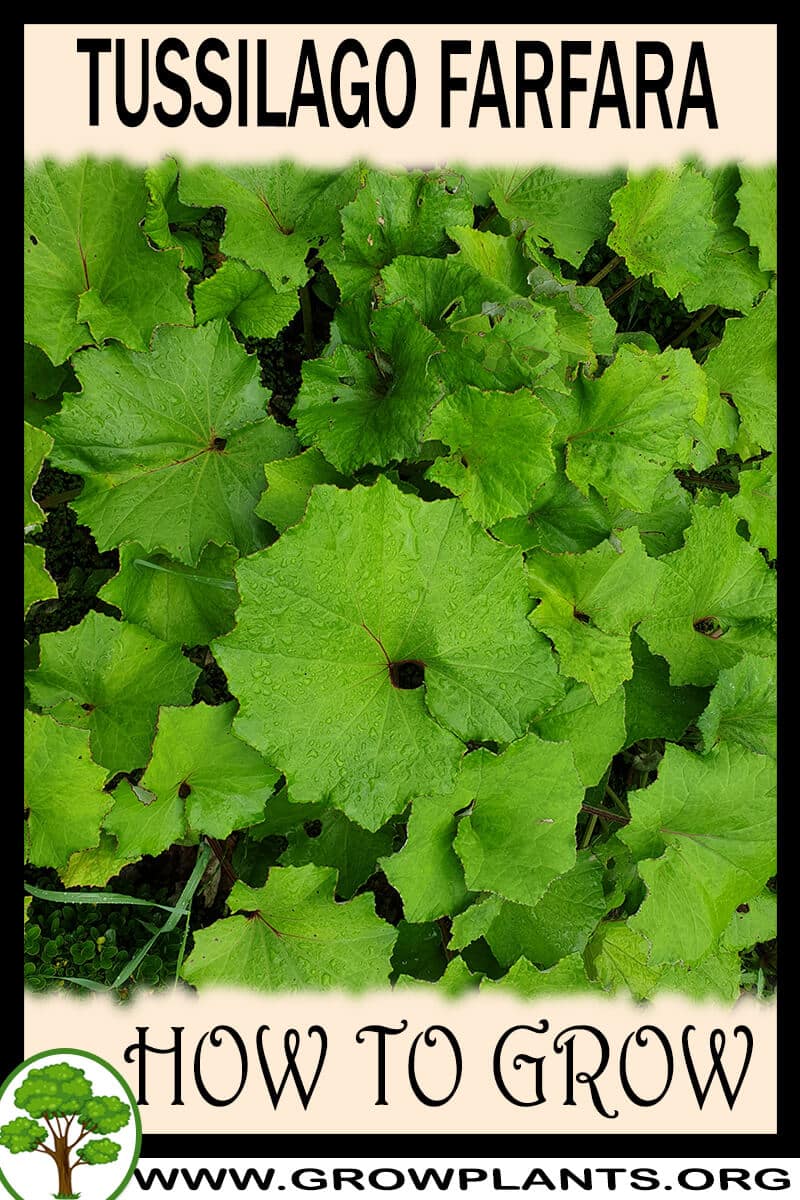
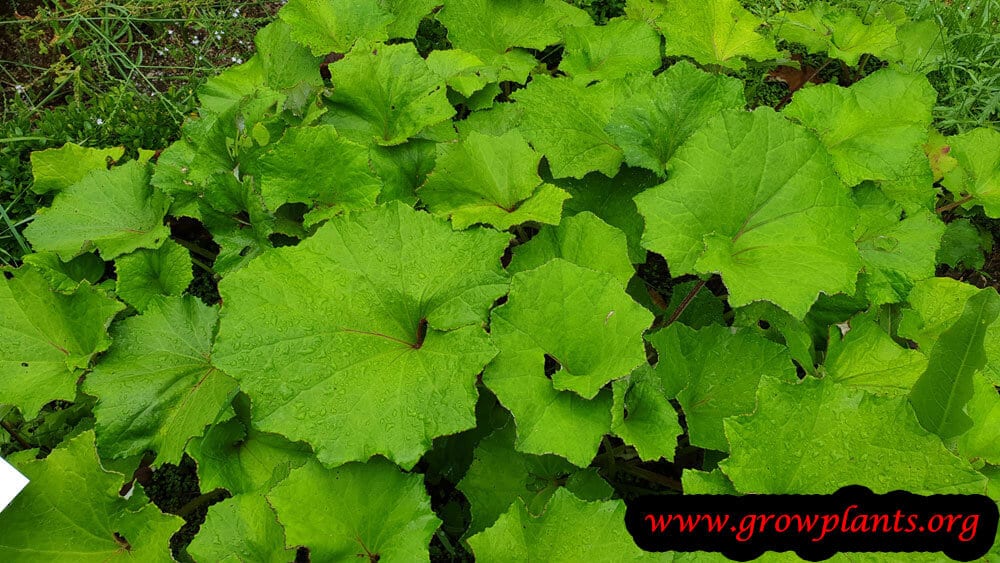
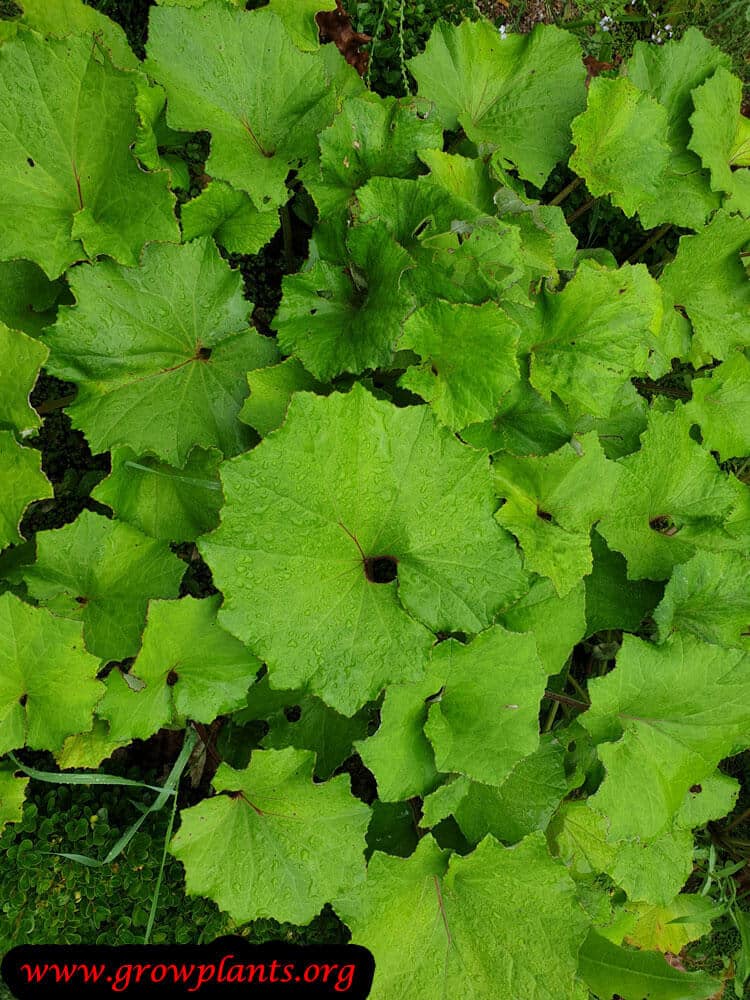
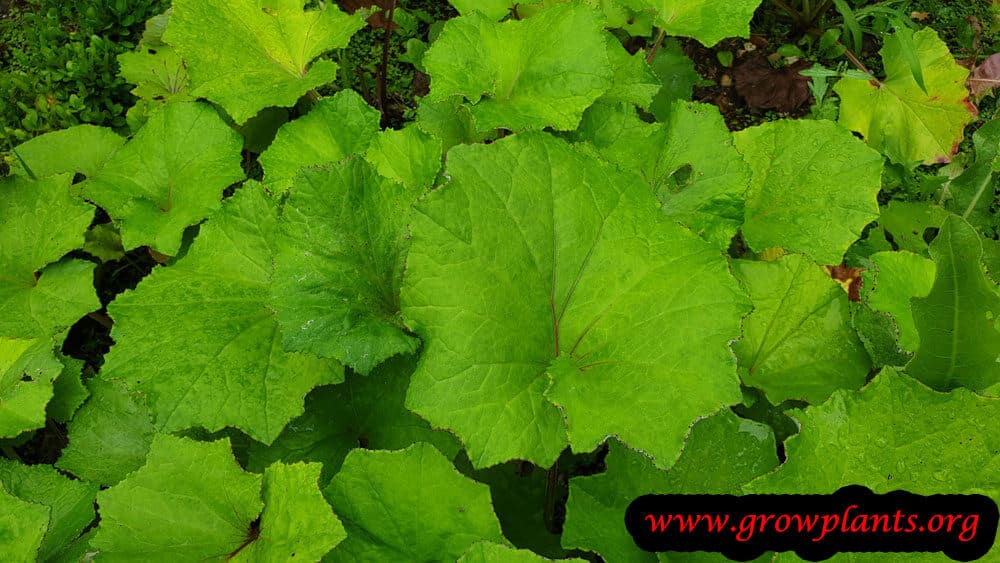
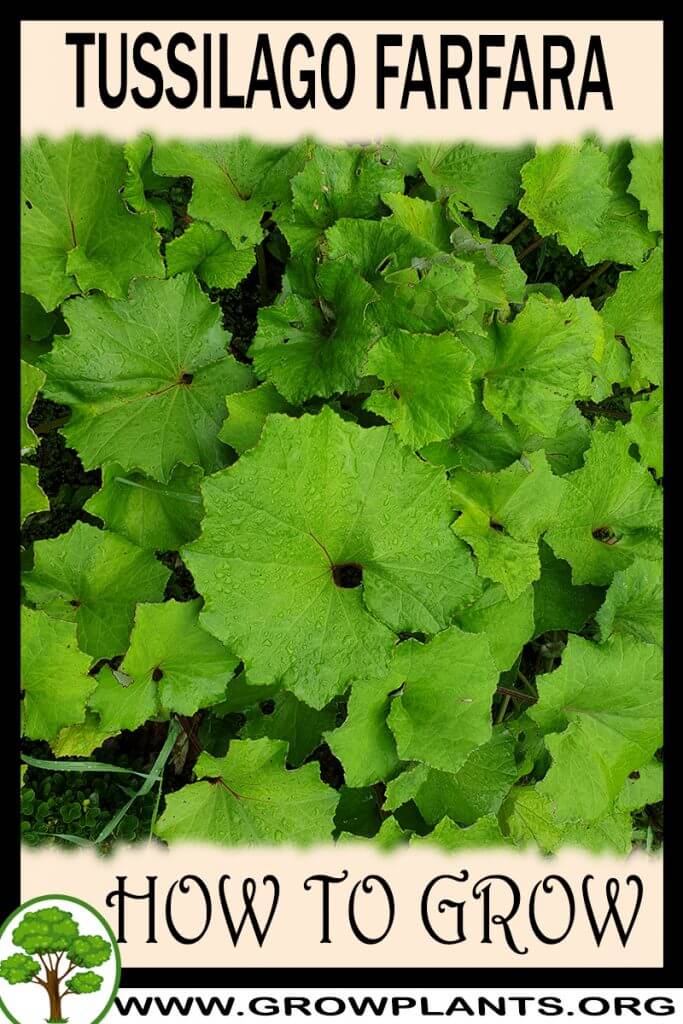
- Leaves & Foliage: Green, heart-shaped leaves appearing after the flowers.
- Flower Characteristics: Round, yellow daisy-like flowers in early spring, pollinated by bees (full detail in the Bloom accordion).
Primary Uses & Landscape Value
- Edible Uses: Young leaves and flowers are eaten raw, in salad or cooked, and used medicinally — but note the pyrrolizidine-alkaloid caution above.
- Functional & Ornamental Roles: Medicinal herb and ornamental groundcover for moist soil.
Care Guide: Planting, Soil & Watering
Overview: Coltsfoot is a vigorous, moisture-loving perennial that grows in sun to part shade and consistently moist, even heavy soil. It spreads readily by rhizome, so give it a spot where it can roam or contain it in a pot.
Quick Care Requirements
| Requirement | Ideal Condition |
|---|---|
| Planting Season | Late winter to spring |
| Growth Rate | Moderate to Fast |
| Soil Type | Moist, moisture-retentive |
| Water Need | Moderate to High; keep the soil consistently moist |
Planting & Establishment
- Best Planting Season: Plant in late winter to spring, as growth begins for the season.
- How to Plant:
- Hole Preparation: Dig a hole large enough to spread out the roots and rhizome.
- Soil Amendments: Work in organic matter to hold moisture; it also tolerates heavy soil.
- Planting Depth: Set the rhizome just below the surface with the crown at soil level.
- Growth Speed & Expectations: A moderate-to-fast grower reaching about 20-50 cm (8-20 in) that spreads steadily by underground rhizomes.
Soil, Watering & Drainage Care
- Soil Mix & Drainage Needs: Keep it in moisture-retentive soil; it copes with heavy, damp ground. Growing it in a container is a good way to limit its spread.
- Watering Schedule & Technique:
- Young / Newly Planted: Keep the soil moist while it establishes.
- Established: Water to keep the soil consistently moist; it tolerates wet ground.
- Seasonal Adjustments: Reduce watering as it dies back into winter dormancy.
Climate, Light & Hardiness
Coltsfoot is a cold-hardy temperate-to-subtropical geophyte that spreads from underground rhizomes and dies back to the ground each year. It grows well in full sun to half shade and is comfortably hardy across USDA zones 4–9.
Quick Climate Specifications
| Climate Zones | Temperate, subtropical |
|---|---|
| USDA Hardiness Zones | 4–9 |
| Frost Tolerance | High |
| Light Conditions | Full sun / half shade |
Sunlight & Light Exposure
Optimal Light Setup
Full sun to half shade both work well; it is not fussy about light within this range.
Best Exposure / Orientation
Open ground or a lightly shaded bank suits this low, spreading plant.
Temperature Extremes & Hardiness
USDA Hardiness & Regional Limits
Hardy from zone 4 to zone 9, a solidly cold-tolerant range typical of a temperate-climate wildflower.
Cold Damage & Winter Protection
The rhizome overwinters underground without special protection within its hardy zones; foliage dies back naturally with autumn cold as part of its normal cycle, with flowers appearing early in spring often before the leaves.
Frost Sensitivity
The below-ground rhizome tolerates hard frost well; early spring flowers can be nipped by a late hard freeze, which is a normal seasonal risk rather than a sign of poor cold hardiness.
Wind, Humidity & Microclimate
Rainfall & Seasonal Moisture
Prefers consistently moist soil rather than a distinct dry season, reflecting its native streambank and disturbed-ground habitats.
Growing in Pots, Balconies & Indoors
Coltsfoot is a low, spreading perennial (20-50 cm) that travels by underground rhizomes. It is not a houseplant – and a pot is actually a smart way to enjoy it outdoors while keeping its vigorous roots from running everywhere.
Quick Details
- Container Size: A medium, solid-walled pot – roughly 10-20 L to hold the runners
- Indoor Suitability: Not a houseplant – it needs outdoor sun and a winter rest
- Best Spot: Full sun to part shade outdoors
- Soil & Drainage: Rich, moisture-retentive mix; it likes damp ground
- Watering in Pots: Keep it reliably moist – pots dry faster than the ground
Indoors & On the Windowsill
- Not a houseplant: The grower marks it unsuitable indoors; it wants outdoor light and moisture and dies back for winter.
- Overwintering: Hardy – the rhizomes simply rest in the pot outside and re-sprout in spring.
- Safety: Coltsfoot contains pyrrolizidine alkaloids and should not be eaten.
On a Balcony or Patio
- Light & water: Full sun to part shade and consistently moist soil suit it best. The pot itself is the point – it stops the running roots from colonizing beds nearby.
Choosing the Pot, Soil & Long-Term Care
- Pot & drainage: A solid-walled pot with drainage holes contains the rhizomes; avoid letting them creep out of the base.
- Potting mix: A rich, moisture-retentive mix with organic matter.
- Refreshing: Divide and refresh the mix every couple of years, thinning the crowded rhizomes.
Fertilizing & Feeding
A spreading, rhizome-forming herb grown for its edible and medicinal leaves and flowers; light feeding in consistently moist soil is enough to keep it productive.
Quick Fertilizing Specs
| Feeding Level | Light |
|---|---|
| Main Nutrient Priority | Nitrogen-leaning balanced feeding to support leafy growth |
| Best Feeding Period | Spring, while the plant is most actively growing |
| Organic Options | Compost worked into consistently moist soil |
| Soil pH | Tolerates a wide range; grows best in consistently moist soil |
| Micronutrients | No routine micronutrient program typically needed in moist, organic-rich soil |
| Reduce/Stop Feeding | Feeding stops once the foliage dies back for the cool season |
Feeding by Growth Stage
Establishment After Planting
Help a newly planted or divided rhizome root into consistently moist soil and put out its first leaves.
| Nutrient direction | A light, balanced feeding supports early root and leaf establishment. |
|---|---|
| Timing | At planting or division, and through the first flush of leaves. |
| Frequency | A light feeding at planting is enough to support establishment. |
| Fertilizer types | A balanced, complete fertilizer worked lightly into moist soil, Organic matter such as compost mixed into the planting area |
| Precautions | Keep soil consistently moist after feeding; this plant does not tolerate dry soil well. |
Leafy Active Growth
Support the leaf growth this plant is grown for, whether harvested for use or left for its early yellow flowers.
| Nutrient direction | A light, nitrogen-leaning feeding supports leafy growth, particularly after harvesting leaves. |
|---|---|
| Timing | Through spring, when this plant is most actively growing. |
| Frequency | Light, occasional feeding through active growth is usually enough. |
| Fertilizer types | A balanced to nitrogen-leaning complete fertilizer, A compost top-dressing renewed as needed |
| Precautions | This plant spreads readily; avoid heavy feeding, which can encourage even more vigorous, potentially invasive spread. |
Cool-Season Dieback
Let the plant die back to the rhizome naturally through the cool season.
| Nutrient direction | None – withhold fertilizer once the foliage dies back for the season. |
|---|---|
| Timing | Autumn through winter, after the leaves die back. |
| Frequency | No feeding at this stage. |
| Fertilizer types | No feeding at this stage; hold off fertilizing until active growth resumes. |
| Precautions | Do not fertilize the dormant rhizome; resume light feeding only once new growth appears. |
Nutrient Deficiency Signs & Corrections
Leaves turn uniformly pale green to yellow with smaller, sparser growth than expected.
| Possible causes | Low available soil nitrogen, Nutrients leached from consistently moist soil, Repeated harvesting without replacing nutrients |
|---|---|
| Appears first on | Older, lower leaves first. |
| What to check | Feeding and harvest history, Soil organic matter, Watering frequency |
| Possible correction | Apply a balanced, nitrogen-leaning fertilizer and refresh compost or mulch. |
Interveinal yellowing appears on older leaves while the veins stay green.
| Possible causes | Low soil magnesium, Leaching from consistently moist or heavily watered soil, Heavy potassium feeding competing with magnesium uptake |
|---|---|
| Appears first on | Older, lower leaves. |
| What to check | Soil magnesium status, Watering and drainage, Recent feeding balance |
| Possible correction | Apply a labeled magnesium source such as Epsom salt and adjust feeding balance. |
Leaf edges brown or scorch, especially on container-grown plants.
| Possible causes | Fertilizer salt buildup in a container with limited leaching, Under-watering that concentrates salts, Feeding more often than this light feeder needs |
|---|---|
| Appears first on | Leaf margins and tips. |
| What to check | Recent feeding amounts, Container drainage, Watering consistency |
| Possible correction | Pause feeding, flush the pot or bed thoroughly with plain water, then resume lighter feeding. |
Pruning, Training & Seasonal Maintenance
Coltsfoot is a low, rhizome-spreading herbaceous perennial with no woody growth at all, so it tolerates only light sanitation, not shaping. Unusually, its yellow flowers appear on separate scaly stalks in spring before the heart-shaped leaves emerge, so the two are managed somewhat separately. The source lists summer as the main pruning window, once flowering is over and the leaf clump is established, and the actual task is simply removing dead leaves and spent flower stalks by hand.
Quick Pruning & Maintenance Specs
| Pruning Tolerance | Low – herbaceous rhizomatous groundcover, sanitation only |
| Primary Pruning Window | Summer |
| Typical Frequency | As needed through the season |
| Main Objective | Remove dead leaves and spent flower stalks; harvest young leaves for use |
| Young Plant Priority | Leave establishing clumps undisturbed |
| Mature Plant Priority | Clear dead foliage; remove spent spring flower stalks once faded |
| Best Tool Type | Hand snips or bare-hand removal |
Special Growth to Remove
- Dead or yellowing leaves – remove at the base as they decline.
- Spent flower stalks – once the spring flowers fade (before the leaf canopy fully forms), cut or pull them at the base; this also tidies the planting before leaves harvested for use are cut in spring.
Container & Small-Space Pruning
Grows fine in a planter or container. Because it spreads by rhizome, containers naturally limit its spread better than open ground; simply keep dead leaves and stalks removed as in-ground plants.
Tools
- Precision snips – the only tool needed for this soft-leaved, non-woody plant.
Tool Hygiene & Disease Risk
Routine – clean, sharp snips are sufficient; no transmissible disease risk is documented that would require disinfection between cuts.
Cut Placement & Technique
Cut dead leaves and spent flower stalks at their base near the soil line, taking care not to disturb the spreading rhizomes.
Common Pruning Mistakes
- Confusing the spring flower stalks with the later leaf growth and removing leaves before harvesting the young, tender ones that are used fresh.
- Disturbing the rhizome mat while cleaning up dead material, which can fragment and unintentionally propagate this spreading plant where it isn’t wanted.
When NOT to Prune
- Avoid cutting the flower stalks before they’ve fully faded if pollinator visits (bees) or seed are wanted.
Recommended Tools (by task)
- precision_snips – for removing dead leaves and spent flower stalks; no other tool category is warranted for this soft, non-woody groundcover.
Propagation Guide
Coltsfoot spreads and establishes primarily through its creeping underground rhizome, which is the fastest and most reliable way to start new plants; it also grows from seed, similar to its dandelion-like, wind-blown fluffy seed heads. This is an easy plant to propagate by either method, and rhizome pieces in particular take hold quickly once replanted.
Quick Propagation Specs
| Best Propagation Method | Rhizome division |
| Alternative Methods | Seed |
| Propagation Difficulty | Easy |
| Seed True-to-Type | Usually true-to-type |
| Vegetative True-to-Type | Yes |
| Best Propagation Season | Rhizome division: winter to early spring, while dormant; Seed: spring |
Growing from Seed
Seed Handling & Viability
The seed is a small, fluffy, wind-dispersed achene similar to a dandelion’s; as with many such seeds, viability is likely to decline over time in storage, so sowing reasonably fresh seed is advisable.
Sowing Season
Spring, aligning with the plant’s recommended planting season.
Sowing Depth & Orientation
Sow shallowly, pressing the fluffy seed lightly onto the soil surface rather than burying it, similar to other fine composite-family seed.
Germination Conditions
Keep the soil consistently moist, in full sun to half shade.
Germination Time
Germination timing is not well documented for this species in cultivation; expect a period of a few weeks under warm, moist conditions.
Seedling Care
Keep young seedlings evenly moist while they establish.
Rhizome Division
This plant is described in the site’s own data as a geophyte that spreads by underground rhizome, consistent with its well-known tendency to form spreading colonies. Divide the rhizome while the plant is dormant, from winter into early spring, ensuring each section carries at least one healthy growth bud and some fine roots. Replant divisions promptly, shallowly and horizontally, into moist soil; because coltsfoot spreads readily from rhizome fragments, handle and dispose of any unwanted pieces carefully.
Bloom & Flower Guide
Quick Details
- Bloom Season: Early spring – the flowers appear before the leaves
- Flower Appearance: Small, round, yellow daisy-like flowers on short scaly stalks
- Edibility: Caution – although coltsfoot has a long folk history of use, the flowers and leaves contain pyrrolizidine alkaloids that can harm the liver, so current guidance is not to eat them
Detailed Blooming Overview
Coltsfoot is unusual in that its bright yellow flowers push up on their own in early spring, well before the hoof-shaped leaves appear. It is one of the first flowers of the year and a welcome early source of nectar.
Flower Characteristics
- Round, yellow, daisy-like heads with many fine ray florets.
- Borne singly on short, scaly stems; among the earliest flowers for spring bees.
Bloom Care & Thinning
- Easy to please: Thrives – and readily spreads – in damp, disturbed ground and needs little help.
- Pollination: Visited by early bees.
- Keeping it in bounds: Remove spent flower heads if you want to limit its vigorous self-seeding.
Fruit & Uses
Safety note first: coltsfoot leaves and flowers contain pyrrolizidine alkaloids, compounds associated with liver harm when consumed regularly or in quantity, so although this plant has a long history of being eaten raw, in salads, or cooked, it should be treated as an occasional, small-quantity food rather than a everyday green – and avoided by pregnant or nursing people and children. When used, the young heart-shaped leaves and the round yellow flowers are the parts eaten.
Quick Edible Specs
| Edible Parts | Leaves, flowers |
|---|---|
| Main Use(s) | Traditional food/herbal use – raw, salad, cooked (historical); occasional use only |
| Eaten Raw or Cooked | Site records raw, in salad, or cooked – use sparingly and occasionally rather than as a regular vegetable |
| Preparation Required | Harvest only young growth; cooking does not fully remove the alkaloid content, so moderation matters more than preparation method |
| Harvest Season | Leaves in Spring (young leaves from the base); flowers in Spring as they open |
| Time to First Harvest | Qualitative – once the geophyte is established; see Propagation for how the plant is started |
| Storage | Best used fresh; dried leaves/flowers can be kept for occasional tea use in a dark, dry place |
| Safety/Toxicity Caveat | Contains pyrrolizidine alkaloids (potential liver toxicity with regular or heavy use) – limit to occasional, small amounts; avoid for pregnant/nursing people and children |
Leaves & Greens
Only young, fully-grown leaves are harvested, cut at the base of the leaf in spring. The site records these heart-shaped green leaves as traditionally eaten raw, added to salads, or cooked – but given the alkaloid content noted above, treat this as an occasional use rather than a staple green.
Flowers & Flower Buds
The round, daisy-like yellow flowers appear in spring and are recorded by the site as used the same way as the leaves – eaten raw, in salads, or cooked. The same moderation caveat applies.
Preparation, Uses & Safety
Lead with the safety caveat: pyrrolizidine alkaloids in coltsfoot are linked to potential liver harm with regular or prolonged consumption, so this plant is best treated as an occasional traditional food rather than a routine salad or cooked green, and avoided altogether by pregnant or nursing people and children. Coltsfoot also has a long tradition of use in cough-related herbal preparations, but no medical or dosing claims are made here – it is mentioned only as historical context.
Pests, Diseases & Troubleshooting
Overview: Coltsfoot is a vigorous, rhizomatous wild perennial so tough it is often considered a weed; it is essentially free of serious pests and shrugs off most problems. The few things that touch it are its own specific rust, occasional powdery mildew or aphids in crowded shade, and molluscs on the soft young leaves. Honestly, the bigger challenge is containing its spread, not keeping it alive.
Quick Troubleshooting Overview
| Issue / Pest | Main Symptom | Primary Solution |
|---|---|---|
| Coltsfoot rust | Orange pustules on leaf undersides | Remove leaves, airflow, tolerate on wild stands |
| Powdery mildew | White coating on leaves late season | Airflow, remove affected leaves |
| Aphids | Clusters on flower stalks | Water jet, beneficials, soap if heavy |
| Slugs & snails | Holed young leaves | Handpick, barriers |
| Invasive spread | Rhizomes colonising beds | Barriers, containment, persistent removal |
Common Pests & Management
- Aphids (Aphidoidea):
- Symptoms: Occasional clusters of green or black aphids on the flower stalks and leaf undersides, with honeydew and minor distortion.
- Prevention & Control: Wash off with water, rely on lady beetles and lacewings, and use insecticidal soap only in the rare heavy infestation.
- Slugs and snails (Gastropoda):
- Symptoms: Ragged holes chewed in the soft young leaves with slime trails in damp, shaded conditions.
- Prevention & Control: Handpick at night and use grit barriers if needed; on this vigorous plant damage is usually cosmetic and rarely warrants baiting.
- Leaf-mining and chewing insects (various Diptera / Lepidoptera):
- Symptoms: Minor pale mines or chewed patches in leaves from occasional miners and caterpillars, seldom significant.
- Prevention & Control: Pick off affected leaves, encourage birds and parasitic wasps, and tolerate light damage – the plant readily regrows.
Diseases & Fungal Issues
- Coltsfoot rust (Puccinia poarum):
- Symptoms: Bright orange to yellow powdery pustules on the leaf undersides – the characteristic disease of coltsfoot, which alternates onto grasses; heavy infection yellows and weakens leaves.
- Treatment & Management: Remove and destroy badly infected leaves, improve air movement, and avoid overhead watering; on wild or naturalised stands it is generally tolerated and rarely needs fungicide.
- Powdery mildew (Erysiphe / Golovinomyces spp.):
- Symptoms: White powdery coating on leaves in crowded, humid, late-season conditions, causing yellowing.
- Treatment & Management: Thin crowded growth for airflow, remove affected leaves, and apply sulphur or potassium bicarbonate only on valued or medicinal plantings.
- Leaf spots (Ramularia / Septoria spp.):
- Symptoms: Small brown or grey spots on leaves in wet weather, usually minor.
- Treatment & Management: Remove spotted leaves and clear debris; this robust plant seldom needs any treatment.
Growing Difficulties & Abiotic Problems
- Invasive spread:
- Cause & Symptoms: Deep, brittle rhizomes spread aggressively and regrow from fragments, colonising beds and paths – the main practical difficulty with this plant.
- Correction Strategy: Grow it in a contained bed or root barrier, remove flower heads before the parachute seeds disperse, and dig out unwanted rhizomes persistently and completely.
- Drought scorch:
- Cause & Symptoms: The large soft leaves wilt and brown at the edges in prolonged drought, though the plant rarely dies.
- Correction Strategy: Site in moist to average soil in sun or part shade; it naturally favours damp banks and clay and needs little help.
What Helps – Products & Tools
Coltsfoot needs almost nothing: insecticidal soap for the rare heavy aphid outbreak, sulphur or potassium bicarbonate only for mildew on valued plants, and cultural removal for its rust. The most useful ‘tools’ are a root barrier and a spade to keep its vigorous rhizomes in check.