

Plant Profile & Key Characteristics
Overview: A vigorous, deciduous rhizomatous perennial 10-60 cm (4-24 in) tall, grown as a bold-leaved groundcover and traditional medicinal plant. It is notable for fragrant winter flower spikes that appear before the large leaves.
Quick Specifications
| Specification | Attribute |
|---|---|
| Plant Type / Life Cycle | Herbaceous perennial (rhizomatous) |
| Foliage Type | Deciduous |
| Mature Size | 10-60 cm (4-24 in) tall, with large spreading leaves |
| Growth Rate | Fast to moderate |
| Root System | Rhizomatous — spreads aggressively by underground rhizomes |
| Toxicity | Contains pyrrolizidine alkaloids, which are toxic to the liver; any medicinal use requires specially prepared PA-free material |
| Hardiness | USDA zones 5-10 |
Growth Form & Structure
- Height & Spread: Low in height, 10-60 cm (4-24 in), but spreading indefinitely by rhizomes into a broad colony; it can be contained in a pot to curb its spread and even grown indoors.
- Growth Habit & Form: Clump-to-colony forming groundcover of large leaves on upright stalks arising from a creeping rhizome.
- Lifespan & Maturity: Long-lived and fast to colonise; flowers appear in winter to spring, ahead of or with the emerging foliage.
Anatomy & Physical Features
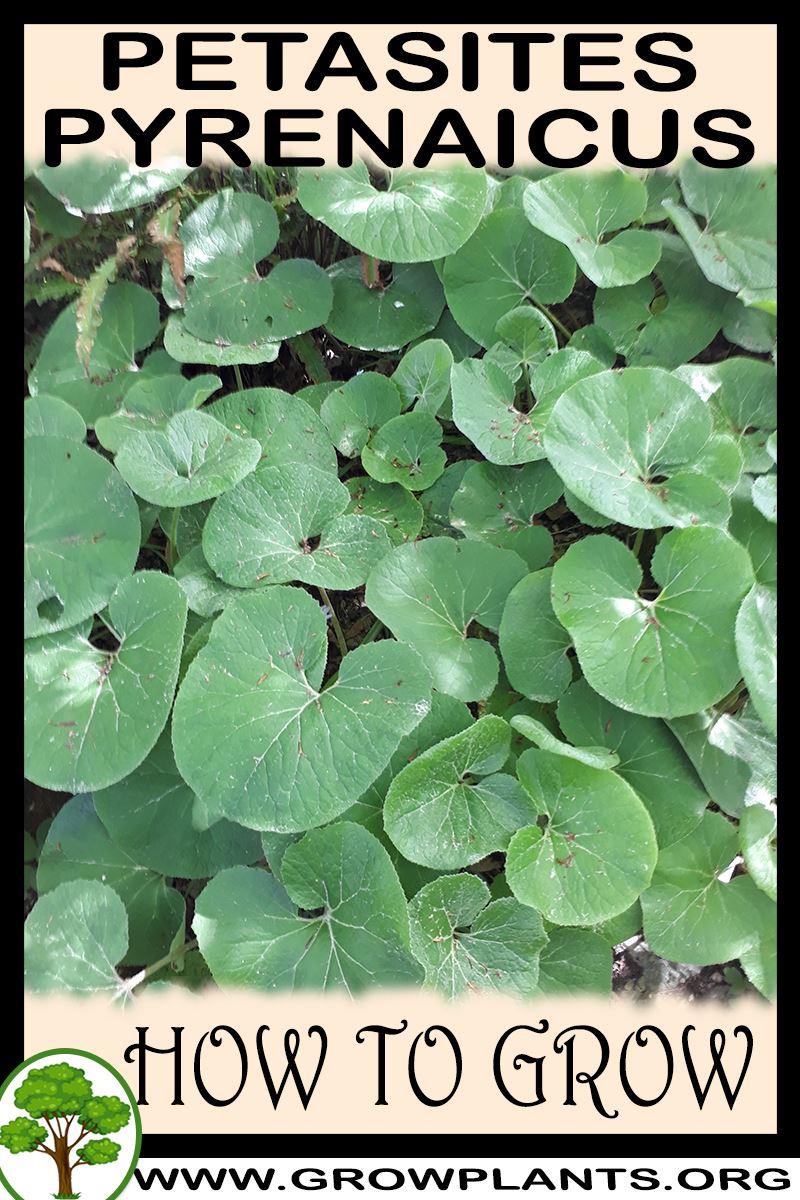
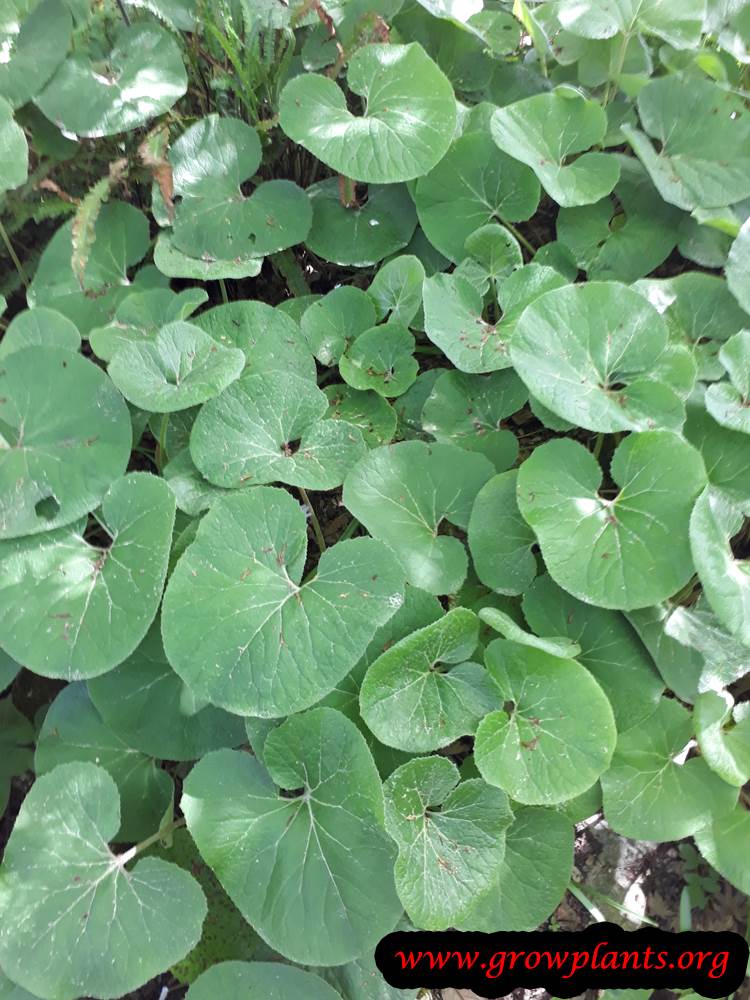
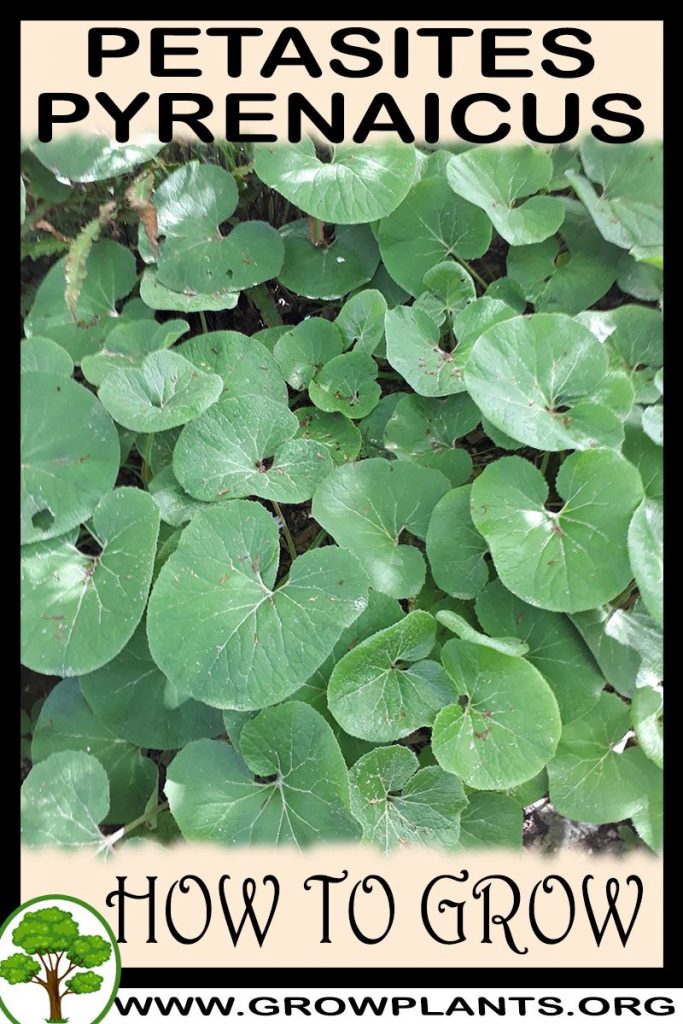
- Leaves & Foliage: Large, green, rounded to heart-shaped leaves carried on stout stalks — the main ornamental feature.
- Flower Characteristics: Short spikes of small, star-shaped flowers, mostly a mix of white, yellow, pink and purple, clustered into ball-like heads and sweetly fragrant.
Primary Uses & Landscape Value
- Functional & Ornamental Roles: Bold-leaved groundcover for moist, shaded and waterside sites, erosion control on banks and a traditional medicinal plant; also grown as a foliage houseplant. Spreads aggressively — site with care.
Care Guide: Planting, Soil & Watering
Overview: Winter heliotrope (Petasites pyrenaicus) is a rhizomatous ground cover that thrives in half to full shade in rich, moist soil. It wants consistently damp ground and spreads vigorously, so it is best planted where its running roots can be kept in check.
Quick Care Requirements
| Requirement | Ideal Condition |
|---|---|
| Planting Season | Winter through summer |
| Growth Rate | Moderate to fast |
| Soil Type | Rich, moisture-retentive |
| Water Need | Moderate to high; keep the soil moist |
Planting & Establishment
- Best Planting Season: Plant from winter through summer in a shaded, damp spot.
- How to Plant:
- Hole Preparation: Dig a hole as wide as the root ball; consider a root barrier to contain its spread.
- Soil Amendments: Work in plenty of compost or organic matter to enrich the soil and hold moisture.
- Planting Depth: Set the rhizome and crown at soil level and firm in.
- Growth Speed & Expectations: Grows at a moderate to fast pace to 10-60 cm and spreads quickly by rhizome into a dense, invasive ground cover.
Soil, Watering & Drainage Care
- Soil Mix & Drainage Needs: Prefers a rich, moisture-retentive soil; it enjoys damp ground and even tolerates poorly drained sites better than most.
- Watering Schedule & Technique:
- Young / Newly Planted: Keep the soil reliably moist as plants establish.
- Established: Water generously and regularly so the soil never dries out.
- Seasonal Adjustments: More water in summer heat; less in winter as the plant dies back.
Climate, Light & Hardiness
Butterbur is a moisture-loving, shade-preferring rhizomatous perennial for temperate, Mediterranean, or subtropical gardens (and can even be grown as a houseplant), doing best in half shade to full shade. It is a cold-hardy, winter-deciduous plant that dies back and resprouts from its rhizome.
Quick Climate Specifications
| Climate Zones | Temperate, Mediterranean, subtropical |
|---|---|
| USDA Hardiness Zones | Zones 5–10 |
| Frost Tolerance | High (rhizome survives winter cold; foliage is deciduous) |
| Light Conditions | Half shade / full shade |
Sunlight & Light Exposure
Optimal Light Setup
Prefers half to full shade; this is not a full-sun plant, and strong direct sun combined with dry soil will scorch the leaves.
Best Exposure / Orientation
A shaded, moist spot - such as under trees or beside water - suits it best; when grown as a houseplant, keep it out of direct sun.
Temperature Extremes & Hardiness
USDA Hardiness & Regional Limits
Reliably perennial through zones 5–10; foliage dies back naturally in winter as part of its normal deciduous cycle and the rhizome resprouts in spring.
Wind, Humidity & Microclimate
Humidity Preferences
Prefers consistently moist, rich soil and benefits from higher humidity; it is not a drought-tolerant plant.
Growing in Pots, Balconies & Indoors
Winter heliotrope (Petasites pyrenaicus) is a shade-loving, spreading perennial – unusually, the grower marks it as suitable to grow indoors, and its tolerance of shade and moisture does make it a workable container and indoor foliage plant, though its vigorous, running roots are best kept confined to a pot.
Quick Details
- Container Size: A wide, contained pot, about 15-30 L (4-8 gal); the pot itself usefully checks its running roots
- Indoor Suitability: Yes – the grower marks it as suitable indoors; it copes with shade better than most, so it can be a low-light foliage plant
- Best Spot: Half to full shade; it dislikes hot, direct sun
- Soil & Drainage: Rich, moisture-retentive mix; it likes it damp
- Watering in Pots: High – keep the mix consistently moist; it is a waterside plant by nature
Indoors & On the Windowsill
- As a houseplant: The grower marks it as suitable indoors. Because it is naturally a shade plant, it accepts the lower light of a room better than sun-lovers do – give it a bright but sunless spot, keep it moist, and it makes a bold, leafy container plant.
- Containing it: Its creeping roots are famously invasive in the ground, so a pot is actually the ideal way to enjoy it – keep it potted and it cannot run.
- Overwintering: Hardy; a potted plant is easily moved to a cool, bright spot for winter.
On a Balcony or Patio
- Light & wind: Ideal for a cool, shaded, north-facing balcony where sun-lovers fail; the large leaves scorch in strong sun and shred in wind, so keep it sheltered and shaded. Never let the pot dry out.
- Practicalities: Keep it strictly potted to prevent it escaping and spreading; ensure the pot still drains despite its love of moisture.
Choosing the Pot, Soil & Long-Term Care
- Pot & drainage: A wide 15-30 L pot with strong drainage holes; it likes moisture but roots should not sit in stagnant water.
- Potting mix: A rich, moisture-retentive organic mix.
- Feeding: Feed through the growing season for lush leaves, as potted plants leach nutrients with the frequent watering it needs.
- Repotting: Refresh the mix and split the clump every year or two to keep it vigorous and in check.
A Note on Safety
- Toxic if eaten: Petasites contains pyrrolizidine alkaloids that can harm the liver; grown indoors, keep it out of reach of children and pets and never eat any part of it.
Fertilizing & Feeding
Grown mainly for its bold ground-covering foliage in moist, rich soil, this rhizomatous perennial benefits from moderate feeding through its active leafy growth, with no feeding needed once it dies back for winter.
Quick Fertilizing Specs
| Feeding Level | Moderate |
|---|---|
| Main Nutrient Priority | Nitrogen-leaning balanced feeding to support its leaf and ground-cover growth |
| Best Feeding Period | Spring into summer while foliage is actively expanding |
| Organic Options | Rich, moisture-retentive soil built up with compost or well-rotted organic matter |
| Soil pH | Prefers rich, moisture-retentive soil |
Feeding by Growth Stage
Early bloom before full leaf growth
Support the plant through its winter-to-spring flowering, which in this genus typically occurs before or alongside emerging leaves
| Nutrient direction | Balanced feeding at a light rate to support the plant coming out of winter dormancy |
|---|---|
| Timing | Late winter into early spring, during and just after bloom |
| Frequency | Light, infrequent feeding as growth resumes |
| Fertilizer types | Balanced complete fertilizer at a light rate, Compost or organic matter worked into rich, moist soil |
| Precautions | Keep soil consistently moist through this stage, since this plant is intolerant of drying out |
Active foliage and ground-cover growth
Support the plant’s characteristic bold foliage growth as it fills in as a ground cover
| Nutrient direction | Nitrogen-leaning balanced feeding to support strong leafy growth |
|---|---|
| Timing | Spring into summer, during the plant’s main leafy growth period |
| Frequency | Regular light feeding through active foliage growth |
| Fertilizer types | A nitrogen-leaning balanced fertilizer suited to foliage growth |
| Routine trace nutrients | iron, manganese |
| Precautions | This plant is noted as invasive/spreading – avoid excess feeding in garden settings where it is not meant to spread further, and keep it contained if grown in a bed |
Autumn dieback and winter dormancy
Let the plant rest through its deciduous winter dormancy
| Nutrient direction | None – withhold fertilizer as foliage dies back and through winter dormancy |
|---|---|
| Timing | Autumn into winter, once foliage begins to die back |
| Frequency | No feeding at this stage |
| Fertilizer types | No feeding at this stage – resume once new growth or bloom appears |
| Precautions | Do not fertilize dormant or dying-back growth; wait for renewed growth before feeding again |
Nutrient Deficiency Signs & Corrections
Pale, undersized leaves and thinner ground cover than expected for this normally bold-leaved plant
| Possible causes | Nitrogen deficiency, Soil that has dried out or lost fertility, Overcrowding in a dense planting |
|---|---|
| Appears first on | Older leaves |
| What to check | Soil moisture and organic matter, since this plant needs consistently rich, moist conditions, Planting density, Recent feeding history |
| Possible correction | Improve soil moisture retention and fertility with compost, then resume light nitrogen-leaning feeding |
Wilting, scorched leaf edges, or overall decline that resembles a nutrient deficiency
| Possible causes | Drought stress, since this species needs consistently moist soil, Too much direct sun for a plant that prefers shade, Underlying nutrient deficiency |
|---|---|
| Appears first on | Leaf margins and whole-plant wilting |
| What to check | Soil moisture and watering consistency before assuming a nutrient cause, Amount of direct sun the planting site receives, General site conditions versus this plant’s shade and moisture preference |
| Possible correction | Improve soil moisture retention and shade exposure first; feeding will not correct drought or sun stress |
Interveinal yellowing on new leaves while veins remain green
| Possible causes | Iron deficiency, Alkaline soil limiting iron availability, Waterlogged, poorly aerated soil |
|---|---|
| Appears first on | Newest leaves |
| What to check | Soil pH, Drainage versus consistent moisture balance, Whether yellowing is limited to new growth |
| Possible correction | Correct soil pH where testing confirms an issue and apply a chelated iron product per its label if a true deficiency is confirmed |
Pruning, Training & Seasonal Maintenance
Petasites pyrenaicus is a deciduous, rhizomatous groundcover (10–60 cm) that blooms in winter-spring and then dies back for the season; its deciduous habit and bloom timing line up cleanly with the autumn-winter pruning window – once foliage naturally collapses, that’s the point to clear it away, and once the winter-spring flowers fade the spent stems come off too. Given its rhizomatous, invasive spread (flagged directly in the source data), containing the spreading rhizomes is arguably a more important task than shaping top growth.
Quick Pruning & Maintenance Specs
| Pruning Tolerance | High – dies back annually, safe to cut hard |
| Primary Pruning Window | Autumn–Winter, as foliage dies back |
| Secondary Maintenance Window | Spring, post-bloom (remove spent flower stems) |
| Typical Frequency | 1–2 times per year plus ongoing spread control |
| Main Objective | Clear collapsed foliage and contain invasive rhizome spread |
| Young Plant Priority | None; consider a rhizome barrier from the start if grown in open ground |
| Mature Plant Priority | Seasonal cutback plus rhizome containment |
| Best Tool Type | Bypass secateurs; garden spade for rhizome control |
| Avoid Heavy Pruning During | While foliage is still green and actively growing |
Pruning by Plant Age & Size
Newly Established
No pruning; if grown in open ground, consider a physical rhizome barrier from the start given its invasive tendency.
Young / Formative
No structural training applies – this is a groundcover with a rhizome habit.
Mature / Established
Cut back dying foliage once it collapses for the season; remove spent flower stalks after winter-spring bloom; regularly dig out and remove wandering rhizomes at the planting’s edge to stop it colonising surrounding beds.
Seasonal Pruning Schedule
Post-Flowering
Objective: tidy after the winter-spring bloom and prevent seed spread. Remove: faded flower stalks at the base. Response: no bloom impact, since flowering happens once per season from the rhizome regardless of when the spent stalks are cleared.
Dormant / Winter
Objective: clear the collapsed deciduous foliage. Remove: yellowed or dead leaves, cut to the base as they die back. Avoid removing: leaves that are still green and functional. Response: tidy bed over winter; fresh leaves re-emerge from the rhizome the following season.
Special Growth to Remove
- Dead or collapsed leaves
- Spent flower stems
- Wandering rhizomes beyond the desired planting area – the priority task given this plant is explicitly flagged as invasive
Container & Small-Space Pruning
Container growing is genuinely the recommended way to grow this plant responsibly given its invasive habit – a pot naturally contains the spreading rhizomes. Otherwise, pruning follows the same seasonal foliage/flower cutback.
Tools
- Bypass secateurs – foliage and flower-stem cutback
- Garden spade – cutting and removing invasive rhizome growth
Tool Hygiene & Disease Risk
Routine. Slugs are the flagged pest – clear cut foliage debris away rather than leaving it as slug habitat.
Cut Placement & Technique
Cut dead leaf and flower stalks close to the base without damaging the crown/rhizome. Sever unwanted rhizome runners cleanly at the point where they extend past the desired area.
Heavy Pruning & Rejuvenation
Tolerates full seasonal cutback readily, since it regrows entirely from the rhizome each year; no special rejuvenation technique is needed beyond the normal annual cutback.
Post-Pruning Care
Water as normal for this plant’s moist-soil preference; no extra feeding needed. Watch new spring shoots for slug damage.
Common Pruning Mistakes
- Cutting back green, still-functional foliage too early and weakening the rhizome
- Failing to control rhizome spread, letting it invade neighbouring plantings – its most-flagged risk
When NOT to Prune
Avoid removing foliage while it’s still green and actively growing. If spread control is the goal, address new runners as soon as they appear rather than waiting for a full season’s growth.
Recommended Tools (by task)
- bypass_secateurs – seasonal foliage and spent-flower cutback
- garden_spade – cutting and removing invasive rhizome runners at the planting edge
Propagation Guide
Petasites pyrenaicus is most easily propagated by dividing its spreading rhizome, which matches its naturally invasive, colony-forming habit; vegetative propagation is easy and not strictly required, since the species also sets seed. Rhizome division is the practical choice for most growers.
Quick Propagation Specs
| Best Propagation Method | Rhizome division |
| Alternative Methods | Seed |
| Propagation Difficulty | Easy |
| Seed True-to-Type | Usually true-to-type |
| Vegetative True-to-Type | Yes |
| Best Propagation Season | Winter to spring, while the plant is dormant or just breaking dormancy |
Growing from Seed
Like most Petasites species, plants are typically dioecious (separate male and female individuals), which can limit reliable seed set unless both sexes are present nearby. Where seed is available, sow in the cooler part of the year (winter to spring) consistent with the plant’s own planting season.
Rhizomes, Tubers, Bulbs & Corms
Rhizome Division
In winter or early spring, lift a section of the spreading rhizome with at least one growth point/bud attached and replant it at a similar depth in moist, rich soil. Because the species spreads aggressively on its own, only a small division is needed to establish a new planting.
Bloom & Flower Guide
Quick Details
- Bloom Season: Winter into spring
- Flower Appearance: Small star-shaped flowers massed into rounded heads, in white, yellow, pink, purple or a mix
- Edibility: Not edible raw – butterbur contains toxic pyrrolizidine alkaloids; treat it as ornamental and medicinal only
Detailed Blooming Overview
Butterbur is one of the early risers of the year: its flower heads push up in late winter and spring, often before the big leaves unfurl. Each head is a rounded ball built from many small star-shaped flowers, in a soft mix of white, yellow, pink and purple – a welcome jolt of colour when little else is out.
Flower Characteristics
- Small star-shaped flowers clustered into a ball-like head.
- Colour is white, yellow, pink, purple, or most often a mix.
Bloom Care & Thinning
- Site for best bloom: Reliably moist ground in sun or part shade suits this rhizomatous plant and its early flowers.
- Keep it in bounds: It spreads strongly by rhizome, so plant where it can run or contain the roots.
- Safety: The raw plant is toxic to the liver – do not eat any part.
Pests, Diseases & Troubleshooting
Overview: Petasites (winter heliotrope and butterburs) are vigorous groundcover perennials whose worst ‘pest’ is often themselves – they spread aggressively by rhizome. Among true biotic problems, slugs on soft young foliage and foliar rust or mildew are the real issues; the big lush leaves otherwise shrug off most trouble.
Quick Troubleshooting Overview
| Issue / Pest | Main Symptom | Primary Solution |
|---|---|---|
| Slugs & snails | Large ragged holes and slime trails on soft young leaves | Hand-pick at night, iron-phosphate bait, grit barrier |
| Rust | Orange-brown pustules on leaf undersides, yellow blotches above | Remove affected leaves, improve airflow, sulfur if persistent |
| Powdery mildew | White powdery film on leaves in dry, crowded spells | Airflow, avoid drought stress, bicarbonate/sulfur spray |
| Aphids | Colonies on leaf undersides and stems; honeydew | Hose off, encourage predators |
| Leaf scorch | Wilting and browning edges in full sun or drought | Grow in moist shade, mulch, water in dry spells |
| Invasive spread | Colony overruns neighbours via running rhizomes | Contain roots, remove unwanted growth, site carefully |
Common Pests & Management
- Slugs and snails (Gastropoda):
- Symptoms: The main pest – big ragged holes chewed in the soft, broad young leaves, with slime trails, especially in the damp shade Petasites favors.
- Prevention & Control: Hand-pick after dark, clear damp hiding places at the colony edge, and use iron-phosphate bait or grit barriers; vigorous established clumps largely outgrow the damage.
- Aphids (Aphidoidea):
- Symptoms: Colonies on leaf undersides and flower stems producing honeydew and sooty mold; rarely serious on such a robust plant.
- Prevention & Control: Hose off heavy pockets and encourage natural predators; spraying is seldom necessary.
- Caterpillars (various Lepidoptera larvae):
- Symptoms: Chewed and skeletonized patches on the large leaves from occasional leaf-eating caterpillars.
- Prevention & Control: Hand-pick, encourage birds, and tolerate minor damage; a biological Bacillus thuringiensis spray handles heavy outbreaks.
Diseases & Fungal Issues
- Rust (Puccinia poarum and related spp.):
- Symptoms: Orange to brown powdery pustules on the leaf undersides with yellow blotching above; the most notable Petasites disease, favored by damp, crowded conditions.
- Treatment & Management: Remove and destroy affected leaves, thin dense stands for airflow, and clear debris; a sulfur fungicide is rarely needed but helps in persistent cases.
- Powdery mildew (Erysiphe spp.):
- Symptoms: White powdery coating on leaves, mostly in dry, stressed, crowded spells late in the season.
- Treatment & Management: Keep the soil moist to reduce stress, improve airflow, and treat with sulfur or potassium bicarbonate if it spreads.
- Leaf spot (various fungi):
- Symptoms: Brown or grey spots and blotches on the foliage in prolonged wet weather; largely cosmetic on this bold-leaved plant.
- Treatment & Management: Remove spotted leaves and clear old foliage; no chemical treatment is usually warranted.
Growing Difficulties & Abiotic Problems
- Leaf scorch / drought stress:
- Cause & Symptoms: Wilting, browning leaf edges and collapse when grown in full sun or allowed to dry out – Petasites is a moisture-loving shade plant.
- Correction Strategy: Site in moist, humus-rich soil in partial to full shade, mulch to hold moisture, and water through dry spells.
- Invasive spread:
- Cause & Symptoms: Aggressive running rhizomes let a colony overrun beds and even nearby plantings.
- Correction Strategy: Site where its spread is welcome or contain the roots with a physical barrier; remove unwanted growth promptly and never dump rhizome fragments in the wild.
- Winter dieback:
- Cause & Symptoms: Foliage collapses and dies back in cold (winter heliotrope flowers in the cool season, then leafs up).
- Correction Strategy: Normal seasonal behavior – clear spent foliage; the rhizomes are hardy and reshoot vigorously.
What Helps – Products & Tools
For Petasites the useful items are iron-phosphate slug bait and grit barriers for gastropods, a sulfur fungicide for the occasional rust or mildew, and a barrier to contain its running roots. Growing it in moist shade prevents most stress. Apply any spray in the evening to protect pollinators and follow the label.