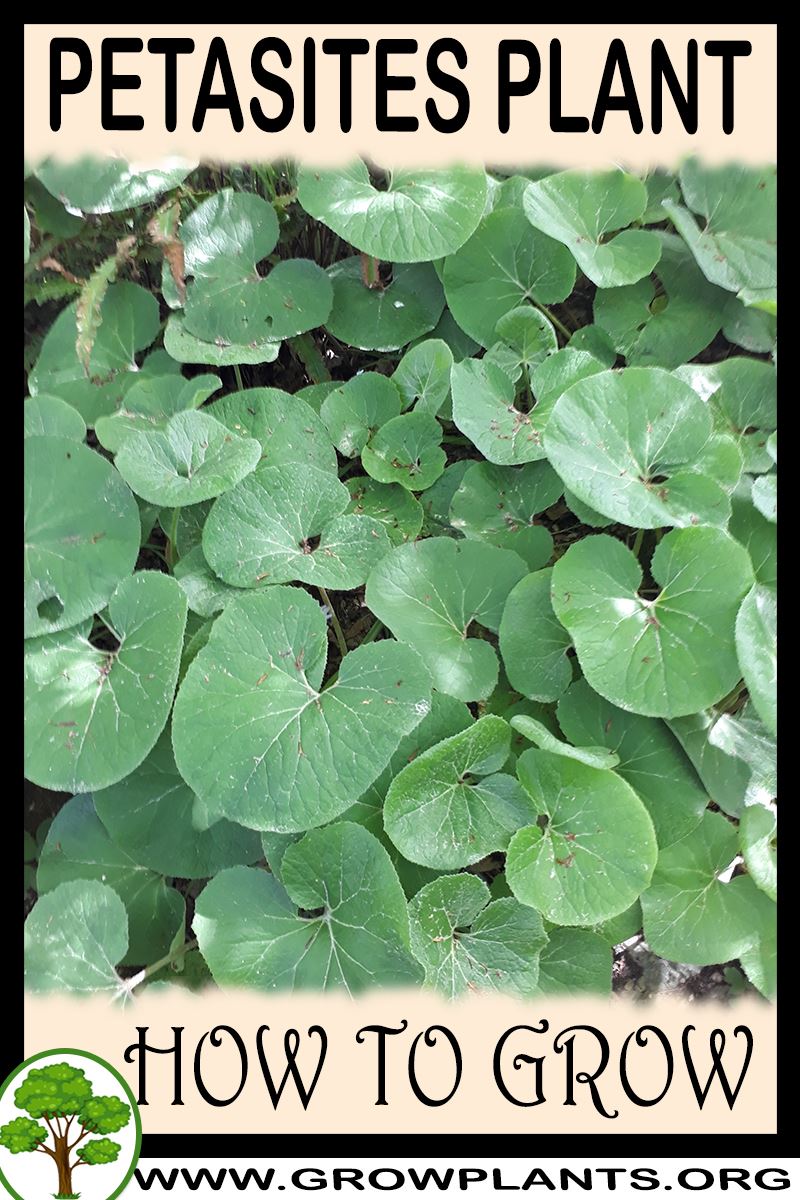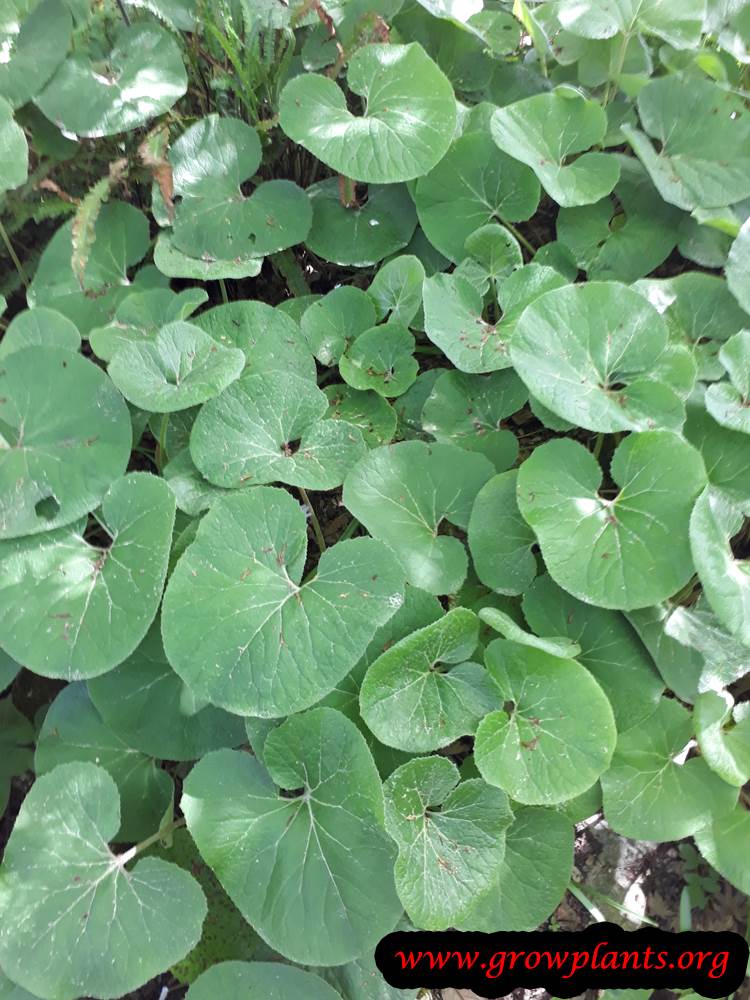


Plant Profile & Key Characteristics
Overview: A rhizomatous, deciduous perennial grown as a bold groundcover for its very large heart-shaped leaves, the leaf mounds reaching roughly 10-60 cm (4-24 in) or more. Flower spikes appear before the foliage, and the plant also has a history of medicinal use.
Quick Specifications
| Specification | Attribute |
|---|---|
| Plant Type / Life Cycle | Herbaceous perennial |
| Foliage Type | Deciduous |
| Mature Size | 10-60 cm (4-24 in) leaf height (larger species reach far higher) |
| Growth Rate | Fast to moderate |
| Root System | Rhizomatous (vigorously spreading, can be invasive) |
| Toxicity | Toxic if eaten raw — contains hepatotoxic pyrrolizidine alkaloids; only specially processed extracts are used medicinally |
| Hardiness | USDA zones 5-10 |
Growth Form & Structure
- Height & Spread: Forms a spreading colony with leaf mounds around 10-60 cm (4-24 in) high in the ground; can be grown in a large container to restrain its rhizomes.
- Growth Habit & Form: A vigorous, mat-forming groundcover spreading widely by underground rhizomes; best contained because it can become invasive.
- Lifespan & Maturity: A persistent, long-lived perennial that establishes quickly and returns each year from its rhizomes.
Anatomy & Physical Features
- Leaves & Foliage: Large, bold, heart-shaped green (sometimes green-and-yellow variegated) leaves on stout stalks — the plant’s main feature.
- Flower Characteristics: Small star-shaped flowers massed into rounded heads in white, yellow, pink, purple or mixed colours, appearing before the leaves.
Primary Uses & Landscape Value
- Functional & Ornamental Roles: A dramatic large-leaved groundcover for damp shade, streamsides and difficult areas; historically used medicinally, but best contained because of its invasive rhizomatous spread.
Care Guide: Planting, Soil & Watering
Overview: Petasites (butterbur) is a vigorous rhizomatous perennial groundcover for temperate to subtropical zones (5–10), grown for its bold foliage. It thrives in partial to full shade in deep, rich, reliably moist soil and even boggy ground.
Quick Care Requirements
| Requirement | Ideal Condition |
|---|---|
| Planting Season | Winter through summer, while the soil is moist and cool |
| Growth Rate | Moderate to Fast |
| Soil Type | Deep, rich, reliably moist; tolerates boggy ground |
| Water Need | Moderate to High – keep the soil consistently moist |
Planting & Establishment
- Best Planting Season: Plant from winter through summer while the soil is moist and cool.
- How to Plant:
- Hole Preparation: Dig a hole about twice the width of the root ball and no deeper than its height, loosening the sides so young roots can spread easily.
- Soil Amendments: Work compost or well-rotted organic matter into the backfill; on heavy ground add grit or coarse material to sharpen drainage.
- Planting Depth: Set the plant so the root collar sits level with the surrounding soil – never bury the stem – then firm gently and water in.
- Growth Speed & Expectations: A fast, spreading grower that quickly forms a broad colony in moist ground.
Soil, Watering & Drainage Care
- Soil Mix & Drainage Needs: Give deep, rich, reliably moist soil – it thrives near water and in boggy ground – improved with plenty of organic matter. It also grows in large containers, which help contain its spread.
- Watering Schedule & Technique:
- Young / Newly Planted: Water in well and keep the soil constantly moist while it establishes.
- Established: Water generously and often so the soil never dries out; it enjoys wet conditions other plants dislike.
- Seasonal Adjustments: Water heavily through warm, dry spells and ease off only in cool, wet, dormant periods.
Climate, Light & Hardiness
Petasites (butterbur) grows in temperate, Mediterranean, and subtropical climates, or as a houseplant, and is hardy outdoors in USDA zones 5 through 10. It prefers half shade to full shade, consistent with its native damp, woodland-edge habitats.
Quick Climate Specifications
| Climate Zones | Temperate, Mediterranean, subtropical |
|---|---|
| USDA Hardiness Zones | 5–10 |
| Light Conditions | Half Shade to Full Shade |
Sunlight & Light Exposure
Optimal Light Setup
Grow in half shade to full shade; too much direct sun can scorch the large leaves, especially in warmer parts of its range.
Temperature Extremes & Hardiness
USDA Hardiness & Regional Limits
Hardy outdoors across USDA zones 5 through 10, dying back to its rhizome each winter in colder zones and re-emerging in spring.
Wind, Humidity & Microclimate
Rainfall & Seasonal Moisture
Prefers consistently moist, rich soil conditions rather than a dry climate, reflecting its natural streamside and damp-ground habitat.
Growing in Pots, Balconies & Indoors
Petasites (butterbur) is a bold, moisture- and shade-loving perennial (10-60 cm / 4-24 in) with large leaves. The grower confirms it can be grown indoors, and because it likes half to full shade it adapts to a bright room or shaded balcony. A container has a second benefit: it keeps this vigorous spreader from running through the garden.
Quick Details
- Container Size: A large, sturdy pot – it enjoys room and moisture (general guidance)
- Indoor Suitability: Suitable indoors – give bright, indirect light and steady moisture
- Best Spot: Half shade to full shade
- Soil & Drainage: Rich, moisture-retentive mix that still drains
- Watering in Pots: Average to generous – it likes constantly moist soil and dislikes drying out
Indoors & On the Windowsill
- Indoors: Grows in a bright room away from harsh sun; keep the mix reliably moist as the big leaves transpire freely.
- Containing its spread: Petasites spreads aggressively by rhizomes – keeping it potted (rather than in open ground) is the easiest way to enjoy it without it taking over.
- Safety: It contains liver-toxic pyrrolizidine alkaloids and should not be eaten; keep it away from children and pets.
On a Balcony or Patio
- Shade & moisture: A shaded or part-shaded balcony is ideal; shelter it from drying wind and hot sun, and never let the pot dry out.
Choosing the Pot, Soil & Long-Term Care
- Pot & drainage: A large pot with drainage holes; glazed or plastic holds the moisture it craves better than terracotta. It can even sit in a shallow saucer of water given how much it drinks – just refresh it so it does not stagnate.
- Potting mix: Use a well-aerated, organic-rich mix – potting compost with perlite or vermiculite (or peat/coir blended with grit) so water drains freely.
- Feeding: Potted plants are fed more often than those in the ground because nutrients wash out with each watering – a balanced liquid feed through the growing season keeps them going.
- Repotting: Refresh the mix or pot up about every two years; for perennials, lightly prune the root ball and top growth when you do.
Fertilizing & Feeding
A moderate feeder: this rhizomatous deciduous ground cover is grown mainly for its large heart-shaped leaves, with modest flowering in late winter to spring, so balanced feeding with an emphasis on nitrogen during active leaf growth supports its ground-covering foliage, tapering off as the plant dies back for winter.
Quick Fertilizing Specs
| Feeding Level | Moderate feeder |
|---|---|
| Main Nutrient Priority | Balanced feeding with a nitrogen emphasis to support dense ground-covering foliage |
| Best Feeding Period | From late winter flowering through spring and summer leaf growth |
| Organic Options | Compost or well-rotted organic matter worked into moist, rich soil |
| Reduce/Stop Feeding | Feeding stops once foliage dies back for the winter |
| Micronutrients | Usually adequate from a complete fertilizer in moist, rich soil |
| Soil pH | Prefers moist, rich soil |
Feeding by Growth Stage
Late winter bloom and spring leaf growth
Support the small ball-shaped flower clusters in late winter into spring, then the flush of large heart-shaped leaves that follows.
| Nutrient direction | A balanced fertilizer with a nitrogen emphasis supports both the early flowers and the vigorous leaf growth that follows to form ground cover. |
|---|---|
| Timing | From late winter bloom through spring as leaves expand, matching the plant’s winter-to-summer planting window. |
| Frequency | A light, regular feeding through this period supports steady growth. |
| Fertilizer types | A balanced complete fertilizer with a nitrogen emphasis, Compost or organic matter worked into moist, rich soil |
| Precautions | This plant is noted as invasive and spreads by rhizome, so avoid overfeeding, which can encourage excess spread beyond its intended area; watch for slugs on new leaves. |
Summer foliage maintenance
Maintain the dense, ground-covering canopy of green or variegated leaves through summer.
| Nutrient direction | Light, ongoing feeding maintains steady foliage quality without pushing excess rhizome spread. |
|---|---|
| Timing | Through the summer while foliage is fully expanded. |
| Frequency | Feeding needs are minimal for an established, actively spreading ground cover. |
| Fertilizer types | A balanced complete fertilizer, applied sparingly, An organic feed worked lightly into the surface soil |
| Precautions | Keep soil consistently moist through summer, and continue to monitor this aggressive spreader to keep it within its intended area. |
Autumn to winter dieback
Let the plant rest as its deciduous foliage dies back for the season.
| Nutrient direction | None – withhold fertilizer once foliage has died back. |
|---|---|
| Timing | Autumn through winter, matching the plant’s autumn-to-winter pruning of dead leaves and flowers. |
| Frequency | No feeding at this stage. |
| Fertilizer types | No feeding at this stage – resume balanced feeding when spring growth resumes |
| Precautions | Do not fertilize during dieback and dormancy; pair this rest period with pruning of dead leaves and flowers instead. |
Nutrient Deficiency Signs & Corrections
Smaller, pale leaves and thinner ground cover than expected.
| Possible causes | low available soil nitrogen, leaching from watering in moist soil, competition from the plant’s own dense, spreading growth |
|---|---|
| Appears first on | older, lower leaves |
| What to check | recent feeding history, soil organic matter, density of the rhizome mat |
| Possible correction | Apply a balanced, nitrogen-leaning fertilizer as spring growth resumes and monitor for improvement. |
New leaves appear pale or yellowish while veins stay greener.
| Possible causes | high soil pH limiting iron availability, waterlogged or poorly drained soil, root or rhizome stress from compacted soil |
|---|---|
| Appears first on | newest leaves |
| What to check | soil pH and drainage, standing water after watering, rhizome and root health |
| Possible correction | Improve drainage and soil pH balance; apply a chelated iron product per its label if symptoms persist. |
Ragged holes in leaves that can be mistaken for a nutrient issue.
| Possible causes | slug feeding rather than a nutrient deficiency, excess soil moisture favoring slug activity, dense, humid canopy sheltering pests |
|---|---|
| Appears first on | lower and outer leaves |
| What to check | signs of slugs or slime trails, soil moisture levels, overall leaf color versus just leaf damage |
| Possible correction | Manage slugs directly rather than adjusting fertilizer, since this is a pest issue rather than a nutrient deficiency. |
Pruning, Training & Seasonal Maintenance
Petasites is a spreading, deciduous rhizome plant grown mainly as bold groundcover, so “pruning” here means seasonal sanitary cleanup plus ongoing control of its aggressive spread rather than shaping a framework. Flowers emerge from the rhizome very early, often before or with the leaves, so removing spent flower stalks and autumn/winter foliage die-back does not affect next year’s bloom, which comes from rhizome buds regardless.
Quick Pruning & Maintenance Specs
| Pruning Tolerance | Moderate |
| Primary Pruning Window | Autumn to winter, as foliage dies back |
| Secondary Maintenance Window | After the early flowers fade, before they set seed |
| Typical Frequency | Seasonal cleanup, plus ongoing rhizome containment as needed |
| Main Objective | Sanitation and controlling this plant’s invasive spread |
| Young Plant Priority | Leave the young rhizome network undisturbed; remove only damaged leaves |
| Mature Plant Priority | Contain rhizome spread; remove spent flower stalks and dying foliage |
| Best Tool Type | Bypass secateurs for thick leaf/flower stalks, garden spade for rhizome control |
| Avoid Heavy Pruning During | Active spring emergence and flowering |
Pruning by Plant Age & Size
Newly Established
Avoid disturbing the developing rhizome network; remove only clearly damaged leaves.
Young / Formative
No structural training applies – this is a spreading rhizome plant, not a plant with a branch framework to build.
Mature / Established
Ongoing containment of rhizome spread is the main priority, alongside removing spent flower stalks after bloom and cutting back dying foliage in autumn/winter.
Seasonal Pruning Schedule
Post-Flowering
Objective: prevent the plant adding seed spread on top of its rhizome spread. Remove: spent flower stalks before they set seed. Do not remove: emerging leaves. Expected response: energy stays with the rhizome; no impact on next year’s early bloom since flowers arise from rhizome buds, not from the pruned stalks.
Dormant/Winter
Objective: seasonal cleanup as the plant dies back. Remove: blackened, collapsed foliage once it has died down. Do not remove: healthy rhizome below ground. Expected response: tidy bed over winter, no effect on vigor since the plant regenerates entirely from the rhizome each spring.
Ongoing Sanitary
Objective: keep the large leaves looking presentable through the growing season. Remove: torn, storm-damaged, or slug-damaged individual leaves as needed. Expected response: no loss of vigor, since new leaves continue to emerge from the rhizome.
Structural Pruning & Training
The real structural work with Petasites is controlling its spread rather than shaping a canopy: physically dividing or removing sections of the rhizome mat, or containing it with a buried barrier, keeps this vigorous spreader from overtaking neighboring plantings.
Special Growth to Remove
- Runners/rhizome spread – dig out or divide unwanted sections regularly; this plant is noted as invasive and will colonize surrounding beds if left unchecked.
- Spent flower stalks – remove after bloom to limit additional spread from seed.
- Dead or storm-damaged leaves – remove as needed through the season and at autumn/winter die-back.
Container & Small-Space Pruning
Growing Petasites in a container (including as a houseplant, per its listed indoor tolerance) is itself one of the most effective ways to manage its spread, since it physically restrains the rhizome. Little to no pruning beyond removing spent leaves and flower stalks is needed in this setting.
Tools
- Bypass secateurs for the thick leaf and flower stalks, which are heavier than typical perennial stems.
- Garden spade for dividing or removing sections of the spreading rhizome.
Tool Hygiene & Disease Risk
Routine: no significant pathogen risk is noted for this plant (its main pest is slugs) – clean, sharp tools are sufficient for both stalk cuts and rhizome division.
Cut Placement & Technique
Cut leaf and flower stalks close to soil level at their base. When dividing the rhizome, cut cleanly through it well away from the section you want to keep, since torn rhizome fragments can still resprout.
Heavy Pruning & Rejuvenation
There is no woody framework to rejuvenate; instead, “heavy” management means physically reducing an overgrown rhizome mat, which can be done at any point during dormancy without harming the plant’s vigor – it regenerates readily from whatever rhizome remains.
Post-Pruning Care
Water new divisions after transplanting them; watch fresh regrowth for slug damage, which is the main pest noted for this plant.
Common Pruning Mistakes
- Underestimating the plant’s invasiveness and not controlling rhizome spread until it has colonized nearby beds.
- Leaving spent flower stalks to set seed, adding a second route of spread on top of the rhizome.
- Tearing rather than cleanly cutting rhizome sections when dividing, leaving fragments that resprout where unwanted.
When NOT to Prune
Avoid major rhizome division or removal work during the active spring emergence and flowering period; wait until the plant is dormant.
Recommended Tools (by task)
- Removing thick leaf/flower stalks (mature plants): bypass_secateurs – the heavy petioles need a cleaner cut than fine snips can manage.
- Containing or dividing the spreading rhizome (mature clumps): garden_spade – the practical tool for cutting through and lifting rhizome sections.
Propagation Guide
Petasites (butterbur) spreads by a vigorous rhizome, and dividing or transplanting rooted rhizome sections is by far the easiest and most common way to start new plants, matching this site’s own listing of rhizome as a start method. This genus is dioecious, with separate male and female plants, so seed is only produced where both are present and its use is unpredictable; for this and other reasons vegetative propagation is not required but is clearly the practical route, and overall difficulty is easy.
Quick Propagation Specs
| Best Propagation Method | Rhizome division |
| Alternative Methods | Seed (rarely used in practice) |
| Propagation Difficulty | Easy |
| Seed True-to-Type | Variable; seedling sex cannot be controlled (dioecious species) |
| Vegetative True-to-Type | Yes |
| Best Propagation Season | Winter through spring, while dormant, within this plant’s winter/spring/summer planting window |
Growing from Seed
Petasites plants are dioecious, with separate male and female individuals, so seed is only produced where both are present, and the sex of seed-raised offspring can’t be controlled; for this reason, and because rhizome division is so easy and fast, seed is rarely used to propagate this plant at home.
Rhizomes, Tubers, Bulbs & Corms
Rhizome Division: This is the standard and easiest way to propagate Petasites, matching the site’s own listing of rhizome as a start method.
- Timing: divide while dormant, from winter into spring, within this plant’s normal planting window.
- Lift or cut a section of rhizome that carries at least one healthy growth bud or eye.
- Because this plant spreads vigorously and is noted as invasive on this site, even small rhizome pieces establish readily, so site new divisions with this spread in mind.
- Replant at a similar depth in moist, rich soil and keep watered until new shoots appear.
Bloom & Flower Guide
Quick Details
- Bloom Season: Late winter into spring, before the leaves fully expand
- Flower Appearance: Many small flowers packed into dense, cone-like spikes on stout stalks, in white, yellow, pink or purple tones
- Edibility: Not edible – butterbur contains liver-toxic compounds and should not be eaten
Detailed Blooming Overview
Petasites (butterbur) is a bold rhizomatous ground cover, and one of its quirks is that the flowers arrive first, pushing up on thick stalks in late winter and early spring before the large heart-shaped leaves unfurl. The many tiny flowers are gathered into dense, cone-like spikes that stand out against bare ground.
Flower Characteristics
- Dense, cone-like flower spikes on stout stalks, appearing ahead of the foliage
- Small individual flowers in white, yellow, pink or purple shades
- An early nectar source when little else is in bloom
Bloom Care & Thinning
- Managing the bloom: little is needed – remove spent flower stalks as the leaves take over, and be aware the plant spreads strongly by rhizome, so contain it if space is limited
- Site: moist to wet soil in sun or shade, ideal near water, gives the strongest growth and flowering
- Safety: although traditionally used medicinally, the raw plant contains pyrrolizidine alkaloids and is not safe to eat
Fruit & Uses
In some Petasites species — most notably Petasites japonicus (‘fuki’) — the young flower buds and leaf stalks are a traditional cooked vegetable, but this food use is species-specific and always requires processing; other Petasites species, including the common butterbur (P. hybridus), are used only in traditional medicinal preparations, never as food. Nothing in this genus is eaten raw or unprocessed.
Quick Edible Specs
| Edible Parts | Flower buds; young shoots/leaf stalks (petioles) — in Petasites japonicus (‘fuki’) specifically |
|---|---|
| Main Use(s) | Culinary (cooked vegetable); other species/parts: traditional medicinal preparations only, not food |
| Eaten Raw or Cooked | Cooked only |
| Preparation Required | Parboil/cook and peel the fibrous outer skin of the stalks; discard the cooking water |
| Harvest Season | Flower buds: late winter – early spring, before they open; young stalks: spring |
| Time to First Harvest | Once an established clump sends up new spring growth |
| Storage | Best used fresh, soon after harvest |
| Safety/Toxicity Caveat | the genus contains pyrrolizidine alkaloids that are toxic to the liver; must be correctly cooked/processed, is not safe raw, and is not appropriate for all Petasites species — confirm the exact species before eating anything |
Shoots & Stems
Where this food tradition applies (Petasites japonicus, ‘fuki’), the young leaf stalks are harvested in spring, parboiled, and peeled of their tough outer fibre before being simmered as a vegetable side dish.
Flowers & Flower Buds
The flower buds (‘fukinotou’ in this tradition) emerge in late winter to early spring before the leaves and are harvested while still tightly closed. They have a mildly bitter, aromatic flavour and are typically cooked, e.g. simmered or used in tempura, as an early-spring seasonal vegetable.
Preparation, Uses & Safety
Safety first: Petasites species contain pyrrolizidine alkaloids, which are hepatotoxic, so any part must be correctly processed (parboiled, with the cooking water discarded) and never eaten raw. The established food tradition covers Petasites japonicus specifically; other species, such as the common butterbur (P. hybridus), are used only in traditional herbal preparations for other purposes and are not treated as food. Because this page describes the genus generally rather than confirming one species, treat any edible use here with caution, positively identify the species, and prepare it correctly before eating.
Pests, Diseases & Troubleshooting
Butterbur is a bold, moisture-loving Asteraceae with huge leaves and vigorous, colonising rhizomes—so its biggest ‘problem’ is its own spread. Pest-wise, its main enemies are slugs and snails feeding on the large soft leaves, with aphids, caterpillars and leafminers secondary, and powdery and downy mildew, rust or leaf spots possible in crowded or humid damp shade. Give it room in moist ground and it is otherwise very robust.
Quick Troubleshooting Overview
| Issue / Pest | Main Symptom | Primary Solution |
|---|---|---|
| Slugs & snails | Ragged holes and slime on the large leaves | Hand-pick at night, barriers, iron-phosphate bait |
| Aphids | Sticky, curled new growth and leaf undersides | Hose off; encourage beneficials; insecticidal soap |
| Caterpillars / leafminers | Chewed leaves or pale winding mines | Hand-pick, remove mined leaves, Bt for caterpillars |
| Powdery / downy mildew | White film above or grey mould beneath in humidity | Improve airflow, water at the base, remove leaves |
| Aggressive spread | Rhizomes colonise far beyond the planting | Contain with barriers or grow beside water in bounds |
Common Pests & Management
- Slugs and snails (Gastropoda):
- Symptoms: Ragged holes, tattered margins and silvery slime trails on the large, soft leaves, worst in the damp, shaded, moist conditions butterbur enjoys.
- Prevention & Control: Hand-pick after dark, clear damp hiding places, ring prized clumps with grit or copper barriers, and set beer traps or iron-phosphate bait where pressure is high.
- Aphids (Aphidoidea):
- Symptoms: Colonies of soft-bodied insects on new growth and leaf undersides, with honeydew, sooty mould and some distortion.
- Prevention & Control: Hose off with water, support ladybirds, lacewings and hoverflies, and use insecticidal soap for stubborn colonies in the evening.
- Caterpillars (Lepidoptera larvae):
- Symptoms: Chewed holes and notched margins on the big leaves, with frass; usually cosmetic on such a vigorous plant.
- Prevention & Control: Hand-pick, encourage birds and parasitic wasps, and apply Bacillus thuringiensis (Bt) only if a heavy infestation builds.
- Leafminers (Agromyzidae):
- Symptoms: Pale winding tunnels mined within the leaf tissue and light stippling from adults.
- Prevention & Control: Pick off and destroy mined leaves, encourage parasitic wasps, and tolerate light damage on this robust plant.
Diseases & Fungal Issues
- Powdery mildew (Erysiphaceae):
- Symptoms: White powdery patches on the leaves in crowded, humid or shaded conditions, later yellowing the foliage.
- Treatment & Management: Improve airflow and spacing, keep the roots moist, remove affected leaves, and apply sulfur or potassium bicarbonate only if it spreads.
- Downy mildew (Peronosporaceae):
- Symptoms: Pale yellow blotches on the upper leaf with a greyish mould beneath in cool, wet, humid weather.
- Treatment & Management: Improve airflow, water at the base rather than overhead, remove infected leaves, and use a copper-based fungicide in persistent wet spells.
- Rust and leaf spot (Puccinia / Cercospora spp.):
- Symptoms: Orange-brown rust pustules on leaf undersides or brown leaf spots that merge in humid conditions.
- Treatment & Management: Remove and destroy affected leaves, improve spacing, and use a sulfur or copper fungicide only if damage is significant.
Growing Difficulties & Abiotic Problems
- Aggressive rhizome spread:
- Cause & Symptoms: Butterbur’s running rhizomes colonise well beyond where they are planted and are very hard to remove once established—its defining management challenge.
- Correction Strategy: Site it where vigour is welcome (damp wild ground, pond margins), install deep root barriers or grow in a sunken container, and dig out strays promptly.
- Leaf scorch / wilting from dryness:
- Cause & Symptoms: As a bog-margin plant, dry soil or hot sun wilts and scorches the large leaves.
- Correction Strategy: Grow in consistently moist to wet soil in part shade, and mulch to hold moisture; it recovers quickly once rewatered.
- Crowding decline:
- Cause & Symptoms: Very dense colonies can become congested and more mildew-prone with poor airflow.
- Correction Strategy: Thin and divide occasionally, and keep some air movement through the planting.
What Helps – Products & Tools
Butterbur needs little beyond slug control and containment. Keep iron-phosphate bait or copper barriers for slugs and snails, insecticidal soap for aphids and Bacillus thuringiensis (Bt) for caterpillars, and a sulfur or copper-based fungicide only if mildew or rust takes hold. Its biggest ongoing task is confining the rhizomes.