Plant Profile & Key Characteristics
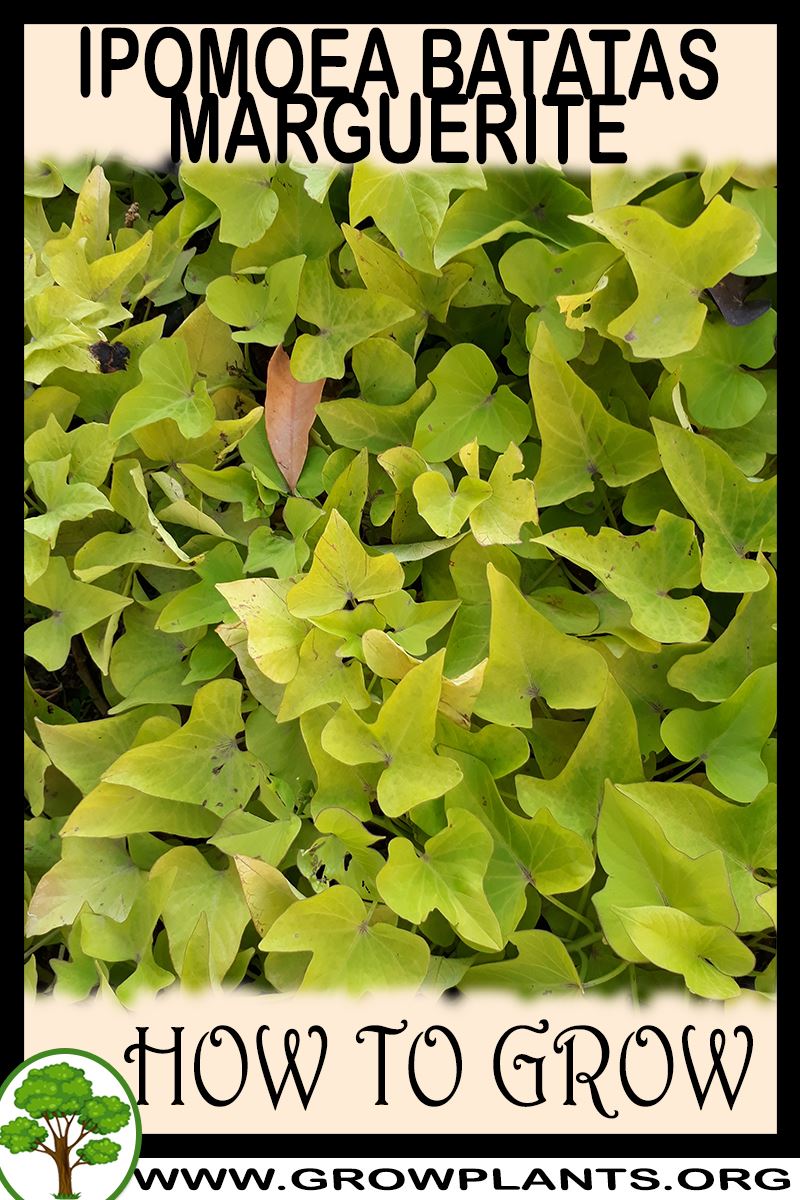
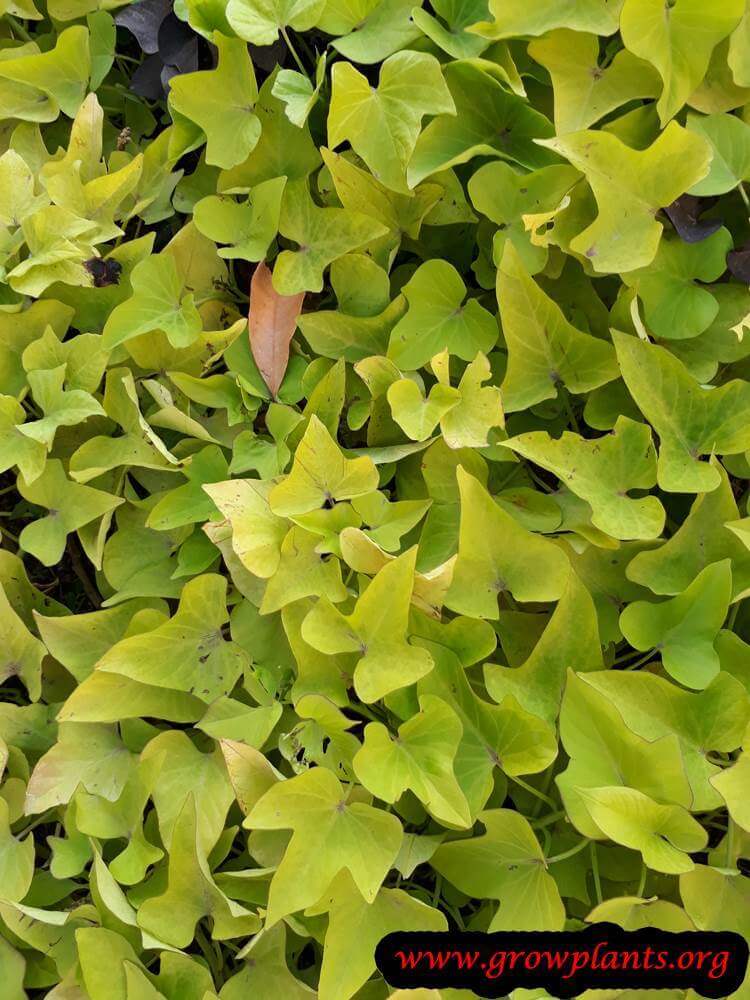
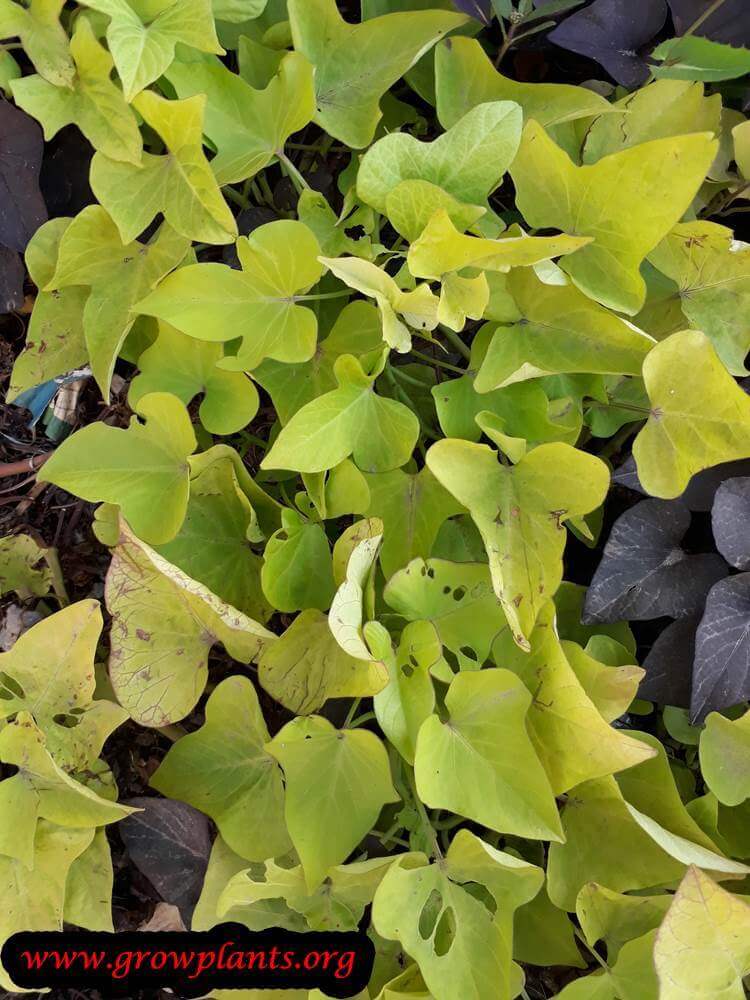
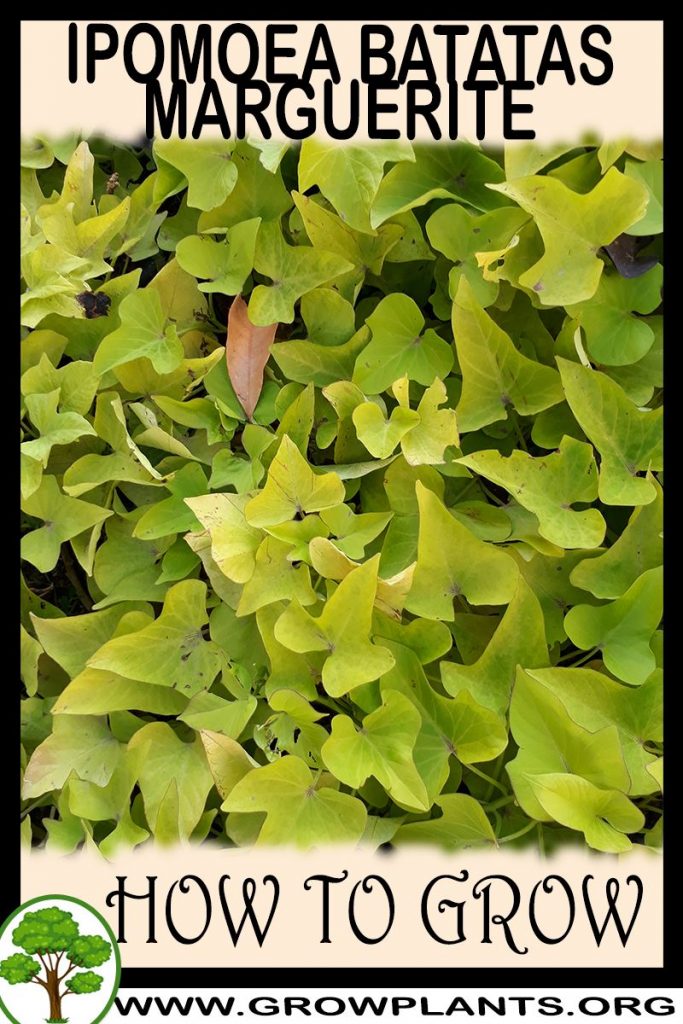
Overview: Ipomoea batatas ‘Marguerite’ is a fast-growing ornamental sweet potato vine reaching 1-3 m but mostly trailing, grown for its lime-to-chartreuse foliage as a groundcover and container spiller. It is perennial in warm climates and grown as an annual where winters are cold.
Quick Specifications
| Specification | Attribute |
|---|---|
| Plant Type / Life Cycle | Perennial (evergreen); grown as annual in cold climates |
| Foliage Type | Evergreen in frost-free zones; dies back with frost |
| Mature Size | 1-3 m (3-10 ft) trailing |
| Growth Rate | Fast |
| Root System | Tuberous storage roots |
| Toxicity | Non-toxic / edible (leaves and tuber), though this cultivar is bred for ornament |
| Hardiness | USDA zone 10+ as perennial, 6+ as annual |
Growth Form & Structure
- Height & Spread: 1-3 m (3-10 ft) of mostly crawling growth in ground; in a container use 10-30 L (2.5-8 gal), larger is better.
- Growth Habit & Form: Low, spreading herbaceous vine used as groundcover or as a trailing container plant; needs room for its tubers.
- Lifespan & Maturity: Very fast to cover ground in a single season.
Anatomy & Physical Features
- Leaves & Foliage: Green to light, five-lobed leaves (best colour is kept by vegetative propagation).
- Flower Characteristics: Purple trumpet-shaped flowers, produced sparingly in short-day conditions (full detail in the Bloom guide).
Primary Uses & Landscape Value
- Edible Uses: Young leaves used in salad, stir-fry or cooked; the white-fleshed tuber is eaten cooked.
- Functional & Ornamental Roles: Ornamental foliage groundcover and container/hanging-basket spiller; can be aggressive and needs space.
Care Guide: Planting, Soil & Watering
Overview: This vigorous ornamental sweet potato thrives in full sun to part shade in warm, frost-free conditions, romping away as a trailing groundcover or over a support. It wants rich, moist, well-draining soil that is slightly acidic and cleared of stones, with a mulch to keep the shallow, tuber-forming roots cool and moist.
Quick Care Requirements
| Requirement | Ideal Condition |
|---|---|
| Planting Season | In spring once the soil warms and frost has passed (year-round in frost-free zone 12+) |
| Growth Rate | Fast |
| Soil Type | Rich, moist, well-draining and stone-free; slightly acidic |
| Soil pH | Slightly acidic |
| Water Need | Moderate; keep evenly moist, never waterlogged |
Planting & Establishment
- Best Planting Season: Plant in spring after the last frost as the soil warms; in warm zones (10b) it can go in from spring through summer, and in frost-free zones (11-12+) at almost any time outside peak summer heat.
- How to Plant:
- Hole Preparation: Dig a hole about 50% wider than the root ball so the roots can spread into loosened soil.
- Soil Amendments: Mix organic matter, humus and dead leaves into the backfill to enrich and lighten the soil.
- Planting Depth: Set the plant at the same level it grew before, firm the soil gently but well enough to hold it, and add a support or trellis for the vines to climb.
- Growth Speed & Expectations: A fast grower that quickly covers ground or a trellis in a single warm season; allow generous room, as the tubers need space and the vine can become aggressive.
Soil, Watering & Drainage Care
- Soil Mix & Drainage Needs: Aeration and free drainage are key to prevent tuber and root rot; in containers use a rich, free-draining potting or peat mix with perlite or vermiculite, and mulch to hold moisture.
- Watering Schedule & Technique:
- Young / Newly Planted: Water twice on planting day, then daily for the first two weeks while the roots establish.
- Established: Once established, water regularly to keep the soil evenly moist, letting the very surface dry slightly between waterings.
- Seasonal Adjustments: Increase in hot, dry weather; ease back over cool winter months, especially if lifted and overwintered indoors.
Climate, Light & Hardiness
Ornamental sweet potato vine ‘Marguerite’ is a heat-loving, frost-tender plant suited to tropical, subtropical, mediterranean, desert, and warm-temperate gardens, growing best in full sun to half shade. It is reliably perennial only in USDA zone 10 and warmer; elsewhere it is grown as a fast, sprawling warm-season annual that is killed back by the first frost.
Quick Climate Specifications
| Climate Zones | Tropical, Subtropical, Mediterranean, Desert, Temperate (as an annual) |
|---|---|
| USDA Hardiness Zones | 10+ as a perennial; commonly grown as an annual from about zone 6 upward |
| Cold Damage Begins | With the first light frost, foliage blackens and collapses |
| Frost Tolerance | Very Low |
| Light Conditions | Full Sun to Half Shade |
Sunlight & Light Exposure
Optimal Light Setup
Full sun produces the most vigorous growth and the richest foliage color; half shade is tolerated but growth becomes looser.
Direct Sun Requirement
Needs several hours of direct sun daily for compact, colorful growth - deeper shade leads to leggy stems and duller leaf color.
Shade & Heat Management
Handles intense heat well in desert and subtropical summers provided soil moisture is adequate; in the very hottest climates, light afternoon shade can help prevent leaf scorch.
Best Exposure/Orientation
Well suited to open sunny beds, containers, or hanging baskets, and works as a sun-baked groundcover over slopes and edges.
Temperature Extremes & Hardiness
USDA Hardiness & Regional Limits
Perennial only from USDA zone 10 upward. In zone 6 and colder it is grown strictly as a warm-season annual, planted after the last spring frost and finished by the first autumn frost, consistent with the site's own zone data.
Cold Damage & Winter Protection
Frost blackens and collapses the foliage quickly. Where winters bring freezing temperatures, container specimens are commonly brought indoors before the first frost and set back outside after the last frost in spring, as the site's own care notes describe.
Frost Sensitivity
Very frost sensitive, with no meaningful frost tolerance in the foliage or trailing stems.
Extreme Heat Tolerance
Good - this is a genuinely warm-climate plant that thrives through hot desert and subtropical summers as long as soil moisture is maintained.
Frost-Free Growing Season
As an annual bedding or container plant, it needs a full frost-free warm season to bulk up into an attractive trailing mound; plant out only after the last spring frost.
Wind, Humidity & Microclimate
Humidity Preferences
Adapts to a wide humidity range, from humid tropical and subtropical air to the drier mediterranean and desert climates in its site profile, provided soil moisture is maintained.
Dry-Air Tolerance
Reasonably tolerant of dry air once established, since it performs well in desert climates - consistent soil moisture matters more than ambient humidity.
Wind Tolerance
Its trailing, ground-hugging vine habit resists wind damage well, though exposed hanging-basket growth can dry out faster in strong wind.
Rainfall & Seasonal Moisture
Adapts to climates with either summer-wet tropical/subtropical patterns or irrigated dry-summer mediterranean/desert patterns, reflecting its broad climate range in the site data.
Microclimate Recommendations
In marginal or cool climates, a warm, sheltered, sun-baked spot - near a south-facing wall, in a raised bed, or in a container - extends the frost-free growing window.
Growing in Pots, Balconies & Indoors
Ornamental sweet-potato vine is a vigorous trailing, crawling foliage plant (1-3 m of trailing growth) – not a true houseplant, but superb spilling out of a large container on a sunny balcony or patio. Indoors the light is usually too weak; it wants full sun to part shade outdoors.
Quick Details
- Container Size: 10-30 L (2.5-8 gal), the bigger the better
- Indoor Suitability: Not a houseplant; best outdoors, though it can trail from a very bright, sunny window
- Best Spot: Full sun to half shade
- Soil & Drainage: Well-ventilated, free-draining, organic-rich mix – potting mix or peat with perlite or vermiculite
- Watering in Pots: Average water; keep the soil moist and let the excess drain freely
Indoors & On the Windowsill
- Houseplant limits: The grower notes it is not suited as an indoor houseplant.
- Windowsill / bright spot: It can trail from a very bright, sunny window, but its vigour and light needs make it far happier outdoors.
- Overwintering: Frost-tender – in cold climates lift and store the tuberous roots dormant over winter, or bring the pot into a bright, frost-free spot.
On a Balcony or Patio
- Light & wind: Give full sun to part shade and let the stems cascade over the rim or a railing. Pots dry fast in sun and wind, so keep the soil moist.
Choosing the Pot, Soil & Long-Term Care
- Pot & drainage: A 10-30 L pot (bigger is better) with strong drainage holes.
- Potting mix: Well-ventilated and organic – potting mix or peat with perlite or vermiculite.
- Feeding: Feed more often than in the ground, as container nutrients leach with watering.
- As a perennial: Grown on as a perennial, switch the soil about every two years and prune part of the roots and top growth.
Grower’s Container Tip
- No standing tray: Don’t stand this pot on a saucer or tray – let the water run straight through; with a free-draining mix this keeps the roots from sitting wet.
Fertilizing & Feeding
A moderate feeder: this fast-growing, vigorous vine responds to a light starter feeding at planting and regular light feeding through the warm season to keep its bright foliage full, then rests without feeding once it dies back or is brought indoors for winter. A fertilizer formulated for tomatoes and vegetables supports that feeding pattern through harvest.
Quick Fertilizing Specs
| Feeding Level | Moderate feeder |
|---|---|
| Main Nutrient Priority | Nitrogen-forward or balanced feeding to support vigorous, colorful foliage |
| Best Feeding Period | Spring through the warm active growing season |
| Organic Options | Compost or a rich organic amendment worked into the bed at planting |
| Micronutrients | Usually met by a complete fertilizer and organic matter; correct only diagnosed issues |
| Soil pH | Slightly acidic; tolerates a range in rich, well-drained soil |
| Reduce/Stop Feeding | Taper feeding as the season cools, and hold off entirely once the plant is dormant or held indoors over winter |
Feeding by Growth Stage
Establishment
Root a young vine into its bed or container and get vigorous trailing or climbing growth underway.
| Nutrient direction | A balanced complete fertilizer worked into rich soil, plus mulch while the plant is young, helps new plantings establish quickly. |
|---|---|
| Timing | At planting in spring after the last frost, through early establishment. |
| Frequency | A light feeding at planting is usually enough to get new plants going. |
| Fertilizer types | A balanced complete fertilizer, Compost or a rich organic amendment worked into the planting area |
| Precautions | Mulch and water evenly while the plant is young; avoid heavy feeding that outpaces the still-small root system. |
Vigorous warm-season growth
Support the fast-growing trailing or climbing foliage this cultivar is grown for, whether used as a groundcover, hedge, or trellised vine.
| Nutrient direction | A nitrogen-forward or balanced fertilizer keeps the colorful foliage lush and vigorous through the warm season. |
|---|---|
| Timing | Through the warm active growing season from spring into autumn. |
| Frequency | Light, regular feedings support steady growth, especially for plants trellised, grown as a hedge, or kept in containers or hanging baskets. |
| Fertilizer types | A nitrogen-forward or balanced complete fertilizer, A container-grade fertilizer for potted or hanging-basket plantings |
| Precautions | This is a vigorous, spreading grower; avoid overfeeding, which can push growth more aggressively than the space allows. |
Dormancy or indoor overwintering
Let the plant rest through cold weather, whether it dies back where grown as an annual or is held indoors as a houseplant over winter.
| Nutrient direction | None – withhold fertilizer while the plant is dormant or resting indoors over winter. |
|---|---|
| Timing | Late autumn through winter, or whenever the plant is held indoors in reduced light. |
| Frequency | No feeding at this stage. |
| Fertilizer types | No feeding at this stage; wait for active spring growth before feeding again |
| Precautions | Do not fertilize a dormant or indoor-overwintering plant; focus on modest watering and protection from cold instead. |
Nutrient Deficiency Signs & Corrections
Older, lower leaves fade to pale green or uniform yellow and vine growth slows.
| Possible causes | low available soil nitrogen, nitrogen leaching from heavy watering or rain, thin, low-organic-matter soil |
|---|---|
| Appears first on | older, lower leaves |
| What to check | recent feeding history, soil organic matter, watering and drainage |
| Possible correction | Apply a nitrogen-containing complete fertilizer and build soil organic matter, then water evenly. |
The youngest leaves turn pale or yellow between green veins while older foliage stays greener.
| Possible causes | high or alkaline soil pH locking up iron, waterlogged or poorly aerated roots, genuinely low available iron |
|---|---|
| Appears first on | new, youngest leaves |
| What to check | soil pH, drainage and root health, whether symptoms favor the newest growth |
| Possible correction | Correct soil pH toward the plant’s preferred range and apply a chelated iron product per its label. |
Leaf margins yellow or scorch on older foliage and vines look weaker than expected.
| Possible causes | low soil potassium, an imbalanced, nitrogen-heavy feeding history, leaching in light, sandy soils |
|---|---|
| Appears first on | older leaf margins |
| What to check | recent feeding balance, soil texture and drainage, overall vine vigor |
| Possible correction | Shift toward a more balanced or potassium-inclusive complete fertilizer and improve soil organic matter. |
Leaf margins brown or scorch and growth stalls despite adequate watering, especially in containers or hanging baskets.
| Possible causes | fertilizer salt buildup in the root zone, under-watering that concentrates salts, excessive or too-frequent feeding, particularly in pots |
|---|---|
| Appears first on | leaf margins and tips |
| What to check | recent fertilizer amounts, watering consistency, drainage, especially in containers |
| Possible correction | Ease off feeding, water thoroughly to flush accumulated salts, then return to lighter feeding. |
Pruning, Training & Seasonal Maintenance
Ipomoea batatas Marguerite is a fast-growing, soft-stemmed vine grown for its trailing, colorful foliage rather than for flowers or fruit, so it tolerates frequent pruning well and the cuts are mainly cosmetic. The main objective is shaping and density control – pinching young growth for a bushier habit and cutting back mature vines so they don’t swamp neighboring plants or overrun their support. Where it is grown as a true annual (outside zone 10+) no pruning is needed at all since the plant is removed at season’s end; where it persists as a perennial, the safest time for a fuller cutback is after its main bloom flush or in early winter, and pruning does not sacrifice next year’s flowers since they appear on new growth.
Quick Pruning & Maintenance Specs
| Pruning Tolerance | High – a fast-growing, non-woody vine that regrows readily after cutting |
| Primary Pruning Window | Anytime, as needed for shape (design pruning/pinching) |
| Secondary Maintenance Window | After the main bloom flush, or early winter for plants kept as a perennial in warm zones |
| Typical Frequency | Light pinching/trimming through the growing season; annual plants need none |
| Main Objective | Control density, legginess and spread; keep the trailing habit tidy on its support |
| Young Plant Priority | Remove any weak or damaged stems at planting; pinch tips to build a branched framework |
| Mature Plant Priority | Cut back rampant or leggy growth; keep it within its trellis or bed space |
| Best Tool Type | Precision snips or light secateurs – stems are soft and fleshy |
| Avoid Heavy Pruning During | Shortly before frost where the plant is being carried over as a tender perennial |
Pruning by Plant Age & Size
Newly Established
At planting, remove only weak or damaged branches; otherwise leave the young plant to establish before any shaping cuts.
Young / Formative
No formal leader or framework training is used – instead, pinch the growing tips once a few nodes have formed to encourage branching, and guide/tie stems onto a trellis or support if the plant is being trained upward rather than left to trail as groundcover.
Mature / Established
Trim back vigorous runners to control spread and prevent the vine from smothering neighboring plants or its support structure; thin overly dense growth occasionally to keep the foliage fresh rather than tangled.
Seasonal Pruning Schedule
Post-Flowering / Early Winter (perennial culture only)
Objective: tidy the plant and encourage fresh new growth after its short-day bloom period. Remove: spent flowering stems and any straggly growth. Do not remove: all foliage at once on plants being kept through winter outdoors in marginal zones – leave enough leaf area for recovery. Expected response: vigorous new growth given its fast growth rate. Flowering impact: none of note – flowers are incidental to the plant’s ornamental value and appear on new growth.
Ongoing Sanitary
Objective: shape and density control. Remove: damaged, yellowing, or overly long trailing stems at any time. Expected response: quick regrowth from a fast-growing vine.
Structural Pruning & Training
Train and tie new growth onto a trellis or support if grown vertically; on groundcover plantings, cut back stems that root down as they spread to keep the plant contained to its bed. No canopy-thinning is needed since the plant does not build a dense woody framework.
Special Growth to Remove
- Weak or thin stems – remove at planting and whenever they appear on the mature plant.
- Trailing stems that have rooted into the soil beyond the intended bed – cut to control spread.
- Frost-damaged foliage on perennial specimens in marginal zones – remove once new growth resumes in spring.
Container & Small-Space Pruning
In containers, keep pinching more frequent to maintain a compact, bushy shape rather than letting stems trail unchecked. Where the plant is kept as a perennial in a pot, repot every two years, refresh the soil, and at that time prune back part of the root mass along with a matching amount of top growth to keep the plant in balance with its container.
Tools
- Precision snips – for pinching tips and light shaping.
- Bypass secateurs – for cutting back thicker or more rampant runners.
Tool Hygiene & Disease Risk
Routine – clean, sharp tools are sufficient. The plant’s known problems (weevils, moths, whitefly, aphids) are pest issues rather than pruning-transmitted diseases, so there is no need for between-cut disinfection.
Cut Placement & Technique
Pinch or cut just above a leaf node to encourage branching from that point; make thinning cuts back to a main stem when removing whole runners rather than leaving stubs.
Heavy Pruning & Rejuvenation
Tolerated well – because it is such a fast grower, a leggy perennial specimen can be cut back hard in early winter or early spring and will regrow a full, dense habit within the season.
Post-Pruning Care
Water as usual after cutting back; no extra feeding is needed since active regrowth is already rapid. Watch new growth for the same pests noted above (aphids, whitefly) which can target tender new shoots.
Common Pruning Mistakes
- Cutting back hard right before frost on plants being carried over as a tender perennial, rather than treating them as an annual in cold zones.
- Skipping the initial pinch on young plants, resulting in a single sparse, leggy runner instead of a full habit.
- Letting the vine root down into surrounding beds unchecked, making later control cuts much harder.
When NOT to Prune
Avoid a heavy cutback shortly before the first frost where the plant is being kept through winter, since this removes the foliage it needs to recover. If tubers are being grown for harvest, hold off on major top removal until after the tuber is pulled, since heavy pruning reduces the leaf area feeding tuber growth.
Recommended Tools (by task)
- Pinching tips (young plants, ongoing bushiness): precision_snips – clean, small cuts on soft new growth.
- Cutting back runners/legginess (mature plants): bypass_secateurs – handles thicker, fleshier stems without crushing them.
- Training onto a trellis or support: soft_ties_stakes – guides climbing growth without binding the stem.
Propagation Guide
Sweet potato vine ‘Marguerite’ propagates most easily from stem cuttings rooted in water or moist soil, and vegetative propagation is specifically required here to keep the purple-black leaf coloring true, since seedlings may otherwise revert toward plain green. Propagation overall is easy and quick, whether by cuttings, by pegging a trailing stem into soil, or by sprouting slips from the stored tuber.
Quick Propagation Specs
| Best Propagation Method | Stem cuttings |
| Alternative Methods | Seed; ground layering (pegging a stem into soil); tuber slips |
| Propagation Difficulty | Easy |
| Seed True-to-Type | No – vegetative propagation is needed to keep the purple-black leaf coloring true |
| Vegetative True-to-Type | Yes |
| Best Propagation Season | Spring to summer, avoiding the hottest summer days |
| Seed Germination Time | 2–7 weeks |
| Cutting Rooting Time | Commonly within one to a few weeks under warm, humid conditions |
| Germination Temperature | 22–30°C (72–86°F) |
| Seed Sowing Depth | 1cm (0.5in) |
The exact window varies by hardiness zone: zone 10a as a perennial, 10b spring to summer, 11b-12a spring to autumn, 12b+ year-round.
Growing from Seed
Seed Handling & Viability
Store seed in a dark, dry place until sowing.
Dormancy & Pre-Sowing Treatment
Not detailed in site data; like many other Ipomoea species, the seed coat is often hard, and a light scarification or pre-sowing soak can help if germination is slow to start.
Sowing Season
Spring, timing depending on hardiness zone; planting in summer is possible but should avoid the hottest days.
Sowing Depth & Orientation
About 1cm (0.5in) deep; peat soil with vermiculite around the seed is recommended, even when sowing directly in the ground.
Germination Conditions
High humidity and moist soil in a sunny spot, around 22–30°C (72–86°F).
Germination Time
2–7 weeks.
Seedling Care
Water regularly and don’t let the soil dry out; grow on at wider spacing (about 30x40cm/12x16in) before transplanting into cells around 4x4cm (1.8×1.8in).
Stem Cuttings
Cutting Type
Stem/node cuttings.
Best Timing
Spring to summer, avoiding the hottest days.
Rooting Setup
Root in water, changing it every few days, or in moist soil; keep humidity high and temperatures around 25–30°C (77–86°F) for best results.
Rooting Hormone
Optional – can be used but is not essential.
Rooting Time
Commonly within one to a few weeks under warm, humid conditions.
Air & Ground Layering
A trailing stem can be bent down and covered with soil to root at a node while still attached to the parent vine; once rooted, sever it and grow it on as a separate plant.
Rhizomes, Tubers, Bulbs & Corms
Tuber Slips
As an ornamental form of the edible sweet potato, this plant can also be started from its storage tuber: sprout the tuber in warm, moist conditions to raise shoots (“slips”), then root the individual slips in water or moist soil before planting out. This route is not described in site data directly, but it is standard practice for Ipomoea batatas and works alongside stem cuttings and layering.
Bloom & Flower Guide
Quick Details
- Bloom Season: Mainly the shorter days of autumn to winter (and spring), and only in mild conditions — it often does not flower at all in cultivation
- Flower Appearance: Purple, trumpet-shaped flowers like a small morning glory
- Edibility: The tuber and leaves of sweet potato are eaten, but the flowers are not used as food; treat the blooms as ornamental only
Detailed Blooming Overview
This ornamental sweet potato is grown for its foliage, and flowering is a bonus rather than the point. Like its morning-glory relatives it carries purple, trumpet-shaped blooms, but it only flowers when day length shortens and the weather stays warm, so in many gardens it produces little or no bloom.
Flower Characteristics
- Purple, trumpet-shaped flowers, morning-glory-like.
- Short-day flowering, and only when it is not too cold.
Bloom Care & Thinning
- Managing the bloom: Grown mainly for foliage — no special bloom care is needed; simply trim to shape as desired.
- Pollination: The trumpet flowers are pollinated by bees.
- Note: Sweet potato is grown for its edible leaves and tubers rather than its flowers; keep the flowers as an ornamental feature only.
Fruit & Uses
Safety note: this is the true sweet potato species (Ipomoea batatas), grown here as an ornamental foliage/groundcover selection, so its leaves and tuberous roots are technically the same edible parts as a culinary sweet potato – but only eat them if the plant was grown without pesticides or fungicides not approved for food crops, since ‘Marguerite’ is sold as a bedding/container plant rather than a food crop. Leaves are eaten raw in salads or cooked like a leafy green, and the white-fleshed tuber is cooked like a regular sweet potato.
Quick Edible Specs
| Edible Parts | Leaves, tuberous roots |
|---|---|
| Main Use(s) | Culinary – leafy green and root vegetable |
| Eaten Raw or Cooked | Leaves: raw in salad or cooked (stir-fry); Tuber: cooked |
| Preparation Required | Leaves: none/cook; Tuber: cook (peeling optional) |
| Harvest Season | Leaves: all year in warm climates; Tuber: spring, summer or autumn |
| Time to First Harvest | Tuber develops over a full growing season, as with edible sweet potato varieties |
| Storage | Tuber: keep cool, dry and ventilated, similar to storing culinary sweet potato |
| Safety/Toxicity Caveat | ornamental cultivar selected for leaf color, not eating quality; only eat parts from plants known to be untreated with non-food-safe pesticides; tuber flavor/texture can be poor or fibrous |
Leaves & Greens
The purple-black to green, five-lobed leaves can be trimmed and used the same way sweet potato greens are eaten elsewhere – raw in salad, or cooked in a stir-fry or as a potherb. The site notes leaves can be harvested all year, and that trimming foliage is often done at the same time the tuber is lifted. Because this cultivar is grown mainly for its foliage color, treat a few leaves as a garnish or minor green rather than a dedicated salad crop.
Roots & Tubers
The tuberous root has a purple-to-orange skin with white flesh and is prepared cooked, the same as a standard sweet potato. It can be lifted in spring, summer or autumn. Since ‘Marguerite’ is selected for ornamental foliage rather than eating quality, expect the tuber to be more variable in size, fibrousness and flavor than a food-grade sweet potato variety.
Harvesting
Trim leaves as needed through the growing season; it is convenient to take a final harvest of foliage at the same time the tuber is dug. Lift the tuber any time from spring through autumn once the vine has made substantial growth – as with any sweet potato, digging a tuber ends its growth, so only take roots you intend to use.
Preparation, Uses & Safety
Cook the tuber before eating (boiled, roasted or steamed), as with any sweet potato. Leaves can be eaten raw in modest amounts or cooked. Because this is an ornamental nursery cultivar rather than a food crop, confirm it has not been treated with systemic insecticides or fungicides not labeled for edible plants before eating any part, and treat the tuber’s eating quality as unpredictable compared with a named food-crop sweet potato variety.
Pests, Diseases & Troubleshooting
Overview: Morning glories and their sweet-potato relatives are fast, lush growers whose soft leaves and vines attract sap-feeders and leaf-chewers; most trouble is cosmetic and best handled culturally with airflow, hand-removal of caterpillars and beetles, and support for natural predators before any spray is considered.
Quick Troubleshooting Overview
| Issue / Pest | Main Symptom | Primary Solution |
|---|---|---|
| Whitefly / aphids | Sticky honeydew, sooty mold, curled shoot tips | Blast with water, insecticidal soap, encourage lacewings/ladybirds |
| Tortoise beetles / caterpillars | Round or ragged holes chewed in leaves | Hand-pick, row cover on young plants, Bt for caterpillars |
| Spider mites | Fine stippling and webbing in hot, dry spells | Raise humidity, hose foliage, horticultural oil |
| White rust / leaf spot | White pustules or brown spots on foliage | Improve airflow, remove infected leaves, avoid wet foliage |
| All leaves, few flowers | Rampant growth but little bloom | Cut back nitrogen, give full sun, ease off water |
Common Pests & Management
- Whiteflies (Bemisia tabaci):
- Symptoms: Tiny white moth-like insects that lift in a cloud when foliage is disturbed; nymphs on leaf undersides suck sap, leaving sticky honeydew, sooty mold and weak, yellowing growth.
- Prevention & Control: Inspect leaf undersides regularly, hang yellow sticky traps, and rinse foliage. Support parasitic wasps and ladybirds; if needed spray insecticidal soap or a light horticultural oil in the evening, covering undersides.
- Aphids (Aphis / Myzus persicae):
- Symptoms: Clusters of soft green, black or peach insects on shoot tips and buds; distorted new growth, honeydew and sooty mold, and possible virus transmission.
- Prevention & Control: Knock them off with a firm water jet, pinch badly infested tips, and encourage ladybirds and hoverflies. Use insecticidal soap or neem for stubborn colonies; avoid excess nitrogen that fuels soft, aphid-prone growth.
- Golden tortoise beetle (Charidotella sexpunctata):
- Symptoms: Small metallic gold or orange ‘ladybird-like’ beetles and their spiny larvae chew neat round holes through the leaves; a classic morning-glory feeder.
- Prevention & Control: Hand-pick adults and larvae into soapy water and clear nearby wild morning glory that harbors them. Row cover protects young plants; neem deters light infestations. Established vines usually outgrow the damage.
- Sweetpotato weevil (Cylas formicarius):
- Symptoms: Slender ant-like weevil with a reddish body; larvae tunnel stems and storage roots, causing wilting, bitter tubers and a musty odor – the most serious pest of sweet-potato types.
- Prevention & Control: Use clean, weevil-free cuttings, rotate away from old plantings, and keep roots covered with soil (hilling) so females cannot reach them. Remove and destroy infested plants; pheromone traps monitor populations.
- Flea beetles (Systena / Chaetocnema spp.):
- Symptoms: Tiny beetles that jump when disturbed and pit the leaves with countless small ‘shot-holes’; larvae may scar the roots.
- Prevention & Control: Row cover on establishing plants and healthy, vigorous growth limit damage. Diatomaceous earth or spinosad helps in outbreaks; keep the bed weed-free.
- Two-spotted spider mite (Tetranychus urticae):
- Symptoms: Fine pale stippling on upper leaf surfaces and delicate webbing beneath in hot, dry, dusty conditions; leaves bronze and dry out.
- Prevention & Control: Raise humidity and hose down foliage regularly to break the cycle. Predatory mites give strong control; horticultural oil or insecticidal soap knock back heavy populations – miticides are rarely warranted.
Diseases & Fungal Issues
- White rust (Albugo ipomoeae-panduratae):
- Symptoms: Chalky-white, blister-like pustules on leaf undersides with yellow blotches above; common in warm, humid, wet weather and a frequent problem on morning glory and water spinach.
- Treatment & Management: Space plants and trellis for airflow, water at the base to keep foliage dry, and remove infected leaves promptly. Copper-based fungicide protects new growth in persistent wet spells.
- Rust (Coleosporium ipomoeae):
- Symptoms: Yellow-orange powdery pustules scattered on leaf undersides; heavy infection yellows and drops leaves.
- Treatment & Management: Remove and bin affected foliage, avoid overhead watering, and improve spacing. A sulfur or copper fungicide checks spread when pressure is high.
- Fusarium wilt & stem rot (Fusarium spp.):
- Symptoms: Yellowing, wilting and one-sided vine collapse; cut stems show brown internal streaking, and stem bases may rot at the soil line.
- Treatment & Management: There is no cure once a plant is infected – remove it. Rotate crops, plant in well-drained soil, use clean stock, and avoid wounding stems at the base.
- Root-knot nematodes (Meloidogyne spp.):
- Symptoms: Stunting, wilting in heat and knobbly galls on the roots and storage tubers, reducing yield and quality.
- Treatment & Management: Rotate with non-host crops, add organic matter to feed antagonistic soil life, and solarize badly infested beds. Marigold cover crops and clean planting stock help suppress populations.
- Sweet potato feathery mottle virus (SPFMV):
- Symptoms: Faint feathery chlorotic patterns, vein clearing and reduced vigor; spread by aphids and whiteflies and through infected cuttings.
- Treatment & Management: Start from certified virus-free slips, control aphids and whiteflies, and rogue out symptomatic plants. There is no chemical cure – prevention and clean stock are the only tools.
Growing Difficulties & Abiotic Problems
- All leaves, few flowers:
- Cause & Symptoms: Excess nitrogen, too much shade or over-rich soil drive lush vine growth at the expense of bloom; a very common morning-glory complaint.
- Correction Strategy: Grow in full sun, stop feeding nitrogen, and let the plant experience slightly lean, drier conditions to trigger flowering. Ornamental foliage types (e.g. sweet-potato vine) are grown for leaves and need not flower.
- Root / tuber rot from waterlogging:
- Cause & Symptoms: Heavy, poorly drained or constantly soggy soil suffocates roots and rots tubers, causing sudden wilting and collapse.
- Correction Strategy: Plant in free-draining soil or raised beds, water deeply but let the surface dry between waterings, and avoid low spots that pool.
- Cold and frost damage:
- Cause & Symptoms: These are frost-tender warm-season plants; even a light frost blackens foliage and kills annual types, and perennial roots suffer in cold, wet ground.
- Correction Strategy: Plant only after frost risk passes and soil is warm. In marginal climates lift and store tubers, or grow as an annual and resow each season.
What Helps – Products & Tools
The workhorses here are insecticidal soap and neem or light horticultural oil for aphids, whitefly and mites; yellow sticky traps for monitoring; Bacillus thuringiensis (Bt) for hornworms and caterpillars; diatomaceous earth or spinosad for beetles; and copper or sulfur fungicide for rust and white rust. Always follow the label, spray oils in the evening to protect pollinators, and lean on cultural fixes first.