
Plant Profile & Key Characteristics
Overview: A slow-growing, drought-tolerant ball cactus grown as an ornamental for its spiny green globular-to-oval stem and bright bowl-shaped flowers borne on top. Size ranges widely, from about 5 cm up to 1 m depending on the species.
Quick Specifications
| Specification | Attribute |
|---|---|
| Plant Type / Life Cycle | Perennial (cactus) |
| Foliage Type | Evergreen (leafless succulent stem) |
| Mature Size | 5 cm–1 m (2–40 in) depending on species |
| Growth Rate | Slow |
| Root System | Fibrous, shallow |
| Toxicity | Non-toxic (spines can cause mechanical injury) |
| Hardiness | USDA zones 10–12 (10a with winter protection) |
Growth Form & Structure
- Height & Spread: 5 cm–1 m (2–40 in) in the ground; in a pot use a shallow container 20–50% larger than the plant with free drainage.
- Growth Habit & Form: Solitary or clustering globular-to-oval spiny stem.
- Lifespan & Maturity: Long-lived, slow-growing succulent.
Anatomy & Physical Features
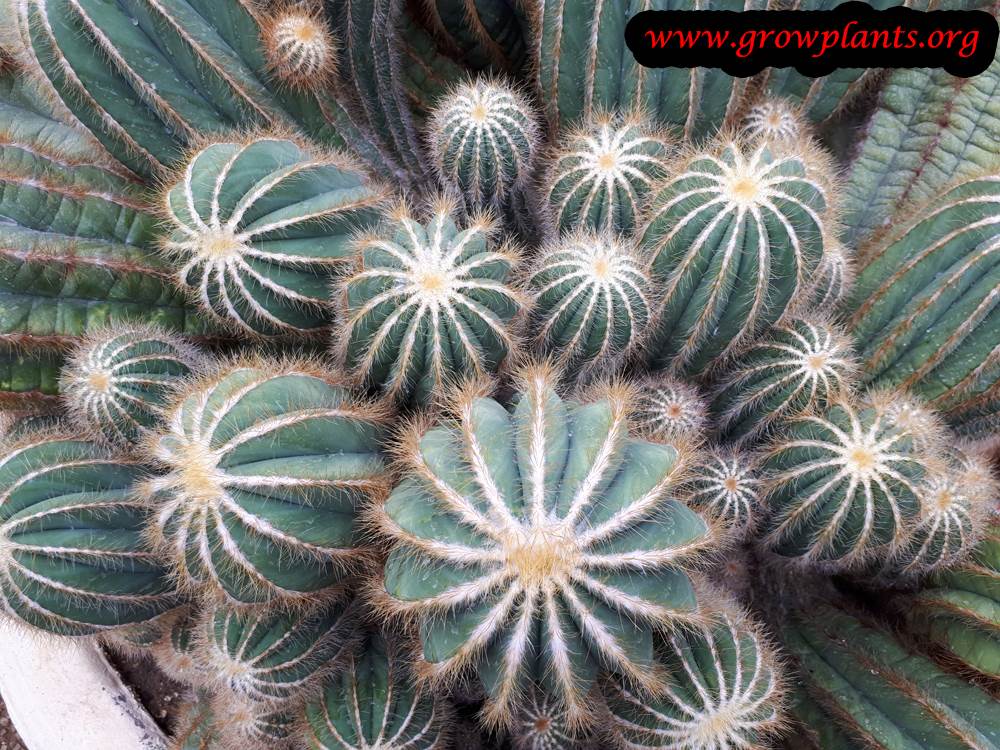
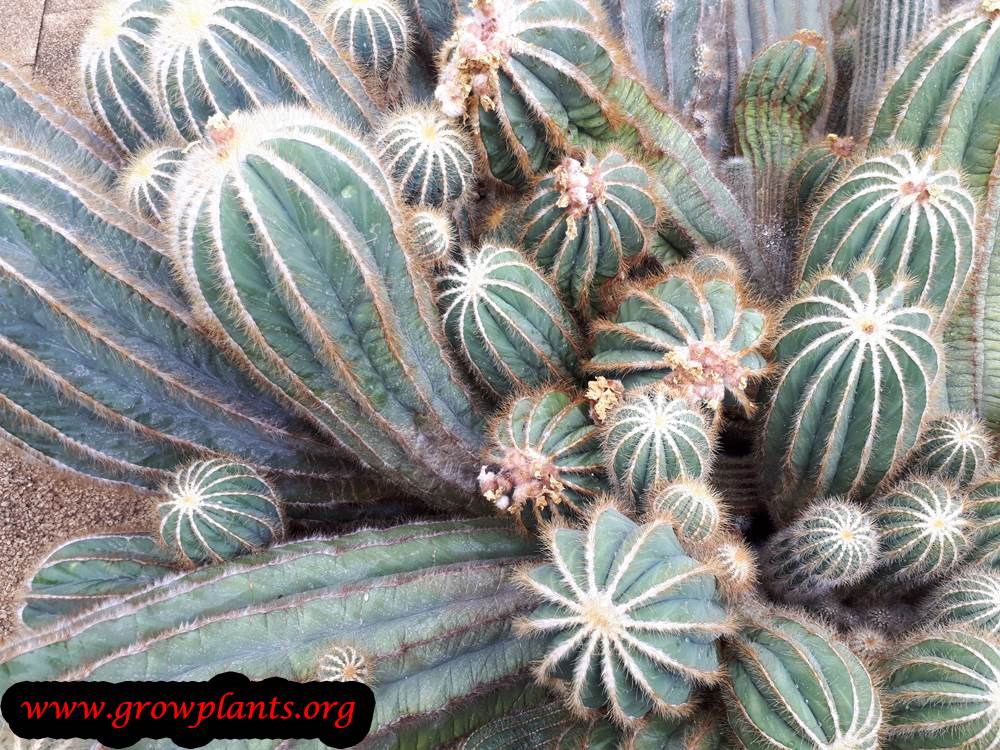
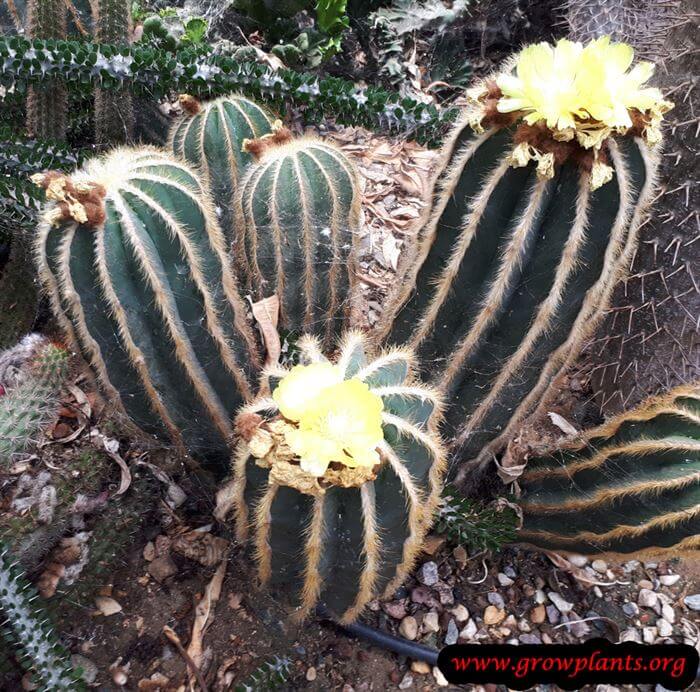
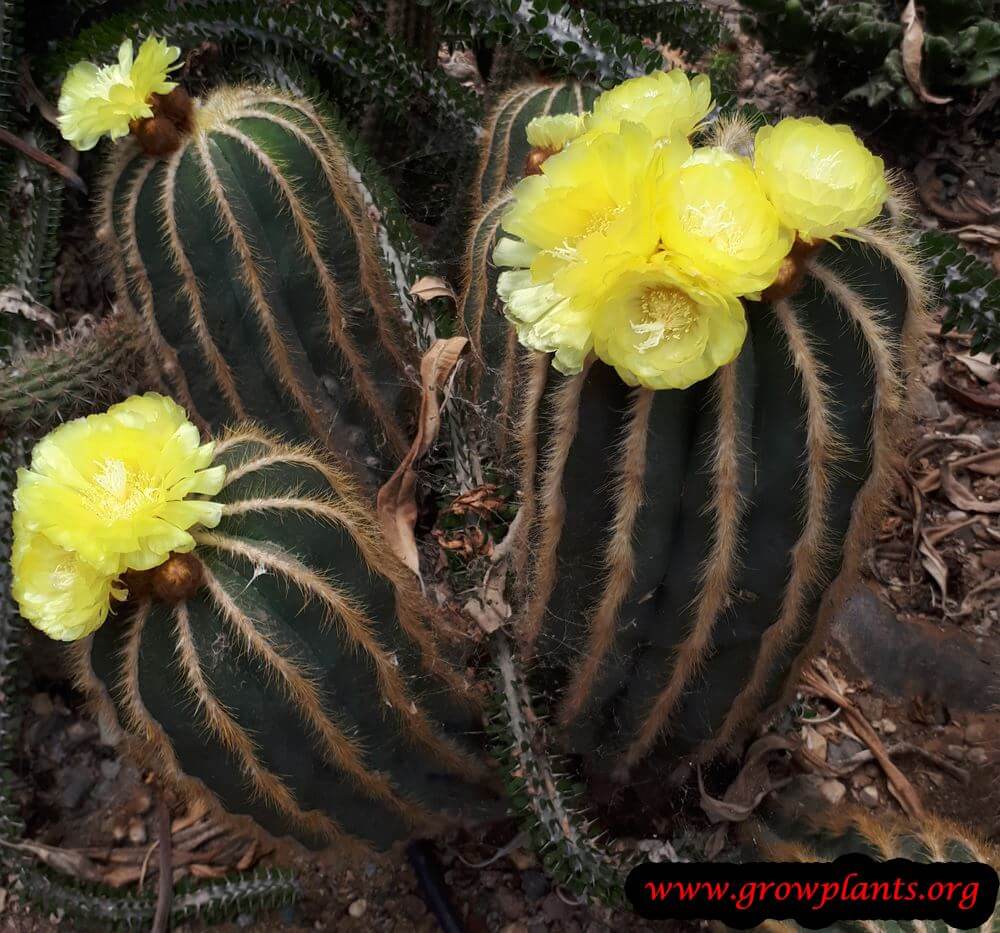
- Leaves & Foliage: Leafless; green (rarely yellow), oval stem with ribbed angles clothed in white or yellow spines.
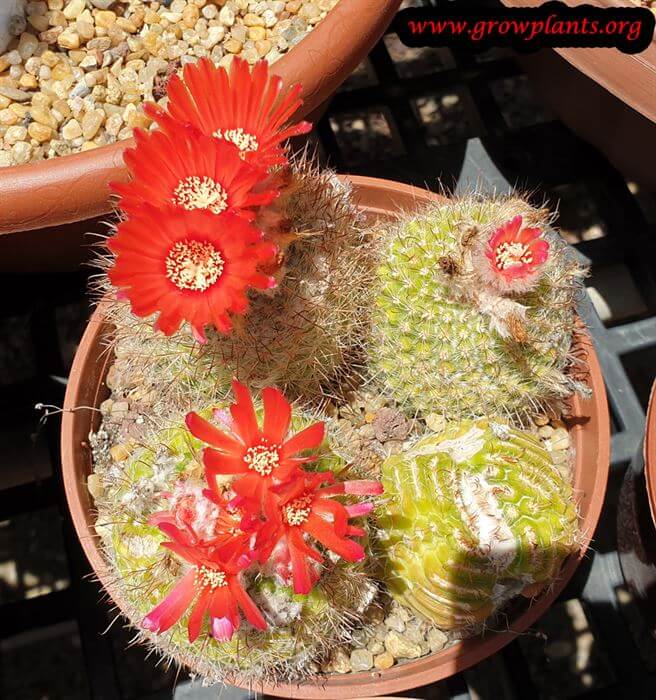
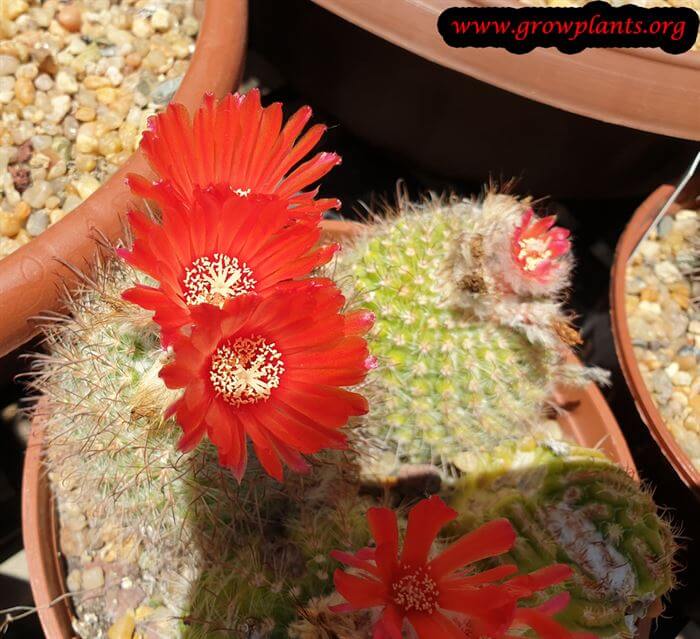
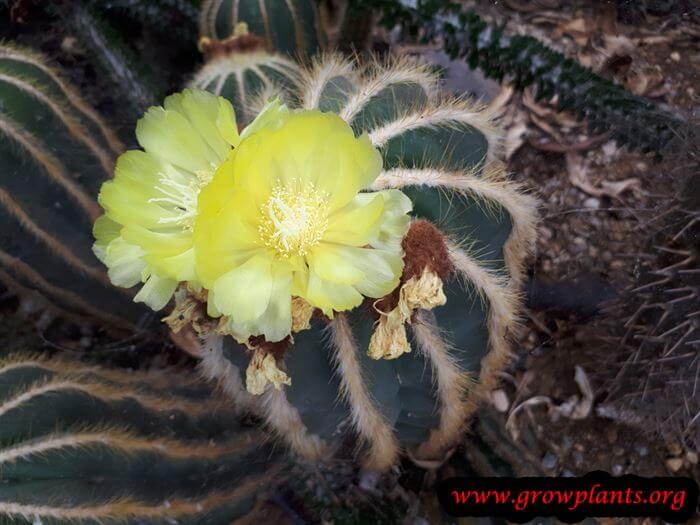
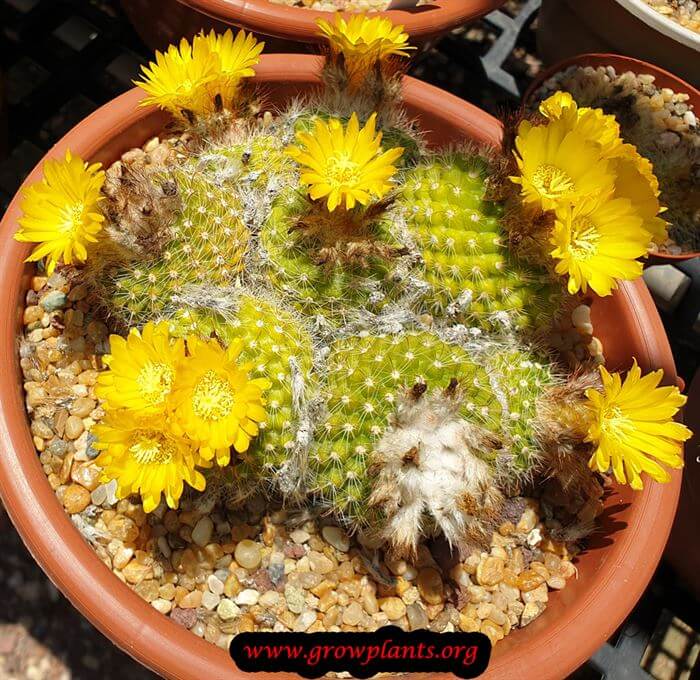
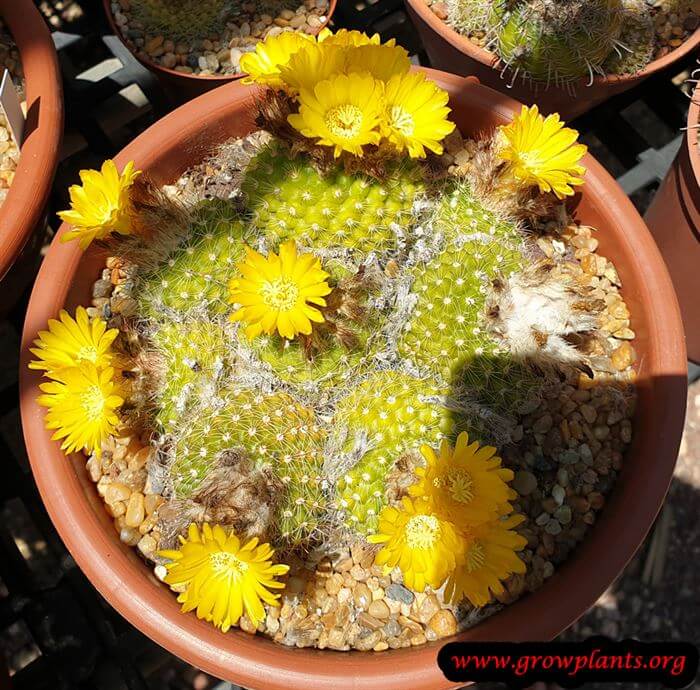
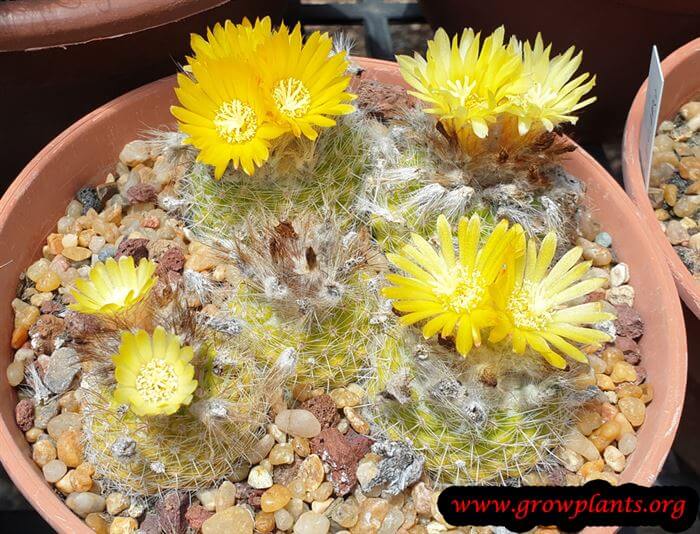
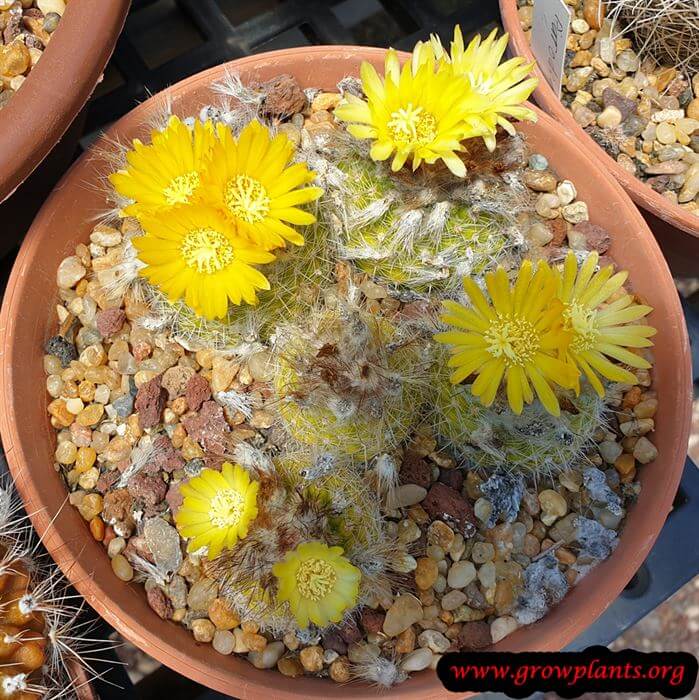
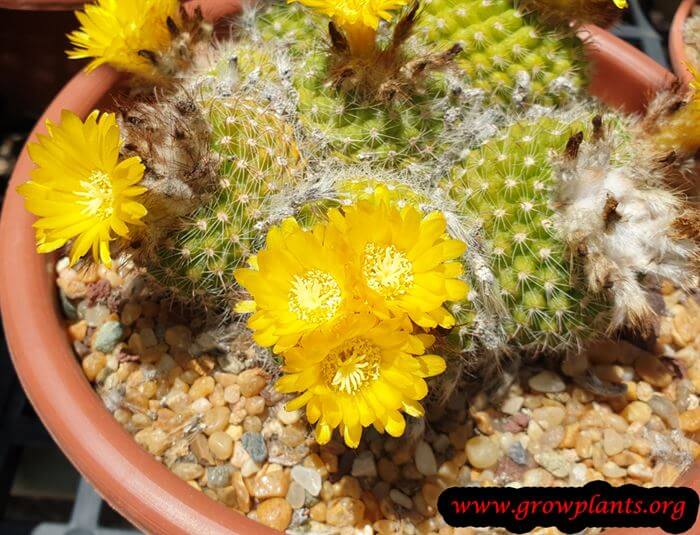
- Flower Characteristics: Bowl-shaped flowers in light yellow, pink, orange, purple or red, borne on top of the stem.
Primary Uses & Landscape Value
- Functional & Ornamental Roles: Ornamental drought-tolerant cactus for containers, rockeries and dry desert-style gardens.
Care Guide: Planting, Soil & Watering
Overview: Parodia is a globular desert cactus that grows best in full sun in gritty, fast-draining cactus soil. It stores water in its stem and dislikes excess moisture, so water sparingly and let the soil dry out completely between waterings.
Quick Care Requirements
| Requirement | Ideal Condition |
|---|---|
| Planting Season | Spring–summer in zone 10, spring–autumn in zone 11, year-round in zone 12 |
| Growth Rate | Slow |
| Soil Type | Gritty, fast-draining cactus mix; dry soil |
| Water Need | Low — let the soil dry fully between waterings |
Planting & Establishment
- Best Planting Season: Plant spring to summer in zone 10, spring to autumn in zone 11, and year-round in zone 12.
- How to Plant:
- Hole Preparation: Dig a shallow hole to suit the shallow roots; handle the spiny stem with folded paper or thick padding when positioning it.
- Soil Amendments: Use a gritty cactus mix over a layer of gravel or lava rock for drainage; firm the soil gently around the base with a spoon or small tool.
- Planting Depth: Set the cactus so the base sits at soil level; cover the roots lightly and firm without squeezing the stem.
- Growth Speed & Expectations: Slow, forming a solid ball roughly 5 cm to 1 m across over many years.
Soil, Watering & Drainage Care
- Soil Mix & Drainage Needs: Very sharp drainage is essential — a cactus mix over a gravel base — because the plant rots easily if it stays wet, especially in rainy spells.
- Watering Schedule & Technique:
- Young / Newly Planted: Water lightly after planting, then only once the soil is fully dry.
- Established: Water sparingly, always letting the soil dry out completely between waterings; keep it especially dry in wet weather.
- Seasonal Adjustments: A little water in the warm growing season; keep nearly dry in cool weather and through winter rest.
Climate, Light & Hardiness
Parodia cacti are adapted to arid desert and dry Mediterranean-to-subtropical climates, thriving in intense, direct sun. They tolerate heat well but have only limited frost tolerance, so they are reliably grown outdoors year-round only in warm, mild-winter climates.
Quick Climate Specifications
| Climate Zones | Desert, Mediterranean, Subtropical |
|---|---|
| USDA Hardiness Zones | 10–12 (established plants); zone 10a possible with attentive winter care, especially for seedlings |
| Approx. Survival Minimum | approximately −5°C (23°F), provided the soil is kept dry |
| Frost Tolerance | Low |
| Light Conditions | Full Sun |
Sunlight & Light Exposure
Optimal Light Setup
Give Parodia cacti the brightest, most direct sun exposure available outdoors; strong light keeps growth compact and encourages flowering.
Direct Sun Requirement
Full, unfiltered sun is needed for healthy form and bloom; plants sited in too little light stretch and lose their compact shape.
Best Exposure & Orientation
A south-facing or fully open exposure suits this cactus best in most climates.
Temperature Extremes & Hardiness
USDA Hardiness & Regional Limits
Reliably hardy outdoors in USDA zones 10–12. In zone 10a it can succeed with careful winter management, but young seedlings are noticeably more cold-sensitive than mature plants and need extra protection.
Cold Damage & Winter Protection
Cold combined with wet soil is far more damaging than cold alone - keep the root zone dry through winter to improve cold survival. In marginal areas, move container specimens under cover or into a rain-shadow position for winter.
Frost Sensitivity
Tolerates only light, brief frost when the soil is dry; sustained or hard freezes are likely to cause serious damage.
Extreme Heat Tolerance
Well adapted to intense desert heat as long as it stays on the dry side; it is drought tolerant and unbothered by high summer temperatures.
Wind, Humidity & Microclimate
Humidity Preferences
Prefers dry, arid air; it is not suited to prolonged humid conditions.
Dry-Air Tolerance
High - thrives in the low humidity typical of desert and Mediterranean climates.
Rainfall & Seasonal Moisture
Struggles through an extended rainy season; a distinct dry period suits it far better than continuously wet conditions.
Microclimate Recommendations
Plant on a slope or raised, sharply draining site so water never collects around the base, particularly important in cooler climates where winter moisture combines with cold to cause rot.
Growing in Pots, Balconies & Indoors
Parodia is a small, full-sun globe cactus that stays neatly pot-sized. The grower says it is not a houseplant; give it your sunniest, brightest windowsill or a hot patio in a sharply drained pot, and it is an easy, long-lived container cactus.
Quick Details
- Container Size: A container or clay pot 20-50% bigger than the plant; shallow is fine, as the roots are shallow
- Indoor Suitability: Not a true houseplant – only the sunniest window will keep it firm and healthy
- Best Spot: Full sun – as much direct light and heat as possible
- Soil & Drainage: Cactus potting mix over a base layer of gravel, lava rock, or pebbles; drainage holes essential
- Watering in Pots: Water sparingly and let it dry out between waterings; keep nearly dry in the cool season
Indoors & On the Windowsill
- Not a deep-room houseplant: The grower says no – it needs full sun a room cannot give. A ready-made cactus and succulent soil mix provides that structure without mixing it yourself. Keep it hard against your brightest, hottest window.
- Sunniest windowsill: A sunny sill or sunroom keeps it round and firm; poor light makes it etiolate and lose its shape, and can prevent flowering.
- Overwintering: In cold climates keep it in a bright, cool, frost-free spot over winter, watered barely if at all – this cool, dry rest also encourages spring flowers.
On a Balcony or Patio
- Light & heat: A hot, sunny, sheltered balcony or patio is ideal; it loves reflected heat and full exposure.
- Practicalities: Keep the small pot draining fast and out of prolonged rain, which can rot the shallow roots.
Choosing the Pot, Soil & Long-Term Care
- Pot & drainage: A shallow pot with strong drainage holes and a stone base layer; no standing-water saucer.
- Potting mix: Cactus/succulent mix with added grit for instant drainage.
- Feeding: A weak cactus feed once or twice through the warm season is enough.
- Refreshing the mix: As the grower notes, after a few years the roots fill the pot or the soil loses vitality, so replace the mix with fresh cactus soil.
Grower’s Container Tip
- Wide, shallow pot & grit base (grower’s method): The grower uses a container or clay pot 20-50% bigger than the plant – it need not be deep, as the roots are shallow. Put a layer of small stones (gravel, lava rock, or pebbles) in the base for drainage, fill with cactus potting mix, and make sure the pot has drainage holes.
Fertilizing & Feeding
A small, globular, drought-tolerant cactus grown for its spiny stem and colorful crown flowers; it needs only minimal feeding, since excess nitrogen produces soft, distorted growth and can suppress flowering.
Quick Fertilizing Specs
| Feeding Level | Light |
|---|---|
| Main Nutrient Priority | Low-nitrogen feed that favors a firm, well-formed globular stem and good flowering over rapid growth |
| Best Feeding Period | The warm growing season while the stem is actively growing and heading toward bloom |
| Organic Options | Not typically needed; this cactus is adapted to lean, dry, well-drained soil |
| Soil pH | Tolerates a wide range in sharply drained soil |
| Reduce/Stop Feeding | Stop feeding as growth slows heading into cooler weather |
Feeding by Growth Stage
Warm-Season Active Growth
Support firm, evenly formed globular growth and set the plant up to flower well from its crown
| Nutrient direction | A light, low-nitrogen cactus-formulated feed |
|---|---|
| Timing | During the warm season while the stem is actively growing |
| Frequency | Occasional light feedings through the active season rather than frequent or strong applications |
| Fertilizer types | A diluted, low-nitrogen cactus fertilizer suited to fast-draining potting mixes |
| Precautions | Avoid feeding at full label strength, and keep fertilizer away from the spiny crown where new growth and flower buds form |
Cool-Season Dormant Rest
Let the plant rest through cooler weather, which also helps set up good flowering the following season
| Nutrient direction | None – withhold fertilizer during the cool rest period |
|---|---|
| Timing | Through the coolest months when growth visibly stops |
| Frequency | No feeding at this stage |
| Fertilizer types | No feeding at this stage; the resting plant does not need nutrient input |
| Precautions | Do not fertilize until active growth is clearly visible again in the warm season |
Nutrient Deficiency Signs & Corrections
Yellowing of new growth at the crown while the lower, older stem stays green
| Possible causes | High pH or alkaline potting mix, Waterlogged, poorly drained soil limiting root function, Old, nutrient-poor potting mix, Root stress from overwatering |
|---|---|
| Appears first on | Newest growth at the crown |
| What to check | Drainage and moisture of the current mix, Age of the potting mix, Root condition when the plant can be checked |
| Possible correction | Correct drainage and watering first, then apply a chelated iron product per its label if the yellowing persists |
Pale, unusually slow stem growth for the season
| Possible causes | Nutrient-depleted potting mix, Insufficient direct sun reducing overall vigor, Waterlogged roots limiting nutrient uptake, No feeding for an extended period in container culture |
|---|---|
| Appears first on | Newest growth at the crown |
| What to check | Stem color and growth rate compared to previous seasons, Hours of direct sun the plant receives, Time since any feeding or soil refresh |
| Possible correction | Apply a light, diluted low-nitrogen feed during the next active growth period and refresh old potting mix if needed |
Sparse or absent crown flowers despite an otherwise healthy-looking, well-formed stem
| Possible causes | Insufficient direct light for this sun-loving species, Lack of a clear cool, dry dormant rest period beforehand, Excess nitrogen favoring stem growth over flower bud formation, A young plant not yet mature enough to flower |
|---|---|
| Appears first on | Whole plant, at the point flowering would normally occur |
| What to check | Hours of direct sun the plant receives, Whether the plant had a genuine cool rest period beforehand, Recent fertilizer nitrogen levels, Plant age and maturity |
| Possible correction | Ensure full sun exposure and a genuine cool, dry rest period, and favor a low-nitrogen feed over a nitrogen-heavy one |
Pruning, Training & Seasonal Maintenance
Parodia (ball cactus) rarely needs pruning at all; care here is reactive rather than routine. The two situations that call for a cut are rot, which should be removed before it spreads, and – on large, old specimens over about 50cm (20in) – stems that have become too heavy or weak to support themselves and risk falling and injuring nearby plants or people. There is no seasonal fruiting-wood logic and no structural training; a plant that has rotted through is simply removed rather than rejuvenated, since its own daughter offsets will take its place.
Quick Pruning & Maintenance Specs
| Pruning Tolerance | Low – only reactive cuts, no routine pruning |
| Primary Pruning Window | Any time, as issues appear (rot, an unstable old stem) |
| Typical Frequency | Rare, situational |
| Main Objective | Remove rot before it spreads; remove old stems that risk falling once the plant exceeds roughly 50cm |
| Young Plant Priority | None |
| Mature / Large Plant Priority | Monitor large old stems for stability risk; watch for and remove rot promptly |
| Best Tool Type | Small sterile knife for routine rot spots; pruning saw for old-stem removal on large specimens |
| Avoid Heavy Pruning During | Not applicable in a seasonal sense – this plant is only ever pruned in response to a specific problem |
Pruning by Plant Age & Size
Newly Established / Young
Nothing to prune; the plant needs no intervention while establishing.
Mature / Large (over roughly 50cm/20in)
Watch for old stems that can no longer support their own weight and could topple – a real safety concern near paths or people at this size – and remove those pre-emptively at the base. Continue to watch for and remove rot as it appears.
Special Growth to Remove
- Rotten tissue – cut promptly, into clearly healthy tissue, before it spreads through the plant.
- Old, unstable stems on large (50cm+) specimens that risk falling.
- If a plant has rotted through entirely, remove the whole thing and let a daughter/offset plant take its place rather than trying to save it.
Container & Small-Space Pruning
Pot-grown plants rarely reach the 50cm-plus size where stem-stability becomes a concern, so pruning is even less often needed in containers; rot is still worth checking for given the closer growing conditions.
Tools
- Small sterile knife for routine rot-removal cuts.
- Pruning saw, only for removing a large, old, unstable stem on a bigger garden specimen.
Tool Hygiene & Disease Risk
Increased when cutting rot – sterilize the blade between cuts to avoid spreading the rot pathogen to healthy tissue; routine cleanliness otherwise.
Cut Placement & Technique
For rot, cut into clearly healthy tissue past the infected area; for an old, failing stem, cut at its point of attachment/base.
Heavy Pruning & Rejuvenation
Not attempted – a badly rotten plant is not cut back and regrown. It is removed and replaced by its own daughter offsets, which is the plant’s natural means of renewal.
Post-Pruning Care
Let cut surfaces dry and callus in shade before resuming normal watering, and keep the area especially dry right after a rot-removal cut to reduce the chance of reinfection.
Common Pruning Mistakes
- Not cutting far enough into healthy tissue when removing rot, so the infection returns.
- Leaving an old, failing stem in place on a large specimen where it could fall and cause injury or damage.
- Attempting to prune or shape a plant that fundamentally doesn’t need or benefit from it.
When NOT to Prune
There is no seasonal restriction as such – the caution is against pruning pre-emptively or for looks. Routine, non-reactive pruning provides no benefit to this genus; only rot removal and stability-risk cuts are warranted.
Recommended Tools (by task)
- Grafting knife – a small sterile blade for routine rot-removal cuts.
- Pruning saw – for removing a large, old, unstable stem on a big established specimen (this genus can reach up to about 1m/40in).
Propagation Guide
Parodia (ball cactus) is most easily propagated from offset daughter plants or by segmenting the stem into cuttings, which the site notes is markedly faster and more successful than raising it from seed. Seed remains a workable option for growing new plants, but with slower and less certain establishment; propagation is easy by offsets or cuttings and moderate from seed.
Quick Propagation Specs
| Best Propagation Method | Offsets/daughter plants |
| Alternative Methods | Stem cuttings (segmenting); seed |
| Propagation Difficulty | Easy (offsets/cuttings); Moderate (seed) |
| Seed True-to-Type | Generally yes for straight species grown without cross-pollination from other cacti |
| Vegetative True-to-Type | Yes |
| Best Propagation Season | Spring through summer in hardiness zone 10, spring through autumn in zone 11, all year in zone 12 |
Growing from Seed
Not detailed in the site’s own data for this plant. As with cactus seed generally, use a well-drained, sterile cactus mix, keep it lightly moist (not wet), and provide warmth and good light; avoid the excess moisture this plant’s mature form is already sensitive to, especially during a rainy spell. Germination timing is not specified here and can take some weeks; keep seedlings shaded from strong direct sun and away from overwatering while very small.
Stem Cuttings
Cutting Type
A segmented section of the cactus, or a straight cut across the stem, rather than a small tip cutting.
Cutting Preparation
Cut with a sterile knife, then let the cut surface cure/callus in a shaded spot before planting; healing can take anywhere from a few weeks to a few months.
Rooting Setup
Once callused, set the cutting into soil with a stake or other support so it doesn’t fall while rooting, cover only lightly, and water sparingly.
Rooting Hormone
Not indicated as necessary for this type of cutting.
Division, Offsets, Pups & Suckers
When removing a daughter (offset) plant, lift it with its full root system intact where possible – gently expose the roots with a spatula or other tool suited to the soil, or with an air blower or a stream of water, letting them dry out afterward if washed. This is the site’s preferred route, being faster and more reliably successful than seed. If the main plant develops rot beyond saving, the site notes the affected part should be cut away promptly; where a plant is too far gone, an offset/daughter plant already growing alongside it can be left to take over as its replacement.
Bloom & Flower Guide
Quick Details
- Bloom Season: Spring to summer
- Time to First Bloom: On established plants – many Parodia begin flowering while still fairly young and small
- Flower Appearance: Bowl-shaped flowers in light yellow, pink, orange, purple or red, opening in a ring at the very top of the cactus
- Edibility: Ornamental only – grown for its stems and flowers, not for eating
Detailed Blooming Overview
Parodia (ball cactus) is one of the more free-flowering globular cacti, producing bright, bowl-shaped blooms right at the crown of the plant from spring into summer. The flowers open in sunshine, often several at once in a little coronet around the top, in cheerful shades of yellow, pink, orange, purple or red.
Flower Characteristics
- Bowl- (cup-) shaped flowers.
- Colours light yellow, pink, orange, purple or red.
- Open at the very top of the rounded stem, usually in bright sun.
Bloom Care & Thinning
- Encouraging bloom: A cool, dry winter rest followed by bright light and warmth in spring is the key to good flowering; too much water and shade suppress the buds.
Pests, Diseases & Troubleshooting
Overview: This is a Parodia ball cactus, though the source lists no species name. Like all Parodia (South American ball cacti), it is naturally tough and largely pest-free, so nearly every problem traces back to excess water and poor drainage. The chief live pests are mealybugs (including root mealybugs), scale and spider mites; the real dangers are basal and root rots and fungal infections that follow overwatering, cold-wet soil or a wet rainy season. Management is dry, airy and preventative, with organic controls first.
Quick Troubleshooting Overview
| Issue / Pest | Main Symptom | Primary Solution |
|---|---|---|
| Mealybugs (incl. root) | White cottony fluff between ribs or on roots, weak growth | Alcohol swab, systemic/soap, bare-root and repot |
| Scale insects | Hard brown bumps on the stem, yellow patches | Scrape off, horticultural oil |
| Spider mites | Rusty-bronze stippling near the crown, fine webbing | Rinse, raise humidity briefly, miticidal oil |
| Basal / root rot | Soft, brown, mushy base; collapse | Cut to clean tissue, dry out, sharp-drainage mix |
| Anthracnose (Colletotrichum) | Sunken moist brown lesions with spore masses | Cut out, keep dry, copper/sulphur fungicide |
| Slugs & snails | Chewed scars on skin, slime trails | Handpick at night, grit barrier, iron-phosphate bait |
Common Pests & Management
- Mealybugs & Root Mealybugs (Pseudococcus / Rhizoecus spp.):
- Symptoms: White cottony tufts wedged between the ribs, in the woolly crown and around the areoles; root mealybugs coat the roots in white and stall growth even when top pests are absent. Sticky honeydew and slow decline follow.
- Prevention & Control: Inspect the crown and, periodically, the roots at repotting; dab clusters with an alcohol swab; rinse and treat with insecticidal soap or horticultural oil. For root mealybug, bare-root, wash, soak roots and repot in fresh dry mix in a clean pot.
- Scale Insects (Diaspis and soft scales):
- Symptoms: Small hard brown or greyish limpet-like bumps stuck to the stem, leaving yellow or corky patches beneath as they suck sap.
- Prevention & Control: Scrape off gently with a soft brush or fingernail, then apply horticultural oil to smother the rest; repeat to catch crawlers and isolate the plant until clear.
- Spider Mites (Tetranychus spp.):
- Symptoms: Rusty-bronze, corky scarring and fine pale stippling near the growing tip, with delicate webbing over the crown in hot, dry, stagnant air; the damage is permanent on cactus skin.
- Prevention & Control: Provide fresh air and occasional rinsing; keep the growing area from becoming hot and bone-dry. Treat active mites with horticultural oil or a miticidal soap, covering the crown well.
- Fungus Gnats (Bradysia spp.):
- Symptoms: Small dark flies over the soil and larvae in constantly damp mix that can nibble fine roots and the vulnerable base, worsening rot risk.
- Prevention & Control: Let the mix dry out fully between waterings, top-dress with grit, and use yellow sticky traps or a Bti drench; dry culture alone usually ends the problem.
- Slugs & Snails:
- Symptoms: Chewed scars and pits on the skin, especially on soft new growth, with slime trails; the source note lists snails and slugs for this plant, most relevant when it is grown outdoors.
- Prevention & Control: Handpick after dark, ring pots with grit or copper tape, keep the surroundings tidy, and use iron-phosphate bait where pressure is high.
Diseases & Fungal Issues
- Basal & Root Rot (Fusarium, Phytophthora, Pythium):
- Symptoms: The base softens, browns and turns mushy, sometimes with the plant toppling or the core discolouring; the classic outcome of overwatering, a wet rainy season or cold-damp soil the source warns about.
- Treatment & Management: Catch it early: cut away all rotted tissue back to firm, clean green, dust with sulphur and let the callus dry, then re-root in dry, gritty mix. Prevent by using a very free-draining mineral mix, watering sparingly and never letting the plant sit wet or cold.
- Anthracnose (Colletotrichum spp.):
- Symptoms: Moist, sunken tan to brown lesions that may ooze pinkish spore masses, spreading on the stem in warm, humid, wet conditions. This is the “fungus colletotrichum” flagged in the source note and is a genuine Parodia risk.
- Treatment & Management: Cut out affected tissue into clean flesh, keep the plant dry and airy, and avoid wetting the body. Apply a copper or sulphur fungicide and isolate the plant while it heals.
- Botrytis / Grey Mould (Botrytis cinerea):
- Symptoms: Fuzzy grey mould on damaged spots, spent flowers or the crown in cool, damp, poorly ventilated conditions.
- Treatment & Management: Remove affected tissue and old flowers, improve airflow and lower humidity, and avoid overhead watering; copper fungicide helps in persistent damp.
- Fungal / Corky Spot:
- Symptoms: Dry brown or corky spots and blemishes on the skin from minor fungal infection or old injury, usually cosmetic rather than fatal.
- Treatment & Management: Improve ventilation and keep the body dry; spots are permanent but harmless. A light sulphur dusting checks any spread.
Growing Difficulties & Abiotic Problems
- Overwatering & Rainy-Season Rot:
- Cause & Symptoms: Too much water, especially in cool weather or a wet season, causes soft basal rot and collapse; the source note stresses it “doesn’t like too much water.”
- Correction Strategy: Use a gritty, fast-draining mineral mix, water only when fully dry and much less in cool or dormant periods, and shelter from prolonged rain.
- Etiolation (Insufficient Light):
- Cause & Symptoms: Too little light makes the normally squat globe stretch tall and pale with weak spines, and flowering suffers.
- Correction Strategy: Give bright light with some direct sun, acclimatising gradually to avoid scorching after low-light spells.
- Sunburn / Scorch:
- Cause & Symptoms: Sudden intense sun after dull weather bleaches or scars the skin with permanent yellow-white patches.
- Correction Strategy: Increase sun exposure gradually and provide light shade during the fiercest summer midday heat.
- Corking & Cold Damage:
- Cause & Symptoms: Natural brown corky bark forms low on old plants; frost or cold-wet spells cause soft, translucent, collapsing tissue.
- Correction Strategy: Accept basal corking as ageing; keep the plant dry and above its minimum temperature in winter to avoid cold rot.
What Helps – Products & Tools
For ball cacti the essentials are a gritty, free-draining mineral mix and restrained watering, plus isopropyl alcohol swabs and horticultural oil or insecticidal soap for mealybugs, scale and mites, a systemic or soil drench for stubborn root mealybug, yellow sticky traps for fungus gnats, iron-phosphate bait for slugs and snails, and sulphur or copper fungicide (with a sharp sterile knife) for rots and anthracnose. Prevention through dry, airy culture matters far more than any spray.