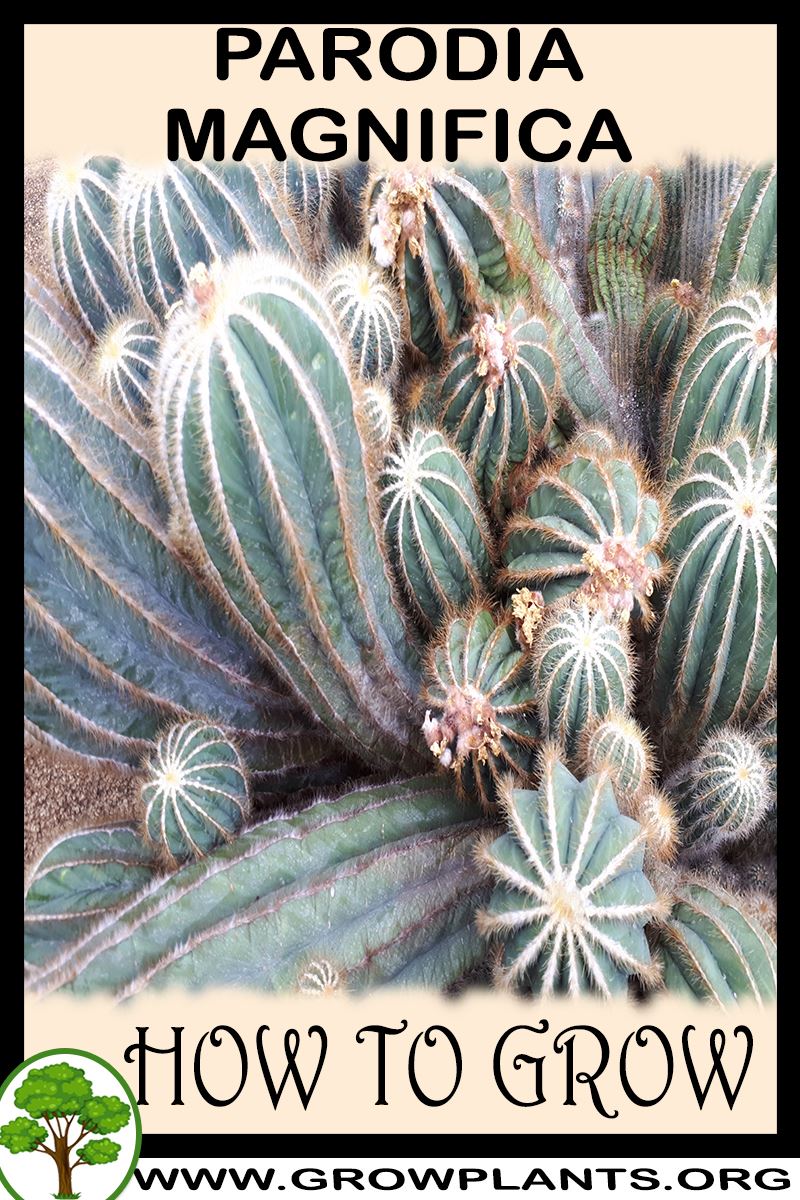

Plant Profile & Key Characteristics
Overview: A globular cactus of the genus Parodia (ball cactus) reaching 0.5-1 m, with a ribbed, spine-covered stem and bright yellow flowers at the crown. It is a slow-growing, drought-tolerant ornamental for pots and warm rock gardens.
Quick Specifications
| Specification | Attribute |
|---|---|
| Plant Type / Life Cycle | Perennial (cactus) |
| Foliage Type | Leafless (succulent stem) |
| Mature Size | 0.5-1 m (1.5-3 ft) tall |
| Growth Rate | Slow |
| Root System | Shallow root system |
| Toxicity | Non-toxic (but spiny) |
| Hardiness | USDA zones 10-12 |
Growth Form & Structure
- Height & Spread: 0.5-1 m (1.5-3 ft); grown in wide, shallow, well-drained pots because of its shallow roots.
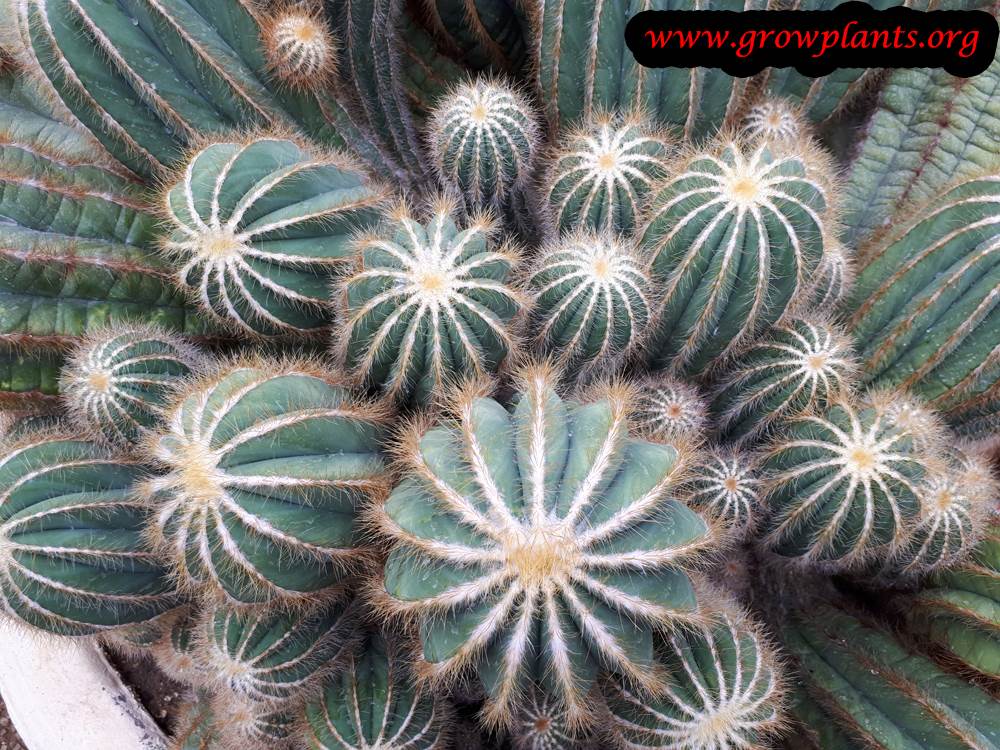
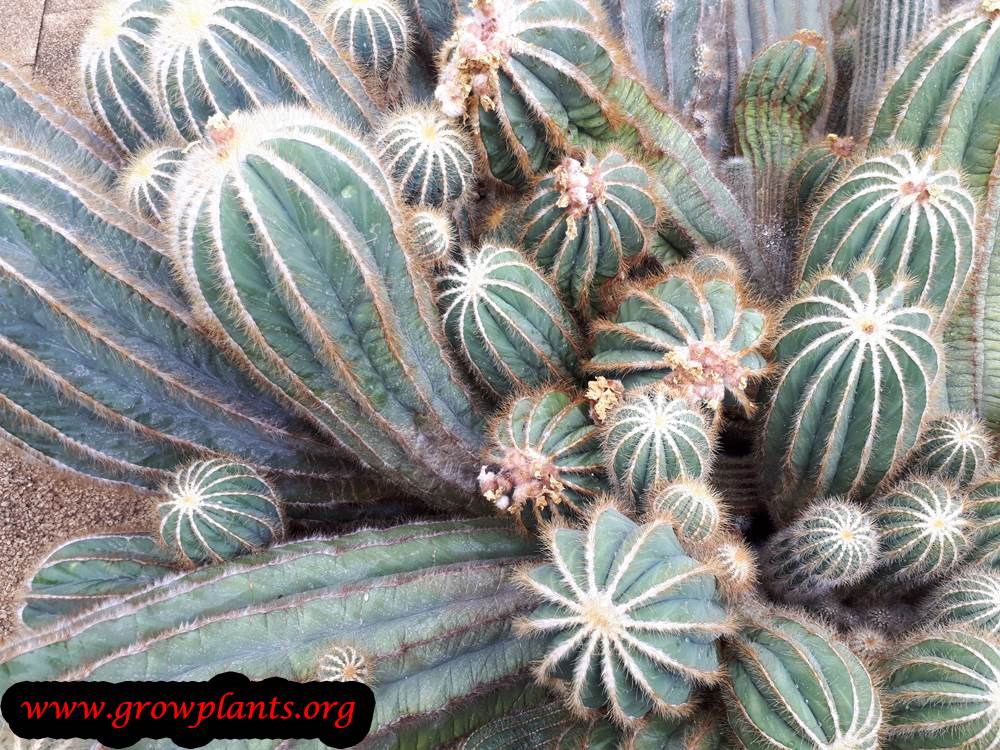
- Growth Habit & Form: Solitary or clustering, oval-to-globular ribbed cactus that offsets into daughter plants.
- Lifespan & Maturity: Long-lived but very slow-growing.
Anatomy & Physical Features
- Trunk & Bark: Green (rarely yellow), oval stem with ribs covered in white or yellow spines.
- Flower Characteristics: Light-yellow, bowl-shaped flowers borne at the top of the stem.
Primary Uses & Landscape Value
- Functional & Ornamental Roles: Drought-tolerant ornamental for containers and rockeries.
Care Guide: Planting, Soil & Watering
Overview: The ball cactus is a slow-growing globular cactus that thrives in full sun and gritty, sharply draining soil, tolerating brief cold to about -5C. It needs very little water and readily rots in wet or rainy conditions.
Quick Care Requirements
| Requirement | Ideal Condition |
|---|---|
| Planting Season | In the warm season; year-round in frost-free zones |
| Growth Rate | Slow |
| Soil Type | Sandy, gritty cactus mix, sharply draining |
| Water Need | Low; let it dry out fully between waterings |
Planting & Establishment
- Best Planting Season: Plant spring to summer in zone 10, spring to autumn in zone 11, and year-round in zone 12.
- How to Plant:
- Hole Preparation: Handle the spiny plant with folded paper or a wrap to protect your hands, and firm the soil around it with a spoon or small trowel rather than pressing with bare fingers.
- Soil Amendments: Use a sandy, well-ventilated cactus mix, and place gravel, lava rock or pebbles at the base for drainage.
- Planting Depth: Set the shallow-rooted plant so the base sits at soil level, and firm gently so it stays stable.
- Growth Speed & Expectations: A slow grower reaching about 0.5-1 m over many years.
Soil, Watering & Drainage Care
- Soil Mix & Drainage Needs: Needs a cactus potting mix over a layer of gravel or lava rock, in a pot 20-50% larger than the shallow root ball with drainage holes; refresh the soil every few years.
- Watering Schedule & Technique:
- Young / Newly Planted: Water sparingly, keeping the soil barely moist while rooting, and never overwater.
- Established: Water lightly and let the soil dry out completely between waterings.
- Seasonal Adjustments: Keep dry in winter and during rainy spells to prevent rot; a little more in summer growth.
Climate, Light & Hardiness
Parodia magnifica (ball cactus) is a full-sun, drought-tolerant cactus suited to desert, mediterranean, subtropical, and temperate climates with dry soil. Established plants are listed tolerating brief cold down to about −5°C (23°F), hardy from about USDA zone 10 through 12, with seedlings needing extra winter protection at the cold edge (zone 10a).
Quick Climate Specifications
| Climate Zones | Desert, mediterranean, subtropical, temperate |
|---|---|
| USDA Hardiness Zones | 10–12 (seedlings need extra winter care in 10a) |
| Approx. Survival Minimum | Approximately −5°C (23°F) |
| Frost Tolerance | Low |
| Light Conditions | Full Sun |
Sunlight & Light Exposure
Optimal Light Setup
Needs full, direct sun for healthy, compact growth and good flowering.
Temperature Extremes & Hardiness
USDA Hardiness & Regional Limits
Reliable for permanent outdoor planting from about zone 10 through 12; young seedlings are more cold-sensitive than established plants and benefit from overwinter protection even within zone 10a.
Cold Damage & Winter Protection
An established plant's approximate cold limit is around −5°C (23°F) briefly; the plant also dislikes excess moisture, and cold combined with wet soil (as in a rainy season) is more damaging than dry cold alone.
Frost Sensitivity
Low frost tolerance overall; avoid low-lying sites where cold, damp air collects in winter.
Wind, Humidity & Microclimate
Dry-Air Tolerance
Well adapted to dry air, consistent with its desert origin.
Microclimate Recommendations
A hot, dry, sharply drained microclimate suits it best; take care that winter rains don't leave the soil waterlogged.
Growing in Pots, Balconies & Indoors
The ball cactus (Parodia magnifica) is a compact, sun-loving cactus of 0.5-1 m (1.5-3 ft). The grower does not list it as an indoor houseplant, but like most cacti it thrives in a pot on the sunniest windowsill or a hot balcony.
Quick Details
- Container Size: A pot 20-50% wider than the root ball (smaller plants take the smaller percentage); it can be shallow – the roots are shallow
- Indoor Suitability: Best on a very bright, sunny windowsill rather than deep indoors
- Best Spot: Full sun
- Soil & Drainage: Cactus potting mix with a layer of gravel, lava rock or pebbles in the base; plenty of drainage holes
- Watering in Pots: Little water – let it dry out between waterings
Indoors & On the Windowsill
- Windowsill growing: The grower does not classify it as a houseplant, but on the brightest, sunniest sill it does well; give it maximum direct light or it will grow soft and pale.
- Care: Water sparingly and only when the mix is fully dry, and keep it in the warmest, lightest window you have.
On a Balcony or Patio
- Light & heat: A hot, sunny balcony suits it perfectly – it enjoys reflected heat from walls and paving. Protect it from prolonged wet, which is far more dangerous than heat.
Choosing the Pot, Soil & Long-Term Care
- Pot & drainage: Use a shallow pot with strong drainage and a base layer of gravel, lava rock or pebbles; never leave it standing in water.
- Potting mix: A gritty, free-draining cactus mix.
- Feeding: A dilute cactus feed occasionally in the growing season is plenty.
Grower’s Container Tip
- Repotting a spiny cactus: Every few years refresh the mix. Lay the cactus onto folded paper (or wrap it in paper or plastic) to lift it safely without touching the spines. Put fresh gravel in the base, add part of the cactus mix, set the plant in place, then work more mix around it – use a spoon for small plants or a small trowel for larger ones – and firm it so the cactus stands stable. If it still wobbles, add a support stick to hold it upright.
Fertilizing & Feeding
A slow-growing cactus with minimal feeding needs – light, low-nitrogen feeding through the warm season only, with no feeding at all during its cool-season rest.
Quick Fertilizing Specs
| Feeding Level | Light – minimal feeding needs typical of a slow-growing cactus. |
|---|---|
| Main Nutrient Priority | Low nitrogen; this genus does not want a rich, leafy-growth diet. |
| Best Feeding Period | The warm active-growth season only. |
| Organic Options | A light, well-composted organic amendment rather than a rich feed. |
| Reduce/Stop Feeding | Stop entirely through the cool-season dormant rest. |
Feeding by Growth Stage
Warm-season active growth
Support steady, compact growth and flowering without pushing soft, weak tissue on this slow-growing cactus.
| Nutrient direction | A light, low-nitrogen feed formulated for cacti and succulents – this genus does not want a rich, leafy-growth diet. |
|---|---|
| Timing | Through the warm growing season when the plant is actively putting on growth and heading toward bloom. |
| Frequency | Feeding needs are minimal – a few light feedings spaced well apart through the growing season is plenty for a slow grower like this. |
| Fertilizer types | A dedicated cactus/succulent fertilizer formulated to be low in nitrogen., Applied only to already-moist soil, never onto bone-dry roots. |
| Precautions | Skip feeding after a long dry spell until the soil has been watered first, and never feed a plant showing signs of rot or stress. |
Cool-season dormancy
Let the cactus rest through the cool, low-light part of the year when growth naturally stops.
| Nutrient direction | None – withhold fertilizer entirely while the plant is dormant. |
|---|---|
| Timing | Autumn through winter, once growth has slowed and temperatures drop. |
| Frequency | No feeding at this stage; feeding resumes once warm-season growth restarts. |
| Fertilizer types | No feeding at this stage – the plant should be kept on the dry side and left unfed until active growth returns. |
| Precautions | Do not fertilize during dormancy; feeding a resting cactus risks salt buildup and root stress, since there is no active growth to use the nutrients. |
Nutrient Deficiency Signs & Corrections
New growth appears unusually soft, pale, or yellow-green rather than firm and evenly colored.
| Possible causes | Over-feeding or a fertilizer too rich in nitrogen for a slow-growing cactus., Overwatering or soil that stays wet, encouraging soft growth and root stress., Insufficient light causing pale, stretched growth. |
|---|---|
| Appears first on | The newest growth at the top of the plant. |
| What to check | Recent watering frequency and whether soil is drying between waterings., Light exposure – full sun is preferred by this species., Whether a nitrogen-rich, non-cactus fertilizer was used. |
| Possible correction | Switch to a low-nitrogen cactus-specific fertilizer, let soil dry fully between waterings, and confirm the plant gets adequate direct light. |
The plant grows but rarely or never produces its characteristic yellow blooms.
| Possible causes | Too much nitrogen encouraging vegetative growth over flowering., Insufficient winter dormancy or rest period., Insufficient direct light during the growing season. |
|---|---|
| Appears first on | Whole-plant flowering performance. |
| What to check | Whether the plant gets a genuine cool, dry rest period over winter., Fertilizer history and nitrogen content., Hours of direct sun received. |
| Possible correction | Give the plant a proper cool, dry winter rest, keep feeding low-nitrogen and light, and ensure strong direct light during the growing season. |
Brown, corky, or rough patches develop on the stem surface.
| Possible causes | Chronic overwatering or waterlogged, poorly drained soil., Cumulative sun or cold-exposure stress rather than a nutrient issue., Mineral buildup in soil from hard water or over-fertilizing. |
|---|---|
| Appears first on | Lower or older sections of the stem first. |
| What to check | Drainage of the pot or planting site and the mix used., Water source – hard, mineral-heavy water can contribute over time., Whether feeding has been more frequent or stronger than a light cactus feed. |
| Possible correction | Improve drainage, let the plant dry fully between waterings, and scale back to occasional, light, low-nitrogen feeding only during active growth. |
Pruning, Training & Seasonal Maintenance
This ball cactus tolerates almost no pruning in the ordinary sense – there is normally nothing to cut. The only real work is sanitary: removing an old stem that can no longer support its own weight and risks toppling, or cutting out rot before it spreads through the plant. Because this is damage control rather than seasonal shaping, it can happen any time the need arises rather than on a fixed calendar, and does not affect the plant’s slow growth habit or its bowl-shaped flowers, which form at the crown regardless of pruning.
Quick Pruning & Maintenance Specs
| Pruning Tolerance | Low |
| Primary Pruning Window | As needed, any time damage or rot appears |
| Typical Frequency | Rare – only when a stem is failing or rotten tissue appears |
| Main Objective | Remove hazardous old growth and stop rot from spreading before it reaches healthy tissue |
| Mature Plant Priority | Watch older, heavier stems for instability; watch the base and any soft spots for rot, especially after wet weather |
| Best Tool Type | Sterile grafting/utility knife |
| Avoid Heavy Pruning During | Always – this species does not tolerate structural or rejuvenation pruning |
Pruning by Plant Age & Size
Newly Established
No pruning. Leave the young plant undisturbed to root in.
Young / Formative
No structural training applies to a solitary globular cactus; simply monitor for damage.
Mature / Established
An older plant can develop stems too heavy or unstable to hold themselves up, which can be a hazard to people or plants nearby – these are removed. Otherwise the only recurring task is checking for and removing rot, particularly during humid or rainy periods when the plant’s own facts note it struggles with excess moisture.
Special Growth to Remove
Old, failing stems that can no longer support their own weight and are at risk of falling. Rotten tissue must be cut out promptly, into clean healthy flesh, before it spreads through the plant; if an entire plant has rotted through, remove it rather than trying to save it, and grow on a daughter offset in its place.
Tools
A sterile grafting/utility knife for clean cuts through rot or old stem tissue. Ordinary secateurs or shears have no place here – there is no woody or leafy growth to trim, only occasional surgical removal of tissue.
Tool Hygiene & Disease Risk
High-risk: this species is noted as susceptible to fungal rot (including Colletotrichum), so a blade used to cut into rotten tissue should be disinfected before and after use to avoid carrying infection into healthy tissue or to another plant.
Cut Placement & Technique
Cut well past any softened or discolored tissue into firm, healthy flesh – leaving even a trace of rot behind lets it continue spreading. After cutting, let the wound dry and callus in a shaded, dry spot for one to several weeks before the plant (or a division) goes back into soil; do not water directly onto a fresh cut.
Heavy Pruning & Rejuvenation
Not tolerated. This species has no capacity for structural or rejuvenation pruning the way a shrub or tree does. If the body of the plant is lost to rot, the correct response is removal and replacement with a rooted daughter offset, not cutting the main plant back hard.
Post-Pruning Care
Keep the cut dry and out of direct sun while it calluses; avoid watering the wound directly. Recheck the cut over the following weeks to confirm rot has not resumed, especially if humidity or rainfall increases.
Common Pruning Mistakes
Cutting into healthy green tissue without cause; leaving any residual rotten tissue behind an incomplete cut, allowing it to keep spreading; using an unsterilized blade, which can introduce or move fungal infection; handling or cutting the plant during wet, humid weather, which raises rot risk right at the wound.
When NOT to Prune
Do not cut healthy tissue for cosmetic reasons – there is no benefit to routine pruning on this species. Avoid cutting during rainy or high-humidity periods when the plant is already noted to struggle with excess moisture, since a fresh wound is most vulnerable to rot right after it is made.
Recommended Tools (by task)
- grafting_knife – the only cutting tool this plant needs, for clean sterile removal of rot or a failing stem.
- blade_disinfectant – required given this species’ documented susceptibility to fungal rot; disinfect before and after any cut.
Propagation Guide
Parodia magnifica is most easily and reliably propagated from its own daughter plants (offsets), which the site notes root faster and succeed more often than seed or stem cutting. Vegetative propagation is not strictly required, but seed-grown plants can be slow and cuttings need a long healing period, so offsets are the practical choice for most growers — overall this is an easy cactus to propagate.
Quick Propagation Specs
| Best Propagation Method | Daughter plants (offsets) |
| Alternative Methods | Stem/body cuttings; seed |
| Propagation Difficulty | Easy |
| Seed True-to-Type | Usually true-to-type |
| Vegetative True-to-Type | Yes |
| Best Propagation Season | Spring, extending to summer or autumn depending on hardiness zone |
| Seed Germination Time | 2–6 weeks |
| Cutting Rooting Time | Cut surface calluses/heals over a few weeks to several months before it is planted; rooting follows once potted |
| Germination Temperature | Generally best in warm conditions typical of cactus seed, roughly 21–27°C (70–80°F), following general cactus germination guidance since the site gives no specific figure |
| Seed Sowing Depth | 0.5cm (0.25in) |
Growing from Seed
Seed Handling & Viability
Store seed in a dry, dark place at room temperature until sowing.
Sowing Season
Spring is best, though sowing is possible in autumn and winter in hot climates. In hardiness zone 10, sow spring to summer; zone 11, spring to autumn; zone 12, any time of year. In summer, give seedlings half shade rather than full sun.
Sowing Depth & Orientation
Sow about 0.5cm (0.25in) deep, spacing seeds roughly 10x20cm (4–8in) apart in the tray or bed.
Germination Conditions
Full sun, in sandy or well-ventilated cactus potting mix with good drainage. Keep the soil moist but never waterlogged, and don’t let it dry out.
Germination Time
About 2–6 weeks.
Seedling Care
Full sun, watered sparingly and kept lightly moist without overwatering.
Stem Cuttings
Cutting Type
Whole-body sectioning: it is better to cut the entire cactus into several pieces than to make a single cut through the middle.
Cutting Preparation
Cut with a sterile knife, then let the cut surface sit in the shade to heal/callus, which can take a few weeks and even months.
Rooting Setup
Once healed, set the piece on soil with support (a stick or similar so it won’t fall over), cover lightly at the base and sides, and water sparingly.
Rooting Hormone
Not indicated as necessary by the site; a well-callused cactus piece typically roots without it.
Rooting Time
Not specified beyond the callusing period above; roots form gradually once the piece is potted and lightly watered.
Division, Offsets, Pups & Suckers
Offsets (daughter plants) are the fastest, highest-success method for this cactus. When removing one, take care to lift it with all of its roots intact: use a plastic spatula or a firmer tool depending on the soil, dig carefully around the plant, and expose the roots with an air blower or a stream of water rather than pulling. If washing the roots, let them dry afterward before further handling or planting. This is best done during the plant’s active growing season, which runs spring to summer in hardiness zone 10, spring to autumn in zone 11, and all year in zone 12.
Bloom & Flower Guide
Quick Details
- Bloom Season: Spring into summer
- Time to First Bloom: Plants need a few years to reach flowering size before they bloom
- Flower Appearance: Light yellow, bowl-shaped flowers opening in a cluster at the very top of the plant
- Edibility: Grown as an ornamental; the flowers are not eaten
Detailed Blooming Overview
Parodia magnifica, the ball cactus, crowns itself with soft yellow, bowl-shaped flowers that open at the top of its ribbed, blue-green body in late spring and summer. The flowers open wide in bright sun and close again in the evening, appearing over several weeks. As with most cacti, a cool, dry winter rest is what sets the plant up to flower well.
Flower Characteristics
- Light yellow, open bowl- or funnel-shaped flowers with many petals.
- Clustered at the crown of the plant, emerging from the woolly apex.
- Opening in sunshine and closing as the light fades.
Bloom Care & Thinning
- Winter rest: Keep the plant cool and dry through winter; this dormancy is the key trigger for spring flowers.
- Sun: Give it the brightest spot you can for the best bloom.
- Feeding: A little cactus feed in the growing season supports flowering on established plants.
Pests, Diseases & Troubleshooting
Overview: The ball cactus is a globular Cactaceae species and, like most cacti, is nearly pest-free when kept dry and bright. Its real threats are overwatering rots and a few sap-suckers – mealybugs (including root mealybugs), red spider mites, and scale – with slugs and snails grazing the ribbed skin. The source rightly hints at Colletotrichum (anthracnose). Gritty soil and a dry winter rest prevent almost every problem.
Quick Troubleshooting Overview
| Issue / Pest | Main Symptom | Primary Solution |
|---|---|---|
| Root/basal rot | Soft, brown, collapsing base; toppling | Cut to firm tissue; dry out; gritty soil |
| Mealybugs | White cottony tufts between ribs and on roots | Alcohol swab; systemic for roots |
| Red spider mites | Rusty, bronzed stippling near the crown | Raise humidity; horticultural oil |
| Scale | Brown bumps on the body; sticky honeydew | Scrape off; horticultural oil |
| Slugs & snails | Grazed scars and slime on the skin | Handpick at night; grit/copper barriers |
| Anthracnose (Colletotrichum) | Sunken dark moist lesions on the body | Cut out; dry & airy; fungicide dust |
Common Pests & Management
- Mealybugs (Pseudococcus / Planococcus spp.):
- Symptoms: White, cottony, waxy tufts tucked down between the ribs, in the woolly crown, and – most damaging – on the roots as a root form; growth stalls, the body dulls, and sticky honeydew appears.
- Prevention & Control: Spot-treat visible bugs with a cotton bud of rubbing alcohol and blast others out of the ribs with a jet of water. For root mealybugs, unpot, wash the roots, and drench or use a systemic before repotting into fresh dry mix. Inspect regularly – this is the cactus’s top pest.
- Red spider mites (Tetranychus / Oligonychus spp.):
- Symptoms: Fine rusty-bronze stippling and a scarred, corky discolouration near the crown and on the sunniest side, with faint webbing in hot, dry air; damage is permanent on the slow-growing body.
- Prevention & Control: Raise humidity and rinse the plant occasionally; mites hate moisture. Spray horticultural oil or insecticidal soap over the body, repeating every 5–7 days, and introduce predatory mites under cover. Keep oil off the plant in fierce midday sun.
- Scale insects (Diaspis / Coccus spp.):
- Symptoms: Small brown, grey, or whitish immobile bumps on the body between and along the ribs, with honeydew and yellowing tissue beneath heavy infestations.
- Prevention & Control: Scrape or brush off with a soft toothbrush and treat with horticultural oil, working into the ribs; repeat every 1–2 weeks. Isolate infested plants and use a systemic for persistent populations.
- Slugs and snails (Gastropoda):
- Symptoms: Grazed scars, gouges, and slime trails on the fleshy skin, especially on young plants and near the base in damp weather; the scars corky over permanently.
- Prevention & Control: Handpick after dark, keep the surface and surroundings dry, and ring pots with grit, copper tape, or diatomaceous earth. Iron-phosphate bait protects vulnerable plants in the open.
Diseases & Fungal Issues
- Root and basal rot (Pythium / Phytophthora / Fusarium):
- Symptoms: Soft, brown-to-black, mushy tissue creeping up from the base or roots, with the body going dull, wrinkled, or discoloured and finally collapsing – nearly always from overwatering, cold-wet soil, or poor drainage (the source flags rainy-season water as a risk).
- Treatment & Management: Grow in a gritty, sharply drained mineral mix, water only when the soil is fully dry and the plant is warm and growing, and keep it dry through winter rest. If rot appears, cut the body back to clean, firm green tissue, dust with sulfur or fungicide, let it callus, and re-root the healthy top.
- Anthracnose (Colletotrichum spp.):
- Symptoms: Sunken, moist, dark brown lesions with a slightly raised margin on the body, sometimes bearing pinkish spore masses in humid conditions; lesions enlarge and rot the tissue (the source names this fungus).
- Treatment & Management: Cut out lesions back to clean tissue with a sterile blade, dust the wound with sulfur or a fungicide, and keep the plant dry and very airy. Avoid wetting the body and overhead watering; lower humidity halts its spread.
- Fungal / bacterial spots (Cercospora, soft-rot bacteria):
- Symptoms: Brown or black spots and soft, wet patches on the body in damp, stagnant conditions, sometimes following mite or physical damage.
- Treatment & Management: Improve airflow and light, keep the plant dry, and cut out soft or spotted tissue promptly, dusting cuts. Good ventilation and restrained watering prevent recurrence.
Growing Difficulties & Abiotic Problems
- Overwatering rot (the main risk)
- Cause & Symptoms: A soft, discoloured, collapsing base and dull, translucent body from soil kept moist, water pooling in the crown, or watering during cool dormancy or the rainy season.
- Correction Strategy: Water thoroughly then let the mix dry out completely; use a gritty mineral mix and a pot with drainage, and stop watering almost entirely in cool, dull months. Shelter from prolonged rain – a shrivelled cactus recovers, a rotted one does not.
- Etiolation (too little light)
- Cause & Symptoms: The normally squat globe grows tall, pale, and narrow at the top, losing its magnificent ribbed shape and strong spination.
- Correction Strategy: Give the brightest possible light or a strong grow light; the stretched growth is permanent, so provide good light going forward to keep new growth compact and well-spined.
- Sunburn / scorch
- Cause & Symptoms: Bleached white, yellow, or corky scorched patches on the body after a sudden move into intense sun or against hot glass, especially after winter.
- Correction Strategy: Acclimatise gradually to full sun over two to three weeks in spring and provide light shade in the fiercest midday heat. Scorch scars are permanent, so prevention matters.
- Corking (natural, not disease)
- Cause & Symptoms: Brown, bark-like corky tissue spreading from the base upward on older plants, sometimes mistaken for rot.
- Correction Strategy: Recognise this as normal ageing – corking is firm and dry, unlike the soft, wet spread of rot. No action is needed beyond confirming the tissue is hard, not mushy.
What Helps – Products & Tools
Keep it minimal: rubbing alcohol and insecticidal soap / horticultural oil for mealybugs, mites, and scale (a systemic for root mealybugs), and grit, copper tape, or diatomaceous earth for slugs. Against rot and anthracnose the real tools are a gritty mineral cactus mix, disciplined dry-season watering, and a sulfur or copper fungicide dust for cut surfaces.