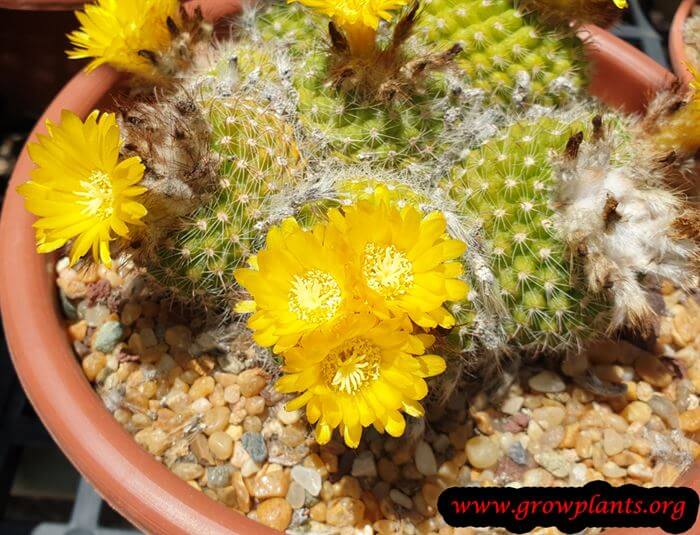
Plant Profile & Key Characteristics
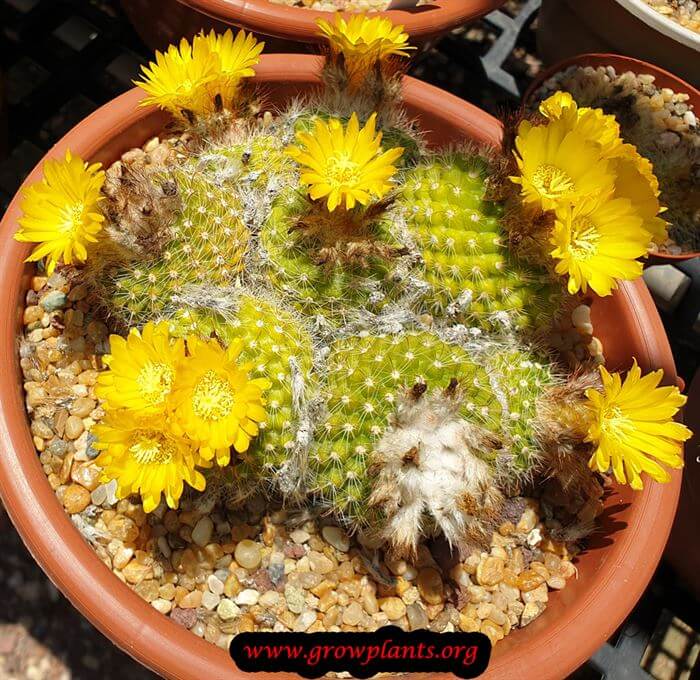
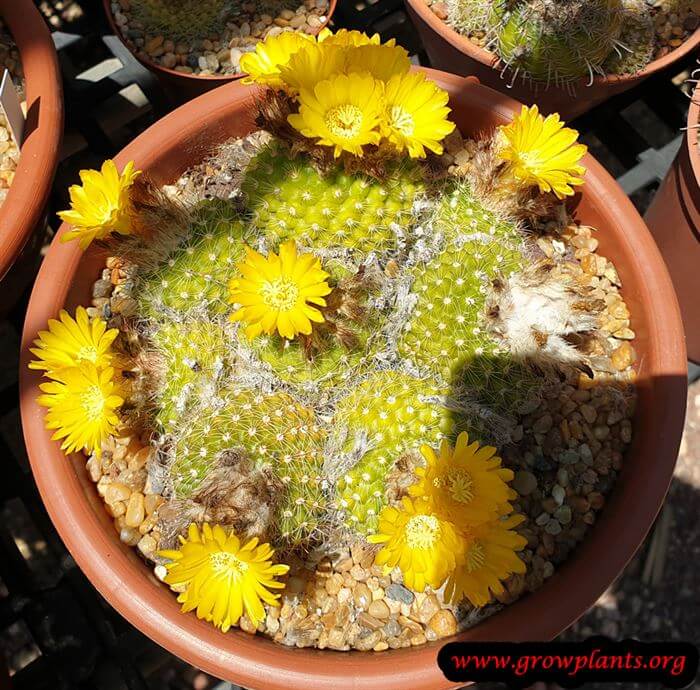
Overview: A slow-growing, drought-tolerant ball cactus grown as an ornamental for its spiny green oval stem and bowl-shaped flowers borne on top. It stays small at about 5–20 cm.
Quick Specifications
| Specification | Attribute |
|---|---|
| Plant Type / Life Cycle | Perennial (cactus) |
| Foliage Type | Evergreen (leafless succulent stem) |
| Mature Size | 5–20 cm (2–8 in) |
| Growth Rate | Slow |
| Root System | Fibrous, shallow |
| Toxicity | Non-toxic (spines can cause mechanical injury) |
| Hardiness | USDA zones 10–12 (10a with winter protection) |
Growth Form & Structure
- Height & Spread: 5–20 cm (2–8 in) in the ground; in a pot use a shallow container 20–50% larger than the root ball with free drainage.
- Growth Habit & Form: Solitary or clustering globular-to-oval spiny stem.
- Lifespan & Maturity: Long-lived, slow-growing succulent.
Anatomy & Physical Features
- Leaves & Foliage: Leafless; green oval stem with ribbed angles clothed in white or yellow spines.
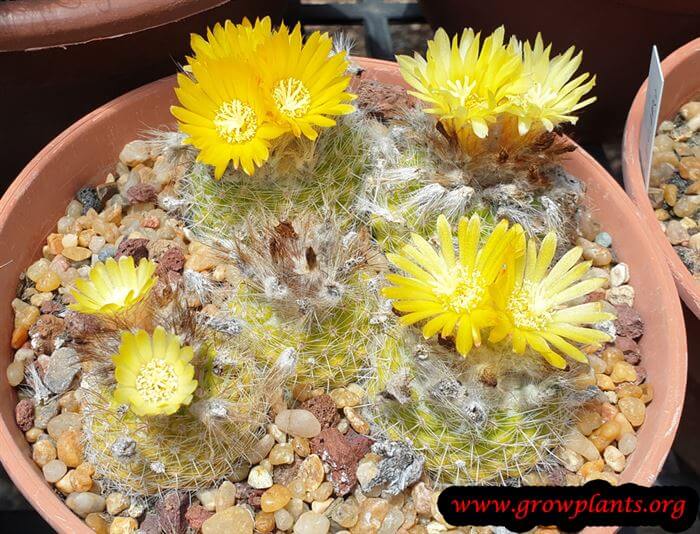
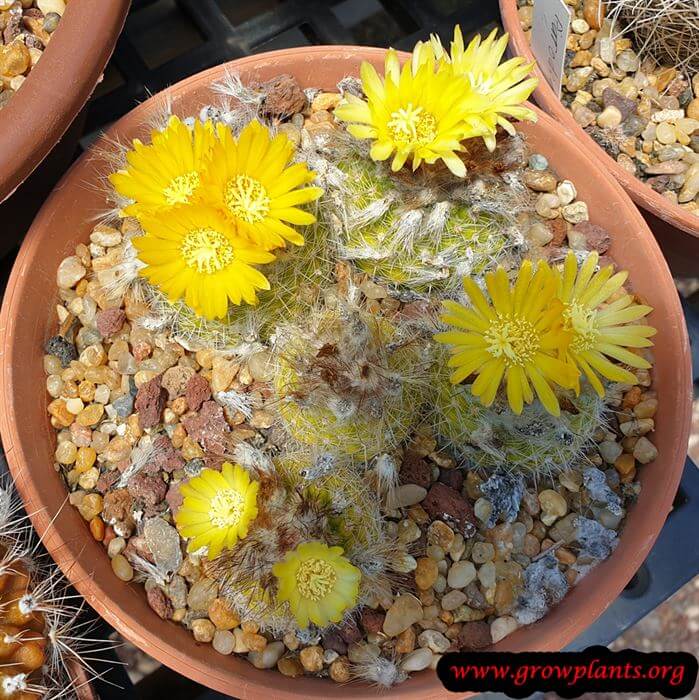
- Flower Characteristics: Bowl-shaped flowers in light yellow, orange, white or red, borne on top of the stem.
Primary Uses & Landscape Value
- Functional & Ornamental Roles: Ornamental drought-tolerant cactus for containers, rockeries and dry desert-style gardens.
Care Guide: Planting, Soil & Watering
Overview: Parodia rigidispina is a slow-growing, drought-tolerant ball cactus that thrives in full sun and dry, sharply drained soil. Water sparingly and let the soil dry between waterings — it dislikes excess water and can rot in a wet rainy season.
Quick Care Requirements
| Requirement | Ideal Condition |
|---|---|
| Planting Season | Spring to summer in zone 10; spring to autumn in zone 11; year-round in zone 12 |
| Growth Rate | Slow |
| Soil Type | Dry, gritty, sharply well-draining (cactus/succulent mix) |
| Water Need | Low — let the soil dry out between waterings, never overwater |
Planting & Establishment
- Best Planting Season: plant during warm, active growth — spring to summer in zone 10, spring to autumn in zone 11, and year-round in frost-free zone 12.
- How to Plant:
- Hole Preparation: set it into a shallow hole in loose, gritty, free-draining soil where water never pools; handle the spiny body with folded paper or thick gloves.
- Soil Amendments: blend in coarse sand, grit or pumice, and add a layer of gravel or lava rock at the base for sharp drainage.
- Planting Depth: set the plant at soil level with the base of the body resting on the surface — the roots are shallow, so do not bury the stem, which invites rot.
- Growth Speed & Expectations: slow-growing and compact, staying only about 5–20 cm (2–8 in).
Soil, Watering & Drainage Care
- Soil Mix & Drainage Needs: use a dry, gritty cactus mix. In a pot, choose a container only 20–50% larger than the root ball (it need not be deep, as the roots are shallow) and put a layer of gravel or lava rock in the base — sharp drainage is essential to prevent root rot.
- Watering Schedule & Technique:
- Young / Newly Planted: water lightly to settle it in, keeping the soil barely moist without soaking it.
- Established: water sparingly and deeply, then let the soil dry out completely before watering again.
- Seasonal Adjustments: water a little more during active growth in warm weather; cut back sharply in winter and shelter it from heavy rain, which it does not tolerate.
Climate, Light & Hardiness
Parodia rigidispina thrives in warm, dry desert, Mediterranean, subtropical, or temperate climates and needs full sun to grow well. It is relatively cold-tolerant for a cactus - established, dry plants may briefly withstand temperatures down to around −5°C (23°F) - though young seedlings are more cold-sensitive and benefit from winter protection at the cooler edge of its range.
Quick Climate Specifications
| Climate Zones | Desert, Mediterranean, subtropical, and temperate climates |
|---|---|
| USDA Hardiness Zones | 10–12 (zone 10a possible with attentive overwintering care, especially for seedlings) |
| Approx. Survival Minimum | Around −5°C (23°F) for established plants kept dry |
| Frost Tolerance | Low–Moderate |
| Light Conditions | Full sun |
| Wind Tolerance | High |
Sunlight & Light Exposure
Optimal Light Setup
Give this cactus full, direct sun for the compact, healthy growth typical of desert-adapted Parodia species.
Direct Sun Requirement
Needs strong direct sunlight for most of the day; too little light causes weak, stretched, etiolated growth.
Shade & Heat Management
Well suited to the intense light and heat of desert and Mediterranean summers; no special shading is normally needed for established plants.
Best Exposure/Orientation
An open, unobstructed, south-facing exposure suits it best.
Temperature Extremes & Hardiness
USDA Hardiness & Regional Limits
Hardy in USDA zones 10–12. Growers in zone 10a can succeed with careful overwintering, but seedlings and very young plants are noticeably more cold-sensitive than mature specimens.
Cold Damage & Winter Protection
Keep the soil on the dry side through winter - cold combined with wet soil causes far more damage than cold alone. Reduce or stop watering as temperatures drop, since the plant naturally has a rainy-season sensitivity to excess moisture.
Frost Sensitivity
Established, dry plants may briefly tolerate light frost down to roughly −5°C (23°F); actively growing plants and seedlings are considerably more vulnerable and should be protected from any frost.
Extreme Heat Tolerance
Well adapted to hot, dry desert and Mediterranean summers when grown in full sun with sharp drainage.
Wind, Humidity & Microclimate
Humidity Preferences
Prefers the low ambient humidity typical of desert and Mediterranean climates.
Dry-Air Tolerance
High - thrives in dry air and is not troubled by low humidity.
Wind Tolerance
Its low, compact growth habit gives it good general wind tolerance.
Rainfall & Seasonal Moisture
Does best with a pronounced dry season; prolonged rainy periods can cause rot problems, so climates or microclimates with wet winters call for extra-sharp drainage.
Microclimate Recommendations
In zone 10a, site young plants in a warm, sheltered, well-drained spot and provide winter protection until they are well established.
Growing in Pots, Balconies & Indoors
The Parodia rigidispina (Ball cactus) is a small, slow-growing cactus that makes an easy pot and windowsill plant. The grower does not rate it as a deep-room houseplant, so it needs the brightest, sunniest window or a spot outdoors to keep its shape and to flower. In a shallow, free-draining pot it is simple to keep on the sunniest sill or out on a warm balcony or patio. Its oval, densely spined stem opens bowl-shaped flowers in light yellow, orange, white or red on top.
Quick Details
- Container Size: A shallow pot about 20-50% wider than the plant
- Indoor Suitability: Not listed as a deep-room houseplant; happiest on the sunniest windowsill or outdoors
- Best Spot: Full sun – the brightest windowsill, or a sunny, sheltered balcony or patio
- Soil & Drainage: Free-draining cactus mix over a gravel, lava-rock or pebble base; strong drainage holes
- Watering in Pots: Small amounts; let it dry between waterings – this ball cactus dislikes too much water and is prone to rot in a wet pot.
Indoors & On the Windowsill
- Houseplant limits: The grower does not rate it as a true indoor houseplant – away from a window the light is too weak, so it stretches, loses colour and stops flowering. A grow light placed close overhead can make up that difference away from a bright window.
- Windowsill growing: It does grow well on the sunniest sill (a south-facing or near-south window) with direct sun; being small and slow it stays in scale for years. Turn the pot now and then for even growth.
- Overwintering indoors: In climates colder than its range (hardiness zone 10-12), keeping it in a pot lets you move it somewhere bright and frost-free for winter; a cool, dry, bright winter rest actually helps it flower the next season.
On a Balcony or Patio
- Light, heat & wind: Give it the sunniest, most sheltered spot – walls and railings reflect heat, which this cactus enjoys, but pots dry quickly so check the mix often. Shelter it from prolonged rain, as too much wet in a pot leads to rot. The spines mean it is best kept where people and pets do not brush past.
- Practicalities: A small pot is easy to move; bring it under cover before the first frost and stand it up off cold, wet paving so water drains away freely.
Choosing the Pot, Soil & Long-Term Care
- Pot & drainage: Use a shallow pot only 20-50% wider than the plant – the roots are shallow, so depth is not needed. Add a layer of gravel, lava rock or pebbles at the base, make plenty of drainage holes, and skip a standing water saucer to avoid root rot. Unglazed terracotta suits cacti because it breathes and dries fast.
- Potting mix: A free-draining cactus/succulent potting mix; you can sharpen it further with extra grit or perlite.
- Feeding: Potted plants lose nutrients to leaching, but cacti need very little – a dilute, low-nitrogen cactus feed once or twice in the active season is plenty.
- Repotting: Every few years (about every 2-4) refresh the mix or pot up one size. Handle the plant with folded paper or a wrapped grip to avoid the spines, settle it on a fresh gravel base, firm the mix with a spoon or small trowel, and add a support stick if it is unstable until it re-roots.
Fertilizing & Feeding
A light feeder: this rounded, slow-growing cactus needs only occasional, low-nitrogen feeding through active growth and none while dormant – it is notably intolerant of excess moisture, so feeding should stay conservative through any wet, rainy spells.
Quick Fertilizing Specs
| Feeding Level | Light feeder |
|---|---|
| Main Nutrient Priority | Low-nitrogen and light-handed, kept especially conservative given this species’ sensitivity to excess moisture |
| Best Feeding Period | The warm active growing season, avoiding any prolonged wet or rainy stretches |
| Organic Options | A diluted cactus fertilizer is the more typical choice over organic amendments |
| Micronutrients | Rarely needed beyond what a complete cactus fertilizer supplies |
| Soil pH | Adaptable within a fast-draining, mineral mix |
| Reduce/Stop Feeding | Stop feeding heading into the cooler rest period, and also pause feeding during unusually wet or rainy stretches, since this species tolerates excess moisture poorly |
Feeding by Growth Stage
Active warm-season growth
Support growth of the rounded, spine-covered stem and its bowl-shaped yellow, orange, white, or red flowers.
| Nutrient direction | A light, low-nitrogen feeding suits this slow-growing ball cactus, kept conservative given its sensitivity to excess moisture. |
|---|---|
| Timing | During the warm active growing season, outside of unusually wet or rainy stretches. |
| Frequency | An occasional light feeding while clearly in active growth and soil conditions are on the drier side is enough. |
| Fertilizer types | A cactus or succulent fertilizer diluted well below normal strength, A light, low-nitrogen slow-release feed worked into the soil surface |
| Precautions | Feed only into dry soil, and hold off during rainy or unusually humid spells, since this species notably dislikes excess moisture and is prone to fungal stem problems when kept too wet. |
Cool-season dormant rest
Let the plant rest through its cooler dormant period; young seedlings especially need careful winter protection.
| Nutrient direction | None – withhold fertilizer while dormant. |
|---|---|
| Timing | Through the cooler part of the year, when seedlings especially benefit from extra winter protection. |
| Frequency | No feeding at this stage. |
| Fertilizer types | No feeding at this stage – allow a full rest through dormancy |
| Precautions | Do not fertilize during dormancy or through wet, rainy spells; this species is notably intolerant of excess moisture and prone to fungal stem disease when combined with feeding in damp conditions. |
Nutrient Deficiency Signs & Corrections
The stem develops soft, discolored, or sunken patches, sometimes with a musty smell, most often after a wet or rainy stretch.
| Possible causes | overwatering or prolonged wet conditions, which this species tolerates poorly, fungal infection favored by excess moisture, to which this species is known to be susceptible, feeding during a wet spell rather than a dry one |
|---|---|
| Appears first on | the stem surface and base |
| What to check | recent rainfall or watering versus soil dryness, soil and container drainage, whether feeding occurred during a wet stretch |
| Possible correction | Improve drainage and airflow, let the soil dry out fully, avoid feeding until conditions are drier, and remove any clearly affected tissue. |
New growth is unusually pale, soft, or stretched rather than round and firm.
| Possible causes | too much nitrogen or over-feeding, insufficient light causing stretched growth, overwatering encouraging soft tissue |
|---|---|
| Appears first on | the newest growth at the crown |
| What to check | recent feeding strength and frequency, sun exposure, watering routine |
| Possible correction | Cut back to a lighter, low-nitrogen feeding and ensure strong direct light. |
Tissue near the crown browns and looks scorched, mostly in container-grown specimens.
| Possible causes | mineral salt buildup from fertilizer or hard water, container soil not flushed recently, overly concentrated feeding |
|---|---|
| Appears first on | the crown |
| What to check | time since the container soil was last flushed, feeding strength used, water hardness |
| Possible correction | Flush the container soil thoroughly and dilute future feedings further. |
Pruning, Training & Seasonal Maintenance
Parodia rigidispina is a small-to-medium (up to 20cm/8in), slow-growing, single-crown ball cactus that its own care notes say normally needs nothing cut at all — the one real trigger is an old stem that has become too weak or heavy to stay upright, not routine shaping. This species’ own pest notes name snails, slugs and the fungus Colletotrichum, so any cut into soft tissue is a genuine entry point for that fungus and should be kept clean. Time any necessary cut to the warm growing season for fastest healing, and keep cuts away from the wet conditions this plant’s own notes flag as a difficulty (“doesn’t like too much water, might be a problem in the rainy season”).
Quick Pruning & Maintenance Specs
| Pruning Tolerance | Low – sanitary/support-driven cuts only |
| Primary Pruning Window | Spring–Summer (active growth) |
| Secondary Maintenance Window | Any time a stem fails, rots, or loses structural support |
| Typical Frequency | Rare – as-needed only |
| Main Objective | Remove or support old stem tissue that can no longer hold itself up |
| Young Plant Priority | Leave untouched entirely |
| Mature Plant Priority | Monitor and support/remove only stems that have become unstable with age |
| Best Tool Type | Sterile grafting knife, with a support stake as the non-cutting alternative |
| Avoid Heavy Pruning During | Rainy-season/humid weather (fungal risk plus slow healing) |
Pruning by Plant Age & Size
Newly Established
No pruning; a young plant has no old, failing stem tissue yet.
Young / Formative
No structural training applies — this is a single ball-form growing point with no branch framework.
Mature / Established
The only age-related task is watching older stem tissue: stake a stem that is leaning or weakening but still firm, and remove only what is clearly rotting or beyond support.
Seasonal Pruning Schedule
Ongoing Sanitary
Objective: catch and remove any stem tissue that is rotting or fungal-affected before it spreads, and support (rather than automatically cut) an aging stem that is simply losing rigidity. What NOT to remove: firm, upright, healthy tissue. Expected response: a clean wound calluses in days to weeks in warm, dry weather. Flowering impact: minimal if only clearly failing tissue is removed.
Structural Pruning & Training
The defining structural issue named for this species is an old stem losing the strength to stay upright — support with a stake first if the tissue is still firm, and remove only if it is rotting or damaged beyond that.
Special Growth to Remove
- Old stem tissue that has lost structural support and is failing or rotting — remove at a clean, firm point, or stake it instead if it is still healthy.
- Any tissue with lesions consistent with Colletotrichum/anthracnose — remove promptly and dispose of it away from other plants, especially in humid weather.
Container & Small-Space Pruning
Grown in a fast-draining cactus mix in a pot only modestly larger than the root ball; in a container, a leaning stem is usually better addressed with a support stake than by cutting, particularly since this species is already noted to dislike excess water — extra wounds in a slow-draining pot raise rot risk.
Tools
Grafting knife (sterile, for removing failing or diseased stem tissue) and soft_ties_stakes (for supporting an old stem in place of cutting it).
Tool Hygiene & Disease Risk
Increased — this species’ own pest/disease notes specifically name Colletotrichum fungus, so a blade that touches any lesioned or rotting tissue should be disinfected before touching healthy tissue.
Cut Placement & Technique
Cut a failing stem cleanly at its base into firm tissue; let the wound air-dry and callus in shade before it contacts soil or moisture again, and avoid cutting at all during the rainy season this plant’s notes flag as risky.
Heavy Pruning & Rejuvenation
Not tolerated as a vigor technique — there is no rejuvenation pruning for this species; managing individual failing stems as above is the extent of intervention.
Post-Pruning Care
Keep any cut surface dry and shaded until fully callused; hold off watering directly onto a fresh wound; watch neighboring tissue for the same fungal issue, especially after wet weather.
Common Pruning Mistakes
- Cutting away an old stem by default instead of staking it while it is still firm.
- Cutting during humid or rainy conditions, which favors the fungal risk this species already carries.
- Leaving lesioned tissue in place instead of removing and disposing of it.
- Handling without spine protection.
When NOT to Prune
During humid or rainy weather; while flowers are fresh; immediately after transplanting or repotting.
Recommended Tools (by task)
- grafting_knife — sterile removal of failing or fungal-affected stem tissue.
- soft_ties_stakes — supporting an aging stem that has lost the strength to stay upright, in place of cutting it away.
Propagation Guide
Parodia rigidispina is most easily and reliably increased from rooted daughter plants, which the site notes establish faster and with a higher success rate than any alternative; seed and body cuttings both work but are slower routes to a similar-sized plant. Vegetative propagation by offsets is easy, while raising it from seed is a moderate, more patience-requiring process.
Quick Propagation Specs
| Best Propagation Method | Offsets (daughter plants) – faster and higher success rate than other methods |
| Alternative Methods | Body/stem cuttings; seed |
| Propagation Difficulty | Easy by offsets; Moderate by cuttings or seed |
| Seed True-to-Type | Yes (species, not a named hybrid) |
| Vegetative True-to-Type | Yes |
| Best Propagation Season | Spring–summer in hardiness zone 10, spring–autumn in zone 11, all year in zone 12 |
| Cutting Rooting Time | Not documented on site; typically several weeks once the cut surface has calloused |
| Germination Temperature | Cautious estimate 21–29°C (70–85°F), warm growing-season conditions |
Growing from Seed
Sowing Season
Sow during the recommended planting window: spring to summer in hardiness zone 10, spring to autumn in zone 11, and all year in zone 12; seedlings benefit from extra winter protection at the cold edge of the range (zone 10a).
Germination Conditions
Use a well-draining cactus potting mix. The site does not give exact seed depth, spacing, or germination-time figures for this species, so follow general small ball-cactus practice: sow shallowly on a gritty surface, keep lightly moist without over-watering, and avoid letting the mix stay wet – this species is noted as intolerant of too much water, and the risk is greatest during rainy periods.
Seedling Care
Give young seedlings some protection from the harshest sun and be cautious with watering, erring toward under- rather than over-watering, especially through the rainy season.
Stem Cuttings
Cutting Type
A body/stem cutting from the cactus – cut all the way through the stem into pieces, or make a single cut through the middle.
Best Timing
Take cuttings during the recommended planting season (see zone-specific window above).
Cutting Preparation
Cut with a sterile knife, then leave the cut surface in the shade to callus (heal) before planting – this can take from a few weeks up to a few months depending on the size of the cut.
Rooting Setup
Once calloused, set the piece on the soil with a stick or other support so it cannot topple, cover the base lightly at the sides, and water only in small amounts, taking care not to overdo it in wet weather.
Rooting Hormone
Not indicated as necessary by the site; can be used optionally.
Rooting Time
Not given precisely on site; rooting generally follows on from the callusing period once the piece is potted and lightly watered.
Division, Offsets, Pups & Suckers
This is the site’s recommended best method: daughter plants need careful handling when removed from the ground so that all of their own roots come away intact. Use a plastic spatula or, if the soil is firmer, a sturdier tool to uncover the roots by digging around the offset; an air blower or a gentle stream of water can help expose the roots cleanly, but let the roots dry afterward before replanting. Only detach offsets that have their own root system attached.
Bloom & Flower Guide
Quick Details
- Bloom Season: Spring to summer
- Time to First Bloom: Flowers once mature, usually after a few years from seed
- Flower Appearance: Bowl-shaped flowers in light yellow, orange, white or red at the top of the plant
- Edibility: Ornamental only; the flowers are not eaten. The plant is not toxic.
Detailed Blooming Overview
Parodia rigidispina flowers from spring into summer, opening bowl-shaped blooms at the crown of the rounded body. As with other ball cacti, the flowers face upward and sit just above the spines.
Flower Characteristics
- Bowl or cup shape, opening at the apex.
- Colours include light yellow, orange, white and red.
Bloom Care & Thinning
- Encouraging flowers: Bright light and a cool, dry winter rest set the plant up to bloom.
- Watering through bloom: Resume careful watering with spring growth and let the mix dry out between times.
- Pollination: Insect-pollinated; no thinning needed.
Bloom Health & Protection
- Mealybugs: Inspect the crown and buds; insecticidal soap or neem oil deals with them gently.
Pests, Diseases & Troubleshooting
Overview: Parodia rigidispina is a small globular South American ball cactus with stiff, rigid spines and yellow blooms, native to northern Argentina. Like all Parodia (South American ball cacti), it is naturally tough and largely pest-free, so nearly every problem traces back to excess water and poor drainage. The chief live pests are mealybugs (including root mealybugs), scale and spider mites; the real dangers are basal and root rots and fungal infections that follow overwatering, cold-wet soil or a wet rainy season. Management is dry, airy and preventative, with organic controls first.
Quick Troubleshooting Overview
| Issue / Pest | Main Symptom | Primary Solution |
|---|---|---|
| Mealybugs (incl. root) | White cottony fluff between ribs or on roots, weak growth | Alcohol swab, systemic/soap, bare-root and repot |
| Scale insects | Hard brown bumps on the stem, yellow patches | Scrape off, horticultural oil |
| Spider mites | Rusty-bronze stippling near the crown, fine webbing | Rinse, raise humidity briefly, miticidal oil |
| Basal / root rot | Soft, brown, mushy base; collapse | Cut to clean tissue, dry out, sharp-drainage mix |
| Anthracnose (Colletotrichum) | Sunken moist brown lesions with spore masses | Cut out, keep dry, copper/sulphur fungicide |
| Slugs & snails | Chewed scars on skin, slime trails | Handpick at night, grit barrier, iron-phosphate bait |
Common Pests & Management
- Mealybugs & Root Mealybugs (Pseudococcus / Rhizoecus spp.):
- Symptoms: White cottony tufts wedged between the ribs, in the woolly crown and around the areoles; root mealybugs coat the roots in white and stall growth even when top pests are absent. Sticky honeydew and slow decline follow.
- Prevention & Control: Inspect the crown and, periodically, the roots at repotting; dab clusters with an alcohol swab; rinse and treat with insecticidal soap or horticultural oil. For root mealybug, bare-root, wash, soak roots and repot in fresh dry mix in a clean pot.
- Scale Insects (Diaspis and soft scales):
- Symptoms: Small hard brown or greyish limpet-like bumps stuck to the stem, leaving yellow or corky patches beneath as they suck sap.
- Prevention & Control: Scrape off gently with a soft brush or fingernail, then apply horticultural oil to smother the rest; repeat to catch crawlers and isolate the plant until clear.
- Spider Mites (Tetranychus spp.):
- Symptoms: Rusty-bronze, corky scarring and fine pale stippling near the growing tip, with delicate webbing over the crown in hot, dry, stagnant air; the damage is permanent on cactus skin.
- Prevention & Control: Provide fresh air and occasional rinsing; keep the growing area from becoming hot and bone-dry. Treat active mites with horticultural oil or a miticidal soap, covering the crown well.
- Fungus Gnats (Bradysia spp.):
- Symptoms: Small dark flies over the soil and larvae in constantly damp mix that can nibble fine roots and the vulnerable base, worsening rot risk.
- Prevention & Control: Let the mix dry out fully between waterings, top-dress with grit, and use yellow sticky traps or a Bti drench; dry culture alone usually ends the problem.
- Slugs & Snails:
- Symptoms: Chewed scars and pits on the skin, especially on soft new growth, with slime trails; the source note lists snails and slugs for this plant, most relevant when it is grown outdoors.
- Prevention & Control: Handpick after dark, ring pots with grit or copper tape, keep the surroundings tidy, and use iron-phosphate bait where pressure is high.
Diseases & Fungal Issues
- Basal & Root Rot (Fusarium, Phytophthora, Pythium):
- Symptoms: The base softens, browns and turns mushy, sometimes with the plant toppling or the core discolouring; the classic outcome of overwatering, a wet rainy season or cold-damp soil the source warns about.
- Treatment & Management: Catch it early: cut away all rotted tissue back to firm, clean green, dust with sulphur and let the callus dry, then re-root in dry, gritty mix. Prevent by using a very free-draining mineral mix, watering sparingly and never letting the plant sit wet or cold.
- Anthracnose (Colletotrichum spp.):
- Symptoms: Moist, sunken tan to brown lesions that may ooze pinkish spore masses, spreading on the stem in warm, humid, wet conditions. This is the “fungus colletotrichum” flagged in the source note and is a genuine Parodia risk.
- Treatment & Management: Cut out affected tissue into clean flesh, keep the plant dry and airy, and avoid wetting the body. Apply a copper or sulphur fungicide and isolate the plant while it heals.
- Botrytis / Grey Mould (Botrytis cinerea):
- Symptoms: Fuzzy grey mould on damaged spots, spent flowers or the crown in cool, damp, poorly ventilated conditions.
- Treatment & Management: Remove affected tissue and old flowers, improve airflow and lower humidity, and avoid overhead watering; copper fungicide helps in persistent damp.
- Fungal / Corky Spot:
- Symptoms: Dry brown or corky spots and blemishes on the skin from minor fungal infection or old injury, usually cosmetic rather than fatal.
- Treatment & Management: Improve ventilation and keep the body dry; spots are permanent but harmless. A light sulphur dusting checks any spread.
Growing Difficulties & Abiotic Problems
- Overwatering & Rainy-Season Rot:
- Cause & Symptoms: Too much water, especially in cool weather or a wet season, causes soft basal rot and collapse; the source note stresses it “doesn’t like too much water.”
- Correction Strategy: Use a gritty, fast-draining mineral mix, water only when fully dry and much less in cool or dormant periods, and shelter from prolonged rain.
- Etiolation (Insufficient Light):
- Cause & Symptoms: Too little light makes the normally squat globe stretch tall and pale with weak spines, and flowering suffers.
- Correction Strategy: Give bright light with some direct sun, acclimatising gradually to avoid scorching after low-light spells.
- Sunburn / Scorch:
- Cause & Symptoms: Sudden intense sun after dull weather bleaches or scars the skin with permanent yellow-white patches.
- Correction Strategy: Increase sun exposure gradually and provide light shade during the fiercest summer midday heat.
- Corking & Cold Damage:
- Cause & Symptoms: Natural brown corky bark forms low on old plants; frost or cold-wet spells cause soft, translucent, collapsing tissue.
- Correction Strategy: Accept basal corking as ageing; keep the plant dry and above its minimum temperature in winter to avoid cold rot.
What Helps – Products & Tools
For ball cacti the essentials are a gritty, free-draining mineral mix and restrained watering, plus isopropyl alcohol swabs and horticultural oil or insecticidal soap for mealybugs, scale and mites, a systemic or soil drench for stubborn root mealybug, yellow sticky traps for fungus gnats, iron-phosphate bait for slugs and snails, and sulphur or copper fungicide (with a sharp sterile knife) for rots and anthracnose. Prevention through dry, airy culture matters far more than any spray.