Plant Profile & Key Characteristics
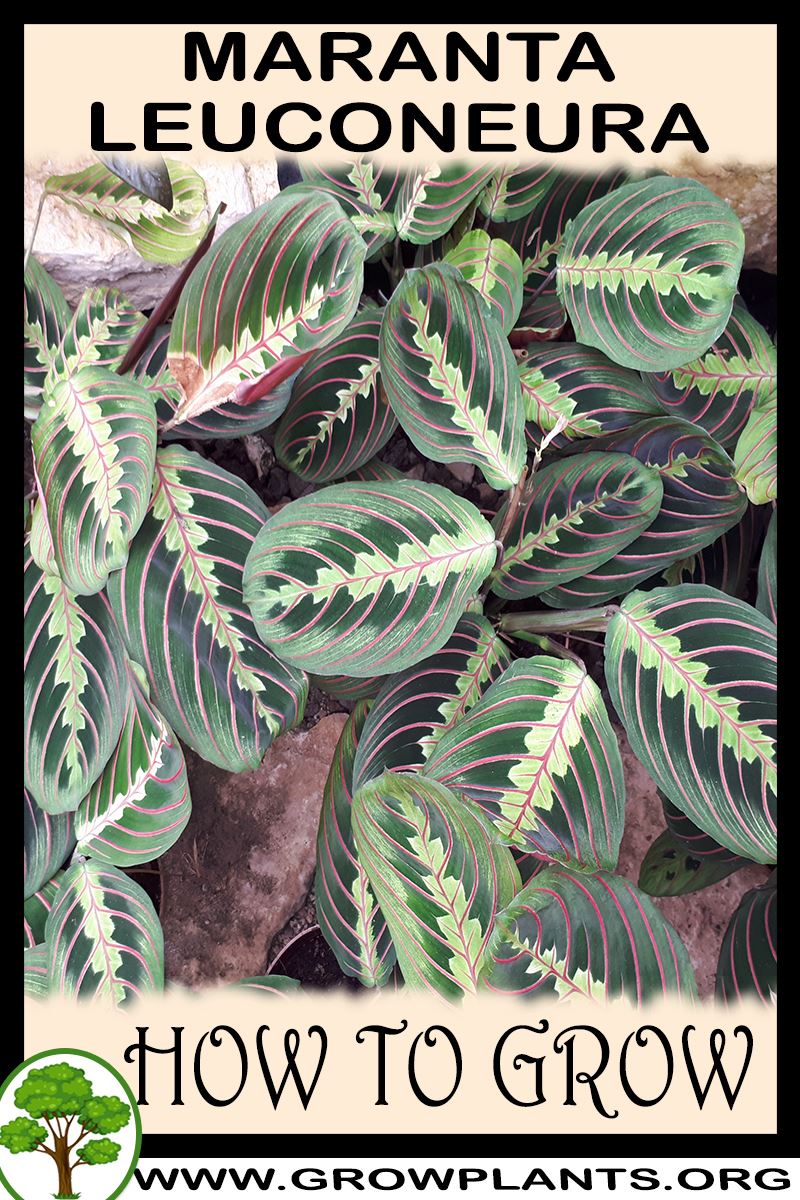
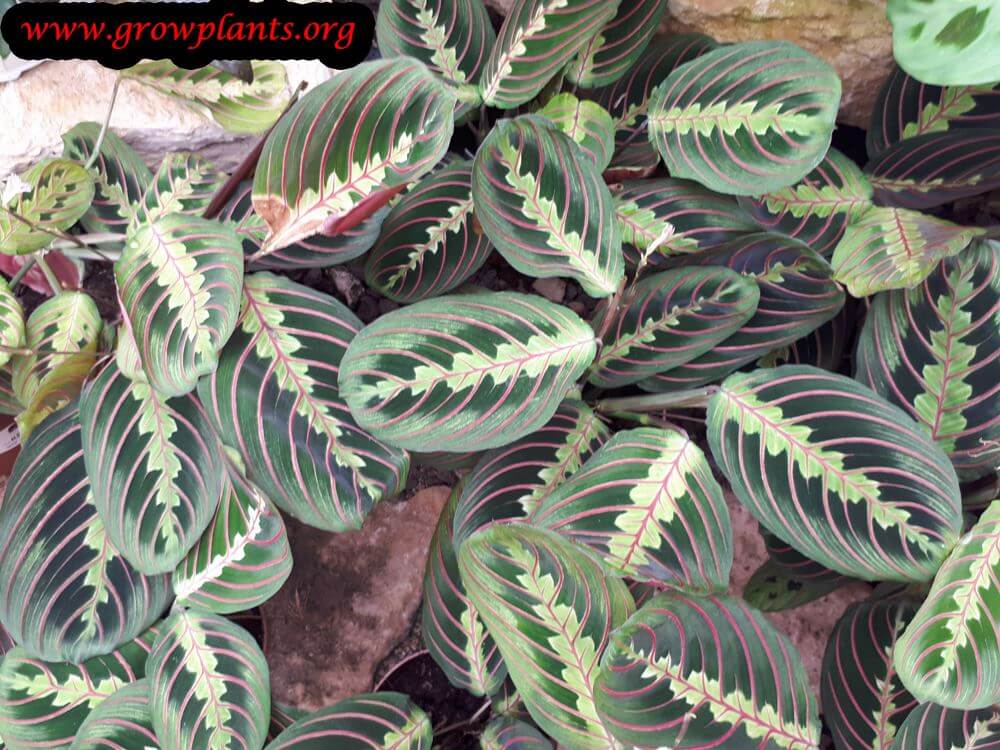
Overview: Maranta leuconeura (prayer plant) is a low evergreen foliage perennial, 30-60 cm, grown for its strikingly patterned leaves that fold upward at night; a popular shade-loving houseplant.
Quick Specifications
| Specification | Attribute |
|---|---|
| Plant Type / Life Cycle | Perennial (evergreen) |
| Foliage Type | Evergreen |
| Mature Size | 30-60 cm (12-24 in) |
| Growth Rate | Moderate to slow |
| Root System | Shallow, rhizomatous |
| Toxicity | Non-toxic (pet-safe houseplant) |
| Hardiness | USDA 11+ |
Growth Form & Structure
- Height & Spread: 30-60 cm (12-24 in); grows well in 10-15 L pots and as a houseplant.
- Growth Habit & Form: Low, spreading clump of broad leaves that fold upward at night.
- Lifespan & Maturity: Long-lived perennial with moderate growth.
Anatomy & Physical Features
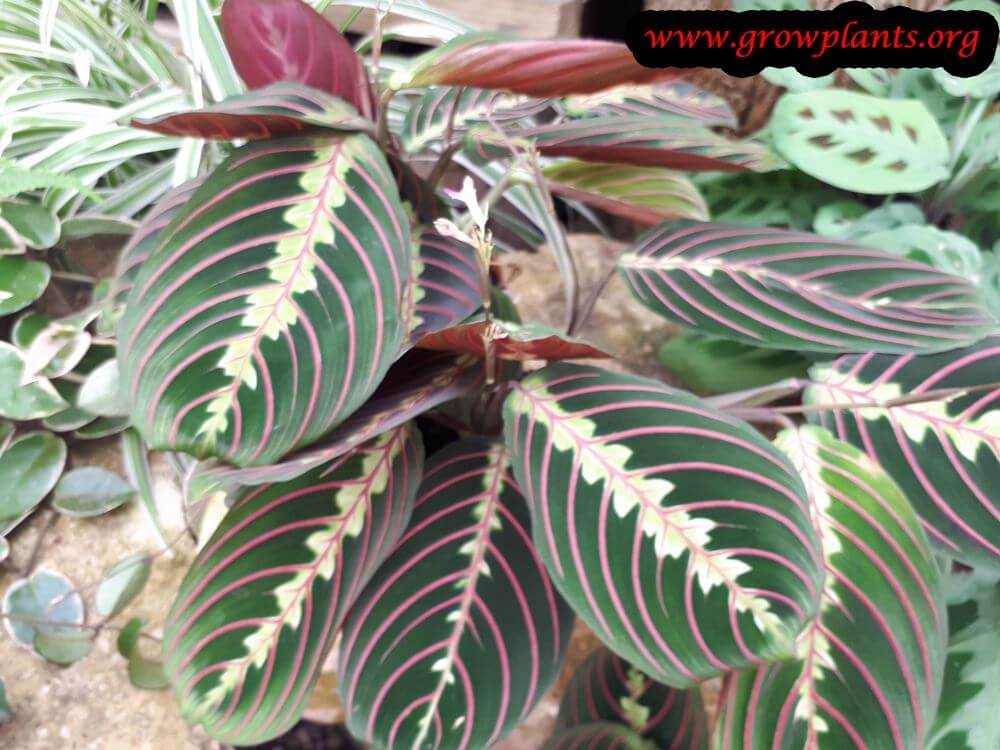
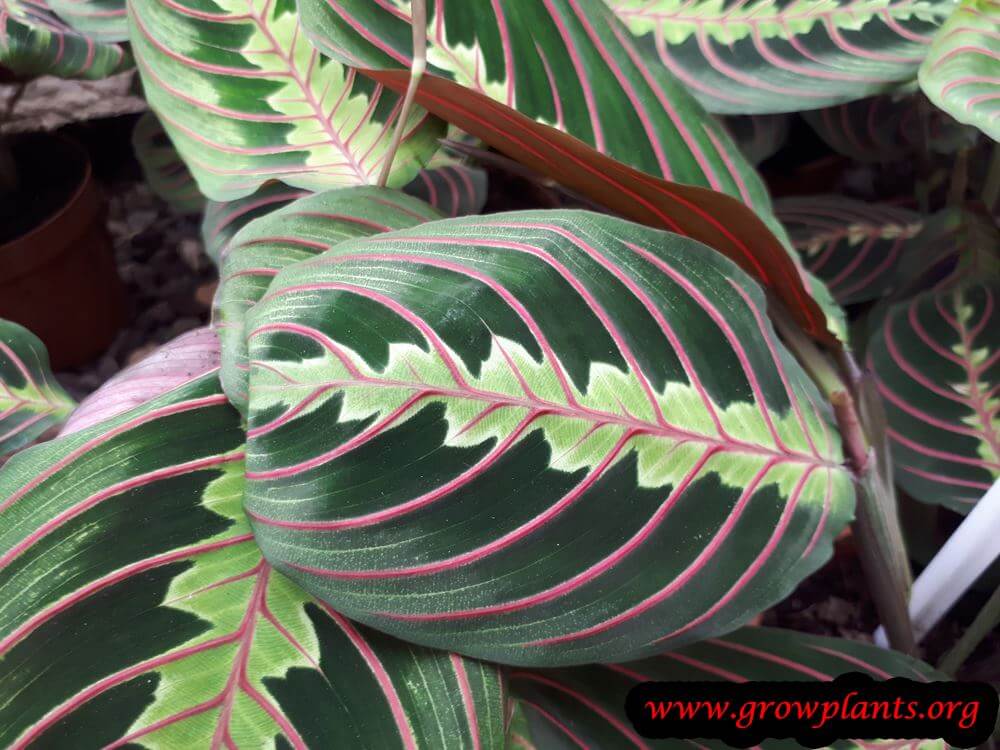
- Leaves & Foliage: Elliptic leaves boldly marked in green, purple, red or white with contrasting veins and ‘burning-mark’ blotches; undersides green, red or purple – the main ornamental feature.
- Flower Characteristics: Small white, pink or purple flowers in a beehive-like inflorescence (see Bloom guide).
Primary Uses & Landscape Value
- Functional & Ornamental Roles: Foliage houseplant, shade groundcover, terrarium and container plant; helps purify indoor air.
Care Guide: Planting, Soil & Watering
Overview: Maranta leuconeura (prayer plant) is a slow- to medium-growing tropical foliage plant (zone 11+, or a houseplant elsewhere) that grows best in shade with rich, consistently moist soil and high humidity. It is sensitive to hard water and prefers rainwater or clean water, warm temperatures (optimal 18–25°C) and slightly acidic soil.
Quick Care Requirements
| Requirement | Ideal Condition |
|---|---|
| Planting Season | Year-round; spring to early summer in zone 11a |
| Growth Rate | Slow to Moderate |
| Soil Type | Rich, moisture-retentive but well-draining |
| Soil pH | Slightly acidic (around 6.0 or a little lower) |
| Water Need | Moderate to High — keep evenly moist, never soggy and never bone-dry |
Planting & Establishment
- Best Planting Season: Plant year-round in warm conditions; in zone 11a plant in spring to early summer.
- How to Plant:
- Hole Preparation: Plant into a rich, moisture-holding mix, ideally in an enclosed, humid spot while it settles.
- Soil Amendments: Blend in humus and organic matter and top with chopped mulch to hold moisture.
- Planting Depth: Set the crown at soil level so it is not buried, and firm gently.
- Growth Speed & Expectations: Slow to medium — forms a low clump about 30–60 cm (12–24 in) tall.
Soil, Watering & Drainage Care
- Soil Mix & Drainage Needs: Use potting or peat mix with perlite, humus and organic matter; a 10–15 L (2.6–4 gal) pot with drainage holes suits it, and mulch keeps the surface moist.
- Watering Schedule & Technique:
- Young / Newly Planted: Keep the soil moist and humidity high while it settles, using rainwater or other soft, clean water.
- Established: Water so the soil stays evenly moist — do not let it dry out and do not leave it standing in water; let any water in the pot saucer drain the same day.
- Seasonal Adjustments: Water a little less in cool weather and more when warm and dry, keeping humidity up.
Climate, Light & Hardiness
Maranta leuconeura (prayer plant) is a tropical understory foliage plant that needs warm, humid, frost-free conditions and full shade to bright indirect light with no direct sun. Per site data it can grow outdoors only in USDA zone 11 and warmer, so it is a year-round houseplant almost everywhere else.
Quick Climate Specifications
| Climate Zones | Tropical, subtropical, Mediterranean (outdoors only in the mildest, frost-free areas); primarily grown as a houseplant elsewhere |
|---|---|
| USDA Hardiness Zones | 11+ (site data) |
| Optimal Temp Range | Approximately 18–25°C (64–77°F) (site data) |
| Cold Damage Begins | Below approximately 15°C (59°F), growth and appearance suffer (site data) |
| Approx. Survival Minimum | Established plants may briefly survive around 10°C (50°F), though sustained cold at that level causes stress and damage (site data) |
| Frost Tolerance | None |
| Light Conditions | Full Shade (bright indirect light; no direct sun) |
Sunlight & Light Exposure
Optimal Light Setup
Bright, indirect or filtered light mimicking a tropical forest understory is ideal; full shade to part shade outdoors.
Shade & Heat Management
Consistent warmth combined with shade suits this plant best; avoid hot, direct afternoon sun through window glass indoors, which can overheat and scorch the patterned leaves.
Best Exposure / Orientation
A north- or east-facing window indoors, or deep shade beneath canopy outdoors in frost-free tropical climates.
Temperature Extremes & Hardiness
USDA Hardiness & Regional Limits
Site data rates this species for zone 11 and above - essentially frost-free climates only for outdoor culture. In all cooler zones it must be grown indoors or brought inside well before cold weather arrives.
Cold Damage & Winter Protection
Keep above about 15°C (59°F) for good growth and appearance per site data; avoid cold drafts, cold windowsills, and unheated rooms in winter.
Frost Sensitivity
Highly frost-sensitive; any frost exposure is likely to be fatal.
Extreme Heat Tolerance
Tolerates warm tropical heat well provided humidity and consistent soil moisture are maintained; combined heat and dry air is more stressful than heat alone.
Wind, Humidity & Microclimate
Humidity Preferences
High; site data lists humidity as a core ongoing care need for this species.
Dry-Air Tolerance
Low; site data specifically warns against exposing the plant to the dry air produced by heating and cooling systems indoors.
Rainfall & Seasonal Moisture
Adapted to consistently moist, humid tropical conditions without a pronounced dry season; site data calls for rain or clean water and consistently moist soil.
Microclimate Recommendations
Bathrooms, kitchens, or a pebble/humidity tray indoors; keep well away from heating or air-conditioning vents and cold window glass in winter.
Growing in Pots, Balconies & Indoors
The prayer plant is a first-rate houseplant – the grower confirms it grows well indoors. It is a shade-loving foliage plant for a bright, sun-free spot, kept moist and humid, and it is equally happy in a pot on a shaded balcony in mild weather.
Quick Details
- Container Size: Start about 30-50% bigger than the plant, roughly 10-15 L (2.6-4 gal)
- Indoor Suitability: An excellent houseplant for bright, indirect light with steady humidity
- Best Spot: Full shade to bright, indirect light – never direct sun, which scorches the foliage
- Soil & Drainage: Moisture-retentive but airy – potting mix or peat with perlite, plus humus and organic matter; mulch to hold moisture
- Watering in Pots: Keep the soil evenly moist and humid – never let it dry out and never leave it standing in a puddle
Indoors & On the Windowsill
- A real houseplant: The grower confirms it grows well indoors. Keep the soil moist and the air humid, give bright but indirect light, and feed at least once a year.
- Protect from dry air: The grower warns to keep it away from the dry blast of heating and cooling units – dry air browns the leaf edges; a pebble tray or grouping raises humidity.
- Windowsill growing: A bright, sun-free sill is perfect; direct sun bleaches the markings, so filter it.
- Pet-friendly: Marantas are non-toxic to cats and dogs, so they are a safe choice for homes with pets.
On a Balcony or Patio
- Light & shelter: Outdoors keep it in shade with no direct sun and shelter from wind and cold; it is tender and enjoys warm, humid, sheltered air.
- Practicalities: Small pots dry quickly – check daily in warmth, and bring it indoors before cold nights. A drip irrigation kit with a timer can take over that watering check automatically.
Choosing the Pot, Soil & Long-Term Care
- Pot & drainage: Use a pot with strong drainage holes; the grower’s bottom-watering routine keeps the mix moist without leaving roots waterlogged – never leave a standing saucer of water.
- Potting mix: Potting mix or peat with perlite, blended with humus and organic matter, topped with chopped mulch to hold moisture.
- Feeding: Feed at least once a year as the grower advises; potted plants leach nutrients, so a balanced feed through the growing season keeps the foliage rich.
- Repotting: Refresh the soil every few years using the grower’s root-wash and prune routine (see tip).
Grower’s Container Tip
- Repotting routine (grower’s method): Start in a pot about 30-50% bigger than the plant, around 10-15 L (2.6-4 gal). Every few years, ideally during the cool/dormant season, switch to fresh soil: wash the old soil from the roots, trim the roots, and prune the plant. Use potting mix or peat with perlite blended with humus and organic matter, and top with chopped mulch to hold moisture.
- Bottom watering: The grower lets the base of the pot fill with water so the mix drinks up moisture – but ensures it drains dry the same day, so the roots never sit waterlogged.
Growing this plant in a greenhouse
A greenhouse can give maranta leuconeura frost protection, cold protection, humidity control and extra warmth. In the right climate it may also be kept growing through winter, depending on how much warmth and light are provided.
Greenhouse at a glance
| Greenhouse suitability | Good - clearly useful |
|---|---|
| Main benefits | frost protection, cold protection, humidity control, extra warmth |
| Season extension | earlier spring & later autumn |
| Outdoor protection advisable below | about 15°C |
| Maintain greenhouse minimum | around 15°C for active growth |
| Suitable types | heated greenhouse, polycarbonate greenhouse |
| Heating | Heating is recommended in cold climates for continuous growth. |
Related greenhouse guides
- Greenhouses: How to Choose the Right Greenhouse
- Best Greenhouse Heaters
- Greenhouse Climate Control: Temperature, Ventilation and Humidity
- Polycarbonate Greenhouses: What to Look for Before Buying
Fertilizing & Feeding
Grown indoors for its strikingly patterned, folding leaves, this prayer plant is a light feeder that is notably sensitive to hard tap water, so both feeding rate and water quality matter for keeping foliage clean and unmarked.
Quick Fertilizing Specs
| Feeding Level | Light |
|---|---|
| Main Nutrient Priority | Balanced feed to support strong leaf color and pattern |
| Best Feeding Period | The active growing months when new leaves are regularly unfurling |
| Organic Options | A light top-dressing of compost or worm castings can supplement, though a liquid houseplant feed is more typical |
| Micronutrients | Iron and manganese are usually supplied by a complete houseplant fertilizer; treat only if interveinal yellowing appears |
| Soil pH | Prefers soil on the slightly acidic side |
| Reduce/Stop Feeding | Reduce and stop feeding as light and growth decline in the darker months |
Feeding by Growth Stage
Establishment After Repotting
Let new roots settle into fresh potting mix before asking the plant to take up added fertilizer
| Nutrient direction | None – withhold fertilizer while roots re-establish |
|---|---|
| Timing | Immediately after repotting or dividing daughter plants, until new growth confirms the roots have taken hold |
| Frequency | No feeding at this stage |
| Fertilizer types | No feeding at this stage; water only until the plant shows clear new growth |
| Precautions | Do not fertilize freshly repotted or divided plants; disturbed roots are more easily damaged by fertilizer salts |
Active Growth
Support the regular production of new, well-marked leaves typical of this species’ near-continuous indoor growth
| Nutrient direction | A balanced, diluted houseplant feed |
|---|---|
| Timing | Through the active growing months whenever new leaves are regularly unfurling |
| Frequency | Feed several times during the active growing season, easing back if growth is slow or light is limited |
| Fertilizer types | A balanced, diluted liquid houseplant fertilizer applied with regular watering |
| Routine trace nutrients | iron, manganese |
| Precautions | Use rain water or another clean, low-mineral water source when possible, since this species is notably sensitive to hard tap water |
Low-Light Slowdown
Match feeding to the plant’s reduced growth rate when indoor light and day length drop
| Nutrient direction | None – withhold fertilizer while growth is minimal |
|---|---|
| Timing | During the darker months when new leaf production visibly slows |
| Frequency | No feeding at this stage |
| Fertilizer types | No feeding at this stage; reduced light means the plant cannot use added nutrients efficiently |
| Precautions | Do not fertilize during this slow period; resume only once active new-leaf growth returns |
Mineral and Salt Management
Prevent the mineral buildup this hard-water-sensitive species is prone to, keeping leaf margins clean
| Nutrient direction | None – this is a maintenance stage, not a feeding stage |
|---|---|
| Timing | Periodically alongside the regular watering routine, independent of the feeding schedule |
| Frequency | No feeding at this stage |
| Fertilizer types | No feeding at this stage; periodically flush the potting mix with plain, clean water to leach out accumulated minerals |
| Precautions | Do not fertilize during a flushing cycle; let the mix drain fully and resume normal feeding afterward |
Nutrient Deficiency Signs & Corrections
Brown, crispy leaf edges and tips, especially on otherwise well-watered plants
| Possible causes | Fluoride, chlorine, or mineral buildup from hard tap water, Low indoor humidity typical of heated or air-conditioned rooms, Salt buildup from over-fertilizing, General underwatering stress |
|---|---|
| Appears first on | Leaf margins and tips, especially on older leaves |
| What to check | Water source and mineral hardness, Indoor humidity levels near the plant, Recent fertilizer frequency and rate |
| Possible correction | Switch to rain water or another low-mineral water source, flush the potting mix periodically, and reduce fertilizer strength |
Pale, smaller-than-normal leaves and generally weak stems
| Possible causes | Infrequent or overly dilute feeding relative to active growth, Old, nutrient-depleted potting mix, Low light limiting the plant’s ability to use available nutrients, A root-bound container restricting nutrient uptake |
|---|---|
| Appears first on | Newest leaves as they unfurl |
| What to check | Leaf size and color compared with earlier growth, Time since the potting mix was last refreshed, Light levels and how root-bound the plant is |
| Possible correction | Resume balanced, diluted feeding during active growth and repot into fresh mix if it has been several years |
Yellowing between the veins on new leaves while the veins themselves stay green
| Possible causes | High potting-mix pH, Waterlogged or compacted soil limiting root function, Nutrient-poor or very old potting mix, General root stress limiting uptake |
|---|---|
| Appears first on | Newest leaves |
| What to check | Potting mix age and drainage, Watering routine and how quickly the mix dries, Pattern of yellowing relative to leaf veins |
| Possible correction | Correct with a chelated iron or manganese product per its label and improve drainage or repot if the mix is old |
Pruning, Training & Seasonal Maintenance
Maranta leuconeura is a low, rhizomatous foliage houseplant grown for its patterned leaves; it has no woody structure and no fruiting-wood logic, so "pruning" means grooming – dead-leaf removal – plus occasional pinching to control legginess and keep a full, mounded shape. It tolerates cuts at any time of year, but the safest, most effective time to do any heavier trimming is alongside its every-few-years repot, when both roots and top growth get a light trim together.
Quick Pruning & Maintenance Specs
| Pruning Tolerance | Moderate |
| Primary Pruning Window | Any time (all-year), for routine grooming |
| Secondary Maintenance Window | Paired with repotting, every few years, for heavier stem/root trimming |
| Typical Frequency | Ongoing light grooming |
| Main Objective | Remove dead/damaged leaves; control sprawl and legginess |
| Young Plant Priority | Remove only damaged leaves while establishing |
| Mature Plant Priority | Pinch leggy stems; thin crowded rhizome growth; trim at repot |
| Best Tool Type | Precision snips (soft leaves and stems) |
| Avoid Heavy Pruning During | Right after a stressful repot/root disturbance, or during the low-light winter slow-down when regrowth is slow |
Pruning by Plant Age & Size
Newly Established
Remove only damaged or yellowing leaves; leave the plant otherwise alone while it settles in.
Young / Formative
No formal training system applies. Pinching the growing tips encourages a fuller, bushier rosette of leaves rather than a single sprawling stem.
Mature / Established
Periodically cut old, leggy stems back at the base to renew fresh growth from the rhizome, and thin dense clumps that have become crowded.
Special Growth to Remove
- Dead, yellowing or damaged leaves.
- Leggy, overly long stems trailing from the rhizome – pinch or cut back to a node to encourage branching.
Structural Pruning & Training
The only structural task is renewal: as older stems become long, bare at the base, or sprawl over the pot edge, cut them back to the rhizome to stimulate fresh, compact growth. There is no branch framework or canopy-density concern – this is a soft rhizomatous plant, not a woody shrub.
Container & Small-Space Pruning
As a houseplant, its repot cycle every few years includes a light root trim alongside top growth: when switching soil, wash the roots clean, trim the root ball to suit the new pot, and prune back any overgrown or leggy stems at the same time to keep a compact, mounded form indoors.
Tools
- Precision snips for leaf and stem grooming, and for pinching growing tips.
Tool Hygiene & Disease Risk
Routine – clean, sharp tools; no significant transmissible disease risk is documented for this plant.
Cut Placement & Technique
Cut individual leaf stalks at the base near the rhizome; pinch stems just above a node or leaf joint to encourage branching there.
Heavy Pruning & Rejuvenation
Tolerated: a very leggy or damaged plant (e.g. after cold or dry-air stress) can be cut back hard to a few centimeters above the rhizome and will regrow. Timing this during active, warm-season growth gives the fastest recovery.
Post-Pruning Care
After a hard cutback, keep humidity and soil moisture up to support regrowth, in line with its normal moist, humid preference, and avoid moving the plant into strong direct light right after cutting, since it is a full-shade plant and new leaves are more vulnerable then.
Common Pruning Mistakes
- Letting stems sprawl and go bare-based instead of pinching them early.
- Cutting hard during the darkest, coolest months and expecting fast regrowth.
- Skipping the root trim at repot, leaving the plant root-bound and declining.
When NOT to Prune
Avoid cutting beyond the described root/top trim immediately after a repot; skip hard cutback during the lowest-light, coolest part of the year when regrowth will be very slow.
Recommended Tools (by task)
- Precision snips – for all leaf and stem grooming, pinching, and the light stem/root trim done at repotting; the tissue is soft throughout, so no heavier tool is needed.
Propagation Guide
Maranta leuconeura is most easily and reliably propagated by separating its daughter (offset) plants from the mother, which the site notes is easier and more successful than starting from seed. Seed is a documented, workable alternative for raising new plants, and stem cuttings with a node are also commonly used, though propagation from seed and cuttings both take longer and are somewhat less certain than division.
Quick Propagation Specs
| Best Propagation Method | Division of daughter plants (rhizome offsets) |
| Alternative Methods | Seed; stem/node cuttings |
| Propagation Difficulty | Easy (division); Moderate (seed) |
| Seed True-to-Type | Cultivar-dependent – named leaf-pattern varieties are best kept true through division; seed-grown plants can vary |
| Vegetative True-to-Type | Yes |
| Best Propagation Season | All year (spring–early summer preferred in hardiness zone 11a); seed sowing in spring, summer, or autumn |
| Seed Germination Time | 4–8 weeks |
| Germination Temperature | About 25°C (77°F) by day, 22°C (68°F) at night |
| Seed Sowing Depth | Cover lightly, about 2mm (0.01in) |
Growing from Seed
Seed Handling & Viability
Keep seed in a dry, dark location until sowing.
Sowing Season
Spring, summer, or autumn.
Sowing Depth & Orientation
Cover the seed only lightly, about 2mm deep, in sterile peat soil.
Germination Conditions
High humidity is essential – keep the pot inside a plastic bag or plastic box to hold humidity in, with soil moist but not waterlogged. Aim for around 25°C (77°F) by day and a slightly cooler 22°C (68°F) at night, since a day/night temperature difference supports germination.
Germination Time
4–8 weeks.
Seedling Care
Keep seedlings at high humidity and consistently moist soil around 25°C (77°F). Once ready to move on, space or pot seedlings about 2x3cm (1×1.5in) apart.
Stem Cuttings
Not detailed in the site’s own data, but a standard supplementary method for this plant.
Cutting Type
A stem section carrying at least one leaf node.
Best Timing
During the plant’s warmer, actively growing months.
Cutting Preparation
Cut cleanly just below a node, leaving one or two leaves attached.
Rooting Setup
Root in water or a moist, humid potting mix – the same warm, humid conditions this plant already needs for good growth also suit rooting.
Rooting Hormone
Not necessary, though it may modestly speed rooting.
Rooting Time
Roots typically develop within a few weeks under warm, humid conditions.
Division, Offsets, Pups & Suckers
To take a daughter plant, carefully uncover the root system rather than simply yanking the plant free – the site recommends using an air blower or a gentle stream of water (or careful hand digging) to expose the roots without damaging them. Once the roots are visible, find where the daughter plant connects to the mother’s rhizome and sever that connection, then let the daughter continue growing in place until it is clearly established on its own roots before lifting it away completely. Simply pulling an already-rooted offshoot from the soil is a faster but less reliable alternative. Time this to the plant’s all-year planting season, favoring spring to early summer in hardiness zone 11a.
Bloom & Flower Guide
Quick Details
- Bloom Season: Possible for much of the year, though flowering is sparse
- Flower Appearance: Small white to pink or purple flowers on slender spikes, the petals joined toward the base
- Edibility: Grown as a foliage houseplant; not a food plant (it is, however, regarded as non-toxic to cats and dogs)
Detailed Blooming Overview
The prayer plant is grown for its beautifully patterned leaves rather than its bloom. When it does flower it sends up slender stalks of small, delicate flowers in white, pink or purple, with the petals fused near the base. Flowering is modest and can happen at almost any time of year, but indoors the plant is often shy to bloom.
Flower Characteristics
- Small flowers in white, pink or purple.
- Petals joined toward the base, borne on slim spikes.
- Modest and easily overlooked against the foliage.
Bloom Care & Thinning
- Encouraging bloom: Steady warmth, humidity and bright, indirect light give the best chance of flowers indoors.
- Managing the bloom: Some growers remove the flower spikes so the plant keeps its energy in the prized foliage.
Pests, Diseases & Troubleshooting
Overview: Maranta prayer plants are humidity-loving foliage plants whose problems are dominated by spider mites in dry indoor air, plus mealybugs, aphids and fungus gnats, and by leaf-edge browning caused by low humidity or salts and fluoride/chlorine in tap water. The management philosophy is prevention through steady warmth, high humidity, clean filtered water and good airflow before any spraying.
Quick Troubleshooting Overview
| Issue / Pest | Main Symptom | Primary Solution |
|---|---|---|
| Spider mites | Fine stippling, pale speckled leaves, faint webbing on undersides; leaves dull and dry | Raise humidity, rinse foliage, insecticidal soap or neem; isolate |
| Mealybugs | White cottony tufts in leaf axils and along veins; sticky honeydew | Alcohol swab, insecticidal soap or neem oil, repeat weekly |
| Aphids | Clusters on soft new growth and undersides; distorted tips, honeydew | Rinse off, insecticidal soap or neem; encourage predators |
| Fungus gnats | Tiny black flies around the pot; larvae in constantly wet soil | Let topsoil dry, sticky traps, Bti/BTI drench, bottom-water |
| Leaf-edge browning | Crispy brown margins and tips, curling leaves | Use filtered/rain water, raise humidity, flush salts |
| Root rot | Yellowing, wilting, mushy stem base in soggy soil | Reduce watering, improve drainage, repot into fresh airy mix |
Common Pests & Management
- Spider mites (Tetranychus urticae):
- Symptoms: The classic Maranta pest in warm dry rooms: leaves become finely stippled and dull, fade to a pale speckled bronze, and fine webbing appears on the undersides and between leaf and stem. Because the mites are tiny, damage is often noticed before the pest is.
- Prevention & Control: Raise humidity and airflow — mites thrive in dry air; shower the foliage, especially undersides, to knock down populations. Wipe or spray with insecticidal soap or neem oil weekly for three cycles, and isolate affected plants. Consistent humidity is the single best preventive.
- Mealybugs (Planococcus citri):
- Symptoms: White cottony blobs gather in the leaf axils, along the midrib and where petioles meet the stem, with sticky honeydew that can turn to sooty mould; growth slows and leaves yellow.
- Prevention & Control: Dab colonies with a cotton bud dipped in 70% alcohol, then wipe clean. Follow with insecticidal soap or neem oil, repeating weekly until clear, and check the roots and pot rim for hidden colonies.
- Aphids (Aphis / Myzus spp.):
- Symptoms: Small green, black or peach clusters on the newest leaves and undersides, causing puckered, distorted growth and a shiny honeydew film that attracts ants and sooty mould.
- Prevention & Control: Rinse them off with a firm spray of water, then treat with insecticidal soap or neem oil; repeat as needed. Outdoors or in a conservatory, ladybirds and lacewings clear them quickly.
- Fungus gnats (Bradysia spp.):
- Symptoms: Small black flies drift up from the pot when disturbed; their larvae live in persistently wet, peaty compost and can nibble fine roots, weakening young plants.
- Prevention & Control: Let the top few centimetres of compost dry between waterings, use yellow sticky traps for the adults, and drench with a Bti (Bacillus thuringiensis israelensis) product for larvae. Bottom-watering keeps the surface drier.
Diseases & Fungal Issues
- Leaf-spot diseases (Helminthosporium / Drechslera; Bipolaris):
- Symptoms: Small water-soaked spots enlarge into tan or brown lesions with yellow haloes, mainly where foliage stays wet; badly spotted leaves yellow and die. Favoured by overhead watering and stagnant, humid air.
- Treatment & Management: Avoid wetting the foliage late in the day, improve airflow, and remove affected leaves. Keep the plant uncrowded; if spread continues, a copper-based fungicide can be applied, but cultural correction usually stops it.
- Root & rhizome rot (Pythium / Rhizoctonia / Fusarium):
- Symptoms: Yellowing, wilting and a soft, browning stem base in soggy compost; roots turn brown and mushy rather than firm and white. The commonest way these plants are lost.
- Treatment & Management: Water only when the top of the compost begins to dry, use a free-draining airy mix and a pot with drainage, and never let the plant sit in water. If rot starts, unpot, cut away dead roots, and repot into fresh mix.
- Bacterial leaf spot (Pseudomonas / Xanthomonas):
- Symptoms: Water-soaked, often angular spots with yellow margins that spread quickly in warm wet conditions and can look greasy or translucent when backlit.
- Treatment & Management: Remove infected leaves, keep foliage dry, and avoid handling plants when wet. Improve ventilation and spacing; copper sprays give some suppression but sanitation is the main control.
Growing Difficulties & Abiotic Problems
- Leaf-tip and edge browning:
- Cause & Symptoms: Crispy brown margins and tips from low humidity, under-watering, or a build-up of salts, fluoride and chlorine in tap water — a very common complaint with this genus.
- Correction Strategy: Raise humidity (grouping, trays, a humidifier), keep the compost evenly moist, and water with filtered, distilled or rainwater; periodically flush the pot to leach out accumulated salts.
- Leaf curling and fading:
- Cause & Symptoms: Persistently curled or rolled leaves and washed-out colour from dry air, under-watering, cold draughts or too much direct sun.
- Correction Strategy: Provide bright indirect light, steady warmth away from draughts and radiators, consistent moisture and higher humidity; leaves usually unfurl once conditions stabilise.
- Faded/scorched patches:
- Cause & Symptoms: Bleached or brown dry patches where strong direct sun strikes the leaves.
- Correction Strategy: Move to bright but filtered light; the prayer plant colours best out of harsh midday sun.
What Helps – Products & Tools
Lean on cultural care first — filtered or rainwater, a humidifier or pebble tray, and good airflow. Helpful products are insecticidal soap and neem oil for mites, mealybugs and aphids, yellow sticky traps plus a Bti larvicide for fungus gnats, 70% isopropyl alcohol for spot-treating mealybugs, and a copper-based fungicide for persistent leaf spotting.