

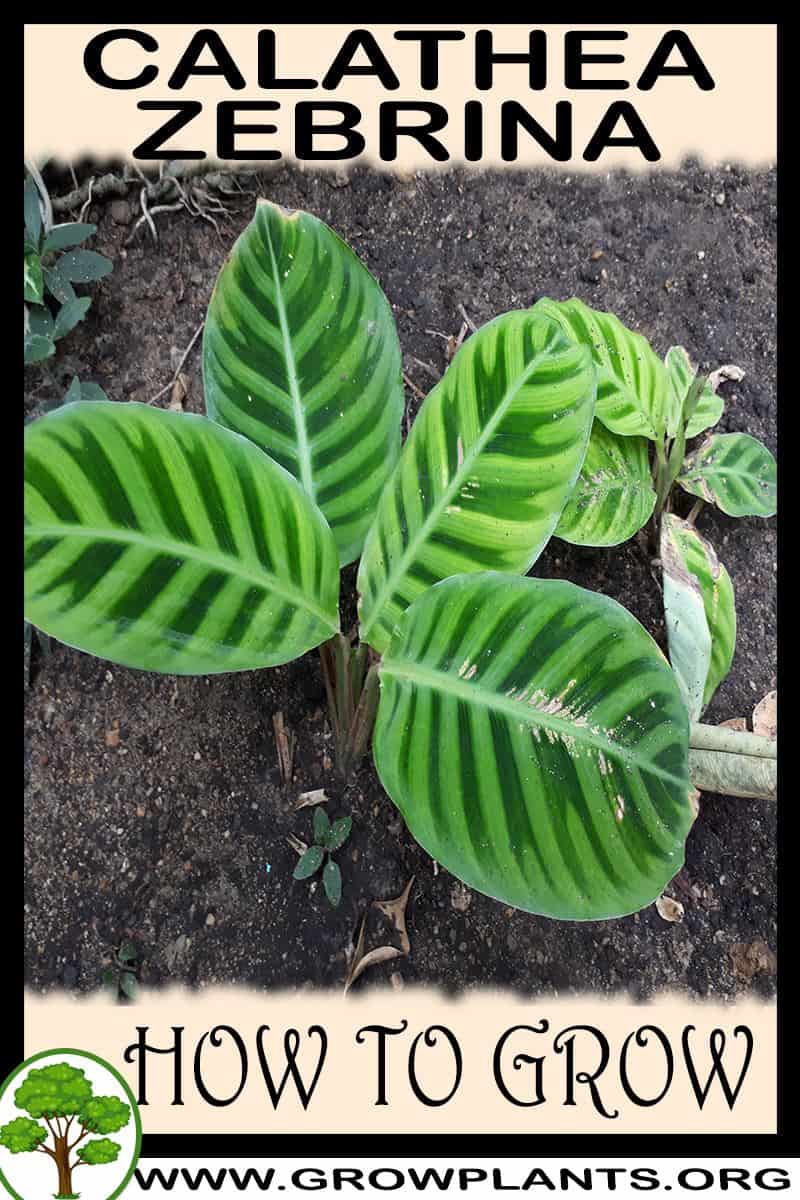
Plant Profile & Key Characteristics
Overview: An evergreen, clump-forming foliage plant reaching about 30-60 cm. Grown as an ornamental for its striking patterned leaves and for air-purifying, indoors as a houseplant or in warm-climate shade.
Quick Specifications
| Specification | Attribute |
|---|---|
| Plant Type / Life Cycle | Perennial (rhizomatous foliage plant) |
| Foliage Type | Evergreen |
| Mature Size | 30-60 cm tall (12-24 in) |
| Growth Rate | Slow to Moderate |
| Root System | Rhizomatous, clump-forming |
| Toxicity | Non-toxic (pet-safe) |
| Hardiness | USDA zone 11+ (or indoors) |
Growth Form & Structure
- Height & Spread: 30-60 cm (12-24 in), grown in the ground in warm shade or, more commonly, in pots and indoors.
- Growth Habit & Form: Clumping foliage plant that spreads slowly from rhizomes.
- Lifespan & Maturity: Long-lived perennial grown chiefly for its foliage; leaves fold upward at night in the prayer-plant manner.
Anatomy & Physical Features
- Leaves & Foliage: Large, soft, elliptic leaves, green with pale-green to white zebra stripes and red-to-purple undersides.
- Flower Characteristics: Small purple beehive-like flowers; grown for foliage.
Primary Uses & Landscape Value
- Functional & Ornamental Roles: Ornamental foliage houseplant for shaded spots, and grown to help purify indoor air.
Care Guide: Planting, Soil & Watering
Overview: These tropical foliage plants thrive in warm, humid, shaded spots (ideally 18-25C) and resent hard water, so rainwater or filtered water is best. Give them a rich, organic, consistently moist but free-draining mix that never dries out completely or turns waterlogged.
Quick Care Requirements
| Requirement | Ideal Condition |
|---|---|
| Planting Season | Year-round under cover; spring to early summer if borderline |
| Growth Rate | Slow to Moderate |
| Soil Type | Rich, organic, moisture-retentive yet free-draining |
| Water Need | Moderate to High – keep evenly moist, never soggy or bone dry |
Planting & Establishment
- Best Planting Season: Grown under cover or indoors they can be planted at any time of year; in borderline conditions (around zone 11a) plant in spring to early summer so they establish through the warm season.
- How to Plant:
- Hole Preparation: Pot into a container about 30-50% larger than the root ball (roughly 10-15 L / 2.6-4 gallons for a mature clump) – an oversized pot holds too much wet soil around the roots.
- Soil Amendments: Work compost or other organic matter through the mix and add perlite for aeration; a surface mulch keeps the root zone evenly moist.
- Planting Depth: Set the crown level with the surface of the mix – keep the base of the stems at soil level rather than buried.
- Growth Speed & Expectations: Expect slow to moderate growth; steady warmth, humidity and feeding three to four times a year keep fresh leaves unfurling.
Soil, Watering & Drainage Care
- Soil Mix & Drainage Needs: Use a rich yet free-draining medium – potting mix or peat blended with perlite for aeration and plenty of compost or other organic matter, with mulch over the surface to hold moisture. In pots, let any water that collects in the saucer drain away and the base dry out the same day; standing water rots the roots.
- Watering Schedule & Technique:
- Young / Newly Planted: Water a newly potted or divided plant thoroughly, then keep the mix evenly moist while roots take hold; warmth and high humidity speed establishment.
- Established: Keep the soil consistently moist but never soggy – don’t let it dry out and don’t leave it sitting in water. Use rainwater or filtered water, as this genus is sensitive to hard, chlorinated or fluoridated water.
- Seasonal Adjustments: Ease back in the cooler months when growth slows, and water a little more often during warm, bright spells; raise humidity whenever indoor air turns dry.
Climate, Light & Hardiness
Calathea zebrina (zebra plant) is a tropical foliage plant suited to tropical, mediterranean, and subtropical climates, or grown as a houseplant elsewhere, and it needs full shade with high humidity. It is very frost-sensitive, listed hardy outdoors from about USDA zone 11b upward (11a with attentive care), with an optimal temperature range of about 18–25°C (64–77°F) and a comfortable minimum of roughly 15°C (59°F), though it can survive briefly down to about 10°C (50°F).
Quick Climate Specifications
| Climate Zones | Tropical, mediterranean, subtropical (or houseplant) |
|---|---|
| USDA Hardiness Zones | 11b+ (11a with right care) |
| Optimal Temp Range | Approximately 18–25°C (64–77°F) |
| Cold Damage Begins | Below approximately 15°C (59°F) |
| Approx. Survival Minimum | Approximately 10°C (50°F), briefly |
| Frost Tolerance | Very Low |
| Light Conditions | Full Shade |
Sunlight & Light Exposure
Optimal Light Setup
Needs full, bright shade - no direct sun - to keep its striped foliage from fading or scorching.
Temperature Extremes & Hardiness
USDA Hardiness & Regional Limits
Outdoor culture is realistic only from about zone 11b upward, or zone 11a with attentive care; elsewhere it is a houseplant year-round. The comfortable indoor/outdoor range is about 18–25°C (64–77°F).
Cold Damage & Winter Protection
Growth and appearance suffer below about 15°C (59°F); keep it well away from cold windows, drafts, and unheated spaces in winter.
Frost Sensitivity
Has essentially no frost tolerance; an established plant may briefly survive down to around 10°C (50°F) but should never be allowed to approach freezing.
Wind, Humidity & Microclimate
Humidity Preferences
Needs consistently high humidity; dry air from heating or air conditioning is a common source of leaf browning.
Dry-Air Tolerance
Poor tolerance of dry air - regular misting or a humidity tray/humidifier is usually necessary indoors.
Microclimate Recommendations
A warm, humid, shaded microclimate away from drafts and heating/cooling vents best supports healthy foliage.
Growing in Pots, Balconies & Indoors
Calathea zebrina (Calathea zebrina) is a shade-loving foliage plant of 30-60 cm (12-24 in). The grower confirms it grows well indoors – it is a classic, pet-friendly houseplant that dislikes direct sun.
Quick Details
- Container Size: Start at least 30-50% bigger than the plant; pot size around 10-15 L (2.6-4 gal)
- Indoor Suitability: A genuine, easy houseplant
- Best Spot: Full shade / bright indirect light – never direct sun
- Soil & Drainage: Potting mix or peat with perlite plus humus and organic matter; a mulch to hold moisture
- Watering in Pots: Average to generous – keep evenly moist, never bone dry and never sitting in a puddle
Indoors & On the Windowsill
- A real houseplant: The grower marks it as growing well indoors. Give it bright, indirect light and steady humidity.
- Care: Keep it away from the dry air of heaters and air conditioners, hold the soil moist and humid, and feed at least once a year.
On a Balcony or Patio
- Light & wind: Only in warm, frost-free conditions and always in shade – direct sun and drying wind quickly scorch and curl the leaves. Pots dry fast in a breeze, so watch moisture and humidity.
Choosing the Pot, Soil & Long-Term Care
- Pot & drainage: Good drainage holes; if you use a saucer let the base fill briefly when watering but let it dry the same day.
- Potting mix: Potting mix or peat with perlite, enriched with humus and organic matter, topped with chopped mulch.
- Feeding: Potted plants need feeding more often than those in the ground, since watering steadily leaches nutrients out of the container.
Grower’s Container Tip
- Winter refresh: Every few years renew the soil, best done in winter – wash the old soil off the roots, trim the roots and prune the plant, then repot into fresh mix. This keeps it vigorous and stops it becoming pot-bound.
Growing this plant in a greenhouse
A greenhouse can give calathea zebrina frost protection, cold protection, humidity control and extra warmth. In the right climate it may also be kept growing through winter, depending on how much warmth and light are provided.
Greenhouse at a glance
| Greenhouse suitability | Good - clearly useful |
|---|---|
| Main benefits | frost protection, cold protection, humidity control, extra warmth |
| Season extension | earlier spring & later autumn |
| Outdoor protection advisable below | about 15°C |
| Maintain greenhouse minimum | around 15°C for active growth |
| Suitable types | heated greenhouse, polycarbonate greenhouse |
| Heating | Heating is recommended in cold climates for continuous growth. |
Related greenhouse guides
- Greenhouses: How to Choose the Right Greenhouse
- Best Greenhouse Heaters
- Greenhouse Climate Control: Temperature, Ventilation and Humidity
- Polycarbonate Greenhouses: What to Look for Before Buying
Fertilizing & Feeding
A light feeder overall – a diluted balanced feed through the active growing season keeps the striped foliage looking its best, with no feeding right after repotting or during the cool-season rest.
Quick Fertilizing Specs
| Feeding Level | Light – a foliage houseplant with modest feeding needs. |
|---|---|
| Main Nutrient Priority | A balanced, diluted feed rather than a concentrated or nitrogen-heavy one. |
| Best Feeding Period | The active warm-season growth period, once past repotting or division. |
| Organic Options | Diluted fish or seaweed feed for an organic approach. |
| Micronutrients | Iron and manganese support strong leaf color and pattern in a complete diluted feed. |
| Reduce/Stop Feeding | No feeding right after repotting or division, and none again during the cool-season slowdown. |
Feeding by Growth Stage
Settling in after repotting or division
Allow a newly divided or repotted Calathea zebrina to reestablish roots before any fertilizer is introduced.
| Nutrient direction | None – hold off on fertilizer until fresh growth shows the plant has taken hold. |
|---|---|
| Timing | The period immediately after repotting or dividing daughter plants from the parent. |
| Frequency | No feeding at this stage; wait for visible new leaf growth before resuming. |
| Fertilizer types | No feeding at this stage – let the roots settle into fresh soil first. |
| Precautions | Do not fertilize freshly divided or repotted plants, since disturbed roots are more easily damaged by fertilizer salts. |
Active growing season
Support the bold striped foliage this plant is grown for through its main period of leaf production.
| Nutrient direction | A balanced feed at reduced, diluted strength – enough to support steady, well-colored foliage without overfeeding. |
|---|---|
| Timing | The warm months when new striped leaves are actively unfurling. |
| Frequency | A few light, evenly spaced feedings through the growing season are enough to keep growth steady. |
| Fertilizer types | A balanced, diluted houseplant fertilizer., A diluted organic feed such as fish or seaweed emulsion for growers who prefer it. |
| Routine trace nutrients | iron, manganese |
| Precautions | Favor rain or purified water and a diluted feed strength, since mineral-heavy tap water and concentrated fertilizer can both mark this plant’s foliage. |
Cool or low-light rest
Let growth pause through the part of the year with reduced light and warmth.
| Nutrient direction | None – withhold fertilizer while growth is minimal. |
|---|---|
| Timing | The cooler, lower-light months, or any time new leaves aren’t actively appearing. |
| Frequency | No feeding at this stage; resume once active leaf growth clearly restarts. |
| Fertilizer types | No feeding at this stage – the plant is not using nutrients quickly enough to justify it. |
| Precautions | Do not fertilize during this rest period, since unused nutrients build up as salts around the roots with little growth to absorb them. |
Nutrient Deficiency Signs & Corrections
The bold light-and-dark striped pattern on the leaves looks washed out or less distinct than expected.
| Possible causes | Too much direct light bleaching the leaf pattern., A prolonged nutrient shortfall from infrequent feeding., Natural fading on older, aging leaves. |
|---|---|
| Appears first on | Whole leaves, most visible on leaves facing the strongest light. |
| What to check | Light intensity and any exposure to direct sun., Time since the last feeding., Whether only the oldest leaves are affected. |
| Possible correction | Move the plant out of direct sun into bright indirect light or shade, and resume a light, diluted balanced feed if it has lapsed. |
Leaf tips or edges turn brown and dry.
| Possible causes | Low humidity drying out leaf margins., Mineral buildup from hard tap water or concentrated fertilizer., Inconsistent watering between overly dry and overly wet. |
|---|---|
| Appears first on | Tips and edges of the older, outer leaves. |
| What to check | Ambient humidity around the plant., Water source and fertilizer strength used., Watering consistency. |
| Possible correction | Raise humidity, switch to rain or purified water where possible, and keep any fertilizer diluted well below label strength. |
The plant produces very few new leaves and growth appears stalled during what should be its active season.
| Possible causes | Nutrient shortfall from an extended period without feeding., Root stress from being pot-bound or from soil that has broken down over time., Insufficient warmth or light for active growth. |
|---|---|
| Appears first on | Whole-plant growth rate, with few or no new unfurling leaves. |
| What to check | Feeding history over the current growing season., Whether the plant is overdue for fresh soil or a larger pot., Temperature and light at the plant’s location. |
| Possible correction | Resume a light, diluted balanced feed during the warm season, refresh the soil or pot size if overdue, and confirm the plant is warm and bright enough. |
Pruning, Training & Seasonal Maintenance
Calathea zebrina (Zebra Plant), grown for its broad, striped foliage rather than flowers, needs no real pruning beyond removing individual leaves once they decline – it has no woody parts and does not respond to structural cutting. As with its Calathea relatives, the plant’s own facts flag sensitivity to hard water, which is the most common cause of leaf browning that gets mistaken for a pruning issue. Removing spent leaves can happen at any point in the year, whenever they appear.
Quick Pruning & Maintenance Specs
| Pruning Tolerance | Low |
| Primary Pruning Window | Any time – sanitary leaf removal only, not seasonal |
| Typical Frequency | As individual leaves yellow, brown, or are damaged |
| Main Objective | Remove declining foliage to keep the striped leaf display looking clean |
| Mature Plant Priority | Routine removal of yellowing/browning leaves at the base; root trimming only at repotting |
| Best Tool Type | Precision snips |
| Avoid Heavy Pruning During | Right after transplant/repot stress |
Pruning by Plant Age & Size
Newly Established
No pruning while the plant settles in after planting or transplant.
Young / Formative
No structural training applies – this is a clumping foliage plant with no framework to shape. Remove only leaves damaged in transplant.
Mature / Established
Routine removal of yellowing, browning, or damaged leaves at the base of the petiole. At repotting time every few years, a light foliage tidy pairs with root trimming, but that is a repotting task rather than a seasonal prune.
Special Growth to Remove
Dead, yellowing, or browning leaves, cut at the base of the petiole. Given this species’ documented sensitivity to hard water, check whether water quality or low humidity explains the browning before assuming the leaf simply needs routine removal – over-removing foliage won’t fix a water-quality problem.
Container & Small-Space Pruning
As an indoor container plant, size management happens mainly at repotting: fresh potting mix every few years, some root trimming, and clearing any tired foliage at the same time – not through routine canopy cuts. Dividing an overcrowded clump at repotting is propagation, not pruning.
Tools
Precision snips only – soft petioles need clean, small cuts, not secateurs or anything heavier.
Tool Hygiene & Disease Risk
Routine: clean tools are sufficient. The pests noted (aphids, spider mites) are not tool-transmitted.
Cut Placement & Technique
Cut a yellowing or damaged leaf at the base of its petiole, close to the soil line, rather than partway up the blade, which leaves an unsightly stub.
Heavy Pruning & Rejuvenation
Not applicable. This species does not tolerate or benefit from hard cutback – an overgrown clump is refreshed through division at repotting, not through pruning.
Post-Pruning Care
After removing a damaged leaf, check water quality (hard water) and humidity levels as the likely underlying cause of browning rather than treating it purely as a leaf-removal task. Avoid overwatering right after a leaf is removed.
Common Pruning Mistakes
Removing healthy leaves before they’ve actually declined, purely for tidiness; treating hard-water leaf browning as a pruning problem instead of a water-quality one; cutting mid-leaf instead of at the base of the petiole.
When NOT to Prune
Avoid stripping leaves right after transplant or repot stress. Avoid over-thinning healthy foliage, since this plant depends on its leaf mass for energy and has no woody reserves.
Recommended Tools (by task)
- precision_snips – the only tool this plant needs, for clean removal of individual damaged or spent leaves.
Propagation Guide
Calathea zebrina is best propagated by dividing rooted daughter plants from the clump, which the site notes is easier and more dependable than starting from seed. Vegetative division is not strictly necessary but is the practical route most growers use, and it reproduces the distinctive striped leaf pattern exactly; overall this is an easy plant to propagate by division.
Quick Propagation Specs
| Best Propagation Method | Division of daughter plants |
| Alternative Methods | Seed |
| Propagation Difficulty | Easy |
| Vegetative True-to-Type | Yes |
| Best Propagation Season | Any time indoors; in hardiness zone 11a, spring to early summer is best |
Growing from Seed
Seed is listed as a possible starting method, but the site gives no sowing specifics for it, and division of daughter plants is described as the easier route in practice. Seed propagation of this genus in cultivation is uncommon compared with division, so most growers rely on offsets rather than seed to keep the zebra-striped leaf pattern true.
Division, Offsets, Pups & Suckers
When dividing, excavate carefully around the whole clump and lift it with all of its roots intact — loosening the soil with an air blower or a gentle stream of water works better than pulling, since it protects the root system. Once the roots are exposed, separate a daughter plant from the mother and, ideally, leave it in place until it can support itself independently before lifting it out and potting it on its own. Simply pulling a division straight out of the soil without this careful root exposure also works, but gives a lower success rate. Pot the separated division promptly into a moist, humus-rich mix and keep humidity elevated while it re-establishes.
Bloom & Flower Guide
Quick Details
- Bloom Season: Potentially much of the year in ideal conditions, though flowering is uncommon indoors
- Time to First Bloom: Only mature, thriving plants bloom; most houseplants are grown for foliage and rarely flower
- Flower Appearance: Small purple flowers packed into a cone-like head with overlapping bracts, held on a short stem
- Edibility: Grown as a foliage ornamental; the flowers are not eaten (the plant is non-toxic and pet-safe)
Detailed Blooming Overview
Calathea zebrina, the zebra plant, is treasured for its broad, velvety leaves striped in deep and pale green — flowering is rare on indoor plants and very much secondary to the foliage. When a mature, contented plant does bloom, it forms short, cone-like flower heads of overlapping bracts, a little like a small beehive, from which the small purple flowers emerge with their petals fused at the base.
Flower Characteristics
- Small purple flowers emerging from a cone of overlapping bracts.
- The petals merge at the base, and the head sits low on a short stem.
- Understated beside the plant's bold, striped leaves.
Bloom Care & Thinning
- Grown for leaves: Any flowering is a bonus — warmth, high humidity and even moisture keep the plant at its best.
- Water quality: Use rainwater or filtered water, as this species resents hard or chlorinated water.
- After flowering: Remove the spent flower head to keep the plant looking neat.
Pests, Diseases & Troubleshooting
Overview: Calatheas (now largely reclassified as Goeppertia) are humidity-loving foliage plants whose thin, showy leaves are magnets for spider mites in dry indoor air and are extremely sensitive to water quality and low humidity. Most ‘problems’ are actually cultural – crispy edges and browning from dry air, salts or fluoride – with sap-suckers and root rot the main biological threats.
Quick Troubleshooting Overview
| Issue / Pest | Main Symptom | Primary Solution |
|---|---|---|
| Spider mites | Fine stippling, webbing, dull bronzed leaves | Raise humidity, wipe/hose, oil/soap |
| Mealybugs | White cottony tufts in axils and undersides | Alcohol swab, soap/oil |
| Thrips | Silvery streaks and speckling, deformed leaves | Sticky traps, insecticidal soap/spinosad |
| Aphids & scale | Sticky honeydew, bumps or clusters | Wipe, soap/oil |
| Root rot | Yellowing, mushy stems, wilting in wet mix | Ease watering, drain well, repot |
| Leaf-edge browning | Crispy brown margins and tips | Humidity, filtered water, even moisture |
Common Pests & Management
- Spider mites (Tetranychus urticae):
- Symptoms: The number-one Calathea pest: fine pale stippling, a dull, dusty, bronzed look, and delicate webbing on leaf undersides and between the leaf and stem – thriving in the warm, dry air of heated rooms.
- Prevention & Control: Raise humidity (the single best defence), wipe or shower both leaf surfaces regularly, and isolate affected plants. Treat with insecticidal soap or a light horticultural/neem oil on undersides, repeating every 5–7 days until clear.
- Mealybugs (Pseudococcus / Planococcus spp.):
- Symptoms: White cottony tufts tucked into leaf axils, along veins on the undersides, and around the roots, with sticky honeydew and stalled growth.
- Prevention & Control: Dab colonies with a cotton bud dipped in rubbing alcohol, wash the foliage, and treat with insecticidal soap or oil; check the roots at repotting and quarantine new plants.
- Thrips (Frankliniella / Thrips spp.):
- Symptoms: Silvery streaking and fine speckling on leaves, deformed or scarred new growth, and dark frass specks; thrips can also spread viruses.
- Prevention & Control: Monitor with blue or yellow sticky traps, remove badly affected leaves, and treat with insecticidal soap or spinosad, repeating to catch successive generations.
- Aphids & scale (occasional):
- Symptoms: Aphids cluster on new growth with honeydew; scale appear as small brown limpet-like bumps on undersides and stems, also with honeydew and sooty mould.
- Prevention & Control: Wipe off, rinse, and treat with insecticidal soap or horticultural oil; scrape or dab scale with alcohol and repeat oil sprays to catch crawlers.
- Fungus gnats (Bradysia spp.):
- Symptoms: Small black flies around the pot; their larvae feed on roots and organic matter in constantly wet potting mix, weakening young plants.
- Prevention & Control: Let the top of the mix dry between waterings, use yellow sticky traps, and drench with Bti (Bacillus thuringiensis subsp. israelensis) if larvae persist; avoid keeping the mix waterlogged.
Diseases & Fungal Issues
- Root & stem rot (Pythium / Rhizoctonia / Fusarium):
- Symptoms: Yellowing lower leaves, soft mushy stem bases, wilting despite wet soil, and dark, decaying roots – from overwatering, a soggy heavy mix, or cold-wet conditions.
- Treatment & Management: Water only when the top of the mix is approaching dry, use a light, free-draining but moisture-retentive mix, and ensure the pot drains freely. Remove rotted roots, cut back to healthy tissue, and repot into fresh mix; keep warm.
- Fungal & bacterial leaf spot (Helminthosporium/Drechslera, Pseudomonas):
- Symptoms: Brown or tan spots, sometimes water-soaked with yellow halos (bacterial) or ringed (fungal), spreading in warm, humid, wet-foliage conditions.
- Treatment & Management: Keep water off the leaves, improve airflow, and remove affected leaves. Avoid overhead misting late in the day; copper sprays help persistent cases, and bacterial spot especially demands dry foliage.
- Cucumber mosaic virus (occasional):
- Symptoms: Mosaic mottling, ring patterns and leaf distortion that do not wash off, spread by aphids.
- Treatment & Management: There is no cure – remove and destroy affected plants, control aphid vectors, and propagate only from clean stock.
Growing Difficulties & Abiotic Problems
- Leaf-edge & tip browning (dry air, salts, fluoride):
- Cause & Symptoms: Crispy brown margins and tips – the classic Calathea complaint – from low humidity, fertiliser-salt build-up, or fluoridated/chlorinated/hard tap water, to which the genus is unusually sensitive.
- Correction Strategy: Keep humidity high (50–60%+), water with rain, distilled or filtered water, feed weakly and flush the mix periodically, and keep moisture even; avoid letting the plant dry out or sit soggy.
- Low-humidity / underwatering stress:
- Cause & Symptoms: Curling, rolling leaves that fail to open flat, faded colour, and general sulking in dry air.
- Correction Strategy: Group plants, use a humidity tray or humidifier, keep out of heating and draughts, and water consistently so the mix stays lightly moist.
- Light stress – scorch or fading:
- Cause & Symptoms: Bleached, scorched patches and washed-out markings in direct sun; leggy, dull, poorly-patterned growth in deep shade.
- Correction Strategy: Give bright, indirect light; the vivid patterning is best in good filtered light but burns in direct sun. Turn plants for even growth.
- Cold damage:
- Cause & Symptoms: Yellowing, limp or blackened leaves and stalled growth below about 15°C.
- Correction Strategy: Keep warm (ideally 18–24°C), away from cold windows and draughts; these are tropical plants intolerant of chills.
What Helps – Products & Tools
For Calatheas the key ‘tools’ are a humidifier or humidity tray and filtered/rain water to prevent the edge-browning that plagues them, plus insecticidal soap and horticultural/neem oil for spider mites, mealybugs, scale and aphids, blue/yellow sticky traps and Bti for thrips and fungus gnats, and a light, free-draining mix with careful watering to avoid root rot. Copper fungicide covers leaf spots if they appear.


