


Plant Profile & Key Characteristics
Overview: Kabocha (Japanese pumpkin) is a fast-growing annual, creeping squash vine about 0.5-1.5 m (20-60 in). It is grown for its sweet, dense, dark-green edible fruit and is also used ornamentally.
Quick Specifications
| Specification | Attribute |
|---|---|
| Plant Type / Life Cycle | Annual (herbaceous vine) |
| Mature Size | Creeping vine about 0.5-1.5 m (20-60 in) |
| Growth Rate | Fast |
| Toxicity | Non-toxic / edible |
| Hardiness | USDA zones 4+ (needs enough hot days to fruit) |
Growth Form & Structure
- Height & Spread: Creeping to short-vining habit about 0.5-1.5 m (20-60 in); grown in the ground or in large containers.
- Growth Habit & Form: Creeping annual vine with tendrils.
- Lifespan & Maturity: Annual; fruit ready about 100-120 days (3-4 months) from sowing.
Anatomy & Physical Features
- Leaves & Foliage: Large, green, round to heart-shaped, lobed leaves.
- Flower Characteristics: Yellow flowers; separate male and female flowers on the same plant (bee-pollinated).
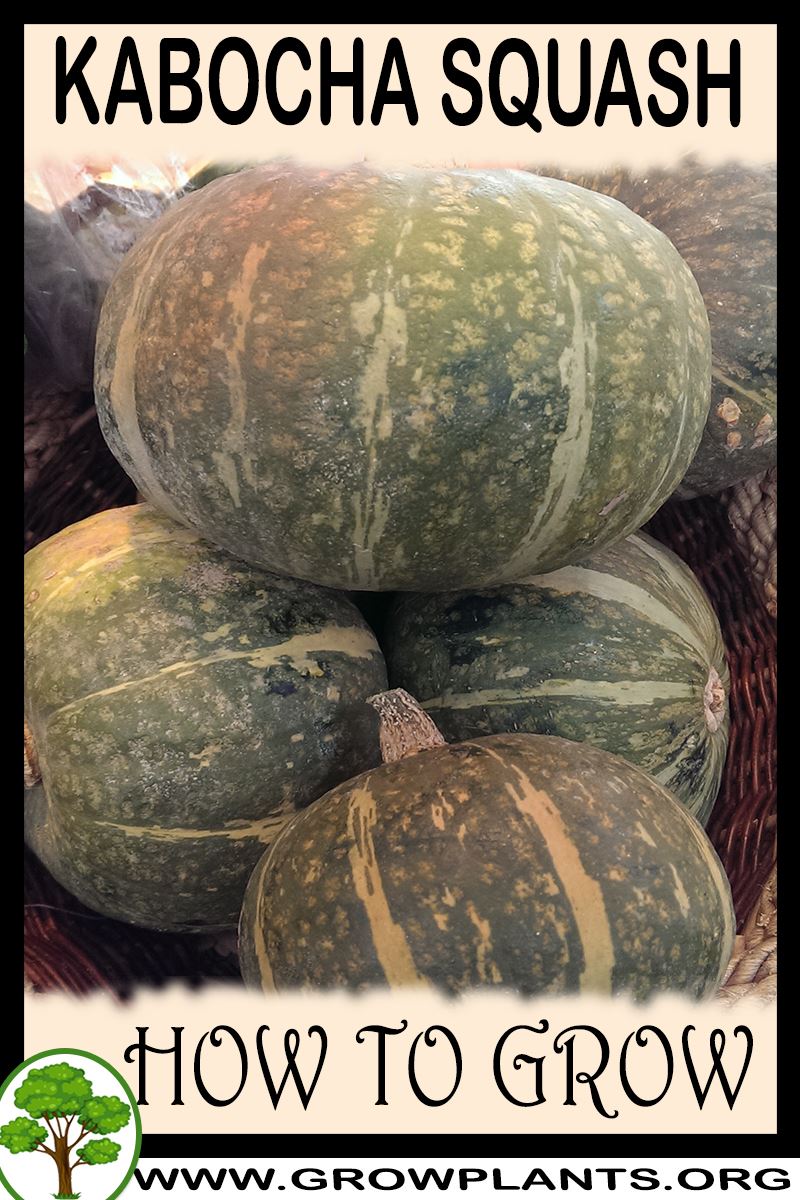
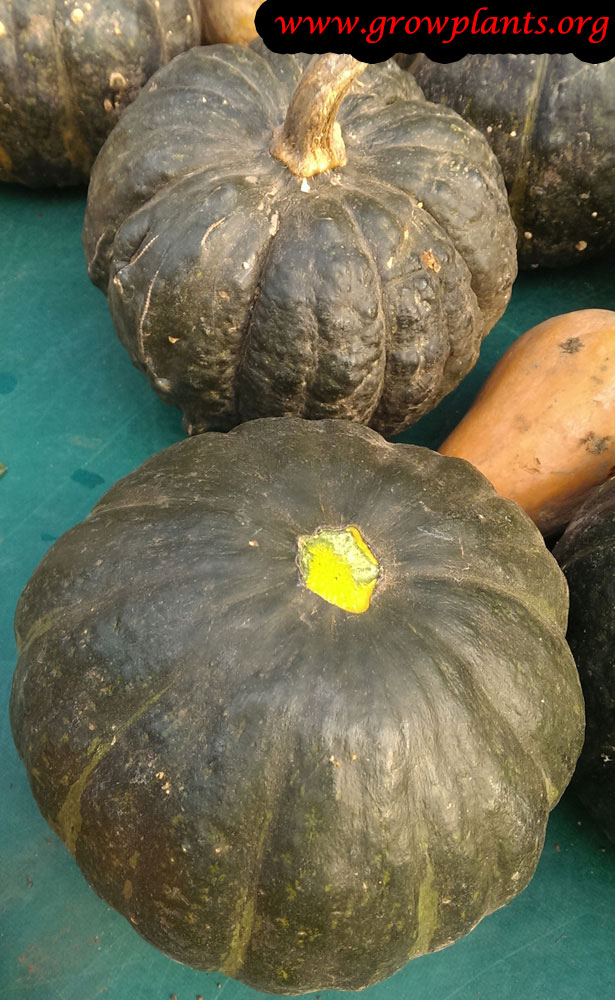
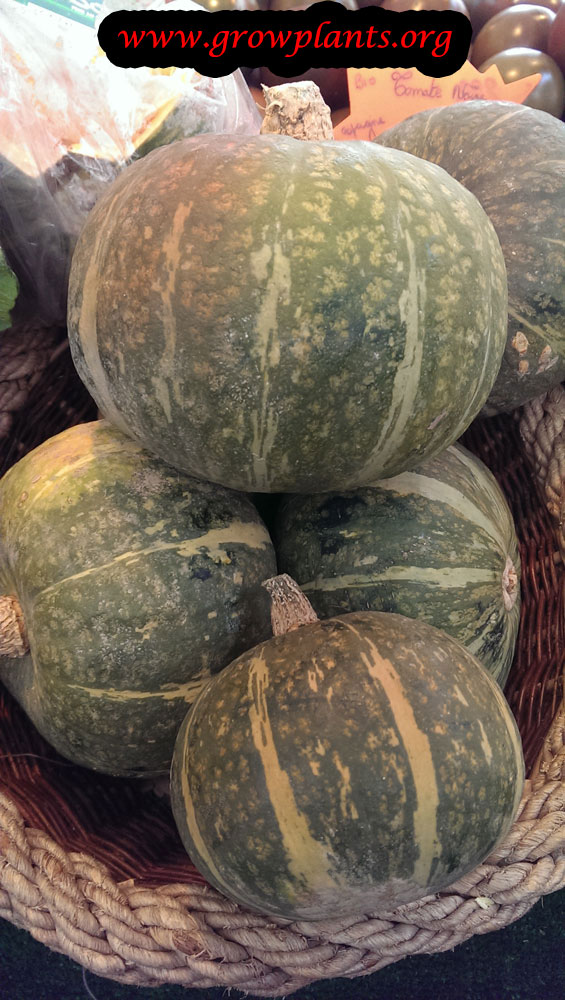
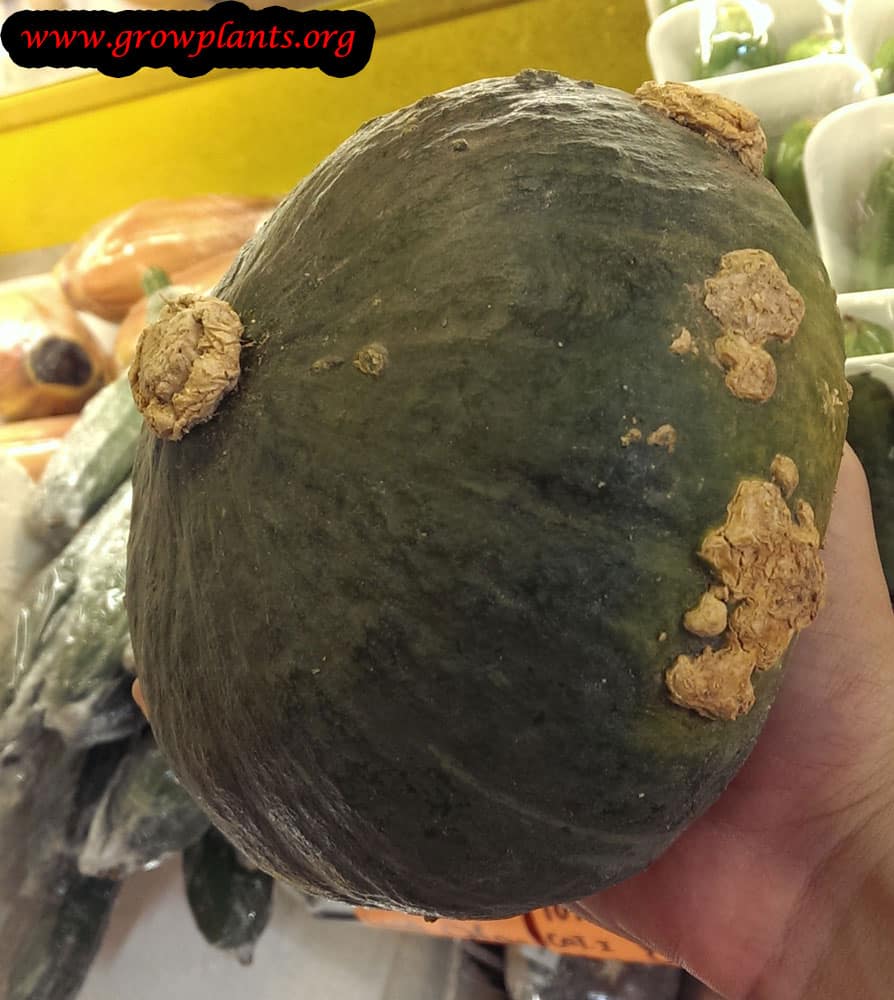
- Fruit Profile: Round-topped fruit (about 1-3.5 kg, 10-18 cm) with dark-green (sometimes orange) rind and sweet, dense flesh; seeds edible when cooked.
Primary Uses & Landscape Value
- Edible Uses: Flesh cooked, baked, grilled, stir-fried or stuffed; seeds edible.
- Functional & Ornamental Roles: Warm-season winter-squash crop; also used decoratively.
Care Guide: Planting, Soil & Watering
Overview: Kabocha squash is a fast-growing, warm-season annual of the squash family, grown in full sun in a rich, well-ventilated and free-draining soil. It needs a long, warm season to ripen and steady moderate moisture delivered at the base, with the soil mulched to hold moisture and protect the fruit.
Quick Care Requirements
| Requirement | Ideal Condition |
|---|---|
| Planting Season | In spring to summer (best in spring); start indoors in late winter in cool zones |
| Growth Rate | Fast |
| Soil Type | Rich, well-draining and well-ventilated |
| Water Need | Moderate – water at the base, not on the leaves or fruit |
Planting & Establishment
- Best Planting Season: Plant out only once the soil has warmed and all frost has passed; in short-season climates (roughly zone 4-7) start seed indoors in late winter so the plants mature during the hottest months.
- How to Plant:
- Hole Preparation: Plant into light, well-ventilated, moisture-holding soil (e.g. lightened with vermiculite).
- Soil Amendments: Work in compost, humus and dead leaves to feed the plant and improve drainage.
- Planting Depth: Set the seedling at the depth it grew in its pot, with the root collar at soil level; do not bury the stem.
- Growth Speed & Expectations: Fast-growing; reaches 0.5-1.5 m (20-60 in) and typically bears in 100-120 days (3-5 months).
Soil, Watering & Drainage Care
- Soil Mix & Drainage Needs: Needs an airy, free-draining soil to prevent root rot; it does not react well to overwatering. In containers (at least 10-20 L) use a light potting or peat mix with perlite and plenty of drainage holes.
- Watering Schedule & Technique:
- Young / Newly Planted: Keep the soil consistently moist while seedlings establish.
- Established: Water deeply and regularly at the base, letting the top few cm dry before watering again; water the soil rather than the leaves and fruit to reduce mildew, and mulch to hold moisture.
- Seasonal Adjustments: More frequent watering in hot, dry spells; ease off in cool weather and as fruit ripens.
Climate, Light & Hardiness
Kabocha squash is a warm-season annual grown in Mediterranean, subtropical, temperate and tropical climates in full sun. It is frost-tender and completes its cycle within the frost-free season - grown across USDA zone 4 and warmer, it needs a stretch of warm, frost-free days to set and ripen its crop.
Quick Climate Specifications
| Climate Zones | Mediterranean, subtropical, temperate and tropical |
|---|---|
| USDA Hardiness Zones | Grown as a warm-season annual across zone 4 and warmer; the plant itself is frost-tender |
| Optimal Temp Range | Warm, roughly 21–30°C (70–86°F) |
| Cold Damage Begins | Growth stalls and chilling injury appears below about 10°C (50°F) |
| Approx. Survival Minimum | Killed by frost; near 0°C (32°F) |
| Frost Tolerance | None |
| Light Conditions | Full sun |
| Wind Tolerance | Moderate (young plants low) |
Sunlight & Light Exposure
Optimal Light Setup
Full sun all day. Abundant light drives strong growth, good flowering and full ripening of the fruit.
Direct Sun Requirement
Needs at least six to eight hours of direct sun; in too much shade it grows leggy, flowers poorly and sets few fruit.
Shade & Heat Management
In extreme heat, light midday shade and mulch reduce heat stress and help flowers set fruit while soil moisture is kept steady.
Temperature Extremes & Hardiness
USDA Hardiness & Regional Limits
The site data lists hardiness zone 4 and warmer, meaning it is grown as an annual across a wide range - but only through the warm season. Cold winters limit it to a single frost-free growing period rather than year-round outdoor culture. It needs enough hot days to ripen its dense fruit before autumn cold.
Cold Damage & Winter Protection
Cool weather below about 10°C (50°F) stalls growth and can cause chilling injury; there is no winter-hardy stage to protect.
Frost Sensitivity
Frost tolerance is none - even a light frost kills the foliage and ends the plant. Plant only after the last frost and harvest before the first autumn frost.
Extreme Heat Tolerance
Tolerates real summer heat with steady moisture, but very high temperatures can cause flowers to drop or reduce fruit set until conditions ease.
Frost-Free Growing Season
Allow roughly 100–120 days (about 3–5 months) of warm, frost-free weather from sowing to harvest. In short-season areas (zone 4–7) start seed indoors in late winter, transplant after frost, and choose faster-maturing cultivars.
Wind, Humidity & Microclimate
Wind Tolerance
Sprawling vines and large leaves catch the wind, and young transplants are easily damaged - provide shelter or trellis support while they establish.
Humidity & Seasonal Moisture
Grows across a wide humidity range; warm, humid spells favour foliar disease, so good air movement helps. A warm season with steady moisture supports fruiting.
Microclimate Recommendations
A warm, sunny, sheltered site - a south-facing bed or a spot that warms early - extends the effective growing season in cooler regions.
Growing in Pots, Balconies & Indoors
Kabocha is a Japanese winter squash, a sun-loving vegetable rather than a houseplant – the grower marks it as unsuitable indoors but confirms it grows in containers. Given full sun and a large, free-draining pot, it crops on a patio or sunny balcony, with the vine trained over the edge or up a support.
Quick Details
- Container Size: At least 10-20 L (2.5-5 gal) as for the grower’s other squashes; bigger is better for a vigorous plant
- Indoor Suitability: Not a houseplant – it needs full sun and room to sprawl
- Best Spot: Full sun, warm and sheltered
- Soil & Drainage: Well-ventilated, free-draining mix – potting mix or peat soil with perlite; squashes dislike overwatering
- Watering in Pots: Average – keep evenly moist but let it drain freely; avoid soggy soil, which invites base rot
Indoors & On the Windowsill
- Not an indoor plant: The grower marks it as unsuitable indoors – it needs strong sun and sprawling space, plus insects or hand-pollination to set fruit.
- Start outdoors: Sow or plant it straight into its outdoor container; it is a warm-season crop, not a houseplant.
- Overwintering: It is a frost-tender annual – it finishes in one warm season, so there is nothing to overwinter.
On a Balcony or Patio
- Light & heat: Give it the sunniest, warmest spot; reflected heat off walls and paving suits it but dries the pot fast, so check moisture daily in summer.
- Support & pollination: Train the vine up a trellis or let it trail; on a high balcony with few insects, hand-pollinate the flowers to be sure of fruit.
Choosing the Pot, Soil & Long-Term Care
- Pot & drainage: A 10-20 L container with plenty of holes for good drainage; like his other squashes it dislikes overwatering, so if you use a saucer let it dry out the same day. Terracotta breathes and dries faster, while glazed or plastic pots hold moisture longer.
- Potting mix: Choose a good container soil – well-ventilated potting mix or peat soil with perlite; soil choice matters for a heavy feeder in a pot.
- Feeding: A fruiting squash in a pot is hungry and leaches nutrients with watering, so feed regularly through the season, easing off high nitrogen once it flowers and fruits.
- Single season: As an annual crop there is no long-term re-potting – refresh with fresh mix for each new planting.
Growing this plant in a greenhouse
A greenhouse can give kabocha squash frost protection, cold protection, a longer growing season and controlled production.
Greenhouse at a glance
| Greenhouse suitability | Excellent - a major practical advantage |
|---|---|
| Main benefits | frost protection, cold protection, a longer growing season, controlled production |
| Season extension | can grow through winter |
| Outdoor protection advisable below | about 10°C |
| Maintain greenhouse minimum | around 10°C for active growth |
| Suitable types | heated greenhouse, polycarbonate greenhouse, lean-to |
| Heating | Heating is recommended in cold climates for continuous growth. |
Related greenhouse guides
- Greenhouses: How to Choose the Right Greenhouse
- Best Greenhouse Heaters
- Greenhouse Climate Control: Temperature, Ventilation and Humidity
- Best Lean-To Greenhouses
Fertilizing & Feeding
A hungry crop: rich soil built with organic matter plus steady feeding through vigorous vine growth and fruiting gives the best yields, easing back as the season ends.
Quick Fertilizing Specs
| Feeding Level | Heavy feeder |
|---|---|
| Main Nutrient Priority | Nitrogen for vine growth, shifting to balanced feeding with adequate potassium at fruiting |
| Best Feeding Period | From establishment through vine growth and fruiting in the warm season |
| Organic Options | Compost, humus, aged manure, and other organic matter |
| Reduce/Stop Feeding | Ease back as the harvest season winds down |
| Micronutrients | Usually met by rich soil and a complete fertilizer; correct only diagnosed issues |
| Soil pH | Prefers rich, well-drained soil that is slightly acidic to near neutral |
Feeding by Growth Stage
Establishment after transplanting or sowing
Settle young plants into rich, well-drained soil and get roots and early leaves going.
| Nutrient direction | Build the bed with plenty of organic matter and a balanced complete fertilizer to start growth evenly. |
|---|---|
| Timing | At planting and while seedlings are getting established. |
| Frequency | Work compost and a balanced feed into the bed at planting, then feed lightly as growth begins. |
| Fertilizer types | Compost, humus, and aged organic matter worked into the bed, A balanced complete fertilizer |
| Precautions | Go easy at first; tender seedlings are sensitive to concentrated fertilizer against their roots. |
Vine and leaf growth
Drive vigorous vines and abundant healthy foliage before heavy fruiting.
| Nutrient direction | Lean toward a nitrogen-forward complete fertilizer to fuel fast leafy vine growth. |
|---|---|
| Timing | As vines run and the plant fills out, before fruit set takes over. |
| Frequency | Regular light feedings through the active growing season keep this fast, hungry grower moving. |
| Fertilizer types | A nitrogen-forward complete fertilizer, Compost or a balanced feed as a supplement |
| Precautions | Do not overdo nitrogen once flowering nears, or the plant runs to leaf at the expense of fruit. |
Flowering, fruit set, and harvest
Support flowering, fruit set, and steady fruit fill through the picking season.
| Nutrient direction | Shift to a balanced feed with adequate potassium to back fruit development rather than pushing more leaf. |
|---|---|
| Timing | From first flowers and fruit set through the harvest period. |
| Frequency | Continue steady feeding as fruit develops, easing back as the season winds down. |
| Fertilizer types | A balanced complete fertilizer with adequate potassium, Compost as a top-dressing |
| Precautions | Keep water and feeding even; erratic supply during fruiting invites poor fruit fill and disorders. |
Nutrient Deficiency Signs & Corrections
Older, lower leaves turn pale green to yellow and vine growth slows and looks thin.
| Possible causes | low available soil nitrogen, nitrogen leaching from heavy watering or rain, thin soil low in organic matter |
|---|---|
| Appears first on | older, lower leaves |
| What to check | recent feeding history, soil organic matter, watering and drainage |
| Possible correction | Apply a nitrogen-containing complete fertilizer and build soil organic matter, then water evenly. |
Interveinal yellowing on older leaves while the veins stay green, common in fast-growing cucurbits.
| Possible causes | low soil magnesium, high-potassium feeding competing with magnesium uptake, leaching in light, sandy soils |
|---|---|
| Appears first on | older, lower leaves |
| What to check | soil magnesium status, how potassium-heavy recent feeding has been, soil texture and leaching |
| Possible correction | Apply a labeled magnesium source such as Epsom salt or a dolomitic amendment and rebalance feeding. |
Older leaf margins yellow then scorch and fruit fills poorly or unevenly.
| Possible causes | low available soil potassium, heavy fruit load drawing down potassium, sandy soil where potassium leaches |
|---|---|
| Appears first on | older, lower leaf margins |
| What to check | soil potassium status, fruit load and demand, soil texture and leaching |
| Possible correction | Feed with a balanced fertilizer supplying adequate potassium and keep watering even through fruiting. |
Leaf margins brown or scorch and growth stalls despite adequate watering.
| Possible causes | fertilizer salt buildup in the root zone, under-watering that concentrates salts, excessive or too-frequent feeding |
|---|---|
| Appears first on | leaf margins and tips |
| What to check | recent fertilizer amounts, watering consistency, drainage, especially in containers |
| Possible correction | Ease off feeding, water thoroughly to flush accumulated salts, then return to lighter feeding. |
Pruning, Training & Seasonal Maintenance
Kabocha squash is a vigorous annual vine that tolerates routine trimming well but needs no structural training to flower or fruit – “pruning” here mostly means vine guidance and disease sanitation. The safest window is throughout active growth (spring–summer), removing mildew- or virus-affected leaves as they appear; the one cut that meaningfully changes the outcome is a deliberate tip-pinch in late summer, which redirects the vine’s energy from setting new fruit into ripening the 1–3.5 kg fruits already on the vine before the 100–120-day season runs out.
Quick Pruning & Maintenance Specs
| Pruning Tolerance | Moderate – tolerates leaf and tip removal; no structural cuts required |
| Primary Pruning Window | Active growth, spring–summer (ongoing sanitary removal) |
| Secondary Maintenance Window | Late summer – tip-pinch before season’s end |
| Typical Frequency | Weekly inspection during active growth |
| Main Objective | Disease sanitation and guiding the vine onto a trellis or its allotted ground space |
| Young Plant Priority | Select 1–2 main runners and begin tying them to support |
| Mature Plant Priority | Support fruit weight, strip diseased foliage, tip vines once enough fruit has set |
| Best Tool Type | Precision snips / bypass secateurs |
| Avoid Heavy Pruning During | Flowering and fruit set |
Pruning by Plant Age & Size
Newly Established
Leave the seedling alone beyond removing any damaged or transplant-shocked leaves; it needs its full leaf area to establish roots and begin running.
Young / Formative
Once the vine starts running, choose 1–2 runners to train onto a trellis or allotted space and tie them in as they extend. Side-shoots are usually left in place on kabocha, since the extra foliage supports its relatively large fruit; only pinch a side-vine if it is crowding the trellis or shading a developing fruit.
Mature / Established
Priority shifts to keeping the canopy disease-free (remove infected leaves at the petiole) and supporting the vine’s weight once fruit has set; in the final weeks before cool weather, pinch growing tips beyond the last fruit you want to ripen.
Seasonal Pruning Schedule
| Stage | Objective | Remove | Do Not Remove | Expected Response / Fruiting Impact |
| Early Growth (post-transplant) | Establishment | Only damaged or dead seedling leaves | The growing tip, any healthy leaf | Uninterrupted vine extension |
| Summer Canopy Management (flowering–fruiting) | Sanitation and fruit-load management | Infected or yellowing leaves at the base; guide new growth onto the trellis | Healthy leaves shading/feeding a developing fruit | Cleaner canopy, better airflow, slower mildew spread; flowering unaffected |
| Late-Season Tip Pinch (4–6 weeks before expected frost/season end) | Stop new fruit set, force existing fruit to ripen | Last 15–20cm of each main runner beyond the last fruit to keep | Leaves feeding the fruit | Energy redirected into sizing/ripening current fruit instead of setting more |
Structural Pruning & Training
Vine guidance is the operative “structure”: tie 1–2 main runners to a trellis or stake to keep fruit off wet soil. Thin overlapping side-vines only where they shade developing fruit or create a dense mat that slows drying after dew/rain – a real driver of the powdery mildew this plant is prone to.
Special Growth to Remove
Male flowers do not need removing – they are needed for pollination and drop naturally. Infected or yellowing leaves should be cut out as soon as seen. If a grafted, virus-resistant seedling was used, watch for and remove any sucker growth arising below the graft union. Runners trailing into pathways or bare wet soil are best guided back onto the trellis rather than left to root.
Container & Small-Space Pruning
Kabocha’s vining habit is a poor fit for small pots; in a large container it should be trained vertically on a stake/trellis from the start, with side-shoots pinched more assertively than an in-ground plant to keep the canopy from overwhelming the pot’s limited root volume – expect to carry fewer, better-supported fruit per plant in a container.
Tools
Precision snips or bypass secateurs for leaf and tip removal – the soft, hollow, water-filled stems bruise and crush under hedge shears. No saw or lopper is needed on this herbaceous vine.
Tool Hygiene & Disease Risk
Increased – cucurbit mosaic viruses (the reason virus-resistant grafted kabocha rootstocks exist) can spread on sap-contaminated tools and hands. Wipe blades after handling an obviously diseased vine, and between plants if working several kabocha in one session.
Cut Placement & Technique
Cut infected leaves at the petiole close to the main vine rather than tearing them off, which can wound the stem and invite rot. Pinch growing tips just beyond a node/leaf, not mid-internode, and avoid nicking the main vine when removing a side-shoot at its base.
Heavy Pruning & Rejuvenation
Not applicable – kabocha is a single-season annual with no woody framework to rejuvenate. The spent vine is removed at season’s end, not cut back to regrow.
Post-Pruning Care
After removing diseased foliage, keep water off the remaining leaves (ground-level watering only) to slow reinfection. Don’t fertilize in response to pruning – the plant isn’t being forced to regrow, and extra nitrogen late in the season favors leafy growth over fruit ripening. Watch any newly-exposed fruit for sunscald if a large amount of shading foliage was removed at once.
Common Pruning Mistakes
- Removing leaves next to a developing fruit, starving it of the sugars needed to size up
- Pinching the main growing tip too early, before enough fruit has set
- Using hedge shears, which crush rather than cleanly sever the hollow stems and raise rot risk at the cut
When NOT to Prune
Avoid cutting during active flowering/pollination beyond removing clearly diseased leaves – leaf area drives both pollination success and fruit sizing. Avoid pruning in wet weather, since handling wet foliage spreads powdery mildew spores on tools and hands.
Recommended Tools (by task)
- precision_snips – clean removal of leaves and tip growth on soft cucurbit stems, limiting stem damage
- soft_ties_stakes – training the main runner(s) onto a trellis and supporting fruit weight off wet soil
- blade_disinfectant – cucurbit mosaic viruses are sap-transmissible; wiping blades limits spread between plants
Pruning Troubleshooting
| Problem | Possible Cause | What to Check | Corrective Action |
| Vine growing well but few or no fruit setting | Poor pollination, or excess nitrogen driving leafy growth over flowering | Presence of both male and female flowers; recent fertilizer history | Hand-pollinate if pollinators are scarce; hold off nitrogen; don’t prune healthy leaves expecting more flowers |
| Fruit not ripening before season ends | Too many fruit left to mature at once; growing tip never pinched | Fruit count per vine vs. days remaining in the growing season | Pinch growing tips 4–6 weeks before expected frost/season end and remove excess late-set fruit |
| Yellowing or powdery coating spreading rapidly after leaf removal | Wet-weather pruning or unclean tools spreading mildew | Weather at time of pruning; tool cleanliness | Prune only in dry conditions; remove and discard (don’t compost) infected leaves; wipe blades |
Propagation Guide
Kabocha squash is grown from seed, sown directly or started as transplants; grafting onto virus-resistant squash rootstock is sometimes used commercially but is not necessary for home gardeners. Seed usually comes true-to-type if isolated from other Cucurbita maxima varieties – including other kabocha types, buttercup, hubbard or red kuri squash – and propagation is easy given warm soil and full sun.
Quick Propagation Specs
| Best Propagation Method | Seed (direct sow or transplant seedlings) |
| Alternative Methods | Grafting onto virus-resistant squash rootstock (commercial practice only, not needed for home growing) |
| Propagation Difficulty | Easy |
| Seed True-to-Type | Usually true-to-type; can cross with other Cucurbita maxima varieties (buttercup, hubbard, red kuri, etc.) grown nearby |
| Best Propagation Season | Spring into summer; in hardiness zones 4–7 start indoors in the middle of winter |
| Seed Germination Time | 5–20 days |
| Germination Temperature | Best around 21–25°C (70–77°F) |
| Seed Sowing Depth | 1–2cm (0.5–1 inch) |
Growing from Seed
Seed Handling & Viability
Save seed at room temperature in a dry place until sowing; no special treatment is needed before storing.
Dormancy & Pre-Sowing Treatment
No pre-sowing treatment is required – seed germinates readily without scarification or stratification.
Sowing Season
Sow in spring, continuing into summer in warm climates; in hardiness zones 4–7, start seed indoors in the middle of winter so the plant has enough hot days to mature fruit before autumn.
Sowing Depth & Orientation
Sow about 1–2cm (0.5–1 inch) deep – seeds don’t need to be buried any deeper than this light covering.
Germination Conditions
Keep soil moist in full sun; use a light, well-ventilated soil mix that holds moisture, such as a vermiculite blend. Germination is best around 21–25°C (70–77°F).
Germination Time
Germination typically takes 5–20 days.
Seedling Care
Grow seedlings on in warm conditions with plenty of water and full sun; space seed rows about 20x30cm (8×12 inches) apart, and give young vines a trellis to climb as they establish.
Bloom & Edible Flower Guide
Quick Details
- Bloom Season: Late spring
- Time to First Bloom: Within the first season, several weeks after sowing once the vines are established
- Flower Appearance: Large golden-yellow blooms with five lobes; separate male and female flowers on the same plant
- Edibility: Yes. The golden squash blossoms are edible; the male flowers are usually the ones picked for the kitchen so the females can still set fruit
Detailed Blooming Overview
This squash is monoecious, carrying separate male and female flowers on the one plant. Male blooms usually open first on slim upright stalks; the females follow, each with a tiny immature fruit already formed behind the flower. Bees and other pollinators carry pollen from the males to the females, and only pollinated female flowers go on to swell into fruit.
Flower Characteristics
- Bright yellow, five-lobed blooms
- Separate male and female flowers on the same plant; females show a miniature fruit at the base
- Male blooms typically outnumber the females and open a little earlier
Bloom Care & Thinning
- Pollination: Carried out by bees and other pollinators; you can also hand-pollinate by brushing pollen from a freshly opened male flower onto a female.
- Flower drop & poor set: Blooms sometimes fail or drop after disease, a dry spell, or incomplete pollination; steady watering and a little hand-pollination usually put it right.
- Harvesting blossoms: Pick male flowers in the morning for the kitchen, leaving a few behind to pollinate the females.
Bloom Health & Protection
- Aphids: Gather on tender buds and shoot tips; a jet of water or insecticidal soap keeps them in check.
- Powdery mildew: Can coat the leaves and sap flowering vigour in humid spells; better airflow and a sulfur- or neem-based treatment help.
Fruit & Uses
Kabocha squash is grown for its dense, sweet-fleshed fruit, a round-top winter squash always eaten cooked, and for its seeds, edible once cooked. Both come from the single fruit harvest at the end of the growing season.
Quick Edible Specs
| Edible Parts | Fruit, seeds (flowers also edible) |
|---|---|
| Main Use(s) | Culinary (cooked, baked, grilled, stir-fried, stuffed) |
| Eaten Raw or Cooked | Cooked only |
| Preparation Required | Cook; seeds need cleaning and cooking before eating |
| Harvest Season | Summer |
| Time to First Harvest | Around three to four months from sowing – see Sowing for exact figures |
| Storage | Whole hard-rind fruit stores for weeks to months in a cool, dry place |
| Safety/Toxicity Caveat | None known when normally ripened fruit is cooked; discard any fruit tasting unusually bitter |
Fruit
The fruit is dark green (sometimes lighter green or orange), round-top in shape, typically 1–3.5 kg and 10–18 cm across. Once fully coloured and rind-hardened it is harvested and cooked – baked, grilled, stir-fried or stuffed – the dense flesh is not eaten raw.
Seeds, Pods & Nuts
Seeds are white and edible once cooked; clean and dry them from the flesh, then cook or roast before eating, as with other winter squash seeds.
Flowers & Flower Buds
Male squash flowers are a well-known edible across the Cucurbita family, usually stuffed or fried; this is a general squash-family use rather than a fact specific to this page’s own site content.
Harvesting
Harvest in summer once the rind has hardened and colour developed fully; this is a single harvest per fruit. In cooler climates a run of warm days is needed beforehand to bring the fruit to maturity.
Preparation, Uses & Safety
Flesh is always cooked – baked, grilled, stir-fried or stuffed. Seeds should be cleaned and cooked rather than eaten raw. No toxicity is expected in normally ripened fruit, but as with all Cucurbita, any fruit tasting unusually bitter should be discarded rather than eaten.
Pests, Diseases & Troubleshooting
Overview: This winter squash / pumpkin (Cucurbita maxima) is a fast, heavy-feeding cucurbit whose signature threats are the squash bug and the squash vine borer, cucumber beetles that spread bacterial wilt, and sap-feeders (aphids, silverleaf whitefly, spider mites) that carry mosaic viruses — backed by powdery and downy mildew and, in wet ground, Phytophthora. Grow it hard and unstressed in rich, well-drained soil, exclude and monitor pests early, favour resistant varieties and rotation, and keep controls organic-first.
Quick Troubleshooting Overview
| Issue / Pest | Main Symptom | Primary Solution |
|---|---|---|
| Squash bug | Yellow speckling, wilting, bugs at plant base | Crush egg clusters, trap boards, row cover |
| Squash vine borer | Sudden wilt, sawdust frass at stem base | Stem wraps, Bt, resistant C. moschata |
| Cucumber beetles + bacterial wilt | Chewed seedlings; runners wilt and die | Row cover early, control beetles, rogue wilted plants |
| Powdery / downy mildew | White powder or angular yellow leaf blotches | Airflow, resistant varieties, sulphur or copper |
| Mosaic viruses | Mottled leaves, warty deformed fruit | Control aphids/beetles, remove infected plants |
| Blossom-end rot / poor pollination | Fruit rots at tip or drops small | Even watering; hand-pollinate in morning |
Common Pests & Management
- Squash Bug (Anasa tristis):
- Symptoms: Flat, shield-shaped grey-brown bugs and clusters of bronze eggs on leaf undersides and along veins; nymphs are grey with dark legs. Feeding causes yellow speckling that browns and wilts (‘anasa wilt’), and bugs hide at the plant base. Worst on pumpkin and winter squash.
- Prevention & Control: Scout undersides and crush the coppery egg clusters, lay boards near the base as night traps and collect the bugs each morning, and clear debris where adults overwinter. Row cover protects young plants (remove at bloom). Hand control usually suffices; if overwhelmed, target young nymphs with insecticidal soap or a labelled product in the evening.
- Squash Vine Borer (Melittia cucurbitae):
- Symptoms: Sudden wilting of an otherwise healthy vine, with sawdust-like frass oozing from a hole near the base of the main stem; splitting the stem reveals a fat white grub. The clear-winged, wasp-like moth lays eggs at the stem base in early summer. Devastating on C. pepo and C. maxima.
- Prevention & Control: Wrap the lower stem with foil or row cover during the moth flight, mound soil over vine nodes to root them as backups, and inject/insert Bt or slit-and-remove the borer then bury the wound. Grow resistant C. moschata types where borer pressure is high. Remove and destroy killed vines to break the cycle.
- Cucumber Beetles (Acalymma vittatum / Diabrotica undecimpunctata):
- Symptoms: Striped or spotted yellow-and-black beetles chewing seedlings, leaves and flowers, with root-feeding larvae; they also transmit bacterial wilt and gummy stem blight. Seedlings and flowers are most at risk.
- Prevention & Control: Exclude with row cover until flowering, use kaolin clay and reflective mulch, and hand-pick in the cool morning. Encourage predators and tolerate low numbers on established plants; spot-treat seedling outbreaks with pyrethrin or spinosad in the evening.
- Melon / Cotton Aphid (Aphis gossypii):
- Symptoms: Colonies on shoot tips and leaf undersides causing curling, honeydew and sooty mould; the main vector of squash mosaic viruses. Silverleaf whitefly often accompanies them.
- Prevention & Control: Hose off colonies, encourage ladybirds and lacewings, avoid heavy nitrogen, and use reflective mulch to deter migrants. Step up to insecticidal soap or neem only when beneficials can’t keep pace.
- Silverleaf Whitefly (Bemisia tabaci):
- Symptoms: Tiny white flies and scale-like nymphs on undersides; heavy feeding causes honeydew, sooty mould and, in squash, a distinctive silvering of the upper leaf surface (silverleaf disorder). A key virus vector under warm conditions.
- Prevention & Control: Monitor with yellow sticky traps, remove infested lower leaves, and keep plants vigorous. Encourage Encarsia parasitoids; treat undersides with insecticidal soap, oil or neem, repeating for new hatches.
- Two-Spotted Spider Mite (Tetranychus urticae):
- Symptoms: Fine stippling, bronzing and webbing on leaf undersides in hot, dry, dusty spells; heavy infestations scorch and defoliate vines.
- Prevention & Control: Hose down undersides and raise humidity, avoid drought stress and dusty conditions, and remove worst leaves. Use insecticidal soap or horticultural oil on undersides, repeating; release predatory mites under cover.
Diseases & Fungal Issues
- Powdery Mildew (Podosphaera xanthii):
- Symptoms: White powdery coating on both leaf surfaces and stems, starting on shaded older leaves; foliage yellows, browns and dies, exposing fruit to sunscald and shortening the season. Very common on squash and pumpkin.
- Treatment & Management: Space plants and thin foliage for airflow, water at the base in the morning, and grow resistant varieties. Remove first infected leaves. Apply sulphur, potassium bicarbonate or a biofungicide/horticultural oil at first sign, covering both surfaces.
- Downy Mildew (Pseudoperonospora cubensis):
- Symptoms: Angular yellow blotches confined by veins on upper leaves, with grey-purple fuzz on undersides in humid weather; rapid browning and collapse of foliage. Spreads fast in cool, wet conditions.
- Treatment & Management: Keep foliage dry with airflow and morning watering, use resistant varieties, and scout undersides. Remove infected leaves; protect new growth with copper or a labelled downy-mildew fungicide when the disease is active regionally.
- Bacterial Wilt (Erwinia tracheiphila):
- Symptoms: Individual leaves, then whole runners, wilt and die while the soil is moist; cut a wilted stem, press the ends together and pull apart to see sticky white bacterial threads. Spread by cucumber beetles; incurable once infected.
- Treatment & Management: The real control is stopping cucumber beetles (row cover, sanitation, monitoring). Rogue out and destroy wilting plants promptly, and choose more tolerant squash types. No spray cures the disease.
- Mosaic Viruses (CMV, WMV, ZYMV, SqMV) (Cucumovirus / Potyvirus / Comovirus spp.):
- Symptoms: Mottled yellow-green foliage, puckered and distorted leaves, stunting, and warty, mottled, deformed fruit. Vectored by aphids, beetles and handling; no cure.
- Treatment & Management: Manage aphids and beetles, control weed reservoirs, use resistant varieties and reflective mulch, and remove infected plants. Disinfect hands and tools between plants.
- Phytophthora Blight (Phytophthora capsici):
- Symptoms: Water-soaked collapse of crowns and fruit, especially where water pools; a white fuzzy mould coats rotting fruit in wet weather, and whole plants wilt from crown rot. Explosive in warm, saturated soils.
- Treatment & Management: Plant on raised, well-drained beds, never let water stand, rotate away from cucurbits and peppers, and keep fruit off wet ground. Remove infected fruit and plants; labelled fungicides only supplement drainage and rotation.
- Gummy Stem Blight / Black Rot (Didymella bryoniae):
- Symptoms: Gum-oozing tan-to-black cankers girdling stems, ringed leaf spots, and a black storage rot of fruit. Enters wounds; favoured by warm, wet weather.
- Treatment & Management: Use clean seed, rotate, improve airflow and drainage, and avoid stem wounds. Cull damaged fruit before storage and remove infected vines. Labelled fungicides give partial protection in wet seasons.
Growing Difficulties & Abiotic Problems
- Poor Pollination & Fruit Abortion:
- Cause & Symptoms: Young fruit yellow, shrivel and rot at the blossom end while tiny; caused by too few pollinators, hot or wet weather during bloom, or a shortage of open male flowers. Squash have separate male and female flowers, so bee activity is essential.
- Correction Strategy: Grow bee-friendly plants and avoid insecticides during bloom, keep moisture steady, and hand-pollinate in the morning by dabbing pollen from a male flower into each female (identifiable by the tiny fruit behind the bloom). Most abortion eases as weather moderates.
- Blossom-End Rot:
- Cause & Symptoms: A sunken, dark, leathery rot at the blossom end of the fruit, most common on the first fruit and in zucchini and summer squash; caused by calcium not reaching the fruit due to uneven watering, drought or root damage — not a disease.
- Correction Strategy: Water deeply and evenly, mulch to buffer moisture, and avoid root disturbance and heavy nitrogen. Ensure adequate calcium in soil; consistency of moisture matters more than adding calcium. Remove affected fruit.
- Sunscald:
- Cause & Symptoms: Pale, papery, blistered patches on fruit shoulders exposed to intense sun after leaves are lost to mildew or pests; the tissue may later rot.
- Correction Strategy: Protect the canopy from disease and insects so it shades developing fruit, maintain even moisture, and use light shade cloth in extreme heat. Leave protective foliage when harvesting.
- Storage & Curing Rots:
- Cause & Symptoms: Winter squash and pumpkins soften, mould and rot in storage when picked immature, bruised, or cured poorly; stem-end and contact rots spread through a stored crop.
- Correction Strategy: Harvest fully mature with a length of stem attached, cure warm and airy for 1–2 weeks, handle gently to avoid bruises, and store cool, dry and airy. Discard any damaged fruit before storing.
- Overwatering & Root Rot:
- Cause & Symptoms: Wilting despite wet soil, yellowing and crown collapse in heavy, waterlogged ground — roots suffocate and rot, opening the door to Phytophthora.
- Correction Strategy: Plant on raised, well-drained beds with plenty of organic matter, water deeply but let the surface dry between soakings, and never let water pool around the crown.
What Helps – Products & Tools
The core squash toolkit is floating row cover (early exclusion of beetles and squash bugs, removed at bloom), foil/stem wraps and Bt (Bacillus thuringiensis) against squash vine borer, kaolin clay and yellow sticky traps, insecticidal soap and neem or horticultural oil for aphids, whitefly and mites, and pyrethrin or spinosad (evening use to protect bees) for beetle and bug outbreaks. On disease, lean on resistant varieties, sulphur or potassium bicarbonate for powdery mildew, copper fungicide for downy mildew, and above all good drainage and rotation against bacterial wilt, Phytophthora and viruses.