Plant Profile & Key Characteristics
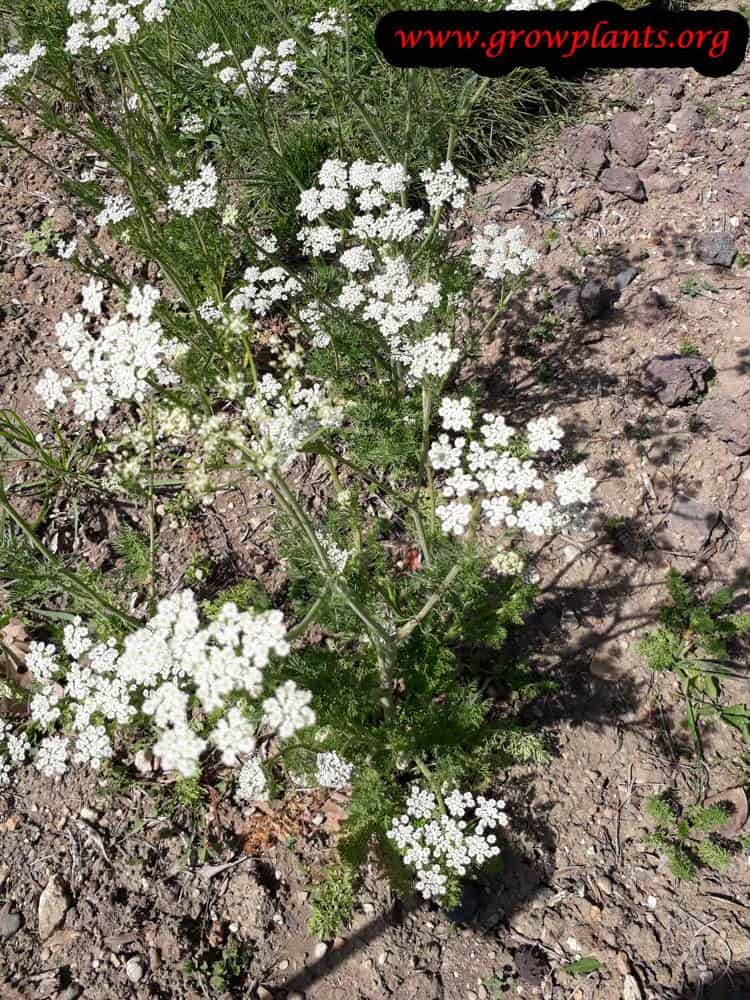
An aromatic biennial (sometimes annual) herb reaching about 20-60 cm (8-24 in), with ferny foliage and umbels of white flowers. It is grown for its edible seeds – a classic culinary spice – and edible leaves.
Quick Specifications
| Specification | Attribute |
|---|---|
| Plant Type / Life Cycle | Biennial (sometimes annual) |
| Mature Size | 20-60 cm tall (8-24 in) |
| Growth Rate | Fast (about 100-150 days) |
| Root System | Taproot (carrot family) |
| Toxicity | Non-toxic / edible (culinary herb) |
| Hardiness | USDA zone 3-10 |
Growth Form & Structure
- Height & Spread: 20-60 cm (8-24 in); suits herb beds and containers
- Growth Habit & Form: Erect herbaceous plant forming a leaf rosette the first year and a flowering stalk the second
- Lifespan & Maturity: Biennial – seeds mature roughly half a year or more after sowing, then the plant dies
Anatomy & Physical Features
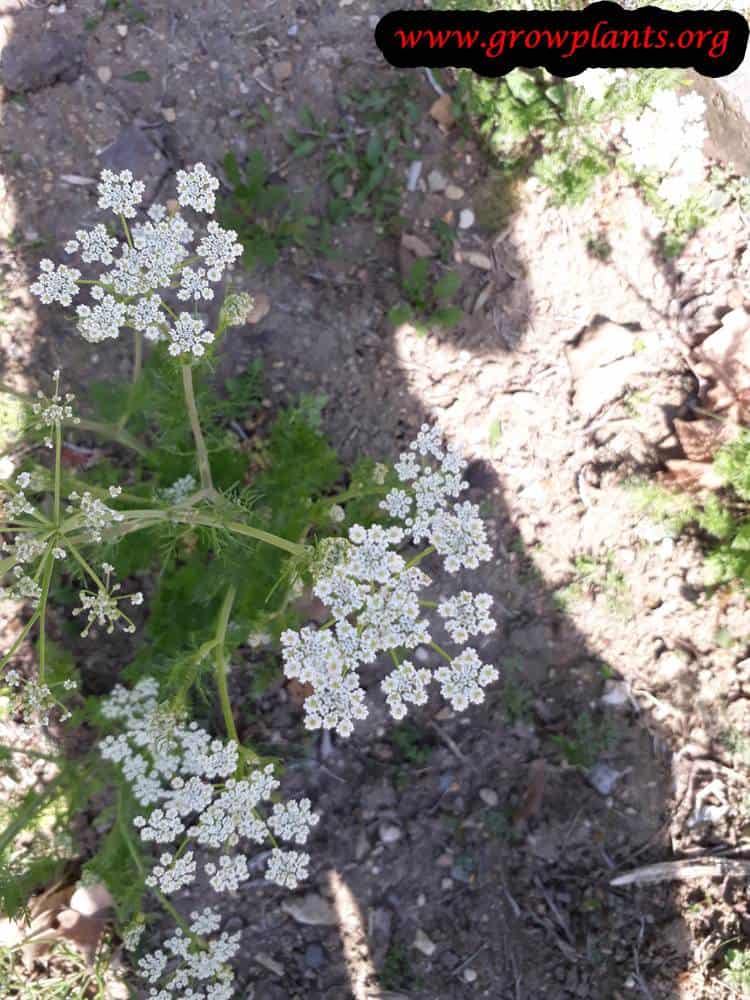
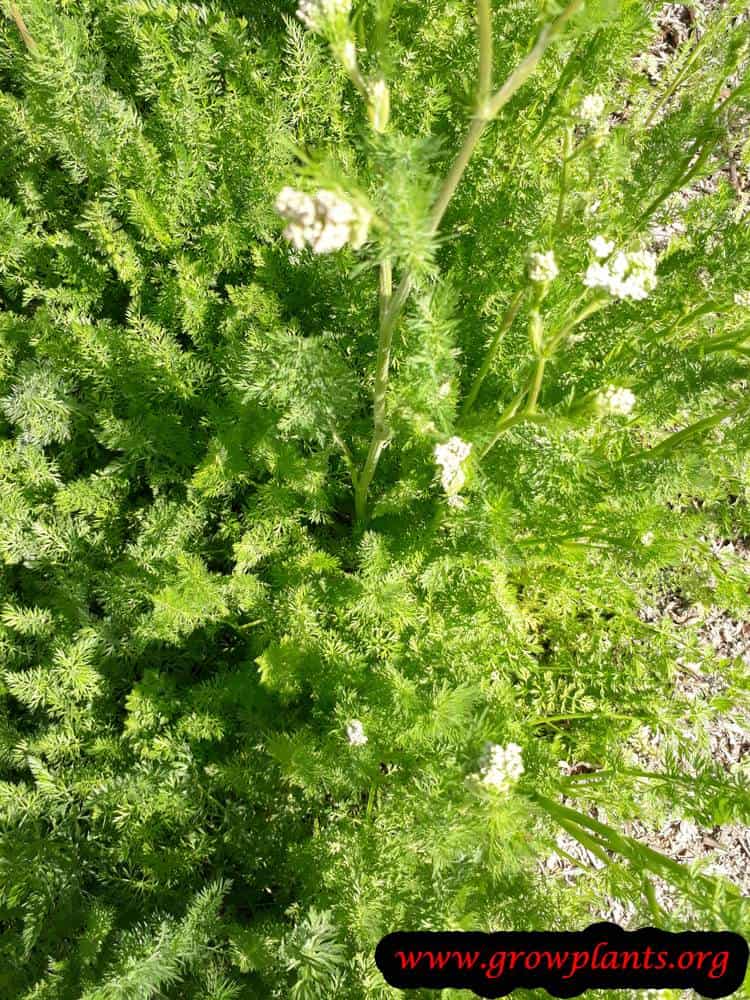
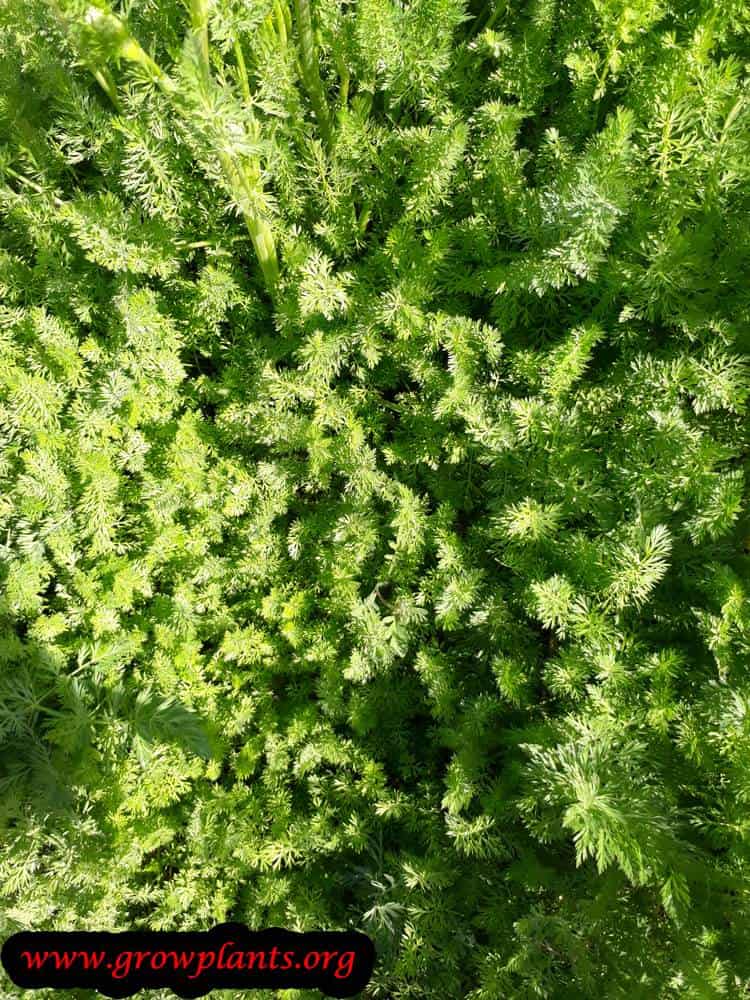
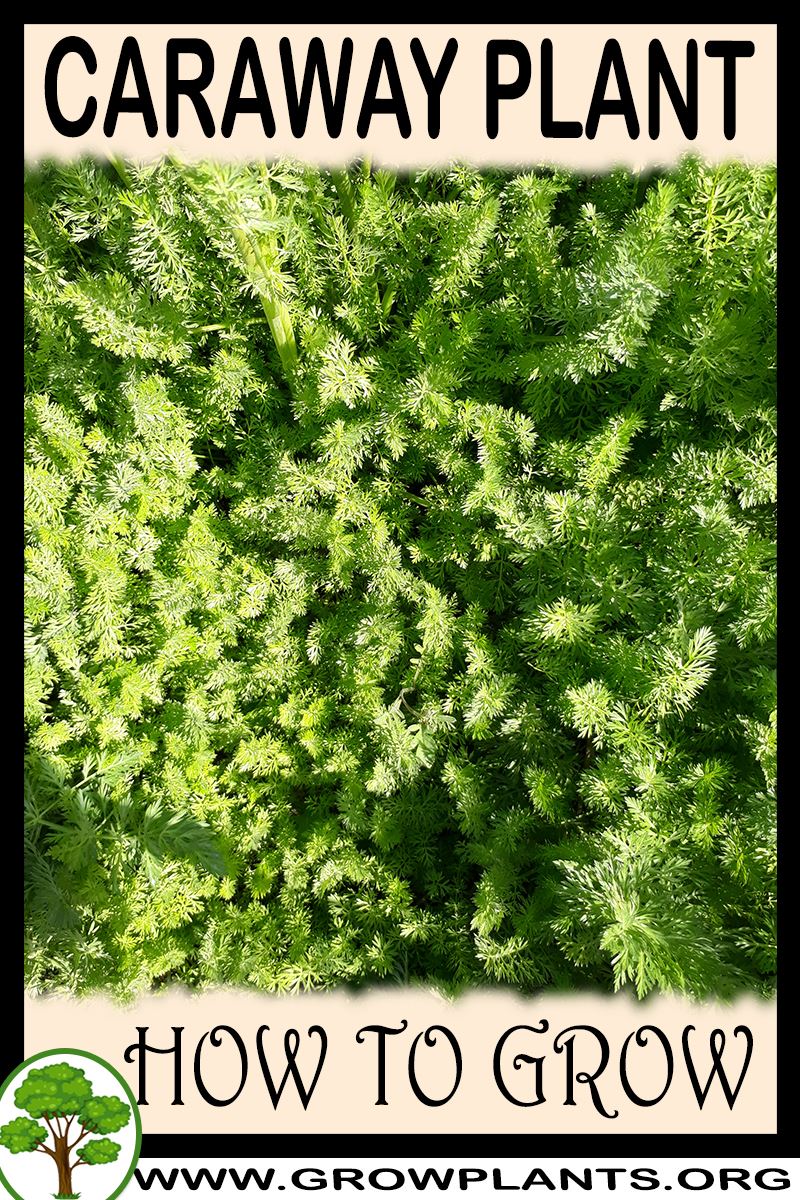
- Leaves & Foliage: Edible, ferny/feathery green leaves; stems sometimes take on a silvery hue
- Flower Characteristics: White (sometimes pink) flowers in umbel clusters; bee-pollinated
- Fruit Profile: Brown, crescent (half-moon) shaped dry fruits that split into the aromatic caraway seeds
Primary Uses & Landscape Value
- Edible Uses: Seeds used as a spice in breads, cheeses and pickles; young leaves used as a herb
- Functional & Ornamental Roles: Culinary and pollinator herb for herb gardens and containers
Care Guide: Planting, Soil & Watering
Overview: A hardy biennial herb for full sun and light, well-drained soil. It likes cool conditions and only light watering, and dislikes cold, waterlogged ground.
Quick Care Requirements
| Requirement | Ideal Condition |
|---|---|
| Planting Season | In late autumn (it overwinters and matures the following season) |
| Growth Rate | Fast (about 100–150 days to harvest) |
| Soil Type | Light and well-draining |
| Water Need | Low – keep lightly moist but never wet |
Planting & Establishment
- Best Planting Season: Sow in late autumn so plants establish over the cool season.
- How to Plant:
- Hole Preparation: Rake the bed to a fine, weed-free tilth.
- Soil Amendments: Add a little compost for a light, free-draining soil; avoid heavy, wet ground.
- Planting Depth: Sow shallowly, about 1–2 cm deep.
- Growth Speed & Expectations: Fast – roughly 100–150 days, flowering the following season and reaching 20–60 cm.
Soil, Watering & Drainage Care
- Soil Mix & Drainage Needs: Light, well-drained soil; good drainage matters because cold, wet soil can kill the plant. Can be grown in containers.
- Watering Schedule & Technique:
- Young / Newly Planted: Keep the seedbed evenly moist for germination.
- Established: Water lightly; avoid overwatering.
- Seasonal Adjustments: A little more in dry spells, less in cool, damp weather.
Climate, Light & Hardiness
Caraway (Carum carvi) is a cool-temperate biennial (sometimes grown as an annual) that is hardy across a wide range of climates and grows best in cool-to-mild conditions in full sun. It tolerates frost well once established, but dislikes cold combined with wet soil and needs a drier, warmer spell to ripen its seed.
Quick Climate Specifications
| Climate Zones | Mediterranean, subtropical, temperate and desert (cooler seasons) |
| USDA Hardiness Zones | Approx. zones 3–10 |
| Optimal Temp Range | Mild, roughly 12–22°C (54–72°F) |
| Frost Tolerance | Moderate (established plants overwinter in the ground in much of its range) |
| Light Conditions | Full sun |
| Wind Tolerance | Moderate |
Sunlight & Light Exposure
Optimal Light Setup
Full sun gives the sturdiest growth and the best seed set and ripening; it tolerates a little shade but seed yield falls.
Best Exposure / Orientation
An open, sunny, freely draining bed is ideal, particularly so the seed heads can dry well at harvest.
Temperature Extremes & Hardiness
USDA Hardiness & Regional Limits
Hardy across about zones 3–10. As a biennial it overwinters in the ground and flowers and seeds in its second year; in mild-winter areas it is often grown as an annual. A cool winter is beneficial rather than merely tolerated.
Cold Damage & Winter Protection
Established plants are cold-hardy and overwinter outdoors through much of its range. The main danger is cold combined with waterlogged soil, which can rot and kill the plant, so sharp drainage matters more than cold protection.
Frost Sensitivity
It tolerates frost well once established, and seedlings actually appreciate cool, slightly cold conditions during germination and establishment.
Extreme Heat Tolerance
Prolonged high heat and humidity stress the foliage and shorten the plant's life; a warm, dry spell is wanted chiefly at flowering and seed-ripening, not through the whole season.
Chilling Requirement
As a biennial, caraway generally needs exposure to a cool winter to flower and set seed the following year. Grown where winters are too mild it may behave as a short-lived annual and flower without a proper cold period.
Wind, Humidity & Microclimate
Humidity Preferences
It prefers moderate, rather than muggy, humidity; damp, humid weather during flowering and seed-ripening spoils the crop and invites pests.
Wind Tolerance
The slender flower stems (to about 60 cm) can be knocked about by strong wind, so a reasonably sheltered position keeps the seed heads intact.
Rainfall & Seasonal Moisture
It needs a drier season to ripen and harvest the seed; wet weather at ripening causes losses, so time the crop for a dry finish.
Microclimate Recommendations
An open, sunny bed with excellent drainage suits it best, avoiding low, wet spots where winter cold and standing water combine.
Growing in Pots, Balconies & Indoors
Caraway (Carum carvi) is a sun-loving biennial herb of modest size, well suited to a deep pot for its long taproot. The grower does not list it as a true houseplant, but it grows well on a bright, sunny windowsill and on any sunny balcony or patio.
Quick Details
- Container Size: Deep pot, 5-15 L, to suit the taproot
- Indoor Suitability: Not a true houseplant, but fine on a bright, sunny sill
- Best Spot: Full sun
- Soil & Drainage: Free-draining, organic-rich mix
- Watering in Pots: Water lightly but keep the soil from drying out completely
Indoors & On the Windowsill
- Houseplant limits: The grower does not rate it as an indoor plant – in low light it grows weak and pale.
- Windowsill growing: On a bright, sunny sill it does well in a deep pot; give it several hours of direct sun and turn the pot for even growth.
On a Balcony or Patio
- Light & wind: Give it the sunniest spot you have. Walls, railings and paving reflect heat and dry pots quickly, so check moisture daily in warm weather and shelter or stake exposed plants against wind.
- Practicalities: Check that the filled pot’s weight is safe for the balcony and that drainage runoff can escape freely without pooling on the floor below.
Choosing the Pot, Soil & Long-Term Care
- Pot & drainage: A deep 5-15 L pot with strong drainage holes; skip a standing water saucer so the roots never sit wet. Terracotta breathes and dries faster, while glazed or plastic holds moisture longer.
- Potting mix: Well-aerated and organic-rich – a general potting mix, or peat/coir with perlite or vermiculite.
- Feeding: Potted plants need feeding more often than those in the ground because nutrients leach out with each watering – feed lightly through the growing season.
- Repotting: Refresh the mix or pot up about every couple of years; for perennials, lightly prune the root ball and top growth at the same time.
Fertilizing & Feeding
A light feeder grown for aromatic leaves and seed: a little balanced feeding and organic matter is plenty, and restrained nitrogen keeps the flavor strong.
Quick Fertilizing Specs
| Feeding Level | Light feeder |
|---|---|
| Main Nutrient Priority | Modest, balanced feeding; avoid excess nitrogen that weakens aroma |
| Best Feeding Period | Through the active growing season |
| Organic Options | Compost or well-rotted organic matter worked into well-drained soil |
| Reduce/Stop Feeding | Ease back as the plant matures or the season ends |
| Soil pH | Well-drained soil in a slightly acidic to near-neutral range |
Feeding by Growth Stage
Establishment after sowing or planting
Settle seedlings or young plants in and get roots and first leaves growing.
| Nutrient direction | A gentle balanced feeding in soil with some organic matter to get growth going. |
|---|---|
| Timing | At and just after germination or transplanting. |
| Frequency | A light feeding as plants take hold. |
| Fertilizer types | A balanced complete fertilizer, Compost worked into well-drained soil |
| Precautions | Go easy on young seedlings; strong fertilizer can burn tender roots. |
Active growth
Keep aromatic foliage healthy and flavorful.
| Nutrient direction | A modest balanced feeding with restrained nitrogen keeps aromatic foliage flavorful. |
|---|---|
| Timing | Through the active growing season. |
| Frequency | Light feeding, sparingly, through the season. |
| Fertilizer types | A modest, restrained-nitrogen complete fertilizer, Compost as a light top-dressing |
| Precautions | Rich, high-nitrogen feeding gives lush but bland leaves and floppy growth, so feed sparingly. |
Flowering and seed set
Let the plant flower and ripen its seed.
| Nutrient direction | Little added nutrition is needed now; steady, restrained feeding lets seed mature. |
|---|---|
| Timing | As the plant bolts, flowers, and sets seed. |
| Frequency | Minimal feeding as flowering and seeding finish out. |
| Fertilizer types | A modest, restrained-nitrogen complete fertilizer, sparingly if at all |
| Precautions | Extra nitrogen now favors leaves over seed, so keep feeding minimal as seed ripens. |
Nutrient Deficiency Signs & Corrections
Older, lower leaves fade to pale green or uniform yellow and overall growth slows.
| Possible causes | low available soil nitrogen, nitrogen lost to leaching from heavy watering or rain, thin soil low in organic matter |
|---|---|
| Appears first on | older, lower leaves |
| What to check | recent feeding history, soil organic matter, watering and drainage |
| Possible correction | Apply a nitrogen-containing complete fertilizer and build soil organic matter, then water evenly. |
Leaf margins brown or scorch and growth stalls despite adequate watering.
| Possible causes | fertilizer salt buildup in the root zone, under-watering that concentrates salts, excessive or too-frequent feeding |
|---|---|
| Appears first on | leaf margins and tips |
| What to check | recent fertilizer amounts, watering consistency, drainage, especially in containers |
| Possible correction | Ease off feeding, water thoroughly to rinse accumulated salts, then return to lighter feeding. |
Pruning, Training & Seasonal Maintenance
Caraway is a biennial (occasionally annual) herb grown for its seed, and it genuinely does not need pruning. The plant puts up a basal rosette in its first stage of growth and then bolts to flower and set the seed heads that are its whole purpose, so there is no framework to shape, no canopy to open up, and no benefit to cutting the plant back. The only relevant maintenance is optional sanitary removal of damaged foliage, which can be done at any time without affecting the eventual seed harvest.
Quick Pruning & Maintenance Specs
| Pruning Tolerance | Not applicable — no routine pruning required |
| Main Objective | None; let the plant bolt and set seed undisturbed |
| Best Tool Type | Precision snips (only if removing damaged foliage) |
Special Growth to Remove
- Aphid-damaged or dead foliage, if present — optional, cosmetic/sanitary only, and not required for the plant to seed successfully
Common Pruning Mistakes
- Cutting back the flowering/seed stalks thinking they are excess foliage — this removes the seed harvest the plant is grown for
- Attempting to shape or size-control the plant the way you would a woody herb or shrub, which this species has no need for
When NOT to Prune
Do not cut back the bolting flower stems or developing seed heads at any point — the plant is biennial-habited and grown specifically to reach this stage and set its woody seed fruits; removing this growth eliminates the harvest.
Recommended Tools (by task)
| Task | Tool Category | Why |
| Removing occasional damaged or aphid-affected foliage | precision_snips | The only cutting this plant ever needs is a small, optional sanitary snip — not structural pruning |
Propagation Guide
Caraway is grown only from seed, sown where it is to grow because the taproot resents being moved, and it comes true from open-pollinated seed. Overall Easy given moist soil and cool conditions.
Quick Propagation Specs
| Best Propagation Method | Seed, direct-sown |
| Alternative Methods | None practical — the taproot dislikes transplanting |
| Propagation Difficulty | Easy to Moderate |
| Seed True-to-Type | Yes, from open-pollinated seed |
| Best Propagation Season | Late autumn |
| Seed Germination Time | 7–20 days |
| Seed Sowing Depth | 1–2 cm (0.4–0.8 in) |
Growing from Seed
Seed Handling & Viability
Keep the seed at room temperature in dry air until sowing.
Sowing Season
Sow in late autumn; as a biennial the plant makes a leafy rosette the first season and flowers and sets seed the next.
Sowing Depth & Spacing
Sow 1–2 cm (0.4–0.8 in) deep and space plants about 25 cm (0.8 ft) apart, sowing in place rather than transplanting the taproot.
Germination Conditions
Keep the soil moist; it germinates in cool, slightly cold, moist ground.
Germination Time
Seedlings emerge in about 7–20 days.
Seedling Care
Keep them moist and slightly cool — but frost-free — in full sun.
Bloom & Flower Guide
Quick Details
- Bloom Season: Spring into early summer, in its second season
- Time to First Bloom: Usually the second year (caraway is biennial), though quick-bolting plants may flower in year one
- Flower Appearance: Small white flowers held in flat umbels on branching stalks
- Edibility: The flower is not the eaten part – caraway is grown for its seed
Detailed Blooming Overview
Caraway spends its first year as a low leafy rosette, then sends up flowering stalks in its second spring. The lacy white umbels are a magnet for hoverflies and small bees, which makes caraway a useful companion near vegetables.
Flower Characteristics
- White flowers arranged in an open, flat-topped umbel.
- Each pollinated flower ripens into the familiar aromatic caraway seed.
Bloom Care & Thinning
- Managing the bloom: Let the plant flower and set seed if you want a caraway harvest; the umbels are ready when they turn brown.
- Pollination: Carried out by bees and other small insects visiting the umbels.
Fruit & Uses
Caraway is grown mainly for its aromatic ‘seeds’ – technically small dried fruits – used as a classic spice, while its feathery leaves can also be used fresh as an herb. The seed is the plant’s main harvest and is always used dried, not eaten fresh off the plant.
Quick Edible Specs
| Edible Parts | Seeds (fruit); Leaves |
| Main Use(s) | Culinary spice (seed); fresh herb (leaves) |
| Eaten Raw or Cooked | Seed used dried in cooking/baking; leaves usable fresh |
| Preparation Required | Seed: dry and separate from the fruit head; Leaves: none beyond washing |
| Harvest Season | Seed/fruit harvest in early summer |
| Time to First Harvest | After the plant matures and flowers – see Sowing for timeline |
| Storage | Dried seed stores well in a dry, dark place |
| Safety/Toxicity Caveat | None reported |
Seeds, Pods & Nuts
What are commonly called caraway ‘seeds’ are technically the small, brown, half-moon-shaped dried fruits (mericarps) of the plant, borne in umbels. They are harvested once the fruiting heads dry on the plant – picked by hand for the cleanest result, or the plant can be surrounded with jute fabric on the ground to catch fruit that drops as it dries. The dried fruit is then processed to separate out the seed, used whole or ground as a classic spice in breads, cheeses, sauerkraut, and other savory dishes.
Leaves & Greens
The feathery, needle-like leaves are edible and can be used fresh as an aromatic herb. The source notes the leaves are edible but does not give a specific culinary preparation beyond that.
Harvesting
Seed harvest falls in early summer; hand-picking the fruiting heads is the most reliable method, since clean caraway ‘seed’ collection takes some care.
Preparation, Uses & Safety
The dried fruit (‘seed’) is used whole or ground as a spice. No safety concerns are reported for either the leaves or the seed.
Pests, Diseases & Troubleshooting
Overview: Caraway (Carum carvi) is an aromatic biennial umbellifer that is fairly robust, but it shares the carrot family’s key pests — carrot fly at the roots, aphids on foliage, and the umbel-feeding caterpillars that damage the very seed heads it is grown for — along with umbellifer diseases like powdery mildew, Sclerotinia and leaf blight. Its aromatic oils give some natural deterrence, so management leans on crop rotation, mesh barriers, airflow and seedbed hygiene rather than heavy spraying.
Quick Troubleshooting Overview
| Issue / Pest | Main Symptom | Primary Solution |
|---|---|---|
| Carrot fly | Reddened, wilting foliage; rusty tunnels in roots | Insect mesh, rotation, avoid dusk thinning |
| Willow-carrot aphid | Curled foliage, honeydew, virus spread | Beneficials, reflective mulch, insecticidal soap |
| Umbel/webworm caterpillars | Webbed, damaged flower and seed heads | Remove webbed umbels, clear wild umbellifers, Bt |
| Powdery mildew | White coating, yellowing late in season | Airflow, full sun, sulfur or bicarbonate spray |
| Sclerotinia / leaf blight | Wilt with white mold; angular leaf spots in wet weather | Rotation, drainage, remove debris, copper |
| Bolting / poor germination | Premature flowering; slow, erratic seedlings | Sow in place, steady moisture, warm seedbed |
Common Pests & Management
- Carrot fly (Chamaepsila rosae (Psila rosae)):
- Symptoms: Low-flying fly whose larvae tunnel through the roots of caraway and other umbellifers; foliage reddens, yellows and wilts, and roots are riddled with rusty tunnels — the key soil pest of the carrot family.
- Prevention & Control: Use fine insect-mesh or fleece barriers over the crop; rotate away from umbellifers; avoid thinning at dusk (the smell attracts flies); lift roots promptly. Companion planting and delayed sowing to miss the main flight also reduce damage.
- Willow-carrot aphid (Cavariella aegopodii):
- Symptoms: Small green aphids on foliage and umbels causing curling, stunting and honeydew; more importantly they transmit viruses among umbellifer crops.
- Prevention & Control: Encourage ladybirds, hoverflies and parasitic wasps; use reflective mulch; wash off colonies. Insecticidal soap treats heavy infestations, but conserving beneficials usually suffices.
- Parsnip webworm / umbel moth (Depressaria radiella (D. pastinacella)):
- Symptoms: Caterpillars web together and feed inside the flower umbels and developing seed heads, ruining seed set — particularly relevant since caraway is grown for its seed.
- Prevention & Control: Inspect flowering umbels and remove webbed, infested heads by hand; clear related wild umbellifers (e.g. wild parsnip, cow parsley) nearby. Bt spray targeted to the umbels controls larvae where pressure is high.
- Aphids and leafhoppers (general) (Aphididae / Cicadellidae):
- Symptoms: Assorted sap-suckers on foliage causing minor distortion and honeydew, and occasionally vectoring aster yellows and mosaic viruses among umbellifers.
- Prevention & Control: Maintain biodiversity to support natural enemies; control weeds that host both pests and pathogens; spot-treat with insecticidal soap only when needed.
Diseases & Fungal Issues
- Powdery mildew (Erysiphe heraclei):
- Symptoms: White powdery coating on leaves and stems, yellowing and premature dieback, common on umbellifers late in the season in warm, dry days with humid nights.
- Treatment & Management: Space and thin plants for airflow and full sun; avoid excess nitrogen. Sulfur or potassium bicarbonate sprays check spread if it appears before harvest.
- Sclerotinia rot (white mold) (Sclerotinia sclerotiorum):
- Symptoms: Water-soaked, then white cottony fungal growth on stems and crowns with hard black resting bodies inside; plants wilt and collapse, worst in cool, wet, crowded conditions.
- Treatment & Management: Rotate away from susceptible crops for several years; improve drainage and airflow; avoid dense planting and remove infected plants and debris. There is no easy cure once established, so prevention is key.
- Leaf blight (Alternaria / Cercospora spp.):
- Symptoms: Brown-to-dark angular leaf spots that merge and blight the foliage and umbels in warm, wet weather, reducing seed quality.
- Treatment & Management: Use clean seed and rotate crops; avoid overhead watering; remove infected debris. Copper fungicide gives protection during prolonged wet spells.
- Damping-off (Pythium / Rhizoctonia):
- Symptoms: Seedlings fail to emerge or topple at the soil line with a pinched, rotted stem; a hazard of the slow-germinating caraway seedbed in cold, wet soil.
- Treatment & Management: Sow into warm, well-drained soil; avoid overwatering; do not sow too densely; use fresh seed. Good seedbed hygiene prevents most losses.
Growing Difficulties & Abiotic Problems
- Bolting and biennial habit:
- Cause & Symptoms: Caraway is a biennial that makes leafy growth the first year and flowers/seeds the second; stress, transplanting or a cold snap can trigger premature bolting, and the taproot resents disturbance.
- Correction Strategy: Sow in place rather than transplanting, keep growth steady with even moisture, and simply allow the natural two-year cycle for seed; harvest leaf and root from first-year plants.
- Poor drainage and root rot:
- Cause & Symptoms: Yellowing, stunting and rotted taproots in heavy, waterlogged soil, to which this deep-rooted umbellifer is poorly suited.
- Correction Strategy: Grow in deep, loose, well-drained soil; avoid waterlogging; do not overwater established plants.
- Nutrient and germination issues:
- Cause & Symptoms: Slow, erratic germination and weak, pale seedlings on poor or crusted soil; caraway seed is naturally slow to sprout.
- Correction Strategy: Prepare a fine, warm seedbed, keep it evenly moist during the long germination, and feed lightly — avoid heavy nitrogen, which favors soft growth over seed.
What Helps — Products & Tools
For caraway, the most useful tools are physical and cultural: fine insect-mesh/fleece against carrot fly, crop rotation, and good spacing for airflow. Keep insecticidal soap for aphids and Bt for umbel caterpillars, plus sulfur or potassium bicarbonate for powdery mildew and copper fungicide for leaf blight. Clean, fresh seed and a warm, well-drained seedbed prevent damping-off and give even germination.