Plant Profile & Key Characteristics
Also known as: Solomon's seal, David's harp, Ladder-to-heaven, Eurasian Solomon's seal
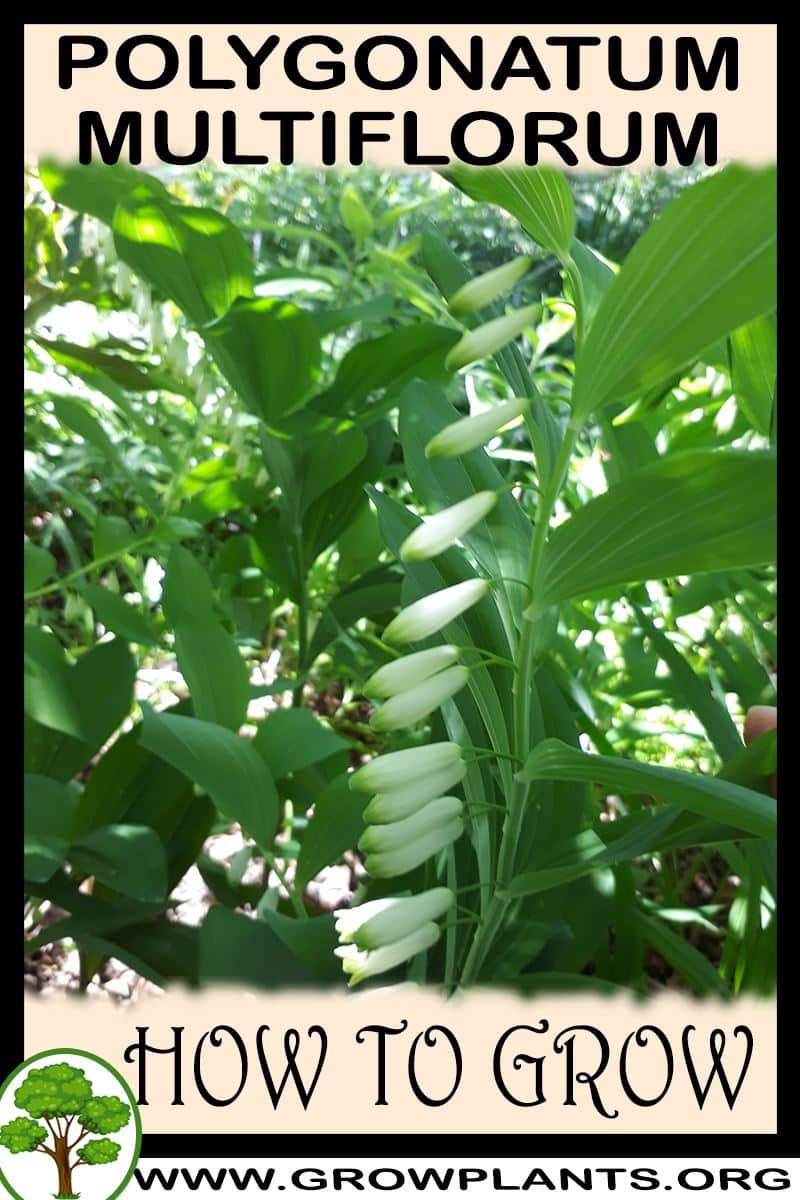
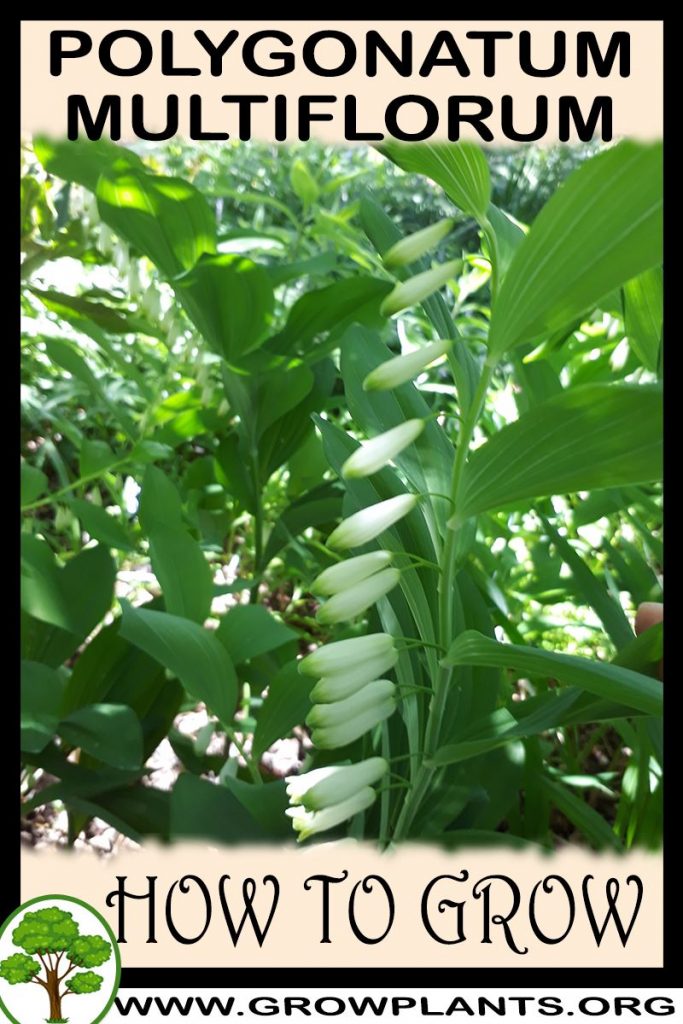
Overview: Polygonatum multiflorum (Solomon’s seal) is a herbaceous perennial that dies back each winter and grows 60-120 cm (2-4 ft) tall. This fast- to moderate-growing, shade-loving plant is grown as an ornamental for its arching stems and dangling bell flowers.
Quick Specifications
| Specification | Attribute |
|---|---|
| Plant Type / Life Cycle | Perennial (herbaceous, dies back) |
| Foliage Type | Deciduous |
| Mature Size | 60-120 cm tall (2-4 ft) |
| Growth Rate | Fast to moderate |
| Root System | Rhizomatous – spreads by underground rhizomes |
| Toxicity | Berries toxic if ingested |
| Hardiness | USDA zone 4-9 |
Growth Form & Structure
- Height & Spread: Arching stems 60-120 cm (2-4 ft) tall that spread outward by rhizome into a widening clump; also grown in pots.
- Growth Habit & Form: Clump-forming herbaceous perennial with gracefully arching, unbranched stems.
- Lifespan & Maturity: Long-lived; the rhizome expands steadily year on year.
Anatomy & Physical Features
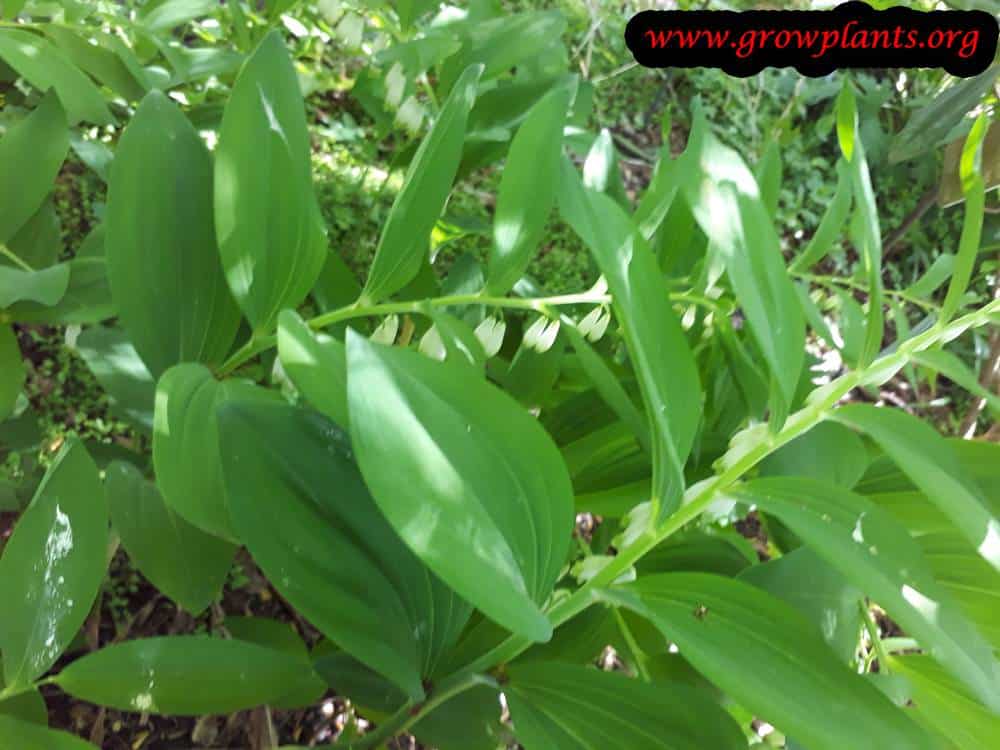
- Leaves & Foliage: Green, oval leaves held in ranks along the arching stems.
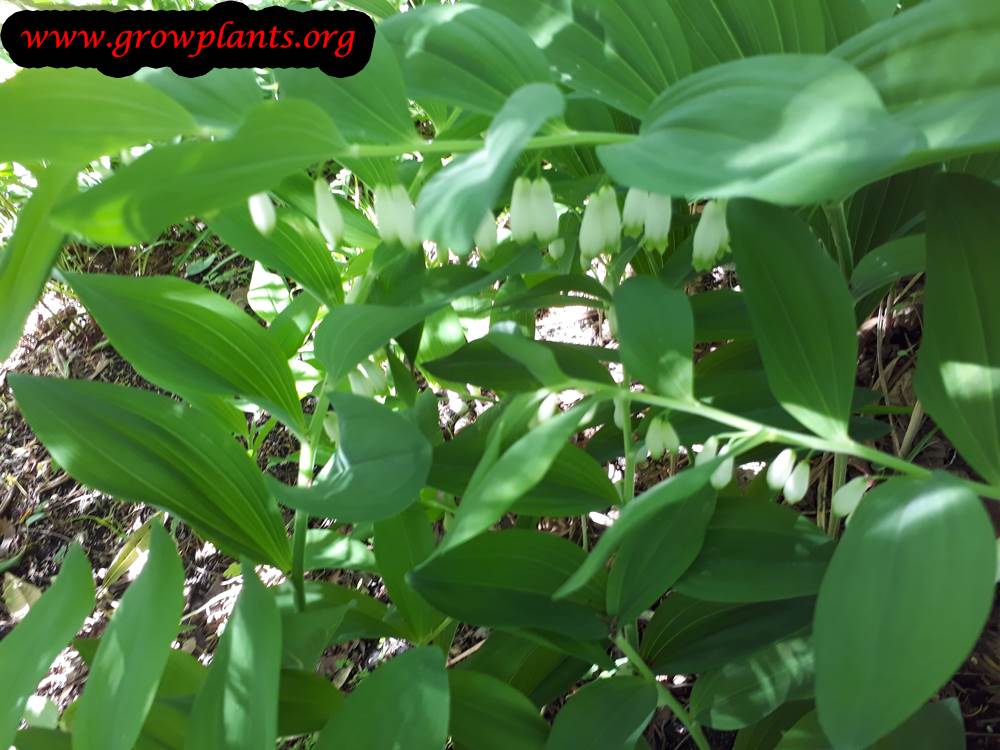
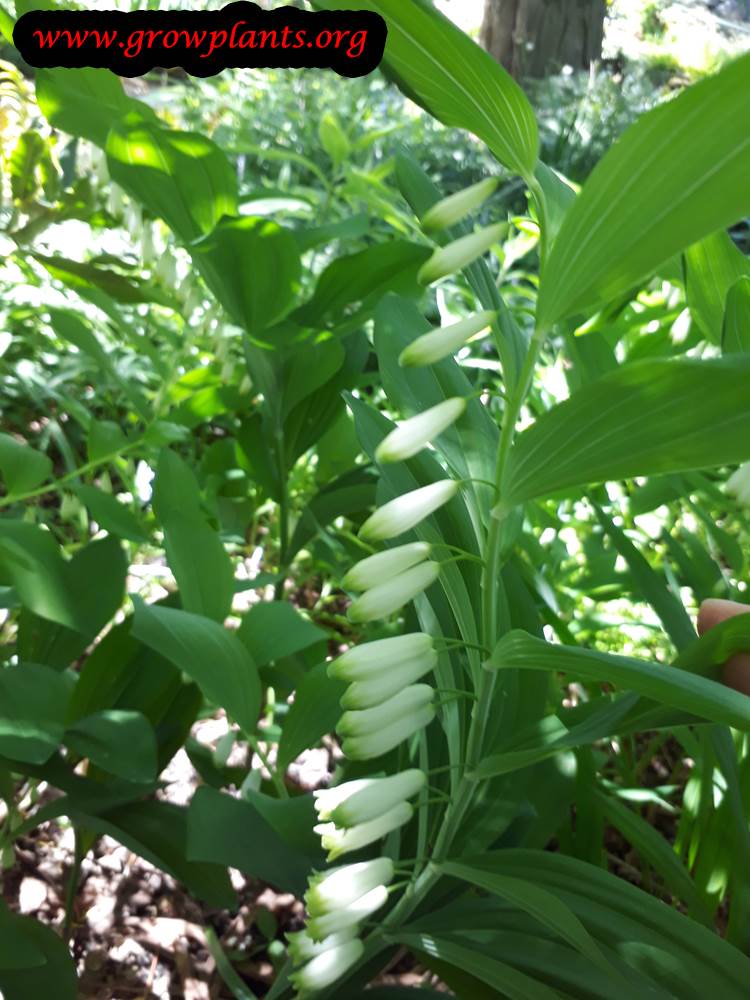
- Flower Characteristics: White, green-tipped tubular bell flowers hanging in groups of 2-3 beneath the leaves in summer.
Primary Uses & Landscape Value
- Functional & Ornamental Roles: Ornamental for shade and woodland gardens, groundcover under trees, and container plant; also drought-tolerant once established.
Care Guide: Planting, Soil & Watering
Overview: Solomon’s seal is a woodland perennial that thrives in partial to full shade in rich, moist, humus-laden soil. It likes steady moisture — moderate to generous watering — and spreads by shallow underground rhizomes.
Quick Care Requirements
| Requirement | Ideal Condition |
|---|---|
| Planting Season | Spring through autumn while the soil is workable |
| Growth Rate | Moderate to fast |
| Soil Type | Rich, moist, humus-rich woodland soil |
| Water Need | Moderate to high — keep the soil consistently moist |
Planting & Establishment
- Best Planting Season: Plant dormant rhizomes or potted plants in spring or autumn into cool, moist, shaded ground; autumn planting lets the rhizomes settle before spring growth.
- How to Plant:
- Hole Preparation: For rhizomes, dig a broad, shallow trench in humus-rich soil; for potted plants, a hole about twice the width of the root ball.
- Soil Amendments: Work in plenty of leaf mould, compost or well-rotted organic matter to build the moist, rich woodland soil it loves.
- Planting Depth: Lay the rhizomes horizontally just 3–5 cm below the surface with the growing buds facing up; set potted plants at their original soil level.
- Growth Speed & Expectations: A steady spreader that forms arching stems and expands into a graceful clump over a few seasons via its creeping rhizomes.
Soil, Watering & Drainage Care
- Soil Mix & Drainage Needs: Provide rich, moisture-retentive but not waterlogged soil, ideally mulched with leaf litter; containers should hold a humus-rich mix kept reliably moist in shade.
- Watering Schedule & Technique:
- Young / Newly Planted: Keep the soil evenly moist after planting so the rhizomes establish; never let a new planting dry out.
- Established: Water regularly to maintain consistent moisture, especially in dry spells and warmer sites; a mulch helps hold moisture.
- Seasonal Adjustments: Water through the growing season and reduce once the foliage dies back for winter dormancy.
Climate, Light & Hardiness
Solomon's seal is a shade-loving woodland perennial suited to temperate and subtropical climates, thriving in half shade to full shade. It is reliably hardy through USDA zones 4–9.
Quick Climate Specifications
| Climate Zones | Temperate, Subtropical |
|---|---|
| USDA Hardiness Zones | 4–9 |
| Frost Tolerance | High |
| Light Conditions | Half Shade / Full Shade |
Sunlight & Light Exposure
Optimal Light Setup
This is a shade-preferring woodland plant, growing best in half to full shade rather than direct sun.
Shade & Heat Management
Deep shade is well tolerated, matching its natural woodland-floor habitat under a tree canopy.
Temperature Extremes & Hardiness
USDA Hardiness & Regional Limits
Hardy through USDA zones 4–9, a cold-tolerant deciduous woodland perennial that dies back to its rhizome each winter and re-emerges in spring.
Frost Sensitivity
Top growth dies back naturally each autumn regardless of frost; the underground rhizome is very cold-hardy through its zone range.
Wind, Humidity & Microclimate
Humidity Preferences
Prefers moist, rich, humus-heavy soil typical of a woodland floor rather than dry, exposed conditions.
Growing in Pots, Balconies & Indoors
Solomon’s seal is an elegant, arching shade perennial that the grower rates as both a houseplant and a container plant. Its tolerance of half to full shade makes it well suited to indoor light, and it makes a graceful pot for a shaded balcony or patio.
Quick Details
- Container Size: A wide, medium-depth pot suits its spreading rhizome
- Indoor Suitability: A good houseplant – it tolerates shade and low indoor light well
- Best Spot: Part to full shade – keep it out of hot, direct sun
- Soil & Drainage: Rich, organic, moisture-retentive but free-draining mix
- Watering in Pots: Average to generous while in leaf; it likes cool, evenly moist soil
Indoors & On the Windowsill
- A genuine houseplant: The grower confirms it grows indoors; give it a bright but shaded spot away from harsh sun, and keep the soil cool and evenly moist.
- Winter rest: It dies back and rests in winter – reduce watering then, and it will re-sprout from the rhizome.
- Safety: The berries are toxic if eaten – keep the plant out of reach of children and pets.
On a Balcony or Patio
- Light & wind: Ideal for a shaded or north-facing balcony where sun-lovers struggle; shelter the arching stems from strong wind and keep the pot moist.
Choosing the Pot, Soil & Long-Term Care
- Pot & drainage: A wide pot with strong drainage holes for the creeping rhizome; no standing water.
- Rich, cool mix: Organic-rich, moisture-retentive potting mix with perlite.
- Feeding: Potted plants exhaust their soil faster than those in the ground – feed through the growing season, since nutrients leach out with every watering.
- Repotting: Every couple of years divide the rhizome and refresh the mix to keep it vigorous.
Fertilizing & Feeding
A light feeder by nature – this shade-tolerant woodland perennial thrives on rich, humus-heavy soil and rarely needs more than an occasional light feeding to support its spring growth and bloom.
Quick Fertilizing Specs
| Feeding Level | Light – a woodland perennial that rarely needs more than light, occasional feeding |
|---|---|
| Main Nutrient Priority | Balanced feeding, with no need to push extra nitrogen or phosphorus |
| Best Feeding Period | Early spring as new shoots emerge, tapering off once in bloom |
| Soil pH | Prefers rich, moist woodland soil; tolerates a range of pH without special adjustment |
| Reduce/Stop Feeding | Stop feeding once foliage begins to yellow and die back in autumn |
Feeding by Growth Stage
Spring shoot emergence and canopy fill-in
Support the arching stems and paired leaves as new shoots emerge from the rhizome in spring
| Nutrient direction | A light, balanced feed is usually enough to support this woodland perennial’s spring growth |
|---|---|
| Timing | As new shoots emerge in early spring, before and during leaf expansion |
| Frequency | A light feeding as new growth begins in spring is usually sufficient for this woodland perennial |
| Fertilizer types | A balanced, light-strength garden fertilizer or a topdressing of compost |
| Precautions | This shade-loving woodland plant rarely needs heavy feeding; too much fertilizer can push soft growth that flops or scorches in dappled light |
Bloom support along the arching stems
Maintain steady nutrition while the small bell-shaped flowers open along the stems in late spring to summer
| Nutrient direction | Continue light, balanced feeding; extra nitrogen is not needed once flowering begins |
|---|---|
| Timing | During the bloom period in late spring into summer |
| Frequency | Minimal feeding is usually enough while flowers are open |
| Fertilizer types | A balanced, light-strength garden fertilizer if soil is poor |
| Precautions | Avoid fertilizing right onto the crown, and keep feeding light so the woodland setting isn’t disrupted by excess nutrients |
Autumn dieback and winter dormancy
Allow the plant to die back to the rhizome and rest through winter as a deciduous perennial
| Nutrient direction | None – withhold fertilizer once foliage yellows and dies back |
|---|---|
| Timing | From autumn foliage dieback through winter |
| Frequency | No feeding at this stage |
| Fertilizer types | No feeding at this stage; resume light feeding when new shoots appear in spring |
| Precautions | Do not fertilize the dormant rhizome over winter |
Nutrient Deficiency Signs & Corrections
Leaves stay pale green and undersized, with weaker stem growth than expected
| Possible causes | Nitrogen deficiency, Deep shade limiting overall vigor rather than a nutrient problem, Dry, root-competing soil under trees and shrubs |
|---|---|
| Appears first on | Older leaves and overall stem vigor |
| What to check | Amount of shade and root competition from nearby trees, Soil moisture and organic matter content, Whether new shoots are smaller than in previous years |
| Possible correction | Apply a light, balanced fertilizer or topdress with compost; if deep shade or root competition is the real limit, feeding alone won’t fully fix it |
New leaves show yellowing between the veins while the veins stay green
| Possible causes | Iron deficiency linked to alkaline or compacted soil, Waterlogged or poorly aerated soil restricting root function, High soil pH limiting nutrient availability |
|---|---|
| Appears first on | Newest leaves at the stem tips |
| What to check | Soil pH and drainage, Whether yellowing is interveinal or across the whole leaf, Recent changes in soil moisture |
| Possible correction | Correct pH toward neutral if testing shows it’s too alkaline, and consider a chelated iron product per its label |
General leaf yellowing and stunted stems despite otherwise suitable shade conditions
| Possible causes | Root competition from nearby trees or shrubs limiting water and nutrient uptake, Poor drainage causing waterlogged, oxygen-poor soil, Underlying nutrient deficiency compounding root stress |
|---|---|
| Appears first on | Whole plant, most visible on the newest stems |
| What to check | Root competition and soil drainage around the planting site, Soil moisture consistency, Whether the decline tracks with a dry spell or wet period |
| Possible correction | Improve soil organic matter and drainage before assuming a straightforward nutrient deficiency, then apply a light balanced feed if growth is still weak |
Pruning, Training & Seasonal Maintenance
Polygonatum multiflorum is an herbaceous, rhizomatous woodland perennial that dies back to the ground each year, so it tolerates essentially no structural pruning – its only real pruning need is seasonal foliage clean-up. The objective is tidiness and disease prevention rather than shaping, and cutting timing has no effect on next year’s flowers since an entirely new set of shoots emerges from the rhizome each spring. The safest and most effective time to remove top growth is autumn to winter, once the foliage has yellowed and died back naturally.
Quick Pruning & Maintenance Specs
| Pruning Tolerance | Low – essentially none beyond dieback removal |
| Primary Pruning Window | Autumn to winter, after foliage yellows |
| Typical Frequency | Once a year |
| Main Objective | Remove spent top growth; prevent overwintering slug and fungal damage |
| Young Plant Priority | None – let the clump establish undisturbed |
| Mature Plant Priority | Clear dead stems; keep spreading rhizome edges in bounds |
| Best Tool Type | Precision snips |
| Avoid Heavy Pruning During | Spring, while shoots are emerging and leaves are still green |
Pruning by Plant Age & Size
Newly Established
Leave untouched apart from removing any damaged or slug-eaten leaves; the rhizome needs a full season of undisturbed foliage to build up reserves.
Young / Formative
No structural training applies – this plant has no woody framework to shape. Simply let the clump fill in.
Mature / Established
The only recurring task is clearing the previous season’s dead stems and, where the plant is spreading further than wanted, trimming back the rhizome mat at the bed edge.
Seasonal Pruning Schedule
Dormant / Winter (after foliage yellows): cut back and remove fully yellowed or collapsed stems and leaves; do not remove foliage that is still green, since it is still feeding the rhizome for next year. The plant overwinters as a dormant rhizome and re-shoots the following spring; because the entire top growth is renewed annually, this clean-up has no impact on next year’s flowering.
Special Growth to Remove
- Spent flower stems once the small bell-shaped flowers and berries have finished – the berries are considered toxic if ingested, so wear gloves and keep clippings away from children and pets.
- Fully yellowed or collapsed foliage in autumn/winter.
- Rhizome growth that has spread past the intended bed edge; sever and lift unwanted sections rather than shearing the top growth.
Container & Small-Space Pruning
Grows well in shaded containers. Maintenance is the same light seasonal clean-up as in the ground; because the pot limits spread, rhizome-edge trimming is rarely needed – just remove dead top growth each dormant season.
Tools
Precision snips or garden scissors are all that is needed for cutting soft stems and foliage at the base.
Tool Hygiene & Disease Risk
Routine – clean, sharp tools are sufficient. This plant has no significant tool-transmissible disease risk reported.
Cut Placement & Technique
Cut spent stems close to soil level without digging into or disturbing the shallow rhizomes just below the surface.
Common Pruning Mistakes
- Cutting back foliage while it is still green, which starves the rhizome of the energy it needs for next year’s shoots.
- Digging or slicing into the rhizome mat while trimming spent stems at soil level.
- Handling the toxic berries or clippings without gloves.
When NOT to Prune
Avoid removing foliage in spring and summer while it is still green and actively photosynthesizing, and avoid disturbing the bed in early spring while new shoots are pushing through – they are brittle and easily snapped.
Recommended Tools (by task)
- Precision snips – for cutting soft spent flower stems and dead foliage at the base; the only tool this plant’s stems require.
Propagation Guide
Solomon’s seal is most reliably increased by dividing its creeping rhizome during dormancy, since this gives an identical, flowering-size plant much faster than seed. Seed does produce true species plants, but Polygonatum seed has a complex dormancy and can be slow and erratic to germinate, so division is the recommended method for most gardeners.
Quick Propagation Specs
| Best Propagation Method | Rhizome Division |
| Alternative Methods | Seed |
| Propagation Difficulty | Easy by division; Difficult by seed |
| Seed True-to-Type | Usually true-to-type (species) |
| Vegetative True-to-Type | Yes |
| Best Propagation Season | Autumn or early Spring, while the plant is dormant |
| Seed Germination Time | Often slow and irregular, sometimes not appearing until the following year |
Growing from Seed
Seed Handling & Viability
Use fresh seed from the ripe berries where possible; viability declines if the seed is allowed to dry out for long.
Dormancy & Pre-Sowing Treatment
Polygonatum seed typically has a double (warm-then-cold) dormancy, so germination is often erratic and can be spread across more than one season; sowing fresh and leaving pots outdoors through a full cycle of seasons is a common approach.
Sowing Season
Autumn, soon after the berries ripen.
Germination Conditions
Cool, humus-rich, consistently moist, shaded conditions matching the plant’s woodland preference.
Germination Time
Can take many months to over a year; keep pots undisturbed and be patient.
Rhizomes, Tubers, Bulbs & Corms
Solomon’s seal grows from a creeping, jointed rhizome. Lift and divide clumps while dormant (autumn or very early spring), cutting the rhizome into sections that each carry at least one visible growth bud (“eye”); replant each rooted, budded section directly into moist, rich soil at the same depth as before, and avoid letting divided sections dry out before replanting.
Bloom & Flower Guide
Quick Details
- Bloom Season: Late spring to early summer
- Flower Appearance: Small tubular white flowers tipped green, hanging in pairs and threes beneath the arching stems
- Edibility: None — toxic; do not eat any part
Detailed Blooming Overview
Solomon’s seal is a classic woodland-shade plant. Rows of pendant, green-tipped white bells hang beneath its gracefully arching stems in late spring.
Flower Characteristics
- White, green-tipped, tubular bell-shaped flowers.
- Borne in groups of two or three at each leaf joint, nodding beneath the stem.
Bloom Care & Thinning
- Conditions: cool shade and moist soil give the best flowering.
- Safety: all parts, and especially the later berries, are toxic if eaten — keep away from children and pets.
Pests, Diseases & Troubleshooting
Overview: Polygonatum multiflorum (Solomon’s seal) is a tough, shade-loving woodland perennial with one defining pest: the Solomon’s seal sawfly, whose grey larvae can strip the arching stems to bare ribs in a matter of days. Beyond that, slugs and snails graze new shoots and a few leaf diseases appear in damp shade. Manage the sawfly by vigilance and hand-work; the plant recovers well and needs little else.
Quick Troubleshooting Overview
| Issue / Pest | Main Symptom | Primary Solution |
|---|---|---|
| Solomon’s seal sawfly | Leaves skeletonized to bare ribs by grey larvae | Inspect undersides, hand-pick, remove larvae |
| Slugs & snails | Chewed, holed new shoots and leaves; slime trails | Traps, barriers, night hand-picking |
| Leaf spot | Brown/grey spots on leaves in damp shade | Airflow, remove leaves, avoid wetting foliage |
| Rust | Orange-brown pustules on leaf undersides | Remove affected leaves, improve airflow |
| Leaf scorch | Browned, crisped leaf edges in too much sun/dry | Move to shade, keep soil moist, mulch |
Common Pests & Management
- Solomon’s seal sawfly (Phymatocera aterrima):
- Symptoms: Rows of small holes appear first, then greyish-white caterpillar-like larvae (with dark heads) feeding along the leaf undersides rapidly skeletonize the foliage, often leaving whole arching stems stripped to bare midribs by early summer; the tell-tale defining pest of this plant.
- Prevention & Control: Inspect leaf undersides from the moment shoots expand and rub off the neat rows of eggs laid in the stems. Pick off and destroy larvae by hand while few — a single early check usually prevents the strip-down. Encourage birds; the plant re-shoots and rarely dies, so only very heavy pressure warrants a Bt or pyrethrum spray to the undersides.
- Slugs & snails (Gastropoda):
- Symptoms: Ragged holes and grazed patches on emerging shoots and young leaves, with slime trails after damp nights, worst in the shady, moist conditions the plant enjoys.
- Prevention & Control: Hand-pick after dark, set beer or bait traps, and ring clumps with grit, wool pellets or diatomaceous earth; clear damp debris where they shelter and protect emerging spring shoots.
- Aphids (Aphis spp.):
- Symptoms: Small colonies on soft shoot tips causing slight curling and stickiness; usually minor.
- Prevention & Control: Hose off and encourage predators; insecticidal soap only for heavy flushes.
Diseases & Fungal Issues
- Leaf spot / anthracnose (Colletotrichum / Cercospora spp.):
- Symptoms: Brown or grey spots and blotches on leaves, sometimes with yellow halos, in wet, still, shaded conditions late in the season.
- Treatment & Management: Improve airflow by not overcrowding, remove and bin affected and fallen leaves, and avoid wetting the foliage; fungicide is seldom needed on this vigorous perennial.
- Rust (Puccinia sessilis and allies):
- Symptoms: Orange to brown powdery pustules on leaf undersides with yellowing above, in humid conditions.
- Treatment & Management: Remove and destroy affected leaves, thin for airflow, and clear old foliage at season’s end; sulfur can be used if it recurs badly.
- Grey mould (Botrytis cinerea):
- Symptoms: Fuzzy grey mold on damaged or ageing leaves and stems in cool, damp, crowded conditions.
- Treatment & Management: Remove affected tissue, improve airflow and light, and avoid overhead watering.
Growing Difficulties & Abiotic Problems
- Leaf scorch:
- Cause & Symptoms: Too much sun or dry soil browns and crisps the leaf margins on this shade-adapted woodlander.
- Correction Strategy: Grow in partial to full shade in humus-rich, moisture-retentive soil, mulch well, and keep the root zone cool and evenly moist.
- Poor emergence / clump decline:
- Cause & Symptoms: Waterlogged or very dry soil, or deeply congested old clumps, gives weak, sparse spring growth.
- Correction Strategy: Improve soil with leaf-mould, divide crowded clumps in autumn or early spring, and replant the healthy rhizome sections.
- Rhizome / crown rot:
- Cause & Symptoms: Constantly waterlogged soil rots the shallow rhizomes.
- Correction Strategy: Ensure the soil is moisture-retentive but not waterlogged; raise beds or improve drainage on heavy ground.
- Frost on early shoots:
- Cause & Symptoms: Late frosts can blacken tender emerging shoots.
- Correction Strategy: The plant is fully hardy and re-shoots; cover emerging growth with fleece in exposed gardens if a hard late frost threatens.
What Helps – Products & Tools
Vigilance beats chemicals here. Useful items are careful hand inspection of leaf undersides for sawfly, Bacillus thuringiensis (Bt) or pyrethrum only for severe sawfly outbreaks, slug traps, wool pellets or diatomaceous earth for slugs and snails, and sulfur if rust recurs; good leaf-mould mulch keeps the plant vigorous enough to shrug off most damage.