
Plant Profile & Key Characteristics
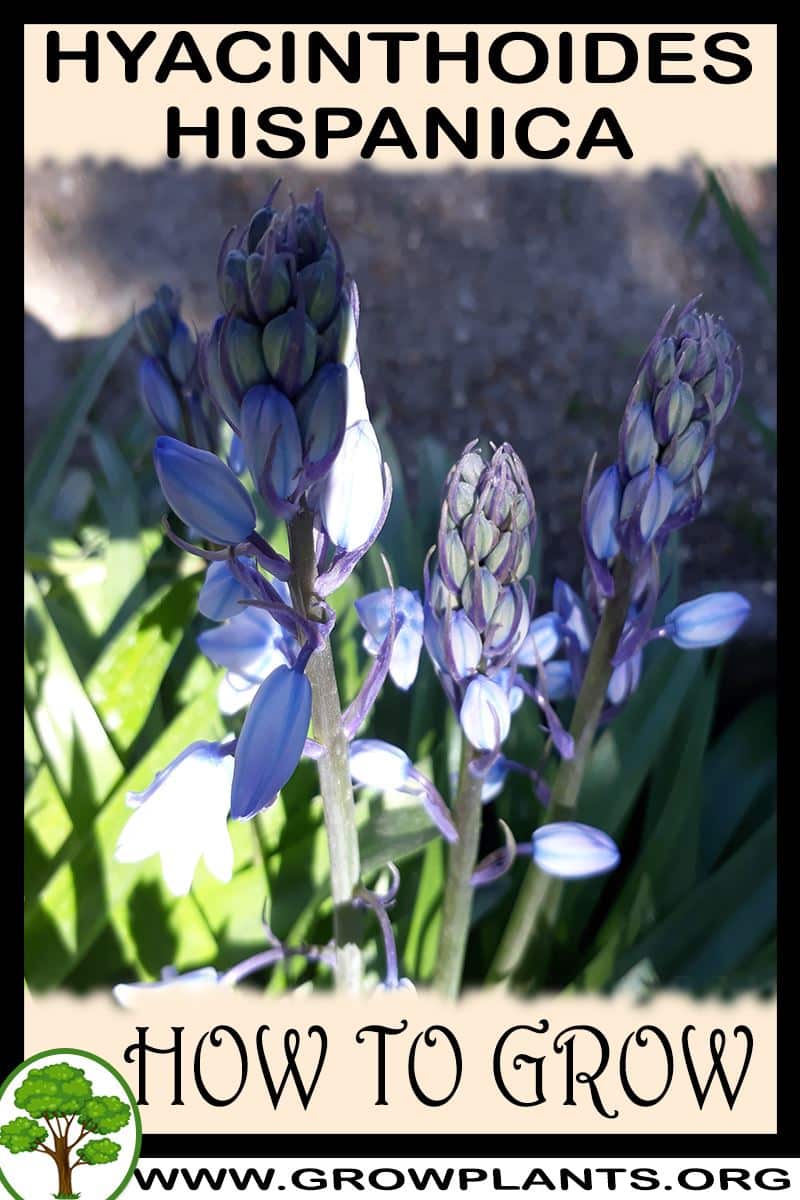
Overview: A bulbous perennial geophyte about 20-40 cm (8-16 in) tall, grown as a spring ornamental, cut flower and spreading groundcover. It is drought-tolerant and carries bell-shaped flowers on upright stalks.
Quick Specifications
| Specification | Attribute |
|---|---|
| Plant Type / Life Cycle | Perennial geophyte |
| Foliage Type | Evergreen to deciduous (dies back after flowering in most climates) |
| Mature Size | 20-40 cm (8-16 in) tall |
| Growth Rate | Fast to moderate |
| Root System | Bulbous geophyte (spreads readily) |
| Toxicity | Toxic to people and pets (bulbs and sap contain glycosides) |
| Hardiness | USDA zone 3-8 |
Growth Form & Structure
- Height & Spread: 20-40 cm (8-16 in) tall, naturalising into spreading colonies; also grown in containers.
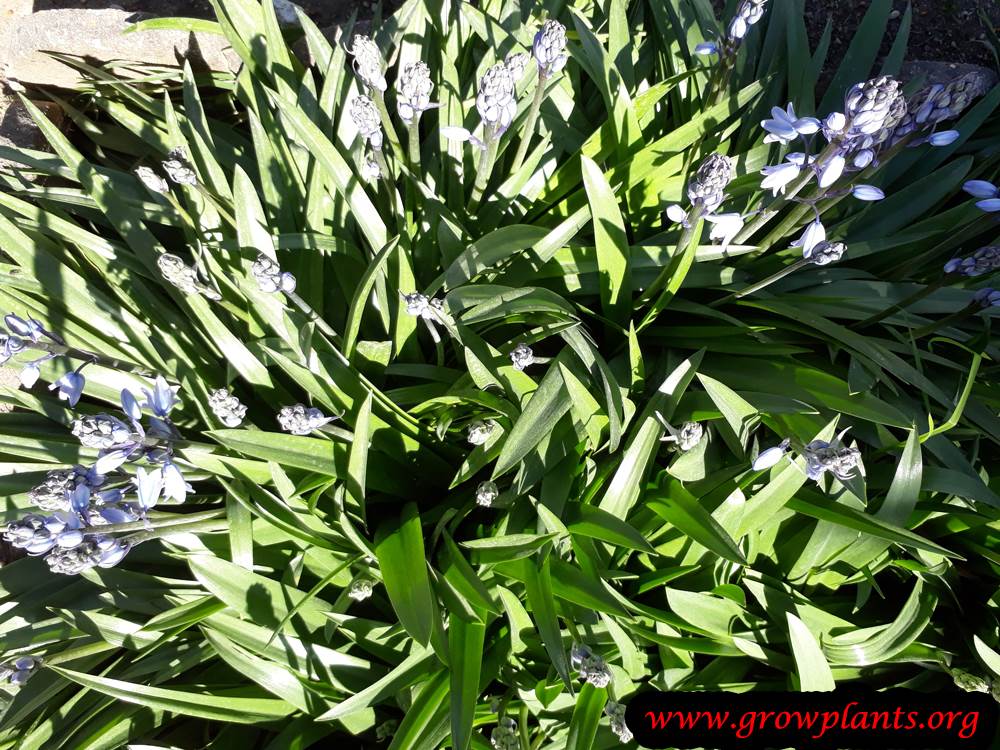
- Growth Habit & Form: Low bulbous plant with upright flower stalks above strap-like basal leaves; multiplies quickly.
- Lifespan & Maturity: Long-lived perennial bulb that spreads by offsets and self-seeding.
Anatomy & Physical Features
- Leaves & Foliage: Green, linear strap-shaped leaves rising from the bulb.
- Flower Characteristics: Bell-shaped pink, purple or white flowers along an upright stalk (full detail in the Bloom section).
Primary Uses & Landscape Value
- Functional & Ornamental Roles: Spring ornamental and cut flower; drought-tolerant groundcover for naturalising under trees and shrubs.
Care Guide: Planting, Soil & Watering
Overview: Spanish bluebell (Hyacinthoides hispanica) is a tough, adaptable bulb (zones 3–8) that naturalises easily in sun or shade and tolerates some drought. It grows in most well-drained soils kept reasonably moist and needs only moderate watering.
Quick Care Requirements
| Requirement | Ideal Condition |
|---|---|
| Planting Season | Spring to summer in growth; dry bulbs also planted in autumn |
| Growth Rate | Moderate to Fast |
| Soil Type | Well-drained soil that stays reasonably moist |
| Water Need | Moderate |
Planting & Establishment
- Best Planting Season: Plant or divide in spring to summer during active growth; dry bulbs are also traditionally set out in autumn for spring flowering.
- How to Plant:
- Hole Preparation: Plant bulbs about 8–10 cm (3–4 in) deep and a similar distance apart; they spread readily, so allow room to naturalise.
- Soil Amendments: Loosen the soil and add compost or leaf mould to hold moisture while keeping drainage free.
- Planting Depth: Set bulbs a few centimetres deep with the growing tip up, or plant divisions at the depth they grew.
- Growth Speed & Expectations: Growth is moderate to fast and clumps multiply quickly, so it can become vigorous and spread widely.
Soil, Watering & Drainage Care
- Soil Mix & Drainage Needs: Any reasonably fertile, well-drained soil suits it; it tolerates a wide range of conditions, including partial to full shade.
- Watering Schedule & Technique:
- Young / Newly Planted: Keep the soil evenly moist while bulbs root and establish.
- Established: Water moderately during growth and flowering; established clumps tolerate short dry spells.
- Seasonal Adjustments: Water less once the foliage dies back and through dormancy.
Climate, Light & Hardiness
Spanish bluebell is a versatile, cold-hardy bulb suited to temperate and subtropical climates; it tolerates everything from full sun to full shade (with some light) and is valued as a drought-tolerant ground cover once established.
Quick Climate Specifications
| Climate Zones | Temperate, subtropical |
|---|---|
| USDA Hardiness Zones | Approximately 3–8 |
| Light Conditions | Full sun; half shade; full shade (with some light) |
Sunlight & Light Exposure
Shade & Heat Management
Unusually shade-tolerant for a bulb - it copes even in full shade as long as some light reaches it.
Temperature Extremes & Hardiness
USDA Hardiness & Regional Limits
One of the hardier bulbs in this group, tolerating cold winters to roughly zone 3.
Wind, Humidity & Microclimate
Rainfall & Seasonal Moisture
Appreciates well-drained yet consistently moist soil, and is also noted as drought tolerant once established.
Growing in Pots, Balconies & Indoors
The grower marks Spanish bluebell as suitable indoors, and it takes readily to pots. It is an easygoing shade-tolerant bulb – grow it in a bright indoor spot or a shaded balcony, giving it a cool rest after flowering.
Quick Details
- Container Size: Small to medium pots of 3-10 L; cluster several bulbs together
- Indoor Suitability: Can be grown indoors (grower’s Yes) in a bright, cool spot
- Best Spot: Part shade to shade with some light – it even tolerates full shade with light
- Soil & Drainage: Free-draining potting mix enriched with a little organic matter
- Watering in Pots: Keep lightly moist in growth and drier during the summer rest; never waterlogged
Indoors & On the Windowsill
- Indoor-friendly bulb: The grower marks it Yes – grow it in a bright, cool indoor spot; it tolerates lower light better than most bulbs.
- Cool rest: Let it die back and rest after flowering, then restart it – a cool dormant period keeps it flowering well year to year.
- Safety: All parts of bluebell are toxic if eaten – keep it away from children and pets.
On a Balcony or Patio
- Light, wind & heat: Part sun to part shade suits it best – a spot with morning sun and afternoon shade is ideal. Reflected heat from walls and paving dries pots fast, so check moisture often and shelter from drying wind.
- Practicalities: A full pot is heavy once watered – make sure the balcony can take the load and that drainage runoff has somewhere to go.
Choosing the Pot, Soil & Long-Term Care
- Pot & drainage: Use a pot with strong drainage holes and skip a standing-water saucer to avoid root rot. Terracotta breathes and dries faster; glazed or plastic pots hold moisture longer.
- Potting mix: A well-aerated, organic-rich mix – potting mix or peat/coir blended with perlite or vermiculite for free drainage.
- Feeding: Potted plants need feeding more often than those in open ground, as nutrients leach out with each watering – feed regularly through the growing season.
- Long-term care: As a perennial bulb, let the foliage die back after flowering; lift and divide crowded clumps and refresh the mix every couple of years.
Fertilizing & Feeding
A light feeder: this naturalizing woodland-edge bulb spreads readily in moist, well-drained soil and generally needs only a light balanced feeding while its leaves are actively growing.
Quick Fertilizing Specs
| Feeding Level | Light feeder |
|---|---|
| Main Nutrient Priority | Balanced feeding with adequate potassium to help bulbs rebuild after each bloom |
| Best Feeding Period | While the linear leaves are actively growing, from spring emergence through bloom |
| Organic Options | Compost or leaf mold worked into moist, well-drained soil, especially useful under trees or in shade |
| Reduce/Stop Feeding | Feeding stops as the bell-shaped flowers finish and foliage begins to yellow |
| Micronutrients | Rarely an issue in humus-rich, moist soil; correct only a diagnosed deficiency |
| Soil pH | Tolerates a wide range of soil, preferring it moist and well-drained |
Feeding by Growth Stage
Planting and establishment
Support root growth as clumps establish in moist, well-drained soil, often as a naturalizing ground cover in shade.
| Nutrient direction | A balanced fertilizer or organic matter worked into the planting area supports early root and leaf development. |
|---|---|
| Timing | At planting in spring or summer. |
| Frequency | A light feeding at planting is enough to help clumps get going. |
| Fertilizer types | A balanced, complete fertilizer worked into the soil at planting, Leaf mold or compost mixed in, especially in shaded, humus-poor soil |
| Precautions | Keep feeding light at planting; this naturalizing bulb spreads readily on its own once settled in. |
Leaf growth and bell-shaped bloom
Support the linear leaves and nodding, bell-shaped flower spikes through spring and into summer.
| Nutrient direction | Balanced feeding with adequate potassium while leaves are green supports flowering and helps bulbs rebuild for naturalizing. |
|---|---|
| Timing | Through the spring-to-summer bloom period while leaves are actively growing. |
| Frequency | Light, occasional feeding while foliage is green is generally sufficient for an established planting. |
| Fertilizer types | A balanced complete fertilizer, potassium-forward to support bloom, Leaf mold or compost renewed as a top-dressing |
| Precautions | Let foliage die back naturally after bloom rather than cutting it early; it is still feeding the bulb for next year. |
Foliage dieback and dormant rest
Let the bulb finish storing reserves and rest through its dormant period after flowering.
| Nutrient direction | None – withhold fertilizer once the leaves begin yellowing and dying back after bloom. |
|---|---|
| Timing | As foliage yellows after bloom and through dormancy. |
| Frequency | No feeding during foliage dieback or dormancy. |
| Fertilizer types | No feeding at this stage; do not fertilize while the bulb is dormant. |
| Precautions | Withhold fertilizer until fresh growth resumes the following season. |
Nutrient Deficiency Signs & Corrections
Leaves emerge pale green and the planting looks sparse or slow to fill in.
| Possible causes | low available soil nitrogen, competition from tree roots for nutrients in shaded plantings, thin, low-organic-matter soil |
|---|---|
| Appears first on | emerging leaves |
| What to check | soil organic matter, root competition from nearby trees or shrubs, recent feeding history |
| Possible correction | Work compost or leaf mold plus a balanced fertilizer into the planting area. |
New leaves yellow between the veins while the veins remain green.
| Possible causes | consistently moist or heavy soil limiting root oxygen and iron uptake, high soil pH tying up available iron, compacted shaded soil restricting root growth |
|---|---|
| Appears first on | newest leaves |
| What to check | soil moisture and drainage, soil pH, root health in compacted or shaded ground |
| Possible correction | Improve drainage or soil structure and, if pH is a factor, apply a chelated iron product per its label. |
Interveinal yellowing shows up on older leaves while veins stay green.
| Possible causes | low soil magnesium, leaching in light, fast-draining soil, heavy potassium feeding competing with magnesium uptake |
|---|---|
| Appears first on | older leaves |
| What to check | soil magnesium status, soil texture and leaching, recent feeding balance |
| Possible correction | Apply a labeled magnesium source such as a dolomitic amendment and rebalance overall feeding. |
Pruning, Training & Seasonal Maintenance
Spanish bluebell needs no structural pruning; it’s light seasonal tidying only, and the right timing depends on climate. Where it stays evergreen (moist soil, mild winters), a light foliage tidy-up in autumn or winter before the spring growth flush is appropriate. Where it dies back fully after summer, the main cutback should follow the foliage’s own yellowing, roughly six weeks after bloom, rather than a fixed date. It self-seeds readily as a groundcover, so deadheading spent flowers also helps control spread where that isn’t wanted.
Quick Pruning & Maintenance Specs
| Pruning Tolerance | Low (non-woody geophyte; no structure to cut) |
| Primary Pruning Window | Deciduous form: early-mid summer, once foliage yellows. Evergreen form: light autumn/winter tidy before spring regrowth |
| Typical Frequency | Once per year (deadhead) plus one foliage cutback |
| Main Objective | Redirect energy to the bulb; limit self-seeding spread |
| Best Tool Type | Precision snips |
| Avoid Heavy Pruning During | While foliage is green and photosynthesizing |
Pruning by Plant Age & Size
Newly Established
Leave newly planted bulbs undisturbed through their first full growth cycle; don’t remove any foliage even after first bloom.
Young / Formative
No structural training applies. As a naturalizing groundcover, the only formative decision is whether to deadhead promptly to curb self-seeding, or let it set seed to fill in a bed faster.
Mature / Established
Established colonies just need deadheading after bloom and a foliage cutback once leaves are spent, timed by leaf color rather than the calendar.
Seasonal Pruning Schedule
Post-Flowering
Objective: limit unwanted self-seeding and redirect energy to the bulb. Remove: spent flower stems, cut at the base. Do not remove: green leaves, which are still feeding the bulb. Response: stronger bulb reserves; less volunteer seedling spread.
Foliage Cutback (Deciduous Specimens)
Objective: clear spent foliage once it has finished its job, typically by early-mid summer. Remove: leaves once fully yellowed or collapsed. Do not remove: foliage that is still green. Response: clean entry into summer dormancy.
Ongoing Sanitary (Evergreen Specimens)
In mild, consistently moist sites where the plant doesn’t fully die back, just remove individual tatty or damaged leaves as needed through autumn and winter ahead of the spring flush, rather than cutting back live foliage wholesale.
Special Growth to Remove
- Spent flower stems — cut at the base after bloom, especially where self-seeding is unwanted.
- Dead/yellowed leaves — remove only once fully spent.
No suckers or watersprouts; spread happens by seed and bulb offsets, not unwanted shoot growth.
Container & Small-Space Pruning
Grows readily in pots. Containment is actually useful here since it limits the self-seeding that makes this species a vigorous groundcover in open ground. Deadhead promptly in containers to prevent volunteer seedlings from colonizing nearby pots.
Tools
Precision snips for the thin flower stems and strap-like leaves — no heavier tool is needed.
Tool Hygiene & Disease Risk
Routine. Slugs are the only reported problem, not a transmissible disease, so ordinary clean tools are sufficient.
Cut Placement & Technique
Cut flower stems at the base without disturbing surrounding leaves. Remove dead leaves at soil level.
Heavy Pruning & Rejuvenation
Not applicable — no woody structure exists to rejuvenate. An overcrowded, weaker-flowering colony is a division issue, not a pruning one.
Post-Pruning Care
Keep soil consistently moist through the growing season (its stated preference); no special watering change is needed after a light tidy-up, since this species doesn’t demand a hard dry rest the way strictly dry-summer bulbs do.
Common Pruning Mistakes
- Cutting back all foliage on a fixed autumn date regardless of whether it’s still green.
- Letting spent flowers set seed everywhere when self-seeding spread isn’t wanted.
- Treating an evergreen patch the same as a fully dormant one and shearing off healthy leaves.
When NOT to Prune
Don’t remove foliage that is still green. Avoid a hard seasonal cutback on evergreen specimens that haven’t actually died back.
Recommended Tools (by task)
| Task | Tool Category | Why |
| Deadheading; removing spent or damaged leaves | precision_snips | Thin, soft stems and leaves need only a small clean cut. |
Propagation Guide
Spanish bluebell multiplies readily from both seed and the small offset bulbs that form at the base of the parent bulb, and neither is strictly required over the other; division is simply the faster route to established, true flower color, especially since garden populations can cross with related bluebells and produce more variable seedlings. Propagation is Easy either way.
Quick Propagation Specs
| Best Propagation Method | Bulb offset division |
| Alternative Methods | Seed (self-sows readily) |
| Propagation Difficulty | Easy |
| Seed True-to-Type | Variable – garden plantings often hybridize with related bluebells |
| Vegetative True-to-Type | Yes |
| Best Propagation Season | Spring or summer for planting; bulbs are best lifted and divided in autumn/winter once foliage has died back |
Growing from Seed
Seed Handling & Viability
This species self-sows freely in the garden, and seed generally does not need special handling to remain viable.
Sowing Season
Self-sown seedlings typically appear following the spring/summer flowering and dieback cycle.
Germination Time
Germination and establishment are gradual, and self-sown seedlings take a couple of seasons to build a flowering-size bulb.
Rhizomes, Tubers, Bulbs & Corms
Bulb Offset Division
Clumps spread readily via small offset bulbs. Lift crowded clumps once the dead leaves and bloom stems have been cut back in autumn/winter, separate the offsets, and replant in the spring/summer planting window in moist, well-drained soil. Because this plant offsets and self-seeds so readily, periodic division also helps keep it from becoming overcrowded or spreading further than wanted.
Bloom & Flower Guide
Quick Details
- Bloom Season: Spring into early summer
- Time to First Bloom: From an autumn-planted bulb, it flowers in its first spring
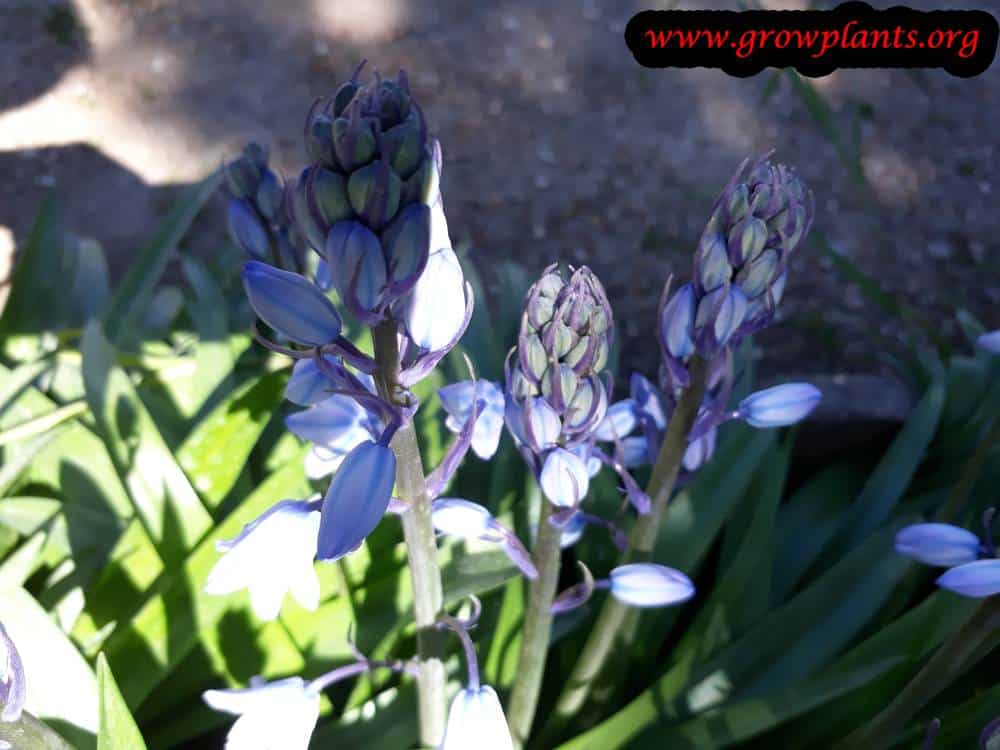
- Flower Appearance: Upright stalks of bell-shaped florets in pink, purple, blue or white, held around the stem
- Edibility: Toxic – not edible; all parts contain toxic glycosides
Detailed Blooming Overview
The Spanish bluebell is the robust, upright bluebell for naturalising in sun or light shade. Its sturdy stalks carry bell-shaped florets arranged more or less all around the stem – unlike the one-sided, nodding sprays of the English bluebell – in shades of blue, pink, purple and white. It multiplies happily to form generous spring drifts, but every part contains toxic glycosides and should not be eaten.
Flower Characteristics
- Bell-shaped florets with six tepals, held around an upright stalk.
- Colours include blue, pink, purple and white.
- Carried above strap-shaped green leaves.
Bloom Care & Thinning
- Naturalising: It spreads readily by bulb and seed, so give it room where a vigorous spring drift is welcome.
- After flowering: Let the foliage die back to feed the bulb; remove seed heads if you want to limit its spread.
- Safety: Keep bulbs and all plant parts away from children and pets, as they are toxic if eaten.
Pests, Diseases & Troubleshooting
Overview: The Spanish bluebell is a robust, naturalising woodland bulb that is genuinely one of the most trouble-free plants you can grow – so much so that its main ‘problem’ is spreading too freely. Serious pests and diseases are uncommon; occasional fungal rust or smut and bulb rot in waterlogged ground are about the extent of it, so this section is deliberately short and honest.
Quick Troubleshooting Overview
| Issue / Pest | Main Symptom | Primary Solution |
|---|---|---|
| Bulb rot (waterlogging) | Bulbs fail to emerge or rot where soil stays wet | Plant in free-draining soil, avoid boggy sites |
| Slugs & snails | Rasped holes in emerging leaves in wet spring weather | Hand-pick, grit barriers, iron-phosphate bait if needed |
| Bluebell rust | Bright orange-yellow pustules on leaves | Remove affected leaves, improve airflow; rarely serious |
| Smut | Dark, sooty masses distorting leaves or flowers | Remove and destroy affected plants |
| Aphids | Occasional colonies on shoots; possible virus spread | Rinse off, insecticidal soap |
| Over-vigorous spreading | Colonises borders and hybridises with native bluebells | Deadhead before seeding, lift and thin, site carefully |
Common Pests & Management
- Slugs & snails (Deroceras reticulatum, Cornu aspersum):
- Symptoms: Rasped holes and ragged edges on emerging leaves and flower stems in damp spring conditions; usually cosmetic on such a vigorous bulb.
- Prevention & Control: Hand-pick after dark, clear damp hiding places, and ring emerging clumps with grit or use iron-phosphate bait only if damage is significant; established colonies simply grow through minor grazing.
- Aphids (Myzus / Aphis spp.):
- Symptoms: Occasional small colonies on shoots and flower stalks with sticky honeydew; mainly of note as potential virus vectors.
- Prevention & Control: Rinse off with water and treat with insecticidal soap if needed; remove any distorted, mottled virus-suspect plants.
- Narcissus bulb fly (Merodon equestris):
- Symptoms: Uncommon on bluebells but possible: grubs tunnel the bulb, weakening or killing it.
- Prevention & Control: Lift and destroy soft bulbs, and firm soil over necks after the foliage dies down; rarely needs action on naturalised drifts.
Diseases & Fungal Issues
- Bluebell rust (Uromyces muscari):
- Symptoms: Bright orange to yellow powdery pustules on the leaves, mostly cosmetic and worse in crowded, damp conditions.
- Treatment & Management: Remove and destroy affected leaves, improve airflow by thinning congested clumps, and avoid overhead watering; fungicides are seldom warranted.
- Smut (Ustilago / Antherospora spp.):
- Symptoms: Dark, sooty spore masses distorting leaves, stems or flower parts, replacing normal tissue.
- Treatment & Management: Dig up and destroy affected plants to limit spread; do not compost; the disease is uncommon in gardens.
- Bulb basal rot (Fusarium / Sclerotinia spp.):
- Symptoms: Soft, brown decay of the bulb base in wet, poorly drained soil, causing failure to emerge or early collapse.
- Treatment & Management: Plant in free-draining soil, avoid waterlogged sites, and discard soft or rotting bulbs; healthy drifts in suitable soil rarely suffer.
- Bluebell mosaic virus (potyvirus):
- Symptoms: Pale streaking and mottling of leaves with some loss of vigour, spread by aphids; uncommon and not curable.
- Treatment & Management: Remove affected plants and control aphids; buy or transplant from clean, vigorous stock.
Growing Difficulties & Abiotic Problems
- Waterlogging:
- Cause & Symptoms: Bulbs rot and fail to establish in heavy soil that stays wet over winter.
- Correction Strategy: Plant in moist but free-draining woodland-type soil; improve heavy ground with leaf-mould and grit, and avoid boggy hollows.
- Too much sun / drought:
- Cause & Symptoms: Leaves scorch and die back early in hot, dry, fully exposed positions.
- Correction Strategy: Grow in dappled shade to part sun with soil that stays cool and moist in spring; some early dieback in dry summers is normal as the bulb goes dormant.
- Over-vigorous spread & hybridising:
- Cause & Symptoms: Spreads freely by seed and bulb offsets and readily hybridises with and outcompetes native bluebells.
- Correction Strategy: Deadhead before seed sets, lift and thin congested drifts, and site well away from areas where native bluebells are valued.
What Helps – Products & Tools
This bulb needs very little: good drainage and the right shady, moist site do almost all the work. Keep iron-phosphate slug bait and insecticidal soap on hand for the rare pest flare-up, and manage its vigour with a hand fork and deadheading rather than any chemical.