Plant Profile & Key Characteristics
Overview: Leptospermum scoparium (manuka) is an evergreen shrub or small tree, about 2-4 m as a shrub and up to 5-10 m as a tree, grown as an ornamental and as the source of manuka honey. It is a fast- to moderate-growing perennial hardy across USDA zones 8-11.
Quick Specifications
| Specification | Attribute |
|---|---|
| Plant Type / Life Cycle | Perennial (shrub / small tree) |
| Foliage Type | Evergreen |
| Mature Size | 2-4 m as a shrub (6-13 ft); 5-10 m as a tree (16-33 ft) |
| Growth Rate | Fast to moderate |
| Toxicity | Non-toxic (leaves used for herbal tea) |
| Hardiness | USDA zones 8-11 |
Growth Form & Structure
- Height & Spread: Reaches about 2-4 m (6-13 ft) as a shrub or 5-10 m (16-33 ft) as a tree; can be container-grown.
- Growth Habit & Form: Dense, twiggy evergreen shrub that can develop into a small tree.
- Lifespan & Maturity: Fast to moderate to reach size; long-lived, responding well to trimming.
Anatomy & Physical Features
- Trunk & Bark: Older stems develop attractive flaky, peeling bark.
- Leaves & Foliage: Small, needle-like green leaves that are aromatic when crushed (a ‘tea tree’).
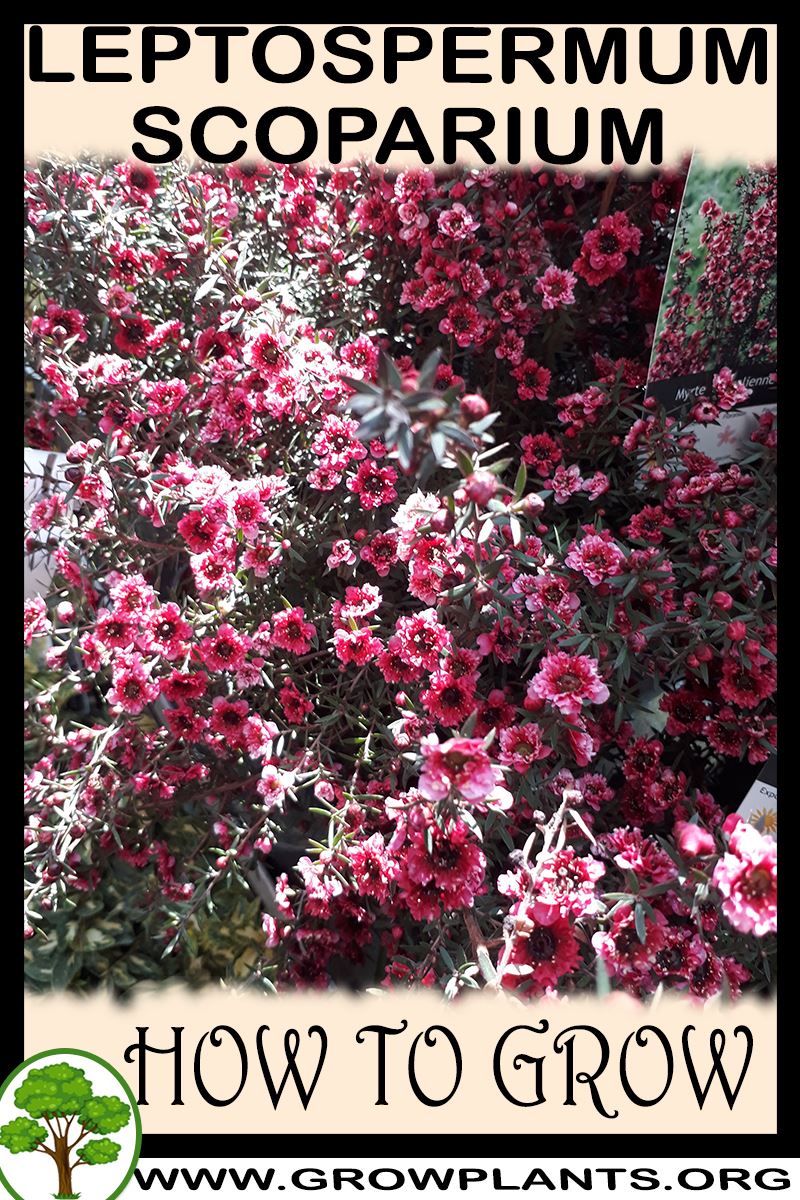
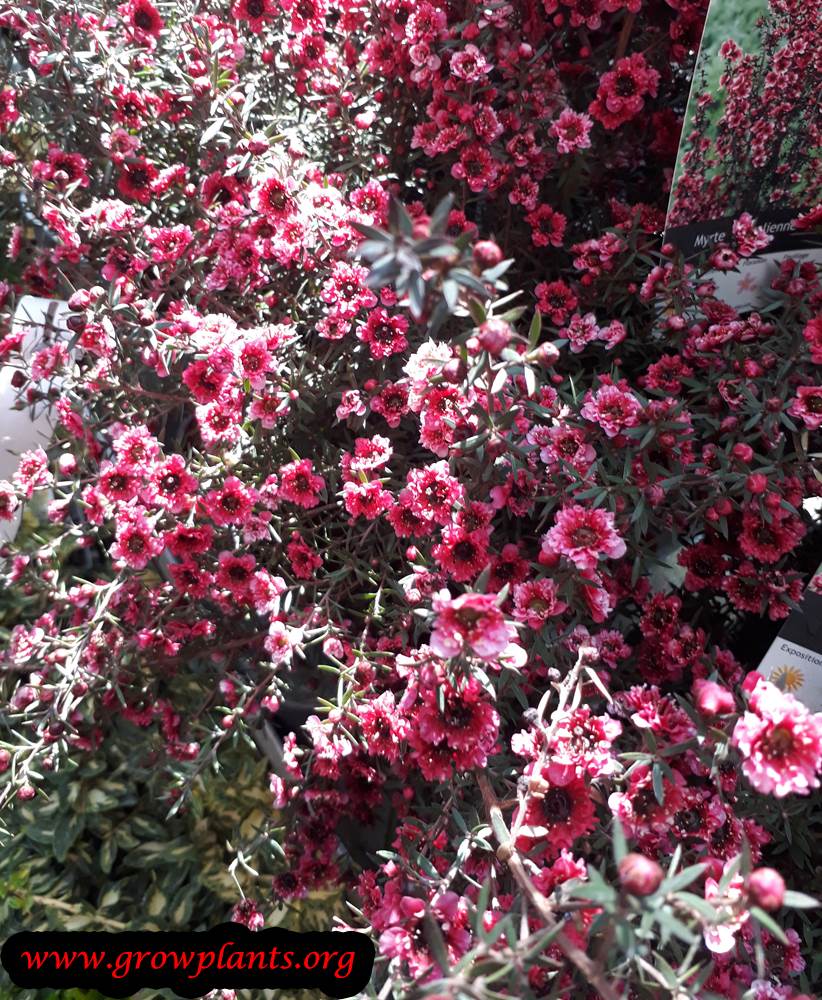
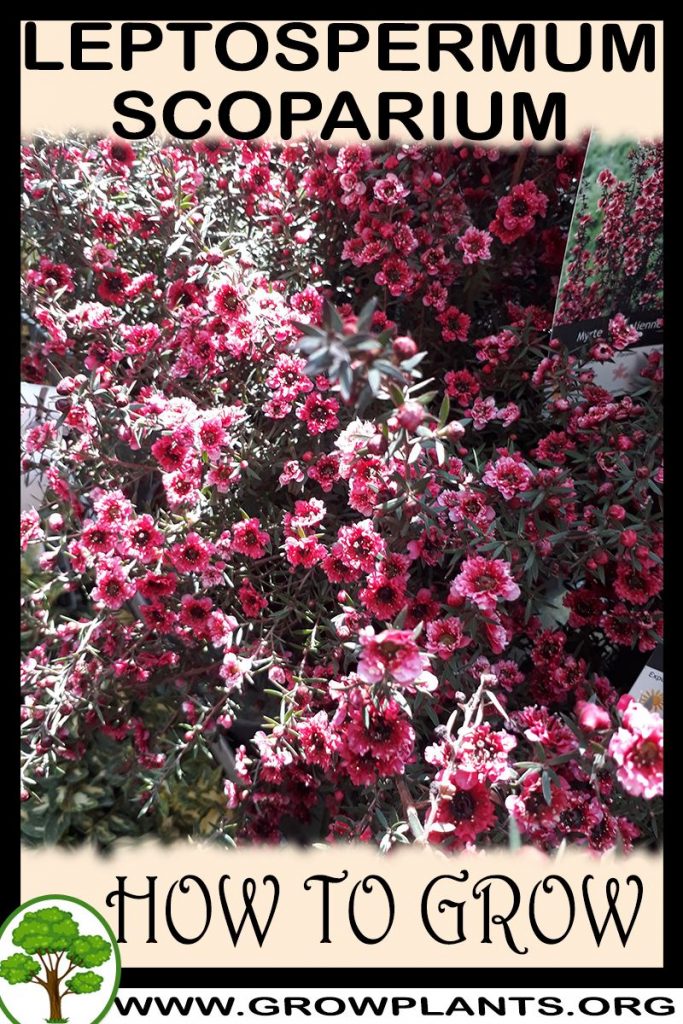
- Flower Characteristics: Pink or white, bowl-shaped five-petalled flowers that attract bees and yield manuka honey.
Primary Uses & Landscape Value
- Edible Uses: Leaves are used to brew a herbal tea; flowers are the source of manuka honey.
- Functional & Ornamental Roles: Ornamental flowering shrub or hedge, pollinator plant, and a commercial source of manuka honey and essential oil.
Care Guide: Planting, Soil & Watering
Overview: Manuka is an evergreen shrub or small tree that grows in full sun in temperate, Mediterranean, or subtropical climates (hardiness zone 8-11). It needs an acidic, well-drained soil and moderate water.
Quick Care Requirements
| Requirement | Ideal Condition |
|---|---|
| Planting Season | Spring through autumn |
| Growth Rate | Moderate to fast |
| Soil Type | Well-draining, acidic |
| Soil pH | Acidic |
| Water Need | Moderate; keep lightly moist and avoid waterlogging |
Planting & Establishment
- Best Planting Season: Plant from spring through autumn.
- How to Plant:
- Hole Preparation: Dig a hole about the width of the root ball and the same depth.
- Soil Amendments: Work in acidic organic matter such as peat or composted pine, and ensure the site drains freely.
- Planting Depth: Set the root collar level with the surrounding soil.
- Growth Speed & Expectations: A fast to moderate grower – about 2-4 m (6-12 ft) as a shrub, up to 5-10 m (15-30 ft) as a tree.
Soil, Watering & Drainage Care
- Soil Mix & Drainage Needs: Use an acidic, well-drained soil.
- Watering Schedule & Technique:
- Young / Newly Planted: Water regularly to help it establish.
- Established: Water moderately – do not let it dry out completely, but avoid soggy soil.
- Seasonal Adjustments: Reduce watering in winter.
Climate, Light & Hardiness
Manuka is a moderately cold-hardy shrub or small tree for temperate, Mediterranean, and subtropical climates, growing best in full sun with acidic, well-drained soil.
Quick Climate Specifications
| Climate Zones | Temperate, Mediterranean, Subtropical |
|---|---|
| USDA Hardiness Zones | 8–11 |
| Frost Tolerance | Moderate |
| Light Conditions | Full Sun |
Sunlight & Light Exposure
Optimal Light Setup
Needs full sun for the best flowering and compact form.
Temperature Extremes & Hardiness
USDA Hardiness & Regional Limits
Hardy in USDA zones 8–11, tolerating moderate winter freezes; in the coldest part of its range a sheltered site helps protect young growth.
Wind, Humidity & Microclimate
Wind Tolerance
As a coastal New Zealand native, it is generally tolerant of exposed, windy sites.
Growing in Pots, Balconies & Indoors
Manuka is a full-sun evergreen shrub (sometimes a small tree) the grower confirms is not a houseplant but grows well in containers. Pot-grown it makes a fine patio or balcony plant, and in cold climates it is brought into a bright, cool, frost-free spot for winter – dwarf cultivars can even be trained as bonsai.
Quick Details
- Container Size: A roomy pot, 15-40 L, or smaller for a dwarf/bonsai form
- Indoor Suitability: Not a deep-room houseplant; a bright, cool window or conservatory only
- Best Spot: Full sun – the more light, the better it flowers
- Soil & Drainage: Free-draining, slightly acidic mix; it dislikes lime and soggy roots
- Watering in Pots: Average water – keep evenly moist but never waterlogged; it hates drying out completely
Indoors & On the Windowsill
- Houseplant limits: Too light-hungry for a normal room; indoors it thins and drops leaves.
- Windowsill / conservatory: A very bright, cool window or unheated conservatory suits it best under cover.
- Overwintering: In frost-prone climates keep the pot in a bright, cool, frost-free place for winter, watering sparingly.
On a Balcony or Patio
- Light & wind: Give it the sunniest spot; pots dry fast in sun and wind, so check moisture, and shelter it from harsh, drying wind.
- Keep it compact: Trim after flowering to hold a tidy shape – easier to move under cover for winter.
Choosing the Pot, Soil & Long-Term Care
- Pot & drainage: A well-drained pot with strong drainage holes and no standing-water saucer to avoid root rot; terracotta breathes and dries faster, glazed or plastic holds moisture longer.
- Potting mix: Free-draining and lime-free, slightly acidic – an ericaceous or peat-based mix with perlite.
- Feeding: Potted plants are fed more often than those in the ground, as watering steadily leaches nutrients from the mix – use a lime-free (ericaceous) feed in the growing season.
- Repotting: Refresh the top of the mix and pot up about every couple of years, lightly trimming the root ball and top growth every couple of years; it resents both drying out and waterlogging.
Fertilizing & Feeding
An evergreen flowering shrub or small tree that prefers acidic, well-drained soil; it is naturally adapted to lean sites and grows best with light, infrequent feeding using a fertilizer formulated for acid-loving plants rather than a rich general-purpose blend.
Quick Fertilizing Specs
| Feeding Level | Light feeder – adapted to lean, well-drained soil |
|---|---|
| Main Nutrient Priority | Balanced feeding from an acid-loving-plant formula |
| Best Feeding Period | Spring as active growth resumes |
| Soil pH | Prefers acidic soil |
| Reduce/Stop Feeding | Ease off once established – mature plants need little supplemental feeding |
Feeding by Growth Stage
Spring Growth
Support fresh foliage and stem growth as the plant breaks dormancy
| Nutrient direction | A balanced fertilizer formulated for acid-loving plants supports steady growth without alkalizing the root zone |
|---|---|
| Timing | As new growth begins in spring |
| Frequency | A light feeding early in the growing season is usually sufficient |
| Fertilizer types | A balanced fertilizer formulated for acid-loving shrubs, Organic matter such as pine bark or peat worked into the planting area |
| Routine trace nutrients | iron |
| Precautions | Avoid lime-containing or alkaline-leaning products, which can push soil pH away from what this acid-loving shrub prefers |
Bloom Period
Sustain the pink or white spring-to-summer flower display
| Nutrient direction | Balanced feeding with adequate nitrogen supports flowering better than a phosphorus-heavy product |
|---|---|
| Timing | During the spring-to-summer bloom window |
| Frequency | Minimal feeding is usually enough once the shrub is established and flowering |
| Fertilizer types | A balanced acid-formula fertilizer applied sparingly |
| Precautions | Overfeeding tends to push leafy growth at the expense of flowers in this shrub |
Dormant / Rest Period
Allow the plant to rest through the cooler, slow-growth part of the year
| Nutrient direction | None – withhold fertilizer while growth is slow or dormant |
|---|---|
| Timing | Autumn through winter |
| Frequency | No feeding at this stage |
| Fertilizer types | No feeding at this stage – allow the shrub to rest |
| Precautions | Do not fertilize during dormancy; resume once active growth returns in spring |
Nutrient Deficiency Signs & Corrections
Interveinal yellowing on new leaves while veins remain green
| Possible causes | Iron chlorosis from alkaline soil pH, Poor drainage causing root stress, General nutrient deficiency |
|---|---|
| Appears first on | Newest leaves at branch tips |
| What to check | Soil pH, Drainage, Recent fertilizer or lime application history |
| Possible correction | Lower soil pH toward acidic and apply a chelated iron product per its label |
Sparse or absent flowering during the normal bloom season
| Possible causes | Excess nitrogen favoring foliage over bloom, Insufficient sunlight, Overly alkaline soil suppressing overall vigor |
|---|---|
| Appears first on | Whole shrub during bloom season |
| What to check | Recent feeding rate, Light exposure, Soil pH |
| Possible correction | Reduce nitrogen-heavy feeding, confirm full sun exposure, and correct soil pH toward acidic if needed |
Wilting or dieback despite adequate watering
| Possible causes | Root rot from poorly drained soil, Alkaline soil limiting nutrient uptake, Nutrient deficiency compounding root stress |
|---|---|
| Appears first on | Whole-plant vigor and stem tips |
| What to check | Soil drainage, Soil pH, Root condition |
| Possible correction | Improve drainage, confirm acidic soil conditions, and withhold feeding until the plant shows active recovery |
Pruning, Training & Seasonal Maintenance
Leptospermum scoparium can be grown as either a 2–4 m shrub or a 5–10 m small tree, and its own care notes describe pruning as mostly a design job done in autumn/winter — right after its spring/summer bloom. That timing matters biologically: this species flowers on the previous season’s wood, so pruning straight after flowering removes spent growth while giving fresh shoots a full season to mature and set next year’s flower buds, rather than cutting those buds off before they ever bloom. As with many Myrtaceae, it does not reliably resprout from very old bare wood, so shaping cuts should stay in leafy growth.
Quick Pruning & Maintenance Specs
| Pruning Tolerance | Moderate (light shaping tolerated well; hard cuts into old bare wood risky) |
| Primary Pruning Window | Autumn/winter, right after the spring/summer bloom |
| Typical Frequency | Once a year |
| Main Objective | Shape/design trim without sacrificing next season’s flower buds |
| Young Plant Priority | Tip-pinch for a bushy shrub form, or select a leader if training as a small tree |
| Mature Plant Priority | Light annual shape trim into green growth; remove dead wood |
| Best Tool Type | Bypass secateurs for shaping; loppers or a pruning saw for tree-form specimens |
| Avoid Heavy Pruning During | Spring/summer bloom, and any cut into leafless old wood |
Pruning by Plant Age & Size
Newly Established
Remove only damaged growth while the plant establishes; tip-pinch lightly once it is actively growing to encourage branching from the base.
Young / Formative
For shrub form, pinch and lightly trim tips to build a dense, multi-stemmed mound. For tree form, select one or a few strong leaders and remove competing low branches gradually as the trunk develops — there is no need to force a single formal leader as strictly as with a fruit tree.
Mature / Established
Give a light annual shape trim right after flowering, always cutting back into leafy growth; on tree-form specimens, thin out any crossing or crowded branches in the canopy at the same time.
Seasonal Pruning Schedule
Post-Flowering: objective – shape the plant and remove spent flowering growth; remove faded flower clusters and up to a light third of stem length, always stopping in green growth; do not cut into bare, leafless wood; response – fresh growth over the following months that matures in time to set next spring’s flower buds; flowering impact – positive when timed right after bloom, since it doesn’t remove developing buds; negative if delayed into the buds’ formation period.
Flowering & Fruiting Wood
Flowers form on the previous season’s wood, not on brand-new current-season growth. This is why the safe window is immediately after bloom finishes — pruning any later risks cutting off wood that has already begun setting next year’s buds, and pruning during winter dormancy well after flowering is generally too late to avoid removing developing bud wood.
Structural Pruning & Training
For shrub form, the goal is a dense, even mound achieved through light annual tip trims. For tree form, structural work is about removing crossing or inward-growing branches and controlling height/spread as the canopy fills in; canopy thinning is only lightly beneficial here since this species does not need heavy interior airflow management the way disease-prone fruit trees do.
Special Growth to Remove
- Dead or winter-damaged wood, cut back to healthy green tissue
- Crossing or rubbing branches on tree-form specimens
- Spent flower clusters, for tidiness, though this is cosmetic rather than essential
Container & Small-Space Pruning
Tolerates container growing. In a pot, keep the shrub form and prune a little more frequently and lightly than an in-ground plant to control size and prevent the base from thinning out, since container plants have less room to recover from a missed season of shaping.
Tools
Bypass secateurs for routine shaping cuts; loppers for thicker branches on larger shrubs; a pruning saw only where the plant has been grown on as a small tree with true woody limbs.
Tool Hygiene & Disease Risk
Routine — the listed pest (Pyronota festiva, manuka beetle) is a foliage/root feeder rather than a wound-transmitted pathogen, so clean, sharp tools are sufficient without between-cut disinfection.
Cut Placement & Technique
Make shaping cuts back into leafy, green growth rather than into bare wood; use thinning cuts (removing a whole branch back to its point of origin) for crossing branches on tree-form plants rather than heading cuts that stub the branch.
Heavy Pruning & Rejuvenation
Not reliably tolerated — like many Myrtaceae, this species does not dependably resprout from old, leafless wood, so there is no safe hard rejuvenation cut once a plant has gone bare and woody at the base. Consistent light annual shaping is the practical way to avoid ever needing one.
Post-Pruning Care
No special watering or feeding is needed after a routine light shape trim; monitor new growth for the listed beetle pest, which can target fresh foliage.
Common Pruning Mistakes
- Pruning well after the bloom flush instead of right after it, cutting off developing buds for next year
- Cutting into bare, leafless old wood expecting it to resprout
- Letting a shrub-form plant go untrimmed for years, leading to a sparse, leggy base
When NOT to Prune
- During the spring/summer bloom itself, to avoid losing the flower display
- Well after flowering, once new wood is actively setting next year’s buds
- Never cut into bare, leafless old wood regardless of season
Recommended Tools (by task)
- Annual post-bloom shaping (shrub form): bypass_secateurs – clean cuts on the fine, twiggy growth typical of this species.
- Thicker branches or tree-form canopy thinning: loppers – enough leverage for woodier stems that secateurs can’t manage cleanly.
Pruning Troubleshooting
| Problem | Possible Cause | What to Check | Corrective Action |
| Few or no flowers after pruning | Pruned too late, after buds had already formed on last season’s wood | Timing of the last prune relative to the previous bloom | Shift pruning to immediately after flowering finishes, not later in the season |
| Bare, leggy stems with no regrowth | A cut was made into old, leafless wood | Whether any green growth or live buds remain below the cut | Avoid cutting past leafy growth in future; the bare stem itself is unlikely to recover |
| Sparse, open shrub habit | No tip-pinching or shaping was done while the plant was young | How long since the plant last received a shape trim | Resume light annual post-bloom trims; avoid one large corrective cut into old wood |
Propagation Guide
Manuka grown as the plain species comes true from seed and doesn’t need grafting or vegetative propagation, but named ornamental cultivars with particular flower colors must be propagated from semi-hardwood cuttings to stay true. For most home growers, semi-hardwood cuttings are the practical best method since they work for both the species and named forms; overall this shrub is easy to propagate.
Quick Propagation Specs
| Best Propagation Method | Semi-hardwood stem cuttings |
| Alternative Methods | Seed |
| Propagation Difficulty | Easy |
| Seed True-to-Type | Usually true-to-type for the species; cultivar-dependent for named flower-color selections |
| Vegetative True-to-Type | Yes |
| Best Propagation Season | Seed in spring; semi-hardwood cuttings in summer to early autumn |
| Germination Temperature | Around 18–22°C (64–72°F) |
| Seed Sowing Depth | Surface-sown (fine, dust-like seed) |
Growing from Seed
Sowing Depth & Orientation
Seed is very fine, so sow on the surface of a well-drained mix and press in lightly rather than burying it.
Germination Conditions
Keep warm and consistently moist but not waterlogged; bright light helps once seedlings emerge.
Germination Time
Typically several weeks, and can be uneven.
Stem Cuttings
Cutting Type
Semi-hardwood tip cuttings.
Best Timing
Summer to early autumn, once the current season’s growth has begun to firm up.
Cutting Preparation
Remove lower leaves; lightly wounding the base can help but is not essential.
Rooting Setup
Use a well-drained, gritty propagating mix and keep humidity up until roots form.
Rooting Hormone
Beneficial for this woody shrub to improve consistency, though not strictly required.
Rooting Time
Generally several weeks to a couple of months.
Bloom & Flower Guide
Quick Details
- Bloom Season: Spring into summer
- Flower Appearance: Open, bowl-shaped flowers in pink or white, each with five petals around a small central boss
- Edibility: Not eaten as a flower; manuka is best known as the nectar source behind manuka honey
Detailed Blooming Overview
Manuka smothers itself in small, saucer-shaped flowers along its wiry, fine-leaved stems. The five-petalled blooms in pink or white are simple but produced in great numbers, giving a cloud-like effect at peak. The nectar is famously worked by bees to produce prized manuka honey, so the plant earns its place as much for pollinators as for looks.
Flower Characteristics
- Five-petalled, open bowl-shaped flowers in white through to pink.
- Small individually but borne profusely along the stems.
- A rich nectar source, heavily visited by bees.
Bloom Care & Thinning
- Pollination: Bees and other insects; the celebrated manuka honey comes from this nectar.
- Managing the bloom: A light trim after flowering keeps the bush dense; avoid hard pruning into old bare wood.
Fruit & Uses
The aromatic leaves of Leptospermum scoparium (manuka) have a long history of being steeped fresh or dried as a herbal tea substitute, eaten only as an infusion rather than as a food in themselves. The plant’s flowers are not directly eaten but are well known as the nectar source that bees turn into manuka honey.
Quick Edible Specs
| Edible Parts | Leaves (infusion only) |
|---|---|
| Main Use(s) | Herbal tea/infusion; flowers are a major nectar source for manuka honey (bee product, not a plant part eaten directly) |
| Eaten Raw or Cooked | Steeped as a hot infusion (tea), not eaten raw as food |
| Preparation Required | None beyond steeping in hot water; can be used fresh or dried |
| Harvest Season | Young aromatic leaves can be picked any time the plant is in active growth |
| Time to First Harvest | Leaves can be picked once the shrub/tree is established and producing fresh growth |
| Storage | Use fresh, or air-dry leaves in a shaded, ventilated spot and store in an airtight container |
| Safety/Toxicity Caveat | Traditional leaf tea use is well documented and not associated with toxicity; as with any herbal infusion, use in moderation. This is a niche/historical use, not a mainstream food crop. |
Leaves & Greens
The small, aromatic, linear leaves are picked fresh from new growth and steeped in hot water to make a tea-like infusion – a practice dating back to early European settlers and sailors in New Zealand (Captain Cook’s crew reportedly used it as a tea substitute, giving the plant its common name ‘tea tree’). Leaves can be used fresh or dried; no cooking or detoxification step is needed.
Preparation, Uses & Safety
Steep fresh or dried leaves in hot water as an infusion; no other preparation is required. This is a traditional/historical beverage use rather than a significant food source, and is not associated with any known toxicity when used this way. Separately, the flowers are agriculturally important as the floral source bees use to produce manuka honey – a well-known product – but the flower itself is not a part that people eat directly, so it is noted here for context rather than listed as an edible plant part.
Pests, Diseases & Troubleshooting
Overview: Manuka is a wiry Myrtaceae shrub, and while its aromatic oils deter many chewers, it belongs to a family with two serious modern threats – myrtle rust and scale-with-sooty-mould – alongside its own beetle and webbing-caterpillar pests. Airflow, vigilance for rust, and prompt removal of scale-infested wood are the core of management.
Quick Troubleshooting Overview
| Issue / Pest | Main Symptom | Primary Solution |
|---|---|---|
| Manuka / felted scale + sooty mould | Black sooty coating over honeydew; encrusted stems | Prune infested wood; horticultural oil |
| Manuka beetle | Chewed foliage, notched shoots | Tolerate light damage; hand-pick |
| Webbing caterpillars | Webbed, frassed foliage tied together | Prune out webs; Bt |
| Myrtle rust | Bright yellow powdery pustules on new growth | Remove & bag infected tips; fungicide; hygiene |
| Root rot (Phytophthora) | Dieback, wilting, plant decline | Sharp drainage; avoid over-watering |
| Spider mites / thrips | Stippled, silvered foliage in heat | Hose; oil; monitor |
Common Pests & Management
- Manuka / felted scale (with sooty mould) (Eriococcus spp.):
- Symptoms: Small scale insects encrusting the stems and producing copious honeydew, which is colonised by black sooty mould so the whole bush looks sooty and blackened; heavy infestations weaken and thin the plant.
- Prevention & Control: Prune out and destroy badly encrusted wood, improve airflow, and spray the stems with horticultural oil to smother scale (repeat for crawlers). Encourage ladybirds and parasitic wasps; the sooty mould fades once the scale and honeydew are gone.
- Manuka beetle (Pyronota festiva):
- Symptoms: Metallic green-bronze beetles that chew the foliage of manuka and related plants, notching and skeletonising shoots; their larvae (grass grubs) feed on roots in the soil.
- Prevention & Control: Tolerate light feeding on established shrubs, hand-pick or shake beetles from small plants, and keep plants vigorous. Only heavy attacks warrant an evening pyrethrum spray; manage grass-grub-prone lawns nearby.
- Webbing caterpillars (Tortricidae / leafrollers):
- Symptoms: Caterpillars that bind foliage and shoots together with silk webbing and frass, feeding hidden inside the webbed clusters and disfiguring the bush.
- Prevention & Control: Prune out and destroy webbed portions, and treat with Bacillus thuringiensis (Bt) on young larvae; encourage birds and parasitic wasps.
- Thrips & spider mites (Thysanoptera / Tetranychus spp.):
- Symptoms: Fine silvering and stippling of the small leaves in hot, dry conditions, dulling and browning the foliage.
- Prevention & Control: Hose the foliage, raise humidity, monitor with sticky traps, and use a horticultural oil or insecticidal soap for outbreaks.
Diseases & Fungal Issues
- Myrtle rust (Austropuccinia psidii):
- Symptoms: A serious, spreading disease of the myrtle family: bright yellow to orange powdery pustules on new leaves, shoot tips, buds and flowers, distorting and killing young growth and, over time, whole plants; young soft growth is most at risk.
- Treatment & Management: Inspect new growth often; at the first sign, carefully bag and remove infected tips without spreading spores, disinfect tools, and improve airflow. Protective fungicides (e.g. myclobutanil/triazole or copper types) help on valued plants – follow local biosecurity advice, as this is a notifiable disease in some regions.
- Phytophthora root rot (Phytophthora spp.):
- Symptoms: Progressive dieback, wilting, yellowing and decline as the roots and collar rot, worst in wet, heavy or poorly drained soil.
- Treatment & Management: Grow in free-draining soil, avoid over-watering and waterlogging, plant on a mound in heavy ground, and remove and destroy affected plants; do not replant into the same wet spot.
- Leaf spot & dieback (Various fungi):
- Symptoms: Brown spots, blotches and shoot dieback in prolonged wet, humid weather.
- Treatment & Management: Improve airflow, remove affected growth and debris, avoid overhead watering, and use a copper fungicide in persistent wet conditions.
Growing Difficulties & Abiotic Problems
- Root rot from wet / heavy soil:
- Cause & Symptoms: Wilting and dieback where drainage is poor – manuka needs an open, well-drained, acidic soil.
- Correction Strategy: Plant in free-draining, slightly acidic soil, avoid waterlogging, and water established plants sparingly.
- Chlorosis on alkaline soil:
- Cause & Symptoms: Yellowing between the veins on limy or alkaline ground.
- Correction Strategy: Grow in neutral-to-acidic soil, mulch with acidic organic matter, and apply chelated iron and sulphur to correct alkalinity if needed.
- Frost / wind damage on tender types:
- Cause & Symptoms: Scorched, browned or broken growth on cultivars in hard frost or exposed sites.
- Correction Strategy: Site in a sheltered spot, choose hardier forms for cold gardens, and prune out damaged wood after the cold passes.
What Helps – Products & Tools
Airflow and vigilance come first. Keep horticultural (neem) oil for scale, mites and thrips, Bt for webbing caterpillars, and yellow/blue sticky traps to monitor. For the family’s key disease, a protective myclobutanil/triazole or copper fungicide addresses myrtle rust on valued plants (with strict hygiene and, where relevant, biosecurity reporting), and a copper fungicide covers leaf spot. Spray oils in the evening to protect pollinators.