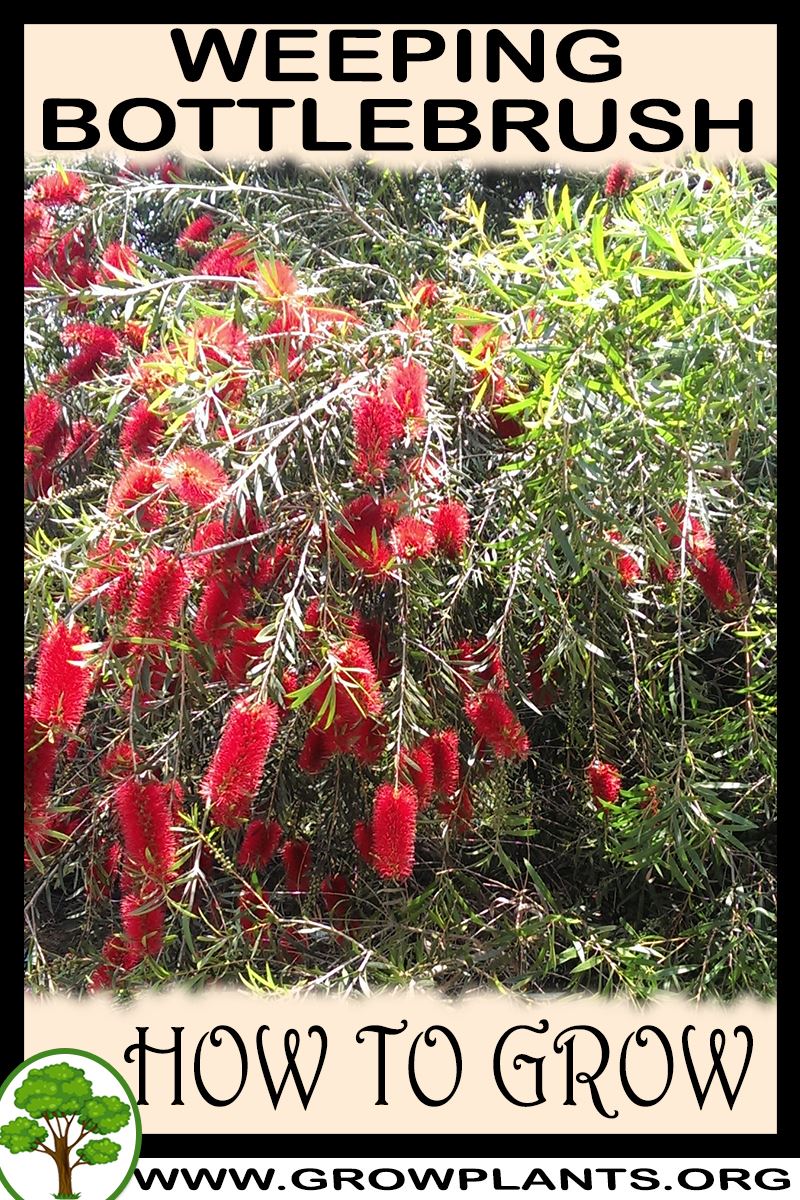
Plant Profile & Key Characteristics
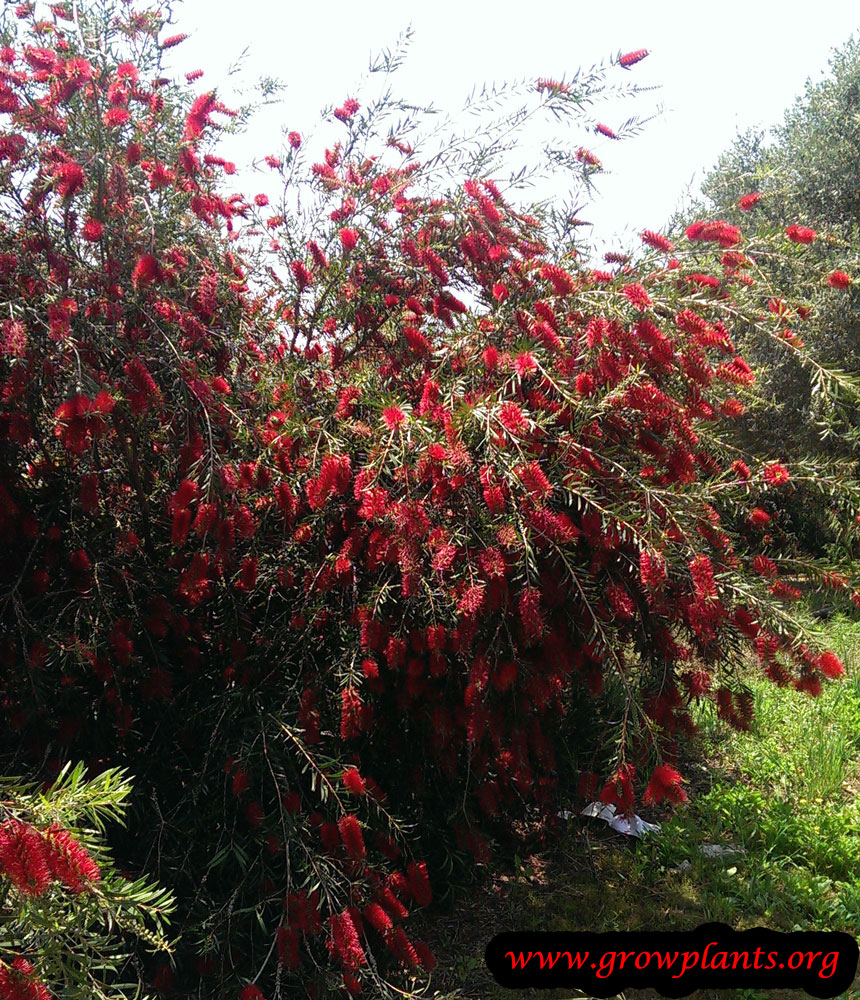
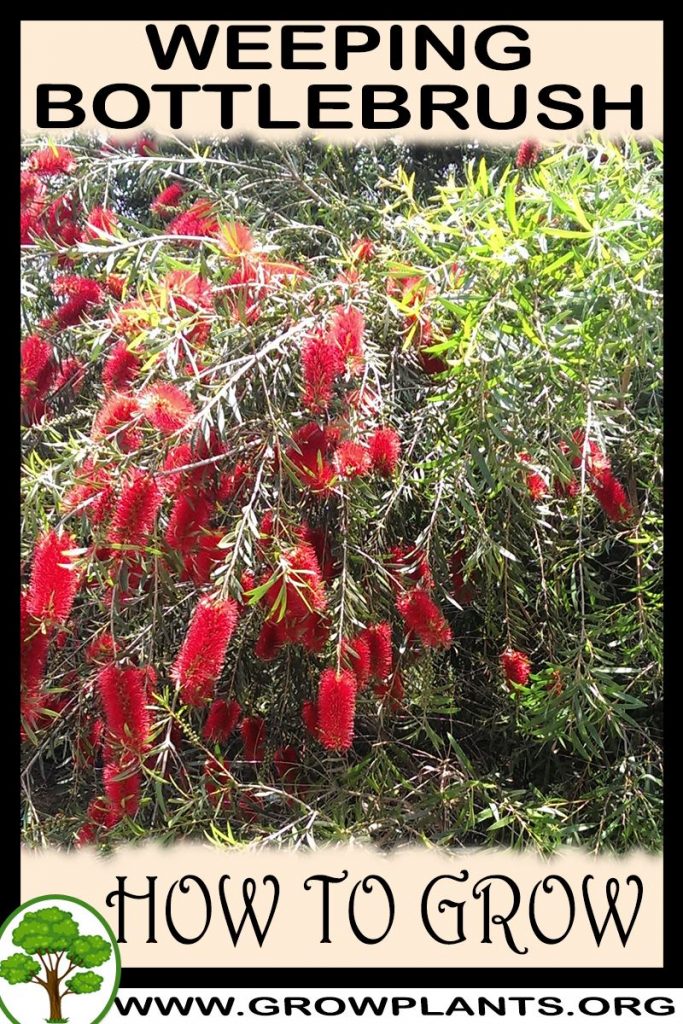
Overview: Weeping bottlebrush (Melaleuca viminalis) is a fast-to-moderate growing evergreen shrub or tree reaching 7–20 m (21–60 ft), grown as an ornamental, shade tree or bonsai for its weeping habit and red bottlebrush flowers. It is drought tolerant and thrives in warm climates.
Quick Specifications
| Specification | Attribute |
|---|---|
| Plant Type / Life Cycle | Perennial (shrub to tree) |
| Foliage Type | Evergreen |
| Mature Size | 7–20 m (21–60 ft) |
| Growth Rate | Fast to moderate |
| Toxicity | Non-toxic (bottlebrush / Callistemon) |
| Hardiness | USDA zones 9+ |
Growth Form & Structure
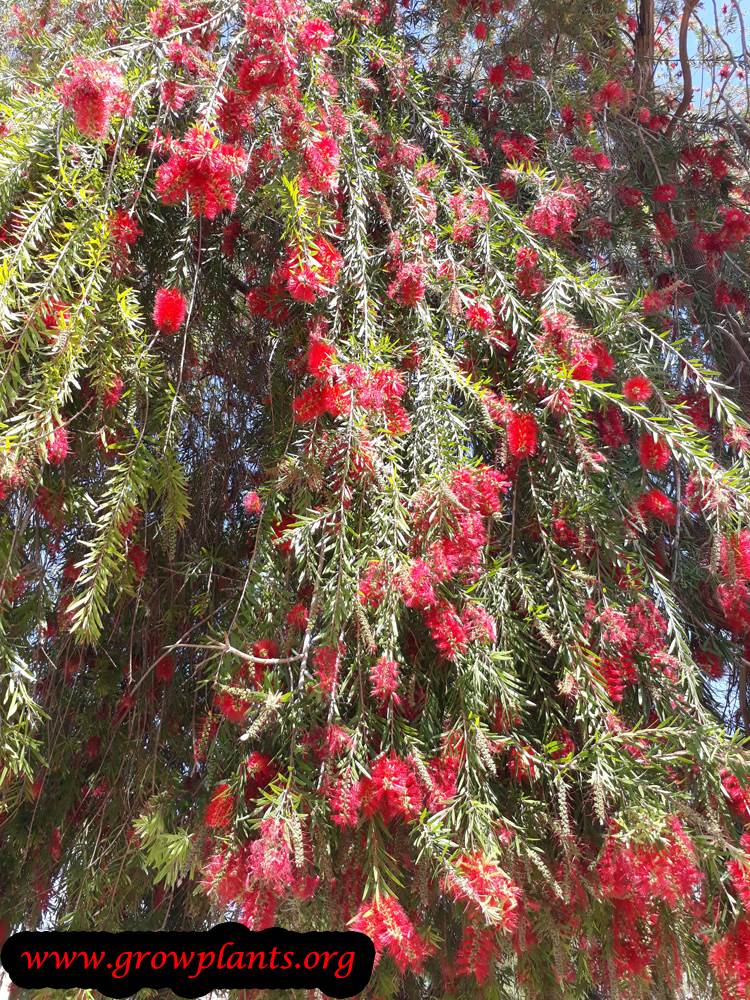
- Height & Spread: 7–20 m (21–60 ft) tall with long, pendulous branches; can also be container-grown or trained as a bonsai.
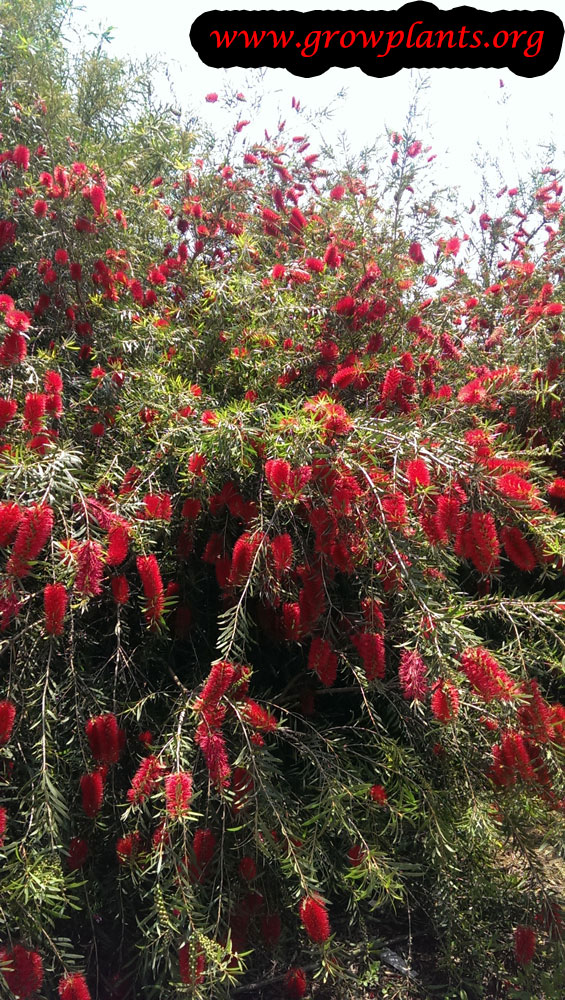
- Growth Habit & Form: Large shrub to small tree with a weeping, arching form.
- Lifespan & Maturity: Long-lived and fast-establishing; responds well to pruning and can be shaped or dwarfed.
Anatomy & Physical Features
- Trunk & Bark: Firm-wooded trunk with the papery, layered bark typical of Melaleuca.
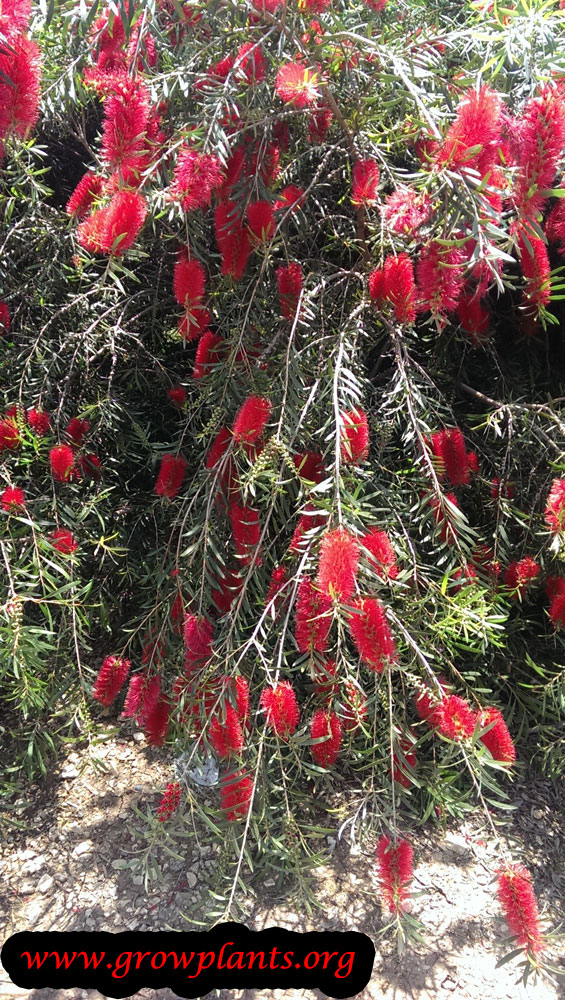
- Leaves & Foliage: Green, narrow, lanceolate leaves.
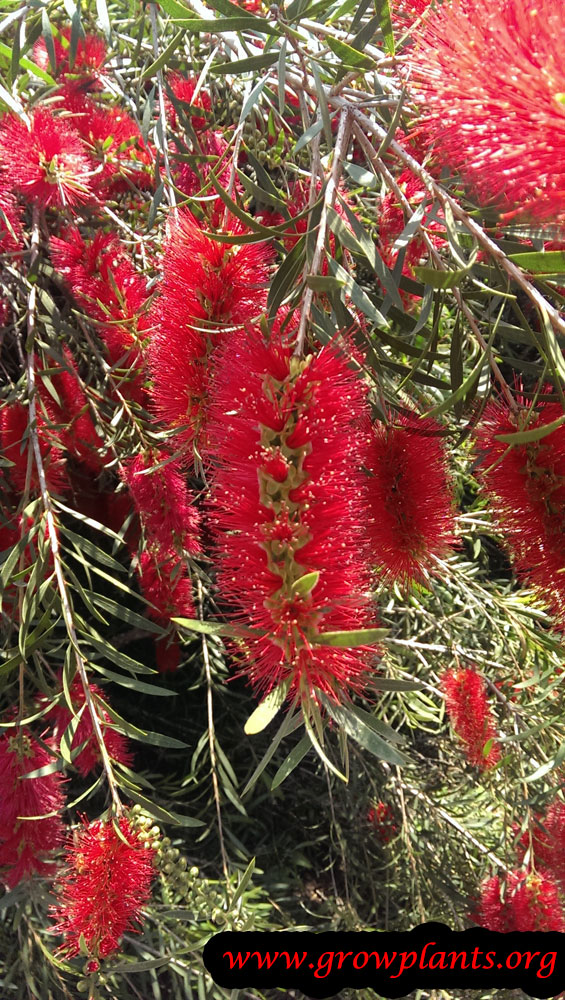
- Flower Characteristics: Bright red, small, needle-like flowers massed into cylindrical bottlebrush spikes. (See the Bloom accordion for detail.)
Primary Uses & Landscape Value
- Functional & Ornamental Roles: Ornamental specimen and shade tree, screen or bonsai; drought tolerant and attracts nectar-feeding birds and insects.
Care Guide: Planting, Soil & Watering
Overview: Weeping bottlebrush (Melaleuca viminalis) is a fast- to medium-growing evergreen shrub-to-tree (zone 9+, hardy to about -5°C) that grows best in full sun and is drought tolerant once established. It wants free-draining soil and only low to moderate watering.
Quick Care Requirements
| Requirement | Ideal Condition |
|---|---|
| Planting Season | Autumn, winter or spring |
| Growth Rate | Fast to Moderate |
| Soil Type | Well-draining |
| Water Need | Low to Moderate |
Planting & Establishment
- Best Planting Season: Plant in autumn, winter or spring.
- How to Plant:
- Hole Preparation: Dig a hole wider than the root ball in a sunny, free-draining position.
- Soil Amendments: Loosen the backfill and improve drainage; heavy enrichment is not needed.
- Planting Depth: Set the root ball at its original depth with the collar at soil level, firm gently and mulch.
- Growth Speed & Expectations: Fast to medium — reaches about 7–20 m (21–60 ft); can be kept smaller by pruning or grown as bonsai.
Soil, Watering & Drainage Care
- Soil Mix & Drainage Needs: Free-draining soil to prevent root rot; it also grows in a container with a free-draining mix and drainage holes.
- Watering Schedule & Technique:
- Young / Newly Planted: Water regularly at first to help roots establish.
- Established: Water lightly to moderately, letting the top of the soil dry between waterings; it tolerates dry spells well.
- Seasonal Adjustments: A little more in summer heat and much less in cool, wet weather.
Climate, Light & Hardiness
Weeping bottlebrush is an evergreen shrub-to-tree of tropical, subtropical, Mediterranean and desert climates that needs full sun. It tolerates brief cold down to about −5°C (23°F), consistent with its USDA zone 9+ rating.
Quick Climate Specifications
| Climate Zones | Tropical, Subtropical, Mediterranean, Desert |
|---|---|
| USDA Hardiness Zones | 9+ |
| Approx. Survival Minimum | Around −5°C / 23°F |
| Frost Tolerance | Moderate |
| Light Conditions | Full Sun |
Sunlight & Light Exposure
Optimal Light Setup
Needs full sun for a dense weeping canopy and strong bottlebrush flowering.
Direct Sun Requirement
Yes - this species performs poorly with insufficient direct light.
Shade & Heat Management
Copes with full, hot sun across its subtropical, Mediterranean and desert range without needing shade.
Best Exposure / Orientation
An open, unshaded position that allows the weeping branch habit to develop and show off its flowers.
Temperature Extremes & Hardiness
USDA Hardiness & Regional Limits
Hardy outdoors from USDA zone 9 upward.
Cold Damage & Winter Protection
The site's care data places its cold limit at roughly −5°C (23°F); colder conditions risk damage, so shelter young trees in the coldest parts of zone 9.
Frost Sensitivity
Tolerates brief frost to around −5°C (23°F) once established.
Extreme Heat Tolerance
Handles hot tropical, subtropical and desert summer conditions well as a drought-tolerant tree.
Wind, Humidity & Microclimate
Dry-Air Tolerance
Comfortable in the drier air typical of Mediterranean and desert climates.
Rainfall & Seasonal Moisture
Adaptable to a range of rainfall patterns across its listed zones given well-drained soil.
Microclimate Recommendations
An open, sunny, well-drained site suits it best; large mature size means allowing ample space away from structures.
Growing in Pots, Balconies & Indoors
Weeping bottlebrush (Melaleuca viminalis) is a weeping tree reaching 7-20 m prized for its brush-like flowers, and the grower confirms it grows in containers though not as a houseplant. Give it full sun; in a pot it makes a fine patio or balcony feature while young.
Quick Details
- Container Size: A large 50-90 L (13-24 gal) tub while young, then out to the garden
- Indoor Suitability: Not a houseplant; a young-plant container subject only
- Best Spot: Full sun
- Soil & Drainage: Free-draining, slightly acidic loam-based mix
- Watering in Pots: Moderate – keep evenly moist in growth, drier once established; let the surface dry between waterings
Indoors & On the Windowsill
- Not a houseplant: The grower does not recommend it indoors – it is a full-sun shrub or tree that needs open light and airflow it cannot get in a room.
- On the windowsill: Even a bright sill rarely gives enough light for good flowering; it belongs on a sunny balcony, patio or in the garden.
- Containers while young: At 7-20 m it is ultimately a tree, so a pot suits it only while young; grow it on for a few years, then plant it out or keep it root-pruned and topped as a large tub specimen.
- Overwintering: Fairly tender – in cold-winter regions move the pot to a bright, frost-free spot for the cold season, keeping it only just moist.
On a Balcony or Patio
- Light & wind: Give it the brightest spot the balcony offers; shelter exposed plants from strong wind and stake any tall or top-heavy growth. Walls and paving reflect heat, so pots dry quickly – check moisture often in warm weather.
- Practicalities: A filled pot is heavy once watered, so make sure the balcony can take the weight and stand it where drainage runoff will not be a nuisance.
Choosing the Pot, Soil & Long-Term Care
- Pot & drainage: A large 50-90 L (13-24 gal) tub while young, then out to the garden with strong drainage holes; skip a standing water saucer so the roots never sit wet. Terracotta breathes and dries fast, while glazed or plastic pots hold moisture longer.
- Potting mix: A free-draining, loam-based mix on the slightly acidic side; these plants dislike very limey soils.
- Watering: Low to moderate once established – keep young plants evenly moist and let the surface dry between waterings; ensure sharp drainage.
- Feeding: Potted plants exhaust their soil faster because nutrients leach out with every watering – feed lightly but regularly through the growing season.
- Repotting: Refresh the mix or pot up about every couple of years, teasing out and lightly trimming the roots of established plants.
Fertilizing & Feeding
A light feeder once established: this drought-tolerant weeping shade tree needs only modest balanced feeding to support its red bottlebrush flowers, tapering off through its dry rest period.
Quick Fertilizing Specs
| Feeding Level | Light feeder once established |
|---|---|
| Main Nutrient Priority | Balanced feeding with adequate nitrogen to support canopy growth and flowering; avoid pushing bloom with extra phosphorus |
| Best Feeding Period | As new growth begins ahead of the bloom period, tapering off once flowering finishes |
| Organic Options | Compost or well-rotted organic matter worked into the root zone, especially while the tree is young and developing its weeping form |
| Reduce/Stop Feeding | Ease off feeding through the hottest, driest part of the year and while the tree rests |
| Micronutrients | Usually met by a complete fertilizer in well-drained soil; correct only a diagnosed deficiency |
| Soil pH | Tolerates a wide range but performs best in slightly acidic to near-neutral, well-drained soil |
Feeding by Growth Stage
Canopy growth ahead of bloom
Support the developing weeping canopy and lanceolate foliage as the tree heads toward its red bottlebrush bloom.
| Nutrient direction | A balanced, nitrogen-forward complete fertilizer supports steady canopy development and sets up strong flowering. |
|---|---|
| Timing | As new growth resumes heading into the bloom season. |
| Frequency | A light feeding at the start of active growth is usually enough for an established tree. |
| Fertilizer types | A balanced complete fertilizer, Compost or well-rotted organic matter worked into the root zone |
| Precautions | Keep feeding light on this drought-tolerant tree; overly rich soil can encourage weak, fast growth and feed the invasive spread this species is known for. |
Red bottlebrush bloom
Sustain the tree through its cascading red, bottlebrush-shaped flower display.
| Nutrient direction | Continue a balanced complete fertilizer; adequate nitrogen and overall balance drive flowering better than extra phosphorus. |
|---|---|
| Timing | During the winter into spring bloom period. |
| Frequency | Feeding needs stay light through bloom; an established tree rarely needs more than what was applied earlier. |
| Fertilizer types | A balanced complete fertilizer |
| Precautions | Skip high-phosphorus ‘bloom booster’ products; they are not needed to produce a full flush of red flowers along the weeping branches. |
Rest through the dry season
Let the tree coast through the hottest, driest part of the year without pushing soft new growth.
| Nutrient direction | None – withhold fertilizer while the tree rests after flowering. |
|---|---|
| Timing | After flowering finishes, through the hottest and driest part of the year. |
| Frequency | No feeding at this stage; resume only when active growth begins again. |
| Fertilizer types | No feeding at this stage; hold off fertilizing until new growth resumes. |
| Precautions | Withhold fertilizer now; feeding this resting, drought-tolerant tree wastes nutrients and can encourage salt buildup in well-drained soil. |
Nutrient Deficiency Signs & Corrections
Older leaves fade to pale green or yellow and canopy growth is sparse or slow.
| Possible causes | low available soil nitrogen, nitrogen leaching after heavy rain or watering, poor, sandy well-drained soil with little organic matter |
|---|---|
| Appears first on | older, lower leaves |
| What to check | recent feeding history, soil organic matter levels, drainage and recent rainfall |
| Possible correction | Apply a balanced complete fertilizer with adequate nitrogen and work in organic matter. |
New leaves turn yellow between green veins while the veins themselves stay green.
| Possible causes | high soil pH limiting iron availability, waterlogged or poorly aerated roots, naturally low soil iron |
|---|---|
| Appears first on | newest growth at branch tips |
| What to check | soil pH, drainage around the root zone, whether nearby plants show the same pattern |
| Possible correction | Correct soil pH toward neutral where possible and apply a chelated iron product per its label. |
Leaf tips and margins brown or scorch even though the tree is watered normally.
| Possible causes | fertilizer salt buildup in well-drained soil that is rarely leached, under-watering that concentrates salts, over-fertilizing a naturally light-feeding tree |
|---|---|
| Appears first on | leaf tips and margins |
| What to check | recent fertilizer amounts and frequency, watering consistency, soil drainage |
| Possible correction | Ease off feeding, water deeply to flush accumulated salts, then return to a lighter feeding routine. |
Pruning, Training & Seasonal Maintenance
Weeping bottlebrush matures into a small-to-medium tree valued for its graceful, cascading branch habit and red bottlebrush flower spikes through winter–spring. Pruning here has two distinct goals beyond routine shaping: protecting that pendulous silhouette from being overtaken by vigorous upright growth, and, where it’s used as a shade or feature tree, lifting the crown for clearance underneath. Like its relatives, it does not reshoot reliably from bare, leafless wood, so structural cuts must stay within leafy growth.
Quick Pruning & Maintenance Specs
| Pruning Tolerance | Moderate (shaping, crown-lifting and reversion removal tolerated; no hard cuts into bare wood) |
| Primary Pruning Window | Immediately after the winter–spring bloom flush fades |
| Secondary Maintenance Window | Light autumn tidy, kept clear of forming flower buds |
| Typical Frequency | Annual post-bloom pass, plus removal of reversion shoots as spotted |
| Main Objective | Preserve the weeping form and, if wanted, raise the crown for underplanting/paths |
| Young Plant Priority | Establish a clear leader/trunk before the weeping crown is allowed to develop |
| Mature Plant Priority | Remove upright reversion growth; gradually raise the lower canopy if clearance is needed |
| Best Tool Type | Bypass secateurs and loppers for canopy work; a saw and pole pruner for a tall tree |
| Avoid Heavy Pruning During | The active bloom period, and any cut into fully bare wood |
Pruning by Plant Age & Size
Newly Established
Stake and establish a single clear trunk before the weeping crown is allowed to spread; remove only damaged growth otherwise.
Young / Formative
Single-leader training: keep one dominant trunk, remove competing basal shoots, and let the crown begin its natural pendulous habit once the tree has enough height – this is not a vase or multi-leader system.
Mature / Established
Post-bloom shaping, ongoing removal of upright reversion shoots, and, if the tree is used for shade over a path or lawn, staged crown-lifting to raise clearance.
Seasonal Pruning Schedule
Post-Flowering
Objective: shape and deadhead. Remove: spent flower spikes, cut into leafy growth just behind them. Do not remove: buds or growth needed for the next flush. Expected response: new shoots emerge just below cuts. Flowering impact: minimal at this timing.
Ongoing Sanitary
Remove dead or damaged growth, and any strongly upright, unbranched “reversion” shoots as soon as they’re noticed – left unchecked these can dominate and gradually replace the tree’s pendulous character with a more upright one.
Flowering & Fruiting Wood
Flower spikes form on the previous flush’s hardened growth through winter–spring, with new vegetative growth typically continuing from just behind the spent spike. Deadheading close behind the spike costs little and encourages the next flowering flush; cutting into fully bare wood removes future flowering positions.
Structural Pruning & Training
Preserve the weeping silhouette by removing or shortening vigorous upright shoots at their point of origin, favoring pendulous laterals instead. Where clearance is needed underneath, raise the crown gradually over two to three seasons by removing the lowest branches rather than all at once. Do not shear the canopy into a rounded or hedged shape – this destroys the natural cascade that is the plant’s main ornamental feature.
Special Growth to Remove
Upright reversion shoots that break the weeping line; spent flower spikes; the lowest branches, progressively, if crown-lift clearance is wanted; any basal suckers if a single clean trunk is being maintained.
Container & Small-Space Pruning
Given its ultimate tree size, this species is not a long-term container plant; where space is tight, choose a more compact bottlebrush selection instead rather than trying to hold this one small indefinitely by hard pruning.
Tools
Bypass secateurs for spikes and small growth; loppers for thicker canopy stems; a pruning saw for crown-lift cuts on larger limbs; a pole pruner to reach upper growth on a tall specimen.
Tool Hygiene & Disease Risk
Routine – clean, sharp tools are sufficient; aphids are the noted pest but are not tool-transmitted.
Cut Placement & Technique
Remove reversion shoots flush at their point of origin rather than heading them back partway, which tends to encourage even more upright regrowth. For crown-lift cuts, cut just outside the branch collar on larger limbs to avoid bark tear, staging big removals if needed.
Heavy Pruning & Rejuvenation
Tolerates staged crown-lifting and reversion removal well, but does not reliably reshoot from a severe cutback into bare old wood – avoid whole-tree hard rejuvenation.
Post-Pruning Care
After crown-lift cuts, water normally and watch the newly exposed lower trunk/branches for sunburn if the canopy has been opened significantly in a hot climate.
Common Pruning Mistakes
Leaving upright reversion shoots unchecked until they dominate the crown; removing too many lower branches in one season instead of staging the crown lift; shearing the canopy into a formal shape and losing the weeping character; pruning into bare wood expecting reshoot.
When NOT to Prune
Avoid pruning during the active bloom display, and avoid cutting into completely bare wood at any time.
Recommended Tools (by task)
- Deadheading and small-stem shaping: bypass_secateurs – clean cuts without crushing on young or pencil-thick growth.
- Reversion-shoot removal and mid-size canopy work: loppers – handles the thicker upright shoots that need removing at origin.
- Crown-lift cuts on larger limbs: pruning_saw – needed for clean cuts outside the branch collar on established wood.
- Reaching upper canopy on a tall specimen: pole_pruner – avoids ladder work when raising or shaping a mature tree’s crown.
Pruning Troubleshooting
| Problem | Possible Cause | What to Check | Corrective Action |
| Upright growth dominating the crown | Vigorous reversion shoots not removed | Presence of strongly vertical, unbranched shoots breaking the weeping line | Remove at their point of origin, favoring pendulous laterals |
| Crown too low/dense for underplanting | No crown-lift performed | Height of the lowest branches versus intended clearance | Stage removal of the lowest branches over two to three seasons |
Propagation Guide
Weeping bottlebrush grows readily from seed, freely produced in persistent woody capsules, and the species’ characteristic weeping habit is generally retained in seedlings; cuttings are used when a grower wants to guarantee an exact match to a particularly graceful parent specimen. Difficulty is easy from seed and moderate from cuttings.
Quick Propagation Specs
| Best Propagation Method | Seed |
| Alternative Methods | Semi-hardwood cuttings |
| Propagation Difficulty | Easy (seed) to Moderate (cuttings) |
| Seed True-to-Type | Usually true-to-type |
| Vegetative True-to-Type | Yes |
| Best Propagation Season | Sow seed in spring; take cuttings in summer |
| Cutting Rooting Time | Several weeks to a couple of months |
| Seed Sowing Depth | Surface-sow or barely cover |
Growing from Seed
Seed Handling & Viability
Seed is retained in small woody capsules along the branches and can be collected once capsules mature and dry.
Sowing Season
Spring.
Sowing Depth & Orientation
Fine seed; surface-sow or cover only lightly and keep the mix from drying out.
Germination Conditions
Warm conditions favor germination, typically within a few weeks.
Stem Cuttings
Cutting Type
Semi-hardwood tip cuttings.
Best Timing
Summer.
Rooting Hormone
Often beneficial though not strictly required.
Rooting Time
Several weeks to a couple of months.
Bloom & Flower Guide
Quick Details
- Bloom Season: Mainly late winter and spring, often with a lighter second flush later
- Time to First Bloom: Young trees generally begin flowering within a few years
- Flower Appearance: Small flowers with long red stamens in cylindrical bottlebrush spikes, hanging from the arching branches
- Edibility: Grown as an ornamental; the nectar-rich blooms attract birds and bees, but are not a culinary flower
Detailed Blooming Overview
Weeping bottlebrush carries its red bottlebrush spikes along gracefully arching, pendulous branches, mainly in late winter and spring. Each spike is packed with small flowers whose long red stamens form the brush, and the nectar is a favourite of birds and bees.
Flower Characteristics
- Small flowers whose long red stamens form the showy part.
- Densely arranged in cylindrical bottlebrush spikes.
- Borne along the weeping, arching branches.
Bloom Care & Thinning
- Pruning: Trim lightly just after flowering, cutting behind the spent brushes, to keep the weeping shape and encourage next season”s bloom.
- Position: Full sun gives the heaviest flowering.
- Wildlife: Leave some blooms for the birds and bees that feed on the nectar.
Pests, Diseases & Troubleshooting
Overview: Weeping bottlebrush is a tough, generally resilient Australian shrub, but as a member of the myrtle family its overriding vulnerability is myrtle rust on new growth, alongside sap-sucking scale and the sooty mould that follows. Manage it culturally first – good drainage, airflow, sun and vigilant inspection of new flushes – reserving oils and targeted sprays for real outbreaks.
Quick Troubleshooting Overview
| Issue / Pest | Main Symptom | Primary Solution |
|---|---|---|
| Myrtle rust | Yellow-orange pustules on new growth | Prune out, improve airflow, protectant fungicide |
| Scale insects | Waxy bumps, honeydew, sooty mould | Oil sprays, ant control, beneficials |
| Sawfly / caterpillars | Foliage stripped from outer branches | Knock off clusters, Bt biocontrol |
| Root rot | Canopy dieback in wet soil | Improve drainage, avoid waterlogging |
| Chlorosis | Yellow leaves with green veins | Chelated iron, lower soil pH |
Common Pests & Management
- Soft & Wax Scale (Ceroplastes / Coccus spp.):
- Symptoms: Brown, grey or waxy limpet-like bumps clustered along stems and leaf midribs; leaves turn sticky with honeydew and blacken with sooty mould; ants farming the colonies are a giveaway.
- Prevention & Control: Rub off light infestations by hand or with a soft brush; encourage lady beetles and parasitic wasps by avoiding broad-spectrum sprays; band trunks to exclude ants; for heavier loads spray thoroughly with horticultural or neem oil to smother scale, timing sprays to the vulnerable mobile-crawler stage.
- Steelblue Sawfly & Webbing Caterpillars (Pterygophorus spp.):
- Symptoms: Groups of dark, spitfire-type larvae stripping foliage from the outer branches, often clustering together by day; leaves reduced to bare stems and skeletons on affected limbs.
- Prevention & Control: Physically knock clusters into soapy water or prune out infested tips; tolerate light damage on established trees which recover fast; protect the many predatory birds and wasps that control them; spot-treat serious outbreaks with a targeted caterpillar biocontrol (Bacillus thuringiensis).
- Aphids (Aphis / Myzus spp.):
- Symptoms: Dense colonies of soft green or black insects on the soft flush of new shoots and around flower buds; curled, distorted tips and honeydew with attendant ants.
- Prevention & Control: Blast off with a firm jet of water; pinch out badly infested tips; support lacewings, hoverflies and lady beetles; only if colonies persist, apply insecticidal soap or a light horticultural oil to the growing tips.
- Mealybugs (Pseudococcus / Planococcus spp.):
- Symptoms: White cottony masses in branch forks and leaf axils, sticky honeydew and sooty mould, weak growth on container specimens.
- Prevention & Control: Dab colonies with a cotton bud dipped in dilute alcohol; wash off with a soap spray; improve airflow around potted plants; release mealybug destroyer beetles under glass; oil sprays for persistent cases.
- Psyllids (Family Psyllidae):
- Symptoms: Tiny hopping insects on new growth causing pitting, pimpling or lerp coverings on leaves, with distortion of the youngest foliage.
- Prevention & Control: Prune and destroy the worst-affected flush; keep trees well watered and lightly fed so growth outpaces damage; encourage predatory bugs; oil sprays to the new growth only if numbers build.
Diseases & Fungal Issues
- Myrtle Rust (Austropuccinia psidii):
- Symptoms: Bright egg-yellow to orange powdery pustules on young leaves, shoot tips, buds and flower parts; distorted, buckled new growth, tip dieback and defoliation in severe cases. This is the single most serious threat to all Myrtaceae.
- Treatment & Management: Inspect new flushes closely, especially in warm humid weather; prune out and bag infected growth (do not compost); avoid overhead watering that keeps foliage wet; improve airflow; where the disease is established apply a registered protectant fungicide to new growth and report notifiable outbreaks to local authorities.
- Phytophthora Root Rot (Phytophthora cinnamomi):
- Symptoms: Sparse, off-colour and yellowing canopy, dieback from the top, and wilting despite moist soil; dark, rotted roots and a plant that fails to thrive in heavy or waterlogged ground.
- Treatment & Management: Plant in free-draining soil or a raised mound; never let the root zone stay waterlogged; use clean tools and mulch; there is no cure once advanced, so prevention through drainage is key; phosphonate treatments can slow progress in valued specimens.
- Sooty Mould:
- Symptoms: Black, soot-like film coating leaves and stems, reducing light to the foliage; always secondary to sap-suckers.
- Treatment & Management: Control the underlying scale, aphids or psyllids and the mould starves; wipe leaves of small plants; it washes off naturally once the honeydew source is gone.
- Powdery Mildew:
- Symptoms: White powdery patches on leaves in crowded, shaded or still conditions; usually minor on bottlebrush.
- Treatment & Management: Prune for airflow and sun; avoid excess soft nitrogen growth; rarely needs more than a sulfur or potassium-bicarbonate spray.
Growing Difficulties & Abiotic Problems
- Iron / Manganese Chlorosis:
- Cause & Symptoms: Yellowing between the veins of the youngest leaves while veins stay green, common in alkaline or limey soils where the plant cannot take up iron.
- Correction Strategy: Lower soil pH with elemental sulfur or organic matter; apply chelated iron (and manganese) as a foliar feed or soil drench; mulch to keep the root zone cool and biologically active.
- Waterlogging & Root Rot:
- Cause & Symptoms: Yellowing, dropping leaves and general decline where soil stays saturated; a common killer in clay or over-irrigated situations.
- Correction Strategy: Improve drainage before planting, water deeply but infrequently once established, and never leave containers standing in saucers of water.
- Frost & Cold Damage:
- Cause & Symptoms: Blackened, scorched young growth and flower loss after cold snaps in exposed positions.
- Correction Strategy: Site in a warm, sheltered spot; protect young plants over the coldest period; prune out damaged wood once the danger of cold has passed.
- Self-Seeding / Invasiveness:
- Cause & Symptoms: Prolific woody seed capsules and volunteer seedlings that can spread beyond the garden in mild climates (noted in the source).
- Correction Strategy: Deadhead spent flower spikes before capsules mature where spread is a concern, and remove stray seedlings while young.
What Helps – Products & Tools
For this Myrtaceae shrub the mainstays are horticultural / neem oil for scale, mealybugs and psyllids, insecticidal soap for aphids, Bacillus thuringiensis (Bt) for caterpillars and sawfly larvae, a protectant fungicide against myrtle rust, chelated iron for chlorosis, and above all excellent drainage against Phytophthora.