Plant Profile & Key Characteristics
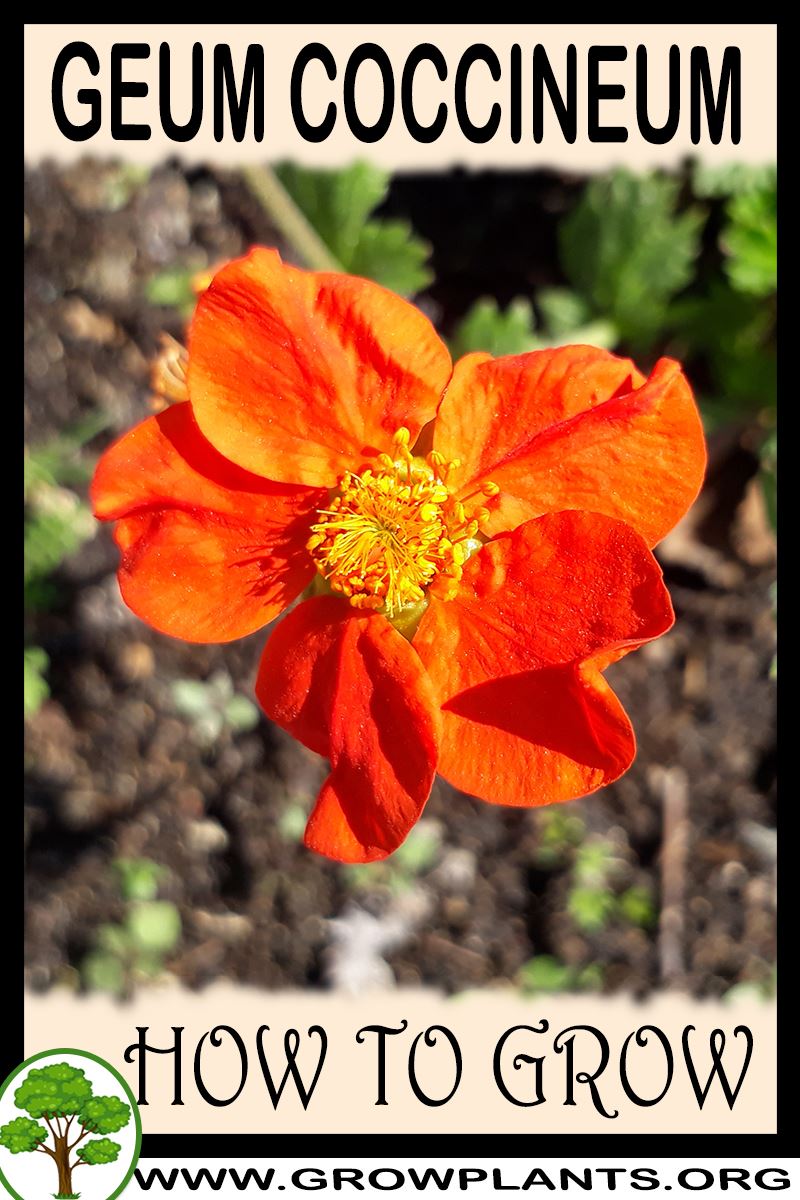
Overview: Dwarf orange avens (Geum coccineum) is a low, evergreen perennial about 10-20 cm (4-8 in) tall, grown as a hardy ornamental and cut flower. It forms a neat mound of foliage topped by bright orange-red flowers on wiry stems.
Quick Specifications
| Specification | Attribute |
|---|---|
| Plant Type / Life Cycle | Evergreen perennial |
| Foliage Type | Evergreen |
| Mature Size | 10-20 cm (4-8 in) tall (flower stems taller) |
| Growth Rate | Moderate |
| Root System | Rhizomatous (spreading fibrous roots) |
| Hardiness | USDA zones 5-9 |
Growth Form & Structure
- Height & Spread: A basal clump 10-20 cm (4-8 in) high, spreading slowly; suited to the front of borders and to containers.
- Growth Habit & Form: Low, clump-forming rosette spreading by short rhizomes, with flowers on wiry stems above.
- Lifespan & Maturity: A hardy, long-lived perennial flowering from spring through autumn.
Anatomy & Physical Features
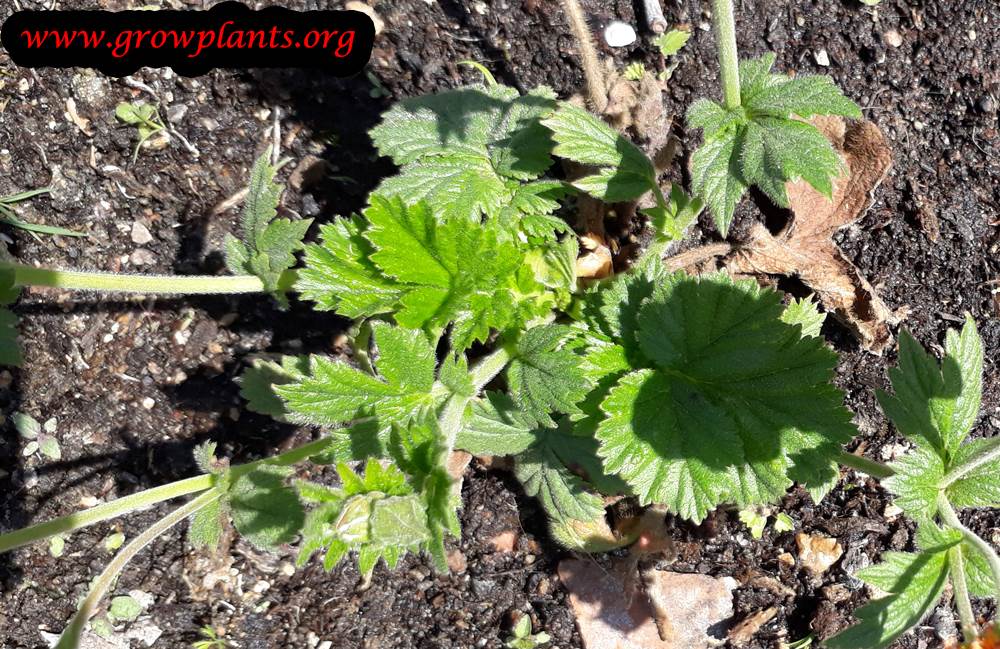
- Leaves & Foliage: Green, heart-shaped, lobed leaves with serrated margins in a basal rosette.
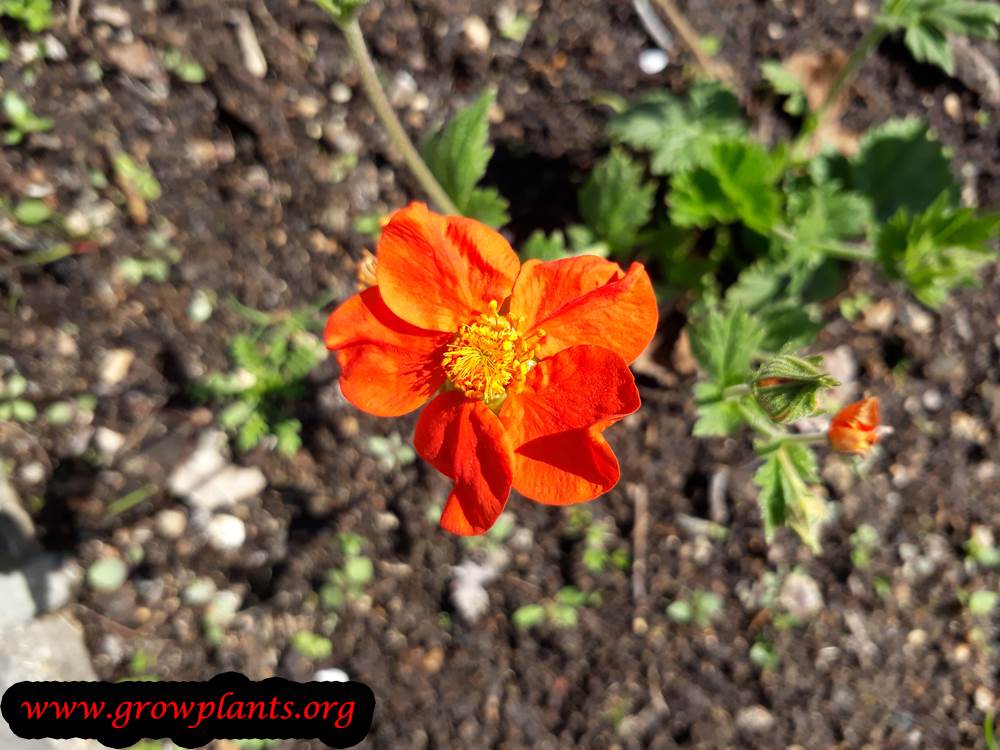
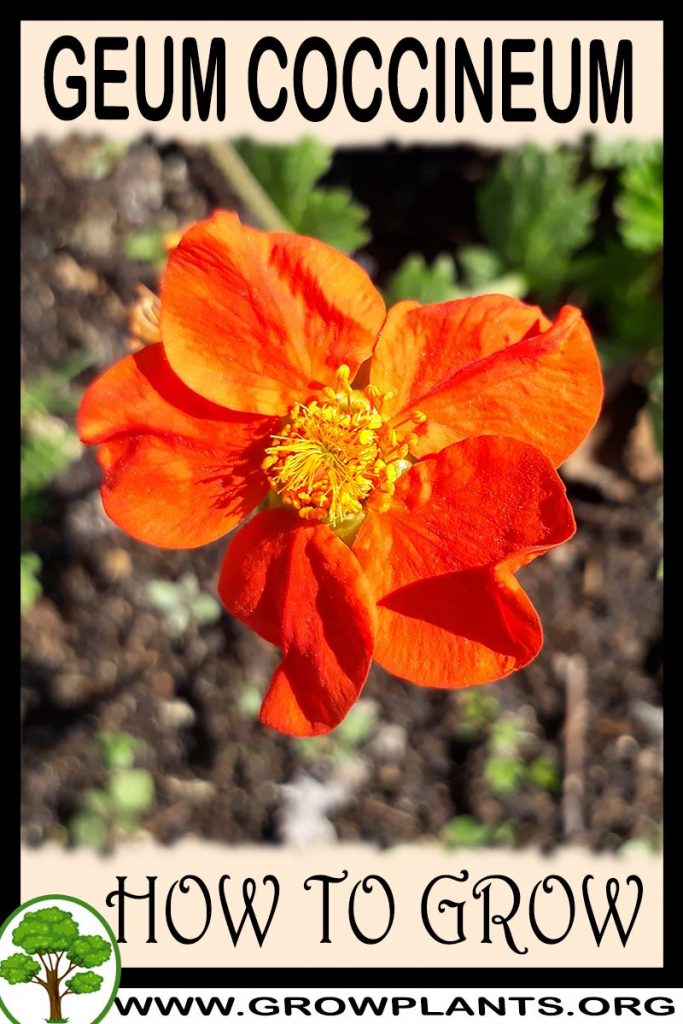
- Flower Characteristics: Bowl-shaped orange or red flowers with five petals.
Primary Uses & Landscape Value
- Functional & Ornamental Roles: Front-of-border, rockery and cottage-garden ornamental, also grown as a cut flower.
Care Guide: Planting, Soil & Watering
Overview: Geum coccineum (dwarf red avens) is a compact, medium-growing evergreen perennial for cool-temperate gardens (hardiness zone 5–9), thriving in full sun to part shade in humus-rich, well-drained soil. It likes soil that stays evenly moist without ever getting waterlogged.
Quick Care Requirements
| Requirement | Ideal Condition |
|---|---|
| Planting Season | Warm season — spring, summer or autumn |
| Growth Rate | Moderate |
| Soil Type | Rich, humus-laden, well-draining soil |
| Water Need | Low to Moderate — keep evenly moist, not soggy |
Planting & Establishment
- Best Planting Season: Plant in the milder weather of spring, summer or autumn so the roots establish before summer heat or winter cold.
- How to Plant:
- Hole Preparation: Dig a hole about twice the width of the root ball and the same depth.
- Soil Amendments: Enrich the soil with compost or leaf mould to hold moisture while keeping it free-draining.
- Planting Depth: Set the crown level with the surrounding soil; don’t bury it.
- Growth Speed & Expectations: Moderate — forms a low, spreading rosette that sends up flowering stems.
Soil, Watering & Drainage Care
- Soil Mix & Drainage Needs: Aim for moisture-retentive but well-drained soil; a low, boggy spot that stays wet in winter can rot the crown.
- Watering Schedule & Technique:
- Young / Newly Planted: Keep the soil consistently moist while the young plant roots in.
- Established: Water regularly in dry spells to keep the soil from drying out; established clumps still resent drought.
- Seasonal Adjustments: Reduce watering in cool, wet winters and water more in summer heat.
Climate, Light & Hardiness
Dwarf orange avens is a cold-hardy perennial suited to subtropical, Mediterranean, and temperate climates, growing best in full sun to half shade with well-drained soil.
Quick Climate Specifications
| Climate Zones | Subtropical, Mediterranean, Temperate |
|---|---|
| USDA Hardiness Zones | 5–9 |
| Frost Tolerance | High |
| Light Conditions | Full Sun to Half Shade |
Sunlight & Light Exposure
Optimal Light Setup
Full sun to half shade both work well; more shade helps in hotter climates.
Temperature Extremes & Hardiness
USDA Hardiness & Regional Limits
Hardy in USDA zones 5–9, tolerating cold winters typical of temperate gardens without protection.
Wind, Humidity & Microclimate
Rainfall & Seasonal Moisture
Prefers moderate, well-drained moisture; tolerant of somewhat drier conditions than many woodland perennials.
Growing in Pots, Balconies & Indoors
Geum coccineum is a low, hardy perennial with bright scarlet-orange flowers. The grower confirms it is not a houseplant but grows well in containers, so grow it in a pot outdoors on a patio or balcony, where its cheerful blooms sit at the front of a display.
Quick Details
- Container Size: 5-10 L – a compact 10-20 cm plant
- Indoor Suitability: Not suited to indoor life; best in a container outdoors
- Best Spot: Full sun to half shade
- Soil & Drainage: Free-draining, humus-rich potting mix that stays a little moist
- Watering in Pots: Keep evenly and lightly moist; water when the surface dries and avoid waterlogging
Indoors & On the Windowsill
- Not a houseplant: The grower marks it as unsuitable indoors – it is a hardy perennial that needs a cold winter rest a warm room cannot give.
- Windowsill: A bright, sunny sill is the closest option, but it does far better outdoors in a pot; poor light makes it lax and shy to flower.
- Cool rest: It dies back a little and rests over winter, so keep the pot outside in a cool, sheltered spot.
On a Balcony or Patio
- Light & wind: Give it a bright, open position with sun for part of the day; pots dry faster than the ground, so check moisture often.
- Practicalities: Neat and low, it suits the front of a mixed pot or a small standalone container; deadhead to prolong flowering and let runoff drain.
Choosing the Pot, Soil & Long-Term Care
- Pot & drainage: A pot with strong drainage holes; skip a standing-water saucer, which invites root rot. Terracotta breathes and dries faster (good for plants that hate wet feet); glazed or plastic pots hold moisture longer.
- Potting mix: Well-aerated potting mix – a peat-free or peat/coir blend opened up with perlite or vermiculite.
- Feeding: Potted plants need feeding more often than those in the ground, as watering leaches nutrients away; a balanced liquid feed through the growing season is enough.
- Repotting: Refresh the top of the mix each year and pot on or divide every couple of years, lightly trimming roots and old growth to keep it vigorous.
Fertilizing & Feeding
A light feeder: this compact, well-drained-soil perennial needs only modest balanced feeding in spring to support its long spring-into-autumn display of orange to red flowers, useful both in the border and as a cut flower.
Quick Fertilizing Specs
| Feeding Level | Light feeder |
|---|---|
| Main Nutrient Priority | A light, balanced feed through spring growth; avoid high-phosphorus “bloom booster” products, which are not needed to drive flowering |
| Best Feeding Period | From spring growth through summer and into the autumn bloom |
| Organic Options | A light top-dressing of compost worked into well-drained soil |
| Micronutrients | Usually adequately supplied by a light complete fertilizer; correct specific issues only when diagnosed |
| Soil pH | Prefers well-drained soil; tolerates a range but dislikes soggy, waterlogged conditions |
| Reduce/Stop Feeding | Taper off as bloom winds down and the plant heads into its winter rest |
Feeding by Growth Stage
Spring growth flush
Support modest new growth of this compact, evergreen perennial as it resumes active growth.
| Nutrient direction | A light, balanced complete fertilizer to support steady, compact growth. |
|---|---|
| Timing | As new growth resumes in spring. |
| Frequency | A single light feeding as growth resumes is usually enough. |
| Fertilizer types | A balanced complete garden fertilizer used sparingly, A light top-dressing of compost |
| Precautions | Avoid rich or heavy feeding; overfeeding pushes this compact plant into loose, floppy growth and can increase the risk of rot in poorly drained soil. |
Bloom through summer and autumn
Sustain the long display of orange to red flowers, including for cutting.
| Nutrient direction | Minimal, balanced feeding is usually enough; high-phosphorus “bloom booster” products are not needed to drive flowering in this plant. |
|---|---|
| Timing | Through the extended bloom period from spring into summer and autumn. |
| Frequency | Feed sparingly through bloom, easing off toward the end of the season. |
| Fertilizer types | A balanced complete garden fertilizer used sparingly |
| Precautions | Rich, heavy feeding during bloom favors foliage over flowers and can shorten the display. |
Winter rest
Let the plant rest over winter, when dead leaves and spent bloom stems are cleared away.
| Nutrient direction | None – withhold fertilizer through the winter rest period. |
|---|---|
| Timing | Through winter. |
| Frequency | No feeding at this stage. |
| Fertilizer types | No feeding at this stage – allow the plant to rest undisturbed |
| Precautions | Do not fertilize during winter rest; resume only once clear spring growth returns. |
Nutrient Deficiency Signs & Corrections
New leaves turn pale yellow between dark green veins while older leaves stay green.
| Possible causes | high soil pH tying up iron, soil that stays wetter than this plant prefers, root stress from poorly drained soil |
|---|---|
| Appears first on | the youngest leaves |
| What to check | soil pH, drainage in the planting area, recent watering pattern |
| Possible correction | Improve drainage, correct overly alkaline soil where practical, and apply a chelated iron product per its label if chlorosis persists. |
Overall pale, thin foliage and a weak spring growth flush.
| Possible causes | very lean soil with little organic matter, low soil nitrogen, root competition from nearby plants |
|---|---|
| Appears first on | older leaves first, then the whole plant |
| What to check | overall leaf color and density, soil organic matter level, recent feeding history |
| Possible correction | Apply a light, balanced complete fertilizer during spring growth rather than a heavy feed. |
Leaf margins scorch or brown, and flowers or flower stems come weaker than expected, including for cutting.
| Possible causes | low soil potassium, an imbalanced, nitrogen-heavy feeding history, leaching in light, sandy, well-drained soils |
|---|---|
| Appears first on | older leaf margins |
| What to check | leaf margin condition, recent feeding balance, flower stem strength |
| Possible correction | Shift to a light, balanced fertilizer rather than adding more nitrogen. |
Pruning, Training & Seasonal Maintenance
Geum coccineum is a small, evergreen basal-rosette perennial with no woody structure, so its maintenance is limited to deadheading spent flower stems and a winter tidy of the foliage – there is nothing to structurally train or shape. Because it is also grown as a cut flower, regularly cutting the flowering stems for use doubles as the plant’s main “pruning” through spring, summer and autumn, extending bloom by preventing the plant from setting seed. A winter cleanup of any tired or damaged leaves keeps the evergreen rosette looking fresh into the next season.
Quick Pruning & Maintenance Specs
| Pruning Tolerance | Low – light, rosette-scale maintenance only |
| Primary Pruning Window | Winter (foliage tidy) |
| Secondary Maintenance Window | Ongoing Spring–Autumn deadheading / cut-flower harvest |
| Typical Frequency | Frequent light deadheading during bloom; one winter tidy |
| Main Objective | Remove dead leaves and spent bloom stems; extend bloom via deadheading |
| Young Plant Priority | No pruning needed while the rosette establishes |
| Mature Plant Priority | Deadhead through the bloom season; clear dead leaves in winter |
| Best Tool Type | Precision snips |
| Avoid Heavy Pruning During | No hard cutback is used on this species at any point |
Pruning by Plant Age & Size
Newly Established
No pruning needed – let the small rosette establish undisturbed in its first season.
Young / Formative
No structural training applies to this low, rosette-forming perennial.
Mature / Established
Deadhead spent flowering stems through the bloom season (also usable as cut-flower harvest) and remove dead or tatty leaves in winter.
Seasonal Pruning Schedule
Ongoing Sanitary (Spring–Autumn): objective – extend bloom and keep the rosette tidy; remove spent flower stems at their base as they fade; do not disturb the central basal rosette. Expected response is continued flowering rather than the plant diverting energy into seed.
Winter tidy: objective – remove dead or damaged leaves; do not strip healthy evergreen foliage, since it protects the crown through winter.
Special Growth to Remove
- Spent flowering stems, cut at the base as they fade (doubles as cut-flower harvest)
- Dead or damaged leaves, cleared in winter
Container & Small-Space Pruning
Its naturally small size (10–20cm) suits containers without any size-control pruning; the same deadheading and winter tidy keep a container specimen neat.
Tools
- Precision snips for deadheading, cut-flower harvest, and dead-leaf removal
Tool Hygiene & Disease Risk
Routine – clean, sharp tools are sufficient; no significant transmissible disease risk is noted for this species.
Cut Placement & Technique
Cut flowering stems at their base, close to the rosette, rather than leaving a bare stub – the same cut used for cut-flower harvest serves as deadheading.
Heavy Pruning & Rejuvenation
Not applicable – this species is not hard-pruned or rejuvenated; if a clump becomes crowded or tired after several years, division rather than pruning is the appropriate renewal method.
Post-Pruning Care
No special aftercare beyond normal watering; light deadheading and leaf removal do not warrant extra feeding.
Common Pruning Mistakes
- Leaving spent flower stems to set seed instead of deadheading, which shortens the bloom period
- Stripping healthy winter foliage along with the dead leaves, reducing the rosette’s winter protection
When NOT to Prune
No strong restriction beyond leaving the central rosette undisturbed; this is light, ongoing maintenance rather than a seasonal restriction.
Recommended Tools (by task)
- Precision snips – the appropriate tool for deadheading, cut-flower harvest, and dead-leaf cleanup on a rosette this small.
Propagation Guide
Geum coccineum is grown mainly from seed, listed by the site as the way to start this plant with vegetative reproduction not required. As a clump-forming perennial, established plants can also be divided every few years to renew vigor or increase stock quickly. Overall difficulty is Easy.
Quick Propagation Specs
| Best Propagation Method | Seed |
| Alternative Methods | Clump division |
| Propagation Difficulty | Easy |
| Seed True-to-Type | Usually true-to-type |
| Vegetative True-to-Type | Yes |
| Best Propagation Season | Spring to autumn |
Growing from Seed
Sowing Season
Spring, summer or autumn, per the site’s planting season.
Germination Conditions
Sow in moist, well-drained soil in line with this species’ preference; germination is generally straightforward for this genus.
Division, Offsets, Pups & Suckers
Divide established clumps, ideally in spring or autumn, lifting the plant and separating sections that each keep roots and healthy growth points; replant promptly and keep consistently watered until re-established.
Bloom & Flower Guide
Quick Details
- Bloom Season: Late spring through summer
- Time to First Bloom: Established clumps flower each year
- Flower Appearance: Bright orange to red, bowl-shaped flowers with five petals on wiry stems
- Edibility: Grown as an ornamental and cut flower – not eaten
Detailed Blooming Overview
Red avens sends up slender, wiry stems topped with warm orange-red bowls above a low rosette of lobed leaves. The airy, long-stemmed flowers are excellent for cutting and keep coming through much of summer if spent blooms are removed.
Flower Characteristics
- Bowl-shaped flowers with five petals in vivid orange to red.
- Held well above the foliage on thin, branching stems.
Bloom Care & Thinning
- Encouraging bloom: Deadhead regularly to extend the long flowering season.
- Pollination: The open flowers attract bees and other pollinators.
Pests, Diseases & Troubleshooting
Overview: Avens (Geum) are tough, easy Rosaceae perennials with relatively few serious problems. Their main enemies are the mildews in crowded or dry conditions and a few leaf-chewers and sap-suckers; the biggest long-term issue is not a pest at all but crown die-out in old, undivided or waterlogged clumps. Grow in moisture-retentive but well-drained soil, divide regularly, and rely on cultural care before sprays.
Quick Troubleshooting Overview
| Issue / Pest | Main Symptom | Primary Solution |
|---|---|---|
| Powdery mildew | White powdery film on leaves in dry, crowded sites | Improve airflow, mulch to keep roots cool and moist, divide clumps |
| Aphids | Sticky, distorted new growth and flower stems | Hose off, encourage predators; soap or neem if persistent |
| Sawfly / caterpillars | Ragged holes and chewed leaf margins | Hand-pick larvae; tolerate light damage |
| Downy mildew | Yellow blotches with grey mould beneath in cool wet spells | Airflow, remove affected leaves, avoid overhead watering |
| Vine weevil | Container plants wilt; grubs eating roots | Nematode drench, hand-pick adults at night |
| Crown die-out (abiotic) | Clump dies in the centre and thins after a few years | Lift and divide every 2–3 years; improve winter drainage |
Common Pests & Management
- Aphids (Aphis / Macrosiphum spp.):
- Symptoms: Colonies of soft-bodied green or black insects on flower stems, buds and new leaves, causing distortion, honeydew and sooty mould.
- Prevention & Control: Dislodge with a jet of water and support ladybirds and hoverflies; treat persistent colonies with insecticidal soap or neem in the evening.
- Sawfly larvae & caterpillars (Various Tenthredinidae / Lepidoptera):
- Symptoms: Caterpillar-like larvae rasping holes and notching leaf margins in spring and summer, occasionally defoliating soft new growth.
- Prevention & Control: Hand-pick larvae, encourage birds and predatory insects, and tolerate minor cosmetic damage; use a bio-insecticide only under heavy pressure.
- Vine weevil (Otiorhynchus sulcatus):
- Symptoms: Adults notch leaf edges at night; the serious damage is from white grubs eating roots of container plants, which then wilt and collapse.
- Prevention & Control: Drench pots with parasitic nematodes in warm soil, hand-pick adults after dark, and inspect root balls when repotting.
- Two-spotted spider mite (Tetranychus urticae):
- Symptoms: Fine pale stippling and bronzing with faint webbing on leaf undersides in hot, dry spells.
- Prevention & Control: Raise humidity, hose foliage, and encourage or release predatory mites; horticultural oil for heavy infestations.
- Slugs & snails (Deroceras / Cornu spp.):
- Symptoms: Holes in tender new leaves and shredded seedlings, with slime trails, in damp shaded spots.
- Prevention & Control: Hand-collect at night, use grit or copper barriers, and clear debris; iron-phosphate pellets where pressure is high.
Diseases & Fungal Issues
- Powdery mildew (Podosphaera / Sphaerotheca):
- Symptoms: White powdery coating on leaves and stems, worst on dry-stressed or congested plants, leading to yellowing and dieback.
- Treatment & Management: Keep roots cool and evenly moist with mulch, improve airflow by dividing and spacing, and water at the base. Sulfur or potassium-bicarbonate sprays if persistent.
- Downy mildew (Peronospora / Plasmopara):
- Symptoms: Angular yellow blotches above with a greyish furry growth on the undersides during cool, wet weather.
- Treatment & Management: Improve drainage and airflow, remove infected foliage, and avoid overhead watering; copper sprays in prolonged wet spells.
- Leaf spot (Ramularia / Cercospora):
- Symptoms: Brown or purplish spots that may merge and cause premature leaf loss, mostly cosmetic.
- Treatment & Management: Remove spotted leaves, clear fallen debris, and keep foliage dry; sanitation is usually enough.
- Rust (Puccinia spp.):
- Symptoms: Orange-brown pustules on leaf undersides with yellow flecking above; uncommon but possible.
- Treatment & Management: Remove affected leaves, thin the clump, and avoid wetting foliage; a fungicide only for repeat outbreaks.
Growing Difficulties & Abiotic Problems
- Crown die-out / centre thinning:
- Cause & Symptoms: Old, undivided clumps lose vigour and die out in the middle after a few years.
- Correction Strategy: Lift and divide every 2–3 years in the dormant or cool season to renew the plant and keep it flowering well.
- Winter crown rot:
- Cause & Symptoms: Crowns rot and plants fail in heavy, waterlogged soil over a wet, cold dormancy.
- Correction Strategy: Improve drainage, add grit, and avoid planting in low, soggy spots; raised or sloped beds help.
- Drought scorch & poor bloom:
- Cause & Symptoms: Crisped leaves, stalled flowering and mildew pressure on dry, sunny sites.
- Correction Strategy: Mulch, water in dry spells, and site in moisture-retentive soil with some afternoon shade in hot climates.
What Helps – Products & Tools
Cultural tools do most of the work: a fork for regular division, mulch to keep roots cool and moist, and grit for winter drainage. For sap-suckers, insecticidal soap or neem in the evening; for the mildews, sulfur or potassium-bicarbonate; parasitic nematodes for vine weevil in containers; iron-phosphate pellets for slugs.