



Plant Profile & Key Characteristics
Overview: An everbearing herbaceous perennial strawberry grown as an ornamental groundcover and for its aromatic red berries that taste of wild alpine strawberries. It stays low at 5–10 cm and spreads by runners, evergreen in mild climates.
Quick Specifications
| Specification | Attribute |
|---|---|
| Plant Type / Life Cycle | Perennial (herbaceous) |
| Foliage Type | Evergreen (in mild climates) |
| Mature Size | 5–10 cm tall (2–4 in); spreads by runners |
| Growth Rate | Fast |
| Root System | Fibrous, shallow (spreads by runners / stolons) |
| Toxicity | Non-toxic / edible |
| Hardiness | USDA zones 5–10a |
Growth Form & Structure
- Height & Spread: In the ground 5–10 cm (2–4 in) high, spreading by runners; compact and trailing in a pot.
- Growth Habit & Form: Low, mat-forming groundcover of trifoliate leaves.
- Lifespan & Maturity: Short-lived perennial renewed from runners; everbearing, with first fruit roughly 2–4 months after planting.
Anatomy & Physical Features
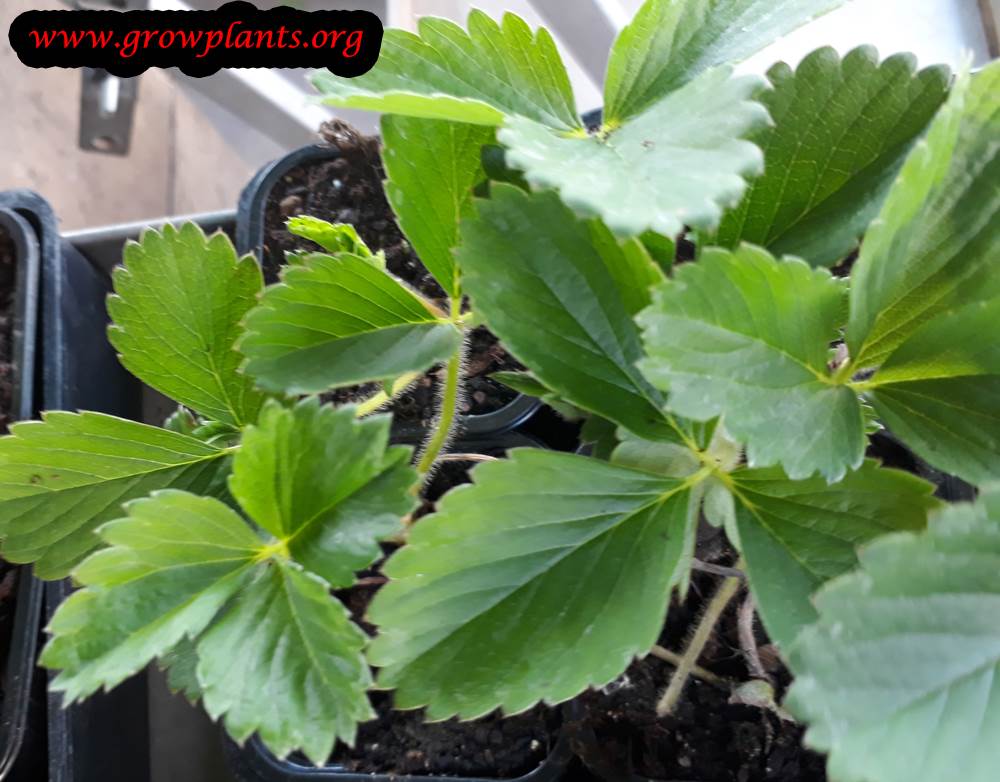
- Leaves & Foliage: Green trifoliate leaves with serrated edges on slender stems.
- Flower Characteristics: White five-petalled flowers with yellow stamens, pollinated by bees.
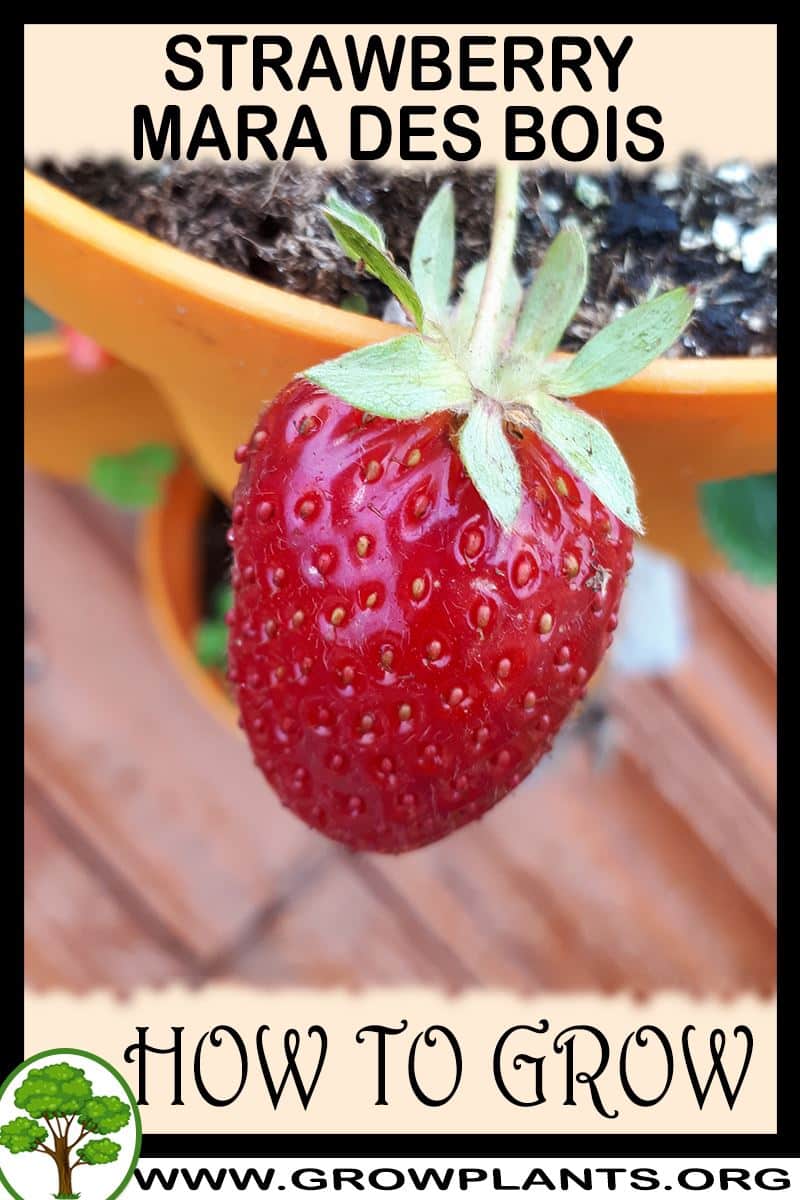
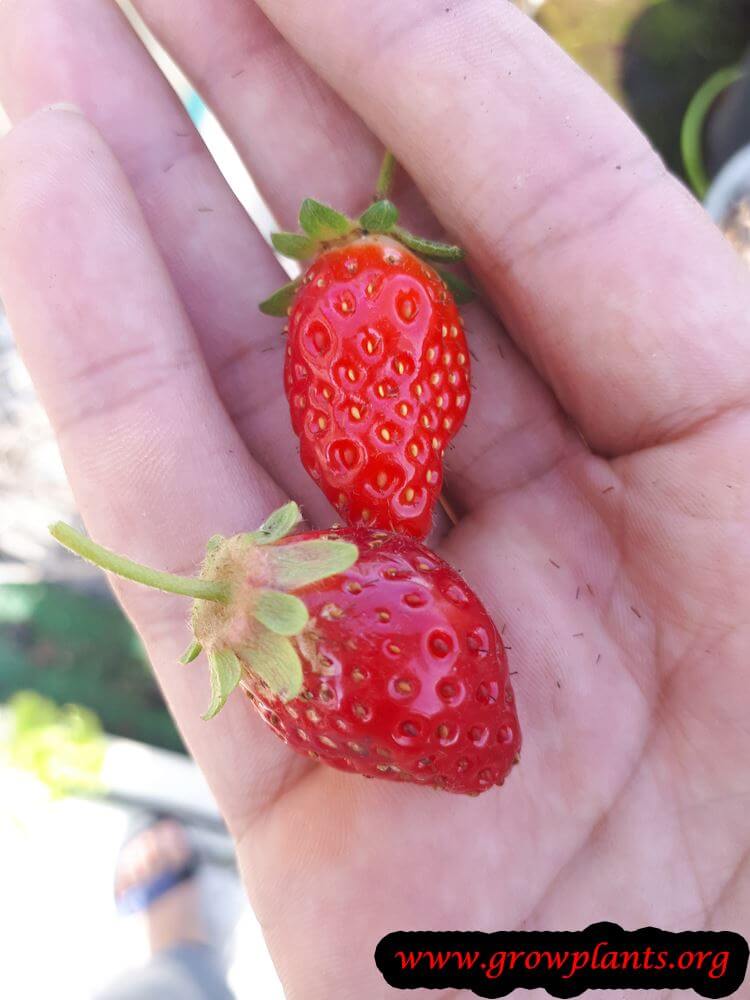
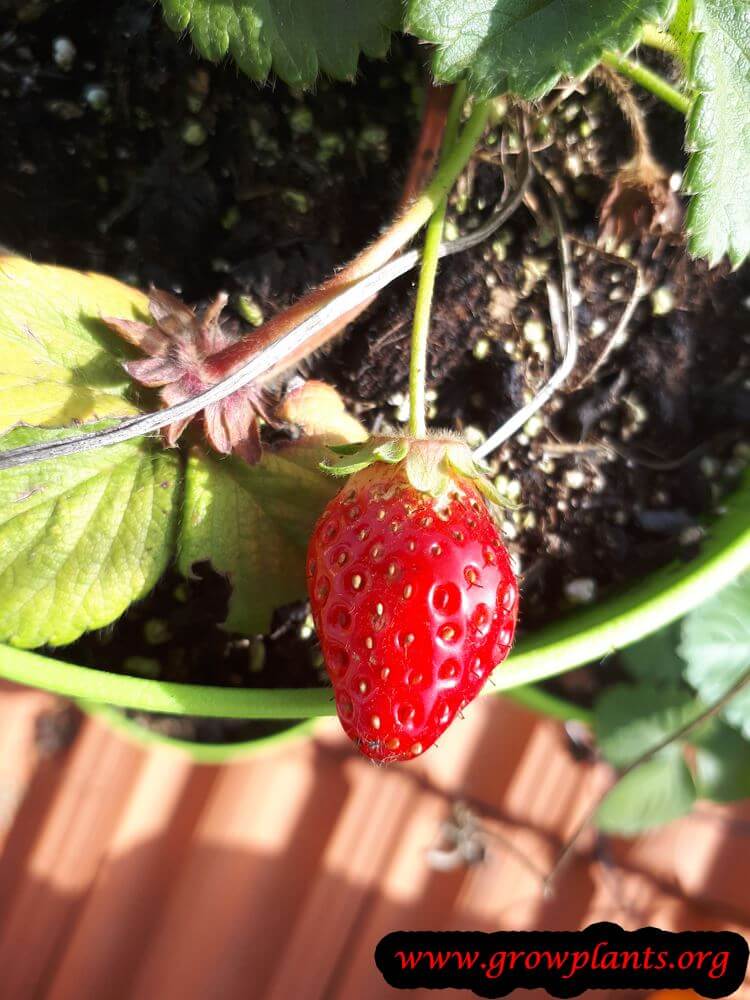
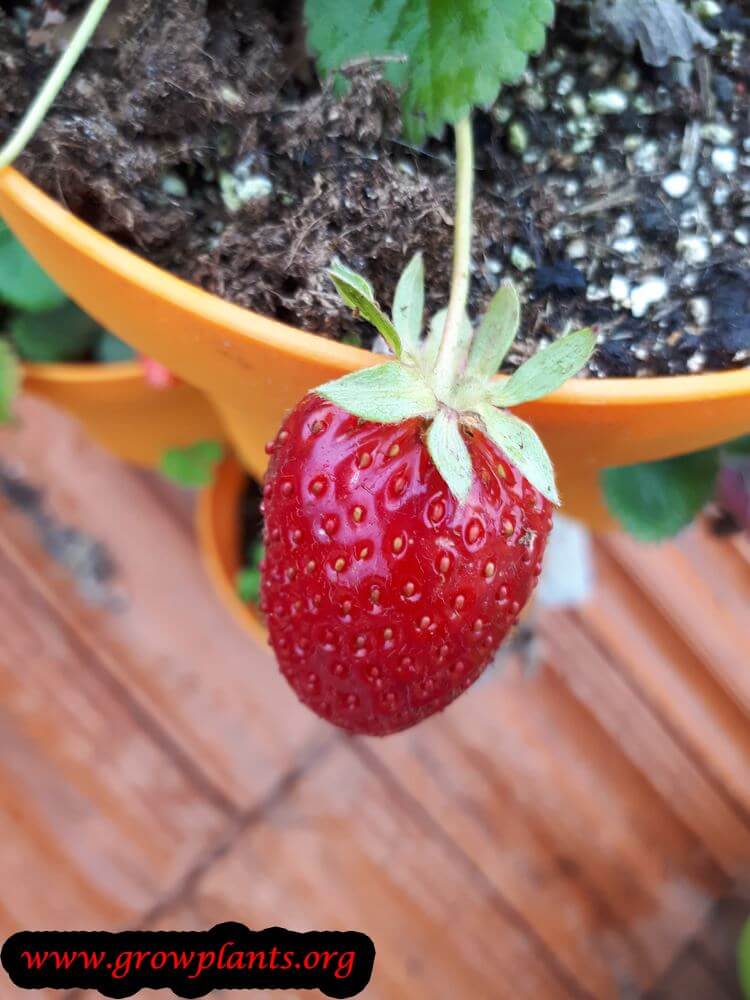
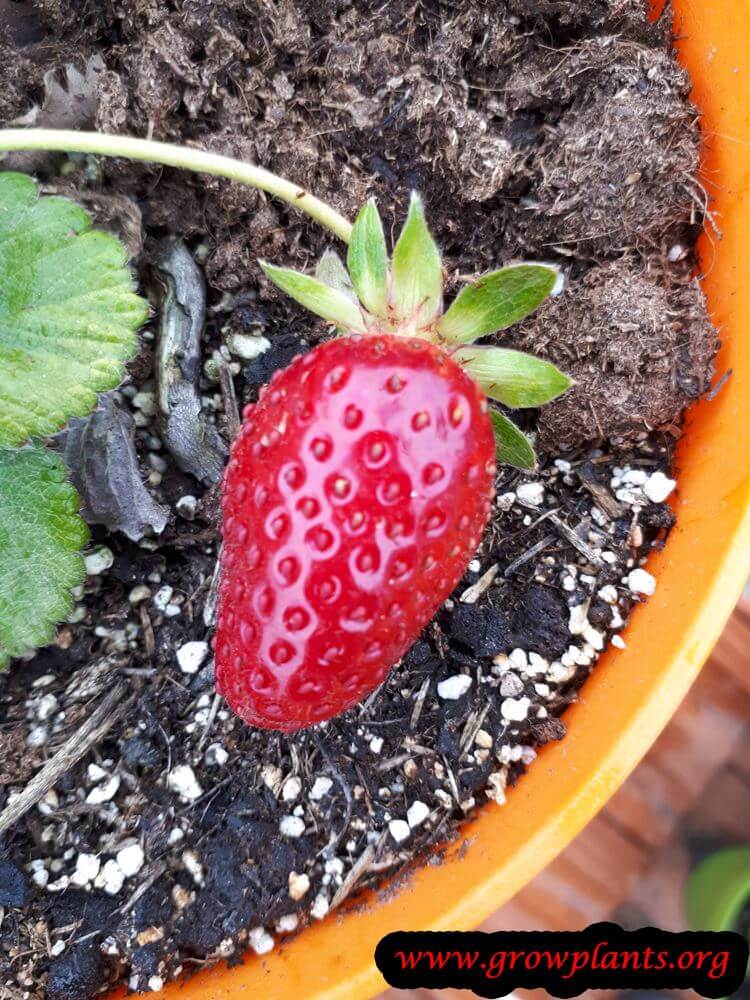
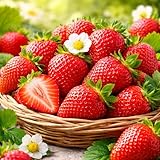
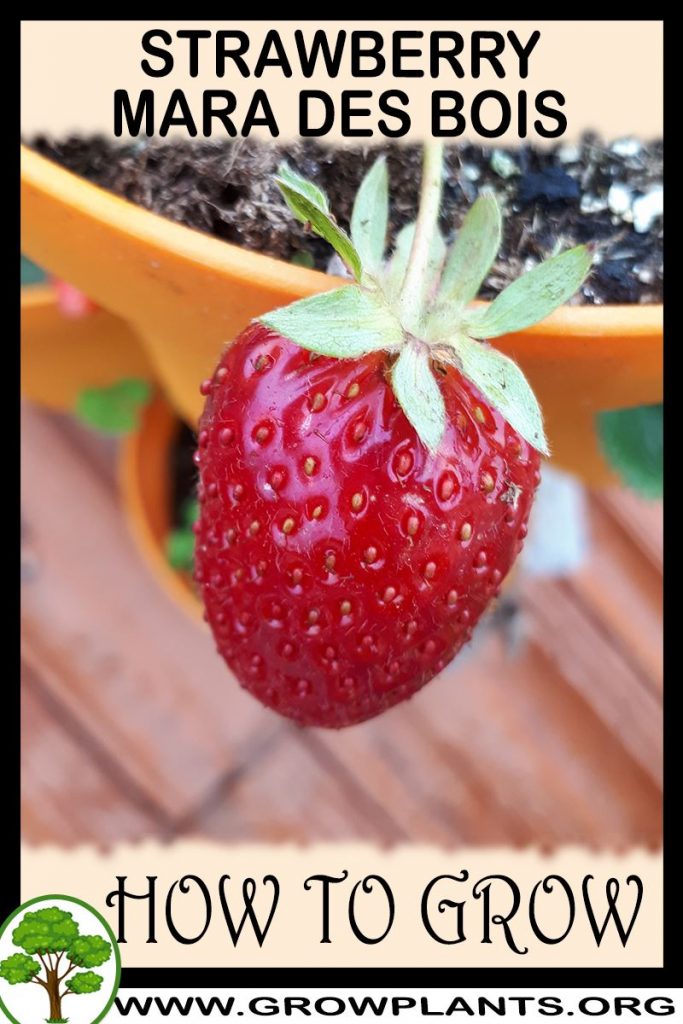
- Fruit Profile: Red, cone- to heart-shaped berries 1–3 cm across with an aromatic alpine-strawberry flavour.
Primary Uses & Landscape Value
- Edible Uses: Berries eaten fresh or used for jam, juice and cakes.
- Functional & Ornamental Roles: Ornamental everbearing edible groundcover for beds, edges and containers.
Care Guide: Planting, Soil & Watering
Overview: Mara des Bois strawberry is a low, running perennial that grows best in full sun to part shade in rich, moist, slightly acidic soil. Mulch to keep the fruit clean and the soil evenly moist, and water consistently for the best crop.
Quick Care Requirements
| Requirement | Ideal Condition |
|---|---|
| Planting Season | In spring to summer, after frost |
| Growth Rate | Fast |
| Soil Type | Rich, moist, well-drained soil high in organic matter |
| Soil pH | Slightly acidic (source notes it prefers slightly acid soil) |
| Water Need | Moderate to High — keep evenly moist |
Planting & Establishment
- Best Planting Season: Plant in spring to summer once frost has passed and the soil has warmed.
- How to Plant:
- Hole Preparation: Dig a hole to suit the shallow crown and spreading runners; leave room for it to spread as a ground cover.
- Soil Amendments: Enrich the soil with compost and organic matter; a straw mulch keeps fruit off the soil and holds moisture.
- Planting Depth: Set the crown exactly at soil level — buried crowns rot and exposed ones dry out — then firm and water in.
- Growth Speed & Expectations: Fast, quickly spreading by runners to form a fruiting carpet a few centimetres tall; this everbearing type fruits from summer into autumn.
Soil, Watering & Drainage Care
- Soil Mix & Drainage Needs: Rich, moisture-retentive but well-drained soil is ideal; steady moisture supports fruiting while good drainage prevents crown rot.
- Watering Schedule & Technique:
- Young / Newly Planted: Keep the soil consistently moist while plants and runners establish.
- Established: Water regularly, especially in flower and fruit, so the soil never dries out; mulch to conserve moisture.
- Seasonal Adjustments: Water more in summer heat and fruiting; reduce in cool weather.
Climate, Light & Hardiness
This everbearing strawberry variety is a cold-hardy perennial suited to temperate, mediterranean, and subtropical climates, reliably surviving winters from about USDA zone 5 through 10a. It fruits best in full sun, tolerating light shade with somewhat reduced yields.
Quick Climate Specifications
| Climate Zones | Temperate, Mediterranean, Subtropical |
|---|---|
| USDA Hardiness Zones | 5–10a |
| Light Conditions | Full Sun to Half Shade |
Sunlight & Light Exposure
Optimal Light Setup
Full sun gives the heaviest, sweetest fruiting; half shade is tolerated, especially in hot-summer climates, but flowering and fruit set are reduced.
Shade & Heat Management
In the hottest parts of its zone 9–10a range, a little afternoon shade helps protect fruit and foliage from scorching.
Temperature Extremes & Hardiness
USDA Hardiness & Regional Limits
The herbaceous perennial crown reliably overwinters outdoors zone 5–10a; toward the cold end of that range, a winter mulch over the crowns helps guard against frost heave and cold injury.
Cold Damage & Winter Protection
The dormant crown is far more cold-tolerant than open flowers - a late spring frost after flowering starts can damage or destroy that season's blossoms and fruit set even though the plant itself survives.
Frost Sensitivity
Dormant crowns tolerate real winter cold well; open flowers and young fruit are frost-sensitive in spring.
Wind, Humidity & Microclimate
Rainfall & Seasonal Moisture
Suits climates with reasonably reliable moisture through the growing season rather than a long, hard dry summer.
Growing in Pots, Balconies & Indoors
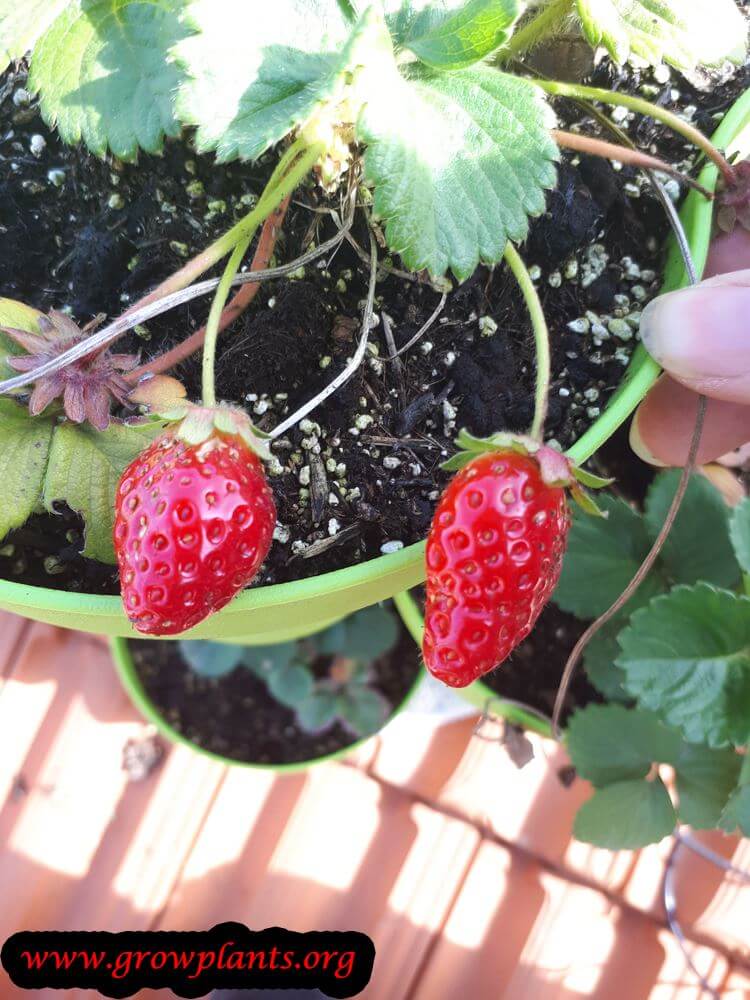
‘Mara des Bois’ is a compact, everbearing strawberry, 5-10 cm high, prized for its intense wild-strawberry aroma. It is not a deep-room houseplant, but it is superb in containers and can fruit on a very sunny windowsill, balcony or patio.
Quick Details
- Container Size: A pot, trough or hanging basket of about 3-10 L; strawberries have shallow roots
- Indoor Suitability: Not a deep-indoor plant, but a compact everbearer can fruit on a bright, sunny sill
- Best Spot: Full sun to part shade – the sunniest spot for the best crop
- Soil & Drainage: Rich but free-draining mix
- Watering in Pots: Average to generous – keep evenly moist while flowering and fruiting; pots dry fast
Indoors & On the Windowsill
- Not a deep-room plant: The grower marks it ‘No’ for indoors – strawberries need strong light to fruit well.
- Windowsill: On your brightest, sunniest sill with direct sun, this compact everbearer can flower and fruit indoors; poor light gives leaves but little fruit.
- Season: As an everbearer it crops over a long season – a sunny sill can extend picking into the cooler months.
On a Balcony or Patio
- Light & warmth: Give it the sunniest spot; baskets and troughs on a warm balcony crop heavily and keep the fruit off the ground.
- Watering: Small pots and baskets dry very fast – check daily in warm weather and keep the mix evenly moist for good fruit.
Choosing the Pot, Soil & Long-Term Care
- Pot & drainage: A pot, trough or basket with good holes; skip a standing water saucer to avoid root rot. Terracotta breathes and dries fast (good for succulents), while glazed or plastic holds moisture longer.
- Potting mix: A rich, free-draining mix – potting mix with added compost and a little perlite.
- Feeding: Feed with a high-potash (tomato) feed while flowering and fruiting; Potted plants exhaust their food faster because watering leaches nutrients, so feed lightly through the growing season – more often than plants in open ground.
- Refreshing: Replace tired plants and refresh the mix every year or two, potting on rooted runners for new stock.
Fertilizing & Feeding
A moderate feeder – this everbearing strawberry benefits from light, regular feeding through its long growth and fruiting season rather than infrequent heavy doses.
Quick Fertilizing Specs
| Feeding Level | Moderate feeder |
|---|---|
| Main Nutrient Priority | Nitrogen-forward during leaf and runner growth, shifting toward balanced-to-potassium as flowering and fruiting take over |
| Best Feeding Period | From establishment through the summer-to-autumn fruiting season |
| Organic Options | Compost, well-rotted organic matter, and mulch worked into rich, moist soil |
| Micronutrients | Usually adequate from a complete fertilizer and rich soil; correct specific issues only when diagnosed |
| Soil pH | Prefers slightly acidic, rich, moisture-retentive soil |
| Reduce/Stop Feeding | Taper off feeding as the fruiting season winds down and after harvest |
Feeding by Growth Stage
Establishment after planting
Help new plants root in and build a productive crown before flowering and fruiting begin.
| Nutrient direction | A balanced fertilizer worked into rich, well-drained soil to support root and crown establishment. |
|---|---|
| Timing | At planting and through the first weeks of root establishment. |
| Frequency | A light feeding at planting, worked into the surrounding soil. |
| Fertilizer types | A balanced complete fertilizer worked into the planting soil, Compost or well-rotted organic matter mixed into rich, moist soil |
| Precautions | Keep the crown itself above the soil line when feeding and planting; burying it invites rot in consistently moist, rich soil. |
Leaf and runner growth
Build a full, healthy leaf canopy and runners ahead of flowering.
| Nutrient direction | A nitrogen-forward feed to support vigorous leaf and runner growth. |
|---|---|
| Timing | In the weeks of active leafy growth before flowering begins. |
| Frequency | Regular light feedings through this active growth phase. |
| Fertilizer types | A nitrogen-forward complete fertilizer, Compost or well-rotted organic matter as a mulch |
| Precautions | Ease off nitrogen as flowering approaches; too much nitrogen late tends to favor leaves and runners over fruit. |
Flowering and fruit development
Support quality fruit set and development through harvest.
| Nutrient direction | Shift toward a balanced to potassium-forward feed as flowering and fruiting take over from leaf growth. |
|---|---|
| Timing | From flowering through the summer-to-autumn fruiting and harvest period. |
| Frequency | Light, steady feeding through fruiting, tapering as harvest winds down. |
| Fertilizer types | A balanced to potassium-forward fertilizer suited to fruiting strawberries, Mulch to keep fruit clean and conserve soil moisture |
| Precautions | Keep fruit off the soil with mulch, and avoid heavy nitrogen during fruiting, which favors leaf growth over fruit quality. |
Nutrient Deficiency Signs & Corrections
New leaves are pale yellow between green veins while older leaves remain a normal color.
| Possible causes | high soil pH limiting iron availability, poorly drained or compacted soil, cold or waterlogged root conditions |
|---|---|
| Appears first on | new leaves |
| What to check | soil pH and drainage, recent watering, age of the planting |
| Possible correction | Improve soil drainage and organic matter; if confirmed, apply a chelated iron product per its label. |
Flowers form but fruit is sparse, small, or unusually soft.
| Possible causes | excess nitrogen favoring leaf growth over fruit, inconsistent watering during fruit development, insufficient pollination |
|---|---|
| Appears first on | developing fruit |
| What to check | recent feeding balance, watering consistency, pollinator activity around bloom |
| Possible correction | Shift toward a balanced to potassium-forward feed and keep watering consistent through fruit development. |
The central crown darkens, softens, and the plant wilts or collapses despite moist soil.
| Possible causes | waterlogged or poorly drained soil, the crown planted too deep or buried by mulch or fertilizer, fungal crown disease favored by wet conditions |
|---|---|
| Appears first on | the crown at the soil line |
| What to check | planting depth, soil drainage, mulch and fertilizer placement around the crown |
| Possible correction | Improve drainage, keep the crown clear of mulch and fertilizer, and remove severely affected plants. |
Pruning, Training & Seasonal Maintenance
Mara des bois is a low, herbaceous, everbearing (repeat-flushing) strawberry with no woody framework, so its ‘pruning’ is really foliage and runner management rather than branch cutting. Because it produces flower trusses on new growth in repeated flushes from summer into autumn rather than in one single crop, maintenance is done lightly and continually – mainly right after each fruiting flush – instead of on one dormant-season cut. Done correctly it keeps the crown clean and productive; done wrong (cutting into the crown, or mowing it like a June-bearer) it can remove the very growth points setting the next flush.
Quick Pruning & Maintenance Specs
| Pruning Tolerance | Low (foliage and runner management only, no woody cuts) |
| Primary Maintenance Window | After each fruiting flush (summer–autumn) plus a general autumn tidy |
| Typical Frequency | Light, ongoing through the growing season |
| Main Objective | Remove spent/diseased leaves, manage runner numbers, keep fruit clear of the soil |
| Young Plant Priority | Let the crown build leaf mass before allowing runners to root |
| Mature Plant Priority | Renew the leaf canopy after each flush; balance runner number against fruit size |
| Best Tool Type | Precision snips |
| Avoid Heavy Handling During | An active flowering/fruiting flush – cutting then removes the current crop |
Pruning by Plant Age & Size
Newly Established
No cutting needed; let the young plant build its rosette of leaves before removing anything.
Young / Formative
Decide runner policy early: let a few runners root to produce new plants, or remove them promptly so the mother crown puts its energy into its own fruit. There is no branch/leader training since this is a low, crown-forming herbaceous plant.
Mature / Established
After each fruiting flush, remove tattered, shaded, or diseased lower leaves back to the crown, and continue thinning excess runners.
Seasonal Pruning Schedule
Post-Flush (After Each Fruiting Round)
Objective: renew the canopy and reduce disease pressure. Remove: spent flower stalks and old, shaded, or diseased leaves, cut at the petiole base. Do not remove: young unfurling leaves or developing flower trusses. Response: a fresh flush of leaves and, being everbearing, continued flower-truss production rather than a single annual crop.
Dormant/Winter
Objective: tidy the overwintering crown. Remove: dead or frost-damaged leaves. Do not remove: the crown itself, which holds next season’s growth points.
Flowering & Fruiting Wood
Unlike a woody fruit crop, Mara des bois flowers and fruits on the current season’s herbaceous growth in repeated flushes rather than on year-old wood, so leaf and runner cleanup between flushes does not sacrifice a future year’s crop – only cutting during an active flush removes fruit outright.
Special Growth to Remove
- Runners/stolons – this cultivar is propagated vegetatively by runners, so choose which daughters to keep rooted and remove the rest to avoid diverting energy from the mother plant’s fruit.
- Spent flower stalks after each flush.
- Old, shaded, or diseased leaves.
Container & Small-Space Pruning
In a pot or hanging basket, runners crowd the container much faster than in an open bed, so trim them more assertively to maintain airflow around the leaves and reduce the foliar disease risk that comes with congestion.
Tools
- Precision snips for all cuts – leaves, runners, and spent flower stalks are all soft tissue on a low herbaceous crown; loppers and saws are never needed.
Tool Hygiene & Disease Risk
Increased: strawberries are prone to foliar fungal issues (leaf spot, and gray mold/Botrytis on the fruit) that can be carried on cutting tools between plants in a bed. Clean tools between plants when removing visibly spotted or diseased leaves; routine hygiene is enough for ordinary leaf/runner trimming.
Cut Placement & Technique
Remove leaves at the base of the petiole where it meets the crown. Cut runners at their point of attachment to the mother crown, leaving any wanted rooted daughter plant in place.
Heavy Pruning & Rejuvenation
Not applicable in the woody sense. Unlike June-bearing strawberries, which some growers renovate by mowing all foliage off after the single harvest, an everbearing/day-neutral type like Mara des bois should not be mown down, since that removes crown tissue that is actively setting the next flush of flowers.
Post-Pruning Care
Keep mulch or straw under the crown after thinning leaves so ripening fruit stays off bare soil. Watch for slugs, especially where opened-up foliage increases fruit contact with mulch or soil.
Common Pruning Mistakes
- Mowing or hard-cutting the whole plant back as if it were a June-bearer, removing actively forming flower trusses.
- Leaving too many runners, which reduces the mother plant’s fruit size.
- Leaving diseased leaves in place instead of removing and disposing of them promptly.
When NOT to Prune
Avoid cutting during an active flowering or fruiting flush, and never cut into the central crown.
Recommended Tools (by task)
- precision_snips – the only tool this small herbaceous crown crop needs, for deadheading, leaf renewal, and runner removal.
Pruning Troubleshooting
| Problem | Possible Cause | What to Check | Corrective Action |
| Small or fewer fruit | Too many runners left to root, diverting energy from the mother crown | Runner count around each crown | Sever and thin excess runners, keeping only wanted daughters |
| Fungal leaf or fruit spotting spreading through the bed | Diseased leaf debris left in place, or tools not cleaned between plants | Leaves for lesions before cutting | Remove and dispose of affected leaves promptly; wipe tools between plants |
| Reduced flowering after a cutback | Whole plant mowed or hard-cut like a June-bearer | Whether the crown itself was cut, not just old leaves | For this everbearing type, remove leaves individually and never mow the crown |
Propagation Guide
Mara des bois is propagated vegetatively – by rooting the runners (daughter plants) it sends out, or by dividing established crowns – since as a named hybrid cultivar it will not come true from seed. This is an easy, fast method that keeps the plant’s specific flavor and fruiting characteristics intact.
Quick Propagation Specs
| Best Propagation Method | Runners (daughter plants) |
| Alternative Methods | Crown division |
| Propagation Difficulty | Easy |
| Seed True-to-Type | No – hybrid offspring vary |
| Vegetative True-to-Type | Yes |
| Best Propagation Season | Spring to summer |
Division, Offsets, Pups & Suckers
Established, healthy crowns can be lifted and divided, ideally in spring or just after the fruiting season. Each division needs its own roots and at least one growing point (crown); trim off old or damaged leaves before replanting to reduce stress while it re-establishes, and keep new divisions consistently moist and mulched, as this plant prefers rich, moisture-retentive, slightly acid soil.
Runners & Stolons
Like other strawberries, Mara des bois produces runners that root readily where they touch the soil, or a small pot of soil placed underneath them. Leave the developing daughter plantlet attached to the mother plant until it has formed its own root system, then sever the runner and, if it was rooted into a separate pot, transplant it. Keep new plantlets and fruit off bare ground with mulch, in keeping with this plant’s general care needs.
Bloom & Flower Guide
Quick Details
- Bloom Season: Late spring through summer, and into autumn as an everbearer
- Flower Appearance: White, five-petalled flowers with a central boss of yellow stamens
- Edibility: The flowers are harmless but not eaten — the plant is grown for its aromatic berries
Detailed Blooming Overview
‘Mara des Bois’ is an everbearing strawberry with the perfume of a wild woodland berry. Its simple white flowers open over a long season, each one the start of a fruit.
Flower Characteristics
- White flowers with five petals and a central cluster of yellow stamens.
- Produced over a long period from late spring onward.
Bloom Care & Thinning
- Thinning: on newly planted runners, pinching off the first flush of flowers lets the plant build strength for a heavier later crop.
- Pollination: mainly by bees — good pollination gives well-formed, even berries.
Bloom Health & Protection
- Grey mould (Botrytis): can rot open blossoms in damp weather — airflow, removing affected flowers and a suitable fungicide help.
- Late frost: can blacken the centre of open flowers — covering plants on frosty nights protects the bloom.
Fruit & Uses
Strawberry Mara des bois is grown for its small, fragrant berries, which are eaten fresh out of hand and also cooked or processed into preserves. The fruit needs no preparation beyond rinsing and is ready to eat as soon as it is fully coloured and picked.
Quick Edible Specs
| Edible Parts | Fruit (berries) |
|---|---|
| Main Use(s) | Culinary – fresh eating, jams, juice, baking |
| Eaten Raw or Cooked | Raw (fresh eating); also cooked into jams, juice and cakes |
| Preparation Required | None – rinse before eating |
| Harvest Season | Summer to autumn |
| Time to First Harvest | Fruits form within the plant’s first growing season once established (see Propagation for exact timing) |
| Storage | Best eaten fresh soon after picking; excess fruit keeps longer once made into jam or juice |
| Safety/Toxicity Caveat | None known |
Fruit
The berries are red, cone-shaped and sometimes heart-shaped, small to medium at about 1–3cm, with a flavour reminiscent of wild Alpine strawberries. Pick the fruit once it has turned fully red and detaches easily from the stem. Because the fruit sits close to the ground, keep it from touching the soil (e.g. with mulch or a strawberry mat) to avoid rot and reduce pest damage; birds and slugs are the main fruit pests to watch for during ripening.
Preparation, Uses & Safety
Fruit is most often eaten raw straight from the plant, and larger pickings are put into jams, juice or baked into cakes. No cooking or processing is required for safe eating; wash the berries before use. No toxicity or allergy caveats are noted for this plant.
Pests, Diseases & Troubleshooting
Overview: ‘Mara des Bois’ is a prized everbearing garden strawberry (Fragaria × ananassa) famed for its intense wild-strawberry aroma; its long, repeat fruiting season means pest and rot pressure is spread across much of the growing year. Strawberries are low, soft-fruited perennials whose crowns, ripening berries and tender leaves attract a steady mix of chewing and sap-sucking pests, while their dense, ground-hugging canopy and constant moisture invite fruit and foliar rots. Success comes from an organic-first, prevention-led routine: keep berries off the soil, maintain airflow, rotate beds, remove old and diseased foliage, and reach for sprays only when monitoring shows real pressure.
Quick Troubleshooting Overview
| Issue / Pest | Main Symptom | Primary Solution |
|---|---|---|
| Slugs & snails | Ragged holes in leaves and ripe berries, slime trails | Handpick at night, straw mulch, iron-phosphate bait, beer traps |
| Birds | Pecked or vanished ripening fruit | Netting or mesh cages over fruiting plants |
| Aphids | Curled shoots, sticky honeydew, sooty mould, virus spread | Blast off, encourage ladybirds, insecticidal soap |
| Grey mould (Botrytis) | Fuzzy grey rot on berries touching soil or each other | Airflow, straw mulch, remove infected fruit promptly |
| Powdery mildew | White coating and upward-curling leaf margins | Spacing, resistant types, sulphur or potassium-bicarbonate spray |
| Vine / root weevils | Notched leaf edges; wilting from root-eaten crowns | Beneficial nematodes, remove debris, rotate beds |
Common Pests & Management
- Slugs & Snails (Deroceras and Cornu spp.):
- Symptoms: Irregular holes chewed in leaves and, most damagingly, gouged cavities in ripe berries lying on the soil, with tell-tale silvery slime trails. Worst in wet weather and under dense foliage.
- Prevention & Control: Mulch with clean straw to lift fruit off the ground and keep it dry; handpick after dark; set beer or yeast traps; encourage ground beetles, frogs and birds. Where pressure is high, use iron-phosphate pellets, which are safe around pets and wildlife.
- Birds:
- Symptoms: Whole or half-eaten berries as they colour up; ripe fruit disappears overnight. Blackbirds and thrushes are the usual culprits.
- Prevention & Control: Drape fine netting or build a simple mesh fruit cage as berries begin to blush; keep netting taut and off the ground so birds and hedgehogs are not trapped. Harvest promptly at ripeness.
- Aphids (Chaetosiphon fragaefolii and others):
- Symptoms: Clusters on young leaves and flower stalks, curled distorted growth, sticky honeydew and sooty mould. Most serious as vectors of strawberry viruses that cause decline.
- Prevention & Control: Inspect new growth regularly; dislodge with a water jet; conserve ladybirds, lacewings and hoverflies. Treat persistent colonies with insecticidal soap or a light horticultural oil, spraying in the evening to protect pollinators.
- Two-Spotted Spider Mite (Tetranychus urticae):
- Symptoms: Fine pale stippling and bronzing of leaves, with delicate webbing on undersides in hot, dry spells; plants weaken and yields fall.
- Prevention & Control: Raise humidity and avoid drought stress; hose down foliage; release predatory mites (Phytoseiulus) under cover. Use insecticidal soap or horticultural oil for heavy infestations.
- Strawberry & Vine Weevils (Otiorhynchus spp.):
- Symptoms: Adults notch leaf margins at night; the real damage is from white C-shaped larvae eating roots and crowns, causing sudden wilting and collapse, especially in containers.
- Prevention & Control: Drench soil with entomopathogenic nematodes (Heterorhabditis) in warm soil; clear leaf litter and old plants; rotate beds; renew container plants every few years.
Diseases & Fungal Issues
- Grey Mould (Botrytis cinerea):
- Symptoms: Soft brown patches that rapidly grow a fuzzy grey mould, especially where berries touch soil, mulch or each other in humid weather; can rot flowers before fruit sets.
- Treatment & Management: Improve airflow through spacing and deleafing; mulch to keep fruit dry; pick and bin infected berries at once; avoid overhead watering late in the day. Copper or a biological (Bacillus) fungicide helps in wet spells.
- Powdery Mildew (Podosphaera aphanis):
- Symptoms: White powdery patches on leaf undersides with margins curling upward and reddening; flowers and young fruit may also be coated and distorted.
- Treatment & Management: Choose resistant cultivars, space for airflow and avoid heavy nitrogen. Apply sulphur, potassium-bicarbonate or a milk-based spray at first sign, treating evenly on both leaf surfaces.
- Leaf Spot & Leaf Scorch (Mycosphaerella / Diplocarpon spp.):
- Symptoms: Small purple flecks enlarging to grey-centred spots (leaf spot) or irregular purple blotches that merge and scorch whole leaves (leaf scorch), weakening the plant over time.
- Treatment & Management: Remove and destroy old infected foliage after fruiting; improve airflow; avoid overhead irrigation; renovate matted rows. Copper fungicide can protect new growth under heavy pressure.
- Red Stele & Crown Rot (Phytophthora spp.):
- Symptoms: Stunted, bluish, wilting plants; roots rot from the tip and the central core (stele) turns red-brown. Thrives in cold, waterlogged soils.
- Treatment & Management: Plant in raised, free-draining beds; never overwater; use certified disease-free runners and resistant varieties; rotate away from infected ground for several years.
- Verticillium Wilt (Verticillium dahliae):
- Symptoms: Outer leaves wilt, dry at the margins and collapse while inner leaves stay small; plants decline and may die, often after warm spells.
- Treatment & Management: Avoid planting after tomatoes, potatoes or peppers; use resistant cultivars and clean stock; remove and destroy affected plants; practise long rotations.
Growing Difficulties & Abiotic Problems
- Fruit Rot from Soil Contact:
- Cause & Symptoms: Berries resting on wet soil soften, discolour and rot before ripening, and stay gritty or mud-splashed.
- Correction Strategy: Mulch generously with straw or use strawberry mats and slightly raised beds so fruit ripens clean and dry.
- Root Rot from Overwatering / Poor Drainage:
- Cause & Symptoms: Waterlogged, heavy soils suffocate roots; plants yellow, wilt despite moist soil and crowns blacken.
- Correction Strategy: Grow in free-draining raised beds or containers, water at the base and let the surface dry between waterings.
- Nutrient Chlorosis:
- Cause & Symptoms: Yellowing between veins (iron/manganese on alkaline soils) or uniform paling (nitrogen shortage), with weak growth and small fruit.
- Correction Strategy: Feed with a balanced fruit fertiliser, keep pH slightly acidic to neutral, and use chelated iron on alkaline ground.
- Poor Fruit Set / Sunburn:
- Cause & Symptoms: Cold snaps or few pollinators cause misshapen berries; exposed fruit in fierce sun develops pale, hard sunscald patches.
- Correction Strategy: Protect early flowers from frost, encourage pollinating insects, and let some leaf canopy shade the fruit during heatwaves.
What Helps – Products & Tools
For strawberries the core toolkit is organic and cultural: clean straw mulch or strawberry mats to keep fruit dry, bird netting or a fruit cage, iron-phosphate slug pellets and beer traps, insecticidal soap and light horticultural oil for aphids and mites, beneficial nematodes for weevils, and sulphur or potassium-bicarbonate for mildew with copper or a Bacillus biofungicide for grey mould and leaf spot in wet spells.