
Plant Profile & Key Characteristics
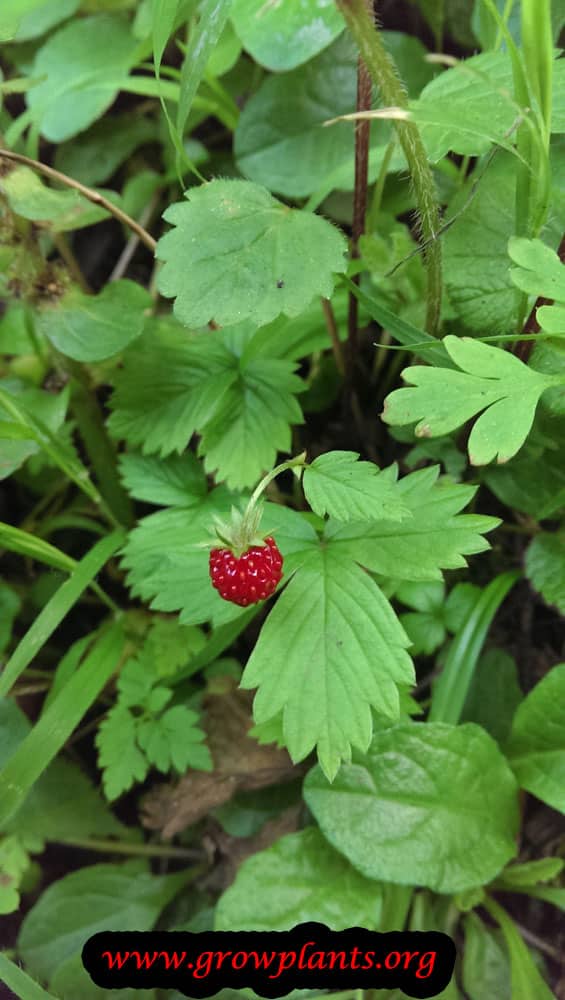
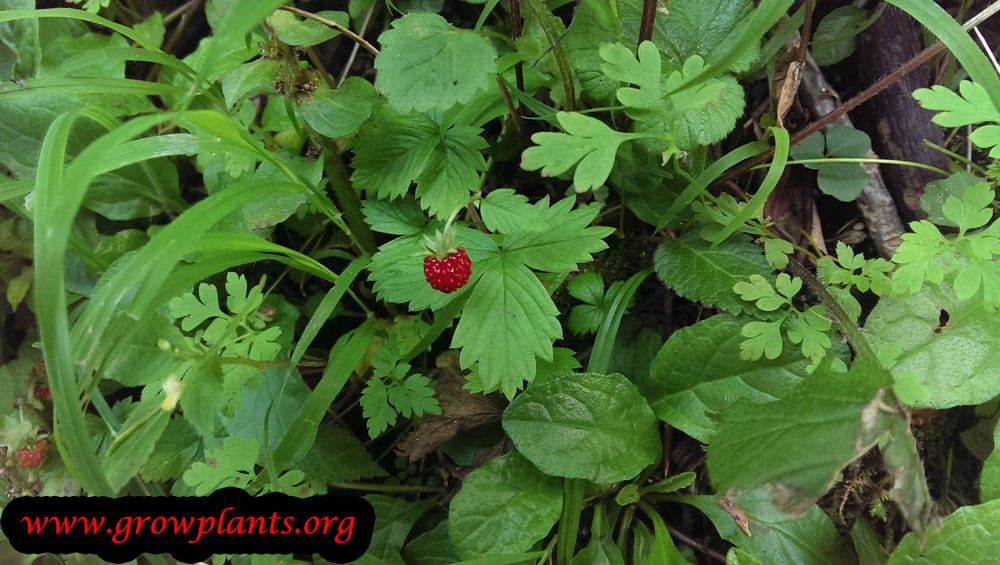
Overview: Musk strawberry is a low herbaceous perennial 5–10 cm (2–4 in) tall grown for its small, richly aromatic edible red fruits. It spreads into a clump and is also useful as an edible ground cover.
Quick Specifications
| Specification | Attribute |
|---|---|
| Plant Type / Life Cycle | Perennial |
| Foliage Type | Deciduous |
| Mature Size | 5–10 cm (2–4 in) tall, spreading |
| Growth Rate | Fast |
| Root System | Fibrous and shallow, spreading by runners |
| Toxicity | Non-toxic / edible |
| Hardiness | USDA 5–8 |
Growth Form & Structure
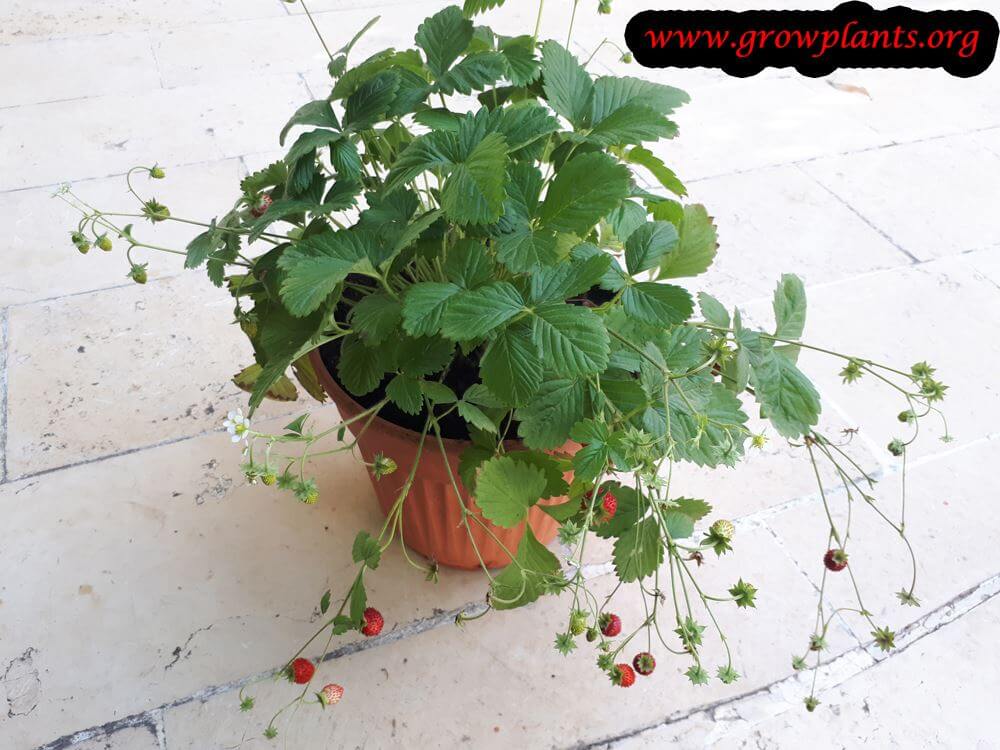
- Height & Spread: Low 5–10 cm (2–4 in) clump; spreads to a ground cover and grows well in containers.
- Growth Habit & Form: Clump-forming herbaceous perennial spreading by runners.
- Lifespan & Maturity: Fast to establish; bears fruit about 4–6 months from sowing.
Anatomy & Physical Features
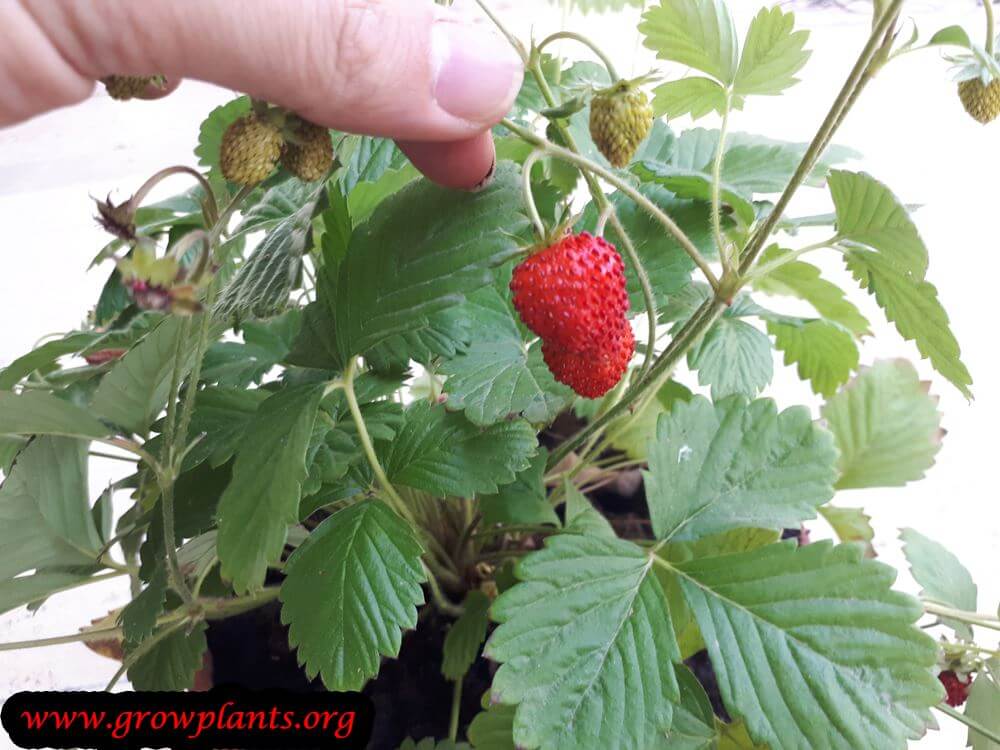
- Leaves & Foliage: Green leaves divided into three toothed leaflets with serrated edges.
- Flower Characteristics: White five-petalled flowers with yellow stamens, held in clusters and pollinated by bees.
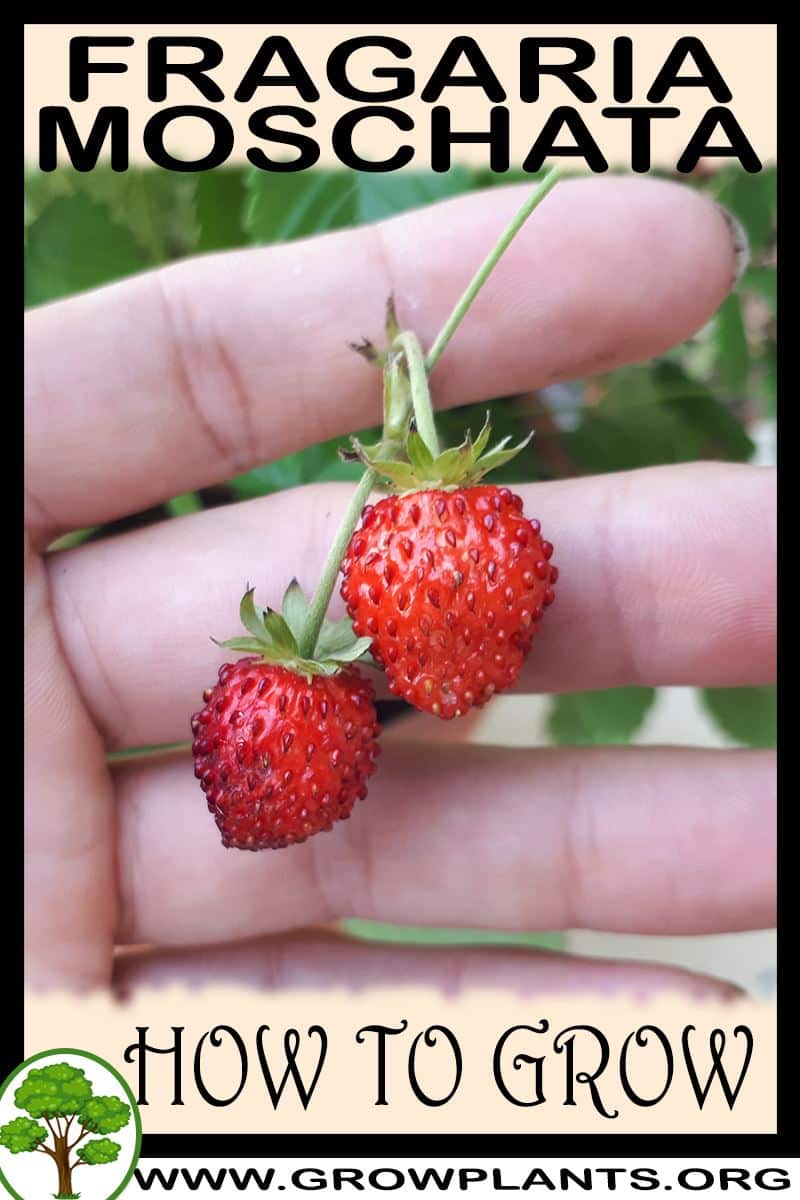
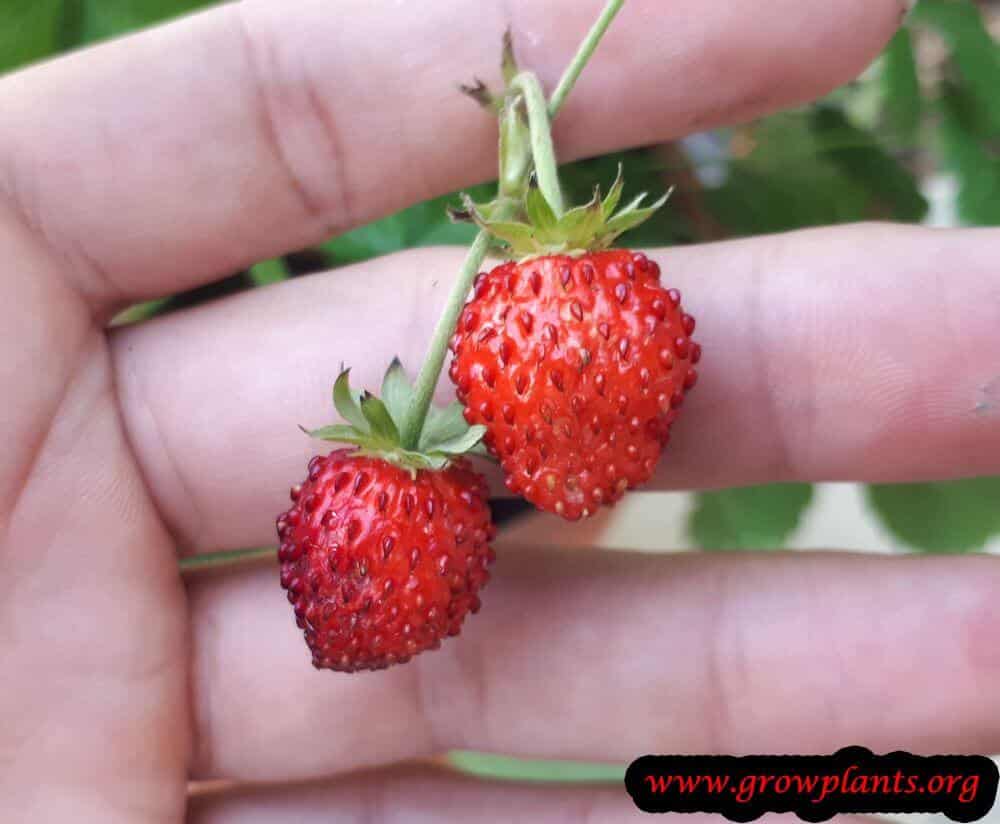
- Fruit Profile: Small red cone- to round-shaped berries 0.5–2 cm with a distinctive musky aroma.
Primary Uses & Landscape Value
- Edible Uses: Fruit eaten fresh or made into jams, juice and cakes.
- Functional & Ornamental Roles: Edible ground cover and container plant.
Care Guide: Planting, Soil & Watering
Overview: This wild woodland-type strawberry is a small perennial that likes a rich, moist, humus-rich, well-drained soil and grows happily in part to dappled shade. It needs steady moisture and benefits from mulch, plus winter chilling hours to fruit well.
Quick Care Requirements
| Requirement | Ideal Condition |
|---|---|
| Planting Season | Spring or summer |
| Growth Rate | Fast |
| Soil Type | Rich, moist, humus-rich and well-draining; mulched |
| Water Need | Moderate to high – keep evenly moist |
Planting & Establishment
- Best Planting Season: Plant in spring or summer in mild weather.
- How to Plant:
- Hole Preparation: Loosen the soil and dig a hole a little wider than the root ball for the shallow roots.
- Soil Amendments: Mix in organic matter and humus, and mulch after planting to hold moisture.
- Planting Depth: Set the crown right at soil level – not buried, not exposed – so it neither rots nor dries.
- Growth Speed & Expectations: Fast growth into a low plant 5-10 cm (2-4 in) tall.
Soil, Watering & Drainage Care
- Soil Mix & Drainage Needs: A rich, moisture-retentive but well-drained soil is ideal; mulch keeps the soil cool and moist while good drainage prevents crown rot.
- Watering Schedule & Technique:
- Young / Newly Planted: Keep the soil consistently moist as the plant establishes.
- Established: Water regularly to maintain even moisture, more in heat; avoid letting it dry out or sit waterlogged.
- Seasonal Adjustments: Increase water in summer heat; reduce in cool weather, and mulch over winter in cold areas.
Climate, Light & Hardiness
Musk strawberry (Fragaria moschata) is a cold-hardy, deciduous herbaceous perennial of cool-temperate climates, growing best in half shade to lightly-lit full shade. It is genuinely winter-hardy - the site data gives roughly USDA zones 5–8 - dying back over winter and re-shooting in spring, and it needs a cool winter (the source lists a chilling requirement).
Quick Climate Specifications
| Climate Zones | Cool-temperate |
|---|---|
| USDA Hardiness Zones | Approximately zones 5–8 (site data) |
| Optimal Temp Range | Cool to mild, moist growing conditions |
| Cold Damage Begins | Foliage dies back with hard frost; the crown is winter-hardy within its zone range |
| Approx. Survival Minimum | Established crowns survive cold winters to about zone 5 |
| Frost Tolerance | High (dormant crown); foliage Low–Moderate |
| Light Conditions | Half shade to light full shade |
| Wind Tolerance | Moderate |
Sunlight & Light Exposure
Optimal Light Setup
Like other woodland strawberries it favours half shade with bright, indirect light; it also takes light full shade and dappled sun, and does not need full sun.
Shade & Heat Management
In warmer spots dappled or afternoon shade keeps the foliage fresh; heavy, dense shade reduces flowering and fruit.
Best Exposure / Orientation
A cool, lightly shaded, evenly moist position such as a north or east aspect or the edge of open shrubs mirrors its natural habitat.
Temperature Extremes & Hardiness
USDA Hardiness & Regional Limits
The site data gives roughly zones 5 to 8, a distinctly cool-temperate range. It is deciduous, dying back over winter and resprouting in spring; it is not adapted to hot, mild-winter climates.
Cold Damage & Winter Protection
Hard frost cuts back the leaves while the crown overwinters dormant; a mulch protects the crown at the cold edge of its range.
Frost Sensitivity
The dormant crown is very frost-hardy; only the soft foliage and open flowers are at risk from late frost.
Extreme Heat Tolerance
Low; as a cool-climate species it dislikes prolonged heat, and its zone-8 upper limit reflects that. Shade and steady moisture help in warmer areas.
Chilling Requirement
The source lists chilling hours: a cool winter rest is important for healthy spring growth and flowering, and the plant is adapted to climates that reliably provide it.
Wind, Humidity & Microclimate
Humidity Preferences
Prefers cool, evenly moist air, in keeping with its woodland origins.
Dry-Air Tolerance
Low; the soft leaves suffer in hot, dry, windy air, so a sheltered, humid microclimate suits it.
Wind Tolerance
Moderate for a low plant; drying wind stresses the foliage, so shelter is preferable.
Rainfall & Seasonal Moisture
Suited to climates with regular moisture; it dislikes drought and prefers the soil to stay cool and damp.
Microclimate Recommendations
A cool, shaded, sheltered, evenly moist pocket - a woodland edge or shady wall base - gives the healthiest plants.
Growing in Pots, Balconies & Indoors
The musk strawberry is one of the few strawberries the grower rates as a genuine houseplant. It tolerates half to full shade (with some light), so it takes to bright indoor spots that would starve a sun-loving berry, and it is equally at home in pots on a balcony.
Quick Details
- Container Size: A wide, shallow pot or trough suits its low 5-10 cm (2-4 in) spreading habit
- Indoor Suitability: Yes – the grower rates it a genuine houseplant; give it bright, indirect light
- Best Spot: Half to full shade with light
- Soil & Drainage: Aerated, organic mix, kept evenly moist but free-draining
- Watering in Pots: Average to generous – don’t let the mix dry out
Indoors & On the Windowsill
- A genuine houseplant: The grower marks it yes for indoors. Its shade tolerance makes it happy in bright, indirect light rather than a scorching sill.
- Windowsill growing: An east or north sill suits it; keep it off hot, midday glass.
- Overwintering: Easily kept going indoors through winter in cold climates.
On a Balcony or Patio
- Light & wind: A shaded or part-shaded balcony corner suits it better than full glare; small pots still dry quickly, so check moisture regularly.
Choosing the Pot, Soil & Long-Term Care
- Pot & drainage: Use a pot with strong drainage holes and skip a standing-water saucer, which invites root rot; terracotta breathes and dries faster, while glazed or plastic holds moisture longer.
- Potting mix: A light, aerated organic mix – peat or coir with perlite or vermiculite – gives the roots both moisture and air.
- Feeding: Potted plants use up their feed faster because each watering leaches nutrients away, so feed a little more often than plants in open ground.
- Repotting: Refresh the top of the mix and pot up every couple of years; a light root and top prune at repotting keeps established plants vigorous.
Fertilizing & Feeding
A moderate feeder: light feedings through the growing season, leaning to nitrogen for early leaf growth and to adequate potassium as fruit forms, with feeding eased off after harvest.
Quick Fertilizing Specs
| Feeding Level | Moderate feeder |
|---|---|
| Main Nutrient Priority | Balanced feeding, nitrogen for leaf growth then adequate potassium at fruiting |
| Best Feeding Period | Through the active growing season into fruiting |
| Organic Options | Compost, humus, and other organic matter |
| Reduce/Stop Feeding | Ease off after fruiting and through cold dormancy |
| Micronutrients | Usually met by a complete fertilizer and organic matter; correct only diagnosed issues |
| Soil pH | Slightly acidic |
Feeding by Growth Stage
Establishment after planting
Help new plants root in and put out healthy early foliage.
| Nutrient direction | A balanced complete fertilizer, kept light, plus organic matter worked into the bed. |
|---|---|
| Timing | Around planting and as the young plants take hold. |
| Frequency | A light feeding as the plants settle in. |
| Fertilizer types | A balanced complete fertilizer, Compost and organic matter worked into the bed |
| Precautions | Keep early feeding light and let organic matter do much of the work. |
Leaf and runner growth
Build a strong crown and healthy leaves before fruiting.
| Nutrient direction | A nitrogen-forward complete fertilizer to drive leafy growth. |
|---|---|
| Timing | Through the active growing season before heavy flowering. |
| Frequency | Light feedings through active growth. |
| Fertilizer types | A nitrogen-forward complete fertilizer, Compost as a top-dressing |
| Precautions | Avoid overdoing nitrogen, which pushes soft leafy growth at the expense of fruit. |
Flowering and fruiting
Support flowering and good-quality fruit.
| Nutrient direction | A balanced complete fertilizer with adequate potassium as flowers and fruit form. |
|---|---|
| Timing | As flowering begins and through the fruiting period. |
| Frequency | Light feedings that carry the plants through fruiting. |
| Fertilizer types | A balanced complete fertilizer with adequate potassium |
| Precautions | Keep feeding steady but light; excess nitrogen now favors leaves over fruit. |
Nutrient Deficiency Signs & Corrections
Older, lower leaves fade to pale green or uniform yellow and overall growth slows.
| Possible causes | low available soil nitrogen, nitrogen leaching from heavy watering or rain, thin, low-organic-matter soil |
|---|---|
| Appears first on | older, lower leaves |
| What to check | recent feeding history, soil organic matter, watering and drainage |
| Possible correction | Apply a nitrogen-containing complete fertilizer and build soil organic matter, then water evenly. |
Youngest leaves yellow between the veins while the veins themselves stay green.
| Possible causes | low iron availability in alkaline soil, waterlogged or poorly drained roots, high soil alkalinity tying up iron |
|---|---|
| Appears first on | new, young leaves |
| What to check | soil alkalinity and drainage, whether symptoms start on the newest leaves, watering habits |
| Possible correction | Correct soil alkalinity and drainage and, if needed, apply a chelated iron product per its label. |
Older leaves yellow and brown along the margins and fruit quality suffers.
| Possible causes | low soil potassium, excessive nitrogen crowding out potassium, light sandy soils prone to leaching |
|---|---|
| Appears first on | older, lower leaves |
| What to check | recent nitrogen-heavy feeding, soil potassium status, soil texture and leaching |
| Possible correction | Use a complete fertilizer with adequate potassium as fruit develops and avoid over-applying nitrogen. |
Leaf margins brown or scorch and growth stalls despite adequate watering.
| Possible causes | fertilizer salt buildup in the root zone, under-watering that concentrates salts, excessive or too-frequent feeding |
|---|---|
| Appears first on | leaf margins and tips |
| What to check | recent fertilizer amounts, watering consistency, drainage, especially in containers |
| Possible correction | Ease off feeding, water thoroughly to flush accumulated salts, then return to lighter feeding. |
Pruning, Training & Seasonal Maintenance
Musk strawberry is a deciduous herbaceous perennial grown for its intensely aromatic small fruit, borne on characteristically tall stems. It is not pruned in a woody sense; maintenance means clearing the deciduous foliage each dormancy, grooming dead and diseased leaves, moderate runner management (keep a few for propagation, remove the excess), and dividing crowns to renew vigour. A distinctive point: the species is usually dioecious, with separate male and female plants, so fruiting depends on having both present — a planting matter rather than a pruning cut, but a common cause of "no fruit".
Quick Pruning & Maintenance Specs
| Pruning Tolerance | Low (grooming only) — never cut the crown |
| Primary Pruning Window | Clear dead deciduous foliage in dormancy/early spring |
| Secondary Maintenance Window | Ongoing dead-leaf and spent-fruit removal; runner thinning |
| Typical Frequency | Seasonal cleanup; crown division every 2–3 years |
| Main Objective | Healthy foliage, clean fruit, renewed crowns, controlled runners |
| Young Plant Priority | Establish strong crowns; ensure both sexes for fruit set |
| Mature Plant Priority | Divide congested crowns; thin runners; clear old foliage |
| Best Tool Type | Precision snips for soft leaves/runners; a spade for division |
| Avoid Heavy Pruning During | Peak fruiting; and don’t strip crowns of winter protection too early |
Pruning by Plant Age & Size
Newly Established
Remove only damaged leaves and let crowns build. Because the plant is dioecious, make sure both male and female plants are present if fruit is the goal.
Young / Formative
No structural training. Groom off yellowing leaves and decide a runner policy — keep a few runners to raise new plants, remove the rest so energy stays in the crowns.
Mature / Established
Divide congested crowns every 2–3 years to renew vigour, continue thinning runners, and clear old and spent foliage.
Seasonal Pruning Schedule
Dormant / Early Spring
Objective: clear the deciduous top. Remove: collapsed, dead winter foliage before new growth emerges. Do NOT: cut into the crown; leave protective mulch until hard frost has passed. Expected response: a clean flush of new leaves.
Post-Fruiting Tidy
Objective: sanitation and renewal. Remove: worn and spotted leaves and spent fruit stems; lift and divide crowded crowns. Do NOT: shear a plant still carrying fruit.
Ongoing Sanitary
Remove dead, mildewed or slug-damaged leaves and mouldy fruit; thin surplus runners.
Structural Pruning & Training & Renewal
There is no structure to train. Renewal is by crown division and by rooting a few retained runners; dividing relieves congestion and keeps a dioecious planting balanced between male and female plants for reliable fruit set.
Special Growth to Remove
Remove dead and old outer leaves and the tall spent fruit stems after cropping. Manage runners moderately — keep enough to propagate replacements (and to maintain both sexes), remove the surplus that would crowd the bed.
Container & Small-Space Pruning
Suited to pots and troughs. Groom dead leaves, keep crowns at soil level, refresh soil and divide when the container fills, and remove excess runners with nowhere to root. Remember to include both a male and a female plant in the same or nearby containers for fruit.
Tools
Precision snips or scissors for the soft leaves, fruit stems and runners; a garden spade or hand fork to lift and divide crowns. No secateurs, loppers, saws or hedge shears apply.
Tool Hygiene & Disease Risk
Routine normally; step up to careful sanitation if grey mould or leaf spot appears — remove and bin infected leaves and fruit and wipe blades between plants in damp conditions.
Cut Placement & Technique
Snip leaves and the tall fruit stems at their base and sever runners cleanly, without gouging the crown. When dividing, keep a healthy crown and roots on each piece, and label or track sexes so a fruiting balance is kept.
Heavy Pruning & Rejuvenation
A light shear-off of old leaves after fruiting is tolerated and tidies the plant, but the crown is never cut. Serious renewal is done by dividing and replanting the strongest crowns, keeping both sexes represented.
Post-Pruning Care
Water divided or groomed plants to settle them, mulch to keep fruit clean and protect crowns over winter, and watch for slugs on fresh growth and fruit. Heavy feeding is not needed simply because leaves were removed.
Common Pruning Mistakes
Expecting fruit from a single-sex planting (it needs both male and female plants); cutting or burying the crown; never dividing, so crowns congest and yield falls; removing too much protective foliage/mulch before frost has passed; and leaving disease-harbouring old leaves in a damp bed.
When NOT to Prune
Not during fruiting; not so early that crowns lose winter protection before hard frost passes; and not when plants are heat- or drought-stressed.
Recommended Tools (by task)
- precision_snips — grooming dead leaves, tall spent fruit stems and surplus runners on soft tissue.
- garden_spade — lifting and dividing crowns to renew vigour and keep both sexes balanced.
Pruning Troubleshooting
| Problem | Possible Cause | What to Check | Corrective Action |
| Flowers but no fruit | Only one sex present (the species is usually dioecious) | Whether both male and female plants are growing together | Add plants of the other sex nearby for pollination |
| Declining yield, small fruit over years | Congested crowns never divided | Crowding and age of the clump | Lift and divide every 2–3 years, replant strongest crowns |
| Lots of runners, few flowers/fruit | Runners left to proliferate, energy diverted | Runner load | Thin surplus runners, keeping a few for propagation |
| Grey-moulded or slug-eaten fruit | Fruit on wet soil, dense damp foliage | Mulch, airflow, leaf density | Mulch under fruit, remove old leaves, manage slugs, harvest promptly |
Propagation Guide
Musk strawberry is propagated most easily by runners and by division; the site notes vegetative propagation is the easier route. It is largely dioecious, so seed requires separate male and female plants and seedlings are variable, and it tends to make relatively few runners, so crown division is often the more dependable vegetative method. Easy to moderate.
Quick Propagation Specs
| Best Propagation Method | Crown division and runners |
| Alternative Methods | Seed (needs both sexes) |
| Propagation Difficulty | Easy to Moderate |
| Seed True-to-Type | Dioecious; seedlings variable |
| Vegetative True-to-Type | Yes |
| Best Propagation Season | Spring to summer |
Division, Offsets, Pups & Suckers
Lift a mature clump in spring or early summer and split it into pieces, each with roots and a crown; replant with the crown at soil level and keep moist. This is the most reliable method given the plant’s sparse runnering.
Runners & Stolons
Where runners form, root the plantlets on moist soil and sever them once rooted — useful but limited, as this species produces fewer runners than the garden strawberry.
Growing from Seed
Seed Handling & Sowing
Because plants are largely single-sexed, a male and a female are needed to set seed. Surface-sow the fine achene seed on moist mix in the light; a short cold-moist period can improve germination, which is slow and uneven, and seedlings vary.
Bloom & Flower Guide
Quick Details
- Bloom Season: Spring to summer
- Flower Appearance: White flowers with five petals and a boss of yellow stamens, borne in clusters
- Edibility: The flower is non-toxic but is not eaten; the plant is grown for its musky-flavored fruit
Detailed Blooming Overview
The musk strawberry flowers in spring and early summer, carrying its white blooms in clusters held well above the foliage on tall stalks. Unlike most strawberries it is largely dioecious – individual plants tend to be male or female – so a mix of plants is usually needed for the flowers to set the richly aromatic fruit.
Flower Characteristics
- White five-petaled flowers with a central boss of yellow stamens.
- Carried in clusters on stalks that stand above the leaves.
- Male and female flowers usually borne on separate plants.
Bloom Care & Thinning
- Pollination: Bees carry pollen between the male and female plants; growing both together is the key to a good fruit set.
- Encouraging bloom: A cool, humus-rich spot in sun or light shade suits this woodland species and keeps it flowering well.
Fruit & Uses
Musk strawberry is grown for its small, highly aromatic red berries, which are eaten fresh or made into jams, juice and cakes. No preparation beyond rinsing is required.
Quick Edible Specs
| Edible Parts | Fruit (berry) |
|---|---|
| Main Use(s) | Culinary – eaten fresh; jams, juice, cakes |
| Eaten Raw or Cooked | Raw (also cooked into preserves) |
| Preparation Required | None – rinse only |
| Harvest Season | Summer to autumn |
| Time to First Harvest | Within the first season from planting (see Care) |
| Storage | Best fresh; preserve surplus as jam or juice |
| Safety/Toxicity Caveat | None known for the ripe fruit |
Fruit
The berry is red, cone- to round-shaped with a bump at each seed, and small (about 0.5–2 cm), borne on distinct fruiting stems. It is ready when fully coloured, fragrant and slightly soft. Pick by hand and keep the fruit off the soil to reduce rot and slug damage. Eat raw or make into jams, juice and cakes.
Harvesting
Fruit ripens in flushes through summer and autumn; pick over the plants regularly and remove ripe berries promptly before birds and slugs take them.
Preparation, Uses & Safety
Eaten fresh after rinsing, or cooked into jams, juice and cakes. There is no toxic part to the ripe fruit and no special preparation is required.
Pests, Diseases & Troubleshooting
Overview: Strawberries are among the most pest- and disease-prone soft fruit, targeted by root weevils, mites, aphids and plant bugs, and highly vulnerable to grey mould and a suite of root and foliar fungi. Successful management is preventative and cultural: clean certified stock, good spacing and airflow, mulch to keep fruit off the soil, prompt removal of rotten fruit and old leaves, crop rotation, and resistant varieties – with sprays as a backup. Musk strawberry is an old European species grown for its aromatic fruit; it shares the standard strawberry pest and disease set.
Quick Troubleshooting Overview
| Issue / Pest | Main Symptom | Primary Solution |
|---|---|---|
| Vine / root weevil | Notched leaf edges (adults); wilting from root-eating grubs | Nematodes, tidy mulch, sticky barriers |
| Spider mites | Stippled, bronzed, dry leaves in hot dry spells | Predatory mites, hose foliage, miticidal soap |
| Aphids | Colonies on undersides; sticky honeydew; virus spread | Blast off, beneficials, insecticidal soap |
| Tarnished plant bug | Deformed, seedy ‘catfaced’ fruit | Weed control, row cover, monitor early |
| Slugs / snails | Holes and slime trails on fruit and leaves | Traps, barriers, tidy mulch, evening hunts |
| Grey mould (Botrytis) | Fuzzy grey rot on fruit and flowers | Airflow, remove rotten fruit, mulch, protect blooms |
Common Pests & Management
- Black vine / strawberry root weevil (Otiorhynchus sulcatus, O. ovatus):
- Symptoms: Adults chew tell-tale notches into leaf margins at night, but the real damage is done by the pale, legless, C-shaped grubs that devour roots and tunnel into the crown, causing plants to wilt, stunt and collapse – often in patches and worst in older beds and containers.
- Prevention & Control: Apply parasitic nematodes (Steinernema/Heterorhabditis) to moist warm soil to kill the grubs, keep the bed and mulch tidy to reduce shelter, use sticky barriers and night hand-collecting for adults, and rotate strawberries onto fresh ground every few years. Replace heavily infested beds with clean stock.
- Two-spotted spider mite (Tetranychus urticae):
- Symptoms: Fine pale stippling that turns leaves dull, bronzed and dry, with delicate webbing on undersides; growth and yields fall in hot, dry, dusty weather.
- Prevention & Control: Encourage or introduce predatory mites (Phytoseiulus/Amblyseius), hose foliage to reduce dust and mites, avoid drought stress, and treat hot-spots with insecticidal soap or a light miticidal oil. Avoid broad insecticides that flare mites by killing predators.
- Strawberry aphid (Chaetosiphon fragaefolii):
- Symptoms: Colonies of small pale-green aphids on leaf undersides and crowns with sticky honeydew and sooty mould; most importantly they transmit strawberry viruses (mottle, crinkle, mild yellow-edge) that cause decline over time.
- Prevention & Control: Start with certified virus-free plants, encourage ladybirds, lacewings and hoverflies, blast off colonies, and use insecticidal soap or a light oil on heavy infestations. Rogue out obviously virused, stunted, mottled plants to protect the rest.
- Tarnished / lygus plant bug (Lygus lineolaris, Lygus spp.):
- Symptoms: Feeding on flowers and developing fruit kills seeds and tissue unevenly, producing deformed, hard, seedy, ‘catfaced’ berries with a bunched, buttoned tip; the bronze-mottled bugs and their green nymphs are quick and easily missed.
- Prevention & Control: Keep the patch and surroundings free of the flowering weeds that harbour lygus, use floating row cover until pollination is needed, monitor early with white sticky traps, and encourage natural enemies. Target sprays only at threshold, protecting pollinators.
- Slugs and snails (Gastropoda):
- Symptoms: Ragged holes in leaves and fruit and silvery slime trails, with berries hollowed out overnight in damp weather – a leading cause of spoiled fruit.
- Prevention & Control: Mulch with straw to keep fruit off wet soil but keep it loose, set beer traps, hunt at dusk, use copper barriers around beds, and apply iron-phosphate slug pellets if needed. Remove daytime hiding places.
- Western flower thrips (Frankliniella occidentalis):
- Symptoms: Tiny slender insects that rasp flowers and young fruit, causing bronzing, dulling and a rough, russeted skin on the berries, plus some flower distortion.
- Prevention & Control: Monitor with blue sticky traps, encourage predatory mites and minute pirate bugs, and treat outbreaks with spinosad or insecticidal soap in the evening to spare pollinators. Keep weeds down.
Diseases & Fungal Issues
- Grey mould (Botrytis fruit rot) (Botrytis cinerea):
- Symptoms: The major fruit-rot: soft light-brown rot on ripening and ripe berries quickly covered in a fuzzy grey mould, often starting at the blossom end or where fruit touches soil, leaves or a rotting neighbour; it also blights flowers in cool, damp weather.
- Treatment & Management: Rely on prevention – space and thin plants for airflow, mulch to keep fruit off the soil, water at the base early in the day, and above all remove and destroy every rotten fruit and old leaf promptly so spores do not build up. Pick fruit as it ripens. A protective botrytis fungicide at bloom helps in wet seasons; do not compost infected fruit.
- Powdery mildew (Podosphaera aphanis):
- Symptoms: White powdery patches on leaf undersides with upward-curling, purple-blotched leaf edges, and a dull, cracked, mildewed bloom on affected fruit.
- Treatment & Management: Grow resistant varieties, space for airflow and light, remove badly affected leaves, and avoid excess soft nitrogen growth. Sulphur, potassium bicarbonate or a suitable fungicide checks spread, observing harvest intervals.
- Leaf spot and leaf scorch (Mycosphaerella fragariae, Diplocarpon earlianum):
- Symptoms: Leaf spot shows round spots with purple margins and pale grey centres; leaf scorch produces irregular dark-purple blotches that make leaves look burnt and dry, weakening the plant and downgrading runners.
- Treatment & Management: Remove and destroy old and infected leaves (renovate/mow everbearers and Junebearers after fruiting where appropriate), plant resistant cultivars, improve airflow, and rotate. Fungicides are a backup where pressure is high.
- Red stele (red core root rot) (Phytophthora fragariae):
- Symptoms: Plants stunt, wilt and die, often in wet, cold, poorly drained patches; the tell-tale sign is roots that show a rusty-red core when sliced lengthwise, with rotted feeder roots.
- Treatment & Management: Prevention is essential: plant only certified disease-free stock in well-drained soil or raised beds, avoid wet low spots, choose resistant varieties, and never replant strawberries onto infected ground. There is no cure for infected plants – remove them.
- Verticillium wilt (Verticillium dahliae):
- Symptoms: Outer leaves wilt, dry from the margins and collapse while inner leaves stay small; plants stunt and often die, worst on ground that recently grew tomatoes, potatoes or other susceptible crops.
- Treatment & Management: Rotate away from susceptible crops for several years, plant certified stock and resistant varieties in clean, well-drained soil, and remove and destroy affected plants. The soil-borne fungus persists for years, so avoid infested ground.
- Leather rot (Phytophthora cactorum):
- Symptoms: A firm, leathery, brown rot of fruit (green or ripe) that touches wet soil, with an unpleasant bitter taint; common after heavy rain on unmulched beds.
- Treatment & Management: Mulch to keep fruit off the soil, improve drainage, remove affected fruit, and avoid overhead irrigation. Good bed hygiene and drainage are the main controls.
Growing Difficulties & Abiotic Problems
- Catfacing / misshapen fruit:
- Cause & Symptoms: Poor pollination (cold, wet or insect-poor bloom) and plant-bug feeding leave berries lumpy, seedy and deformed with under-developed sections.
- Correction Strategy: Encourage pollinators and protect flowers from cold, manage tarnished plant bug, and avoid pesticide sprays during bloom that harm bees. Even, unstressed growth improves fruit form.
- Fruit sunscald and soft fruit:
- Cause & Symptoms: Exposed berries in intense sun bleach and develop white/tan sunken patches, and heat with erratic watering gives soft, poor-quality fruit.
- Correction Strategy: Maintain enough leaf cover, water evenly (drip is ideal), and mulch to buffer soil moisture and temperature; harvest promptly in hot spells.
- Iron/nutrient chlorosis:
- Cause & Symptoms: Yellowing between the veins on new leaves signals iron shortage (often on alkaline or waterlogged soil); overall paling means low nitrogen.
- Correction Strategy: Correct drainage, feed with a balanced fertiliser suited to fruit, and use chelated iron on alkaline soils; avoid excess nitrogen that promotes leaf at the expense of fruit and invites disease.
- Runner overcrowding / decline:
- Cause & Symptoms: Beds left to crowd with runners become congested, humid and disease-prone, and older crowns yield poorly.
- Correction Strategy: Thin and space plants, remove excess runners (or peg wanted ones), renovate beds after fruiting, and replace the planting with fresh certified stock every few years on new ground.
What Helps – Products & Tools
Strawberries reward prevention: certified clean stock, spacing and airflow, straw mulch, drip watering, prompt removal of rotten fruit and old leaves, crop rotation and resistant varieties do most of the work. Useful inputs are parasitic nematodes and sticky barriers for weevils, predatory mites and insecticidal soap/horticultural oil for mites and aphids, spinosad for thrips, iron-phosphate pellets and copper barriers for slugs, and – as backups – a botrytis fungicide at bloom and sulphur/potassium bicarbonate for mildew, always observing harvest intervals.