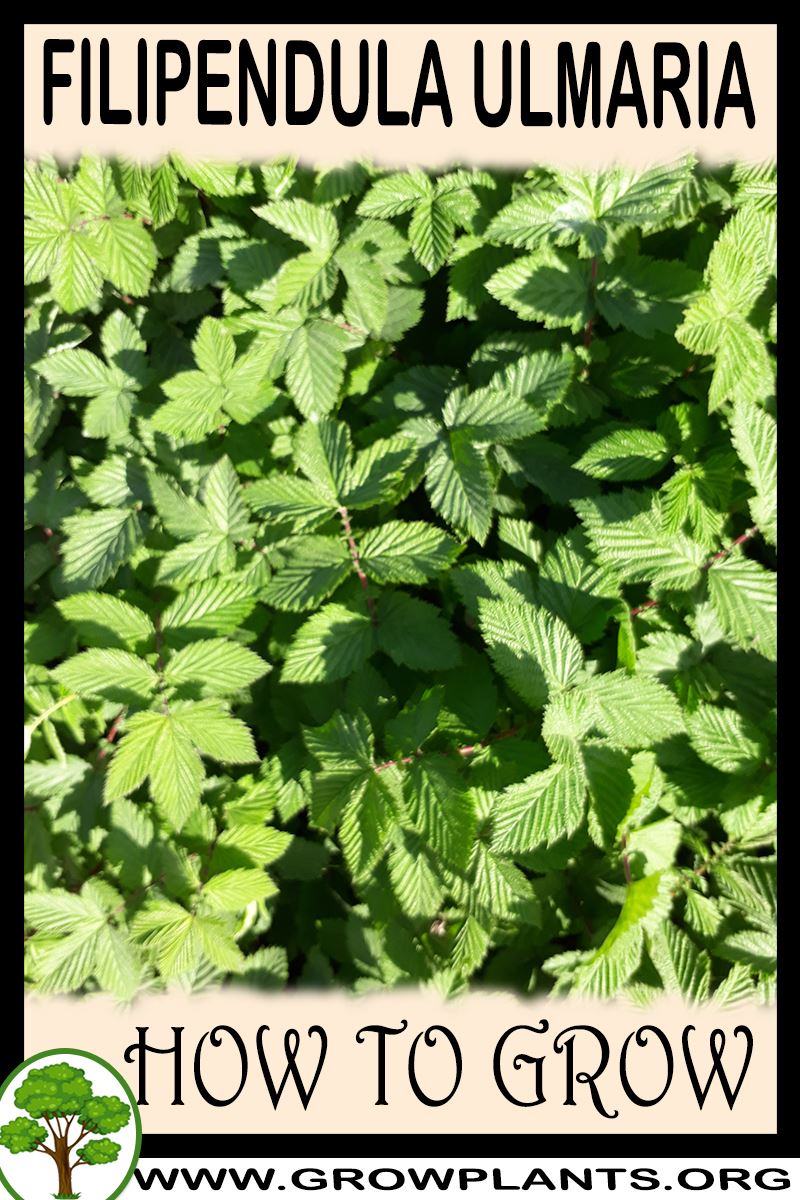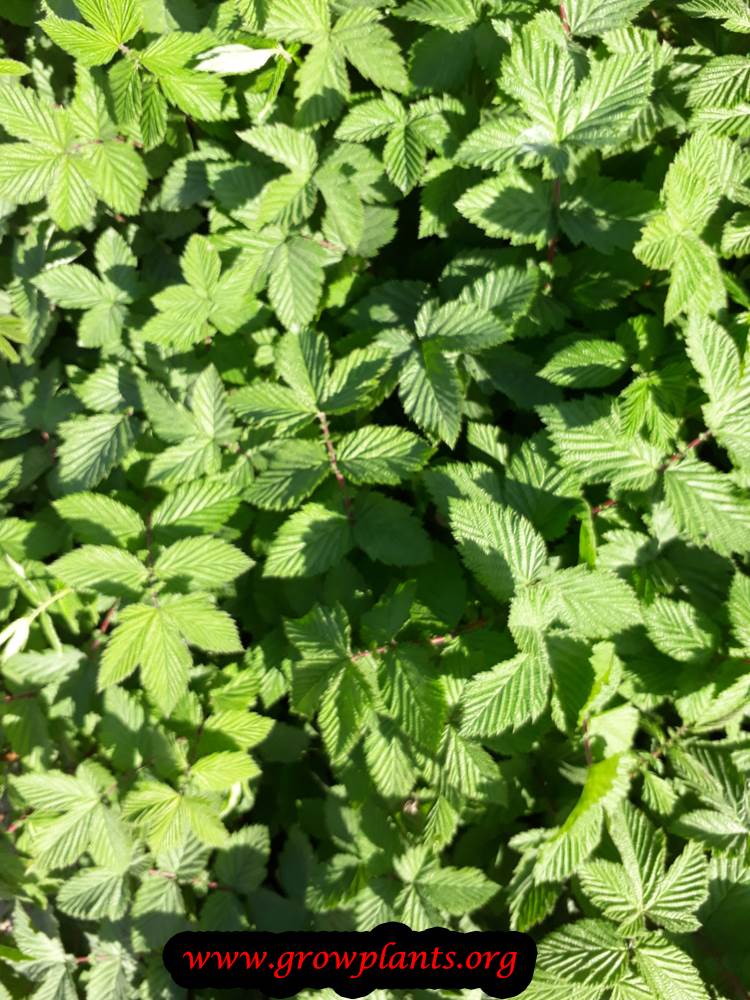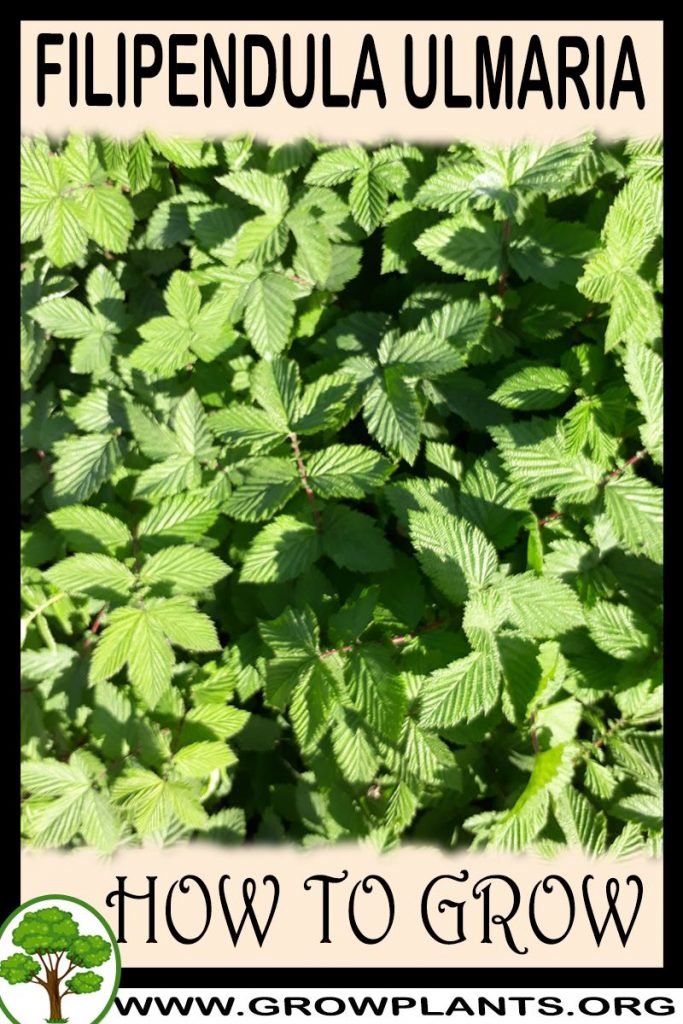
Plant Profile & Key Characteristics
Overview: A herbaceous perennial 1-2 m (3-6 ft) tall with frothy plumes of fragrant white summer flowers. Grown mainly as an ornamental, and also an edible and medicinal herb.
Quick Specifications
| Specification | Attribute |
|---|---|
| Plant Type / Life Cycle | Perennial (herbaceous) |
| Foliage Type | Deciduous (herbaceous; dies back in winter) |
| Mature Size | 1-2 m tall (3-6 ft) |
| Growth Rate | Moderate to Fast |
| Root System | Rhizomatous (spreading) |
| Toxicity | Edible and medicinal, but contains salicylates – caution for those sensitive to aspirin |
| Hardiness | USDA zones 5-9 |
Growth Form & Structure
- Height & Spread: 1-2 m (3-6 ft) tall, spreading by rhizomes into clumps; can be grown in containers.
- Growth Habit & Form: Upright, clump-forming herbaceous perennial spreading by rhizomes.
- Lifespan & Maturity: Long-lived perennial; noted as invasive and spreading in moist ground.
Anatomy & Physical Features
- Leaves & Foliage: Green, pinnate (fern-like) leaves with serrated margins.
- Flower Characteristics: Frothy plumes of tiny, fragrant creamy-white flowers in summer (full detail in the Bloom guide).
Primary Uses & Landscape Value
- Edible Uses: Flowers and leaves used to flavour drinks (mead, cordials), jams and herbal teas.
- Functional & Ornamental Roles: Ornamental for borders, pond edges and wildflower or bog gardens; also a traditional medicinal herb. Prefers moist soil.
Care Guide: Planting, Soil & Watering
Overview: Meadowsweet (Filipendula ulmaria) is a tall, moisture-loving perennial for subtropical and temperate climates (hardiness zone 5-9) that grows in full sun to half shade. A plant of damp meadows and streamsides, it thrives in rich soil kept consistently moist.
Quick Care Requirements
| Requirement | Ideal Condition |
|---|---|
| Planting Season | Warm season, spring to summer |
| Growth Rate | Moderate to Fast |
| Soil Type | Rich, moisture-retentive soil |
| Water Need | Moderate – keep the soil consistently moist |
Planting & Establishment
- Best Planting Season: Plant in the warm season, from spring to summer, so it establishes before winter.
- How to Plant:
- Hole Preparation: Dig a hole a little larger than the root ball in rich, moisture-holding ground, ideally in a spot that stays damp.
- Soil Amendments: Work in generous organic matter to hold moisture; unlike drought plants, meadowsweet wants soil that never fully dries.
- Planting Depth: Set the root ball level with the soil surface, keeping the crown unburied.
- Growth Speed & Expectations: A moderate-to-fast grower reaching about 1-2 m (3-6 ft); it can spread vigorously.
Soil, Watering & Drainage Care
- Soil Mix & Drainage Needs: Grow in rich, moisture-retentive soil; suited to damp ground and pond margins, it will struggle if allowed to dry out repeatedly.
- Watering Schedule & Technique:
- Young / Newly Planted: Keep the soil consistently moist while the plant establishes.
- Established: Water regularly so the soil stays moist – never let it dry out for long, especially in sun and heat.
- Seasonal Adjustments: Water freely through the warm growing season; needs drop in the cool winter when growth slows.
Climate, Light & Hardiness
Filipendula ulmaria (meadowsweet) is a cold-hardy, moisture-loving perennial for subtropical and temperate climates; it wants full sun to half shade and, per its own care notes, a genuinely cool winter, doing well across USDA zone 5–9.
Quick Climate Specifications
| Climate Zones | Subtropical, temperate |
|---|---|
| USDA Hardiness Zones | 5–9 |
| Frost Tolerance | High |
| Light Conditions | Full Sun to Half Shade |
Sunlight & Light Exposure
Optimal Light Setup
Full sun with consistent moisture suits it well; half shade is also tolerated, especially in warmer parts of its range.
Temperature Extremes & Hardiness
USDA Hardiness & Regional Limits
Zone 5–9.
Cold Damage & Winter Protection
A genuinely cool winter benefits this species, per its own overview notes, and the dormant crown is very winter hardy.
Extreme Heat Tolerance
Moderate; performs best with reliable moisture through summer heat.
Wind, Humidity & Microclimate
Rainfall & Seasonal Moisture
A naturally moisture-loving, streamside-type perennial; best suited to climates or garden spots without prolonged summer drought.
Growing in Pots, Balconies & Indoors
Meadowsweet is a hardy perennial of damp meadows, prized for frothy, fragrant cream flowers. The grower rates it for containers but not indoors – it needs outdoor light and, above all, constantly moist soil.
Quick Details
- Container Size: A large, water-retentive pot, 20-40 L (5-10 gal); it likes constant moisture
- Indoor Suitability: Not a houseplant (grower); a hardy, moisture-loving perennial for outdoor pots
- Best Spot: Full sun to partial shade; a bright spot with some direct sun is ideal.
- Soil & Drainage: Rich, moisture-retentive but free-draining mix (organic potting mix with some coir); it dislikes drying out.
- Watering in Pots: Keep the mix consistently moist – this one likes water – but make sure it drains freely; never let a potted plant go bone-dry.
Indoors & On the Windowsill
- Not a houseplant: The grower marks it unsuitable indoors; it is a hardy outdoor perennial that needs seasonal cold and steady moisture a room can’t supply.
- No winter shelter needed: It is fully hardy and dies back to overwinter outdoors, resprouting each spring.
On a Balcony or Patio
- Light & moisture: Happy in sun to part shade but only if the roots stay wet – a large pot, or one standing in a shallow tray, helps it cope with a bright balcony.
- Vigour: The grower flags it as invasive; growing it in a pot is a good way to contain its spreading roots.
Choosing the Pot, Soil & Long-Term Care
- Pot & drainage: Use a large, moisture-retentive pot; unusually, this bog-margin plant is happy standing in a shallow saucer of water, unlike most container plants.
- Potting mix: Use a well-aerated, organic-rich mix – quality potting mix, or peat/coir blended with perlite or vermiculite.
- Feeding: Feed through the growing season for lush leaf and flower.
- Repotting: Divide and refresh the mix every couple of years to keep clumps vigorous.
Fertilizing & Feeding
Meadowsweet is an herbaceous perennial grown mostly for its feathery clusters of white summer flowers, and it thrives in moist, fertile soil with relatively little supplemental feeding. Light, balanced feeding as growth resumes in spring supports strong stems and a full bloom; this species can spread vigorously, so heavy feeding is generally unnecessary and can encourage even more aggressive growth.
Quick Fertilizing Specs
| Feeding Level | Light |
|---|---|
| Main Nutrient Priority | Balanced feeding with adequate nitrogen supports strong spring growth ahead of bloom; there is no need for a special high-phosphorus formula to improve flowering |
| Best Feeding Period | Spring as new growth emerges, ahead of the summer bloom |
| Soil pH | Prefers consistently moist, fertile soil; tolerates a normal range of soil pH |
| Reduce/Stop Feeding | Stop feeding once flowering finishes and the plant begins to die back for the season |
| Organic Options | Working compost or organic matter into the bed at planting, and topping up in following seasons, provides steady background nutrition suited to this moisture-loving perennial |
Feeding by Growth Stage
Spring growth
Support vigorous new stem and leaf growth as the plant emerges in spring, ahead of summer bloom
| Nutrient direction | Balanced feeding with adequate nitrogen supports strong new growth; established clumps in fertile, moist soil often need only light supplemental feeding |
|---|---|
| Timing | Early to mid spring as new shoots emerge from the crown |
| Frequency | A single light feeding as growth resumes in spring is usually enough for an established clump |
| Fertilizer types | A balanced, complete fertilizer suited to herbaceous perennials, Compost or well-rotted organic matter worked around the crown as growth resumes |
| Precautions | Avoid heavy nitrogen feeding, since this species spreads readily and excess vigor can make it more aggressive in the border |
Summer bloom
Support the plant through its feathery summer flower display
| Nutrient direction | Light, balanced feeding is usually enough through bloom; the spring feeding typically carries the plant through flowering |
|---|---|
| Timing | Summer while the plant is in flower |
| Frequency | Feeding is minimal to none through this period for a plant that was fed in spring |
| Fertilizer types | An optional light application of a balanced fertilizer only if growth or flowering looks weak |
| Precautions | Avoid feeding heavily during bloom, and keep soil consistently moist through flowering, since this species does not tolerate dry conditions well |
Dieback and winter rest
Let the plant die back naturally and rest through winter dormancy after flowering finishes
| Nutrient direction | None – withhold fertilizer through dieback and winter rest |
|---|---|
| Timing | Autumn as top growth dies back, through winter dormancy |
| Frequency | No feeding at this stage |
| Fertilizer types | No feeding at this stage; resume light feeding once new shoots emerge in spring |
| Precautions | Do not fertilize a plant that is dying back or dormant, since feeding now offers no benefit until new growth resumes |
Nutrient Deficiency Signs & Corrections
Spring shoots emerge thin, pale, or slower than expected, with fewer flowers later in summer
| Possible causes | Nitrogen deficiency limiting the vigorous new growth needed to support summer bloom, Dry soil, since this species is sensitive to drought and shows weak growth when soil dries out, An overcrowded clump overdue for division, Insufficient light for the planting position |
|---|---|
| Appears first on | New spring shoots and the following bloom |
| What to check | Recent feeding history through the growing season, Soil moisture consistency, How long since the clump was last divided, Light exposure at the site |
| Possible correction | Resume a light, balanced spring feeding if the plant has been underfed, and prioritize consistent soil moisture, since drought stress produces similar symptoms and will not be fixed by fertilizer alone |
New leaves yellow between the veins while the veins stay green
| Possible causes | Iron deficiency associated with alkaline or waterlogged soil that limits iron uptake, Poorly drained soil restricting root function generally, Cool, wet spring soil temporarily slowing nutrient uptake |
|---|---|
| Appears first on | Newest leaves |
| What to check | Soil pH and drainage around the root zone, Whether yellowing is confined to new growth, which points toward iron, Recent watering pattern and soil temperature |
| Possible correction | Improve drainage and correct soil pH first; if chlorosis persists in an otherwise healthy, adequately fed plant, a chelated iron product applied per its label can help |
Leaf spotting or scorched leaf edges appear during dry or hot spells, sometimes with early leaf drop
| Possible causes | Drought stress from insufficient watering, since this species needs consistently moist soil, Fungal leaf spot disease favored by damp foliage and poor air circulation, Root stress from poor drainage limiting water and nutrient uptake |
|---|---|
| Appears first on | Lower and outer leaves first |
| What to check | Watering consistency through warm weather, Air circulation and plant spacing, Soil drainage around the root zone |
| Possible correction | Correct watering consistency and improve air circulation before considering fertilizer, since these symptoms are more often a water or disease issue than a nutrient one |
Pruning, Training & Seasonal Maintenance
Meadowsweet is a herbaceous perennial that typically dies back to a basal clump in most of its range over winter, though it may hold some foliage in milder climates. Its ‘pruning’ is really deadheading spent flower plumes, removing dead or diseased foliage, and one autumn-or-early-spring cutback, rather than any woody framework work. Because it self-seeds readily and is noted as locally weedy or invasive, prompt deadheading before seed drop is a genuinely useful practice here, not just tidiness.
Quick Pruning & Maintenance Specs
| Pruning Tolerance | High (herbaceous, regrows from the base each year) |
| Primary Pruning Window | Autumn, after foliage dies back, or very early spring before new shoots emerge |
| Secondary Maintenance Window | Summer, deadheading through and after bloom |
| Typical Frequency | Deadhead as flowers fade; one full cutback per year |
| Main Objective | Control self-seeding, remove dead/diseased foliage, tidy the clump for next season |
| Young Plant Priority | Minimal – let the clump establish |
| Mature Plant Priority | Annual cutback plus in-season deadheading |
| Best Tool Type | Bypass secateurs or hand shears for the whole clump |
| Avoid Heavy Pruning During | Peak flowering (deadhead spent stems only); hot, dry spells |
Pruning by Plant Age & Size
Newly Established
Avoid cutting back hard in the first season; let the clump establish.
Young / Formative
No structural training applies – this is a basal-clump herbaceous perennial.
Mature / Established
Annual autumn or early-spring cutback of the whole clump to a few centimeters above ground, plus in-season deadheading.
Seasonal Pruning Schedule
Post-Flowering: deadhead spent flower plumes promptly – this tidies the plant and, importantly, prevents the prolific self-seeding that makes this species locally weedy in some gardens; skip this step only if self-sown seedlings are actually wanted.
Dormant/Winter (or delayed to very early spring): cut the whole clump of dead foliage and stems back to the ground. Doing this in autumn is tidier and reduces overwintering fungal leaf-spot inoculum in the damp conditions this plant favors; leaving stems until early spring instead offers some winter structure and habitat value. Either timing works, so long as old growth is cleared before new spring shoots emerge and risk being damaged by the cutback.
Structural Pruning & Training
Not applicable – this is a herbaceous clump-former with no persistent framework.
Special Growth to Remove
- Spent flower plumes – deadhead promptly for spread control (see above).
- Dead or yellowing foliage, especially any showing leaf-spot or powdery mildew, common in the moist, part-shaded spots this plant favors.
Container & Small-Space Pruning
Possible, since this plant can be grown in containers, though less common given its preference for consistently moist soil. Deadhead and cut back on the same schedule as in-ground plants, and expect to water more attentively, since pots dry faster than the damp ground conditions this species prefers.
Tools
Bypass secateurs or hand shears for deadheading individual stems and for the annual whole-clump cutback; nothing heavier is needed on this soft-stemmed herbaceous plant.
Tool Hygiene & Disease Risk
Routine to Increased – clean tools are usually enough, but if foliage shows fungal leaf-spot or mildew (more likely in the damp, part-shaded conditions this plant favors), wipe or disinfect blades before moving to healthy plants to limit spread.
Cut Placement & Technique
Deadhead by cutting the flowering stem down to the topmost healthy leaf or to the basal foliage. For the annual cutback, cut all stems down close to the crown, taking care not to damage the crown or emerging buds if doing this in early spring rather than autumn.
Heavy Pruning & Rejuvenation
The whole-clump annual cutback is the standard ‘heavy’ pruning for this species and is completely normal and expected, not a rare rejuvenation measure – it regrows fully from the base each year.
Post-Pruning Care
Keep soil consistently moist after cutback, particularly through dry spells, since this species prefers damp ground and doesn’t handle drought stress well. No special feeding is needed.
Common Pruning Mistakes
- Letting all flower plumes go to seed, allowing meadowsweet to self-sow more aggressively than wanted, a real concern given its noted weedy/invasive tendency in some settings.
- Cutting back too early in autumn while foliage is still green and photosynthesizing, reducing the energy stored for next year’s growth.
- Letting the plant dry out after a hard cutback.
When NOT to Prune
Avoid cutting during peak bloom if the flower display is still wanted – deadhead individual stems only, not the whole plant; avoid a hard cutback during a dry spell without follow-up watering, given the plant’s preference for consistently moist soil.
Recommended Tools (by task)
- bypass_secateurs – deadheading individual stems.
- hedge_shears – fast whole-clump annual cutback, since this is an even-textured herbaceous mass rather than a plant needing selective cuts.
Propagation Guide
Meadowsweet is most easily and reliably propagated by dividing the spreading rhizomatous clump, which also keeps golden-leaved or variegated selections true to their form; seed-grown plants of the true species are generally similar to the parent, but named colour-leaf cultivars do not come true from seed. Propagation is overall easy, especially by division.
Quick Propagation Specs
| Best Propagation Method | Division of the rhizome/crown |
| Alternative Methods | Seed |
| Propagation Difficulty | Easy |
| Seed True-to-Type | Usually true-to-type for the species; golden or variegated cultivars do not come true |
| Vegetative True-to-Type | Yes |
| Best Propagation Season | Division – early spring or autumn; Seed – spring |
| Seed Germination Time | Variable, often several weeks; can be slow and uneven |
Growing from Seed
Seed Handling & Viability
Seed is fine and light; sow reasonably fresh for best results, as viability declines in long storage.
Sowing Season
Best sown in spring, matching the plant’s spring/summer planting season; meadowsweet also self-sows readily where conditions suit it (noted as invasive on this site).
Sowing Depth & Orientation
Sow on the surface or barely cover, as the fine seed benefits from light exposure to germinate.
Germination Conditions
Keep the sowing medium consistently moist in a cool to moderately warm, bright position; germination can be irregular and staggered.
Division, Offsets, Pups & Suckers
Lift the clump in early spring or autumn and divide the rhizome into sections, each with several growing buds/shoots and some roots attached. Replant promptly at the same depth and keep evenly moist until new growth establishes. Given this plant’s noted invasive, fast-spreading habit, divisions establish quickly and can be taken generously.
Bloom & Edible Flower Guide
Quick Details
- Bloom Season: Summer into autumn
- Flower Appearance: Frothy plumes of tiny creamy-white flowers above ferny foliage
- Edibility: Edible flavouring – the almond-scented flowers are traditionally used to flavour drinks, jams and desserts (they contain salicylates, so use in moderation)
Detailed Blooming Overview
Meadowsweet earns its name from its bloom: through summer and into autumn it lifts frothy, creamy-white plumes of tiny flowers above ferny foliage, carrying a sweet, almond-like scent. The flowers have a long history as a flavouring – for mead, cordials, wines, jams and puddings. They do contain natural salicylates, so, much like aspirin, they are best used in moderation and avoided by anyone who reacts to it.
Flower Characteristics
- Tiny creamy-white flowers massed into soft, frothy plumes.
- Sweet, almond-like fragrance.
- A traditional edible flavouring for drinks and sweet dishes.
Bloom Care & Thinning
- Harvesting the flowers: Gather fresh, fully open plumes on a dry day for flavouring.
- Managing the bloom: Cut back spent stems, and deadhead before heavy self-seeding to keep its spread in check.
Fruit & Uses
Meadowsweet’s clusters of small, fragrant, cream-white flowers are the part most often used, prized for adding a sweet, almond-like aroma to mead, cordials, syrups, jams and desserts, while the young pinnate leaves can be used more sparingly, fresh or dried for tea. Both parts are used as flavorings or infusions rather than eaten as a bulk raw or cooked vegetable.
Quick Edible Specs
| Edible Parts | Flowers (main use); young leaves (secondary use) |
|---|---|
| Main Use(s) | Culinary flavoring (mead, cordials, syrups, jams, desserts) and herbal tea; traditionally also used medicinally (brief historical note only) |
| Eaten Raw or Cooked | Used fresh or dried as an infusion/flavoring rather than eaten as a bulk raw or cooked food; flower clusters are sometimes battered and fried as a fritter, similar to elderflower |
| Preparation Required | None beyond drying or steeping for tea, or infusing into liquids (mead, syrup, cordial); strain out plant material before serving |
| Harvest Season | Flowers gathered at bloom, Summer/Autumn (see Blooming); young leaves picked in spring before flowering |
| Time to First Harvest | Qualitative only — flowers become available once the plant reaches its normal bloom season |
| Storage | Dry flowers and leaves in a single layer out of direct light for later tea or flavoring use; fresh flowers are best used soon after picking for the strongest fragrance |
| Safety/Toxicity Caveat | Contains natural salicylates (related to the compound in aspirin); people with a salicylate or aspirin sensitivity/allergy, and anyone on blood-thinning medication, should avoid regular culinary or tea use; not considered toxic in ordinary culinary amounts for the general population |
Flowers & Flower Buds
The small, creamy-white flowers that grow in dense, beard-like clusters are harvested once fully open and at their most fragrant. They are used fresh to infuse mead, cordials or syrup, dried for tea, or occasionally dipped in a light batter and fried into fritters in the way elderflower is used; the aroma fades quickly once picked, so flowers are best used soon after harvest.
Leaves & Greens
The green, pinnate, serrated-margin leaves can be picked young in spring, before flowering stems form, and used sparingly fresh for a mild aromatic note or dried for tea. Leaves become tougher and more strongly scented as the plant matures toward bloom, so the youngest spring growth is preferred for eating.
Harvesting
Cut flower clusters at peak bloom (Summer/Autumn) when fully open; gather leaves separately and earlier, in spring, before the plant puts its energy into flowering.
Preparation, Uses & Safety
Meadowsweet flowers and, to a lesser extent, leaves are used to flavor mead, cordials, syrups, jams and desserts, and both can be dried for herbal tea; the plant has also traditionally been used medicinally, noted here only as historical background with no health or dosing claims. The main safety point is its natural salicylate content: those with a salicylate or aspirin sensitivity, or taking blood-thinning medication, should avoid regular use, but otherwise it is not considered toxic when used in normal culinary amounts.
Pests, Diseases & Troubleshooting
Overview: Meadowsweet is a tough, moisture-loving herbaceous perennial with few serious enemies; its main problems are foliar fungal diseases in crowded, humid stands – especially its host-specific rust and powdery mildew – plus occasional sap-sucking aphids and sawfly larvae. Grow it in reliably moist soil with decent air movement and it largely looks after itself.
Quick Troubleshooting Overview
| Issue / Pest | Main Symptom | Primary Solution |
|---|---|---|
| Meadowsweet rust | Bright orange-brown pustules and swollen distorted stems/leaves | Remove affected growth, improve airflow, tidy in autumn |
| Powdery mildew | White powdery film on leaves, worst in dry-root stress | Keep roots moist, thin for airflow, sulphur if severe |
| Aphids | Clusters on shoot tips and flower stems, sticky honeydew | Blast off, encourage predators, insecticidal soap |
| Sawfly larvae | Caterpillar-like larvae chewing leaves from margins | Handpick, tolerate light damage, protect beneficials |
| Leaf scorch | Brown, crisping leaf edges in dry spells | Keep soil moist; mulch and site in damp ground |
Common Pests & Management
- Aphids (Aphis spp.):
- Symptoms: Dense colonies of green or black soft-bodied insects on young shoots, buds and flowering stems, with sticky honeydew, sooty mould and distorted, curling new growth.
- Prevention & Control: Dislodge with a jet of water, squash small colonies, and encourage ladybirds, lacewings and hoverflies by avoiding broad-spectrum sprays. Insecticidal soap or a light oil clears heavy outbreaks; spray in the evening to spare pollinators.
- Sawfly larvae (Tenthredinidae):
- Symptoms: Green caterpillar-like larvae that graze leaves from the margins inward, sometimes reducing foliage to a skeleton in patches; they curl or drop when disturbed.
- Prevention & Control: Handpick larvae, tolerate minor grazing on a vigorous clump, and preserve natural enemies. Only in severe cases resort to an approved insecticide, applied to protect bees.
- Spider mites (Tetranychus urticae):
- Symptoms: Fine stippling and a dull, dusty look with faint webbing on plants stressed by heat and dry soil – uncommon on well-watered meadowsweet.
- Prevention & Control: Keep the soil moist and the plant unstressed, rinse foliage, and use insecticidal soap only if mites persist. Correcting drought stress usually solves it.
Diseases & Fungal Issues
- Meadowsweet rust (Triphragmium ulmariae):
- Symptoms: A host-specific rust that produces bright orange to reddish-brown pustules on leaf undersides and swollen, twisted, gall-like distortions of stems and leaf stalks – a distinctive sign on Filipendula.
- Treatment & Management: Remove and bin infected leaves and distorted stems as they appear, avoid overhead watering, improve spacing and airflow, and clear all dead foliage at the end of the season to break the cycle. Rust rarely kills established clumps; fungicides are seldom warranted in the garden.
- Powdery mildew (Erysiphe / Podosphaera spp.):
- Symptoms: A white powdery coating on upper leaf surfaces, most common when the roots are dry even though the air is humid; leaves may yellow and dry early.
- Treatment & Management: Keep the soil consistently moist (dry roots are the main trigger), thin congested growth for airflow, and remove the worst leaves. Sulphur or a potassium-bicarbonate spray helps in bad years.
- Leaf spot (Ramularia / Septoria spp.):
- Symptoms: Small brown or purplish spots that enlarge and coalesce on the foliage in wet seasons, causing early leaf death on lower growth.
- Treatment & Management: Pick off spotted leaves, improve air movement, and remove debris in autumn. Chemical control is rarely needed on this vigorous perennial.
Growing Difficulties & Abiotic Problems
- Leaf scorch from dry soil:
- Cause & Symptoms: Meadowsweet is a plant of damp meadows and streamsides; in dry ground or full sun with dry roots the leaf edges brown, crisp and curl.
- Correction Strategy: Site it in reliably moist to wet soil, mulch to conserve moisture, and water in dry spells. In borders, give it the dampest spot and part shade in hot regions.
- Flopping / lodging:
- Cause & Symptoms: Lush growth in rich soil or shade can flop, especially after rain when the flower plumes are heavy.
- Correction Strategy: Grow in an open, sunny-to-partly-shaded position, avoid over-feeding, and support tall stands or cut back after flowering for a fresh flush.
- Self-seeding / spread:
- Cause & Symptoms: In ideal damp conditions it seeds around and spreads by rhizome, which can crowd smaller neighbours.
- Correction Strategy: Deadhead before seed sets if you want to limit spread, and divide or lift wandering rhizomes in the dormant season.
What Helps – Products & Tools
This is a low-input plant: consistent soil moisture, airflow and autumn tidy-up prevent most trouble. For the occasional aphid or sawfly, insecticidal soap or a light horticultural oil suffices; for rust, mildew and leaf spot, sanitation is primary, with a sulphur or potassium-bicarbonate spray held in reserve for severe years.