


Plant Profile & Key Characteristics
Overview: A low, spreading perennial groundcover only 5-10 cm (2-4 in) tall, with strawberry-like trifoliate leaves and small red mock fruits. Deciduous and grown ornamentally as a fast-knitting groundcover.
Quick Specifications
| Specification | Attribute |
|---|---|
| Plant Type / Life Cycle | Perennial (herbaceous groundcover) |
| Foliage Type | Deciduous |
| Mature Size | 5-10 cm tall (2-4 in); spreads widely by runners |
| Growth Rate | Moderate to fast |
| Root System | Rooting stolons (runners), shallow and spreading |
| Toxicity | Non-toxic / fruit edible |
| Hardiness | USDA zones 5-10 |
Growth Form & Structure
- Height & Spread: Only 5-10 cm (2-4 in) tall but spreads indefinitely by runners as a mat; can be contained in pots and hanging planters where it trails over the edge.
- Growth Habit & Form: Prostrate, mat-forming groundcover that roots at the nodes along its runners.
- Lifespan & Maturity: Perennial; establishes and fruits within its first growing season and colonises quickly.
Anatomy & Physical Features
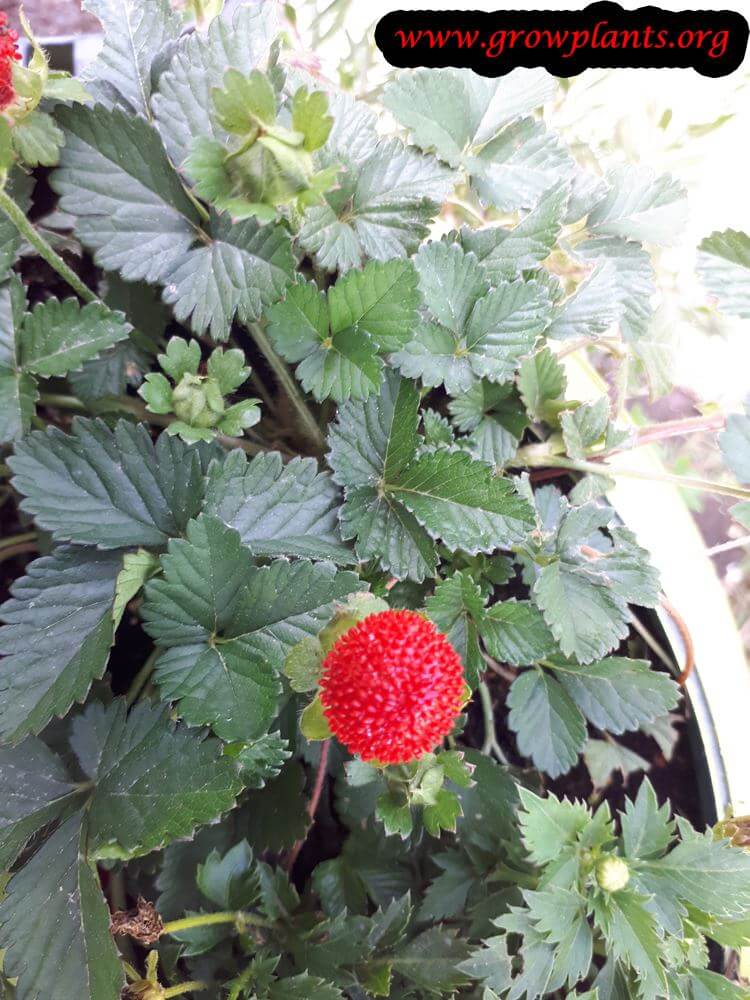
- Leaves & Foliage: Green leaves divided into three lobes with serrated edges, resembling a true strawberry.
- Flower Characteristics: Small yellow (occasionally white) five-petalled flowers with yellow stamens, bee-pollinated.
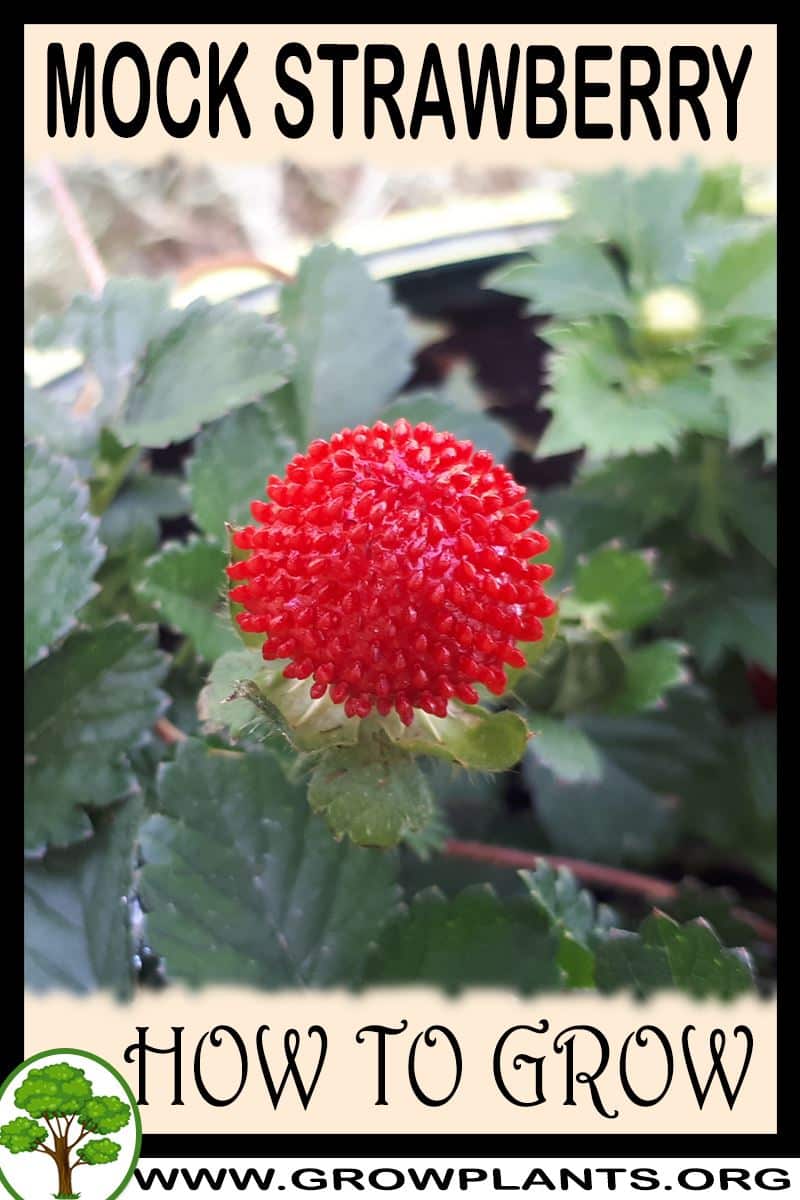
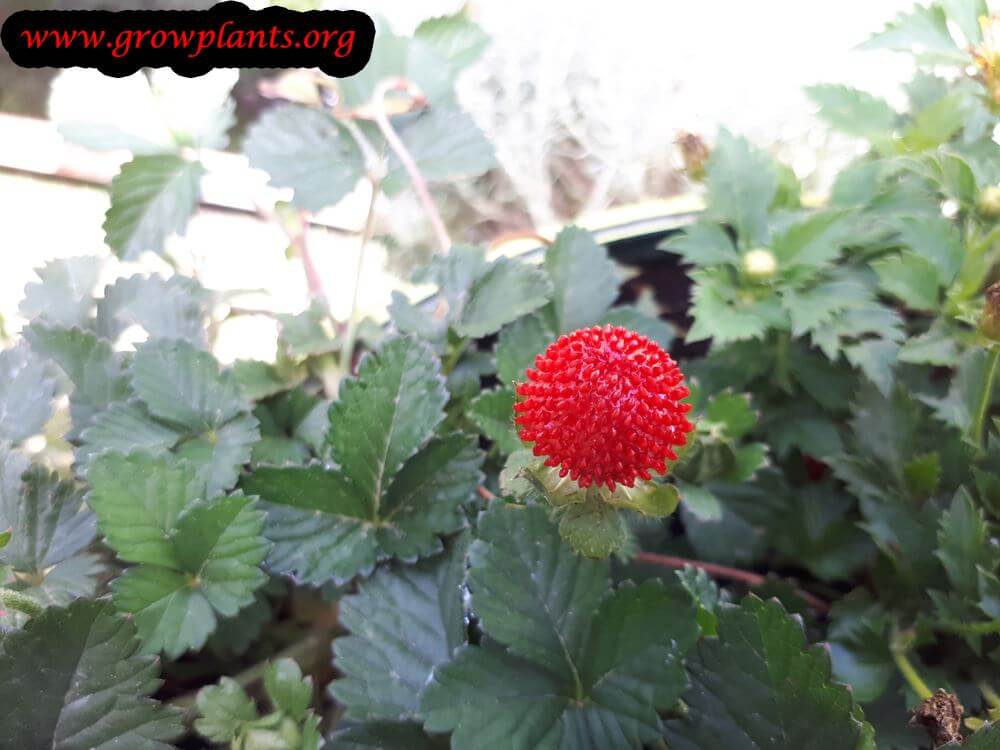
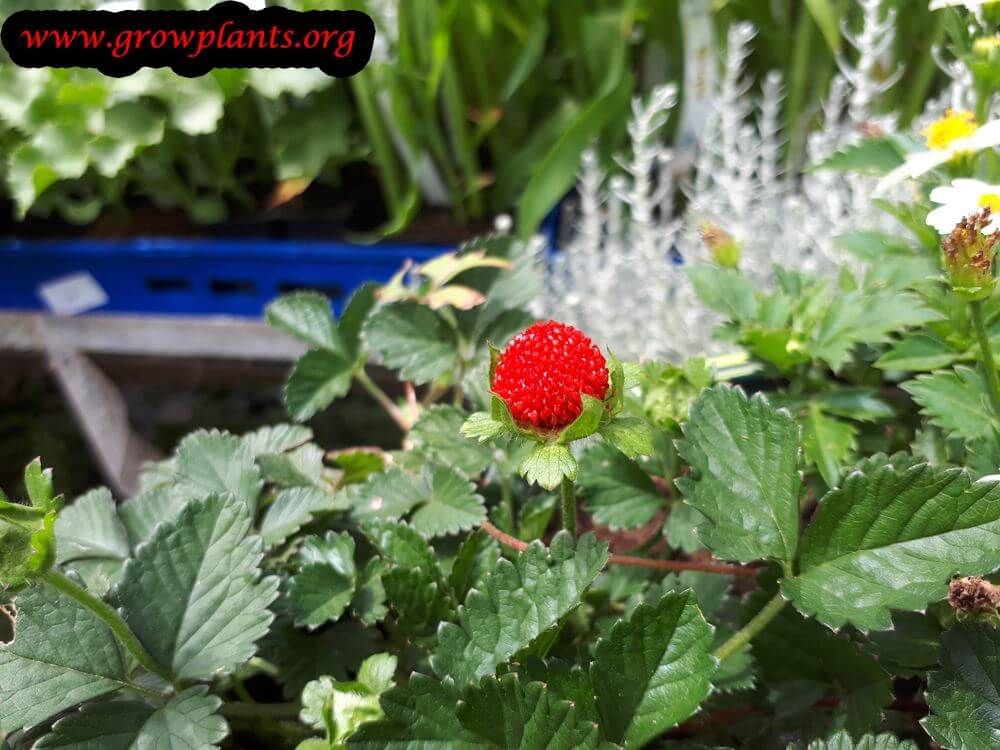
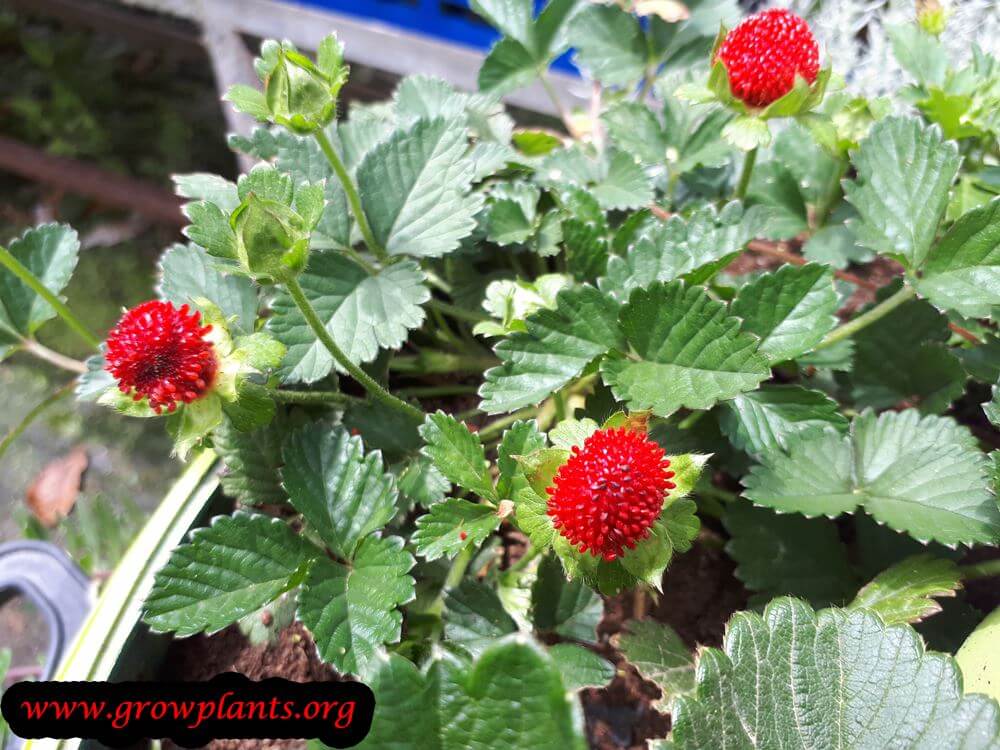
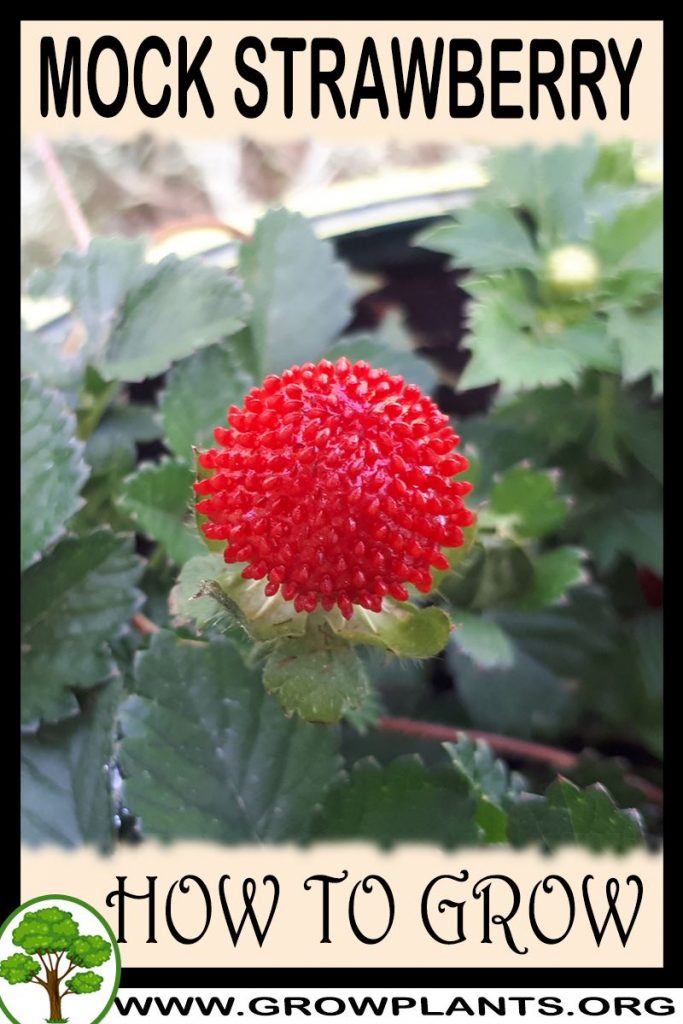
- Fruit Profile: Round, red strawberry-like fruit 1-2.5 cm across; edible but bland and largely tasteless.
Primary Uses & Landscape Value
- Edible Uses: Fruit is edible raw and occasionally used in jams, juice or cakes, though the flavour is poor.
- Functional & Ornamental Roles: Ornamental groundcover for banks, borders and containers.
Care Guide: Planting, Soil & Watering
Overview: Mock strawberry (Duchesnea indica) is a vigorous perennial groundcover (hardiness zone 5–10) for full sun to part shade that likes consistently moist, mulched soil. It spreads readily by runners and appreciates regular water through the growing season.
Quick Care Requirements
| Requirement | Ideal Condition |
|---|---|
| Planting Season | Spring through autumn |
| Growth Rate | Fast to Moderate |
| Soil Type | Moist, well-draining soil rich in organic matter |
| Water Need | Moderate to High — keep the soil evenly moist |
Planting & Establishment
- Best Planting Season: Plant any time through the warm season, from spring to autumn, so the runners can knit together before winter.
- How to Plant:
- Hole Preparation: Dig a hole a little wider than the root ball and loosen the surrounding soil for easy rooting.
- Soil Amendments: Mix in compost and top with mulch to retain moisture and keep the shallow roots cool.
- Planting Depth: Set the crown level with the soil surface; don’t bury the growing point.
- Growth Speed & Expectations: Fast to moderate; it spreads quickly by runners to form a dense mat, so give it room to roam.
Soil, Watering & Drainage Care
- Soil Mix & Drainage Needs: Moist, organic-rich soil that still drains suits it best; a mulch layer conserves moisture. In containers use a moisture-retentive potting mix with drainage holes.
- Watering Schedule & Technique:
- Young / Newly Planted: Water regularly to keep the soil moist while the plant roots in and starts to run.
- Established: Keep watering so the soil stays evenly moist; it dislikes drying out for long.
- Seasonal Adjustments: Reduce watering in winter as growth slows and the plant dies back.
Climate, Light & Hardiness
Mock strawberry is an easy-going groundcover of temperate climates, tolerating both full sun and half shade with equal ease. It is reliably cold-hardy across a broad range, dying back to its rootstock in winter and resprouting vigorously each spring.
Quick Climate Specifications
| Climate Zones | Temperate |
|---|---|
| USDA Hardiness Zones | 5–10 |
| Frost Tolerance | High (top growth dies back with hard frost; rootstock survives) |
| Light Conditions | Full Sun to Half Shade |
Sunlight & Light Exposure
Optimal Light Setup
Grows well in either full sun or half shade, making it a flexible groundcover for open beds or lightly shaded areas beneath shrubs and trees.
Shade & Heat Management
In hot-summer regions, some afternoon shade helps keep the thin foliage from scorching and reduces moisture stress.
Best Exposure/Orientation
Suits open borders in cooler climates and part-shaded understory positions in warmer, sunnier ones.
Temperature Extremes & Hardiness
USDA Hardiness & Regional Limits
Hardy from USDA zone 5 through 10, covering cold-winter temperate areas as well as warm-temperate and subtropical-adjacent climates.
Cold Damage & Winter Protection
As a deciduous perennial, its foliage dies back with the first hard frosts of autumn; the crown and roots persist underground and resprout in spring. A light mulch helps protect the crown at the colder end of its range.
Frost Sensitivity
Foliage is frost-sensitive and collapses at freezing temperatures, but this is normal seasonal dieback rather than plant loss - the rootstock remains hardy within its zone range.
Extreme Heat Tolerance
Tolerates warm-season heat well within its climate range, especially with reliably moist soil; in the hottest zones, part shade improves appearance through summer.
Wind, Humidity & Microclimate
Humidity Preferences
Prefers moderate humidity and consistently moist soil; it is not well adapted to prolonged dry-air conditions.
Wind Tolerance
Its low, spreading, ground-hugging habit keeps it naturally sheltered from wind damage.
Rainfall & Seasonal Moisture
Does best in climates or garden situations with reliable moisture through the growing season; it is not adapted to extended drought.
Microclimate Recommendations
Works well as a groundcover in the dappled shade of shrub borders or woodland edges, where soil stays cooler and more evenly moist than in open, exposed beds.
Growing in Pots, Balconies & Indoors
Mock strawberry is a low, spreading groundcover with strawberry-like leaves, yellow flowers, and small red berries. The grower says it is not a houseplant, but this adaptable little plant tolerates half shade and trails prettily, so a bright windowsill or hanging basket can work; outdoors it is a tough container and groundcover plant.
Quick Details
- Container Size: A shallow pot, hanging basket, or wide trough – it creeps and trails on runners
- Indoor Suitability: Not the grower’s pick for indoors, but it can grow on a bright sill or in a hanging basket thanks to its shade tolerance
- Best Spot: Full sun to half shade; a bright spot indoors, ideally where it can trail
- Soil & Drainage: Ordinary free-draining potting mix; it is not fussy
- Watering in Pots: Average to plenty of water – keep evenly moist; it likes steady moisture but tolerates a range
Indoors & On the Windowsill
- Not the grower’s pick: The grower says it is not a houseplant, but it is adaptable and tolerates half shade, so a bright windowsill or hanging basket can suit it better than most groundcovers.
- Windowsill / basket growing: In a bright spot it will trail and send out runners; a hanging basket shows off the cascading stems and little red fruits.
- Keep it in bounds: It spreads enthusiastically by runners – in a pot this is easy to manage, and indoors it stays contained.
On a Balcony or Patio
- Light & shelter: It is happy in sun or part shade on a balcony or patio and is hardy and undemanding; let it trail over the pot edge or fill a trough.
- Practicalities: Keep it evenly moist and trim wandering runners to keep it tidy; it shrugs off cold and neglect.
Choosing the Pot, Soil & Long-Term Care
- Pot & drainage: A pot or basket with strong drainage holes and no standing-water saucer; it likes moisture but not stagnation.
- Potting mix: Ordinary free-draining potting mix – it is very easy-going.
- Feeding: A light feed through the growing season keeps the foliage fresh; it needs little.
- Repotting: Refresh the mix each year or two and thin the runners; it renews itself readily and roots easily from plantlets.
Fertilizing & Feeding
A light feeder – this vigorous, self-spreading groundcover generally thrives with only light, occasional feeding, and overfeeding mainly encourages growth that is already hard to contain.
Quick Fertilizing Specs
| Feeding Level | Light feeder – needs only light, occasional feeding. |
|---|---|
| Main Nutrient Priority | Balanced feeding; avoid heavy nitrogen, which favors spreading runners over flowers. |
| Best Feeding Period | From the spring growth flush through the growing season. |
| Reduce/Stop Feeding | Stop feeding as the plant dies back for winter. |
Feeding by Growth Stage
Spring Growth Flush
Support the flush of new groundcover growth as the plant breaks winter dormancy.
| Nutrient direction | A light, balanced feeding supports the spring flush of new runners and leaves. |
|---|---|
| Timing | As new growth resumes after the winter chilling period. |
| Frequency | A single light feeding as growth resumes in spring is usually enough for this vigorous groundcover. |
| Fertilizer types | A balanced, diluted fertilizer worked lightly into the soil around the planting, A light top-dressing of compost or mulch, which this plant already benefits from |
| Precautions | Keep feeding light – this fast-spreading groundcover can become overly vigorous and harder to contain if overfed. |
Active Growth and Bloom
Sustain the season-long spread of runners along with the continuous small yellow or white flowers and berries.
| Nutrient direction | Light, balanced feeding through the growing season supports both continued spreading growth and flowering; avoid heavy nitrogen, which favors runners over flowers. |
|---|---|
| Timing | Through spring, summer, and into autumn while the plant is actively growing and flowering. |
| Frequency | Light, occasional feeding through the growing season is enough for this vigorous, low-maintenance groundcover. |
| Fertilizer types | A balanced, diluted fertilizer applied lightly through the growing season |
| Precautions | Avoid overfeeding – this groundcover spreads readily on its own and already attracts a range of pests, so excess soft growth can make pest problems worse. |
Winter Dormancy
Let the plant die back naturally for winter without pushing new growth it cannot sustain in the cold.
| Nutrient direction | None – withhold fertilizer as the plant dies back for winter. |
|---|---|
| Timing | Autumn into winter, as the deciduous foliage dies back. |
| Frequency | No feeding at this stage. |
| Fertilizer types | No feeding at this stage; feeding resumes with new growth in spring. |
| Precautions | Do not fertilize a plant that is dying back for winter – it cannot use additional nutrients and unused fertilizer can wash away or build up in the soil. |
Nutrient Deficiency Signs & Corrections
Pale, thin foliage and slowed spreading.
| Possible causes | General nutrient deficiency in poor or depleted soil, Overcrowding as the groundcover mats in on itself, competing for resources, Slug damage reducing leaf area and vigor, since this plant is prone to slug feeding |
|---|---|
| Appears first on | Overall patch vigor and leaf color |
| What to check | Assess soil fertility, Check for overcrowding and thatch buildup in the planting, Inspect for slug damage |
| Possible correction | Resume light, balanced feeding, thin overcrowded patches if needed, and manage slugs if present. |
Vigorous foliage spread but few flowers or berries.
| Possible causes | Excess nitrogen favoring runner and leaf growth over flowers, Heavy shade reducing flowering, since this plant flowers best with more light, Old, matted growth shading out the flowering points |
|---|---|
| Appears first on | Whole-patch flowering pattern |
| What to check | Review recent fertilizer nitrogen levels, Check light exposure across the planting, Assess whether older growth needs thinning |
| Possible correction | Reduce nitrogen, confirm adequate light, and thin old matted growth to open up flowering points. |
Leaves yellowing outside the expected autumn die-back.
| Possible causes | Waterlogged soil causing root stress, Nutrient deficiency in depleted soil, Natural seasonal die-back being mistaken for a problem |
|---|---|
| Appears first on | Older leaves first |
| What to check | Compare timing to the expected autumn die-back, Check soil drainage, Assess overall soil fertility |
| Possible correction | If yellowing is genuinely premature, improve drainage and consider a light balanced feeding during the next active growth period. |
Pruning, Training & Seasonal Maintenance
Mock strawberry is a low, mat-forming herbaceous groundcover that spreads by stolons; it needs no structural or framework pruning, and per its own data the only real winter task is removing dead, tattered leaves after the deciduous die-back. The other pruning-adjacent job is managing spread — trimming or removing runners where they cross a bed edge or root somewhere unwanted — since this plant is grown primarily as groundcover, not as a fruiting crop (its own data notes the small berries have poor flavor).
Quick Pruning & Maintenance Specs
| Pruning Tolerance | Low |
| Primary Pruning Window | Winter (dead-leaf clean-up, per this plant’s own data) |
| Typical Frequency | Once per year, plus occasional runner trimming as needed |
| Main Objective | Tidy dead foliage; keep spread contained within its intended area |
| Best Tool Type | Precision snips or light hand shears |
| Avoid Heavy Pruning During | Active growth (spring–autumn), while foliage is green and functional |
Pruning by Plant Age & Size
Newly Established
Let runners spread and root freely while the plant fills in as groundcover — this is the intended habit at this stage, not a problem.
Young / Formative
No training system applies; the ‘structure’ of a groundcover is its spread, not a framework.
Mature / Established
Once established and filling its space, trim or lift runners that cross into unwanted areas (paths, neighboring beds, lawn), and remove dead leaves each winter.
Special Growth to Remove
- Runners/stolons — left alone within the intended bed, since they’re how the plant fills ground; cut back where they extend past the bed edge or root into unwanted areas.
- Dead, deciduous leaves — remove in winter once fully spent.
Container & Small-Space Pruning
In a container, the spreading habit needs active management — trim runners regularly to stop the plant cascading beyond the pot or rooting into adjacent soil, since without an in-ground edge to stop it naturally, the container itself is the main way to keep it contained.
Tools
- Precision snips or light hand shears — stems are soft and low, with no woody growth to justify heavier tools.
Tool Hygiene & Disease Risk
Routine — clean, sharp tools are sufficient; no specific disease-transmission risk is noted for this species.
Cut Placement & Technique
Cut runners back to a node or back to the parent crown. Remove dead leaves at the base of the leaf stalk.
Heavy Pruning & Rejuvenation
Not applicable in the woody-renewal sense. An overgrown, congested patch is thinned by pulling out excess plants or rooted runner sections — a division/removal task, not a canopy cutback.
Post-Pruning Care
No special aftercare beyond normal watering; watch for slugs (a listed pest) on freshly cut or damaged tissue, since they’re drawn to soft, damaged material.
Common Pruning Mistakes
- Removing green, functional leaves instead of waiting for the natural winter die-back.
- Letting runners go completely unchecked next to lawn or neighboring beds where spread isn’t wanted.
- Letting fruit sit on damp soil instead of keeping it off the ground, per this plant’s own care note.
When NOT to Prune
Avoid removing foliage while it’s still green and functional through the growing season. Hold off cutting near fruit set if any berries are being left for wildlife or ornamental interest, since disturbing the low mat can knock developing fruit onto damp soil.
Recommended Tools (by task)
- precision_snips — the only cuts this groundcover needs are runner trims and dead-leaf clean-up, both suited to a small, precise tool.
Propagation Guide
Mock strawberry spreads naturally on its own runners, the same way true strawberries do, and separating rooted plantlets from these runners is by far the easiest way to start new plants – site data notes that starting it from seed is hard. Overall propagation is easy via runners, though seed remains possible if slower and less reliable.
Quick Propagation Specs
| Best Propagation Method | Runners (rooted plantlets) |
| Alternative Methods | Seed; division of rooted clumps |
| Propagation Difficulty | Easy (runners); Difficult (seed) |
| Vegetative True-to-Type | Yes |
| Best Propagation Season | Spring to autumn |
Growing from Seed
Site data confirms seed is a usable but difficult way to start this plant, without giving further detail. Germination from seed tends to be slow and uneven for this type of plant in general, so runners are the far more dependable route for most growers.
Runners & Stolons
Like true strawberries, mock strawberry produces aboveground runners that root at the nodes and form new plantlets. Once a plantlet along a runner has developed its own roots, sever it from the mother plant and transplant, or let it establish in place before cutting the connecting runner. Spring through autumn is the active growing period for doing this.
Bloom & Flower Guide
Quick Details
- Bloom Season: Spring, summer and autumn
- Flower Appearance: Small five-petalled flowers in yellow (occasionally white) with yellow stamens
- Edibility: Grown as an ornamental groundcover; the flowers are not eaten
Detailed Blooming Overview
Mock strawberry is a low, spreading groundcover that flowers over a long season, from spring right through autumn. Its small five-petalled blooms are yellow – and that yellow is the quickest way to tell it apart from a true strawberry, which flowers white. Bees work the flowers, which are followed by the little red look-alike ‘strawberries’ that give the plant its name.
Flower Characteristics
- Small yellow (sometimes white) flowers with five petals and yellow stamens.
- Yellow color distinguishes it from the white-flowered true strawberry.
Bloom Care & Thinning
- Pollination: Worked by bees.
- Managing spread: The plant runs and self-seeds freely, so thin or edge it if you want to keep it contained.
Fruit & Uses
Mock strawberry produces small, round, red fruit that closely resembles a true strawberry in looks and is edible raw, though it is grown mainly as an ornamental groundcover rather than for its fruit because the flavor is mild and watery. Where fruit is plentiful it can still be eaten out of hand or used in simple jams, juice or baking.
Quick Edible Specs
| Edible Parts | Fruit |
|---|---|
| Main Use(s) | Culinary – eaten fresh, or made into jam, juice or used in cakes |
| Eaten Raw or Cooked | Raw, or cooked into jam/baked goods |
| Preparation Required | None to eat fresh (rinse first) |
| Harvest Season | Summer to autumn |
| Time to First Harvest | Fruit follows flowering on this fast-to-medium growing groundcover (see Blooming for flowering season) |
| Storage | Best eaten fresh soon after picking; very soft, thin-skinned fruit that does not keep long |
| Safety/Toxicity Caveat | Generally regarded as non-toxic and safe to eat; the fruit’s main drawback is a mild, somewhat bland/watery flavor rather than any hazard |
Fruit
The fruit is round and red, similar in shape to a true strawberry but smaller, at roughly 1–2.5cm across. It ripens through summer into autumn. Flavor is notably mild and watery compared with true strawberries – the plant is grown chiefly as an ornamental, low groundcover, and the fruit is a secondary bonus rather than the reason it’s planted. Because the fruiting stems trail along the ground, keeping fruit from sitting directly on damp soil helps it ripen cleanly and reduces rot and slug damage.
Harvesting
Pick fruit once fully red and soft, through the summer-to-autumn fruiting window; birds and slugs are noted as competing for the fruit, so timely picking helps. No curing or ripening-off-plant step is needed – fruit is used as soon as it’s picked.
Preparation, Uses & Safety
Rinse and eat fresh, or use in simple jams, juice or baked goods; because the flavor is mild, mock strawberry fruit is more often mixed with more flavorful fruit than used on its own. No toxicity concerns are documented for the fruit; there is no required cooking or detoxification step.
Pests, Diseases & Troubleshooting
Overview: Mock strawberry is a vigorous, wiry groundcover in the rose family (now Potentilla indica) and is largely trouble-free – its ‘problems’ are more about controlling its spread than fighting pests. When issues do appear they mirror strawberry relatives: slugs and snails on the fruit and soft growth, aphids and spider mites, plus the strawberry-family leaf diseases (leaf spot, powdery mildew, rust). Management is cultural and low-input; the tasteless fruit is harmless but bland.
Quick Troubleshooting Overview
| Issue / Pest | Main Symptom | Primary Solution |
|---|---|---|
| Slugs & snails | Chewed leaves & grazed fruit; slime trails | Hand-pick, traps, iron-phosphate pellets |
| Aphids | Curled sticky new growth; honeydew | Hose off, soap, beneficials |
| Spider mites | Fine stippling & webbing in dry heat | Hose foliage, oil/predatory mites |
| Leaf spot | Purple-bordered spots on leaflets | Airflow, remove old leaves, dry foliage |
| Powdery mildew | White powdery film on leaves | Sun, airflow, potassium bicarbonate |
| Invasive spread | Runners & seedlings colonising beds | Edge, pull runners, contain |
Common Pests & Management
- Slugs & snails (Gastropoda):
- Symptoms: Irregular holes in the leaves and grazing on the low-held fruit, with tell-tale slime trails, worst in the damp shade this groundcover often occupies.
- Prevention & Control: Hand-pick after dark, set beer traps, and use iron-phosphate pellets or copper barriers where damage matters; thin the canopy a little and avoid overwatering to keep the surface drier.
- Aphids (Aphidoidea (incl. Chaetosiphon on strawberry relatives)):
- Symptoms: Clusters of small soft insects on the shoot tips and leaf undersides, curling new growth with sticky honeydew; on strawberry relatives they can also transmit viruses.
- Prevention & Control: Hose off colonies and encourage ladybirds, lacewings and hoverflies; insecticidal soap or neem clears heavy build-up. Control ants that farm them.
- Spider mites (Tetranychus urticae):
- Symptoms: Fine pale stippling, bronzing and light webbing on leaflets during hot, dry weather, with a dull, dusty look to the foliage.
- Prevention & Control: Hose the foliage and keep the soil evenly moist to reduce stress; predatory mites and, if needed, horticultural oil control outbreaks.
- Vine weevil / strawberry root weevil (Otiorhynchus spp.):
- Symptoms: Notched leaf margins from night-feeding adults and, more seriously, white grubs eating the roots and crown of container or bedded plants, causing patchy wilting and collapse.
- Prevention & Control: Check roots when dividing or repotting and remove grubs; drench with entomopathogenic nematodes in warm soil. Keep plants vigorous so root grazing is better tolerated.
Diseases & Fungal Issues
- Leaf spot (Mycosphaerella / Ramularia & related):
- Symptoms: Small rounded spots with purple or reddish borders and pale centres on the leaflets, merging in wet, crowded conditions and causing some yellowing and leaf loss; usually cosmetic on this tough groundcover.
- Treatment & Management: Improve airflow, avoid overhead watering, and rake up old and infected leaves; renew tired patches by cutting back. Fungicide is rarely needed.
- Powdery mildew (Podosphaera aphanis & related):
- Symptoms: A white powdery coating on leaves and stems, sometimes reddening or curling the foliage, favoured by warm days, cool nights and crowding.
- Treatment & Management: Grow in adequate light with good airflow, avoid excess nitrogen, and remove affected leaves; potassium bicarbonate or sulphur controls persistent mildew.
- Rust (Frommeela / Phragmidium-type rusts):
- Symptoms: Yellow-orange to brown powdery pustules on leaf undersides with yellow flecking above, in humid conditions.
- Treatment & Management: Remove and destroy infected leaves, improve airflow and light, and keep foliage dry; rust is seldom serious enough on mock strawberry to need fungicide.
- Fruit & root rots (Botrytis cinerea; Pythium / Phytophthora spp.):
- Symptoms: Grey mould on fruit resting on wet ground and root/crown rot in waterlogged soil, causing collapse of patches.
- Treatment & Management: Improve drainage, avoid overwatering, and mulch to keep fruit off saturated soil; remove rotted material and thin dense growth.
Growing Difficulties & Abiotic Problems
- Invasive spreading:
- Cause & Symptoms: The plant runs by prolific stolons and self-seeds freely (birds spread the fruit), quickly colonising beds, lawns and paths and outcompeting smaller plants – its most common real ‘problem’.
- Correction Strategy: Site where vigorous spread is wanted, install edging, and pull runners and seedlings regularly to contain it; remove fruit before it seeds if naturalising is a concern.
- Leaf scorch & chlorosis:
- Cause & Symptoms: Browned, crisped leaf edges in hot dry sun with drought, and yellowing (green-veined) leaves on poor or alkaline soils.
- Correction Strategy: Grow in part shade with even moisture in hot climates and mulch the soil; correct chlorosis with organic matter and chelated iron where soils are limey.
- Bland/tasteless fruit (not a disease):
- Cause & Symptoms: The red fruit is often assumed to be diseased or poisonous when it is simply insipid; it is edible but nearly flavourless, not toxic.
- Correction Strategy: No action needed – this is normal for the species. Harvest is optional; leaving fruit will increase self-seeding.
What Helps – Products & Tools
Mock strawberry rarely needs inputs: keep slug controls (iron-phosphate pellets, traps, copper barriers) and basic sap-sucker tools (insecticidal soap, neem, a strong hose) on hand, plus potassium-bicarbonate or sulphur for occasional powdery mildew. The main ‘tool’ is edging and regular runner removal to keep it in bounds.