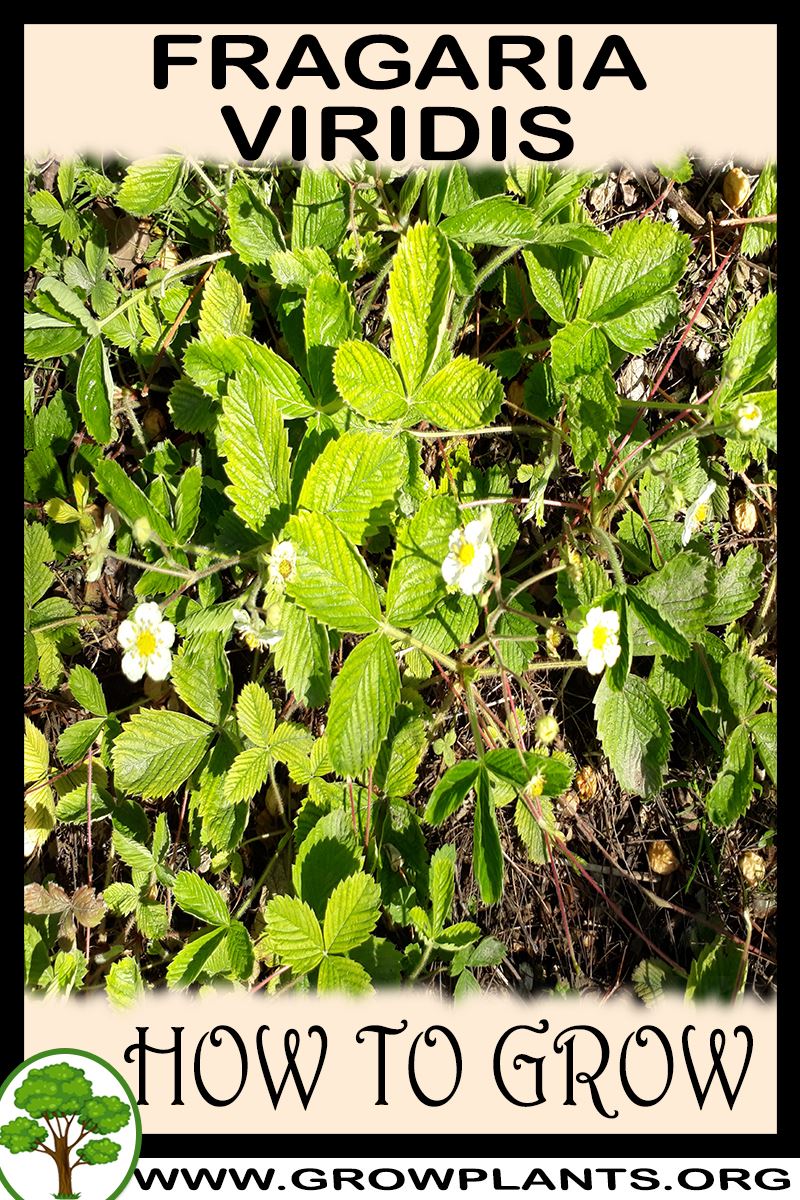




Plant Profile & Key Characteristics
Overview: A low, spreading herbaceous perennial grown both for its small sweet-sour red fruits and as an ornamental groundcover, staying only a few centimetres tall while knitting together by runners. It is evergreen in mild climates and thrives in temperate gardens.
Quick Specifications
| Specification | Attribute |
|---|---|
| Plant Type / Life Cycle | Perennial (herbaceous) |
| Foliage Type | Evergreen (in mild climates) |
| Mature Size | 2–7 cm tall (1–3 in); spreads by runners |
| Growth Rate | Fast |
| Root System | Fibrous, shallow (spreads by runners / stolons) |
| Toxicity | Non-toxic / edible |
| Hardiness | USDA zones 5–9 |
Growth Form & Structure
- Height & Spread: In the ground it stands just 2–7 cm (1–3 in) high and spreads indefinitely by runners; in a pot it stays compact and trails over the rim.
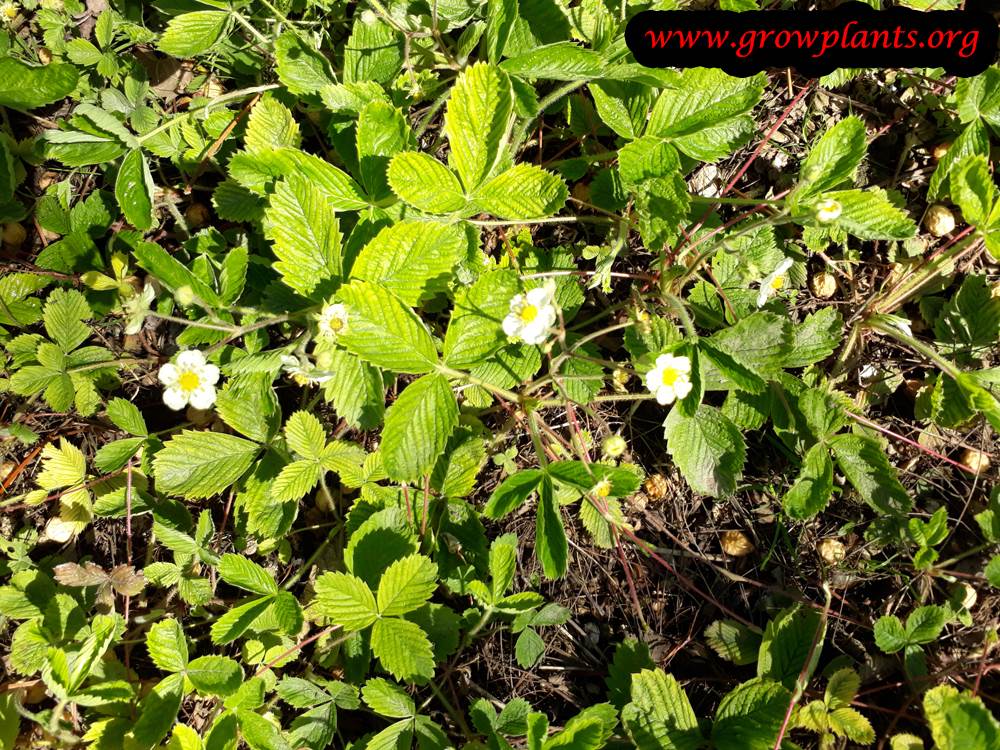
- Growth Habit & Form: Low herbaceous groundcover forming a dense mat of trifoliate leaves on short stems.
- Lifespan & Maturity: Short-lived perennial best renewed from runners; begins bearing fruit within roughly 4–6 months of planting.
Anatomy & Physical Features
- Leaves & Foliage: Bright green leaves divided into three serrated-edged lobes, carried on slender stems.
- Flower Characteristics: Small white five-petalled flowers with yellow stamens, pollinated by bees.
- Fruit Profile: Small red, cone- to heart-shaped berries 0.5–2 cm across with a sweet-sour flavour.
Primary Uses & Landscape Value
- Edible Uses: Fruit eaten fresh or made into jam, juice and cakes.
- Functional & Ornamental Roles: Ornamental edible groundcover for beds, path edges and containers.
Care Guide: Planting, Soil & Watering
Overview: Wild strawberry is a low, running perennial that grows best in full sun to part shade in rich, moist, slightly acidic soil. Mulch to keep the fruit clean and the soil evenly moist, and water consistently for the best crop.
Quick Care Requirements
| Requirement | Ideal Condition |
|---|---|
| Planting Season | In spring to summer, after frost |
| Growth Rate | Fast |
| Soil Type | Rich, moist, well-drained soil high in organic matter |
| Soil pH | Slightly acidic (source notes it prefers slightly acid soil) |
| Water Need | Moderate to High — keep evenly moist |
Planting & Establishment
- Best Planting Season: Plant in spring to summer once frost has passed and the soil has warmed.
- How to Plant:
- Hole Preparation: Dig a hole to suit the shallow crown and spreading runners; leave room for it to spread as a ground cover.
- Soil Amendments: Enrich the soil with compost and organic matter; a straw mulch keeps fruit off the soil and holds moisture.
- Planting Depth: Set the crown exactly at soil level — buried crowns rot and exposed ones dry out — then firm and water in.
- Growth Speed & Expectations: Fast, quickly spreading by runners to form a fruiting carpet a few centimetres tall; it fruits within a few months.
Soil, Watering & Drainage Care
- Soil Mix & Drainage Needs: Rich, moisture-retentive but well-drained soil is ideal; steady moisture supports fruiting while good drainage prevents crown rot.
- Watering Schedule & Technique:
- Young / Newly Planted: Keep the soil consistently moist while plants and runners establish.
- Established: Water regularly, especially in flower and fruit, so the soil never dries out; mulch to conserve moisture.
- Seasonal Adjustments: Water more in summer heat and fruiting; reduce in cool weather.
Climate, Light & Hardiness
Wild strawberry is a cold-hardy temperate-climate groundcover, tolerant of winter freezes typical of USDA zones 5–9. It grows best in full sun to half shade with consistently moist, slightly acidic soil.
Quick Climate Specifications
| Climate Zones | Temperate |
|---|---|
| USDA Hardiness Zones | 5–9 |
| Frost Tolerance | High |
| Light Conditions | Full Sun to Half Shade |
Sunlight & Light Exposure
Optimal Light Setup
Full sun gives the best fruiting; half shade is tolerated but may reduce flowering and fruit set.
Temperature Extremes & Hardiness
USDA Hardiness & Regional Limits
Hardy in USDA zones 5–9, surviving typical temperate winter freezes as a low evergreen groundcover; a mulch layer helps protect the crown and moderate soil temperature through winter.
Wind, Humidity & Microclimate
Rainfall & Seasonal Moisture
Naturally suited to consistently moist, humus-rich woodland-edge conditions rather than a pronounced dry season.
Growing in Pots, Balconies & Indoors
Fragaria viridis is a low, running wild strawberry grown for its small, sweet fruit. The grower confirms it is not a true houseplant but grows well in containers, and like other strawberries it can crop on a bright, sunny windowsill, hanging pot or balcony.
Quick Details
- Container Size: 3-10 L, or a wide trough/hanging basket – it is a tiny, spreading plant that sends out runners
- Indoor Suitability: Not a deep-indoor houseplant, but a compact runner can fruit on a bright, sunny sill
- Best Spot: Full sun to light shade; the more sun, the better the fruit
- Soil & Drainage: Moisture-retentive but free-draining potting mix
- Watering in Pots: Keep evenly moist, especially in flower and fruit; pots dry fast and drought spoils the crop
Indoors & On the Windowsill
- Not a houseplant, but sill-friendly: The grower marks it as no houseplant, yet a strawberry crops on a very sunny windowsill where it gets enough direct light. A drip irrigation kit with a timer can take over that watering check automatically.
- Windowsill: Pick the sunniest sill; hand-pollinate the flowers with a soft brush indoors to help the fruit set.
- Cool rest: A hardy plant, it welcomes a cool winter rest and fruits best after it; runners can be potted up to make new plants.
On a Balcony or Patio
- Light & wind: A sunny balcony gives the sweetest fruit; it trails prettily from baskets and railings. Reflected heat dries pots fast, so check moisture daily in summer.
- Practicalities: Great for shallow troughs and hanging pots; let runoff drain and keep runners in check.
Choosing the Pot, Soil & Long-Term Care
- Pot & drainage: A wide or hanging pot with good drainage holes; no standing-water saucer.
- Potting mix: A moisture-retentive potting mix opened with perlite so it drains yet holds water for fruiting.
- Feeding: A high-potash (tomato-type) feed as it flowers and fruits improves the crop.
- Refresh yearly: Strawberries tire after a couple of seasons – renew plants from runners and refresh the mix.
Fertilizing & Feeding
A moderate feeder: steady nitrogen builds the crown and runners early on, then feeding eases and shifts toward potassium as flowering and fruiting take over.
Quick Fertilizing Specs
| Feeding Level | Moderate feeder |
|---|---|
| Main Nutrient Priority | Nitrogen-forward while the crown and runners establish, shifting to balanced with adequate potassium through flowering and fruiting |
| Best Feeding Period | From planting through active spring and summer growth, easing off as fruit ripens |
| Organic Options | Compost, well-rotted manure, or other organic matter worked into the mulch layer |
| Micronutrients | Usually supplied by a complete fertilizer and organic mulch; correct specific issues only when diagnosed |
| Soil pH | Prefers rich, moist soil on the slightly acid side |
| Reduce/Stop Feeding | Taper feeding as fruit ripens, and cut back again after the fruiting season when growth slows for the year |
Feeding by Growth Stage
Establishment after planting
Help newly planted crowns settle in and root well into rich, moist soil.
| Nutrient direction | A balanced complete fertilizer worked lightly into the soil to support steady root and crown development. |
|---|---|
| Timing | At planting and through the first weeks of new growth. |
| Frequency | A light initial feeding, renewed as the crown shows active new growth. |
| Fertilizer types | A balanced complete garden fertilizer, Compost or well-rotted organic matter mixed into the planting area |
| Precautions | Keep fertilizer away from direct contact with the crown, and maintain the mulch layer to protect roots and hold moisture. |
Leaf and runner development
Build a full leaf canopy and healthy runners to support the coming flower and fruit crop.
| Nutrient direction | Lean toward a nitrogen-forward feed to drive vigorous leaf and runner growth. |
|---|---|
| Timing | During active spring growth, before flowering begins in earnest. |
| Frequency | Steady light feeding through this stage of active leafy growth. |
| Fertilizer types | A nitrogen-forward complete fertilizer, Compost or aged manure worked into the mulch |
| Precautions | Avoid excess nitrogen once flowering starts, which can push leafy growth at the expense of fruit. |
Flowering and fruit ripening
Support good fruit set, size, and sweetness without pushing excess leaf growth.
| Nutrient direction | Shift toward a balanced fertilizer with adequate potassium to favor fruit quality over leafiness. |
|---|---|
| Timing | From flowering through fruit ripening in the warm season. |
| Frequency | Light, steady feeding through bloom and fruiting, easing off as the fruit ripens. |
| Fertilizer types | A balanced to potassium-forward complete fertilizer |
| Precautions | Keep fruit off damp soil with mulch, and avoid heavy nitrogen feeding once fruit begins to form. |
Nutrient Deficiency Signs & Corrections
New leaves turn pale yellow between dark green veins while older leaves stay green.
| Possible causes | high soil pH tying up iron, poorly drained or waterlogged soil, cold, wet soil limiting root uptake |
|---|---|
| Appears first on | the youngest leaves |
| What to check | soil pH, drainage around the crown, recent soil temperature and moisture |
| Possible correction | Correct overly alkaline soil where practical and apply a chelated iron product per its label if chlorosis persists. |
Overall pale green to yellowish leaves and weak, sparse runner production.
| Possible causes | low soil nitrogen, heavy mulch tying up nitrogen as it breaks down, leaching in light, sandy soils |
|---|---|
| Appears first on | older leaves first, then the whole plant |
| What to check | overall leaf color and vigor, runner production, recent feeding history |
| Possible correction | Apply a nitrogen-forward complete fertilizer during active leafy growth and improve soil organic matter. |
Leaf margins scorch or turn brown, and fruit comes smaller or less sweet than expected.
| Possible causes | low soil potassium, an imbalanced, nitrogen-heavy feeding history, leaching in light, sandy soils |
|---|---|
| Appears first on | older leaf margins |
| What to check | leaf margin condition, recent feeding balance, fruit size and quality |
| Possible correction | Shift to a balanced to potassium-forward fertilizer and improve soil organic matter. |
Flowers fail to set fruit, or the resulting fruit is small, misshapen, or lopsided.
| Possible causes | boron deficiency affecting pollination and fruit development, poor pollination from weather or low pollinator activity, calcium imbalance during fruit development |
|---|---|
| Appears first on | developing flowers and young fruit |
| What to check | fruit shape and uniformity, pollinator activity during bloom, recent soil test results if available |
| Possible correction | Confirm the cause before treating; apply a chelated boron product per its label only if boron deficiency is diagnosed, since the margin between deficiency and toxicity is narrow. |
Pruning, Training & Seasonal Maintenance
Fragaria viridis (wild/green strawberry) is a low, evergreen, runner-forming perennial grown for its small edible fruit as well as groundcover value. It fruits on the current season’s crown growth rather than on any persistent wood, so “pruning” here means two things: managing runners/stolons (removing most to focus energy into fruiting, or leaving some for propagation and groundcover spread), and a post-harvest renovation – removing old, tattered, or diseased leaves once fruiting finishes to reduce pest and disease pressure and stimulate clean new foliage for the following season.
Quick Pruning & Maintenance Specs
| Pruning Tolerance | Moderate |
| Primary Pruning Window | After the fruit harvest season |
| Secondary Maintenance Window | Ongoing through the growing season, for runner control |
| Typical Frequency | Runner removal every few weeks in season; one foliage renovation per year after fruiting |
| Main Objective | Remove old/dead leaves post-harvest; manage runners for fruiting vigor vs. spread |
| Young Plant Priority | Remove early runners and flower stems in the first season to build a strong crown |
| Mature Plant Priority | Post-harvest leaf renovation; ongoing runner management |
| Best Tool Type | Precision snips |
| Avoid Heavy Pruning During | Flowering and fruit set/ripening |
Pruning by Plant Age & Size
Newly Established
In the first season, remove early runners and even flower stems so the young plant channels energy into building a strong crown and root system rather than fruiting or spreading prematurely.
Young / Formative
No structural training in the woody sense; instead, decide and manage the plant’s runner policy early – snip runners at the stolon as they form if a tidy, non-spreading fruiting clump is wanted, or peg down and root a limited number for propagation/groundcover fill.
Mature / Established
Once cropping, continue routine runner control and carry out the main post-harvest leaf renovation each year.
Seasonal Pruning Schedule
Post-Harvest
- Objective: renew the plant’s foliage and reduce carried-over pest/disease pressure after fruiting.
- Remove: old, tattered, yellowing, or disease-marked leaves; excess runners not wanted for propagation.
- Do not remove: the central crown, or all foliage at once – leave enough healthy leaf to continue photosynthesis.
- Expected response: fresh new leaves emerge from the crown.
- Flowering/fruiting impact: none this season (harvest is finished); supports the following year’s flowering by keeping the crown healthy.
Ongoing Sanitary (growing season)
- Objective: control unwanted spread and remove pest/slug-damaged leaves.
- Remove: runners not being kept for propagation; visibly damaged leaves.
- Do not remove: developing flower trusses or ripening fruit stems.
- Expected response: more compact plant, energy redirected to fruiting.
- Flowering/fruiting impact: removing runners generally improves fruiting vigor on the mother plant.
Special Growth to Remove
- Runners/stolons – the defining growth to manage: remove most to concentrate energy into fruit and crown vigor, or selectively retain and peg down a few to propagate new plants or fill in groundcover.
- Old, tattered, or disease-marked leaves at post-harvest renovation.
- Spent flower stems once fruit has been picked from them.
Container & Small-Space Pruning
In containers or small beds, runner removal is even more important to stop the plant from overrunning its space or neighboring pots; renovate foliage the same way after harvest, and keep ripening fruit lifted off the growing medium as it would be kept off soil in-ground.
Tools
- Precision snips – for both runner removal and leaf renovation on this low, soft-stemmed plant.
Tool Hygiene & Disease Risk
Increased: strawberries can carry foliar diseases on old leaf material, and slugs (a noted pest here) shelter in dense old foliage, so clear and dispose of removed leaves rather than leaving them in the bed; routine tool cleaning between plants is sufficient, full disinfection is not typically required.
Cut Placement & Technique
Snip runners close to the stolon near the mother plant if not rooting them; remove old leaves at the base of the petiole without nicking the crown, which is the plant’s only growing point.
Heavy Pruning & Rejuvenation
A full post-harvest leaf renovation (removing most old foliage down to the crown) is tolerated and beneficial for plant health, but avoid damaging the crown itself; this is an annual renewal practice rather than an occasional hard rejuvenation.
Post-Pruning Care
Water normally after renovation to support fresh leaf growth; avoid heavy feeding immediately after – the plant’s next priority is rebuilding foliage, not another flush of fruit. Watch for slugs and birds around any remaining or late fruit.
Common Pruning Mistakes
- Letting runners establish unchecked, which drains vigor from the mother plant’s fruiting and creates an overcrowded mat.
- Stripping all foliage (including from the crown) at once, which stresses the plant going into the next season.
- Leaving old, spent leaves in place, harboring slugs and disease over winter.
When NOT to Prune
Avoid removing foliage or runners during flowering and while fruit is developing/ripening, since active leaves support the current crop.
Recommended Tools (by task)
- All stages, runner removal and post-harvest leaf renovation → precision_snips – the only tool needed for this low, herbaceous, soft-stemmed plant.
Pruning Troubleshooting
| Problem | Possible Cause | What to Check | Corrective Action |
| Declining fruit size/vigor over a few seasons | Excess runners left rooted, overcrowding and competing with the mother plant | Density of runners/daughter plants around the crown | Remove excess runners promptly each season; thin overcrowded patches |
| Leaf spotting or rot after harvest | Old foliage left in place, retaining moisture and disease inoculum | Presence of yellowed/spotted leaves and dense old growth | Carry out the post-harvest leaf renovation, removing and disposing of old leaves |
| Slug damage to leaves and fruit | Dense low foliage and fruit contact with soil sheltering slugs | Foliage density and whether fruit touches the ground | Thin crowded leaves, keep fruit lifted off soil, clear old leaf litter |
Propagation Guide
Fragaria viridis is most reliably propagated by division of the crown or by rooting the runners it naturally produces, which the site notes as the recommended (vegetative) starting method. Seed is possible for this wild species but is slower and less predictable, so vegetative propagation is preferred whenever fast-establishing, true plants are wanted. Overall difficulty is Easy.
Quick Propagation Specs
| Best Propagation Method | Division of rooted runners (stolons) |
| Alternative Methods | Crown division; seed |
| Propagation Difficulty | Easy |
| Seed True-to-Type | Usually true-to-type (wild species, not a named cultivar) |
| Vegetative True-to-Type | Yes |
| Best Propagation Season | Spring to summer |
| Seed Germination Time | Typically several weeks, and can be uneven |
| Cutting Rooting Time | Not applicable (propagated by rooted runners/division, not stem cuttings) |
| Germination Temperature | Cool-to-moderate room temperature; no site-specific figure available |
| Seed Sowing Depth | Surface-sow or barely cover; strawberry seed is tiny and benefits from light to germinate |
Growing from Seed
Seed Handling & Viability
Seed is very small; use fresh, clean seed for best results since viability declines with age and poor storage.
Sowing Depth & Orientation
Surface-sow and press in lightly rather than burying, since the fine seed germinates best with light exposure.
Germination Conditions
Keep the sowing medium consistently moist; germination is often slow and irregular, so allow extra time before giving up on a tray.
Seedling Care
Once seedlings have a few true leaves, grow them on in the site’s recommended mulched, moist, slightly acid, rich soil before transplanting.
Division, Offsets, Pups & Suckers
The site marks vegetative propagation as necessary for reliable results, matching this species’ natural habit of spreading by runners. Detach a daughter plant only once it has formed its own roots where the runner touched soil, keeping those roots intact when severing it from the parent runner; unrooted runner tips should not be separated. Established crowns can also be lifted and divided into sections that each carry roots and at least one growing crown, ideally in spring to summer per the site’s planting-season guidance.
Runners & Stolons
As a strawberry species, Fragaria viridis spreads naturally via runners (stolons) that root at intervals along their length. Let each daughter plantlet form its own roots in contact with soil before severing it from the parent runner; cutting too early results in a weak, unrooted start.
Bloom & Flower Guide
Quick Details
- Bloom Season: Spring into summer
- Time to First Bloom: Flowers in its first season once established
- Flower Appearance: White, five-petalled flowers with a boss of yellow stamens
- Edibility: Grown for its small fruit; the blossoms are non-toxic but not usually eaten
Detailed Blooming Overview
Green or creeping strawberry opens simple white flowers in spring, each with a golden centre of stamens. Once pollinated, every bloom can swell into a small, aromatic fruit, so a good flush of flowers is the promise of a good crop. It also makes a pretty, pollinator-friendly groundcover.
Flower Characteristics
- White flowers with five rounded petals and yellow stamens.
- Held on short stems just above the trifoliate leaves.
Bloom Care & Thinning
- Encouraging bloom: Full sun and steady moisture support the flush of flowers.
- Pollination: Pollinated by bees – good insect activity means better fruit set.
Bloom Health & Protection
- Grey mould (Botrytis) on blossoms: In cool, wet spells the open flowers can rot and fail to set; improving airflow and avoiding overhead watering helps, and a botrytis-targeted fungicide is an option in bad seasons.
Fruit & Uses
The small, cone- to heart-shaped berries of Fragaria viridis are the plant’s edible part, with a sweet-sour flavor typical of wild strawberries. The fruit is eaten fresh, straight off the plant, and is also popular for jams, juice, and baking.
Quick Edible Specs
| Edible Parts | Fruit |
|---|---|
| Main Use(s) | Culinary – fresh eating, jams, juice, cakes |
| Eaten Raw or Cooked | Raw (also cooked into jams/preserves) |
| Preparation Required | None to eat fresh; rinse before eating |
| Harvest Season | Spring to summer, in temperate climates |
| Time to First Harvest | Fruiting begins within the plant’s first growing season once established (see Propagation for growth details) |
| Storage | Best eaten fresh soon after picking; extra fruit can be made into jam or juice for longer storage |
| Safety/Toxicity Caveat | None known |
Fruit
Fruits are red, cone-shaped to occasionally heart-shaped, 0.5–2 cm across, with a sweet-sour taste. Pick when fully red and slightly soft to the touch. Because the low, sprawling fruit can touch damp soil, keep it lifted off the ground with mulch or light support to prevent rot and reduce damage from slugs and birds. Harvest by hand, picking berries individually as they ripen rather than all at once.
Preparation, Uses & Safety
Fruit is eaten raw out of hand, or used to make jams, juice, and cakes. No cooking or processing is needed for fresh eating; cooking is only required if making preserves. There are no known toxicity or safety concerns with the fruit – the main threats to the crop are birds and slugs reaching it before harvest, not any hazard to the person eating it.
Pests, Diseases & Troubleshooting
Overview: Fragaria viridis is the wild green or creamy strawberry, a hardy low-growing perennial of European and Asian grasslands and the same genus as the cultivated garden strawberry. Strawberries are low, soft-fruited perennials whose crowns, ripening berries and tender leaves attract a steady mix of chewing and sap-sucking pests, while their dense, ground-hugging canopy and constant moisture invite fruit and foliar rots. Success comes from an organic-first, prevention-led routine: keep berries off the soil, maintain airflow, rotate beds, remove old and diseased foliage, and reach for sprays only when monitoring shows real pressure.
Quick Troubleshooting Overview
| Issue / Pest | Main Symptom | Primary Solution |
|---|---|---|
| Slugs & snails | Ragged holes in leaves and ripe berries, slime trails | Handpick at night, straw mulch, iron-phosphate bait, beer traps |
| Birds | Pecked or vanished ripening fruit | Netting or mesh cages over fruiting plants |
| Aphids | Curled shoots, sticky honeydew, sooty mould, virus spread | Blast off, encourage ladybirds, insecticidal soap |
| Grey mould (Botrytis) | Fuzzy grey rot on berries touching soil or each other | Airflow, straw mulch, remove infected fruit promptly |
| Powdery mildew | White coating and upward-curling leaf margins | Spacing, resistant types, sulphur or potassium-bicarbonate spray |
| Vine / root weevils | Notched leaf edges; wilting from root-eaten crowns | Beneficial nematodes, remove debris, rotate beds |
Common Pests & Management
- Slugs & Snails (Deroceras and Cornu spp.):
- Symptoms: Irregular holes chewed in leaves and, most damagingly, gouged cavities in ripe berries lying on the soil, with tell-tale silvery slime trails. Worst in wet weather and under dense foliage.
- Prevention & Control: Mulch with clean straw to lift fruit off the ground and keep it dry; handpick after dark; set beer or yeast traps; encourage ground beetles, frogs and birds. Where pressure is high, use iron-phosphate pellets, which are safe around pets and wildlife.
- Birds:
- Symptoms: Whole or half-eaten berries as they colour up; ripe fruit disappears overnight. Blackbirds and thrushes are the usual culprits.
- Prevention & Control: Drape fine netting or build a simple mesh fruit cage as berries begin to blush; keep netting taut and off the ground so birds and hedgehogs are not trapped. Harvest promptly at ripeness.
- Aphids (Chaetosiphon fragaefolii and others):
- Symptoms: Clusters on young leaves and flower stalks, curled distorted growth, sticky honeydew and sooty mould. Most serious as vectors of strawberry viruses that cause decline.
- Prevention & Control: Inspect new growth regularly; dislodge with a water jet; conserve ladybirds, lacewings and hoverflies. Treat persistent colonies with insecticidal soap or a light horticultural oil, spraying in the evening to protect pollinators.
- Two-Spotted Spider Mite (Tetranychus urticae):
- Symptoms: Fine pale stippling and bronzing of leaves, with delicate webbing on undersides in hot, dry spells; plants weaken and yields fall.
- Prevention & Control: Raise humidity and avoid drought stress; hose down foliage; release predatory mites (Phytoseiulus) under cover. Use insecticidal soap or horticultural oil for heavy infestations.
- Strawberry & Vine Weevils (Otiorhynchus spp.):
- Symptoms: Adults notch leaf margins at night; the real damage is from white C-shaped larvae eating roots and crowns, causing sudden wilting and collapse, especially in containers.
- Prevention & Control: Drench soil with entomopathogenic nematodes (Heterorhabditis) in warm soil; clear leaf litter and old plants; rotate beds; renew container plants every few years.
Diseases & Fungal Issues
- Grey Mould (Botrytis cinerea):
- Symptoms: Soft brown patches that rapidly grow a fuzzy grey mould, especially where berries touch soil, mulch or each other in humid weather; can rot flowers before fruit sets.
- Treatment & Management: Improve airflow through spacing and deleafing; mulch to keep fruit dry; pick and bin infected berries at once; avoid overhead watering late in the day. Copper or a biological (Bacillus) fungicide helps in wet spells.
- Powdery Mildew (Podosphaera aphanis):
- Symptoms: White powdery patches on leaf undersides with margins curling upward and reddening; flowers and young fruit may also be coated and distorted.
- Treatment & Management: Choose resistant cultivars, space for airflow and avoid heavy nitrogen. Apply sulphur, potassium-bicarbonate or a milk-based spray at first sign, treating evenly on both leaf surfaces.
- Leaf Spot & Leaf Scorch (Mycosphaerella / Diplocarpon spp.):
- Symptoms: Small purple flecks enlarging to grey-centred spots (leaf spot) or irregular purple blotches that merge and scorch whole leaves (leaf scorch), weakening the plant over time.
- Treatment & Management: Remove and destroy old infected foliage after fruiting; improve airflow; avoid overhead irrigation; renovate matted rows. Copper fungicide can protect new growth under heavy pressure.
- Red Stele & Crown Rot (Phytophthora spp.):
- Symptoms: Stunted, bluish, wilting plants; roots rot from the tip and the central core (stele) turns red-brown. Thrives in cold, waterlogged soils.
- Treatment & Management: Plant in raised, free-draining beds; never overwater; use certified disease-free runners and resistant varieties; rotate away from infected ground for several years.
- Verticillium Wilt (Verticillium dahliae):
- Symptoms: Outer leaves wilt, dry at the margins and collapse while inner leaves stay small; plants decline and may die, often after warm spells.
- Treatment & Management: Avoid planting after tomatoes, potatoes or peppers; use resistant cultivars and clean stock; remove and destroy affected plants; practise long rotations.
Growing Difficulties & Abiotic Problems
- Fruit Rot from Soil Contact:
- Cause & Symptoms: Berries resting on wet soil soften, discolour and rot before ripening, and stay gritty or mud-splashed.
- Correction Strategy: Mulch generously with straw or use strawberry mats and slightly raised beds so fruit ripens clean and dry.
- Root Rot from Overwatering / Poor Drainage:
- Cause & Symptoms: Waterlogged, heavy soils suffocate roots; plants yellow, wilt despite moist soil and crowns blacken.
- Correction Strategy: Grow in free-draining raised beds or containers, water at the base and let the surface dry between waterings.
- Nutrient Chlorosis:
- Cause & Symptoms: Yellowing between veins (iron/manganese on alkaline soils) or uniform paling (nitrogen shortage), with weak growth and small fruit.
- Correction Strategy: Feed with a balanced fruit fertiliser, keep pH slightly acidic to neutral, and use chelated iron on alkaline ground.
- Poor Fruit Set / Sunburn:
- Cause & Symptoms: Cold snaps or few pollinators cause misshapen berries; exposed fruit in fierce sun develops pale, hard sunscald patches.
- Correction Strategy: Protect early flowers from frost, encourage pollinating insects, and let some leaf canopy shade the fruit during heatwaves.
What Helps – Products & Tools
For strawberries the core toolkit is organic and cultural: clean straw mulch or strawberry mats to keep fruit dry, bird netting or a fruit cage, iron-phosphate slug pellets and beer traps, insecticidal soap and light horticultural oil for aphids and mites, beneficial nematodes for weevils, and sulphur or potassium-bicarbonate for mildew with copper or a Bacillus biofungicide for grey mould and leaf spot in wet spells.