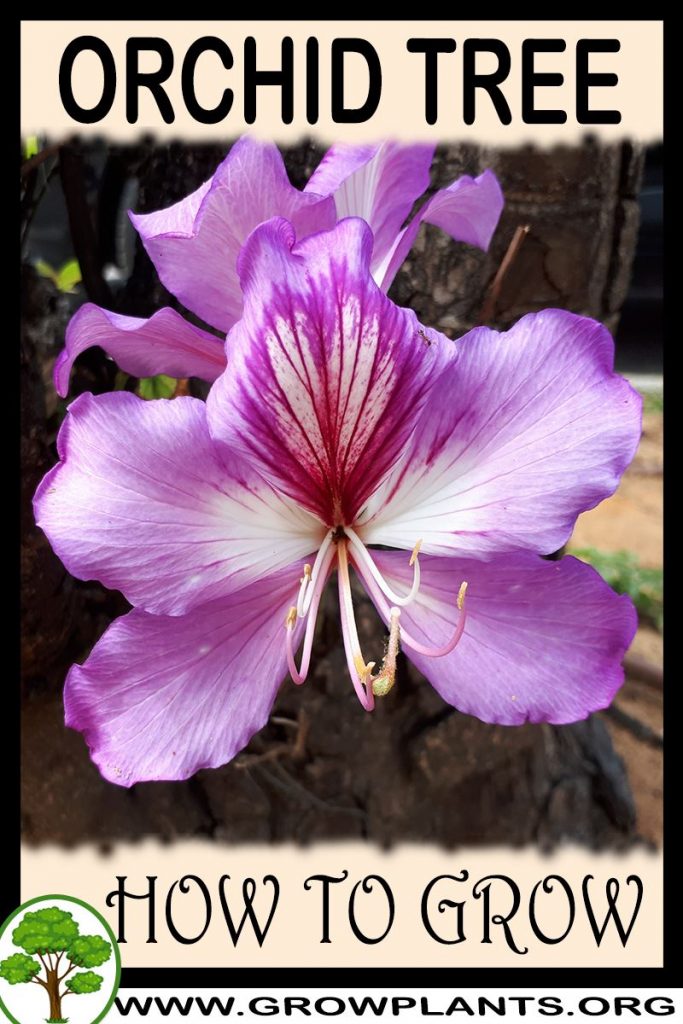
Plant Profile & Key Characteristics
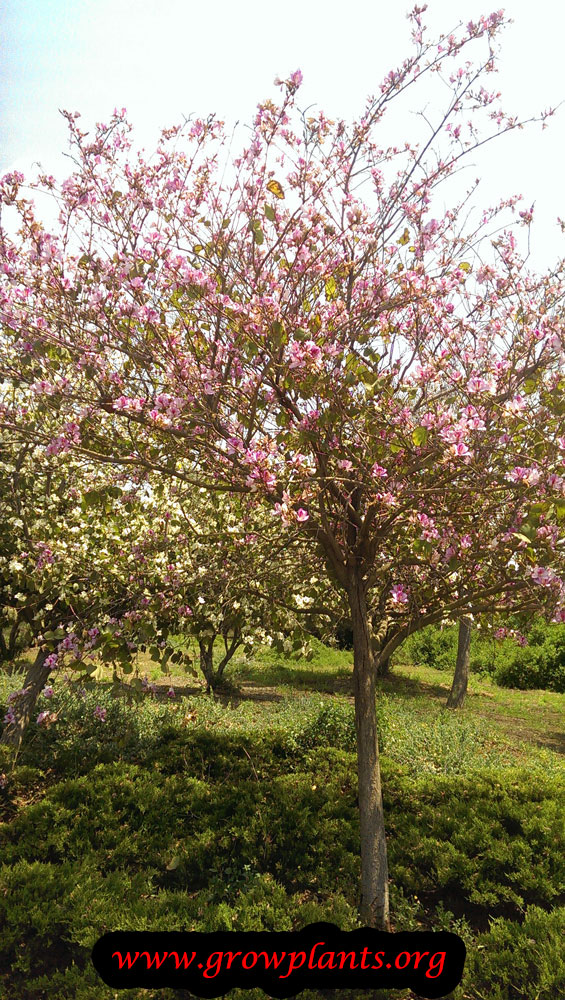
Overview: Orchid tree (Bauhinia variegata) is a fast- to moderate-growing deciduous legume tree reaching 5-10 m (15-30 ft), grown for its fragrant, orchid-like flowers. It is used as an ornamental flowering and shade tree and can be trained as bonsai.
Quick Specifications
| Specification | Attribute |
|---|---|
| Plant Type / Life Cycle | Perennial |
| Foliage Type | Deciduous |
| Mature Size | 5-10 m (15-30 ft) tall |
| Growth Rate | Fast to moderate |
| Hardiness | USDA zone 10+ |
Growth Form & Structure
- Height & Spread: 5-10 m (15-30 ft) in the ground; can also be grown in a large container or trained as bonsai
- Growth Habit & Form: Small, spreading deciduous tree with a broad canopy
- Lifespan & Maturity: Long-lived; fast to moderate to reach mature size
Anatomy & Physical Features
- Leaves & Foliage: Distinctive green, two-lobed (butterfly-shaped) leaves that look like two joined oval leaflets
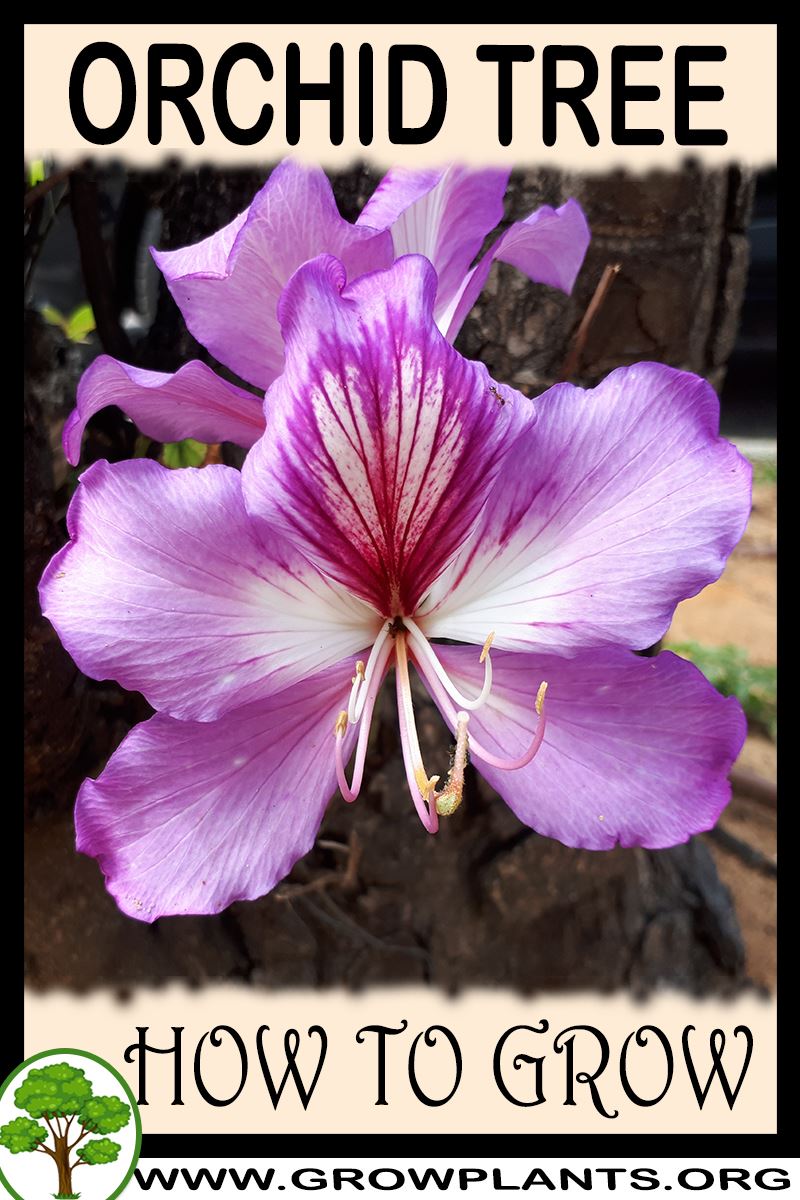
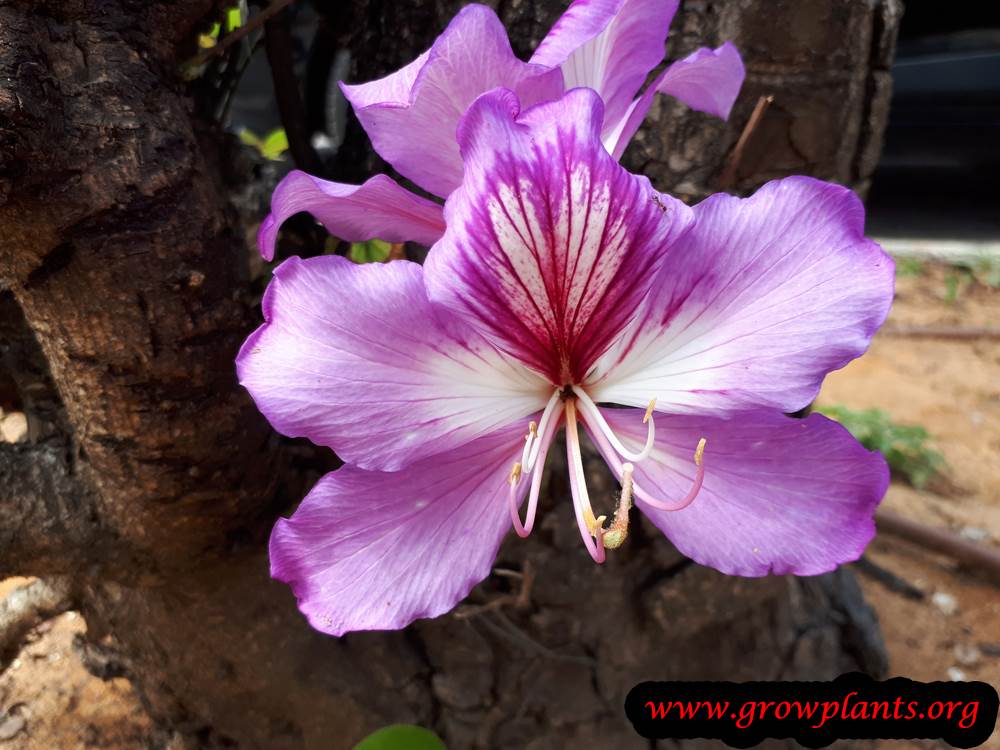
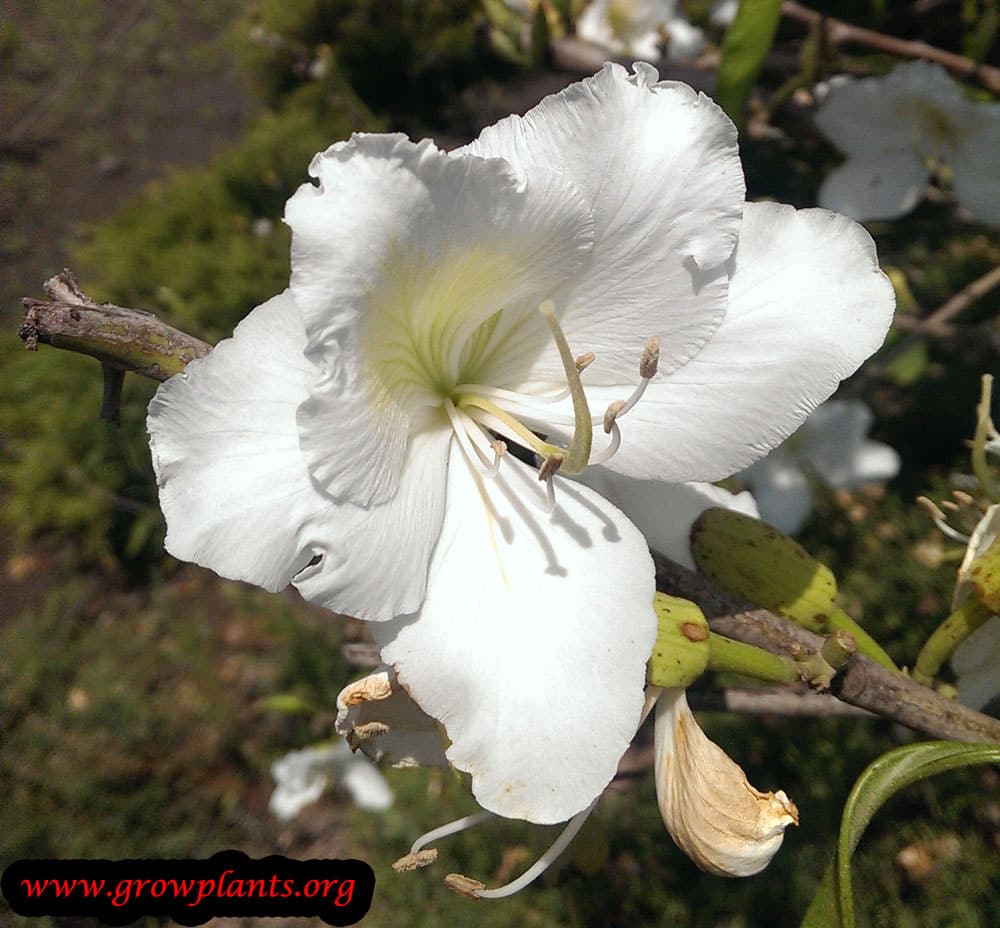
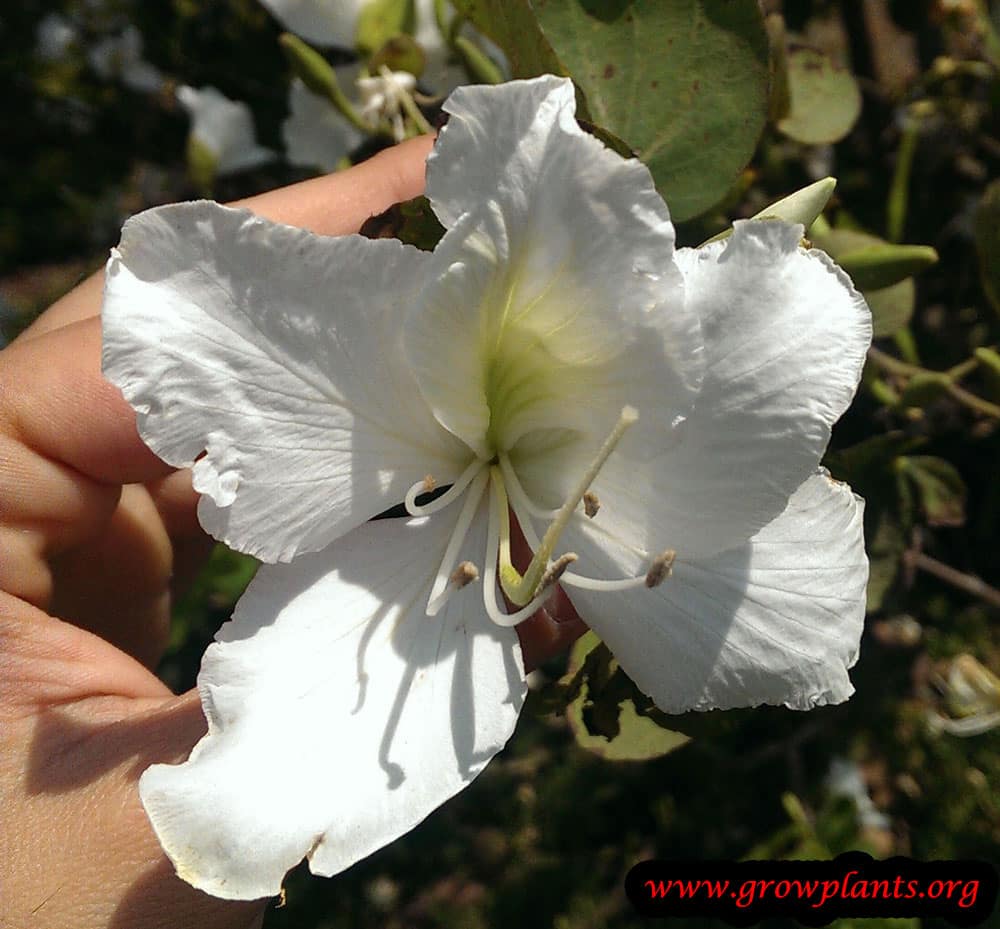
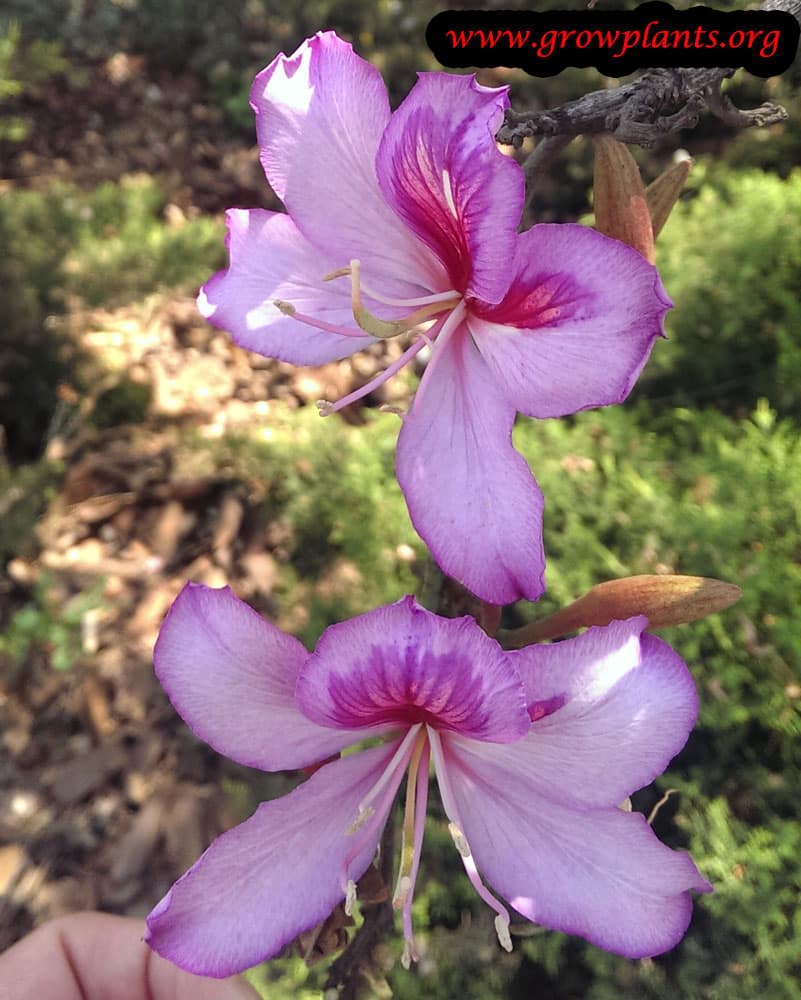
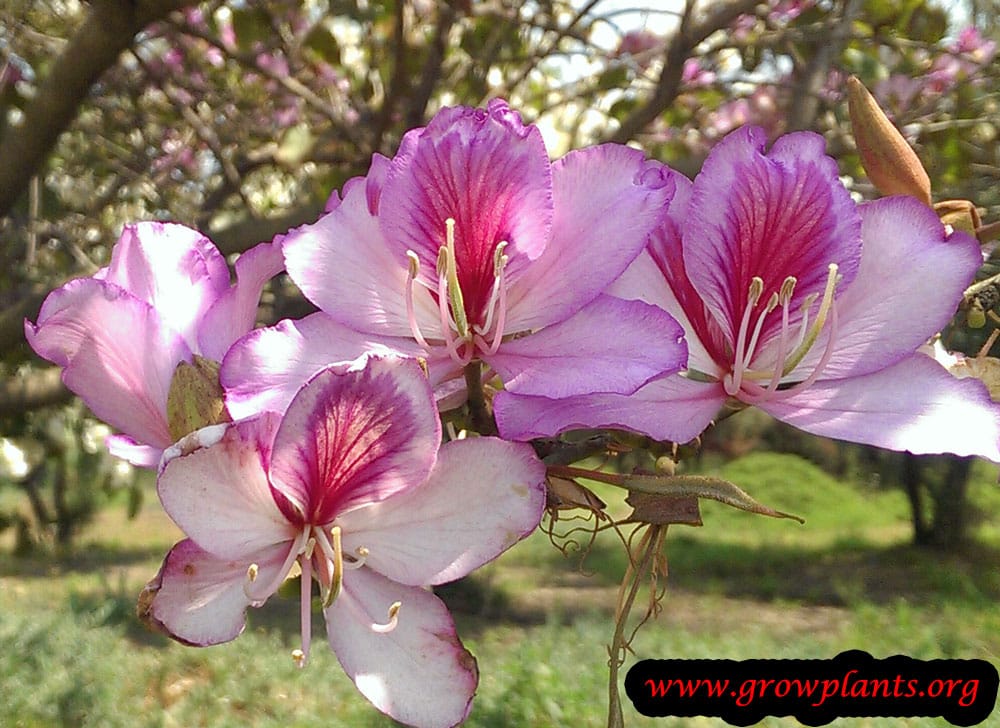
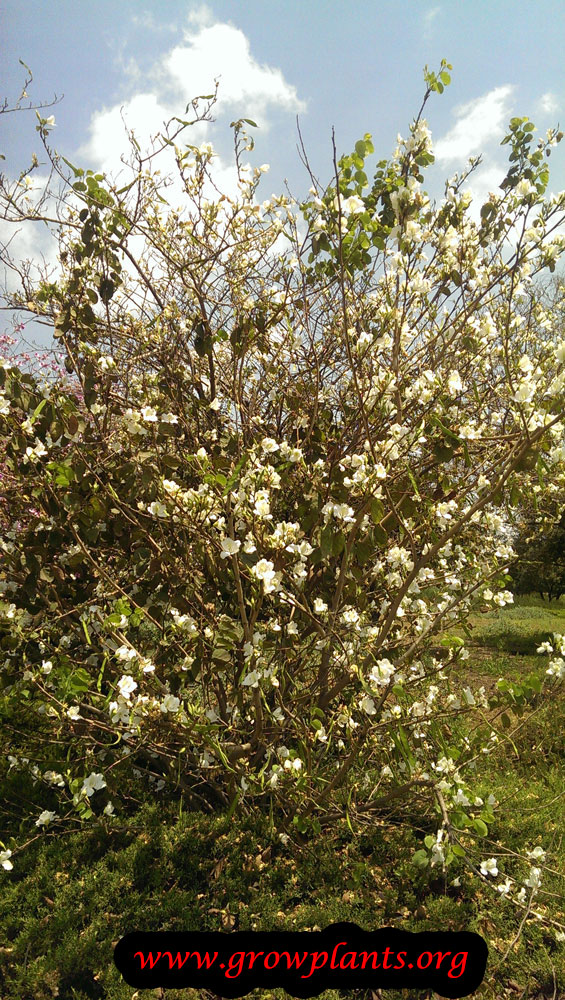
- Flower Characteristics: Fragrant, orchid-like purple or white flowers 5-10 cm across that attract pollinators such as hummingbirds and sunbirds (see the Bloom guide)
Primary Uses & Landscape Value
- Functional & Ornamental Roles: Ornamental flowering and light shade tree, fragrant specimen, and bonsai subject
Care Guide: Planting, Soil & Watering
Overview: The orchid tree (Bauhinia variegata) is a fast-growing flowering legume tree for full sun to light shade that grows best in well-draining soil. Being a legume it is not fussy about richness, adapts to a range of watering from low to high, and mainly needs good drainage and warmth.
Quick Care Requirements
| Requirement | Ideal Condition |
|---|---|
| Planting Season | From late winter through summer in frost-free climates |
| Growth Rate | Moderate to Fast |
| Soil Type | Well-draining soil; adaptable and tolerant of a range of soils |
| Water Need | Low to Moderate once established, tolerating occasional deeper watering; let the soil dry between waterings |
Planting & Establishment
- Best Planting Season: Plant from late winter through summer in frost-free areas, giving the tree a warm season to establish.
- How to Plant:
- Hole Preparation: Dig a hole as deep as and about twice as wide as the root ball in a sunny, well-drained position.
- Soil Amendments: Loosen the backfill and add some compost if the soil is poor; sharpen drainage on heavy sites, but avoid over-enriching this adaptable legume.
- Planting Depth: Set the root collar level with the soil surface and avoid burying the trunk base.
- Growth Speed & Expectations: Moderate to fast, reaching about 5–10 m; note it can be invasive in suitable climates.
Soil, Watering & Drainage Care
- Soil Mix & Drainage Needs: Free-draining soil is the main requirement; it adapts to most soils but will not tolerate constant waterlogging.
- Watering Schedule & Technique:
- Young / Newly Planted: Water regularly and deeply to establish the root system through the first seasons.
- Established: Water moderately and deeply, letting the soil dry between waterings; mature trees are fairly drought-tolerant.
- Seasonal Adjustments: More water in prolonged heat and dry spells; less in cool weather.
Climate, Light & Hardiness
The orchid tree (Bauhinia variegata) is a subtropical-to-tropical flowering tree also grown in warm Mediterranean climates, blooming best in full sun. Grown in roughly USDA zone 10 and warmer, it is frost-sensitive: light frost damages foliage and a hard freeze can cut back or kill top growth.
Quick Climate Specifications
| Climate Zones | Subtropical, tropical, Mediterranean |
|---|---|
| USDA Hardiness Zones | Approximately 10 and warmer |
| Optimal Temp Range | Warm, roughly 22–32 °C (72–90 °F) |
| Cold Damage Begins | Around light frost; foliage and soft growth suffer first |
| Approx. Survival Minimum | Established trees briefly near freezing, roughly −2 to 0 °C (28 to 32 °F); colder kills top growth |
| Frost Tolerance | Very low to low |
| Light Conditions | Full sun to half shade |
| Wind Tolerance | Moderate |
Sunlight & Light Exposure
Optimal Light Setup
Full sun gives the heaviest, most fragrant bloom; the tree grows in half shade but flowers less freely.
Direct Sun Requirement
Warmth and direct sun drive both growth and flowering, so an open, sunny position is best.
Best Exposure / Orientation
A warm, sheltered, sunny aspect helps it through cold nights at the edge of its range.
Temperature Extremes & Hardiness
USDA Hardiness & Regional Limits
Reliable outdoors mainly in frost-free to nearly frost-free climates, roughly zone 10 and warmer. Young trees are markedly more cold-sensitive than established ones, and cold tolerance varies with age, exposure duration and conditions.
Cold Damage & Winter Protection
Light frost burns foliage; a harder freeze can kill soft stems and, when severe, larger wood - established trees may resprout. A warm wall or sheltered planting and protection of young trees reduce winter losses.
Frost Sensitivity
Frost-sensitive; deciduous through the cool season, it should be kept out of frost pockets.
Extreme Heat Tolerance
Excellent - it thrives in hot subtropical and tropical warmth.
Wind, Humidity & Microclimate
Dry-Air Tolerance
Tolerates warm, moderately dry air well and adapts to Mediterranean summers.
Wind Tolerance
Moderate; the somewhat brittle branches benefit from shelter in exposed sites.
Microclimate Recommendations
A warm, sunny, sheltered position gives the best flowering and the best protection from an occasional cold snap.
Growing in Pots, Balconies & Indoors
The orchid tree is a small flowering tree (5-10 m) prized for its large, orchid-like blooms. It is not a houseplant, as the grower confirms, but a young tree can be grown for years in a large container on a sunny patio, and potting lets you protect it from frost.
Quick Details
- Container Size: A large tub, the bigger the better; grow it while young and keep it pruned
- Indoor Suitability: Not a houseplant (per the grower) – a tree that needs full outdoor sun
- Best Spot: Full sun to half shade
- Soil & Drainage: Aerated, free-draining mix
- Watering in Pots: Small to generous depending on heat; don’t waterlog
Indoors & On the Windowsill
- Houseplant limits: The grower marks it no for indoors; it grows into a tree and wants full sun to bloom.
- Overwintering indoors: Frost-tender – in cold climates keep a young tree potted and move it to a bright, frost-free space over winter.
On a Balcony or Patio
- Light & wind: Give it the sunniest, most sheltered spot; stake a young stem and shelter from wind. Pots dry fast in sun, so water regularly, and mind the weight of a large tub.
Choosing the Pot, Soil & Long-Term Care
- Pot & drainage: Use a pot with strong drainage holes and skip a standing-water saucer, which invites root rot; terracotta breathes and dries faster, while glazed or plastic holds moisture longer.
- Potting mix: A light, aerated organic mix – peat or coir with perlite or vermiculite – gives the roots both moisture and air.
- Feeding: Potted plants use up their feed faster because each watering leaches nutrients away, so feed a little more often than plants in open ground.
- Repotting: Refresh the top of the mix and pot up every couple of years; a light root and top prune at repotting keeps established plants vigorous.
Fertilizing & Feeding
A light feeder: as a nitrogen-fixing legume, the orchid tree supplies much of its own nitrogen and needs only modest, balanced feeding and good organic matter.
Quick Fertilizing Specs
| Feeding Level | Light |
|---|---|
| young_feeding | Balanced feeding to establish |
| mature_feeding | Balanced feeding through growth and bloom |
| Main Nutrient Priority | Modest, balanced nutrition; little added nitrogen is needed on this nitrogen-fixing legume |
| Best Feeding Period | Spring through the flowering period |
| Organic Options | Compost, well-rotted manure and mulch |
| Micronutrients | Rarely needed where soil is healthy and near neutral |
| Soil pH | Tolerates a wide range; needs well-drained soil |
| Reduce/Stop Feeding | Ease off after flowering and stop during dormancy |
Feeding by Growth Stage
Spring growth
Fuel fresh spring growth of stems and foliage on the orchid tree.
| Nutrient direction | As a nitrogen-fixing legume, the orchid tree needs little added nitrogen; a light, balanced feeding or compost is plenty as growth resumes. |
|---|---|
| Timing | Early in the growing season as new growth begins. |
| Frequency | A light feeding as growth starts, repeated modestly through spring. |
| Fertilizer types | Balanced complete flower or garden fertilizer, Compost or well-rotted organic matter |
| Precautions | Go easy on nitrogen, since the plant supplies much of its own and excess only pushes leaves over flowers. |
Bloom
Support abundant, good-quality flowers on the orchid tree through the blooming period.
| Nutrient direction | Keep feeding balanced with adequate nitrogen; balanced nutrition, not high phosphorus, drives good bloom. |
|---|---|
| Timing | From bud formation through the flowering period. |
| Frequency | Light, steady feeding while in active bloom. |
| Fertilizer types | Balanced complete fertilizer, Compost as a slow background source |
| Precautions | Do not rely on high-phosphorus ‘bloom booster’ products; balanced feeding is enough. |
Dormancy or rest
Let the orchid tree rest without pushing new growth.
| Nutrient direction | None – withhold fertilizer during dormancy. |
|---|---|
| Timing | After flowering, through autumn and winter dormancy. |
| Frequency | No feeding at this stage. |
| Fertilizer types | No feeding at this stage; do not fertilize until active growth resumes. |
| Precautions | Do not fertilize dormant plants; resume only when growth restarts. |
Nutrient Deficiency Signs & Corrections
Overall pale, yellowing leaves with weak, slow growth.
| Possible causes | Low soil nitrogen, Poor, leached or sandy soil, Cold or waterlogged soil limiting uptake |
|---|---|
| Appears first on | Older, lower leaves |
| What to check | Feeding history, Soil organic matter, Drainage and weather |
| Possible correction | Apply a balanced complete fertilizer and build the soil with compost. |
Lush leafy growth but few flowers.
| Possible causes | Excess nitrogen relative to other nutrients, Too much shade, Over-feeding with a high-nitrogen fertilizer |
|---|---|
| Appears first on | The whole plant, as a balance of leaves over flowers |
| What to check | Fertilizer type and rate, Light levels, Overall vigour |
| Possible correction | Switch to balanced feeding, ease off nitrogen and ensure adequate light. |
Young leaves yellow between still-green veins.
| Possible causes | High soil pH limiting iron availability, Waterlogged or cold soil, A genuine micronutrient shortage |
|---|---|
| Appears first on | Youngest leaves |
| What to check | Soil pH, Drainage, Whether only new growth is affected |
| Possible correction | Correct pH where possible and, if needed, apply a chelated micronutrient product per its label. |
Pruning, Training & Seasonal Maintenance
Orchid tree (Bauhinia variegata) has moderate pruning tolerance and is grown as a specimen or shade tree valued for its dramatic late-winter-to-spring floral display on bare branches. The main objective while young is developing a strong single-trunk framework; once mature, the objective shifts to light shaping without sacrificing bloom. Because flower buds are set during the growing season ahead of the following winter-spring display, the window that best protects bloom is right after flowering finishes, while structural corrective work on young trees is still best done in the autumn-winter dormant period even at some cost to that season’s flowers.
Quick Pruning & Maintenance Specs
| Pruning Tolerance | Moderate |
| Primary Pruning Window | Immediately after flowering (spring), for bloom-preserving maintenance |
| Secondary Maintenance Window | Autumn-winter dormancy, for structural work on young trees |
| Typical Frequency | Light annual |
| Main Objective | Single-trunk framework while young; size/form and bloom preservation once mature |
| Young Plant Priority | Establish one clear leader; remove competing upright stems |
| Mature Plant Priority | Light shaping after bloom; remove dead or crossing wood |
| Best Tool Type | Bypass secateurs/loppers; pruning saw for older trunk work |
| Avoid Heavy Pruning During | The winter-spring bloom itself |
Pruning by Plant Age & Size
Newly Established
Minimal — remove only damaged growth.
Young / Formative
Modified-leader/single-trunk training: select one dominant leader and remove competing co-dominant stems so the tree develops the clean trunk typical of a good specimen. This is best done in the autumn-winter dormant season even though it trades away some of that year’s bloom for better long-term form.
Mature / Established
Light annual shaping right after flowering — remove dead, crossing, or awkwardly placed branches without needing to rebuild the framework.
Seasonal Pruning Schedule
Post-Flowering
Objective: the main bloom-safe pruning window, since it comes before the tree sets buds for next winter’s display. Remove: dead, crossing, or misplaced growth.
Dormant/Winter
Objective: acceptable for young trees still being trained structurally. Remove: competing leaders. Impact: some loss of that season’s flowers, accepted as the cost of good future shape.
Ongoing Sanitary
Remove dead or storm-damaged wood any time.
Flowering & Fruiting Wood
This species flowers on the bare tree in late winter/early spring, with flower buds set during the prior growing season. Pruning right before or during that dormant/bloom window risks cutting off developing flower buds and reducing the display, while pruning immediately after flowering avoids this because next season’s buds haven’t yet formed.
Structural Pruning & Training
A single clear trunk is the standard, attractive form for this species as a specimen or shade tree; remove competing leaders and crossing branches while young; control height and spread as the tree matures.
Special Growth to Remove
Basal or trunk suckers below the head of the tree, which compete with the single-leader form; watersprouts after any harder corrective cut — thin the excess to keep the canopy open.
Container & Small-Space Pruning
Possible while young or small, but this is fundamentally a 5–10 m specimen tree, so container culture is really a temporary or nursery stage rather than a permanent restrained form.
Tools
Bypass secateurs for young shoots; loppers for structural limb selection while training; pruning saw for any larger corrective cuts on an older trunk.
Tool Hygiene & Disease Risk
Routine — clean, sharp tools; aphids are the noted pest, not a tool-borne pathogen.
Cut Placement & Technique
Use thinning cuts to remove whole competing leaders back to the trunk or branch collar, not stub cuts; head only lightly, since heavy heading disfigures the naturally graceful branching that shows off the winter-spring bloom.
Heavy Pruning & Rejuvenation
Tolerated in a limited way for correcting a young, poorly formed tree, where removing a competing leader is a significant but appropriate cut at that stage. Not recommended on a mature, well-formed specimen, where hard rejuvenation would sacrifice years of trunk and canopy development and forfeit multiple seasons of bloom.
Post-Pruning Care
Water normally; no special feeding after light pruning. If a larger structural cut was made on a young tree, monitor the wound and the new leader’s growth through the following season.
Common Pruning Mistakes
Allowing multiple competing leaders to persist past the young-tree stage, requiring larger corrective cuts later; pruning hard right before the winter-spring bloom and losing that year’s display; shearing it like a shrub, which ruins the open branching that shows off the flowers.
When NOT to Prune
Avoid pruning during the winter-spring bloom itself. Avoid major structural correction once the tree is mature and the framework is already set.
Recommended Tools (by task)
- bypass_secateurs — young shoot/twig cuts and post-bloom tidying; clean cuts on younger wood.
- loppers — leader selection while training and moderate branches; needed for the thicker stems involved in early framework decisions.
- pruning_saw — larger corrective cuts on an older trunk, if ever needed; beyond lopper capacity on established wood.
Pruning Troubleshooting
| Problem | Possible Cause | What to Check | Corrective Action |
| Multiple trunks or co-dominant leaders | Competing leaders not removed while young | How the tree was trained in its first few years | If still young enough, select the strongest leader and remove the rest; older trees may need to be accepted as multi-trunked |
| Reduced bloom after pruning | Cut too close to or during the winter-spring bloom window, removing developing flower buds | Timing of the last prune relative to the bloom season | Shift maintenance pruning to right after flowering finishes |
Propagation Guide
Orchid tree is most often raised from seed, whose hard coat benefits from scarification or a warm-water soak; seedlings are somewhat variable. Named colour forms (for example the white ‘Candida’) are kept true by vegetative propagation — semi-hardwood cuttings, air layering, or budding. Overall easy to moderate.
Quick Propagation Specs
| Best Propagation Method | Seed (scarified / soaked) |
| Alternative Methods | Semi-hardwood cuttings; air layering; budding for named forms |
| Propagation Difficulty | Easy to Moderate |
| Seed True-to-Type | Variable — named colour forms not reproduced from seed |
| Vegetative True-to-Type | Yes |
| Best Propagation Season | Warm season (spring–summer) |
Growing from Seed
Seed Handling & Viability
The hard-coated legume seed stores well kept dry.
Dormancy & Pre-Sowing Treatment
The hard seed coat causes slow, uneven germination. Nick or lightly scarify the coat, or soak the seed in warm water until it swells, before sowing.
Sowing Season
Sow in the warm season (spring to summer, matching the site’s winter–summer planting window).
Germination Conditions
Warm, moist medium; once the coat is breached the seed usually germinates within a few weeks.
Stem Cuttings & Layering
To keep a named flower colour, propagate vegetatively: root semi-hardwood cuttings in the warm season under humidity with a rooting hormone, or air layer a thicker stem. Select forms are also budded onto seedling rootstock. The tree self-seeds and can be invasive, so manage spent pods where that is a concern.
Bloom & Edible Flower Guide
Quick Details
- Bloom Season: Winter to spring
- Time to First Bloom: Young trees usually start flowering a few years after planting
- Flower Appearance: Fragrant, orchid-like flowers in purple or white, five petals, 5-10 cm across
- Edibility: Edible – the flowers and buds (known as kachnar) are cooked as a vegetable or pickled
Detailed Blooming Overview
The orchid tree is grown as much for scent as for spectacle: in the cooler months it covers itself in large, fragrant, orchid-like blooms carried on nearly bare branches. Beyond the ornamental show, its plump flower buds have a long culinary tradition in South Asia, where they are gathered before opening and cooked or preserved.
Flower Characteristics
- Fragrant flowers in purple or white, each with five petals and measuring about 5-10 cm across.
- The blooms draw pollinators such as hummingbirds and sunbirds.
Bloom Care & Thinning
- Managing the bloom: If you want to harvest buds for the kitchen, pick them while still closed; otherwise let the tree flower out for its display.
- Pollination: Nectar-feeding birds, including sunbirds and hummingbirds, work the large flowers.
Fruit & Uses
Better known in cooking as kachnar, this orchid tree is valued for its flower buds and flowers, which are cooked as a vegetable in curries and pickles. Its young leaves and immature green pods are also eaten cooked – the plant is used as a vegetable rather than a fresh fruit.
Quick Edible Specs
| Edible Parts | Flower buds and flowers; young leaves; immature (green) pods |
|---|---|
| Main Use(s) | Culinary – cooked as a vegetable, in curries, stir-fries and pickles |
| Eaten Raw or Cooked | Cooked |
| Preparation Required | Cook – buds, leaves and pods are cooked (buds are often blanched first) |
| Harvest Season | Flower buds during the bloom season (winter to spring) |
| Storage | Use fresh; buds are also pickled or dried |
| Safety/Toxicity Caveat | No notable toxicity for the cooked buds, leaves and young pods; the tree is flagged as invasive, so grow it responsibly and do not let it spread |
Flowers & Flower Buds
The unopened flower buds are the prized part, picked while still tight and green-pink; the just-opened five-petalled purple or white flowers are used too. They are cooked into curries, fried, or salted and pickled. Harvest buds during the flowering season and use them promptly, as they open and soften quickly.
Leaves & Greens
Young, tender leaves are cooked as a leafy green. Take only soft new growth; older leaves toughen.
Seeds, Pods & Nuts
Immature green pods are cooked as a vegetable while still flat and soft, before the seeds harden. Mature dry seeds are not a usual food.
Preparation, Uses & Safety
All parts are eaten cooked, not raw: buds are commonly blanched then curried, fried or pickled, and young leaves and pods are simmered. There is no notable toxicity in these cooked parts. Because the tree is listed as invasive, harvest and grow it responsibly so it does not escape.
Pests, Diseases & Troubleshooting
Overview: Bauhinia variegata (orchid tree) is a fast tropical/subtropical legume tree that is generally hardy but hosts the usual tree sap-suckers – aphids, mealybugs, scale and spider mites – plus leaf-eating and leaf-webbing caterpillars, while fungal leaf spot, powdery mildew, rust and anthracnose affect the foliage. Its most persistent real-world issues are abiotic: iron chlorosis on alkaline soil, frost sensitivity when young, and weak, breakage-prone wood. Good drainage, correct soil pH and structural pruning keep it healthy.
Quick Troubleshooting Overview
| Issue / Pest | Main Symptom | Primary Solution |
|---|---|---|
| Caterpillars / leaf webbers | Chewed, skeletonised or webbed-together leaves | Hand-pick, Bt, prune out webbed nests |
| Scale & mealybug | Bumps/cottony tufts, honeydew, sooty mould | Horticultural oil, control ants |
| Aphids | Sticky curled new growth | Hose off, soap, encourage predators |
| Leaf spot / anthracnose | Brown/black spots, blotches, leaf drop | Rake litter, airflow, copper if severe |
| Iron chlorosis | Yellow leaves with green veins on alkaline soil | Iron/manganese chelate, acidify, mulch |
| Limb breakage | Split branches, weak forks | Structural pruning when young |
Common Pests & Management
- Caterpillars and leaf webbers (leaf-eating Lepidoptera):
- Symptoms: Chewed, holed or skeletonised leaves and, with webbers, leaves tied together into nests full of frass; various caterpillars defoliate Bauhinia, especially young trees, in flushes.
- Prevention & Control: Tolerate light feeding on an established tree; hand-pick and prune out webbed nests, encourage birds and parasitic wasps, and spray Bacillus thuringiensis (Bt) in the evening for heavy outbreaks on reachable growth.
- Scale insects (Coccidae / Diaspididae):
- Symptoms: Brown, waxy or armoured bumps on twigs, leaf undersides and midribs; soft scale exudes honeydew that blackens leaves with sooty mould and attracts ants.
- Prevention & Control: Prune out encrusted twigs, encourage parasitic wasps and ladybirds, control ants, and smother with horticultural oil, coating stems and leaf undersides; repeat for crawlers.
- Mealybugs (Planococcus / Pseudococcus spp.):
- Symptoms: White cottony masses in leaf axils, at branch crotches and on flower clusters, with honeydew and sooty mould.
- Prevention & Control: Hose off, encourage lacewings and mealybug destroyers, manage ants, and use horticultural oil or insecticidal soap on accessible infestations.
- Aphids (Aphis spp.):
- Symptoms: Colonies on soft new shoots and flower buds, curling growth and leaving honeydew and sooty mould.
- Prevention & Control: Blast off with water, conserve natural enemies, and use insecticidal soap or neem on reachable flushes when populations build.
- Spider mites (Tetranychus / Oligonychus spp.):
- Symptoms: Fine stippling, a dull bronzed cast and webbing on the leaves in hot, dry, dusty conditions, with early leaf drop.
- Prevention & Control: Hose down foliage to remove dust and mites, keep the tree unstressed and watered, and treat accessible outbreaks with horticultural oil or insecticidal soap.
Diseases & Fungal Issues
- Leaf spot (Cercospora / Phyllosticta spp.):
- Symptoms: Brown to purple round or angular spots that enlarge and merge, causing yellowing and premature leaf drop in warm, wet weather.
- Treatment & Management: Rake and destroy fallen leaves, prune for airflow, and avoid overhead watering. Copper fungicide reduces pressure in wet seasons; a vigorous tree tolerates minor spotting.
- Powdery mildew (Oidium / Erysiphe):
- Symptoms: White powdery coating on leaves and new shoots in humid or crowded conditions, distorting soft growth.
- Treatment & Management: Improve airflow and light with pruning, avoid excess nitrogen, and remove affected growth; sulphur or potassium bicarbonate if persistent.
- Rust (Uredo / Puccinia spp.):
- Symptoms: Yellow-orange to brown powdery pustules on leaf undersides with yellow blotching above and early leaf fall.
- Treatment & Management: Remove infected leaves and litter, improve airflow, and avoid overhead watering; fungicide is seldom needed on an established tree.
- Anthracnose / dieback (Colletotrichum / Botryosphaeria):
- Symptoms: Dark sunken leaf and twig lesions and branch dieback with cankers, usually entering stressed or injured wood.
- Treatment & Management: Prune out dead and cankered wood into healthy tissue, keep the tree vigorous and well-watered, and avoid bark injury; copper reduces foliar infection.
Growing Difficulties & Abiotic Problems
- Iron chlorosis on alkaline soil:
- Cause & Symptoms: On high-pH or calcareous soils iron and manganese lock up, yellowing the leaves between green veins – a very common orchid-tree complaint.
- Correction Strategy: Apply iron and manganese chelates and foliar micronutrients, mulch heavily with organic matter, lower pH over time, and maintain even moisture.
- Frost / cold sensitivity:
- Cause & Symptoms: Young trees especially are damaged or killed by frost, with leaf burn and twig dieback.
- Correction Strategy: Site in the warmest, most sheltered position, protect young trees on cold nights, and choose the hardiest species/forms in marginal climates; mature trees are tougher.
- Weak wood and limb breakage:
- Cause & Symptoms: Fast, brittle growth and tight, poorly attached forks make branches prone to splitting in wind or under weight.
- Correction Strategy: Prune for strong structure while young – remove crossing and narrow-angled branches and space main limbs – to build a durable framework; stake young trees.
- Messy pods and self-seeding:
- Cause & Symptoms: Heavy seed-pod set litters the ground and can produce weedy seedlings (invasive in some regions).
- Correction Strategy: Remove spent pods where litter or self-seeding is a concern; some cultivars set fewer pods.
- Root rot from waterlogging:
- Cause & Symptoms: Poorly drained or over-watered soil causes yellowing, dieback and decayed roots.
- Correction Strategy: Plant in free-draining soil, water deeply but infrequently once established, and avoid waterlogging.
What Helps – Products & Tools
Most care is cultural – correct soil pH, good drainage, structural pruning and sanitation. When pests or diseases warrant treatment on reachable growth, horticultural oil and insecticidal soap cover scale, mealybug, aphids and mites; Bacillus thuringiensis (Bt) handles caterpillars; and copper or sulphur fungicides address leaf spot, mildew, rust and anthracnose. Iron and manganese chelates correct chlorosis. Spray oils in the evening to protect pollinators.