

Plant Profile & Key Characteristics
Overview: Geranium phaeum (dusky cranesbill) is a clump-forming, evergreen herbaceous perennial reaching 20-50 cm (8-20 in), grown as an ornamental groundcover. It is valued for its palmate foliage and dark purple-to-bordeaux nodding flowers, and tolerates shade well.
Quick Specifications
| Specification | Attribute |
|---|---|
| Plant Type / Life Cycle | Perennial |
| Foliage Type | Evergreen (semi-evergreen in cold climates) |
| Mature Size | 20-50 cm (8-20 in) |
| Growth Rate | Moderate to Fast |
| Hardiness | USDA zones 5-7 |
Growth Form & Structure
- Height & Spread: 20-50 cm (8-20 in) tall, spreading into clumps; also grows in pots and as a houseplant.
- Growth Habit & Form: Mounding, clump-forming herbaceous perennial that works as a spreading groundcover.
- Lifespan & Maturity: Long-lived perennial; establishes quickly.
Anatomy & Physical Features
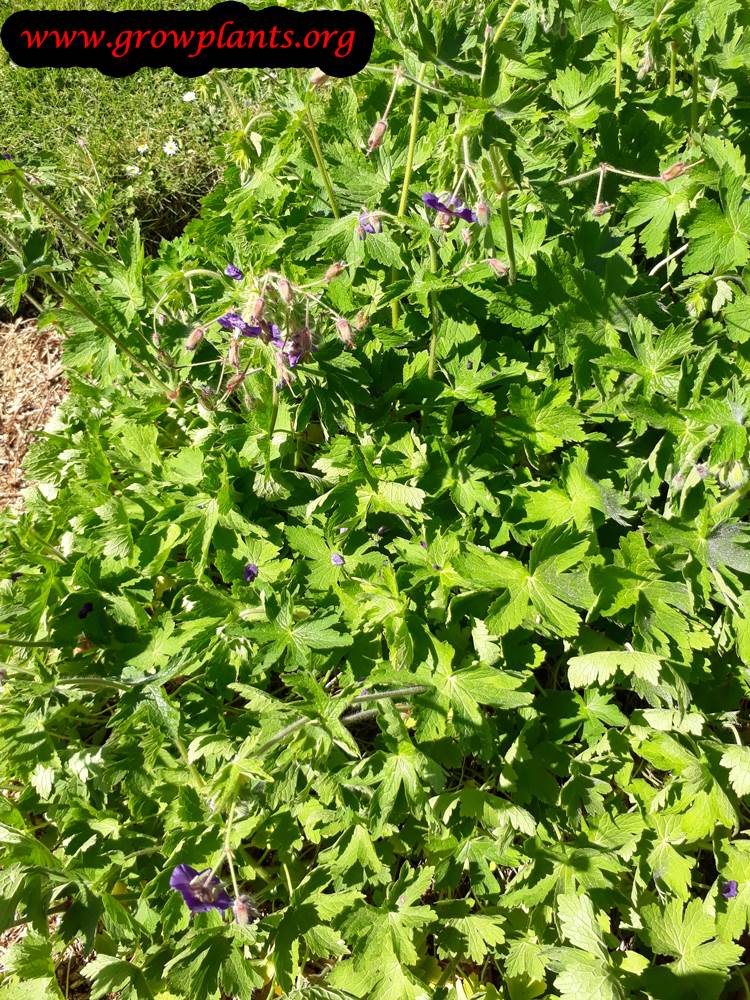
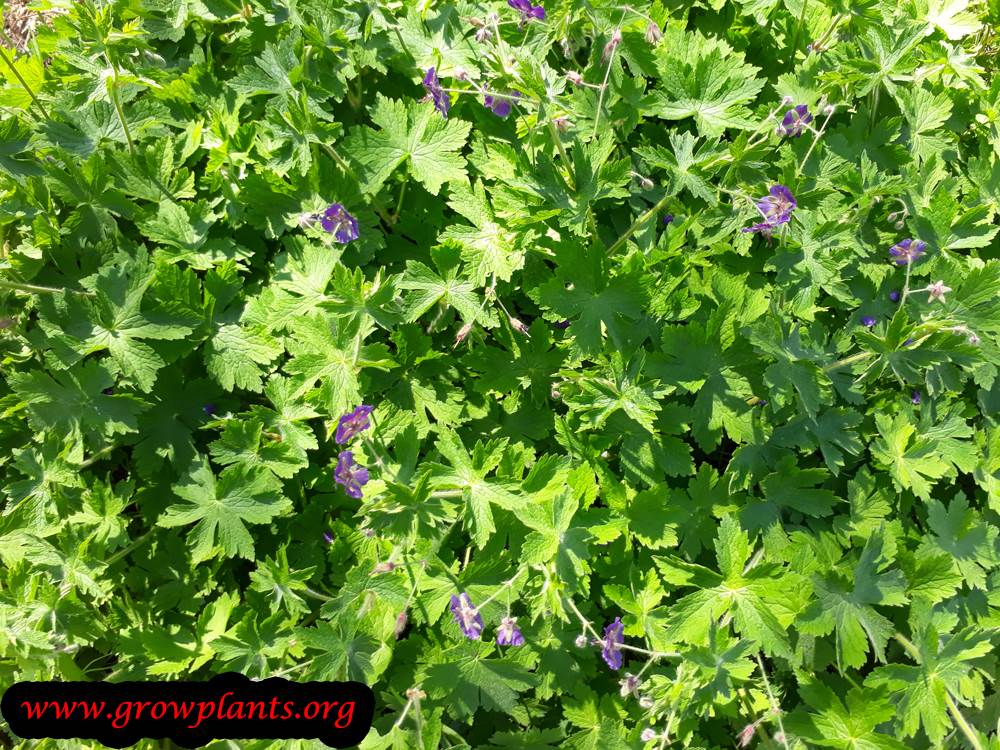
- Leaves & Foliage: Soft green, palmate (lobed) leaves, sometimes with darker markings.
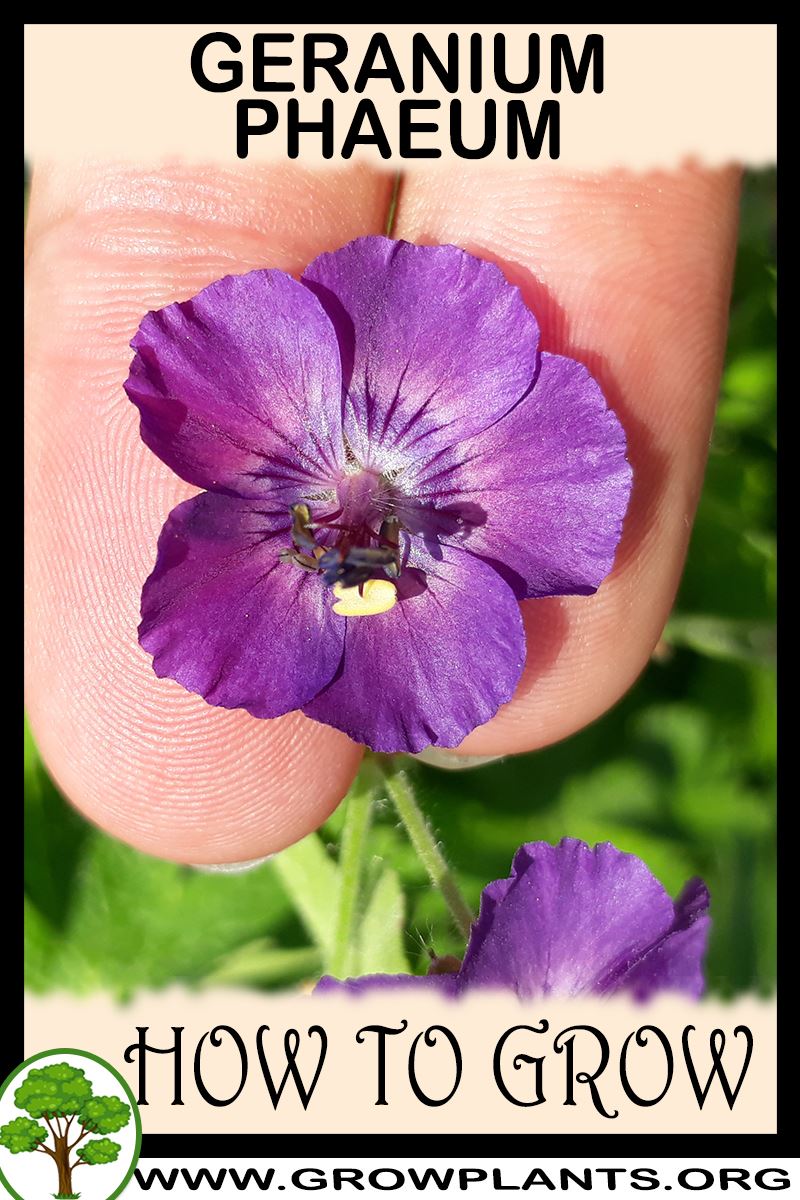
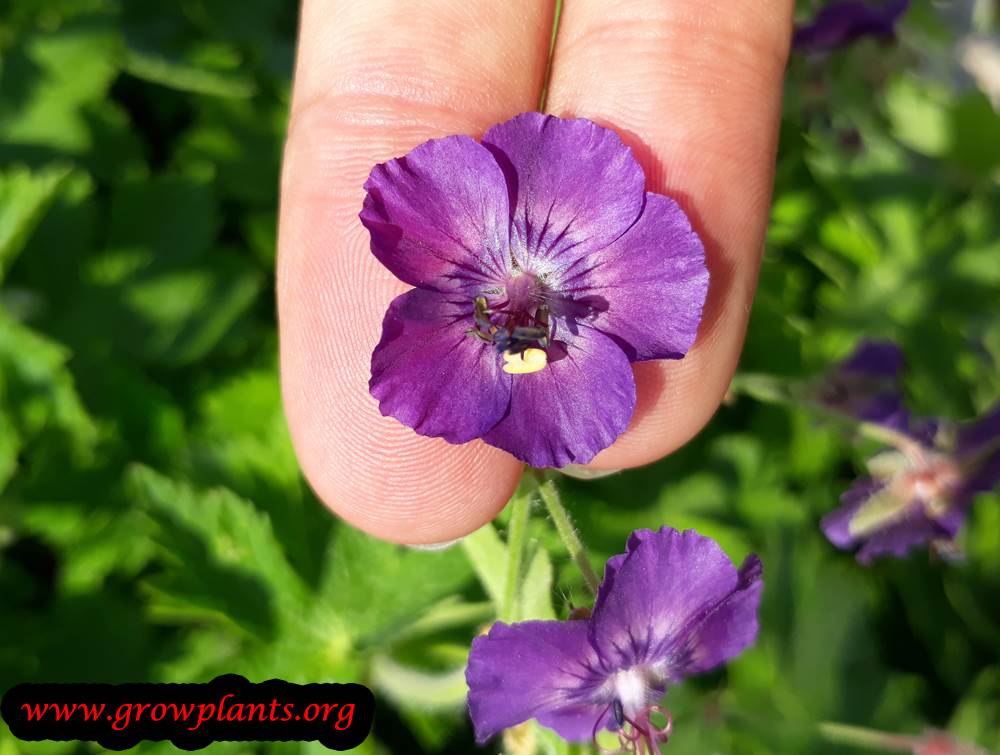
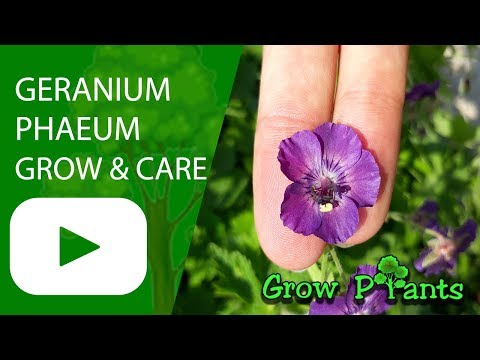
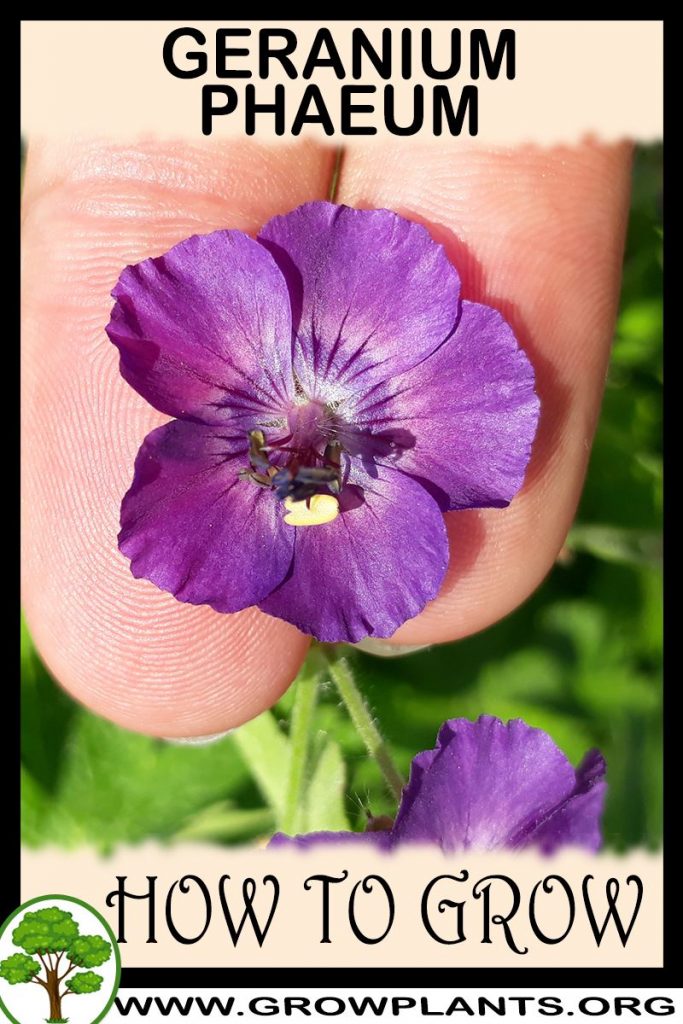
- Flower Characteristics: Small, flat 5-petalled nodding flowers in dark purple, bordeaux, pink or white (full detail in the Bloom guide).
Primary Uses & Landscape Value
- Functional & Ornamental Roles: Ornamental groundcover, border and cottage-garden plant, also container/houseplant.
Care Guide: Planting, Soil & Watering
Overview: Geranium phaeum is a hardy, easy-going perennial cranesbill for temperate gardens, growing in part to full shade. It thrives in a fertile, humus-rich soil that stays moist yet drains well, and appreciates steady moisture through the growing season. It is sensitive to heat, so give it part shade and steady moisture in hot-summer climates.
Quick Care Requirements
| Requirement | Ideal Condition |
|---|---|
| Planting Season | Spring through autumn |
| Growth Rate | Fast to moderate |
| Soil Type | Fertile, humus-rich, moist and well-draining |
| Water Need | Moderate to high – keep the soil evenly moist |
Planting & Establishment
- Best Planting Season: Plant during the growing season, from spring through autumn, avoiding the peak of summer heat in hot areas; these are cold-hardy perennials that establish best in mild, moist conditions.
- How to Plant:
- Hole Preparation: Dig a hole about twice the width of the root ball and no deeper, loosening the surrounding soil so the roots can spread.
- Soil Amendments: Improve the soil with compost or well-rotted organic matter to add fertility and hold moisture, while keeping the drainage free.
- Planting Depth: Set the plant with its crown level with the soil surface, and do not bury the crown, which can rot in wet conditions.
- Growth Speed & Expectations: Growth is fast to moderate, forming a spreading, weed-smothering clump about 20-50 cm tall.
Soil, Watering & Drainage Care
- Soil Mix & Drainage Needs: It likes a moisture-retentive but well-drained, fertile soil rich in organic matter. In containers use a good-quality potting mix and make sure the pot drains freely, and mulch to keep the roots cool and moist.
- Watering Schedule & Technique:
- Young / Newly Planted: Keep newly planted cranesbills evenly moist while they establish, watering whenever the surface begins to dry.
- Established: Once established they are fairly tough but grow best with regular deep watering; water generously in dry spells, especially the heat-sensitive kinds.
- Seasonal Adjustments: Water more during warm, dry weather and less in cool or wet periods; established clumps tolerate short dry spells but resent prolonged drought and heat.
Climate, Light & Hardiness
Geranium phaeum, the dusky cranesbill, is a cold-hardy woodland perennial for cool-temperate gardens, happiest in half to full shade with moist, rich soil. Site data rates it in zones 5–7; it needs a cold winter and is notably sensitive to heat, which sets its warm limit.
Quick Climate Specifications
| Climate Zones | Cool temperate (woodland) |
|---|---|
| USDA Hardiness Zones | 5–7 (site data) |
| Approx. Survival Minimum | Established plants survive zone 5 winters (roughly −29 °C / −20 °F) |
| Frost Tolerance | High |
| Light Conditions | Half shade to full shade |
| Wind Tolerance | Moderate |
Sunlight & Light Exposure
Optimal Light Setup
Half to full shade. It is one of the more shade-loving cranesbills and keeps its foliage fresh out of hot sun.
Shade & Heat Management
Because it is heat-sensitive, shade and steady soil moisture are important in warmer regions to prevent scorch and early dormancy.
Best Exposure / Orientation
A cool, north- or east-facing, lightly shaded aspect with humus-rich soil is ideal.
Temperature Extremes & Hardiness
USDA Hardiness & Regional Limits
Site data gives zones 5–7. Winter cold is not the problem - it survives hard freezes - but the relatively low warm limit (about zone 7) reflects its dislike of hot summers.
Cold Damage & Winter Protection
Fully winter-hardy in its range; it dies back and reshoots in spring and needs no special protection.
Frost Sensitivity
Very low - a genuinely cold-tolerant perennial that benefits from a cold winter.
Extreme Heat Tolerance
Low. The site data specifically notes heat sensitivity; hot, dry summers cause wilting and early dormancy, so it fades where summers are long and hot.
Wind, Humidity & Microclimate
Wind Tolerance
Moderate; the mounded foliage is reasonably sturdy but flower stems appreciate some shelter.
Rainfall & Seasonal Moisture
Suited to cool, evenly moist woodland conditions; it dislikes hot, dry ground.
Microclimate Recommendations
In warm regions choose the coolest, shadiest, most moisture-retentive corner to compensate for its heat sensitivity.
Growing in Pots, Balconies & Indoors
Geranium phaeum is a hardy cranesbill perennial, and the grower marks it suitable indoors as well as in containers. It is really an easy-going outdoor perennial, but in a pot it grows happily on a patio or balcony and can be kept in a bright, cool room; it flowers and looks best with plenty of light.
Quick Details
- Container Size: A medium pot (about 5-12 L / 1.3-3 gal) for a clump
- Indoor Suitability: The grower lists it as suitable indoors – give it a bright, cool spot; it is naturally a hardy outdoor perennial
- Best Spot: Half to full shade – it is shade-tolerant
- Soil & Drainage: Ordinary, free-draining potting mix with organic matter
- Watering in Pots: Keep evenly moist – average to generous – but never waterlogged
Indoors & On the Windowsill
- Suitable indoors: The grower marks it usable as a houseplant. Set it at a bright window in a cool room; it is undemanding and shade-tolerant.
- Really an outdoor perennial: It is fully hardy and thrives outside with a winter chill, so a cool, bright spot indoors suits it far better than a warm, dim one.
- Overwintering: Hardy enough to leave outdoors in its pot over winter, where the cold rest does it good.
On a Balcony or Patio
- An easy container perennial: It makes a reliable, long-lived pot plant for a patio or balcony, happy in shade or part shade.
- Even moisture: Pots dry faster than the ground – keep the mix evenly moist, especially in sun and wind.
Choosing the Pot, Soil & Long-Term Care
- Pot & drainage: Good drainage holes and no standing saucer; terracotta breathes, plastic holds moisture.
- Potting mix: Ordinary free-draining potting mix enriched with organic matter.
- Feeding: A light feed through the growing season is enough – too rich and it flops.
- Repotting & dividing: Every couple of years refresh the mix and divide congested clumps to keep them vigorous.
Fertilizing & Feeding
A light feeder: balanced feeding through the growing season is plenty, and these tough perennials flop and lose bloom if overfed; feeding eases off while they are dormant.
Quick Fertilizing Specs
| Feeding Level | Light feeder |
|---|---|
| Main Nutrient Priority | Balanced feeding with adequate nitrogen; balanced feeding drives bloom, not high phosphorus |
| Best Feeding Period | Spring through the flowering season |
| Organic Options | Compost and other organic matter |
| Reduce/Stop Feeding | Ease off as bloom finishes and the plant rests |
| Micronutrients | Usually supplied by a complete fertilizer; correct only diagnosed problems |
| Soil pH | Slightly acidic to near neutral |
Feeding by Growth Stage
Spring growth before bloom
Build healthy leaves and stems to support the coming bloom.
| Nutrient direction | A balanced complete fertilizer with adequate nitrogen; balanced feeding, not a high-phosphorus bloom product, drives flowering. |
|---|---|
| Timing | As growth resumes in spring. |
| Frequency | A light feeding as active growth begins. |
| Fertilizer types | A balanced complete fertilizer, Compost or other organic matter |
| Precautions | Adequate nitrogen and balanced feeding support bloom; excess nitrogen pushes leaves at the expense of flowers. |
Flowering season
Sustain steady flowering through the bloom season.
| Nutrient direction | Continue balanced feeding to keep plants vigorous and blooming. |
|---|---|
| Timing | Through the flowering season. |
| Frequency | Light, steady feeding across the bloom period. |
| Fertilizer types | A balanced complete fertilizer |
| Precautions | Balanced, moderate feeding is best; excess fertilizer wastes nutrients rather than boosting bloom. |
Dormancy or cool-season rest
Let the plant rest as growth and bloom slow for the season.
| Nutrient direction | None – withhold fertilizer while the plant rests. |
|---|---|
| Timing | After the plant dies back in autumn and through winter dormancy. |
| Frequency | No feeding during this rest; resume only when active growth returns. |
| Fertilizer types | No feeding at this stage; hold off fertilizing until active growth resumes. |
| Precautions | Do not fertilize a resting plant; wait for new spring growth. |
Nutrient Deficiency Signs & Corrections
Older, lower leaves fade to pale green or uniform yellow and overall growth slows.
| Possible causes | low available soil nitrogen, nitrogen leaching from heavy watering or rain, thin soil low in organic matter |
|---|---|
| Appears first on | older, lower leaves |
| What to check | recent feeding history, soil organic matter, watering and drainage |
| Possible correction | Apply a nitrogen-containing complete fertilizer and build soil organic matter, then water evenly. |
Youngest leaves yellow between the veins while the veins themselves stay green.
| Possible causes | high soil pH reducing iron and manganese availability, waterlogged or poorly drained roots, genuinely low micronutrient supply |
|---|---|
| Appears first on | new, young leaves |
| What to check | soil pH and drainage, watering habits, whether symptoms are on the newest growth |
| Possible correction | Correct soil pH if high, improve drainage, and apply a chelated iron or manganese product per its label. |
Plenty of leafy growth but few flowers.
| Possible causes | excess nitrogen feeding favoring leaves over flowers, too little light for good bud set, a young or recently divided plant not yet settled |
|---|---|
| Appears first on | the whole plant, seen as leafy growth with sparse flowers |
| What to check | how nitrogen-heavy recent feeding has been, light exposure through the day, plant age and establishment |
| Possible correction | Ease back on nitrogen, shift to balanced feeding, and ensure adequate light; avoid high-phosphorus bloom-booster products. |
Pruning, Training & Seasonal Maintenance
Geranium phaeum (dusky crane’s-bill) is a clump-forming hardy herbaceous perennial with no woody structure, so pruning is really shearing and tidying: deadhead or shear the whole clump after the main flush to strip spent flowers and tired leaves and to drive a fresh mound of foliage (and often a lighter rebloom). Cut the clump down in late autumn or winter as it dies back. This shade-tolerant, heat-sensitive species is best sheared in cooler, moist conditions rather than in a hot, dry spell.
Quick Pruning & Maintenance Specs
| Pruning Tolerance | High – shear the whole clump; it regrows from the crown |
| Primary Pruning Window | After the main early-summer flush (shear back) |
| Secondary Maintenance Window | Autumn/winter cut-down of spent foliage |
| Typical Frequency | One mid-season shear plus one end-of-season cut-down |
| Main Objective | Deadhead, refresh foliage, encourage rebloom, tidy the clump |
| Young Plant Priority | Let the crown establish; remove only damaged leaves |
| Mature Plant Priority | Shear after the flush; divide every few years to reinvigorate |
| Best Tool Type | Hand or grass shears for the clump; snips for spot deadheading |
| Avoid Heavy Pruning During | Summer heat and drought |
Pruning by Plant Age & Size
Newly Established
Minimal — let the crown root and bulk up; remove only damaged foliage, with no shearing in the first season.
Young / Formative
No structural training — a herbaceous clump needs none; simply let it fill out.
Mature / Established
Shear the whole clump back after the main bloom to force a fresh flush of leaves, and lift and divide every three to four years to keep it vigorous.
Seasonal Pruning Schedule
Post-Flowering
After the early-summer flush, shear the clump to near ground level; it regrows a clean mound and often reblooms — the signature cranesbill cut.
Autumn / Winter
Cut back the collapsing, frost-touched foliage to tidy the crown; leave a little cover in the coldest zones.
Ongoing Sanitary
Remove mildewed or slug-chewed leaves and pick off aphid-infested tips.
Structural Pruning & Training
Renewal is by division, not by cutting a framework — splitting a congested crown every few years is the real structural maintenance, keeping the centre from going bare and hollow.
Special Growth to Remove
Spent flower stalks and tired or mildewed foliage. There are no suckers or woody stems to manage; this species clumps rather than running, so there is little spread to contain.
Container & Small-Space Pruning
Keep the clump watered and, where it dislikes heat, shaded in a pot; shear after bloom just as in the ground, and divide when it fills the container.
Tools
Hand or grass shears to cut the whole clump; precision snips for selective deadheading; a spade or fork for lifting and dividing. No woody-plant tools are needed.
Tool Hygiene & Disease Risk
Routine — the main issues are powdery mildew, slugs and aphids, which are cultural or pest problems, so clean blades suffice. If you cut off mildewed foliage, remove it rather than composting in place, but no cut-to-cut sterilising is required.
Cut Placement & Technique
Shear the whole clump low, just above the crown; for selective work, cut spent flower stems back to a basal leaf.
Heavy Pruning & Rejuvenation
Fully tolerated — the entire clump can be sheared to the ground after flowering and will regrow. True rejuvenation of an old, hollow-centred clump is by lifting and dividing it.
Post-Pruning Care
Water well after a mid-season shear, especially in warmth, to fuel regrowth; a little shade aids recovery. No special feeding is required.
Common Pruning Mistakes
- Leaving spent flowers and tired foliage, so the clump looks shabby by midsummer.
- Shearing hard in a hot, dry spell.
- Never dividing, letting the centre go bare.
- Cutting everything to the ground too early in cold zones.
When NOT to Prune
In summer heat and drought stress, and immediately after planting or dividing.
Recommended Tools (by task)
- hedge_shears — to shear the whole clump back after the main flush and at season’s end.
- precision_snips — for selective deadheading of individual flower stems.
- garden_spade — to lift and divide a congested clump for renewal.
Propagation Guide
Dusky cranesbill (Geranium phaeum) is most easily increased by dividing the clump, with seed as the other option the site lists; it forms a clump that divides readily. Division gives plants identical to the parent, while seedlings of the species come reasonably true but named dark and white forms vary. It is easy.
Quick Propagation Specs
| Best Propagation Method | Division of the clump |
| Alternative Methods | Seed; basal cuttings |
| Propagation Difficulty | Easy |
| Seed True-to-Type | Species come reasonably true; named forms and hybrids vary |
| Vegetative True-to-Type | Yes |
| Best Propagation Season | Spring or autumn |
Division, Offsets, Pups & Suckers
Lift an established clump in spring or autumn and pull or cut it into several pieces, each with roots and a few growth buds. Replant at the same depth and keep moist until re-established. This is the standard way to keep a named form true and to rejuvenate an old clump.
Stem Cuttings
Basal Cuttings
In spring, young basal shoots taken with a sliver of the rootstock can be rooted in a gritty, moist mix as an alternative to lifting the whole plant.
Growing from Seed
Sowing Season
Sow in spring; fresh seed sown in autumn also does well for these hardy perennials.
Germination Conditions
Keep the mix moist and cool to moderate; germination of hardy geraniums can be uneven, so be patient and leave the pots undisturbed. Expect seedlings to vary, especially from named or hybrid parents.
Bloom & Edible Flower Guide
Quick Details
- Bloom Season: Late spring through summer into autumn
- Flower Appearance: Flat, open flowers with five petals in purple, bordeaux, pink or white
- Edibility: Edible – the flowers of true cranesbill geraniums are edible with a mild flavour and make a pretty, colourful garnish
Detailed Blooming Overview
Geranium phaeum, the dusky cranesbill, is a shade-tolerant hardy perennial that flowers over a long stretch from late spring onward. Its nodding, flat five-petalled flowers in deep purple and bordeaux hover in airy sprays above the leaves, and a shear after the first flush often brings a second round of bloom.
Flower Characteristics
- Flat, open flowers with five petals.
- Colours from purple and bordeaux through pink to white.
Bloom Care & Thinning
- Site for best bloom: Happy in part shade to sun in ordinary soil; unusually shade-tolerant for a geranium.
- After flowering: Cut the whole plant back after the first flush to freshen the foliage and encourage a second wave of flowers.
- Pollination: Worked by bees and hoverflies.
- Using the flowers: If picking to eat, take clean, unsprayed blooms and use them fresh as a garnish.
Pests, Diseases & Troubleshooting
Overview: Geranium phaeum is a hardy cranesbill (a true perennial Geranium, not a tender Pelargonium), and it is one of the easiest, most pest-resistant border plants there is. Its only regular pests are aphids, slugs on new growth, and vine weevil in pots, while powdery mildew is the main disease in a dry-root, humid season. The most common ‘problem’ is simply tatty, mildewed foliage after flowering, cured by shearing the plant back to fresh new leaves.
Quick Troubleshooting Overview
| Issue / Pest | Main Symptom | Primary Solution |
|---|---|---|
| Aphids | Sticky, distorted new shoots and buds | Hose off, predators, insecticidal soap |
| Slugs & snails | Rasped holes in new spring growth | Hand-pick; grit/copper; iron-phosphate bait |
| Vine weevil | Notched leaves; grubs eat roots in pots | Nematodes; check rootball; barriers |
| Geranium sawfly | Ragged holes chewed in leaves by larvae | Hand-pick larvae; tolerate; Bt if heavy |
| Powdery mildew | White powdery film on leaves after flowering | Shear back; improve airflow; sulfur if needed |
| Rust / leaf spot | Orange pustules or brown spots on leaves | Remove affected leaves; airflow; sanitation |
Common Pests & Management
- Aphids (Aphididae):
- Symptoms: Clusters of small green or black insects on tender new shoots, flower stems and buds in spring, causing curling, distortion, honeydew and sooty mould. The commonest pest, but rarely serious on established clumps.
- Prevention & Control: Hose off with a jet of water, encourage ladybirds, lacewings and hoverflies (cranesbills are excellent for beneficials), and squash small colonies. Insecticidal soap or neem oil handles heavier infestations; avoid over-feeding with nitrogen.
- Slugs & snails (Gastropoda):
- Symptoms: Rasped holes and shredded edges on soft emerging spring foliage, with slime trails, mainly on young plants and new growth in damp, mild weather. Established, leathery clumps are largely ignored.
- Prevention & Control: Hand-pick at night, clear hiding places, and protect vulnerable new growth with sharp grit, copper barriers, wool pellets or iron-phosphate bait. Mature plants usually outgrow the damage without help.
- Vine weevil (Otiorhynchus sulcatus):
- Symptoms: Adults notch the leaf margins at night, but the serious damage is from white C-shaped grubs eating the roots of container-grown plants, causing sudden wilting and collapse of a seemingly healthy plant.
- Prevention & Control: Inspect the rootball at potting, water in pathogenic nematodes into warm, moist compost to kill grubs, and remove leaf litter. Trap or collect adults at night; barriers and gritty top-dressing help on pots. Border plants are rarely troubled.
- Geranium sawfly (Ametastegia carpini):
- Symptoms: Small caterpillar-like green sawfly larvae chew ragged holes between the veins of the leaves in summer, sometimes reducing foliage to a lacework on hardy geraniums specifically.
- Prevention & Control: Pick off the larvae by hand – the simplest, most effective control – and encourage birds and predatory insects. Tolerate light damage; a Bacillus thuringiensis (Bt) spray or shearing the plant back handles a heavy attack.
- Capsid bugs & leafhoppers (Miridae, Cicadellidae):
- Symptoms: Capsids suck sap from shoot tips, causing puckered, distorted leaves with small ragged holes; leafhoppers cause pale stippling. Both are minor and sporadic.
- Prevention & Control: Encourage natural predators and keep the plant vigorous – damage is largely cosmetic and grows out. Only heavy, repeated infestations warrant an insecticidal-soap or neem spray on affected shoots.
Diseases & Fungal Issues
- Powdery mildew (Podosphaera / Golovinomyces spp.):
- Symptoms: The main disease of hardy geraniums: a white powdery film coats the leaves, especially after flowering and in dry-soil, humid, or crowded conditions, causing yellowing, browning and tatty foliage.
- Treatment & Management: Keep roots from drying out and improve airflow by spacing and dividing congested clumps. The classic cure is to shear the whole plant to the ground after the first flush – it regrows a fresh, clean mound of leaves and often re-flowers. Remove affected foliage; sulfur or potassium bicarbonate helps in a bad year.
- Rust (Puccinia / Uromyces spp.):
- Symptoms: Orange to brown powdery pustules on leaf undersides with yellow spotting above, in damp, humid weather; heavy infection yellows and drops leaves.
- Treatment & Management: Remove and destroy infected leaves, improve air circulation, avoid wetting foliage, and clear debris in autumn. Shearing back removes the inoculum; sulfur fungicide checks persistent rust.
- Downy mildew & leaf spot (Peronospora, Septoria / Cercospora):
- Symptoms: Greyish downy growth on leaf undersides with pale blotches above (downy mildew) in cool wet spells, or brown/angular fungal leaf spots, both causing yellowing and leaf loss.
- Treatment & Management: Improve airflow, water at the base in the morning, and remove affected leaves and debris. Cutting back refreshes the plant; copper fungicide helps in a persistently wet season.
- Botrytis (grey mould) (Botrytis cinerea):
- Symptoms: Fuzzy grey mould on faded flowers and damaged or crowded foliage in cool, damp, still conditions.
- Treatment & Management: Deadhead, thin congested growth for airflow, and remove affected tissue. Good ventilation and drier conditions usually stop it without chemicals.
Growing Difficulties & Abiotic Problems
- Post-flowering collapse & tatty foliage:
- Cause & Symptoms: After the main flush, many hardy geraniums sprawl open, brown at the centre and look mildewed and untidy – a growth habit issue rather than a disease.
- Correction Strategy: Shear the whole plant back hard to 5-10 cm after flowering; it quickly regrows a tidy fresh mound of foliage and frequently re-blooms. Water and a light feed after cutting back speed recovery. This single technique solves most ‘problems’ owners report.
- Root rot in wet / drought stress:
- Cause & Symptoms: Most cranesbills are adaptable, but heavy, waterlogged soil can rot the roots and crown, while prolonged drought causes wilting, leaf scorch and worse mildew.
- Correction Strategy: Grow in reasonably drained soil with organic matter; improve heavy ground and avoid waterlogging. Keep evenly moist in dry spells (drought stress drives mildew), and mulch to conserve moisture. Match the species to the site – some tolerate dry shade, others prefer moist sun.
- Poor flowering & legginess:
- Cause & Symptoms: Too much shade, over-rich soil or congested old clumps give lush leaves, weak sprawling stems and few flowers.
- Correction Strategy: Give most cranesbills sun to part shade, avoid heavy feeding, and divide congested clumps every few years to rejuvenate them. Choose shade-tolerant species (e.g. G. phaeum, G. macrorrhizum) for darker spots.
What Helps – Products & Tools
Hardy geraniums need very little. Keep insecticidal soap and neem for the odd aphid, capsid or heavy sawfly attack, Bacillus thuringiensis (Bt) for sawfly larvae, iron-phosphate bait and copper/grit barriers for slugs, and pathogenic nematodes for vine weevil in pots. For disease, sulfur or potassium bicarbonate covers powdery mildew and rust. By far the most useful ‘tool’, though, is a pair of shears – cutting the plant back after flowering resets pests, mildew and tatty foliage at a stroke. Follow the label and spray oils in the evening to protect pollinators.