

Plant Profile & Key Characteristics
Also known as: Basket of gold, Goldentuft alyssum, Golden alyssum, Golden Alison, Gold-dust, Golden-tuft alyssum, Golden-tuft madwort, Rock madwort
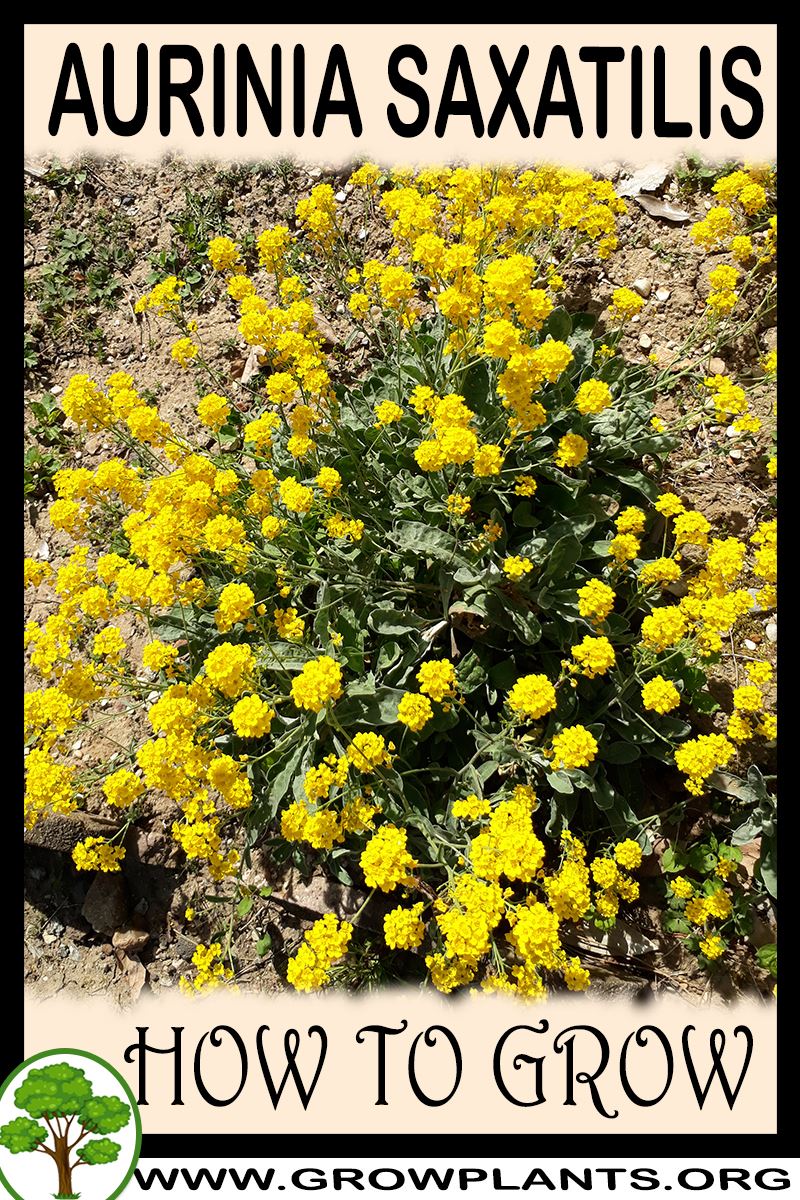
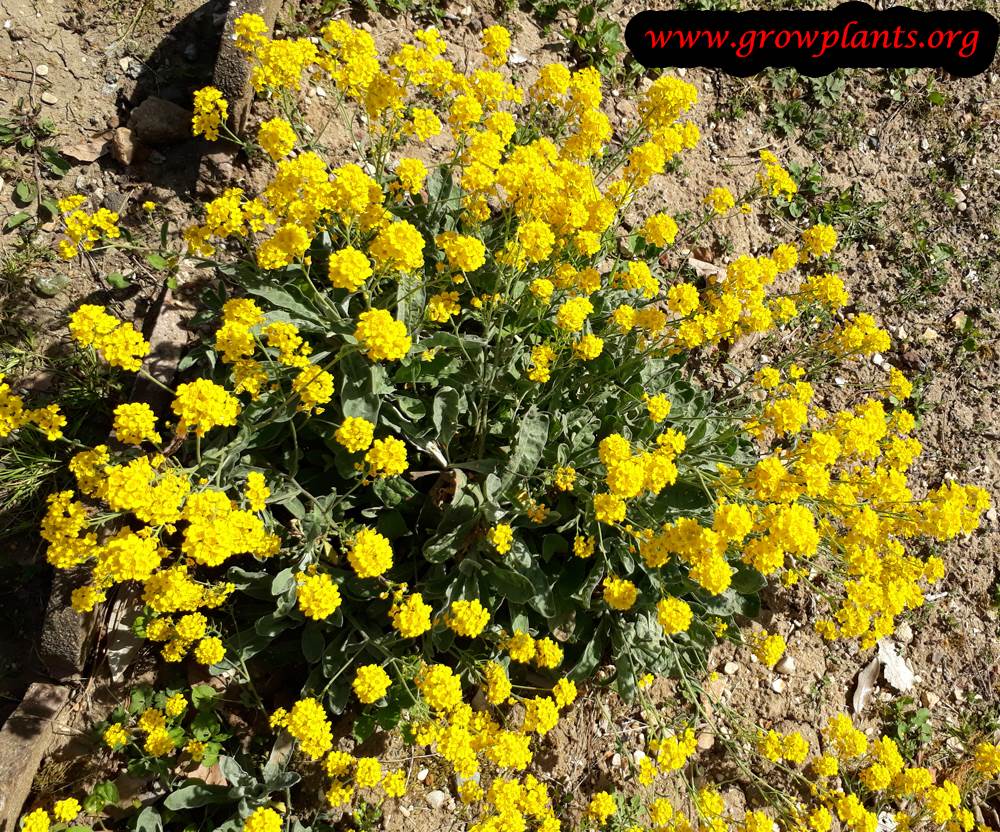
Overview: Aurinia saxatilis (Basket of gold) is a fast-growing evergreen subshrub reaching 10-30 cm (4-12 in), forming a low mound smothered in bright yellow flowers. It is grown as an ornamental for rock gardens, walls and edging.
Quick Specifications
| Specification | Attribute |
|---|---|
| Plant Type / Life Cycle | Perennial (can also be grown as an annual) |
| Foliage Type | Evergreen |
| Mature Size | 10-30 cm (4-12 in) tall |
| Growth Rate | Fast |
| Hardiness | USDA zones 4-8 as perennial; 2-11 as annual |
Growth Form & Structure
- Height & Spread: 10-30 cm (4-12 in) tall in the ground, mounding and spreading; well suited to containers and wall pockets
- Growth Habit & Form: Low, mounding mat-forming subshrub
- Lifespan & Maturity: Fast to establish; a relatively short-lived perennial
Anatomy & Physical Features
- Leaves & Foliage: Grey-green, spoon-shaped leaves
- Flower Characteristics: Masses of small yellow cross-shaped flowers (see the Bloom guide)
Primary Uses & Landscape Value
- Functional & Ornamental Roles: Ornamental for rock gardens, dry walls, edging and containers
Care Guide: Planting, Soil & Watering
Overview: Aurinia saxatilis (Basket of gold) is a sun-loving rock-garden subshrub that demands full sun and sharply drained, lean-to-average soil. It is drought-tolerant once established and needs only low to moderate water, resenting rich, heavy or wet ground.
Quick Care Requirements
| Requirement | Ideal Condition |
|---|---|
| Planting Season | In spring after the last frost through autumn (spring for annual plantings) |
| Growth Rate | Fast |
| Soil Type | Well-draining, gritty rock-garden soil; happiest in lean, sharply drained ground |
| Water Need | Low to Moderate – let the soil dry between waterings once established |
Planting & Establishment
- Best Planting Season: Plant in spring after the last frost through autumn; set annual displays out in spring.
- How to Plant:
- Hole Preparation: Dig a hole about the depth of and a little wider than the root ball, choosing a sunny slope, wall or raised gritty bed for fast runoff.
- Soil Amendments: Add grit or coarse sand to sharpen drainage; avoid heavy feeding, which produces soft, floppy growth.
- Planting Depth: Set the crown level with the soil surface so the base of the plant stays dry.
- Growth Speed & Expectations: Fast, quickly forming a spreading, gray-green cushion 10–30 cm high.
Soil, Watering & Drainage Care
- Soil Mix & Drainage Needs: Sharp drainage is critical; use a gritty, aerated mix in the ground or a free-draining, gritty potting mix in containers to prevent crown and root rot.
- Watering Schedule & Technique:
- Young / Newly Planted: Water lightly and regularly until roots take hold.
- Established: Water sparingly, letting the soil dry well between waterings; it tolerates drought better than wet feet.
- Seasonal Adjustments: A little extra water in prolonged heat; almost none in cool, wet weather.
Climate, Light & Hardiness
Basket of gold is a tough, sun-loving rock-garden perennial native to dry, rocky slopes; it is very cold hardy where grown as a perennial, and is instead grown as a fresh annual in hot, humid climates where summer heat and moisture, not winter cold, limit its survival.
Quick Climate Specifications
| Climate Zones | Temperate, Subtropical, Mediterranean |
|---|---|
| USDA Hardiness Zones | 4–8 as a perennial; grown as an annual across roughly zone 2–11 |
| Frost Tolerance | High |
| Light Conditions | Full Sun |
Sunlight & Light Exposure
Optimal Light Setup
Needs full sun for compact growth and the heaviest spring flowering; too little light leads to sparse, floppy growth.
Direct Sun Requirement
Full, unobstructed sun is preferred in nearly every climate it's grown in.
Shade & Heat Management
In hot, humid summer climates, good air circulation and sharp drainage matter more than shade - the plant is more at risk from summer heat and humidity than from too much sun.
Best Exposure / Orientation
Open, sunny rock gardens, walls, or slopes with sharp drainage suit it best.
Temperature Extremes & Hardiness
USDA Hardiness & Regional Limits
A genuinely cold-hardy alpine/rockery perennial in zones 4–8; in much warmer zones it struggles to persist through hot, humid summers and is typically grown fresh as an annual instead.
Cold Damage & Winter Protection
Very winter hardy within its perennial range; sharp drainage matters more for winter survival than added protection, since wet, cold crowns are more damaging than cold air alone.
Frost Sensitivity
Tolerates hard frost and light freezes without special protection where grown as a perennial.
Extreme Heat Tolerance
Limited - prolonged heat and humidity, rather than cold, are typically what end its life cycle outside its cooler perennial range.
Wind, Humidity & Microclimate
Humidity Preferences
Prefers the relatively dry air of upland and Mediterranean-type climates; performs poorly in humid, muggy summers.
Dry-Air Tolerance
Good.
Rainfall & Seasonal Moisture
Wants a well-drained site that doesn't stay wet, especially over winter; drought tolerant once established.
Growing in Pots, Balconies & Indoors
Basket-of-gold is a low, sun-loving alpine, not a houseplant, but it is superb spilling over the edge of a container, trough or wall-top pot in full sun.
Quick Details
- Container Size: A shallow pot, trough or wall planter for a 10-30 cm (4-12 in) cushion
- Indoor Suitability: Not a houseplant – it needs full sun and sharp drainage
- Best Spot: Full sun
- Soil & Drainage: Gritty, sharp-draining, even lean soil
- Watering in Pots: Small to average – let it dry between waterings; it hates wet, heavy soil
Indoors & On the Windowsill
- Houseplant limits: Not an indoor plant; without full outdoor sun it grows soft and floppy.
- Windowsill note: Only the very sunniest sill would do, and only briefly – it belongs outside.
On a Balcony or Patio
- Light & drainage: Give it the sunniest edge where it can trail; it revels in reflected heat but must never sit wet, so use a gritty mix and check it does not dry out completely in high summer.
- Practicalities: Shear it back after flowering to keep the cushion neat and compact.
Choosing the Pot, Soil & Long-Term Care
- Pot & drainage: A shallow pot or trough with strong drainage holes and no saucer; terracotta suits it well as it dries fast.
- Potting mix: A gritty, sharp-draining mix – cactus/succulent compost, or sandy soil with perlite and a layer of gravel or lava grit; never anything that stays soggy.
- Feeding: Feed sparingly – a diluted low-strength feed once or twice in the growing season is plenty; too much causes soft, weak growth.
- Repotting: Refresh the top of the mix each year and pot up about every two years; for perennials, lightly prune the root ball and top growth when you do.
Fertilizing & Feeding
A light feeder well matched to a lean rock garden setting: modest balanced feeding through spring growth supports its cross-shaped yellow flowers, and this fast-growing subshrub rarely needs more than that.
Quick Fertilizing Specs
| Feeding Level | Light – a lean feeder once established |
|---|---|
| Main Nutrient Priority | Balanced feeding through leaf growth and into bloom |
| Best Feeding Period | Spring growth through the spring bloom period |
| Organic Options | A little compost worked into well-drained, gritty soil is usually enough |
| Reduce/Stop Feeding | Ease off once spring bloom finishes |
| Micronutrients | Rarely an issue in average, well-drained rock garden soil; correct only a diagnosed deficiency |
| Soil pH | Tolerates a wide range provided the soil drains well |
Feeding by Growth Stage
Spring growth
Support fresh gray-green, spoon-shaped foliage as growth resumes for the season.
| Nutrient direction | A light, balanced fertilizer supports steady growth without pushing this naturally lean, mat-forming plant into lush, floppy growth. |
|---|---|
| Timing | As new growth begins in spring. |
| Frequency | A light feeding as growth resumes is usually enough to start the season. |
| Fertilizer types | A balanced complete fertilizer used at a light rate, Compost worked lightly into well-drained, gritty soil |
| Precautions | This plant is naturally fast-spreading in a rock garden setting; avoid heavy feeding that pushes it beyond its intended space. |
Yellow flower bloom period
Support the mass of cross-shaped yellow flowers this plant is grown for.
| Nutrient direction | Continue light, balanced feeding through bloom rather than switching to a bloom-specific high-phosphorus product. |
|---|---|
| Timing | Through the spring bloom window. |
| Frequency | A single light feeding is often enough to sustain bloom on an established planting. |
| Fertilizer types | A balanced fertilizer used lightly, Container or rock-garden plantings may need only an occasional light feed |
| Precautions | Avoid overwatering alongside feeding; this plant prefers well-drained soil and does not tolerate consistently wet conditions. |
Post-bloom rest
Let the plant rest undisturbed once its spring bloom finishes for the season.
| Nutrient direction | None – withhold fertilizer once spring bloom finishes. |
|---|---|
| Timing | After bloom finishes, once dead flower stems have been trimmed away. |
| Frequency | No feeding at this stage. |
| Fertilizer types | No feeding at this stage – allow the plant to rest without fertilizer until the next season’s growth resumes. |
| Precautions | Do not fertilize while the plant is resting; light shearing after bloom to keep it tidy is appropriate, but feeding is not. |
Nutrient Deficiency Signs & Corrections
Pale, yellowish-gray foliage and a weak flush of spring growth.
| Possible causes | very lean or low-organic-matter soil, an extended period without any feeding, nitrogen leaching from heavy rain or watering |
|---|---|
| Appears first on | older, lower leaves |
| What to check | recent feeding history, soil organic matter, overall leaf color compared to expectations |
| Possible correction | Apply a light, balanced fertilizer during active spring growth. |
Leaf margins scorch or brown and flowering is sparse despite adequate leaf growth.
| Possible causes | low soil potassium, heavy nitrogen feeding without balance, drought stress limiting nutrient uptake |
|---|---|
| Appears first on | older leaf margins |
| What to check | recent fertilizer balance, watering consistency, flower production compared to foliage growth |
| Possible correction | Switch to a balanced, potassium-inclusive fertilizer and maintain even watering. |
New leaves emerge pale yellow while the veins stay green.
| Possible causes | high soil pH tying up available iron in alkaline rock garden soil, poorly drained or waterlogged soil, root stress limiting nutrient uptake |
|---|---|
| Appears first on | newest growth |
| What to check | soil pH and drainage, recent watering pattern, root health |
| Possible correction | Improve drainage where possible and apply a chelated iron product per its label. |
Pruning, Training & Seasonal Maintenance
Aurinia saxatilis is a low, mounding rock-garden subshrub that blooms once in spring and tends to sprawl and go bare in the center if left uncut. The key maintenance cut is a firm shear-back right after its spring flowering, which keeps the mound compact and productive rather than woody and gappy; beyond that it tolerates cutting for tidiness at almost any time.
Quick Pruning & Maintenance Specs
| Pruning Tolerance | Moderate–High for the annual post-bloom cutback; Low for cutting into bare old wood |
| Primary Pruning Window | Immediately after spring flowering |
| Secondary Maintenance Window | Light tidying of dead rosettes/foliage through the rest of the year |
| Typical Frequency | One firm cutback per year |
| Main Objective | Prevent legginess and a bare, woody center; keep the mound dense for next year’s bloom |
| Best Tool Type | Bypass secateurs or hand shears |
Pruning by Plant Age & Size
Newly Established
Skip the hard cutback in the first season; let a young plant fill in and only pinch tips lightly to encourage branching.
Young / Formative
Pinch growing tips to build a dense mound rather than a single sprawling stem; no formal training system applies to this small subshrub.
Mature / Established
Shear the whole mound back by around a third to a half right after flowering every year – this is the main ongoing task and prevents the woody, bare-centered habit this species is prone to.
Seasonal Pruning Schedule
Post-Flowering
Objective: renew the mound. As soon as the yellow spring flowers fade, shear back the whole plant by roughly a third to a half. This removes the spent flower stems, forces a fresh flush of compact foliage for the rest of the season, and is the single most important thing that keeps this species from turning into a sparse, woody mat.
Ongoing Sanitary
Objective: tidiness. Pinch out any dead or damaged rosettes as noticed through the growing season.
Structural Pruning & Training
The annual post-bloom shear is itself a renewal cut – without it, the center of the mound tends to go bare and woody over a few seasons. Once a plant has been allowed to get that overgrown, cutting back hard can help, but avoid cutting into completely leafless, woody stems at the base, since old wood on this species does not reliably resprout.
Special Growth to Remove
- Spent flower stems – removed as part of the post-bloom shear.
- Dead or woody unproductive growth – thin out where the center has gone bare, cutting back to the nearest live, leafy growth rather than into bare wood.
Container & Small-Space Pruning
In a container or rock-garden pocket, the same post-bloom shear keeps the mound compact and in proportion to its space; container plants tend to dry out faster right after a hard shear, so keep an eye on watering while the new flush establishes.
Tools
- Bypass secateurs or one-handed hand shears – for the annual mound-wide cutback and any spot tidying; no larger tool is ever needed on this small subshrub.
Tool Hygiene & Disease Risk
Routine: no transmissible disease risk is noted for this species; ordinary clean, sharp tools are sufficient.
Cut Placement & Technique
Shear back to just above a point with visible live leaf growth, not into bare, leafless stem – this species regrows reliably from leafy tissue but poorly from old bare wood.
Heavy Pruning & Rejuvenation
The annual post-bloom shear-back is itself a moderate rejuvenation cut and is well tolerated. A badly overgrown, woody plant is better replaced or propagated from cuttings than rejuvenated by cutting hard into bare old wood, which often fails to resprout.
Post-Pruning Care
Water normally through the flush of new growth that follows the post-bloom shear; no feeding is needed to push regrowth.
Common Pruning Mistakes
- Skipping the annual post-bloom cutback, which lets the mound go sprawling and bare in the center over a few seasons.
- Cutting hard into leafless woody stems expecting them to resprout.
- Shearing during active spring bloom instead of waiting for flowering to finish, which sacrifices the display.
When NOT to Prune
Avoid the hard cutback while the plant is still actively flowering in spring, and avoid heavy cutting during summer heat stress.
Recommended Tools (by task)
- bypass_secateurs – for the annual post-bloom cutback and spot tidying of dead rosettes.
Propagation Guide
Aurinia saxatilis is easiest and fastest from seed, which comes reasonably true for the species, though named cultivars are best kept true by cuttings or division. Softwood cuttings taken just after flowering and simple clump division both work well for increasing named forms, and overall propagation difficulty is easy.
Quick Propagation Specs
| Best Propagation Method | Seed (species) or softwood cuttings / division (named cultivars) |
| Alternative Methods | Division of clumps |
| Propagation Difficulty | Easy |
| Seed True-to-Type | Usually true-to-type for the species; cultivar-dependent for named selections |
| Vegetative True-to-Type | Yes |
| Best Propagation Season | Sow seed in spring; take cuttings or divide in late spring–early summer just after flowering, or in autumn |
| Seed Germination Time | Roughly 1–3 weeks under warm conditions; site gives no exact figure |
| Germination Temperature | About 18–21°C (65–70°F) |
| Seed Sowing Depth | Surface-sow or barely cover – light aids germination for this fine seed |
Growing from Seed
Sowing Season
Spring, or autumn in mild climates.
Sowing Depth & Orientation
Surface-sow or just barely cover.
Germination Conditions
Well-drained soil in full sun, matching this plant’s stated preferences, kept lightly moist.
Germination Time
Roughly 1–3 weeks, though timing varies with temperature.
Seedling Care
Grow on in full sun with small to average watering, matching mature-plant needs; avoid waterlogging, since this rock-garden species dislikes wet, heavy soil.
Stem Cuttings
Cutting Type
Softwood tip cuttings.
Best Timing
Just after flowering, in late spring to early summer, when non-flowering shoots are available.
Cutting Preparation
Take short non-flowering shoot tips and remove the lower leaves.
Rooting Setup
Gritty, free-draining rooting medium in full sun to bright light.
Rooting Hormone
Optional; can speed rooting but isn’t essential for this easy-rooting subshrub.
Rooting Time
Typically a few weeks.
Division, Offsets, Pups & Suckers
Established clumps can be lifted and divided in early autumn or early spring; replant divisions promptly at the same depth in well-drained soil, since this species dislikes wet, heavy conditions.
Bloom & Flower Guide
Quick Details
- Bloom Season: Spring
- Flower Appearance: Masses of tiny four-petalled (cross-shaped) golden-yellow flowers
- Edibility: Ornamental – not grown for eating
Detailed Blooming Overview
Basket of gold blankets itself in spring under dense clusters of tiny golden-yellow flowers, spilling over walls and rocks in a solid sheet of color – a classic companion to spring bulbs and other rock-garden plants.
Flower Characteristics
- Tiny four-petalled flowers in bright golden yellow, held in dense clusters over grey-green foliage
Bloom Care & Thinning
- After flowering: Shear the plant back by about a third once the main show fades to keep it compact and stop it going straggly.
- Pollination: The early flowers offer nectar to bees and other spring pollinators.
Pests, Diseases & Troubleshooting
Overview: Aurinia (basket-of-gold) is a tough, sun-loving mustard-family (Brassicaceae) alpine that is rarely troubled once given sharp drainage, but it shares the classic brassica enemies – flea beetles, aphids and cabbage-white caterpillars – and its real killer is crown and root rot in wet, heavy winter soil. Manage it culturally first: gritty free-draining soil, full sun, good airflow and a hard shear after flowering to keep the mat dense and disease-free.
Quick Troubleshooting Overview
| Issue / Pest | Main Symptom | Primary Solution |
|---|---|---|
| Flea beetles | Tiny round shot-holes peppering the leaves; foliage looks lacy | Encourage airflow, keep plants vigorous; floating row cover on young plants; neem if severe |
| Aphids | Sticky clustered growing tips, curled leaves, sooty mould | Blast off with water, encourage ladybirds/hoverflies; insecticidal soap |
| Cabbage-white caterpillars | Chewed leaf margins, green droppings | Hand-pick, use Bt (Bacillus thuringiensis); netting |
| Crown / root rot | Blackened collapsing centre, plant dies back in wet weather | Sharp drainage, raised/gritty beds, avoid winter wet; do not overwater |
| Downy / white blister | Yellow blotches with grey or white pustules on leaf undersides | Space plants, improve airflow, remove infected leaves |
| Legginess after bloom | Open, bare-centred, floppy mat | Shear hard by up to half straight after flowering |
Common Pests & Management
- Flea beetles (Phyllotreta spp.):
- Symptoms: Numerous tiny round ‘shot-hole’ pits and holes across the leaves; the whole mat can look lacy and stippled in warm dry spells. Adults are minute, shiny, and leap when disturbed. Damage is worst on stressed, dry plants and new growth.
- Prevention & Control: Keep plants vigorous and unstressed with adequate moisture at the root; maintain open airflow. Protect young plants with fine mesh or floating row cover, and use yellow sticky cards to monitor. A light diatomaceous-earth dusting or an evening neem-oil spray controls heavy outbreaks.
- Aphids (Myzus persicae / Brevicoryne brassicae):
- Symptoms: Soft green or grey-mealy insects clustered on tender shoot tips and flower stalks, causing curled, distorted growth, sticky honeydew and secondary sooty mould. The mealy cabbage aphid is dusty-grey.
- Prevention & Control: Dislodge colonies with a firm jet of water and encourage ladybirds, lacewings and hoverflies by avoiding broad-spectrum sprays. Treat persistent colonies with insecticidal soap or an evening neem application, thoroughly wetting the undersides.
- Cabbage white caterpillars (Pieris rapae / Pieris brassicae):
- Symptoms: Ragged holes and chewed margins with green-black droppings; green or velvety caterpillars feeding openly on the foliage in warm weather.
- Prevention & Control: Hand-pick caterpillars and eggs, encourage parasitic wasps, and net vulnerable plants. Spray Bacillus thuringiensis (Bt) in the evening for heavy infestations – it targets only caterpillars and spares pollinators.
- Slugs and snails:
- Symptoms: Irregular holes with slime trails, especially on soft new spring growth and seedlings; damage appears overnight in damp weather.
- Prevention & Control: Keep the crown open and mulch gritty rather than moist; use beer traps, copper barriers, hand-picking at night, and iron-phosphate pellets where needed.
- Spider mites (Tetranychus urticae):
- Symptoms: Fine pale stippling, a dull bronzed cast and faint webbing on hot, dry, sheltered plantings during heat waves.
- Prevention & Control: Raise humidity by hosing foliage, avoid drought stress, and encourage predatory mites. Treat with insecticidal soap or horticultural oil, repeating to catch newly hatched mites.
Diseases & Fungal Issues
- Downy mildew (Hyaloperonospora parasitica):
- Symptoms: Pale yellow angular blotches on the upper leaf with a greyish, fuzzy mould on the underside in cool, humid conditions; leaves yellow and drop.
- Treatment & Management: Improve spacing and airflow, avoid overhead watering late in the day, and remove infected leaves. Copper-based fungicide helps in a wet season, but drainage and airflow are the real cure.
- White blister / white rust (Albugo candida):
- Symptoms: Raised, glistening white pustules on leaf undersides and distorted, swollen stems and flower parts – a signature Brassicaceae disease.
- Treatment & Management: Remove and destroy infected tissue promptly, avoid crowding, and rotate positions of annual replacements. There is no cure once systemic, so sanitation and airflow are key.
- Powdery mildew (Erysiphe cruciferarum):
- Symptoms: White powdery patches on upper leaf surfaces in late summer, most common on crowded, drought-stressed mats.
- Treatment & Management: Improve airflow, avoid drought stress, and shear congested growth. Sulphur or potassium-bicarbonate sprays check persistent cases.
- Clubroot (Plasmodiophora brassicae):
- Symptoms: Stunted, wilting plants with swollen, distorted galled roots; a soil-borne brassica disease that persists for years in acidic, wet ground.
- Treatment & Management: Ensure excellent drainage, raise soil pH with lime, and never move soil or plants from an infected bed. Avoid replanting brassicas in affected ground.
- Crown and root rot (Rhizoctonia / Phytophthora spp.):
- Symptoms: Blackened, mushy collar and roots with sudden collapse of the mat, especially over a wet winter in heavy soil.
- Treatment & Management: Prevention is everything: plant in gritty, sharply drained soil or a raised bed, never let the crown sit wet, and go easy on water. Remove and discard rotted plants with surrounding soil.
Growing Difficulties & Abiotic Problems
- Winter wet / crown rot (the main killer):
- Cause & Symptoms: Cold, waterlogged, heavy soil rots the crown and roots; the plant blackens and collapses.
- Correction Strategy: Plant on a slope, raised bed or gritty free-draining mix; add sharp sand or grit; site in full sun; avoid mulching directly over the crown.
- Legginess and bare centre after flowering:
- Cause & Symptoms: After the spring flush the mat becomes open, woody and floppy with a bald middle.
- Correction Strategy: Shear the whole plant back by up to one-third to one-half immediately after flowering to force dense, fresh basal growth and often a light rebloom.
- Heat and drought stress:
- Cause & Symptoms: In hot, dry sites the foliage scorches, thins and becomes mite-prone.
- Correction Strategy: Give afternoon relief in the hottest climates, water deeply but infrequently, and mulch with grit to keep roots cool without trapping wet at the crown.
- Chlorosis / poor vigour:
- Cause & Symptoms: Pale, weak growth on exhausted or overly acidic soil.
- Correction Strategy: Top-dress with a balanced feed in spring and lime very acidic soils toward neutral-to-slightly-alkaline, which this limestone-loving genus prefers.
What Helps – Products & Tools
Reach first for cultural tools – gritty free-draining soil, full sun, airflow, shears and mesh/row cover. When a spray is warranted, insecticidal soap and horticultural or neem oil handle aphids, mites and flea beetles; Bacillus thuringiensis (Bt) targets caterpillars; iron-phosphate pellets deter slugs; and copper or sulphur fungicides check mildews. Spray oils in the evening to protect pollinators.