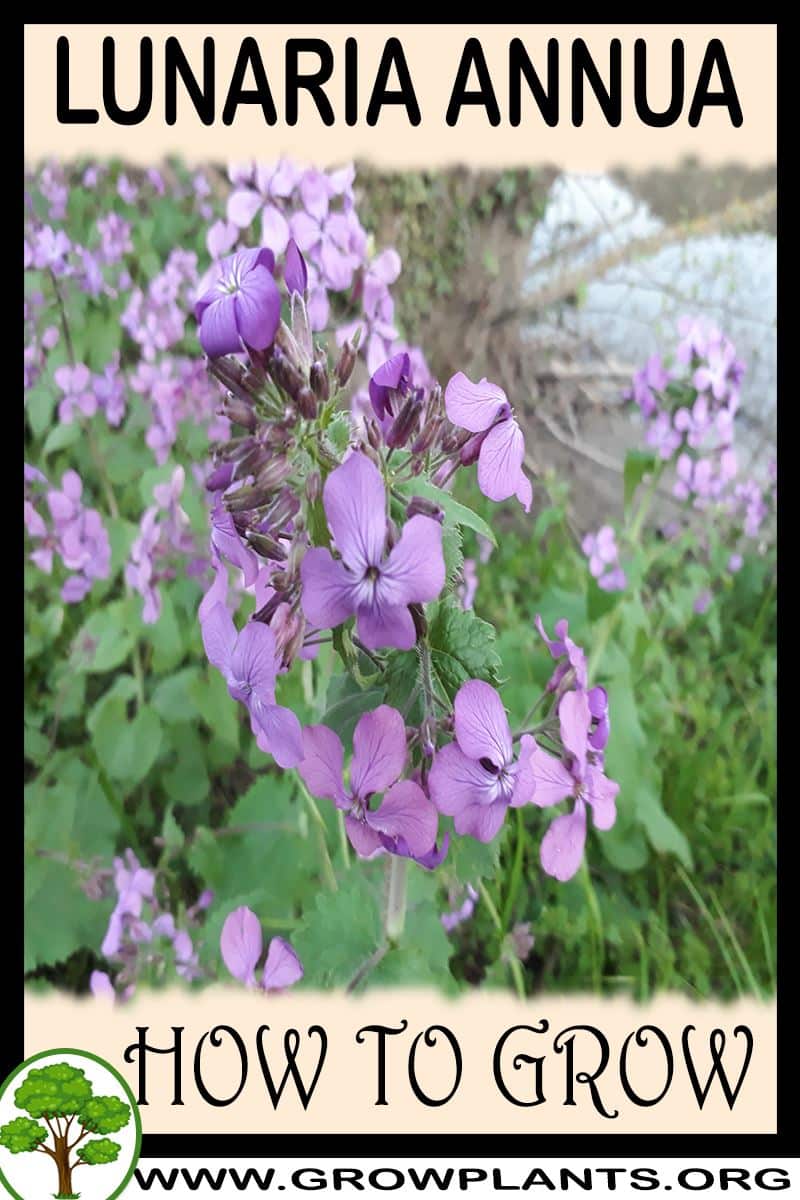


Plant Profile & Key Characteristics
Overview: Herbaceous Honesty plant growing 0.3-1 m, ranging from annual and biennial to short-lived perennial forms. Grown as an ornamental for its four-petalled flowers and translucent coin-like seed pods.
Quick Specifications
| Specification | Attribute |
|---|---|
| Plant Type / Life Cycle | Annual, biennial or short-lived perennial |
| Mature Size | 0.3-1 m (12-40 in) |
| Growth Rate | Fast to moderate |
| Root System | Taproot |
| Toxicity | Non-toxic |
| Hardiness | USDA zones 3-9 |
Growth Form & Structure
- Height & Spread: 0.3-1 m tall, upright and clump-forming; suits borders and containers.
- Growth Habit & Form: Erect, branching herbaceous plant.
- Lifespan & Maturity: Fast to establish; biennial forms flower in their second year and often self-seed.
Anatomy & Physical Features
- Leaves & Foliage: Green, sometimes variegated green and white, heart-shaped leaves with serrated margins.
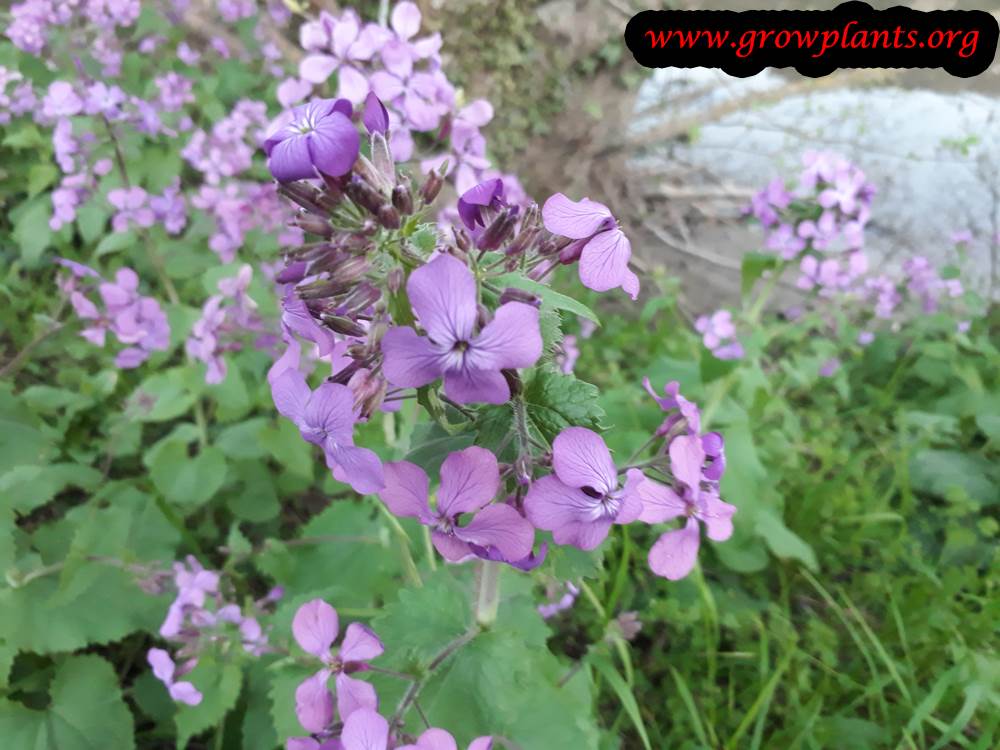
- Flower Characteristics: Four-petalled flowers in white, pink or purple.
Primary Uses & Landscape Value
- Functional & Ornamental Roles: Ornamental flowering plant; the silvery, coin- to elliptic-shaped seed pods are prized for dried arrangements.
Care Guide: Planting, Soil & Watering
Overview: Honesty (Lunaria) is an easy biennial, annual or short-lived perennial that thrives in cool temperate to Mediterranean gardens in full sun to part shade. It does best in rich, moist, well-drained soil and asks for steady, moderate moisture without ever sitting wet.
Quick Care Requirements
| Requirement | Ideal Condition |
|---|---|
| Planting Season | Spring, after hard frost |
| Growth Rate | Moderate to fast |
| Soil Type | Rich, moist, well-drained |
| Water Need | Moderate – keep evenly moist |
Planting & Establishment
- Best Planting Season: In spring, once the soil has warmed and the risk of hard frost has passed.
- How to Plant:
- Hole Preparation: Dig a hole about the depth of the root ball and roughly twice as wide, loosening the surrounding soil so young roots can spread.
- Soil Amendments: Work in plenty of compost or well-rotted organic matter to enrich the soil and improve both moisture-holding and drainage.
- Planting Depth: Set the plant so the root collar sits level with the surrounding soil; never bury the stem.
- Growth Speed & Expectations: Grows at a moderate to fast pace in good conditions, quickly forming leafy rosettes that flower and then self-seed freely — it can naturalise readily.
Soil, Watering & Drainage Care
- Soil Mix & Drainage Needs: Any fertile, moisture-retentive soil that still drains freely; in pots use a rich, free-draining potting mix and ensure the container has drainage holes to prevent root rot.
- Watering Schedule & Technique:
- Young / Newly Planted: Water every few days for the first weeks so the root zone never dries out completely.
- Established: Once established, water deeply when the top few centimetres dry — it likes to stay evenly moist but never waterlogged.
- Seasonal Adjustments: Cut back in winter and water more often during hot, dry spells.
Climate, Light & Hardiness
Honesty is a hardy, cool-climate plant for temperate, mediterranean and subtropical gardens, happiest in partial shade to full sun. It is very cold-tolerant, overwintering as a frost-hardy rosette, while hot, dry summers - not winter cold - are the real limit on where it thrives.
Quick Climate Specifications
| Climate Zones | Temperate, mediterranean, subtropical |
| USDA Hardiness Zones | 3–9 (site data) |
| Optimal Temp Range | approximately 13–22 °C (55–72 °F) |
| Cold Damage Begins | very frost-tolerant; overwinters as a hardy rosette with little damage |
| Approx. Survival Minimum | roughly −40 °C (−40 °F) at the cold edge of zone 3 |
| Frost Tolerance | High |
| Light Conditions | Partial shade to full sun |
Sunlight & Light Exposure
Optimal Light Setup
A classic woodland-edge plant, it grows in full sun in cool climates but does best in dappled or partial shade where summers are warm, which also deepens the flower colour and prolongs bloom.
Shade & Heat Management
In hot, bright situations it flags and finishes quickly; part shade with a cool, moist root zone keeps it fresh far longer. Variegated forms in particular hold up better out of harsh afternoon sun.
Best Exposure / Orientation
An east- or north-facing aspect, or the light shade beneath deciduous trees and shrubs, gives the cool, bright conditions it prefers.
Temperature Extremes & Hardiness
USDA Hardiness & Regional Limits
It is hardy across USDA zones 3–9, tolerating hard winters with ease. Depending on species it is grown as a perennial, biennial or annual - a lifecycle distinction that is separate from its strong cold hardiness. Its warm-climate limit is set by summer heat rather than by cold.
Cold Damage & Winter Protection
Whether grown as perennial, biennial or annual, it overwinters as a cold-hardy plant or rosette; the growth habit is a lifecycle trait and does not reduce the genus's cold tolerance. Established plants need no winter protection within their zone range, surviving to about roughly −40 °C (−40 °F) at the cold edge of zone 3.
Frost Sensitivity
Overwintering rosettes are highly frost-tolerant; only the tender flowering stems in full growth can be nipped by a hard late frost, and the plant recovers readily.
Extreme Heat Tolerance
Heat is the true weakness: in hot, dry summers it bolts, scorches and fades early. Cool conditions, part shade and consistent soil moisture are what let it perform in warmer regions.
Wind, Humidity & Microclimate
Humidity Preferences
It favours the moderate humidity of cool, moist woodland edges rather than arid, exposed sites.
Rainfall & Seasonal Moisture
Reliable seasonal moisture through the growing season suits it best; a cool, humus-rich soil that stays evenly moist yet drains freely matches its woodland origins.
Microclimate Recommendations
A sheltered, lightly shaded, moisture-retentive spot - the classic woodland-garden microclimate - gives the strongest growth, and the plant self-seeds happily where conditions suit it.
Growing in Pots, Balconies & Indoors
Lunaria (Lunaria), or honesty, is grown for its spring flowers and its famous silvery, translucent seed pods, prized for dried arrangements. It is not a houseplant, but it grows happily in a pot on a sunny or lightly shaded balcony or patio. Depending on the type it may be annual, biennial or perennial; the biennial forms flower in their second year and then self-seed.
Quick Details
- Container Size: A medium-to-large pot with some depth – it reaches about 30-90 cm (12-36 in).
- Indoor Suitability: Not a houseplant – it needs outdoor light and a natural cycle of seasons.
- Best Spot: Full sun to half shade.
- Soil & Drainage: Ordinary, organic, free-draining mix kept moderately moist.
- Watering in Pots: Average, even moisture; pots dry faster than open ground.
Indoors & On the Windowsill
- Not for indoors: It needs outdoor light and a real change of seasons, so it will not grow as a houseplant.
On a Balcony or Patio
- Sun or part shade: Give it a sunny or lightly shaded spot; leave a few pods to ripen for the silvery seed heads and to self-sow for next year. Reflected heat from walls dries pots, so keep the mix evenly moist.
Choosing the Pot, Soil & Long-Term Care
- Pot & drainage: A pot with strong drainage holes; skip a standing saucer of water to avoid root rot.
- Potting mix: Ordinary, organic and free-draining.
- Feeding: Feed lightly through the growing season, as nutrients leach faster from a pot.
- Long-term care: For biennial or annual forms, sow or let a self-sown seedling carry on each year; for perennial forms, refresh the mix and divide every couple of years.
Fertilizing & Feeding
A moderate feeder: steady balanced feeding through the growing season supports both foliage and flowers, with feeding tapering off as the plant slows for its rest period.
Quick Fertilizing Specs
| Feeding Level | Moderate |
|---|---|
| Main Nutrient Priority | Balanced nutrition with adequate nitrogen; no high-phosphorus bloom boosters |
| Best Feeding Period | Through the active growing and blooming season |
| Organic Options | Compost, well-rotted manure, or a balanced organic fertilizer |
| Soil pH | Slightly acidic to near neutral |
| Reduce/Stop Feeding | Stop feeding once flowering ends and seed pods form |
Feeding by Growth Stage
Spring growth flush
Support strong new leaves and stems as the plant breaks into active growth.
| Nutrient direction | A balanced complete fertilizer with adequate nitrogen to fuel foliage and stems. |
|---|---|
| Timing | As new growth begins in spring. |
| Frequency | Feed steadily through the active growth period, easing back as blooming approaches. |
| Fertilizer types | Balanced complete garden fertilizer, Slow-release granular fertilizer, Compost or other organic matter worked into the soil |
| Precautions | Avoid heavy nitrogen, which can push soft leafy growth at the expense of flowers. |
Blooming period
Sustain flowering with steady, balanced nutrition without forcing excess foliage.
| Nutrient direction | A balanced complete fertilizer; adequate nitrogen alongside potassium supports continued bloom, and high-phosphorus bloom boosters are not needed. |
|---|---|
| Timing | Through the flowering season. |
| Frequency | Keep feeding light and steady while the plant is in bloom. |
| Fertilizer types | Balanced complete fertilizer, Liquid feed for garden and container plants |
| Precautions | Skip high-phosphorus bloom formulas; they do not increase flowering and can build up in the soil. |
After flowering and seed set
Allow the plant to finish flowering and form its seed pods as it completes its short life cycle.
| Nutrient direction | None – withhold fertilizer once flowering ends. |
|---|---|
| Timing | After bloom, as seed pods form and the plant declines. |
| Frequency | No feeding at this stage. |
| Fertilizer types | No feeding at this stage; do not fertilize as the plant finishes its cycle. |
| Precautions | Do not fertilize; feeding cannot extend the natural decline of an annual or biennial. |
Nutrient Deficiency Signs & Corrections
Older, lower leaves turn pale green to yellow and overall growth slows.
| Possible causes | Low soil nitrogen or infrequent feeding, Nitrogen leached out by heavy watering or from sandy soil, Cold soil early in the season limiting uptake |
|---|---|
| Appears first on | Older, lower leaves |
| What to check | Recent feeding history, Soil drainage and watering habits, Soil temperature in early spring |
| Possible correction | Apply a balanced complete fertilizer at its labeled rate and make sure the soil is warm and evenly moist. |
New leaves yellow between the veins while the veins themselves stay green.
| Possible causes | High soil pH reducing iron availability, Poor drainage or waterlogged roots, Genuinely low iron in the soil |
|---|---|
| Appears first on | Youngest leaves |
| What to check | Soil pH, Drainage and root health, Signs of overwatering |
| Possible correction | Correct soil pH and improve drainage; apply a chelated iron product per its label if the problem persists. |
Leaf edges and tips brown and scorch, sometimes with a whitish crust on the soil surface.
| Possible causes | Over-application of fertilizer and salt buildup, Insufficient leaching, especially in containers, Underwatering that concentrates salts in the root zone |
|---|---|
| Appears first on | Leaf tips and margins |
| What to check | Recent fertilizer amounts, Salt crust on the soil or pot rim, Whether watering wets the whole root zone |
| Possible correction | Cut back on feeding and leach the root zone thoroughly with plain water to flush out the excess salts. |
The plant makes lush leafy growth but produces few flowers.
| Possible causes | Excess nitrogen from over-feeding, Too much shade or insufficient light, An immature or heavily pruned plant |
|---|---|
| Appears first on | Whole plant, where vegetative growth dominates |
| What to check | Nitrogen inputs and fertilizer type, Light exposure, Plant maturity and recent pruning |
| Possible correction | Ease off nitrogen, switch to a balanced fertilizer, and make sure the plant gets enough light. |
Pruning, Training & Seasonal Maintenance
Honesty (Lunaria) is a genus of soft-stemmed plants grown for flowers and, above all, for their flat, coin-shaped silvery seed pods, and none of them have meaningful structural pruning. Most familiar forms are biennial — a leafy rosette one year, flowers and pods the next, then death — while the perennial species returns each year; either way, upkeep centres on one choice: keep the ornamental pods and let the plant self-sow, or remove the pods to control its free spread. Beyond that, “pruning” is simply clearing spent stems.
Quick Pruning & Maintenance Specs
| Pruning Tolerance | Low — a soft-stemmed plant with little true pruning |
| Primary Maintenance Window | Late spring to autumn (deadhead or harvest pods; cut back spent stems) |
| Typical Frequency | Once or twice a season |
| Main Objective | Decide between keeping the ornamental seed pods and controlling self-seeding |
| Young Plant Priority | Leave the leafy rosette undisturbed |
| Mature Plant Priority | Manage spent flower and seed stems; clear finished plants |
| Best Tool Type | Precision snips; secateurs for clearing whole stems |
| Avoid Cutting | Green pods you want for drying, unless controlling spread |
Pruning by Plant Age & Size
Newly Established / Rosette
Young plants and first-year rosettes need nothing removed — let them build up leaf and root before flowering. There is no framework to shape.
Flowering & Seeding
Once flowering stems rise and set pods, the only decisions are cosmetic and about spread: cut flowered stems for drying at the silvery stage, deadhead to limit self-seeding, or leave pods to shed and return. Perennial forms are then cut back after they finish; biennial forms die and are cleared.
Seasonal Pruning Schedule
After Flowering / Seed Set
Objective: harvest pods or control seeding. Remove: spent flowering stems, timed to your goal — earlier to stop seed, later (at the silvery stage) to dry. Do NOT remove: pods you want to keep for decoration or to allow a few volunteers. Impact: pod removal is the main lever on how much the plant spreads.
Autumn Clean-Up
Objective: tidy the bed. Remove: dead biennial plants entirely, and cut perennial forms back to the base as they die down. Impact: refreshes the planting for the next cycle.
Special Growth to Remove
The seed pods are the growth that matters here: leaving them ripen and burst is what drives the plant’s noted self-seeding, so remove pods where you want to contain it and retain a few where you want it to persist. There are no suckers, runners or woody stems to manage.
Cut Placement & Technique
Cut stems low at the base with snips or secateurs. For dried arrangements, cut when pods turn papery-silver, then rub away the outer skins to expose the translucent discs.
Post-Pruning Care
No feeding is prompted by cutting. To keep Honesty in the garden, allow some seed to fall or sow saved seed; the perennial species will also re-emerge from its crown.
Common Pruning Mistakes
- Cutting first-year rosettes expecting bloom before their second year (on biennial forms).
- Letting all pods shed and then finding seedlings everywhere the next season.
- Harvesting pods too late, after they have lost their silver sheen.
- Assuming every plant returns — biennial forms die after seeding and must be re-sown or allowed to self-sow.
When NOT to Prune
Leave first-year rosettes intact. Do not strip every pod if you want either dried material or a returning stand of plants; balance deadheading against the self-seeding you can accept.
Recommended Tools (by task)
- precision_snips — deadheading and cutting pod stems for drying.
- bypass_secateurs — clearing spent biennial plants and cutting perennial forms back at the base.
Propagation Guide
Lunaria is normally raised from seed. The familiar biennial honesty self-sows freely from its flat, coin-like pods, while the perennial species (Lunaria rediviva) can additionally be divided. Overall an Easy plant to propagate.
Quick Propagation Specs
| Best Propagation Method | Seed (including self-sown seedlings) |
| Alternative Methods | Division (perennial species only) |
| Propagation Difficulty | Easy |
| Seed True-to-Type | Mostly — flower colour can segregate, and variegated forms may not all come true |
| Vegetative True-to-Type | Yes for the perennial species by division |
| Best Propagation Season | Sow late spring to summer; divide perennial species in spring or autumn |
| Seed Germination Time | Typically a few weeks; can be uneven |
Growing from Seed
Seed Handling
Papery, coin-shaped (or more elliptic) pods each hold a few flat seeds; gather them as the pods dry, or let plants self-seed. Fresh seed germinates well.
Sowing Season & Method
Sow in late spring or summer for biennial types so plants flower the next year, or in spring. Sow direct, or in modules to plant out young, as the taproot dislikes disturbance; a spell of cool, moist conditions can even up germination.
Self-Sown Seedlings
Seedlings appear freely around established plants and can be moved while small.
Division, Offsets, Pups & Suckers
The perennial species (Lunaria rediviva) forms clumps that can be lifted and divided in spring or autumn, each piece with roots and a growth bud; the biennial honesty does not persist to divide and is left to seed.
Bloom & Edible Flower Guide
Quick Details
- Bloom Season: Late spring into summer
- Time to First Bloom: Depending on the type, flowers in its second spring (biennial) or each year once established (perennial forms)
- Flower Appearance: Four-petalled (cross-shaped) flowers in white, pink or purple, in loose clusters
- Edibility: Edible – the flowers carry a mild, mustard-like flavour
Detailed Blooming Overview
Honesty is a cottage-garden favourite grown for its spring flowers and, later, its papery “silver dollar” seedheads. The blooms are simple four-petalled, cabbage-family flowers in white, pink or purple, carried in soft clusters that thrive in the dappled shade of a border edge or woodland margin.
Flower Characteristics
- Four petals in a cross, in white, pink or purple.
- Carried in loose, branching clusters above heart-shaped leaves.
- Edible with a gentle mustard tang.
Bloom Care & Thinning
- Keeping it going: Let a few plants set seed and self-sow so there is always a flowering generation on the way.
- Pollination: Bees, butterflies and long-tongued flies visit the flowers.
Bloom Health & Protection
- Aphids: Soft flowering stems can attract aphids; rinse them off or use insecticidal soap or neem.
Pests, Diseases & Troubleshooting
Overview: Honesty is an easy cottage-garden biennial/perennial in the cabbage family, so its pests and diseases are the classic brassica set – aphids, flea beetles, cabbage-white caterpillars and slugs – plus soil-borne white blister and clubroot in wet ground. Good hygiene, rotation and airflow keep it largely trouble-free.
Quick Troubleshooting Overview
| Issue / Pest | Main Symptom | Primary Solution |
|---|---|---|
| Aphids (mealy cabbage aphid) | Grey waxy clusters, curled leaves, honeydew | Hose off; encourage predators; insecticidal soap |
| Flea beetles | Tiny shot-holes in young leaves | Row covers on seedlings; keep moist; sticky traps |
| Cabbage-white caterpillars | Chewed leaves, green frass | Handpick; net plants; Bt if heavy |
| Slugs & snails | Ragged holes, slime on seedlings | Handpick at night; barriers; iron-phosphate bait |
| White blister / downy mildew | White pustules or grey mould under leaves | Improve airflow; remove leaves; avoid wet foliage |
| Clubroot | Wilting, stunting, swollen distorted roots | Rotate; lime to raise pH; never move infected soil |
Common Pests & Management
- Mealy cabbage aphid (Brevicoryne brassicae):
- Symptoms: Dense grey, waxy-coated aphid colonies on leaf undersides and shoot tips cause curling, yellowing, stunting and sticky honeydew with sooty mould; they also spread brassica viruses.
- Prevention & Control: Dislodge with a water jet, squash small colonies, encourage ladybirds, lacewings and hoverflies, and remove badly infested shoots. Insecticidal soap or neem for heavy attacks, targeting leaf undersides.
- Flea beetles (Phyllotreta spp.):
- Symptoms: Tiny black beetles jump when disturbed and pepper young leaves with small round shot-holes; seedlings can be checked or killed.
- Prevention & Control: Protect seedlings with fine mesh or fleece, keep them well watered and growing fast, and use yellow sticky traps. Firm, moist soil and clearing debris reduce numbers.
- Cabbage-white caterpillars (Pieris brassicae / Pieris rapae):
- Symptoms: Green or velvety caterpillars chew large holes and skeletonise leaves, leaving green-black droppings; clusters of yellow eggs sit under leaves.
- Prevention & Control: Net plants with fine mesh to exclude the butterflies, handpick caterpillars and rub off egg clusters, and encourage parasitic wasps. Use Bacillus thuringiensis (Bt) for heavy infestations.
- Slugs & snails (Gastropoda):
- Symptoms: Ragged holes and slime trails, especially on seedlings and low leaves in damp, sheltered spots; whole seedlings can vanish overnight.
- Prevention & Control: Handpick after dark, keep the area tidy, use grit, wool or copper barriers, and scatter iron-phosphate bait sparingly. Encourage ground beetles, birds and frogs.
Diseases & Fungal Issues
- White blister / white rust (Albugo candida):
- Symptoms: Glistening white, blister-like pustules on leaf undersides with yellow blotches above, and sometimes distorted swollen stems, in cool wet weather.
- Treatment & Management: Remove and destroy affected leaves, space plants and improve airflow, avoid overhead watering, and rotate away from brassicas; the disease is worst in crowded, damp plantings.
- Downy mildew (Hyaloperonospora parasitica):
- Symptoms: Yellow blotches on the upper leaf with grey-purple fuzzy growth beneath, mainly on seedlings and lower leaves in humid conditions.
- Treatment & Management: Improve ventilation, avoid wetting foliage, thin seedlings, and remove infected leaves; a copper fungicide only where pressure is high.
- Clubroot (Plasmodiophora brassicae):
- Symptoms: Plants wilt in the day, grow stunted and yellow, and the roots are swollen, distorted and galled – a persistent soil-borne disease of brassicas.
- Treatment & Management: There is no cure: rotate brassicas widely, improve drainage, raise soil pH with lime to discourage the pathogen, and never move contaminated soil, tools or plants to clean beds.
- Powdery mildew (Erysiphe cruciferarum):
- Symptoms: White powdery coating on leaves and stems in warm, dry, crowded conditions late in the season.
- Treatment & Management: Space plants, water at the base, remove affected growth; sulfur or potassium-bicarbonate if it spreads.
Growing Difficulties & Abiotic Problems
- Waterlogging & root rot:
- Cause & Symptoms: Yellowing, wilting and collapse where soil stays wet, which also favours clubroot and downy mildew.
- Correction Strategy: Grow in free-draining soil, avoid heavy clay or improve it with organic matter, and do not overwater.
- Self-seeding / overcrowding:
- Cause & Symptoms: Honesty seeds freely and dense self-sown thickets compete, shade and trap humidity, raising disease pressure.
- Correction Strategy: Thin seedlings to give airflow, remove unwanted seedlings, and collect the papery seed pods if you want to limit spread.
- Drought & sun scorch:
- Cause & Symptoms: Wilting, browned leaf margins and premature flowering in hot, dry, exposed sites; honesty prefers cool dappled shade to part sun.
- Correction Strategy: Site in light shade with moisture-retentive soil, mulch, and water in dry spells to keep growth steady.
What Helps – Products & Tools
Cultural methods carry most of the load: fine mesh or fleece over seedlings against flea beetles and cabbage whites, hosing and insecticidal soap or neem for aphids, Bt for caterpillars, and iron-phosphate bait for slugs. Rotation and liming manage clubroot; airflow and dry foliage handle the mildews.