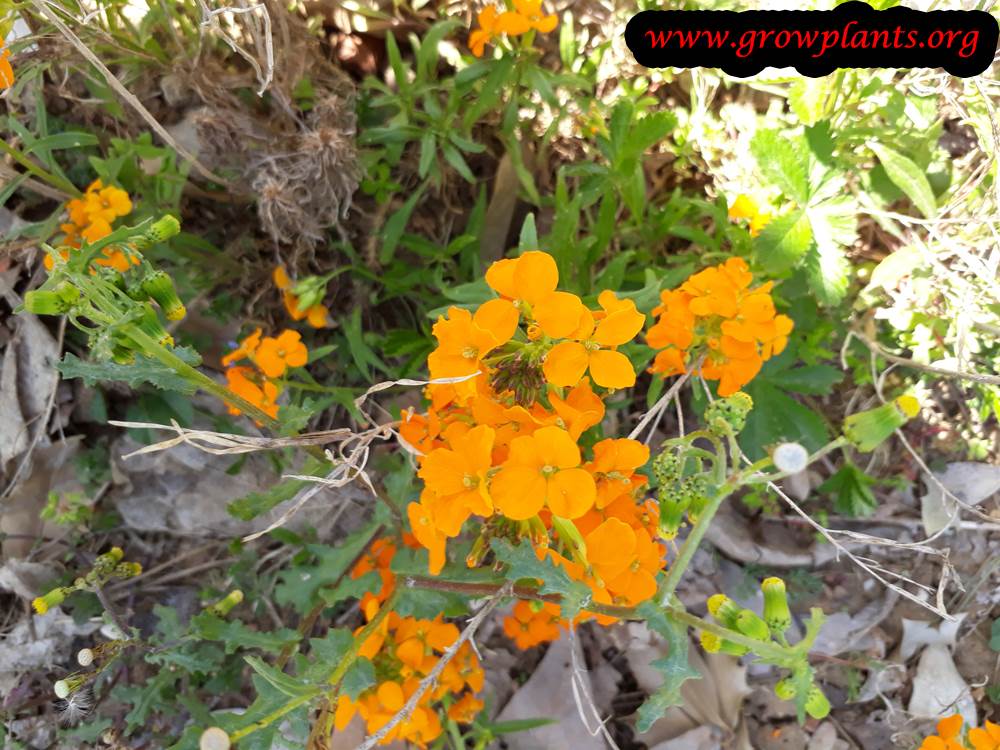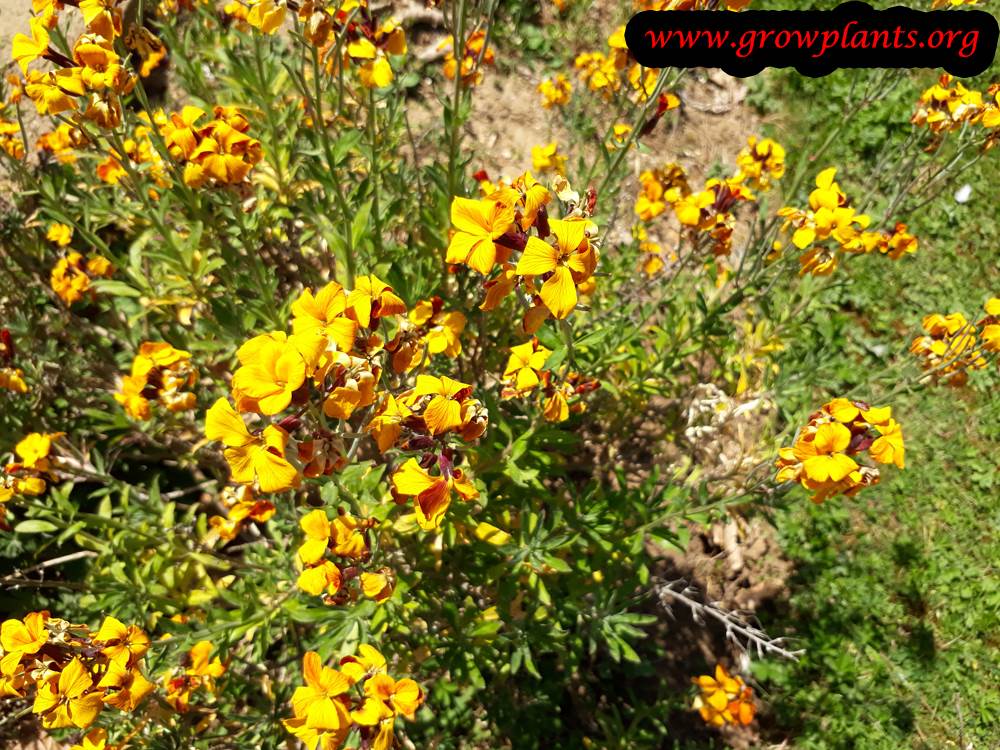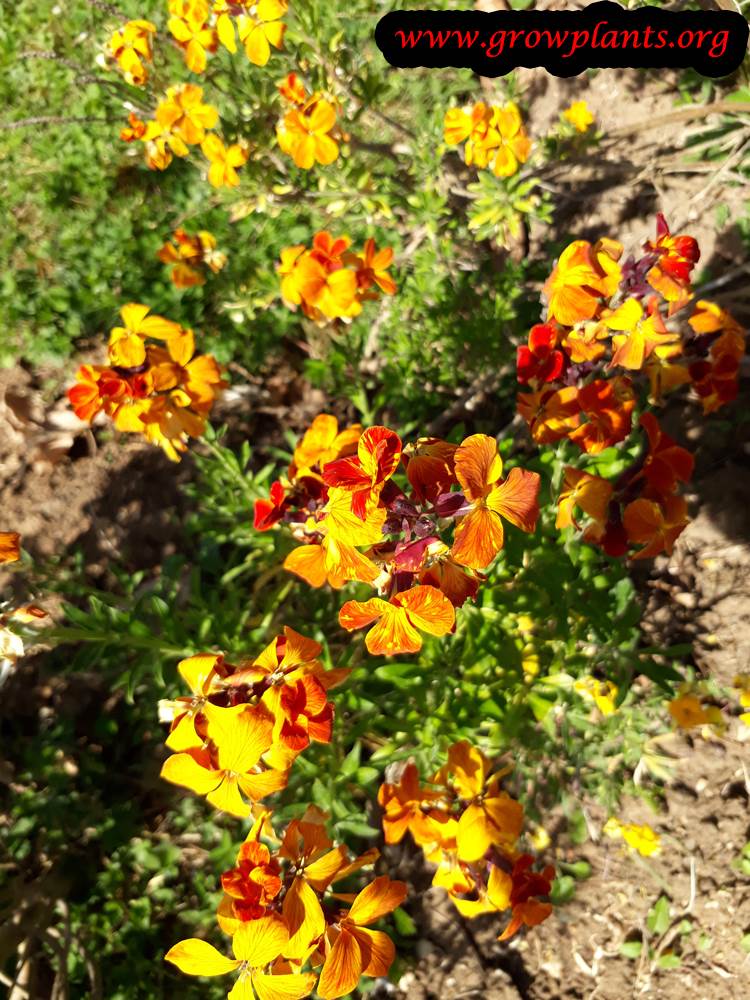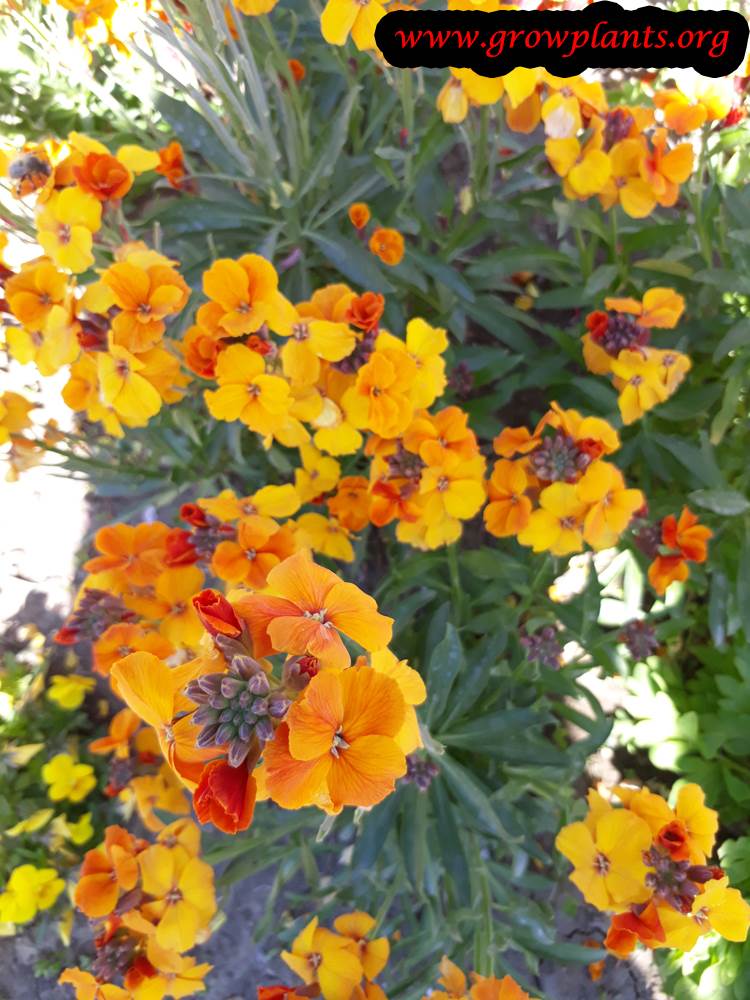
Plant Profile & Key Characteristics
Overview: An evergreen perennial subshrub (wallflower) reaching 10-40 cm, grown as an ornamental groundcover. It is prized for long-lasting, often fragrant four-petalled flowers in a wide colour range.
Quick Specifications
| Specification | Attribute |
|---|---|
| Plant Type / Life Cycle | Perennial (short-lived, woody-based subshrub) |
| Foliage Type | Evergreen |
| Mature Size | 10-40 cm (4-16 in) tall and wide |
| Growth Rate | Moderate to fast |
| Toxicity | Toxic if ingested (contains cardiac glycosides) |
| Hardiness | USDA zones 5-9 |
Growth Form & Structure
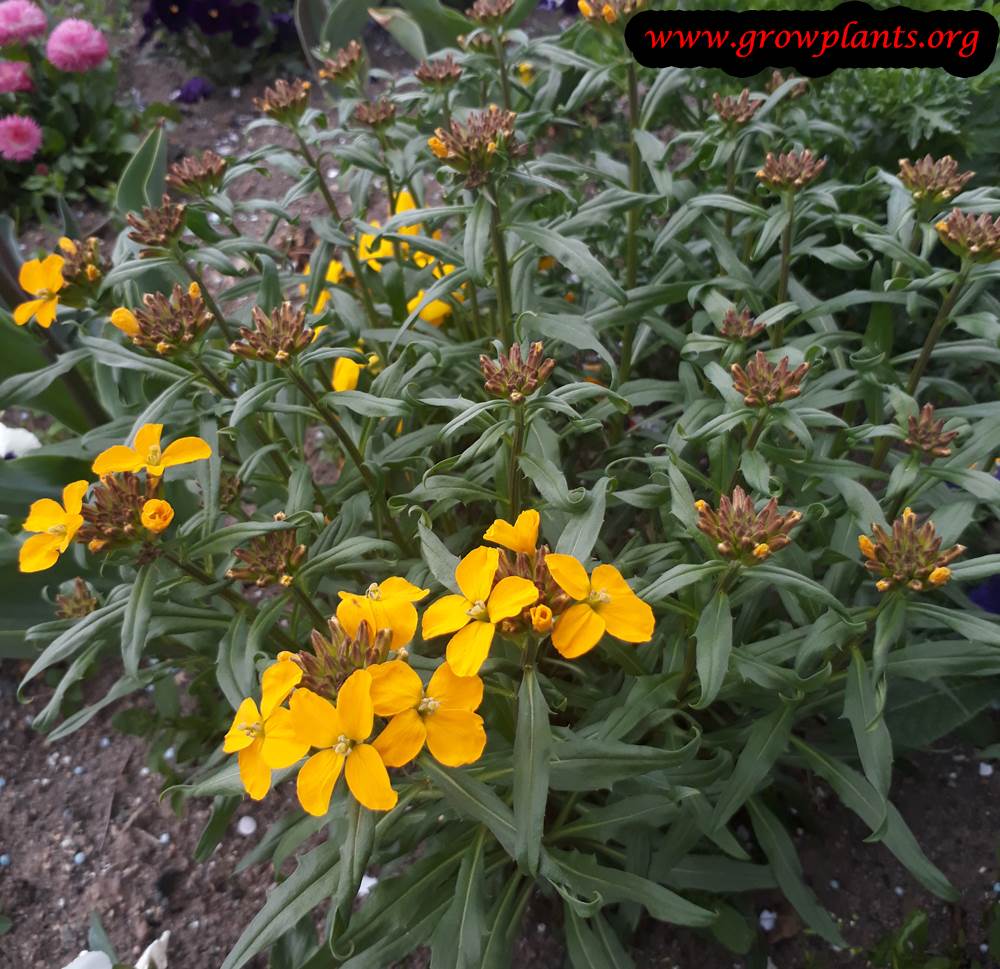
- Height & Spread: A low bushy mound 10-40 cm (4-16 in) high and wide; good for borders, walls and containers.
- Growth Habit & Form: Woody-based evergreen subshrub forming a spreading groundcover.
- Lifespan & Maturity: Short-lived perennial, quick to reach flowering size and often renewed every few years.
Anatomy & Physical Features
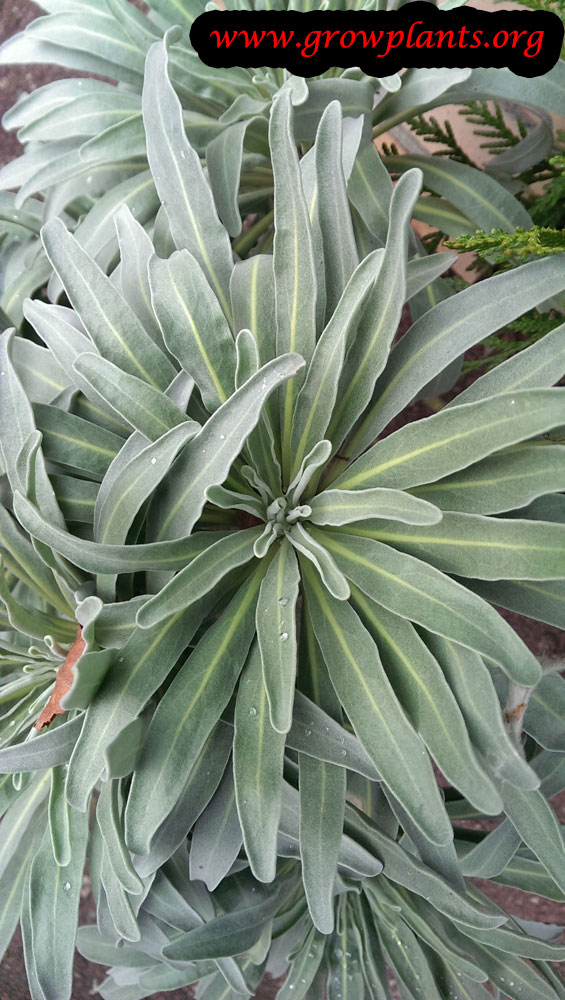
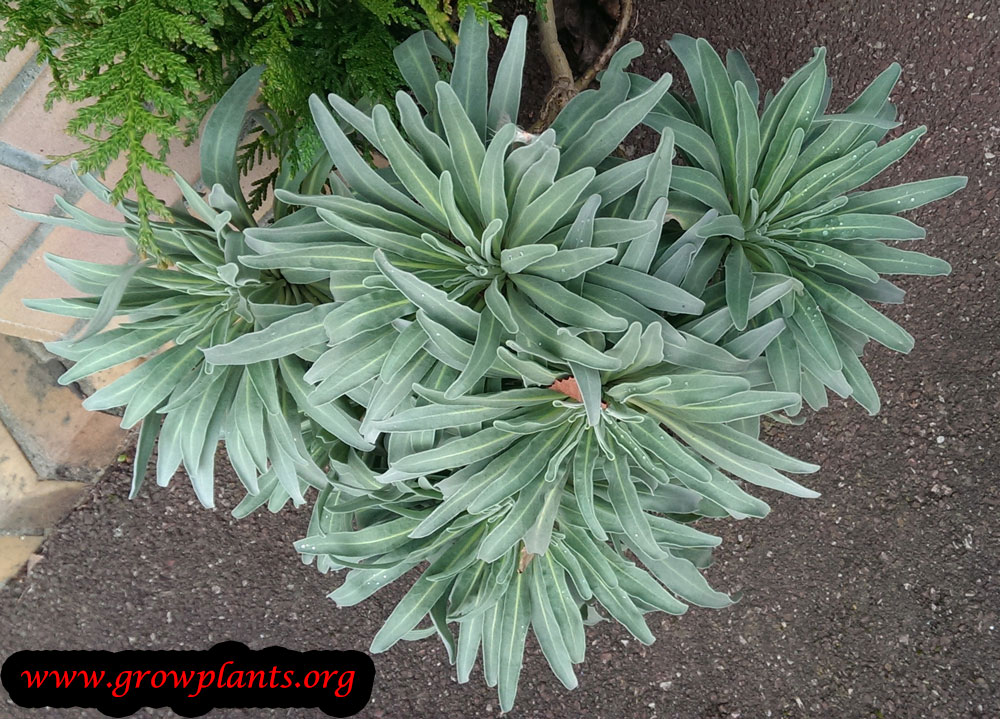
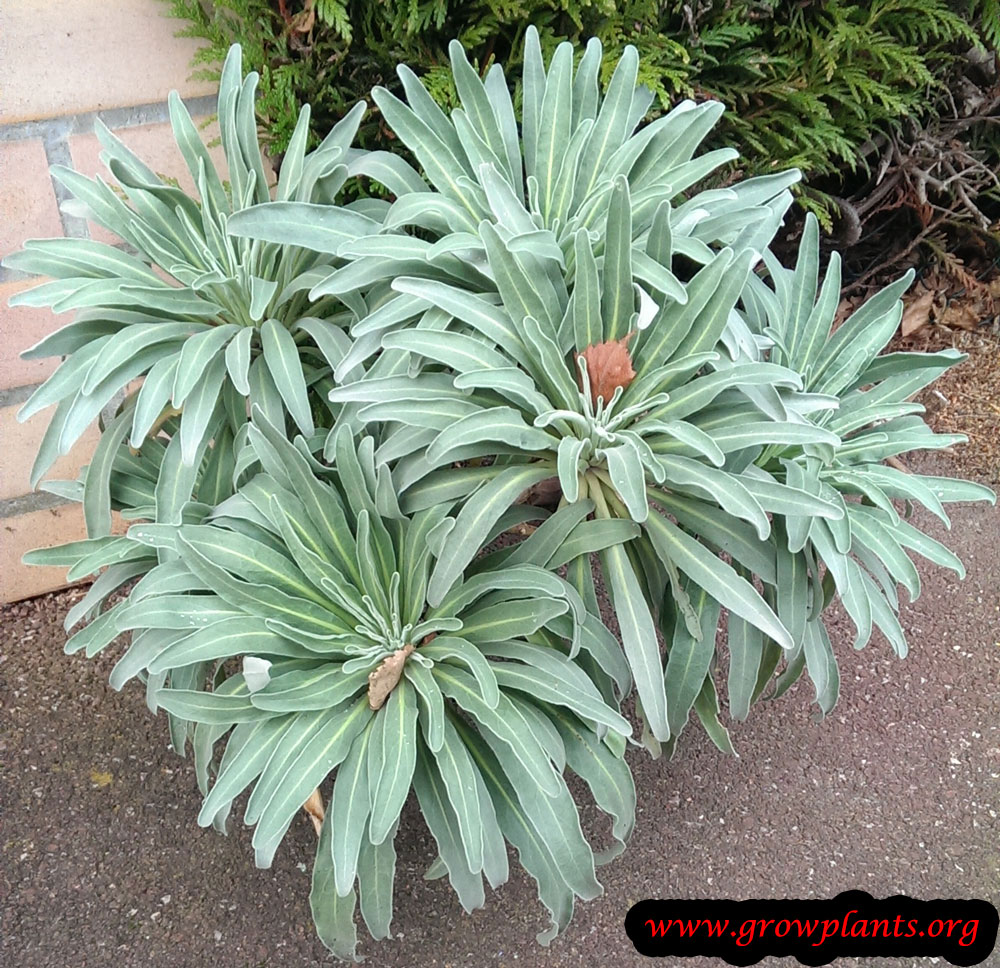
- Leaves & Foliage: Narrow linear green leaves, sometimes variegated green-and-white.
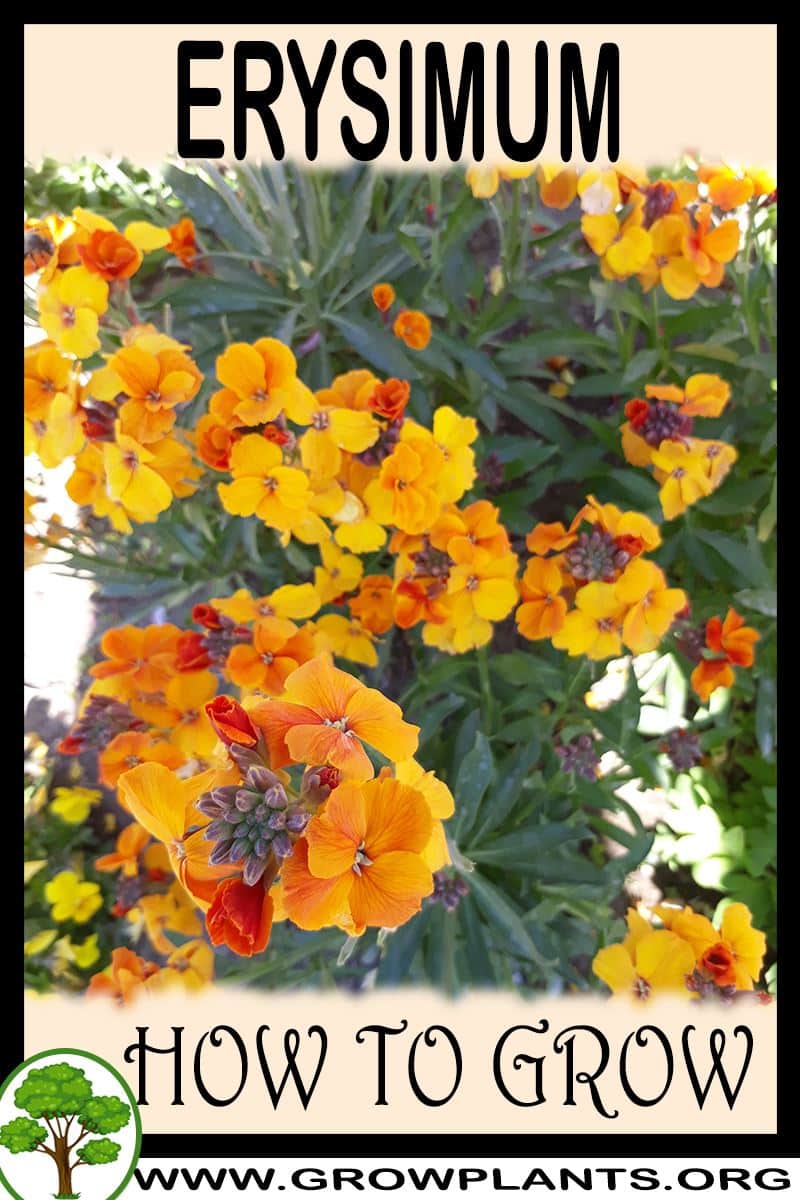
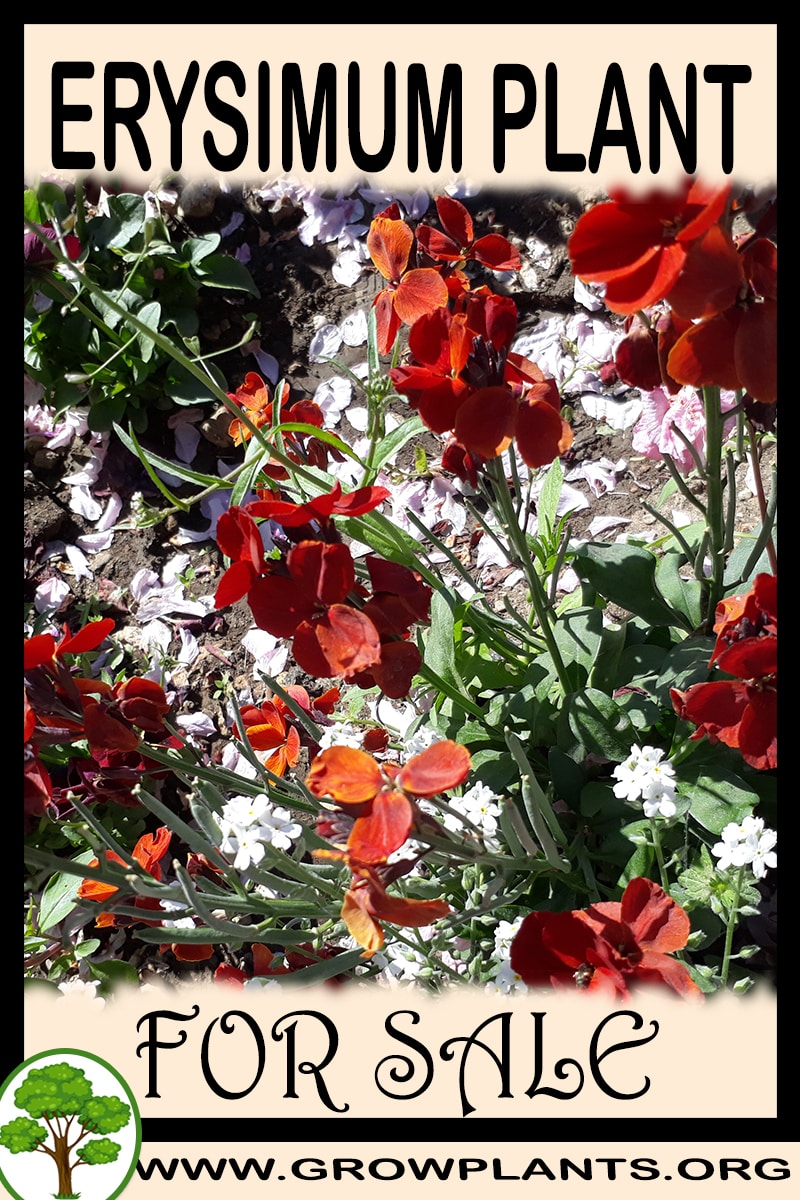
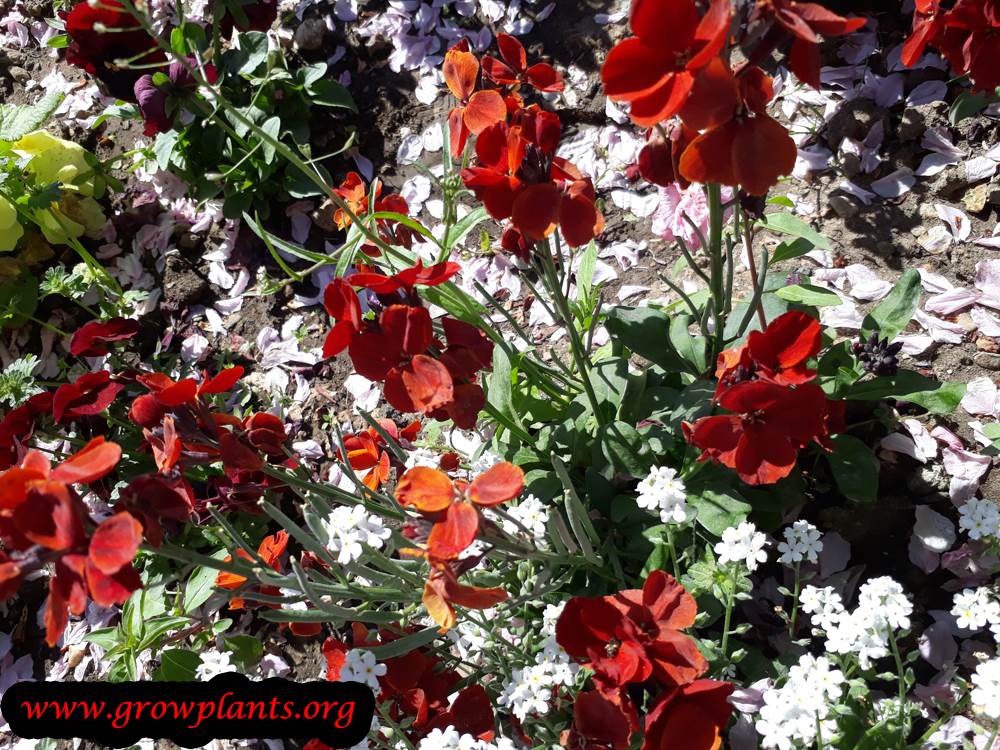
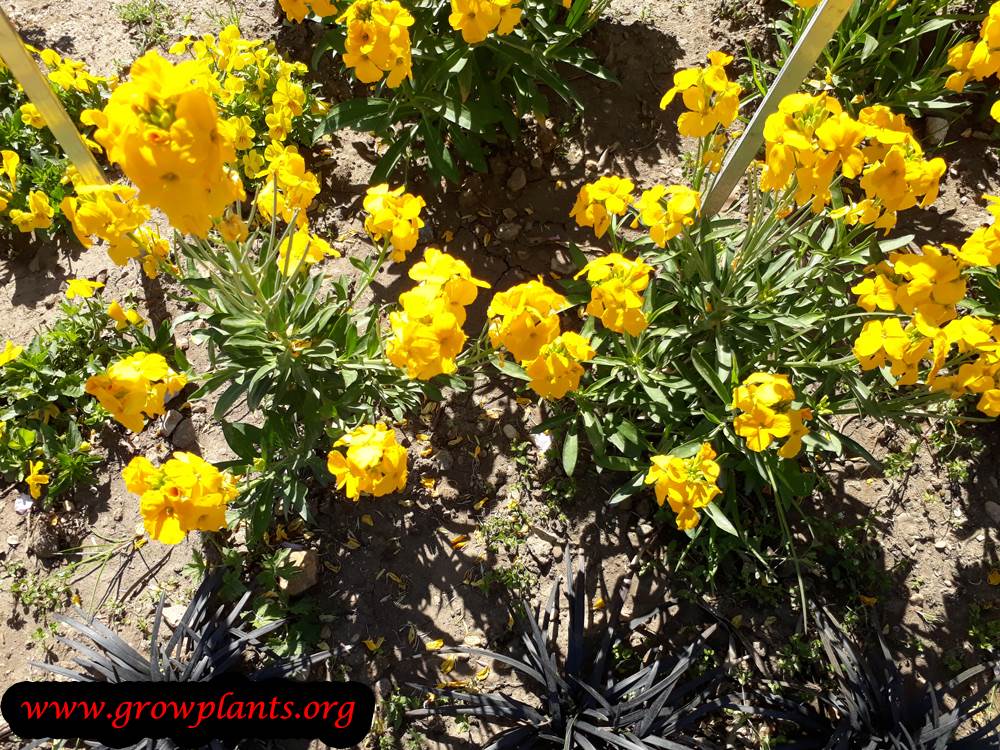
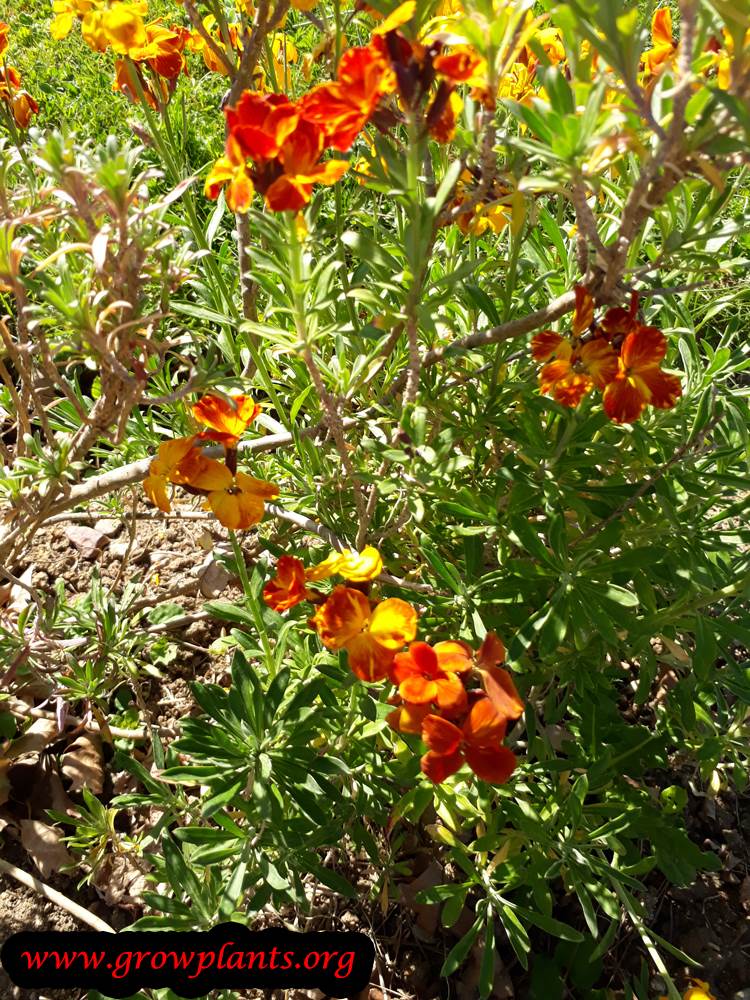
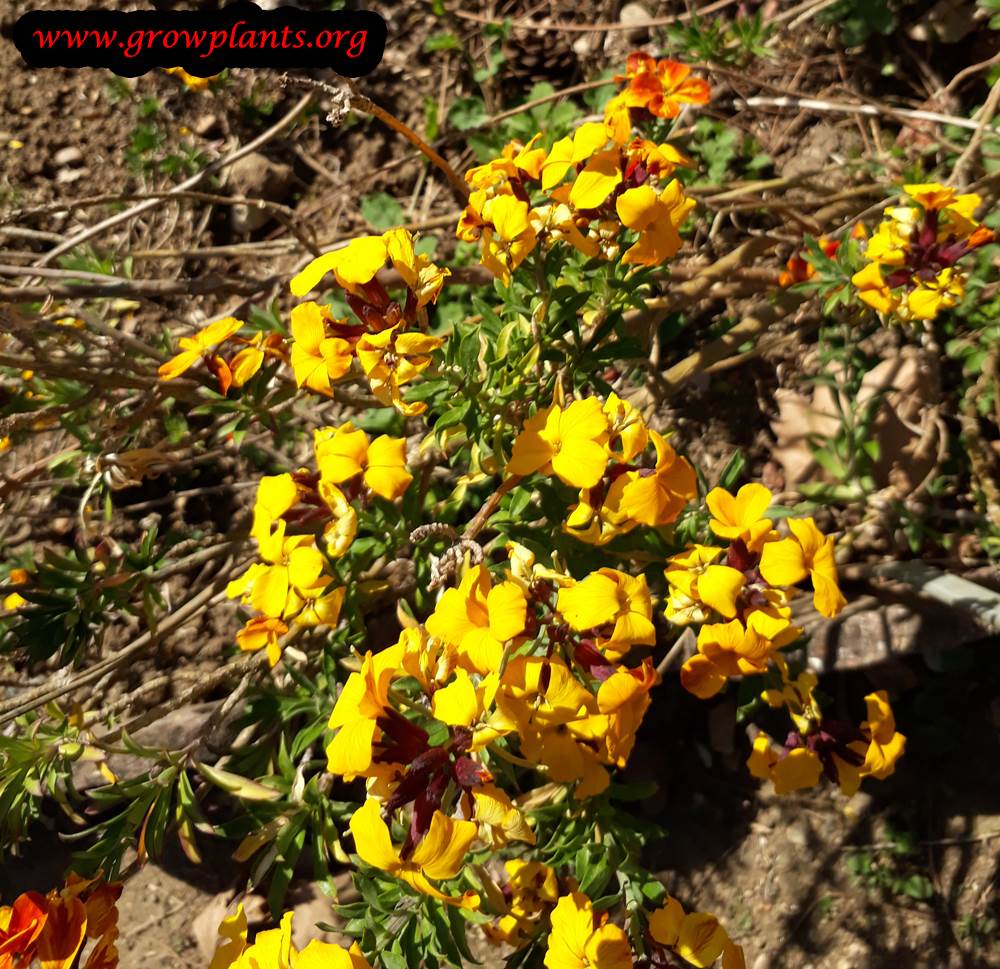
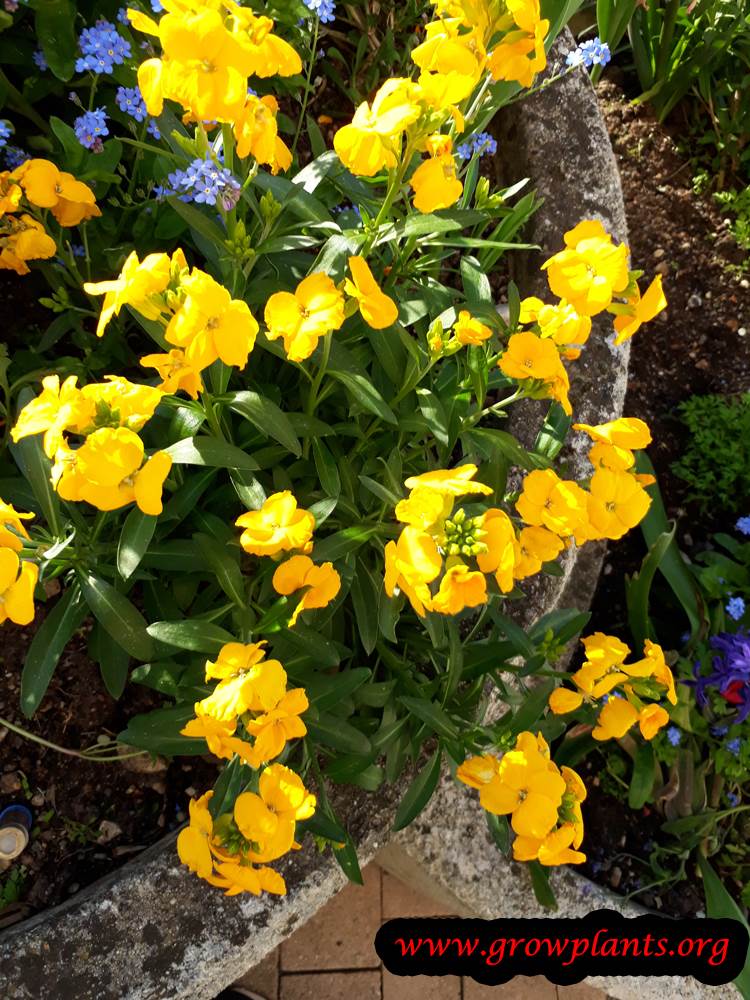
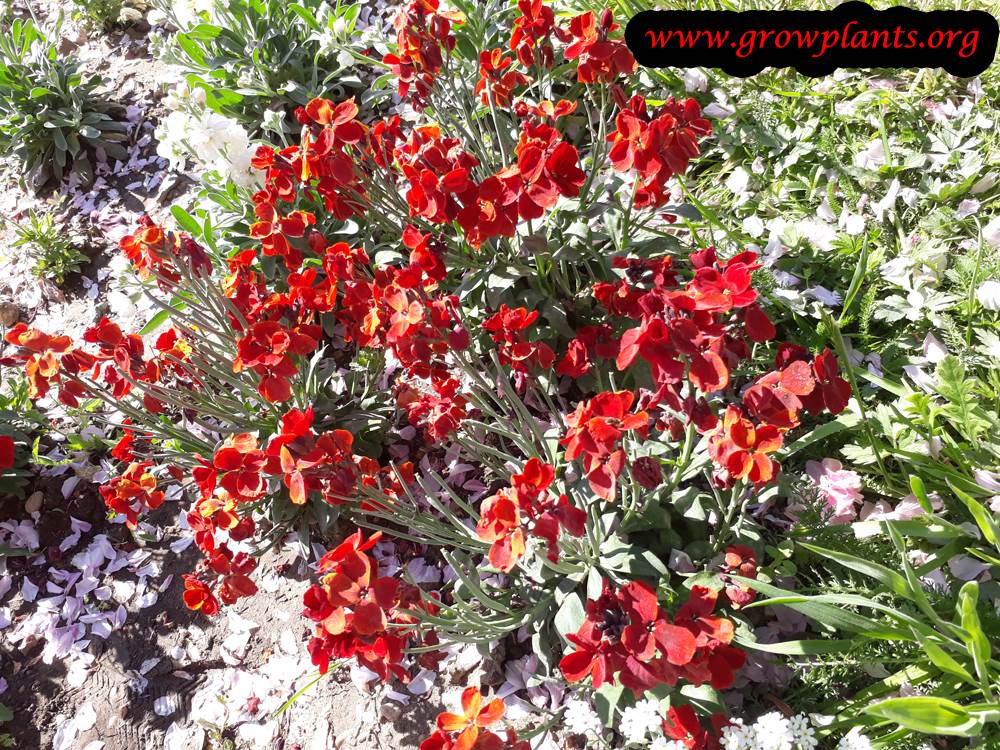
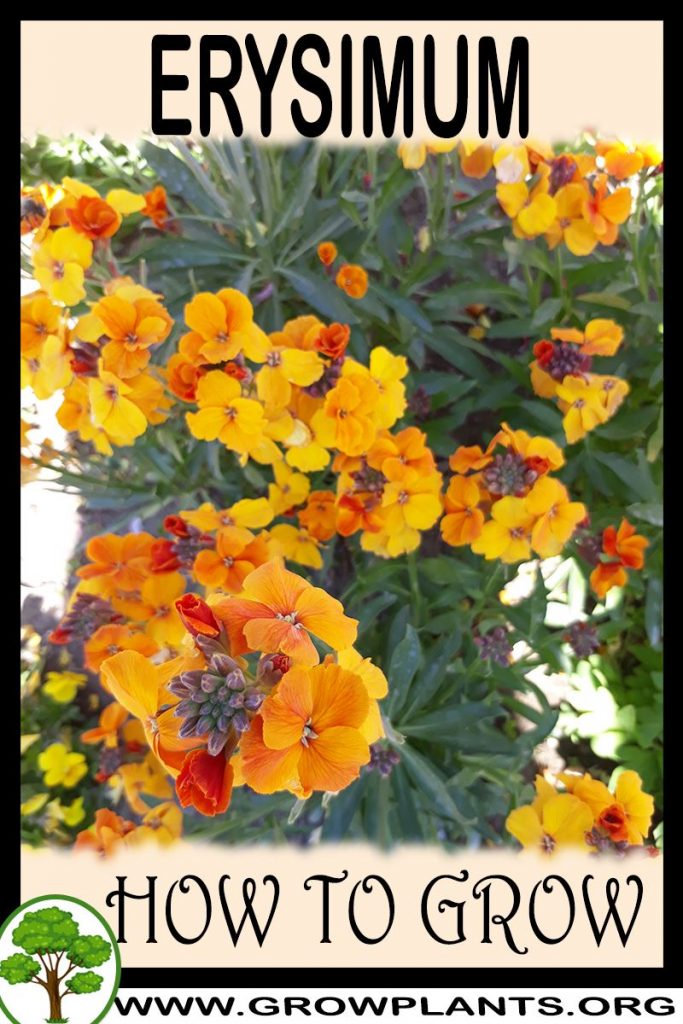
- Flower Characteristics: Four-petalled cross-shaped flowers in purple, pink, yellow, orange, red or mixes, often fragrant, in spring and summer.
Primary Uses & Landscape Value
- Functional & Ornamental Roles: Ornamental groundcover, border and container plant for walls and rockeries; flowers provide nectar for pollinators.
Care Guide: Planting, Soil & Watering
Overview: Erysimum (wallflower) is a short-lived evergreen perennial that flowers best in full sun and fertile, free-draining soil. It likes a cool winter and steady moisture through the growing season but resents waterlogging.
Quick Care Requirements
| Requirement | Ideal Condition |
|---|---|
| Planting Season | Cool season – autumn through spring |
| Growth Rate | Moderate to Fast |
| Soil Type | Fertile, moisture-retentive yet well-drained |
| Water Need | Moderate to High (dry slightly between waterings) |
Planting & Establishment
- Best Planting Season: Plant in the cooler months – autumn, winter, or early spring – so roots establish before flowering; it appreciates a cold winter.
- How to Plant:
- Hole Preparation: Dig a hole as wide as, and no deeper than, the root ball.
- Soil Amendments: Work in compost for fertility, plus grit if the soil is heavy, to improve drainage.
- Planting Depth: Set the root collar level with the soil surface.
- Growth Speed & Expectations: Moderate to fast, forming a bushy mound that flowers freely in its first or second year.
Soil, Watering & Drainage Care
- Soil Mix & Drainage Needs: Free-draining soil or a quality potting mix; good drainage is essential to avoid root rot in this short-lived plant.
- Watering Schedule & Technique:
- Young / Newly Planted: Water regularly to establish the young plant.
- Established: Water moderately, keeping the soil lightly moist but letting the surface dry slightly between waterings.
- Seasonal Adjustments: Less water in winter; more during summer heat.
Climate, Light & Hardiness
Erysimum (wallflower) is a short-lived evergreen subshrub (a wallflower) of Mediterranean, subtropical and temperate gardens, valued for fragrant, long-lasting spring flowers. It grows in full sun to half shade and, with a cold-winter preference, is hardy to about zone 5–9, doing best where summers are not oppressively hot.
Quick Climate Specifications
| Climate Zones | Mediterranean, subtropical and temperate |
| USDA Hardiness Zones | Site lists zone 5–9 |
| Optimal Temp Range | Cool to mild conditions of roughly 10–20 °C (50–68 °F) |
| Cold Damage Begins | Hardy through most winters in range; the soft newest growth can be nipped by severe cold |
| Approx. Survival Minimum | Established plants tolerate cold consistent with a zone 5 limit, roughly −23 to −29 °C (−10 to −20 °F); short-lived, and older plants weaken with age |
| Frost Tolerance | Moderate to High |
| Light Conditions | Full sun to half shade |
Sunlight & Light Exposure
Optimal Light Setup
Full sun gives compact growth and the best flowering; half shade is tolerated with looser, taller stems.
Best Exposure / Orientation
An open, sunny, well-drained bed or wall crevice suits it - wallflowers are classic for sunny walls and banks.
Temperature Extremes & Hardiness
USDA Hardiness & Regional Limits
Zone 5–9 with a cold-winter preference means it takes real frost but is naturally short-lived, often best renewed every few years from cuttings or seed.
Cold Damage & Winter Protection
Little protection is needed within its zones; sharp drainage through winter matters more than cold itself, as wet cold shortens its life.
Frost Sensitivity
Frost-tolerant across its range; only the softest new growth is at risk in severe cold.
Extreme Heat Tolerance
It prefers cool to mild conditions; prolonged hot, humid weather shortens its already brief life.
Wind, Humidity & Microclimate
Humidity Preferences
It favours drier air with good drainage over damp, humid conditions.
Microclimate Recommendations
A sunny, sharply-drained, airy position - a wall, raised bed or slope - keeps it healthiest and longest-lived.
Growing in Pots, Balconies & Indoors
Wallflowers are short-lived, sun-loving perennials grown for their fragrant spring flowers, and they do well in balcony and patio pots with sharp drainage. They are outdoor plants, not houseplants.
Quick Details
- Container Size: Small to medium – about 5-15 L (1-4 gal), general guidance
- Indoor Suitability: Not a houseplant – needs full sun and cool, fresh air
- Best Spot: Full sun to light shade
- Soil & Drainage: Free-draining, even slightly lean mix; add grit
- Watering in Pots: Keep lightly moist; they dislike sitting wet
Indoors & On the Windowsill
- Not a houseplant: The grower marks it ‘no’ – wallflowers need full sun and cool air and quickly go leggy and sparse indoors. Grow them outside.
- Hardy outdoors: They are fairly hardy and overwinter outdoors in most climates, so there is no need to bring pots under cover.
On a Balcony or Patio
- Light & wind: Give them full sun and free-draining soil; set pots near seating for the scent. Pots dry fast, so keep them lightly moist without waterlogging.
- Practicalities: Trim back after the main flush to prolong these naturally short-lived plants.
Choosing the Pot, Soil & Long-Term Care
- Pot & drainage: A 5-15 L pot with strong drainage holes; skip a standing-water saucer to avoid root rot. Terracotta breathes and dries fast, while glazed or plastic pots hold moisture longer.
- Potting mix: A free-draining mix with added grit or perlite; they prefer lean, sharp conditions.
- Feeding: Feed sparingly – lean conditions give more flowers and firmer growth.
- Repotting: Refresh the mix or pot up about every couple of years; for perennials, lightly prune the root ball and top growth at the same time.
Fertilizing & Feeding
A moderate feeder: light, steady, balanced feeding through the growing season supports both foliage and repeated bloom, tapering off as the plant rests.
Quick Fertilizing Specs
| Feeding Level | moderate |
|---|---|
| Main Nutrient Priority | Balanced nutrition with adequate nitrogen; no phosphorus spike needed for bloom |
| Best Feeding Period | Spring through the flowering season |
| Reduce/Stop Feeding | Taper and stop as the plant enters winter rest |
| Soil pH | Adaptable; most prefer near-neutral, well-drained soil |
| Organic Options | Compost or aged manure improves fertility and structure |
| Micronutrients | Usually supplied by a complete fertilizer; correct only if a deficiency appears |
Feeding by Growth Stage
Spring growth flush
Support new stems and leafy growth as the plant breaks into active growth.
| Nutrient direction | A balanced complete fertilizer with adequate nitrogen to fuel fresh shoots and foliage. |
|---|---|
| Timing | As growth resumes in spring. |
| Frequency | Light, regular feeding through the early growing season. |
| Fertilizer types | Balanced granular or liquid complete fertilizer, Compost or other organic matter worked into the soil |
| Precautions | Avoid heavy nitrogen, which pushes soft foliage at the expense of flowers. |
Bloom period
Sustain flowering without forcing excess leafy growth.
| Nutrient direction | A balanced complete fertilizer; steady nitrogen supports continued flowering rather than a phosphorus spike. |
|---|---|
| Timing | Through the flowering season. |
| Frequency | Light, steady feeding while the plant is in bloom. |
| Fertilizer types | Balanced liquid or granular complete fertilizer |
| Precautions | High-phosphorus bloom-booster products are unneeded; balanced feeding drives bloom. |
Repeat bloom cycles
Keep energy available for successive flushes of flowers.
| Nutrient direction | Continue balanced feeding to replace nutrients used by each flush. |
|---|---|
| Timing | Between and during successive bloom flushes in the warm months. |
| Frequency | Light feeding maintained across the extended bloom period. |
| Fertilizer types | Balanced complete fertilizer |
| Precautions | Keep feeding light and even; avoid heavy doses that favor foliage over flowers. |
Dormancy or winter rest
Let the plant rest; growth and nutrient demand fall away.
| Nutrient direction | None – withhold fertilizer while the plant is resting. |
|---|---|
| Timing | During cold-season dormancy or the rest period after flowering. |
| Frequency | No feeding at this stage. |
| Fertilizer types | No feeding at this stage while the plant is dormant. |
| Precautions | Do not fertilize until active growth resumes in spring. |
Nutrient Deficiency Signs & Corrections
Older, lower leaves turn pale or yellow and growth slows.
| Possible causes | Low soil nitrogen, Nitrogen leached by frequent watering, especially in containers, Cold or waterlogged soil limiting root uptake |
|---|---|
| Appears first on | Older, lower leaves |
| What to check | Recent feeding history, Soil drainage and moisture, Whether overall growth has stalled |
| Possible correction | Apply a balanced complete fertilizer and correct any drainage problem, then resume light regular feeding. |
New leaves yellow between green veins.
| Possible causes | High soil pH reducing iron availability, Waterlogged or cold roots, A genuine iron shortage |
|---|---|
| Appears first on | New, young leaves |
| What to check | Soil pH, Drainage, Whether only new growth is affected |
| Possible correction | Correct soil pH and drainage; if it persists, apply a chelated iron product per its label. |
Leaf margins brown and scorch, often on container plants.
| Possible causes | Fertilizer salt buildup in the pot, Drought stress between waterings, Overfeeding |
|---|---|
| Appears first on | Leaf tips and margins |
| What to check | Feeding rate, Salt crust on soil or pot, Watering consistency |
| Possible correction | Flush the container thoroughly with clean water and reduce the feeding rate. |
Pruning, Training & Seasonal Maintenance
Wallflowers (Erysimum) are short-lived perennials and small subshrubs of 10–40 cm that flower over a long spring and summer season on new growth. Pruning has two modest jobs: deadheading spent spikes to keep the flowers coming and stop the plant setting seed, and a light shear after the main flush to keep it compact and delay the legginess these plants are prone to.
The key limitation is that perennial wallflowers become woody and are naturally short-lived; they do not reshoot from bare old wood, so hard cutting is counterproductive. The sensible strategy is light trimming plus taking cuttings to replace the plant every few years, rather than trying to rejuvenate an old, woody specimen.
Quick Pruning & Maintenance Specs
| Pruning Tolerance | Low–Moderate — light trimming only; dislikes hard cuts into old wood |
| Primary Pruning Window | After the main spring / early-summer flush |
| Secondary Maintenance Window | Deadheading through the flowering season |
| Typical Frequency | Regular deadheading plus one or two light trims |
| Main Objective | Prolong bloom, keep it compact, delay woodiness |
| Young Plant Priority | Pinch tips for a bushy, well-branched plant |
| Mature Plant Priority | Light shear after the flush; take cuttings as insurance |
| Best Tool Type | Precision snips and light shears or secateurs |
| Avoid Heavy Pruning During | Any hard cut into leafless old wood; going into winter cold |
Pruning by Plant Age & Size
Newly Established
Pinch the tips of a young plant to encourage branching into a bushy, well-furnished shape.
Young / Formative
There is no framework to train — keep it bushy by pinching and light trimming. A well-branched young plant stays fuller and delays the leggy, woody habit that shortens its life.
Mature / Established
Shear lightly after the main flush to tidy and hold the shape, staying in leafy growth. Because the plant is short-lived and woody at the base, plan to replace it from cuttings every couple of years rather than attempting to cut an old plant back hard.
Seasonal Pruning Schedule
Through flowering (spring–summer): deadhead spent spikes regularly to keep new flowers coming and to stop the plant exhausting itself into seed. After the main flush (primary trim): shear lightly to tidy the plant and keep it compact, always cutting into leafy growth, not into bare wood; this can prompt a later, lighter flush. Avoid trimming so late that soft new growth meets winter cold.
Flowering & Fruiting Wood
Bloom is carried on new-season growth over a long period, so deadheading and a light post-flush trim keep the plant producing fresh flowering shoots and prevent it running to seed and declining. Hard cutting into old wood will not force useful new growth — the flowering response comes from light trimming of green growth, not from severe pruning.
Structural Pruning & Training
It is a small mounded subshrub with no scaffold to select. Control legginess by pinching and light shearing of green growth; genuine renewal comes from propagating a replacement, not from structural pruning of the ageing woody base.
Special Growth to Remove
Deadhead spent flower spikes throughout the season, and remove any dead or badly leggy stems — while remembering that the plant will not readily break from the bare wood left behind, which is another reason to keep replacements coming from cuttings.
Container & Small-Space Pruning
It grows well in pots, where pinching and a light post-flush shear keep it neat. Treat a container plant as short-lived in the same way, refreshing it from cuttings rather than relying on hard cutting back to renew it.
Tools
Precision snips handle deadheading and tip work, and light bypass secateurs or shears make the post-flush trim. The stems are soft and small, so loppers and a saw have no role.
Tool Hygiene & Disease Risk
Routine. Aphids are the recorded pest, not a tool-borne disease, so clean, sharp blades are enough; the plant is poisonous, so wash your hands after handling and keep cuttings away from where they might be eaten.
Cut Placement & Technique
Deadhead just below each spent flower spike, and make the post-flush trim as a light heading cut into leafy growth above the old wood. Do not cut down into bare, leafless stems expecting them to reshoot.
Heavy Pruning & Rejuvenation
Not reliably tolerated. Cutting hard into old, bare stems seldom produces new growth, and because the plant is short-lived it is better renewed by cuttings than by any attempt at hard rejuvenation. Keep it youthful with light trimming and plan replacements rather than cutting an old plant to the ground.
Post-Pruning Care
Water after trimming in warm, dry weather to support regrowth, keeping the soil moist but well drained; no special feeding is prompted by the light trim. Wash your hands, as the plant is poisonous.
Common Pruning Mistakes
- Cutting hard into old woody stems and expecting regrowth.
- Not deadheading, so the plant sets seed and declines quickly.
- Never pinching or trimming, letting it grow leggy and short-lived.
When NOT to Prune
Do not cut into leafless old wood, do not hard-prune a stressed or ageing short-lived plant, and avoid trimming late enough that soft growth is caught by winter cold.
Recommended Tools (by task)
- precision_snips — for regular deadheading and tip-pinching.
- bypass_secateurs — for the light shear-back after the main flowering flush.
Pruning Troubleshooting
| Problem | Possible Cause | What to Check | Corrective Action |
| Leggy, sparse, woody at the base | Not pinched or trimmed; ageing short-lived plant | Age of the plant and pinching history | Trim lightly after the flush and raise replacements from cuttings |
| Bloom stops early | Not deadheaded; plant has run to seed | Spent spikes left on the plant | Deadhead regularly to keep new flowers coming |
| No regrowth after cutting | Cut fell into old leafless wood | Where the cuts landed on the stems | Keep cuts in green growth and propagate to replace the plant |
Propagation Guide
Perennial wallflowers are usually propagated from soft or semi-ripe tip cuttings, because many popular perennial forms (such as sterile clones like ‘Bowles’s Mauve’) set little or no viable seed and will not come true. Species and short-lived types are easily raised from seed, making the genus overall easy to propagate.
Quick Propagation Specs
| Best Propagation Method | Soft / semi-ripe stem cuttings |
| Alternative Methods | Seed (species and short-lived perennials) |
| Propagation Difficulty | Easy |
| Seed True-to-Type | Cultivar-dependent – many named perennials are sterile or variable; species come fairly true |
| Vegetative True-to-Type | Yes |
| Best Propagation Season | Cuttings late summer; seed late spring to summer |
| Seed Germination Time | Typically 1–2 weeks |
| Cutting Rooting Time | A few weeks |
| Germination Temperature | 13–18°C (55–64°F) |
| Seed Sowing Depth | Lightly cover |
Growing from Seed
Seed Handling & Viability
Use seed for the species and short-lived perennial types; named perennial selections rarely come true and are better taken as cuttings. All parts are reported toxic if eaten, so keep seed and trimmings away from children and pets.
Sowing Season
Sow from late spring into summer to raise plants for the following flowering season.
Sowing Depth & Germination
Cover lightly and keep moist at about 13–18°C (55–64°F); germination is usually within 1–2 weeks. Prick out and grow on in well-drained soil.
Stem Cuttings
Cutting Type & Timing
Take non-flowering shoot tips about 7–10 cm long in late summer; this is the essential method for keeping named clones.
Rooting Setup & Hormone
Insert in a free-draining, gritty medium in bright shade; rooting hormone is optional. Roots form within a few weeks.
Aftercare
Overwinter young plants with frost protection before planting out, in keeping with the plant’s need for a cool winter and moist soil.
Bloom & Flower Guide
Quick Details
- Bloom Season: Spring to summer, and near year-round in mild climates for perennial types
- Time to First Bloom: On established plants; can flower in the first season if started early
- Flower Appearance: Four-petalled, cross-shaped flowers in short spikes, in purple, pink, yellow, orange, red, white, brown or bicolours
- Edibility: Ornamental only; wallflowers contain cardiac glycosides and should not be eaten
Detailed Blooming Overview
Wallflowers (Erysimum) are free-flowering and often sweetly fragrant, blooming over a long season. They are a classic cottage-garden and rockery plant, but they belong on display, not on the plate.
Flower Characteristics
- Four-petalled “cross” flowers, typical of the cabbage family, in clustered spikes that open over weeks in a broad colour range.
- Many are scented and shift colour as they age.
Bloom Care & Thinning
- Encouraging bloom: Full sun, lean well-drained soil and deadheading keep the flowers coming; a light trim after the main flush renews the plant.
- Pollination: Nectar and scent draw bees and butterflies.
- Safety: The plant contains cardiac glycosides, so enjoy the flowers for their display and do not eat them.
Pests, Diseases & Troubleshooting
Overview: Wallflower (Erysimum) is a member of the cabbage family, so despite its ornamental role it shares brassica pests – flea beetles, mealy cabbage aphid and caterpillars – and is notably prone to clubroot, the classic wallflower disease. Plants are short-lived and best grown hard in well-drained, limed soil and replaced once they turn woody, rather than nursed through decline.
Quick Troubleshooting Overview
| Issue / Pest | Main Symptom | Primary Solution |
|---|---|---|
| Clubroot | Stunting and wilting with swollen, distorted roots | Lime soil toward neutral, rotate, use clean stock, improve drainage |
| Flea beetle | Shot-holes on young leaves | Row cover on young plants, keep vigorous, mulch |
| Mealy cabbage aphid | Grey-waxy colonies distorting growing tips | Hose off, insecticidal soap, beneficials |
| Caterpillars | Chewed leaves and frass | Handpick, Bt spray, row cover |
| Downy / powdery mildew | Leaf blotching or white powdery coating | Airflow, spacing, sulfur if needed |
| Wet-soil rot | Blackening at the base and collapse | Sharp drainage, avoid overwatering woody plants |
Common Pests & Management
- Flea beetles (Phyllotreta spp.):
- Symptoms: Tiny jumping beetles pit young leaves with numerous small shot-holes, worst on new plantings in warm dry spells; established wallflowers shrug off light damage.
- Prevention & Control: Protect young plants with insect mesh, keep them growing strongly, mulch to conserve moisture, and rotate away from brassicas; mature plantings rarely need treatment.
- Mealy cabbage aphid (Brevicoryne brassicae):
- Symptoms: Grey, mealy-waxed aphid colonies pack the growing tips and leaf undersides, curling and stunting new growth and fouling it with honeydew and sooty mould; green peach aphid also occurs.
- Prevention & Control: Dislodge with water, encourage and protect ladybirds, hoverflies and parasitic wasps, and use insecticidal soap or neem on stubborn colonies; remove badly infested tips.
- Cabbage white caterpillars (Pieris rapae / Pieris brassicae):
- Symptoms: Green caterpillars chew leaves and leave green frass, sometimes reducing plants to ribs on heavily attacked wallflowers.
- Prevention & Control: Handpick eggs and larvae, exclude butterflies with mesh where practical, and spray Bt, which is selective and effective on caterpillars while sparing beneficials.
- Diamondback moth (Plutella xylostella):
- Symptoms: Small green larvae graze the leaf underside making pale windows and fine holes, wriggling backwards when touched.
- Prevention & Control: Bt or spinosad controls larvae, mesh excludes the moths, and removing brassica debris and volunteers cuts the fast-breeding population.
- Cabbage whitefly (Aleyrodes proletella):
- Symptoms: Tiny white flies rise in clouds when foliage is disturbed; nymphs on leaf undersides suck sap and excrete honeydew that blackens with sooty mould.
- Prevention & Control: Tolerate light populations, hose off, use yellow sticky traps and insecticidal soap or neem, and clear old brassica debris where the flies overwinter.
Diseases & Fungal Issues
- Clubroot (Plasmodiophora brassicae):
- Symptoms: The signature wallflower disease: plants are stunted and wilt in warm weather, leaves yellow and redden, and the roots are grotesquely swollen and distorted; a persistent soil pathogen worst in acid, wet ground.
- Treatment & Management: Rotate strictly away from all brassicas (including stocks and ornamental cabbages), lime the soil toward neutral or slightly alkaline, improve drainage, and use only clean, container-raised plants; the resting spores persist for many years, so avoid ever introducing it.
- Downy mildew (Hyaloperonospora parasitica):
- Symptoms: Yellow angular patches on the upper leaf with grey mould beneath in humid conditions, disfiguring foliage and weakening seedlings.
- Treatment & Management: Space plants for airflow, water early in the day, remove infected leaves and debris, and rotate; good culture usually controls it without fungicide.
- White blister / white rust (Albugo candida):
- Symptoms: Shiny white pustules on leaf undersides with distortion of leaves and flower stems.
- Treatment & Management: Remove and destroy infected material, rotate, avoid overhead watering, and improve spacing and airflow.
- Verticillium wilt & leafy gall (Verticillium / Rhodococcus fascians):
- Symptoms: Wilting and one-sided dieback (wilt) or a mass of distorted, fasciated shoots at the base (leafy gall) on affected plants.
- Treatment & Management: Remove and destroy affected plants, do not compost them, use clean stock and fresh soil, and rotate; there is no chemical cure for either problem.
Growing Difficulties & Abiotic Problems
- Short-lived legginess:
- Cause & Symptoms: Wallflowers are naturally short-lived and become woody, sparse and bare at the base after a year or two, flowering less.
- Correction Strategy: Treat them as short-term plants, grow hard in lean soil for compact growth, trim lightly after flowering, and replace with fresh young plants rather than nursing old woody specimens.
- Winter-wet root rot:
- Cause & Symptoms: Heavy, waterlogged soil in winter rots the roots and crowns of these Mediterranean-adapted plants even where they tolerate the cold.
- Correction Strategy: Plant in well-drained soil or raised beds, add grit to heavy ground, avoid overwatering, and give a sunny, airy position that dries out between rains.
- Poor flowering from rich soil:
- Cause & Symptoms: Over-rich, over-fed soil drives lush leafy growth at the expense of the scented flowers.
- Correction Strategy: Grow in lean, well-drained, ideally limy soil in full sun; avoid high-nitrogen feeding, which promotes foliage over the flowers wallflowers are grown for.
What Helps – Products & Tools
Wallflower care leans on culture: lime to raise pH against clubroot, insect mesh / row cover (flea beetle, caterpillars, whitefly), Bt and spinosad (caterpillars), insecticidal soap or neem (aphids, whitefly), and sulfur or potassium bicarbonate for mildew. Good drainage, crop rotation and simply replacing short-lived plants prevent most trouble. As a genus, wallflowers are all brassicas – assume clubroot risk and treat every species the same way.