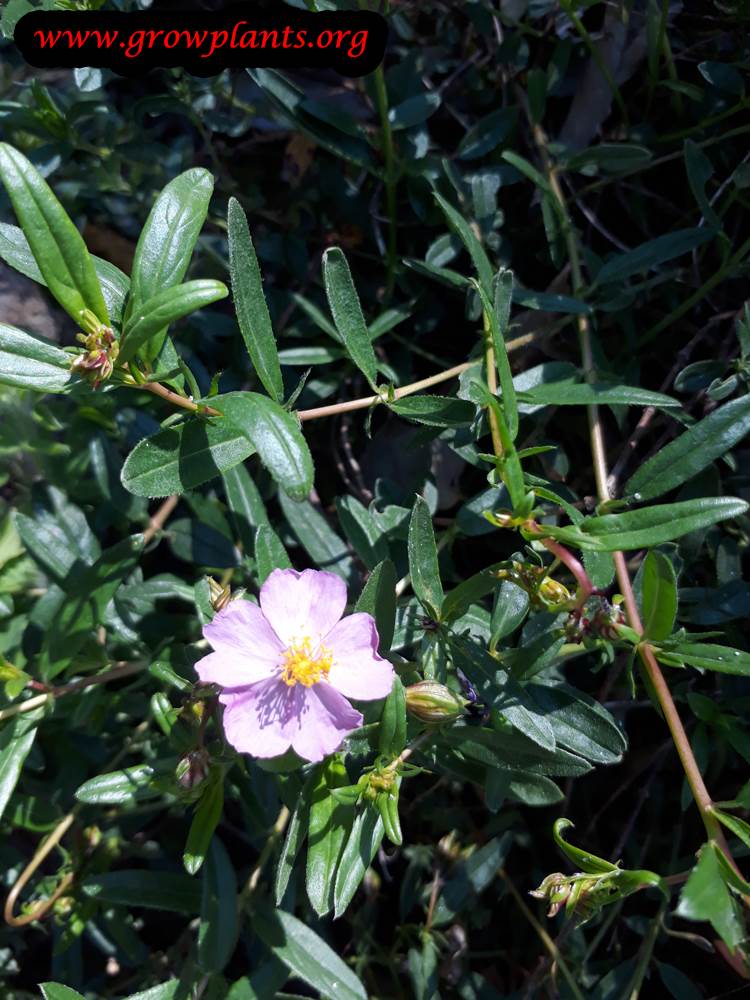

Plant Profile & Key Characteristics
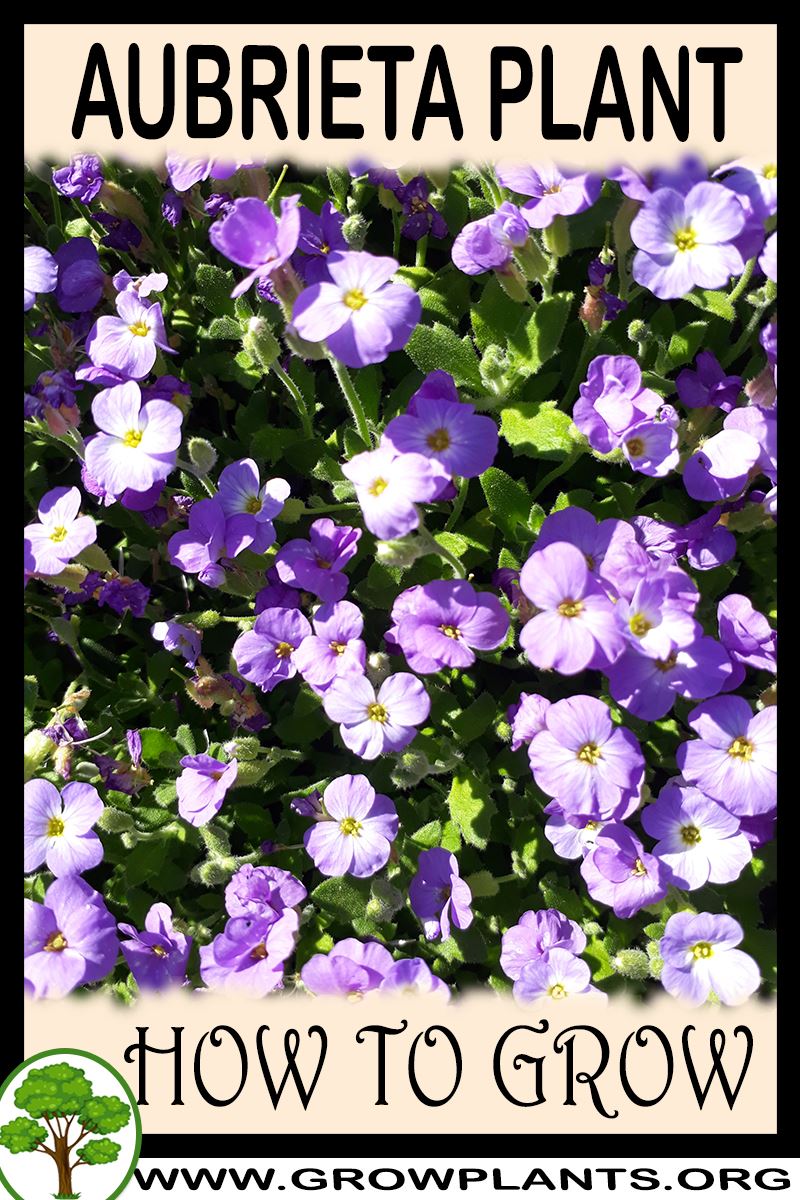
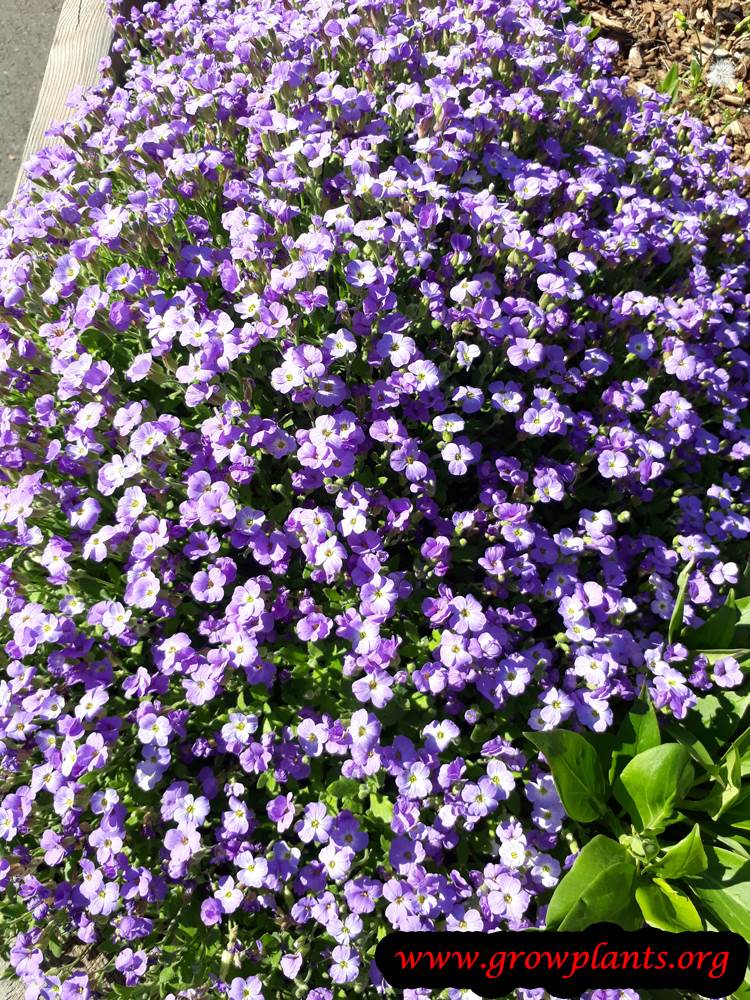
Overview: Aubrieta (rock cress) is a low evergreen (or warm-climate annual) subshrub only about 5 cm (2 in) tall but spreading widely into mats. It is grown as an ornamental groundcover, prized for its dense spring flower display.
Quick Specifications
| Specification | Attribute |
|---|---|
| Plant Type / Life Cycle | Perennial (evergreen; annual in warm climates) |
| Foliage Type | Evergreen |
| Mature Size | About 5 cm tall (2 in), spreading wide |
| Growth Rate | Fast to moderate |
| Root System | Fibrous, shallow, mat-forming |
| Toxicity | Non-toxic |
| Hardiness | USDA zones 4-10a (perennial); 10b-12 (annual) |
Growth Form & Structure
- Height & Spread: Only about 5 cm (2 in) tall but spreading as wide as space allows into a dense mat; good in containers, walls and rockeries.
- Growth Habit & Form: Low mat-forming spreading subshrub / groundcover.
- Lifespan & Maturity: Short-lived perennial, often refreshed after a few years; grown as an annual in warm climates.
Anatomy & Physical Features
- Leaves & Foliage: Small green (or green-and-white variegated) elliptic leaves with serrated edges.
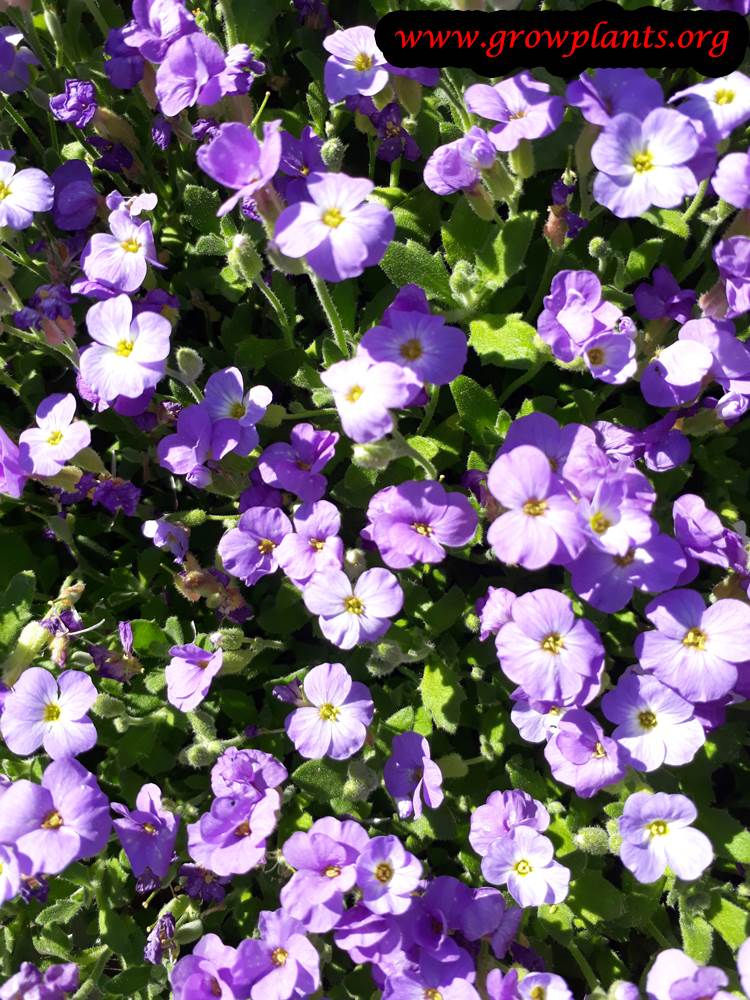
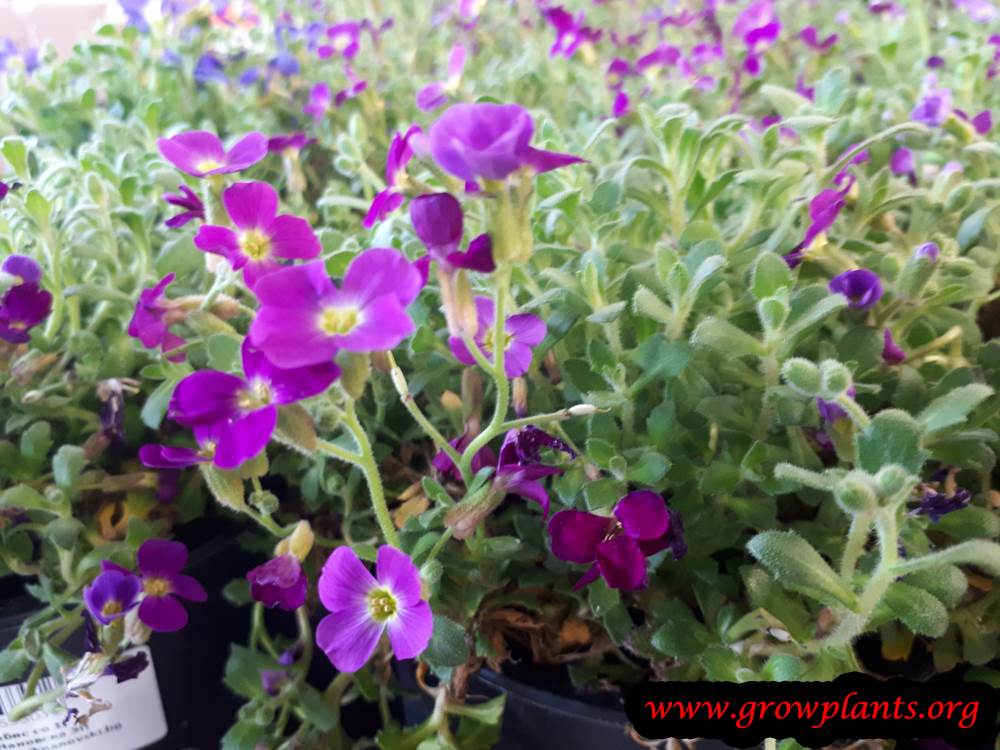
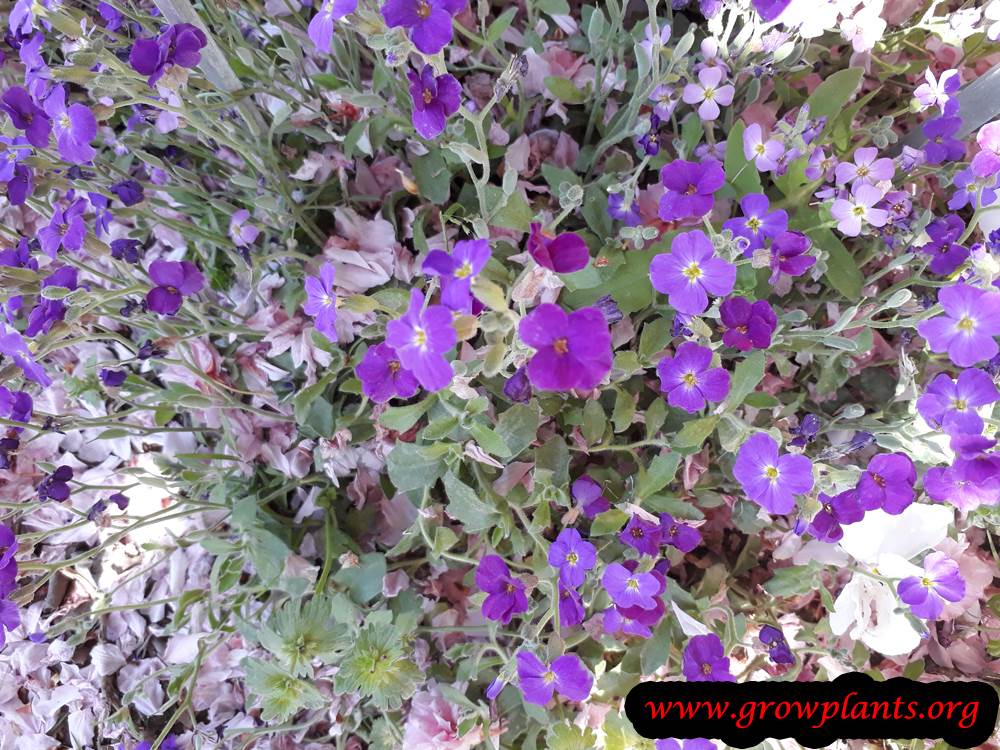
- Flower Characteristics: Massed four-petalled flowers in purple, yellow, red, bordeaux, pink or white (see Bloom guide).
Primary Uses & Landscape Value
- Functional & Ornamental Roles: Ornamental groundcover for rock gardens, walls, edging and containers.
Care Guide: Planting, Soil & Watering
Overview: Aubrieta (rock cress) is a low, spreading evergreen ground cover (hardiness zone 4–10a) for full sun to part shade. It thrives in gritty, well-drained, rich soil – classic rock-garden conditions – with moderate watering.
Quick Care Requirements
| Requirement | Ideal Condition |
|---|---|
| Planting Season | Spring, summer or autumn |
| Growth Rate | Moderate to fast |
| Soil Type | Gritty, rich, very well-drained (rock-garden soil) |
| Water Need | Moderate |
Planting & Establishment
- Best Planting Season: Plant in spring, summer or autumn.
- How to Plant:
- Hole Preparation: Dig a hole about the width of the root ball in gritty, free-draining ground, giving it room without crowding competitors.
- Soil Amendments: Work in some organic matter for richness together with grit for drainage; it dislikes competition, so clear neighbouring roots.
- Planting Depth: Set the crown at soil level so the low mat can spread outward.
- Growth Speed & Expectations: Growth is moderate to fast, forming a low 5 cm mat that spreads as wide as space allows.
Soil, Watering & Drainage Care
- Soil Mix & Drainage Needs: Sharp drainage is key – it thrives among rocks and rots in heavy, wet soil. It grows well in containers and wall crevices with free-draining mix.
- Watering Schedule & Technique:
- Young / Newly Planted: Keep newly planted mats moist while they root in.
- Established: Once established, water moderately; it tolerates short dry spells but is not a true drought plant.
- Seasonal Adjustments: Water more in summer heat and less in winter.
Climate, Light & Hardiness
Aubrieta is an alpine rock-garden perennial valued for exceptional winter cold hardiness rather than heat tolerance - the reverse profile of a tropical plant. It performs best in full sun to light half shade with sharply drained soil, and struggles more with prolonged summer heat and humidity than with cold.
Quick Climate Specifications
| Climate Zones | Temperate, Mediterranean, and cooler subtropical climates |
|---|---|
| USDA Hardiness Zones | Approximately 4–10a as a perennial; commonly grown as a warm-climate annual/short-lived planting in zones 10b–12 |
| Optimal Temp Range | Approximately 7–21°C (45–70°F); it grows and flowers best in cool spring and autumn conditions |
| Cold Damage Begins | Foliage generally tolerates hard freezes without significant damage within its hardiness range |
| Approx. Survival Minimum | Established plants in zone 4–5 conditions can survive well below −20°C (−4°F) under typical winter snow cover |
| Frost Tolerance | High |
| Light Conditions | Full sun to half shade; some afternoon shade is beneficial where summers are hot |
| Wind Tolerance | High |
Sunlight & Light Exposure
Optimal Light Setup
Full sun gives the densest flowering carpet. In warmer regions (roughly zone 8 and above) light half shade, particularly in the afternoon, helps reduce summer stress.
Shade & Heat Management
Aubrieta is far more heat-sensitive than cold-sensitive. In hot-summer climates, afternoon shade and sharply drained soil help offset heat and humidity stress; in consistently hot, humid summers it is often grown as a short-lived annual rather than a lasting perennial.
Best Exposure / Orientation
An open, sunny position on a rock garden, dry wall, or slope with excellent drainage suits it best - avoid low spots where moisture and heat both collect.
Temperature Extremes & Hardiness
USDA Hardiness & Regional Limits
The site data places Aubrieta at approximately USDA zone 4–10a for reliable perennial survival, with zones 10b–12 treating it as a warm-climate annual planting instead. This reflects its alpine origin: winter cold is rarely the limiting factor for this species - sustained summer heat and humidity are.
Cold Damage & Winter Protection
Cold damage is uncommon within its hardiness range; the low, mat-forming habit and reliance on natural snow cover protect the crown through harsh winters, and no special winter protection is typically needed from zone 4 upward.
Frost Sensitivity
Frost tolerance is high; light spring or autumn frosts are not usually a concern.
Extreme Heat Tolerance
Limited - prolonged heat combined with humidity is the main stress factor, increasing the risk of rot, especially where drainage is poor. This is why the plant is treated as a short-lived annual in hot climates (zones 10b–12) rather than left as a permanent perennial there.
Wind, Humidity & Microclimate
Humidity Preferences
Prefers relatively dry, airy conditions typical of rock gardens and stone walls; high humidity combined with heat increases the risk of root and crown rot.
Dry-Air Tolerance
Tolerates dry air well, consistent with its native rocky, mountainous habitat.
Wind Tolerance
High - its low, spreading, mat-forming growth habit is naturally wind-resistant, making it well suited to exposed rock gardens, walls, and slopes.
Rainfall & Seasonal Moisture
Adapted to climates with cool, moist springs and drier summers; consistently wet, humid conditions are tolerated less well than dry ones.
Microclimate Recommendations
Sharp drainage (rock crevices, raised beds, gravelly slopes) matters more than shelter from wind - avoid low, damp, or heat-trapping pockets in the garden.
Growing in Pots, Balconies & Indoors
Aubrieta (rock cress) is a low, spreading alpine perennial that tumbles into cushions of flowers – only about 5 cm (2 in) tall but spreading as wide as you let it. The grower notes it is not a houseplant, but it is superb in containers, troughs and window boxes, where it trails beautifully over the rim; it is a hardy outdoor plant that wants sun and cool air, not a warm room.
Quick Details
- Container Size: Shallow and wide – a trough, window box or pot around 1-3 L is plenty; give it room to spread and trail
- Indoor Suitability: Not a houseplant; a hardy rockery plant that needs real sun, cool air and a winter chill
- Best Spot: Full sun to half shade
- Soil & Drainage: Gritty, free-draining, neutral-to-alkaline mix; dislikes wet feet
- Watering in Pots: Average – moist but never soggy; let the surface dry between waterings
Indoors & On the Windowsill
- Not a houseplant: The grower marks it unsuitable indoors. Aubrieta is a sun-loving alpine that needs cool, airy conditions and a cold winter rest – a warm room leaves it drawn and short-lived. Grow it outdoors, or in a cold, bright porch or alpine house at most.
- Better outside: It is fully at home in the open – in rockeries, wall crevices, troughs and window boxes – so there is little reason to bring it in.
On a Balcony or Patio
- Light & trailing habit: Give it a sunny ledge; it spills gracefully over the edge of pots, window boxes and railing planters, softening walls and edges.
- Heat & drying: Shallow roots in a small pot dry fast against sun-warmed walls and paving – check moisture regularly, especially after the main flowering flush.
- Hardy outdoors: Unlike tender plants it can stay out through the cold season; just make sure the pot drains freely so the roots never sit in cold, sodden compost.
Choosing the Pot, Soil & Long-Term Care
- Pot & drainage: A wide, shallow pot or trough with strong drainage holes; terracotta suits it well as it breathes and dries fast. Skip a standing saucer of water.
- Potting mix: A gritty, free-draining mix – loam-based compost with added grit or perlite; a little lime suits it.
- Feeding: Feed only lightly – too much makes soft, floppy growth; a little balanced feed through the growing season is enough for a potted plant.
- Trim & refresh: After the main flush, shear it back to keep it compact and neat, and refresh or pot on the mix every couple of years.
Fertilizing & Feeding
A light feeder: this rock-garden ground cover needs only sparing balanced feeding in spring, and none once bloom is over and it rests.
Quick Fertilizing Specs
| Feeding Level | Light feeder |
|---|---|
| Main Nutrient Priority | Light balanced feeding; balanced nutrition, not extra phosphorus, drives bloom |
| Best Feeding Period | Early spring, before and during bloom |
| Organic Options | Compost and humus worked into the soil |
| Reduce/Stop Feeding | Stop feeding once bloom is over and through winter dormancy |
| Micronutrients | Usually met by a complete fertilizer; correct only diagnosed issues |
| Soil pH | Near neutral to slightly alkaline; tolerates lime |
Feeding by Growth Stage
Spring growth before and during bloom
Support fresh spring growth and the flush of flowers on this spreading ground cover.
| Nutrient direction | A light balanced complete feeding is plenty; rich rocky soil and organic matter do most of the work. |
|---|---|
| Timing | As growth resumes in early spring, before and during bloom. |
| Frequency | A light feeding as spring growth begins. |
| Fertilizer types | A balanced complete fertilizer used sparingly, Compost or humus worked into the soil |
| Precautions | Feed sparingly; this is a lean-soil rock plant and overfeeding produces soft, floppy growth with fewer flowers. |
Spring-into-summer bloom
Keep the plant flowering well through its bloom season.
| Nutrient direction | Steady, light balanced nutrition supports bloom; extra phosphorus is not needed to flower well. |
|---|---|
| Timing | Through the spring and early-summer bloom period. |
| Frequency | Light feeding is usually enough across the bloom season. |
| Fertilizer types | A balanced complete fertilizer used sparingly |
| Precautions | Avoid rich nitrogen feeding, which favors foliage and can reduce flowering and cause floppy growth. |
After bloom and dormant rest
Let the planting coast after flowering and through cold-season dormancy.
| Nutrient direction | None – withhold fertilizer once flowering is over and the plant is not in active growth. |
|---|---|
| Timing | After the main bloom and through winter dormancy. |
| Frequency | No feeding at this stage; resume only when spring growth returns. |
| Fertilizer types | No feeding at this stage; do not fertilize until spring growth resumes. |
| Precautions | Do not fertilize now; a rock plant fed out of season makes weak growth and can suffer salt buildup. |
Nutrient Deficiency Signs & Corrections
Older, lower leaves fade to pale green or yellow and the mat grows and flowers weakly.
| Possible causes | low available soil nitrogen, nitrogen leached from light, gritty soils, thin soil low in organic matter |
|---|---|
| Appears first on | older, lower leaves |
| What to check | recent feeding history, soil organic matter, watering and drainage |
| Possible correction | Apply a light nitrogen-containing complete fertilizer and build organic matter, then water evenly. |
Interveinal yellowing on older leaves while the veins themselves stay green.
| Possible causes | low soil magnesium, high-potassium feeding competing with magnesium uptake, leaching in light, gritty soils |
|---|---|
| Appears first on | older, lower leaves |
| What to check | soil magnesium status, how potassium-heavy recent feeding has been, soil texture and leaching |
| Possible correction | Apply a labeled magnesium source such as Epsom salt or a dolomitic amendment and rebalance feeding. |
Leaf margins brown or scorch and growth stalls despite adequate watering.
| Possible causes | fertilizer salt buildup in the root zone, under-watering that concentrates salts, excessive or too-frequent feeding, especially in containers |
|---|---|
| Appears first on | leaf margins and tips |
| What to check | recent fertilizer amounts, watering consistency, drainage, especially in containers |
| Possible correction | Ease off feeding, water thoroughly to flush accumulated salts, then return to lighter feeding. |
Pruning, Training & Seasonal Maintenance
Aubrieta is a low, mat-forming evergreen subshrub (about 5 cm / 2 in tall, spreading wide) grown as a rock-garden and ground-cover plant, not a structured shrub – it has no branch framework to train. Its ‘pruning’ is really a shearing-back: cut hard over the whole mat immediately after its main spring flowering to keep it compact and to stop the centre going bare and woody, which is the well-established practice for this plant. Light tidying of dead or straggly growth can also be done in autumn–winter, as the plant’s own care notes indicate.
Quick Pruning & Maintenance Specs
| Pruning Tolerance | High for a post-bloom shear; low for cutting into bare woody stems |
| Primary Pruning Window | Immediately after the main spring flowering flush |
| Secondary Maintenance Window | Light tidy of dead/damaged growth in autumn–winter |
| Typical Frequency | One shear-back yearly, right after flowering |
| Main Objective | Keep the mat compact and prevent a bare, woody centre; encourage rebloom |
| Young Plant Priority | None needed – let a newly planted mat establish and spread |
| Mature Plant Priority | Annual post-bloom shear to renew the mat |
| Best Tool Type | Small hand shears/snips, used across the whole mat |
| Avoid Heavy Pruning During | The spring bloom itself |
Pruning by Plant Age & Size
Newly Established
No shaping needed – let the plant fill out and spread over its first season; remove only obviously dead or winter-damaged growth.
Young / Formative
No structural training applies to this mat-forming groundcover – it has no leader or branch framework. The only formative task is the same annual post-bloom shear used on mature plants, started once the plant has bloomed for the first time.
Mature / Established
Shear the entire mat back after flowering each year; over several years this prevents the woody, gappy centre that untrimmed Aubrieta develops.
Seasonal Pruning Schedule
Post-Flowering
Objective: renew the mat and keep it compact. Remove: up to half to two-thirds of the top growth over the whole clump, in one even pass. Do not remove: growth so hard that only bare, leafless woody stems remain below the cut – those may not resprout. Expected response: dense, compact regrowth; the plant can produce a lighter secondary bloom later in the season, consistent with its spring–summer–autumn bloom window. Flowering impact: this cut sacrifices any remaining spring flowers in exchange for a tidier, more floriferous plant next spring.
Ongoing Sanitary
Trim out dead or straggly growth in autumn–winter, as the plant’s own care notes describe, without shearing the whole mat again at this time.
Special Growth to Remove
Spent flower stems (removed wholesale in the post-bloom shear rather than individually deadheaded) and dead or winter-damaged growth in the autumn–winter tidy.
Container & Small-Space Pruning
Aubrieta also suits troughs and containers, where the same post-bloom shear-back is even more important: without it, container plants tend to go bare-centred faster than those spreading freely over rock or a wall face. Root pruning is not relevant to this shallow-rooted mat former.
Tools
Small hand shears or precision snips, used in a shearing pass across the whole mat – not loppers, a saw, or true hedge shears, which are sized for woody branches rather than a low, soft-stemmed mat.
Tool Hygiene & Disease Risk
Routine risk – clean, sharp tools are sufficient. No transmissible pruning-borne disease is noted for this species; its own care notes flag only aphids as a pest, which are not spread by pruning cuts.
Cut Placement & Technique
Shear in one level pass over the mat rather than trimming stem by stem, cutting into leafy growth and stopping short of the bare woody base so live foliage remains to resprout from.
Heavy Pruning & Rejuvenation
The annual post-bloom shear back by half to two-thirds is itself the plant’s normal rejuvenation and is well tolerated. Cutting further, into completely bare woody stems, is not recommended – old, leafless wood on this species often fails to resprout, so a badly overgrown, gappy clump is better replaced or propagated from cuttings than hard-rejuvenated.
Post-Pruning Care
Water normally after shearing to support regrowth; no extra feeding is needed beyond the plant’s normal care, since the shear itself is what drives the flush of new compact growth.
Common Pruning Mistakes
Never shearing the plant back, leading to a sparse, woody-centred mat with flowers only around the edges; shearing too early, during peak bloom, and losing the display; cutting so hard that only bare stems remain, which may not regrow.
When NOT to Prune
During the main spring bloom; on drought-stressed plants, since Aubrieta prefers well-drained, uncompeted soil and is slower to recover from a hard shear when already stressed.
Recommended Tools (by task)
- Whole-mat post-bloom shear-back – precision_snips: a small hand shear sized for this low, soft-stemmed groundcover, not a woody-branch tool.
Propagation Guide
Aubrieta is easiest to increase by dividing an established mat or by softwood cuttings, both of which keep a named flower colour true; seed works well for species and mixed-colour strains but is not reliable for reproducing a specific cultivar’s colour. Propagation is easy by any method – this low, spreading subshrub roots and divides readily.
Quick Propagation Specs
| Best Propagation Method | Division of the mat, or softwood cuttings |
| Alternative Methods | Seed |
| Propagation Difficulty | Easy |
| Seed True-to-Type | Usually true-to-type for species/mixed strains; variable for named colour cultivars |
| Vegetative True-to-Type | Yes |
| Best Propagation Season | Spring, or just after flowering; division also suits autumn |
| Cutting Rooting Time | Typically a few weeks in cool, humid conditions |
Growing from Seed
Sowing Season
Sow in spring (or early autumn in mild climates).
Sowing Depth & Orientation
Sow thinly on the surface of a gritty, free-draining mix and press in lightly rather than burying – these fine alpine-type seeds do best sown shallow.
Germination Conditions
Cool, bright conditions with even moisture suit germination best; this rock-garden plant does not need warmth to germinate.
Seedling Care
Grow seedlings on in a gritty, free-draining mix in full sun to half shade before planting out; thin or space seedlings to avoid overcrowding the low, spreading habit.
Stem Cuttings
Cutting Type
Short, non-flowering softwood shoot tips.
Best Timing
Just after the main flowering flush, so the plant has fresh non-flowering growth to take cuttings from.
Cutting Preparation
Trim cuttings just below a leaf node and remove the lowest leaves before inserting into the rooting medium.
Rooting Setup
Root in a gritty, sharply free-draining mix kept lightly moist; good air movement or ventilation helps prevent rot in this low, dense-growing plant.
Rooting Hormone
Not necessary – this plant roots readily from cuttings without it.
Rooting Time
Rooting typically takes a few weeks.
Division, Offsets, Pups & Suckers
Established plants form a spreading mat that can be lifted and divided into rooted sections, each with its own roots attached; this is the simplest way to multiply a specific colour form. Best done in spring or immediately after flowering. Replant divisions promptly at the same depth and keep evenly moist until they resume active growth; larger sections establish faster than very small pieces.
Bloom & Flower Guide
Quick Details
- Bloom Season: Spring through autumn, with the heaviest flush in spring
- Time to First Bloom: Nursery-grown plants flower their first spring after planting; from seed, Aubrieta usually blooms the following spring (its second year)
- Flower Appearance: Purple, yellow, red, bordeaux, pink or white flowers, each a small four-petalled cross that smothers the foliage
- Edibility: Ornamental — grown as a carpeting rockery plant; non-toxic, but not a culinary flower
Detailed Blooming Overview
Aubrieta earns its “rock cress” name by spilling over walls and rockeries in a solid sheet of colour. In spring the low, evergreen mats all but vanish beneath masses of tiny four-petalled flowers — the classic cross shape of the cabbage and mustard family (Brassicaceae) — with lighter flushes possible into summer and autumn where conditions stay mild.
Flower Characteristics
- Purple, yellow, red, bordeaux, pink or white flowers, carried just above the foliage.
- Each bloom has four petals arranged in a cross, typical of the Brassicaceae.
- Nectar-rich and a valuable early source for bees and other pollinators.
Bloom Care & Thinning
- Shearing for rebloom: once the main spring flush fades, clip the whole mat back by about a third — this keeps it neat and often draws a second, lighter show.
- Position for flowering: full sun and sharp drainage give the heaviest bloom; overly rich or wet soil produces leaves at the expense of flowers.
- Pollination: freely worked by bees — no hand-pollination needed.
Bloom Health & Protection
- Aphids can cluster on soft buds and new growth; a strong jet of water, or neem oil / insecticidal soap, keeps them in check.
- In damp, crowded conditions members of the Brassicaceae can show downy mildew or white blister on the leaves; better airflow and avoiding overhead watering help, with a suitable fungicide if it takes hold.
Pests, Diseases & Troubleshooting
Overview: Aubrieta (Aubrieta spp.) is a spreading alpine rock cress in the cabbage family, sharing that family’s flea beetles, caterpillars and white-blister disease, with crown rot and a bare dying-out centre its main practical problems. Aubrieta is a low, spreading alpine in the cabbage family (Brassicaceae), and it shares that family’s pests and diseases – flea beetles, cabbage-white caterpillars, and the brassica-specific white blister, downy mildew and club root. Its most common practical problem, though, is crown and root rot from damp, heavy soil and a bare, dying-out centre after flowering. Grow it in sharp-draining, gritty, alkaline soil in full sun and shear it back hard after bloom to keep it dense and healthy.
Quick Troubleshooting Overview
| Issue / Pest | Main Symptom | Primary Solution |
|---|---|---|
| Crown/root rot | Rotting, dying patches in damp heavy soil | Sharp drainage, gritty alkaline soil, full sun |
| Post-bloom bare centre | Woody, bare, dying-out middle after flowering | Shear back hard right after flowering to force fresh growth |
| Flea beetles | Tiny shot-holes peppering the leaves | Row cover on new growth, keep vigorous, neem if heavy |
| Slugs & snails | Chewed foliage and stems, slime trails | Handpick, grit/copper barriers, iron-phosphate bait |
| White blister / mildew | White pustules or downy/powdery patches on leaves | Remove affected growth, improve airflow, avoid overhead water |
Common Pests & Management
- Flea beetles (Phyllotreta spp.):
- Symptoms: Tiny beetles that jump when disturbed and pepper the leaves with small round shot-holes, most damaging to young, tender growth.
- Prevention & Control: Protect fresh growth with floating row cover, keep plants vigorous, use a kaolin clay barrier, and treat heavy attacks with neem; mature clumps tolerate light damage.
- Aphids (Brevicoryne brassicae (mealy cabbage aphid) & others):
- Symptoms: Colonies of grey-green or waxy aphids on shoots and leaf undersides, with sticky honeydew and curled, distorted growth.
- Prevention & Control: Dislodge with water, encourage ladybirds and lacewings, and treat persistent clusters with insecticidal soap, covering leaf undersides.
- Cabbage white caterpillars (Pieris spp.):
- Symptoms: Green or coloured caterpillars chewing ragged holes in the leaves, with frass, during the butterflies’ active season.
- Prevention & Control: Handpick caterpillars and eggs, encourage predators and parasitic wasps, use fine netting on prized plantings, and treat with Bt (Bacillus thuringiensis) if numerous.
- Slugs & snails (Gastropoda):
- Symptoms: Ragged holes in foliage and stems with slime trails, worst on the dense mats in damp, shaded conditions.
- Prevention & Control: Handpick at night, keep the crown dry and airy, and use grit or copper barriers, traps or iron-phosphate bait around the plants.
- Two-spotted spider mite (Tetranychus urticae):
- Symptoms: Fine stippling and a dull, dry cast on foliage in hot, dry spells.
- Prevention & Control: Rinse foliage, avoid drought stress, and apply horticultural oil or insecticidal soap for persistent mites.
Diseases & Fungal Issues
- White blister / white rust (Albugo candida):
- Symptoms: Shiny, raised white pustules on leaf undersides and distorted, swollen growth – the signature brassica-family disease.
- Treatment & Management: Remove and destroy affected growth, improve airflow and spacing, avoid overhead watering and prolonged leaf wetness, and rotate/avoid crowding brassicas; copper can help in severe cases.
- Downy mildew (Hyaloperonospora parasitica):
- Symptoms: Yellow patches on the upper leaf surface with greyish downy growth beneath, in cool, damp, humid conditions.
- Treatment & Management: Improve air movement, avoid overhead watering, remove affected leaves, and space plants for quick drying; copper only if it spreads.
- Powdery mildew (Erysiphe spp.):
- Symptoms: A white powdery coating on leaves in crowded, dry-rooted, poorly ventilated plantings.
- Treatment & Management: Improve airflow, keep roots from drying out excessively, remove affected leaves, and apply sulphur or potassium-bicarbonate fungicide if needed.
- Club root (Plasmodiophora brassicae):
- Symptoms: Stunting, wilting and yellowing above ground, with swollen, distorted, galled roots below – a persistent soil-borne brassica disease.
- Treatment & Management: Avoid planting brassica-family plants in known infested, acidic, wet soil; improve drainage, raise soil pH with lime, and remove and destroy affected plants – do not replant brassicas there.
Growing Difficulties & Abiotic Problems
- Crown & root rot from wet soil:
- Cause & Symptoms: The main practical problem: the dense mat rots at the crown and roots in damp, heavy, poorly drained soil, leaving dead patches.
- Correction Strategy: Grow in sharply drained, gritty, alkaline soil in full sun, avoid winter wet and overhead watering, and top-dress with grit to keep the crown dry.
- Bare, dying-out centre:
- Cause & Symptoms: After flowering the clump becomes woody and bare in the middle, opening up and looking tired.
- Correction Strategy: Shear the whole plant back hard (by up to half or two-thirds) immediately after flowering to force dense, fresh basal growth and renew the mat.
- Legginess & poor bloom:
- Cause & Symptoms: Sparse, floppy growth and shy flowering in too much shade or over-rich soil.
- Correction Strategy: Grow in full sun in lean, gritty soil, avoid heavy feeding, and shear after bloom to keep the plant compact and free-flowering.
What Helps – Products & Tools
Aubrieta is a low-input alpine whose health rests on sharp drainage, full sun, and a hard shear after flowering. For pests, insecticidal soap and neem cover aphids, flea beetles and mites; Bt handles cabbage-white caterpillars; iron-phosphate bait and copper/grit barriers handle slugs. For the brassica diseases, airflow, drainage and sanitation come first, with sulphur/bicarbonate or copper fungicides only when a problem is established.