Plant Profile & Key Characteristics
Overview: A large evergreen herbaceous perennial reaching 1-6 m depending on cultivar, grown mainly for its edible fruit and also as a bold tropical ornamental. Each leafy pseudostem fruits once, then dies and is replaced by suckers.
Quick Specifications
| Specification | Attribute |
|---|---|
| Plant Type / Life Cycle | Perennial (evergreen herbaceous; each pseudostem is monocarpic) |
| Foliage Type | Evergreen |
| Mature Size | 1-6 m (3-20 ft), depending on cultivar |
| Growth Rate | Fast (tropics) to Moderate (subtropics) |
| Root System | Rhizomatous corm (spreads by suckers) |
| Toxicity | Fruit edible; non-toxic |
| Hardiness | USDA zone 10+ (9 with care) |
Growth Form & Structure
- Height & Spread: 1-6 m (3-20 ft) by cultivar; only dwarf cultivars suit containers of 25-125 L (5-25 gal).
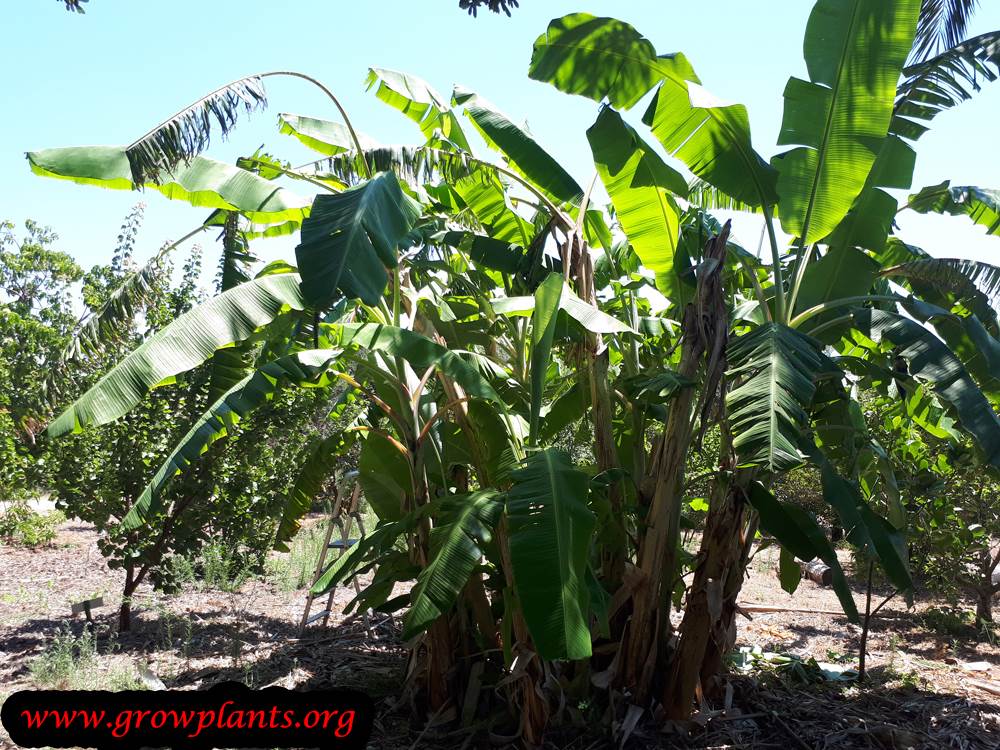
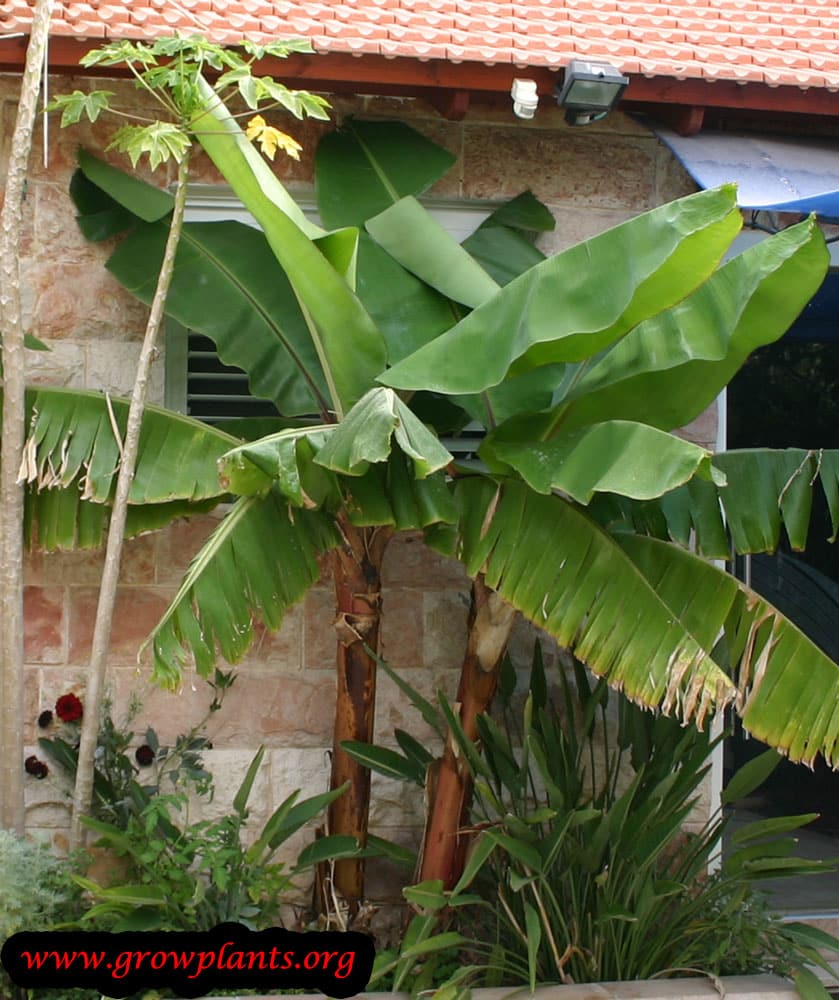
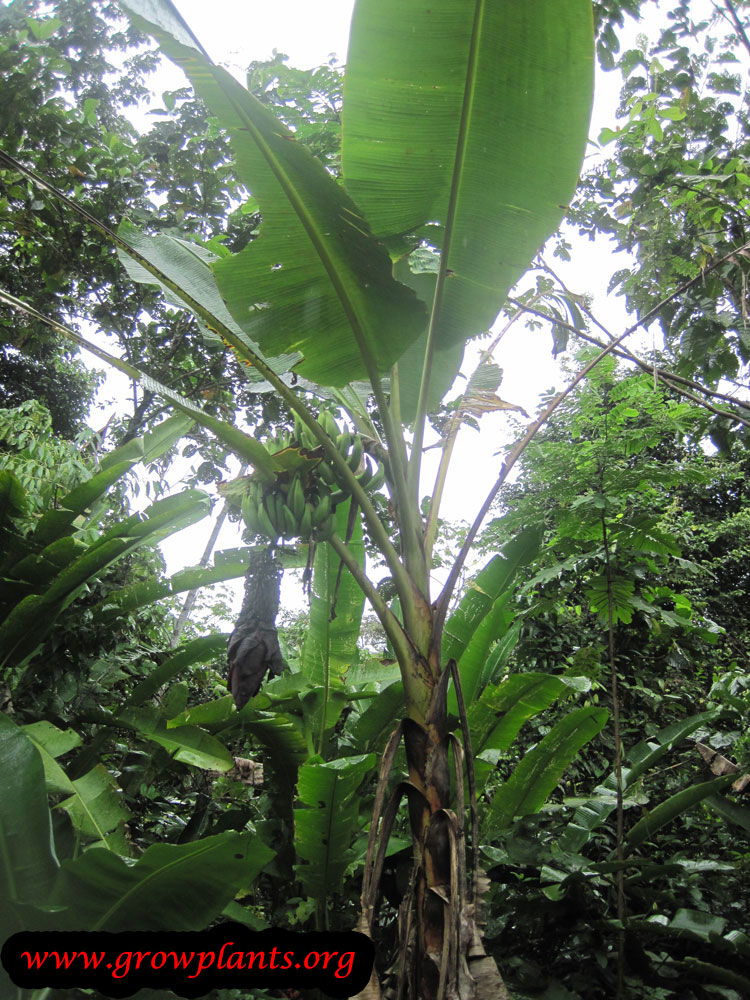
- Growth Habit & Form: Giant herbaceous plant with a pseudostem of tightly wrapped leaf sheaths – not a true woody tree.
- Lifespan & Maturity: Each pseudostem lives about 1-2 years, fruits once and then dies while suckers continue the clump; fruit takes about 1-2 years.
Anatomy & Physical Features
- Leaves & Foliage: Large green leaves up to 1-3 m long.
- Flower Characteristics: Pink-bracted hanging inflorescence; female flowers resemble tiny bananas.
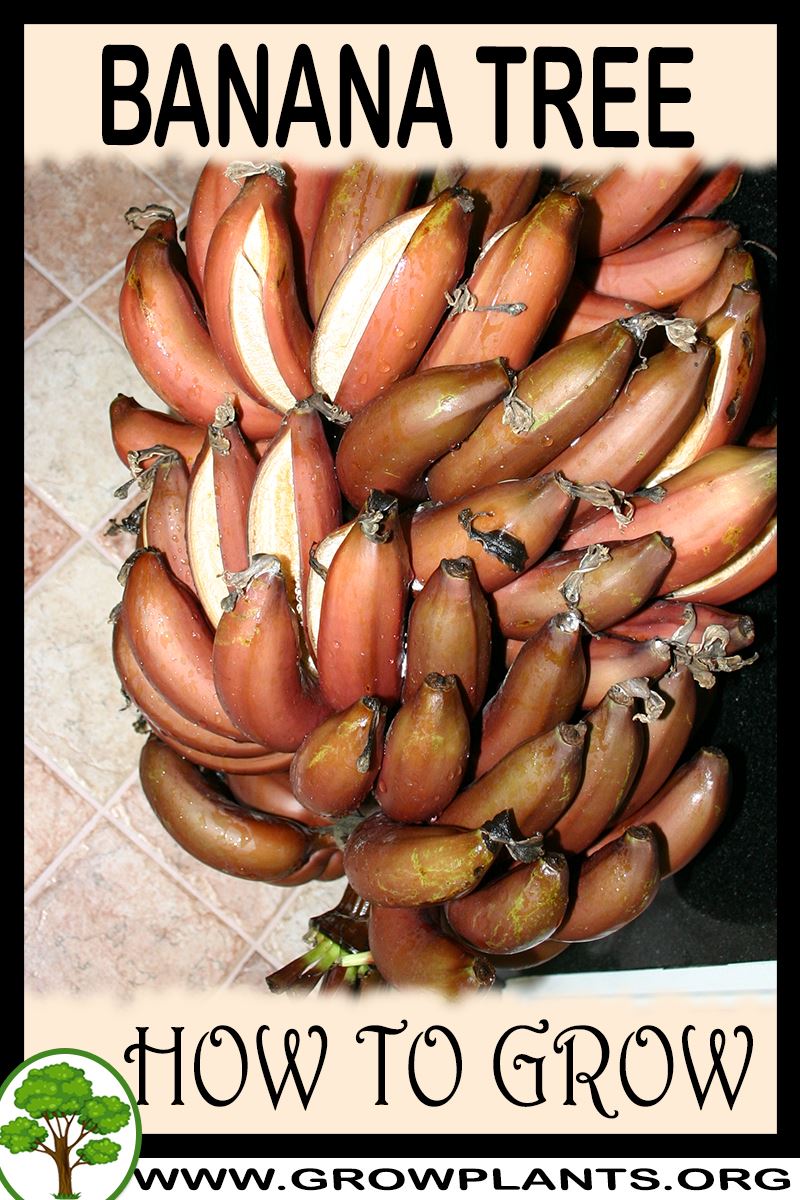
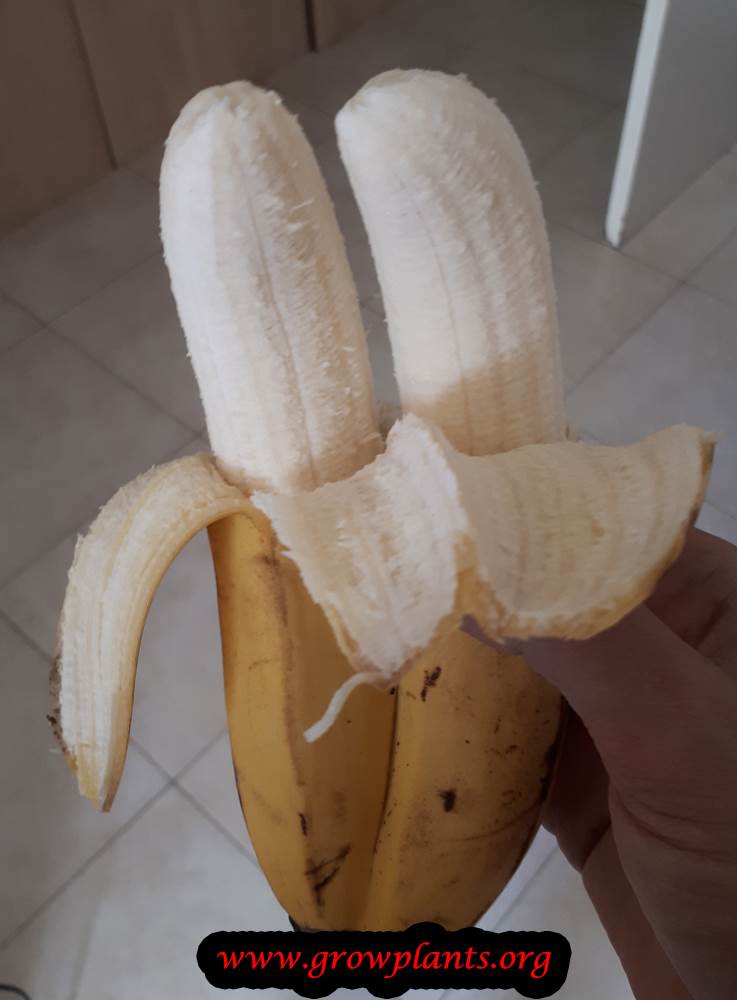
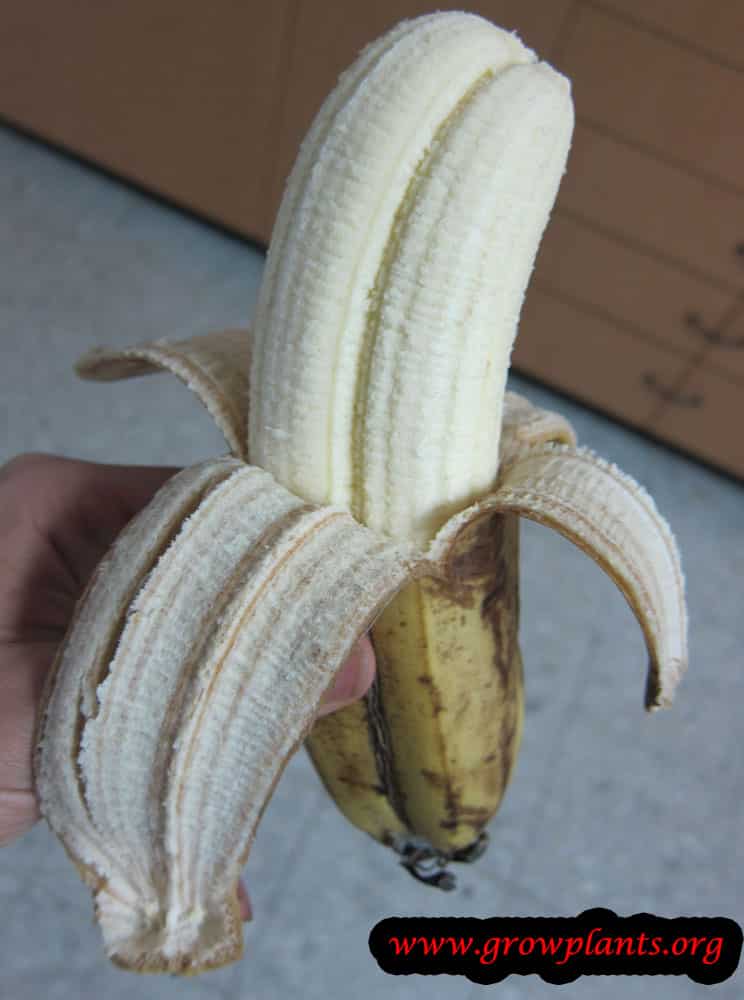
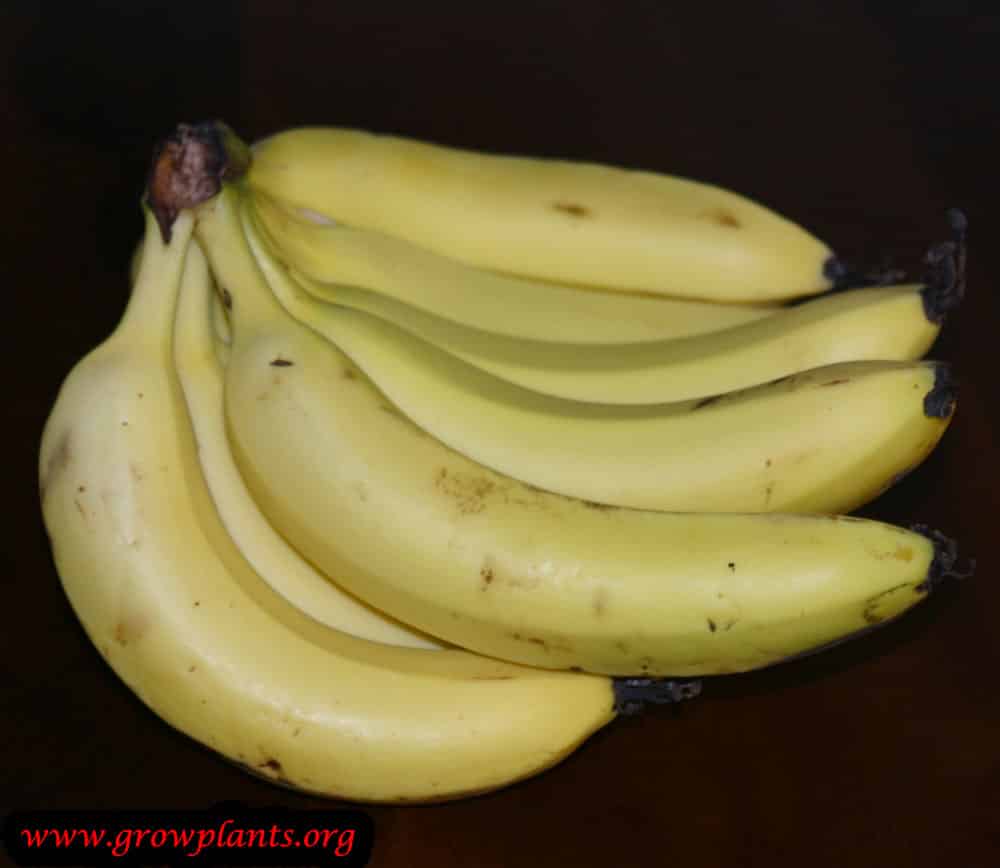
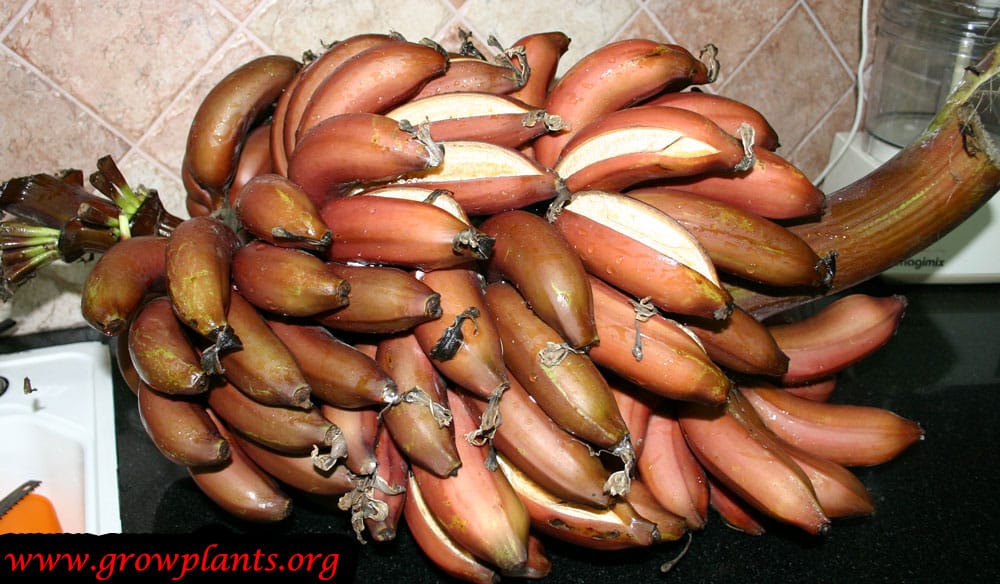
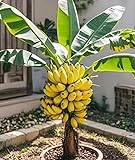
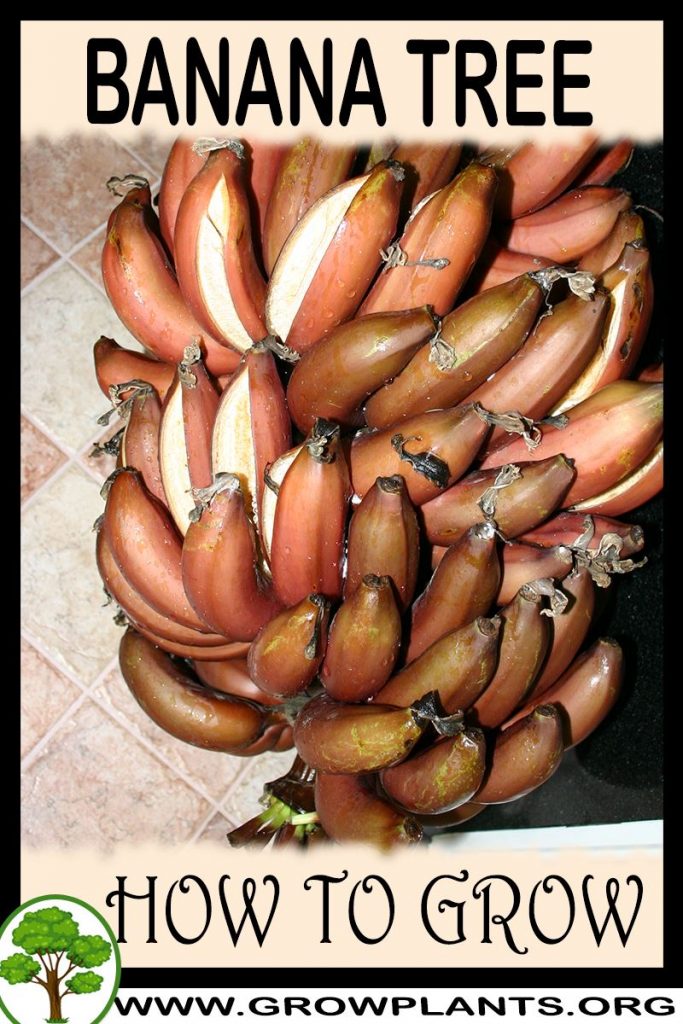
- Fruit Profile: Yellow-white flesh; peel yellow, red-purple, green or bluish; some cultivars taste of pineapple, strawberry, apple or vanilla.
Primary Uses & Landscape Value
- Edible Uses: Fruit eaten raw, cooked or used in cakes.
- Functional & Ornamental Roles: Fruit crop and bold tropical ornamental.
Care Guide: Planting, Soil & Watering
Overview: The Banana (Musa) is a tropical, sun-loving herbaceous plant (hardiness zone 10+, or zone 9 with care) that is a heavy feeder and drinker. It needs rich, heavy, moist, organic soil that still drains, and consistent, generous watering.
Quick Care Requirements
| Requirement | Ideal Condition |
|---|---|
| Planting Season | Spring, by zone; year-round in zone 12+ |
| Growth Rate | Fast in the tropics; Moderate in the subtropics |
| Soil Type | Rich, heavy, moisture-retentive, organic; well-drained |
| Water Need | High – keep consistently moist |
Planting & Establishment
- Best Planting Season: Plant in spring in zone 9, spring to summer in 10a, spring to autumn in 10b–11, and year-round in zone 12+.
- How to Plant:
- Hole Preparation: Dig a hole about 100% larger than the root ball.
- Soil Amendments: Mix in organic matter, dead leaves and humus for rich, moisture-holding soil.
- Planting Depth: Set the plant firmly enough that it will not rock, at the depth it grew before, and stake tall cultivars for support.
- Growth Speed & Expectations: Fast in tropical zones (11b+) and moderate in the subtropics (9–11a), fruiting within one to two years.
Soil, Watering & Drainage Care
- Soil Mix & Drainage Needs: Wants rich, moist, heavy soil that still drains, as the plant is susceptible to crown and root rot; mulch heavily to hold moisture.
- Watering Schedule & Technique:
- Young / Newly Planted: Water newly planted bananas twice on the first day, then daily for about two weeks, increasing the amount until they establish.
- Established: Keep established plants consistently and deeply moist – this is a thirsty plant.
- Seasonal Adjustments: Water more in heat and wind; reduce somewhat in cool winter weather.
Climate, Light & Hardiness
Banana (Musa) is a fast-growing tropical and subtropical herbaceous perennial that needs warmth, full sun and a long frost-free season, thriving in tropical, subtropical and mild Mediterranean climates. It is reliably perennial in roughly USDA zone 10 and warmer, and can be grown in zone 9 only with the right care and protection, since cold and frost quickly check its soft, water-rich growth.
Quick Climate Specifications
| Climate Zones | Tropical, subtropical, mild Mediterranean |
|---|---|
| USDA Hardiness Zones | 10 and warmer; zone 9 only with the right care and winter protection |
| Optimal Temp Range | Warm, approximately 24–30 °C (75–86 °F) |
| Cold Damage Begins | Growth stalls in the low teens °C; chilling injury and leaf damage typically appear near a few degrees above freezing |
| Approx. Survival Minimum | Foliage and pseudostem killed at/near 0 °C (32 °F); in zone 9 a well-mulched rhizome may survive brief cold and resprout |
| Frost Tolerance | None (top growth); varies by cultivar and plant age |
| Light Conditions | Full sun (light shade tolerated, with fewer fruits) |
| Wind Tolerance | Low |
Sunlight & Light Exposure
Optimal Light Setup
Full sun gives the strongest growth and best fruiting; it will grow in half shade but bears fewer fruits and takes longer to mature.
Direct Sun Requirement
Direct sun drives the large leaves and heavy fruit bunch, though in very hot summers a little shade relief reduces leaf scorch.
Best Exposure / Orientation
A warm, sunny, sheltered spot - ideally against a sun-warmed wall in marginal areas - maximises the heat the plant needs and buffers cold.
Temperature Extremes & Hardiness
USDA Hardiness & Regional Limits
Grown outdoors year-round in roughly zone 10 and warmer. In zone 9 it is grown at the margin, relying on heavy mulch and a favourable microclimate for the rhizome to overwinter and resprout; fruiting takes progressively longer (about a year in the tropics, up to two years in cooler subtropical zones). Cold tolerance varies by cultivar, plant age and exposure duration.
Cold Damage & Winter Protection
Frost blackens the leaves and can kill the pseudostem outright. Where winters brush freezing, mulch heavily over the rhizome; a plant cut down by cold may still regrow from the base once warmth returns.
Frost Sensitivity
Highly frost-sensitive: the soft foliage has no frost tolerance, and even brief freezing damages growth. Young plants are more tender than established clumps.
Extreme Heat Tolerance
Loves heat and grows fastest in warm tropical conditions; in extreme heat a little afternoon shade prevents leaf burn. Heat tolerance is separate from its high water demand (covered elsewhere).
Frost-Free Growing Season
A long, warm, frost-free season is essential to complete flowering and fruiting; the shorter and cooler the season, the longer the crop takes and the greater the frost risk before harvest.
Wind, Humidity & Microclimate
Humidity Preferences
Prefers warm, humid air typical of the tropics, which keeps the large leaves fresh.
Dry-Air Tolerance
Hot, dry air shreds and browns leaf margins; it copes best where humidity is moderate to high.
Wind Tolerance
Wind tolerance is low - the broad leaves tatter easily and a fruiting plant can be blown over - so shelter and support are important.
Microclimate Recommendations
A warm, sheltered, sunny pocket - a courtyard or south-facing wall - adds crucial degrees of warmth and wind protection in cooler zones.
Growing in Pots, Balconies & Indoors
Bananas (Musa) are dramatic, fast-growing foliage plants, but the grower does not grow them indoors and only dwarf cultivars suit pots – a full-size banana quickly becomes too large and top-heavy for a container. As a young or dwarf plant it makes a bold patio or balcony specimen in a warm, sheltered spot.
Quick Details
- Container Size: 25-125 L (5-25 gal) depending on the cultivar – smaller for dwarf types
- Indoor Suitability: Too large for a houseplant; dwarf cultivars in big pots only
- Best Spot: Full sun, warm and sheltered
- Soil & Drainage: Rich, organic soil with plenty of organic matter; mulch to hold moisture; good drainage holes
- Watering in Pots: Water generously and keep the rich soil moist – bananas are thirsty and hungry
Indoors & On the Windowsill
- Too large for a houseplant: The grower does not grow bananas indoors. Only dwarf cultivars are practical in pots, and even those want a very bright, warm, humid spot – a conservatory or sunroom rather than an ordinary room.
- Overwintering: Where winters are cold, grow a dwarf banana in a pot and move it into a bright, frost-free place to overwinter.
On a Balcony or Patio
- Light & wind: Give it the sunniest spot. Walls, railings and paving reflect heat, so pots dry fast – check moisture daily in warm weather, and shelter or stake tall growth from wind. A drip irrigation kit with a timer can take over that watering check automatically.
- Weight & runoff: A full pot of moist soil is heavy – check the balcony can take it, and stand pots so drainage water runs off cleanly without staining or flooding a neighbour below.
Choosing the Pot, Soil & Long-Term Care
- Pot & drainage: A pot with strong drainage holes and no standing-water saucer, so the roots never sit wet and rot. Terracotta breathes and dries faster (good against overwatering), while glazed or plastic holds moisture longer – match it to how often you water.
- Potting mix: A light, aerated, organic-rich mix – potting soil or peat/coir with perlite or vermiculite, blended with compost or well-rotted organic matter.
- Repotting: Refresh the mix and pot up about every two years; for perennials, lightly trim the root ball and top growth at the same time to keep them vigorous.
Grower’s Container Tip
- Stop it toppling: The challenge is not the roots but the height – a tall plant can tip the pot over. The grower puts a heavy rock in the base of the container for ballast, and supports the plant when it carries fruit so it does not fall.
- Feeding & renewal: Feed a potted banana about 2-4 times over its life, keep the soil rich and moist, and check there are enough drainage holes. After a stem fruits and dies, take a sucker (pup), replant it in fresh soil and discard the old roots.
Fertilizing & Feeding
Bananas are heavy, fast growers with a high demand for nutrients and especially potassium; feed generously through vegetative growth and fruiting and keep the soil rich in organic matter, matching feeding with steady water.
Quick Fertilizing Specs
| Feeding Level | heavy |
|---|---|
| Main Nutrient Priority | Nitrogen for growth shifting to potassium at fruiting |
| Best Feeding Period | Through vegetative growth and fruiting |
| Soil pH | Slightly acidic to near neutral, rich and well-drained |
| Organic Options | Generous compost, humus and mulch |
| Micronutrients | Rarely needed unless a deficiency appears; iron/manganese can show in alkaline soil |
| Reduce/Stop Feeding | Feeding follows the plant’s life cycle from establishment through fruiting |
Feeding by Growth Stage
Establishment
Settle the young plant or sucker and build a strong root system and first leaves.
| Nutrient direction | Balanced, complete feeding as roots and early leaves develop. |
|---|---|
| Timing | After planting, through the first phase of establishment. |
| Frequency | Light, frequent feeding while the plant establishes. |
| Fertilizer types | A balanced complete fertilizer, Generous compost, humus and mulch worked into rich soil |
| Precautions | Feed lightly at first and keep the soil rich in organic matter; avoid concentrated fertilizer against young roots. |
Vegetative growth
Push vigorous leaf and pseudostem growth so the plant has the size and reserves to fruit well.
| Nutrient direction | Nitrogen-forward complete feeding to fuel fast, large leafy growth. |
|---|---|
| Timing | Through the main leafy growth phase before flowering. |
| Frequency | Regular feeding through active growth, as bananas are hungry growers. |
| Fertilizer types | A nitrogen-forward complete fertilizer, Compost, humus and mulch |
| Precautions | Match the heavy feeding with steady water; keep mulch topped up to hold moisture and feed the soil. |
Flowering and fruiting
Support flowering and fruit fill with plenty of potassium for good bunch size and quality.
| Nutrient direction | Potassium-rich complete feeding while keeping nitrogen adequate; bananas have a high potassium demand at fruiting. |
|---|---|
| Timing | From flower emergence through fruit development. |
| Frequency | Steady, generous feeding through flowering and fruit fill. |
| Fertilizer types | A potassium-rich complete fertilizer, Compost and mulch to sustain the soil |
| Precautions | Keep moisture and potassium steady during fruiting; support the plant so it does not topple with the bunch. |
Nutrient Deficiency Signs & Corrections
Older leaves fade to pale yellow-green, new leaves are small and overall growth slows.
| Possible causes | low soil nitrogen, heavy demand from fast leaf growth, nitrogen leached by heavy irrigation or rain |
|---|---|
| Appears first on | older, lower leaves |
| What to check | old versus new leaf color, feeding history, soil organic matter and drainage |
| Possible correction | Feed with a nitrogen-forward complete fertilizer during active growth and keep the soil rich in organic matter. |
Yellowing and scorching along the margins of older leaves, with poor fruit fill.
| Possible causes | low soil potassium, heavy fruiting demand depleting reserves, leaching in sandy soil |
|---|---|
| Appears first on | margins of older leaves |
| What to check | soil potassium status, fruiting load, watering consistency |
| Possible correction | Apply a potassium-rich complete fertilizer through vegetative and fruiting growth and keep moisture steady. |
Newest leaves yellow between the veins while veins remain green.
| Possible causes | high (alkaline) soil pH reducing micronutrient availability, waterlogged or cold soil impairing roots, genuinely low available iron or manganese |
|---|---|
| Appears first on | youngest leaves |
| What to check | soil pH, drainage, whether newest leaves are worst affected |
| Possible correction | Correct soil pH and drainage; if it persists, apply a chelated micronutrient product per its label. |
Pruning, Training & Seasonal Maintenance
Banana is a giant herbaceous plant, not a woody one, so it is never pruned into a framework. Here “pruning” means three things: stripping dead and damaged leaves, managing suckers so that one follower replaces each fruited stem, and cutting down the whole pseudostem after it has fruited — each pseudostem flowers and fruits once, then dies. Leaf and sucker work goes on year-round; the big cut, removing the spent fruited pseudostem, comes after harvest once a follower sucker is already growing.
Pruning & the Edible Harvest
The edible crop is the fruit bunch, and each pseudostem bears one bunch then dies. Pruning is therefore about renewal, not shaping: felling the spent fruited pseudostem after harvest and keeping just one follower sucker per mat sets the next fruiting stem, while stripping only dead leaves preserves the green canopy that feeds the developing bunch. Removing too many suckers or healthy leaves reduces bunch size.
Quick Pruning & Maintenance Specs
| Pruning Tolerance | Not applicable to structure — managed by whole-stem removal and sucker selection |
| Primary Pruning Window | After harvest (remove the spent pseudostem); leaves and suckers year-round |
| Secondary Maintenance Window | Ongoing dead-leaf and sucker management |
| Typical Frequency | Continuous (leaves/suckers) plus once per stem after fruiting |
| Main Objective | One mother plus one follower per mat; remove spent stems; keep it standing |
| Young Plant Priority | Let the plant build; remove only badly damaged leaves |
| Mature Plant Priority | Keep one follower sucker, remove extras, fell the spent stem after harvest |
| Best Tool Type | Sharp blade/saw for pseudostems; secateurs for leaves; spade for suckers |
| Avoid Heavy Leaf Removal | Do not strip healthy green leaves — they feed the bunch |
Pruning by Plant Age & Size
Newly Established
Remove only torn or dead leaves and let the plant establish leaf area — every healthy leaf feeds the developing plant.
Young / Establishing Clump
Begin sucker management: keep the main (mother) plant and select one strong sword sucker as the follower, removing or transplanting additional suckers so the mat does not overcrowd and starve itself.
Mature / Fruited
After the bunch is harvested, cut the spent pseudostem down — it will not fruit again. Either let it dry first, or cut it and chop it up to return nutrients to the soil, keeping the follower sucker to carry on the cycle.
Seasonal Pruning Schedule
Ongoing (leaves and suckers)
Objective: sanitation and mat balance. Remove dead, broken and diseased leaves and surplus suckers. Do NOT strip healthy green leaves. Response: the retained mother and follower grow strongly.
Post-Harvest (spent stem)
Objective: clear the monocarpic stem. Cut the fruited pseudostem to the ground. Do NOT cut it before harvest or remove the chosen follower. Response: the follower becomes the next fruiting stem.
Structural Pruning & Training
Not applicable — there is no woody framework to train or thin. What matters instead is support: a fruiting stem may need propping so it does not topple under the weight of the bunch.
Special Growth to Remove
Sucker management is the core task. Retain one follower sucker per mat and remove or transplant the rest so nutrients concentrate in the mother and its single successor. Continuously strip fully dead leaves, and leave drying leaf and stem material to return minerals to the soil where practical.
Container & Small-Space Pruning
Only dwarf cultivars are practical in pots. Manage them the same way — keep one stem plus one follower, strip dead leaves, and after fruiting remove the spent stem and pot on the sucker. Weight the base so a tall stem carrying a bunch does not tip over.
Tools
Use a clean, sharp knife/machete or loppers for the water-filled pseudostem, bypass secateurs for leaf petioles, and a sharp spade to sever suckers with roots. A pruning saw substitutes for the heavy stem cut; no hedge shears are relevant to this soft tissue.
Tool Hygiene & Disease Risk
Risk level: High-risk. Banana is subject to Fusarium wilt (Panama disease), bacterial wilts, and viruses such as banana mosaic and bunchy top. Fusarium and bacterial wilts move on soil and on cutting tools, so disinfect knives and spades between mats and especially between clumps, and remove and destroy — never replant — suckers from any diseased mat.
Cut Placement & Technique
Cut spent pseudostems low to the ground, sever suckers cleanly below soil with a portion of corm and roots, and cut leaf petioles close to the pseudostem without gouging it.
Heavy Pruning & Rejuvenation
Not applicable. A pseudostem cannot be rejuvenated by cutting it back; it fruits once and is replaced by a sucker. Renewal in banana is the mother-to-follower succession, not cutting back old wood.
Post-Pruning Care
After removing a spent stem, feed and water the follower to power the next cycle, keep the base mulched and moist, prop the fruiting stem, and watch cut surfaces and soil for wilt symptoms.
Common Pruning Mistakes
- Leaving too many suckers, giving small bunches and a starved mat.
- Removing healthy green leaves, reducing energy to the bunch.
- Cutting the pseudostem before harvest or before a follower is established.
- Reusing un-disinfected tools between clumps, spreading Fusarium and bacterial wilt.
When NOT to Prune
Do not strip green leaves during bunch fill, do not remove the follower sucker, and do not cut the pseudostem down before the fruit is harvested. Do not work diseased mats with tools you then use on healthy ones.
Recommended Tools (by task)
- bypass_secateurs — dead-leaf and petiole removal.
- pruning_saw — or a heavy blade, to fell the thick spent pseudostem.
- blade_disinfectant — sanitise between mats and clumps against Fusarium and bacterial wilt.
Pruning Troubleshooting
| Problem | Possible Cause | What to Check | Corrective Action |
| Small bunches, weak stems | Too many suckers competing in the mat | Number of suckers per mat | Keep one mother plus one follower; remove the rest |
| Plant toppling | No support under a heavy bunch | Stem lean and bunch weight | Prop the fruiting stem; weight container bases |
| Rapid wilt/yellowing spreading through the clump | Fusarium or bacterial wilt (not a pruning fault) | Internal stem staining; spread pattern | Remove and destroy; disinfect tools; do not replant suckers |
| Leaves tearing and browning | Wind and age | Whether leaves are fully dead | Strip only fully dead leaves; retain green ones |
Propagation Guide
Cultivated edible bananas are seedless, so they are reproduced vegetatively by separating suckers (pups) from the base of the mother plant — this keeps the clone exactly. Corm division is a further option, and because a rooted sucker establishes so readily, banana propagation is Easy.
Quick Propagation Specs
| Best Propagation Method | Division of rooted suckers (sword suckers) from the mother clump |
| Alternative Methods | Corm (rhizome) division; tissue culture in commercial nurseries |
| Propagation Difficulty | Easy |
| Vegetative True-to-Type | Yes — suckers are clones of the mother plant |
| Best Propagation Season | Warm season, spring to summer, while the plant is actively growing |
Division, Offsets, Pups & Suckers
Why Seed Is Not Used
Edible banana cultivars do not set viable seed, so every plant is raised vegetatively. A clump is managed by leaving one mature plant with one following daughter sucker, because the amount of nutrients a clump can supply is limited — keeping to a mother-and-one-daughter succession gives better fruit than crowding many shoots together.
Which Suckers Are Viable
Not every sucker is worth taking. Narrow-leaved “sword” suckers, which arise from deep on the corm and have their own developing roots, make vigorous new plants; broad-leaved “water” suckers are weak and are best avoided. Always leave at least one sucker on the parent — without a following sucker the clump dies out.
Minimum Size & Separation
Separate a sucker once it reaches about 20–40 cm (8–16 in), depending on the cultivar, with at least three leaves. Wet the soil first, search out the sucker’s roots, and cut it away with at least one root attached — more roots give a better result.
Establishment Care
Replant the separated sucker in rich, moist soil and keep it well watered until it establishes and begins active growth.
Rhizomes, Tubers, Bulbs & Corms
Corm Division
Beyond whole suckers, the underground corm can be divided into pieces, each carrying at least one growth bud (eye), to raise additional plants — the basis of nursery bit and tissue-culture propagation.
Bloom & Edible Flower Guide
Quick Details
- Bloom Season: Year-round in tropical climates; spring to summer in subtropical and Mediterranean areas
- Time to First Bloom: Once the pseudostem matures, typically within the first year or two in good conditions
- Flower Appearance: A large, drooping inflorescence with pink to purple bracts; the female flowers at the base already look like tiny bananas
- Edibility: The flower is edible – the large male flower bud (banana blossom or ‘heart’) is used as a vegetable in South and Southeast Asian cooking
Detailed Blooming Overview
When a banana pseudostem matures it produces a single large flower spike that hangs down from the crown, wrapped in pink-to-purple bracts. The female flowers sit near the base and already resemble little bananas, while the tip forms the fleshy male bud – the banana blossom or ‘heart’ – which is peeled and cooked as a vegetable in many cuisines. Each pseudostem flowers only once.
Flower Characteristics
- A pendent inflorescence sheathed in pink to purple bracts.
- Female flowers near the base shaped like miniature bananas; male flowers held in the terminal bud.
- The purple male bud (the ‘heart’) is the part harvested as an edible flower.
Bloom Care & Thinning
- Managing the bloom: Once the female hands have set, many growers cut off the male bud below them – this can be used in the kitchen and helps the plant put its energy into filling out. Harvest the blossom only from unsprayed plants.
- Pollination: Most cultivated bananas are parthenocarpic – they set their seedless fruit without pollination; wild bananas are pollinated by bats and birds.
Fruit & Uses
The banana is grown mainly for its edible fruit. Bananas are eaten fresh when ripe and are also cooked and used in cakes.
Quick Edible Specs
| Edible Parts | Fruit |
|---|---|
| Main Use(s) | Culinary – eaten raw, cooked, and used in cakes |
| Eaten Raw or Cooked | Both – dessert types eaten raw when ripe; cooking types are cooked |
| Preparation Required | Peel; cooking types are cooked before eating |
| Harvest Season | Year-round in the tropics; summer to autumn in subtropical and mediterranean climates |
| Time to First Harvest | Roughly one to two years depending on climate (see Care); the plant dies back after fruiting |
| Safety/Toxicity Caveat | Fruit is safe to eat; the peel is removed |
Fruit
The flesh is yellow-white and the peel ripens yellow, red-purple, green or green-bluish depending on cultivar; some cultivars are described as tasting of pineapple, strawberry, apple or vanilla as well as banana. Bananas are best picked when about half ripe – they can be left to finish ripening indoors, either cut or still attached to the stem. Protect the developing bunch from birds and bats, for example with netting or a bag (see Pests & Diseases).
Preparation, Uses & Safety
Ripe dessert bananas are peeled and eaten raw or used in cakes; other cultivars are cooked before eating. Only the fruit is used here; the peel is removed. Fruit is picked half-ripe and ripened off the plant to reduce splitting and pest damage.
Pests, Diseases & Troubleshooting
Overview: Bananas face a heavy, well-documented set of pests and diseases: the banana weevil and burrowing nematodes at the corm and roots, aphids that spread bunchy top virus, and above all fungal Sigatoka leaf streak and Fusarium (Panama) wilt. Management is integrated and mostly cultural, clean planting material, sanitation, drainage and resistant varieties, with fruit protected as it develops.
Quick Troubleshooting Overview
| Issue / Pest | Main Symptom | Primary Solution |
|---|---|---|
| Banana weevil | Tunneled corm, toppling plants, weak growth | Clean suckers, trap with pseudostem, sanitation |
| Nematodes | Root rot, toppling, poor bunches | Clean planting material, organic matter, rotation |
| Banana aphid | Sticky honeydew, and spread of bunchy top virus | Control aphids, rogue infected plants |
| Sigatoka leaf streak | Brown streaks and blotches killing leaves | Deleaf, airflow, resistant types, fungicide |
| Panama wilt (Fusarium) | Yellowing, wilting, split stem, internal browning | Resistant varieties, clean stock, no cure |
| Wind / cold damage | Shredded leaves, chilled, blackened tissue | Shelter, feed, protect from cold |
Common Pests & Management
- Banana weevil / corm borer (Cosmopolites sordidus):
- Symptoms: The larvae tunnel through the corm and stem base, weakening the plant so it grows poorly, produces small bunches and can topple; entry holes and dark tunnels show at the base.
- Prevention & Control: Plant clean, pared or hot-water-treated suckers, keep the mat free of old pseudostems and debris, and use split-pseudostem or disc-on-stump traps to catch and destroy adults; keep plants vigorous and remove crop residue.
- Burrowing and root-knot nematodes (Radopholus similis / Meloidogyne spp.):
- Symptoms: Nematodes destroy the root system, causing reddish-brown root lesions, poor anchorage, toppling (‘root-knot’ or ‘blackhead’ toppling) and reduced bunch size.
- Prevention & Control: Use clean, nematode-free or tissue-cultured planting material, build up organic matter and mulch, rotate or fallow infested ground, and keep plants well-nourished; healthy roots tolerate more damage.
- Banana aphid (Pentalonia nigronervosa):
- Symptoms: Dark aphids cluster in the leaf sheaths and crown with honeydew, but their real importance is transmitting banana bunchy top virus.
- Prevention & Control: Inspect for and control aphids, remove and destroy any bunchy-top-infected plants promptly (rogue the whole mat), and use clean planting material; managing aphids is mainly about stopping virus spread.
- Thrips (Chaetanaphothrips / Frankliniella spp.):
- Symptoms: Rust-red or corky scarring on the fruit peel and flower thrips damage to young fruit, downgrading appearance.
- Prevention & Control: Bag developing bunches with perforated sleeves, keep the area clean, and remove the flower bell after fruit set; sleeves also deter other fruit pests.
- Spider mites, scale and mealybugs (Tetranychus / Coccidae / Pseudococcidae):
- Symptoms: Mites stipple and bronze leaves in hot, dry weather; scale and mealybugs colonize leaves, fruit and the crown with honeydew and sooty mold.
- Prevention & Control: Rinse foliage, bag bunches, apply horticultural oil to scale and mealybugs, and control ants; keep plants unstressed and well-watered.
Diseases & Fungal Issues
- Sigatoka leaf streak (black and yellow) (Mycosphaerella fijiensis / M. musicola):
- Symptoms: Small streaks that enlarge into brown-black blotches with grey centers and yellow halos, killing leaf area so bunches are small and ripen prematurely; the most important banana leaf disease, worst in warm, wet, humid conditions.
- Treatment & Management: Cut off and remove diseased leaves and leaf portions (deleafing), space plants and manage the mat for airflow and drainage, and grow tolerant varieties; protectant fungicides are used in commercial blocks but garden control is mainly sanitation and airflow.
- Panama disease / Fusarium wilt (Fusarium oxysporum f.sp. cubense):
- Symptoms: Older leaves yellow and collapse to skirt the stem, the pseudostem splits at the base, and cutting the stem reveals reddish-brown vascular streaking; the fungus persists in soil for decades and there is no cure.
- Treatment & Management: Grow resistant varieties (many older types are highly susceptible), plant only clean, disease-free material, never move soil or suckers from infected sites, and remove and destroy infected mats; do not replant susceptible bananas in infested ground.
- Banana bunchy top virus (BBTV):
- Symptoms: Progressively narrower, upright, bunched leaves with dark green ‘dot-dash’ streaks along veins; plants stunt severely and fail to fruit. Spread by the banana aphid and in infected suckers.
- Treatment & Management: There is no cure: use certified clean planting material, control the banana aphid, and promptly destroy the entire infected mat including the corm; do not replant suckers from infected plants.
- Moko / bacterial wilt (Ralstonia solanacearum):
- Symptoms: Sudden wilting and yellowing, internal vascular discoloration and bacterial ooze, and blackened, rotted fruit pulp.
- Treatment & Management: Use clean material, disinfect cutting tools between plants, remove the flower bell with a de-belling tool, and rogue and destroy infected mats; strict sanitation is essential.
- Anthracnose (fruit) and crown rot (Colletotrichum musae):
- Symptoms: Black sunken spots on ripening fruit and rot at the cut crown of hands, worst in warm, humid storage.
- Treatment & Management: Handle fruit gently, keep it clean and dry, bag bunches, and remove overripe and fallen fruit; good post-harvest hygiene limits rot.
Growing Difficulties & Abiotic Problems
- Wind shredding and toppling:
- Cause & Symptoms: The large leaves shred in wind and shallow-rooted or nematode-weakened plants topple, especially when carrying a heavy bunch.
- Correction Strategy: Site in a sheltered spot, prop or brace bunching plants, keep roots healthy against nematodes, and maintain the mat well; some leaf shredding is normal and harmless.
- Cold and chill damage:
- Cause & Symptoms: Bananas stop growing and their leaves yellow, streak or blacken with cold, and ‘choke’ bunches emerge poorly after chill.
- Correction Strategy: Grow in the warmest, most sheltered spot, mulch and protect the corm in marginal climates, and expect slow recovery after cold; avoid siting in frost pockets.
- Nutrient deficiency (esp. potassium):
- Cause & Symptoms: Bananas are heavy feeders; potassium shortage yellows and scorches leaf margins and reduces bunch size, and other deficiencies mottle leaves.
- Correction Strategy: Feed generously with a balanced, potassium-rich fertilizer, mulch heavily, and keep evenly watered; correct specific deficiencies as they show.
What Helps — Products & Tools
Banana management is integrated and mostly cultural: clean tissue-cultured planting material, pseudostem weevil traps, bunch sleeves/bags for thrips and fruit protection, horticultural oil for scale and mealybugs, and rigorous sanitation and deleafing against Sigatoka. Keep a copper or protectant fungicide for leaf disease on valued plants, ant baits for the sap-suckers, and disinfectant for tools against bacterial wilt. Resistant varieties are the best defense against Panama disease.