Plant Profile & Key Characteristics
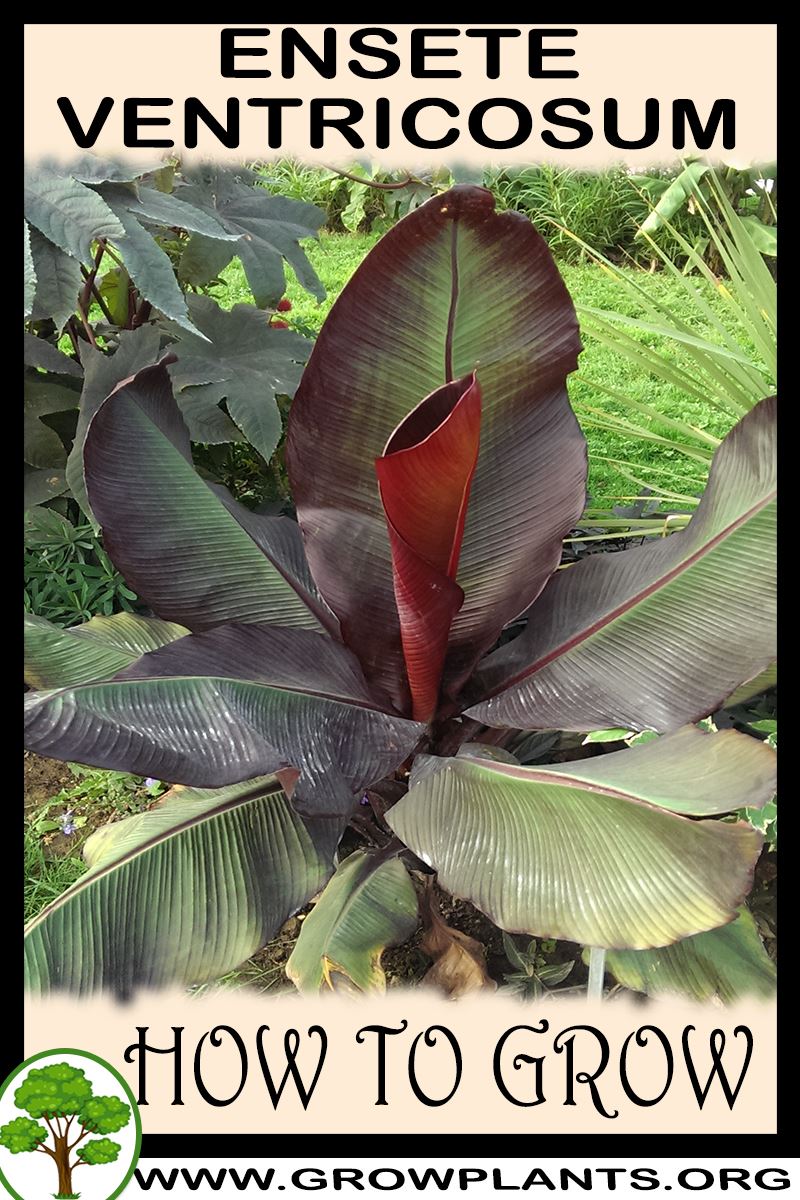
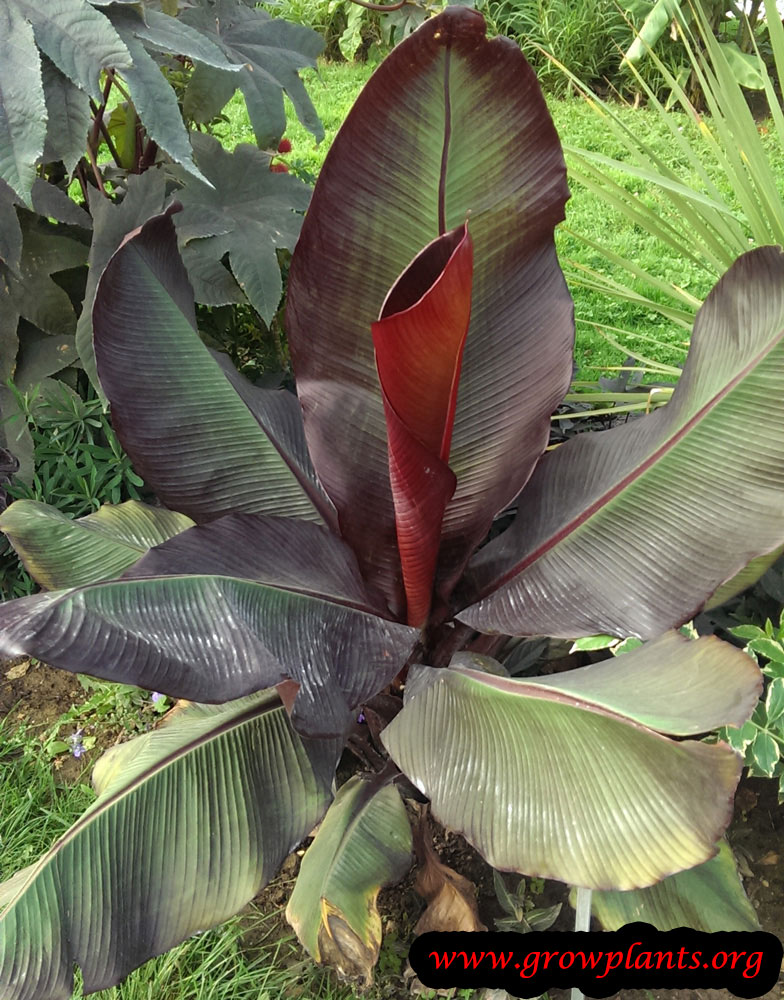
Overview: Ensete ventricosum, the Abyssinian banana, is a fast-growing evergreen herbaceous perennial forming a massive banana-like rosette 1-5 m (3-15 ft) tall. It is grown mainly as a bold ornamental; its inedible fruit contrasts with the starchy pseudostem and corm that are a staple food crop in its native highlands.
Quick Specifications
| Specification | Attribute |
|---|---|
| Plant Type / Life Cycle | Herbaceous perennial (monocarpic) |
| Foliage Type | Evergreen |
| Mature Size | 1-5 m (3-15 ft) tall |
| Growth Rate | Fast |
| Toxicity | Non-toxic |
| Hardiness | USDA zone 9+ |
Growth Form & Structure
- Height & Spread: Large rosette 1-5 m (3-15 ft) tall with leaves up to 1-3 m long; too big for indoors but can be grown in large containers.
- Growth Habit & Form: Single trunk-like pseudostem topped by huge paddle-shaped leaves; does not sucker like true bananas.
- Lifespan & Maturity: Monocarpic – the rosette dies after flowering and fruiting.
Anatomy & Physical Features
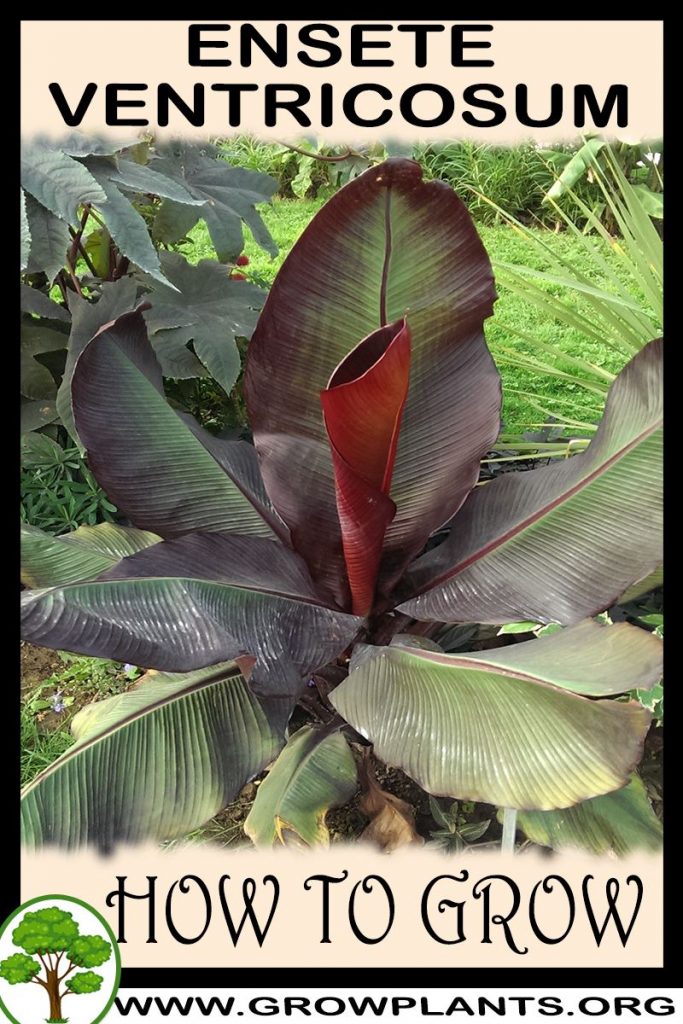
- Leaves & Foliage: Very large paddle-shaped leaves, green or flushed red.
- Flower Characteristics: Pink bracted inflorescence, the female flowers resembling little fruit (full detail in the Bloom guide).
- Fruit Profile: Green-yellow banana-like fruit that is not edible (full detail in the Fruit guide).
Primary Uses & Landscape Value
- Edible Uses: The fruit is inedible, but the starchy pseudostem and corm are the traditional edible staple (enset).
- Functional & Ornamental Roles: Grown as a dramatic ornamental foliage plant for beds and large containers.
Care Guide: Planting, Soil & Watering
Overview: Ensete, the Abyssinian banana, is a fast-growing, frost-tender giant that thrives in warmth, full sun to light shade, and rich, moisture-retentive but well-drained soil. It is a heavy feeder and drinker, needing plenty of water in growth while never sitting waterlogged.
Quick Care Requirements
| Requirement | Ideal Condition |
|---|---|
| Planting Season | Warm season (spring to summer), after frost |
| Growth Rate | Fast |
| Soil Type | Rich, deep, moisture-retentive yet well-drained |
| Water Need | High – keep consistently moist |
Planting & Establishment
- Best Planting Season: Plant in spring or summer once all frost has passed and the soil is warm.
- How to Plant:
- Hole Preparation: Dig a generous hole wider than the root ball to accommodate its vigorous roots.
- Soil Amendments: Enrich with plenty of compost or well-rotted organic matter to feed this hungry plant and hold moisture.
- Planting Depth: Set it at the same depth it grew previously, keeping the base of the pseudostem at soil level.
- Growth Speed & Expectations: Growth is fast in warmth – expect large leaves to unfurl quickly through a single season.
Soil, Watering & Drainage Care
- Soil Mix & Drainage Needs: The soil should be rich and moisture-retentive but still drain, since waterlogging in cold conditions rots the base; in pots use a large container of fertile, free-draining mix.
- Watering Schedule & Technique:
- Young / Newly Planted: Water frequently and generously to establish, never letting the soil dry out.
- Established: Water deeply and often through warm weather to sustain its huge leaves.
- Seasonal Adjustments: Cut watering back sharply in cool weather, and keep the plant frost-free and drier over winter.
Climate, Light & Hardiness
Ensete ventricosum is a fast, bold tropical foliage plant for tropical, subtropical and Mediterranean climates, thriving in warm conditions with full sun to half shade. It is frost-tender - happiest above freezing - and needs a long warm season to build its dramatic size.
Quick Climate Specifications
| Climate Zones | Tropical, subtropical, Mediterranean |
|---|---|
| USDA Hardiness Zones | Approximately 9 and above |
| Optimal Temp Range | Warm, roughly 20–30 °C (68–86 °F) |
| Cold Damage Begins | Foliage suffers as temperatures approach a few degrees above freezing; light frost scorches leaves |
| Approx. Survival Minimum | Established plants may survive brief, light frost near 0 °C (32 °F) and can resprout from the corm; young plants are far more tender |
| Frost Tolerance | Very Low |
| Light Conditions | Full sun to half shade |
| Wind Tolerance | Low |
Sunlight & Light Exposure
Optimal Light Setup
Grows best in full sun to half shade; strong light drives the fast growth and best leaf colour, while some afternoon shade helps in very hot regions.
Direct Sun Requirement
Benefits from ample direct sun in temperate and Mediterranean settings to maximise size within the warm season.
Shade & Heat Management
In intense heat, light afternoon shade reduces leaf scorch while still allowing vigorous growth.
Temperature Extremes & Hardiness
USDA Hardiness & Regional Limits
Suited to roughly USDA zone 9 and warmer. Beyond frost-free areas it is grown as a large seasonal specimen or lifted and overwintered under protection. Cold tolerance varies with plant age, size and exposure duration - mature specimens are hardier than young ones.
Cold Damage & Winter Protection
Leaves are damaged by cold well before the plant is killed. Where light frost occurs, the corm and base are what to protect; established plants can resprout after top damage if the base is kept from hard freezing.
Frost Sensitivity
Highly frost-sensitive: even light frost scorches or collapses foliage, so it performs best in genuinely frost-free positions.
Extreme Heat Tolerance
Handles considerable heat well provided moisture is ample, making it a strong warm-season performer.
Frost-Free Growing Season
Needs a long, warm, frost-free season to develop its full stature; the longer and warmer the season, the larger and more impressive the plant.
Wind, Humidity & Microclimate
Humidity Preferences
Prefers warm, humid air, which keeps the large paddle leaves lush.
Wind Tolerance
The huge leaves tear and shred in strong wind, spoiling the display; a sheltered position keeps foliage intact.
Microclimate Recommendations
Choose a warm, sheltered, sunny pocket - a wind-protected courtyard or a sunny wall-backed bed - to combine heat, shelter and a longer effective season.
Growing in Pots, Balconies & Indoors
The Ethiopian or false banana (Ensete ventricosum) is a huge, dramatic foliage plant. The grower does not grow it indoors and it is really too big for a houseplant, but young plants make bold container specimens for a sunny, sheltered patio – and in cold climates are potted so they can be moved under cover to overwinter.
Quick Details
- Container Size: A large, heavy container while young; it will outgrow pots in time
- Indoor Suitability: Too large for a houseplant; young plants in big pots only
- Best Spot: Full sun to half shade, warm and sheltered
- Soil & Drainage: Rich, organic, moisture-retentive mix with good drainage
- Watering in Pots: Water generously – it is very thirsty and wants consistently moist, rich soil
Indoors & On the Windowsill
- Too large for a houseplant: The grower does not grow it indoors – it becomes a very large plant and needs far more light and space than a room offers.
- Young in containers / overwintering: While young it grows well in a big pot as a patio specimen; it is frost-tender, so where winters are cold, move the pot into a bright, frost-free place to overwinter.
On a Balcony or Patio
- Light & wind: Give it the sunniest spot. Walls, railings and paving reflect heat, so pots dry fast – check moisture daily in warm weather, and shelter or stake tall growth from wind. A drip irrigation kit with a timer can take over that watering check automatically.
- Weight & runoff: A full pot of moist soil is heavy – check the balcony can take it, and stand pots so drainage water runs off cleanly without staining or flooding a neighbour below.
Choosing the Pot, Soil & Long-Term Care
- Pot & drainage: A pot with strong drainage holes and no standing-water saucer, so the roots never sit wet and rot. Terracotta breathes and dries faster (good against overwatering), while glazed or plastic holds moisture longer – match it to how often you water.
- Potting mix: A light, aerated, organic-rich mix – potting soil or peat/coir with perlite or vermiculite, blended with compost or well-rotted organic matter.
- Feeding: Nutrients leach out of pots with every watering, so potted plants need feeding more often than those in the ground – a balanced liquid feed through the growing season keeps them going.
- Repotting: Refresh the mix and pot up about every two years; for perennials, lightly trim the root ball and top growth at the same time to keep them vigorous.
Fertilizing & Feeding
The Abyssinian banana is grown for its bold foliage and is a fast, moderate-to-strong feeder; keep it well fed and watered through active growth for lush leaves, easing off as growth slows in cool weather.
Quick Fertilizing Specs
| Feeding Level | moderate |
|---|---|
| Main Nutrient Priority | Nitrogen-forward, complete feeding for lush foliage |
| Best Feeding Period | Through the warm active growing season |
| Soil pH | Tolerates a wide range; rich moist soil is key |
| Organic Options | Generous compost, humus and mulch |
| Micronutrients | Rarely needed unless a deficiency appears |
| Reduce/Stop Feeding | Ease off as growth slows in cool weather |
Feeding by Growth Stage
Establishment
Settle the young or newly emerged plant and encourage healthy roots and first leaves.
| Nutrient direction | Gentle balanced feeding as roots and early foliage develop. |
|---|---|
| Timing | After planting or as growth emerges. |
| Frequency | Light feeding while the plant establishes. |
| Fertilizer types | A balanced complete fertilizer, Compost or well-rotted organic matter |
| Precautions | Feed sparingly at first; heavy feeding before roots establish can scorch them. |
Active foliage growth
Drive lush, well-colored foliage through the main growing season, since this plant is grown for its leaves.
| Nutrient direction | Nitrogen-forward but complete feeding to support abundant healthy foliage. |
|---|---|
| Timing | Through the active growing season. |
| Frequency | Regular light feeding across the growing season. |
| Fertilizer types | A complete fertilizer with a nitrogen lean, Compost topdressing or well-rotted organic matter |
| Precautions | Keep feeding steady but moderate; overfeeding invites soft growth and leaf-tip scorch. |
Cool-season slowdown
Let the plant idle through cool weather when growth naturally slows, without forcing new leaves.
| Nutrient direction | None – withhold fertilizer while the plant is resting. |
|---|---|
| Timing | During the cool season when growth slows. |
| Frequency | No feeding at this stage. |
| Fertilizer types | No feeding at this stage – the plant is dormant or resting and takes up little nutrient. |
| Precautions | Do not fertilize until active growth resumes; feeding a dormant plant wastes nutrients and can burn roots. |
Nutrient Deficiency Signs & Corrections
Foliage looks pale and yellow-green, leaves stay small and the clump grows slowly.
| Possible causes | low available nitrogen, nitrogen leached from the soil, cold or waterlogged soil limiting uptake |
|---|---|
| Appears first on | older, lower leaves |
| What to check | old versus new leaf color, recent feeding, drainage and soil richness |
| Possible correction | Apply a balanced, slightly nitrogen-forward fertilizer and enrich the soil with organic matter. |
New leaves yellow between green veins (interveinal chlorosis).
| Possible causes | high (alkaline) soil pH locking up iron, waterlogged or cold soil, genuinely low available iron |
|---|---|
| Appears first on | youngest leaves |
| What to check | soil pH, drainage and root health, whether new growth is worst |
| Possible correction | Correct soil pH and drainage; if it persists, apply a chelated iron product per its label. |
Leaf tips and margins brown and crisp, often after heavy feeding or in containers.
| Possible causes | fertilizer salt build-up in the soil, uneven or insufficient watering, exposure to too much direct sun for a shade plant |
|---|---|
| Appears first on | leaf tips and margins |
| What to check | feeding rate and container drainage, watering consistency, light exposure |
| Possible correction | Ease back on feeding, keep watering even, and site the plant in appropriate shade. |
Pruning, Training & Seasonal Maintenance
Ensete ventricosum (Abyssinian banana, ensete) is a giant, fast-growing herbaceous plant that forms a single massive pseudostem topped by huge paddle leaves — and, crucially for its care, it is monocarpic and essentially non-suckering: unlike the true bananas (Musa) it does not throw up a ring of offset pups, so it flowers once after several years, then dies, and is replaced from seed rather than from a follower. That biology means there is no woody structure to prune and no succession sucker to select. The work is simply removing dead, wind-torn or frosted leaves to keep the plant clean, and — where it is not hardy (below about zone 9) — cutting it down and lifting or protecting the fleshy corm over winter. It has a single growing point at the crown, so over-stripping green leaves or damaging that centre is the main danger.
Quick Pruning & Maintenance Specs
| Pruning Tolerance | Low for structure — leaf removal only; a single growing point that must not be cut |
| Primary Maintenance Window | Remove dead or damaged leaves through the growing season, as they occur |
| Secondary Maintenance Window | Autumn cut-down and corm lift/protection in climates with frost |
| Typical Frequency | Ongoing tidying of spent lower leaves; one annual over-wintering operation in cold zones |
| Main Objective | Keep the plant clean and vigorous and carry the corm through winter |
| Young Plant Priority | Remove only dead or torn leaves; never cut the crown |
| Mature Plant Priority | Strip spent lower leaves; manage over-wintering; accept the plant dies after it flowers |
| Best Tool Type | Loppers or a pruning saw for thick petioles and the trunk; a spade for the corm |
| Avoid Heavy Pruning During | Active growth — do not strip green leaves; and never cut into the single growing point |
Pruning by Plant Age & Size
Newly Established
A young ensete needs only dead or torn leaves removed as it powers into growth in rich, constantly moist soil in sun or part shade — and it grows very fast. Leave every healthy leaf: the plant builds its dramatic size and its energy store in the corm from that foliage, and there is no formative pruning to do.
Young / Formative
There is no structural training — a single unbranched pseudostem cannot be shaped, tipped or branched. ‘Formative’ care is nothing more than keeping the plant clean by removing the naturally spent lower leaves as fresh ones unfurl from the centre, and protecting that central growing point from damage.
Mature / Established
A mature plant simply sheds its lowest leaves as it grows, which you cut away for tidiness. Understand its endpoint: after several years it will send up a pendulous inflorescence, set inedible fruit, and then that pseudostem dies — and because it does not sucker, the plant is finished and grown afresh from seed. Removing the collapsing plant after it flowers and dies is the final ‘pruning’ act.
Seasonal Pruning Schedule
Growing Season (leaf tidying)
Objective: a clean, healthy plant. Remove: dead, yellowed or badly wind-shredded lower leaves at the petiole base. Do NOT: strip healthy green leaves or cut the emerging central spear. Expected response: continued fast, clean growth from the crown. Reproductive note: none until the plant matures to its single flowering.
Autumn / Pre-Frost (cut-down and lift, cold zones)
Objective: carry the corm through winter where the plant is not hardy. Remove: the large leaves and cut the pseudostem down, then lift the corm (or heavily mulch and protect it in place in marginal areas). Do NOT: leave the fleshy corm exposed to hard frost, and do not let it rot in cold, wet storage. Expected response: the corm resprouts in spring. Reproductive note: over-wintering simply preserves the same plant to grow on.
Structural Pruning & Training
There is nothing structural to prune: a single pseudostem with one apical growing point cannot be branched, thinned or reshaped, and cutting it does not produce side growth — it only wounds or kills the plant. The only large cut ever made is the whole-plant cut-down for over-wintering the corm, or clearing the plant once it has flowered and died. Do not attempt to control its considerable size by topping it; the plant cannot be height-managed that way.
Special Growth to Remove
The growth to remove is spent leaves — the naturally aging lower paddles and any the wind has shredded — cut cleanly at the petiole base. Note what is not here: unlike a true banana, ensete does not produce basal suckers or pups to thin or to keep as a follower, so there is no sucker management, and after flowering there is no replacement shoot to retain. The old, collapsing pseudostem is cut away only once the plant has finished flowering and fruiting.
Container & Small-Space Pruning
Grown in a large container — common in cool climates so it can be moved under cover — the plant is groomed exactly as in the ground: remove spent lower leaves, protect the crown. The pot limits the corm and so restrains ultimate size somewhat, but you cannot prune the top for compactness. For winter, either bring the whole potted plant into a frost-free, bright, cool space (often with the leaves cut back to reduce water loss) or lift and store the corm. Repot on into fresh rich compost each spring to fuel its fast growth.
Tools
The leaf petioles are thick and fibrous and the pseudostem is massive but soft, so use loppers or a pruning saw for cutting leaves and for the whole-plant cut-down, and a sharp spade for lifting the corm. Precision snips and secateurs are too small for anything but the youngest leaves. Hedge shears have no place — this is never a sheared or hedged plant.
Tool Hygiene & Disease Risk
Hygiene is Routine: clean, sharp tools are enough, as the plant’s main issues are cold damage and occasional root or corm pests rather than a blade-borne disease. Because cut surfaces on the fleshy trunk and corm are large and moist, use clean tools and let big cuts dry, especially before winter storage, to reduce rot at the wound.
Cut Placement & Technique
Cut spent leaves at the base of the petiole, close to the pseudostem, without gouging into the trunk or the central spear. When cutting the plant down for winter, sever the soft pseudostem cleanly above the corm and trim the leaves off first so the mass is manageable. Keep all cuts well away from the single apical growing point on a plant you intend to keep.
Heavy Pruning & Rejuvenation
Ensete does not tolerate structural or rejuvenation pruning: it has one growing point and does not resprout from a cut stem the way a suckering banana does, so it cannot be cut back to renew or to control size. The only justified heavy cut is the whole-plant cut-down to over-winter the corm in a cold climate — a survival measure, not a shaping one — from which the corm, not the cut stem, produces the next season’s growth.
Post-Pruning Care
After routine leaf removal, simply keep the plant well fed and constantly moist — it is a hungry, thirsty, fast grower. After an autumn cut-down, store a lifted corm somewhere cool, frost-free and only slightly moist to prevent both drying out and rotting, then restart it in warmth in spring. A protected in-ground corm should be kept dry-ish under its mulch to avoid winter rot.
Common Pruning Mistakes
- Expecting it to behave like a true banana — waiting for suckers to replace it — when a flowered ensete simply dies and must be grown again from seed.
- Stripping too many healthy green leaves, starving the fast-growing plant and its corm.
- Cutting or damaging the single central growing point, which the plant cannot regrow from.
- Leaving the fleshy corm exposed to frost, or storing it too wet so it rots over winter.
When NOT to Prune
Do not remove green, functioning leaves during active growth — take only spent or damaged ones. Never cut into the crown or growing point on a plant you want to keep. Time the big autumn cut-down to just before hard frost, not while the plant is still growing well, and avoid lifting the corm in cold, wet conditions that encourage storage rot.
Pruning Troubleshooting
| Problem | Possible Cause | What to Check | Corrective Action |
| Plant collapses and dies after flowering | Natural — the plant is monocarpic and does not sucker | Whether it produced its pendulous inflorescence and fruit | Expected; remove the dead plant and grow a new one from seed |
| Weak, pale, slowing growth | Too many green leaves removed, or starvation/drought | Feeding, water, and how many healthy leaves were cut | Stop stripping green leaves; feed heavily and keep constantly moist |
| Crown rots or plant fails to resprout in spring | Frost or storage rot of the corm; damage to the growing point | Winter storage conditions and any cuts near the crown | Store the corm cool, frost-free and barely moist; never cut the growing point |
| Leaves shredding badly | Wind exposure on huge leaf blades (normal to a degree) | Site exposure | Shelter from wind; remove only badly damaged leaves — some tearing is cosmetic |
Recommended Tools (by task)
- loppers — for cutting the thick, fibrous leaf petioles and tidying spent lower leaves.
- pruning_saw — for the whole-plant cut-down of the massive pseudostem when over-wintering the corm.
- garden_spade — for lifting the fleshy corm to store or protect it in frost-prone climates.
Propagation Guide
Unlike true bananas, the Abyssinian banana is normally a single-stemmed, once-flowering plant that does not throw pups freely, so the wild species is grown from seed while the ornamental red-leaved clones are increased vegetatively from the corm. The site records vegetative reproduction as the necessary route for keeping a selected plant, and it is the more reliable choice for a named form; seed is slow and specialist.
Quick Propagation Specs
| Best Propagation Method | Corm division / induced offshoots (species also by seed) |
| Alternative Methods | Seed (green-leaved species) |
| Propagation Difficulty | Difficult to Specialist |
| Seed True-to-Type | Variable; red-leaved selections do not come true and rarely set usable seed |
| Vegetative True-to-Type | Yes |
| Best Propagation Season | Spring to summer, in warmth |
| Germination Temperature | Warm, roughly 25–30°C (77–86°F) |
Growing from Seed
Seed Handling & Pre-Sowing Treatment
Seed is large and very hard-coated. Soaking in warm water for a day or two, and carefully nicking or abrading the coat, helps water reach the embryo; germination is otherwise slow and erratic.
Germination Conditions & Time
Sow into a free-draining mix kept consistently warm, around 25–30°C (77–86°F), and evenly moist. Emergence is unpredictable and staggered, often spread over many weeks, so patience is needed.
Division, Offsets, Pups & Suckers
Because this species does not sucker readily, vegetative increase relies on the corm: side offshoots that do form can be removed with roots attached, or the growing point of the corm can be cut out to force several dormant buds into shoots, each then separated once rooted. This corm work is a specialist technique and the surest way to keep a red-leaved clone identical to its parent. Reduce leaf area on any separated piece and keep it warm, humid and lightly watered until established.
Bloom & Flower Guide
Quick Details
- Bloom Season: Year-round in tropical climates; spring to summer in subtropical and Mediterranean areas
- Time to First Bloom: Only near the end of its life, after several years – the plant is monocarpic
- Flower Appearance: A large inflorescence with pink bracts; the lower female flowers look like little fruits
- Edibility: Ornamental – unlike the true banana, its blossom is not eaten, and the dry fruits that follow are inedible
Detailed Blooming Overview
Ensete ventricosum, the Abyssinian banana, is grown chiefly for its bold, banana-like foliage. It is monocarpic, meaning each plant flowers only once – after several years of leafy growth – and then dies, so bloom is a late and occasional event rather than a yearly show. The flower spike carries pink bracts, with female flowers near the base that resemble small fruits.
Flower Characteristics
- A large inflorescence sheathed in pink bracts.
- Female flowers near the base shaped like little fruits.
- Produced just once, at the end of the plant’s life.
Bloom Care & Thinning
- Managing the bloom: Because flowering signals the end of that plant’s life, gardeners growing it for foliage often value it more before it blooms; after flowering and fruiting the main stem dies back and is replaced from the base where suckers form.
- Pollination: In its native range the flowers are visited by birds and bats.
Fruit & Uses
Note: the banana-like fruit of Ensete is not edible (the site confirms this). What is eaten is the starchy inner pseudostem and the underground corm, and only after extensive processing – they are scraped, fermented for weeks to months and then cooked. This is the staple food ‘enset’ of highland Ethiopia (giving kocho and bulla); the parts are not eaten raw.
Quick Edible Specs
| Edible Parts | Inner pseudostem and underground corm (starch); not the fruit |
|---|---|
| Main Use(s) | Culinary staple – fermented starch made into flatbread (kocho) and porridge (bulla) |
| Eaten Raw or Cooked | Cooked only, after fermentation – never raw |
| Preparation Required | Scrape/pulp the pseudostem and corm, ferment (weeks to months), then bake or cook |
| Harvest Season | Corm and pseudostem harvested from mature plants (traditionally before or around flowering) |
| Storage | The fermented starch keeps for a long time when stored in its traditional fermentation pit |
| Safety/Toxicity Caveat | Fruit inedible; pseudostem/corm are fibrous and astringent and require fermentation and cooking – do not eat raw |
Pseudostem / Cane / Sap
The thick, moisture-filled false trunk (pseudostem) stores starch. Its inner layers are scraped to a pulp which, together with the corm, is fermented and then cooked. It is not a casual snack – it is a processed staple carbohydrate.
Bulbs, Corms & Rhizomes
The large underground corm is the other starch store. It is grated or pulped along with the pseudostem, fermented, and then baked into kocho (a dense flatbread) or made into bulla (a lighter starch used for porridge and drinks). Raw corm is fibrous, astringent and not palatable.
Preparation, Uses & Safety
Enset is only a food after traditional processing: the pseudostem pulp and grated corm are packed and fermented for several weeks to months, then cooked. The end products – kocho and bulla – are dietary staples for millions of people in Ethiopia. Safety: the fruit is not edible; the edible parts must not be eaten raw and are inedible without the scraping, fermentation and cooking steps. Treat this as a specialist processed crop rather than a pick-and-eat plant.
Pests, Diseases & Troubleshooting
Overview: Ensete is a giant, banana-like herb grown as an ornamental in temperate gardens and as a vital staple (‘enset’) in Ethiopia. Its serious problems are the same as banana’s – the banana weevil, sap-sucking pests and, above all, bacterial and fungal wilts – while in ornamental use spider mites and cold/wind damage dominate. Sanitation, clean planting material and drainage are the backbone of control.
Quick Troubleshooting Overview
| Issue / Pest | Main Symptom | Primary Solution |
|---|---|---|
| Banana weevil | Tunnels in corm/pseudostem, wilting, toppling | Clean stock; trap with cut stems; sanitation |
| Spider mites (indoors) | Stippled, dull, webbed leaves in warm dry air | Raise humidity; rinse; insecticidal soap |
| Aphids / mealybugs | Colonies, honeydew, sooty mould | Wash off; insecticidal soap; hort oil |
| Enset/Xanthomonas wilt | Yellowing, wilting, internal ooze, plant death | Rogue and destroy; disinfect tools; clean suckers |
| Root/corm rot | Soft rotting base in wet soil | Improve drainage; avoid waterlogging |
Common Pests & Management
- Banana weevil (banana root borer) (Cosmopolites sordidus):
- Symptoms: A dark snout beetle whose larvae bore extensive tunnels through the corm and lower pseudostem, weakening the plant so it wilts, grows poorly, snaps or topples; entry holes ooze sap.
- Prevention & Control: Start with clean, pest-free planting material and good field hygiene – remove and destroy old corms and crop residue where weevils breed. Set pseudostem or split-corm traps to catch adults, keep plants vigorous, and use entomopathogenic fungi (Beauveria) or nematodes as a biological control before resorting to insecticide.
- Banana aphid (Pentalonia nigronervosa):
- Symptoms: Dark reddish-brown aphids clustering in the crown, leaf sheaths and on emerging leaves; direct damage is minor, but the species is the vector of banana bunchy top and other viruses.
- Prevention & Control: Remove sheath trash where they shelter, conserve natural enemies, and wash off or spot-treat colonies with insecticidal soap; use only virus-free planting stock and isolate from infected banana plantings.
- Spider mites (Tetranychus urticae):
- Symptoms: The main pest of Ensete grown indoors or under glass: fine pale stippling, bronzing and webbing on the huge leaves in warm, dry air.
- Prevention & Control: Raise humidity, mist and rinse the foliage (especially undersides), and wipe the broad leaves clean; treat persistent infestations with insecticidal soap or horticultural oil, and introduce predatory mites in greenhouses.
- Mealybugs & scale (Pseudococcus / Coccidae spp.):
- Symptoms: White cottony mealybugs or brown scales on leaf undersides, midribs and sheaths, with honeydew and sooty mould.
- Prevention & Control: Wipe or wash off, dab with alcohol, and apply horticultural oil or insecticidal soap; inspect leaf sheaths and the crown where they hide.
- Thrips (Thrips spp.):
- Symptoms: Silvery scarring and flecking on leaves; mostly cosmetic on a fast-growing plant.
- Prevention & Control: Use sticky traps and sanitation; treat only if numbers build, with neem or spinosad in the evening.
Diseases & Fungal Issues
- Enset bacterial (Xanthomonas) wilt (Xanthomonas vasicola pv. musacearum):
- Symptoms: The most devastating disease of enset in its homeland: progressive yellowing and wilting of leaves, internal yellow-to-brown discoloration and a milky bacterial ooze in cut tissue, ending in plant death. Spread by contaminated tools, insects and infected suckers.
- Treatment & Management: There is no chemical cure. Rogue out and destroy infected plants, rigorously disinfect all cutting tools between plants, use clean planting material, and avoid moving suckers or soil from infected sites. Field sanitation and quarantine are the only reliable controls.
- Fusarium wilt (Panama disease) (Fusarium oxysporum f.sp. cubense):
- Symptoms: Yellowing and wilting of older leaves first, brown vascular streaking inside the pseudostem and corm, and eventual collapse; soil-borne and long-persistent.
- Treatment & Management: Cannot be cured once present – remove and destroy affected plants, avoid replanting susceptible hosts on infected ground, use clean stock, and maintain healthy, well-drained soil with active biology (Trichoderma) to suppress the pathogen.
- Leaf spot / Sigatoka (Mycosphaerella / Cercospora spp.):
- Symptoms: Elongated brown-to-black streaks and spots on the leaves that merge and blight the canopy in warm, humid, crowded conditions.
- Treatment & Management: Improve spacing and airflow, remove and destroy badly affected leaves, avoid overhead irrigation, and use a copper or protectant fungicide only where disease pressure is high.
- Corm and root rot (Pythium / Erwinia spp.):
- Symptoms: Soft, discoloured, sometimes foul rot of the corm and roots in waterlogged soil, with wilting and collapse.
- Treatment & Management: Prevent with sharp drainage and careful watering; remove and destroy rotting corms, and never plant into cold, saturated ground.
Growing Difficulties & Abiotic Problems
- Cold & wind damage:
- Cause & Symptoms: A tender tropical plant, Ensete browns and collapses in frost, and its large soft leaves shred and tatter in strong wind (leaf tearing itself is normal and harmless).
- Correction Strategy: Protect from frost – lift, wrap or move under cover in cold climates – and site out of fierce wind. Tattered leaves are cosmetic; remove only fully browned ones.
- Sunburn on transition:
- Cause & Symptoms: Plants moved suddenly from shade or indoors into full sun scorch and bleach on the exposed leaves.
- Correction Strategy: Harden off gradually over a couple of weeks, giving temporary light shade during the transition.
- Overwatering & nutrient demand:
- Cause & Symptoms: This fast, hungry grower suffers root rot in soggy soil yet pales and stalls if underfed, showing yellowing and small leaves.
- Correction Strategy: Plant in rich, well-drained soil, water generously in active growth but let excess drain, and feed regularly with a balanced, potassium-inclusive fertiliser.
What Helps – Products & Tools
For Ensete keep insecticidal soap and horticultural oil for mites, aphids, mealybugs and scale; Beauveria or nematodes plus pseudostem traps for banana weevil; and copper/protectant fungicide for leaf spot. The wilts have no spray cure, so the key ‘tools’ are clean planting stock, disinfectant for tools, and strict sanitation. Good drainage and frost protection round out the kit.