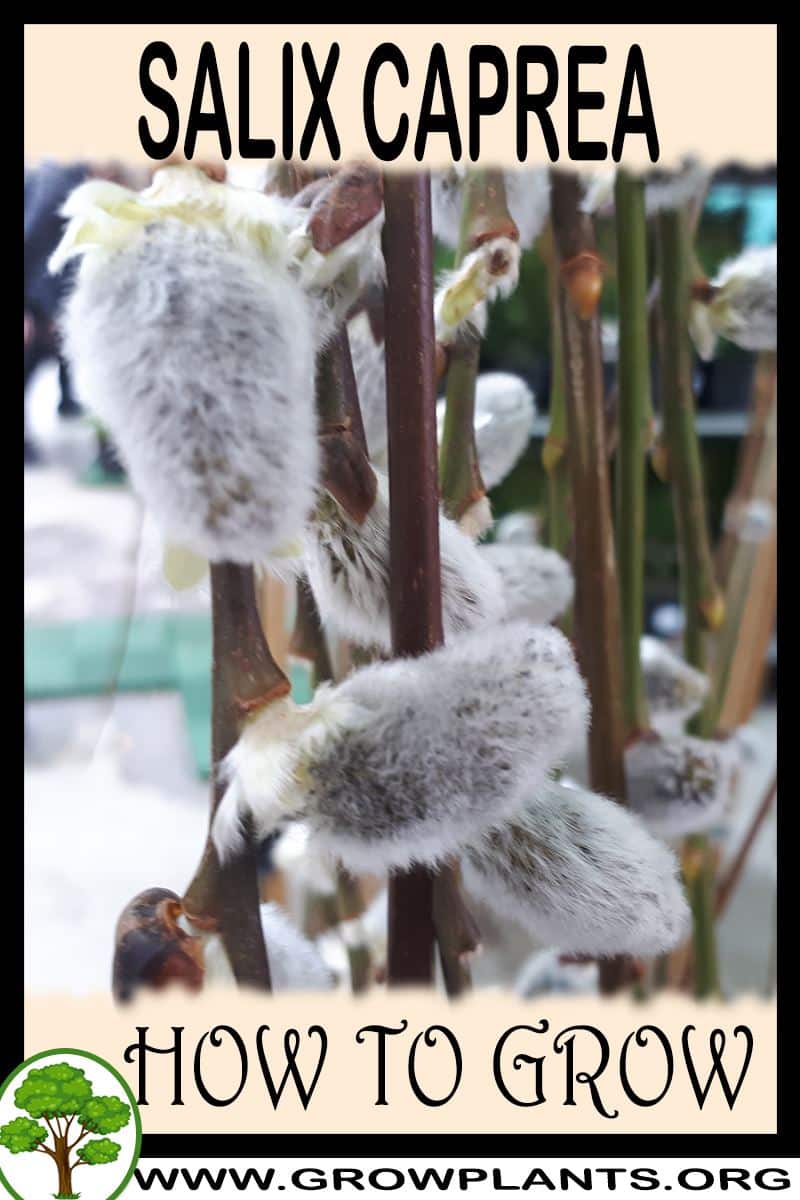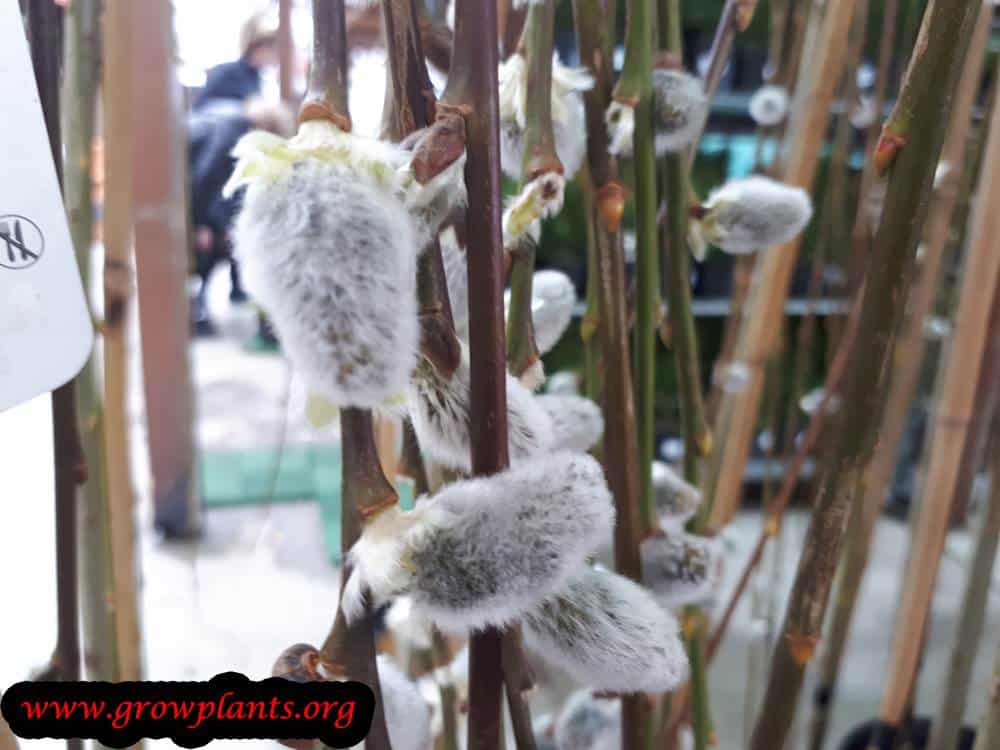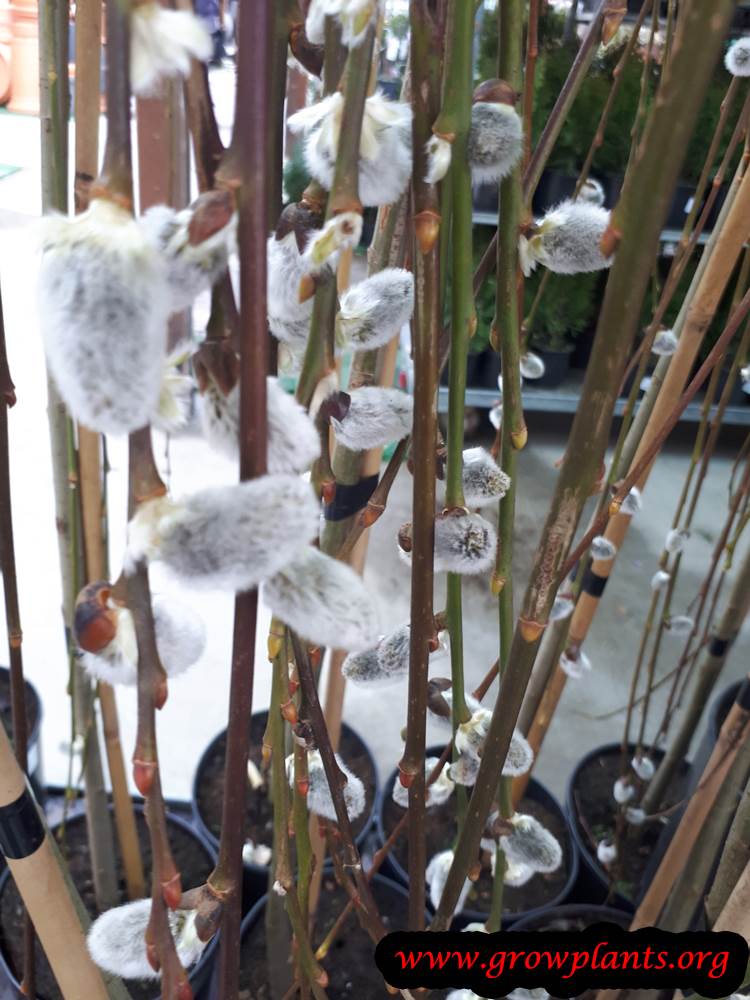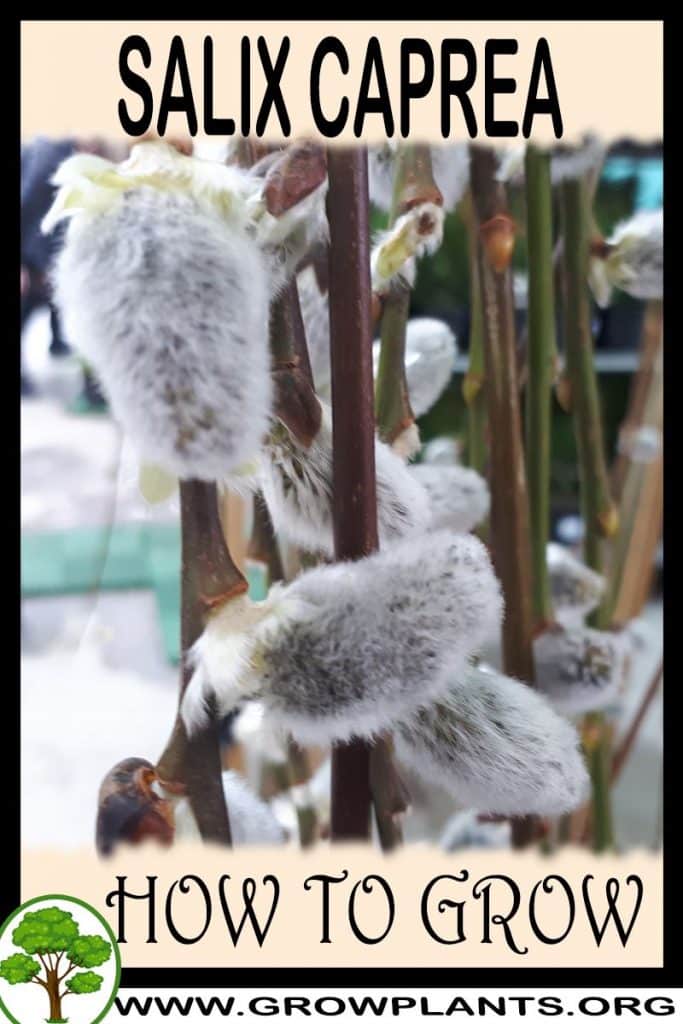
Plant Profile & Key Characteristics
Overview: A vigorous deciduous willow, a large shrub or small tree of 2-8 m (6-24 ft), grown as an ornamental and loved for its early spring “pussy willow” catkins. It is a hardy, fast-growing perennial.
Quick Specifications
| Specification | Attribute |
|---|---|
| Plant Type / Life Cycle | Deciduous shrub / small tree (perennial) |
| Foliage Type | Deciduous |
| Mature Size | 2-8 m (6-24 ft) tall |
| Growth Rate | Moderate to fast |
| Root System | Vigorous, moisture-seeking (typical of willows) |
| Hardiness | USDA zone 4-8 |
Growth Form & Structure
- Height & Spread: In the ground a large shrub or small tree 2-8 m (6-24 ft) tall; can be grown in a container and kept smaller by pruning.
- Growth Habit & Form: Upright, broad-crowned shrub or multi-stemmed small tree, often coppiced or pruned to encourage fresh catkin-bearing stems.
- Lifespan & Maturity: A hardy perennial that reaches size quickly given fast growth.
Anatomy & Physical Features
- Leaves & Foliage: Green, broadly oval leaves, greyish and hairy beneath.
- Flower Characteristics: Showy silky yellow-to-white catkins (the classic “pussy willow”) from teardrop-shaped hairy buds; dioecious, with male and female flowers on separate plants.
Primary Uses & Landscape Value
- Functional & Ornamental Roles: Grown as a spring-interest specimen, informal screen and wildlife plant; cut catkin stems are popular for indoor arrangements.
Care Guide: Planting, Soil & Watering
Overview: Goat willow is a vigorous deciduous shrub or small tree for full sun to light shade and moist soil. Like other willows it loves water and does best where the ground stays reliably damp.
Quick Care Requirements
| Requirement | Ideal Condition |
|---|---|
| Planting Season | Late winter through spring (into summer with moisture) |
| Growth Rate | Moderate to fast |
| Soil Type | Moisture-retentive soil (tolerates wet ground) |
| Water Need | Moderate to high — keep the soil consistently moist, never letting it dry out for long |
Planting & Establishment
- Best Planting Season: Plant from late winter through spring while the soil is cool and moist; summer planting works if the ground can be kept damp.
- How to Plant:
- Hole Preparation: Dig a planting hole roughly twice as wide as the root ball but no deeper, so the roots can spread into loosened soil.
- Soil Amendments: Dig in generous compost or well-rotted organic matter to help the soil hold the moisture willows crave.
- Planting Depth: Set the plant at the same depth it grew in its pot, with the root collar level with the surface — never bury the stem, which invites rot.
- Growth Speed & Expectations: Expect a moderate to fast pace of growth, bulking up noticeably over the first warm season.
Soil, Watering & Drainage Care
- Soil Mix & Drainage Needs: Grow in moisture-retentive soil; unlike most plants it tolerates heavy, wet ground and even boggy sites, though it also grows in ordinary garden soil kept reliably moist.
- Watering Schedule & Technique:
- Young / Newly Planted: Water generously and often after planting to keep the soil consistently moist while the roots establish.
- Established: Provide regular, deep watering so the soil stays reliably moist; do not let it dry out for long.
- Seasonal Adjustments: Increase watering through summer heat and reduce it in winter, keeping the soil from ever fully drying.
Climate, Light & Hardiness
Salix caprea (goat willow) is a very cold-hardy deciduous shrub or small tree suited to temperate climates. It prefers full sun, tolerates half shade, and thrives in moist soils.
Quick Climate Specifications
| Climate Zones | Temperate |
|---|---|
| USDA Hardiness Zones | 4–8 |
| Light Conditions | Full sun preferred; half shade tolerated |
| Frost Tolerance | High |
Sunlight & Light Exposure
Optimal Light Setup
Full sun is preferred for the best form and flowering (catkins); half shade is tolerated but growth is less vigorous.
Temperature Extremes & Hardiness
USDA Hardiness & Regional Limits
Very cold-hardy from zone 4 to 8, needing a proper cold winter as part of its deciduous cycle, typical of temperate-climate willows.
Cold Damage & Winter Protection
As a fully deciduous, cold-climate tree it needs no winter protection within its hardiness range.
Wind, Humidity & Microclimate
Wind Tolerance
Moderate to high, typical of willows.
Rainfall & Seasonal Moisture
Naturally suited to moist ground and tolerates a range of soil moisture conditions through the seasons.
Growing in Pots, Balconies & Indoors
Goat (pussy) willow is a small tree reaching 2-8 m, so it is not a long-term houseplant. The grower confirms it can be potted, though – a young tree, or one kept small by regular pollarding, makes a fine container specimen on a sunny patio, valued for its early catkins.
Quick Details
- Container Size: Start ~30-50 L (8-13 gal); keep it pollarded to hold it to size
- Indoor Suitability: Not a houseplant – a moisture-loving tree for outdoors
- Best Spot: Full sun (it prefers full sun) to half shade
- Soil & Drainage: Rich, moisture-retentive mix; it likes damp soil
- Watering in Pots: Plentiful – keep it moist; average to big amounts of water
Indoors & On the Windowsill
- Houseplant limits: Not a houseplant – it is a full-size, hardy tree that needs sun, cool air and plenty of water. Indoors it cannot get the light or room it needs.
- Containers while young: A young tree does well in a big pot; keep it small and shapely by cutting it back hard (pollarding or coppicing) every year or two – this also gives fresh stems and good catkins.
- Hardy outdoors: Fully hardy, so a potted tree stays outside year-round – just do not let it dry out.
On a Balcony or Patio
- Light & water: Give it a sunny, sheltered spot and keep it well watered; it is thirsty and dislikes drought. It is hardy and wind-tolerant.
- Practicalities: A filled pot is heavy once watered – check the balcony can take the load, and stand it where drainage runoff will not be a nuisance. A potted tree is heavy and needs frequent watering in warm weather. A drip irrigation kit with a timer can take over that watering check automatically.
Choosing the Pot, Soil & Long-Term Care
- Pot & drainage: A large 30-50 L pot; keep strong drainage holes and never leave it standing in a saucer of water, or the roots rot. Terracotta breathes and dries faster; glazed or plastic holds moisture longer. though it prefers a moisture-holding mix.
- Potting mix: A rich, moisture-retentive potting mix with added organic matter to hold water.
- Feeding: Potted plants use up their feed quickly as nutrients leach away with each watering, so feed more often than plants in open ground through the growing season.
- Repotting: Refresh the mix and root-prune every couple of years; pair this with hard top pruning to keep a potted tree to a workable size.
Fertilizing & Feeding
As a landscape tree, an established goat willow in reasonable soil typically needs little to no routine fertilizing – young, establishing trees benefit from steady light feeding, but ongoing yearly feeding of a mature tree is usually unnecessary.
Quick Fertilizing Specs
| Feeding Level | Light – established landscape trees usually need little routine feeding. |
|---|---|
| Main Nutrient Priority | A balanced, nitrogen-forward fertilizer while establishing; minimal feeding once mature. |
| Best Feeding Period | The first several years after planting, while the root system establishes. |
| Soil pH | Tolerates a wide range; not a demanding factor for this species. |
| Reduce/Stop Feeding | Taper off routine feeding once the tree is well established, and stop entirely for winter dormancy. |
Feeding by Growth Stage
Establishment After Planting
Help a newly planted goat willow establish a strong root system in its first years in the ground.
| Nutrient direction | A balanced, nitrogen-forward fertilizer to support root establishment and early canopy growth. |
|---|---|
| Timing | During the first several years after planting, while the root system establishes. |
| Frequency | A light feeding at planting, then continued light feeding through the establishment years, helps the tree develop a strong root system. |
| Fertilizer types | Balanced, nitrogen-forward fertilizer for establishing trees, Compost worked into the planting area |
| Precautions | Keep fertilizer away from the trunk and spread it over the developing root zone; avoid heavy feeding that outpaces the young tree’s root growth. |
Established Tree Maintenance
Maintain a mature, established goat willow with minimal intervention once it is well rooted in reasonable soil.
| Nutrient direction | Most established landscape trees, including this one, need little routine fertilizing if the soil is reasonably fertile; feed only if growth or leaf color signals a real deficiency. |
|---|---|
| Timing | Spring, and only if observed growth or leaf color indicates a need. |
| Frequency | Established trees in good soil often need little to no supplemental feeding; a light feeding is only worthwhile if growth has clearly slowed or leaves look pale. |
| Fertilizer types | Light balanced fertilizer, only if growth or color indicates a need, Light compost topdressing as general soil maintenance |
| Precautions | Avoid routine annual feeding of a healthy, established tree – unnecessary fertilizer can encourage excess soft growth that is more prone to storm or wind damage. |
Winter Dormancy
Let the tree go through its natural winter dormancy after leaf drop.
| Nutrient direction | None – withhold fertilizer through leaf drop and winter dormancy. |
|---|---|
| Timing | Autumn through winter, after leaf drop. |
| Frequency | No feeding during this period. |
| Fertilizer types | No feeding at this stage – this deciduous tree needs no supplemental nutrition through winter dormancy. |
| Precautions | Do not fertilize in autumn or winter; resume feeding only if needed once new growth appears in spring. |
Nutrient Deficiency Signs & Corrections
Undersized, pale leaves and a thin, sparse canopy compared to prior years’ growth.
| Possible causes | Nitrogen deficiency in poor or compacted soil, Root damage or soil compaction limiting nutrient uptake, common in landscape settings, Competition from turf grass growing right up to the trunk |
|---|---|
| Appears first on | New growth across the canopy, most visible when compared with previous seasons |
| What to check | Soil compaction around the root zone, Turf or other competing vegetation near the trunk, Any recent construction or grade changes nearby |
| Possible correction | Apply a balanced, nitrogen-forward feeding while the tree is establishing; for a mature tree, address soil compaction and turf competition before assuming the cause is purely a lack of fertilizer. |
Yellowing between the veins of new leaves while the veins stay green.
| Possible causes | High soil pH limiting iron availability, Compacted or poorly aerated soil restricting root oxygen and function, Root damage from construction or grade changes near the tree |
|---|---|
| Appears first on | Newest leaves in the upper canopy |
| What to check | Soil pH, Soil compaction and aeration around the root zone, Recent disturbance to the root area |
| Possible correction | Address the underlying soil pH or compaction issue first, then apply a chelated iron product per its label if chlorosis persists. |
General canopy thinning and dieback of smaller branches despite this species’ usual preference for moist soil.
| Possible causes | Soil waterlogged badly enough to suffocate roots, even for a moisture-tolerant species, Nutrient deficiency that is secondary to poor root function rather than a true shortage, Root damage from grade changes, compaction, or construction near the tree |
|---|---|
| Appears first on | Branch tips and overall canopy density |
| What to check | How saturated the soil stays and whether drainage has changed recently, Any grading, construction, or compaction near the root zone, The canopy thinning trend over several seasons rather than a single year |
| Possible correction | Address drainage and soil compaction first, since a nutrient deficiency here is often secondary to a root health problem, and only consider a light balanced feeding once root conditions improve. |
Pruning, Training & Seasonal Maintenance
Salix caprea (Goat willow, Great sallow, “pussy willow”) is a dioecious shrub or small tree usually grown – and often grafted – specifically to secure a particular sex, since the male catkins are the showier ornamental feature and appear in late winter/early spring on the previous season’s (one-year-old) wood, before the leaves emerge. Light structural work and deadwood removal can be done while dormant in autumn–winter, but if the catkin display matters, the main shaping and renewal cuts are best made immediately after the catkins fade in spring, giving a full season for new wood to form before the next winter’s show. The plant tolerates fairly hard pruning and regrows vigorously either way.
Quick Pruning & Maintenance Specs
| Pruning Tolerance | High |
| Primary Pruning Window | Immediately after catkins fade in spring, for major shaping/renewal (preserves the coming winter’s catkin wood) |
| Secondary Maintenance Window | Dormant autumn–winter, for deadwood removal and light size control |
| Typical Frequency | Annual light maintenance; harder renewal every few years as needed |
| Main Objective | Maintain form and vigor while preserving next winter’s catkin-bearing wood |
| Young Plant Priority | Establish desired form (single-stem tree or multi-stem shrub) early |
| Mature Plant Priority | Renewal pruning after bloom; remove rootstock suckers and excess watersprouts |
| Best Tool Type | Bypass secateurs for young wood, loppers and a pruning saw as stems thicken toward tree size |
| Avoid Heavy Pruning During | Just before or during the winter–early spring catkin display, if preserving that display matters |
Pruning by Plant Age & Size
Newly Established
Decide early whether to train it as a small single/few-stem tree or let it develop as a multi-stem shrub; remove only damaged growth in the first year or two while it establishes.
Young / Formative
Multi-leader (shrub) or a simple single/few-leader small-tree form both suit this species; choose the strongest, best-placed stems for the chosen form and remove competing weak ones.
Mature / Established
Focus on post-bloom renewal – thinning crowded or crossing stems, controlling overall size, and removing rootstock suckers and excess watersprouts – rather than any further leader training.
Seasonal Pruning Schedule
Post-Flowering (old-wood bloomer)
Objective: shape and renew the plant while preserving next season’s catkin wood. Remove: up to a third of oldest/weakest stems, crossing or crowded growth, and control height/spread. Do not remove: so much that no strong one-year-old wood remains going into the next winter. Expected response: a flush of new shoots over the growing season that will bear the following winter’s catkins. Flowering impact: positive long-term, since this timing maximizes the new wood available for next year’s catkin display.
Dormant / Winter
Objective: sanitary maintenance. Remove: dead, damaged, or diseased wood, and any rootstock suckers below a graft union. Do not remove: significant amounts of one-year-old wood if the catkin display is close at hand. Expected response: a tidier plant with no meaningful loss to the coming catkin show if kept light. Flowering impact: minimal if limited to deadwood and suckers.
Flowering & Fruiting Wood
Catkins form on one-year-old wood, appearing before the leaves in late winter/early spring. Heavy pruning done in late autumn or deep winter removes stems that were about to display catkins that same season; pruning right after the catkins fade instead sacrifices nothing and gives the full growing season to produce fresh wood for the next display.
Structural Pruning & Training
Manage crossing, rubbing, or overly congested stems, and control overall height/spread – willows can grow quickly and outsize their space if left unchecked. Whether trained as tree or shrub form, thinning excess interior growth improves airflow and stem quality.
Special Growth to Remove
Rootstock suckers below the graft union – since facts note this species is often grafted specifically to guarantee sex/cultivar, any growth arising from below the graft should be removed at its point of origin, as it will not match the desired plant. Watersprouts (vigorous, upright, weak-wooded shoots) are a common response to hard pruning on willows and should be thinned out, keeping only well-placed ones if renewal growth is wanted there.
Container & Small-Space Pruning
In a container, keep to the shrub form with more frequent, lighter renewal cuts to control the size this species would otherwise reach in the ground (up to several meters); root and canopy balance should be checked at repotting.
Tools
Bypass secateurs for young, pencil-thick growth and catkin-bearing stems; loppers for older wood; a pruning saw for any stems that have thickened toward small-tree size.
Tool Hygiene & Disease Risk
Routine – clean, sharp tools are generally sufficient; no major transmissible disease is flagged in the facts for this species, though as with most willows, avoid pruning in wet conditions that favor canker/blight pathogens on fresh cuts.
Cut Placement & Technique
Make thinning cuts back to a main stem rather than leaving stubs; cut just outside the branch collar on larger removals; remove rootstock suckers flush at their point of origin below the graft, not partway up.
Heavy Pruning & Rejuvenation
Well tolerated – this species regrows vigorously even from a hard renewal cut. If used, do it right after the catkin display fades in spring, spreading a severe rejuvenation over two seasons if a large, overgrown specimen needs substantial size reduction.
Post-Pruning Care
Water normally, especially after a harder renewal cut; no extra feeding is needed given this species’ vigorous natural regrowth. Watch for a flush of watersprouts after any hard cut and thin them the following dormant season.
Common Pruning Mistakes
Doing the main structural cutback in deep autumn/winter and losing that season’s catkin display; leaving rootstock suckers to grow unchecked, which can eventually overwhelm the grafted top; letting watersprout regrowth go unthinned after a hard cut, leading to a dense, weak-wooded thicket.
When NOT to Prune
Avoid major structural pruning in late autumn through the winter catkin season if the display matters; avoid heavy cutting during a hot, dry stretch right after leaf-out, when the plant is pushing new growth.
Recommended Tools (by task)
- Young plant – formative shaping, pencil-thick stems: bypass_secateurs – clean precise cuts while establishing form.
- Mature plant – post-bloom renewal and sucker/watersprout removal: loppers – handles the thicker one- and two-year wood typical of this stage.
- Older, larger specimens grown as small trees – thick basal wood: pruning_saw – needed once stems exceed lopper capacity.
Propagation Guide
Because this species is dioecious, with male and female flowers on separate trees, the sex of a seed-grown plant cannot be known until it flowers; to guarantee a female tree, growers commonly graft a scion from a tree of known sex onto rootstock, which the site notes is specifically how a female is secured here. Stem cuttings, being equally clonal, can achieve the same result and are a commonly used, simpler alternative for fixing a known sex in willows generally. Growing from seed is easy but leaves the sex of the resulting tree unknown; grafting or other known-sex propagation is only needed when a particular sex or selected form is wanted.
Quick Propagation Specs
| Best Propagation Method | Stem cuttings (to fix a known sex or selection) or grafting for named/selected forms |
| Alternative Methods | Seed (sex unknown until flowering) |
| Propagation Difficulty | Easy by cuttings or seed; moderate by grafting |
| Seed True-to-Type | Genetically true species, but sex is unpredictable until flowering since the species is dioecious |
| Vegetative True-to-Type | Yes, including sex |
| Best Propagation Season | Cuttings: dormant-season hardwood in winter, or softwood in summer with humidity; Grafting: while dormant, winter to early spring; Seed: sow fresh as it ripens in late spring |
| Seed Germination Time | Fast when fresh, typically days to about two weeks |
| Cutting Rooting Time | Commonly a few weeks |
| Seed Sowing Depth | Surface-sow, do not cover |
Growing from Seed
Seed Handling & Viability
Willow seed is very short-lived, remaining viable for only days to a couple of weeks after release, so it must be sown very soon after collection.
Sowing Season
As seed ripens and is shed, typically in late spring.
Sowing Depth & Orientation
Surface-sow onto consistently moist soil or mix; do not bury the tiny seed.
Germination Conditions
Keep the surface constantly moist; fresh seed germinates quickly.
Germination Time
Typically days to roughly two weeks when sown fresh.
Stem Cuttings
Cutting Type
Hardwood or softwood cuttings, taken from a tree of known sex if a particular sex is wanted.
Best Timing
Hardwood cuttings in the dormant season (winter); softwood cuttings during active summer growth with extra humidity.
Rooting Setup
Willows generally root readily in moist soil or water.
Rooting Hormone
Generally unnecessary — willow stems contain natural rooting compounds, though hormone can still speed rooting.
Rooting Time
Commonly a few weeks.
Grafting & Budding
Why Grafting Is Used
To guarantee a tree of known sex: since this species is dioecious, grafting scion wood taken from a tree already known to be female onto separate rootstock secures a female tree without waiting years for a seedling to flower.
Preferred Grafting Methods
Not specified by the site; standard dormant-season woody-plant methods such as whip-and-tongue or cleft grafting would be typical.
Rootstock
Seedling or rooted-cutting Salix caprea rootstock is typically used.
Scion Selection
Scion wood is taken from a tree of confirmed sex (female, per the site’s note) or a desired selected form.
Best Grafting Season
While the tree is dormant, winter to early spring.
Graft Aftercare
Keep the graft union protected and the scion from drying out until it has visibly taken and begun growing.
Bloom & Flower Guide
Quick Details
- Bloom Season: Early spring, before the leaves
- Time to First Bloom: A young plant flowers once established, within a few years
- Flower Appearance: Soft, silvery catkins that open pompon-like; males turn yellow with pollen, females stay green
- Edibility: Ornamental / none – goat willow is grown for its early catkins, not for eating
Detailed Blooming Overview
Goat willow is the classic “pussy willow.” In early spring, before the leaves unfold, the hairy buds swell into soft, silvery catkins along the bare stems. As they mature the male catkins flush golden with pollen while the female catkins stay green – the plant is dioecious, with the sexes on separate trees. Because they open so early, these catkins are one of the first and most important nectar and pollen sources for emerging bees, including queen bumblebees.
Flower Characteristics
- Hairy, drop-shaped buds opening into rounded, pompon-like catkins.
- Male catkins yellow with pollen; female catkins green.
- Separate male and female trees (dioecious).
Bloom Care & Thinning
- Managing the bloom: None required; prune to shape after flowering, as it blooms on older wood.
- Pollination & wildlife: An outstanding early-season forage plant – leave the catkins to feed spring bees.
Pests, Diseases & Troubleshooting
Overview: Goat willow (pussy willow) is a robust, wildlife-friendly willow that tolerates most pests well, but it gets the genus’s leaf beetles, aphids, sawflies, scale, borers and the scab/anthracnose blight complex. As a fast, brittle, freely seeding tree its main practical issues are structural – keep it vigorous, well-pruned and sited with room to grow.
Quick Troubleshooting Overview
| Issue / Pest | Main Symptom | Primary Solution |
|---|---|---|
| Willow leaf beetle | Skeletonised, brown, lacy leaves | Hand-pick/hose; Bt or insecticidal soap if heavy |
| Aphids (incl. giant willow aphid) | Dense stem colonies, honeydew, sooty mould | Water jet; predators; soap on small trees |
| Scab / anthracnose (willow blight) | Black leaf spots and dying shoot tips | Sanitation; resistant types; copper at bud-break |
| Willow rust | Orange pustules under leaves | Resistant varieties; airflow; clear leaf litter |
| Borers | Holes, frass, dieback, snapping wood | Keep trees vigorous; prune out infested wood |
| Weak/brittle wood | Split, shed branches in wind | Formative pruning; coppice/pollard; good siting |
Common Pests & Management
- Willow leaf beetles (Plagiodera versicolora / Phratora spp.):
- Symptoms: Small metallic blue-black beetles and their black larvae feed together on the leaves, skeletonising them so the foliage turns brown and lacy; repeated attacks weaken and disfigure the tree, especially on ornamental and coppiced willows.
- Prevention & Control: Tolerate light feeding on vigorous trees; hand-pick or hose off beetles and larvae on smaller shrubs; encourage ladybirds and predatory bugs. For heavy infestations on ornamental willows, spot-treat with insecticidal soap or neem, or a Bt product against the larvae.
- Giant willow aphid & aphids (Tuberolachnus salignus & other aphids):
- Symptoms: Dramatic dense colonies of large dark aphids clustered on stems and shoots (giant willow aphid), plus smaller aphids on new growth, producing copious sticky honeydew, sooty mould and swarming wasps and ants.
- Prevention & Control: Established willows tolerate aphids well and predators usually catch up; blast colonies off with water and wash away sooty mould. On small or young trees, insecticidal soap or neem on reachable growth reduces numbers; avoid excess nitrogen feeding.
- Willow sawflies (Nematus / Pontania spp.):
- Symptoms: Caterpillar-like larvae chew leaves from the edges, sometimes stripping shoots, while gall-forming species (Pontania) raise bean-like red galls on the leaves; mostly cosmetic but disfiguring in numbers.
- Prevention & Control: Pick off larvae and galled leaves on small plants; encourage birds and parasitic wasps. Bt or insecticidal soap controls heavy leaf-feeding larvae; galls need no treatment beyond removal if disliked.
- Willow scale & oystershell scale (Chionaspis salicis / Lepidosaphes ulmi):
- Symptoms: Encrustations of small white or brown mussel-shaped scales along stems and branches, causing yellowing, dieback of twigs and general loss of vigour; common on stressed and older willows.
- Prevention & Control: Prune out badly encrusted wood; brush off light infestations; apply horticultural oil to smother scale, targeting the crawler stage. Keep trees vigorous, as scale exploits stress.
- Clearwing / willow borers (Sesiidae & Cryptorhynchus lapathi):
- Symptoms: Larvae tunnel in the trunk and branches, leaving holes, sawdust-like frass, weakened wood and dieback; borer-riddled willows snap in wind. Worst on stressed, wounded or drought-hit trees.
- Prevention & Control: Keep trees healthy and well-watered to resist attack; avoid wounding the bark; prune out and destroy infested wood. There is no easy spray for wood-boring larvae, so prevention through vigour and sanitation is key.
Diseases & Fungal Issues
- Willow scab & anthracnose (willow blight) (Venturia / Marssonina salicicola):
- Symptoms: Brown to black spots and blotches on leaves, blackened wilting shoot tips, and cankers on young stems; in wet springs the two together (‘willow blight’) can defoliate and disfigure the tree, with brown dead leaves clinging on.
- Treatment & Management: Rake up and destroy fallen leaves and prune out blackened shoots and cankers to reduce overwintering spores; improve airflow; avoid overhead wetting. Choose resistant species/cultivars; a copper fungicide at bud-break helps on valuable, repeatedly affected trees.
- Willow rust (Melampsora spp.):
- Symptoms: Masses of bright orange-yellow powdery pustules on the leaf undersides in summer, with yellow spotting above; heavy rust yellows and drops leaves early and weakens coppiced and basket willows.
- Treatment & Management: Grow resistant varieties (important in basketry willows), clear fallen leaves, and thin for airflow; avoid dense, damp plantings. Fungicides are seldom justified except in nursery or production settings.
- Black canker (Glomerella miyabeana):
- Symptoms: Dark sunken cankers on stems and dark spots on leaves, often paired with scab, causing shoot dieback and blackened foliage in wet conditions.
- Treatment & Management: Prune out and burn cankered wood well below the lesion, disinfecting tools; improve airflow and remove leaf litter; grow resistant types. Copper sprays give some protection on high-value trees.
- Powdery mildew (Uncinula / Erysiphe spp.):
- Symptoms: White powdery coating on leaves in late summer, mainly cosmetic but weakening on young or stressed plants in crowded, still conditions.
- Treatment & Management: Improve air movement and avoid overcrowding; remove badly affected growth. Rarely needs spraying, but sulphur or potassium bicarbonate helps on ornamentals.
- Watermark disease (Brenneria salicis):
- Symptoms: A bacterial disease (notorious in cricket-bat willow) causing wilting, reddening and dieback of branches, with a characteristic watery brown stain in the wood when cut.
- Treatment & Management: There is no cure; remove and destroy affected branches or whole trees to limit spread and use clean, disease-free planting stock. Most relevant to production willows but worth knowing for any Salix.
Growing Difficulties & Abiotic Problems
- Weak, brittle wood & storm breakage:
- Cause & Symptoms: Goat willow grows fast and soft and its branches split in wind; large old specimens shed limbs and the wounds invite borers and canker.
- Correction Strategy: Prune formatively when young, remove dead and crossing wood, and coppice or pollard to keep vigorous plants sturdy and manageable.
- Leaf scorch & drought stress:
- Cause & Symptoms: Willows are moisture-lovers; in dry soil the leaves brown at the edges, wilt and drop early, and stressed trees become far more prone to scab, borers and scale.
- Correction Strategy: Plant in moisture-retentive soil near a water source, mulch well, and water deeply in dry spells, especially while young. Matching the tree to a damp site prevents most stress problems.
- Chlorosis in poor or alkaline soil:
- Cause & Symptoms: Pale, yellowing leaves with green veins where thin, compacted or very alkaline soil limits iron and manganese uptake.
- Correction Strategy: Improve soil with organic matter, keep it moist, and use a chelated-iron feed for a temporary green-up while correcting the underlying soil and drainage.
- Prolific self-seeding:
- Cause & Symptoms: Goat willow seeds abundantly on the wind and can colonise damp ground and neglected sites, becoming weedy.
- Correction Strategy: Remove unwanted seedlings while small; deadhead or prune female catkins if self-seeding is a problem, and site away from sensitive damp habitats.
What Helps – Products & Tools
Willows are best kept healthy rather than sprayed: good structural pruning (or coppicing/pollarding), ample moisture and sanitation of fallen leaves and cankered wood prevent most problems. Where treatment is warranted on smaller ornamental willows, use insecticidal soap or neem for beetles and aphids, Bt for leaf-feeding sawfly and beetle larvae, horticultural oil for scale, and a copper fungicide at bud-break for scab, anthracnose and canker. Resistant varieties are the real answer to rust and blight.