Plant Profile & Key Characteristics
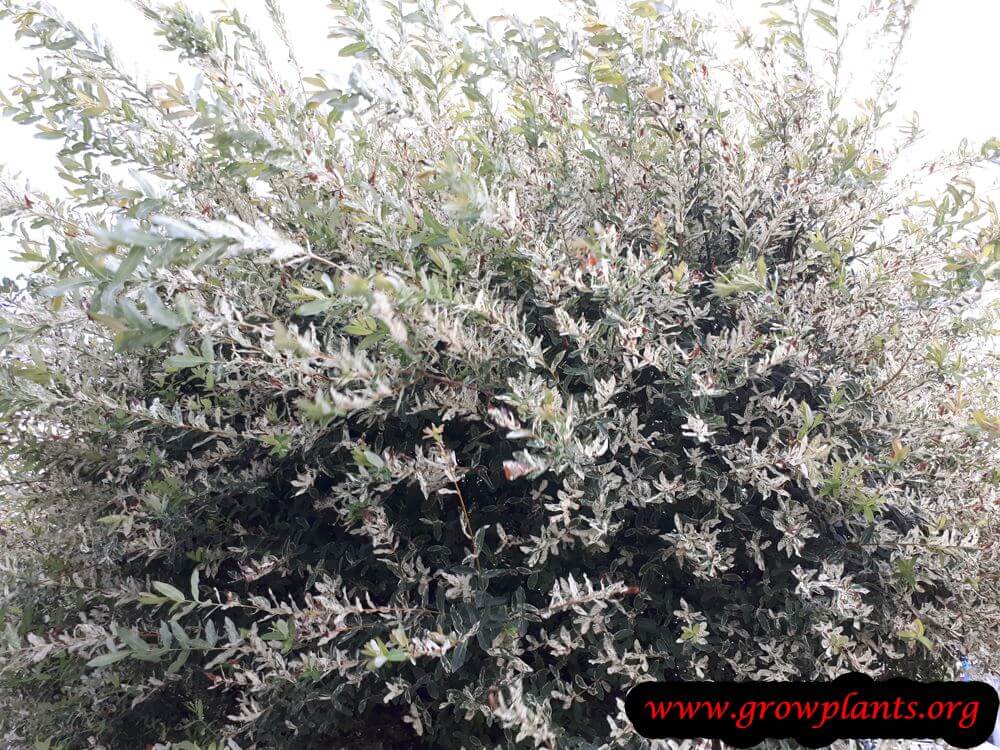
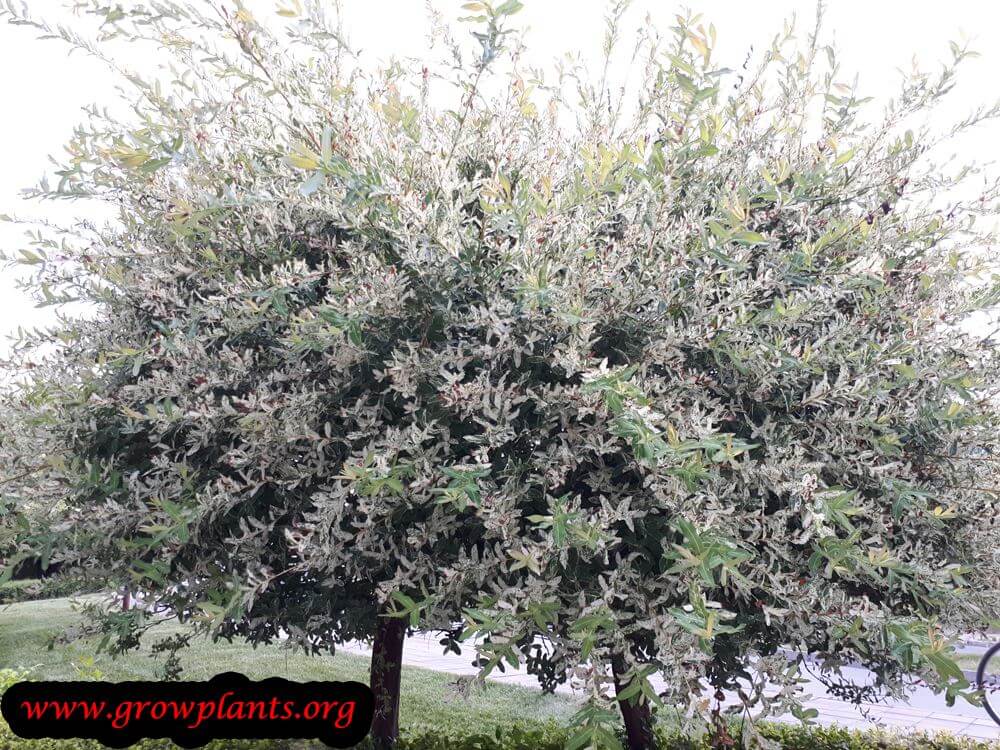
Overview: A fast-growing deciduous shrub to small tree of 1-2 m (3-6 ft), grown for its variegated new growth. It is an ornamental hedge and specimen plant, also popular for bonsai.
Quick Specifications
| Specification | Attribute |
|---|---|
| Plant Type / Life Cycle | Deciduous shrub / small tree (perennial) |
| Foliage Type | Deciduous |
| Mature Size | 1-2 m (3-6 ft) tall |
| Growth Rate | Moderate to fast |
| Root System | Vigorous, moisture-seeking (typical of willows) |
| Hardiness | USDA zone 4-10 |
Growth Form & Structure
- Height & Spread: A rounded shrub 1-2 m (3-6 ft) tall in the ground; also grows well in a container, and its size is easily held back by pruning.
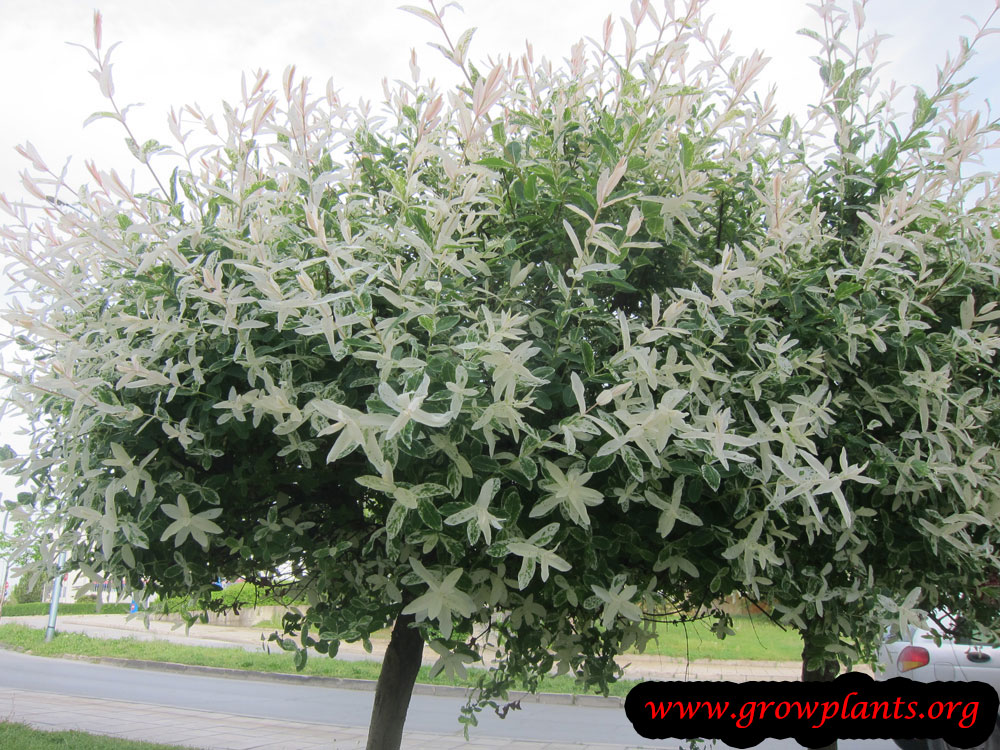
- Growth Habit & Form: Dense, twiggy, upright-arching shrub often trained on a standard stem or clipped as a hedge; responds well to hard pruning, which refreshes the coloured new growth.
- Lifespan & Maturity: A hardy perennial shrub that reaches full size quickly given its fast growth.
Anatomy & Physical Features
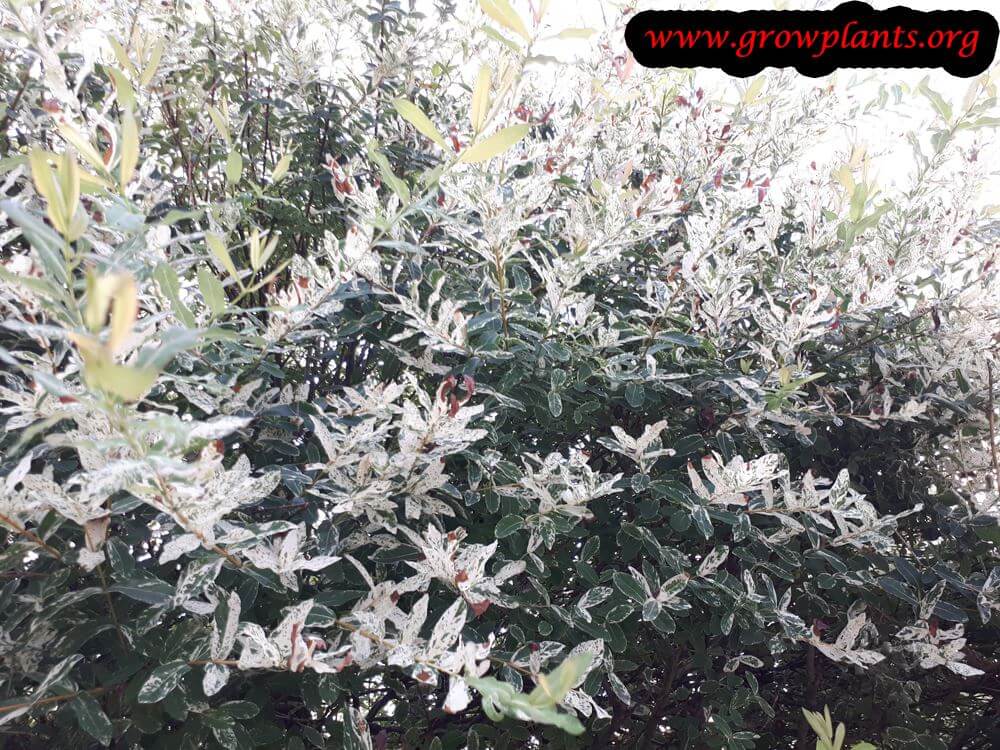
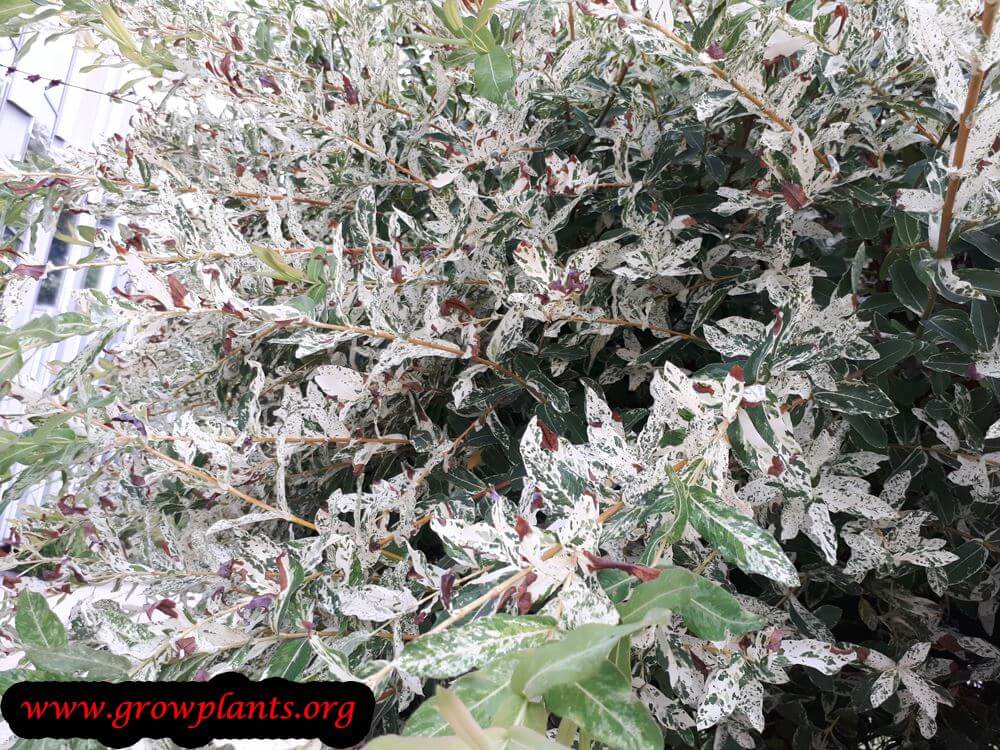
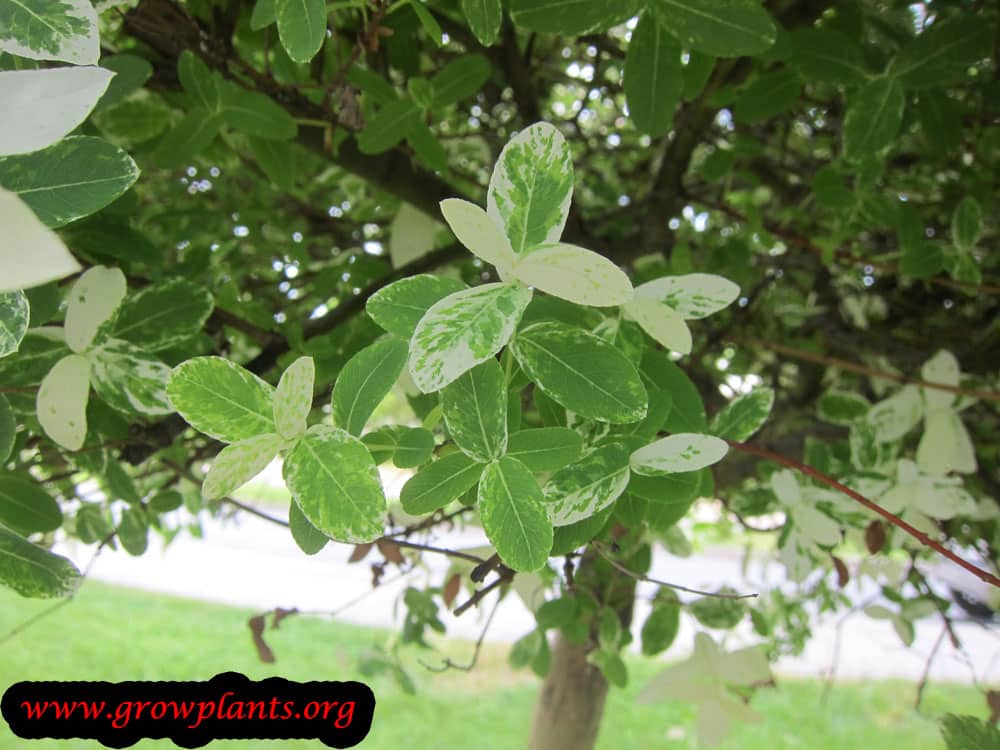
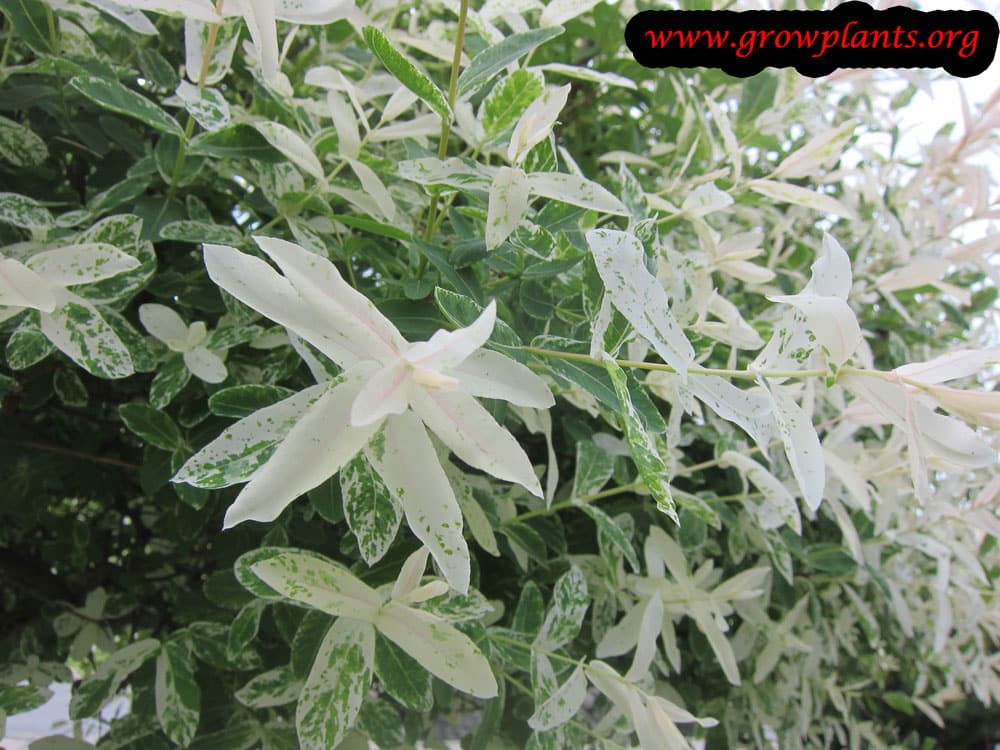
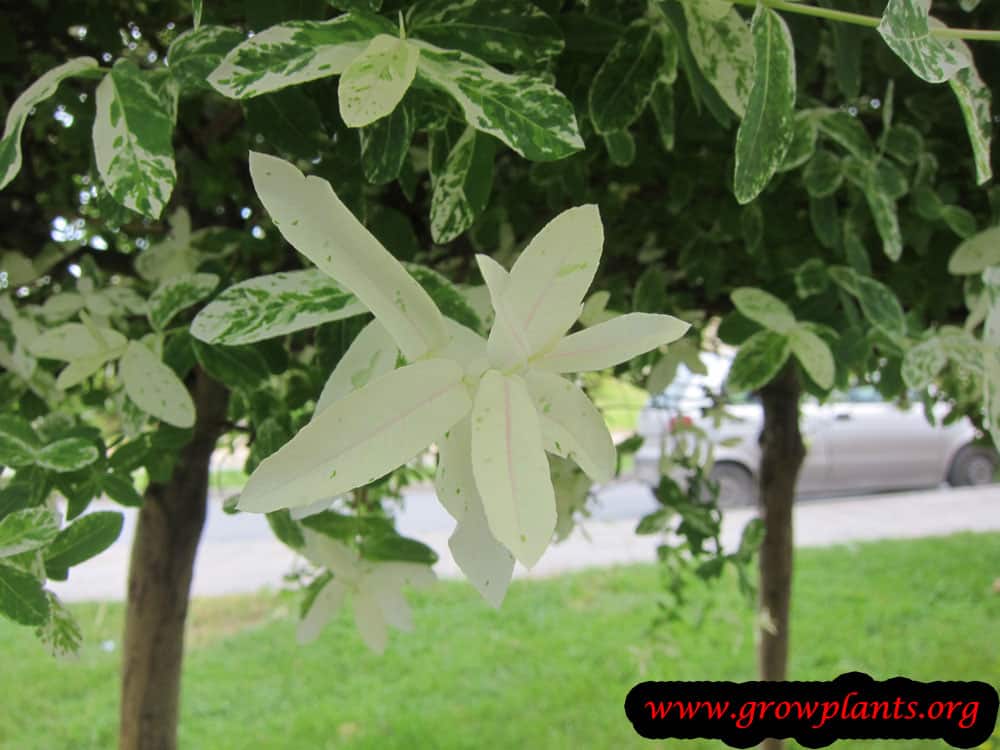
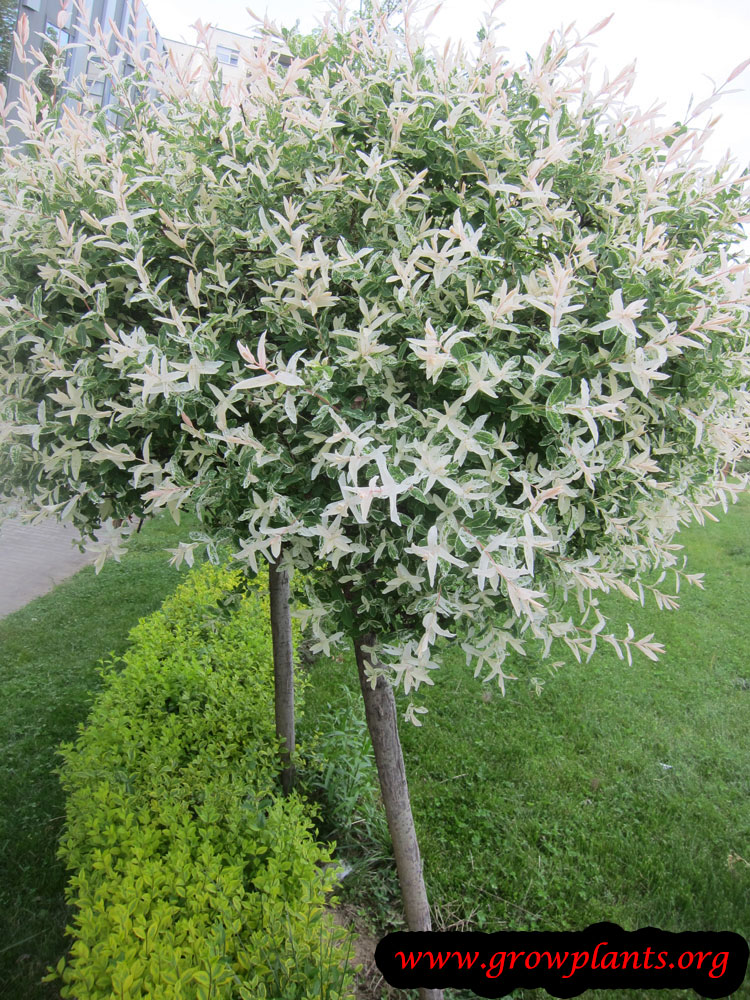
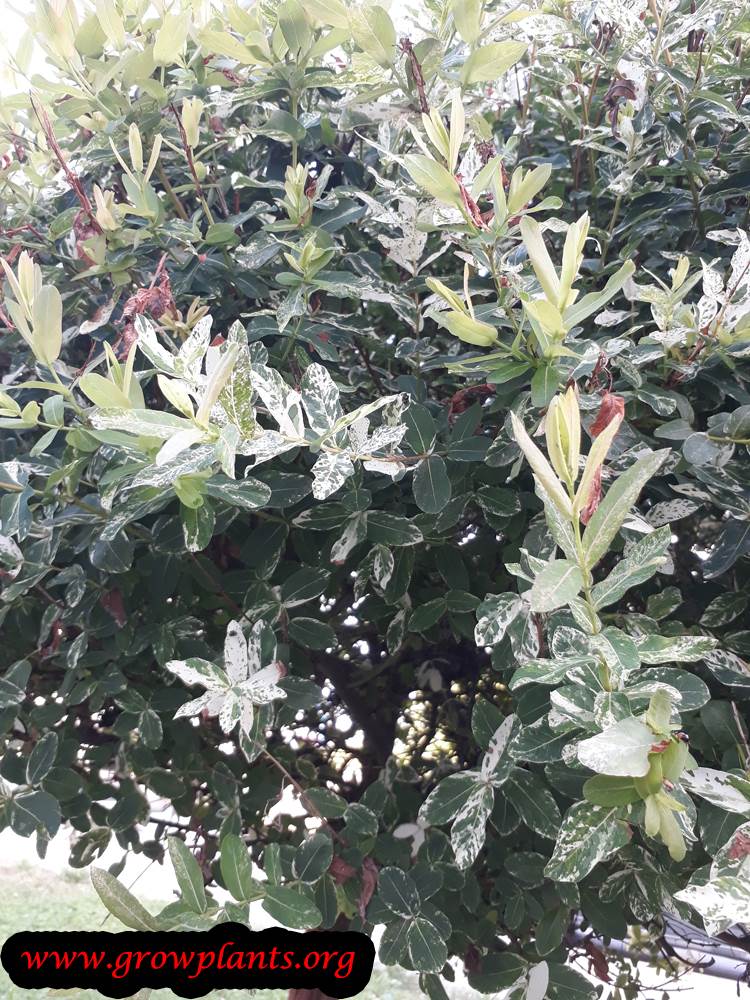
- Leaves & Foliage: Elliptic leaves that emerge white, pink and pale green (the “dappled” effect) before maturing to green.
- Flower Characteristics: Small green catkin-like flowers at the edge of the bracts, of minor ornamental value.
Primary Uses & Landscape Value
- Functional & Ornamental Roles: Grown as a colourful hedge, border shrub or standard specimen, and widely used for bonsai.
Care Guide: Planting, Soil & Watering
Overview: Dappled willow is a fast-growing deciduous shrub that enjoys full sun and reliably moist, well-draining soil. It appreciates a cold winter and steady moisture, tolerating wetter ground than most shrubs.
Quick Care Requirements
| Requirement | Ideal Condition |
|---|---|
| Planting Season | Late winter to spring |
| Growth Rate | Moderate to fast |
| Soil Type | Moisture-retentive soil (tolerates wet ground) |
| Water Need | Moderate to high — keep the soil consistently moist, never letting it dry out for long |
Planting & Establishment
- Best Planting Season: Plant in late winter or spring while dormant; the cool, moist soil helps the roots settle before growth begins.
- How to Plant:
- Hole Preparation: Dig a planting hole roughly twice as wide as the root ball but no deeper, so the roots can spread into loosened soil.
- Soil Amendments: Dig in generous compost or well-rotted organic matter to help the soil hold the moisture willows crave.
- Planting Depth: Set the plant at the same depth it grew in its pot, with the root collar level with the surface — never bury the stem, which invites rot.
- Growth Speed & Expectations: Expect a moderate to fast pace of growth, bulking up noticeably over the first warm season.
Soil, Watering & Drainage Care
- Soil Mix & Drainage Needs: Grow in moisture-retentive soil; unlike most plants it tolerates heavy, wet ground and even boggy sites, though it also grows in ordinary garden soil kept reliably moist.
- Watering Schedule & Technique:
- Young / Newly Planted: Water generously and often after planting to keep the soil consistently moist while the roots establish.
- Established: Provide regular, deep watering so the soil stays reliably moist; do not let it dry out for long.
- Seasonal Adjustments: Increase watering through summer heat and reduce it in winter, keeping the soil from ever fully drying.
Climate, Light & Hardiness
Dappled willow grows in temperate, Mediterranean and subtropical climates in full sun, thriving where soil stays moist. It is a very cold-hardy deciduous shrub (site data lists USDA zones 4–10) that welcomes a cold winter dormancy; hot, dry conditions are more of a challenge than winter cold.
Quick Climate Specifications
| Climate Zones | Temperate, Mediterranean, subtropical |
|---|---|
| USDA Hardiness Zones | 4–10 |
| Optimal Temp Range | Cool to mild, roughly 15–24°C (59–75°F) |
| Cold Damage Begins | Dormant wood is very hardy; late frost can nip the tender spring flush |
| Approx. Survival Minimum | Zone 4 corresponds to winter lows near −34°C (−29°F) |
| Frost Tolerance | High (dormant) |
| Light Conditions | Full sun (light afternoon shade in hot climates) |
| Wind Tolerance | Moderate to High |
Sunlight & Light Exposure
Optimal Light Setup
Full sun brings out the brightest pink, white and green variegation on the new growth; too much shade dulls the colour and thins the habit.
Direct Sun Requirement
Full sun is best in cool and mild climates. It grows fast and dense with plenty of light.
Shade & Heat Management
In hot climates the pale variegated leaves can scorch in intense afternoon sun, so light afternoon shade and a cool, moist root zone help keep the foliage clean.
Temperature Extremes & Hardiness
USDA Hardiness & Regional Limits
The site data lists hardiness zones 4–10. It is very cold-hardy and actually benefits from a cold winter, so it performs best where winters are genuinely cool rather than in hot, frost-free lowlands.
Cold Damage & Winter Protection
Dormant wood withstands hard freezes without protection; only the coloured spring flush is vulnerable, and a late frost may brown it before it re-grows.
Frost Sensitivity
The dormant plant is frost-hardy; the soft, brightly coloured new leaves are the frost-sensitive stage.
Extreme Heat Tolerance
Prolonged extreme heat with dry air stresses it and browns leaf edges; keeping the roots moist and cool is the key to getting it through hot summers.
Wind, Humidity & Microclimate
Humidity Preferences
Prefers moist air and soil; foliage crisps at the margins in hot, dry wind.
Wind Tolerance
Flexible willow stems make it wind-firm, so it copes well with moderate to strong wind.
Coastal / Salt Tolerance
Willows are generally reasonably tolerant of coastal exposure, so moderate salt spray is usually acceptable.
Microclimate Recommendations
A sunny position with a cool, consistently moist root run - near a pond or in a damp border - suits it best and protects the foliage from heat stress.
Growing in Pots, Balconies & Indoors
The dappled willow is a compact, colourful shrub – unlike its giant relatives it stays 1-2 m (3-6 ft), which makes it a good container plant for a patio or balcony, though the grower is clear it is not a houseplant. Its pink-and-white new growth shows best in full sun, and a pot naturally limits its size and keeps its thirsty roots in check.
Quick Details
- Container Size: A roomy tub, roughly 20-40 L (5-10 gal), suits its shrubby 1-2 m size; the bigger the pot, the less it dries out
- Indoor Suitability: Not a houseplant – it needs full sun, fresh air and a winter cold period
- Best Spot: Full sun outdoors for the brightest leaf colour
- Soil & Drainage: Moisture-retentive but not waterlogged; a rich, organic mix that stays damp
- Watering in Pots: Average to generous – it is thirsty and hates drying out; keep the soil steadily moist
Indoors & On the Windowsill
- Not an indoor plant: The grower marks it as unsuitable indoors – it is a hardy deciduous shrub that needs sun, fresh air and a cold dormant winter it cannot get in a warm room.
- Outdoor container plant: Think of it as a patio shrub rather than a windowsill plant; its place is on the balcony, not inside.
- Overwintering: Being hardy, it stays outside over winter; in a very cold area, protect the pot from hard freezing, as roots in a container are more exposed than in the ground.
On a Balcony or Patio
- Light & colour: Give it the sunniest spot for the best variegation – too much shade dulls the pink tones. It makes a bright, tidy standard or bush in a tub.
- Water & wind: As a thirsty willow in a pot it dries fast in sun and reflected wall heat, so check moisture daily in summer; shelter it from drying wind.
Choosing the Pot, Soil & Long-Term Care
- Pot & drainage: A large tub with drainage holes; it likes moisture, so a water-holding glazed or plastic pot suits it better than fast-drying terracotta – just do not let it stand permanently waterlogged.
- Potting mix: A rich, organic, moisture-retentive mix – potting soil with added organic matter.
- Feeding: Potted plants leach nutrients with watering, so feed through the growing season to keep the fresh, colourful new growth coming.
- Repotting & pruning: Pot on or refresh the mix every year or two; prune hard in late winter to encourage the brightly coloured young stems and keep it compact.
Fertilizing & Feeding
Dappled willow is a vigorous woody plant but a light feeder in the landscape; a balanced complete fertilizer is only needed when growth or leaf color shows a shortfall, and mulch plus decent soil usually carry it.
Quick Fertilizing Specs
| Feeding Level | Light |
|---|---|
| Best Feeding Period | In spring, only if growth or color indicates a need. |
| Main Nutrient Priority | A balanced complete fertilizer, used sparingly. |
| Soil pH | Tolerates a wide range. |
| Organic Options | Compost and mulch over the root zone. |
| Micronutrients | Iron may need attention on alkaline soils. |
| Reduce/Stop Feeding | Do not feed dormant or well-established plants that grow well. |
Feeding by Growth Stage
Establishment
Help the newly planted tree or shrub settle its roots.
| Nutrient direction | A light application of a balanced complete fertilizer, if soil is poor, plus organic matter. |
|---|---|
| Timing | In the first seasons after planting, as growth begins in spring. |
| Frequency | A light feeding is usually enough while roots establish. |
| Fertilizer types | Balanced complete fertilizer used sparingly, Compost or organic matter and mulch over the root zone |
| Precautions | Woody landscape plants need little fertilizer; feed sparingly and rely on good soil and mulch. |
Spring growth flush
Support the spring flush of new shoots and leaves.
| Nutrient direction | A balanced complete fertilizer, only if growth or leaf color calls for it. |
|---|---|
| Timing | As new growth pushes in spring. |
| Frequency | At most a light feeding in spring; established plants often need none. |
| Fertilizer types | Balanced complete fertilizer applied lightly |
| Precautions | Avoid heavy feeding near water, which wastes nutrients and can run off; established plants rarely need it. |
Winter dormancy
Let the plant rest without pushing tender growth.
| Nutrient direction | None – withhold fertilizer while the plant is resting. |
|---|---|
| Timing | Through winter dormancy after the leaves drop. |
| Frequency | No feeding at this stage. |
| Fertilizer types | No feeding at this stage – a resting plant is not taking up nutrients. |
| Precautions | Do not fertilize until active growth resumes. |
Nutrient Deficiency Signs & Corrections
Older, lower leaves turn uniformly pale green to yellow and overall growth slows.
| Possible causes | Low available nitrogen in the soil, Cold or waterlogged soil limiting root uptake, Nitrogen leached away after heavy watering or rain |
|---|---|
| Appears first on | Older, lower leaves. |
| What to check | Whether paling starts on old lower leaves, Recent feeding history, Soil moisture and drainage |
| Possible correction | Apply a balanced complete fertilizer at a light rate and improve drainage; nitrogen-hungry plants green up as growth resumes. |
Youngest leaves show yellowing between green veins (interveinal chlorosis).
| Possible causes | High or alkaline soil pH locking up iron, Waterlogged or poorly aerated soil, Genuinely low available iron |
|---|---|
| Appears first on | Newest, youngest leaves. |
| What to check | Whether yellowing is on new versus old growth, Soil pH, Soil drainage and watering habits |
| Possible correction | Confirm soil pH and correct it if it is too high, improve drainage, and apply a chelated iron product following its label directions. |
Lower leaves yellow and drop while the soil stays persistently wet.
| Possible causes | Waterlogged, poorly drained soil starving roots of air, Root damage or rot, Nutrients leached from constantly saturated soil |
|---|---|
| Appears first on | Lower, older leaves. |
| What to check | How long the soil stays wet after watering, Root health and drainage, Container drainage if potted |
| Possible correction | Improve drainage and let the soil dry appropriately between waterings; feed lightly once the roots recover. |
Pruning, Training & Seasonal Maintenance
Dappled willow tolerates hard pruning well, and — unlike a landscape willow grown for a natural weeping crown — it is usually pruned on purpose to be kept small and stimulated for its best feature: the pink-white-and-green variegated new growth. Dormant winter pruning is the standard timing, since it sets the plant up to push a strong, brightly colored flush the following spring; this species is grown either as a hedge/coppiced shrub for that colorful new growth, or trained more delicately as bonsai, and the two uses call for quite different pruning intensity.
Quick Pruning & Maintenance Specs
| Pruning Tolerance | High (regularly cut hard on purpose for foliage color) |
| Primary Pruning Window | Winter (dormant season) |
| Typical Frequency | Annually to every other year for a hedge/color specimen; ongoing light pinching/wiring for bonsai |
| Main Objective | Stimulate maximum new-growth variegation (hedge/shrub use) or maintain fine miniature structure (bonsai use) |
| Young Plant Priority | If grafted as a standard (“lollipop” form), establish and protect the single clean stem below the graft union |
| Mature Plant Priority | Annual hard cutback for color, or ongoing selective pinching/wiring for bonsai form |
| Best Tool Type | Bypass secateurs/loppers for hedge or standard-form cutback; precision snips for bonsai work |
| Avoid Heavy Pruning During | Active summer growth, when a hard cutback interrupts the current season’s color display rather than setting up next spring’s |
Pruning by Plant Age & Size
Newly Established
Remove only dead or damaged growth in the first season; let the plant establish before the first hard cutback.
Young / Formative
Where the plant has been grafted onto a standard rootstock to create a small “lollipop” tree form (a common way this cultivar is sold, since grafting is used to guarantee the true variegated color), keep the trunk below the graft clean and build the head from growth above the union. Where grown as a low hedge or border shrub, no formal leader system is needed — just build a full base of stems. For bonsai, formative training instead relies on selective pinching and wiring rather than any of the above.
Mature / Established
Hedge/shrub specimens are best kept in a cycle of hard winter cutback for fresh colorful growth; bonsai specimens instead need ongoing fine maintenance pruning to preserve scale and ramification rather than a hard reset.
Seasonal Pruning Schedule
Dormant/Winter
Objective: reset the plant to stimulate the brightest possible variegated new growth next spring. Remove: most or all of the previous season’s growth on a specimen grown for color, cutting back close to the older framework. Do not remove: the framework itself if a standard/lollipop shape is being maintained, or the whole plant on a bonsai (which is pruned lightly and repeatedly, not hard-reset). Expected response: a strong flush of brightly pink-white variegated new shoots in spring; flowering (small green catkins) will be reduced or largely absent for that season since it forms on the previous year’s wood that has just been removed — an acceptable tradeoff since this plant is grown for foliage color, not catkin display.
Special Growth to Remove
- Rootstock suckers: if the plant is a grafted standard, remove any shoots arising below the graft union promptly, since they come from the (non-variegated) rootstock and will not show the desired color.
- Dead or winter-damaged twigs: remove as part of the annual dormant cutback.
Container & Small-Space Pruning
As a container or bonsai specimen, pruning is scaled right down: use pinching and light selective cuts to maintain miniature branch structure rather than the hard annual coppice used on a landscape hedge specimen, and expect to manage roots at repotting to keep the plant in balance with its container.
Tools
- Bypass secateurs for the annual hard cutback on hedge/shrub specimens.
- Loppers for thicker older wood on a standard’s head or an overgrown shrub.
- Precision snips for bonsai-scale pinching and detail work.
Tool Hygiene & Disease Risk
Routine: no significant transmissible disease is documented for this species; clean, sharp tools are sufficient, though a sharp edge matters more than usual on bonsai work where cut quality is visible at close range.
Cut Placement & Technique
On hedge/shrub specimens, cut back close to the previous framework just above a healthy bud to force the desired flush of colorful shoots. On bonsai, pinch or snip just above a bud in the direction growth should take, respecting the miniature scale of the specimen.
Heavy Pruning & Rejuvenation
Tolerated and, for hedge/color specimens, actively encouraged: an annual or biennial hard cutback close to the framework is the standard technique for keeping the plant compact and maximizing the bright variegated new growth. This is not appropriate on a bonsai specimen, where the goal is refined, incremental shaping rather than a hard reset.
Post-Pruning Care
Water normally after a hard cutback; no extra feeding is needed to force the color flush, since this is a fast-to-medium growing species that resprouts readily on its own. The plant’s noted preference for a genuine cold winter also means it should get its natural chill before the next hard prune is judged by growth response.
Common Pruning Mistakes
- Never hard-pruning a hedge/color specimen, leaving it to fade to plain green as new growth ages and the bright coloring is lost.
- Letting rootstock suckers grow unchecked on a grafted standard, where they eventually outcompete the desired variegated head.
- Applying a hard landscape-style cutback to a bonsai specimen, destroying years of fine ramification.
When NOT to Prune
Avoid a hard cutback during active summer growth; pruning then sacrifices the current season’s color display without the benefit of setting up a strong spring flush.
Recommended Tools (by task)
- bypass_secateurs – the annual/biennial hard cutback on hedge or color-grown specimens.
- loppers – thicker wood on an overgrown shrub or a standard’s older head growth.
- precision_snips – fine pinching and detail cuts on bonsai-trained specimens.
Propagation Guide
Like all willows, the dappled willow roots with great ease from hardwood or softwood cuttings — the standard method, and the only way to keep its pink-and-white variegation, which does not come true from seed. It is also frequently top-worked onto a clear willow stem to create the popular standard, or “tree”, form. Propagation from cuttings is easy.
Quick Propagation Specs
| Best Propagation Method | Hardwood cuttings |
| Alternative Methods | Softwood cuttings; grafting (for standard/tree forms) |
| Propagation Difficulty | Easy |
| Seed True-to-Type | No — variegated cultivar not reproduced from seed |
| Vegetative True-to-Type | Yes |
| Best Propagation Season | Hardwood cuttings in the dormant season (winter); softwood in spring to summer |
| Cutting Rooting Time | A few weeks |
Stem Cuttings
Cutting Type
Dormant hardwood cuttings of firm stems, or leafy softwood cuttings during the growing season.
Best Timing
Hardwood cuttings in winter; softwood cuttings in spring to summer.
Rooting Setup
Insert in moist soil or a free-draining mix kept damp; the cuttings root readily.
Rooting Hormone
Unnecessary — willow cuttings strike without it.
Rooting Time
Roots usually form within a few weeks.
Grafting & Budding
Why Grafting Is Used
Grafting is used where the coloured, variegated head is wanted raised on a tall clear stem: the cultivar is worked at the desired height onto a straight willow stock to make a mophead standard.
Best Grafting Season
Worked in the dormant to early growing season, as for other willow standards.
Bloom & Flower Guide
Quick Details
- Bloom Season: Spring, as growth begins
- Flower Appearance: Small green flowers (catkins) held at the edge of the bracts
- Edibility: Grown as an ornamental foliage shrub; not eaten
Detailed Blooming Overview
Dappled willow is grown above all for its striking spring foliage, which flushes pink and cream before settling to green-and-white. The actual flowers are modest by comparison: small green catkins that open in spring. The real spring show here is the coloured new leaves rather than the bloom.
Flower Characteristics
- Small, green catkin flowers borne at the edge of the bracts.
- Subtle and easily overlooked against the bright new foliage.
Bloom Care & Thinning
- Managing the bloom: A hard prune in late winter encourages the brightest new foliage; the small flowers follow naturally in spring and need no special care.
- Pollination: Carried out by early insects and, in part, by wind.
Pests, Diseases & Troubleshooting
Overview: Dappled willow is grown for its pink-and-white spring foliage and, being small, is easy to manage, but it gets the usual willow beetles, aphids, scale and scab/anthracnose, and its soft new wood is brittle. Hard annual pruning both refreshes the bright variegation and removes disease-prone old wood, making it one of the easiest willows to keep clean.
Quick Troubleshooting Overview
| Issue / Pest | Main Symptom | Primary Solution |
|---|---|---|
| Willow leaf beetle | Skeletonised, brown, lacy leaves | Hand-pick/hose; Bt or insecticidal soap if heavy |
| Aphids (incl. giant willow aphid) | Dense stem colonies, honeydew, sooty mould | Water jet; predators; soap on small trees |
| Scab / anthracnose (willow blight) | Black leaf spots and dying shoot tips | Sanitation; resistant types; copper at bud-break |
| Willow rust | Orange pustules under leaves | Resistant varieties; airflow; clear leaf litter |
| Borers | Holes, frass, dieback, snapping wood | Keep trees vigorous; prune out infested wood |
| Weak/brittle wood | Split, shed branches in wind | Formative pruning; coppice/pollard; good siting |
Common Pests & Management
- Willow leaf beetles (Plagiodera versicolora / Phratora spp.):
- Symptoms: Small metallic blue-black beetles and their black larvae feed together on the leaves, skeletonising them so the foliage turns brown and lacy; repeated attacks weaken and disfigure the tree, especially on ornamental and coppiced willows.
- Prevention & Control: Tolerate light feeding on vigorous trees; hand-pick or hose off beetles and larvae on smaller shrubs; encourage ladybirds and predatory bugs. For heavy infestations on ornamental willows, spot-treat with insecticidal soap or neem, or a Bt product against the larvae.
- Giant willow aphid & aphids (Tuberolachnus salignus & other aphids):
- Symptoms: Dramatic dense colonies of large dark aphids clustered on stems and shoots (giant willow aphid), plus smaller aphids on new growth, producing copious sticky honeydew, sooty mould and swarming wasps and ants.
- Prevention & Control: Established willows tolerate aphids well and predators usually catch up; blast colonies off with water and wash away sooty mould. On small or young trees, insecticidal soap or neem on reachable growth reduces numbers; avoid excess nitrogen feeding.
- Willow sawflies (Nematus / Pontania spp.):
- Symptoms: Caterpillar-like larvae chew leaves from the edges, sometimes stripping shoots, while gall-forming species (Pontania) raise bean-like red galls on the leaves; mostly cosmetic but disfiguring in numbers.
- Prevention & Control: Pick off larvae and galled leaves on small plants; encourage birds and parasitic wasps. Bt or insecticidal soap controls heavy leaf-feeding larvae; galls need no treatment beyond removal if disliked.
- Willow scale & oystershell scale (Chionaspis salicis / Lepidosaphes ulmi):
- Symptoms: Encrustations of small white or brown mussel-shaped scales along stems and branches, causing yellowing, dieback of twigs and general loss of vigour; common on stressed and older willows.
- Prevention & Control: Prune out badly encrusted wood; brush off light infestations; apply horticultural oil to smother scale, targeting the crawler stage. Keep trees vigorous, as scale exploits stress.
- Clearwing / willow borers (Sesiidae & Cryptorhynchus lapathi):
- Symptoms: Larvae tunnel in the trunk and branches, leaving holes, sawdust-like frass, weakened wood and dieback; borer-riddled willows snap in wind. Worst on stressed, wounded or drought-hit trees.
- Prevention & Control: Keep trees healthy and well-watered to resist attack; avoid wounding the bark; prune out and destroy infested wood. There is no easy spray for wood-boring larvae, so prevention through vigour and sanitation is key.
Diseases & Fungal Issues
- Willow scab & anthracnose (willow blight) (Venturia / Marssonina salicicola):
- Symptoms: Brown to black spots and blotches on leaves, blackened wilting shoot tips, and cankers on young stems; in wet springs the two together (‘willow blight’) can defoliate and disfigure the tree, with brown dead leaves clinging on.
- Treatment & Management: Rake up and destroy fallen leaves and prune out blackened shoots and cankers to reduce overwintering spores; improve airflow; avoid overhead wetting. Choose resistant species/cultivars; a copper fungicide at bud-break helps on valuable, repeatedly affected trees.
- Willow rust (Melampsora spp.):
- Symptoms: Masses of bright orange-yellow powdery pustules on the leaf undersides in summer, with yellow spotting above; heavy rust yellows and drops leaves early and weakens coppiced and basket willows.
- Treatment & Management: Grow resistant varieties (important in basketry willows), clear fallen leaves, and thin for airflow; avoid dense, damp plantings. Fungicides are seldom justified except in nursery or production settings.
- Black canker (Glomerella miyabeana):
- Symptoms: Dark sunken cankers on stems and dark spots on leaves, often paired with scab, causing shoot dieback and blackened foliage in wet conditions.
- Treatment & Management: Prune out and burn cankered wood well below the lesion, disinfecting tools; improve airflow and remove leaf litter; grow resistant types. Copper sprays give some protection on high-value trees.
- Powdery mildew (Uncinula / Erysiphe spp.):
- Symptoms: White powdery coating on leaves in late summer, mainly cosmetic but weakening on young or stressed plants in crowded, still conditions.
- Treatment & Management: Improve air movement and avoid overcrowding; remove badly affected growth. Rarely needs spraying, but sulphur or potassium bicarbonate helps on ornamentals.
Growing Difficulties & Abiotic Problems
- Reversion & loss of variegation:
- Cause & Symptoms: The prized pink-and-white new growth of ‘Hakuro Nishiki’ fades to plain green as leaves age or if the plant reverts, and heavy shade or lack of pruning dulls the colour.
- Correction Strategy: Grow in full sun to light shade and hard-prune in late dormancy each year to force bright, fresh variegated growth; remove any all-green reverted shoots promptly.
- Weak, brittle wood & storm breakage:
- Cause & Symptoms: Soft, fast willow growth is brittle; branches and grafted standard heads can split in wind and under snow.
- Correction Strategy: Prune formatively, thin congested growth, and support or shelter grafted standards; remove dead or crossing wood.
- Leaf scorch & drought stress:
- Cause & Symptoms: Willows are moisture-lovers; in dry soil the leaves brown at the edges, wilt and drop early, and stressed trees become far more prone to scab, borers and scale.
- Correction Strategy: Plant in moisture-retentive soil near a water source, mulch well, and water deeply in dry spells, especially while young. Matching the tree to a damp site prevents most stress problems.
- Chlorosis in poor or alkaline soil:
- Cause & Symptoms: Pale, yellowing leaves with green veins where thin, compacted or very alkaline soil limits iron and manganese uptake.
- Correction Strategy: Improve soil with organic matter, keep it moist, and use a chelated-iron feed for a temporary green-up while correcting the underlying soil and drainage.
What Helps – Products & Tools
Willows are best kept healthy rather than sprayed: good structural pruning (or coppicing/pollarding), ample moisture and sanitation of fallen leaves and cankered wood prevent most problems. Where treatment is warranted on smaller ornamental willows, use insecticidal soap or neem for beetles and aphids, Bt for leaf-feeding sawfly and beetle larvae, horticultural oil for scale, and a copper fungicide at bud-break for scab, anthracnose and canker. Resistant varieties are the real answer to rust and blight.