
Plant Profile & Key Characteristics
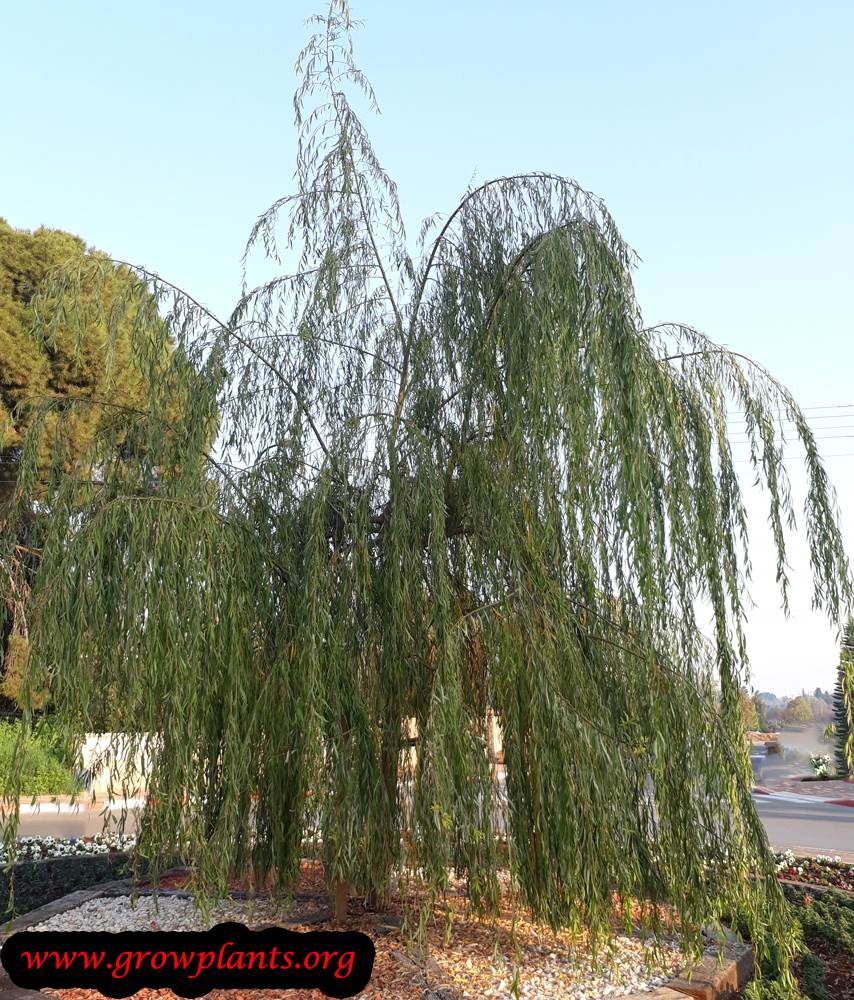
Overview: A large, fast-growing deciduous tree of 10-20 m (30-60 ft) with the classic weeping crown of cascading branches. It is grown purely as an ornamental, at its best beside water.
Quick Specifications
| Specification | Attribute |
|---|---|
| Plant Type / Life Cycle | Deciduous tree (perennial) |
| Foliage Type | Deciduous |
| Mature Size | 10-20 m (30-60 ft) tall |
| Growth Rate | Fast |
| Root System | Vigorous, wide-spreading and water-seeking — can invade drains; keep away from pipes and paving |
| Hardiness | USDA zone 4-10 |
Growth Form & Structure
- Height & Spread: In the ground a broad tree 10-20 m (30-60 ft) tall with an equally wide weeping canopy; not suited to container growing.
- Growth Habit & Form: Rounded, dome-shaped crown of long, pendulous branches that sweep down toward the ground, giving the tree its weeping outline.
- Lifespan & Maturity: Quick to reach size thanks to fast growth; a relatively short-lived tree compared with slower hardwoods.
Anatomy & Physical Features
- Leaves & Foliage: Long, narrow, light-green leaves that turn yellow-brown in autumn before falling.
- Flower Characteristics: Yellow catkins in spring, borne with male and female catkins on separate trees (dioecious) and attractive to pollinators.
Primary Uses & Landscape Value
- Functional & Ornamental Roles: A signature waterside and lawn specimen for large gardens and parks, valued for its graceful weeping form and useful for stabilising damp ground.
Note: Botanical name: Salix babylonica.
Care Guide: Planting, Soil & Watering
Overview: The weeping willow is a fast, thirsty deciduous tree that grows best in full sun to light shade in deep, moisture-retentive soil. It loves water and does best beside ponds or streams, so it should never be allowed to dry out.
Quick Care Requirements
| Requirement | Ideal Condition |
|---|---|
| Planting Season | Late winter to spring, while dormant |
| Growth Rate | Fast |
| Soil Type | Moisture-retentive soil (tolerates wet ground) |
| Water Need | High — keep the soil constantly moist; thrives in wet ground and beside water |
Planting & Establishment
- Best Planting Season: Plant in late winter or early spring while the tree is dormant and the soil is moist, so the roots establish well before the growing season begins.
- How to Plant:
- Hole Preparation: Dig a planting hole roughly twice as wide as the root ball but no deeper, so the roots can spread into loosened soil.
- Soil Amendments: Dig in generous compost or well-rotted organic matter to help the soil hold the moisture willows crave.
- Planting Depth: Set the plant at the same depth it grew in its pot, with the root collar level with the surface — never bury the stem, which invites rot.
- Growth Speed & Expectations: Expect fast growth in warm, favourable conditions, filling out its space within a single season.
Soil, Watering & Drainage Care
- Soil Mix & Drainage Needs: Grow in moisture-retentive soil; unlike most plants it tolerates heavy, wet ground and even boggy sites, though it also grows in ordinary garden soil kept reliably moist.
- Watering Schedule & Technique:
- Young / Newly Planted: Keep the soil wet after planting — this moisture-loving plant should never be allowed to dry out.
- Established: Water frequently and deeply; it thrives in constantly moist to wet soil and beside ponds or streams.
- Seasonal Adjustments: Water heavily through warm, dry weather and keep the soil moist year-round, easing off only in cold dormancy.
Climate, Light & Hardiness
The weeping willow is a hardy deciduous tree for temperate, Mediterranean, subtropical and (with ample water) desert climates, growing in full sun to half shade. Being deciduous it is very cold-hardy - dormant to about USDA zone 4 - while its love of water and brittle wood shape most of its climatic limits.
Quick Climate Specifications
| Climate Zones | Temperate, Mediterranean, subtropical, desert (with water) |
|---|---|
| USDA Hardiness Zones | Approximately 4–10 |
| Optimal Temp Range | Temperate warmth through the growing season |
| Cold Damage Begins | Very cold-tolerant while dormant; late spring frosts can nip new growth |
| Approx. Survival Minimum | Hardy to roughly zone 4 winters when dormant |
| Frost Tolerance | High (dormant, deciduous) |
| Light Conditions | Full sun to half shade |
| Wind Tolerance | Low to Moderate (brittle wood breaks in storms) |
| Salt / Coastal Tolerance | Low |
Sunlight & Light Exposure
Optimal Light Setup
Full sun gives the best form and vigour; it tolerates half shade.
Direct Sun Requirement
Prefers full, direct sun.
Best Exposure / Orientation
Open, sunny sites, classically beside water.
Temperature Extremes & Hardiness
USDA Hardiness & Regional Limits
A broadly hardy tree (about zones 4–10); winter cold is not the limiting factor across most temperate regions.
Cold Damage & Winter Protection
Fully dormant and very frost-hardy in winter; the main frost risk is damage to tender new growth from late spring frosts.
Frost Sensitivity
Low - leafless and dormant through the cold season.
Extreme Heat Tolerance
Tolerates heat provided the roots have abundant moisture, but suffers and scorches if the soil dries out.
Wind, Humidity & Microclimate
Wind Tolerance
The fast, brittle wood is prone to breakage, so exposed, storm-prone sites are a weakness.
Coastal / Salt Tolerance
Limited salt tolerance; not a first choice for salt-spray coastal sites (distinct from soil or irrigation salinity).
Rainfall & Seasonal Moisture
It thrives where moisture is abundant - beside ponds and streams and in high-rainfall or well-irrigated ground - and depends on it in hot, dry climates (a matter of climatic moisture adaptation, not a watering schedule).
Microclimate Recommendations
Low, moist, open ground suits it; keep it well away from buildings and drains given its vigorous, water-seeking roots.
Growing in Pots, Balconies & Indoors
The weeping willow is a large, fast-growing, very thirsty tree – the grower marks it as unsuitable both as a houseplant and for long-term container growing. Reaching 10-20 m (30-60 ft) with wide, invasive, water-seeking roots, it belongs in open ground near water rather than on a balcony. A pot is only realistic for a young plant for a season or two, or for bonsai.
Quick Details
- Container Size: Not recommended long-term; only a young tree in a large tub for a year or two, or trained as bonsai
- Indoor Suitability: Not a houseplant – it needs full sun, huge amounts of water and unrestricted root room
- Best Spot: Full sun to half shade, in open ground, ideally near a pond or damp site
- Soil & Drainage: Moist, heavy, water-retentive soil; it never wants to dry out
- Watering in Pots: Very high – in a pot it dries dangerously fast and wilts quickly, needing near-constant moisture
Indoors & On the Windowsill
- Not an indoor plant: The grower marks it as unsuitable indoors, and rightly so – it is a full-sized deciduous tree that needs strong sun, a winter cold period and enormous water; no windowsill can serve it.
- Only as bonsai: The one indoor-adjacent option is a bonsai kept outdoors most of the year, brought in only briefly – not a true houseplant.
On a Balcony or Patio
- Short-term only: A young willow can sit in a large tub on a patio for a year or two, but it quickly outgrows any pot and its thirst is hard to meet in reflected heat and wind.
- Water & weight: The pot dries very fast and the tree wilts almost at once, so it needs daily or twice-daily watering in warm weather; a large, water-filled tub is heavy, so check the balcony can take it.
Choosing the Pot, Soil & Long-Term Care
- Pot & drainage: If you must pot a young tree, use the largest tub you can, with drainage holes but a water-retentive, heavy mix; unusually, this tree tolerates constantly wet soil.
- Potting mix: A heavy, moisture-holding, organic-rich soil – it will not thrive in a light, fast-draining mix.
- Feeding: A vigorous tree in a pot is hungry and leaches nutrients fast, so feed regularly, but accept it will soon need planting out.
- Plan to plant out: Treat any potting as temporary; move it to open ground, away from drains, pipes and foundations, before the roots become a problem.
Fertilizing & Feeding
Weeping willow is a vigorous woody plant but a light feeder in the landscape; a balanced complete fertilizer is only needed when growth or leaf color shows a shortfall, and mulch plus decent soil usually carry it.
Quick Fertilizing Specs
| Feeding Level | Light |
|---|---|
| Best Feeding Period | In spring, only if growth or color indicates a need. |
| Main Nutrient Priority | A balanced complete fertilizer, used sparingly. |
| Soil pH | Tolerates a wide range. |
| Organic Options | Compost and mulch over the root zone. |
| Micronutrients | Iron may need attention on alkaline soils. |
| Reduce/Stop Feeding | Do not feed dormant or well-established plants that grow well. |
Feeding by Growth Stage
Establishment
Help the newly planted tree or shrub settle its roots.
| Nutrient direction | A light application of a balanced complete fertilizer, if soil is poor, plus organic matter. |
|---|---|
| Timing | In the first seasons after planting, as growth begins in spring. |
| Frequency | A light feeding is usually enough while roots establish. |
| Fertilizer types | Balanced complete fertilizer used sparingly, Compost or organic matter and mulch over the root zone |
| Precautions | Woody landscape plants need little fertilizer; feed sparingly and rely on good soil and mulch. |
Spring growth flush
Support the spring flush of new shoots and leaves.
| Nutrient direction | A balanced complete fertilizer, only if growth or leaf color calls for it. |
|---|---|
| Timing | As new growth pushes in spring. |
| Frequency | At most a light feeding in spring; established plants often need none. |
| Fertilizer types | Balanced complete fertilizer applied lightly |
| Precautions | Avoid heavy feeding near water, which wastes nutrients and can run off; established plants rarely need it. |
Winter dormancy
Let the plant rest without pushing tender growth.
| Nutrient direction | None – withhold fertilizer while the plant is resting. |
|---|---|
| Timing | Through winter dormancy after the leaves drop. |
| Frequency | No feeding at this stage. |
| Fertilizer types | No feeding at this stage – a resting plant is not taking up nutrients. |
| Precautions | Do not fertilize until active growth resumes. |
Nutrient Deficiency Signs & Corrections
Older, lower leaves turn uniformly pale green to yellow and overall growth slows.
| Possible causes | Low available nitrogen in the soil, Cold or waterlogged soil limiting root uptake, Nitrogen leached away after heavy watering or rain |
|---|---|
| Appears first on | Older, lower leaves. |
| What to check | Whether paling starts on old lower leaves, Recent feeding history, Soil moisture and drainage |
| Possible correction | Apply a balanced complete fertilizer at a light rate and improve drainage; nitrogen-hungry plants green up as growth resumes. |
Youngest leaves show yellowing between green veins (interveinal chlorosis).
| Possible causes | High or alkaline soil pH locking up iron, Waterlogged or poorly aerated soil, Genuinely low available iron |
|---|---|
| Appears first on | Newest, youngest leaves. |
| What to check | Whether yellowing is on new versus old growth, Soil pH, Soil drainage and watering habits |
| Possible correction | Confirm soil pH and correct it if it is too high, improve drainage, and apply a chelated iron product following its label directions. |
Lower leaves yellow and drop while the soil stays persistently wet.
| Possible causes | Waterlogged, poorly drained soil starving roots of air, Root damage or rot, Nutrients leached from constantly saturated soil |
|---|---|
| Appears first on | Lower, older leaves. |
| What to check | How long the soil stays wet after watering, Root health and drainage, Container drainage if potted |
| Possible correction | Improve drainage and let the soil dry appropriately between waterings; feed lightly once the roots recover. |
Pruning, Training & Seasonal Maintenance
Weeping willow tolerates structural pruning well and, being fast-growing and deciduous, is best cut while dormant in winter when its form is fully visible and wounds have the whole growing season to seal before spring flush. The main objectives are raising and cleaning the crown so the trailing weeping branches don’t drag on the ground or block paths, and managing size on a tree that can reach 10–20 m (30–60 ft) — pruning here shapes structure and clearance far more than it affects the tree’s minor, non-showy catkin bloom.
Quick Pruning & Maintenance Specs
| Pruning Tolerance | High for structural/size work; lower for hard heading if the natural weeping silhouette is to be preserved |
| Primary Pruning Window | Winter (dormant season) |
| Typical Frequency | Annually while young and establishing structure; every few years for mature crown maintenance |
| Main Objective | Raise/clean the lower crown for clearance and maintain sound branch structure |
| Young Plant Priority | Establish one central leader and well-spaced main scaffold branches to avoid weak, included-bark forks later |
| Mature Plant Priority | Remove deadwood and crossing limbs, limb up over paths/structures, manage overall size |
| Best Tool Type | Pruning saw and loppers for structural limbs; pole pruner for upper deadwood on a tall mature tree |
| Avoid Heavy Pruning During | Active leaf-out/growing season, when wounds are slower to seal and sap flow is heavy |
Pruning by Plant Age & Size
Newly Established
Remove only damaged or crossing growth in the first year or two; avoid structural cutting until the young tree is well rooted.
Young / Formative
Train toward a single central leader with evenly spaced scaffold branches. This matters more for weeping willow than it might seem — its wood is notably brittle and weak-wooded, so a well-spaced, single-leader framework built early reduces the risk of included-bark forks that can split apart as the tree matures and its heavy weeping branches add load.
Mature / Established
Priorities shift to raising the crown (removing lower branches, per the plant’s own pruning note, so the weeping habit doesn’t drag on the ground or obstruct access), removing deadwood and crossing/rubbing limbs, and periodic size control on a tree that grows fast and can outgrow small landscapes.
Seasonal Pruning Schedule
Dormant/Winter
Objective: structural work and size control while the tree is leafless and its true branch architecture is visible. Remove: deadwood, crossing/rubbing limbs, lower branches to raise the crown. Do not remove: excessive live wood in one session on a mature tree – spread heavy reduction over more than one winter. Expected response: vigorous new growth flush in spring, given the species’ fast growth rate.
Ongoing Sanitary
Objective: remove deadwood and storm-damaged branches as they appear, given the wood’s brittleness; this can be done at any time it’s noticed rather than waiting strictly for winter.
Structural Pruning & Training
Crossing or rubbing branches should be removed to prevent bark wounds that, combined with the wood’s brittleness, can become failure points. Height and spread control matters on a tree that reaches 10–20 m and grows fast; because weeping willow is usually valued for its natural cascading silhouette rather than a clipped form, favor selective thinning and crown raising over heavy heading cuts that would force a mass of upright watersprouts and spoil the weeping habit.
Special Growth to Remove
- Watersprouts: vigorous upright shoots often appear at or near old pruning wounds on willows; remove them if they disrupt the weeping form, since they grow at odds with the tree’s natural cascading habit.
- Deadwood: remove promptly given the species’ documented weak/brittle wood and susceptibility to storm breakage.
Tools
- Bypass secateurs for young whips and thin twiggy growth.
- Loppers for medium branches during formative training.
- Pruning saw for structural limbs and deadwood removal on the trunk and main scaffolds.
- Pole pruner for upper-crown deadwood and crossing limbs out of hand-tool reach on a mature 10–20 m tree.
Tool Hygiene & Disease Risk
Routine: the plant’s known pest pressure (aphids) is not a tool-transmissible pathogen, so clean, sharp tools are sufficient; there is no need to disinfect between every cut.
Cut Placement & Technique
Use thinning cuts back to the branch collar rather than flush cuts or stubs, which is especially important on brittle-wooded willow where a poor cut is slow to seal. For heavy limbs, use a stepped (three-cut) technique to avoid bark tearing down the trunk as the branch falls.
Heavy Pruning & Rejuvenation
The species tolerates hard structural cuts for size or safety reasons, but a full heading-back “pollard” style rejuvenation is generally avoided on weeping willow specifically, since it forces a flush of stiff, upright watersprouts that takes years to relax back into the tree’s characteristic cascading form. Where size reduction is genuinely needed, spread it across more than one dormant season rather than removing it all at once.
Post-Pruning Care
Water well after any significant pruning, especially given the species’ strong preference for moist, streamside-type conditions; no extra feeding is needed to force regrowth, since this fast-growing species resprouts readily on its own. Monitor large cuts for slow sealing given the brittle wood, and watch for aphid buildup (and resulting honeydew/sooty mold) on vigorous new regrowth.
Common Pruning Mistakes
- Topping or heavily heading the crown, which produces a dense thicket of weak upright watersprouts and ruins the natural weeping silhouette.
- Pruning during active leaf-out instead of winter dormancy, when wounds seal more slowly.
- Skipping crown raising, leaving heavy trailing branches to drag on the ground or obstruct paths as the tree matures.
When NOT to Prune
Avoid major structural cuts during the active growing season; wounds close more slowly and sap flow is heavy, adding stress on an already weak-wooded species.
Recommended Tools (by task)
- bypass_secateurs – thin, young whip growth on newly established or formative-stage trees.
- pruning_saw – structural limb and deadwood removal on the trunk and main scaffolds.
- pole_pruner – upper-crown deadwood and crossing limbs on a mature 10-20 m tree, out of reach from the ground.
- loppers – medium branches during young/formative training.
Pruning Troubleshooting
| Problem | Possible Cause | What to Check | Corrective Action |
| Split branch or limb failure | Included bark at a weak fork, or the species’ inherently brittle wood, worsened by wind/storm load | Branch attachment angles and any history of storm damage | Remove weak co-dominant stems early with formative pruning; remove failed/hanging limbs promptly |
| Dense mass of upright shoots after pruning | A heading/topping cut instead of a thinning cut | Whether recent pruning removed whole branches to their origin or just shortened them | Selectively thin the resulting watersprouts and favor thinning cuts going forward |
| Sticky leaves/sooty black coating | Aphid honeydew, often heavier on vigorous regrowth after pruning | Undersides of leaves for aphid colonies | Manage aphids directly; avoid over-stimulating soft regrowth with unnecessary hard pruning |
Propagation Guide
Weeping willow is propagated almost entirely from hardwood or softwood cuttings, which root with famous ease — willow stems are so rich in natural rooting substances they are used to make rooting solution for other plants. Seed is rarely used: it is very short-lived and, because the trees are dioecious, seedlings vary, so cultivated weeping willows are effectively clones. It is an easy plant to increase.
Quick Propagation Specs
| Best Propagation Method | Hardwood cuttings |
| Alternative Methods | Softwood cuttings; ground layering; seed (rarely) |
| Propagation Difficulty | Easy |
| Seed True-to-Type | Variable (dioecious; seedlings not uniform) |
| Vegetative True-to-Type | Yes |
| Best Propagation Season | Hardwood cuttings in the dormant season, winter to spring; softwood in the growing season |
| Cutting Rooting Time | A few weeks under moist conditions |
| Grafting Required | No |
Growing from Seed
Seed Handling & Viability
Willow seed is recalcitrant and extremely short-lived, remaining viable only days to a couple of weeks; it cannot be dried or stored and must be surface-sown onto wet ground immediately after release. This, plus the variability of seedlings from separate-sex parents, makes seed impractical for reproducing a chosen tree.
Stem Cuttings
Cutting Type
Dormant hardwood cuttings of pencil-thick wood, roughly 20–30 cm (8–12 in) long, or leafy softwood cuttings in the growing season.
Best Timing
Hardwood cuttings during the dormant season; softwood cuttings in late spring to summer.
Cutting Preparation
Cut just below a node; large hardwood sets can even be pushed straight into moist ground.
Rooting Setup
Insert in moist soil, or simply stand cuttings in water — they root so freely that little else is needed. A permanently moist, waterside position suits both cuttings and the mature tree.
Rooting Hormone
Unnecessary.
Rooting Time
Roots typically form within a few weeks.
Air & Ground Layering
Low branches root readily where they rest on damp soil; a pegged-down shoot can be lifted as a new plant once rooted.
Bloom & Flower Guide
Quick Details
- Bloom Season: Spring, as the new leaves emerge
- Flower Appearance: Slender yellow catkins (clusters); male and female catkins grow on separate trees
- Edibility: Not a culinary flower – grown as an ornamental shade tree
Detailed Blooming Overview
Weeping willow flowers in spring, when soft yellow catkins open alongside the fresh green foliage. Willows are dioecious, so any one tree carries either male or female catkins, never both. The catkins produce nectar and pollen that draw early insects.
Flower Characteristics
- Slender yellow catkins carried along the drooping branches.
- Male and female flowers are on separate trees.
Bloom Care & Thinning
- Managing the bloom: No special care is needed – the catkins come and go quickly in spring; any shaping is best done after they finish.
- Pollination: Unusually for a catkin-bearing tree, willows are largely insect-pollinated, with bees and other early insects working the nectar-rich catkins.
Pests, Diseases & Troubleshooting
Overview: Weeping willow is vigorous and generally tough, but as a big, soft-wooded, water-loving tree it suffers willow blight (scab and anthracnose) in wet springs, leaf beetles and aphids in summer, and borers in stressed or wounded trunks. Its most serious ‘problems’, though, are abiotic: brittle storm-prone wood and aggressive roots that invade drains – site it accordingly.
Quick Troubleshooting Overview
| Issue / Pest | Main Symptom | Primary Solution |
|---|---|---|
| Willow leaf beetle | Skeletonised, brown, lacy leaves | Hand-pick/hose; Bt or insecticidal soap if heavy |
| Aphids (incl. giant willow aphid) | Dense stem colonies, honeydew, sooty mould | Water jet; predators; soap on small trees |
| Scab / anthracnose (willow blight) | Black leaf spots and dying shoot tips | Sanitation; resistant types; copper at bud-break |
| Willow rust | Orange pustules under leaves | Resistant varieties; airflow; clear leaf litter |
| Borers | Holes, frass, dieback, snapping wood | Keep trees vigorous; prune out infested wood |
| Weak/brittle wood | Split, shed branches in wind | Formative pruning; coppice/pollard; good siting |
Common Pests & Management
- Willow leaf beetles (Plagiodera versicolora / Phratora spp.):
- Symptoms: Small metallic blue-black beetles and their black larvae feed together on the leaves, skeletonising them so the foliage turns brown and lacy; repeated attacks weaken and disfigure the tree, especially on ornamental and coppiced willows.
- Prevention & Control: Tolerate light feeding on vigorous trees; hand-pick or hose off beetles and larvae on smaller shrubs; encourage ladybirds and predatory bugs. For heavy infestations on ornamental willows, spot-treat with insecticidal soap or neem, or a Bt product against the larvae.
- Giant willow aphid & aphids (Tuberolachnus salignus & other aphids):
- Symptoms: Dramatic dense colonies of large dark aphids clustered on stems and shoots (giant willow aphid), plus smaller aphids on new growth, producing copious sticky honeydew, sooty mould and swarming wasps and ants.
- Prevention & Control: Established willows tolerate aphids well and predators usually catch up; blast colonies off with water and wash away sooty mould. On small or young trees, insecticidal soap or neem on reachable growth reduces numbers; avoid excess nitrogen feeding.
- Willow sawflies (Nematus / Pontania spp.):
- Symptoms: Caterpillar-like larvae chew leaves from the edges, sometimes stripping shoots, while gall-forming species (Pontania) raise bean-like red galls on the leaves; mostly cosmetic but disfiguring in numbers.
- Prevention & Control: Pick off larvae and galled leaves on small plants; encourage birds and parasitic wasps. Bt or insecticidal soap controls heavy leaf-feeding larvae; galls need no treatment beyond removal if disliked.
- Willow scale & oystershell scale (Chionaspis salicis / Lepidosaphes ulmi):
- Symptoms: Encrustations of small white or brown mussel-shaped scales along stems and branches, causing yellowing, dieback of twigs and general loss of vigour; common on stressed and older willows.
- Prevention & Control: Prune out badly encrusted wood; brush off light infestations; apply horticultural oil to smother scale, targeting the crawler stage. Keep trees vigorous, as scale exploits stress.
- Clearwing / willow borers (Sesiidae & Cryptorhynchus lapathi):
- Symptoms: Larvae tunnel in the trunk and branches, leaving holes, sawdust-like frass, weakened wood and dieback; borer-riddled willows snap in wind. Worst on stressed, wounded or drought-hit trees.
- Prevention & Control: Keep trees healthy and well-watered to resist attack; avoid wounding the bark; prune out and destroy infested wood. There is no easy spray for wood-boring larvae, so prevention through vigour and sanitation is key.
Diseases & Fungal Issues
- Willow scab & anthracnose (willow blight) (Venturia / Marssonina salicicola):
- Symptoms: Brown to black spots and blotches on leaves, blackened wilting shoot tips, and cankers on young stems; in wet springs the two together (‘willow blight’) can defoliate and disfigure the tree, with brown dead leaves clinging on.
- Treatment & Management: Rake up and destroy fallen leaves and prune out blackened shoots and cankers to reduce overwintering spores; improve airflow; avoid overhead wetting. Choose resistant species/cultivars; a copper fungicide at bud-break helps on valuable, repeatedly affected trees.
- Willow rust (Melampsora spp.):
- Symptoms: Masses of bright orange-yellow powdery pustules on the leaf undersides in summer, with yellow spotting above; heavy rust yellows and drops leaves early and weakens coppiced and basket willows.
- Treatment & Management: Grow resistant varieties (important in basketry willows), clear fallen leaves, and thin for airflow; avoid dense, damp plantings. Fungicides are seldom justified except in nursery or production settings.
- Black canker (Glomerella miyabeana):
- Symptoms: Dark sunken cankers on stems and dark spots on leaves, often paired with scab, causing shoot dieback and blackened foliage in wet conditions.
- Treatment & Management: Prune out and burn cankered wood well below the lesion, disinfecting tools; improve airflow and remove leaf litter; grow resistant types. Copper sprays give some protection on high-value trees.
- Powdery mildew (Uncinula / Erysiphe spp.):
- Symptoms: White powdery coating on leaves in late summer, mainly cosmetic but weakening on young or stressed plants in crowded, still conditions.
- Treatment & Management: Improve air movement and avoid overcrowding; remove badly affected growth. Rarely needs spraying, but sulphur or potassium bicarbonate helps on ornamentals.
- Watermark disease (Brenneria salicis):
- Symptoms: A bacterial disease (notorious in cricket-bat willow) causing wilting, reddening and dieback of branches, with a characteristic watery brown stain in the wood when cut.
- Treatment & Management: There is no cure; remove and destroy affected branches or whole trees to limit spread and use clean, disease-free planting stock. Most relevant to production willows but worth knowing for any Salix.
Growing Difficulties & Abiotic Problems
- Weak, brittle wood & storm breakage:
- Cause & Symptoms: Fast, soft willow growth makes branches brittle; they split and shed in wind and snow, and the wounds invite borers and canker.
- Correction Strategy: Prune formatively when young for good structure, coppice or pollard vigorous willows to keep them manageable, and remove dead or crossing wood; site large willows away from buildings and drains.
- Invasive, water-seeking roots:
- Cause & Symptoms: Willows have aggressive, thirsty roots that seek out drains, pipes and foundations and can lift paving, causing problems far from the trunk.
- Correction Strategy: Plant well away from buildings, drains and septic systems; choose smaller species (or shrubby types like S. repens) for confined spaces; never plant vigorous weeping willows in small gardens.
- Leaf scorch & drought stress:
- Cause & Symptoms: Willows are moisture-lovers; in dry soil the leaves brown at the edges, wilt and drop early, and stressed trees become far more prone to scab, borers and scale.
- Correction Strategy: Plant in moisture-retentive soil near a water source, mulch well, and water deeply in dry spells, especially while young. Matching the tree to a damp site prevents most stress problems.
- Chlorosis in poor or alkaline soil:
- Cause & Symptoms: Pale, yellowing leaves with green veins where thin, compacted or very alkaline soil limits iron and manganese uptake.
- Correction Strategy: Improve soil with organic matter, keep it moist, and use a chelated-iron feed for a temporary green-up while correcting the underlying soil and drainage.
What Helps – Products & Tools
Willows are best kept healthy rather than sprayed: good structural pruning (or coppicing/pollarding), ample moisture and sanitation of fallen leaves and cankered wood prevent most problems. Where treatment is warranted on smaller ornamental willows, use insecticidal soap or neem for beetles and aphids, Bt for leaf-feeding sawfly and beetle larvae, horticultural oil for scale, and a copper fungicide at bud-break for scab, anthracnose and canker. Resistant varieties are the real answer to rust and blight.