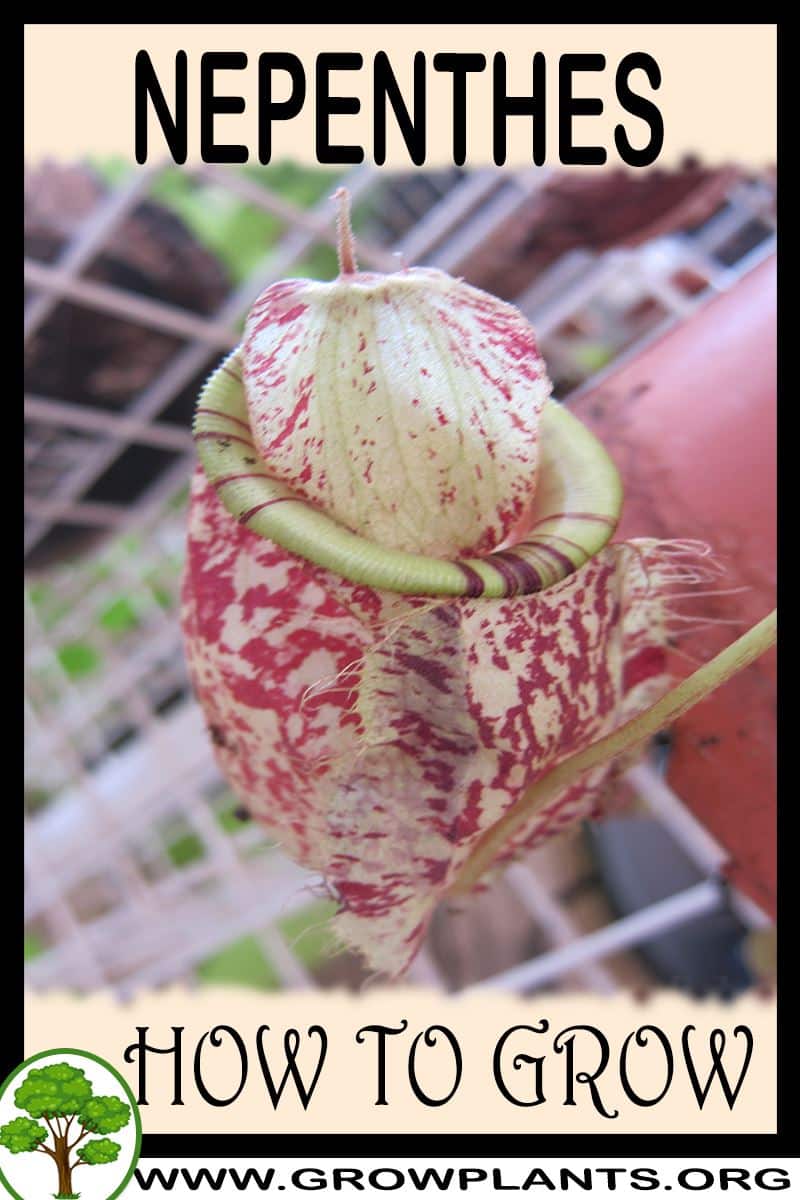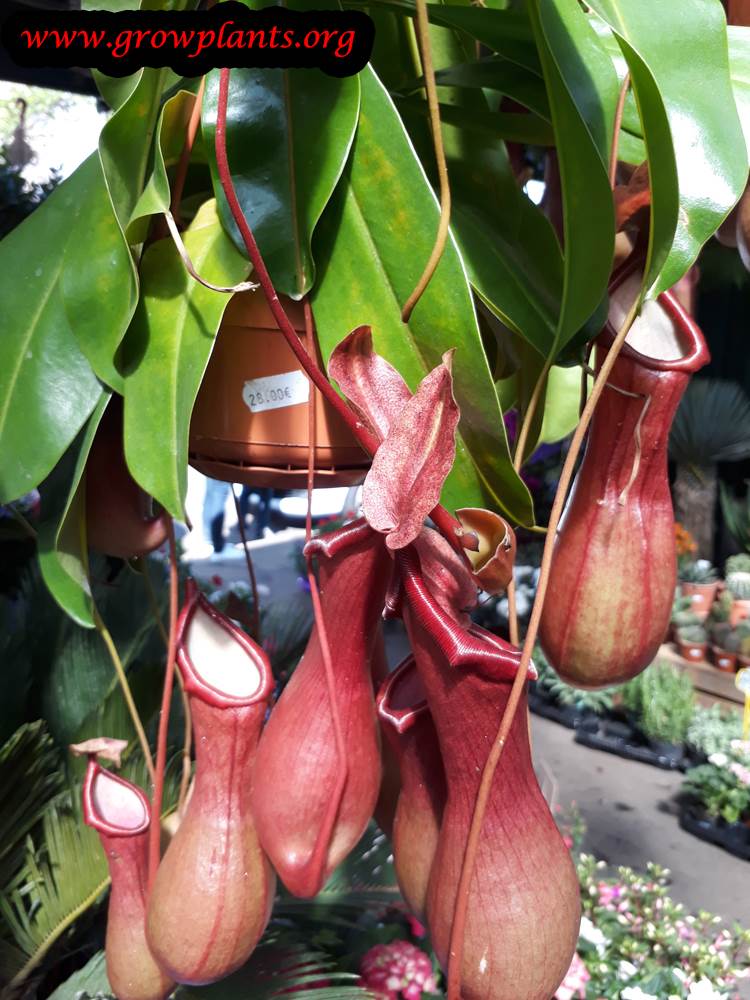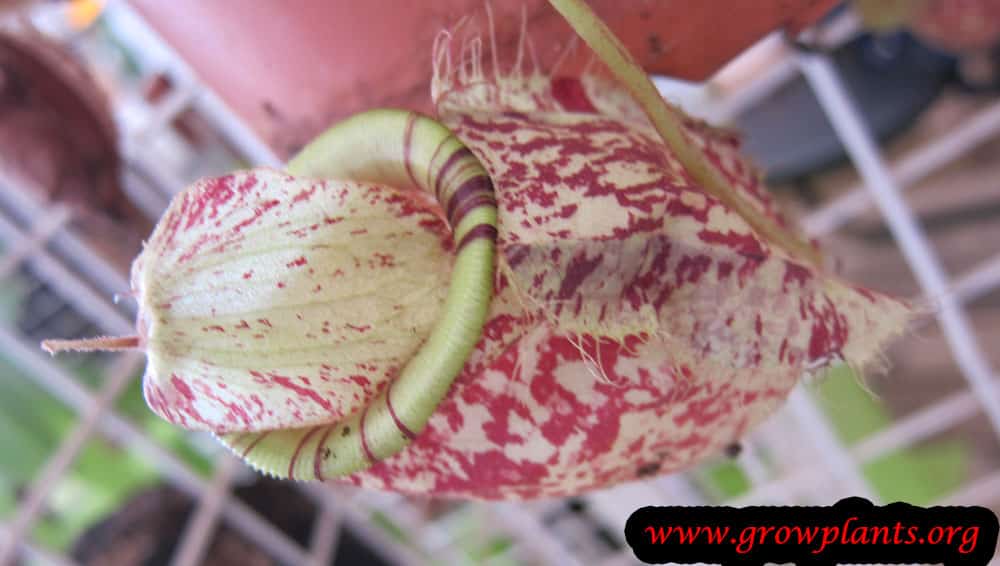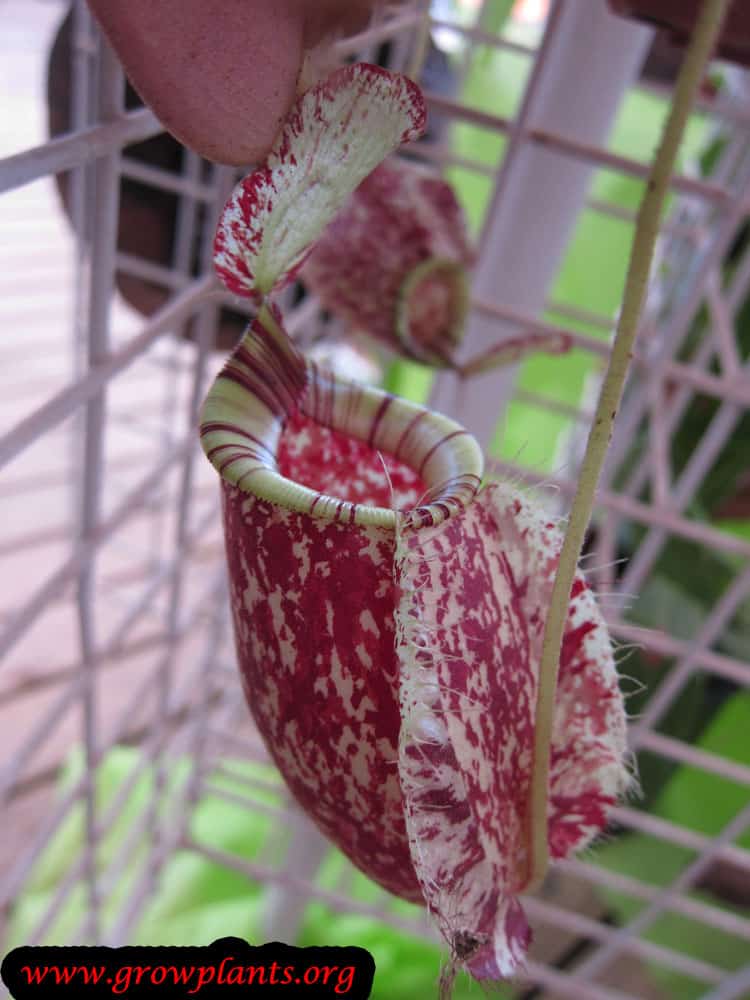


Plant Profile & Key Characteristics
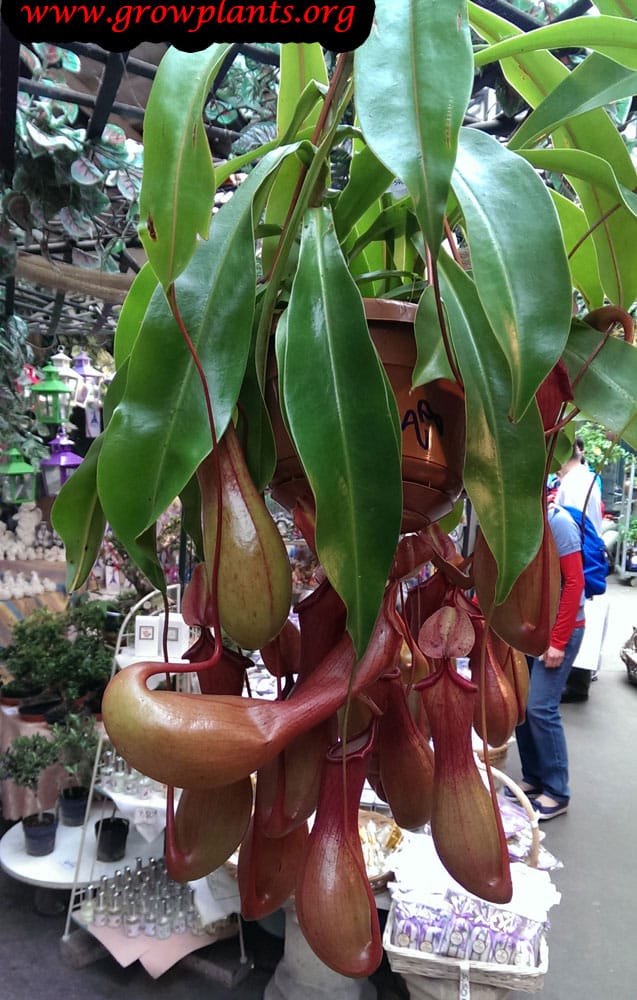
Overview: Nepenthes (tropical pitcher plant / monkey cups) is an evergreen carnivorous perennial, typically 0.05-1 m (2-40 in), grown as an ornamental novelty for its insect-trapping pitchers. It needs a warm, humid tropical climate and is often kept as a houseplant.
Quick Specifications
| Specification | Attribute |
|---|---|
| Plant Type / Life Cycle | Perennial (carnivorous) |
| Foliage Type | Evergreen |
| Mature Size | 0.05-1 m (2-40 in) |
| Growth Rate | Moderate |
| Root System | Small, shallow, fine root system |
| Toxicity | Non-toxic |
| Hardiness | USDA zones 13+ (frost-free, humid) |
Growth Form & Structure
- Height & Spread: Ranges from tiny to trailing/climbing forms 0.05-1 m (2-40 in); ideal for hanging pots where the pitchers can dangle.
- Growth Habit & Form: Sprawling to climbing plant that produces pitcher traps at the tips of its leaves.
- Lifespan & Maturity: Long-lived perennial of moderate growth in warm, humid conditions.
Anatomy & Physical Features
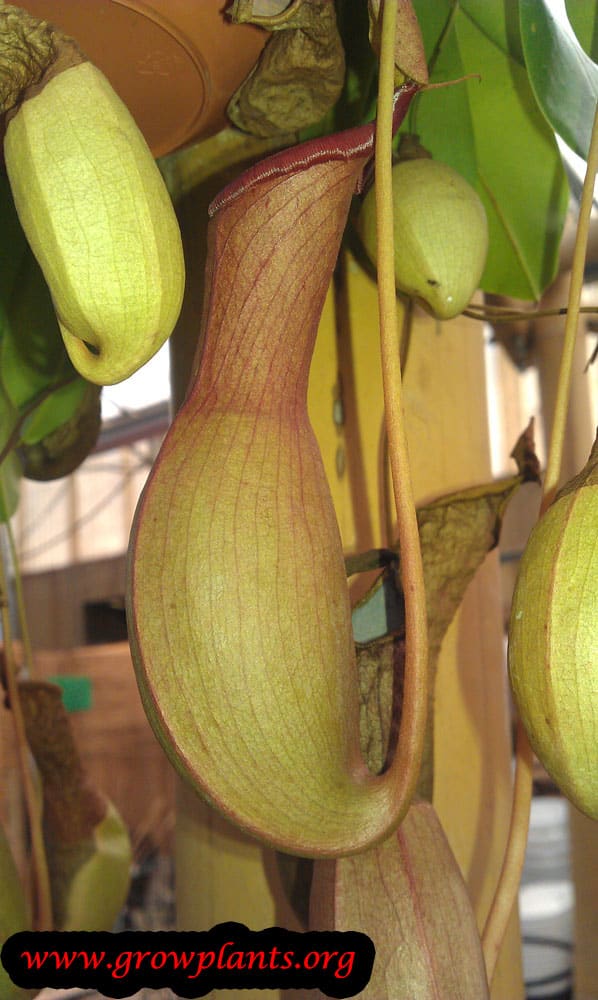
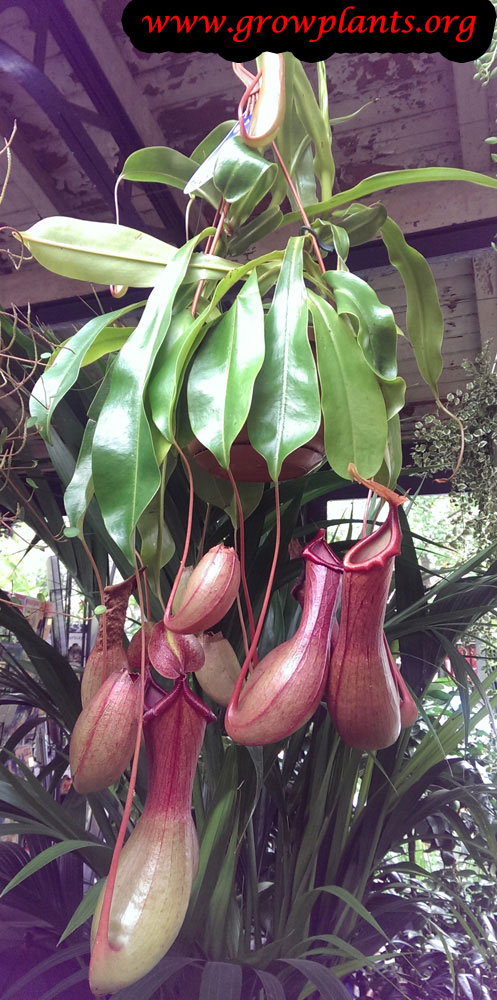
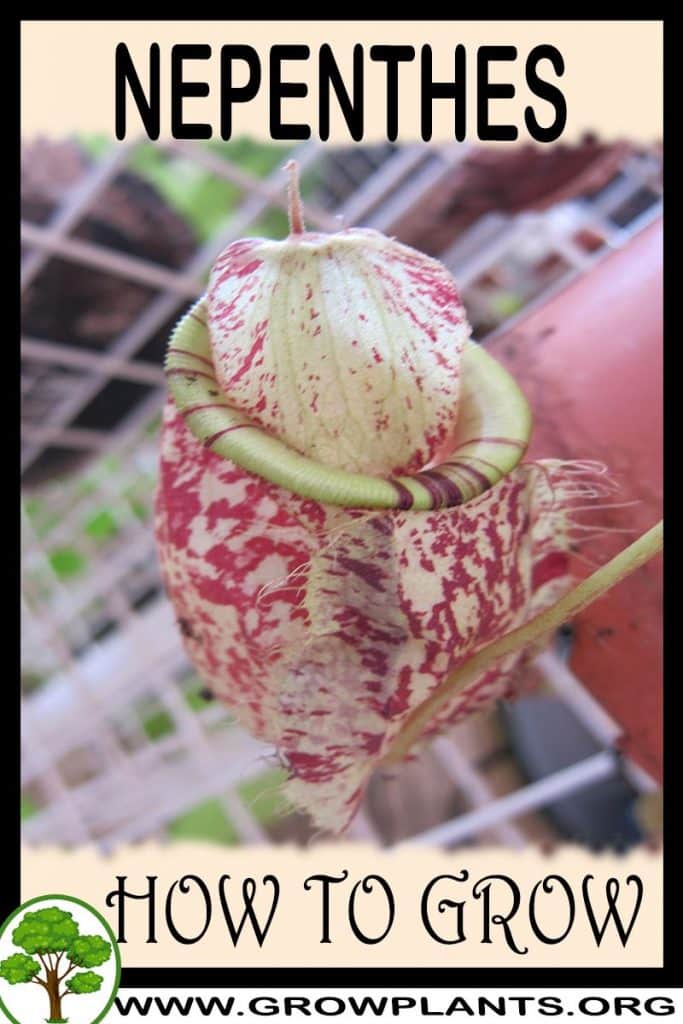
- Leaves & Foliage: Oval leaves ending in a tendril tipped with a cup-shaped pitcher in green, red, orange, purple, white or yellow.
- Flower Characteristics: Small green flowers on an inflorescence; plants are dioecious (separate male and female).
Primary Uses & Landscape Value
- Functional & Ornamental Roles: Ornamental and novelty houseplant grown for its pitchers and for catching insects; suited to terrariums and hanging displays.
Care Guide: Planting, Soil & Watering
Overview: Nepenthes is a tropical carnivorous plant that needs a loose, nutrient-poor, acidic medium and constant moisture with high humidity. It is watered with rainwater or distilled water and must never be fertilised through the soil.
Quick Care Requirements
| Requirement | Ideal Condition |
|---|---|
| Planting Season | Year-round in warm, humid conditions (tropical or indoor) |
| Growth Rate | Moderate |
| Soil Type | Airy, nutrient-poor mix (long-fibre sphagnum with perlite/bark) |
| Soil pH | Acidic and low in minerals/nutrients |
| Water Need | Moderate – keep constantly moist with rain/distilled water; high humidity |
Planting & Establishment
- Best Planting Season: Plant any time in warm, humid conditions.
- How to Plant:
- Hole Preparation: Pot into an airy carnivorous-plant mix of long-fibre sphagnum with perlite or bark.
- Soil Amendments: Use no fertiliser or lime – the medium must stay pure, acidic and low in minerals; the plant feeds by catching insects.
- Planting Depth: Set the crown at the surface; do not bury it.
- Growth Speed & Expectations: Moderate.
Soil, Watering & Drainage Care
- Soil Mix & Drainage Needs: A loose, acidic, low-nutrient medium that stays moist yet drains freely; never let it dry out and never let minerals build up.
- Watering Schedule & Technique:
- Young / Newly Planted: Keep the medium evenly moist.
- Established: Water from above with rainwater or distilled water, keeping the medium constantly damp with high humidity around the plant.
- Seasonal Adjustments: Steady year-round in warmth; a little less during cool, low-light spells.
Climate, Light & Hardiness
Nepenthes, the tropical pitcher plants, are frost-tender carnivorous climbers of humid tropical climates, widely grown as warm greenhouse or houseplants. They want bright light and consistently high humidity, and - at zone 13+ - essentially frost-free warmth all year.
Quick Climate Specifications
| Climate Zones | Tropical; elsewhere grown as a warm indoor or protected plant |
| USDA Hardiness Zones | Site lists zone 13+ – a frost-free, tropical limit |
| Optimal Temp Range | Warm, humid conditions; lowland types near 24–32 °C (75–90 °F), highland types cooler at night |
| Cold Damage Begins | Growth suffers as temperatures fall below about 12–15 °C (54–59 °F), depending on type |
| Approx. Survival Minimum | Keep well above freezing; cold near 5–10 °C (41–50 °F) is risky and frost is fatal |
| Frost Tolerance | None |
| Light Conditions | Bright light – full sun to half shade (with humidity) |
Sunlight & Light Exposure
Optimal Light Setup
Bright light drives good pitcher production; strong indirect light or gentle sun with high humidity is ideal, while dim light gives few pitchers.
Shade & Heat Management
Shield from harsh, dry midday sun that can scorch leaves; pair any strong light with moist air.
Best Exposure / Orientation
A bright, humid, warm position - humid window, greenhouse bench or sheltered tropical patio - suits them.
Temperature Extremes & Hardiness
USDA Hardiness & Regional Limits
Zone 13+ signals a fully tropical, frost-free requirement. Within the genus, lowland species want steady warmth day and night, while highland species need warm days with markedly cooler nights - match the type to your conditions.
Cold Damage & Winter Protection
Chilling below the low-teens Celsius stalls growth and can damage foliage; there is no cold-hardy resting state, so keep them warm year-round.
Frost Sensitivity
Frost is fatal - treat all Nepenthes as strictly frost-free plants.
Extreme Heat Tolerance
Lowland types take real heat if humidity stays high; highland types resent hot nights, so cool nights are important for them.
Wind, Humidity & Microclimate
Humidity Preferences
They need consistently high humidity for reliable pitcher formation.
Dry-Air Tolerance
Low - dry air aborts pitchers; enclosed, humid conditions help, especially indoors.
Microclimate Recommendations
A warm, bright, very humid micro-environment is the goal; choose lowland or highland species to match whether your nights stay warm or turn cool.
Growing in Pots, Balconies & Indoors
Tropical pitcher plants make striking houseplants and hanging-basket subjects, prized for the pitchers that dangle from their leaf tips. They enjoy warmth, bright indirect light and high humidity, watered only with mineral-free water.
Quick Details
- Container Size: A 15-20 cm (6-8 inch) pot or hanging basket; sized to the plant
- Indoor Suitability: A good warm-room houseplant given bright light and humidity
- Best Spot: Bright indirect light, warmth, and steady humidity
- Soil & Drainage: A lean, nutrient-free carnivorous mix – sphagnum peat with perlite or lime-free sand; never ordinary potting soil, compost, fertilizer, or lime.
- Watering in Pots: Only mineral-free water – rainwater, distilled, or reverse-osmosis – never hard tap water, whose minerals build up and harm the plant. Stand the pot in a shallow tray of that water so the mix stays constantly wet.
Indoors & On the Windowsill
- A fine houseplant: Nepenthes grows well indoors and looks superb in a hanging basket where the pitchers can hang free. Give it bright, filtered light near a window.
- Warmth & humidity: Keep it warm and humid year-round – unlike temperate carnivores it needs no cold winter rest; dry indoor air is its main enemy, so mist or group it with other plants.
On a Balcony or Patio
- Light & wind: A bright, sheltered outdoor spot suits it in the warm season; keep the water tray topped up, as pots in sun and wind dry out fast, and shelter it from drying wind.
- Practicalities: Use rainwater for topping up; a filled tray adds weight, so make sure shelving or railings can take it.
Choosing the Pot, Soil & Long-Term Care
- Pot & water tray: Use a plastic or glazed pot (terracotta leaches minerals and dries too fast); unusually for a potted plant, keep it standing in a shallow water tray rather than letting it drain dry.
- Potting mix: Nutrient-free only – sphagnum peat blended with perlite or lime-free sand. Ordinary compost or feed will kill the roots.
- Feeding: Do not fertilize – these plants draw their nutrients from the insects they catch, so rich soil or feed will scorch the roots.
- Repotting: Refresh the peat mix every year or two in the warmer months, before the old mix breaks down and turns sour.
Growing this plant in a greenhouse
A greenhouse can give nepenthes frost protection, cold protection, humidity control and extra warmth.
Greenhouse at a glance
| Greenhouse suitability | Good - clearly useful |
|---|---|
| Main benefits | frost protection, cold protection, humidity control, extra warmth |
| Season extension | earlier spring & later autumn |
| Outdoor protection advisable below | about 15°C |
| Maintain greenhouse minimum | around 15°C for active growth |
| Suitable types | heated greenhouse, polycarbonate greenhouse |
| Heating | Heating is recommended in cold climates for continuous growth. |
Related greenhouse guides
- Greenhouses: How to Choose the Right Greenhouse
- Best Greenhouse Heaters
- Greenhouse Climate Control: Temperature, Ventilation and Humidity
- Polycarbonate Greenhouses: What to Look for Before Buying
Fertilizing & Feeding
These plants evolved in nutrient-poor bogs and feed themselves by trapping insects; they are very light feeders whose roots are easily damaged by fertilizer and mineral salts, so external feeding stays minimal.
Quick Fertilizing Specs
| Feeding Level | light |
|---|---|
| Main Nutrient Priority | Nutrients come mainly from captured prey, not soil fertilizer |
| Best Feeding Period | Warm active growing season |
| Reduce/Stop Feeding | Stop any feeding during the winter dormancy or rest period |
| Soil pH | Acidic, low-mineral medium such as peat or sphagnum with perlite |
| Organic Options | Mineral-free medium; nutrition supplied by trapped insects |
| Micronutrients | Not supplied by fertilizer; mineral salts are harmful |
Feeding by Growth Stage
Active growth season
Support new traps, pitchers, and leaves during the growing season, with most nutrition coming from captured prey.
| Nutrient direction | Very low external nutrients – nutrition comes mainly from trapped insects, so the roots rarely need feeding and are easily harmed by fertilizer salts. |
|---|---|
| Timing | Through the warm growing season when new traps form. |
| Frequency | Fed mainly by captured insects; keep any soil feeding minimal and infrequent. |
| Fertilizer types | Captured insects are the primary nutrient source, When prey is scarce, offer small insects to the traps rather than fertilizing the roots |
| Precautions | Use only rain, distilled, or other mineral-free water; ordinary fertilizer and hard tap water leave salts that can kill the roots. |
Cool or low-light slowdown
Let the plant rest as growth and prey capture slow; nutrient demand falls away.
| Nutrient direction | None – withhold all feeding during the rest period. |
|---|---|
| Timing | During cooler or low-light spells when growth slows. |
| Frequency | No feeding at this stage. |
| Fertilizer types | No feeding at this stage; do not fertilize while the plant rests. |
| Precautions | Do not fertilize; keep the medium moist with mineral-free water only until active growth resumes. |
Nutrient Deficiency Signs & Corrections
Leaf and trap tips brown and die back, and the plant declines after fertilizing or using hard water.
| Possible causes | Fertilizer salts in the medium, Hard or mineral-rich tap water, Overfeeding the roots |
|---|---|
| Appears first on | Leaf and trap tips |
| What to check | Water source and its mineral content, Any fertilizer added to the medium, Mineral or salt crust on the surface |
| Possible correction | Flush the medium repeatedly with rain or distilled water and switch to mineral-free water, avoiding all soil fertilizer. |
Weak, pale growth with small or few traps when the plant catches little prey.
| Possible causes | Too few insects available to trap, Grown indoors away from prey, Traps not triggered or unable to close |
|---|---|
| Appears first on | New growth, seen as small, pale traps |
| What to check | Whether the plant is catching insects, Light levels, Trap function |
| Possible correction | Offer suitable small insects to the traps or improve access to prey and light, rather than adding soil fertilizer. |
Pruning, Training & Seasonal Maintenance
Tropical pitcher plants (Nepenthes, the monkey cups) start as rosettes and mature into climbing vines that can exceed a metre, each leaf ending in a pitcher. Uniquely among the carnivores, they genuinely tolerate stem pruning: a leggy vine can be cut back to force fresh basal and lower shoots, and the cut tips root as cuttings. Alongside that, routine care is grooming — removing spent pitchers and old lower leaves — and, on flowering plants, cutting off the energy-hungry flower spike.
So this plant is managed on two levels: light grooming of finite-lived pitchers at any time, and an optional harder cut-back of an over-long vine during warm active growth to restore a bushy, well-pitchered plant near the light.
Quick Pruning & Maintenance Specs
| Pruning Tolerance | Moderate — vines can be cut back (unusual for a carnivore) |
| Primary Pruning Window | Warm, actively growing period |
| Secondary Maintenance Window | Year-round grooming of spent pitchers and leaves |
| Typical Frequency | Ongoing grooming; cut-back only when a vine grows leggy |
| Main Objective | Control legginess, force basal shoots, remove spent pitchers |
| Young Plant Priority | Groom only — a rosette has no vine to cut |
| Mature Plant Priority | Cut leggy vines back to a node to force lower and basal growth |
| Best Tool Type | Bypass secateurs and precision snips |
| Avoid Heavy Pruning During | Cool spells / when the plant is not in active growth |
Pruning by Plant Age & Size
Newly Established
Leave a young or newly potted plant to settle and remove only fully spent pitchers; do not cut a rosette that has not yet begun to vine.
Young / Formative
While the plant is still a rosette there is no stem to train. As it starts to climb, decide whether to let the vine run (up a support) or to keep it low by later cutting back — there is no rigid framework to build.
Mature / Established
Once a vine grows long and bare, cut it back to a node during warm growth to force fresh lower and basal shoots and restore a fuller plant; the removed tip can be rooted as a cutting. Do this in stages rather than removing everything at once.
Seasonal Pruning Schedule
Warm active growth (primary): the time for any cut-back of a leggy vine — the plant reshoots readily from lower nodes and basal buds when it is warm and growing. Ongoing (sanitary): pitchers are naturally short-lived, so remove them once brown, and clear old lower leaves; this is done at any time of year. Avoid cutting back when the plant is cool and not actively growing, as recovery is slow.
Structural Pruning & Training
The vine is the structure. Manage its length by cutting back to a node to encourage branching and basal renewal, or train it up a support if you want height. Removing the growing tip is the reliable way to push new basal shoots and keep the plant bushy rather than a single bare stem.
Special Growth to Remove
Remove pitchers once fully brown — each has a finite life and browning is normal, not a fault — and clear old lower leaves as they die. The plants are dioecious, carrying male or female flower spikes on separate plants; unless you are breeding, cut the flower spike off, as flowering draws heavily on the plant’s energy at the expense of pitchers and growth.
Container & Small-Space Pruning
Most are grown in pots or hanging baskets. Keep a container plant compact and well-pitchered by cutting a leggy vine back to a node to force lower growth near the light, rather than letting a single stem trail bare; the removed section roots easily to make new plants.
Tools
Bypass secateurs make the clean cut-back through the soft vine, and precision snips handle grooming of pitchers, leaves, and the flower spike. The stems are not woody enough to need loppers or a saw.
Tool Hygiene & Disease Risk
Increased. Fungal problems are recorded, so use clean, sharp blades, remove and discard diseased or rotting tissue, and wipe the blade between plants when grooming a collection so spores are not carried from one to another.
Cut Placement & Technique
When cutting back a vine, cut just above a node or leaf, from which new shoots will break; avoid leaving a long bare stub above the top remaining node. Trim spent pitchers and dead leaves at their base, and cut the flower spike low on its stalk.
Heavy Pruning & Rejuvenation
Tolerated, within reason — more so than any other carnivore here. A long, bare, tired vine can be cut back hard to a lower node or near the base during warm growth and will reshoot into a fresher, bushier plant, while the cut top becomes a cutting. Do not defoliate the plant entirely, and time the cut to active growth for a quick recovery.
Post-Pruning Care
Keep the plant warm, humid, and brightly (but not harshly) lit after a cut-back, watering with mineral-free water to support the new shoots; watch cut surfaces and remaining growth for fungal issues. No feeding is needed — the pitchers do the feeding.
Common Pruning Mistakes
- Removing pitchers that are merely ageing rather than fully brown — some browning is normal turnover.
- Cutting a vine back when the plant is cool and not actively growing, so it is slow to reshoot.
- Leaving the flower spike on and letting flowering drain a plant you are not breeding.
When NOT to Prune
Do not cut back a young rosette that has not begun to vine, avoid hard cutting during cool inactive spells, and do not strip all the foliage at once. Groom, rather than prune, a plant that is otherwise healthy and compact.
Recommended Tools (by task)
- bypass_secateurs — to cut a leggy vine back to a node for basal shoots and cuttings.
- precision_snips — to remove spent pitchers, old leaves, and the flower spike.
Pruning Troubleshooting
| Problem | Possible Cause | What to Check | Corrective Action |
| Long bare vine, few new shoots | Never cut back; tip left to run | Length and leafiness of the stem | Cut back to a node in warm growth to force lower and basal shoots |
| Plant stops making pitchers | Energy diverted to flowering, or poor light/humidity | Flower spike present; growing conditions | Remove the flower spike; improve light and humidity |
| Cut vine rots or fails to reshoot | Cut made in cool inactive spell, or fungal infection | Timing and blade cleanliness | Cut only in warm active growth with clean blades; remove diseased tissue |
Propagation Guide
Tropical pitcher plants are usually increased vegetatively — from stem (node) cuttings, from basal offshoots, and by air layering — all of which reproduce the parent and, importantly, let you keep a plant of known sex. Seed is possible but the plants are dioecious (male and female flowers are on separate plants), so it takes two plants to set seed, and the seed is short-lived. Moderate difficulty, species-dependent.
Quick Propagation Specs
| Best Propagation Method | Stem (node) cuttings; basal offshoots |
| Alternative Methods | Air layering; seed (needs two plants) |
| Propagation Difficulty | Moderate |
| Seed True-to-Type | Variable; hybrids and unknown parentage give mixed offspring — propagate vegetatively to keep a form |
| Vegetative True-to-Type | Yes — cuttings, offshoots and layers reproduce the parent |
| Best Propagation Season | Warm, active growth (year-round in the tropics) |
Stem Cuttings
Cutting Type & Preparation
Take stem cuttings each with one or more nodes (a leaf and its growth bud); a section with two nodes is a common choice. Reduce the leaf area to cut water loss.
Rooting Setup & Time
Insert into a moist, airy mineral-free medium (such as sphagnum) in very high humidity and warmth, watering with rainwater. Rooting is slow and variable — often some weeks to a few months — so keep humidity up throughout.
Air & Ground Layering
A vining stem can be air-layered: wound a node, wrap it with damp sphagnum kept moist, and once roots form there sever below the new roots and pot it up. This suits older, leggy climbing stems.
Division & Basal Offshoots
Established plants throw basal shoots; once a basal shoot has its own roots it can be separated and potted individually into the same open, humid medium.
Growing from Seed
Seed Handling & Germination
Because the plants are dioecious, fresh pollen must be moved between a male and a female plant to set seed. The seed is short-lived (recalcitrant), so sow it fresh — surface-sow on damp mineral-free medium in warmth and high humidity; germination is slow and seedlings develop gradually.
Bloom & Flower Guide
Quick Details
- Bloom Season: Can flower at any time of year on mature plants
- Time to First Bloom: Only when mature, which can take years
- Flower Appearance: Small, petal-less greenish flowers in long inflorescences; plants are either male or female
- Edibility: A carnivorous ornamental; not eaten
Detailed Blooming Overview
Nepenthes (monkey cups) are dioecious, meaning each plant is either male or female, so you need one of each to set seed. The flowers themselves are small and lack petals, and often carry a musty scent.
Flower Characteristics
- Long spikes or panicles of small, petal-less flowers (colored sepals only), greenish to brownish.
- Male and female flowers appear on separate plants; the display is often musty-scented rather than showy.
Bloom Care & Thinning
- Managing the bloom: Flowering draws heavily on the plant, so remove the spike if you want to preserve vigour and pitcher production; leave it (with both sexes present) for seed.
- Pollination: Pollinated by insects such as flies and bees.
Pests, Diseases & Troubleshooting
Overview: Tropical pitcher plants (Nepenthes) are carnivorous vines that, despite catching insects, still get sap-feeding pests on their soft new growth and pitchers, plus fungal problems and root rot in stale media. They are sensitive to harsh chemicals, hard water and fertilizer salts, so control pests gently and grow them in pure water and open, airy mix.
Quick Troubleshooting Overview
| Issue / Pest | Main Symptom | Primary Solution |
|---|---|---|
| Mealybugs | White tufts on growth points/pitchers | Alcohol wipe; diluted neem/soap; rinse |
| Scale insects | Bumps on stems and pitcher backs | Wipe off; light oil; prune |
| Aphids | Distorted new leaves and tendrils | Rinse; gentle soap on non-pitcher parts |
| Spider mites | Stippled, bronzed leaves in dry air | Raise humidity; rinse; mild miticide |
| Fungus gnats | Flies over media; larvae in mix | Bti/nematodes; let surface dry; sticky cards |
| Gray mold (Botrytis) | Fuzzy gray rot on dying pitchers | Remove dead tissue; airflow |
| Root rot | Wilting, blackened roots in stale mix | Repot in fresh airy mix; pure water |
Common Pests & Management
- Mealybugs (Pseudococcus / Planococcus spp.):
- Symptoms: White cottony tufts on growth points, tendrils and inside young pitchers; distorted new growth and honeydew.
- Prevention & Control: Wipe colonies with a cotton bud in 70% alcohol and rinse; for wider spread use a well-diluted neem or insecticidal soap, testing first, as Nepenthes are sensitive to strong sprays.
- Scale insects (Diaspididae / Coccidae):
- Symptoms: Small brown or gray bumps on stems, leaf undersides and pitcher backs, with honeydew and sooty mold.
- Prevention & Control: Wipe or scrape off, apply a very light horticultural oil, and prune heavily infested growth; repeat as crawlers appear.
- Aphids (Aphididae):
- Symptoms: Clusters on tender new leaves and developing tendrils, distorting the growing tips.
- Prevention & Control: Rinse off with pure water, encourage predators, and use a mild soap spray on foliage (not inside pitchers) only if needed.
- Spider mites (Tetranychus spp.):
- Symptoms: Fine stippling and a bronzed, dry look on leaves in hot, dry, low-humidity conditions.
- Prevention & Control: Raise humidity and airflow, rinse foliage, and apply a mild miticide or diluted oil sparingly; keeping humidity high is the best prevention.
- Thrips (Thysanoptera):
- Symptoms: Silvery scarring and distorted new growth, sometimes deforming young pitchers.
- Prevention & Control: Use blue sticky cards, remove damaged growth, and treat gently with soap or spinosad if damage builds.
- Fungus gnats (Sciaridae):
- Symptoms: Small dark flies over the media; larvae in the mix can nibble tender roots of seedlings.
- Prevention & Control: Let the surface dry between waterings, use yellow sticky cards, and drench with Bti or beneficial nematodes rather than harsh chemicals.
Diseases & Fungal Issues
- Gray mold (Botrytis cinerea):
- Symptoms: Fuzzy gray mold on dying pitchers, wounds and old leaves in cool, damp, still, crowded conditions.
- Treatment & Management: Promptly remove dead pitchers and leaves, improve airflow, avoid leaving foliage wet overnight, and reduce humidity slightly; fungicide is rarely needed with good hygiene.
- Root & crown rot (Pythium / Phytophthora):
- Symptoms: Wilting, browning and rot from a stale, compacted, waterlogged medium or after cold spells.
- Treatment & Management: Grow in an open, fast-draining carnivorous mix (long-fiber sphagnum/perlite/bark), water with pure water, repot regularly, and never leave it cold and sodden.
- Sooty mold (complex):
- Symptoms: Black film on leaves beneath scale or mealybug honeydew.
- Treatment & Management: Cosmetic – control the sap-feeders and wipe leaves clean.
Growing Difficulties & Abiotic Problems
- Pitchers failing to form:
- Cause & Symptoms: Low humidity, insufficient light, drafts, or sudden environmental change stop the plant making pitchers even though leaves grow.
- Correction Strategy: Provide bright filtered light, high steady humidity and stable conditions; new pitchers return once the environment is right.
- Mineral / fertilizer burn:
- Cause & Symptoms: Hard tap water, softened water, or strong fertilizer builds up salts that brown leaf tips and kill roots.
- Correction Strategy: Water only with rain, distilled or reverse-osmosis water, and feed extremely lightly (foliar or in-pitcher) if at all.
- Brown pitcher tips / lids:
- Cause & Symptoms: Low humidity or dry air browns pitcher mouths and lids prematurely.
- Correction Strategy: Raise humidity, avoid hot dry drafts, and mist or use a humid microclimate; old pitchers naturally brown and die in time.
What Helps – Products & Tools
Go gentle: 70% alcohol wipes and well-diluted neem or insecticidal soap for mealybugs, scale and aphids, mild miticide or humidity for mites, Bti or nematodes for fungus gnats, and hygiene for Botrytis – and above all pure (rain/RO) water and an open mix to prevent root rot.