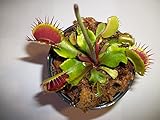


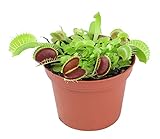


Plant Profile & Key Characteristics
Overview: Small carnivorous perennial forming a rosette of hinged snap-traps only 5-20 cm across. Grown as a novelty ornamental (indoors with strong light, or in a bog garden), it traps and digests insects to supplement its nutrient-poor habitat.
Quick Specifications
| Specification | Attribute |
|---|---|
| Plant Type / Life Cycle | Perennial (herbaceous, carnivorous) |
| Foliage Type | Semi-evergreen (enters winter dormancy) |
| Mature Size | 5-20 cm (2-8 in) |
| Growth Rate | Slow |
| Root System | Fibrous and shallow, from a short bulb-like rhizome |
| Toxicity | Non-toxic |
| Hardiness | USDA zones 8-10 |
Growth Form & Structure
- Height & Spread: A compact rosette 5-20 cm (2-8 in) across.
- Growth Habit & Form: Low, rosette-forming herbaceous perennial; each leaf is tipped with a two-lobed snap trap.
- Lifespan & Maturity: Slow-growing but long-lived, entering a winter dormancy each year.
Anatomy & Physical Features
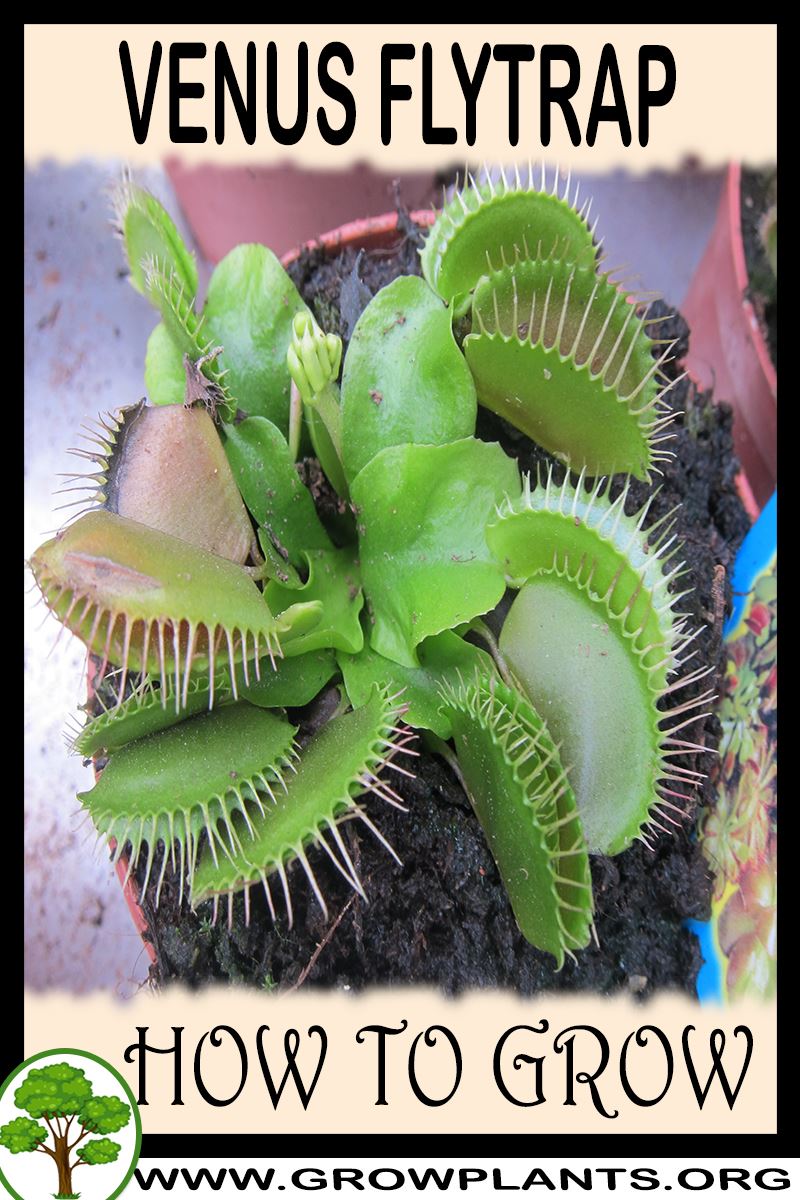
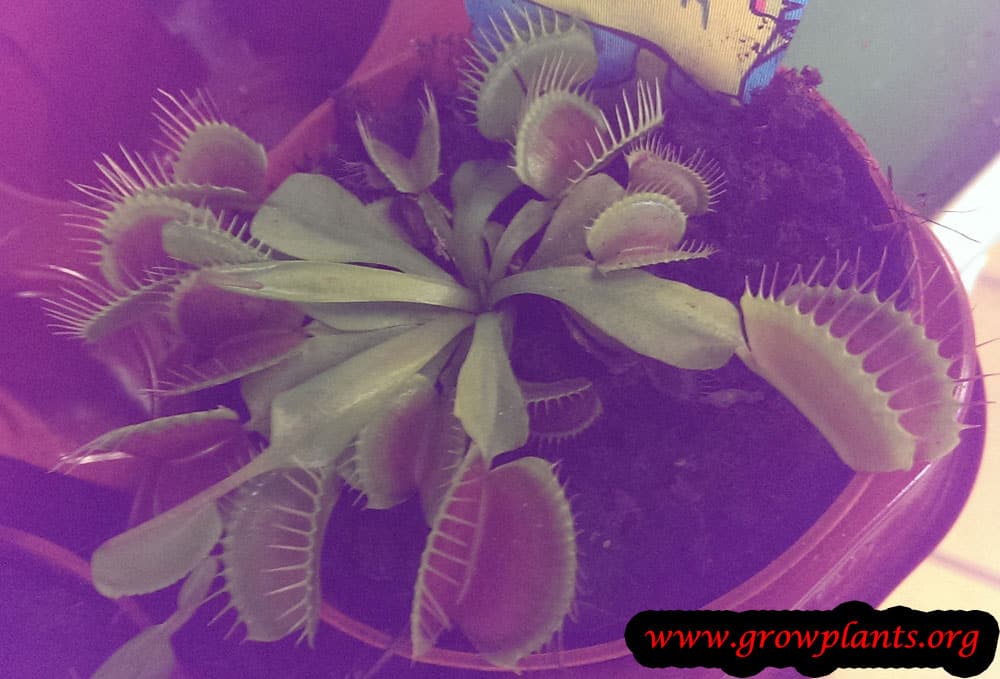
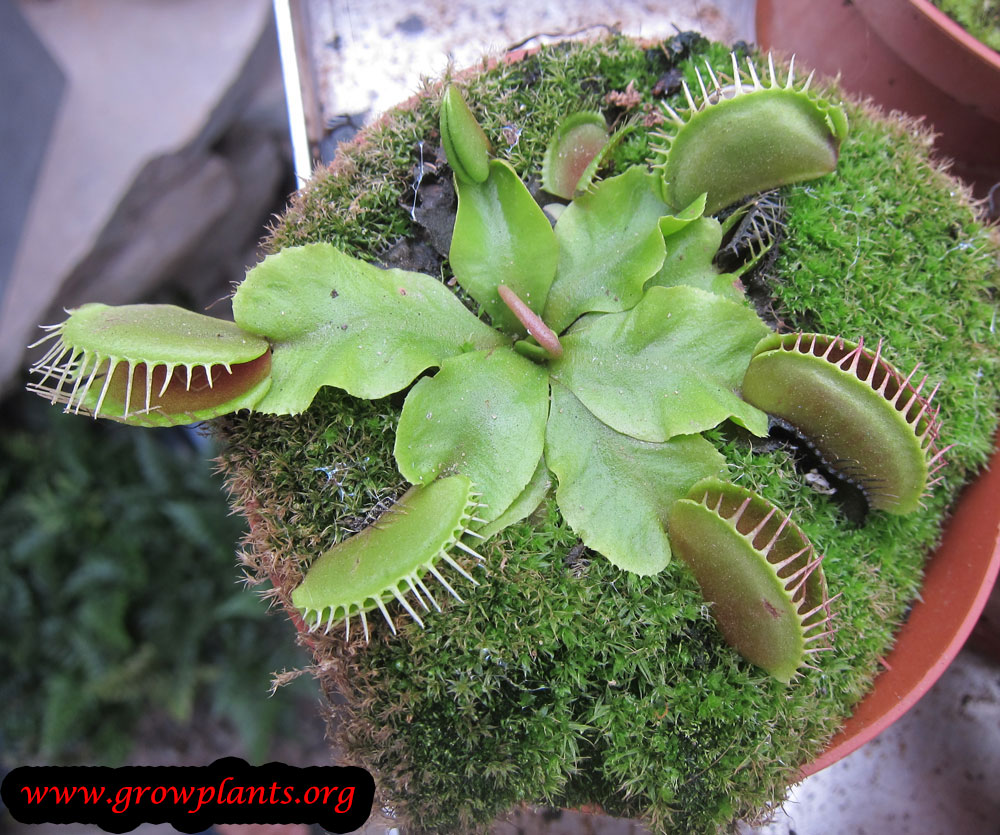
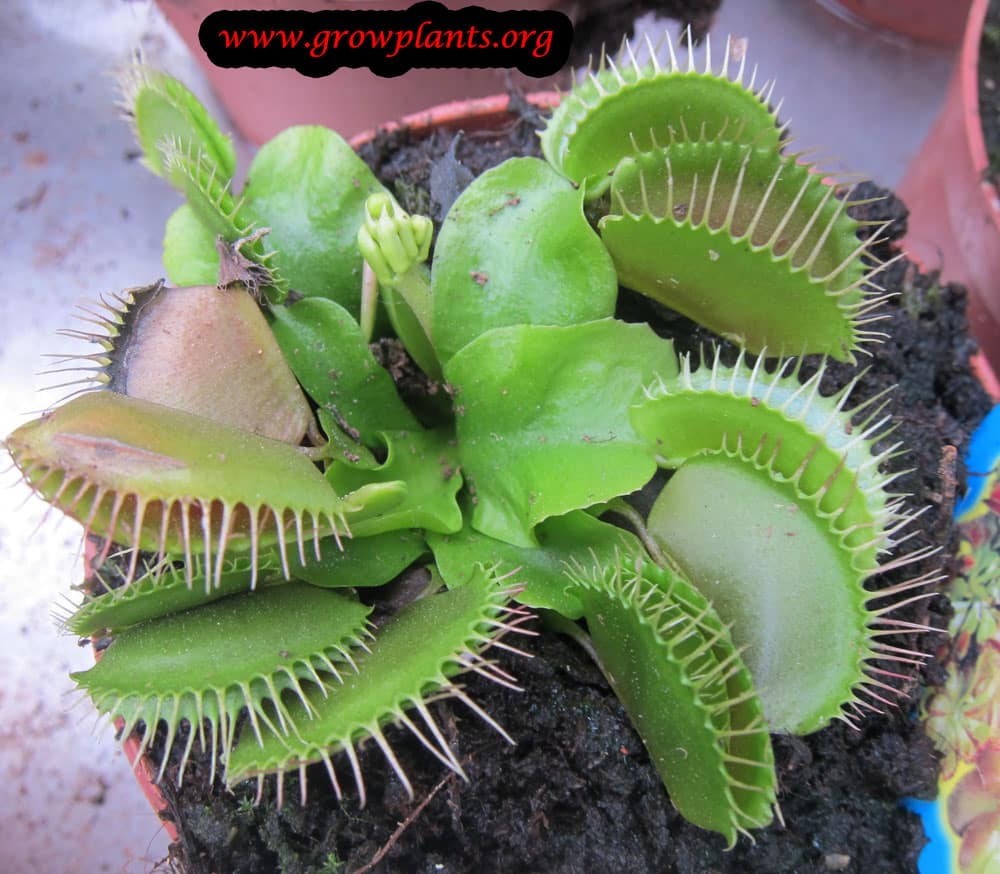
- Leaves & Foliage: Modified trap leaves, green outside and often red inside, edged with tooth-like bristles; nectar lures insects and the trap snaps shut to digest them; borne in a rosette.
- Flower Characteristics: Small white five-petalled flowers on a tall stalk held well above the traps.
Primary Uses & Landscape Value
- Functional & Ornamental Roles: Novelty carnivorous houseplant, terrarium and bog-garden specimen; controls insects.
Care Guide: Planting, Soil & Watering
Overview: The Venus flytrap (Dionaea muscipula) is a carnivorous bog plant that needs bright light, high humidity, and constantly moist, nutrient-poor, acidic media. Crucially, it must be watered only with mineral-free water such as rain or distilled water.
Quick Care Requirements
| Requirement | Ideal Condition |
|---|---|
| Planting Season | Best planted or repotted in spring, though it can also be done in summer or autumn during active growth |
| Growth Rate | Slow |
| Soil Type | Nutrient-poor, acidic bog mix (peat/sphagnum with sand or perlite) — never regular potting soil |
| Soil pH | Strongly acidic |
| Water Need | High — keep constantly moist with rainwater or distilled water only |
Planting & Establishment
- Best Planting Season: Plant or repot in spring for the strongest establishment, though it can also be done through summer and autumn while the plant is actively growing.
- How to Plant:
- Soil Amendments: Use only nutrient-poor, acidic media — a mix of peat or sphagnum moss with washed sand or perlite. Never add fertiliser, lime, or ordinary potting compost, all of which are toxic to it.
- Planting Depth: Set the plant so the white rhizome base is just below the surface with the leaf rosette sitting at soil level — do not bury the growing crown.
- Growth Speed & Expectations: Grows slowly, adding a few traps at a time; it needs a cool winter dormancy each year to stay healthy long-term.
Soil, Watering & Drainage Care
- Soil Mix & Drainage Needs: Grow in a moisture-holding but airy bog mix in a pot with drainage; stand the pot in a shallow tray of rain or distilled water so the media stays permanently damp. Mineral-laden tap water builds up salts that quickly kill the plant.
- Watering Schedule & Technique:
- Young / Newly Planted: Keep newly potted plants constantly moist using the water tray, never letting the media dry out.
- Established: Keep the media wet at all times during growth using only rain or distilled water; the plant feeds itself by catching insects and should never be fertilised.
- Seasonal Adjustments: Keep it wet and bright through the warm growing season, then reduce watering to just-moist during its cool winter dormancy.
Climate, Light & Hardiness
The Venus flytrap is a bog carnivore of subtropical to temperate climates that needs bright sun, high humidity and, importantly, a cold winter dormancy. At about zone 8–10 it is hardier than most carnivorous plants, with an established rhizome surviving winter frost while the traps die back.
Quick Climate Specifications
| Climate Zones | Subtropical, Mediterranean and temperate (bog conditions); also grown indoors with strong light |
| USDA Hardiness Zones | Site lists zone 8–10 |
| Optimal Temp Range | Warm growing season near 21–32 °C (70–90 °F), with a cold winter rest |
| Cold Damage Begins | Actively growing traps are checked by hard frost; the plant naturally dies back as winter cold arrives |
| Approx. Survival Minimum | Established, dormant rhizomes tolerate hard winter cold consistent with zone 8, roughly −10 to −12 °C (14–10 °F) with mulch; varies with conditions |
| Frost Tolerance | Moderate (when dormant) |
| Light Conditions | Full sun to half shade |
Sunlight & Light Exposure
Optimal Light Setup
Strong light is essential - full sun to half shade - for vigorous, well-coloured traps; indoors it needs a very bright window or supplemental light.
Direct Sun Requirement
It genuinely wants several hours of direct sun; low light gives weak, floppy traps.
Best Exposure / Orientation
An open, bright, sunny bog position is ideal.
Temperature Extremes & Hardiness
USDA Hardiness & Regional Limits
Zone 8–10 makes it one of the hardier carnivores. Native to a temperate wetland, it requires a cold dormancy each winter and does poorly if kept warm all year.
Cold Damage & Winter Protection
In winter the traps die back and the rhizome rests; in its colder zones a mulch protects the rhizome through freezes. A dormant established plant is far cold-hardier than its actively growing summer traps.
Frost Sensitivity
Summer traps are frost-sensitive, but the dormant rhizome tolerates frost - the two states must not be confused.
Extreme Heat Tolerance
It takes warm, humid summers well provided the roots stay wet and the air humid.
Wind, Humidity & Microclimate
Humidity Preferences
It favours humid, moist bog air.
Microclimate Recommendations
Give a sunny, humid, permanently-wet micro-spot in the growing season and a cold, still rest in winter; container rhizomes freeze faster, so mulch pots in cold spells.
Growing in Pots, Balconies & Indoors
The Venus flytrap can be grown indoors, but only where it gets a lot of direct light – a bright, sunny windowsill, not a dim room. Give it mineral-free water and a peaty, nutrient-free mix, and resist the urge to feed it or trigger the traps for fun.
Quick Details
- Container Size: A deeper 10-13 cm (4-5 inch) pot for its downward roots
- Indoor Suitability: Windowsill only – the grower’s ‘yes, with a lot of light’ means a very sunny sill
- Best Spot: The brightest, sunniest position with plenty of direct sun
- Soil & Drainage: A lean, nutrient-free carnivorous mix – sphagnum peat with perlite or lime-free sand; never ordinary potting soil, compost, fertilizer, or lime.
- Watering in Pots: Only mineral-free water – rainwater, distilled, or reverse-osmosis – never hard tap water, whose minerals build up and harm the plant. Stand the pot in a shallow tray of that water so the mix stays constantly wet.
Indoors & On the Windowsill
- Windowsill grower: The grower is clear – indoors is fine only with a lot of light. Put it on the brightest, sunniest sill you have; weak light gives floppy, blackening traps.
- Winter dormancy: Flytraps are temperate and need a cool winter rest – move the pot to a cold, bright spot and let it die back for a few months, or it will exhaust itself. Never fertilize, and do not tease the traps shut.
On a Balcony or Patio
- Light & wind: A bright, sheltered outdoor spot suits it in the warm season; keep the water tray topped up, as pots in sun and wind dry out fast, and shelter it from drying wind.
- Practicalities: Use rainwater for topping up; a filled tray adds weight, so make sure shelving or railings can take it.
Choosing the Pot, Soil & Long-Term Care
- Pot & water tray: Use a plastic or glazed pot (terracotta leaches minerals and dries too fast); unusually for a potted plant, keep it standing in a shallow water tray rather than letting it drain dry.
- Potting mix: Nutrient-free only – sphagnum peat blended with perlite or lime-free sand. Ordinary compost or feed will kill the roots.
- Feeding: Do not fertilize – these plants draw their nutrients from the insects they catch, so rich soil or feed will scorch the roots.
- Repotting: Refresh the peat mix every year or two in the warmer months, before the old mix breaks down and turns sour.
Fertilizing & Feeding
These plants evolved in nutrient-poor bogs and feed themselves by trapping insects; they are very light feeders whose roots are easily damaged by fertilizer and mineral salts, so external feeding stays minimal.
Quick Fertilizing Specs
| Feeding Level | light |
|---|---|
| Main Nutrient Priority | Nutrients come mainly from captured prey, not soil fertilizer |
| Best Feeding Period | Warm active growing season |
| Reduce/Stop Feeding | Stop any feeding during the winter dormancy or rest period |
| Soil pH | Acidic, low-mineral medium such as peat or sphagnum with perlite |
| Organic Options | Mineral-free medium; nutrition supplied by trapped insects |
| Micronutrients | Not supplied by fertilizer; mineral salts are harmful |
Feeding by Growth Stage
Active growth season
Support new traps, pitchers, and leaves during the growing season, with most nutrition coming from captured prey.
| Nutrient direction | Very low external nutrients – nutrition comes mainly from trapped insects, so the roots rarely need feeding and are easily harmed by fertilizer salts. |
|---|---|
| Timing | Through the warm growing season when new traps form. |
| Frequency | Fed mainly by captured insects; keep any soil feeding minimal and infrequent. |
| Fertilizer types | Captured insects are the primary nutrient source, When prey is scarce, offer small insects to the traps rather than fertilizing the roots |
| Precautions | Use only rain, distilled, or other mineral-free water; ordinary fertilizer and hard tap water leave salts that can kill the roots. |
Winter dormancy
Let the plant rest as growth and prey capture slow; nutrient demand falls away.
| Nutrient direction | None – withhold all feeding during the rest period. |
|---|---|
| Timing | During winter dormancy in the cold season. |
| Frequency | No feeding at this stage. |
| Fertilizer types | No feeding at this stage; do not fertilize while the plant rests. |
| Precautions | Do not fertilize; keep the medium moist with mineral-free water only until active growth resumes. |
Nutrient Deficiency Signs & Corrections
Leaf and trap tips brown and die back, and the plant declines after fertilizing or using hard water.
| Possible causes | Fertilizer salts in the medium, Hard or mineral-rich tap water, Overfeeding the roots |
|---|---|
| Appears first on | Leaf and trap tips |
| What to check | Water source and its mineral content, Any fertilizer added to the medium, Mineral or salt crust on the surface |
| Possible correction | Flush the medium repeatedly with rain or distilled water and switch to mineral-free water, avoiding all soil fertilizer. |
Weak, pale growth with small or few traps when the plant catches little prey.
| Possible causes | Too few insects available to trap, Grown indoors away from prey, Traps not triggered or unable to close |
|---|---|
| Appears first on | New growth, seen as small, pale traps |
| What to check | Whether the plant is catching insects, Light levels, Trap function |
| Possible correction | Offer suitable small insects to the traps or improve access to prey and light, rather than adding soil fertilizer. |
Pruning, Training & Seasonal Maintenance
The Venus flytrap (Dionaea muscipula) is a small carnivorous rosette 5–20 cm across with a true winter dormancy. It does not tolerate structural pruning: maintenance is grooming only — trimming fully blackened traps and leaves — and its one important seasonal decision is whether to remove the flower stalk, which is usually cut off because flowering drains this slow-growing plant.
Traps and leaves naturally blacken and are replaced, so the aim is to remove only what is fully dead, to protect the small rhizome, and to weigh flowering against the plant’s vigour.
Quick Pruning & Maintenance Specs
| Pruning Tolerance | Very low — grooming only, no structural pruning |
| Primary Maintenance Window | Year-round grooming; flower stalk removed in spring |
| Typical Frequency | Occasional grooming; one flower-stalk decision each spring |
| Main Objective | Remove dead traps and leaves; manage flowering to protect vigour |
| Best Tool Type | Precision snips or fine scissors |
| Avoid Heavy Pruning During | Any time — never cut the crown or rhizome; leave winter leaves |
Pruning by Plant Age & Size
Newly Established
Let a young or newly potted plant settle and remove only fully blackened traps; there is no formative pruning.
Young / Formative
No training applies. The plant renews its rosette of traps from the crown; keep it groomed and in strong light so new traps colour and function well.
Mature / Established
Groom dead traps and, when the plant becomes crowded, renew and propagate it by dividing the rhizome rather than by any cutting back.
Seasonal Pruning Schedule
Spring flowering: a tall flower stalk rises early in the season; on all but strong, well-established plants it is best cut off as it emerges, because flowering saps energy from this slow grower and can weaken it — leave it only if you specifically want seed. Growing season (sanitary): individual traps blacken with age or after digesting prey; remove them once fully black. After winter dormancy: the plant makes smaller leaves and some die over the cold rest; tidy the fully dead foliage as new spring growth appears, without disturbing the crown.
Special Growth to Remove
Trim fully blackened traps and leaves at their base with fine snips, and cut the flower stalk low when you choose to remove it. Do not cut traps that are still partly green and working, do not pull dead parts off by hand, and do not trigger the traps for amusement — each closure costs the plant energy.
Tools
Precision snips or fine scissors are the only tool needed; cuts are small and selective. Larger pruning tools have no role on a plant this size.
Tool Hygiene & Disease Risk
Routine. No significant tool-borne disease is recorded; clean, sharp blades suffice. Remove dead traps promptly, as blackened tissue left in a humid setting can encourage mould.
Heavy Pruning & Rejuvenation
Not tolerated. There is no cutting back to rejuvenate a flytrap. A tired or crowded plant is renewed by a proper winter dormancy, good light, and dividing the rhizome — never by hard pruning.
Post-Pruning Care
After grooming, keep the plant in bright light standing in mineral-free water on its peat-based mix; a plant whose flower stalk you removed should recover more vigorously through the season. No feeding is needed — the traps do the feeding, and only if insects are scarce should prey be offered.
Common Pruning Mistakes
- Leaving the flower stalk on a small plant and letting flowering weaken it.
- Cutting traps that are only partly blackened rather than fully dead.
- Cutting away the smaller winter leaves and disturbing a dormant plant.
When NOT to Prune
Do not remove traps or leaves that are still partly green, do not cut into the crown or rhizome except when dividing, and do not tidy hard during winter dormancy — wait until spring growth resumes.
Recommended Tools (by task)
- precision_snips — for removing blackened traps and leaves and for cutting the spring flower stalk.
Propagation Guide
The Venus flytrap is most easily and reliably increased vegetatively — by dividing the offsets it forms and from leaf cuttings (leaf pullings taken with a piece of the white rhizome base), with flower-stalk cuttings a further option. Vegetative propagation is preferred because it keeps a named form true, whereas seed-raised plants vary. Seed works but needs a cold period and is slow. Moderate difficulty.
Quick Propagation Specs
| Best Propagation Method | Division of offsets; leaf cuttings (leaf pullings) |
| Alternative Methods | Flower-stalk cuttings; seed (needs cold stratification) |
| Propagation Difficulty | Moderate |
| Seed True-to-Type | Variable — named colour forms must be propagated vegetatively to stay true |
| Vegetative True-to-Type | Yes — divisions and leaf cuttings reproduce the parent form |
| Best Propagation Season | Spring to summer (repot/divide in early spring) |
Leaf & Rhizome Cuttings
Pull a whole leaf downward so it comes away with a sliver of the white rhizome base, then lay it on damp mineral-free medium (peat and perlite or sphagnum) in bright light and high humidity; a new plantlet forms from the white base. Use rainwater or other mineral-free water. The flower stalk, if cut up and set on the same medium, can also produce plantlets — a useful way to gain plants while removing flowers.
Division of Offsets
Mature plants naturally split into a clump of crowns. In early spring, lift and gently separate the crowns, keeping roots and a share of the white rhizome on each, and pot them individually into wet, mineral-free mix.
Growing from Seed
Seed Handling & Germination
Fresh seed benefits from a cold, moist period (stratification) before sowing; surface-sow on damp mineral-free medium in light and warmth after the cold treatment. Germination is slow and seedlings are tiny, so seed is used mainly for raising numbers or new variation rather than to reproduce a named form.
Bloom & Flower Guide
Quick Details
- Bloom Season: Spring
- Time to First Bloom: On mature plants
- Flower Appearance: Small white, five-petalled flowers with fine green veins, clustered atop a tall stalk
- Edibility: A carnivorous ornamental; not eaten
Detailed Blooming Overview
The Venus flytrap (Dionaea muscipula) raises its white flowers on a tall stalk, held high above the traps so pollinators are not caught. Flowering is demanding, so many growers cut the stalk to protect the plant’s strength.
Flower Characteristics
- Small white flowers, five petals with fine green veins, in a cluster on a tall scape.
Bloom Care & Thinning
- Managing the bloom: Flowering takes a lot of energy; unless you want seed, cut the flower stalk when it is a few centimetres tall to keep the plant vigorous.
- Conditions: Bright light, pure (low-mineral) water and a proper winter dormancy support healthy plants.
Pests, Diseases & Troubleshooting
Overview: Dionaea muscipula (Venus flytrap) is a carnivorous bog plant whose care is unusual: its single greatest danger is not a pest but water quality and rot, since mineral-laden tap water and soggy, stale conditions cause fatal crown and root rot. Actual insect pests are few — aphids, fungus gnats, spider mites and thrips — and it needs pure water, nutrient-free acid media, bright light and a winter dormancy to thrive. Never fertilise the soil and never use tap or mineral water.
Quick Troubleshooting Overview
| Issue / Pest | Main Symptom | Primary Solution |
|---|---|---|
| Mineral / tap water | Blackening traps, weak growth, gradual decline and death | Use only rain, distilled or RO water; never tap or mineral water |
| Crown / root rot | Mushy black crown, collapsing traps in soggy or stale media | Fresh airy peat mix, tray-water with pure water, more light |
| Aphids | Distorted, deformed new traps and growth points | Rinse off, submerge briefly, or insecticidal soap sparingly |
| Fungus gnats | Tiny black flies over wet media; larvae in the peat | Let surface dry a little; sticky traps, Bt israelensis |
| Grey mould (Botrytis) | Fuzzy grey mould on dying traps and in winter dormancy | Remove dead traps, improve airflow, reduce humidity |
| Weak, floppy, all-green traps | Poor light; traps do not colour up or close well | Give strong direct sun or a strong grow light |
Common Pests & Management
- Aphids (Aphis / Myzus spp.):
- Symptoms: Tiny soft-bodied insects hidden at the growing point and on new, unfurling traps and leaves, causing stunted, twisted, deformed traps that never open properly; the plant cannot catch aphids sheltering among its own traps.
- Prevention & Control: Rinse the crown under pure water or submerge the whole plant in rain or distilled water for a day to drown them. If needed, use a light insecticidal soap or a systemic suited to carnivorous plants, rinsing afterwards; avoid oily coatings that clog the traps.
- Fungus gnats (Bradysia spp.):
- Symptoms: Small dark flies running and flying over the constantly moist peat, whose larvae live in the media and can nibble roots and stem bases of seedlings and weak plants, though adults are mostly a nuisance.
- Prevention & Control: Let the media surface dry slightly between top-waterings, use yellow sticky traps to catch adults, and drench with Bacillus thuringiensis var. israelensis (Bti) or add a top dressing of sand to break the breeding cycle.
- Two-spotted spider mite (Tetranychus urticae):
- Symptoms: Fine pale stippling and a dull, silvery, distorted look to the traps and leaves, with fine webbing, worst in warm, dry indoor air and under grow lights with low humidity.
- Prevention & Control: Raise humidity and rinse the foliage with pure water, and improve air movement. For stubborn cases use a miticidal soap or a suitable acaricide rinsed off afterwards, and quarantine new plants that may bring mites in.
- Thrips (Frankliniella spp.):
- Symptoms: Silvery flecking and scarring on the traps and leaves with black frass specks and some distortion of new growth, mainly on indoor and greenhouse plants.
- Prevention & Control: Use blue sticky traps to monitor, remove badly damaged leaves, and quarantine new arrivals. Spinosad or insecticidal soap controls them; rinse the plant afterwards and avoid coating the sensitive trap surfaces.
- Mealybugs (Pseudococcus spp.):
- Symptoms: Occasional white cottony tufts tucked into the crown and the bases of the traps, with slowed, distorted growth; uncommon but persistent once established on indoor plants.
- Prevention & Control: Dab colonies with a cotton bud moistened with diluted alcohol, or rinse and pick them off, and isolate the plant. Repeat treatments are needed to catch the crawlers; avoid heavy oil sprays on the traps.
Diseases & Fungal Issues
- Crown and root rot (Pythium / Phytophthora and general rots):
- Symptoms: Blackening, softening and collapse of the crown and traps, with foul, mushy tissue, in stale, airless, waterlogged media or from mineral contamination; this rot, not insects, is the usual killer of Venus flytraps.
- Treatment & Management: Use fresh, airy, nutrient-free acid mix (sphagnum peat with perlite or sand), water only with pure water by the tray method, give bright light and good airflow, and let the media stay wet but not stagnant. Remove rotted growth; badly affected plants may be saved by repotting into fresh mix.
- Grey mould (Botrytis cinerea):
- Symptoms: Fuzzy grey mould on dead and dying traps, spent flower stalks and among the crowns, especially in the cool, damp, still conditions of winter dormancy, from which it can spread into healthy tissue.
- Treatment & Management: Remove dead traps and old flower stalks promptly, improve air movement, and reduce humidity and standing water during dormancy. Keep dormant plants cool but not sodden; a light fungicide is occasionally justified under persistent mould pressure.
- Sooty and cottony mould (secondary moulds):
- Symptoms: Black sooty mould growing on honeydew where aphids or mealybugs are present, and white cottony fungal growth on decaying traps and stale media, both signs of an underlying pest or hygiene problem.
- Treatment & Management: Deal with the underlying sap-suckers to stop the honeydew, remove decaying material, and improve airflow and light. Wiping off sooty mould and refreshing stale media restores healthy growth; these moulds fade once the cause is removed.
Growing Difficulties & Abiotic Problems
- Mineral / tap-water poisoning:
- Cause & Symptoms: Gradual weakening, blackening traps, browned leaf tips and slow death from the mineral salts in tap, spring, filtered or bottled mineral water, which accumulate in the media and are toxic to this plant adapted to nutrient-poor bog water.
- Correction Strategy: Water only with rain, distilled, or reverse-osmosis water, keeping the total dissolved solids very low, and never let it sit in mineral-laden water. Flush the media with pure water if salts have built up, and repot into fresh nutrient-free mix if decline is advanced.
- Lack of winter dormancy:
- Cause & Symptoms: Progressive weakening, small pale traps and eventual death over a year or two when the plant is kept warm and growing year-round without the cool winter rest it requires.
- Correction Strategy: Give a cool dormancy of several months in winter, with reduced light and water and cooler temperatures, during which the plant naturally dies back to a small rosette. It regrows vigorously in spring; skipping dormancy repeatedly exhausts and kills the plant.
- Over-feeding and over-triggering the traps:
- Cause & Symptoms: Blackened, dying individual traps from being fed too-large prey, force-fed unsuitable food (meat, fertiliser), or repeatedly triggered for amusement, since each trap can only close a limited number of times.
- Correction Strategy: Let the plant catch its own insects outdoors, or feed only small live or freeze-dried insects occasionally, and never feed it human food or fertiliser. Do not poke the traps to watch them close; each closure costs the plant energy and shortens the trap’s life.
- Insufficient light:
- Cause & Symptoms: Weak, floppy, all-green traps that do not develop red interiors or close well, with stretched, etiolated growth, when the plant is grown in low light indoors.
- Correction Strategy: Give strong direct sunlight (several hours) or a strong dedicated grow light; flytraps are full-sun bog plants. Good light produces compact plants with well-coloured, vigorous traps.
What Helps — Products & Tools
For Venus flytrap the priorities are cultural, not chemical: pure rain, distilled or RO water only, nutrient-free acid media, bright light and a winter dormancy prevent the crown and root rot that is the real killer. For the few pests, use pure-water rinses or submersion for aphids, sticky traps and Bti for fungus gnats, insecticidal soap or spinosad (rinsed off) for mites and thrips, and alcohol swabs for mealybugs. Remove dead traps and improve airflow against grey mould. Never use soil fertiliser. The source pest names are unreliable and were not used.