
Plant Profile & Key Characteristics
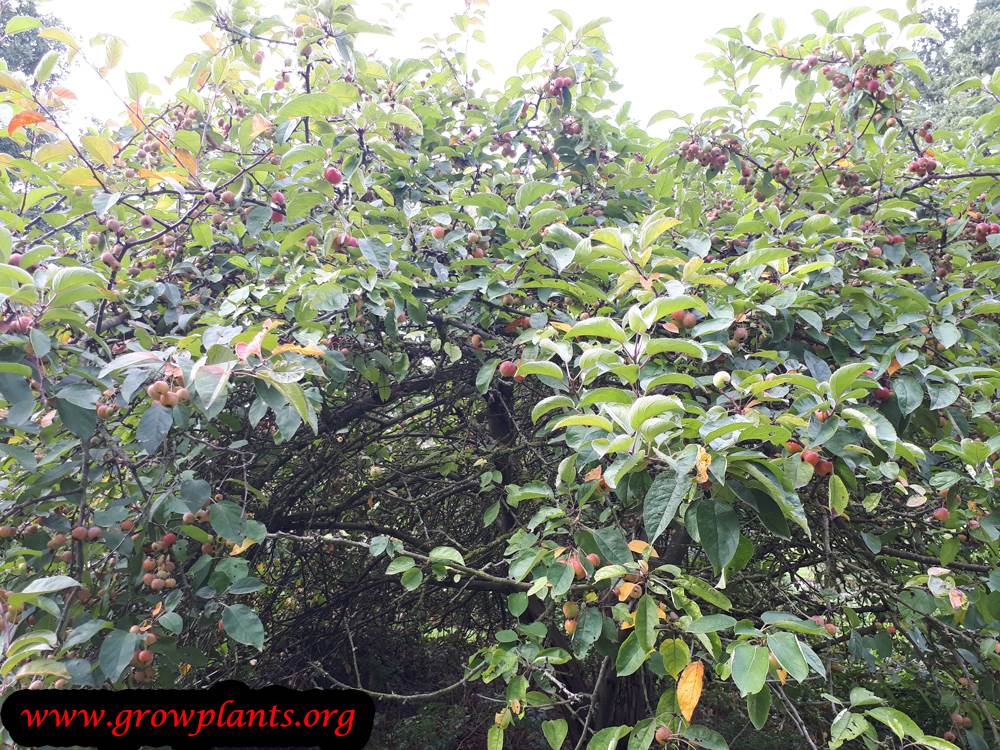
Overview: Deciduous crabapple tree reaching 2-7 m, grown chiefly as an ornamental for its spring flowers and colourful fruit. The small fruits are edible.
Quick Specifications
| Specification | Attribute |
|---|---|
| Plant Type / Life Cycle | Perennial (deciduous tree) |
| Foliage Type | Deciduous |
| Mature Size | 2-7 m (6-21 ft) |
| Growth Rate | Moderate |
| Toxicity | Fruit edible; seeds contain cyanogenic compounds (do not eat in quantity) |
| Hardiness | USDA zones 4-9 (to 10a with care) |
Growth Form & Structure
- Height & Spread: 2-7 m in the ground; can be kept small in a container.
- Growth Habit & Form: Rounded deciduous flowering tree, usually grafted.
- Lifespan & Maturity: Long-lived; begins bearing in about 3-4 years.
Anatomy & Physical Features
- Flower Characteristics: Round flowers in pink, white or purple with five to many petals.
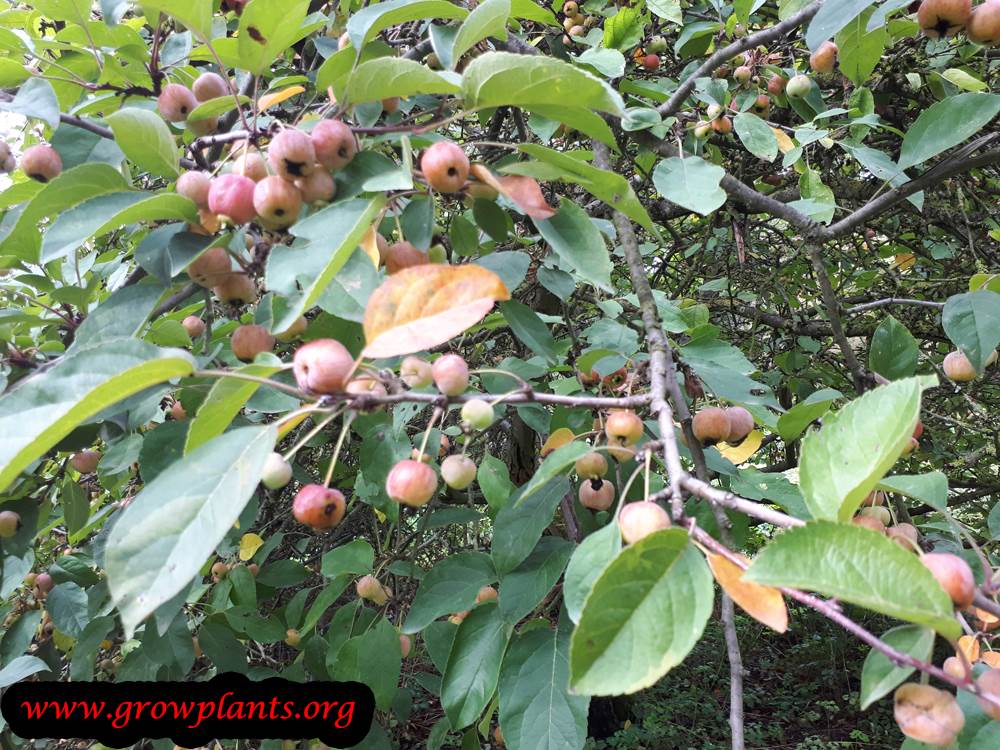
- Fruit Profile: Small apple-like fruit with white-green flesh and yellow, orange or pink skin.
Primary Uses & Landscape Value
- Edible Uses: Small fruits eaten raw or made into jelly, cakes, juice and fruit leather.
- Functional & Ornamental Roles: Ornamental flowering tree valued for its abundant blossom and long-lasting fruit; a good pollinator.
Care Guide: Planting, Soil & Watering
Overview: Malus ‘Evereste’ is a moderate-growing deciduous crabapple (zones 4–9, 10a with care) for full sun to part shade that needs winter chill. It grows best in a fertile, well-drained soil with moderate to generous watering.
Quick Care Requirements
| Requirement | Ideal Condition |
|---|---|
| Planting Season | Winter to spring |
| Growth Rate | Moderate |
| Soil Type | Fertile, well-drained |
| Water Need | Moderate to high |
Planting & Establishment
- Best Planting Season: From winter to spring (summer planting is possible but less advised); plant bare-root trees in winter to early spring, as later planting risks loss.
- How to Plant:
- Hole Preparation: Dig a hole about the depth of the root ball and twice as wide, loosening the sides for the roots.
- Soil Amendments: Work compost and organic matter through the backfill to build a fertile, free-draining root zone.
- Planting Depth: Set the tree with the graft union above soil level and the root collar level with the surface.
- Growth Speed & Expectations: A moderate grower that typically fruits about 3–4 years after planting; grown mainly for its ornamental flowers and fruit.
Soil, Watering & Drainage Care
- Soil Mix & Drainage Needs: A fertile, free-draining soil is ideal; avoid waterlogging. In containers keep it small, use a free-draining peat-based mix with drainage material in the base, and drain collected water the same day.
- Watering Schedule & Technique:
- Young / Newly Planted: Keep the soil consistently moist while the plant establishes, watering whenever the surface begins to dry.
- Established: Water deeply and regularly, keeping the soil evenly moist; let the surface dry a little between waterings.
- Seasonal Adjustments: Reduce watering in winter and increase noticeably through summer heat and fruit set.
Climate, Light & Hardiness
Malus Evereste is a deciduous flowering crabapple suited to temperate and cool subtropical/Mediterranean climates that provide a proper winter chill. It is fully cold-hardy through USDA zone 4 and needs full sun to half shade for strong flowering and fruiting.
Quick Climate Specifications
| Climate Zones | Temperate; cold mediterranean or cold subtropical |
|---|---|
| USDA Hardiness Zones | 4–9, and 10a with attentive care |
| Light Conditions | Full sun to half shade |
| Frost Tolerance | High for the dormant tree; blossoms are frost-sensitive |
| Chilling Requirement | Requires a period of winter chill; the amount varies by cultivar |
Sunlight & Light Exposure
Optimal Light Setup
Full sun is best for flower and fruit production; half shade is tolerated but reduces bloom density and fruit quality.
Best Exposure / Orientation
An open position with good light on all sides helps ripen wood and fruit evenly.
Temperature Extremes & Hardiness
USDA Hardiness & Regional Limits
Hardy from zone 4 through 9, and can be grown in zone 10a with attentive care – the main limiting factor there is usually insufficient winter chill rather than cold damage.
Chilling Requirement
Like other Malus, flowering and fruit set depend on adequate winter chilling; the exact chill-hour need varies by cultivar, and mild-winter areas may see reduced or erratic bloom.
Frost Sensitivity
The dormant, bare tree tolerates hard freezes well, but open spring blossoms can be damaged or killed by a late frost, which can reduce the ornamental display and fruit set for that season.
Cold Damage & Winter Protection
Established trees generally need no winter protection within their hardiness range; young or newly planted trees benefit from a sheltered planting site until established.
Wind, Humidity & Microclimate
Wind Tolerance
Moderate – a somewhat sheltered site helps protect spring blossom from wind damage and supports pollinator activity.
Microclimate Recommendations
Avoid low frost pockets where cold air settles, since these increase the risk of blossom frost damage in spring.
Growing in Pots, Balconies & Indoors
Crabapple ‘Evereste’ is an ornamental fruiting tree, so it is not a houseplant, but the grower confirms it can be grown in containers as a patio tree if kept small by careful potting-up and root management. It is too large for indoor life but rewarding in a big pot outdoors.
Quick Details
- Container Size: Kept deliberately small: start just 20-50% larger than the root ball and pot up in stages
- Indoor Suitability: Not a houseplant; a patio container tree that must be managed to stay compact
- Best Spot: Full sun to half shade outdoors
- Soil & Drainage: Aerated, organic-rich mix (peat or coir with perlite or vermiculite); must drain freely
- Watering in Pots: Water so the drainage tray fills, then let it dry out the same day – never leave it standing wet
Indoors & On the Windowsill
- Not an indoor plant: As a fruiting tree it needs full outdoor light and a cold winter to flower and fruit; it cannot live indoors.
- Overwintering: It is hardy and actually needs winter chill, so it stays outside year-round – just protect the pot from hard freezing where winters are severe.
On a Balcony or Patio
- Light & wind: Give it full sun for the best blossom and fruit; a potted tree is top-heavy, so anchor or shelter it on exposed balconies.
- Practicalities: A tree in a tub is heavy and dries fast – check moisture often in summer and make sure runoff can escape.
Choosing the Pot, Soil & Long-Term Care
- Pot & drainage: Drainage is critical – plenty of holes, with peat-based soil and a layer of lava grit or similar in the base; stand it on a tray, water until the tray fills, then let it dry the same day.
- Potting mix: Peat-based mix with grit for drainage, refreshed over time.
- Feeding: Feed through the growing season, as a confined tree exhausts its soil.
- Keeping it small: Pot up only when the tree fills its current pot; the bigger it gets, the smaller each size increase should be, until it reaches the size you want.
Grower’s Container Tip
- Grower’s staged potting-up (faithful): To keep the tree small, start it in a pot only 20-50% bigger than the root ball – the bigger the plant, the smaller that percentage. Each time it fills the pot, move it up one size, until it reaches the size you want. This works because old soil loses its vitality over time and it is an efficient way to care for the tree; on larger plants, change part of the soil rather than the whole root ball. Good drainage is essential: make plenty of holes, use peat soil with some lava grit in the base, stand the pot on a tray, and when you water let the tray fill – but let it dry out again the same day.
Fertilizing & Feeding
As a grafted crabapple grown for both ornamental fruit and flowers, Malus Evereste is a moderate feeder – generous enough to build a strong young canopy, then balanced with attention to potassium once it settles into regular bearing.
Quick Fertilizing Specs
| Feeding Level | moderate |
|---|---|
| young_feeding | Nitrogen-forward feeding to build a strong young canopy before bearing age |
| mature_feeding | Balanced feeding with attention to potassium once the tree bears fruit regularly |
| Main Nutrient Priority | Nitrogen while young, then balanced/potassium-aware feeding once bearing |
| Best Feeding Period | Through the active growing season, timed around bloom and fruit development on mature trees |
| Reduce/Stop Feeding | Ease off nitrogen if growth is very vigorous with little flowering or fruiting |
| Soil pH | Prefers a near-neutral soil; correct if chlorosis develops in alkaline soil |
| Micronutrients | Iron, manganese, and zinc are typically supplied by a complete fruit-tree fertilizer; boron is diagnostic-only for fruit-set issues |
Feeding by Growth Stage
Newly planted young tree
Help a newly planted or bare-root crabapple establish strong roots before pushing top growth.
| Nutrient direction | Delay feeding right at planting so fresh roots aren’t stressed; once new growth is visibly underway, shift to a nitrogen-forward feed to support young shoots. |
|---|---|
| Timing | From planting through the first growing season, especially for bare-root trees planted in the dormant season. |
| Frequency | Minimal feeding in the first season, then light regular feedings once new growth is confirmed. |
| Fertilizer types | A nitrogen-forward young-tree fertilizer once new growth begins, Compost or aged organic matter mixed into the planting area |
| Precautions | Skip fertilizing at the moment of planting itself; wait for clear new growth before the first feeding to avoid stressing fresh roots. |
Young, actively growing tree (pre-bearing)
Build a strong scaffold of branches and canopy before the tree begins bearing fruit, since grafted crabapples take several years to reach bearing age.
| Nutrient direction | A nitrogen-forward fertilizer to drive vigorous shoot and canopy growth. |
|---|---|
| Timing | Each growing season while the young tree is establishing its framework, before regular fruit set begins. |
| Frequency | Regular light-to-moderate feedings through the growing season, tapering off toward autumn. |
| Fertilizer types | A nitrogen-forward tree fertilizer, A complete fruit-tree fertilizer with routine trace elements |
| Routine trace nutrients | iron, manganese, zinc |
| Precautions | Very sensitive to pests and disease, so avoid over-fertilizing with nitrogen late in the season, which produces soft growth more susceptible to problems. |
Established tree approaching bearing age
Support the transition from vegetative growth to reliable flowering and fruit set as the tree matures toward bearing age.
| Nutrient direction | Shift toward a balanced, complete fertilizer as the tree matures and begins setting flowers and fruit. |
|---|---|
| Timing | As the tree approaches and reaches the age when it can first bear a meaningful fruit crop. |
| Frequency | Regular but moderate feeding through the growing season, adjusted to canopy growth and any fruit set. |
| Fertilizer types | A balanced, complete fruit-tree fertilizer, A complete fertilizer supplying routine trace elements |
| Routine trace nutrients | iron, manganese, zinc |
| Precautions | Reduce nitrogen if the tree grows very vigorously with little flowering, since excess nitrogen can delay bearing. |
Mature, fruit-bearing tree
Support consistent flowering, fruit set, and fruit development on a bearing crabapple, including its larger ornamental/edible fruit crop.
| Nutrient direction | A balanced fertilizer with attention to potassium to support flowering, fruit development, and fruit quality. |
|---|---|
| Timing | Each growing season on an established, regularly bearing tree, typically before bloom and again as fruit develops. |
| Frequency | Regular moderate feedings timed around bloom and fruit development, reduced if the tree is over-vigorous. |
| Fertilizer types | A balanced fruit-tree fertilizer with potassium for fruit development, A complete fertilizer supplying routine trace elements |
| Routine trace nutrients | iron, manganese, zinc |
| Precautions | Avoid heavy nitrogen close to bloom, which can push foliage at the expense of flowering and fruit set. |
Nutrient Deficiency Signs & Corrections
New leaves turn yellow while the veins stay green.
| Possible causes | High soil pH limiting iron uptake, Waterlogged or compacted roots, Root stress from recent transplanting or grafting |
|---|---|
| Appears first on | Newest leaves |
| What to check | Soil pH, Drainage, Recent root disturbance |
| Possible correction | Correct soil pH toward the tree’s preferred range and apply a chelated iron product per its label. |
Heavy bloom but few fruits develop, or young fruit drops early.
| Possible causes | Insufficient pollination, Boron deficiency affecting fruit set, Late frost damaging flowers, Excess nitrogen favoring foliage over fruit |
|---|---|
| Appears first on | Flower and young fruit drop |
| What to check | Pollinator activity, Recent frost, Fertilizer nitrogen levels, Leaf boron status |
| Possible correction | Improve pollinator access, avoid excess nitrogen, and apply a boron product per its label only if a boron deficiency is confirmed. |
Pale overall foliage and weak shoot growth.
| Possible causes | Nitrogen deficiency in poor soil, Root competition from turf or weeds, Poor drainage limiting nutrient uptake |
|---|---|
| Appears first on | Older leaves and overall canopy color |
| What to check | Soil fertility, Mulch or turf competition around the root zone, Drainage |
| Possible correction | Apply a nitrogen-forward or balanced fertilizer appropriate to the tree’s stage and correct any drainage or competition issues. |
Pruning, Training & Seasonal Maintenance
Malus Evereste is a small, densely branched flowering crabapple grown chiefly for its spring blossom and colourful ornamental fruit, with eating quality a secondary trait. It tolerates moderate structural pruning once a framework is set, but because the source data flags this cultivar as very sensitive to pests and disease, sanitation cuts take priority over cosmetic shaping. The safest window is late autumn into early winter after leaf fall, shifting to just after the (light) fruit display if disease pressure has been an issue that season.
Quick Pruning & Maintenance Specs
| Pruning Tolerance | Moderate |
| Primary Pruning Window | Late autumn – early winter, after leaf fall |
| Secondary Maintenance Window | After the fruit display fades, for sanitation only |
| Typical Frequency | One structural/sanitation pass per year |
| Main Objective | Open the framework to light for flower/fruit display; remove diseased wood promptly |
| Young Plant Priority | Build a strong, evenly spaced branch framework |
| Mature Plant Priority | Renew light to fruiting spurs; remove crossing and weak wood |
| Best Tool Type | Bypass secateurs and loppers; saw for older structural wood |
| Avoid Heavy Pruning During | Active spring growth flush and while fruit is setting |
Pruning by Plant Age & Size
Newly Established
Remove only damaged or broken growth from planting; do not begin structural shaping in the first season.
Young / Formative
Train to a modified-leader, open framework: select 4–6 well-spaced scaffold branches and remove competing co-dominant leaders. The source’s own guidance to thin the bloom in the first two years applies here – it redirects the young tree’s energy into structure rather than a heavy first fruit set.
Mature / Established
Maintain the existing scaffold, thin overcrowded spur wood, and remove crossing or rubbing branches so fruit colours up evenly.
Seasonal Pruning Schedule
| Stage | Objective | Remove | Do Not Remove | Response / Impact |
| Dormant (late autumn–early winter) | Structural cleanup and disease sanitation | Dead, weak, and crossing branches; any wood showing infection | Healthy spur wood – it carries next spring’s flowers | Even bud break; improved flower and fruit display |
| Post-display (light years only) | Sanitation | Any fruiting wood that showed disease that season | Undamaged wood | Reduced carry-over of pests/disease into next season |
Flowering & Fruiting Wood
Bloom forms in spring on spurs carried on two-year-and-older wood, the same pattern as edible apples. Heavy dormant pruning that strips spur wood reduces next spring’s flower and fruit display, so cuts should thin out whole branches rather than head them back.
Structural Pruning & Training
Remove crossing and rubbing branches and keep an open, evenly spaced scaffold. The tree stays naturally compact (2–7m), so height control is light; canopy thinning matters here specifically because it reduces the disease pressure this cultivar is documented to be sensitive to.
Special Growth to Remove
- Rootstock suckers – this is a grafted tree, so growth from below the graft union should be removed promptly; it saps vigor and will not be the ornamental cultivar.
- Watersprouts – vigorous vertical, non-fruiting shoots inside the canopy.
- Diseased wood – cut out at first sign of infection, per the source’s own guidance to remove affected branches and clear fallen leaves/fruit.
Container & Small-Space Pruning
Container growth is supported (per source), keeping the pot only modestly larger than the root ball and sizing up gradually. In a pot, keep the framework compact with summer pinching of vigorous shoots; hard pruning for size control is tolerated but usually costs some bloom the following spring.
Tools
- Bypass secateurs for spur thinning and small crossing wood.
- Loppers for 2–3cm branches.
- Pruning saw for older structural wood at the base of a mature specimen.
Tool Hygiene & Disease Risk
Increased risk – the source specifically flags this cultivar as very sensitive to pests and disease. Disinfect blades between cuts on infected wood and between trees, and remove cut infected material from the site rather than composting it.
Cut Placement & Technique
Use thinning cuts back to a lateral or the branch collar; avoid flush cuts and stubs; on larger limbs cut just outside the branch collar.
Heavy Pruning & Rejuvenation
Moderate tolerance – an overgrown or storm-damaged tree can be rejuvenated, but spread the work over two seasons to avoid a flush of non-fruiting watersprouts and a lost bloom year.
Post-Pruning Care
Monitor cuts for reinfection given the documented disease sensitivity; do not feed immediately after a hard cut; water normally; watch fresh wounds for borer entry, since borer is a listed pest.
Common Pruning Mistakes
- Heading cuts that strip spur wood and next year’s bloom.
- Leaving rootstock suckers to grow past the graft.
- Ignoring early disease symptoms instead of cutting out infected wood promptly.
- Pruning during the spring growth flush.
When NOT to Prune
Avoid pruning during bloom and fruit set, in wet weather when disease spreads readily, and immediately after transplanting a bare-root tree.
Recommended Tools (by task)
- bypass_secateurs – thinning spur wood and removing small crossing growth.
- loppers – cutting rootstock suckers and mid-size branches.
- pruning_saw – removing older structural wood on a mature specimen.
- blade_disinfectant – this cultivar is documented as very disease-sensitive, so disinfect between cuts on infected material.
Pruning Troubleshooting
| Problem | Possible Cause | What to Check | Corrective Action |
| Poor flowering after pruning | Heading cuts removed spur wood | Whether previous cuts were heading vs. thinning | Switch to thinning cuts; avoid removing 2+yr spur wood |
| Recurring dieback | Pest/disease reinfection (aphids, borer, mite) | Cut edges and bark for entry points | Cut back to clean wood, disinfect tools, remove debris |
| Excess vertical watersprouts | Over-hard dormant pruning | Severity of last season’s cuts | Reduce pruning severity; remove watersprouts selectively |
| Sparse fruit set | Suckers/watersprouts competing for energy | Base of tree and canopy interior | Remove suckers and watersprouts promptly |
Propagation Guide
‘Evereste’ is a named ornamental crabapple cultivar, so it must be propagated by grafting or budding onto rootstock to keep its exact fruit, flower, and growth characteristics – the site confirms grafting is necessary for this variety. Seed can be used to raise straight Malus seedlings or rootstock, but seedlings will not reliably reproduce the ‘Evereste’ cultivar. Overall difficulty: Moderate to Specialist, since successful grafting takes some practiced skill.
Quick Propagation Specs
| Best Propagation Method | Grafting or budding onto rootstock |
| Alternative Methods | Seed (for rootstock or species seedlings only, not for true ‘Evereste’ plants) |
| Propagation Difficulty | Moderate–Specialist |
| Seed True-to-Type | No – seedlings will not reproduce the ‘Evereste’ cultivar |
| Vegetative True-to-Type | Yes |
| Best Propagation Season | Late winter while dormant (whip-and-tongue grafting), or late summer (budding); matches the site’s winter-to-early-spring bare-root planting window |
| Graft Union/Establishment Time | Several weeks to a season for the union to knit before growth resumes |
Growing from Seed
Dormancy & Pre-Sowing Treatment
Malus seed generally has a dormancy that is broken by a period of cold, moist stratification over winter (commonly several weeks to a few months) before it germinates reliably.
Sowing Season
Sow stratified seed in late winter to early spring.
Germination Conditions
Cool, moist, well-drained medium.
Seedling Care
Seedlings raised this way are only useful as rootstock or for breeding – they will not be true to ‘Evereste’ and should not be relied on to reproduce this cultivar’s ornamental fruit and flowers.
Grafting & Budding
Why Grafting Is Used
To preserve the exact ‘Evereste’ cultivar – the site states grafting is necessary, since seed-raised trees will not come true.
Preferred Grafting Methods
Whip-and-tongue or cleft grafting on dormant wood is common; chip or T-budding onto actively growing rootstock in late summer is an alternative.
Rootstock
Typically grafted onto a seedling or size-controlling clonal apple/crabapple rootstock chosen by the grower or nursery; the site does not specify which rootstock is used.
Scion Selection
Use healthy, dormant one-year-old wood taken from a true ‘Evereste’ tree.
Best Grafting Season
Late winter while both scion and rootstock are dormant (matching the site’s bare-root planting timing), or late summer for budding.
Graft Aftercare
Protect and seal the union, stake the young graft, and remove any shoots that arise from the rootstock below the graft line so they don’t overtake the scion.
Bloom & Flower Guide
Quick Details
- Bloom Season: Spring
- Time to First Bloom: Young grafted trees usually begin flowering within a few years of planting
- Flower Appearance: Blossoms about 3-4 cm across, opening from pink buds to white or white flushed with pink, in generous clusters
- Edibility: The blossom is ornamental (not eaten); this crabapple is grown for its spring flower and later decorative fruit
Detailed Blooming Overview
‘Evereste’ is prized for a heavy, reliable spring blossom. Pink buds open to broad white or pink-tinted flowers that smother the branches and hum with bees, which do the pollinating.
Flower Characteristics
- Five-petalled blossoms, 3-4 cm across, pink or white or pink-and-white, as the grower notes.
- Borne in clusters along the branches for a dense display.
Bloom Care & Thinning
- Thinning: In the first couple of years, thinning some of the blossom and young fruit helps a young tree build a strong framework rather than exhausting itself.
- Pollination: Done by bees – a good pollinator partner nearby improves set.
- Pruning: Shape after flowering, keeping growth open and airy.
Bloom Health & Protection
- Fireblight: This bacterial disease can enter through open blossom, wilting and blackening flower shoots. Pruning out affected wood well below the damage and avoiding overly lush, soft growth help; a copper-based spray at blossom time can reduce risk in problem areas.
- Apple scab: Can spot blossom and foliage in wet springs. ‘Evereste’ has good natural resistance, and clearing fallen leaves reduces carry-over.
Fruit & Uses
Malus Evereste is grown mainly as an ornamental flowering crabapple, but its small apple-like fruits are genuinely edible. The fruit can be eaten raw, though because this cultivar is selected for ornamental fruit and flower display rather than dessert quality, the fruit tends to be smaller and tarter than a typical eating apple and is often preferred cooked or processed.
Quick Edible Specs
| Edible Parts | Fruit |
|---|---|
| Main Use(s) | Culinary – eaten raw, baked, made into cake, juice, or fruit leather |
| Eaten Raw or Cooked | Both – raw when ripe, but commonly cooked/processed due to tartness |
| Preparation Required | None for raw eating (wash first); cooking/juicing for milder flavour; remove seeds/core before processing |
| Harvest Season | Summer to autumn |
| Time to First Harvest | Several years after planting (see Pruning/Propagation for exact bearing-age figures) |
| Storage | Best used fresh or processed promptly; small ornamental crabapples do not keep as long as storage apples |
| Safety/Toxicity Caveat | Flesh is safe to eat; like all Malus species, the seeds/pips contain a small amount of a cyanogenic compound and should not be chewed or eaten in quantity |
Fruit
The small crabapple fruit ripens through summer into autumn, developing its characteristic peel colour (yellow, orange, pink, or a mix of colours over a white-green base). Once fully coloured and firm, fruit can be picked by hand. In small quantities it can be eaten out of hand, but because it is typically tarter and smaller than culinary apples, most of the crop is put to use cooked – baked, made into cakes, pressed or simmered into juice, or dried down into fruit leather. Birds, mites, and fruit fly can damage the crop, so netting or other fruit-fly protection is commonly used to keep fruit intact for harvest.
Preparation, Uses & Safety
Ripe fruit needs no special preparation for cooking or juicing beyond washing and removing the core/seeds; raw eating is fine in normal quantities. As with other Malus (apple) species, the seeds contain a small amount of a cyanogenic compound (amygdalin) and should not be chewed or eaten in quantity – this is a standard, genus-wide precaution rather than a concern specific to this cultivar’s flesh.
Pests, Diseases & Troubleshooting
Overview: Crabapples are ornamental Malus, so they share the full apple pest and disease complex but are grown for blossom and small fruit rather than eating, which makes disease resistance to apple scab, fire blight, rust and mildew the top priority when choosing and siting them. Codling moth, aphids and mites feed as on eating apples, while birds happily take the tiny fruit. Choosing resistant cultivars and good sanitation prevent most trouble.
Quick Troubleshooting Overview
| Issue / Pest | Main Symptom | Primary Solution |
|---|---|---|
| Codling moth | ‘Worm’ tunnels and frass in fruit; early drop | Sanitation; pheromone traps; trunk bands; bagging |
| Aphids (incl. woolly) | Curled shoots / white cottony wood galls | Dormant oil; predators; prune out woolly colonies |
| Spider mites | Stippling, bronzing, webbing in heat | Conserve predators; hose; horticultural oil |
| Apple scab | Olive-black leaf spots; scabby cracked fruit | Resistant cultivars; rake leaves; protectant fungicide |
| Fire blight | Blackened ‘shepherd’s-crook’ shoots; cankers | Resistant cultivars; prune out; copper at bloom |
| Powdery mildew / rust | White coating or orange rust spots | Prune tips; resistant cultivars; sulfur |
Common Pests & Management
- Codling moth (Cydia pomonella):
- Symptoms: The classic ‘worm in the apple’: larvae bore into the fruit from the calyx or side, tunnelling to the core and leaving frass-filled exit holes, causing premature drop and inedible fruit.
- Prevention & Control: Sanitation is key – remove fallen and infested fruit promptly to break the cycle, monitor and time controls with pheromone traps, use cardboard trunk bands and fruit bagging, encourage predators and parasitic wasps, and consider mating-disruption or codling-moth granulovirus where pressure is high.
- Aphids (incl. woolly apple aphid) (Aphis pomi / Eriosoma lanigerum):
- Symptoms: Green apple aphids curl and distort new shoots with honeydew, while woolly apple aphid forms white cottony masses on wood, wounds and roots, causing galls and weakening the tree.
- Prevention & Control: Hose off green aphids and encourage ladybirds, lacewings, hoverflies and the parasitoid Aphelinus for the woolly form; prune out infested wood, apply dormant oil for overwintering eggs, and use insecticidal soap only where needed.
- Spider mites (Panonychus ulmi / Tetranychus urticae):
- Symptoms: Fine stippling, bronzing and webbing on leaves in hot, dry, dusty conditions, reducing vigour and fruit quality.
- Prevention & Control: Conserve predatory mites (avoid broad-spectrum sprays), hose foliage, keep trees watered, and use horticultural oil and dormant oil for eggs; miticides only as a last resort.
- Apple maggot / fruit flies (Rhagoletis pomonella / Ceratitis capitata):
- Symptoms: Flies sting the fruit to lay eggs and maggots tunnel the flesh, leaving dimpled, pitted, prematurely rotting fruit.
- Prevention & Control: Hang red sphere or bait traps, collect and destroy dropped fruit, bag fruit where practical, and harvest promptly; sanitation is the backbone of control.
- Scale insects (San Jose scale) (Diaspidiotus perniciosus):
- Symptoms: Grey, encrusting scale on bark and fruit with red-haloed spots on fruit, weakening branches and downgrading fruit.
- Prevention & Control: Apply dormant/horticultural oil to smother overwintering scale, prune out heavily encrusted wood, and conserve parasitoid wasps and predatory beetles.
Diseases & Fungal Issues
- Apple scab (Venturia inaequalis):
- Symptoms: The number-one apple disease: olive-green to black velvety spots on leaves and scabby, cracked, corky lesions on fruit in cool, wet spring conditions, causing leaf drop and blemished fruit.
- Treatment & Management: Choose scab-resistant cultivars, rake up and destroy fallen leaves to remove the overwintering source, prune for an open airy canopy, avoid overhead watering, and apply protectant fungicide (sulfur or suitable products) from bud-break during wet weather where susceptible.
- Powdery mildew (Podosphaera leucotricha):
- Symptoms: White powdery coating on shoots, leaves and blossoms that stunts and distorts growth and russets fruit, favoured by warm humid conditions.
- Treatment & Management: Prune out silvered mildewed shoot tips in the dormant season, choose resistant cultivars, improve airflow, and apply sulfur or potassium-bicarbonate at first sign during the growing season.
- Fire blight (Erwinia amylovora):
- Symptoms: A serious bacterial disease: blossoms and shoot tips suddenly wilt, blacken and curl into a ‘shepherd’s crook’ as if scorched, with oozing cankers on wood; it can kill branches or whole trees.
- Treatment & Management: Choose resistant cultivars, avoid excess nitrogen and heavy summer pruning that force susceptible soft growth, prune out infected wood well below the canker in dry weather with sterilised tools, and use copper or approved bactericide at bloom where the disease is active.
- Cedar-apple & hawthorn rusts (Gymnosporangium spp.):
- Symptoms: Bright orange-yellow spots on leaves and fruit, sometimes with tube-like structures beneath, needing nearby juniper/cedar hosts to complete the cycle.
- Treatment & Management: Remove nearby alternate juniper hosts where feasible, choose resistant cultivars, rake up debris, and apply protectant fungicide in spring where the disease is a known problem.
- Canker & rots (Neonectria, Botryosphaeria, bitter rot):
- Symptoms: Sunken, cracked cankers on branches and dark rotting lesions on fruit, entering through wounds and pruning cuts.
- Treatment & Management: Prune out cankered wood well below the lesion with sterilised tools in dry weather, seal large cuts, remove mummified fruit, and keep trees vigorous and unstressed.
Growing Difficulties & Abiotic Problems
- Birds taking fruit:
- Cause & Symptoms: The small ornamental fruit is quickly stripped by birds – usually welcome in a wildlife garden but a loss if you want the fruit for display or jelly.
- Correction Strategy: Net if you want to keep the fruit, or simply enjoy the birds; choose persistent-fruited cultivars that hold colour on the tree.
- Frost on blossom:
- Cause & Symptoms: Browned, collapsed blossom when late frost catches the flowers, reducing the floral display and fruit set.
- Correction Strategy: Site out of frost pockets and away from early-morning sun on frosted buds, and choose later-flowering cultivars in frost-prone gardens.
- Biennial bearing & chlorosis:
- Cause & Symptoms: Heavy flowering one year then sparse the next, and interveinal yellowing on alkaline soils.
- Correction Strategy: Thin in heavy years to even out bearing, feed and water moderately, and correct chlorosis with chelated iron on limey soils.
- Waterlogging / poor drainage:
- Cause & Symptoms: Yellowing, dieback and root decline in heavy wet soil, which also invites Phytophthora collar rot.
- Correction Strategy: Plant in free-draining soil on a slight rise if needed, avoid waterlogging, and keep mulch off the trunk.
What Helps – Products & Tools
Choose disease-resistant crabapple cultivars first – that prevents most scab, rust and fire blight. Add dormant/horticultural oil for aphids, mites and scale, sulfur or potassium-bicarbonate for mildew, and copper for fire blight and scab where needed. Sanitation (raking leaves, removing cankers) does the rest.